

Tiny home or travel trailer for year-round living — it’s the question everyone asks once the fantasy meets the calendar. A travel trailer is easy to buy and easy to move; a tiny home is harder to start but better to live in. When you’re talking about 365 days a year, through every season, the differences stop being theoretical. Here’s the honest comparison.
For the broader lifestyle question, see our honest RV living vs. tiny house comparison.
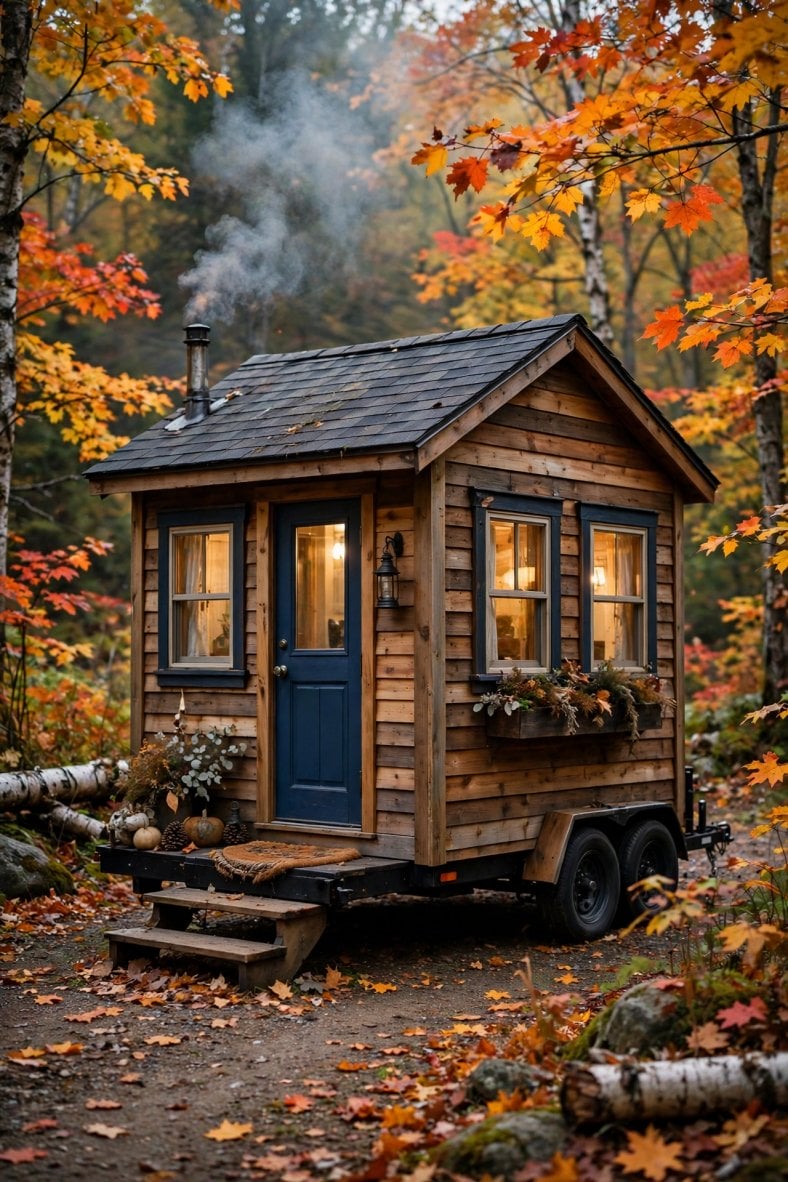
The Short Answer
Choose a travel trailer if: You want low entry cost, easy mobility, and the option to change your mind — trailers are the lowest-commitment path to year-round small living.
Choose a tiny home if: You want year-round comfort through all four seasons — better insulation, real systems, and a structure built for permanent dwelling, not travel.
The year-round truth: Travel trailers are designed for vacations and weekends; living in one full-time, year-round, pushes it beyond its design brief. Tiny homes are designed for dwelling — and it shows by February.
What “Year Round” Really Demands
Four seasons, not one: Year-round means summer heat, winter cold, spring storms, and fall transitions. It means your water pipes in January and your AC in August. Weekend camping never tests these things; full-time living tests all of them.
Daily systems, daily wear: Cooking every meal, showering daily, doing laundry, working from home — full-time use wears everything 5–10x faster than vacation use. Build quality matters enormously at this intensity.
The psychological factor: A space that’s charming for a week can feel oppressive by month six. Year-round livability is about light, layout, storage, and the feeling of home — not just square footage.
Winter: The Decisive Season
Travel trailers in winter: Thin walls, minimal insulation, exposed tanks and plumbing. Full-time winter trailer living means skirting, heated hoses, constant propane use, condensation battles, and frozen-pipe anxiety. It’s doable — thousands do it — but it’s work, every day.
Tiny homes in winter: Residential insulation, proper vapor barriers, enclosed plumbing, real heating systems. Winter in a well-built tiny home feels like winter in a small house — noticeable, manageable, normal.
The verdict: Winter is where the tiny home earns its price premium. If your year includes real cold, this section alone may decide for you.
Summer: Heat, Humidity, and Cooling
Travel trailers in summer: Metal boxes heat fast. A single rooftop AC struggles in 95°F+ heat; two units help but draw serious power. Humidity condenses on cool surfaces. Shade and ventilation become survival strategies.
Tiny homes in summer: Better insulation works both ways — keeps heat out as well as in. Mini-splits cool efficiently and quietly. Proper roof overhangs and ventilation design make a dramatic difference.
The verdict: Tiny homes handle summer significantly better — lower cooling costs, less noise, more comfort.
Durability Under Full-Time Use
Travel trailers: Built light for towing — luan paneling, lightweight frames, RV-grade components. Under full-time year-round use, expect 7–15 years before major systems need overhaul. The structure simply isn’t engineered for decades of dwelling.
Tiny houses: Residential construction — real framing, house-grade materials, standard components. Under full-time use, expect 30–50+ years with normal maintenance. It’s a house that happens to be small.
The verdict: For a multi-year or decade-long plan, the tiny home’s durability transforms the economics — you buy once instead of replacing twice.
Cost: First Year
Travel trailer first year: $20,000–$60,000 for a livable used or new unit, plus winterization gear, skirting, and setup. Lower entry, higher operating costs (propane, electric, park fees).
Tiny home first year: $70,000–$150,000 for the build or purchase, plus land/parking arrangement. Higher entry, lower operating costs (efficient heating/cooling, less maintenance).
The verdict: Trailers win year one on cash outlay — often by $50,000+. If budget is the binding constraint, the trailer gets you living small now.
Cost: Five Years
Travel trailer five-year total: Purchase + higher utilities + more maintenance + likely depreciation to near-zero for older units. Typical: $60,000–$120,000 all-in for five years.
Tiny home five-year total: Purchase + lower utilities + less maintenance + retained value. Typical: $90,000–$170,000 all-in — but you still own an asset worth most of what you paid.
The verdict: The gap narrows dramatically by year five — and the tiny home owner still has equity. Run your own numbers with honest utility estimates.
Comfort: The Daily Experience
Travel trailer daily life: Compact everything — small tanks mean frequent dumping/filling, small kitchens mean simplified cooking, thin walls mean hearing everything. Fine for the adaptable; grinding for others.
Tiny home daily life: Small but residential — full-size appliances possible, normal plumbing, real storage, quiet walls. The daily experience is “small house,” not “camping.”
The verdict: Day 30, both feel like an adventure. Day 300, the tiny home feels like home and the trailer feels like a long trip. Plan for day 300.
Mobility: The Trailer’s Trump Card
Travel trailers: Hitch up and go — follow the weather, chase work, visit family. Seasonal migration (north in summer, south in winter) neatly sidesteps the worst weather each rig would face.
Tiny homes: Moving is a major operation — professional transport, permits, route planning. Most tiny home owners move rarely. You’re choosing a place, not just a dwelling.
The verdict: If your year-round plan includes following good weather, the trailer’s mobility is a genuine strategy — it’s how many full-timers avoid winter entirely.
Plumbing and Water Systems Compared
Travel trailer plumbing: Small fresh tanks (30–60 gallons), small gray/black tanks, RV-grade pumps and fittings. Full-time use means filling and dumping every few days — a constant chore that never goes away. Winter adds freeze protection to the routine.
Tiny home plumbing: Residential fixtures, standard water heater, and (where connected) municipal water and sewer — just like a house. Off-grid tiny homes use larger cisterns and composting or septic systems designed for full-time use.
The verdict: Nobody dreams about plumbing until it dominates their week. Tiny home plumbing is forgettable (good); trailer plumbing is a lifestyle (demanding).
Kitchen and Cooking Reality
Travel trailer kitchens: Two-burner stoves, small ovens (or none), tiny fridges, minimal counter space. Fine for simple meals; frustrating for anyone who cooks seriously. Outdoor cooking setups become essential extensions.
Tiny home kitchens: Full-size ranges, real ovens, full-size fridges, actual counter space — galley-style but genuinely functional. People cook real meals in tiny home kitchens for years happily.
The verdict: If food matters to you — and over a year, it will — the tiny home kitchen is one of its biggest daily advantages.
Storage for Four Seasons
The overlooked challenge: Year-round living means storing four seasons of clothing, gear, and supplies — winter coats and summer shorts, holiday decorations, tools, hobby equipment. Weekend trailers assume you’ll leave most of this at home. Full-time living has no “at home.”
Travel trailer storage: Limited exterior compartments, small closets. Full-timers get creative — under-bed, over-cab, outdoor sheds at long-term sites. It’s manageable but requires constant curation.
Tiny home storage: Designed-in storage — lofts, built-in cubbies, under-stair drawers, sheds. Still small, but intentional. A well-designed tiny home stores a full life; a trailer stores a long trip.
Internet and Remote Work
Both need connectivity: Year-round living usually means year-round working. Trailers rely on cellular boosters, Starlink, or park WiFi — workable but variable. Tiny homes on private land can get residential broadband — stable and fast.
The verdict: If your livelihood depends on rock-solid internet, the tiny home’s residential connection options are a meaningful advantage. Trailer connectivity has improved enormously (Starlink changed everything) but still requires more management.
Insurance and Legal Standing
Travel trailers: RV insurance is a mature, competitive market — full-timer policies available, claims processes understood. Legally, you’re living in a vehicle; some jurisdictions treat this differently for residency, voting, and services.
Tiny homes: Insurance exists but requires specialty providers; on-foundation tiny homes can sometimes get standard homeowners policies. Legally, a permitted tiny home is a residence — cleaner for domicile, taxes, and services.
The verdict: Trailers are easier to insure; tiny homes offer cleaner legal residency. Neither is prohibitive — just different paperwork.
Resale Value After Years of Full-Time Use
Travel trailers: Full-time use accelerates depreciation — a trailer lived in year-round for five years shows it. Expect 50–70% value loss on a new unit over five full-time years. The used market is liquid, so selling is easy; you’re just selling for less.
Tiny homes: Hold value better, especially well-maintained builds in desirable markets. Five years of living barely dents a quality tiny home’s structure. Expect 10–30% depreciation — and in hot housing markets, some tiny homes have appreciated.
The verdict: The trailer is a consumable; the tiny home is an asset. This distinction matters most if your plans might change — life happens, and exit value is real money.
Making the Call: A Decision Framework
Choose the travel trailer if three or more are true: Your budget is under $40,000; you want to move seasonally or frequently; you’re testing the lifestyle before committing; your winters are mild or you’ll migrate; you value low commitment over maximum comfort.
Choose the tiny home if three or more are true: You’ll stay in one region year-round; your winters are real; you cook, work from home, or need residential systems; your horizon is 5+ years; comfort matters more than mobility.
The most common regret: Trailer owners who wish they’d built for comfort; tiny home owners who wish they’d kept mobility. Both regrets are avoidable — the framework above exists because thousands of people have lived both and reported back. Trust their data, not your fantasy.
Frequently Asked Questions
Can you live in a travel trailer year round?
Yes — thousands of people do. But year-round trailer living demands winterization (skirting, heated hoses, pipe insulation), higher heating costs, and acceptance of more maintenance and less comfort than a residential structure. It’s very doable; it’s just more work than most newcomers expect.
Is a tiny home warmer than a travel trailer in winter?
Dramatically — a well-insulated tiny home with residential heating performs like a small house, while a travel trailer fights heat loss through thin walls, single-pane windows, and exposed underbelly. Heating bills and comfort levels aren’t close in real winter conditions.
Which lasts longer: a tiny home or travel trailer?
A tiny home, by a wide margin — 30–50+ years vs. 7–15 years of full-time use for a trailer. Trailers are built light for towing; tiny homes are built like houses. If your horizon is a decade or more, durability alone justifies the tiny home’s higher price.
Can I start in a trailer and upgrade to a tiny home?
This is one of the smartest paths — a used travel trailer ($15,000–$30,000) lets you test full-time small living for a year or two while you save, research, and plan a tiny home build. You’ll learn exactly what you need, and the trailer retains enough value to fund part of the upgrade.
Do I need special hookups for year-round trailer living?
For true year-round comfort you want full hookups (50-amp electric, water, sewer) or a well-set-up private arrangement. Sewer is the big one — without it, you’re hauling to dump stations weekly in all weather. Prioritize full-hookup sites for year-round trailer life.
One more honest note: Whichever you choose, budget for the learning curve — most full-timers say the first 90 days cost more than expected while you dial in systems, discover what you actually use daily, and fix the previous owner’s shortcuts. Keep a $2,000–$3,000 starter reserve beyond your purchase price; it turns early surprises from emergencies into errands, and it’s the single best predictor of whether someone thrives in small living or burns out by spring.
Final Considerations
Year-round living is the ultimate stress test, and it exposes what each option was truly designed for. The travel trailer was designed to take you places — and as a year-round home, it’s a compromise you’re always managing: winterizing, maintaining, tolerating. The tiny home was designed to be lived in — and as a year-round home, it simply works, season after season, with the quiet competence of a real house. If your plan is a year or two of adventure, the trailer’s low commitment is perfect. If your plan is a life — years of mornings in the same small kitchen, winters survived comfortably, a home that ages with you — build or buy the tiny home. The calendar doesn’t lie: 365 days will tell you the truth about any dwelling. Choose the one that’s true on day 365, not just day one.