
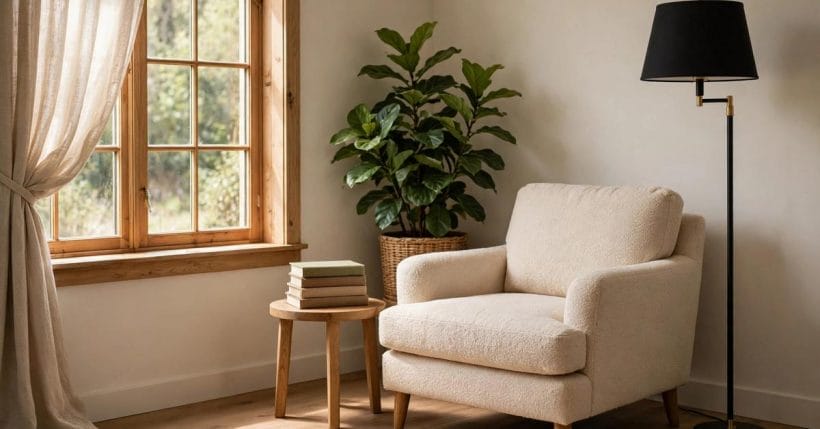
Empty corners are easy to walk past. They gather dust, they hold a stray chair leg, and they sit quietly while the rest of the room does all the work. Yet a corner is often the most flexible spot in a living room: it has walls meeting at a corner, it catches light from nearby windows, and it can hold furniture that would crowd the middle of the room. With a clear purpose, an overlooked corner can become the most used place in the house.
Look around any living room and you will spot a corner of a room that is waiting for a job. The trick is to give that corner a clear purpose before buying anything for it. Decide whether the corner should help you relax, store things, work, gather, or simply look cared for, and let that decision guide every choice after it. The ideas below follow that approach, indoors throughout, with practical notes on light, comfort, and keeping walkways clear.
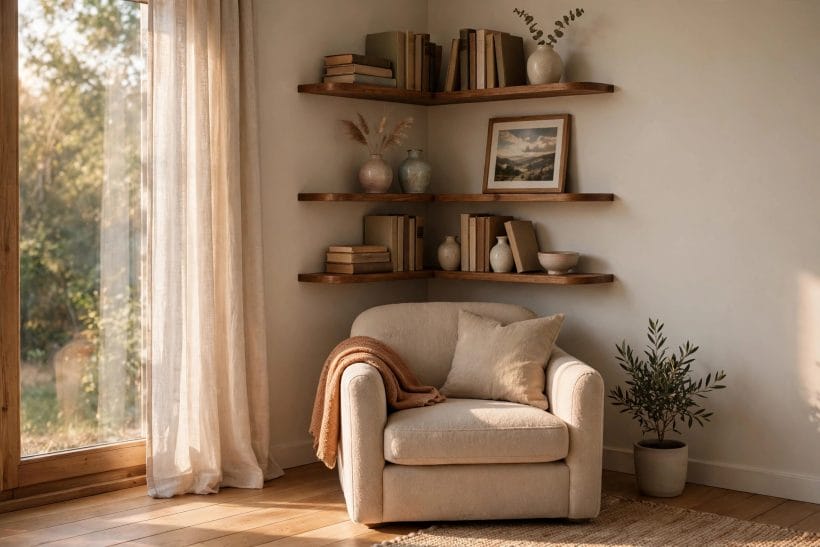
This guide covers sixteen ways to use living room corners, grouped by what each corner is for. Read through them, note the ones that match how your household actually lives, and start with the corner you pass most often. Small changes tend to work best: a chair moved at an angle, a lamp added where reading happens, or shelves that lift storage off the floor can change how a whole room feels.
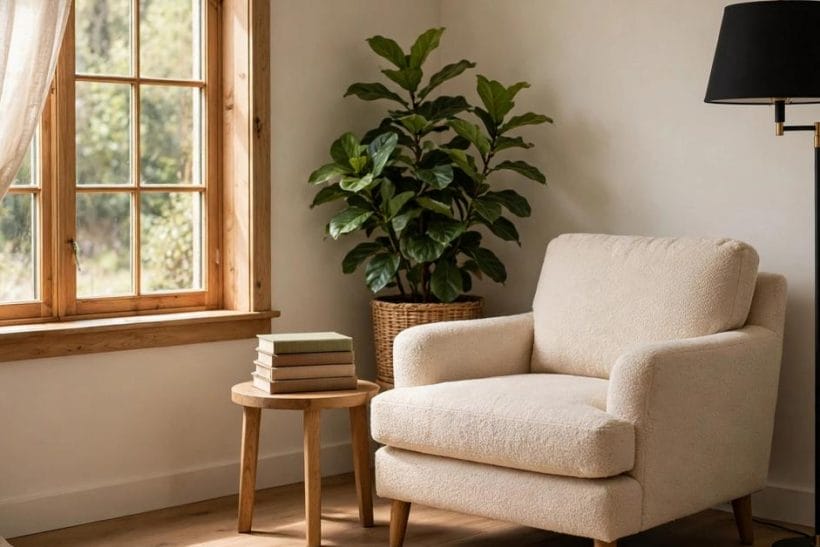
1. Reading Corners That Invite a Long Sit
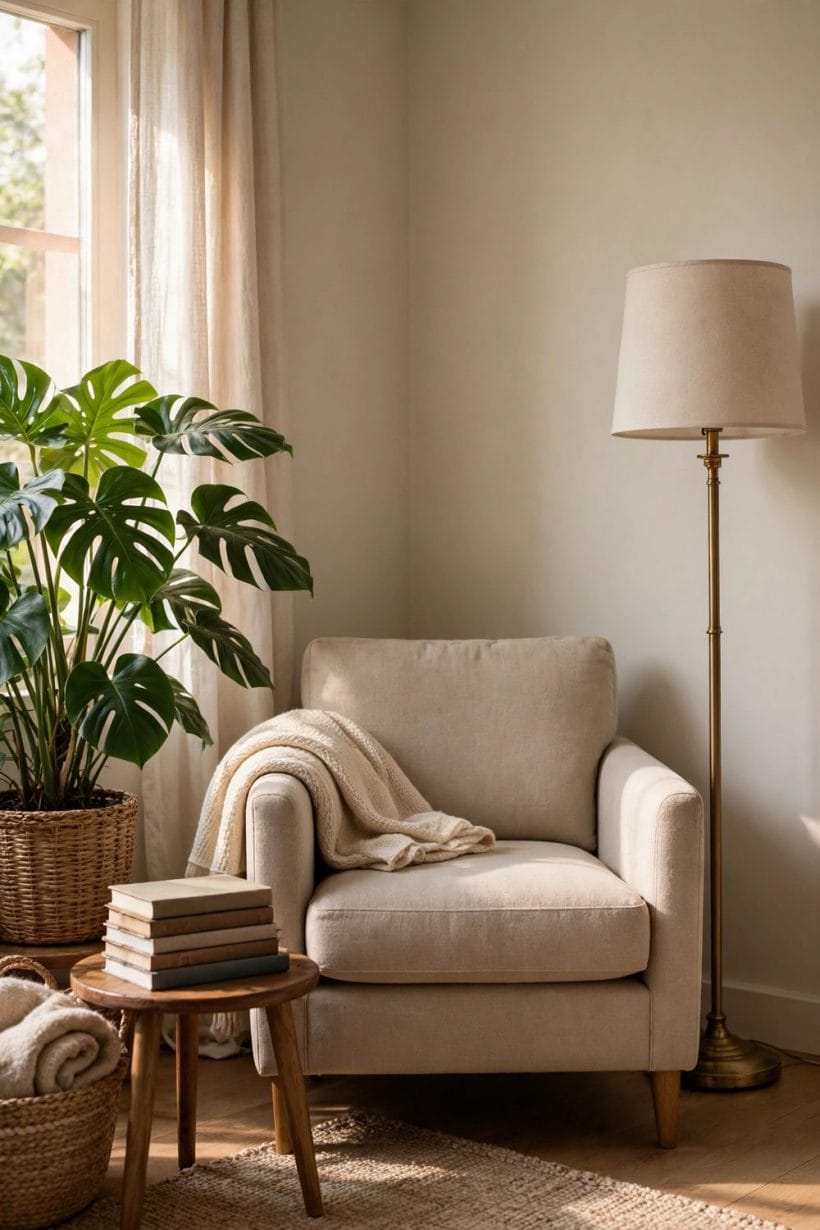
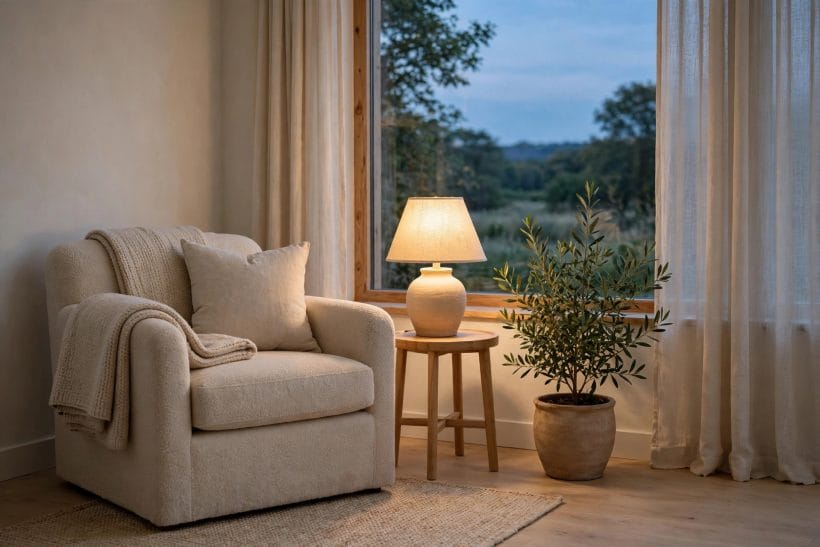
Way 1 — An armchair with a lamp for reading. A comfortable armchair angled into a corner, with a floor lamp standing beside it and a small table within reach, makes reading feel easy rather than arranged. Angle the chair so daylight falls across the page during the day and lamplight takes over in the evening, and keep a soft throw nearby for cooler evenings. Choose a chair you can sit in for a long stretch without shifting around, and place the lamp so light comes over the shoulder rather than glaring into the eyes. A small table holds a book, a drink, and reading glasses, so everything stays close and the corner stays inviting. For more compact living room inspiration, see these tiny living room ideas.
Way 2 — A daylight perch beside the window. A corner near a window suits a reading perch that relies on daylight. A chair placed close to the glass, with a cushion for back support and a light blanket folded over the arm, turns a bright corner into a natural reading spot. Keep the window dressing light enough that daylight reaches the chair, and add a small lamp for dull days and evenings so the corner stays useful after sunset. A perch like this works well in rooms where floor space is tight, because it uses a corner that already receives light and needs little furniture beyond a chair and a place to rest a book.
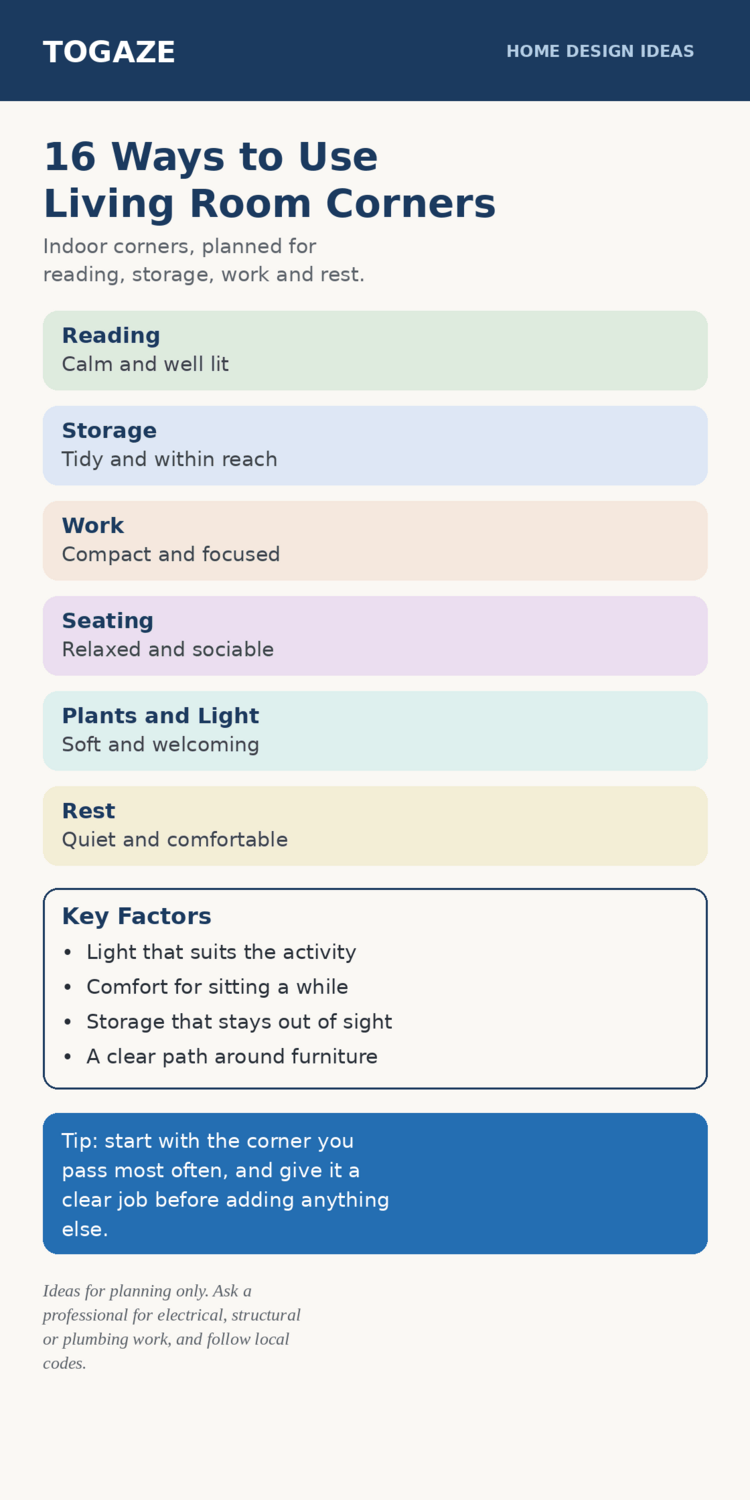
2. Shelving That Turns a Corner into Storage
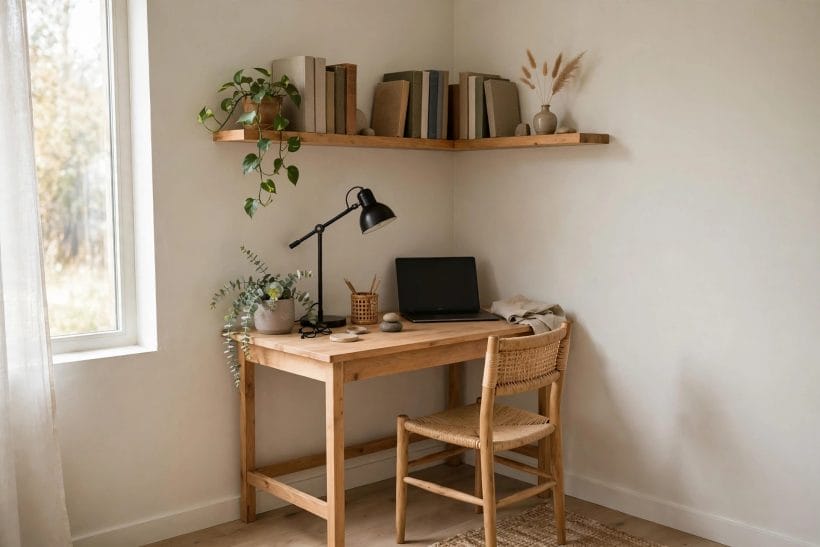
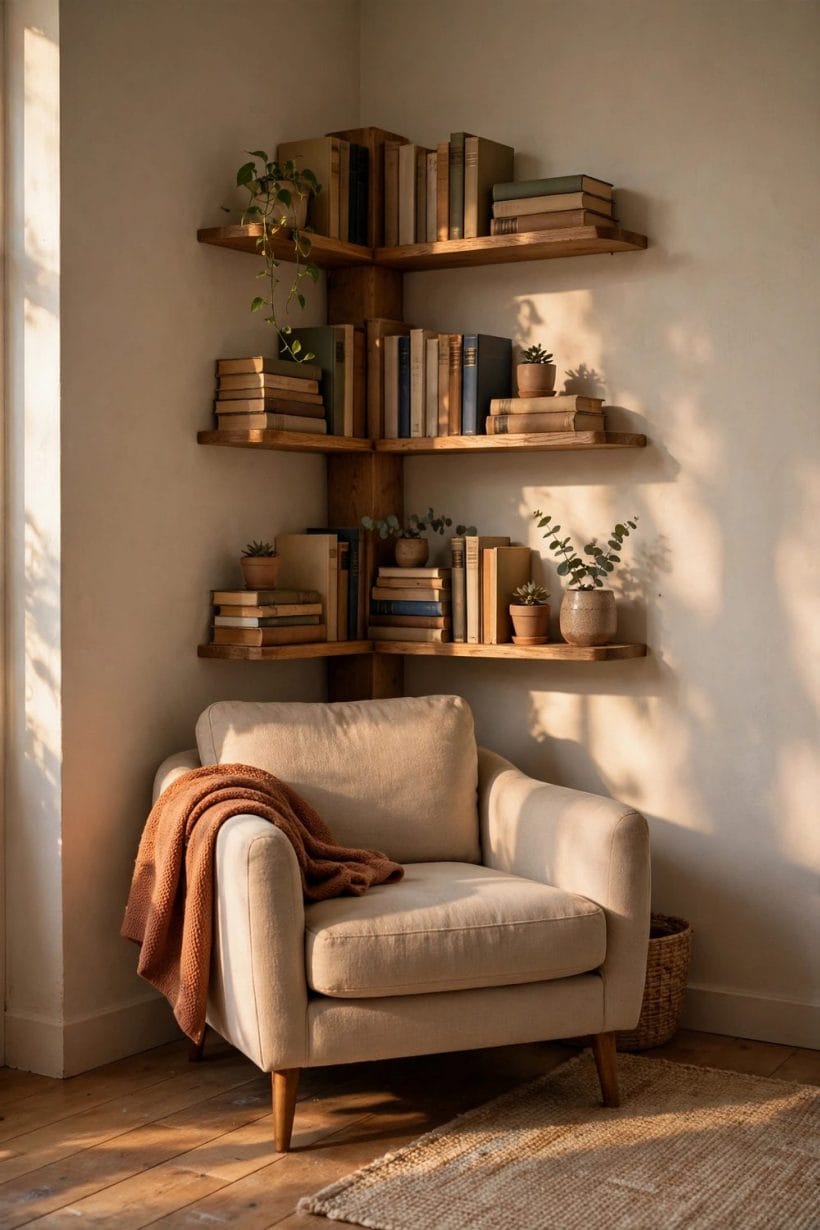
Way 3 — Corner shelves for books and display. Shelves fitted into a corner lift books, plants, and treasured objects off tables and floors, freeing surfaces elsewhere in the room. Arrange heavier books low, where they are easy to reach and steady, and keep lighter display pieces higher, where they catch the eye without crowding the shelf. Leave breathing room between objects so each shelf reads as a calm display rather than a packed cupboard, and mix upright books with a small plant or a framed picture for warmth. Corner shelves suit renters and owners alike, since freestanding shelf units can fill a corner without wall fixings, while fitted shelves give a tidier built-in look.
Way 4 — A tall cabinet that hides clutter. Where open shelves would look busy, a tall corner cabinet with doors hides board games, chargers, craft supplies, and paperwork behind closed fronts. Choose a cabinet that fits the corner without blocking windows or doors, and keep everyday items at arm height while seasonal things live higher up. Doors make a real difference in small rooms, because closed storage looks calm even when the contents are mixed. Label the inside of each door or shelf in a way that suits the household, so everyone can find things and put them back, and the corner stays a help rather than a hiding place for clutter. See also these tiny house storage ideas for compact storage thinking.
3. A Corner Desk for Work and Study
Way 5 — A compact desk tucked into the corner. A corner desk turns unused wall space into a work spot without claiming the middle of the room. A desk shaped for a corner, with a chair that slides fully underneath, leaves walkways clear and keeps work contained. Place the desk where daylight reaches it if possible, add a desk lamp for evenings, and keep cables tidy with clips or a small tray so the area looks calm when work ends. A shelf above the desk holds reference books and a plant, while a drawer or a small box keeps pens and papers sorted. When the working day ends, closing the laptop and clearing the desk surface lets the corner return to being part of the living room, which matters in homes where work and rest share the same room. For compact homes, these apartment living room ideas show how work corners fit small layouts.
4. Seating That Wraps Around the Corner
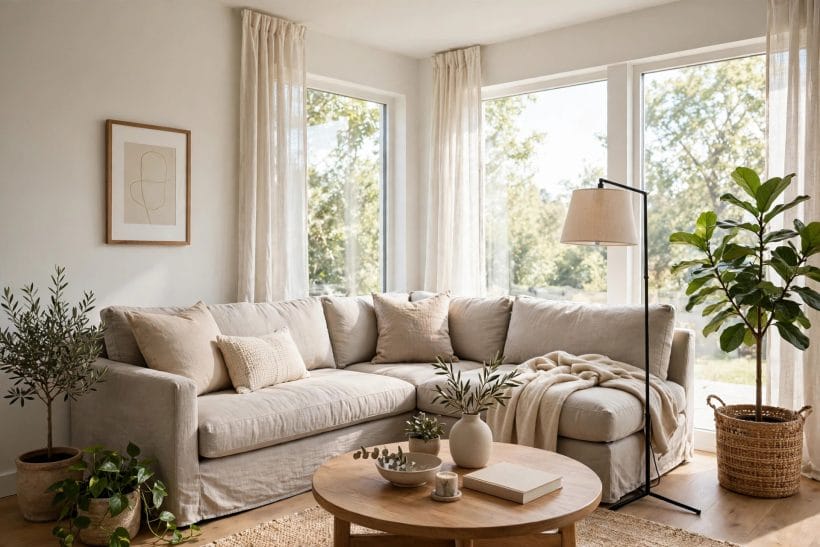
Way 6 — A sectional sofa placed into the corner. A sectional sofa shaped for a corner uses wall space that a straight sofa would waste, and it seats more people without extra chairs crowding the floor. Push the sectional gently into the corner of a room, leaving cushions room to breathe against the walls, and add a coffee table within easy reach of every seat. A soft throw and cushions in colours that echo the rug tie the corner into the rest of the room, while a floor lamp at the open end gives evening light for conversation. Measure doorways and walkways before moving heavy seating, and keep a clear path around the coffee table so the corner feels welcoming rather than blocked.
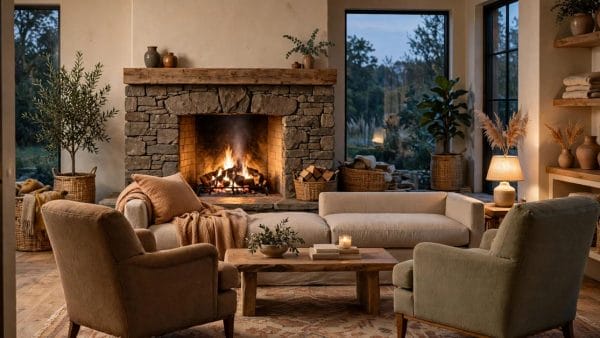
Way 7 — Chairs angled for conversation. Chairs angled toward each other across a corner create a natural talking spot, especially in rooms where the sofa faces a screen and conversation needs its own place. Angle the chairs so people can see each other easily, with a small table between them for drinks, and a lamp nearby for evenings. This arrangement suits corners near a fireplace, a window, or a view, where sitting and talking feels natural. Keep the chairs light enough to move for larger gatherings, and choose fabrics that stand up to daily use, since a conversation corner earns its keep only when it is comfortable enough to use every day. Browse these small living room ideas for seating that fits tight corners.
5. Plants That Soften an Empty Corner
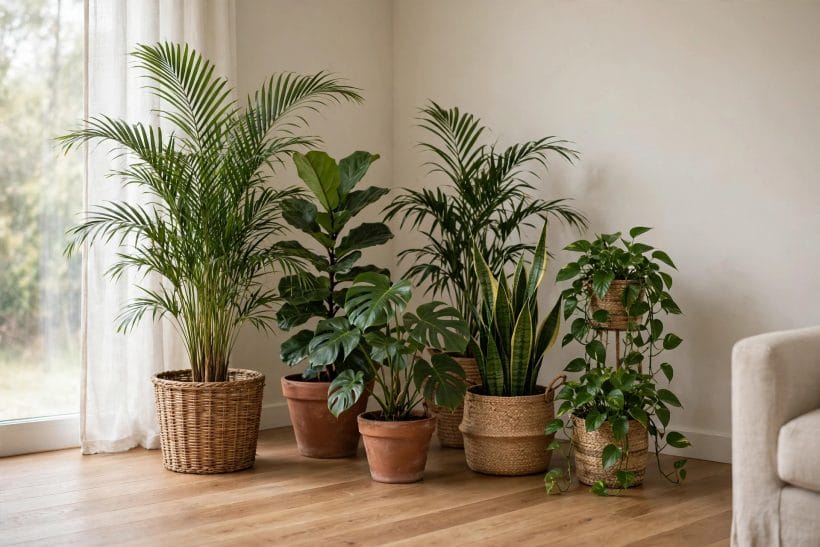
Way 8 — A grouping of plants at varied heights. Plants soften hard corners, add colour through the year, and make an empty corner feel tended rather than forgotten. Group plants at varied heights, with tall leafy plants at the back, medium plants in the middle, and trailing plants where they can spill gently over a pot rim, so the grouping reads as a small indoor garden. Choose plants that suit the light the corner actually receives, and check water needs before buying, since a plant that struggles in dim light will look sad no matter how pretty the pot. Use saucers under pots to protect floors, rotate plants now and then so growth stays even, and wipe large leaves clean so they keep catching light. A plant corner also suits households that want greenery without rearranging furniture, because pots can move as seasons and light change.
6. Corners for Music, Play and Hobbies
Way 9 — A listening corner for music. A corner makes a fine listening spot, since walls meeting at a corner help sound feel close and contained. Place a comfortable chair facing into the room, with a small table for a player or a speaker, and shelves nearby for records or discs kept in order. Add a lamp with warm light for evenings, and a rug underfoot to soften sound and mark the corner as a distinct place. Keep cables out of walkways and away from curious hands, and ask a professional about any electrical work rather than running new wiring yourself. A listening corner suits households that enjoy music as a shared pleasure, giving it a home that does not compete with conversation or reading elsewhere in the room.
Way 10 — A hobby corner with a small table. A corner table gives hobbies a permanent home, so projects need not be packed away after every session. A sturdy table with a comfortable chair, good task lighting, and storage for supplies within reach supports drawing, sewing, puzzles, model making, and homework alike. Keep supplies in boxes or baskets that fit under or beside the table, and protect the table surface with a mat for messy work. A hobby corner works best when it sits near daylight and away from the main walkway, so concentration survives foot traffic, and when its storage is simple enough that tidying takes moments rather than an afternoon.
7. A Corner for Dining and Morning Coffee
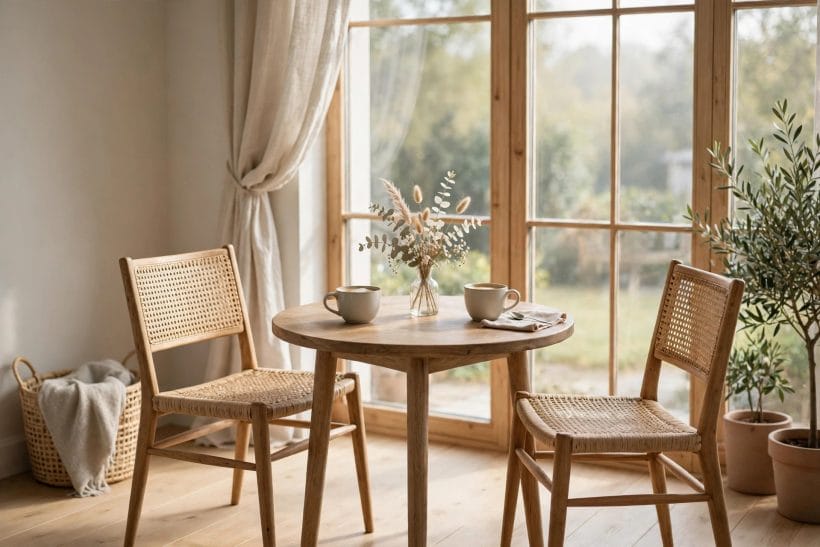
Way 11 — A small table for coffee and casual meals. A small round table with chairs in a bright corner gives a household a spot for morning coffee, casual meals, and board games without needing a separate dining room. A round table suits corners well, since its curved edge leaves room to pull chairs in and out, and it seats people face to face for easy talk. Place the table near a window when possible, so mornings feel bright, and add a small vase or a candle for evenings when the corner serves as a supper spot. Keep the table surface clear between meals, with a basket nearby for napkins and placemats, so the corner stays ready for its next use. For rooms that blend living and dining, these tiny house living room ideas show compact corners serving living and dining.
8. Light and Colour That Wake a Dark Corner
Way 12 — Layered lighting for a dim corner. Dark corners often need light more than furniture, and layered lighting solves the problem better than a bright bulb alone. Combine a floor lamp for general glow, a table lamp for close work or reading, and, where suitable, a small wall light to wash the wall with warmth, so the corner feels lit from several directions at once. Choose warm-toned bulbs for relaxing corners and slightly brighter light for work corners, and place lamps where they light the activity rather than shining into eyes. Ask a professional about any new wiring or fixed wall lights, and keep lamp cables against walls and out of walkways. With light layered well, a corner that once felt gloomy can become a favourite evening spot.
Way 13 — Art and mirrors as a focal point. A large framed picture, a mirror, or a woven wall hanging gives a bare corner a focal point and draws the eye upward, making the corner feel finished. Hang art at eye level from a seated position for corners with chairs, and choose a mirror where it reflects daylight or a pleasant view rather than clutter. Lean a large frame against the wall for a relaxed look in rooms where hanging feels too permanent, and keep frames secure in homes with lively children or pets. Colour matters here too: a warm-toned frame or a picture with colours echoed in cushions and rugs ties the corner into the room, so it reads as part of a whole rather than an afterthought. See these farmhouse living room ideas for warm, layered corner styling.
9. Corners That Keep the Room Tidy
Way 14 — A basket station for everyday clutter. Baskets in a corner catch the small things that otherwise spread across a living room: throws, toys, magazines, charging cables, and remote controls. Place a sturdy basket beside the sofa for throws, a lidded basket for toys, and a small tray on a shelf for remotes and chargers, so every stray item has an obvious home. Choose baskets that suit the room, with lids where contents look untidy and open weaves where air flow matters for fabrics. Empty and sort the baskets as part of a weekly tidy, so the corner station keeps working instead of slowly becoming storage for things nobody needs. A basket station suits busy households best, since tidying becomes a matter of dropping things in the right basket rather than finding a new place each time.
Way 15 — A drop zone near the living room doorway. A corner near the doorway into the living room makes a natural drop zone for keys, bags, and mail, keeping those items out of the seating area. A slim console table or a wall-mounted shelf, with hooks above for bags and a small dish for keys, gives arrivals a place to land without cluttering chairs and tables. Keep the drop zone shallow so it never blocks the doorway, and sort mail and papers there daily so piles never grow. This corner earns its keep in households where people come and go through the living room, because it stops the daily scatter before it reaches the sofa. It also helps guests, who can see at a glance where to set things down.
10. A Quiet Corner for Rest and Reflection
Way 16 — A soft chair for quiet moments. A quiet corner needs little more than a soft chair, a warm light, and freedom from screens and through-traffic. Place the chair where it faces a window, a plant, or a calm wall, with a small table for a drink and a blanket folded over the chair arm. Soft textures matter here: a thick cushion, a woven throw, and a rug underfoot make the corner feel sheltered and calm. Keep the corner free of work papers and chargers, so it stays a place for rest rather than another task station, and use it for morning quiet, evening wind-down, or a few minutes of reading before bed. In a busy household, a corner like this gives everyone a place to pause, and that pause often makes the rest of the room feel calmer too.
Final Considerations
Start with purpose, then light, then comfort. A corner with a clear job, light that suits its activity, and seating or storage that fits the household will serve the room far better than a corner filled for its own sake. Walk the room after each change, checking that walkways stay clear, doors open fully, and lamps sit where their light helps rather than glares. Move furniture gradually and live with each arrangement for a while before adding more, since corners reveal their best use through daily life rather than an afternoon spent rearranging.
Safety and upkeep deserve a place in the plan. Keep lamps and heaters away from curtains and throws, ask a professional about electrical or structural changes, and follow local codes for any fixed work. Choose stable furniture for corners used by children, secure tall shelves and cabinets to walls where makers advise it, and keep plants out of reach where leaves or soil could cause trouble for pets. With purpose, light, comfort, and care in balance, sixteen ways become a practical menu rather than a wish list, and any living room corner can earn its place in daily life.



0 Comments