
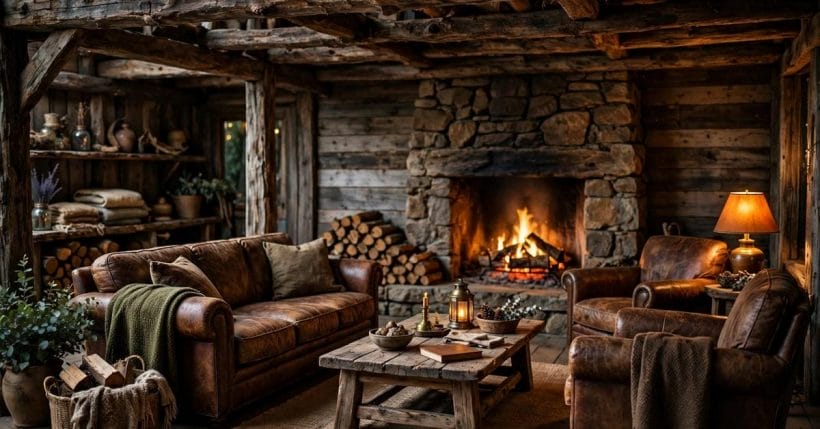
A rustic man cave is a retreat built from honest materials and warm light. Rough timber, natural stone, worn leather and soft lamplight do the work here, and the room feels like a cabin corner even when it sits inside an ordinary house. Nothing in the room needs to be polished or precious. The appeal comes from texture, from the grain of the wood, the weight of the stone and the patina of leather that has softened with use, and from a layout that invites people to sit down, stay a while and unwind.
This guide looks at the rustic man cave on its own terms. It is not a general tour of every kind of retreat room, and it is not a basement conversion guide, because those are separate topics with their own layouts and problems. Here the focus stays on the rustic character itself: how to choose timber that looks reclaimed rather than new, how to let a fireplace anchor the room, how to arrange seating for conversation, and how to zone a screen corner, a bar corner and a games corner without letting any one of them take over the room.
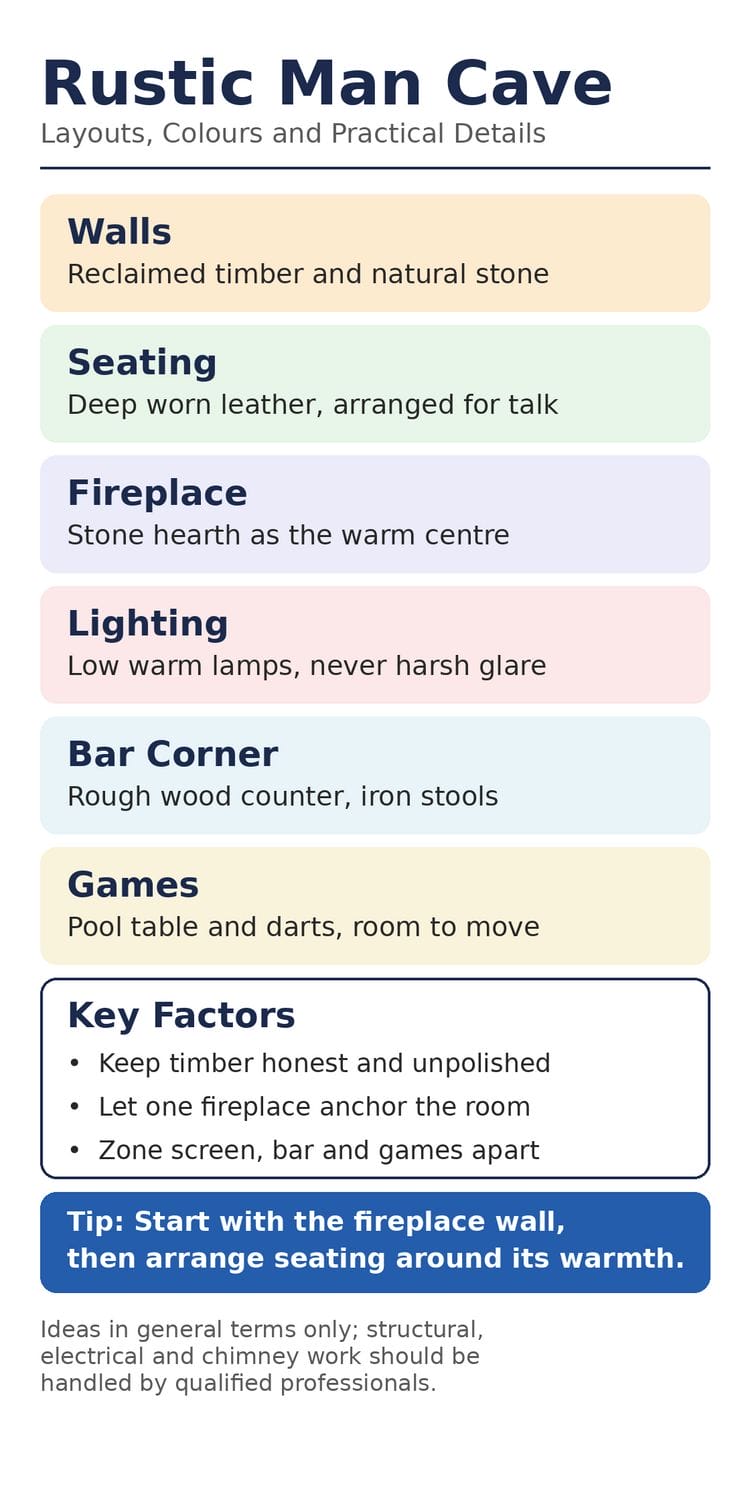
| Item | What it is |
|---|---|
| The Screen Corner in a Rustic Room | A screen sits uneasily in a rustic room unless it is given a proper home. |
| The Stone Fireplace as the Heart of the Room | If one feature defines the rustic man cave, it is the fireplace. |
| The Bar Corner in Rough Wood and Iron | A rustic bar corner works best when it looks built rather than bought. |
| Games, Hobbies and Room to Move | Games give a rustic man cave its social energy, but they also demand floor space, and that demand should shape the layout honestly. |
| Quiet Corners for Reading and Rest | Not every hour in a man cave is social, and a rustic room should offer a quiet corner for reading, listening and rest. |
1. What Makes a Man Cave Rustic
Rustic character starts with materials that show their history. Timber with visible grain, knots and saw marks reads as rustic at once, while smooth painted boards and glossy finishes pull a room toward a more formal style. Stone works the same way: a roughly dressed hearth or a stone-clad wall gives the room weight and age, while a sleek surround belongs to a different kind of interior altogether. When these two materials meet in one room, the rustic identity is already established, and everything else can stay simple.
Colour follows the materials rather than leading them. Warm browns, soft greys, deep greens and the muted red of brick all sit comfortably beside timber and stone, and they let the room feel calm rather than busy. Bright, sharp colours should stay as small accents only, perhaps in a woven throw, a cushion or a piece of artwork, because a rustic room earns its warmth from natural tones. The goal is a palette that feels gathered over time, not decorated in a single shopping trip.
Texture matters as much as colour. Leather that has creased and softened, wool that looks hand-woven, iron with a dark matte finish and wood that feels rough under the hand all tell the same story. A rustic man cave should reward touch as well as sight, so mix hard and soft surfaces deliberately: a stone hearth beside a leather chair, a timber table under a woollen throw, a metal lamp above a wooden shelf. When every surface has something to say, the room never feels flat.
2. Claiming the Room and Setting Its Boundaries
Every rustic retreat needs a clear boundary, even when it shares a house with other rooms. A change of flooring, a timber beam across the ceiling or a rug that defines the seating area can all mark where the cave begins, and that threshold matters because it tells everyone entering that this room plays by different rules. Inside the boundary, comfort comes first, clutter is tolerated, and the pace slows down. Without that boundary, the rustic pieces simply dissolve into the rest of the house.
Layout should follow the way the room will actually be used. A room built mainly for quiet evenings needs a generous seating group and little else, while a room built for friends needs clear paths between the door, the seating, the bar corner and the games corner. Walk through the room in your mind before moving anything heavy: can two people pass each other without squeezing past a chair, can someone reach the bar without crossing in front of the screen, and is there a place to set down a drink from every seat. Those small journeys decide whether the room feels easy or awkward.
Storage deserves attention early, because a rustic room can tip into messiness faster than a minimal one. Open timber shelving suits the style and keeps books, games and hobby gear visible and reachable, while closed cupboards in a matching timber finish hide the things that do not need to be seen. The trick is to give everything a home before the room fills up, so the lived-in look stays intentional rather than accidental. A tidy rustic room feels welcoming; an overflowing one feels like a storeroom.
3. The Screen Corner in a Rustic Room
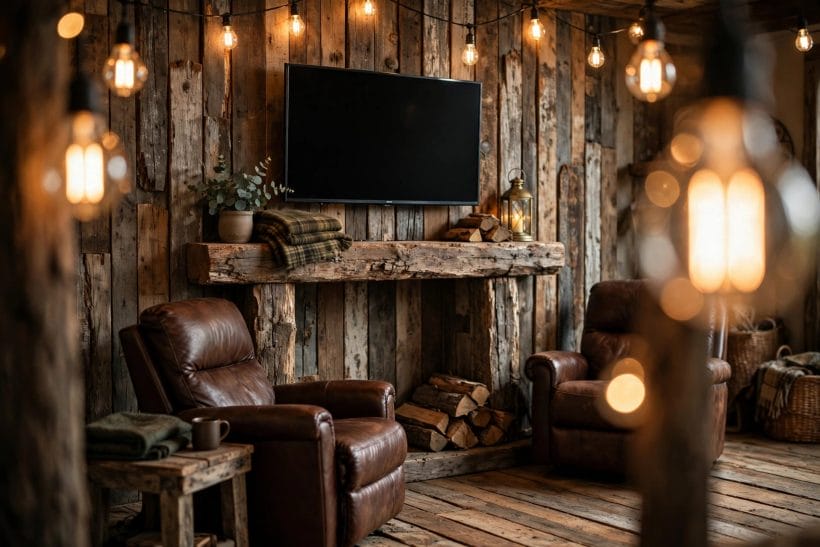
A screen sits uneasily in a rustic room unless it is given a proper home. Mounting it above a rough timber mantel or setting it into a barn-wood wall lets the technology recede into the materials around it, and the eye reads timber first and screen second. Framing the screen with timber shelving on either side helps further, because the shelves break up the black rectangle and give the wall a purpose beyond holding the screen. The aim is a corner that feels like part of the cabin, not a showroom inserted into it.
Seating for screen watching should face the screen squarely, with leather recliners or a deep sofa placed at a comfortable viewing distance and angled slightly inward so conversation stays easy when the screen is off. Side tables beside each seat hold drinks and books, and a low timber coffee table anchors the group without blocking sightlines. Warm lamps behind the seating soften the contrast between a bright screen and a dark room, and dimmable lighting is worth planning from the start so the room can shift from bright gathering to evening viewing without fuss.
Sound also needs thought, though the rustic materials help more than they hinder. Timber walls, woollen throws, rugs and upholstered seating all absorb sound naturally, so the room rarely feels harsh or echoing. Keep speakers modest and tucked onto shelves or brackets rather than displayed as a feature, and let the room’s textures do the softening. Electrical work for screens, speakers and lighting should be handled by qualified professionals, especially where cables run through timber walls or near a fireplace.
4. The Stone Fireplace as the Heart of the Room
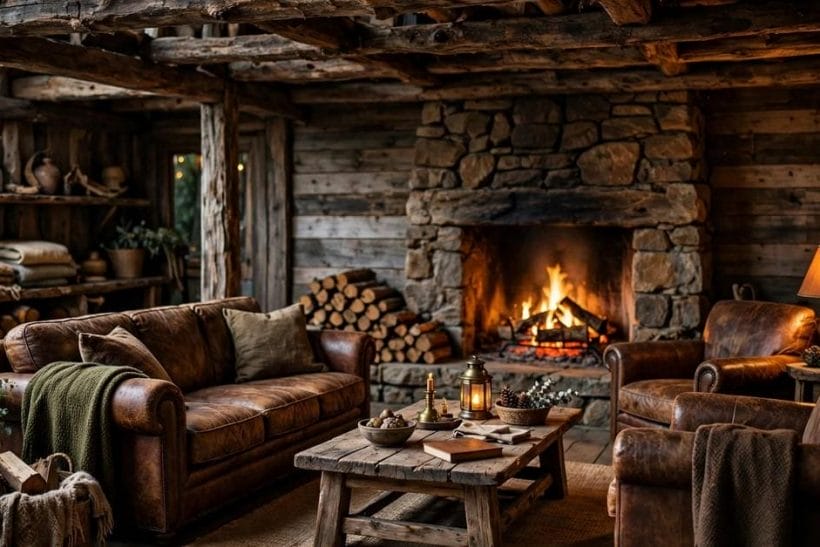
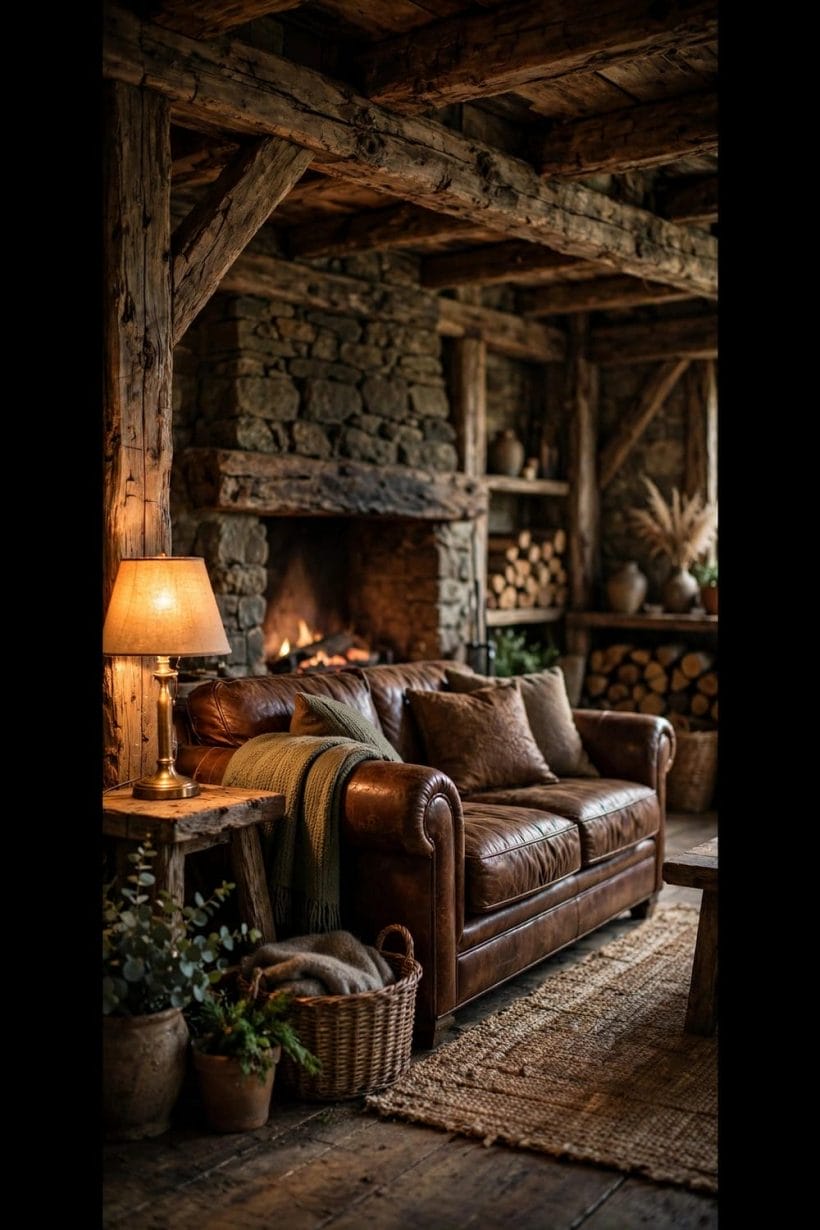
If one feature defines the rustic man cave, it is the fireplace. A stone hearth with a rough timber mantel gives the room a natural centre, a place the eye returns to and the seating gathers around. Building the layout around the fireplace, rather than treating it as an afterthought on a side wall, is the single decision that most shapes the room. Chairs angle toward the fire, the mantel carries a few chosen objects, and the whole room gains a warmth that no lamp alone can provide.
The mantel deserves restraint. A handful of objects with personal meaning, a clock, a framed photograph or a piece of carved wood, will say more than a crowded shelf, and the stone itself should stay visible rather than hidden behind decoration. Firewood stored neatly beside the hearth, in a timber box or an iron holder, adds to the rustic story and keeps fuel close at hand. Keep the hearth clear of clutter and soft furnishings, and treat fire safety as a fixed rule rather than a preference.
Chimney and firebox work belongs firmly to qualified professionals, and any change to a fireplace, a flue or a surround should be checked before it is used. A professional can confirm that the fireplace draws properly, that nearby timber is protected, and that the room is ventilated as it should be. That caution is part of the rustic tradition too: a cabin fireplace was always a serious piece of building, respected and maintained, and the modern rustic room should treat it the same way.
5. The Bar Corner in Rough Wood and Iron
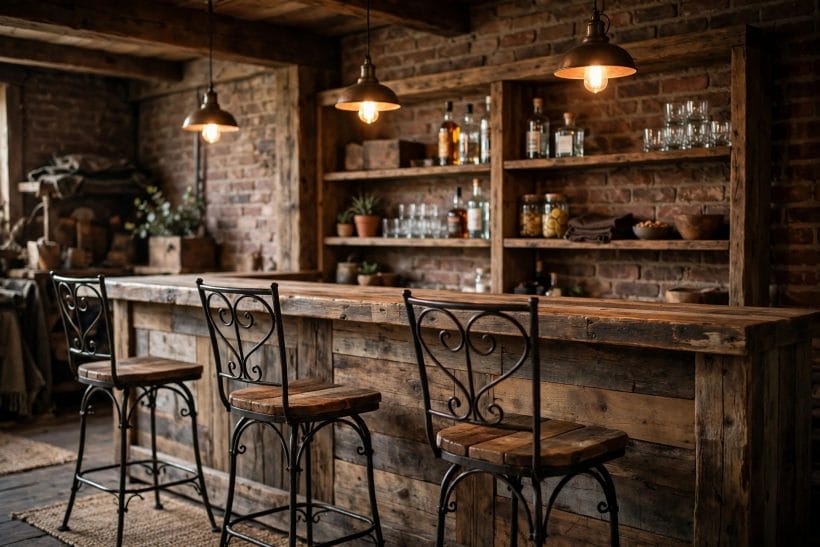
A rustic bar corner works best when it looks built rather than bought. A long counter in reclaimed wood, supported by sturdy timber legs or a stone base, sets the tone at once, and iron stools with worn seats complete the picture without needing any elaborate detail. Open shelving in matching timber displays glassware and bottles honestly, and a brick or timber backing wall ties the corner into the rest of the room. The corner should feel like a workshop that serves drinks, not a hotel bar transplanted into a cabin.
Scale the bar to the room rather than to ambition. A generous counter in a small room will crowd out the seating, while a tiny counter in a large room will look lost and underused. Leave standing room behind the stools so people can move without bumping into each other, and give the corner its own warm light, perhaps a pair of pendant lamps with metal shades, so it glows invitingly in the evening without flooding the whole room. That pool of light is what draws people to the corner.
Practical details keep the corner pleasant over time. A durable counter surface that tolerates spills, a small sink or a nearby water point where plumbing allows, and storage for glassware within easy reach all matter more than decoration. Plumbing and electrical work in the corner should be handled by qualified professionals, and the counter should be sealed and maintained so reclaimed timber stays handsome rather than stained. A bar corner that is easy to clean is a bar corner that gets used.
6. Games, Hobbies and Room to Move
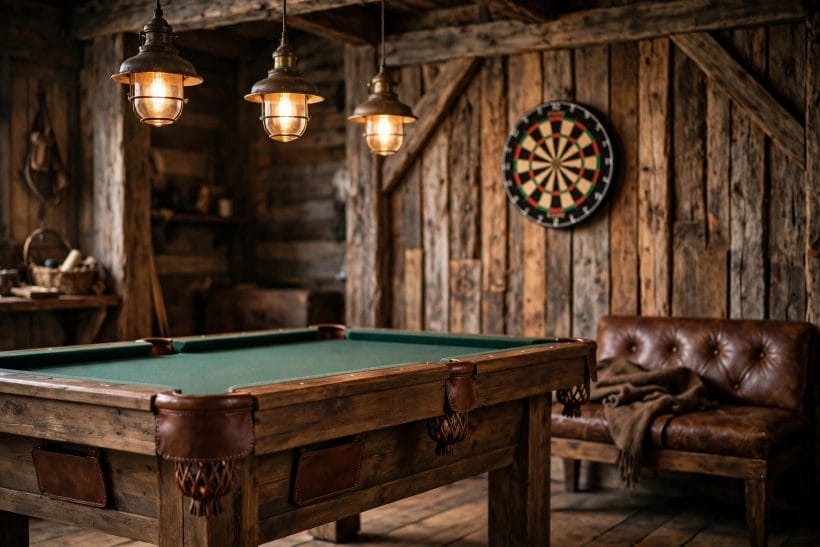
Games give a rustic man cave its social energy, but they also demand floor space, and that demand should shape the layout honestly. A pool table needs generous clearance on every side, a dartboard needs a clear throwing area with nothing fragile behind it, and board games need a sturdy table with good light. Planning these clearances before buying anything large avoids the common disappointment of a games corner that looks wonderful in a photograph and frustrates everyone who tries to use it.
Choosing games that suit the room’s character keeps the rustic feeling intact. Traditional games with wood, leather, felt and brass sit naturally beside timber and stone, while glossy plastic equipment can jar against the materials around it. That does not mean the room must be a museum: a modern console can live happily on a timber shelf, and a well-chosen games table can anchor the corner for decades. The test is whether each piece earns its place by being used, not merely displayed.
Hobbies beyond games deserve a zone of their own, even a small one. A workbench in rough timber against one wall, a shelf for books and collections, or a corner for music and craft all give the room a personal layer that no catalogue layout can supply. Keep hobby storage close to the activity itself, so tools, materials and half-finished projects do not migrate across the whole room. A cave that supports what its owner actually does will always feel more authentic than one arranged only for show.
7. Quiet Corners for Reading and Rest
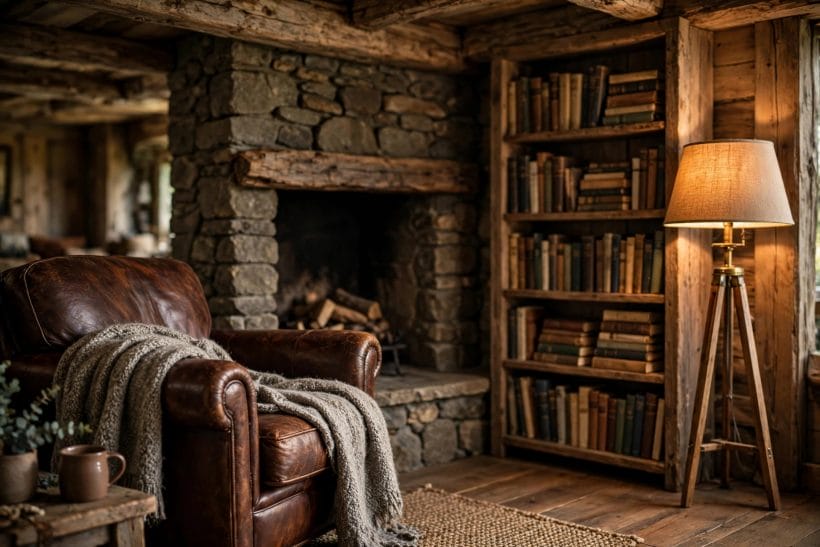
Not every hour in a man cave is social, and a rustic room should offer a quiet corner for reading, listening and rest. A deep leather armchair beside the fireplace, a floor lamp with warm light, a small side table for a drink and a book, and a woollen throw folded over the chair arm are all it takes. The corner works because it borrows the room’s best assets, the fire’s warmth and the timber’s calm, without needing a separate space of its own.
Bookshelves in timber suit the rustic room and give the quiet corner its backdrop. Shelves that reach a comfortable height, filled with books, a few objects and perhaps a plant, make the corner feel settled and lived in. Avoid overfilling the shelves: a little breathing room between groups of books keeps the display calm and makes it easy to find what you want. A shelf that is packed solid reads as storage, while a shelf with space reads as a collection.
Light in the quiet corner should be warm and local, a lamp that lights the chair and the page without lighting the whole room. That pool of light creates privacy even in a shared evening, letting one person read while others talk or play nearby. Choose a lamp with a shade that softens the bulb, place it where it will not glare into the eyes of anyone seated opposite, and keep its switch within easy reach of the chair. Small comforts like these are what turn a corner into a favourite seat.
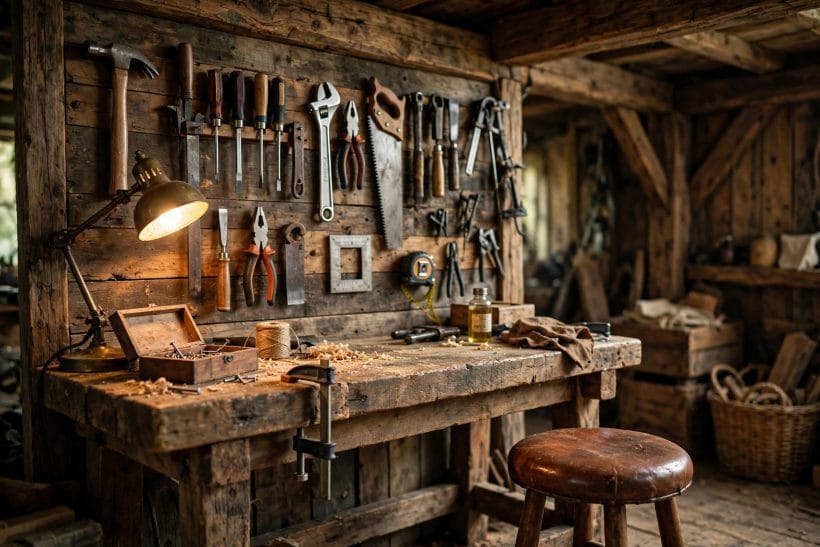
8. Timber, Stone and Leather: Choosing Materials Well
Material choice is where a rustic man cave succeeds or fails, so it pays to handle samples before committing. Reclaimed timber varies enormously: some boards are weathered grey and soft, others are dark and dense, and the difference will set the whole room’s tone. Stone varies too, from pale rough fieldstone to dark slate, and leather ranges from smooth and dark to cracked and honey-coloured. Seeing and touching the real materials, rather than choosing from photographs alone, prevents the mismatch that makes a room feel like an imitation.
Mixing materials needs a steady hand. Two dominant materials, timber and stone, plus one soft material, leather or wool, give the room a clear identity, while adding brick, iron and woven fibre as supporting players keeps it interesting without confusion. Too many competing textures will fight each other, and the room will feel busy rather than rustic. When in doubt, remove one material rather than adding another, and let the remaining surfaces breathe.
Maintenance keeps rustic materials handsome rather than shabby. Timber benefits from occasional oiling or waxing, leather from cleaning and conditioning, and stone from dusting and sealing where appropriate. These are gentle, regular tasks rather than major projects, and they suit the rustic ethos: materials that are cared for age gracefully, while materials that are neglected simply wear out. A room built from honest materials rewards honest upkeep.
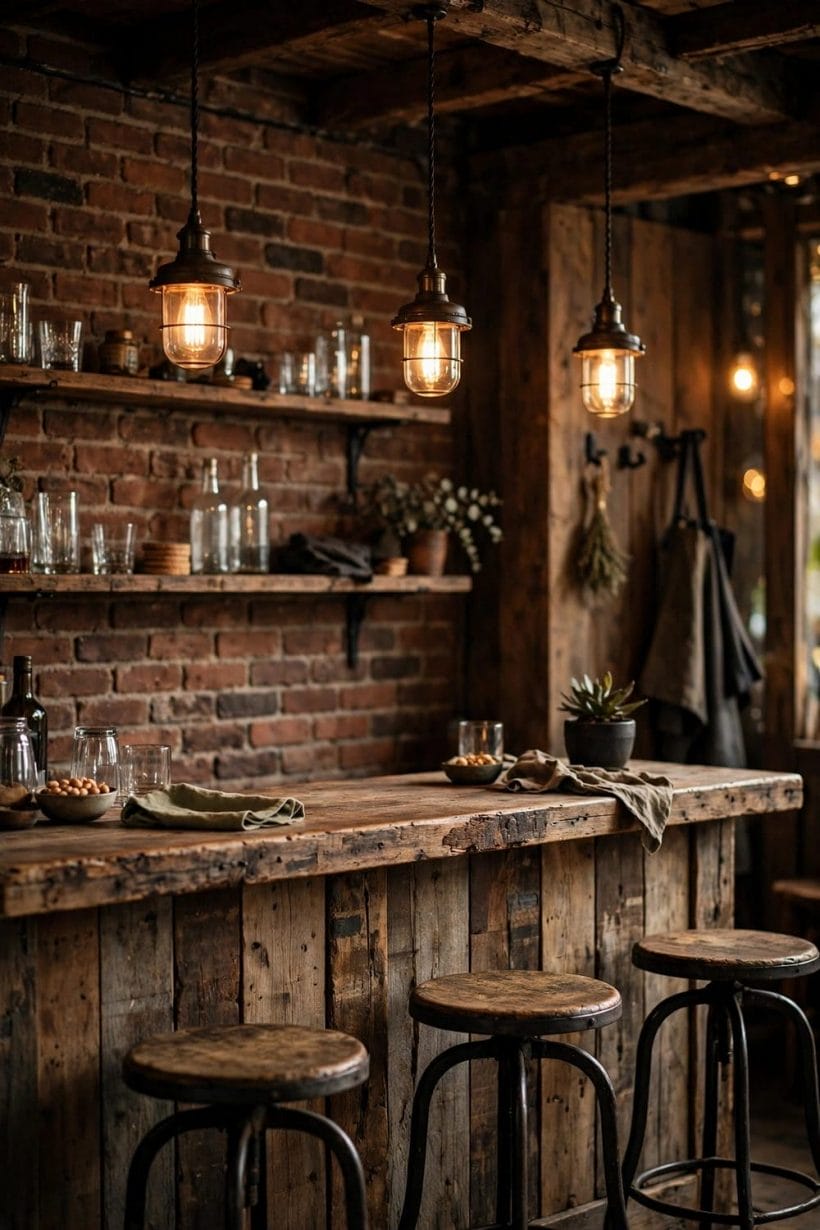
9. Lighting, Colour and the Evening Mood
Evening is when a rustic man cave earns its keep, and lighting decides the mood. Low, warm lamps at several heights, table lamps on side tables, a floor lamp beside a chair, pendant lamps over the bar, create layers of light that flatter timber and stone far better than a single bright ceiling fitting. Each pool of light marks a zone, so the room reads as a collection of inviting corners rather than one flat space. Keep bulbs warm in tone and modest in brightness, and let shadows do some of the work.
Natural light deserves the same care during the day. A large window showing trees or a garden strengthens the cabin feeling enormously, and it is worth keeping the view clear rather than blocking it with tall furniture. Sheer or simple timber-framed treatments suit the rustic style, filtering light without fuss, while heavy drapes can darken a room that should feel connected to the outdoors. For ideas on how the outside of a small home can frame that view, see these tiny house exterior ideas, and for the broader shape of a compact home, these tiny house designs show how interior and exterior work together.
Colour in the evening shifts with the light, so test paint and fabric under lamplight before deciding. A wall colour that looks fresh in daylight can turn cold or muddy under warm bulbs, while timber and stone tend to grow richer as the light drops. The safest approach is to let the materials carry the colour and keep painted surfaces few and muted. When the lamps come on and the fire is lit, a well-judged rustic room glows from within, and no extra decoration is needed.
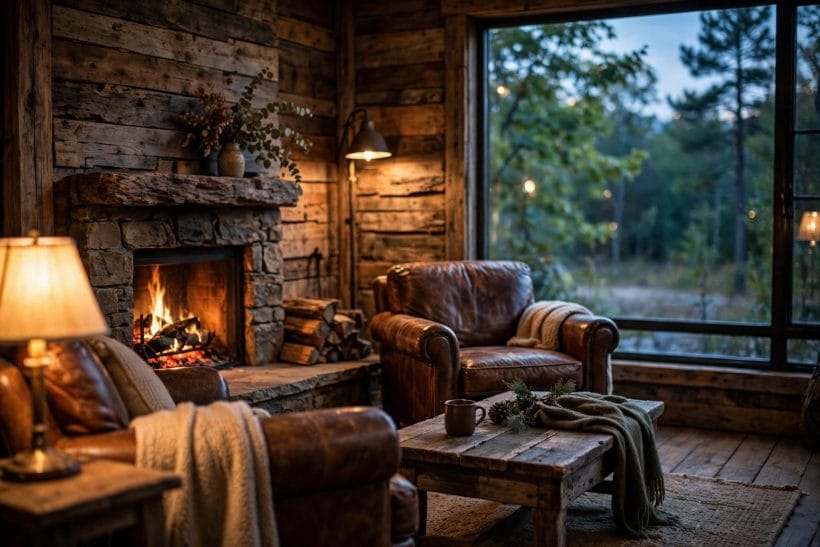
10. Bringing the Rustic Cave Into a Small Home
A rustic man cave does not need a large house. In a compact home, the cave may be a single room, a generous corner, or a shared space that changes character in the evening, and the rustic materials adapt gracefully to each of these. A timber accent wall, a leather chair and a warm lamp can establish the cave feeling in a corner, while a full room allows the fireplace, bar and games zones to spread out. The principles stay the same at any scale: honest materials, warm light, seating arranged for people, and zones that do not fight each other.
Shared spaces need a little more discipline, because the rustic corner must coexist with the rest of the home’s daily life. Storage that closes away, furniture that serves more than one purpose, and a clear evening ritual, lamps on, fire lit, screens and tools put away, all help the corner shift from daytime use to retreat mode. A tiny house porch can extend the retreat outdoors in fair weather, and backyard landscaping ideas show how the ground outside a small home can become part of the same relaxing world.
Planning the cave as part of the whole home, rather than as an isolated project, keeps it coherent. The timber in the cave can echo timber elsewhere, the stone hearth can relate to stone or brick outside, and the warm lighting can continue the mood of neighbouring rooms. For that whole-home view, these contemporary home design ideas and interior design ideas for tiny houses help place a rustic retreat inside a home that still feels unified. Structural, electrical and chimney work throughout should be handled by qualified professionals, so the cave is as safe as it is inviting.
Final Considerations
A rustic man cave succeeds when it feels gathered rather than decorated, when timber, stone and leather have been chosen for their character and arranged around warmth and conversation. Start with the fireplace wall, let the seating follow the fire, zone the screen, bar and games corners with room to move, and keep the lighting low and warm. Resist the urge to fill every wall and shelf at once: a rustic room grows more convincing as objects with personal meaning join it over time, and a little empty space lets the materials speak.
Before building anything structural, changing a fireplace or running new electrical circuits, talk to qualified professionals and check what your home and local rules require. With that care in place, the rustic man cave becomes what it should be: a warm, textured retreat where evenings slow down, friends gather easily, and the room itself, with its timber grain, stone hearth and worn leather, does most of the welcoming.


0 Comments