
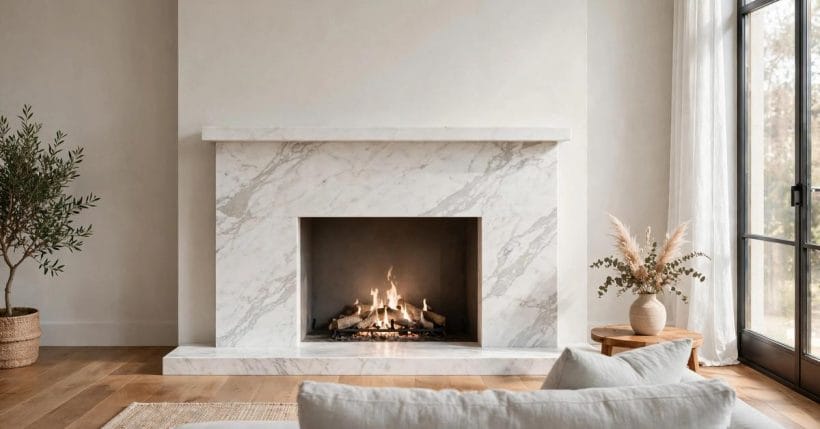
A marble fireplace brings a calm, cool surface to the centre of a living room, and the stone itself does much of the decorating. Soft veining, a pale ground and a clean edge give the wall a finished look even before anything is placed on the mantel. This guide stays with the marble surround itself: the stone, the mantel shelf, the hearth ledge and the styling around them. It does not repeat the broader survey of surround styles, which is covered separately in the guide to fireplace surround designs, and it leaves all firebox, flue and chimney work to qualified professionals throughout.
The appeal of a marble fireplace is partly visual and partly tactile. The surface feels cool to the touch, catches light in a gentle way, and sits comfortably beside timber floors, linen seating and soft rugs. Because the stone is naturally patterned, no two surrounds look quite alike, and that variation is part of the charm. Choosing well is less about chasing a dramatic slab and more about finding veining, finish and proportion that suit the room the fire already lives in.
Start by looking at the wall as a whole. A surround that suits a compact room may feel lost on a tall chimney breast, while a full-height slab can overwhelm a low, snug space. Notice where daylight falls, where seating faces, and how much bare wall remains once the surround is in place. Those observations shape every choice that follows, from veining to mantel depth to the colour of the sofa beside the fire.
1. Why Marble Suits a Fireplace Surround
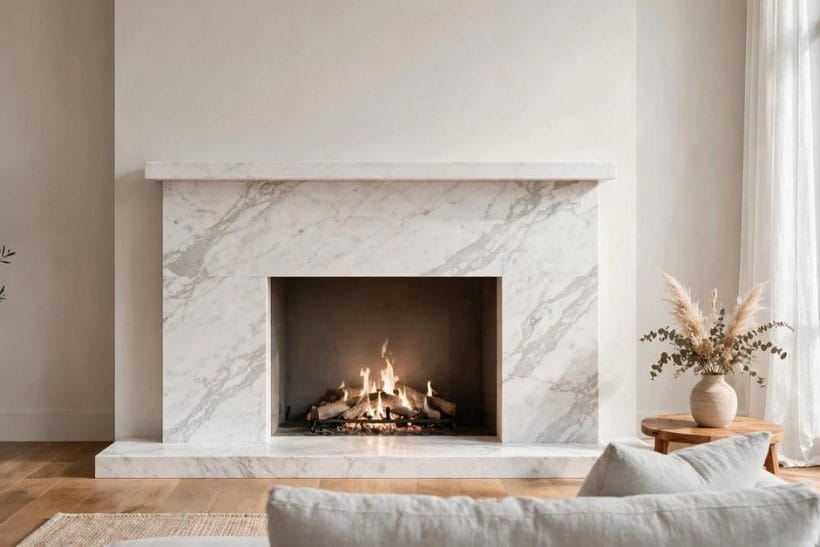
Marble has dressed fireplaces for generations because it reads as both solid and serene. The pale ground brightens a wall that might otherwise sit in shadow, while the veining adds movement without pattern that competes with curtains, cushions or artwork. In a small living room, that quiet presence matters: the fire stays the focal point, and the surround frames it rather than shouting over it.
The stone also bridges styles with ease. A plain marble fireplace can sit in a traditional room beside a timber mantel beam, or in a pared-back room beside a slim floating shelf, and look at home in either. The difference comes from the company it keeps — the seating, the rug, the lighting — rather than from the marble itself changing character. That flexibility makes it a forgiving choice when a room is still evolving.
There is a practical side too. A smooth marble surface wipes clean with gentle care, and a simple surround has few crevices where dust gathers. Keep styling light and the stone easy to reach, and everyday upkeep stays a small job rather than a project. Anything involving the firebox, the flue or the chimney breast structure, however, belongs to a qualified professional, not to a weekend of improvisation.
2. Reading the Veining Before Choosing a Slab
Veining is the first thing to study, because it sets the mood of the whole wall. Soft, faint veining reads as calm and almost plain from across the room, letting seating and textiles carry the colour. Bold, sweeping veining turns the surround into a piece of natural artwork, and the rest of the room should stay quieter to give it space. Neither is better in itself; the right choice is the one that matches how busy the room already feels.
Look at veining in the light the room actually gets. Morning daylight, lamplight and firelight each change how grey veins appear against a white ground, and a slab that looks gentle in a showroom can look far more dramatic beside a glowing fire. Living with samples beside the fire for a while, in daylight and in the evening, gives a truer sense than any single viewing. Notice too whether the veining runs in one direction or wanders, since a strong direction can draw the eye upward or sideways across the wall.
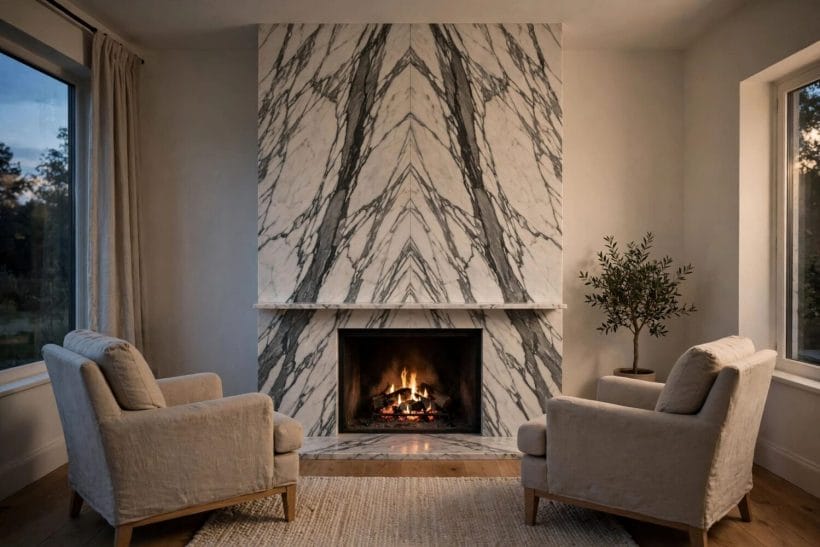
Book-matched panels, where two slabs mirror each other, create a formal, symmetrical wall that suits a grander chimney breast. A single, quietly veined slab suits a smaller room, where symmetry would feel stiff. Either way, step back and view the whole wall rather than judging one corner of stone. The surround is seen as a single composition, and veining that delights up close should still please from the sofa.
3. Honed or Polished: Choosing the Finish
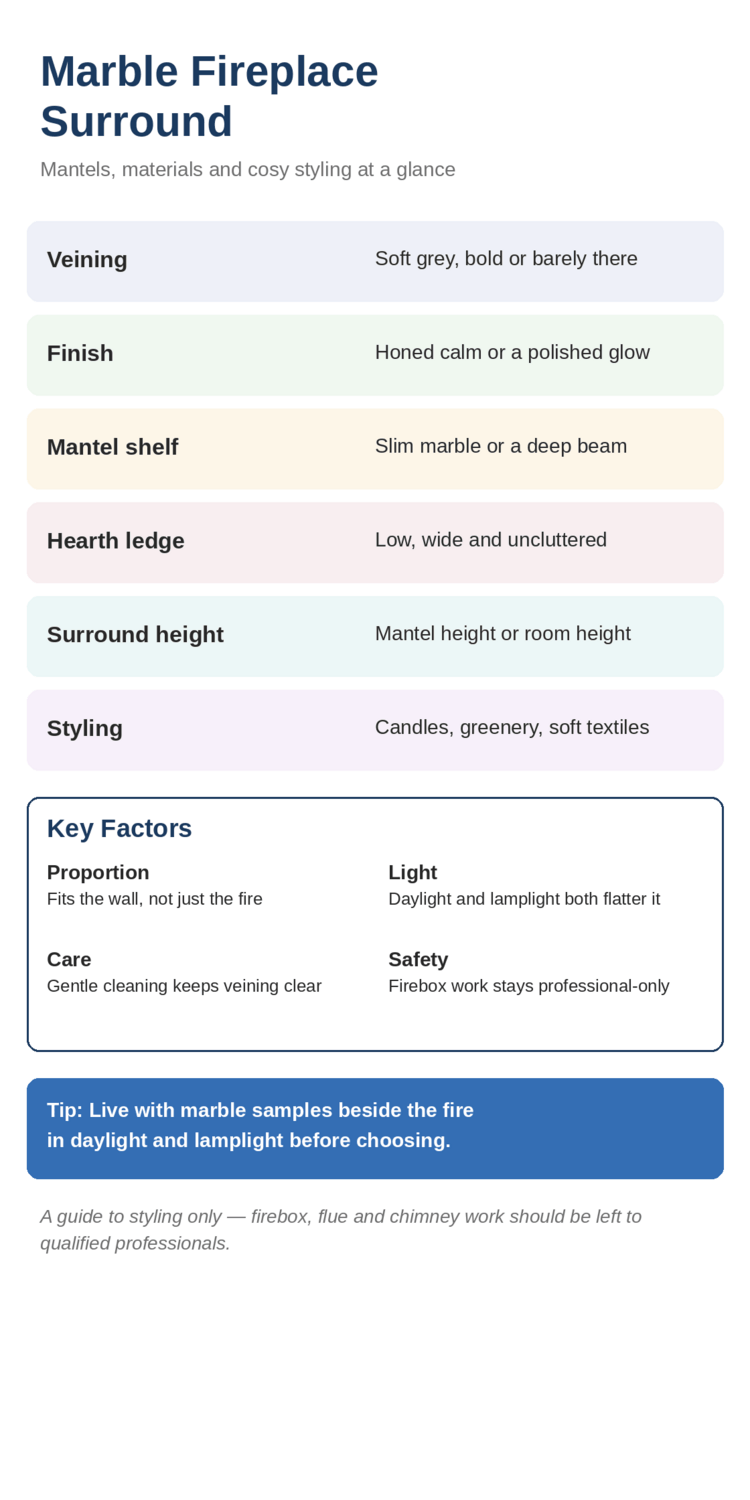
Finish changes the character of marble more than many people expect. A honed finish has a soft, matte surface that absorbs light and feels calm, almost chalky to the eye. It suits rooms aiming for a relaxed, lived-in mood, and it forgives the odd mark more readily in daily life. A polished finish reflects light, deepens the veining and gives the surround a brighter, more formal glow, especially in the evening when lamps and firelight play across it.
Think about glare as well as glamour. A highly polished surround opposite a bright window can throw back a sharp reflection, while a honed surface stays quiet in strong daylight. In a north-facing room, or one lit mainly by lamps, polish can lift a wall that might otherwise feel flat. The room’s light, more than any rule about style, should settle the question.
Finish also affects how the surround feels to live with. Polished marble shows smudges and dust sooner, so it asks for a little more wiping; honed marble hides everyday marks better but still rewards gentle, regular cleaning. Choose the finish that matches the care the household will genuinely give, and the surround will keep looking its best without becoming a burden.
4. Mantel Shelves That Sit Well on Marble
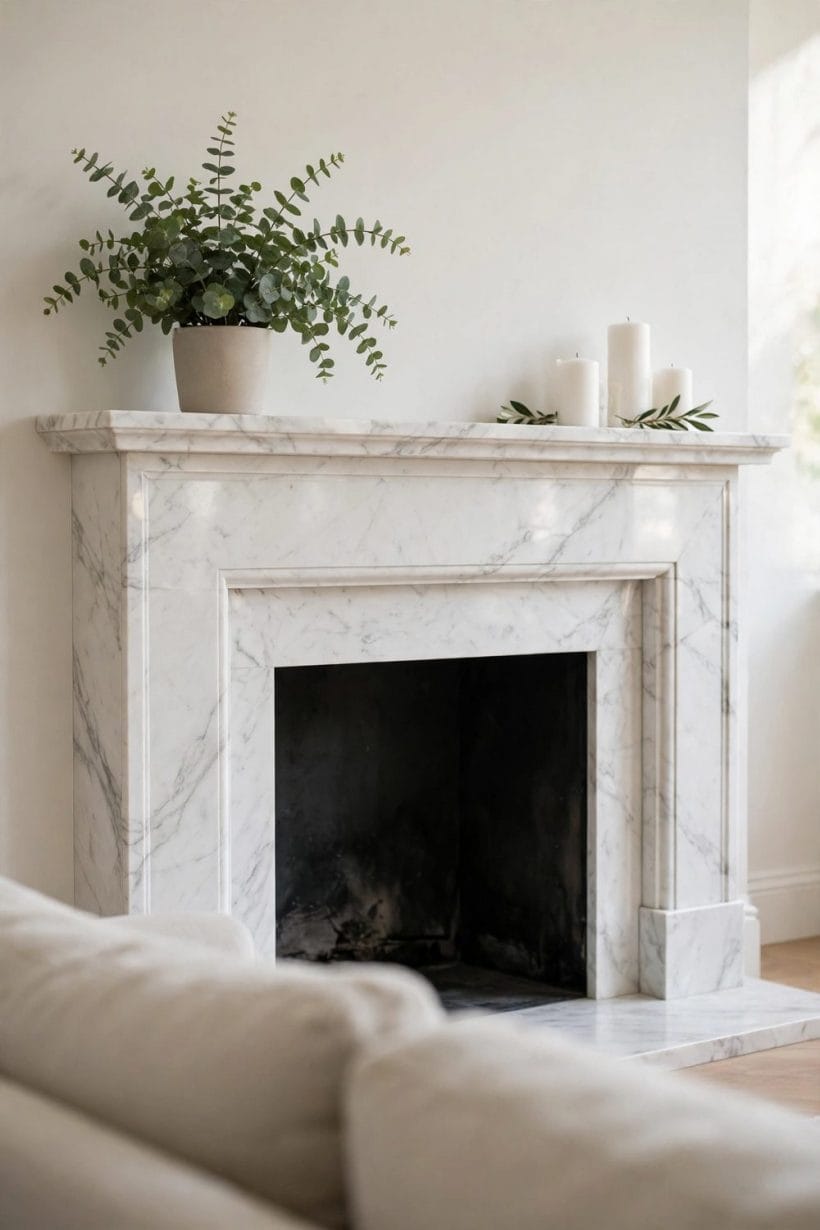
The mantel shelf is where a marble fireplace meets daily life, holding candles, greenery and the occasional framed picture. A slim marble shelf that matches the surround keeps the whole composition in one material and one colour, which reads as calm and contemporary. A deeper shelf, whether marble or timber, gives more room for styling and a stronger horizontal line across the wall, which can anchor a tall chimney breast.
Proportion matters more than decoration here. A shelf that juts too far forward can crowd a small room and cast a heavy shadow over the fire, while one that sits too shallow leaves objects perched on an edge. Look at the shelf from the usual seating position, not just from standing close to the fire, and check that the line of the shelf feels balanced against the height of the surround below it.
Keep the dressing restrained. A pair of candlesticks, a small plant and one framed piece will usually do more for a marble fireplace than a crowded shelf, because the veining already supplies visual interest. Leave breathing space at each end of the shelf so the eye can rest, and resist adding pieces simply because the shelf has room. The stone deserves to be seen.
5. The Hearth Ledge and What Belongs on It
The hearth ledge grounds the surround, giving the fire a base and the room a place to pause. A low, wide ledge in matching marble extends the stone’s calm across the floor line and offers a perch for a basket, a stack of logs or a pair of candle lanterns. A narrower ledge keeps the footprint tight, which suits a compact room where floor space is precious.
What sits on the hearth should earn its place. A log basket beside the fire feels natural and useful, while a cluster of small ornaments can quickly look cluttered against veined stone. Choose a few larger pieces over many small ones, and leave part of the ledge bare so the marble itself remains visible. The hearth is a working edge of the room, not a display shelf, and a little emptiness keeps it looking intentional.
Safety and tidiness go together here. Keep textiles, baskets and paper well clear of the fire opening, and keep the hearth itself swept and uncluttered. If anything about the firebox, the opening or the flue needs attention, that work is for a qualified professional, and no amount of hearth styling substitutes for it. A calm hearth is a safe hearth, and it also happens to look better.
6. Choosing the Height of a Marble Surround
Surround height changes the whole wall. A mantel-height surround stops at the shelf and leaves plain wall above, which suits rooms where artwork, a mirror or simply breathing space belongs above the fire. It keeps the composition low and relaxed, and it works well in rooms with lower ceilings or a snug, cottage feel.
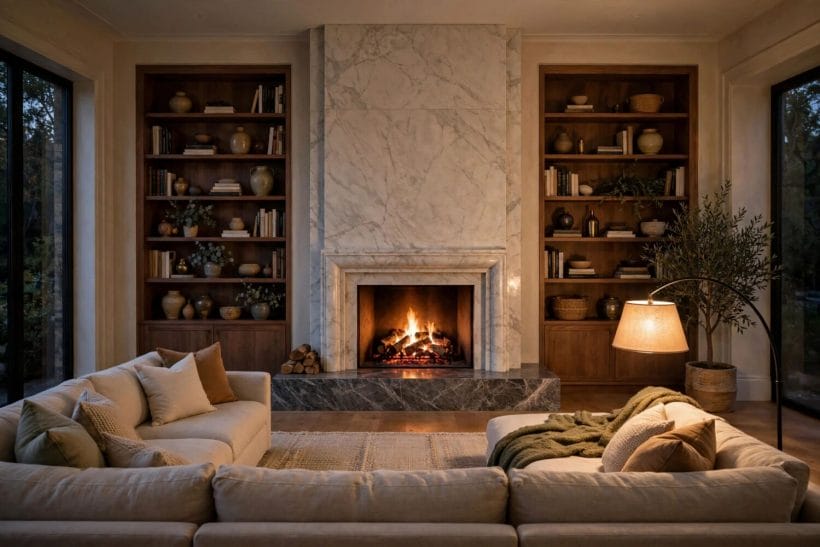
A full-height surround carries marble up the chimney breast, turning the wall into a single slab of stone. That drama suits taller rooms and open-plan spaces, where a short surround might feel unfinished against a large expanse of wall. Book-matched veining comes into its own at full height, creating a symmetrical pattern that reads almost like a mural. The trade-off is that the stone dominates the wall, so seating and textiles should stay soft and simple to balance it.
Between those two poles sits the mid-height surround, where marble rises a little above the mantel before giving way to plaster or paint. This can be a graceful compromise in a room that wants more stone than a mantel alone, without committing the whole wall. Whichever height is chosen, check it against the room’s proportions from the doorway, since that first view is how the surround will most often be seen.
7. Colours That Keep Marble Looking Warm
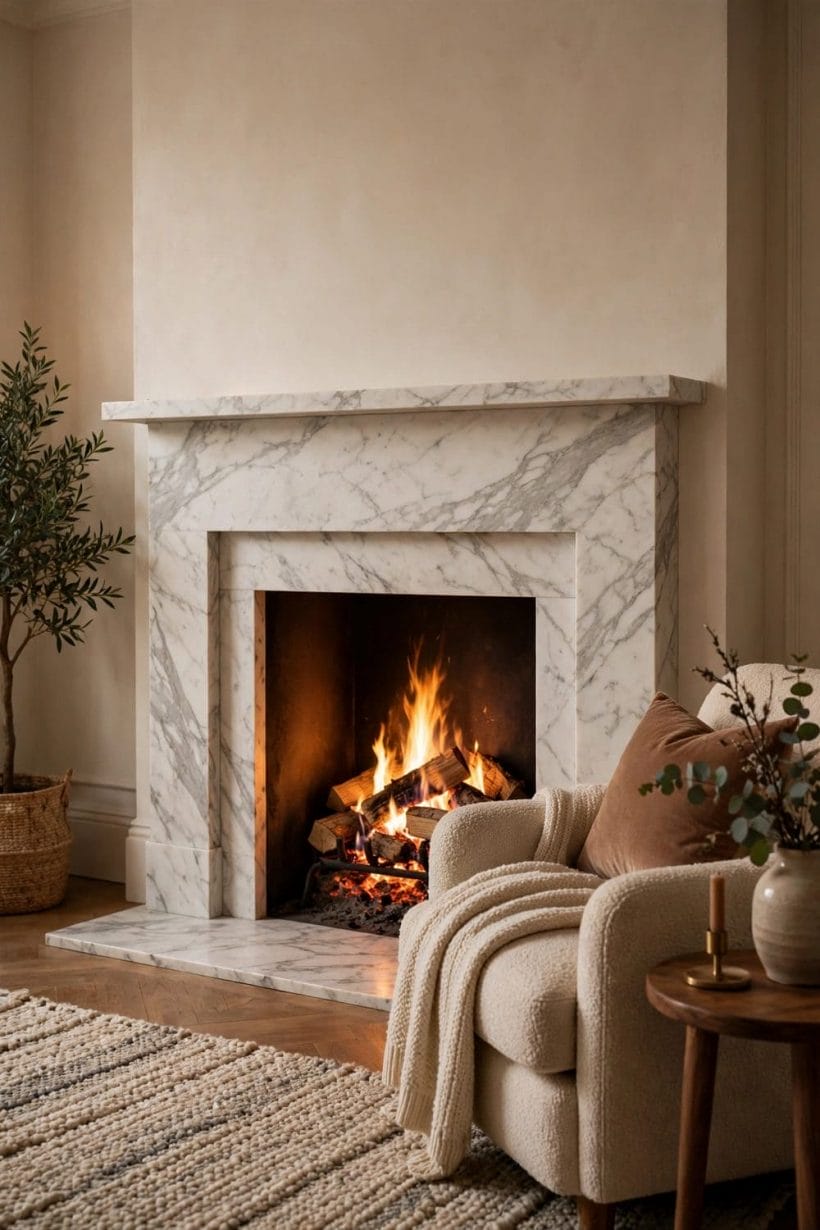
White and grey marble can feel cool, so the colours around it do important work. Warm neutrals — cream, oatmeal, soft taupe and warm grey — keep the wall inviting without competing with the veining. Timber tones, from pale oak to deeper walnut, add warmth through furniture and floors, and a rug in a muted rust or sage can anchor the seating area without shouting.
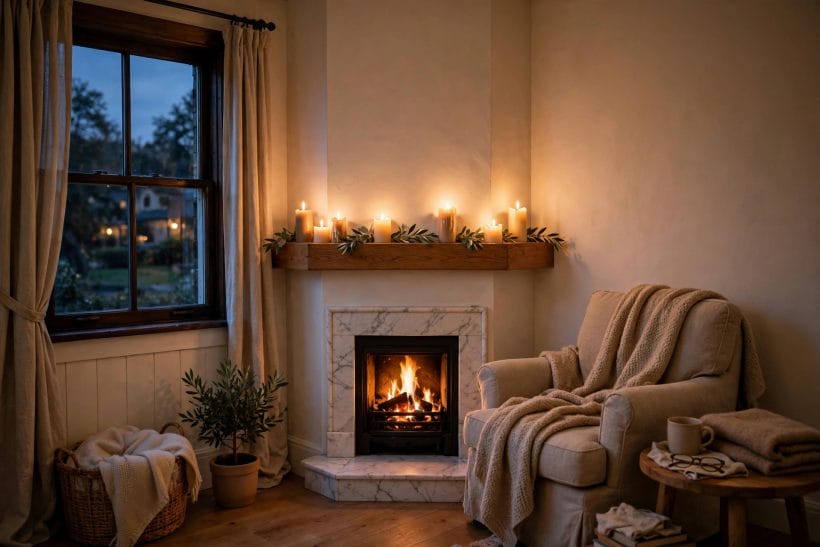
Soft furnishings are the easiest place to add warmth, and they can change with the seasons. A wool throw in a warm neutral, cushions in muted terracotta or moss, and curtains in a soft natural linen all take the edge off cool stone. In summer, lighter linens and paler cushions keep the room fresh; in winter, deeper tones and heavier textures make the same marble fireplace feel cosy rather than chilly.
Wall colour deserves the same care. A warm white or pale greige behind and beside the surround flatters grey veining, while a stark, cold white can make the wall feel clinical. Test paint beside the marble in the room’s own light, and lean toward warmth. The goal is a wall that feels like part of the room, not a gallery plinth.
8. Soft Furnishings for a Cosy Marble Fireplace
A marble fireplace invites lingering, and seating should make that easy. Armchairs angled toward the fire, a sofa facing it squarely, or a deep reading chair beside the hearth each create a different kind of cosiness. The common thread is softness: linen, wool and cotton textures that contrast with the cool, hard stone and invite someone to sit a while.
Rugs matter more than they first appear to. A rug that reaches toward the hearth ties the seating group to the fire and softens the transition from hard floor to hard stone. Choose a texture that feels good underfoot — wool, cotton or a soft flatweave — and a pattern quiet enough not to fight the veining. The rug should frame the fire, not compete with it.
Throws and cushions complete the picture, but restraint still pays. A single throw draped over an armchair, a couple of cushions in warm tones, and perhaps a footstool near the fire are enough. The marble fireplace is already a strong presence; soft furnishings should welcome people toward it, not bury it under layers of decoration.
9. Lighting That Flatters Marble in the Evening
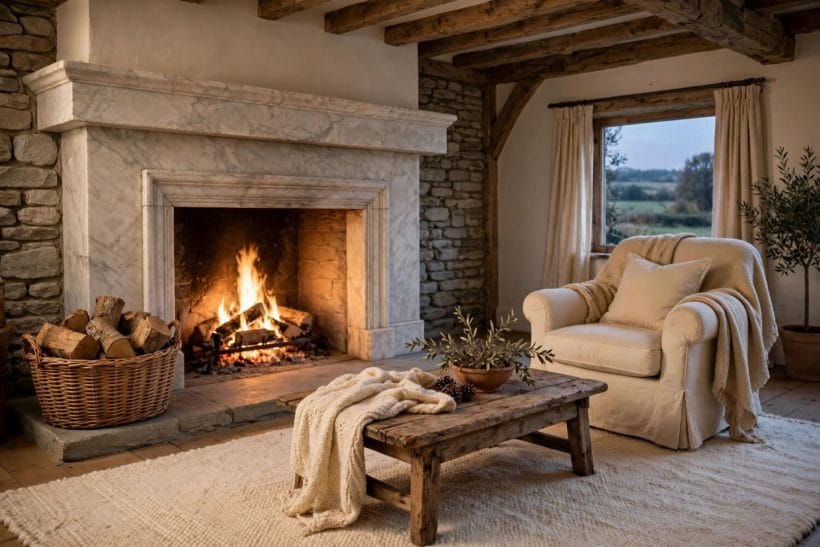
Evening light transforms a marble fireplace. Firelight alone gives the stone a warm, flickering glow, and veining that looked grey by day can take on a softer, warmer cast. Layered lighting builds on that: a floor lamp beside an armchair, a pair of table lamps flanking the surround, or a soft wall light washing the chimney breast each add warmth without harshness.
Keep the light low and warm in tone. Bright overhead light can flatten veining and make marble look cold, while lamps at seating height create pools of warmth that invite people to gather. Candles on the mantel add a gentle, living light, provided they sit safely clear of curtains, greenery and anything flammable, and are never left burning unattended.
Dimming makes a real difference. A room that can move from bright daylight to a low evening glow lets the same surround serve two moods: a fresh, pale wall by day and a cosy, glowing centrepiece by night. If the room has a mirror or artwork above the mantel, a small picture light can draw the eye upward and complete the composition after dark.
10. Keeping Marble Looking Clean and Bright
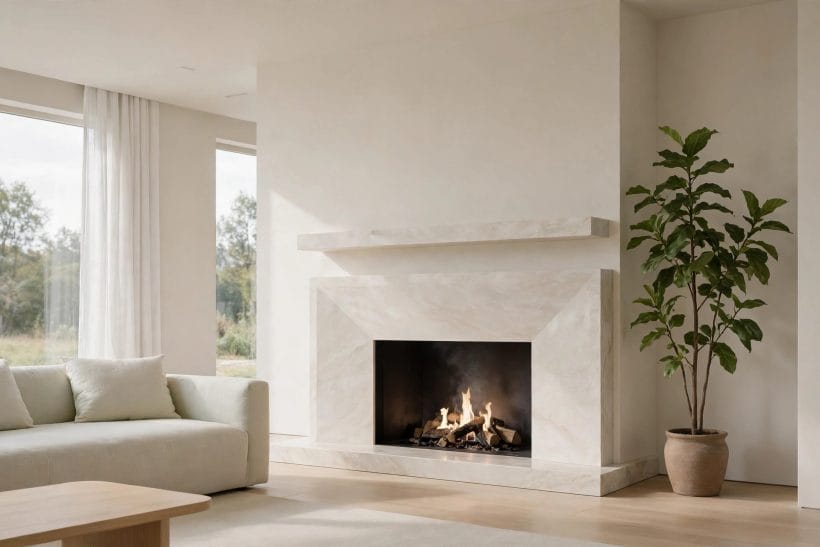
Marble rewards gentle, regular care. A soft cloth, used often, keeps dust from dulling the surface, and spills wiped promptly are far easier to deal with than marks left to settle. Avoid harsh or abrasive cleaners, which can dull a polished finish or etch the surface, and when in doubt, follow the advice of the stone supplier or a stone-care professional rather than improvising.
Prevention is the quieter half of care. Coasters under glasses on the mantel, trays under candles, and a habit of keeping sooty logs and ash off the hearth ledge all protect the stone from everyday wear. A marble fireplace that is wiped as part of the normal room tidy stays bright with little extra effort, while one left for months can need professional attention to recover its glow.
Sealing and deeper care are questions for professionals who know the particular stone, since marble varies and a wrong treatment can do more harm than good. The same principle applies to any work on the firebox, flue or chimney: leave it to qualified people, and keep household care to the surface of the stone and the styling around it. That division keeps the fireplace both beautiful and sound.
Final Considerations
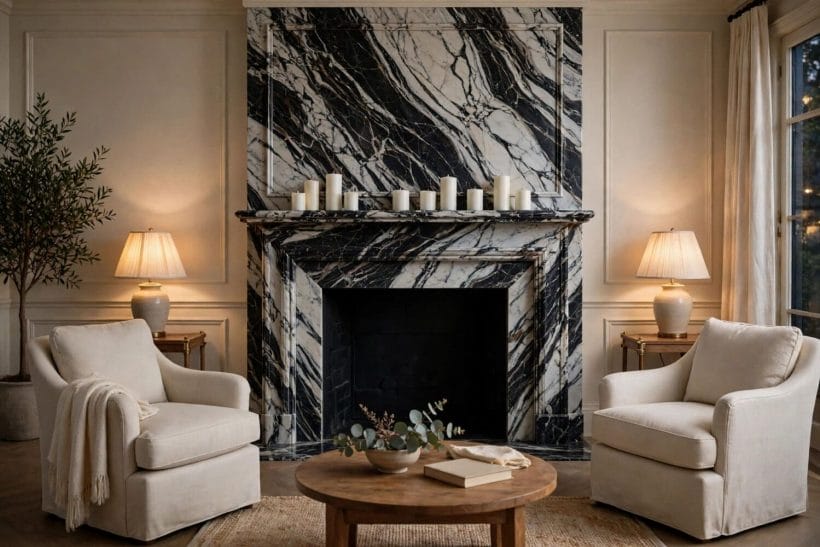
A marble fireplace succeeds when stone, proportion and styling work together rather than competing. Choose veining that suits the room’s busyness, a finish that suits its light, a mantel shelf that balances the wall, and a hearth that stays calm and uncluttered. Warm colours, soft furnishings and low evening light then turn cool stone into a cosy centrepiece, and gentle, regular care keeps it looking bright.
For readers planning a wider room scheme, the ideas in this guide sit alongside broader inspiration for tiny house interiors, small living room ideas and tiny house designs, as well as contemporary home design ideas and tiny living room ideas. Each of those rooms shares the same principle: a strong focal point, kept simple, lets the rest of the room relax around it.
Above all, let the marble fireplace be enjoyed rather than fussed over. A fire lit in the evening, a chair angled toward it, a throw within reach — that is the point of the whole composition. Keep firebox, flue and chimney work in professional hands, keep the stone clean and the styling simple, and the surround will reward the room for years.

0 Comments