


A porch earns its keep in the quiet moments: a slow morning drink, a long evening talk, a neighbour pausing at the gate. This collection gathers seventy-five ideas for shaping a modern porch that feels calm, comfortable and genuinely welcoming, from furniture and swings to lighting and the small details at the door.
Read it as a menu rather than a rulebook. Pick the ideas that suit your home, your climate and the way you actually live, and leave the rest for another season.
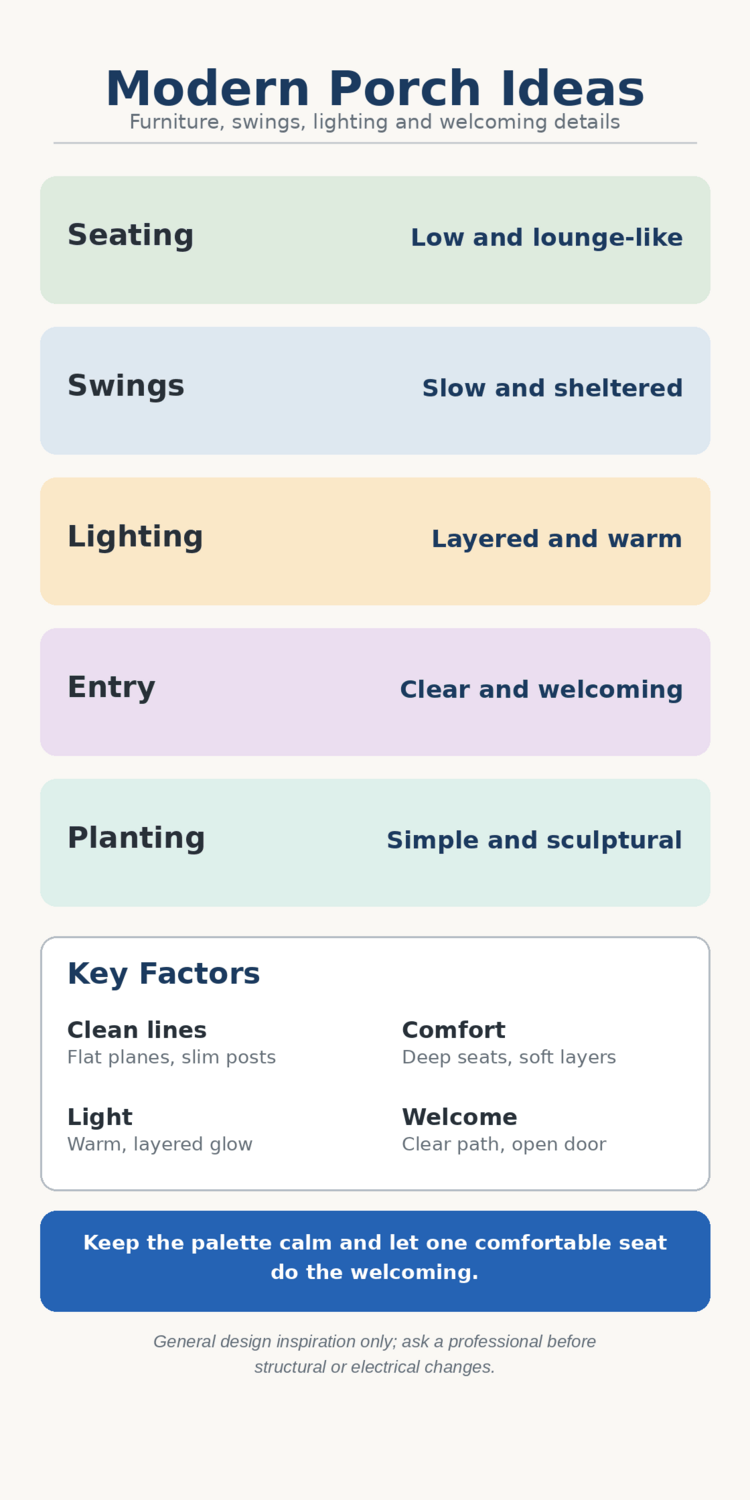
1. Clean Lines and an Open Layout
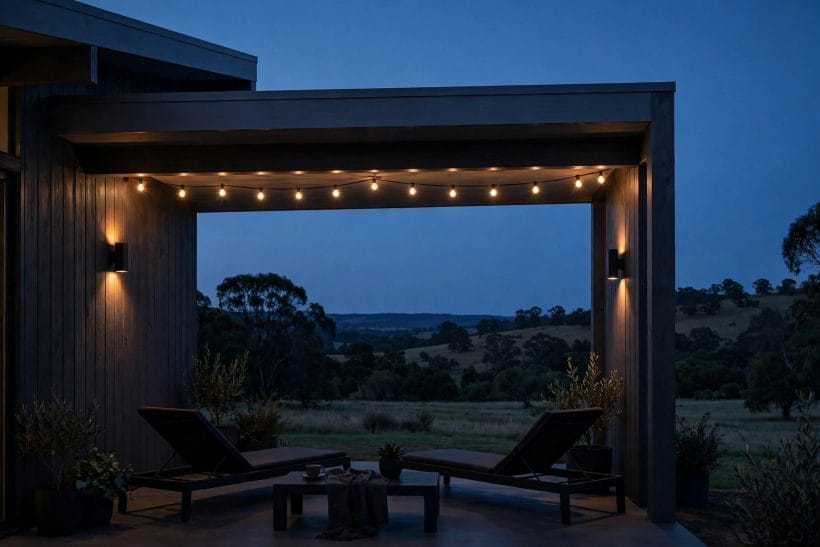
This style begins with restraint. Flat planes, slim posts and uncluttered floors let furniture, planting and light do the talking, and an open layout keeps the space feeling generous even when the footprint is modest. These ideas set that calm foundation before a single chair is chosen.
| Part of the porch | What to aim for |
|---|---|
| Layout | Open, easy movement, clear path to the door |
| Furniture | Low profiles, soft cushions, few pieces |
| Lighting | Layered, warm, gentle after dark |
| Details | Simple planters, one or two textures, nothing fussy |
For a broader look at porch styling in smaller homes, see these porch ideas for tiny houses.
1. Keep the floor plane simple
Choose one calm floor finish and let it run across the whole porch without competing borders or busy patterns. A single quiet surface makes furniture and planting stand out, and it keeps the space feeling larger than a patchwork of finishes ever could.
2. Let slim posts carry the roofline
Slender posts in a dark, muted finish keep the structure feeling light while still framing the view. They suit a flat or gently sloping canopy, and they leave sightlines open so the porch connects with the garden rather than shutting it out.
3. Leave breathing room around each seat
Resist the urge to fill every corner. Space between chairs and tables lets people move easily, pull a seat closer for conversation, or step aside with a drink, and an uncluttered porch always feels more inviting than a crowded one.
4. Frame one view, not every view
Angle the main seating toward the best outlook, whether that is a garden, a street tree or a distant horizon. One considered view gives the porch a sense of purpose, while the remaining sides can stay simple and unadorned.
5. Use a single strong horizontal line
A long bench, a low wall or a continuous rail can give the porch a calm horizontal rhythm. Repeating that line in the furniture and the planting keeps the eye moving gently along the space instead of jumping between competing features.
6. Hide clutter behind clean panels
Storage, bins and meters all have a habit of drifting onto porches. A plain panel, a slatted screen or a tidy cupboard keeps everyday necessities out of sight while preserving the clean look that defines the style.
7. Choose one accent material and repeat it
Timber, stone, black metal or woven fibre can each anchor a porch, but the effect comes from repetition. Carry the chosen material through two or three details, such as a bench, a planter and a light fitting, and let everything else stay quiet.
8. Keep the ceiling calm and pale
A pale, plain ceiling bounces daylight back into the porch and makes the space feel taller. Avoid heavy beams or ornate finishes here; the ceiling should disappear gently so the furniture and the garden take centre stage.
2. Seating That Invites Long Stays
Seating is where a porch succeeds or fails. Deep cushions, supportive backs and a table within easy reach turn a quick sit-down into a long stay, and a mix of lounge and upright seats lets everyone find their comfortable spot.
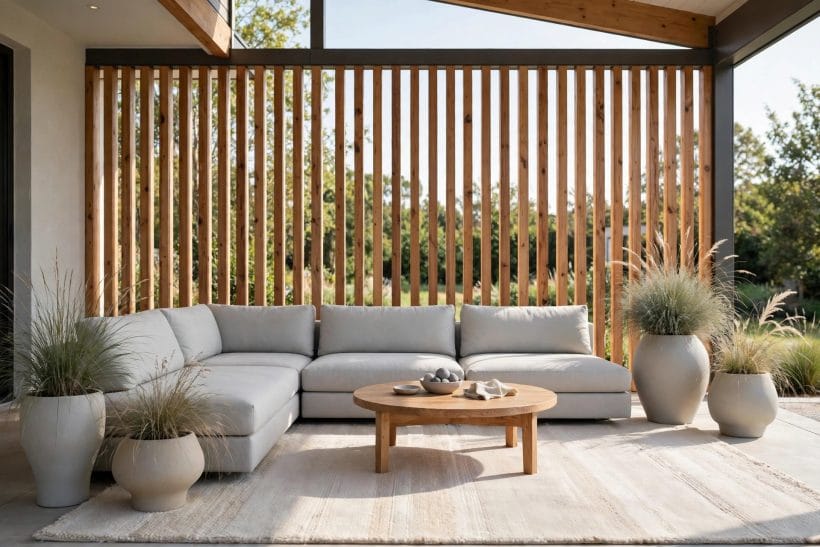
Where the porch meets an outdoor platform, these deck ideas for small homes can help the two spaces read as one.
9. Start with a low lounge sofa
A low-profile sofa with generous cushions sets a relaxed tone for the whole porch. Keep its shape simple and its colour calm, then add interest through cushions and throws rather than through the frame itself.
10. Pair lounge chairs for conversation
Two lounge chairs angled slightly toward each other create an instant conversation corner. Add a small table between them for drinks, and the arrangement works just as well for quiet reading as for long talks.
11. Add a bench along the wall
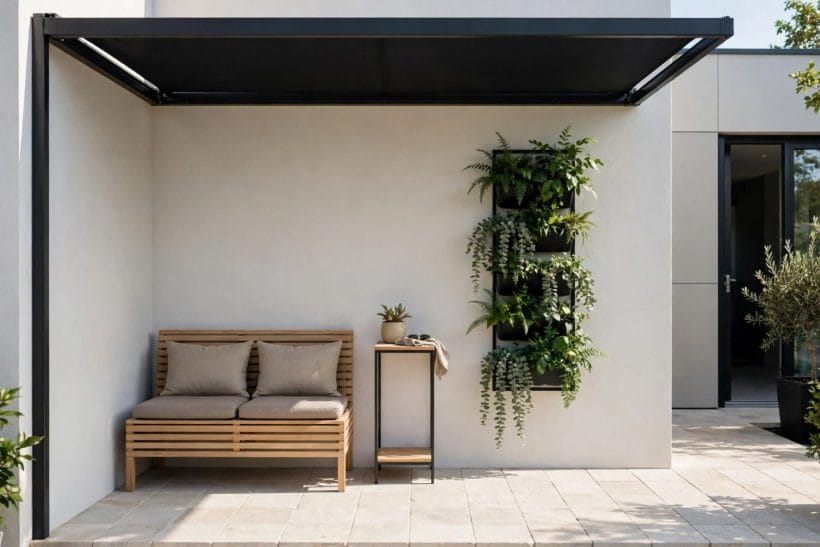
A built-in or freestanding bench gives flexible seating without visual weight. It welcomes an extra guest, holds a tray or a book, and doubles as a perch for putting on shoes before heading out.
12. Mix one upright chair with lounge seats
Not everyone wants to sink into a deep cushion, so include at least one upright chair with a firm seat and a supportive back. The mix suits different ages and comfort needs, and it keeps the porch genuinely usable for everyone.
13. Layer cushions in one calm palette
Choose cushion covers in closely related tones, such as warm white, soft grey and muted sage, and vary texture instead of colour. The result feels considered and restful, and covers can be swapped with the seasons for a fresh look.
14. Keep a throw within reach
A soft throw draped over an armrest or folded in a basket invites people to linger as the evening cools. Choose a washable fabric in a quiet tone, and keep it close to the seats where it will actually be used.
15. Set a side table beside every seat
A drink with nowhere to rest is a small frustration that shortens every stay. Small side tables beside each seat solve it simply, and they give books, glasses and phones a tidy home too.
16. Choose weather-ready fabrics honestly
Outdoor fabrics should cope with sun, rain and everyday spills without constant fuss. Check how covers wash and dry before buying, and store loose cushions under cover during long wet spells so they stay fresh.
3. Swings and Hanging Seats
Few porch features are as loved as a swing. The gentle motion slows the pace of the whole space, and a hanging seat becomes the spot everyone gravitates toward, morning and evening alike.
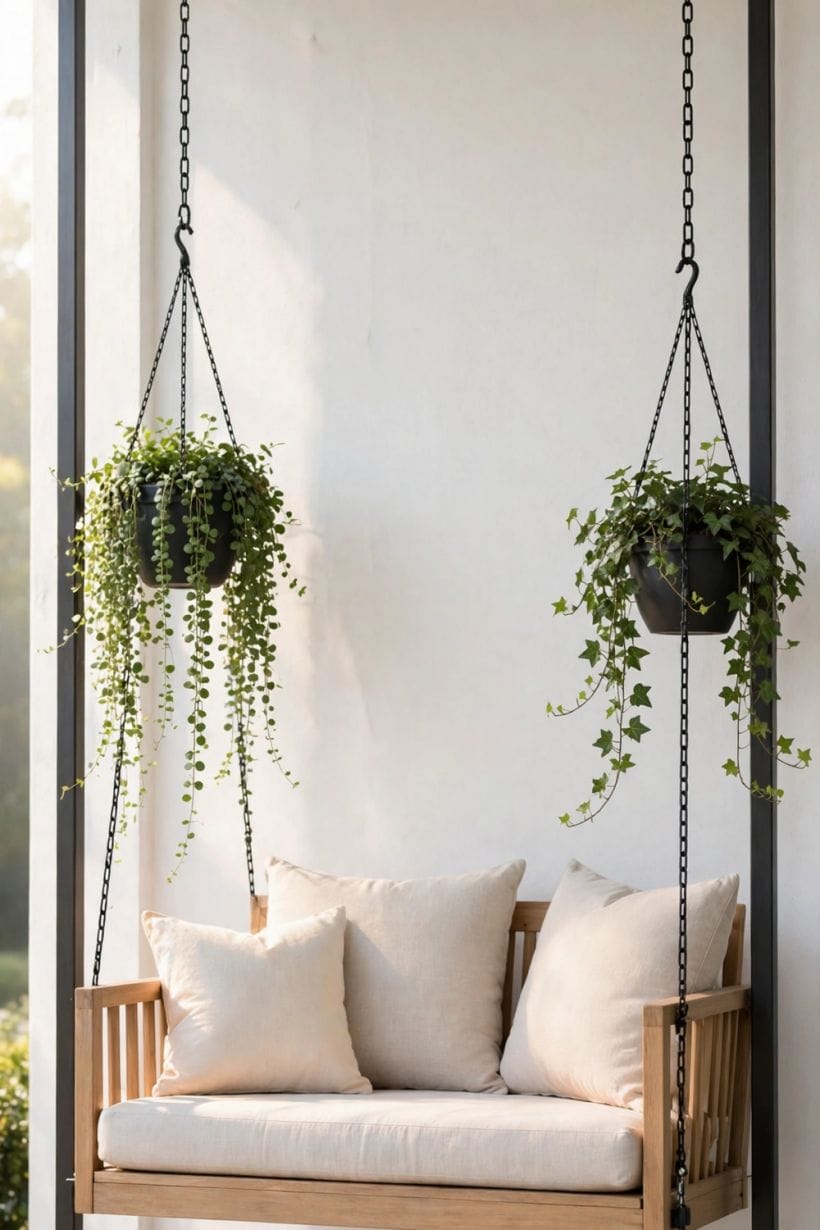
17. Hang a classic porch swing
A timber swing bench with a deep seat and a comfortable back suits porches of many sizes. Dress it with pale cushions and a folded throw, and keep the chains or ropes neat and unobtrusive so the swing itself stays the focus.
18. Try a hanging chair for one
Where space is tight, a single hanging chair offers the same gentle motion in a smaller footprint. Tuck it into a sheltered corner with a small table nearby, and it becomes a private reading nook.
19. Keep swing cushions simple and soft
Thick, well-fitted cushions transform a swing from decorative to genuinely comfortable. Choose pale, washable covers and avoid fussy trims that catch on clothing or collect dust outdoors.
20. Anchor the swing with planting nearby
Trailing plants in hanging pots beside a swing soften the frame and add movement of their own. Keep the planting light so it does not crowd the swing, and choose varieties suited to the light your porch receives.
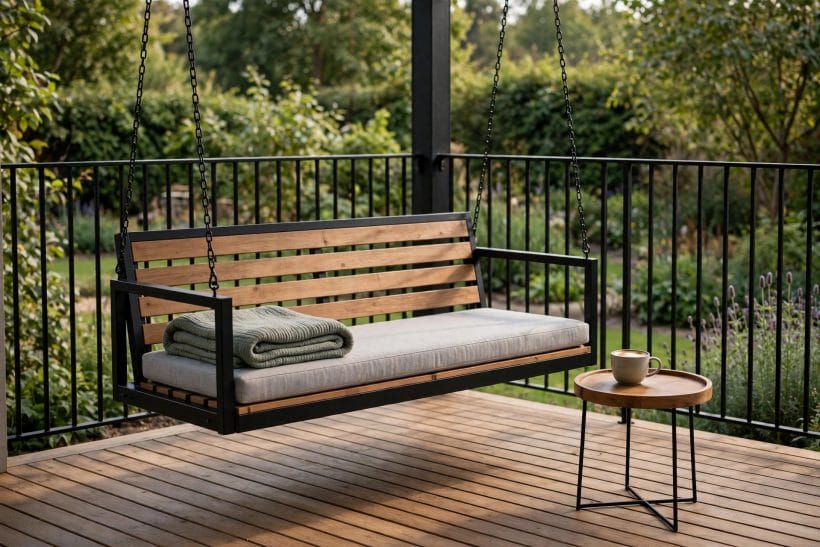
21. Add a small table beside the swing
A swing works best with a place for a drink within arm’s reach. A slim side table, fixed or freestanding, keeps cups safe without interrupting the swing’s motion or cluttering the floor.
22. Check swing fixings with a professional
A swing must hang from structure that can carry it safely, so have the fixing points checked by a qualified professional before installation. Never guess at supports or hang a swing from a decorative ceiling alone.
23. Style the swing for every season
Swap cushion covers and throws as the year turns: lighter fabrics for warm months, warmer layers for cooler evenings. A swing that adapts through the seasons stays in use far longer than one dressed only for summer.
4. Lighting That Carries the Evening
Good lighting is what keeps a porch alive after dark. Layered, warm light flatters faces, guides visitors to the door and lets the porch glow gently without glaring into the garden or the street.
Lighting also shapes the mood of the wider exterior, as these exterior ideas for small homes show.
24. Layer three kinds of light
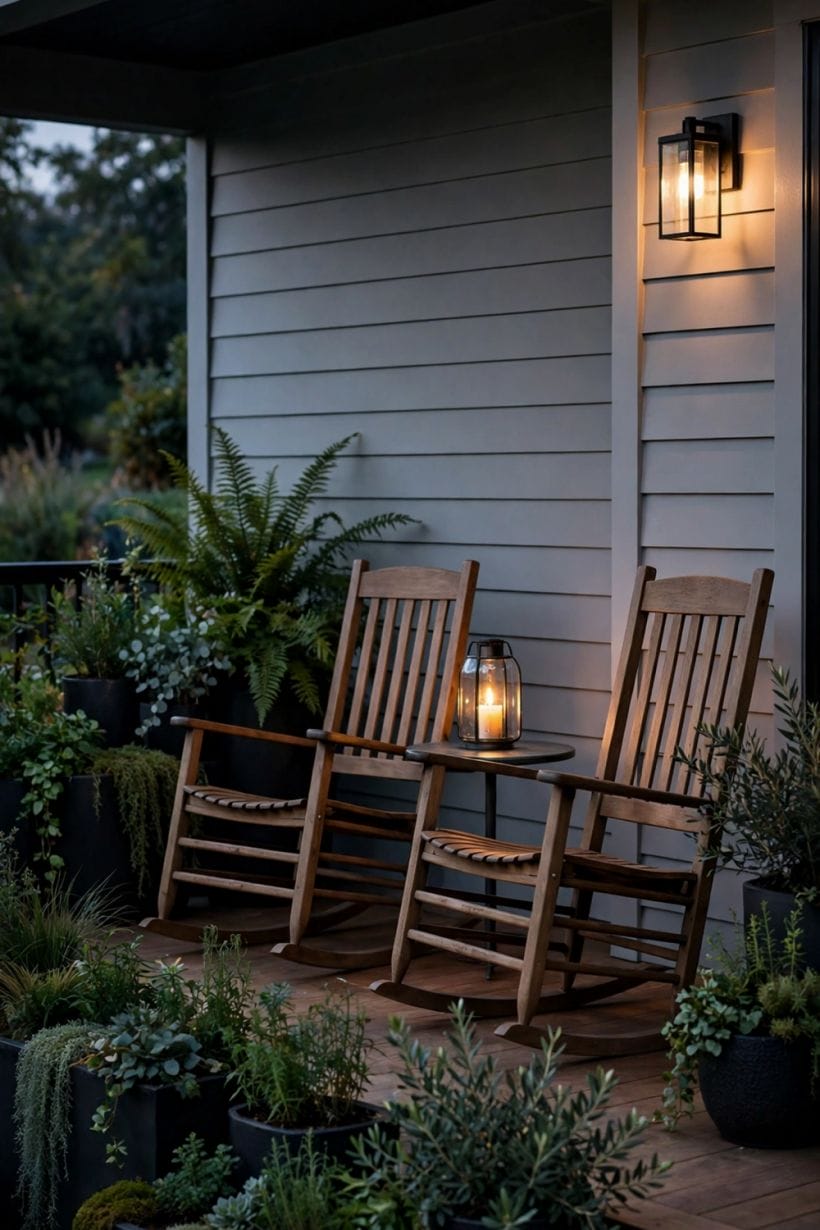
Combine gentle overhead light, warm wall light and a soft glow at table level. Layering lets you brighten the porch for gatherings or dim it for quiet evenings, and it avoids the flat glare of a single harsh fitting.
25. Choose warm tones for every bulb
Warm light flatters skin, timber and planting, while cool light can make a porch feel stark. Keep the tone consistent across fittings so the whole space glows evenly rather than in mismatched patches.
26. Wash the wall beside the door
A wall light that washes light down a pale wall creates a welcoming pool of brightness at the entrance. It helps visitors find the door easily and gives the porch a soft backdrop for evening seating.
27. String festoon lights with restraint
A single neat run of festoon lights under a canopy adds celebration without clutter. Keep the line level, the spacing even and the glow warm, and resist adding extra strands that turn charm into clutter.
28. Add lanterns at floor level
Lanterns on the floor or on low tables bring light down to seated height, where it matters most. They create pools of warmth around chairs and tables, and they can move with the furniture as arrangements change.
29. Light the path, not just the porch
Low, gentle lights along the approach guide visitors safely and make the porch feel connected to the garden. Keep them subtle and evenly spaced so the path glows rather than glares.
30. Use dimmers where wiring allows
Dimming gives a porch two moods from one set of fittings: brighter for welcome and conversation, softer for late evenings. Have any electrical work carried out by a qualified professional, and never alter wiring yourself.
31. Keep light out of neighbours’ eyes
Angle fittings downward and shield bulbs so light falls on your porch, not into neighbouring windows or the street. Considerate lighting is part of good porch manners, and it keeps the glow feeling intimate.
5. A Welcoming Entry
The entry is the porch’s handshake. A clear path, a visible door and a few thoughtful details tell visitors they are expected, and they set the tone for everything inside.
Planting along the approach plays a big part in that welcome, and these garden ideas for small homes offer gentle ways to shape it.
32. Make the door easy to find
Visitors should spot the front door from the gate without hesitation. Keep the approach clear, the door visible and the house number legible, and avoid screens or planting that hide the entrance.
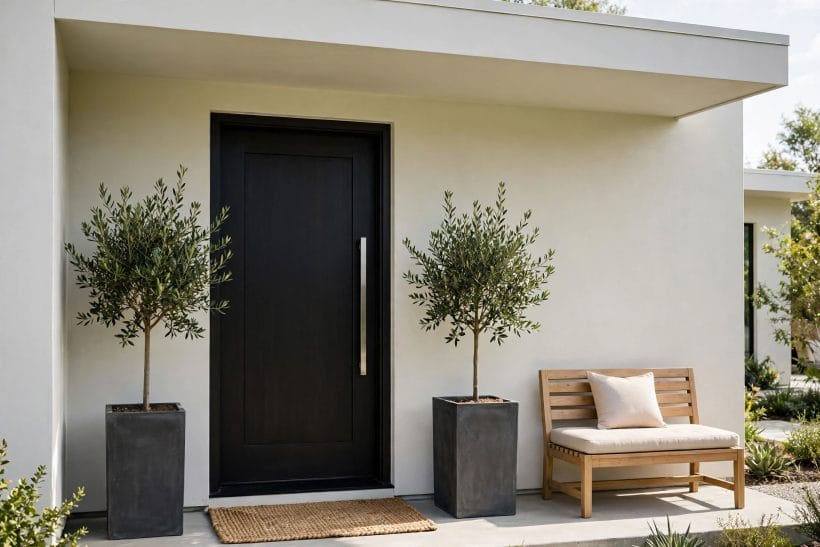
33. Frame the door with matched planters
A pair of tall planters, one on each side of the door, gives the entry symmetry and presence. Choose simple containers and sculptural plants, and keep them watered and trimmed so the welcome stays fresh.
34. Lay a generous woven doormat
A wide, well-made doormat in a natural tone grounds the entry and handles muddy shoes gracefully. Choose one that suits the porch floor and shake it out regularly so it always looks cared for.
35. Add a bench near the door
A bench beside the entrance gives visitors somewhere to wait and residents somewhere to pause with bags or parcels. Keep it simple and sturdy, with a single cushion for comfort.
36. Keep the entry free of clutter
Shoes, parcels and tools tend to gather by the door, but a cluttered entry feels unwelcoming. Give everyday items a proper home nearby, such as a tidy basket or a slim cupboard, and keep the threshold clear.
37. Choose a door colour with confidence
A deep, muted door colour against pale walls gives the entry a confident focal point. Keep the surrounding trim quiet so the door itself carries the welcome, and finish it well so it weathers gracefully.
38. Add a personal detail at the threshold
A favourite pot, a handmade tile or a simple wreath in season can make an entry feel personal without tipping into clutter. Choose one detail that means something to your household and let it speak quietly.
6. Planting That Softens the Edges
Planting is what turns a built structure into a living place. Here, restraint works best: a few sculptural plants, repeated thoughtfully, soften hard lines without hiding the architecture.
For the beds and borders beyond the porch, these backyard landscaping ideas help the planting feel like one continuous garden.
39. Choose sculptural plants for impact
Olive trees, grasses and architectural shrubs give strong shapes that suit clean porch lines. One well-chosen plant in a simple pot often has more presence than a crowd of small, fussy specimens.
40. Repeat one plant for rhythm
Repeating the same plant along a porch, in matching pots, creates a calm rhythm that ties the space together. The repetition reads as intentional and modern, and it simplifies watering and care.
41. Use grasses for soft movement
Ornamental grasses sway gently in the breeze and soften the edges of seating areas. Their fine texture contrasts beautifully with timber, stone and concrete, and they ask little in return.
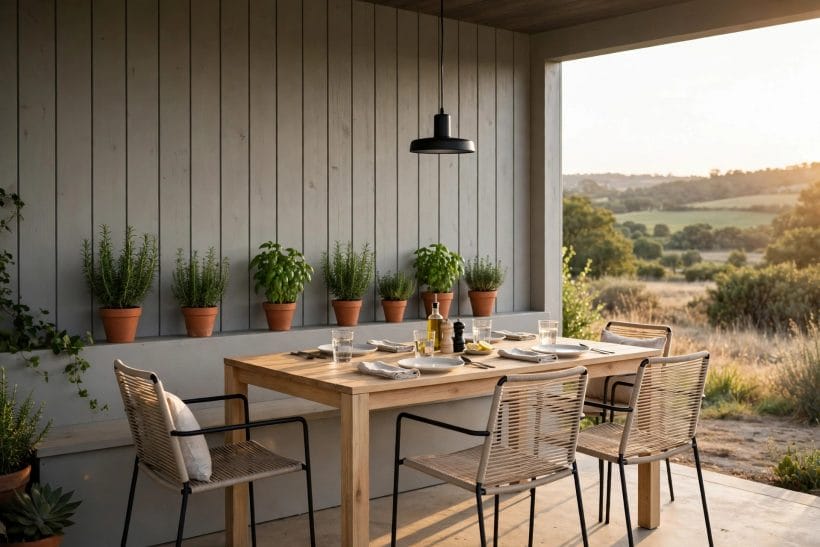
42. Grow herbs within reach of the door
A row of potted herbs near the entrance adds scent, greenery and everyday usefulness. Snipping herbs for cooking becomes part of the porch routine, and the pots stay neat when grouped along a wall or ledge.
43. Try a wall planter for vertical green
Where floor space is short, a wall planter lifts planting to eye level and leaves the floor clear. Keep the arrangement simple, with trailing and upright forms mixed gently, and check watering access before planting.
44. Keep pots simple and generous
Large, plain pots in stone, concrete or muted ceramic suit clean-lined porches far better than small, ornate ones. Generous pots also hold moisture longer, which keeps plants happier through dry spells.
45. Let one climber soften a post
A single well-behaved climber trained up a post or along a rail adds softness without overwhelming the structure. Keep it trimmed clear of lights and walkways so it frames rather than crowds the porch.
46. Plan planting for every season
Choose a mix that offers something in each season, such as evergreen structure, spring flowers and autumn colour. A porch that looks cared for all year round feels welcoming in every month, not just in summer.
7. Colour, Texture and Pattern
Colour and texture give a porch its personality. Here the palette stays calm, with interest coming from woven fibres, warm timber, cool stone and soft fabrics rather than from loud colour. That restraint is what lets a single texture stand out: the grain of a timber bench, the weave of a rug, or the softness of a linen cushion against a plain wall. When every surface is quiet, the few surfaces with character carry the whole feeling of the space, and the porch reads as calm rather than empty.
47. Build the palette from neutrals
Warm whites, soft greys, pale timber and muted greens form a palette that never tires. Use these as the foundation, then add a single deeper tone, such as charcoal or olive, for contrast.
48. Add warmth through timber tones
Natural timber, whether in furniture, screens or planters, warms a pale porch instantly. Keep the timber tone consistent across pieces so the warmth feels deliberate rather than accidental.
49. Layer woven textures for softness
Woven rugs, baskets and chair seats introduce a tactile softness that balances hard floors and walls. Choose natural fibres in quiet tones, and keep the weave open enough to feel light rather than heavy.
50. Use a rug to define the seating zone
An outdoor rug under the main seating group marks the conversation area and adds comfort underfoot. Choose a flat, washable weave in a calm tone that echoes the cushions without competing with them.
51. Echo the house colours outside
Picking up a colour from the house walls or trim helps the porch feel like part of the home rather than an afterthought. A cushion, a pot or a throw in that tone is enough to make the connection.
52. Keep patterns quiet and geometric
If pattern appeals, choose simple stripes or gentle geometric weaves in muted tones. Quiet patterns add interest at close range without disturbing the calm that defines the modern look.
53. Let one bold cushion do the talking
A single cushion in a deeper tone can lift an otherwise neutral arrangement beautifully. Keep the rest of the palette calm so that one accent feels intentional, and swap it when you fancy a change.
8. Dining and Gathering Outdoors
A porch that can host a meal becomes a true outdoor room. A well-placed table, comfortable chairs and gentle light turn everyday dinners and weekend gatherings into occasions worth lingering over.
Where dining spills beyond the porch, these patio ideas for small homes can help the spaces flow together.
54. Choose a table that fits the gathering
Size the dining table for the group you actually host, not the largest crowd imaginable. A table that feels full with your usual group encourages everyday use, while extra chairs can join for bigger occasions.
55. Hang a pendant over the table
A single pendant light above the dining table creates a pool of warmth that draws people together after dark. Keep the shade simple and the glow warm, and have the fitting installed by a qualified professional.
56. Keep dining chairs light and movable
Chairs that are easy to pull in and push back make gatherings relaxed rather than formal. Slim frames and woven seats suit the modern look, and they store neatly when the table is used for other purposes.
57. Set the table simply
Plain plates, linen napkins and a small jug of garden greenery are all a porch table needs to feel special. Simple settings let conversation and food take centre stage, and they suit the calm style of the space.
58. Add a serving ledge or trolley
A slim ledge along the wall or a small trolley keeps serving dishes and drinks close without crowding the table. It makes hosting easier, especially when the kitchen is a few steps away.
59. Shade the table for daytime meals
A canopy, a well-placed screen or the porch roof itself should shade the dining spot during the brightest hours. Comfortable shade turns lunchtime into a pleasure rather than a squint, and it protects food and fabrics alike.
60. Create a drinks corner for evenings
A small tray, a few glasses and a jug on a side table turn a corner of the porch into an evening drinks station. The ritual of pouring a drink outdoors marks the end of the day beautifully.
61. Keep gatherings flexible
Moveable furniture, stackable stools and a foldable extra table let the porch adapt from a quiet dinner to a lively gathering. Flexibility keeps the space useful, and it means no occasion needs a rearrangement project.
9. Weather, Storage and Everyday Practicality
Beautiful porches also need to work hard. Thoughtful storage, sensible weather protection and easy care keep the space inviting through rain, wind and the everyday wear of family life.
62. Store cushions close at hand
A weather-resistant box or a tidy indoor shelf near the porch keeps cushions dry and ready. Cushions that are easy to fetch get used far more often than ones buried in a distant shed.
63. Choose furniture that weathers gracefully
Timber that silvers, metal that holds its finish and stone that patinas gently all age with character. Choose materials you will still love as they weather, and maintain them simply through the seasons.
64. Keep a basket for outdoor essentials
A sturdy basket by the door holds throws, candles and small games in one tidy place. The basket keeps the porch looking cared for while everything needed for an evening outside stays within reach.
65. Protect the porch from driving rain
A well-designed canopy, screen or side panel shields seating from wind-driven rain. Have any structural or roofing changes assessed and fitted by qualified professionals, and never improvise supports or fixings.
66. Plan drainage before it rains
Water should run away from the house and off the porch floor without pooling. If puddles gather, ask a professional to check falls and drainage rather than living with damp floors and slippery surfaces.
67. Keep cleaning simple and regular
A quick sweep, a wipe of tables and a shake of the doormat keep a porch welcoming with little effort. Small, regular care beats occasional deep cleans, and it keeps furniture and fabrics lasting longer.
68. Give pets and children their corner
A washable mat, a low basket of toys or a water bowl in a quiet corner lets every member of the household enjoy the porch. Planning for them keeps the main seating calm while everyone still feels included.
Once these practical pieces are in place, the porch largely looks after itself. A short seasonal routine — checking fixings, refreshing worn cushions, trimming planting and clearing the approach — keeps everything safe and welcoming without turning care into a chore. The most inviting porches are rarely the most elaborate; they are the ones where nothing is broken, nothing is cluttered and every seat is ready for someone to sit down.
10. Small Porches and Finishing Touches
Small porches can be every bit as inviting as large ones. The secret is choosing fewer, better pieces and letting one or two thoughtful details carry the whole space. A compact porch rewards editing: every piece must earn its place, every plant must suit its pot, and every light must serve a purpose. Done well, a small porch feels intimate rather than cramped, and guests remember it for its warmth rather than its size.
For compact outdoor spaces generally, these tiny backyard ideas show how small footprints can still feel generous.
69. Choose one hero seat for a small porch
On a compact porch, a single beautiful chair or a neat bench can carry the whole space. Give it the best position, a small table beside it and a plant nearby, and the porch will feel complete rather than cramped.
70. Use vertical space for planting
Wall planters, hanging pots and tall narrow containers add greenery without eating floor space. Vertical planting suits small porches perfectly, and it draws the eye upward so the space feels taller.
71. Mirror the indoors in miniature
Echo an indoor colour or material on the porch, such as a cushion tone from the living room, to blur the boundary between inside and out. The connection makes both spaces feel larger and more coherent.
72. Add a single piece of wall art
One weather-suitable artwork or decorative panel on a porch wall adds personality without clutter. Keep it simple and well-fixed, and let it be the only decorative statement on that wall.
73. Finish with scent at the doorway
Fragrant planting near the door, such as herbs or scented shrubs suited to your climate, greets visitors before they even step inside. Scent is a quiet welcome that costs nothing in space.
74. Keep the porch lit on arrival
A porch light that welcomes you home on dark evenings changes how a house feels at the end of the day. A timer or a simple routine of switching it on makes arrival feel warm and safe.
75. Step back and edit once a season
Once each season, stand at the gate and look at the porch with fresh eyes. Remove anything tired or unused, refresh one cushion or pot, and the porch will stay as inviting as the day it was first arranged.
Final Considerations
A modern porch succeeds when it feels effortless: clean lines, comfortable seats, warm light and a door that welcomes. The ideas here work best in combination, so start with the layout, add seating you love, layer light gently, and finish with planting and details that reflect your household.
Take the same calm approach to any bigger change. Structural, roofing and electrical work belongs with qualified professionals, and a porch planned with care will repay that patience with years of slow mornings and long evenings outdoors.
Begin with whatever your porch needs most. If seating is uncomfortable, fix that first; if evenings feel dark, add one warm light; if the entry feels bare, frame the door with planting. Small, well-chosen changes compound quickly, and a porch that grows gradually around real habits will always feel more personal than one finished in a single weekend.




0 Comments