
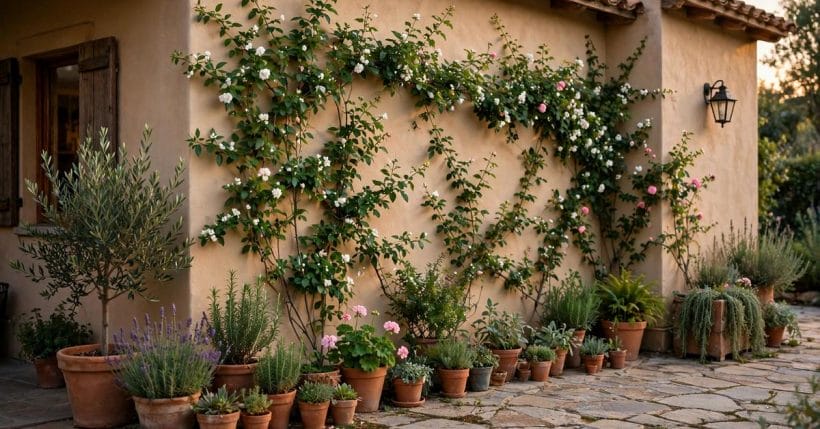
An outdoor wall does more than mark a boundary. It shelters a seat from the wind, gives a climber something to hold, and turns an open patch of ground into a place that feels like a room.
These ideas walk the wall the way a gardener would build it, from material and form to colour, planting, light, privacy and everyday care, so the wall you choose suits the garden it shelters.
1. How the Wall Earns Its Place
A wall earns its place when the garden feels better for it. Before choosing a material or a colour, stand where you will sit and look at what the wall must do: shelter a chair, frame a view, hide a neighbour’s bins, or simply give a bare stretch of ground a backbone. A wall built for a clear purpose looks settled from the first day, while a wall built only because a boundary was needed can feel like an afterthought for years.
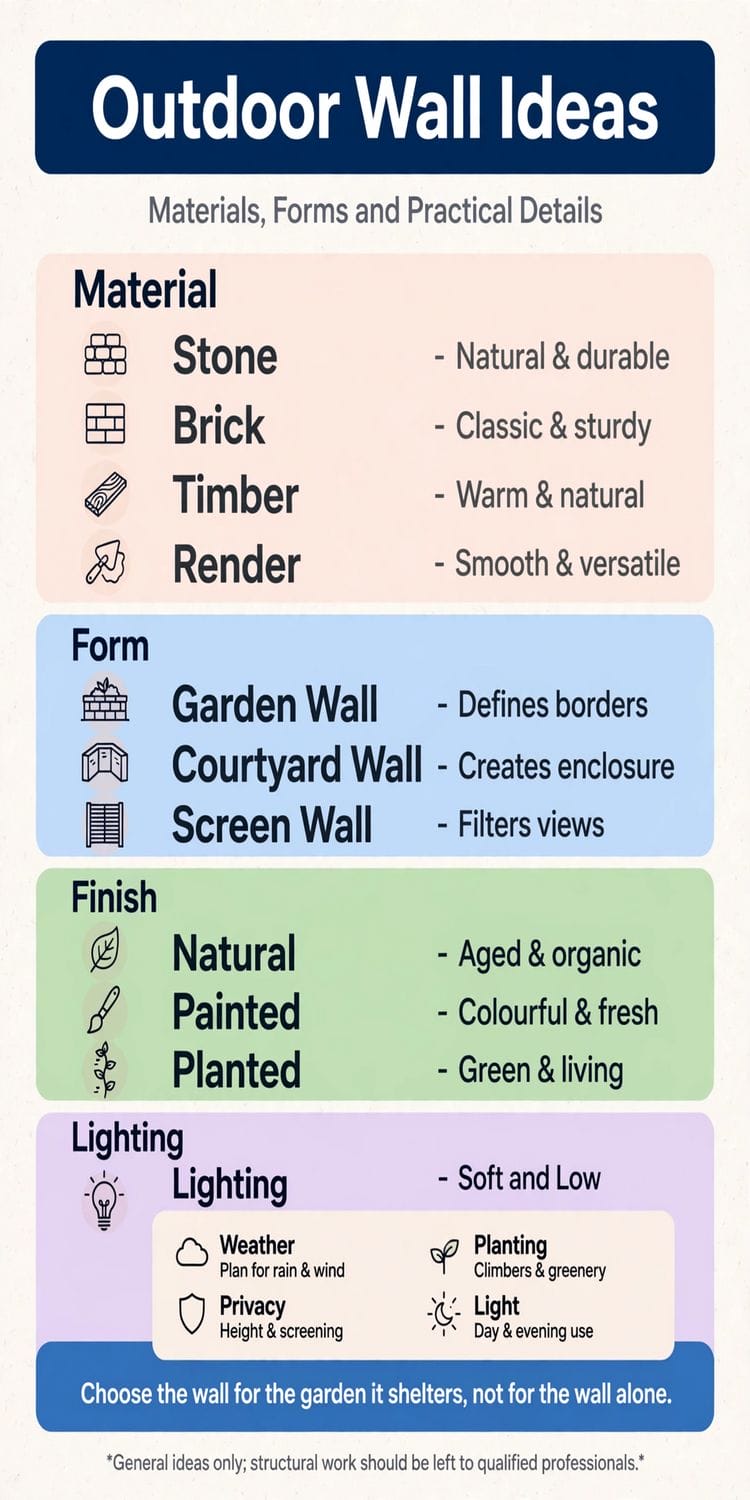
| At a Glance | This Wall |
|---|---|
| Main materials | Stone, brick, timber and render |
| Main forms | Garden wall, courtyard wall and screen wall |
| Finishes | Natural, painted and planted |
| Planting | Climbers, shrubs and pots at the base |
| Light | Soft and low in the evening |
| Care | Regular checks and gentle cleaning |
The best place to begin is the ground itself. A wall that follows the lie of the land, meeting paths and beds at a comfortable level, feels as if it has always been there. A wall that fights the slope, cutting across a path or leaving an awkward step at its foot, will announce itself every time someone walks past. Walk the line the wall will take, in both directions, and notice where the sun falls, where the wind comes from, and where you naturally pause. Those pauses are where seats, pots and planting belong, and the wall should serve them rather than crowd them.
2. Materials That Suit Life Outside
Stone is the oldest garden material, and it still carries a particular calm. A stone wall looks at home beside old houses and new ones alike, because its colours come from the earth itself rather than from a catalogue. It weathers gently, gathering moss and lichen in the damp corners, and it suits planting better than almost any other surface, since climbers find holds in its joints and pots look natural at its foot. Stone asks for patience rather than polish: it is best left to age, and cleaned only gently, so its character deepens instead of being scrubbed away.
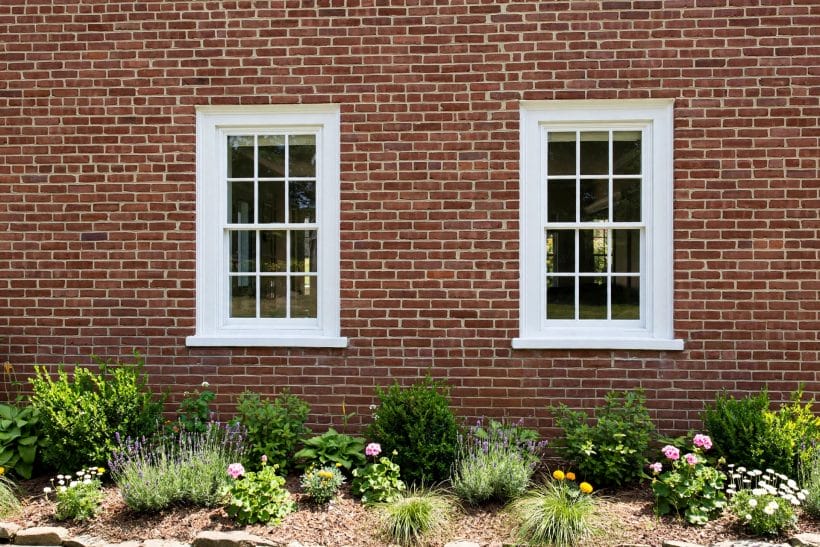
Brick brings order and warmth in equal measure. Its regular courses give a wall a steady rhythm, and its colour range, from soft reds to pale creams, lets it echo the house it stands beside or deliberately contrast with it. Brick suits formal gardens, where straight lines and clipped planting reward its discipline, and it suits cottage gardens too, where roses and herbs soften its edges. A brick wall that matches the house brickwork ties the whole plot together, while a brick wall in a contrasting tone can mark a garden room as a place apart. The discipline of matching a wall to the house it serves is shared with tiny house exterior ideas, where every outside surface must work as part of a small, coherent whole.
Timber brings a different temper to the garden: warm, light and forgiving. A timber wall or screen can be built in forms that stone and brick cannot easily follow, with slats that filter light and air, boards that run horizontally for a modern calm, or vertical battens that draw the eye upward. Timber suits sheltered corners and seating areas, where its warmth is felt close at hand, and it takes paint and stain gracefully, so its colour can change with the garden’s mood. It does ask for regular care, since weather will grey it and damp will test it, but that care is part of its charm for gardeners who enjoy tending what they have built.
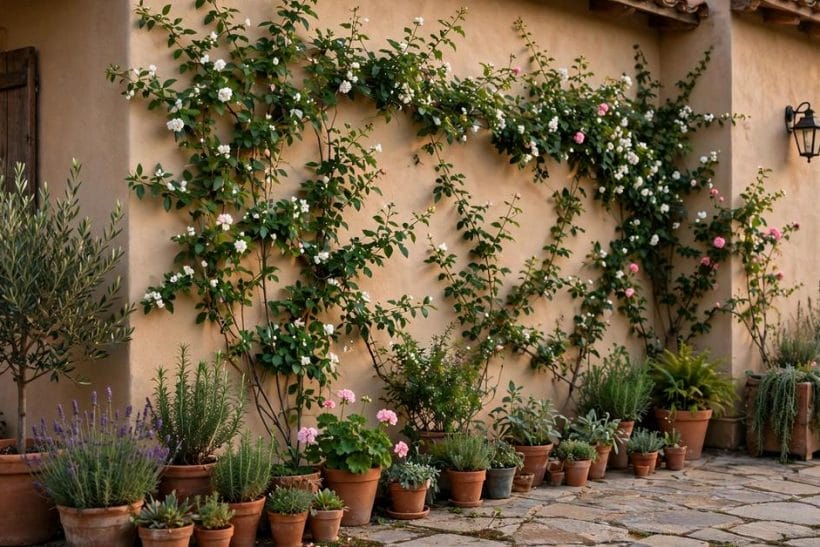
Render, the smooth plastered finish over a masonry wall, offers the cleanest canvas of all. A rendered wall can be pale enough to bounce light into a shady courtyard, warm enough to glow in the evening sun, or coloured to match shutters, doors and garden furniture. Its smooth face suits modern houses and Mediterranean courtyards, where shadow and sunlight play across it through the day. Render also suits walls that will carry planting, since a pale background shows green leaves and bright flowers to their best advantage, turning a simple climber into a display.
3. Forms: Garden, Courtyard and Screen Walls
The garden wall is the classic form, running along a boundary or dividing one part of the garden from another. Its job is definition: it tells you where the flower garden ends and the vegetable patch begins, where the lawn gives way to the woodland walk, or where your ground meets the lane. A garden wall works best when it is treated as part of the planting rather than as a fence with pretensions, with shrubs at its foot, climbers on its face, and gaps or gates placed where paths naturally want to go. The planting that softens a garden wall is the same planting that makes a small plot feel generous, a point that tiny house garden ideas return to again and again, since a wall and its planting must share a small space gracefully.
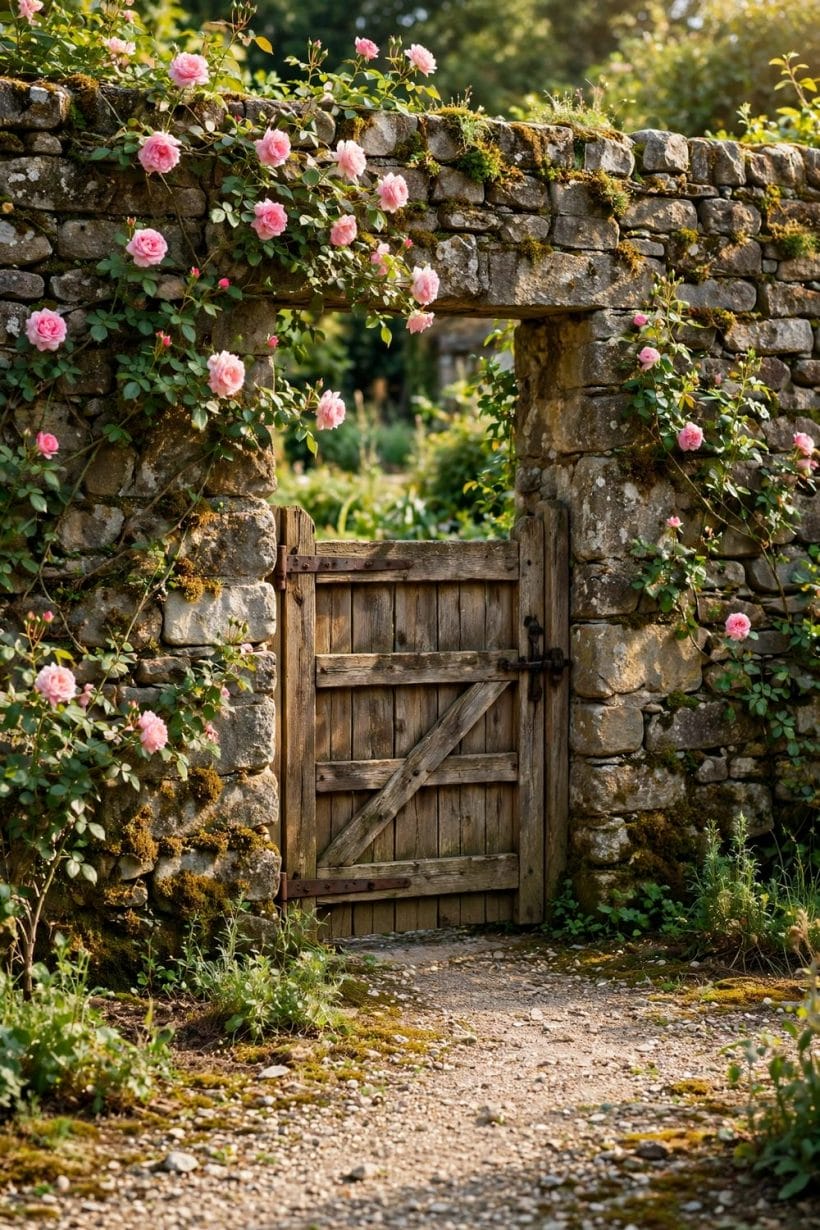
The courtyard wall is a more intimate form, enclosing a small outdoor room on several sides so that it feels sheltered and private. Courtyard walls suit houses with little ground, town gardens, and the sunny side of any home, where a walled space can become an extra room in the warmer months. Inside a courtyard, the wall is not a boundary but a backdrop: it carries the pots, the bench, the lantern and the climber, and it bounces warmth back into the space after sunset. A courtyard wall painted pale will lighten a shady corner, while one left in natural stone will hold the heat of the day and give the space a Mediterranean calm.
The screen wall is the lightest form, and often the most useful. It does not enclose or divide so much as filter: it hides a bin store, softens a neighbour’s window, breaks the wind across a terrace, or gives a seating area a sense of shelter without shutting out the sky. Screens can be timber slats, pierced brickwork, trellis panels, or a low wall topped with planting, and their virtue is that they admit light and air while still giving privacy. A screen placed with care can rescue a seating area that would otherwise feel exposed, and it can do so without the heaviness of a full wall.
4. Colour and Finish in Daylight
Colour on an outside wall behaves differently from colour indoors, because daylight changes it through the day. A shade that looks soft in the morning can glare at midday and deepen to something richer by evening, so any colour should be judged in the place it will live, across a full day, before it is committed to a whole wall. Small painted samples, left on the wall through sun and shade, tell the truth that a colour card in a shop never can, and they cost little in effort compared with repainting a wall that turned out too bright or too cold.
Pale walls are the gardener’s friend in shade. White, cream and pale stone tones bounce light into corners that would otherwise sit in gloom, and they make green planting stand out with a clarity that darker walls cannot match. A pale wall behind a rose, a jasmine or a dark-leaved shrub becomes a picture frame, and in a small courtyard it can make the space feel larger than its measurements suggest. Pale walls do show dirt and algae more readily, so they ask for gentle washing through the year, but that washing is a small price for the light they give.
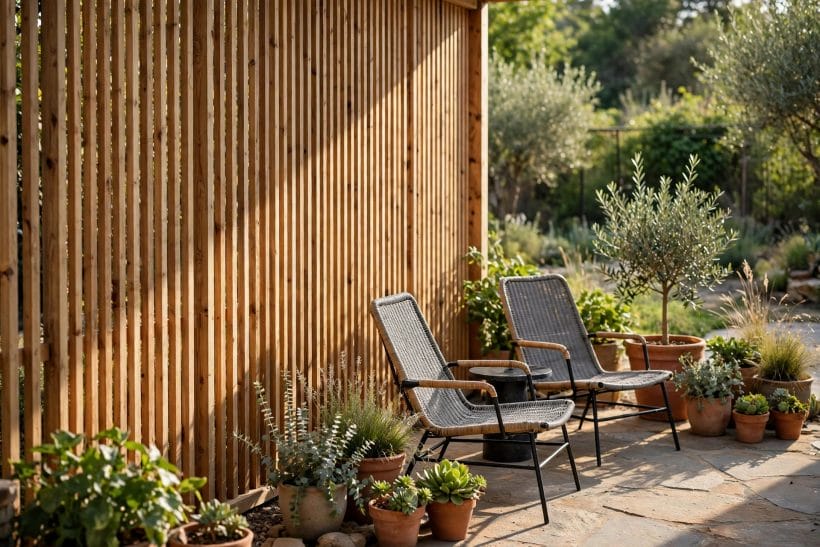
Dark walls bring a different gift: depth. A deep green, a charcoal grey or a warm brown wall recedes behind planting, so flowers and foliage appear to float in front of it, and it gives a seating area a sense of enclosure that pale walls cannot offer. Dark walls suit larger gardens, where their receding quality adds mystery, and they suit modern houses, where their calm matches clean lines and simple planting. They also absorb warmth from the sun, which can make a sheltered seat more comfortable on a cool evening, though they should be used with care in the hottest, sunniest corners.
5. Planting Against the Wall
Planting is what turns a wall from a structure into a garden. A bare wall, however fine its material, can feel stern, while the same wall with a climber, a shrub border and pots at its foot feels welcoming and alive. The planting should be chosen for the wall’s aspect first: sun-loving climbers for a south-facing wall, shade-tolerant shrubs for a north-facing one, and wind-tolerant plants for an exposed boundary. A plant that suits its aspect will thrive with little fuss, while a plant fighting its aspect will struggle no matter how much care it receives, and the wall will be blamed for a failure that was really a matter of placement.
Climbers are the wall’s natural partners. Roses, jasmine, clematis and honeysuckle each bring their own season of flower and scent, and they can cover a wall in a way that no other planting can match. Some climbers cling by themselves, finding holds in rough surfaces, while others need wires or trellis to support them, and that support should be fixed before the plant arrives, not improvised once it has grown. Leave a gap between the support and the wall itself, so air can move behind the leaves and the wall can dry after rain, and the planting will stay healthier for it. The same generous approach to planting at a boundary shapes tiny house porch ideas, where a wall, a post and a climber must share a small entrance without crowding it.
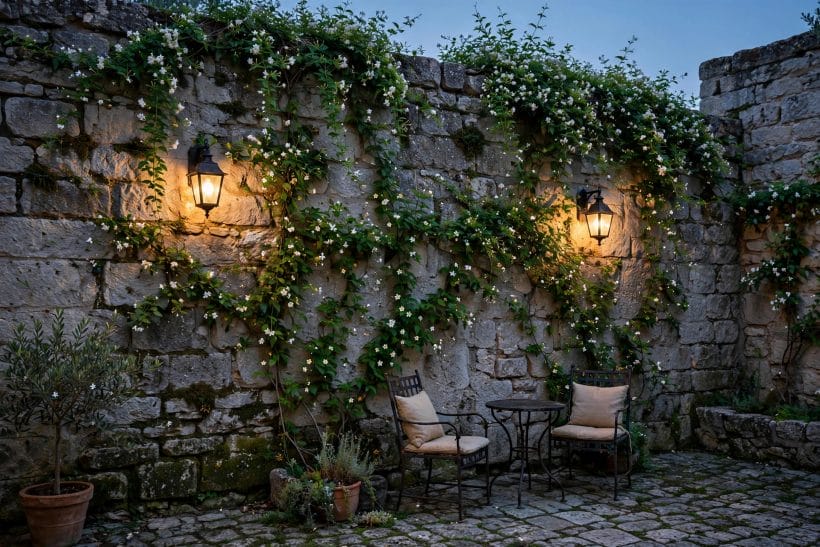
Shrubs at the foot of a wall do work that climbers cannot. They hide the bare base where a wall meets the ground, they soften the hard line between wall and lawn, and they give the garden structure in winter when climbers are bare. Evergreen shrubs keep the wall dressed all year, while flowering shrubs add seasons of colour that change the wall’s character through the year. Plant them far enough from the wall that they can grow without pressing against it, and far enough apart that each can reach its natural shape, and the border will look generous rather than crammed.
6. Light After Dark
A wall that is beautiful by day can disappear at night, and a wall that is lit with care can become the garden’s evening centrepiece. The aim is not brightness but atmosphere: light that pools softly, shows the texture of stone or timber, and lets a seating area feel enclosed after sunset. Harsh, glaring light flattens a wall and destroys the very texture that makes it interesting, while soft, low light flatters both the wall and the people sitting beside it.
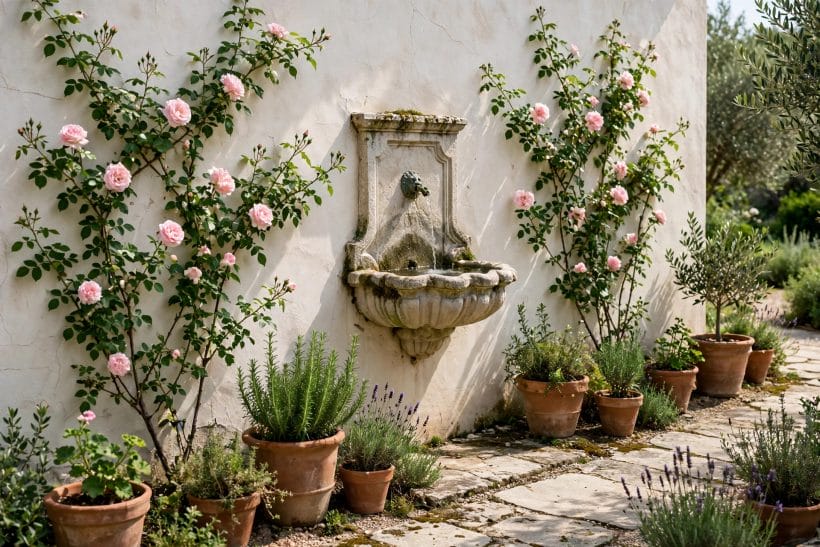
Wall-mounted lanterns and sconces are the classic choice, and they suit stone, brick and render alike. Placed at intervals along a wall, they wash light downward across its surface, showing every stone and joint, and they give a seating area a warm, candle-like glow. They should be shielded so that the light falls on the wall and the ground rather than into the eyes of anyone sitting nearby, and their fittings should be chosen for weather resistance, since a fitting that rusts or lets in rain will fail quickly. Have any wiring or fitting work done by a qualified professional, and never improvise with electrical work outdoors.
Candles and lanterns, used with care, remain the most flattering light of all for a wall-side supper. A lantern on a wall bracket, a candle on a table beside the wall, or a row of jar lights along a low wall can transform an ordinary evening into an occasion, provided flames are kept clear of planting, curtains and anything that could catch, and are never left burning unattended. The same layered approach to light, with a soft wash on the wall and a gentle glow where people sit, is what makes tiny house designs feel warm after dark, since a small outdoor space depends on its lighting more than a large one does.
7. Privacy Without a Fortress
Privacy is often the reason a wall is built, but a wall that shuts out the world completely can make a garden feel like a yard. The art lies in giving privacy where it matters, at seating height and around the places where people linger, while leaving the sky, the treetops and the longer view open above. A wall that screens the neighbours’ windows from a bench, but still lets you see the trees beyond, gives privacy without imprisonment, and it will be enjoyed far more than a taller, blanker wall that blocks everything.
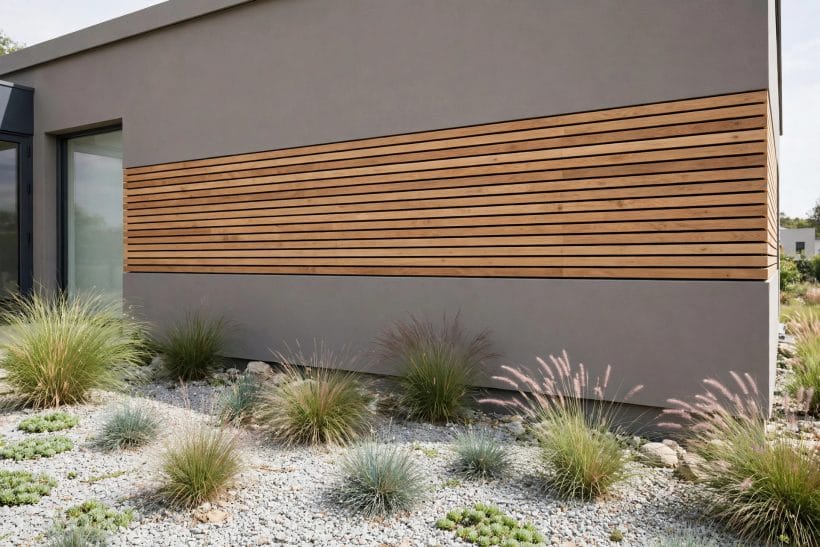
Height should be judged from where people sit, not from where they stand. A wall that looks modest from the path may give complete privacy to someone seated behind it, while a wall that looks imposing from the street may still leave a raised terrace overlooked. Sit in the places that matter, at the times of day when they are used, and notice what can actually be seen, and the wall’s height will suggest itself. Where local rules or neighbours’ views limit height, planting above the wall, in the form of a trellis with climbers or a row of shrubs, can add screening without adding masonry, and it softens the wall’s top edge at the same time.
Screening can also be layered rather than built in one solid mass. A low wall, a hedge behind it, and a climber on a trellis above it together give more privacy, more wildlife, and a softer appearance than a single tall wall of the same height, and they break the wind more gently as well. Layered screening also gives the garden depth: the eye travels through planting rather than stopping at a flat surface, and the boundary feels like part of the garden rather than a barrier against it.
8. Small Spaces and Courtyards
Small spaces ask the most of a wall, and they reward it most richly when it is well chosen. In a courtyard or a tiny garden, the wall is not a distant boundary but the room itself: it is what you see from every seat, what carries the planting, and what bounces light and warmth back into the space. A small courtyard with a well-chosen wall can feel like a private retreat, while the same space with a neglected wall can feel like a yard, and the difference lies less in money than in attention.
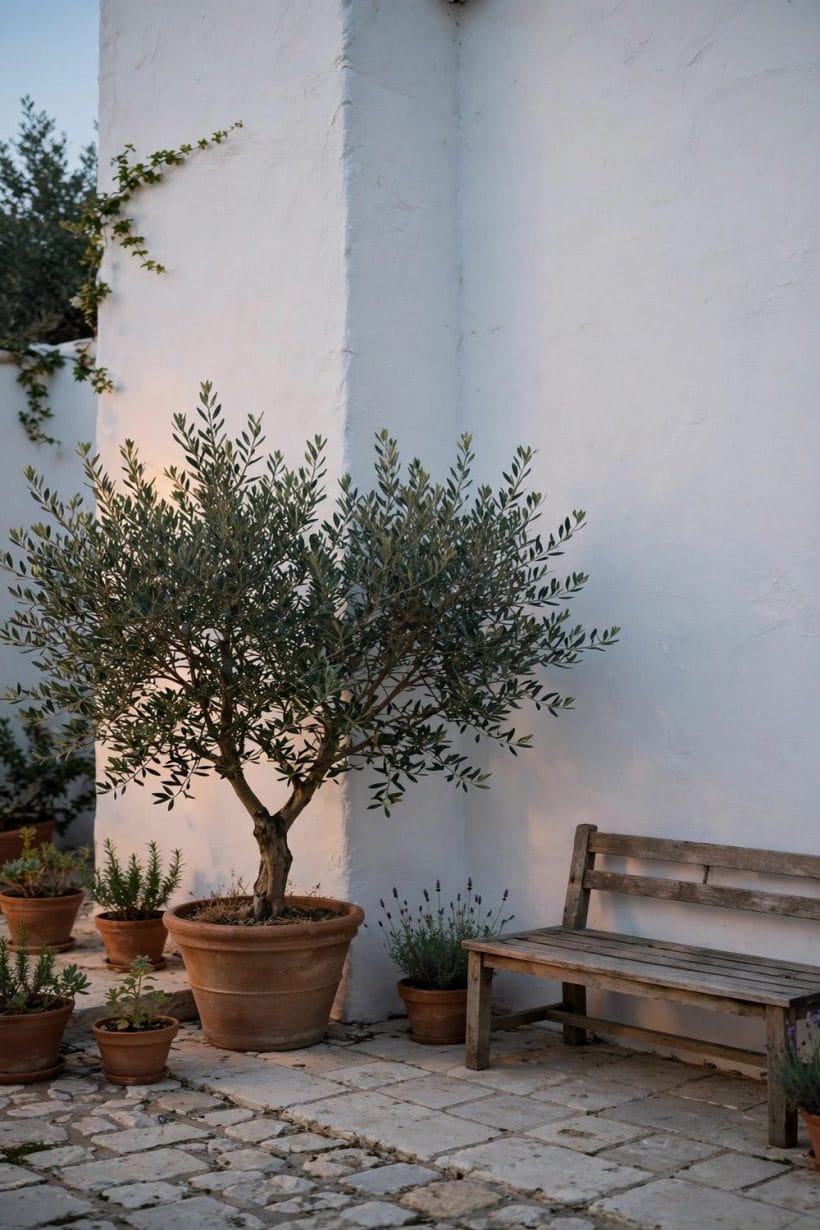
Furniture against a wall should be chosen for the wall it will sit beside. A bench built into the wall, or placed close against it, saves floor space and gives the courtyard a sense of permanence, while a chair that can be moved lets the space change with the sun through the day. Pots, rather than beds, suit most small courtyards, since they can be rearranged as plants grow and seasons change, and a wall with brackets or shelves for pots can carry a surprising amount of planting without taking any ground at all. The same close fit between wall, seat and planting is the heart of home design ideas for compact plots, where every surface must earn its place.
Vertical planting suits small walls best of all. Trellis panels, wall pockets, hanging pots and climbing plants all use the wall’s height rather than the ground’s area, and they can turn a bare courtyard wall into a garden in itself. Choose vertical planting that suits the wall’s aspect and the gardener’s appetite for care, since a vertical garden that is watered and pruned will thrive, while one that is left to dry will fail visibly, and the wall will carry the evidence. Start small, with a few reliable climbers and pots, and let the wall’s planting grow with confidence rather than all at once.
9. Keeping the Wall in Good Order
A wall in good order is a wall that is looked at. Walk its length through the seasons, and notice what the weather has done: pointing that has crumbled, render that has cracked, timber that has greyed or softened, and planting that has pressed too hard against the surface. Small repairs, made early, keep a wall sound for years, while damage left unnoticed will grow until it needs a professional’s attention. The habit of looking is the whole of maintenance, and it takes less time than any single repair.
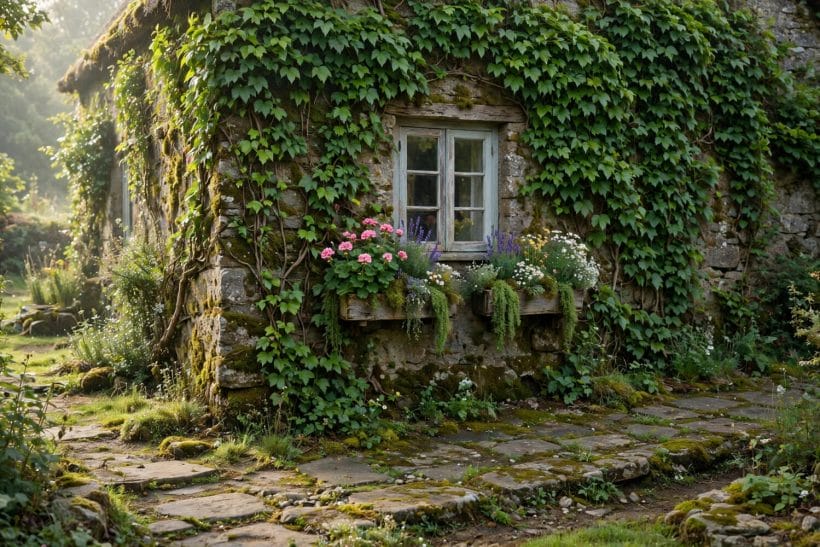
Cleaning should be gentle. A soft brush, clean water, and patience will remove most algae, dirt and cobwebs without harming stone, brick or render, while harsh pressure washing can strip pointing, erode soft stone, and drive water into joints where it will do damage in winter. Timber should be brushed clean and left to dry before any oil or stain is applied, and render should be washed with care around cracks, since water forced into a crack will widen it when it freezes. If a wall shows structural cracks, bulging, or leaning, leave the diagnosis to a qualified professional rather than attempting a repair that could hide a deeper problem.
Planting needs its own seasonal care against a wall. Prune climbers after flowering, or in the dormant season for evergreen kinds, keeping growth clear of gutters, windows, roofs and gates, and cut back shrubs that have grown against the wall so that air can move behind them. Check ties and supports, replacing any that have cut into stems or rusted through, and clear fallen leaves from the base of the wall, where damp leaves can hold moisture against the surface through winter. A wall whose planting is pruned with care will look better and last longer than one whose planting is left to its own devices.
10. Living With the Wall Through the Seasons
A wall lives through the year, and its character changes with it. In spring, it is a backdrop for fresh growth, with climbers putting out new leaves and pots filling with colour, and it should be checked after winter for frost damage and loose pointing before the growing season begins. Spring is the time to prune, to clean gently, and to plan any new planting, while the wall is still visible before summer growth covers it.
Summer is the wall’s high season, when it shelters seats from the wind, carries roses and jasmine in full flower, and bounces warmth back into the garden after sunset. In summer, the wall’s planting needs water most, especially pots and climbers in sunny aspects, and its seating areas need shade as well as shelter, which planting above the wall or a parasol beside it can provide. The discipline of fitting a seat, a wall and planting together in a small space is the same discipline that tiny house floor plans teach indoors, where every element must serve the room it stands in. The same close fit between a wall and the ground it shelters shapes tiny house deck ideas, where a deck and its boundary must work as one outdoor room.
Winter shows the wall at its starkest, and its most honest. Evergreen planting, wall lanterns, and the texture of stone or brick carry the garden when flowers are gone, and a wall that is lit softly in winter can make a dark evening feel welcoming rather than bleak. Check the wall after storms for loose coping, damaged trellis or fallen branches, and keep paths beside it clear of ice, since a wall-side path is used in all weathers. A wall that is cared for through winter will greet spring in good order, ready for another year of growth.
Final Considerations
An outdoor wall succeeds when it suits the garden it shelters, the house it stands beside, and the people who will live with it. Start with purpose, choose a material that suits the weather and the planting, pick a form that gives privacy without shutting out the sky, and finish it in a colour that glows in the light it will actually receive. Plant it generously but prune it well, light it softly after dark, and keep it in good order through the seasons. Have any structural work, and any electrical work for lighting, done by qualified professionals, and the wall will serve the garden, and the home, for years to come.



0 Comments