
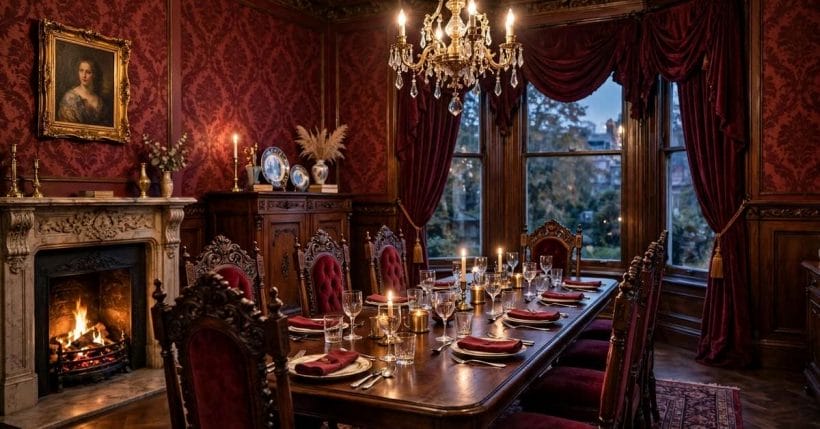
A Victorian dining room earns its grandeur the old-fashioned way: a table long enough for everyone, chairs that forgive a long evening, light kept low and warm, and a dresser that puts the best china within reach. Nothing in it is bare, and nothing in it is accidental.
These seventy-five ideas walk the room the way a careful host would build it, from layout and table to seating, colour, light, storage, floors, dressing and everyday use. This is the Victorian chapter of the wider dining survey, distinct from the general traditional angle, which keeps its own lane.
1. How the Room Is Put Together
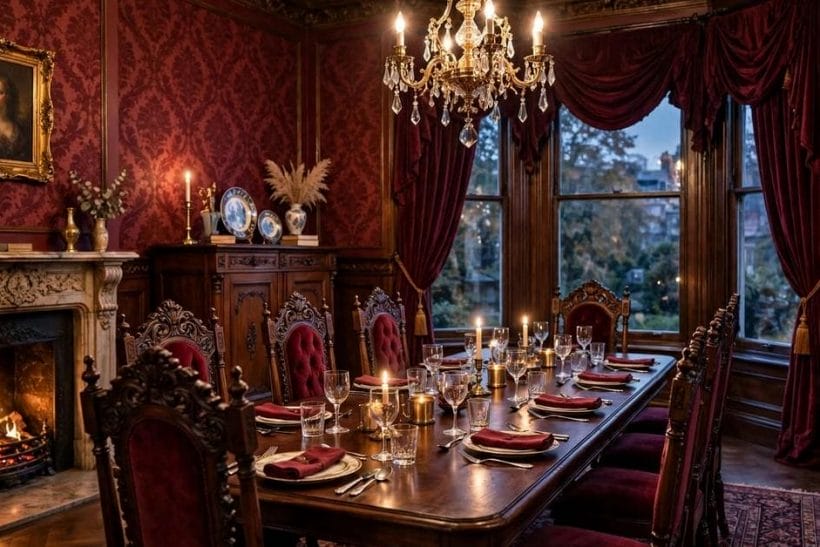
This room is built around gathering. The table sits at the centre, the light hangs above it, the serving pieces wait close at hand, and every chair is placed for conversation rather than display. Begin with how the room will serve an ordinary weeknight supper, then dress it for the occasions that matter. A room planned for weeknights will rise to a feast; a room planned only for feasts will sit quiet most of the year.
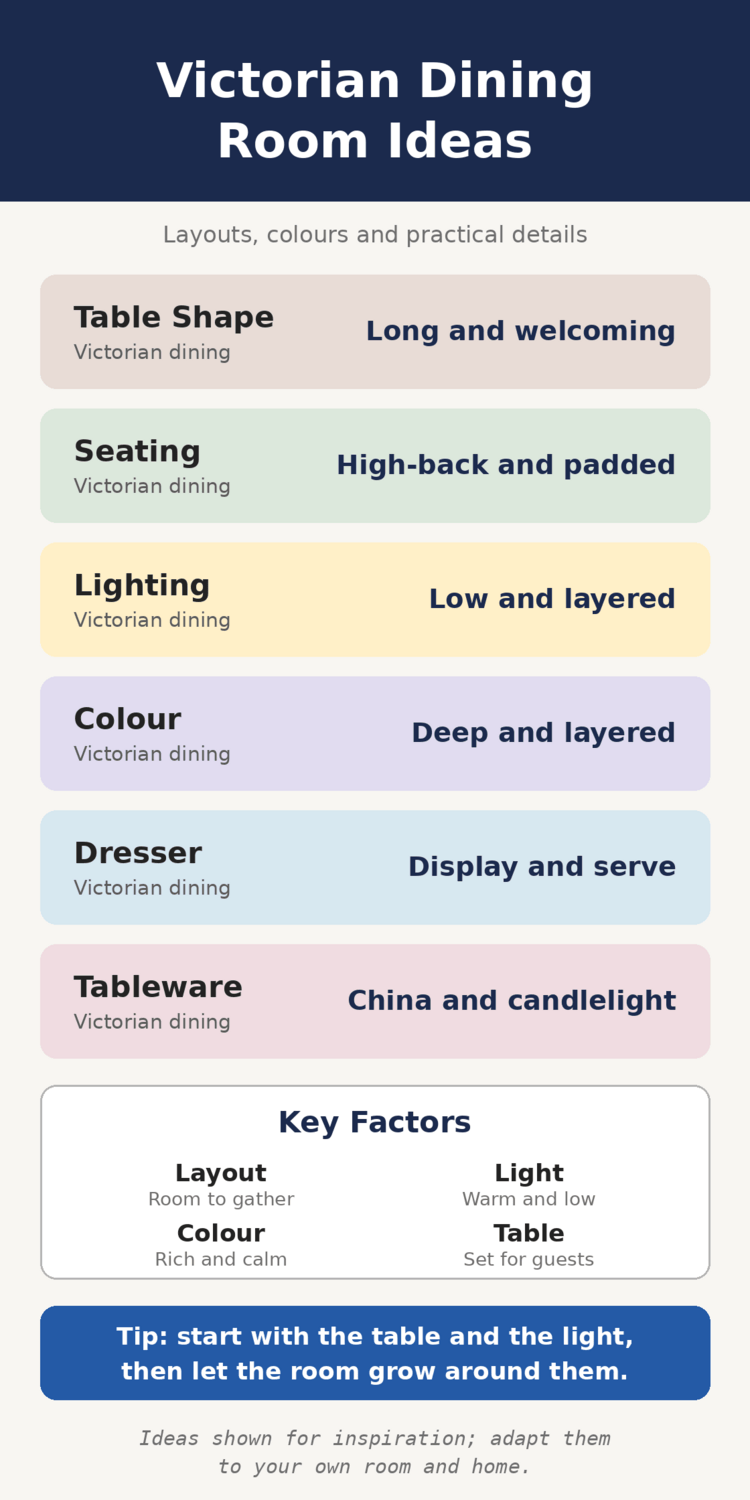
| At a Glance | This Room |
|---|---|
| Centrepiece | A long table, set with care |
| Seating | Carved chairs, padded and welcoming |
| Light | Low, warm and layered |
| Colour | Deep, rich and layered |
| Serving | Dresser and sideboard close at hand |
1. Let the table lead the room
Every other decision in this room follows the table. Choose its place first, then arrange chairs, light and storage around it, so the room reads as one composition rather than a collection of handsome pieces that never quite agree.
2. Dress the room in layers, not single gestures
Victorian richness comes from layering: wallpaper above woodwork, a rug beneath the table, a runner along its length, candles beside flowers. No single piece carries the room; the pleasure is in how the layers sit together.
3. Keep ceremony comfortable
Formality should never punish the guest. Padded seats, light that flatters faces, and a clear route to every place keep the ceremony warm. A room that looks grand and feels easy is the whole achievement.
4. Balance dark wood with soft light
Dark timber can swallow a room if the light is thin. Answer it with warm lamps, candles and pale table linen, so the wood glows instead of looming and the table becomes the brightest, most welcoming place in the room.
5. Give the room a focal wall
One wall should hold the eye: a fireplace, a dresser, a gilt mirror or a row of portraits. The other walls support it quietly. A room with a single clear focus feels settled; a room where everything competes feels restless.
6. Mix pattern with restraint
Damask wallpaper, patterned rugs and figured china all belong here, but they need breathing room. Let one pattern lead in each corner of the room and keep the rest calm, so the eye travels instead of stumbling.
7. Plan for serving as well as sitting
A dining room is a working room. Dishes travel, glasses refill and plates clear, so the route from kitchen door to table matters as much as the view. Keep that route open and the serving pieces near, and the meal will flow.
8. Keep the room alive between feasts
The best dining rooms of this style are used often, not saved for occasions. A bowl of fruit, a lamp left burning in the evening and chairs that invite reading or writing keep the room part of daily life rather than a museum.
2. Layouts for Long Tables and Full Rooms
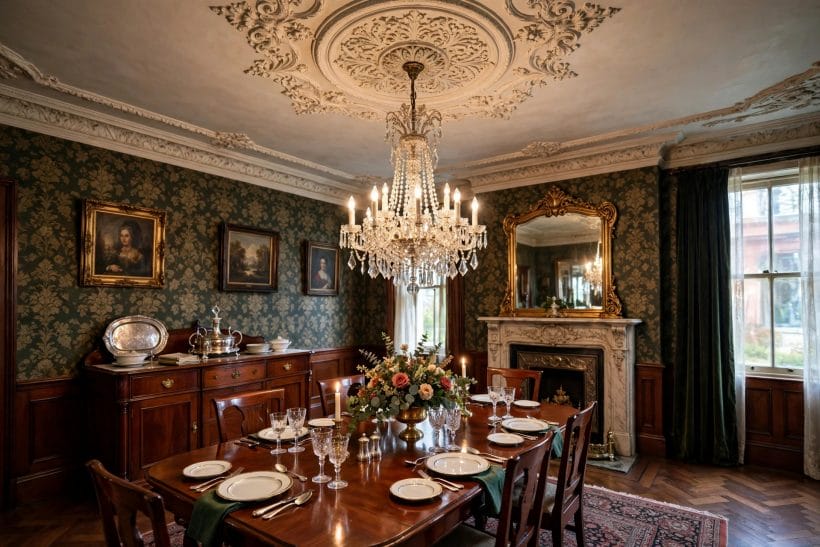
A Victorian layout succeeds when nobody has to negotiate. Every chair should slide back without meeting a wall, every guest should reach a place without squeezing past a neighbour, and the person serving should have a clear path from the kitchen door to every seat. Sketch the layout with chairs pulled out, not pushed in, and the room will tell you what fits. The discipline of fitting a table well into a small footprint is shared with tiny dining room ideas, where every inch must earn its place.
9. Centre the table on the long axis
A table set along the room’s length gives every place a fair view and keeps the serving route straight. Walk the length of the room and check that both ends breathe; a table pressed against one wall turns half the guests into an audience.
10. Leave a serving route behind every chair
The space behind a pulled-out chair is working space, not leftover space. When a guest can stand, turn and step away without asking anyone to move, the meal relaxes. Keep that route clear of side tables and trailing curtain hems.
11. Put the sideboard on the wall nearest the kitchen
Serving dishes travel shortest when the sideboard stands between the kitchen door and the table. Plates, sauces and spare cutlery live one step from where they are needed, and the host stops crossing the room mid-course.
12. Angle the table toward the fireplace
Where a fireplace survives, let the table acknowledge it. Guests facing firelight look better and feel warmer, and the room gains a natural focal point that needs no further decoration. Keep chairs clear of the hearth itself.
13. Keep doorways clear of chair backs
A chair that blocks a doorway announces the layout’s failure every time someone enters. Shift the table a hand’s breadth if needed; a room that welcomes people at its threshold will welcome them at its table too.
14. Let the window wall carry the long side
Daylight flatters food and faces alike, so the long side of the table belongs near the windows when the room allows. Guests seated along the light see each other clearly, and the view becomes part of the meal without any effort.
15. Build the layout around the rug, not the walls
Choose the rug first and let the table and chairs sit inside its borders with room to spare. A rug that stops under chair legs will bunch and trip; one that holds the whole arrangement anchors the room visually.
16. Plan a second layout for large gatherings
The everyday layout and the feast layout are different rooms. Know in advance which pieces move, where spare chairs wait, and how the table extends, so a celebration feels prepared rather than improvised.
3. Tables: The Heart of the Room
The table is the room’s anchor and its largest decision. Shape decides conversation, size decides comfort, and setting decides whether the room feels dressed or merely furnished. Choose the table for the number of people who actually eat together most weeks, and let occasional guests be the exception the room flexes for, not the rule it is built around. A well-planned table placement also belongs in the wider discipline of tiny house floor plans, where the dining spot must work inside a compact whole.
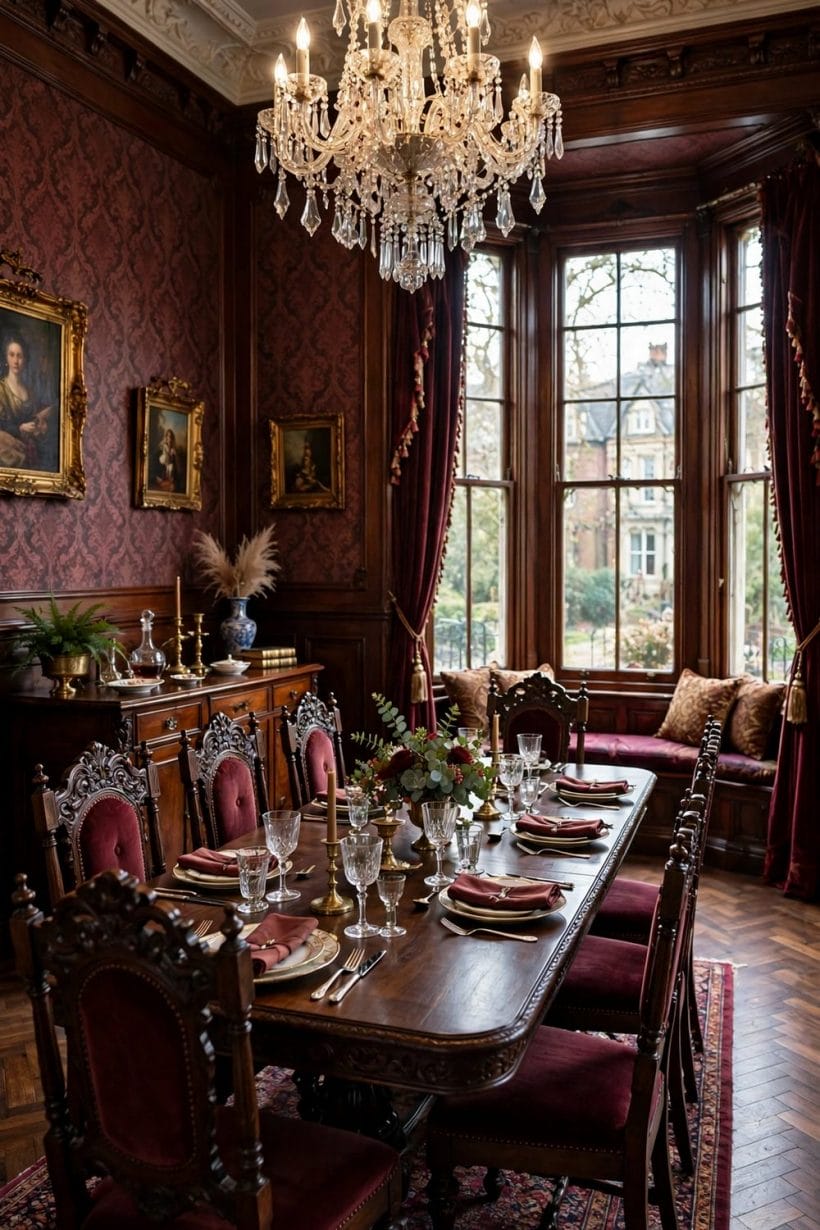
17. Choose a long rectangular table for regular hosting
A rectangular table seats a crowd down both sides and extends most gracefully with leaves. It suits rooms with a clear long axis and hosts who gather often. Dress its length with a runner and a low centrepiece that repeats along the middle.
18. Try a round table for conversation
Nobody sits at the head of a round table, and everybody sees everybody else. Conversation flows without shouting down the length, and a round table softens a square room. It asks for a single central light and a single central arrangement.
19. Pick an oval table for a narrow room
An oval table keeps the generosity of a rectangle while forgiving tight corners. Chairs slide in easily at the curves, and the room feels less crowded because no sharp corner juts into the walking route.
20. Extend with leaves only when guests arrive
A table kept at its everyday size leaves the room breathable all week. Leaves stored flat and close at hand turn an ordinary table into a feast table in minutes, and the room should have somewhere sensible for them to live.
21. Match the table timber to the room’s woodwork
When table timber echoes the doors, skirting and dresser, the room reads as one composition rather than a collection of furniture. The match need not be exact; a shared warmth of tone is enough to tie the pieces together.
22. Dress the table with a runner, not a full cloth, on ordinary days
A runner protects the centre, shows off the timber at the edges, and makes an everyday table look considered without the ceremony of a full cloth. Save the full cloth for occasions when the room is dressing up.
23. Keep the centrepiece low
Flowers, fruit and candles should decorate the table, never divide it. A low centrepiece lets guests see each other across the table, which is the whole point of sitting down together.
24. Set places with room to breathe
Elbow room is hospitality. When places are spaced so that cutlery, glasses and serving dishes all have their own ground, guests relax, linger and reach for second helpings without apology.
4. Chairs and Seating That Invite Long Evenings
Victorian chairs are made for lingering: high backs, carved frames, padded seats and arms that welcome an elbow during a long conversation. Choose seating for the hours guests will actually spend in it, not for the silhouette it cuts from the doorway. A beautiful chair that punishes the sitter empties the room early, while a comfortable chair keeps the candles burning. The same comfort-first thinking shapes small living room ideas, where seating must serve long evenings in little space.
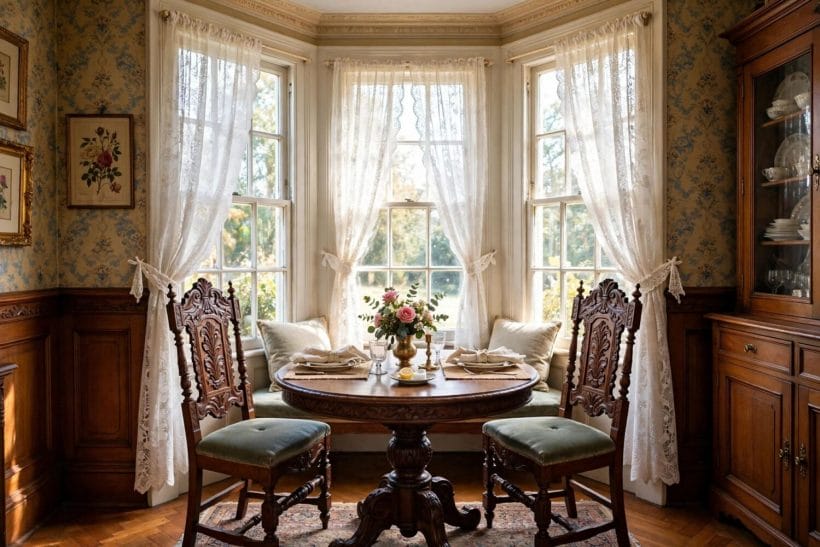
25. Choose high-back chairs for the long table
A high back gives the sitter presence and support, and gives the room its Victorian silhouette. Look for a back that supports the shoulders without pushing the head forward, and a seat deep enough to sit back into.
26. Pad the seat and button the back
Padding turns a handsome chair into a hospitable one. Buttoned upholstery adds the period texture and keeps the padding in place through years of suppers. Choose a fabric that forgives spills and welcomes brushing.
27. Mix carver chairs at the ends
Armchairs at the table ends mark the hosts’ places and give the long table a finished frame. Carvers also offer tired guests somewhere to rest their arms, which matters more as the evening lengthens.
28. Keep a bench along one side for flexible seating
A bench slides extra guests in without hunting for matching chairs, and children love it. Dress it with cushions in the room’s colours so it reads as furniture, not as an afterthought.
29. Seat guests by conversation, not by rank alone
The Victorian table rewards a host who mixes talkers and listeners, old friends and new faces. A well-mixed table talks itself along; a stiffly ordered one waits for someone to rescue it.
30. Add a fireside chair for after-dinner lingering
Not every guest wants to sit at the table all evening. A fireside chair or two gives the room a second act, where coffee and conversation continue away from cleared plates.
31. Mind the chair’s weight before buying
Heavy carved chairs are glorious and immovable, which is a problem at a table that changes shape for guests. Test that the people who set the table can actually pull each chair out and push it back in.
32. Recover chairs rather than replacing them
A sound frame deserves new fabric before it deserves the skip. Recovering keeps the room’s matched set intact, lets the colour scheme evolve cheaply in effort, and preserves chairs that have already proved their comfort.
5. Colour and Walls
Victorian colour is deep, warm and confident: burgundy, forest green, navy and oxblood, set against cream ceilings and dark woodwork. The trick is layering those depths so the room feels rich rather than gloomy, with pale linen and warm light lifting the darks. Colour here is a mood before it is a decoration, and it should make evening meals feel enclosed and generous.
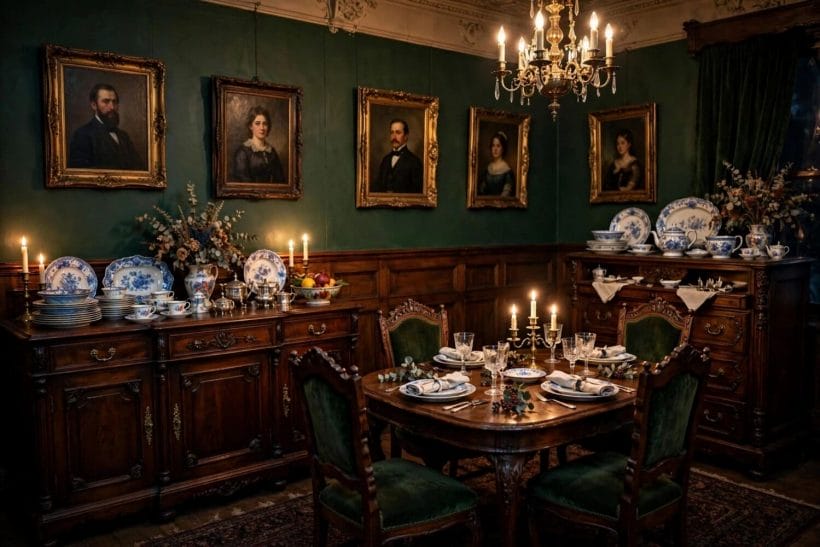
33. Start with one deep wall colour
Choose a single deep colour for the walls and let everything else answer it. One confident colour unifies the room; several competing darks divide it. The ceiling stays pale to keep the height.
34. Use damask and figured wallpaper with care
Figured wallpaper is the Victorian wall’s signature. Keep its pattern at a scale the room can carry: bold figures in a large room, quieter ones where walls are close. Hang pictures over it sparingly so the pattern can breathe.
35. Paint the woodwork to match the mood
Dark stained woodwork deepens the room, while painted woodwork in a soft cream lifts it. Either way, keep doors, skirting and architraves consistent, so the room’s frame reads as one deliberate decision.
36. Add a dado rail and a calmer lower wall
A dado rail divides the wall into a patterned upper half and a plain or panelled lower half, which protects the wall from chair backs and gives the room its period rhythm. The lower wall can carry a quieter tone that grounds the pattern above.
37. Hang portraits and landscapes in gilt frames
Gilt frames catch candlelight and give the walls their Victorian glitter. Hang pictures at eye level for seated guests, not standing visitors, since the room is judged from a chair.
38. Let a mirror double the candlelight
A large mirror over the fireplace or sideboard doubles the light and the room’s sense of occasion. Its frame should match the room’s timber or gilt, so it reads as furniture rather than an addition.
39. Carry one accent colour through linen and flowers
Napkins, runners and fresh flowers can carry a single accent colour through the seasons. Changing the accent refreshes the whole room without touching walls or furniture, which is the cheapest transformation a dining room offers.
6. Light: Chandeliers, Sconces and Candles
Victorian dining light is low, warm and layered: a chandelier over the table, sconces on the walls, and candles that flicker at eye level. Bright overhead light flattens faces and food alike, while layered low light flatters both and makes the room feel like an occasion. Have any wiring, fitting or alteration work done by a qualified professional, and never improvise with open flames near curtains. The same layered-light thinking serves kitchen ideas, where task light and evening light must share one room.
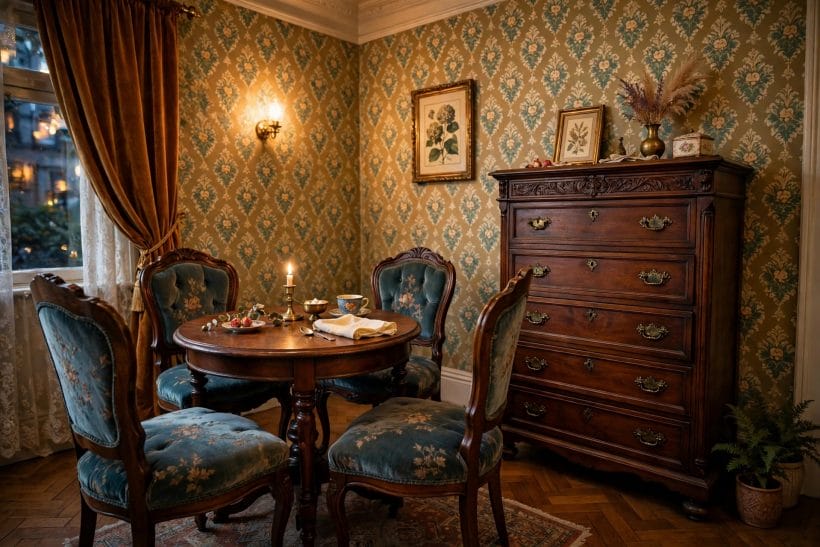
40. Hang the chandelier over the table’s centre
The chandelier belongs over the middle of the table, not the middle of the room, since the table is where the light works. When the table extends for guests, check that the light still covers the new centre.
41. Keep the chandelier low enough to gather light
A chandelier hung too high lights the ceiling and starves the table. It should hang low enough to pool light over the places, yet high enough that no guest stares into bare bulbs or crystals.
42. Add wall sconces for a second layer
Sconces wash the walls with warm light and remove the cave effect of a single central fitting. Place them where they flatter portraits and wallpaper, and keep them dim enough to stay in the background.
43. Use candles as the third layer
Candles at the table are the oldest dining light and still the most flattering. Keep them steady, sheltered from draughts, and clear of anything that could catch, and let them burn only while someone is in the room.
44. Dim everything for evening meals
Evening dining wants light that suggests sunset, not midday. Dimmers on the chandelier and sconces let one room serve lunch brightness and dinner intimacy without changing a single fitting.
45. Light the dresser and sideboard separately
A small light inside or above the dresser turns displayed china into decoration even when the table is bare. It also helps the host find serving pieces without switching on the whole room.
46. Welcome daylight, then dress it
By day, tall windows and sheer curtains give this room its brightness. Let daylight rule at lunch, then draw the heavier drapes as evening comes and hand the room over to candles.
7. Storage and Serving: Dressers, Sideboards and China
Victorian serving furniture earns its floor space. The dresser displays the china, the sideboard holds the serving dishes, and the china cabinet keeps the best pieces safe yet visible. Together they mean the host never leaves the room mid-course to hunt for a plate. Keep serving pieces close, grouped by use, and arranged so the prettiest pieces face the room. The same serve-where-you-sit logic appears in small kitchen ideas, where storage must sit within arm’s reach of the work.
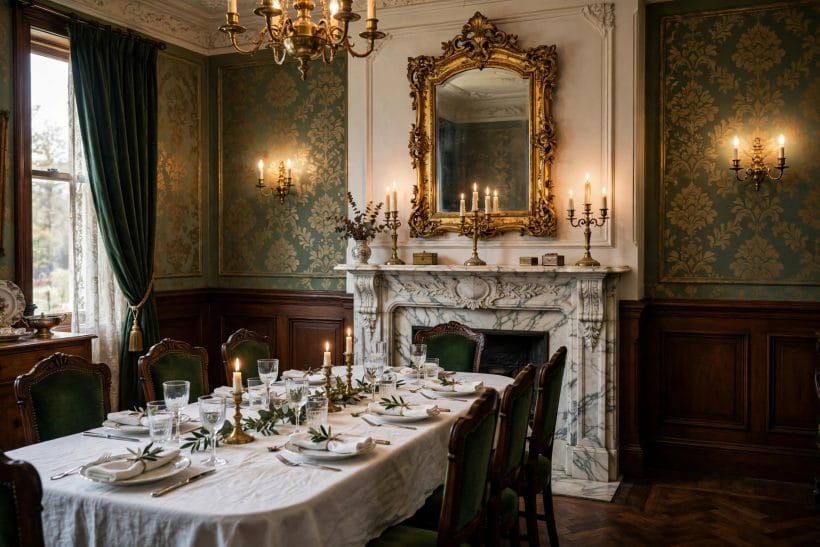
47. Let the dresser display the everyday china
A dresser with open shelves turns daily china into decoration. Stack plates by size, group cups by pattern, and leave breathing room between groups so the display reads as curated rather than crowded.
48. Keep the best china behind glass
Glass-fronted cabinets protect fragile pieces from dust and knocks while keeping them visible. Reserve them for the sets that appear on occasions, and let guests admire them without handling them.
49. Stock the sideboard by course
Arrange the sideboard in the order dishes appear: serving platters first, sauces and sides beside them, dessert plates at the end. A sideboard stocked by course keeps the host calm and the meal moving.
50. Store cutlery in lined drawers
Lined drawers stop silver and cutlery from scratching and rattling, and they keep sets together. One drawer per set, labelled in the host’s own shorthand, ends the hunt for the missing fork.
51. Keep table linen folded, aired and close
Tablecloths, runners and napkins belong in the dining room, not in a distant cupboard. A drawer or shelf near the table means the room can be dressed properly on a weeknight, not only on occasions.
52. Use a trolley for second helpings
A serving trolley parks second helpings, sauces and desserts beside the table without crowding it. It also saves trips to the kitchen and lets guests serve themselves at their own pace.
53. Rotate displayed pieces with the seasons
Swapping a few displayed pieces through the year keeps the dresser fresh: spring flowers on plates, autumn fruit in bowls, winter greenery along the shelf. The room changes without any new furniture.
8. Floors, Rugs, Windows and Drapes
Victorian floors are dark timber, softened by generous rugs; Victorian windows are tall, dressed in sheers by day and heavy drapes by night. Together they set the room’s temperature: warm underfoot, framed at the edges, and enclosed when evening comes. Choose materials that forgive spills and chairs, since a dining floor works harder than any other floor in the house.
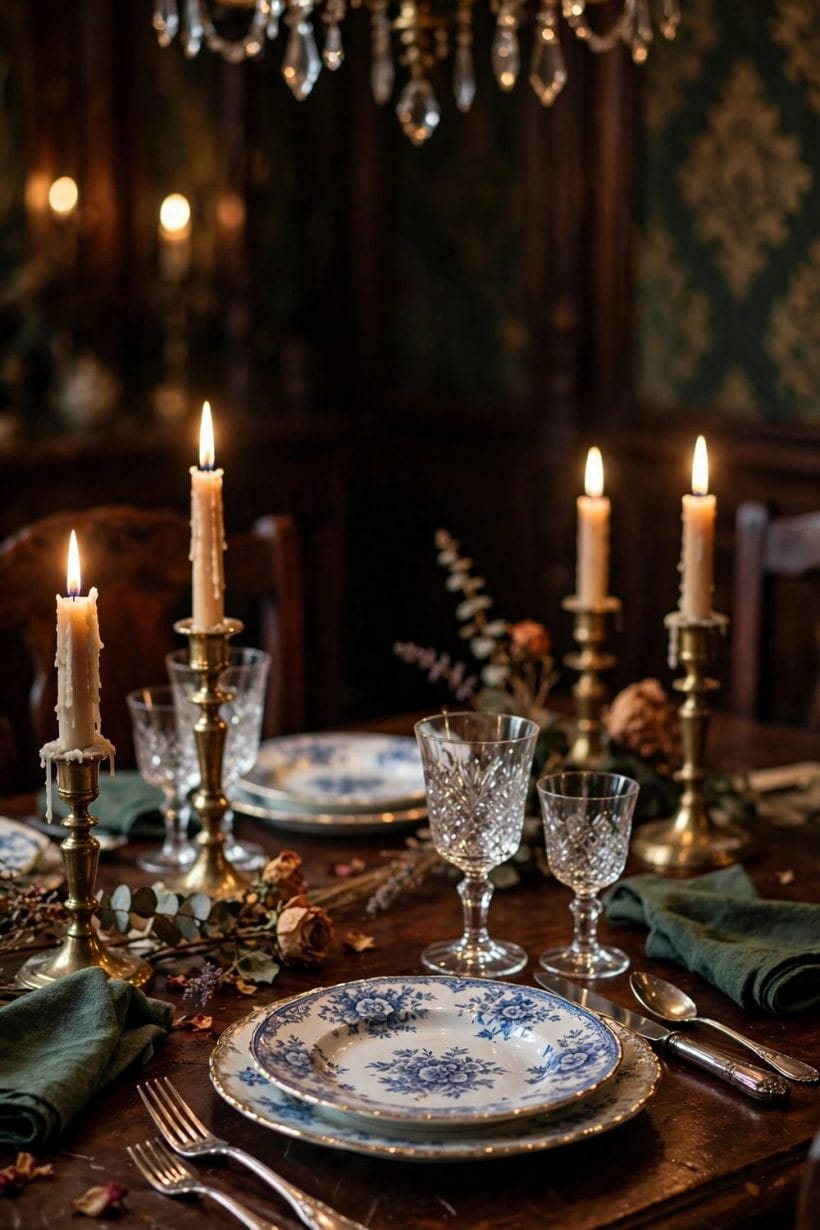
54. Lay a rug large enough for pulled-out chairs
The rug must hold the table and every chair even when chairs are pulled out for sitting. A rug that ends under chair legs will ripple, bunch and trip guests; a generous rug anchors the whole arrangement.
55. Choose a pattern that forgives crumbs
Busy traditional patterns hide the small accidents of a shared meal far better than plain pale carpet. A patterned rug keeps the room looking dressed between cleanings, which is a mercy after a feast.
56. Keep timber floors polished beneath the rug
Dark timber around the rug’s edge frames the room and survives spills better than carpet. Polish the visible border and the room will glow even before the candles are lit.
57. Dress tall windows in sheers first
Sheer curtains soften daylight, veil the view just enough for privacy, and keep the room bright. They are the daytime dressing; heavier drapes are the evening one.
58. Hang heavy drapes to frame, not block, the window
Heavy drapes should stack back clear of the glass by day, framing the window like a picture, and draw fully at night for warmth and enclosure. Drapes that permanently cover half the window starve the room of light.
59. Add lace panels for daytime privacy
Lace panels give a street-facing dining room privacy without gloom. They filter the view, soften the light, and carry the period detail that plain sheers cannot.
60. Mind draughts at the window wall
Guests seated beside windows feel every draught, so check seals and linings before blaming the seating plan. A lined drape and a well-fitting window do more for comfort than moving the table ever will.
9. Tableware, Centrepieces and Seasonal Dressing
Victorian tableware is where the room shows its personality: patterned china, cut crystal, silver cutlery and candlesticks that have gathered their own history. None of it needs to match perfectly; a collected table, built over years, looks more Victorian than a set bought in one afternoon. Dress the table by the season and the occasion, and let the room change its mood without changing its furniture. Broader room-dressing ideas live among tiny house designs, where small rooms borrow grandeur from careful dressing.
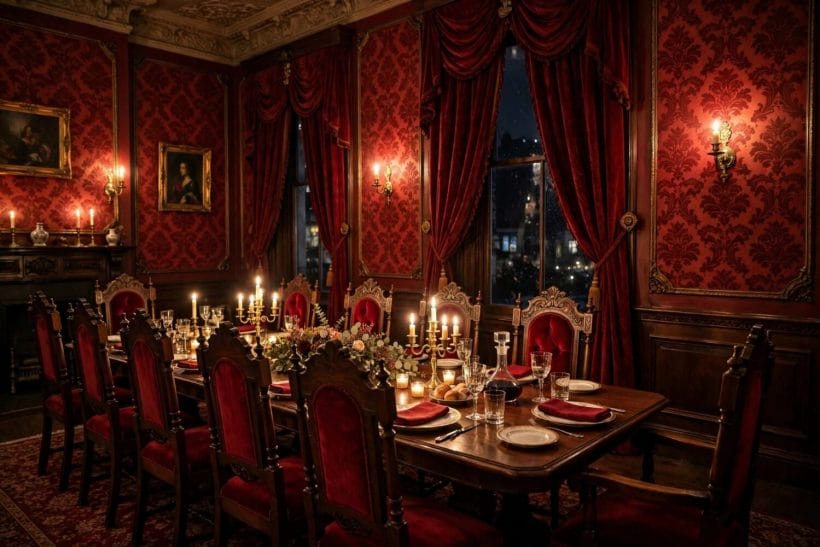
61. Mix china patterns with a shared colour
Different patterns sit happily together when they share a colour. A blue-and-white plate beside a gilt-rimmed bowl looks collected rather than clashing, provided the shared colour ties them.
62. Let crystal catch the candlelight
Cut crystal glasses and decanters throw candlelight across the table in exactly the way plain glass cannot. Reserve the finest crystal for evenings, when its sparkle earns its keep.
63. Polish silver before occasions, not after
Silver polished the day before an occasion gleams; silver polished after one is a chore remembered with regret. Keep a polishing cloth in the sideboard drawer and the habit will stick.
64. Build centrepieces from the garden and the fruit bowl
Flowers, fruit, greenery and candles make centrepieces that cost little in effort and suit every season. Keep them low, as ever, so conversation crosses the table unimpeded.
65. Dress the table for spring with fresh flowers
Spring calls for light colours, fresh flowers and linen in pale tones. The room’s dark wood becomes a backdrop rather than the mood, and the table feels like the season’s first celebration.
66. Dress the table for autumn with fruit and warm tones
Autumn suits fruit bowls, warm-toned linen and deeper flowers. The room’s burgundy and green walls come into their own, and the table echoes the season outside the window.
67. Dress the table for winter with candles and greenery
Winter is this room’s high season: candles multiplied, greenery along the dresser, and the table at its most dressed. Keep flames clear of greenery and never leave them burning unattended.
68. Keep one simple setting for ordinary nights
Not every supper needs the full ceremony. A simple setting, well-chosen placemats and a single candle keep weeknight meals special without turning them into productions.
10. Small Rooms, Everyday Use and Occasions
Victorian style scales down gracefully. A small room can carry dark walls, a dresser and a chandelier provided the table fits the footprint and the light stays warm. The principles do not change with size: a clear route, a low centrepiece, comfortable chairs and light that flatters. What changes is discipline, choosing fewer pieces and letting each one work harder. That discipline is the heart of home design ideas for compact rooms that still want grandeur.
69. Shrink the table before shrinking the chairs
In a small room, a smaller table with full-size comfortable chairs beats a large table with cramped seating. Guests remember comfort long after they forget the table’s length.
70. Use a round table in a square room
A round table wastes no corner in a square room and seats guests without a head or foot. It is the kindest shape a small room of this style can choose.
71. Let one dresser do the work of three cabinets
One well-organised dresser, stocked by course and rotated by season, serves a small room better than several crowded cabinets. Choose the dresser first and let storage follow it.
72. Keep the room’s palette to two deep colours
Small rooms forgive fewer competing darks. Two deep colours, one pale ceiling and warm light give a small room richness without gloom.
73. Use the dining room for work and reading by day
A dining table that hosts letters, reading and homework by day earns its floor space twice over. Clear it properly for meals, and the room’s two lives will never quarrel.
74. Host small gatherings often, large ones rarely
Victorian hospitality does not demand crowds. Small gatherings, often repeated, build the room’s traditions far better than rare feasts that exhaust the host.
75. Let the room age gracefully
Scratches on the table, faded chair fabric and a chandelier with one mismatched crystal are not flaws; they are the room’s history. Care for the pieces, repair what breaks, and let the room gather character the way its hosts gather memories.
Final Considerations
A Victorian dining room succeeds when grandeur and comfort share the table. Start with the table and the light, add seating that forgives long evenings, layer colour and pattern with restraint, and keep serving pieces close at hand. Dress the room by the season, use it often, and let it gather the small marks of a well-lived life. Have any electrical or structural alteration work done by a qualified professional, keep candles attended, and the room will serve feasts and weeknights alike for years.


0 Comments