
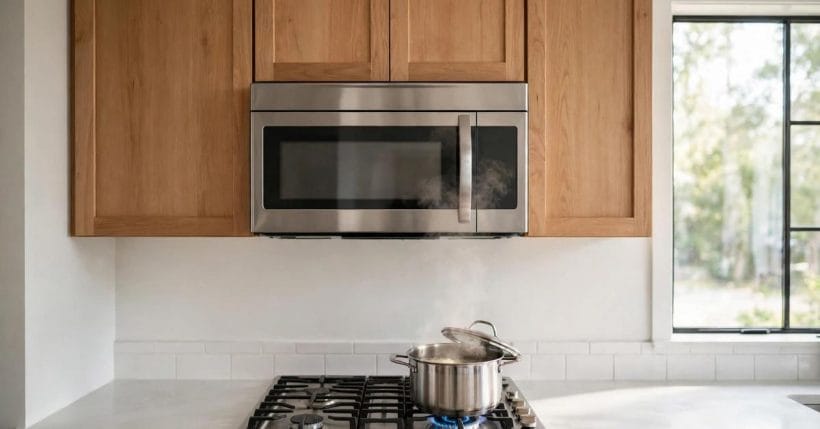
Every kitchen has a gap that most people never think about until it starts getting in the way: the open space between the hob and the microwave fitted above it. That gap decides whether a tall pot slides in comfortably or has to be tilted, whether steam drifts away or hangs around the cook, and whether taking a hot dish out of the microwave feels easy or awkward. It is a small distance with an outsized effect on everyday cooking, which is why so many people ask the same question when they plan a kitchen or move into a home where the fitting is already there: what height is considered too low, and what height is considered too high?
This guide answers only that clearance question, in general terms. It does not try to teach over-the-range microwaves in general, rank models, or settle on one correct height for every kitchen, because no single height can suit every hob, every cook, and every home. Instead, it describes what too low tends to feel like, what too high tends to feel like, and the checks that help you judge your own kitchen honestly. Throughout, one rule outranks everything else here: the manual that came with your microwave, and the local rules that apply to your home, win over any general guidance. Fitting, moving, or rewiring an appliance is work for a qualified professional, and nothing here is a substitute for that advice. For a wider sense of how kitchens come together, see these kitchen ideas, where the cooking wall is planned as one working whole rather than as separate parts.
1. The Question Behind the Height
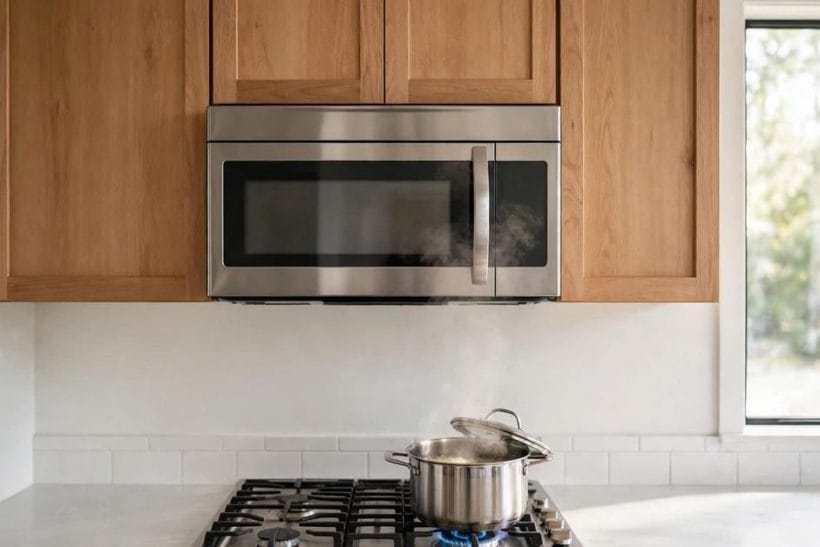
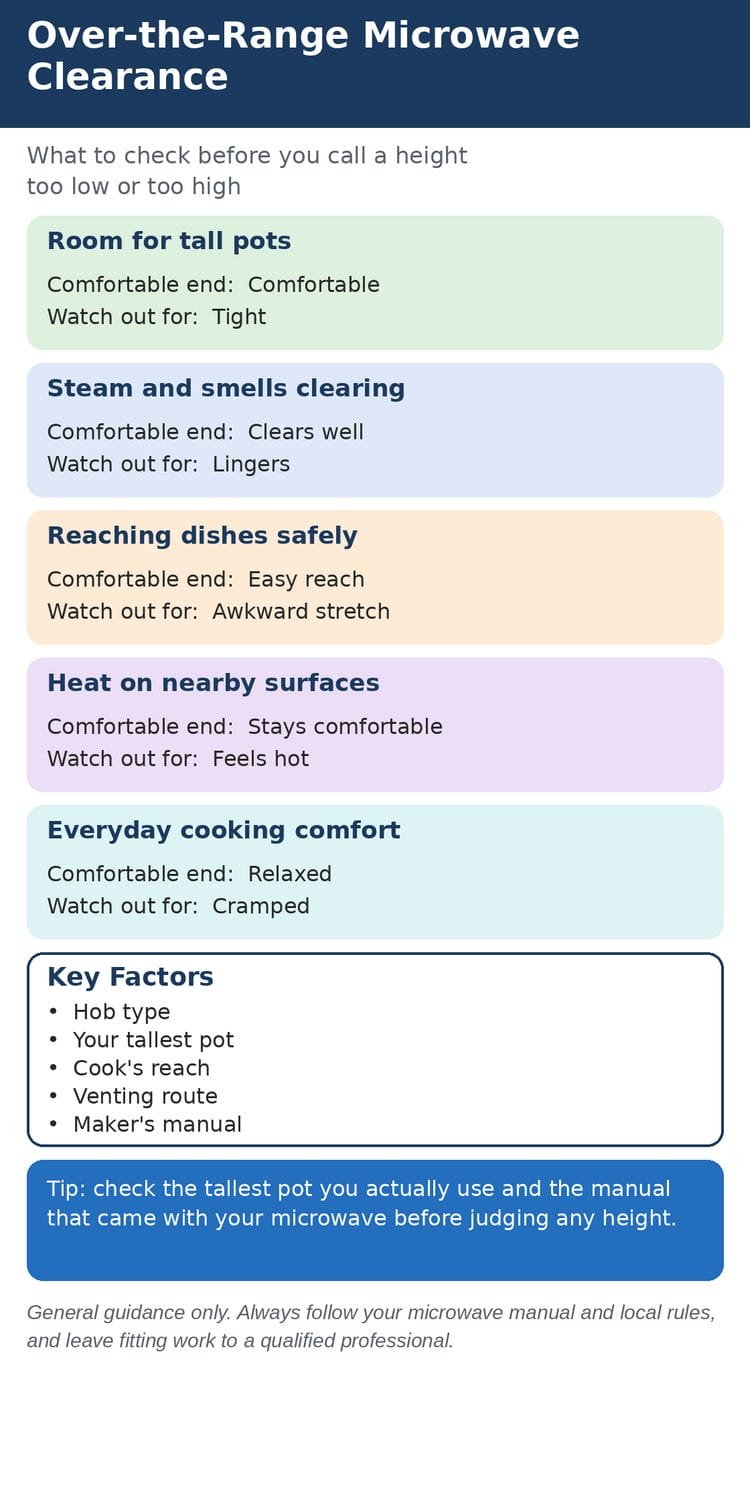
The question sounds simple, but it is really several questions folded into one. People who ask it are usually worried about more than a measurement. They want to know whether pots will fit, whether steam and cooking smells will clear, whether the microwave will sit close enough to the heat to suffer for it, and whether reaching up to a hot dish will feel safe on a busy evening. A height that looks fine on a quiet morning can feel very different when a tall pot is boiling, a second pan is going, and someone is trying to lift a heavy dish down with oven gloves on. That lived experience, more than any single figure, is what this guide uses to judge a height.
It also helps to separate the clearance question from the buying question. Choosing a microwave, comparing features, and deciding between fitting styles are all different jobs, and none of them are answered here. This guide assumes the microwave is already above the range, or is planned to be, and asks only how the space between hob and appliance behaves in daily use. If you are still at the choosing stage, settle the clearance question first anyway, because it shapes how pleasant every later choice will feel. A microwave that is lovely to look at but awkward to reach over a busy hob will frustrate you far longer than a plainer choice fitted at a comfortable height.
2. What Too Low Feels Like at the Hob
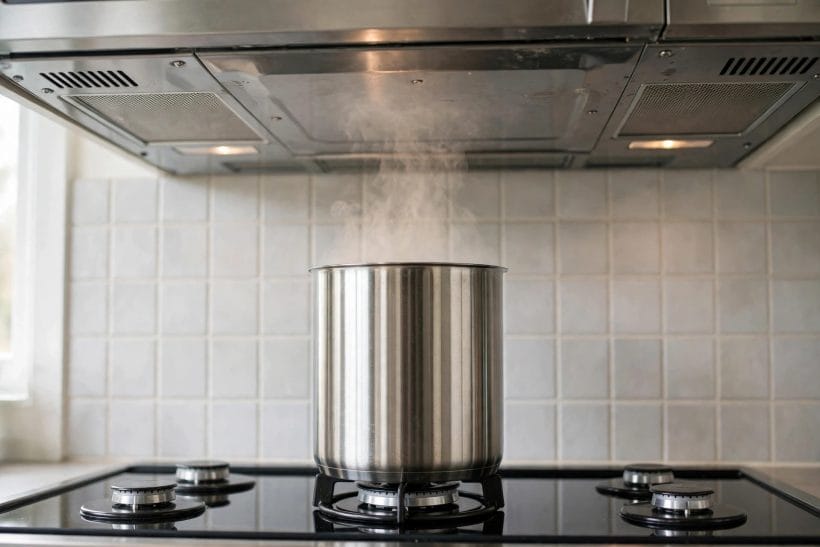
A fitting that sits too close to the hob announces itself quickly, and usually at the worst moment. The first sign is often a tall pot: the kind used for stock, pasta, or a big family meal. When the gap is tight, the pot goes in at an angle, the lid cannot sit properly, or stirring means working around the underside of the appliance rather than over an open pot. Cooking becomes a negotiation with the space above the hob instead of a straightforward job, and the cook starts choosing smaller pans or shallower pots simply to fit the gap. That quiet change in how you cook is one of the most reliable signs that the clearance is working against you.
The second sign is what happens to the underside of the microwave itself. Steam, splashes, and cooking grease all rise, and a tight gap gives them nowhere else to go. The underside can end up marked, sticky, or hard to keep clean, and the light fitted beneath the appliance may end up shining on a cramped patch of hob rather than lighting the whole cooking surface. None of this means the kitchen is unusable, and it does not by itself prove that anything is unsafe, but it does mean the fitting is asking for more cleaning and more care than a roomier gap would. If you find yourself wiping the underside after every meal or avoiding the tallest pan you own, the gap deserves an honest look.
3. What Too High Feels Like at Mealtimes
Too high is quieter and easier to miss, because it rarely causes a dramatic problem. It shows up in small, repeated awkwardness: lifting a hot, heavy dish down from a height that asks for a stretch, peering up into the microwave to see whether food is ready, or needing to stand on tiptoe to reach the back of the cavity. For a taller cook, a higher fitting may feel entirely natural, but for a shorter cook, or for anyone with a sore shoulder or a stiff back, the same height can turn a simple reheating job into a careful operation. The test is not how the height looks, but how it feels when you are holding something hot and heavy.
There is also the question of what happens on the way down. A dish lifted from a high microwave has further to travel to the counter, and that journey is where spills happen. Lids drip, liquids slosh, and a cook who is stretching cannot steady a dish as well as one who is standing comfortably. If you regularly find yourself setting a hot dish down in stages, or asking someone taller to fetch things from the microwave, the fitting may be sitting higher than your household comfortably uses. A good height is one that every regular cook in the home can use without strain, not just the tallest person in the house. The layout of the wider home matters here too, and these tiny house interiors show how much difference a comfortable reach makes when every surface has to earn its place.
4. Tall Pots and Everyday Cooking
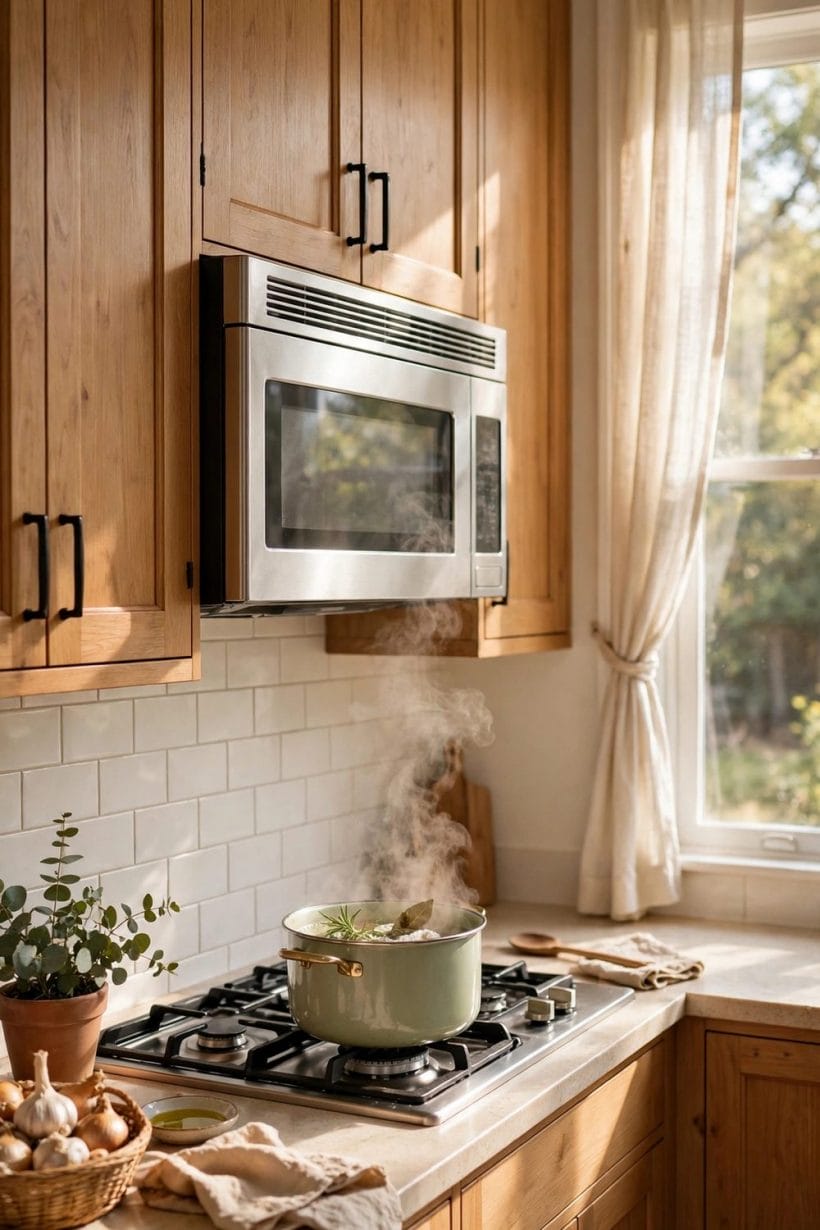
If there is one practical test worth doing before judging any height, it is the tallest-pot test. Take the tallest pot you actually use, not a special-occasion pan that comes out rarely, and set it on the hob with its lid on. Then imagine stirring, lifting the lid to check, and lifting the pot off the burner with both hands. If each of those moves feels open and unhurried, the gap is serving your cooking. If the lid catches, the spoon handle knocks the underside, or you cannot lift the pot clear without tilting it, the gap is shaping your cooking more than it should. This test works because it uses your real cooking, not an abstract idea of what a kitchen ought to hold.
It is worth running the same test with the second pan going as well, because kitchens rarely cook one thing at a time. A gap that copes with a single pot can feel crowded when a frying pan is beside it and steam is rising from both. Watch, too, for the pans you reach for on ordinary weeknights rather than the ones you admire in the cupboard. A height that suits a shallow frying pan but fights a stockpot will frustrate you on exactly the evenings when you are cooking the most food. If the tallest pot test fails, that is useful information, not a verdict on your kitchen: it simply tells you where the pressure point sits, and it gives a professional something concrete to work with if you ever ask about changing the arrangement.
5. Steam, Smells and Ventilation
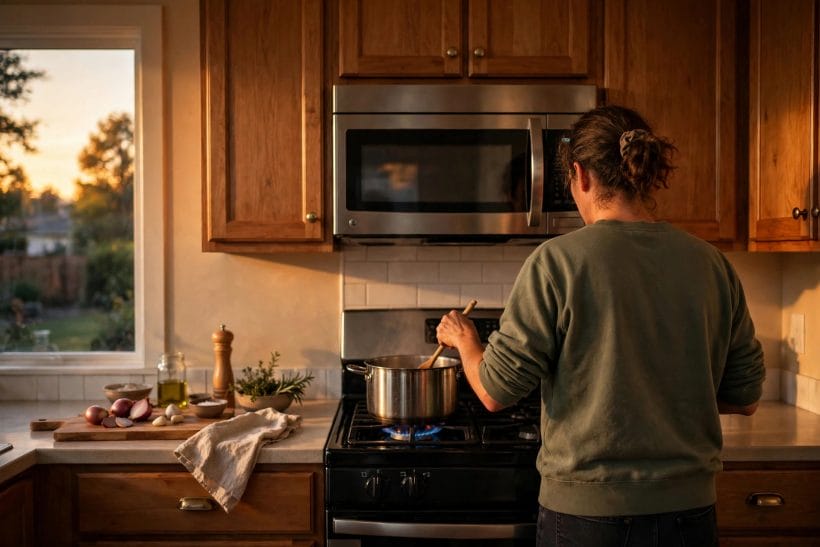
An over-the-range microwave usually does double duty, drawing steam and cooking smells away from the hob as well as heating food. The clearance affects how well that second job works, in general terms. When the gap is comfortable, steam has room to rise and be drawn in, and smells clear steadily rather than hanging over the cooking area. When the gap is tight, steam can crowd against the underside and drift sideways into the room instead, leaving the kitchen steamy long after cooking has finished. And when the gap is generous, steam may rise past the intake more easily, so smells linger even though the fan is running. The goal is a gap where the draw feels effective without the cook having to think about it.
The honest way to judge this is to cook something steamy and pay attention, rather than trusting a first impression. Boil a pot, fry something fragrant, and notice where the steam goes, whether the room clears after cooking, and whether smells settle into curtains, soft furnishings, or the next room. Also notice whether the fan, on its normal setting, changes the picture, and whether the filters are clean, since a blocked filter will make any height feel worse than it is. Ventilation is a whole-kitchen matter as well: windows, doors, and the general airflow of the room all play a part, so a steamy kitchen is not automatically proof of a wrong height. But if steam consistently crowds the cooking area or escapes into the room, the clearance belongs on the list of things to review with a professional.
6. Reaching In and Out Safely
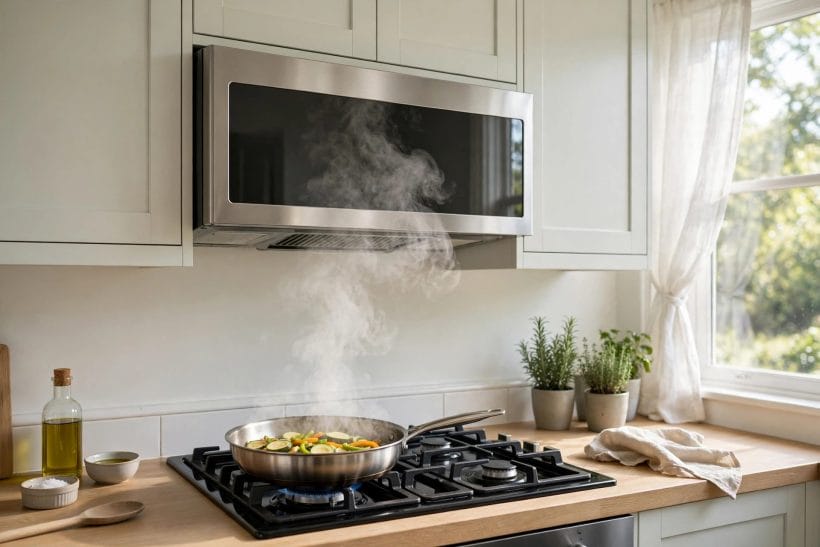
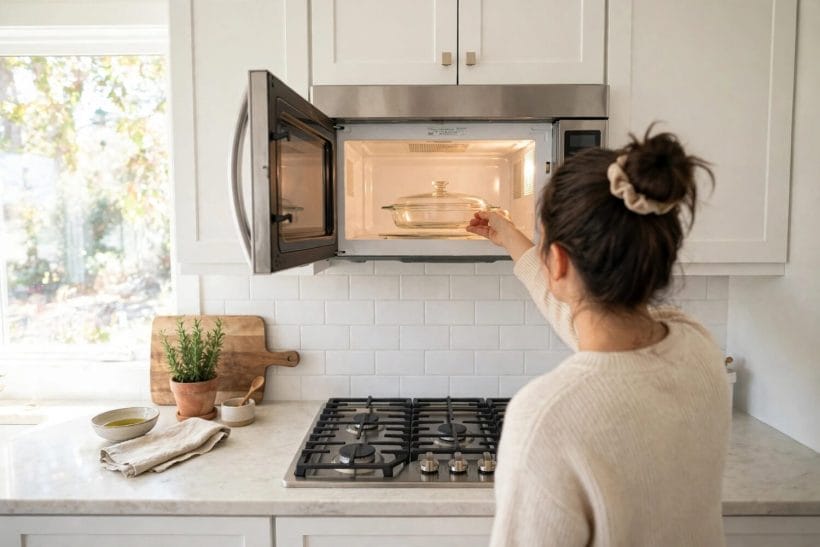
Reaching is where height becomes a safety question rather than a comfort question, and it deserves slow, honest attention. Opening a microwave door, reaching inside for a hot dish, and bringing that dish down to the counter should all feel controlled. If the microwave is low, the door may open close to the cook’s face or over a hot hob, which makes the movement feel cramped. If the microwave is high, the cook may be lifting blind, unable to see the dish properly until it is already in their hands. Neither extreme is comfortable, and both ask for more care than a well-judged height does. The safest height for a household is the one where the cook can see what they are lifting, hold it level, and set it down without stretching or bending over the hob.
Think, too, about who else uses the microwave. A household is rarely one cook: partners, older children, visiting family, and anyone helping with a meal all reach into the same appliance. A height that suits one person perfectly can be awkward for another, and the household answer is the height that the least comfortable regular user can manage with confidence. Also consider what is being lifted: a light mug is forgiving, but a heavy casserole, a jug of soup, or a dish of hot liquid is not. Judge the height by the heaviest, hottest thing you lift regularly, not by the lightest. If reaching ever feels like a stretch, a balancing act, or a job you would rather hand to someone else, that feeling is the clearance speaking, and it is worth listening to.
7. Heat, Light and the Surfaces Around
Heat is the other quiet signal a clearance gives off. The underside of a microwave, the wall behind the hob, and any nearby cabinets all live with rising heat every time you cook. When the gap is comfortable, those surfaces warm up and cool down without drama. When the gap is tight, nearby surfaces can feel noticeably hotter, finishes can show the strain over time, and the cook may feel the heat on their face and hands more than they would like. You do not need instruments to notice this: after a long cooking session, rest a hand near, not on, the surrounding surfaces and notice whether the heat feels mild or insistent. Persistent, uncomfortable warmth around the fitting is a reason to ask a professional to look, not a problem to solve by moving the appliance yourself.
Light matters more than people expect, too. Many over-the-range microwaves carry a light underneath, meant to brighten the hob. If the gap is tight, that light may pool on a small patch and leave the front burners dim; if the gap is generous, the light spreads further but grows weaker. Cooking in dim light is tiring and makes it harder to judge colour, browning, and whether a pan is about to boil over. Stand at the hob in the evening, with only the kitchen’s usual lights on, and ask whether you can see the whole cooking surface clearly. The answer tells you something real about how the height serves the hob, and it connects to the wider room as well: these tiny house storage ideas show how carefully small kitchens place light and work surfaces so nothing important sits in shadow.
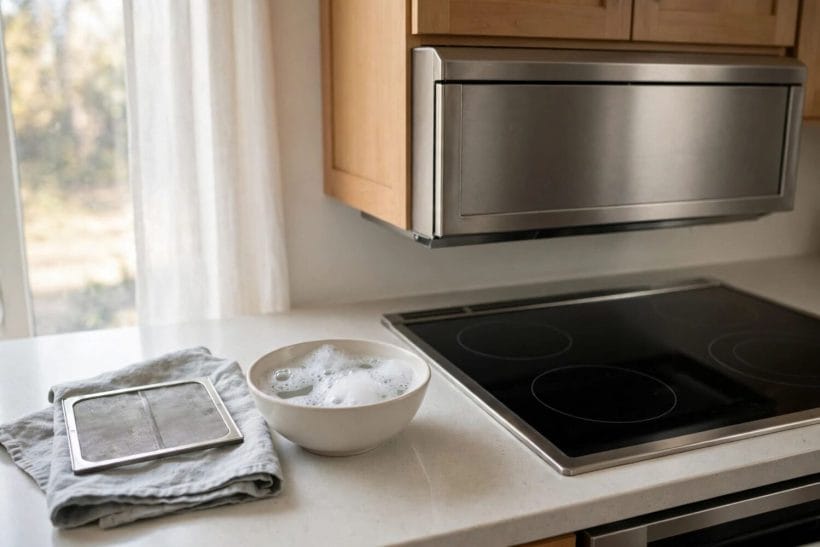
8. Hob Type Changes the Conversation
Not every hob makes the same demands on the space above it, and this is one of the reasons a single height cannot suit every kitchen. A gas hob, with open flames and tall flames licking around wide pans, generally asks for more breathing room above it than a flat electric or induction hob, where the cooking surface is level and the heat is contained differently. That is a general tendency, not a rule, and it is exactly the kind of point where your microwave manual and local rules matter most: the manual for your appliance, read alongside the guidance for your hob, is the authority for your combination, not any general article. If the two seem to disagree, ask a qualified professional rather than splitting the difference yourself.
Hob type also changes what the cook does with their hands. Gas cooking often means adjusting flames, moving pans between burners, and working with taller pots, all of which need headroom. Flat hobs often mean sliding pans, using wide frying pans, and wiping the surface down, which needs clear sightlines more than headroom. Neither style is better, but they put different pressure on the gap above the hob. When you judge your clearance, judge it for the hob you actually have and the way you actually cook on it. A height inherited from a previous hob, or copied from a neighbour’s kitchen with a different hob type, may not serve your cooking at all, and that mismatch is a common source of the feeling that something is slightly off without an obvious cause.
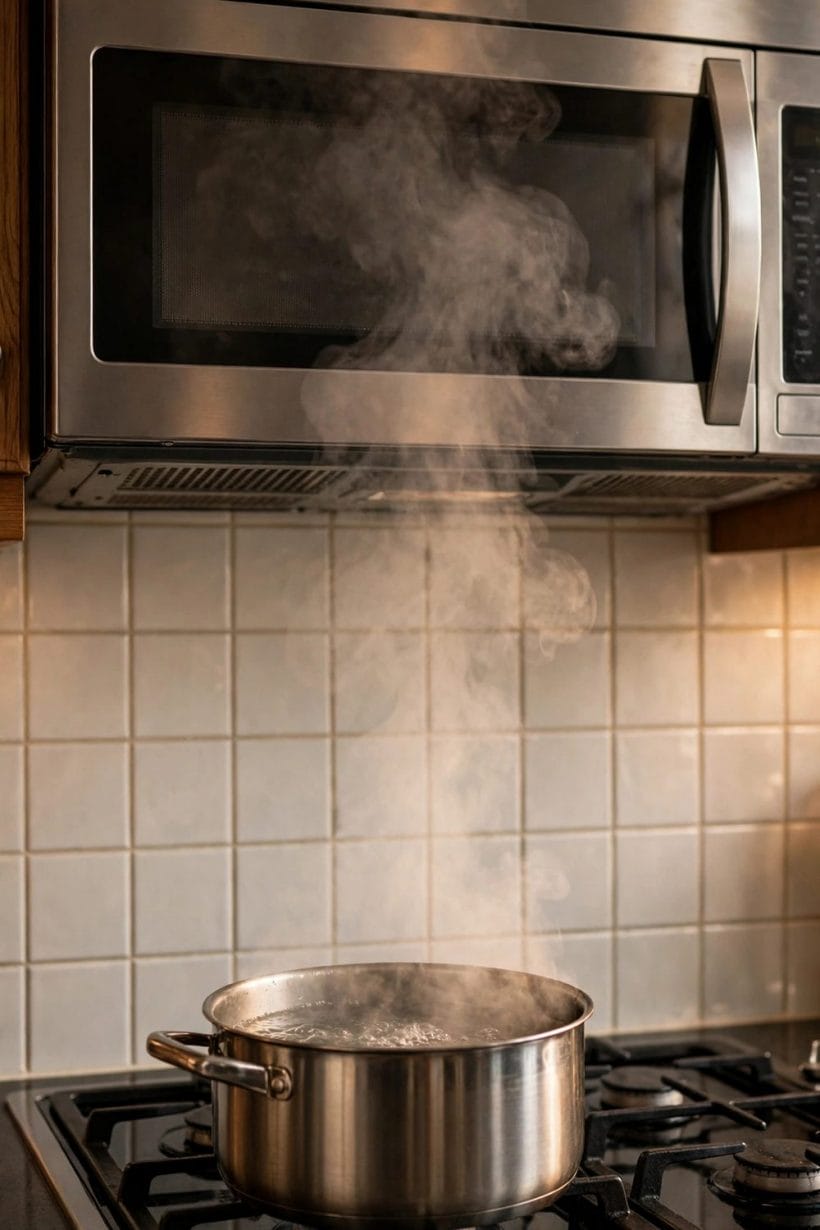
9. Small Kitchens and Shared Walls
Small kitchens feel clearance problems first, because there is nowhere for the awkwardness to hide. In a compact kitchen, the microwave above the range may be the only microwave in the home, the hob may be the only cooking surface, and the same stretch of wall may carry cabinets, shelves, and a window. A tight gap in that setting affects every meal, while a generous gap may steal storage or headroom that the kitchen cannot spare. The balance is delicate, and it is best judged by living with the space: cook a full meal, use the microwave, open the cabinets, and notice where you hesitate, duck, or stretch. Those hesitations are data, and they matter more than how the wall looks in a photograph.
Shared walls add another layer. In a small home, the cooking wall often backs onto a living space, a bedroom, or a neighbour’s wall, and steam, smells, and noise travel through it. A clearance that vents poorly will be felt beyond the kitchen, while a clearance that works well keeps the rest of the home comfortable. This is one reason to think of the cooking wall as part of the whole home rather than as an isolated fitting, and why whole-home planning guides help: these tiny house floor plans show how the cooking wall, the living area, and the sleeping area share air, light, and movement in a small footprint. If your kitchen is compact, judge the clearance by how the whole home feels after cooking, not only by how the hob feels during it.
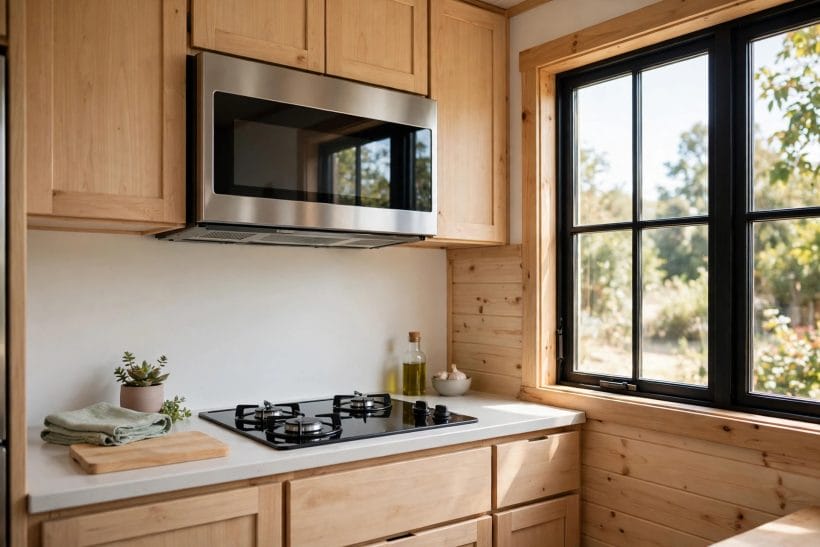
10. How to Judge Your Own Kitchen
Pulling the checks together gives a simple, practical way to judge any height without a single figure. Start with the tallest pot you actually use, and cook a real meal with it. Watch whether the lid, the spoon, and your hands all have room. Then notice the steam: does it clear, or does it crowd and drift? Then lift something hot and heavy out of the microwave, and notice whether the movement feels controlled and visible, or stretched and blind. Then check the surfaces around the fitting after a long cooking session, and the light across the hob in the evening. Finally, ask every regular cook in the household to do the same checks, and listen to the least comfortable answer. If most checks feel easy, the height is serving you well, whatever it happens to be.
If several checks feel awkward, that does not mean you should move the appliance yourself or start adjusting fixings, wiring, or ducting. Those are jobs for a qualified professional, who can weigh the manual, the hob, the local rules, and the structure of the wall together. What your checks give you is a clear, honest description to hand over: which pots catch, where steam goes, who struggles to reach, and which surfaces run hot. A professional can do far more with that description than with a vague feeling that the height seems wrong. And if the checks reveal only one small annoyance, such as a filter that needs cleaning or a light that needs attention, that too is useful, because it may be the whole story. For a sense of how such checks fit into wider home planning, see these small living room ideas and small kitchen ideas, where every fitting is judged by how it serves daily life.
Final Considerations
There is no single height that counts as too low or too high for every kitchen, and anyone who offers one without knowing your hob, your pots, your cooks, and your manual is guessing. What you can know, from your own kitchen, is how the clearance behaves: whether tall pots fit, whether steam clears, whether reaching feels safe, whether nearby surfaces stay comfortable, and whether every regular cook can use the microwave without strain. Those lived checks are the real answer to the question this guide set out to explore, and they travel with you if you ever move, remodel, or ask a professional for advice.
Keep the manual that came with your microwave somewhere you can find it, and let it outrank any general guidance, including this guide, whenever the two differ. Keep the filters clean, keep the light working, and keep an eye on the surfaces around the fitting over time, since kitchens change as cooking habits change. And when fitting, moving, or electrical work is needed, leave it to a qualified professional. A comfortable clearance is worth having, but it is never worth an unsafe fitting. If you are planning wider changes to a small home, a calm checklist helps keep the project in order, and this building a tiny house checklist is a useful model for sequencing decisions before any work begins.




0 Comments