

A patio is the room a house grows when the weather allows — breakfast outside, evenings that end later than they would indoors, a second living room with the sky for a ceiling.
These 75 patio ideas build that room properly: layout and surface first, then shade, furniture and light, with planting giving it green walls.
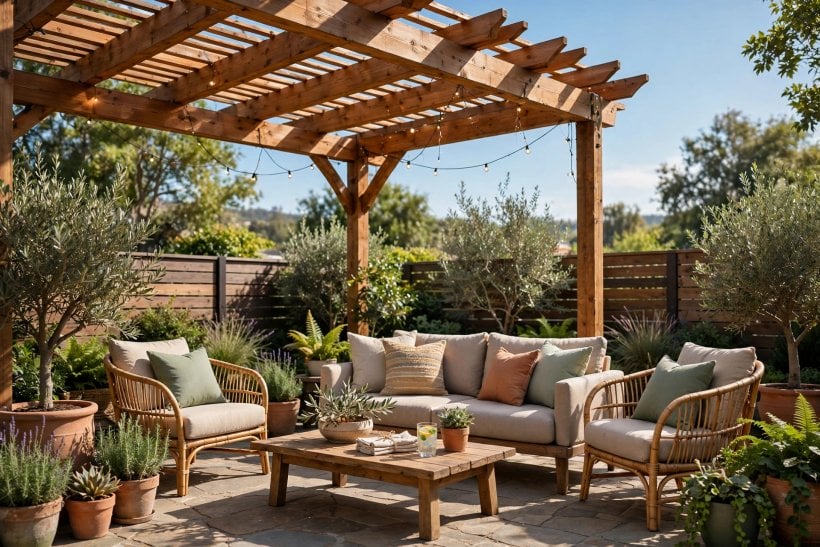
1. Patio Ideas at a Glance
The central entity is the patio as an outdoor living room: a paved floor laid for a purpose, zones for cooking, dining and lounging, shade engineered for the sun’s actual path, and furniture and lighting that carry the space from morning coffee to midnight. Its attributes — layout, surface, shade, furniture, lighting and warmth, planting and privacy — are the sections of this guide, and the order matters: a beautiful chair on a badly drained, shadeless slab is still a bad patio.
| What should I decide first? | The layout and the surface: where each activity lives, how water drains off the paving, and how the patio meets the house. Shade, furniture and lights all follow. |
| What makes a patio feel like a room? | Edges and a ceiling suggestion — planting, a pergola or a wall on some sides, shade above, a rug-like pattern or border in the paving, and light at human height in the evening. |
| Which surface is best? | The one that suits your budget, your drainage and your maintenance honesty: slabs and pavers for permanence, gravel for economy and drainage, decking where levels demand it. |
| How much shade do I need? | Enough for the seats used at the sun’s strongest hours, placed where the sun actually falls at those times — which is rarely where the shade is at breakfast. |
| What dates or fails fastest? | Undrained paving that pools, furniture too big for the slab, and shade structures fixed where the evening sun walks straight under them. |
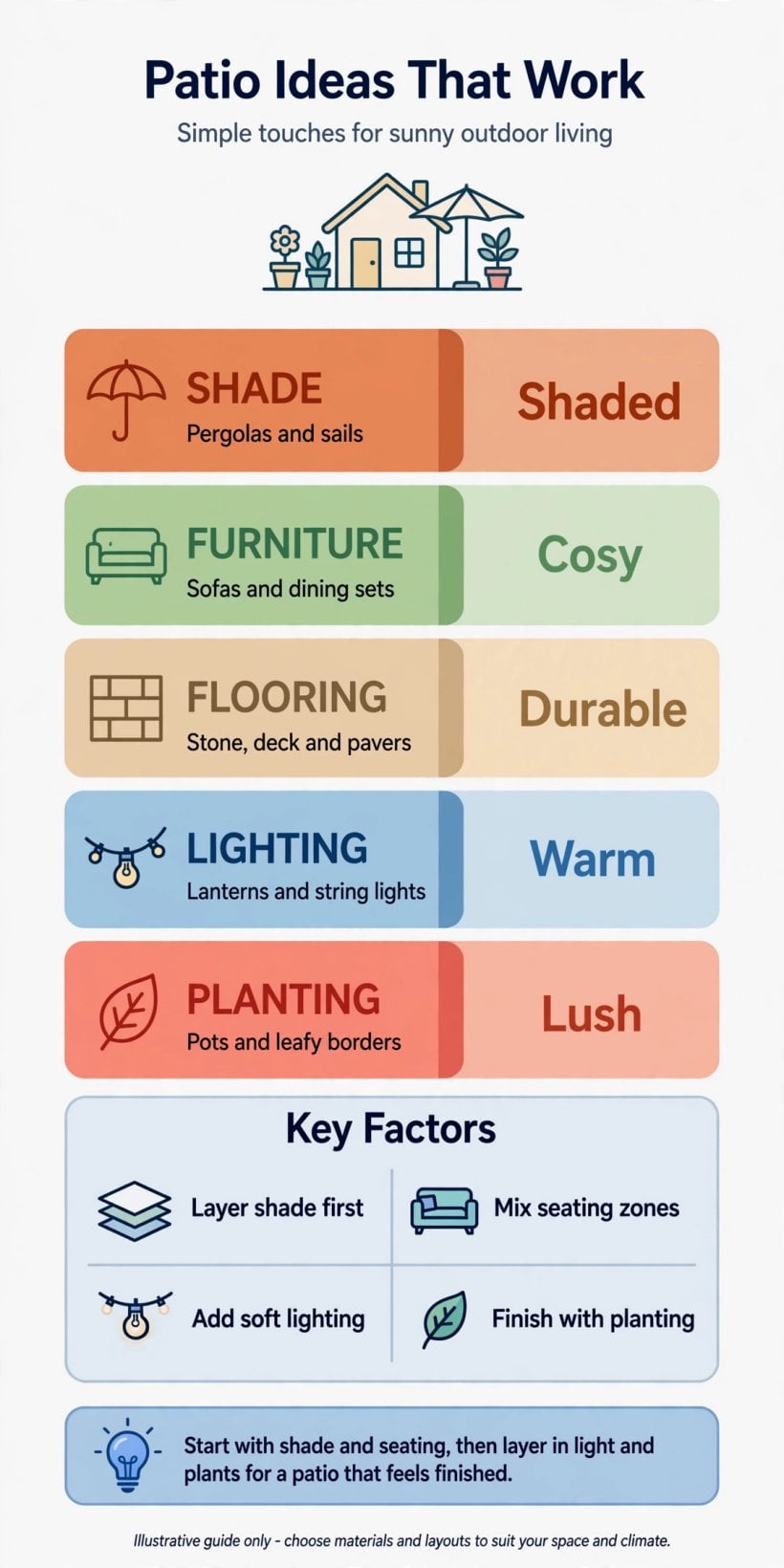
At a glance: zones planned on paper, a drained and honestly chosen surface, shade placed for the real sun, furniture sized to the slab, and light and planting finishing the room.
2. Layouts and Zones: Planning the Outdoor Room
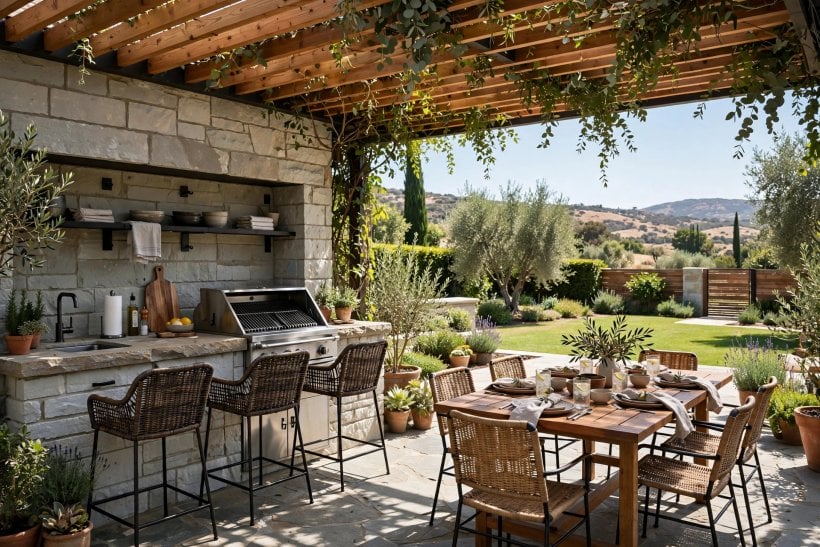
A patio layout is interior design under weather: the same zoning discipline that organises these new home exterior design ideas for tiny houses applies — each activity gets its territory, its surface logic and its route from the house door.
1. Zone the Patio: Cook, Dine, Lounge
Give each activity its own area, even on a modest slab: the grill near the kitchen door, the table in the middle ground, the loungers where the sun or shade suits the hour. Zones keep a patio calm instead of crowded.
2. Size the Dining Zone for Chairs Pulled Out
A table’s footprint is not its territory. Allow room behind every chair for it to pull out and for someone to pass — measure the zone with chairs occupied, not pushed in for the photograph.
3. Keep the Route from Kitchen to Table Short and Level
Every meal travels this route carrying hot dishes. Steps, gravel crossings and tight corners on it are daily taxes; the serving route is the first line to draw on the plan.
4. Plan the Fall: Water Must Leave
Paving should slope gently away from the house so rain runs off rather than pooling or creeping toward the walls. Drainage is not a detail — it is the difference between a patio and a pond with furniture.
5. Put the Social Seats Where the House Gives a Backdrop
Seats against a wall, hedge or fence feel sheltered and hold conversation; seats stranded mid-slab feel exposed. Human beings sit with their backs protected when given the choice — design for it.
6. Leave a Sun Pocket and a Shade Pocket
Most households need both: a warm corner for spring mornings and a shaded retreat for August afternoons. A patio with only one temperature is a part-time room.
7. Extend the Indoor Floor Line Outward
Aligning the patio’s edges and joints with the room inside — same axis, similar tone — makes the house feel twice its size when the doors open. Continuity is the cheapest spaciousness outdoors.
8. Give the Patio a Threshold
A step, a change of material, a pair of pots or an overhead beam at the entry tells the body it has arrived somewhere. Rooms begin at thresholds, indoors and out.
9. Plan Storage Into the Edges
Cushions, covers and tools need a home at the patio, not in the house. A storage bench, a slim deck box or a cupboard under a pergola post keeps the room usable instead of permanently half-cleared.
10. Keep One Flexible Open Area
Not every square metre needs an assignment. An open area takes the paddling pool, the party overflow, the yoga mat, the project table — the patio’s spare room.
11. Sketch the Sun’s Path Before Fixing Anything
Watch where sun and shade actually fall at breakfast, noon and evening across a weekend before placing shade, seating or planting permanently. Assumed sun is the patio’s most expensive mistake.
3. Surfaces: Slabs, Pavers, Stone and Decking
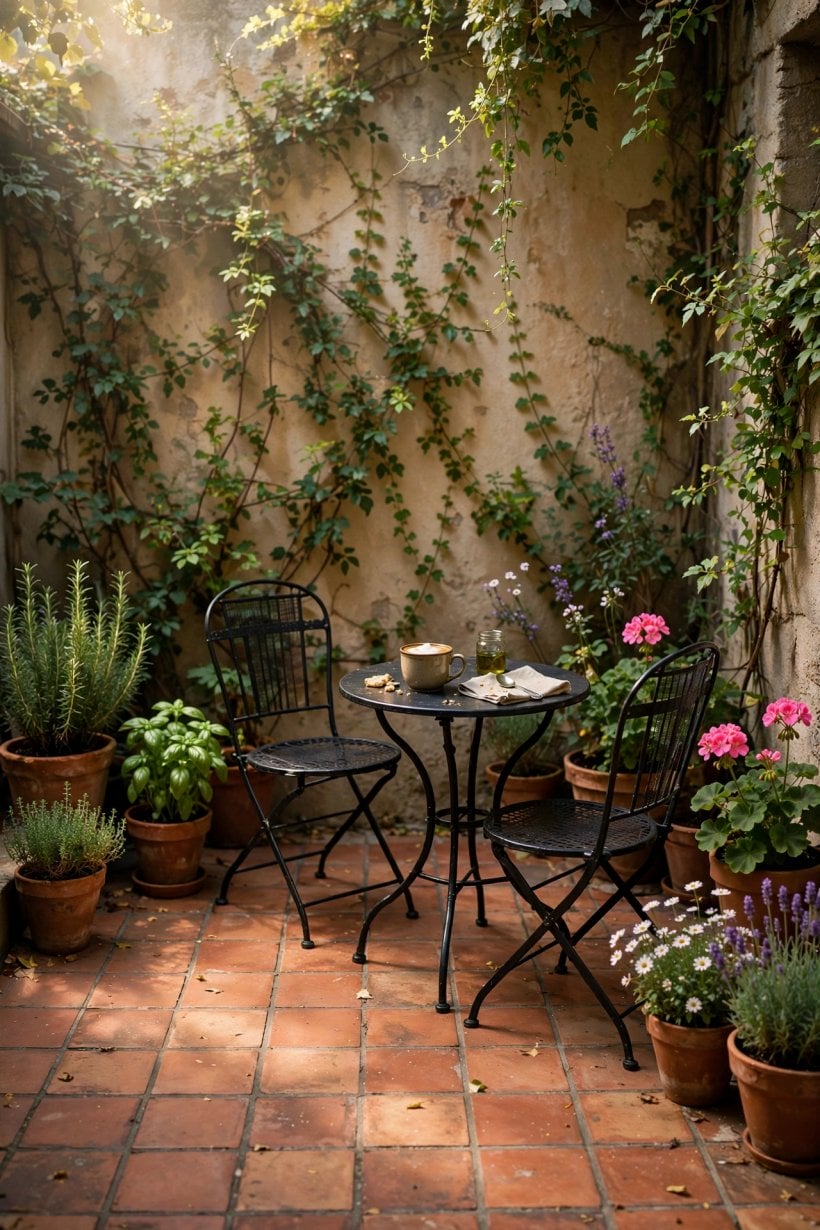
The surface is the patio’s floor, foundation and largest visual field in one. Choose it for drainage, bare feet, furniture legs and the maintenance you will genuinely do — then lay it properly, because relaying is the real cost.
12. Choose Large Slabs for a Calm, Modern Floor
Big-format porcelain or stone slabs give few joints, easy cleaning and a contemporary calm. They demand a properly prepared base — large thin pieces forgive nothing underneath.
13. Use Block Pavers Where Ground Moves
Small units on a flexible bed ride frost and tree roots better than rigid slabs, and a damaged paver can be lifted and replaced singly. For driveways-adjacent or clay ground, they are the honest choice.
14. Try Gravel for Drainage and Economy
A gravel patio drains freely, costs least, and can be laid in a weekend. Stabilise it with grids where chairs and tables stand, and accept the rake as its maintenance price.
15. Lay Natural Stone Where Character Matters
Sandstone, slate and granite each bring their own colour weather. Stone is a lifetime material that asks for correct bedding and occasional cleaning — and repays both for decades.
16. Use Timber or Composite Decking to Level a Slope
Where the ground falls, a deck platform creates the flat room paving cannot. The finish questions in this guide to paint vs stain for exterior wood decide whether timber’s warmth is worth its upkeep to you, or whether composite’s indifference wins.
17. Break a Big Slab with a Border or Banding
A contrasting border course or a band across the field gives a large patio pattern and scale, the way a rug does indoors. Pattern in the paving is decoration that never needs storing.
18. Match Slip Resistance to Wet Reality
Polished surfaces turn treacherous in rain and lethal near pools. Choose textured finishes for the floor; keep the gloss for walls and tabletops.
19. Leave Planting Pockets in the Paving
A missing slab here and there, planted with thyme or low grasses, softens a hard field and helps drainage. Green joints turn paving from a car park into a garden floor.
20. Edge Everything Cleanly
A defined edge — metal strip, soldier-course bricks, a timber lip — keeps gravel in, lawns out and the whole patio looking intended. Unfinished edges are how patios unravel.
21. Think About Bare Feet in Summer
Dark stone in full sun can become too hot to stand on. If the patio bakes, choose paler materials for the barefoot zones or plan the shade to cover them at midday.
22. Budget the Base, Not Just the Surface
Excavation, hardcore, bedding and drainage are half the cost and all of the lifespan. A premium slab on a skimped base is money buried badly; the reverse survives.
4. Shade: Umbrellas, Pergolas and Sails
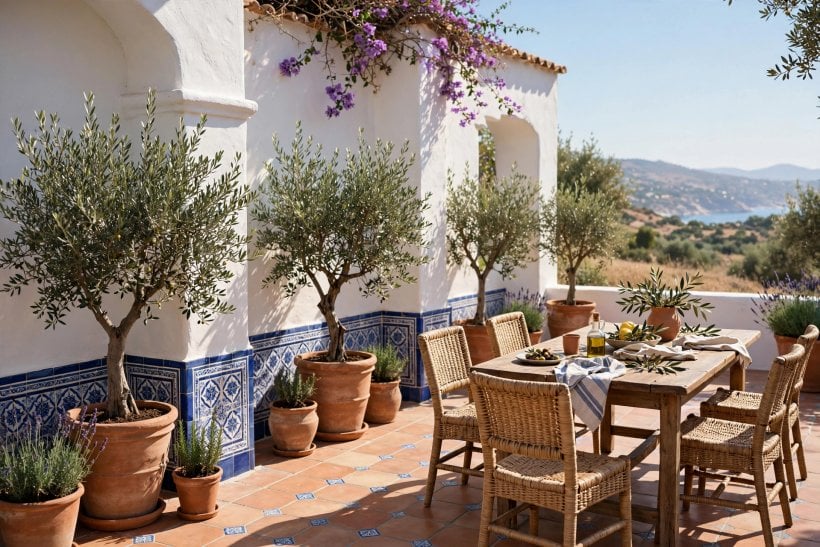
Shade is the patio’s ceiling and its summer licence. The structure matters less than the placement: shade must land on the seats at the hours those seats are used, which the sun-path sketch from the layout section decides.
23. Choose a Cantilever Umbrella for Flexible Shade
An offset umbrella shades a table without a pole through its middle and swings to follow the sun. It is the renter’s and the rearranger’s shade — real cover, zero construction.
24. Build a Pergola for Architecture and Partial Shade
A pergola gives the patio its room-defining structure and dappled shade, especially with climbers trained over it. It filters sun rather than blocking it — plan accordingly for fierce climates.
25. Stretch a Shade Sail for Modern, Affordable Cover
Sails give big shade per pound spent and a sculptural line overhead. They need genuinely strong anchor points and correct tension, or they flap, sag and collect rain in discouraging ponds.
26. Add a Retractable Awning on the House Wall
An awning shades the patio and cools the rooms behind the glass in one move, then disappears in winter. It is the shade that also lowers indoor temperatures — two jobs, one mechanism.
27. Plant a Tree for the Shade of the Next Decade
A well-placed small tree is the finest shade of all: dappled, cooling, alive, and free of mechanisms. Choose species for size, root behaviour and litter, and plant it before you need it.
28. Use the House’s Own Shadow Deliberately
On some plots the building shades the patio every afternoon for free. Lay out the lounging zone inside that gift rather than building shade where the house already gives it.
29. Screen the Low Western Sun Separately
Evening sun comes in low, under every roof and umbrella. A screen, a hedge or a tall planter on the western edge is what actually saves sunset dinners from squinting.
30. Combine Shade with a Light Roof Where Rain Rules
In wet climates, a solid or glazed cover over part of the patio creates the all-weather zone. Half covered, half open gives the household a choice at every forecast.
31. Mind the Fixings: Shade Structures Take Wind Seriously
Pergolas, sails and awnings are wings in a gale. Footings, brackets and posts sized for the load — and covers retracted in storms — are the difference between shade and debris.
32. Grow Climbers Over Structures for Living Shade
A vine over a pergola cools the air beneath it as well as shading it, and turns structure into garden. Choose vigour honestly: some climbers furnish a pergola; others eat it.
33. Keep Shade Off the Whole Patio
Full-time shade makes a patio cold, damp and mossy in shoulder seasons. Cover the seats that need it at the hours they need it, and leave sun its share of the floor.
5. Furniture: Sitting, Dining and Lounging
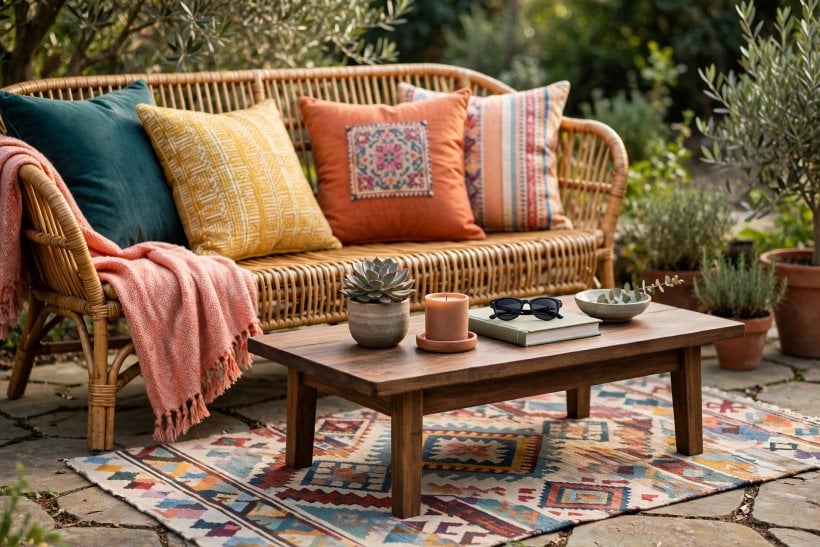
Patio furniture lives a harder life than any indoor piece — sun, rain, frost and storage all take their vote. Choose frames for weather, cushions for storage reality, and sizes for the slab you actually have; the rustic builds in these log projects for outdoor furniture and garden planters show how honest materials age gracefully outside.
34. Size Furniture to the Slab, Not the Catalogue
Measure the zone, then the set — with chairs pulled out and loungers reclined. Outdoor furniture is sold at garden-centre scale; most patios are not.
35. Choose Frames for Your Weather, Not Your Wishlist
Aluminium shrugs off rain, teak greys gracefully and endures, steel needs its coating intact, and cheap resin surrenders to sun within seasons. The climate chooses the material shortlist; taste chooses within it.
36. Pick Dining Chairs You Can Sit in for Three Hours
Outdoor dining lasts longer than indoor — the test is the third hour. Arms, a back that supports, and cushions where the frame is hard decide whether evenings end early.
37. Add Two Loungers Before a Full Sofa Set
A pair of good loungers or recliners serves most households’ real use better than a bulky outdoor sofa suite. Buy for the afternoons you actually have.
38. Use a Fire Table or Low Table as the Lounge Centre
A low table gathers the lounging zone and gives drinks, books and feet a place. Fire tables add warmth and a focal glow — check fuel storage and clearances before falling for one.
39. Choose Cushions with Removable, Washable Covers
Outdoor cushions meet birds, pollen and spilt drinks. Covers that unzip and wash — over quick-drying foam — keep the set looking new past its first summer.
40. Store Cushions Where the Patio Is
A deck box or storage bench at the patio ends the cushion relay race to the house. If storage is far, cushions stay out in the rain; design for the human.
41. Add a Serving Trolley or Side Table Run
Meals travel out in stages. A trolley or a row of side tables along the wall stages the journey and keeps the dining table for diners.
42. Mix One Bench for Flexible Seating
A bench seats three at the table, one with a book in the sun, and the overflow at parties. It is the patio’s most adaptable seat and its easiest storage shape.
43. Keep a Stack of Light Chairs for Guests
Stacking or folding chairs stored flat against a wall appear for gatherings and vanish after. Daily furniture should fit daily numbers; guests are an event, not a layout.
44. Anchor Lightweight Pieces Against Wind
On exposed plots, featherweight furniture migrates in every storm. Weight, stacking and a storage habit are part of the furniture plan, not an afterthought.
6. Lighting and Warmth: Evenings Outside
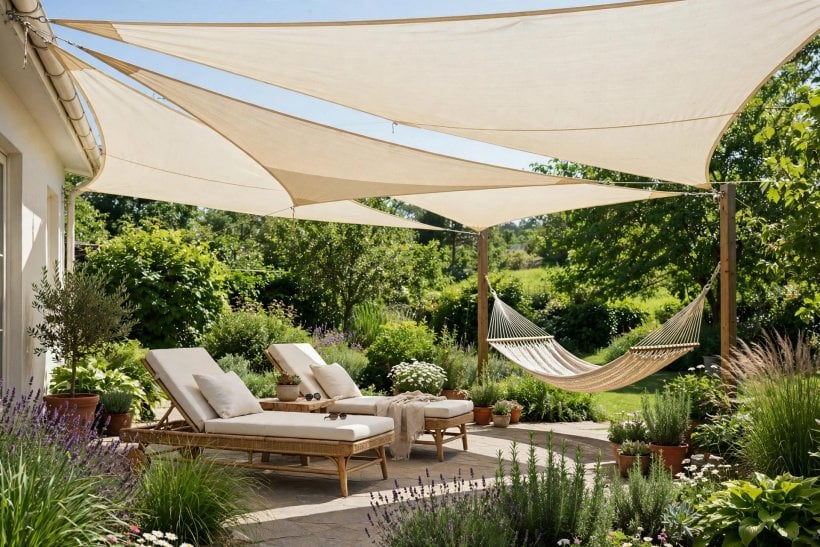
A patio’s second life begins at dusk, and it is lit or it is lost. The safety-first principles in this guide to exterior lighting for security, solar vs 12V hardwired cover the wiring choices; this section is about the mood those choices make possible.
45. String Festoon Lights for the Ceiling Effect
Overhead string lights give a patio its evening ceiling and its party atmosphere in one installation. Anchor them properly, choose warm bulbs, and put them on a switch you can reach.
46. Light the Steps, Edges and Level Changes
Low lights at steps and patio edges are safety wearing beauty’s clothes. Guests should read the ground without thinking about it.
47. Use Lanterns and Candles at Table Height
Light at face and table level flatters people and food alike. Lanterns gather the dining zone into a pool of warmth the overhead lights cannot make.
48. Add a Fire Pit or Chiminea as the Evening Anchor
Fire extends the patio’s season at both ends and gives every gathering a centre. Site it for smoke drift, spark distance and seating in a loose circle.
49. Consider a Patio Heater for Shoulder Seasons
Where fires are restricted or unwanted, a heater buys the spring and autumn evenings. Fuel and running costs belong in the decision, not after it.
50. Uplight One Tree or Planting Feature
A single uplight in the planting beyond the patio gives the evening depth and a view to sit with. Light the garden’s best feature, not everything in it.
51. Choose Solar Where Wiring Cannot Go
Solar stake and string lights serve remote corners without trenches or electricians, at the price of dimmer, weather-dependent performance. Use them as accents, not the main system.
52. Put Outdoor Lights on Timers or Smart Control
The patio should light itself at dusk and excuse itself at midnight. Automation is what makes evening lighting a habit rather than a faff.
53. Keep Light Warm and Low, Never Floodlit
Security floods are for alarms, not evenings. Warm, low, layered light keeps the night soft and the neighbours friendly — and lets the stars keep their job.
54. Warm the Seats: Blankets, Cushions, a Basket by the Door
A basket of throws at the door extends evenings more cheaply than any heater. Warmth stored where the patio begins gets used; warmth stored upstairs does not.
55. Plan a Socket Outside
Music, a projector, the heater, the lights themselves — one weatherproof outdoor socket, professionally fitted, ends the cable-through-the-window era.
7. Planting and Privacy: Green Edges
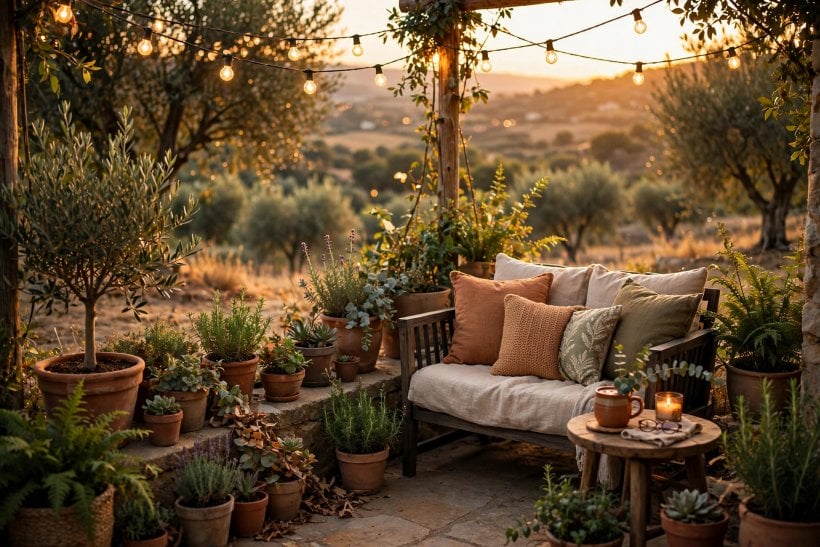
Planting is the patio’s walls, wallpaper and air-conditioning in one system. Done well it screens neighbours, cools the paving, and turns a slab into a garden room; the care logic in this guide to protecting outdoor log crafts with sealants and stains extends to every timber planter and screen you add.
56. Screen the Neighbours with Layered Planting
A hedge, tall grasses or a trellis with climbers at the overlooked edge gives privacy that improves yearly. Solid fences block views and light alike; green screens filter both kindly.
57. Use Large Containers as Movable Architecture
Big pots with small trees or shrubs define zones, mark thresholds and green a rented patio without touching the ground. Scale matters: small pots scatter, large ones build.
58. Plant for Scent Near the Seats
Jasmine by the lounger, lavender by the steps, herbs by the grill — fragrance placed where people linger turns planting into hospitality.
59. Add Herbs Within Reach of the Kitchen Door
A herb planter on the serving route gets used nightly. Herbs are the patio’s most practical planting and its most forgiving.
60. Soften the House Wall with Climbers or Espalier
The wall behind the patio is its largest surface. A trained climber or espaliered fruit tree turns brick into garden and cools the wall behind it.
61. Choose Drought-Tolerant Planting for Sunny Slabs
Pots on hot paving dry fast. Mediterranean and drought-tolerant choices forgive a missed watering week that thirsty bedding plants will not.
62. Plan Watering Before Planting
An outside tap, a drip line or a can that lives at the patio: planting survives on systems, not intentions. Design the water with the plants.
63. Use Evergreen Structure for Winter
A patio planted only for summer is a grey slab for half the year. Evergreen shrubs and grasses keep the room’s bones green when the show is over.
64. Grow One Edible Thing
A tomato in a pot, a fig against the wall, strawberries in a tower — food growing in the room changes how the patio feels and how often it is visited.
65. Keep Trees and Big Shrubs Out of the Drainage
Roots seek water and paving lifts for nobody. Site large planting with its mature size and root habits in mind, especially near drains and the house.
8. Small Patios and Tiny-Home Outdoor Space
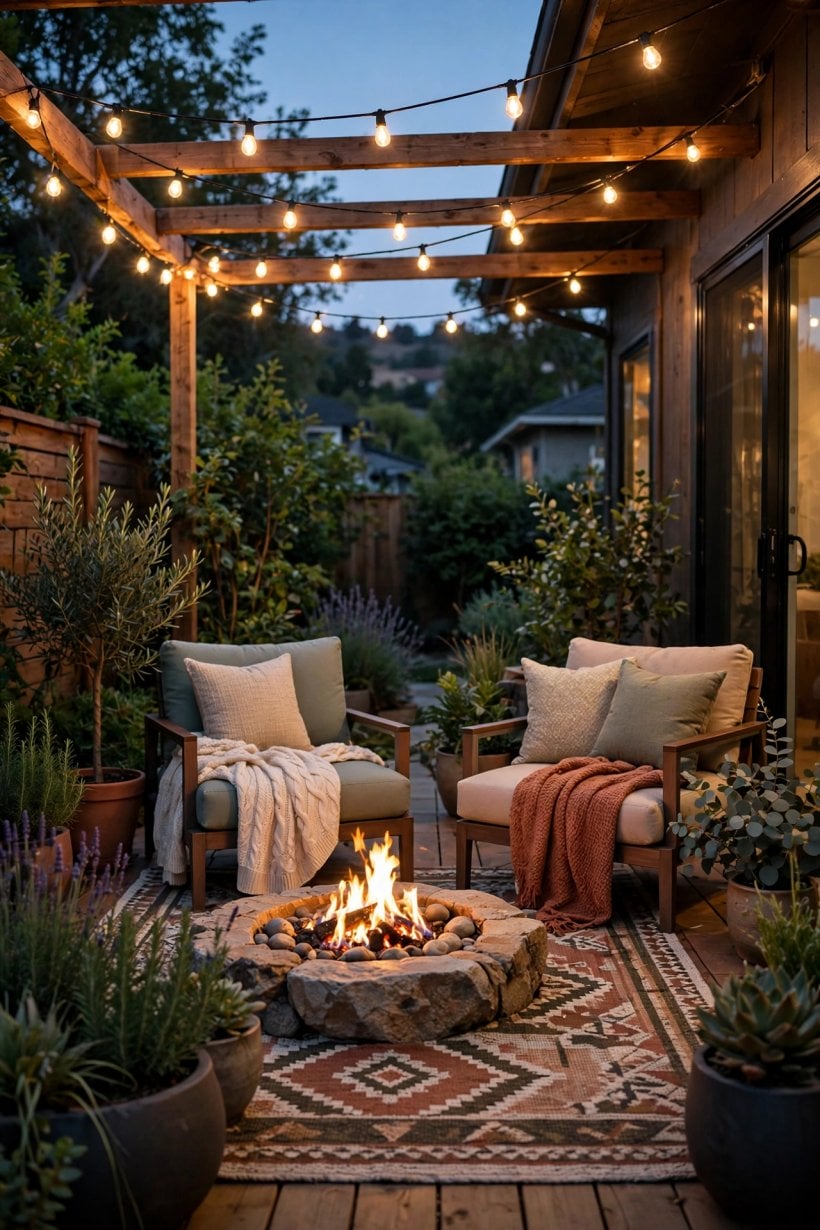
A small patio is not a failed large one; it is a different discipline — one zone done completely, furniture at honest scale, and every edge working. Tiny homes live by this: the outdoor room may be the largest room they have.
66. Choose One Zone and Do It Completely
Dining for four, or lounging for two — a small patio that does one thing fully beats one that squeezes all three zones into discomfort.
67. Use Folding and Stacking Furniture as the Main Set
A folding table and chairs that clear away give a small patio two lives: full room when set, open floor when not. Permanence is a luxury of size.
68. Run the Paving Pattern to Widen the Space
Slabs laid with their lines running across the short dimension widen the read of a narrow patio; a border course frames it like a rug.
69. Take Planting Vertical
Wall planters, trellis climbers and a green screen give a small patio its garden without spending floor. Height is the small patio’s spare dimension.
70. Shade with One Umbrella, Well Placed
A single cantilever umbrella, positioned from the sun-path sketch, shades the one zone properly. Structures overwhelm small slabs; one good umbrella does not.
71. Light in Miniature Layers
A string of festoons, two lanterns, one step light: the full layered system at small scale costs little and makes the small patio an evening room equal to any.
72. Keep the Palette to Two Materials and One Green
One paving, one furniture material, planting as the colour. Small outdoor rooms fragment under variety exactly as small indoor ones do.
73. Borrow the View Beyond the Boundary
Where a hedge or fence can be lowered, trellised or planted to frame a borrowed view — a tree, a roofline, the sky — a small patio gains a horizon it does not own.
74. Store Everything in One Bench
Cushions, covers, the folding chairs’ cushions, the lantern fuel: one storage bench as seat, table and cupboard is the small patio’s hardest-working piece.
75. Keep One Luxury and Do It Properly
A genuinely comfortable chair, real flame, beautiful slabs in a small field — one luxury fully done makes a small patio feel chosen rather than compromised.
9. Checks and Mistakes: Before You Lay a Slab
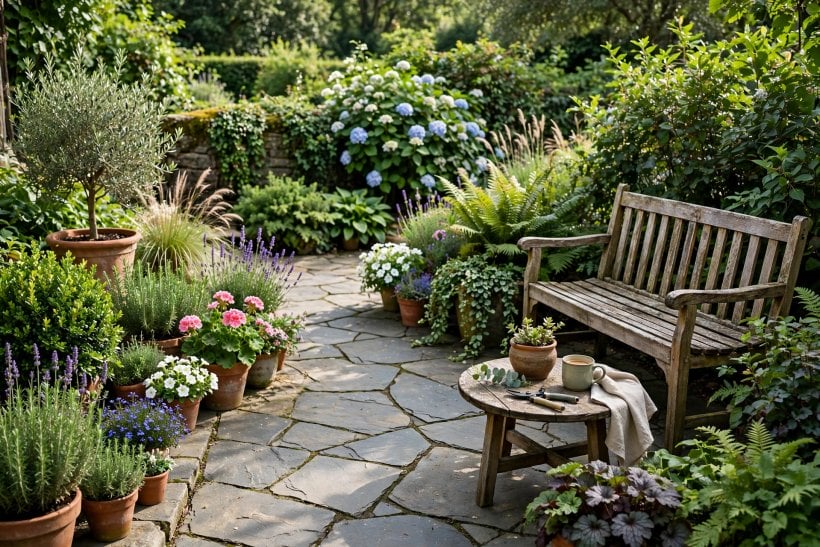
The expensive patio mistakes repeat reliably: paving laid without a fall so water pools against the house; shade built where the morning sun is, not the afternoon’s; furniture ordered at showroom scale for a cottage slab; and no plan for cushion storage, so the set lives under a tarp. The cladding checks in this look at tiny house siding options in cedar, metal and composite matter here too — the patio’s backdrop wall weathers everything the patio does, and its material decides how gracefully.
Run the checks in order: drainage route and fall confirmed before any surface is chosen; sun path watched across a full day; furniture measured against the slab with chairs occupied; and the storage, water and power points placed on the plan. A patio is built once and used for decades of evenings; a day of checking is the cheapest part of it.
10. Costs and Pulling It Together
Patio money divides into three bands. The ground band — excavation, base, drainage and the surface itself — is permanent and should carry the budget’s weight, because relaying costs more than laying ever did. The structure band — pergola, awning, lighting and power — is mid-priced and transforms usability, especially the season’s length. The furnishing band — furniture, cushions, pots and plants — is changeable, so it is where style can experiment and savings are safest.
Pull the patio together with the rule that opened this guide: layout and drainage first, shade where the sun demands it, furniture at honest scale, and light for the second shift after dusk. Do that, and the patio stops being a slab behind the house and becomes what it should be — the room everyone chooses, all summer long.
Final Considerations
A good patio is a room that happens to be outdoors. It has a floor that drains, walls of green, a ceiling of shade or stars, and light for its evening shift. Build those four things honestly and the furniture almost chooses itself.
Start with the plan and the fall of the ground, spend on the surface and the shade, and keep the furnishing layer changeable. These patio ideas then stop being a list and become the household’s favourite address from April to October.

0 Comments