
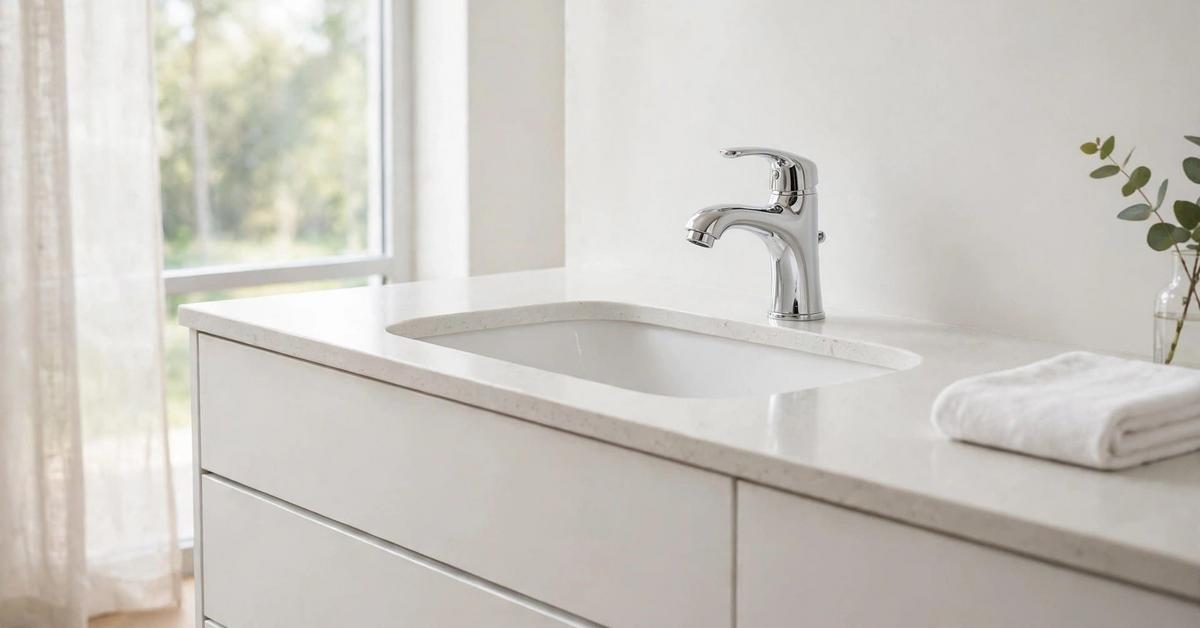
Walk into any bathroom showroom and the first thing your eye lands on is rarely the shape of the tap. It is the surface: the bright mirror shine of chrome, the soft grey-silver of brushed nickel, the flat darkness of matte black, the warm gold of brass. That surface is the finish, and it decides far more than the look of the room. It decides how often you wipe, how water marks show, how the tap sits beside the basin, the tiles and the mirror, and how the whole bathroom ages over years of daily use.
This guide is a crash course in bathroom faucet finishes, and in the faucet finishes pros and cons that matter once the novelty wears off. It stays with finishes only. It does not re-teach how to choose a faucet in general, which belongs to the wider checks every buyer should run first, and it does not wander into farmhouse sink pairings, which are their own subject. Here the question is narrower and more practical: what each finish looks like, how it behaves in a steamy room, what it asks of you in cleaning, and how to match it to the bathroom you actually live in. Fitting, throughout, belongs to a professional plumber, never to guesswork at home.
1. Faucet Finishes at a Glance
A finish is the outer surface of the tap, the layer you see and touch. Underneath, the body of the tap may be much the same from one model to the next, but the finish changes the character completely. Two taps of the same shape can read as a bright modern fitting or a warm traditional one, purely because of what coats the metal. That is why finishes deserve a guide of their own, separate from the general checks that cover fit, valves and spouts. The faucet checks that come before any purchase still matter, and nothing here replaces them, but once fit and function are settled, the finish is the decision you will live with most visibly.
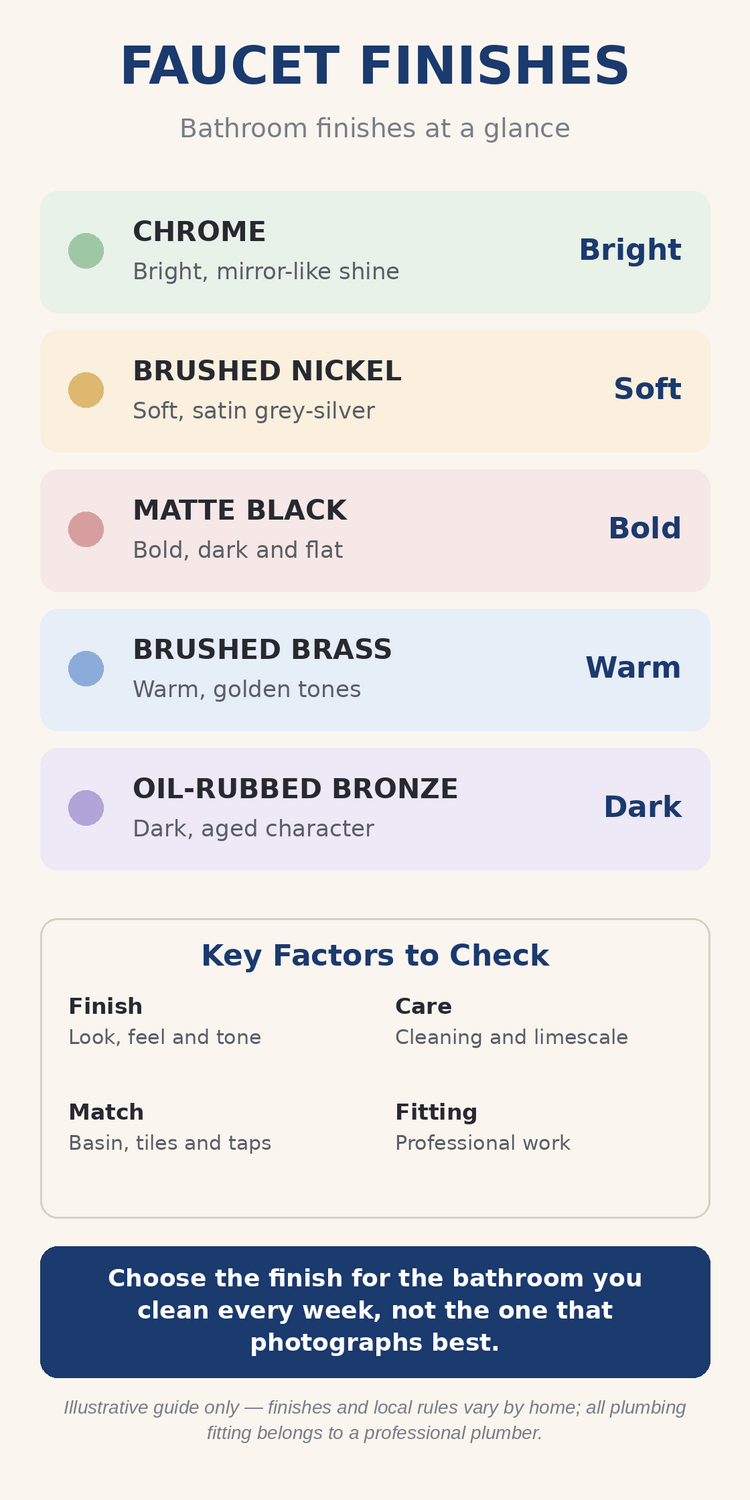
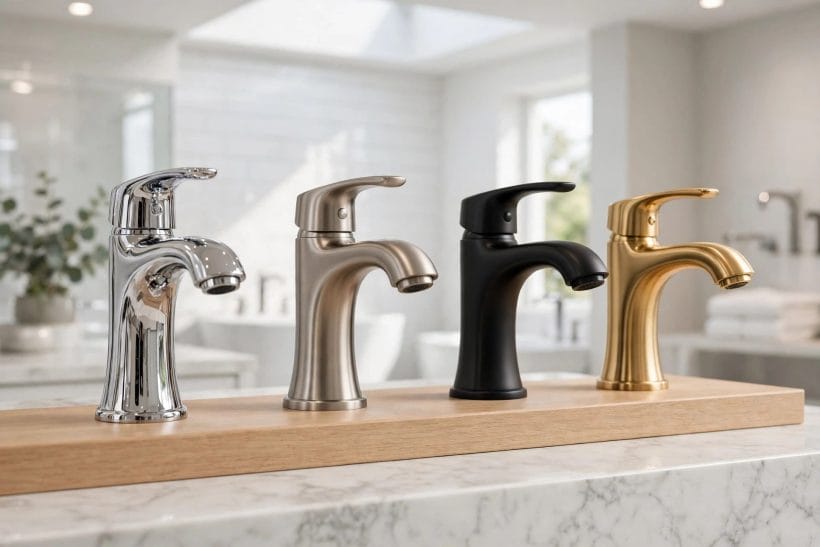
The five finishes in the table below are the ones you will meet most often, and each one carries a distinct trade-off. Chrome is bright and familiar. Brushed nickel is soft and forgiving. Matte black is bold and modern. Brushed brass is warm and traditional. Oil-rubbed bronze is dark and aged. Copper, covered later in this guide, sits slightly apart, because its surface keeps changing with time. Read the table as a shortlist, then read the sections that follow for the fuller picture of each finish, including how it cleans and where it sits best.
| Finish | Character | What it means |
|---|---|---|
| Chrome | Bright, mirror-like shine | Bright |
| Brushed Nickel | Soft, satin grey-silver | Soft |
| Matte Black | Bold, dark and flat | Bold |
| Brushed Brass | Warm, golden tones | Warm |
| Oil-Rubbed Bronze | Dark, aged character | Dark |
One warning before the detail: no finish is maintenance-free, and no finish suits every bathroom. A surface that looks effortless in a showroom may show every splash in a hard-water home, and a surface that hides marks well may darken a small, dim room. The right choice is the one that fits your water, your light, your cleaning habits and the room around it, in that order. Price never enters this guide, because finishes are compared here on look, behaviour and care alone, and any figure quoted elsewhere should be checked against the actual product, not taken from a general article.
2. Brushed Nickel: Soft and Forgiving
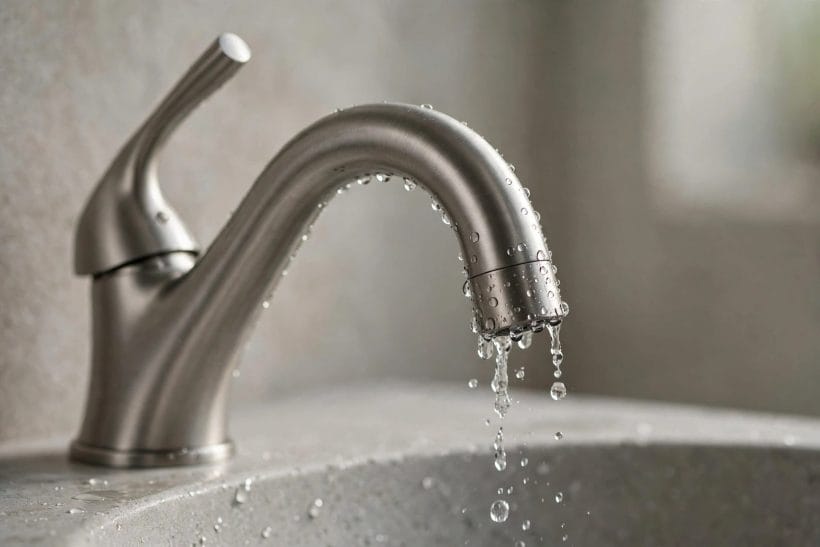
Brushed nickel is the quiet achiever of bathroom finishes. Its surface is a soft satin grey-silver, brushed so finely that it catches light without throwing it back. Where chrome mirrors the room, brushed nickel absorbs it, and the result is a tap that looks calm rather than showy. In a bathroom that already has plenty going on, patterned tiles, a busy mirror, a coloured vanity, that calm is a genuine asset. The tap does its job without competing for attention, and the room feels settled rather than staged.
The practical advantage of brushed nickel is forgiveness. Water spots, fingerprints and light limescale show far less on a brushed, satin surface than on a mirror-bright one, because the fine brushing breaks up reflections and hides small marks. That does not mean the finish never needs cleaning, only that a missed wipe is less visible, and a weekly clean keeps it looking close to new. For a family bathroom, a guest bathroom that is cleaned between visits, or any home where the taps are used many times a day, that forgiveness is worth more than any showroom shine.
Brushed nickel also pairs easily. Its grey-silver tone sits comfortably beside white basins, pale stone, timber vanities and most tile colours, warm or cool, without clashing. It is the finish to reach for when you are unsure, or when the bathroom mixes materials and you need one surface that ties them together rather than adding another strong statement. The wider tiny bathroom ideas collection leans on exactly this kind of quiet coordination, where each element supports the room instead of shouting over it. If you want a finish that rarely looks wrong, brushed nickel is the safest starting point in this guide.
The trade-off is subtlety itself. Brushed nickel never dazzles, and in a bathroom designed around drama, a dark feature wall, a statement mirror, a bold vanity, it can fade into the background. That is a matter of taste, not a fault, but it is worth naming: if you want the tap to be a feature, brushed nickel will disappoint you, because its whole virtue is restraint. Choose it for calm, for easy care and for rooms that need a peacemaker, and choose something bolder when the tap itself is meant to be the star.
3. Matte Black: Bold and Modern
Matte black is the finish of the modern bathroom, and it announces itself at once. Flat, dark and without shine, it draws the eye the way a dark frame draws the eye to a picture. On a white vessel basin, against pale tiles or a light timber vanity, a matte black tap reads as a deliberate design statement, crisp and contemporary. It suits bathrooms that are already modern in shape, clean lines, minimal decoration, uncluttered surfaces, and it can give an otherwise plain room a focal point without any extra ornament.
The strength of matte black is contrast. Where chrome blends in and brushed nickel calms down, black stands out, and that contrast can organise a whole room. A black tap beside black handles, a black mirror frame or dark grout lines creates a thread of colour that pulls the bathroom together. The tiny house bathroom layouts show how a single dark accent can anchor a small room, and a matte black tap does exactly that work in a basin area. In a small bathroom, that anchoring matters, because every element is visible at once and nothing can hide.
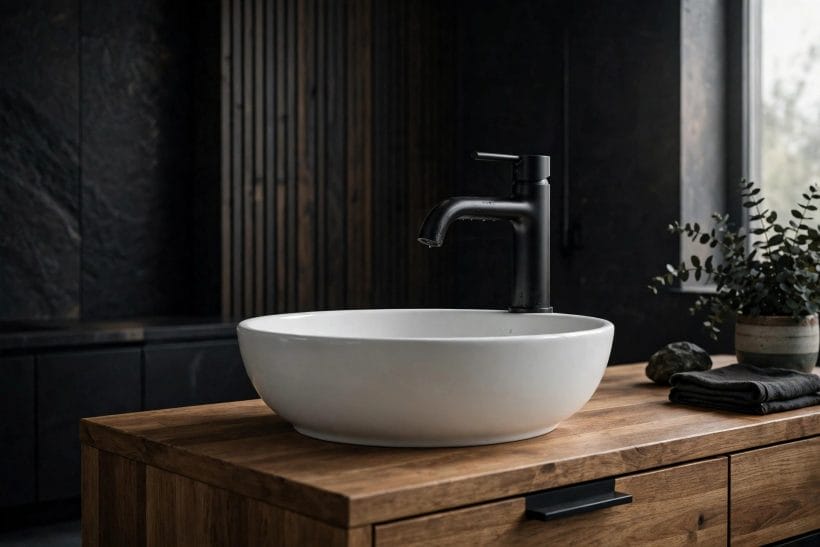
The trade-off is visibility of a different kind. Matte black shows limescale, soap residue and water marks more readily than brushed finishes, because pale deposits stand out sharply against a dark, flat surface. In a hard-water home, that means wiping becomes part of the routine, not an occasional chore, and the bold look depends on that care. A matte black tap that is wiped regularly looks striking for years; one that is left will show its neglect plainly. Buyers should go in with eyes open: the finish rewards attention, and it punishes indifference more visibly than any other finish in this guide.
Matte black also demands commitment from the rest of the room. A single black tap in a bathroom full of chrome fittings can look like a mistake rather than a statement, so the finish works best when at least one or two other dark accents echo it. That does not mean everything must be black, only that the tap should not be the only dark note in the room. Plan the handles, the mirror frame or the towel fittings alongside it, and the tap will look intentional. Fitting, as with every finish here, belongs to a professional plumber, and the tap should be checked against the basin and the vanity before it is fitted, not after.
4. Brushed Brass and Gold Tones: Warm and Traditional
Brushed brass brings warmth into a bathroom in a way no cool-toned finish can. Its golden surface, softened by brushing so it glows rather than gleams, suits traditional rooms, classic tiles, panelled walls, warm timber and cream basins. Where chrome feels clinical and black feels modern, brass feels lived-in and welcoming, and it has a long history in bathrooms precisely because that warmth flatters skin tones, timber and stone alike. A brass tap can make a cold bathroom feel warmer without changing a single tile.
The brushed character matters. Polished gold-toned finishes can look brash under bright bathroom lighting, but brushing dulls the shine to a soft glow, and that softness is what makes brass livable day to day. Fingerprints and light water marks show less on a brushed golden surface than on a polished one, and the finish sits well beside both white and coloured basins. It also bridges styles: a brushed brass tap can warm up a modern room without dragging it into period pastiche, provided the shape of the tap itself is simple rather than ornate.
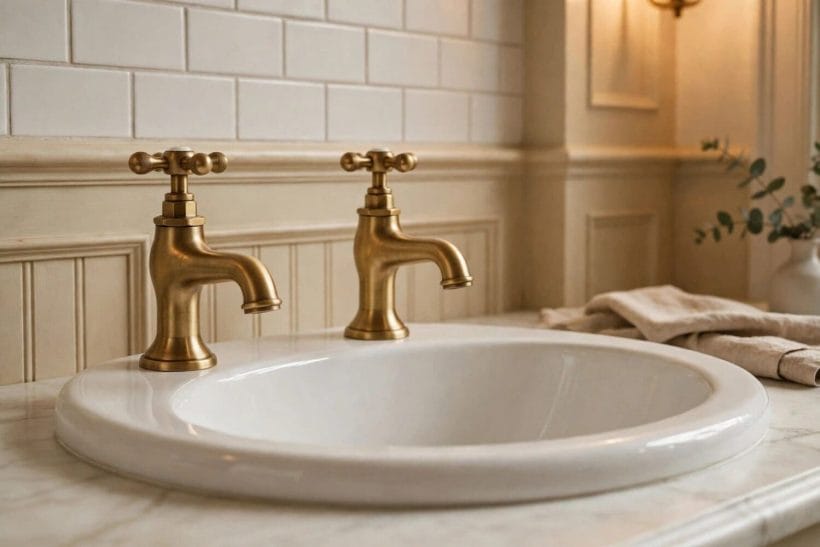
The trade-off is coordination. Brass is a strong colour statement, and it asks the rest of the room to agree with it. Cool chrome accessories, stainless fittings and stark white modern hardware can clash with a warm golden tap, so brass works best when the handles, the towel fittings and the mirror frame share its warmth, or at least do not fight it. That coordination is not difficult, but it must be planned, and a brass tap bought in isolation, fitted into a cool-toned room, can look stranded. The farmhouse tradition shows the same lesson in another room: the best faucet for a farmhouse sink is chosen as part of the sink and the room, never as a lone object, and brass in a bathroom deserves the same whole-room thinking.
Brass also varies more than other finishes from maker to maker, with golden tones ranging from pale champagne to deep amber. That variation is a reason to see the actual tap, or at least a true sample of its finish, beside your basin and tiles before committing, rather than trusting a photograph alone. Light changes gold dramatically, and a tone that looks soft in a showroom may read stronger, or weaker, in your own bathroom. Take the time to compare in your own light, and you will avoid the commonest brass disappointment, which is a tone that is right in theory and wrong in the room.
5. Oil-Rubbed Bronze: Dark and Aged
Oil-rubbed bronze is the most characterful finish in this guide, and the hardest to describe without seeing it. Dark brown with warm undertones, sometimes with lighter coppery highlights where the surface is worn, it looks aged by design, as though the tap has been in the house for decades. That aged character suits rustic bathrooms, stone basins, timber vanities and rooms with natural textures, where a bright modern tap would look out of place. It is the finish for a bathroom that wants to feel settled, grounded and hand-made rather than new.
The aged look is also the finish’s greatest strength and its greatest risk. Because oil-rubbed bronze is meant to look varied, small differences in tone from tap to tap, and changes over time as the surface wears, are part of its character rather than faults. Buyers who love that variation will find it rich and interesting; buyers who want every fitting to match exactly may find it frustrating. It is worth deciding, before buying, which kind of person you are, because the finish will not change its nature to suit you.
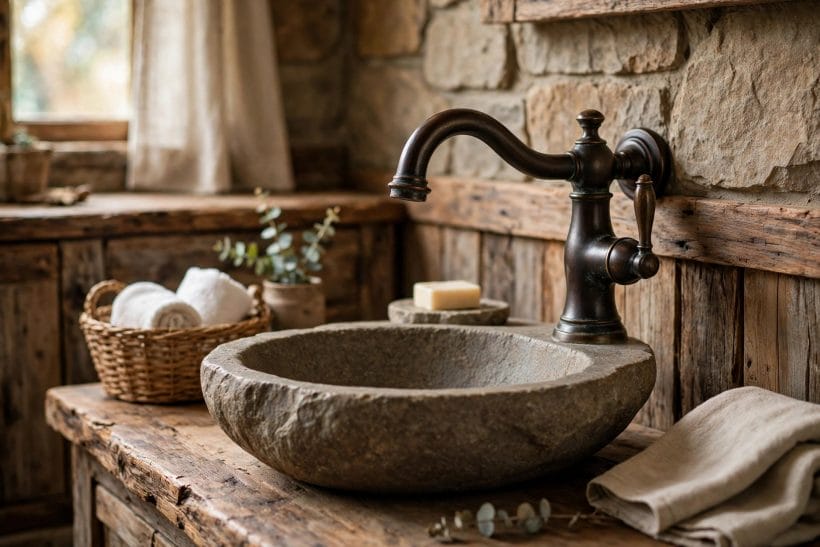
Care for oil-rubbed bronze is gentler than for other finishes. Harsh cleaning can strip the darkened surface and expose lighter metal beneath, changing the look in patches rather than evenly, so cleaning should be soft, mild and regular, never abrasive. That is a real commitment, and it rules the finish out for anyone who wants to scrub taps hard or reach for strong cleaners. The reward for gentle care is a finish that keeps its depth and character, and that ages gracefully instead of wearing unevenly.
Oil-rubbed bronze also needs the right neighbours. It pairs beautifully with stone, timber, warm tiles and cream basins, and poorly with bright chrome, stark white modern fittings and cool grey schemes, where its darkness can look muddy rather than rich. Like matte black, it benefits from echoes elsewhere in the room, dark handles, a timber mirror frame, warm-toned fittings, so the tap reads as part of a palette rather than a lone dark object. Planned that way, it gives a bathroom a depth no other finish offers. Left isolated, it can look like a mistake, and that difference is entirely a matter of planning, not of the finish itself.
6. Copper and Living Finishes: Changing Over Time
Copper stands apart from every other finish in this guide because it is a living finish, which means its surface keeps changing after it is fitted. Fresh copper is bright and reddish, almost pink in strong light, and over time, with water, air and touch, it deepens, darkens and develops a patina, a varied surface that records how the tap has been used. Some buyers love that evolution and choose copper precisely because it will not look the same in a year as it does on the day it is fitted. Others are unsettled by it, and they should not choose copper.
The beauty of copper is warmth and texture. A hammered copper basin beside a copper tap creates a bathroom feature that no manufactured finish can imitate, because the surface carries visible hand-work and natural variation. In rustic, artisan and warm-toned bathrooms, copper feels at home in a way that chrome never will, and it flatters timber, stone and cream tiles with a glow that changes through the day as light moves across the room. It is a finish for people who enjoy natural materials and accept their quirks.
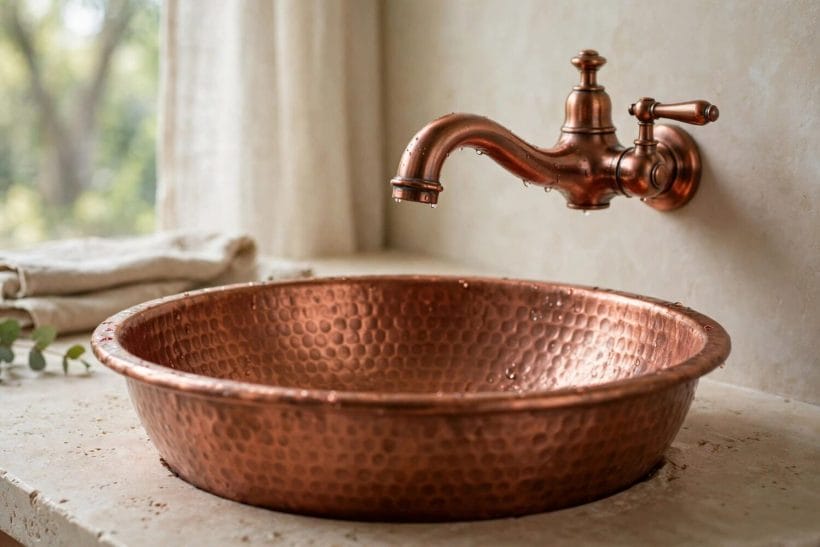
The trade-off is unpredictability. Patina develops unevenly, faster where water sits and hands touch, slower where the surface stays dry, and the result is a tap that looks mottled to eyes expecting uniformity. Cleaning also affects the process: gentle care lets patina develop slowly, while stronger cleaning can lighten patches and restart the change. That means a copper tap asks for a particular attitude, an acceptance that the finish is a process, not a fixed colour. Buyers who want a tap to look identical year after year should choose a stable finish instead, and leave copper to those who welcome change.
Copper also needs honest matching. Because its tone is so distinctive, it pairs best with warm materials and simple shapes, and it can clash with cool chrome fittings, stark modern hardware and grey schemes. As with brass and bronze, plan the neighbouring fittings alongside the tap, and check the actual copper tone in your own bathroom light before committing, because photographs flatten the variation that is the whole point of the finish. Fitting, here as everywhere, belongs to a professional plumber, who can also advise on how the tap’s surface should be treated from the start.
7. Chrome: Bright and Familiar
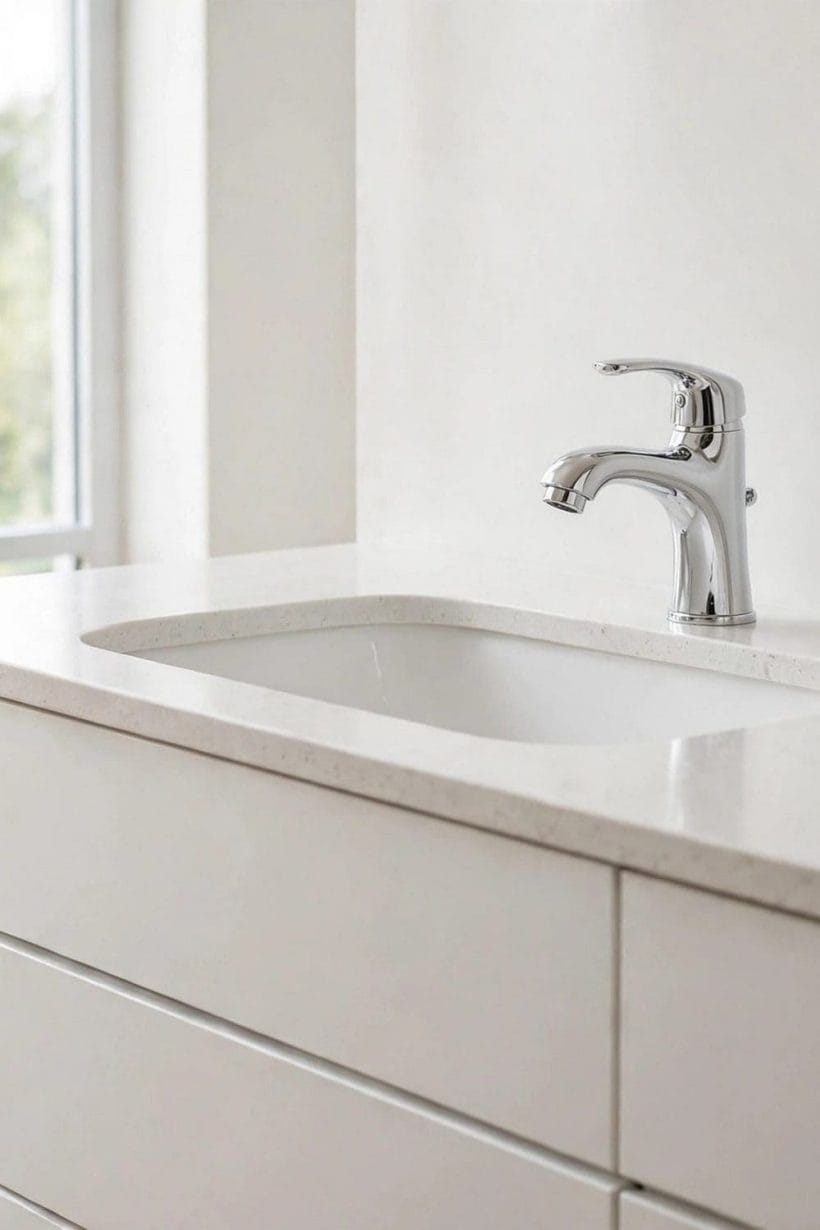
Chrome is the finish most bathrooms already have, and its familiarity is its strength. Bright, mirror-like and clean, chrome reflects the room around it, which makes a small bathroom feel lighter and larger, and it matches almost any basin, tile or vanity without argument. It is the default for a reason: it is easy to find, easy to coordinate, and it suits modern, traditional and in-between bathrooms alike, because it adds shine without adding colour. When in doubt, chrome rarely looks wrong.
The mirror shine is also chrome’s weakness. Water spots, fingerprints, soap splashes and limescale all show plainly on a reflective surface, so chrome asks for frequent wiping to keep its brightness. In a hard-water home, that wiping becomes a daily habit rather than a weekly one, and a chrome tap that is neglected will look dull and spotted far sooner than a brushed finish left for the same time. The finish itself is hard-wearing and easy to clean, the work is in the frequency, not the difficulty, and buyers should weigh that honestly against their cleaning habits.
Chrome’s other virtue is coordination. Because it is effectively colourless, it sits beside any other fitting, any tile colour and any basin material without clashing, and it is the easiest finish to match when replacing a single tap in an existing bathroom. If the rest of the room is already chrome, a new chrome tap will blend in seamlessly, and if the room mixes materials, chrome will not add another colour to the argument. That neutrality is why chrome remains the safe choice for rental bathrooms, guest bathrooms and any room where the next occupant’s taste is unknown.
The trade-off, then, is character. Chrome adds brightness but little personality, and in a bathroom designed around a strong palette, warm timber, dark tiles, a coloured vanity, it can feel anonymous where brass, bronze or black would add depth. That is not a flaw, it is the nature of a neutral finish, but it is worth recognising: chrome is the finish you choose when you want the room to speak and the tap to stay quiet. For many bathrooms, that is exactly right, and chrome’s long reign as the default finish is no accident.
8. Matching Finishes to the Bathroom Around Them
A finish is never seen alone. It is seen beside a basin, against tiles, under a mirror, next to handles and towel fittings, and in the light of that particular room. The commonest finish mistake is choosing a tap from a photograph, in isolation, and discovering that it fights everything around it once fitted. The remedy is simple: judge the finish in context, beside the actual basin and tiles, in the actual light of the room, with the neighbouring fittings in view. A finish that looks perfect alone can look wrong in company, and a finish that looks plain alone can look perfect in its room.
Start with the basin, because the tap and the basin are seen together more than any other pairing. White ceramic basins flatter almost every finish, which is why they dominate bathrooms, but stone, coloured and vessel basins narrow the choice: dark finishes need light basins for contrast, warm finishes need warm neighbours, and a busy basin asks for a quiet finish rather than another statement. Then look at the tiles and the vanity, because the tap should echo at least one of them in tone, warm with warm, cool with cool, dark with dark, rather than introducing a wholly new colour. The painted bathroom cabinets show how a vanity colour can set the tone for the whole room, and the tap finish should follow that tone, not fight it.
Light matters as much as colour. A finish seen under showroom spotlights will look different under a bathroom’s softer light, and different again in daylight from a window. Brass and copper shift most dramatically, darkening or warming as light changes, while chrome and matte black are more stable but still respond to their surroundings. If you can, view a sample of the finish in your own bathroom before committing, at different times of day, and you will avoid the surprise of a tone that is right in the shop and wrong at home.
Finally, think about the whole set of fittings, not just the tap. Handles, towel rails, mirror frames and shower fittings are all seen together in a bathroom, and a finish that appears once, alone, can look accidental, while the same finish repeated in two or three places looks deliberate. That does not mean every fitting must match exactly, mixed finishes can work beautifully when they share a warmth or a darkness, but it does mean the tap should not be the only note of its colour in the room. Plan the set, and the finish will look chosen rather than random.
9. Cleaning and Everyday Care by Finish
Every finish in this guide cleans differently, and the right cleaning routine is part of the purchase decision, not an afterthought. Chrome cleans easily with a soft cloth and mild care, but needs frequent wiping to stay bright, because its mirror surface shows every mark. Brushed nickel is the most forgiving of the group, hiding light marks between cleans, and it responds well to gentle, regular wiping that follows the direction of the brushing rather than scrubbing across it. Matte black needs the most frequent attention in hard-water homes, because pale deposits stand out against its dark flat surface, and it should be dried after use where possible to prevent spots from forming.
Warm and aged finishes ask for gentler hands. Brushed brass cleans well with soft, mild care, but harsh scrubbing can wear through its brushed surface unevenly, leaving bright patches that break the soft glow. Oil-rubbed bronze is the most delicate of all, and strong cleaners or abrasive pads can strip its darkened surface in patches, changing the look permanently rather than cleaning it. Copper sits in its own category, because cleaning changes its patina, and every clean is also a decision about how fast the finish evolves. The rule across all finishes is the same: soft cloths, mild care, regular attention, and never an abrasive pad on a finished surface.
Water quality shapes care more than any other factor. Hard water leaves limescale on every finish, but it shows worst on chrome and matte black, and least on brushed nickel, so buyers in hard-water homes should weigh that visibility honestly. Drying the tap after use, where the household routine allows it, does more for every finish than any cleaning product, because it prevents deposits from forming in the first place. The how to choose the right bathroom sink guide makes the same point about basins: the room you live in, with its water and its habits, decides what works, and finishes are no exception.
One last care note: never judge a finish by its first week. A new tap always looks its best, and the honest test is how it looks after months of daily use, wiped or not wiped according to your real routine. If you know you wipe rarely, choose a forgiving finish and accept its quieter look. If you wipe daily and enjoy the ritual, a bright or bold finish will reward you. The finish that suits your cleaning habits is the finish that will still please you in a year, and that is a better guide than any showroom impression.
10. Choosing a Finish That Lasts in Your Home
Choosing a finish is a decision about years, not days, so it deserves a slower method than picking the tap that catches your eye first. Start with the room: its size, its light, its basin and tiles, and the fittings already in place. Then add your water: hard water argues for forgiving finishes, soft water frees you to choose bright or bold ones. Then add your cleaning habits, honestly, not as you wish they were but as they are, because the finish must survive your real routine. Only then should you weigh style, and style should confirm the practical choice, not override it.
Shortlist by elimination. Rule out any finish that fights the room’s palette, any finish whose care routine you know you will not keep, and any finish that depends on neighbouring fittings you do not plan to change. What remains is usually a short list of two or three, and at that point, personal taste can decide freely, because every survivor is already a practical fit. That method avoids the commonest regret, a beautiful finish that looks wrong in the room or wears badly under the household’s real habits, and it leaves you choosing between good options rather than rescuing a bad one.
See the finish in person wherever possible, beside your basin and tiles, in your own light, before committing. Photographs flatten texture, brushing and patina, and they flatter every finish equally, which is why showroom choices so often disappoint at home. A sample, a display tap or even a careful comparison in the shop, held against a tile sample from your bathroom, will tell you more than any photograph. The kitchen ideas collection applies the same lesson to another room: finishes are judged in context, beside the materials they will live with, never alone on a white background.
Finally, remember that fitting is part of the finish’s future. A tap fitted well, sealed properly and checked by a professional plumber will keep its finish longer and behave better than the same tap fitted carelessly, because leaks, drips and standing water damage finishes faster than any cleaning mistake. Ask the plumber to check the basin, the holes and the surrounding surfaces before fitting, and to confirm that the finish suits the basin it will sit on. That professional check is the last step of choosing well, and the first step of living well with the finish you chose.
Final Considerations
No single finish wins this guide, because no single bathroom matches another. Chrome wins on brightness and neutrality, brushed nickel on forgiveness, matte black on boldness, brass on warmth, bronze on character, and copper on living beauty that changes with time. Each one carries a trade-off, and the honest guide is the one that names those trade-offs plainly rather than crowning a winner. Your bathroom, your water, your light and your cleaning habits will crown the winner for you, and they are better judges than any article.
Keep the scope of this guide in mind as you choose. It has covered finishes only, deliberately, and the wider decisions about fit, valves, spouts and general faucet quality belong to the checks that come before any purchase. Use this guide for the surface, use those checks for the tap underneath, and let a professional plumber handle the fitting itself. Chosen that way, with the finish matched to the room and the routine, a bathroom tap stops being a small detail and becomes what it should be: a quiet, daily pleasure, noticed most when it is right, and never a source of regret.


0 Comments