

A bedroom has one job it must never fail: sleep. Everything else it does — dressing, reading, storing a life’s worth of clothes — is secondary to the quality of the night it gives you.
These 75 bedroom ideas are ordered the way rest is built: layout and the bed first, then colour, storage and lighting, with textiles softening the whole.
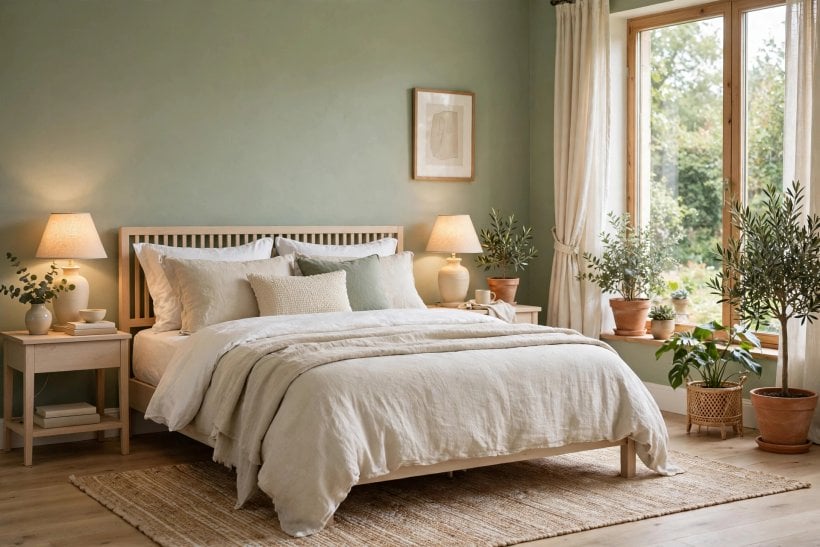
1. Bedroom Ideas at a Glance
The central entity is the bedroom as a rest system: a bed placed for sleep and access, colour and darkness tuned for night, storage that keeps the room calm at the hour it matters, and lighting that winds down in the evening and helps gently in the morning. Its attributes — layout, bed, colour, storage, lighting, textiles — are the sections of this guide, and the order matters: a beautiful room that keeps you awake has failed at its only essential task.
| What should I decide first? | The bed’s position and size. It is the largest object and the room’s purpose; wardrobes, colours and lamps all arrange themselves around it. |
| What most improves sleep? | Real darkness, a cool room, a mattress that suits the sleeper, and a room that holds nothing work-shaped in sight at bedtime. |
| Where does bedroom storage come from? | Fitted wardrobes on one wall, drawers under and beside the bed, and the discipline of storing the season you are not wearing somewhere else. |
| Which colours suit a bedroom? | Muted, low-contrast tones that quieten under lamplight. Saturation is for cushions and art; walls should whisper. |
| What makes a bedroom feel finished? | A made bed with layered bedding, two working bedside lights, clear surfaces, and nothing on the floor that belongs in a drawer. |
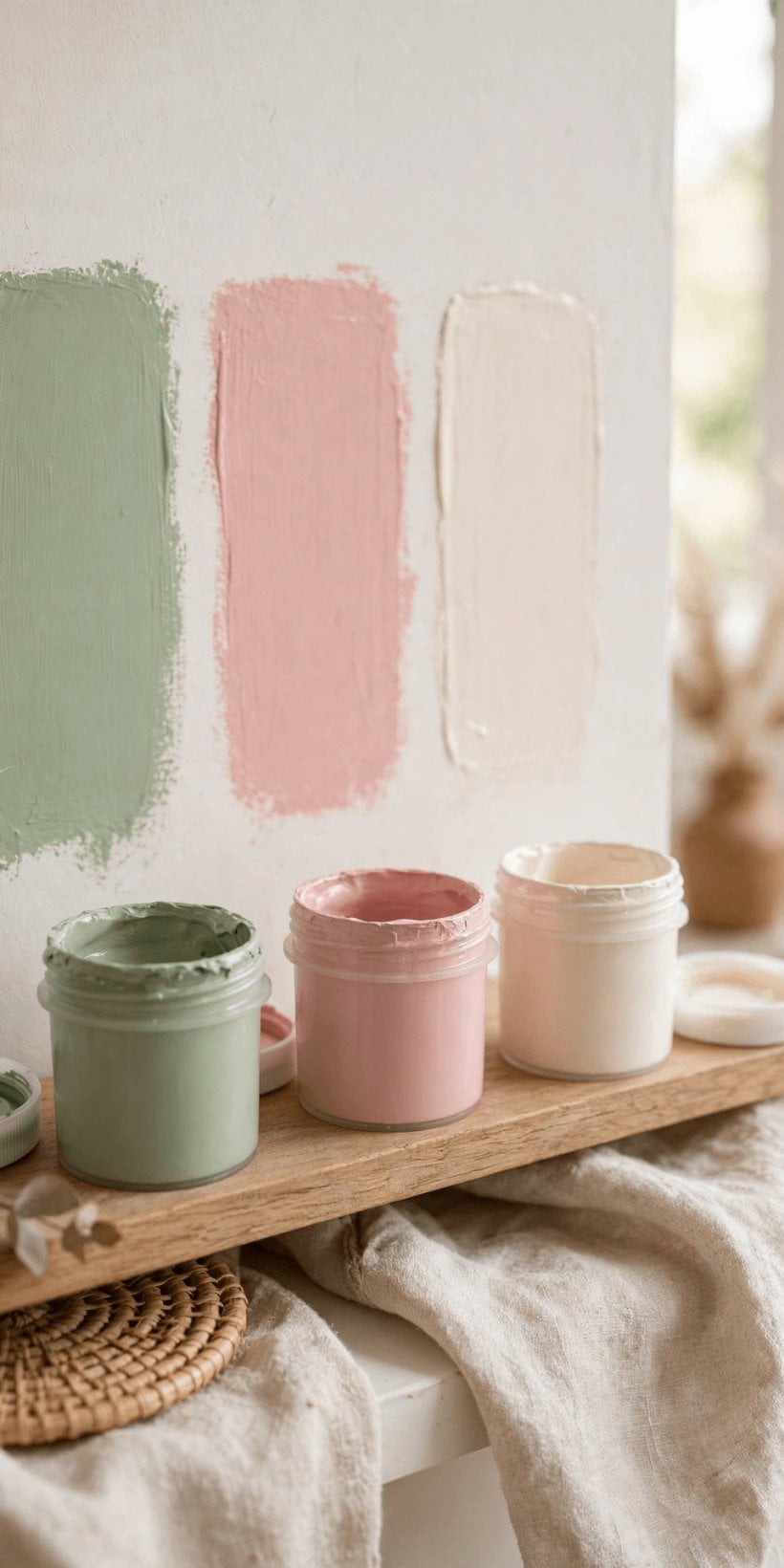
At a glance: the bed first and placed for access, darkness and calm engineered in, storage that disappears, lighting that winds down, and textiles carrying the comfort.
2. Layouts: Placing the Bed and the Rest
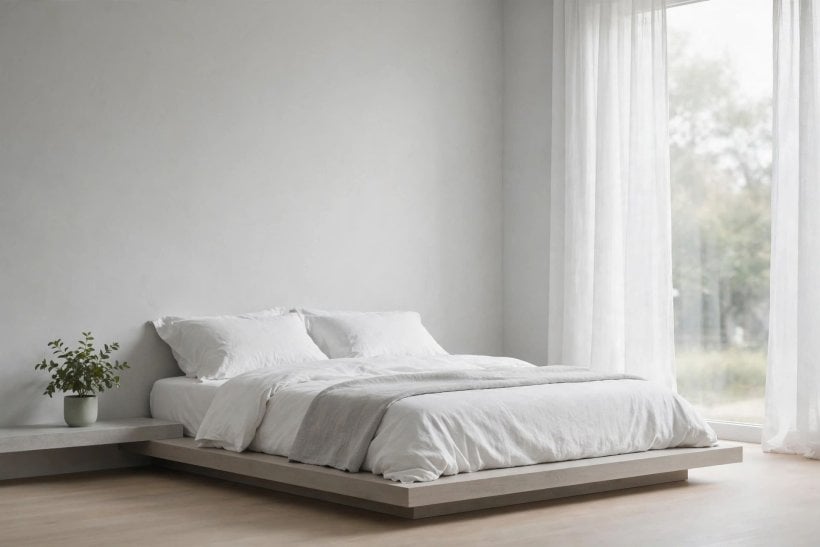
A bedroom layout succeeds or fails at the bed’s position: everything else is furniture arranged around a sleeper. The placement logic in these tiny house bedroom ideas scales to any room — access both sides, a view worth waking to, and no storage tower looming over the pillow.
1. Centre the Bed on the Room’s Main Wall
The bed against the longest uninterrupted wall, with space both sides, is the arrangement every other option must beat. It balances the room, serves two sleepers fairly and gives the bed the presence it deserves.
2. Leave Real Access Space on Both Sides
Enough room to walk, make the bed and open drawers without shuffling sideways. A bed wedged against a wall makes one sleeper climb and the bed-maker wrestle — daily taxes on a decade of nights.
3. Face the Bed Toward the Best View
Where the room allows, let the sleeper wake to the window, the garden or a picture — not the wardrobe doors. The first sight of the day is a design decision.
4. Keep the Door’s Swing Off the Bed
A door that opens onto the bed or reveals it fully to the landing costs privacy and calm. Rehang, reverse or curtain the doorway where the swing cannot be moved.
5. Put Dressing Storage on One Wall Only
Wardrobes and drawers consolidated on a single wall keep the sleeping zone textile-soft and the dressing zone practical. Storage scattered on every wall makes the room feel like a corridor through a cupboard.
6. Create a Small Sitting or Reading Spot
One chair, a cushion and a lamp in the corner by the window gives the room a waking life beyond the bed — somewhere to read, dress or sit with morning coffee.
7. Keep the Route to the Bathroom Clear and Dark-Safe
The night route from bed to door should pass nothing shin-height. Layouts are tested at 3 a.m., not in the showroom; design for the dark walk.
8. Use a Bench or Ottoman at the Bed’s Foot
A bench holds the throw, the dressing gown and tomorrow’s clothes, and gives the bed a finished edge. In tight rooms choose a slim one — or none — rather than a shin trap.
9. Avoid Placing the Bed Under a Sloping Ceiling’s Low Edge
In attic rooms, put the bed’s head under the slope if you must, never the sleeping length of it, and keep the getting-up side under full height.
10. Give Each Sleeper a Surface and a Light
Two bedside surfaces, two lights, two places for a book and a glass of water. A bedroom shared unequally in its furniture will be shared unequally in its comfort.
11. Sketch the Room Around the Bed You Own
Beds are bought rarely and rooms arranged often. Measure the bed’s true footprint — frame, headboard, bedding overhang — and plan the room around it, not around a catalogue double.
3. Beds and Headboards: The Room’s Anchor
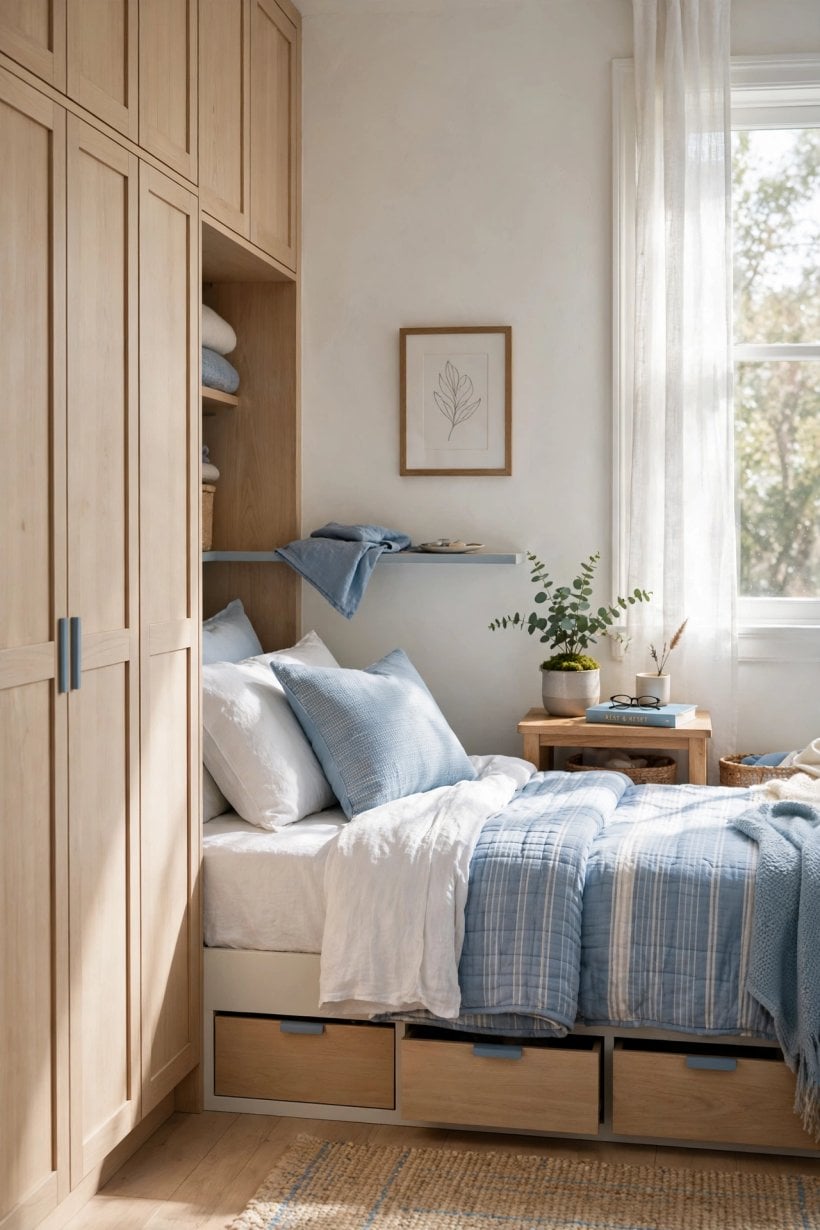
The bed is mattress, frame and headboard working as one system. The mattress decides the sleep; the frame and headboard decide how the room looks and how the bed is used for reading, breakfast and everything between.
12. Spend on the Mattress Before the Frame
A plain frame under a great mattress outperforms a beautiful frame under a poor one every night of the decade. Frames are seen; mattresses are felt.
13. Choose the Bed Size the Room Can Dress
The biggest bed the room can hold while keeping access, drawers and dignity intact — not the biggest the shop sells. A king in a room you cannot walk around is a raft, not a bedroom.
14. Pick a Headboard for How You Use the Bed
Upholstered headboards serve readers and breakfast-in-bed households; timber and metal serve minimal rooms and warm sleepers. Height matters: tall headboards anchor big rooms, low ones keep small rooms calm.
15. Use a Storage Bed Where Floor Space Is Scarce
Drawers beneath or a lift-up base store the spare duvet, the winter blankets and the suitcases in volume that would otherwise need a cupboard. In small bedrooms it is a wardrobe lying down.
16. Keep the Bed’s Height Easy to Enter
Very low platform beds and very high traditional ones both tax somebody nightly. A height that lets feet rest on the floor when sitting on the edge suits the widest range of sleepers and ages.
17. Match Bedding Layers to the Season
A duvet system that can split, layer or shed — rather than one heroic winter weight used all year — keeps the bed right in July and January alike.
18. Use Two Single Duvets for Two Different Sleepers
The Scandinavian answer to the duvet war: one bed, two duvets, each sleeper at their own temperature. It looks a little unusual and sleeps entirely peaceful.
19. Choose a Frame That Does Not Creak
Test the frame’s joints in the shop with real weight and movement. A creaking bed announces every turn of the night to both sleepers for years.
20. Let the Headboard Wall Carry the Room’s Statement
Colour, panelling, art or the headboard itself: one statement behind the bed gives the room its photograph. Everything else in a restful bedroom should be quieter.
21. Add a Throw and Cushions You Can Remove in Seconds
Bed styling that takes ten minutes to dismantle will be abandoned by Friday. One throw, two sleeping pillows, at most two cushions — beauty that survives tired evenings.
22. Keep Spare Bedding Where the Bed Is
The clean set stored in the bedroom — a drawer, the ottoman, a shelf in the wardrobe — means the bed can be remade in one trip, which is how often it will actually happen.
4. Colour and Light-Control: Designing for Sleep
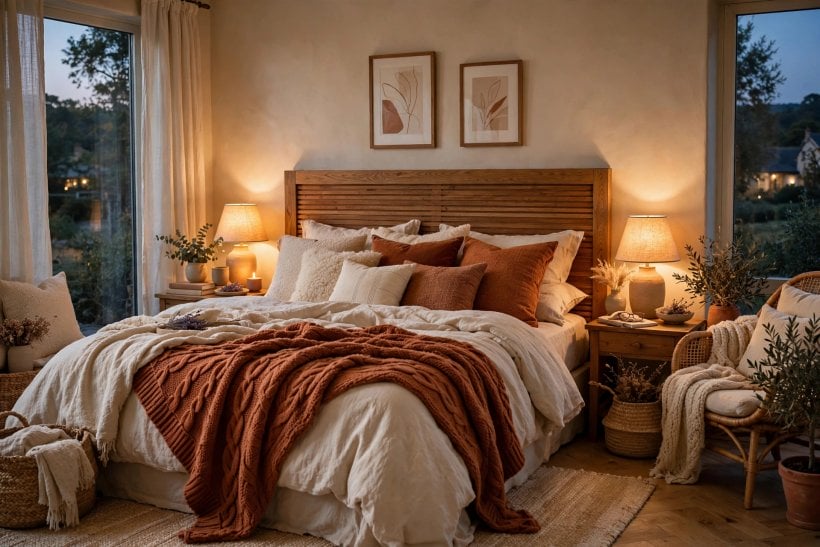
Bedroom colour works in lamplight and half-dark more than in daylight, and light-control is a sleep feature before it is a window treatment. The mood range in these small bedroom interior design ideas for tiny houses shows what muted palettes do for rest at any scale.
23. Choose Muted, Greyed Colours for Walls
Soft sage, dusty blue, warm stone, faded clay — colours with the volume turned down. Bright saturated walls keep a visual noise floor that a rest room should not have.
24. Test Colour Under the Bedside Lamp
Judge bedroom paint at night, warm-lit, from the bed. A colour that is charming at noon can turn cold or garish under a 2700K bulb, which is the light it will mostly live in.
25. Fit Real Blackout at the Window
Blackout lining, well-fitted blinds or shutters that genuinely close: summer dawn at five in the morning is a sleep decision made by your window treatment months earlier.
26. Layer Sheers or Voiles for Daytime Privacy
A sheer layer keeps daylight and loses the neighbours. Bedrooms need privacy in the day without living behind closed curtains.
27. Paint the Ceiling a Soft White or the Wall Colour
The ceiling is the last thing seen at night and the first on waking. A harsh brilliant white overhead glares under morning light; a soft white or a continuation of the wall colour rests easier.
28. Use Deeper Colour in Large Bedrooms to Gather the Room
Big bedrooms can feel barn-like; a deeper wall colour behind the bed and at the room’s far end pulls the walls in and makes the sleeping zone a place within the place.
29. Keep the Palette to Two Colours Plus a Metal or Timber
Restraint reads as calm. Walls, bedding and curtains in two related colours, warmed by one natural material, is a scheme that cannot quarrel with itself.
30. Check Colour Against Your Bedding, Not a Card
The bed is the room’s largest coloured surface. A wall colour chosen without the duvet cover in hand will be chosen twice.
31. Use Dark Colours Low — Bedding, Rugs — and Pale Above
Weight at the bottom of the sightline grounds the room; pale walls and ceiling keep it airy. The sleeper’s eye level is lower than the standing rooms’ — design for it.
32. Warm the Light, Cool the Room
Warm-toned bulbs in the evening support the wind-down; a slightly cool room supports the sleep itself. The thermostat and the lamp are both bedroom design decisions.
33. Banish Blue Light Sources from the Room’s Night Face
Charger LEDs, standby lights and bright alarm displays are small suns at 3 a.m. Tape, turn or relocate them; darkness should be total where it can be.
5. Storage: Wardrobes, Drawers and Hidden Capacity
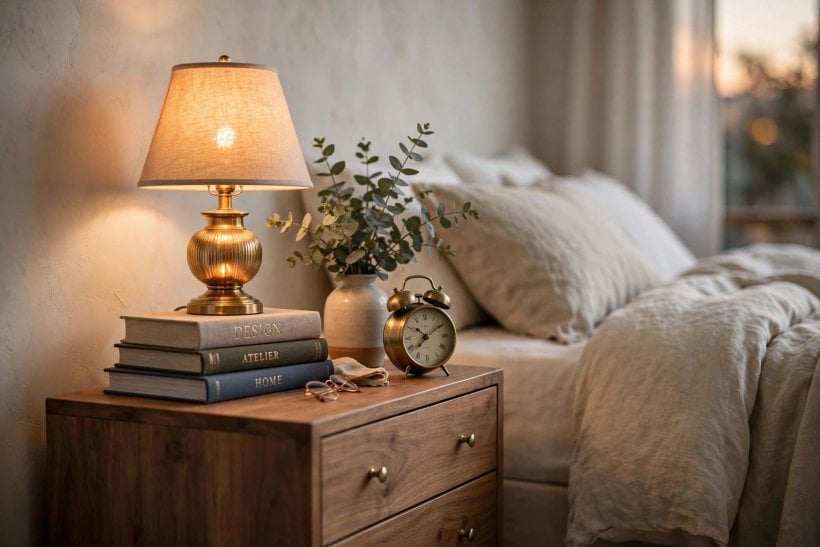
Bedroom clutter is clothes without a system. The capacity thinking in these tiny house plans with hidden storage applies at full strength: fitted, zoned, and ruthless about the difference between storing and hoarding.
34. Fit Wardrobes Floor to Ceiling on the Dressing Wall
Fitted storage uses every centimetre the freestanding wardrobe wastes at its top and sides, and removes the dust shelf above it. One wall, fully used, frees the other three.
35. Zone the Wardrobe by How Clothes Are Worn
Daily clothes at eye level and arm’s reach; occasion wear higher; the other season’s clothes deepest. A wardrobe zoned by frequency is a wardrobe that stays tidy.
36. Use Drawers for Folded Things, Rails for Hung Things
Most clothes fold better than they hang. A drawer-led system with a short rail for dresses, suits and coats stores more, in less space, with fewer creases than the all-rail default.
37. Add a Dressing Drawer Run Instead of a Dressing Table
A low run of wide drawers holds more than any dressing table, tops itself with a mirror and a tray, and keeps the getting-ready zone compact and clear.
38. Design the Bedside Drawer as the Night’s Control Centre
Book, medication, glasses, hand cream, the charger — one drawer beside each sleeper, divided, keeps the bedside surface clear and the night’s necessities in the dark-reachable place.
39. Build the Closet System Around Shoes and Bags Honestly
Shoes and bags are the volume nobody plans for. The capacity logic in these tiny house closet design ideas — measure the collection first, then design the shelves — prevents the overflow that colonises bedroom floors.
40. Store Out-of-Season Clothes Out of the Bedroom
Under-bed boxes, a hall cupboard, the suitcase itself: the other half of the year’s wardrobe should not occupy the room’s prime storage through the wrong six months.
41. Add Hooks Behind the Door for the Worn-Once Clothes
The chair of clothes exists because worn-once items have no category. Hooks or a slim rail behind the door give them one — off the floor, off the chair, out of sight.
42. Use the Ottoman or Blanket Box as the Room’s Overflow
Spare bedding, the winter throw, the guest towels: a lidded box at the bed’s foot swallows the bedroom’s bulk in furniture form.
43. Keep One Empty Drawer
The discipline that keeps a system alive: a drawer kept deliberately empty absorbs the new, the guest’s things, the laundry-day shuffle — and prevents the slow return of the floor pile.
44. Mirror a Wardrobe Door to Serve the Dressing Zone
A full-length mirror on a wardrobe door or the wall beside it gives the room its dressing check without consuming a wall the bed wanted for art or calm.
6. Lighting: Layered for Evening and Morning
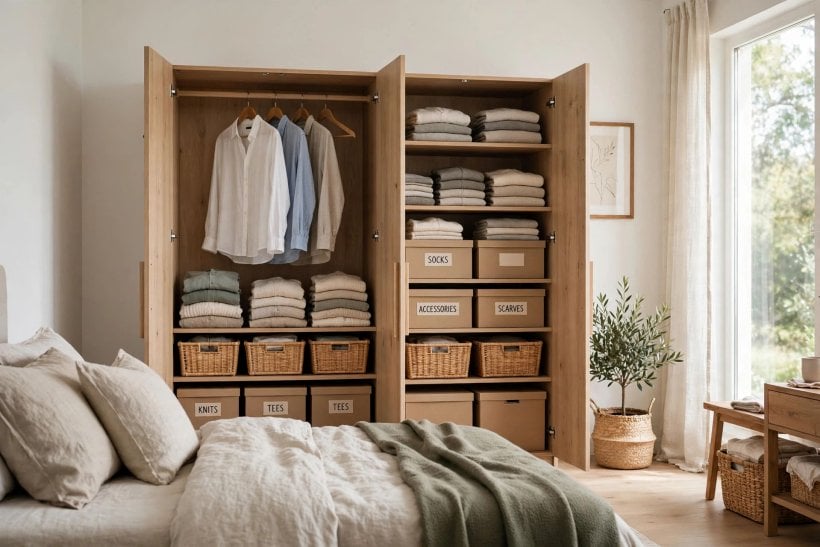
Bedroom lighting has two opposite jobs: to wind the room down to near-darkness at night and to tell the truth in the morning when clothes are chosen. Layers, dimmers and warm bulbs do both.
45. Put Bedside Lights on Both Sides, Independently Switched
One sleeper reads; the other sleeps. Independent, reachable-from-the-pillow switches are a marriage technology as much as a lighting one.
46. Choose Bedside Lamps at the Right Height
The shade’s bottom should sit near shoulder height when sitting up in bed — light on the book, not in the eyes, and not beamed across the other sleeper.
47. Dim the Ceiling Light or Lose It
A dimmable ceiling fitting serves dressing and cleaning; undimmed, it is a interrogation lamp over a rest room. Wall lights or pendants each side of the bed soften the whole arrangement.
48. Add a Low, Warm Night Light Route
A dim plug-in or a lit skirting-level glow on the route to the bathroom guides the night walk without waking either sleeper fully. Small money, large mercy.
49. Light the Wardrobe Interior
A strip or sensor light inside the wardrobe ends the dark-cupboard rummage and the navy-versus-black mistake at dawn. It is the most satisfying small upgrade in the room.
50. Use Wall Lights Where Bedside Tables Are Small
Sconces or hanging pendants free the bedside surface entirely for book, glass and clock. In small bedrooms they are how two proper lights fit at all.
51. Keep Morning Light Honest at the Mirror
Light at the dressing mirror should come from the front and sides, warm-neutral in tone, so clothes and faces are judged in the light the day will actually use.
52. Choose Bulbs Warm for Evening, Consistent Throughout
One warm temperature family across the room avoids the patchwork of amber and blue-white that makes bedrooms feel institutional. Buy spares in the same specification.
53. Add a Reading Light That Aims, Not Glows
For serious readers, a small directional lamp with a focused beam beats a glowing shade: full light on the page, near darkness on the partner.
54. Put the Main Switch Within Reach of the Bed
Two-way switching — door and bedside — means the last light off is reached from under the duvet. A room that must be crossed in the dark after switching off is wired against its purpose.
55. Use Timers or Smart Bulbs for a Gentle Wake
Light that rises gradually before the alarm is a kinder start than sound alone, and a lamp that fades the room at bedtime builds the wind-down into the walls.
7. Textiles and Finishing Touches
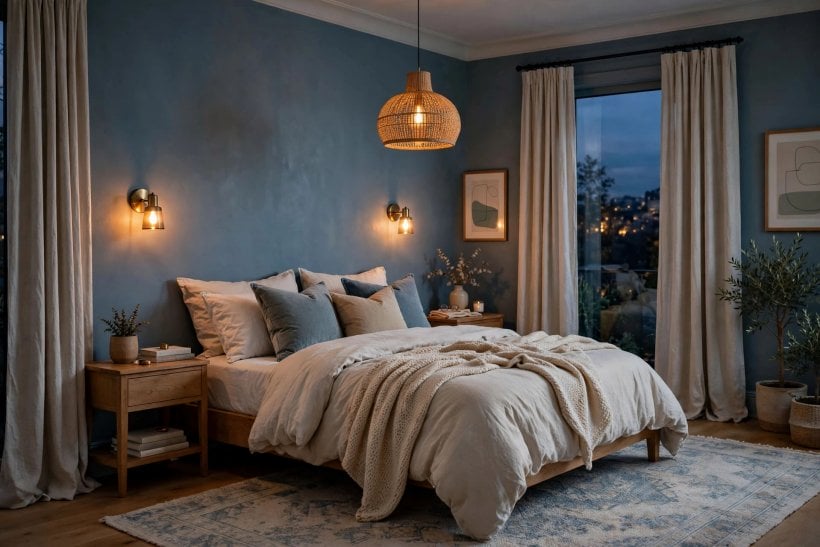
A bedroom’s comfort is mostly textile: what touches skin, what softens sound, what the bare foot meets first. The finishing layer is where the room stops being furnished and starts being restful.
56. Choose Bedding in Natural, Breathable Fibres
Cotton and linen regulate temperature and wash well for years. Synthetics can feel clammy by morning — the bed is the last place to economise on fibre.
57. Layer the Bed: Sheet, Duvet, Throw
Layers adjust through the night and the seasons, and give the made bed its composed look. One heavy layer is a decision the sleeper cannot revise at 2 a.m.
58. Put a Rug Where the Feet Land
A soft surface for the first steps of the day, on both sides of the bed where the room allows. Cold floors are an alarm nobody set.
59. Keep Cushions to What You Will Actually Move
Two sleeping pillows per person and at most a pair of cushions. A bed dressed for a photograph and undressed for ten minutes nightly will stop being dressed by the end of the month.
60. Soften the Room’s Acoustics with Fabric
Curtains, rug, upholstered headboard and bedding absorb the small sounds hard rooms amplify. A quiet room is partly a textile achievement.
61. Hang One Calm Piece of Art Opposite the Bed
The sleeper’s last and first view deserves choosing: one restful image, hung at reclining eye level, not a gallery of stimulation.
62. Add a Plant That Tolerates Low Light
A snake plant or pothos on the dresser softens the room and asks little. Keep scented plants out — fragrance is a stimulant a sleep room does not need.
63. Choose Curtains for Darkness First, Looks Second
Beautiful curtains that leak dawn at every edge fail the room. Lining, fit and overlap are the beauty; the fabric is the finish.
64. Finish with a Scent Decision: Mostly None
Clean bedding and fresh air are the bedroom’s scent. If fragrance is used, keep it faint and consistent — the nose sleeps better in the familiar.
65. Keep the Room’s Technology Minimal and Dim
A clock with a dimmable face, a charger in the drawer, the phone face-down or in another room. The bedroom’s last luxury is being unreachable.
8. Small and Tiny Bedrooms: The Full Discipline
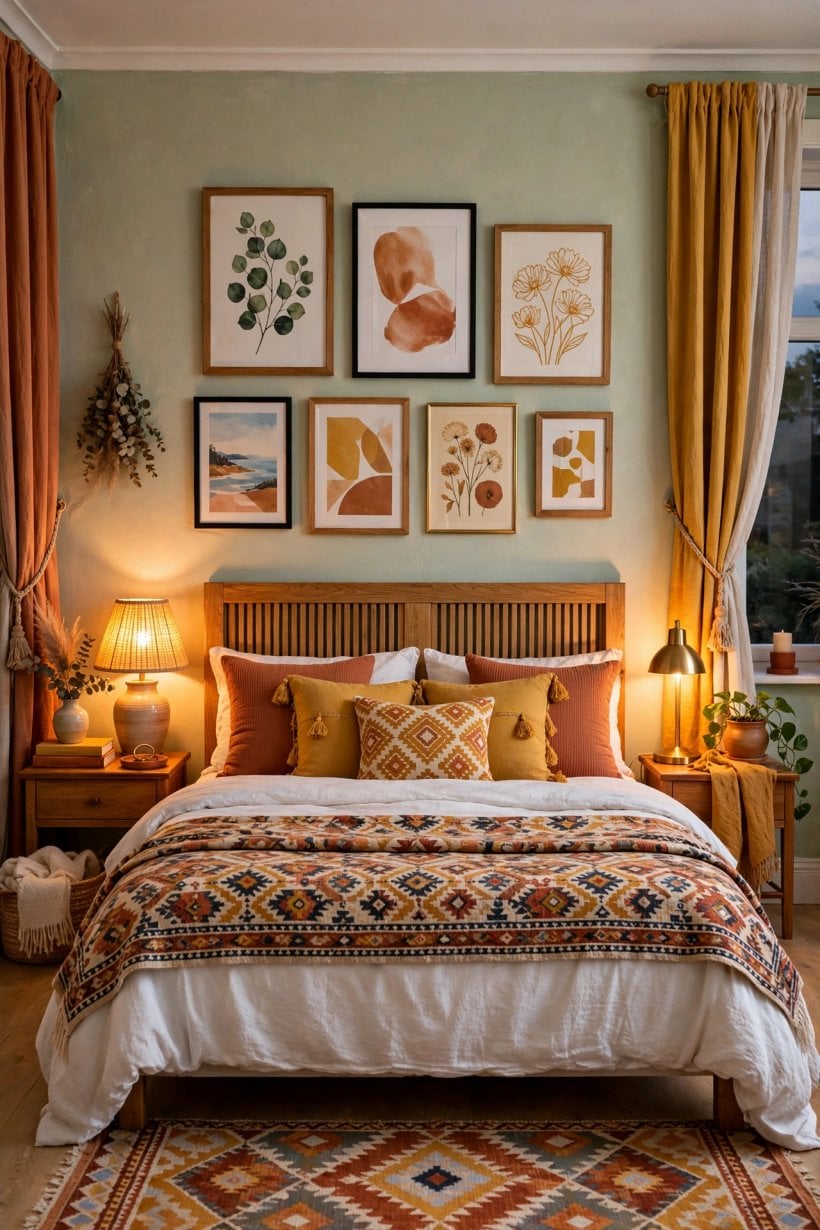
Most bedrooms are smaller than their occupants wish; the genuinely tiny follow the whole discipline at once, in the spirit of these apartment interior design ideas for tiny houses: every piece dual-purpose, every surface edited, sleep protected above all.
66. Choose the Bed First, Everything Else After
In a small bedroom the bed is most of the room. Settle its size honestly — the largest that keeps access and one drawer run — and let the room be a bed with a room attached.
67. Use a Storage Bed as the Wardrobe’s Partner
When the wardrobe must shrink, the bed’s under-volume becomes the second closet: drawers for folded clothes, the lift-up base for the bulky and seasonal.
68. Fit Sliding or No Wardrobe Doors
Hinged doors need a swing arc a small room cannot spare. Sliding doors, curtains, or an open rail with a calm curtain front all return that floor to the room.
69. Take Shelves and Storage to the Ceiling
High, shallow storage uses the small room’s one spare dimension. The daily reaches stay low; altitude holds the archives.
70. Mount Lights on Walls and Skip the Table Lamps
Sconces and pendants free the tiny bedside surface. In a small room, a bedside table that holds only a book and a glass is a triumph of editing.
71. Keep the Palette Pale, Tight and Warm
Small bedrooms fragment under variety and chill under cold tones. One pale warm family of colours, repeated in bedding and curtains, reads as calm and space.
72. Use a Mirror to Borrow the Window’s Light
A mirror placed to catch and return daylight lifts a small room’s far corners. Position it for light, not for the bed’s reflection, if the sleeper prefers.
73. Fold the Desk, the Chair and the Occasional Away
If the room must work double shifts, use a fold-down desk and a chair that tucks fully away, and close the work completely out of sight at bedtime — sleep must win the room’s night identity.
74. Edit to One of Everything
One chair, one picture, one plant, one throw. A small room’s calm is mostly subtraction; each object that stays should be able to argue its place.
75. Keep One Luxury and Do It Properly
Real linen, a blackout that truly blacks out, a mattress topper that transforms the bed — one luxury, fully done, makes a small bedroom feel chosen rather than endured.
9. Checks and Mistakes: Before You Commit
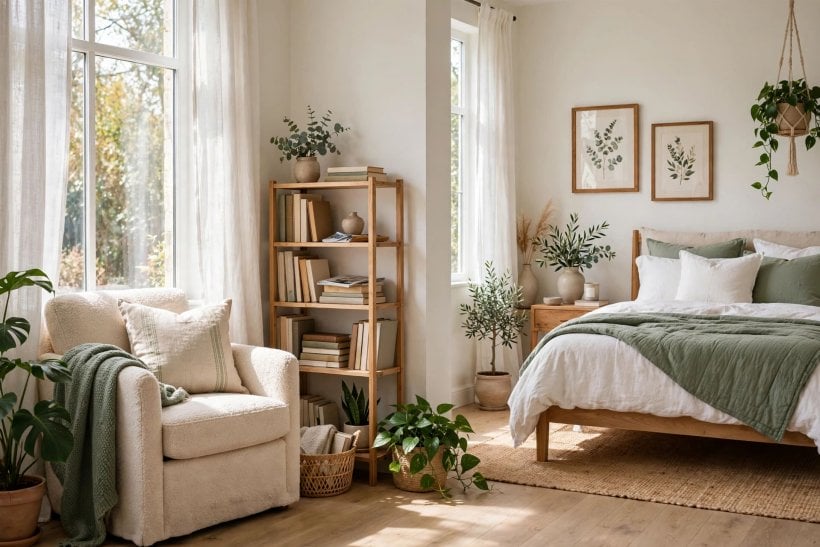
The expensive bedroom mistakes repeat reliably: buying the largest bed the room can physically contain and losing the room around it; choosing saturated wall colour that will not quieten at night; under-buying darkness — cheap curtains against a bright street; and letting storage sprawl until the room is a wardrobe with a bed in it. The colour checks in this look at tiny house interior paint colours apply to every bedroom: judge in lamplight, from the pillow, at the sleeping hour.
Run the checks in order: bed size against room access and drawer openings; wardrobe capacity measured against the clothes you actually own; blackout tested on the brightest morning; and every light reachable from where it will be used — the bedside switches from under the duvet, not from the doorway.
10. Costs and Pulling It Together
Bedroom money divides into three bands. The sleep band — mattress, pillows, blackout, bedding — is where the budget should be defended hardest, because it is spent on the room’s actual purpose and felt every night. The structure band — fitted storage, lighting and wiring — is permanent and mid-priced, so it deserves measuring twice. The decorative band — paint, art, cushions, plants — is cheap, changeable, and the right place for fashion and for savings.
Pull the room together with the rule that opened this guide: the bed and sleep first, storage second, decoration last. Choose colours that fall silent at night, keep surfaces clear, and let textiles carry what warmth the room needs. A bedroom built that way stops being decorated and starts being restful — which is the only review a bedroom has ever needed.
Final Considerations
A good bedroom is judged at 3 a.m., not in the showroom. Darkness that holds, a bed that suits its sleepers, quiet storage and light that can be killed from under the duvet — those are the review criteria, and everything decorative is a bonus on top of them.
Start with sleep, spend on the bed and the blackout, and keep the visible layer calm and changeable. Do that, and these bedroom ideas stop being a list and become a room your household’s nights quietly depend on.


0 Comments