
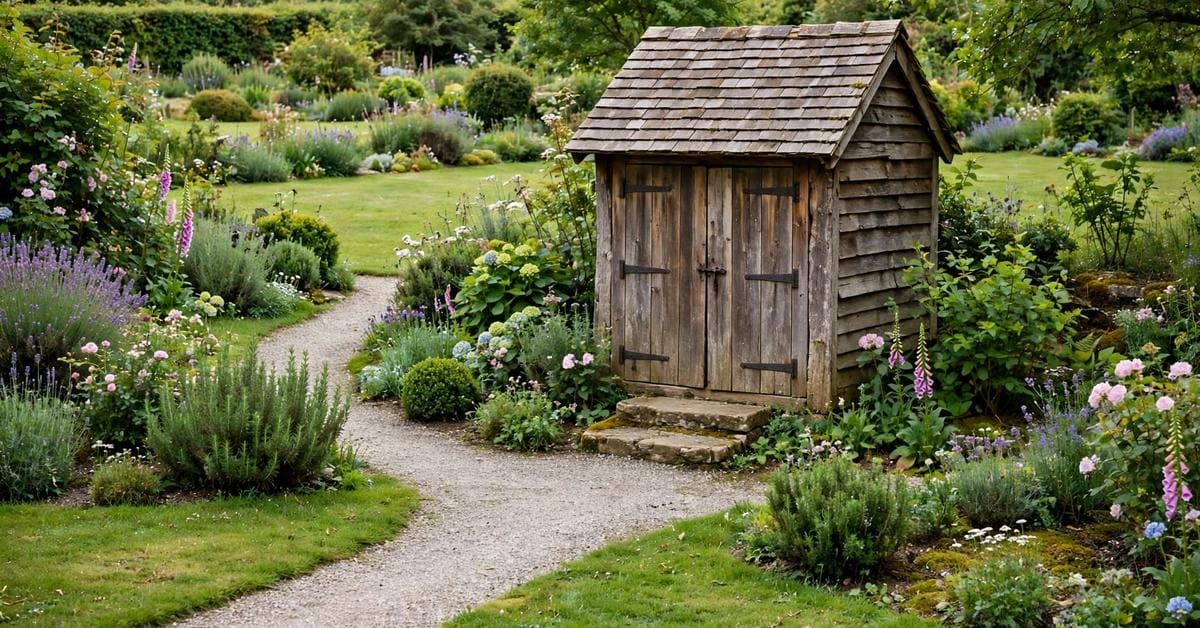
A pump shed is a small outbuilding with one job: to give a pump a dry, sheltered home of its own. It stands apart from the house, usually near the garden or the yard, and it keeps the pump out of rain, wind and direct sun while leaving it reachable whenever it needs attention. The shed itself is rarely large, and it rarely draws attention to itself, yet the choices behind it shape how easy the pump is to reach, how dry it stays through wet weather, and how well the little building sits beside the house it serves.
This guide looks at pump sheds in general terms. It covers where such a shed might stand, the shapes and sizes it commonly takes, the roofs, doors, walls and colours that suit it, and the practical details that keep the inside dry and workable. It does not give building instructions, and any work on structure, pipework or wiring belongs to qualified professionals. The aim here is simpler: to give names to the options, so that a pump shed can be planned as a proper little building rather than as an afterthought.
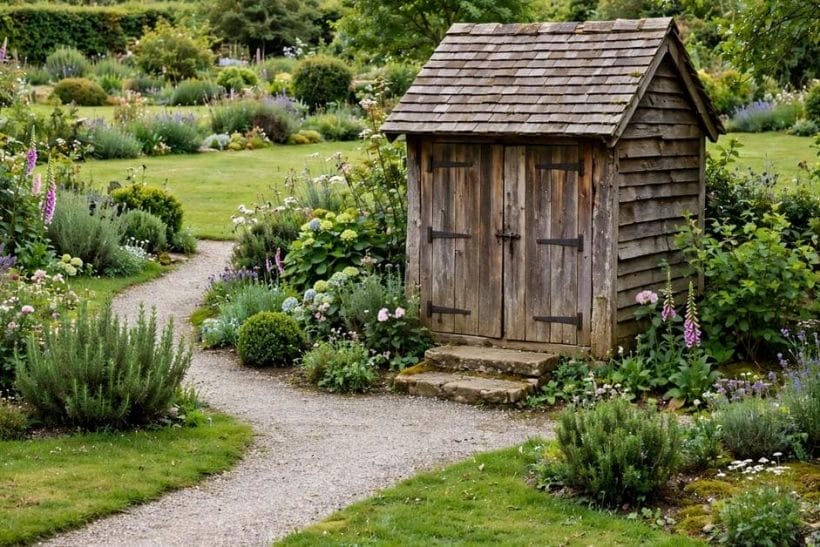
Reading a guide of this kind works best with a place in mind. A pump shed beside a cottage garden, one tucked against a boundary fence, and one standing in an open rural yard all ask for different things, even when the sheds themselves look similar. Keeping that place in mind while reading helps each section land where it matters, rather than as a list of features in the abstract. The sections below move from purpose and place, through shape and materials, to the details that make a small building last.
| Item | What it is |
|---|---|
| What a Pump Shed Is For | A pump shed exists to protect the pump and its related fittings from the weather while keeping them accessible. |
| Choosing a Place for the Shed | Place comes before style, because a pump shed must stand where the pump itself needs to be. |
| Shed Sizes and Shapes in General Terms | Pump sheds are small by nature, but small covers a range. |
| Roof Styles That Shed Water | The roof is the hardest-working part of any pump shed, because it meets every fall of rain before anything else does. |
| Doors, Access and Everyday Reaching | Doors decide how a pump shed feels in daily use. |
| Walls, Cladding and Colours | Walls give a pump shed its character and its weather resistance at once. |
| Air, Light and Damp in a Small Building | A small building without air movement will gather damp, and damp is the quiet enemy of everything inside a pump shed. |
| Floors, Plinths and Drainage | The floor of a pump shed should be firm, level and dry, since the pump stands on it and the user stands beside it. |
| Fitting a Pump Shed Into the Garden | A pump shed need not be hidden to be welcome in a garden. |
| Care Through the Seasons | Care for a pump shed follows the seasons, and little of it is demanding. |
1. What a Pump Shed Is For
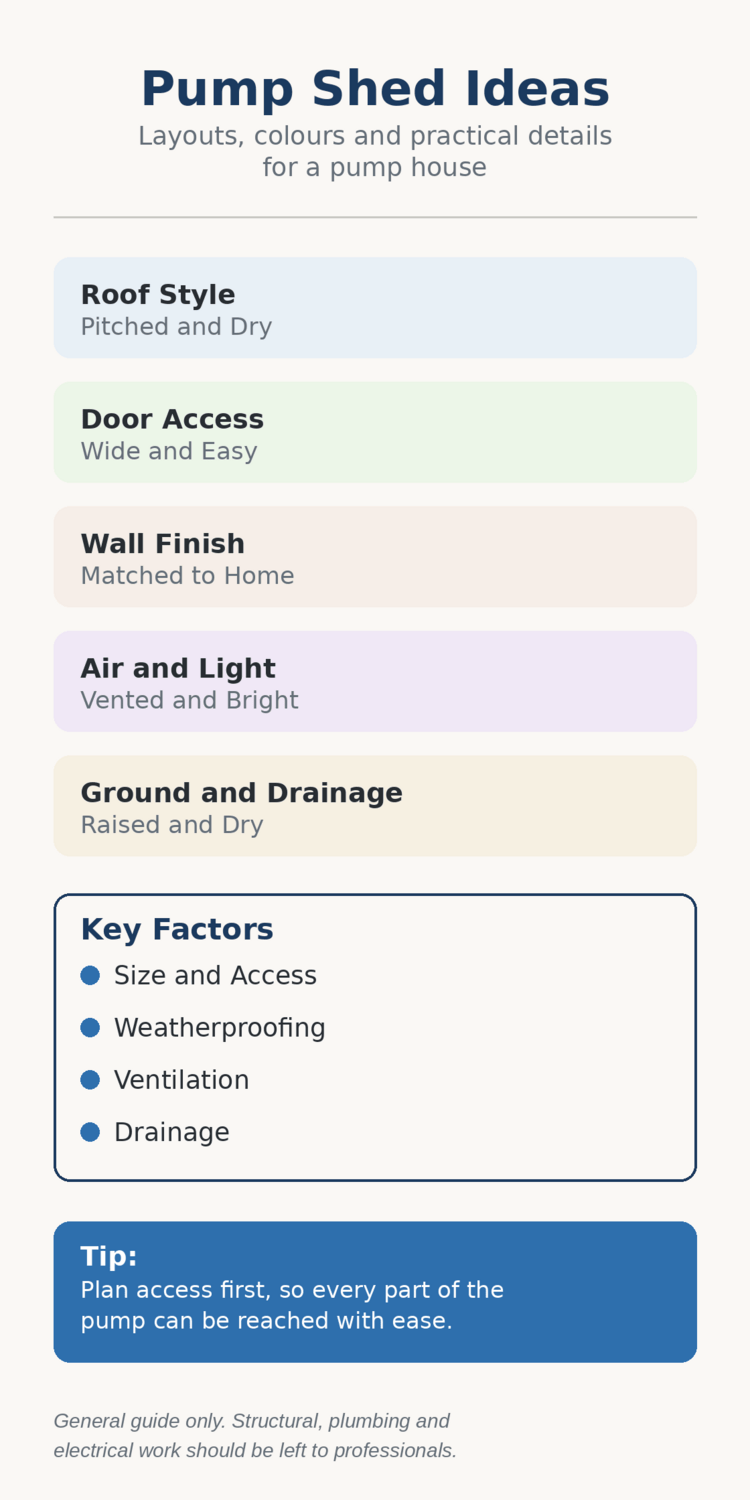
A pump shed exists to protect the pump and its related fittings from the weather while keeping them accessible. Rain falling directly on a pump, wind driving water into joints, and sun heating a small enclosed space all wear on equipment over time, and a shed stands between the pump and those effects. At the same time, the shed must never become a sealed box that nobody can open comfortably, because a pump that cannot be reached easily cannot be checked, adjusted or serviced without a struggle.
The shed also gives the pump a defined place in the garden. Without one, a pump and its pipework sit in the open, where they gather leaves, attract damp and become hard to find among plants and stored garden items. With a shed, the pump has an address of its own: a door to open, a floor to stand on, and walls that keep the worst of the weather and garden debris away. That clarity matters most in a small garden, where every structure competes for space and every corner needs a reason to exist.
It helps to think of the pump shed as part of the home’s outbuildings rather than as a piece of garden furniture. It shares the concerns of any small building: a sound base, walls that keep water out, a roof that sheds rain, and a door that closes properly. Garden shed ideas show how these same concerns shape sheds of every kind, and a pump shed is no exception. The difference lies only in what lives inside, and in how often someone needs to get to it.
2. Choosing a Place for the Shed
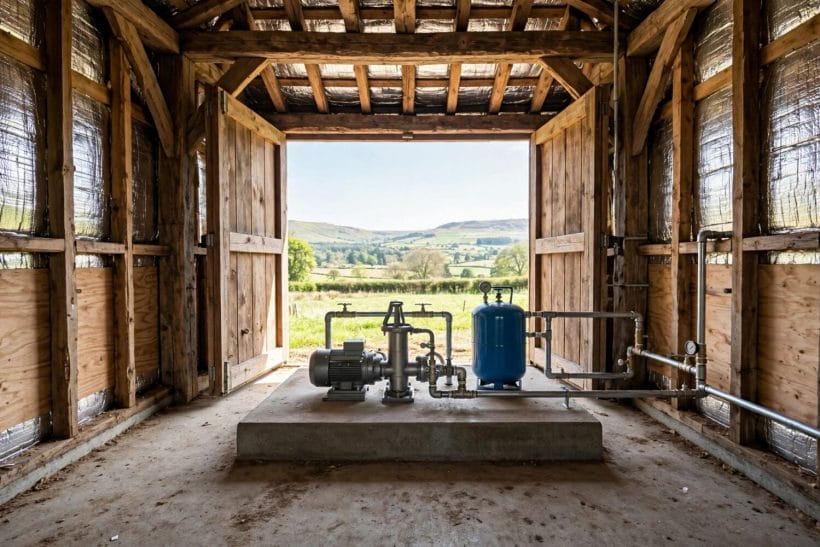
Place comes before style, because a pump shed must stand where the pump itself needs to be. The pump connects to pipework that runs to the house and to its water source, and the shed should sit where those runs stay as simple and as short as the site allows. A position that forces long, awkward pipe runs across paths and beds will cause trouble later, while a position that respects the existing runs keeps the whole arrangement calmer. Pipework is a matter for professionals, and the shed’s place should be settled with their advice in mind.
Access shapes the choice of place just as much as pipework does. The shed door needs room to open fully, and the person opening it needs room to stand, bend and work without stepping into a flower bed or backing onto a path. A shed squeezed into a corner with barely enough room for its door may look tidy from the garden, but it will frustrate everyone who uses it. A little clear ground in front of the door, kept free of planting and stored items, is one of the most useful features a pump shed can have.
The ground itself deserves attention too. Low ground that gathers water after rain is a poor place for any small building, and a pump shed is no exception, since standing water at the base will find its way inside over time. Slightly raised, well-drained ground suits a shed far better, and the ground around it should carry water away rather than towards the walls. Tiny house floor plans are a reminder that the siting of a small building is decided on the ground first, and the building itself second.
3. Shed Sizes and Shapes in General Terms
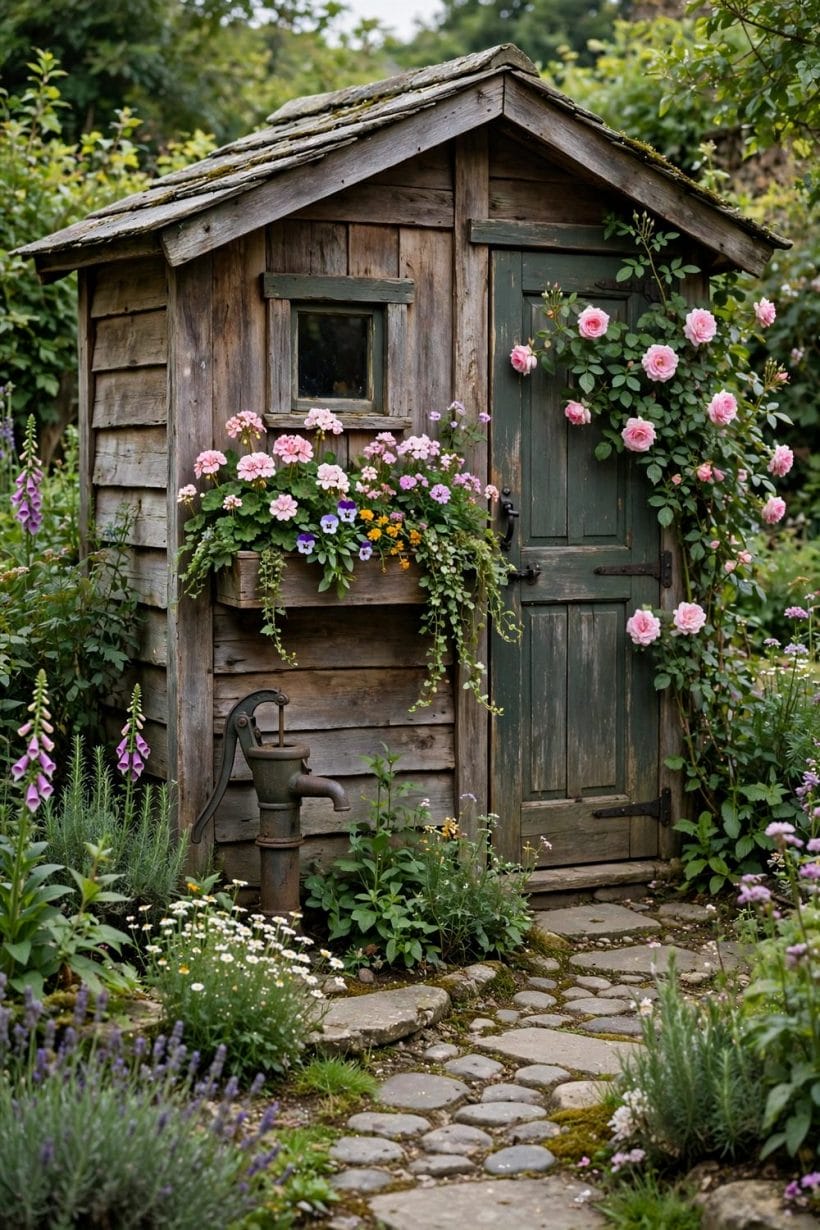
Pump sheds are small by nature, but small covers a range. At one end sits a compact shelter that holds little more than the pump itself, with just enough room to open the door and reach in. At the other end sits a roomier shed with space to stand inside, move around the pump, and keep a few related items nearby. The right size follows the pump and the work it needs: a shed that only ever needs a glance inside can stay compact, while a shed that needs regular attention deserves standing room.
Shape follows size and roof in turn. A simple rectangular shed suits most gardens, because its walls are easy to build, its roof is easy to cover, and its door can sit on the long side or the short end as the site demands. A square shed suits a tight corner, while a longer shed suits a run along a boundary. The shape should follow the site and the door swing rather than a picture in mind, since a shed that fits its corner will always look more settled than a shed forced into a space it does not suit.
Height matters in a way that is easy to overlook. A shed tall enough to stand in feels generous and makes work inside far easier, while a low shed forces stooping and turns every visit into a chore. Roof height, door height and the height of the pump itself all interact here, and a shed that clears them all with room to spare will serve better over the years. Storage ideas for small homes show the same lesson in miniature: a small space works when its height is used well, not only when its floor is generous.
4. Roof Styles That Shed Water
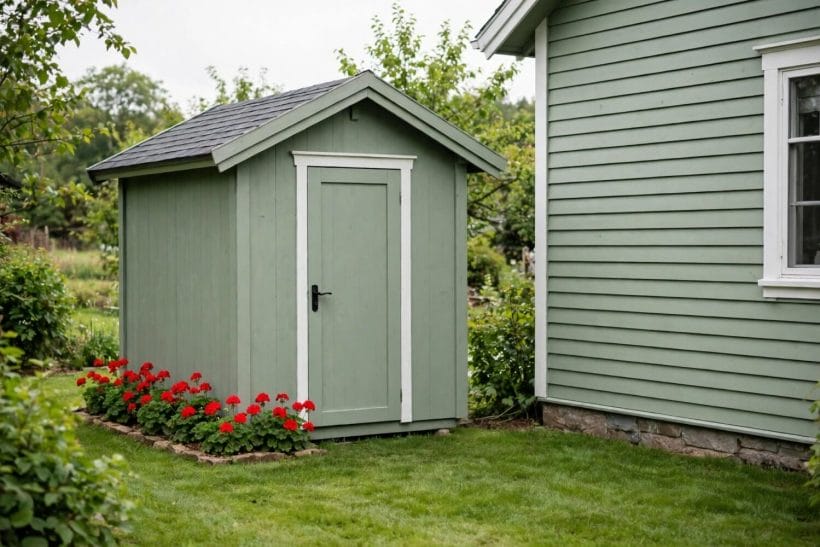
The roof is the hardest-working part of any pump shed, because it meets every fall of rain before anything else does. A pitched roof, sloping to one or both sides, carries water away from the walls and gives the shed a familiar cottage outline. A single sloping roof, higher at the front than at the back, is simpler to build and suits a shed tucked against a fence or wall, since its low side can face away from view. Either form works well, provided the slope carries water clear of the walls rather than letting it run down them.
Overhangs deserve as much thought as the slope itself. A roof that extends a little beyond the walls throws rain clear of the timber or masonry below, while a roof cut flush with the walls lets water run straight down the face of the shed. That small detail makes a real difference to how long walls stay dry and how often they need attention. Gutters and a downspout carry the idea further, gathering roof water and leading it away from the base, and they suit any shed that stands where its base must stay dry.
Roof covering follows the house and the garden. Shingles give a soft, traditional look that suits a cottage garden, while sheet metal gives a crisp, rural character and sheds water readily. The covering should suit the roof’s slope and the local weather, and the work of covering a roof belongs to people who do it properly, since a roof that leaks defeats the whole purpose of the shed. Colour can echo the house roof or stand apart from it, and either choice can look settled when the shed’s other details are handled with the same care.
5. Doors, Access and Everyday Reaching
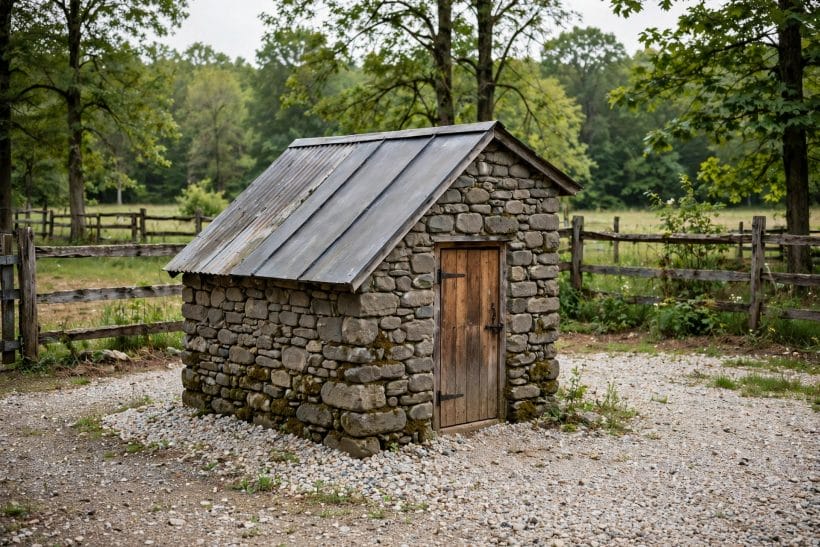
Doors decide how a pump shed feels in daily use. A pair of double doors opens the whole front of a small shed, so the pump can be seen and reached without squeezing through a narrow opening, and larger parts can be carried in and out when the time comes. A single door suits a compact shed and a tight site, and it keeps the front simpler, but it asks more of the person using it, since everything must pass through one opening. The choice between them follows the size of the pump and the room the site allows.
How a door opens matters too. Doors that swing outward need clear ground in front of the shed, while a sliding door needs clear wall beside the opening instead. A door that catches on gravel, binds against a swollen frame, or swings into a path will annoy its user every time it is opened, so the swing and the ground beneath it should be planned together. Hinges, latches and handles should be sturdy enough for outdoor use, since a shed door faces weather that an indoor door never meets.
Access is not only about the door itself. A firm step or threshold, a path that stays passable in wet weather, and a little light near the doorway all make the shed easier to use, especially in winter when visits happen in poor light. These details cost little at the planning stage and repay themselves on every visit. A pump shed that is easy to open, easy to enter and easy to stand beside will be looked after far better than one that fights its user, and that care is what keeps the pump itself in good order.
6. Walls, Cladding and Colours
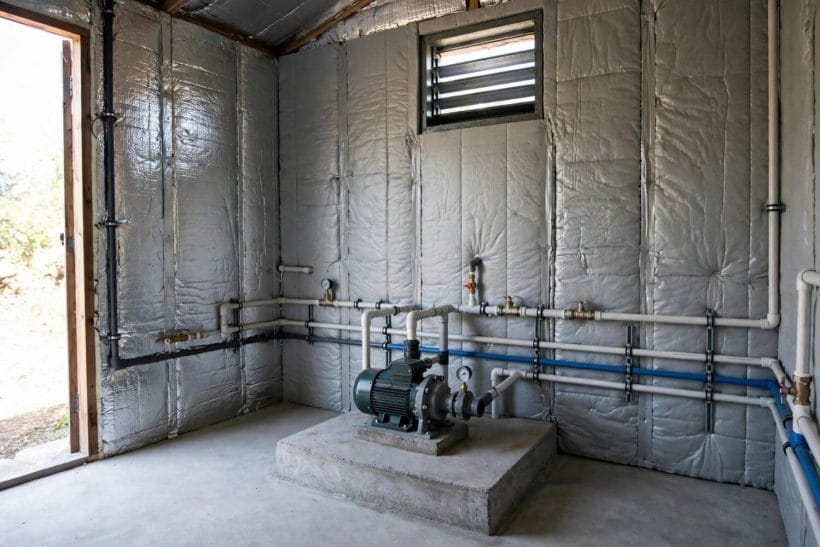
Walls give a pump shed its character and its weather resistance at once. Timber cladding, with boards laid horizontally or vertically, gives a warm, garden-like appearance and suits a cottage or rural setting, while painted boards can match the house or stand apart from it as a feature in their own right. Stone or masonry walls give a heavier, more permanent character and suit a rural yard or a house built of the same material, since the shed then reads as a small relative of the house rather than as an unrelated box.
Colour is where a pump shed either settles into its garden or stands out from it. A colour matched to the house, whether a painted tone or a natural timber shade, makes the shed feel like part of the household, while a contrasting colour can turn a small building into a garden feature, especially when flower beds and paths are planned around it. No particular colour suits every garden, and the choice should follow the house, the planting and the light of the site. Paint and stain also protect timber, so colour is a practical decision as well as a visual one, and finishes should be kept up as the seasons wear on them.
Behind the visible cladding sits the question of weatherproofing, and here professional advice matters most. Joints, corners and the meeting of walls with roof and base are the places where water finds its way in, and they should be detailed to throw water outward rather than trap it. Tiny house exterior ideas show how the same junctions shape the outside of a small home, and a pump shed repays the same attention on a smaller scale. A shed whose walls are properly detailed will stay dry inside with far less fuss than one whose walls merely look the part.
7. Air, Light and Damp in a Small Building
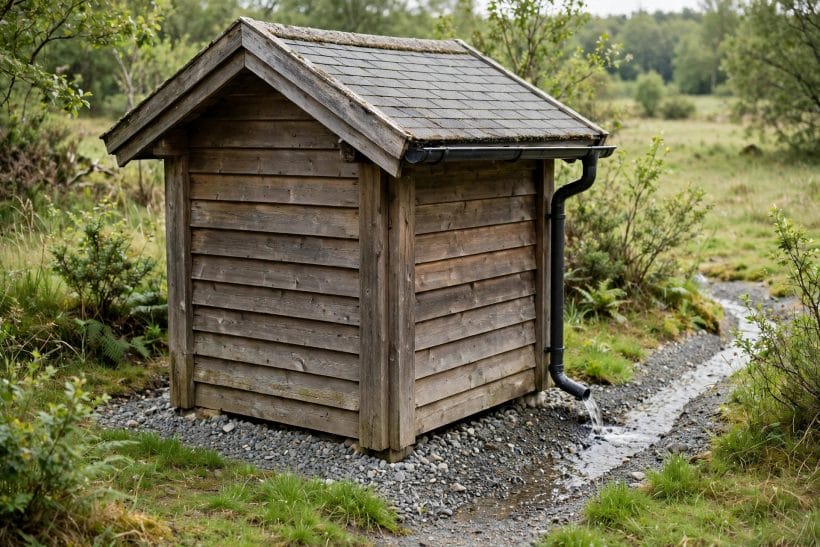
A small building without air movement will gather damp, and damp is the quiet enemy of everything inside a pump shed. Ventilation, through a high vent, a louvred opening or gaps planned into the structure, lets moist air out and drier air in, and it does so without letting rain follow. The vent should sit where it cannot be blocked by stored items, since a vent hidden behind boxes and tools does no work at all. Ventilation is a design decision, not an afterthought, and it should be settled while the shed is planned rather than added later.
Light inside the shed matters for the same practical reasons. A small window, a glazed panel in the door, or simply a door that opens wide enough to let daylight in all make it easier to see what is being done inside. A shed visited in daylight with a clear view of the pump will be checked more often and more carefully than a dark shed that needs a torch for every visit. Where wiring is involved, whether for light or for the pump itself, the work belongs to qualified electricians, and no part of it should be improvised.
Insulation sits alongside ventilation in cold weather. Lined walls slow the chill reaching the pump and its pipework, and they help the inside stay steadier through cold nights. Insulation alone does not remove the need for ventilation, and the two should be planned together, since a sealed, unventilated shed can gather damp even as it stays warmer. The balance between warmth and air movement is a matter for professional advice on the particular pump and site, and general guidance should never be read as a substitute for it.
8. Floors, Plinths and Drainage
The floor of a pump shed should be firm, level and dry, since the pump stands on it and the user stands beside it. A concrete plinth, raised slightly above the surrounding ground, gives the pump a stable base that stays clear of surface water, while a solid floor across the shed keeps feet dry and tools steady. The base of the shed itself should sit clear of the ground rather than buried in it, so that water running across the garden passes by instead of pooling against the walls.
Drainage around the shed completes the picture. Gravel beds, a gentle fall of ground away from the walls, and a downspout that leads roof water well clear of the base all keep the ground around the shed drier, and dry ground means a drier shed. These details are easy to plan and hard to add later, so they belong in the first sketch of the shed rather than in a later repair. Where ground conditions are awkward, whether heavy soil or a low corner of the garden, professional advice on drainage will save far more trouble than it costs.
Inside, a little order goes a long way. A pump shed that holds only the pump and its related fittings, with pipes run neatly and nothing stored against the walls, stays drier and easier to work in than a shed pressed into service as a general store. Garden tools, paint tins and spare timber all block vents, hide leaks and make the pump harder to reach, so they belong elsewhere. Tiny house interiors teach the same lesson indoors: a small space works when everything in it has a reason to be there, and nothing more.
9. Fitting a Pump Shed Into the Garden
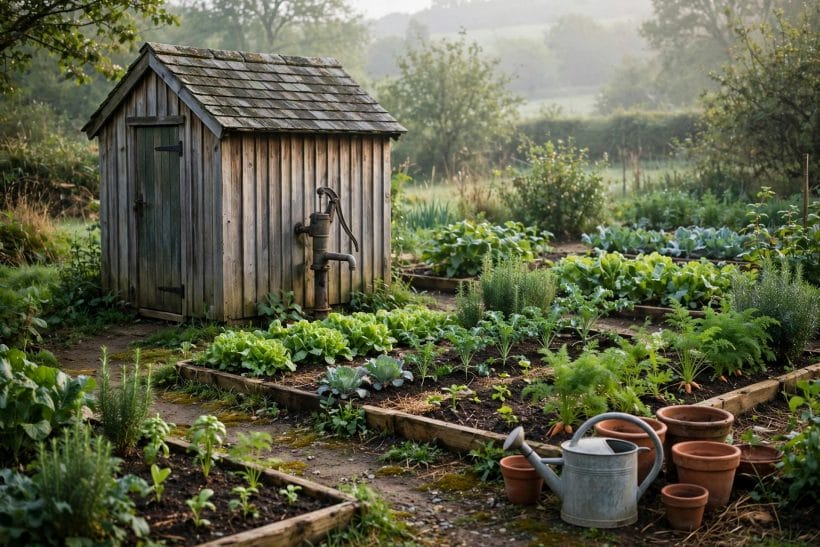
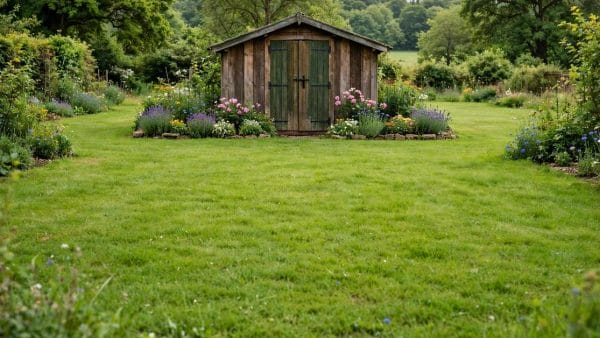
A pump shed need not be hidden to be welcome in a garden. Planting softens its outline, and climbers, flower beds and a simple path can turn a working building into a pleasant part of the garden without hiding the door or blocking access. The planting should stay clear of the door swing, the vents and the ground around the base, since a beautiful shed that cannot be opened or aired has failed at its first job. A stone or gravel path to the door keeps visits pleasant in wet weather and marks the shed as a place with a purpose.
Matching the shed to the house helps it settle visually. A shed that echoes the house in cladding, colour or roof form reads as part of the household, while a shed that borrows nothing from the house can still look at home when its planting and paths tie it to the garden. Either approach works, and the choice follows the garden as a whole rather than the shed alone. Small living room ideas offer a useful parallel: in small spaces generally, a few repeated materials and colours do more for harmony than any single feature.
Neighbours and boundaries deserve a thought too. A shed placed hard against a boundary, or with its door facing a neighbour’s garden, can cause friction that a slightly different position would avoid, and local rules may have something to say about outbuildings near boundaries. Checking such matters before building is far easier than moving a finished shed, and it keeps a useful little building from becoming a source of dispute. A pump shed that respects its neighbours will be left in peace to do its job.
10. Care Through the Seasons
Care for a pump shed follows the seasons, and little of it is demanding. In autumn, leaves should be cleared from the roof and gutters, so that water runs freely rather than pooling and finding its way inside. In winter, the door should still open freely, vents should stay clear, and the inside should be checked for damp after wet spells, so that small troubles are caught before they grow. In spring, paint and stain can be touched up where weather has worn them, and hinges and latches can be eased where they have stiffened.
Through the year, the inside deserves the same regular glance. Pipes and joints should be looked at for damp marks, the floor should stay dry, and nothing should be allowed to pile against the walls or block the vents. Any sign of trouble, whether damp, a sticking door, a damaged roof covering or anything concerning the pump itself, should be passed to a qualified professional rather than tackled as a casual repair, since the pump, its pipework and any wiring all repay proper attention. Regular glances and prompt professional help will keep a pump shed sound for far longer than neglect followed by rescue.
The cost of looking after a pump shed is best understood in these general terms: size, materials, finish and the state of the site all shape what a shed asks for over its life, and a well-planned shed asks for less than a poorly planned one. No figure can capture that fairly without knowing the particular shed, site and pump, so this guide keeps costs as drivers rather than numbers. A shed planned with access, drainage and weatherproofing in mind is the economical choice in the only sense that matters: it stays dry, stays reachable, and stays out of trouble.
Final Considerations
A pump shed is a small building with a clear purpose, and the best ones are planned around that purpose from the start. Place it where the pump needs to be, with room to open its doors and stand beside it. Give it a roof that sheds water clear of its walls, walls that keep weather out, air that keeps damp down, and a base that keeps it dry. Match it to the house or the garden in colour and cladding, and keep its surroundings clear enough for it to be used with ease. Leave structure, pipework and wiring to qualified professionals, and look after the shed through the seasons with regular glances and prompt help when anything seems wrong.
Planned in that spirit, a pump shed becomes one of the quiet successes of a garden: a building nobody notices much, because it does its job without fuss. Tiny house designs are a reminder that small buildings work best when every part of them has a reason, and a pump shed is no exception. Its reason is simple, and when the shed honours it, the pump inside will be drier, easier to reach and better cared for through every season.

0 Comments