
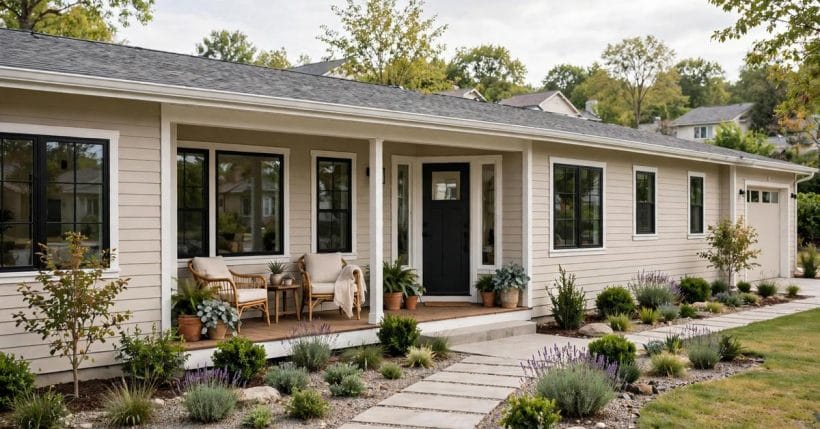
A ranch house has a particular honesty to it. Long, low and close to the ground, it does not hide behind height or ornament, so every change to its outside shows at once. That is what makes a ranch house exterior remodel ideas search so rewarding, and also why it pays to plan before touching anything. A fresh coat of colour here, a new door there and a tidied garden can either pull the whole front together or leave it looking like a collection of separate decisions made on separate days.
The sections below work through the exterior in the order a visitor sees it: the overall shape, the surfaces, the colours, the entrance, the porch, the roofline, the paths and the planting. Each decision is treated as part of one picture rather than a job on its own, because on a low, wide house the parts sit side by side in full view. Nothing here asks for guesswork about structure or services. Anything involving the structure of the house, the roof, or fixed wiring belongs with a qualified professional, and the rest is about choosing well, keeping things in proportion, and letting the house keep the calm, grounded character that makes ranch homes so easy to live with.
Start by standing across the street and looking at the house as a whole, not at any single feature. Notice where the eye goes first, where it stalls, and where the house seems to end and the garden begins. That first impression is the brief for everything that follows. A redo that respects it will feel like the house was always meant to look this way, while a redo that fights it will feel restless no matter how much work went into each part.
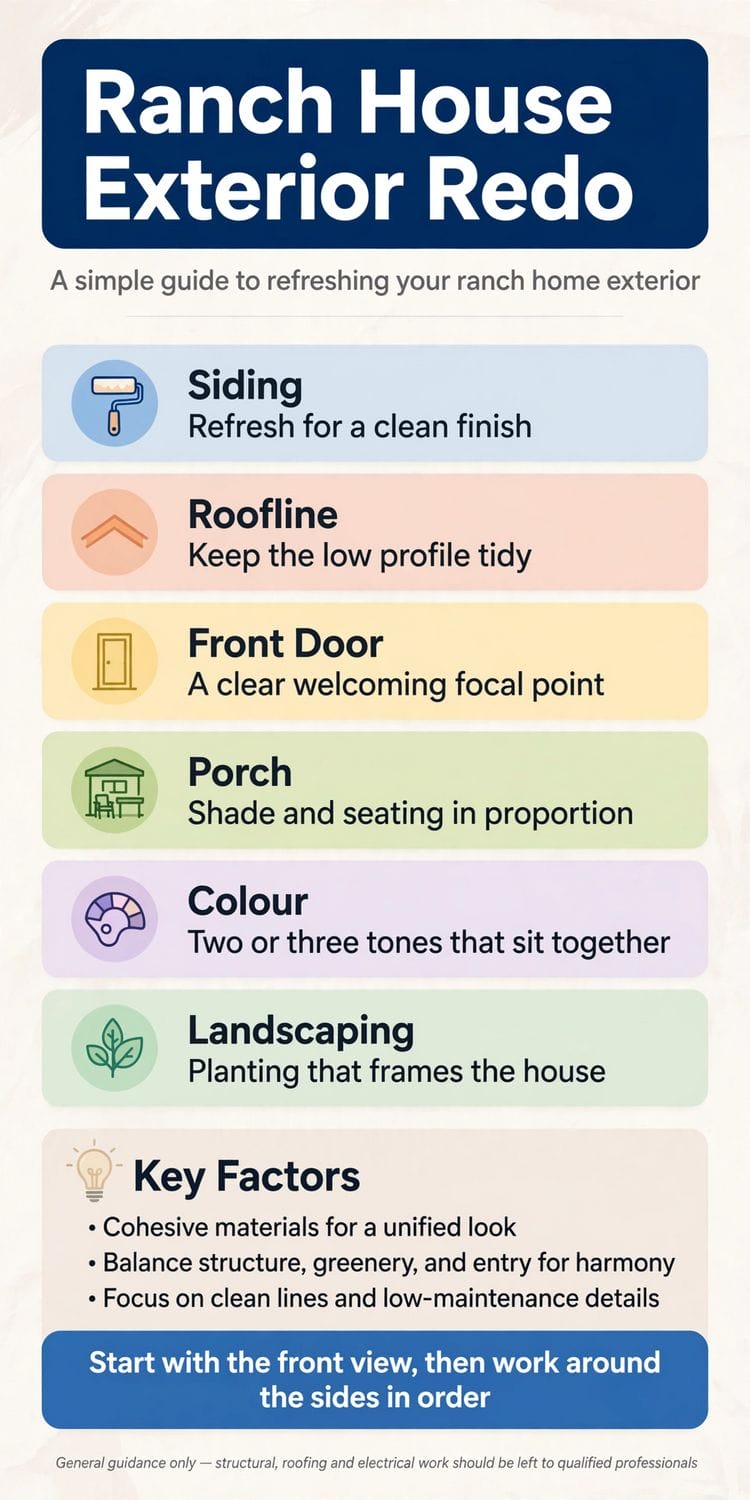
| Item | What it is |
|---|---|
| Start With the Front View | Every exterior redo should begin with the view from the street, because that is the view the house presents to the world and the one its owners return to every day. |
| Keep the Ranch Profile Low and Long | The defining quality of a ranch house is its low, stretched-out profile, and a good exterior redo protects that quality rather than fighting it. |
| Refresh Siding and Trim Together | Siding covers more of a ranch exterior than any other surface, so its condition sets the tone for the whole front. |
| Choose Colours That Sit Together | Colour is where many exterior redos go wrong, not because the colours themselves are poor but because too many of them are used at once. |
| Give the Front Door a Clear Job | On a long, low house the front door can easily get lost. |
| Shape a Porch That Fits the House | The porch is the outdoor room of a ranch house, and it deserves to be planned as a room rather than as a strip of floor in front of the door. |
| Tidy the Roofline and Garage Front | The roofline is the top edge of the whole composition, and on a ranch it runs for a long way, so a tired roofline can drag down an otherwise fresh exterior. |
| Lay Paths That Guide Visitors In | Paths do more than connect the street to the door: they tell visitors where to go and how the garden should be read. |
| Plant for Framing, Not Hiding | Planting is the soft edge of a ranch redo, and its job is to frame the house rather than hide it. |
| Light the Exterior for Evenings | Evening light is the final layer of an exterior redo, and it changes the house completely. |
1. Start With the Front View
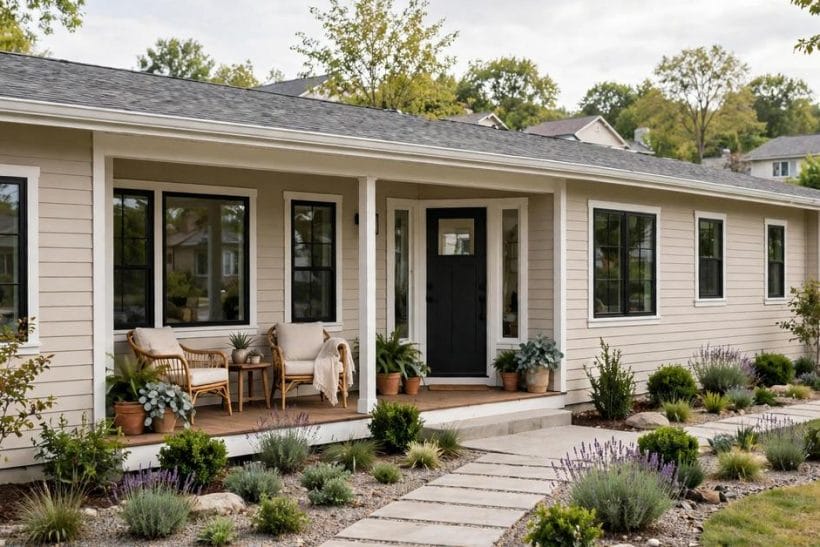
Every exterior redo should begin with the view from the street, because that is the view the house presents to the world and the one its owners return to every day. Walk to the pavement, or to the far side of the front garden, and take in the full width of the house in one look. A ranch is wide by nature, so the front view is a long, horizontal composition, and small imbalances that would pass unnoticed on a taller house can stand out here. A door that sits off-centre, a porch that stops short, or a stretch of blank wall can all tip the balance.
Look for the lines that already work. The roofline, the line of the windows, the edge of the porch and the line of the garden beds each draw the eye sideways, and when they run in quiet agreement the house feels settled. When they compete, the front feels busy. The aim of the early planning is not to add features but to decide which lines to strengthen and which to soften, so that the whole front reads as one calm arrangement. Useful exterior ideas can help at this stage, as long as they are judged against the house in front of you rather than copied outright.
It also helps to visit the front view at different times of day. Morning light shows colour and texture clearly, while evening light shows how shadows fall across the porch and the garden. A front that looks crisp at noon can look flat or harsh at dusk, and a front that feels welcoming in the evening may look washed out in bright sun. Planning with both lights in mind keeps the redo honest, and it prevents a choice that only works for a single hour of the day.
2. Keep the Ranch Profile Low and Long
The defining quality of a ranch house is its low, stretched-out profile, and a good exterior redo protects that quality rather than fighting it. Tall additions, heavy vertical features and anything that breaks the horizontal flow can make the house feel top-heavy and out of character. The strongest redos work with the length of the house, using long beds, low planting and horizontal trims to echo the shape that is already there.
That does not mean the house must stay plain. A porch roof that runs along the front, a band of trim that ties the windows together, or a garden wall that sits low and long can all add interest without adding height. The test is simple: does the new element stretch the eye sideways, along the house, or does it pull the eye upwards and away from it? Elements that stretch sideways tend to belong, while elements that pull upwards tend to argue with the house. Keeping the interior and exterior in the same spirit matters too, and whole-home design ideas are worth a look when checking that the outside and inside still feel like one home.
Proportion matters more than size at every step. A porch that is too deep for the front can swallow the door, while a porch that is too shallow can look like an afterthought. A garden bed that is too narrow can make the house look perched, while a bed that is too deep can hide the lower walls entirely. Standing back and judging each element against the full width of the house, rather than against itself, is the habit that keeps a ranch redo in character.
3. Refresh Siding and Trim Together
Siding covers more of a ranch exterior than any other surface, so its condition sets the tone for the whole front. Faded boards, patchy repairs and tired corners can make even a well-kept garden look neglected, while a clean, even surface can lift the entire house. Before choosing a new finish, look closely at how the existing siding meets the windows, the corners and the base of the walls, because those junctions are where a redo succeeds or fails.
Trim is the quiet partner of siding, and the two should be planned together rather than one after the other. Trim around windows and doors, along the eaves and at the corners frames the house and gives the eye places to rest. If the trim is too thin it disappears against wide walls, and if it is too heavy it chops the front into pieces. A trim width that reads clearly from the street, without shouting, usually serves a ranch best, and keeping the same trim treatment across the whole front matters more than any single detail.
Materials should be chosen for how they weather as well as how they look on day one. A surface that needs constant attention will soon show it, while a surface that ages gracefully will keep the house looking cared for with ordinary upkeep. Ask how each option copes with sun, rain and seasonal change in your climate, and be wary of any finish that promises a flawless look without upkeep. A redo that still looks good after several seasons is worth more than one that only photographs well at the start.
4. Choose Colours That Sit Together
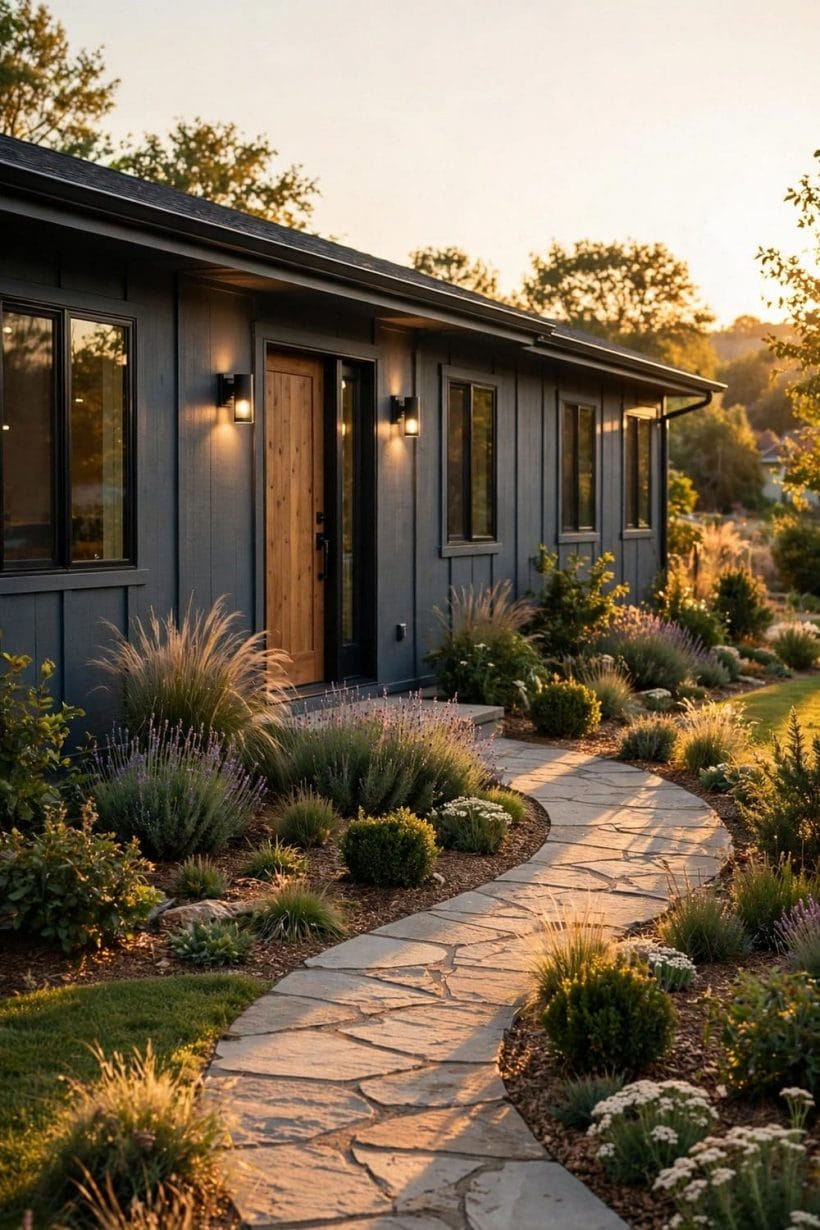
Colour is where many exterior redos go wrong, not because the colours themselves are poor but because too many of them are used at once. A ranch front reads best with a small, settled palette: a main colour for the walls, a lighter or darker tone for the trim, and one accent for the door or a small feature. More than that, and the long front starts to look striped, with each section competing for attention.
Test colours on the house itself, in daylight, before committing. A shade that looks soft on a small sample can look far stronger across a whole wall, and a shade that looks dull indoors can come alive in sunlight. Paint large test patches on different sides of the house and live with them for a few days, watching them in morning and evening light. Colour guidance from paint colour ideas can spark options, but the final judgement should always be made against the siding, the roof and the garden of the actual house.
Keep the roof in the colour conversation from the start. The roof is a large, permanent-looking surface, and a wall colour that clashes with it will never settle, however carefully the trim is chosen. Warm roofs sit happily with warm wall tones, and cool roofs with cooler ones, while a neutral wall colour can bridge the gap when the roof tone is hard to place. When wall, trim, roof and door colours sit in quiet agreement, the house looks considered rather than decorated.
5. Give the Front Door a Clear Job
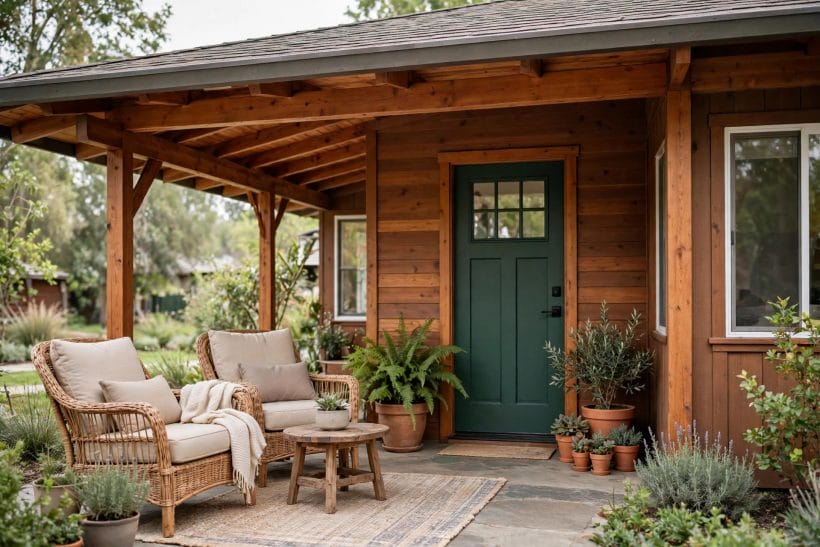
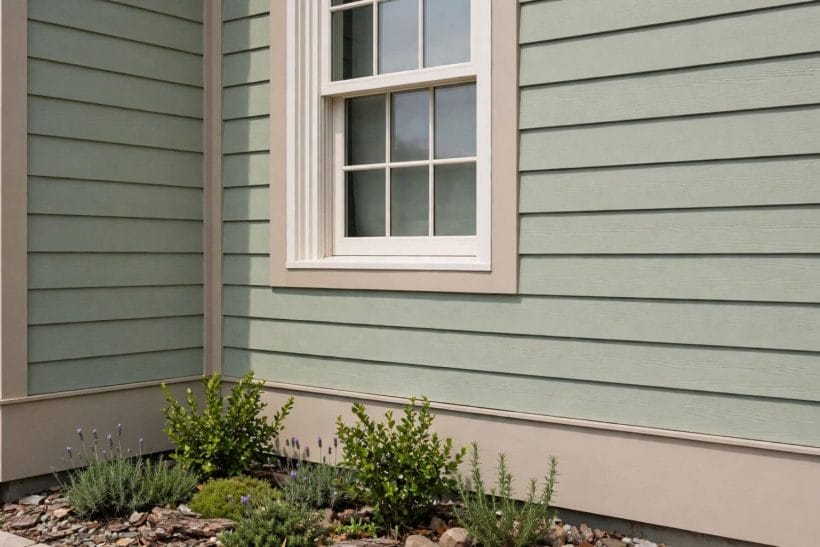
On a long, low house the front door can easily get lost. Windows stretch along the front, the porch runs wide, and the door itself may sit to one side rather than in the centre, so visitors can be unsure where to head. A good redo gives the door a clear job: to say, without words, that this is the way in. That job is done by position, framing and contrast working together, not by size alone.
Framing helps the door stand out without overwhelming it. A tidy surround, a porch light on either side or a small canopy can mark the entrance as a destination, while a clear, uncluttered path leading straight to it does the rest. Planting should guide rather than block, sitting low near the door so the entrance stays visible from the street. When shrubs grow up around a door, the entrance disappears and the house can feel closed even when it is welcoming inside.
Colour gives the door its voice. A door in an accent tone that relates to the rest of the palette will catch the eye from the street and give the whole front a focal point. The accent should feel deliberate, not random: a warm tone that echoes garden planting, or a deep tone that matches the trim, will sit far more happily than a colour chosen in isolation. A door that is easy to find, easy to reach and pleasant to approach does more for a ranch exterior than any amount of decoration elsewhere.
6. Shape a Porch That Fits the House
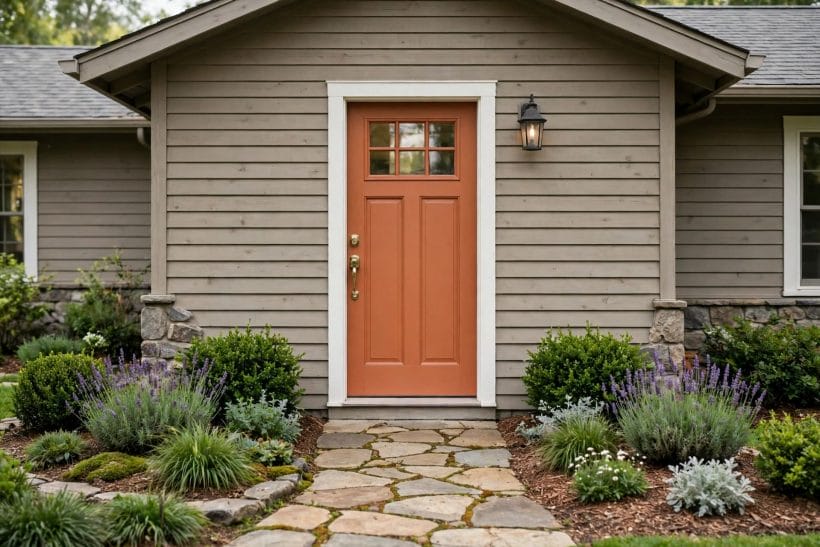
The porch is the outdoor room of a ranch house, and it deserves to be planned as a room rather than as a strip of floor in front of the door. A porch that fits the house will feel like a natural extension of it, with enough depth for a chair or two, enough shade to be comfortable, and a ceiling height that feels sheltering rather than cramped. A porch that is too shallow becomes a ledge, while one that is too deep can darken the rooms behind it.
Seating, shade and shelter are the three comforts that make a porch work. Seating gives the porch a purpose beyond passing through, shade makes it usable through the warmer part of the day, and shelter from wind and rain makes it a place to pause rather than hurry past. Simple, sturdy furniture in proportion to the porch will serve better than pieces that crowd it, and planting that softens the porch edges without blocking light will keep it feeling open. Browsing porch ideas can suggest arrangements, but the porch itself should be sized and furnished for the household that will actually use it.
Any change to the porch structure, its roof, or its supports is work for a qualified professional, and the same applies to any alteration of the roofline above it. The appearance of the porch can be refreshed with colour, planting and furniture, but its bones belong to someone who understands loads, weatherproofing and safe construction. A porch that is sound underneath and welcoming on top is the combination that lasts.
7. Tidy the Roofline and Garage Front
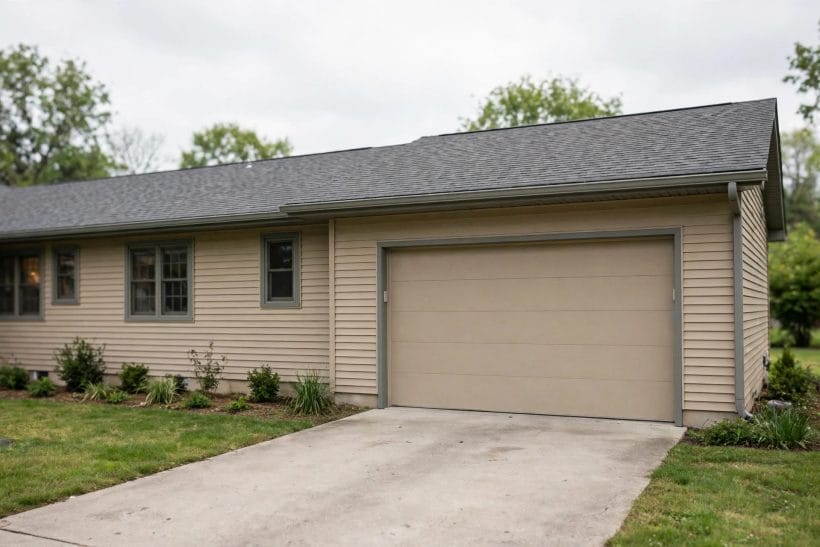
The roofline is the top edge of the whole composition, and on a ranch it runs for a long way, so a tired roofline can drag down an otherwise fresh exterior. Sagging gutters, stained fascia boards and uneven edges all draw the eye, and they are worth putting right early in a redo rather than leaving until last. A clean, continuous roofline gives the house a finished look that no amount of planting can fake.
The garage front deserves the same attention, because on many ranches it takes up a large share of the front view. A garage door that matches the house in colour and tone will sit quietly in the composition, while one that clashes can dominate it. Keeping the garage trim, siding and colour in step with the rest of the house stops the garage from reading as a separate building stuck onto the side. Outbuildings and sheds should follow the same rule, and garden shed ideas can help when checking that smaller structures still belong to the same family as the house.
Roof work itself is strictly professional territory. Walking on a roof, altering its covering, or changing anything about its drainage and flashing calls for a qualified roofer, and any hint of a leak or structural concern should be investigated by a professional before cosmetic work begins. A redo that starts with a sound, watertight roof will hold its looks, while one that paints over a roofing problem will not.
8. Lay Paths That Guide Visitors In
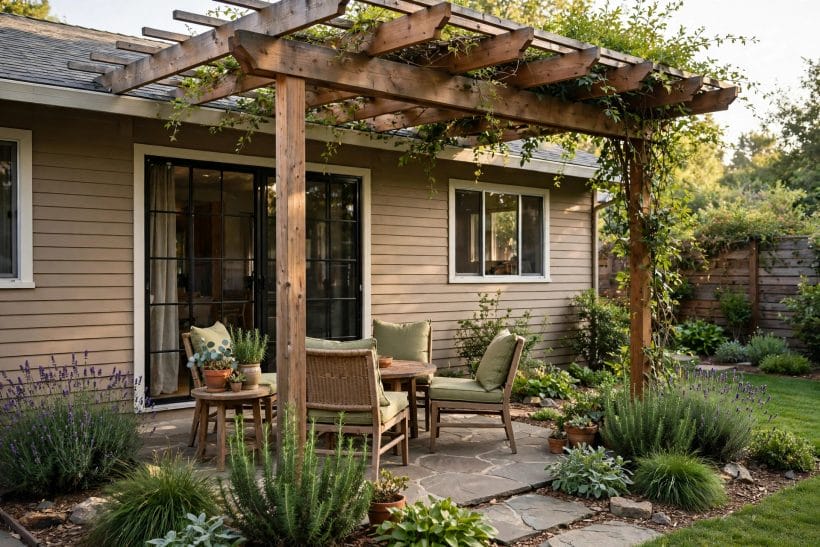
Paths do more than connect the street to the door: they tell visitors where to go and how the garden should be read. A path that runs straight and clear to the entrance feels confident and welcoming, while a path that wanders without purpose can leave visitors hesitating at the lawn. On a wide ranch front, the path also has a second job, which is to break up the long stretch of garden into a foreground that feels designed rather than empty.
Materials should feel at home with the house. Stone, brick and concrete each carry a different character, and the choice should echo the house walls, the porch floor or the garden walls nearby. A path surface that is level, firm and easy to walk on matters more than any decorative pattern, and edges that are neatly finished will keep the path looking intentional rather than makeshift. Stone paths in particular can sit beautifully against a ranch, and rock landscaping ideas are a useful reference when weighing how stone, gravel and planting work together.
Width and alignment deserve a moment of thought too. A path that is too narrow can feel mean against a wide house, while one that is too wide can dominate the garden. A path that lines up with the door, or with a clear gap in the planting, will feel inevitable in the best sense, as if it could not have gone anywhere else. Lighting along the path, kept low and gentle, will extend that welcome into the evening without turning the garden into a stage.
9. Plant for Framing, Not Hiding
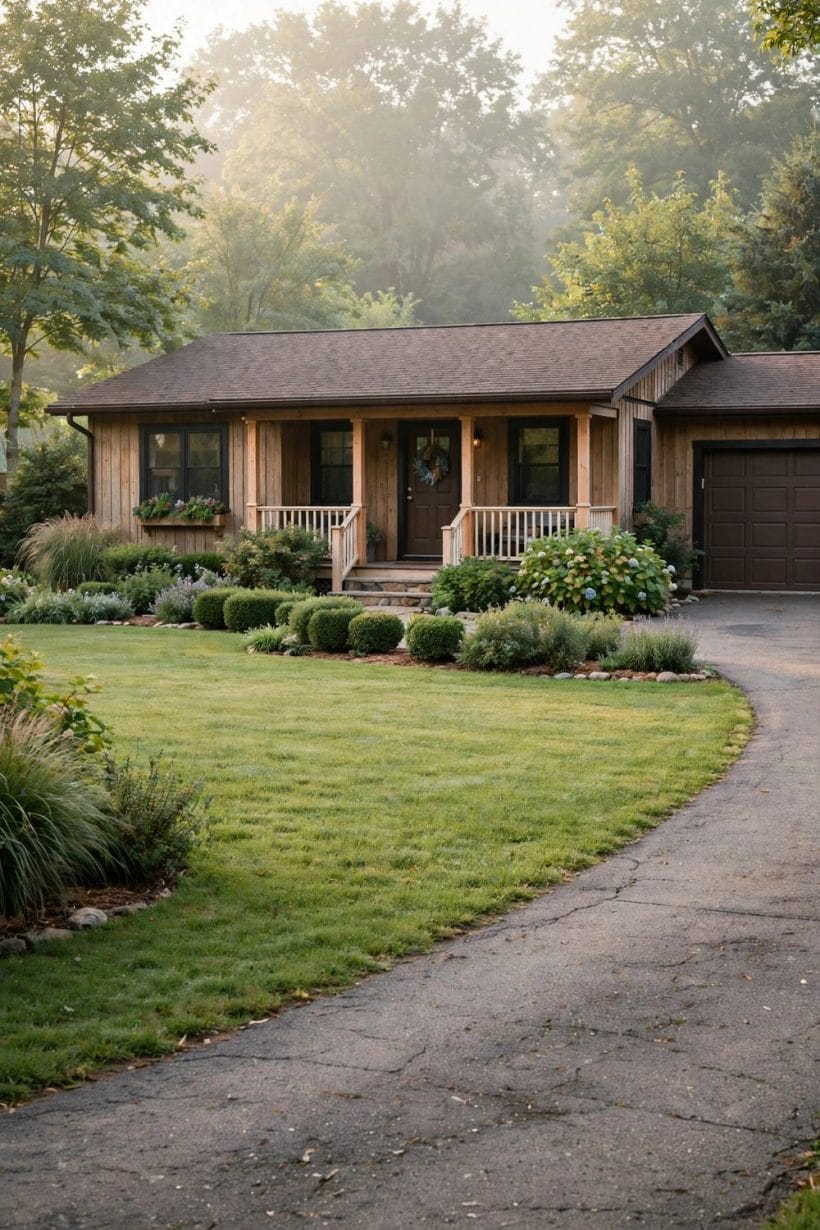
Planting is the soft edge of a ranch redo, and its job is to frame the house rather than hide it. Shrubs that sit low along the walls, taller plants at the corners, and a tree or two set back from the house can give the front depth and a sense of maturity without swallowing the architecture. The worst outcome is planting that grows up over windows and doors, turning a low house into a low hedge with a roof.
Layering is the key habit. Low ground cover at the front of a bed, mid-height shrubs behind it, and taller plants only where they have room to grow will keep the planting readable from the street. Evergreen structure through the quieter months, mixed with seasonal colour, will keep the front from looking bare when flowers fade. Planting chosen for the local climate and soil, with realistic expectations about watering and upkeep, will look better for longer than ambitious planting that cannot be maintained. For the wider garden picture, backyard landscaping ideas can suggest how front and rear planting can share a character without repeating each other exactly.
Leave room for growth in every planting decision. A shrub that fits neatly today can overwhelm a window in a few seasons, and a tree planted too close to the house can cause trouble for walls, drains and roofs. Planting with the mature size in mind, and keeping clear space around doors, paths and service points, is a kindness to the future owners of the redo as much as to the present ones. A garden that frames the house, rather than competing with it, will make the whole exterior feel larger and calmer.
10. Light the Exterior for Evenings
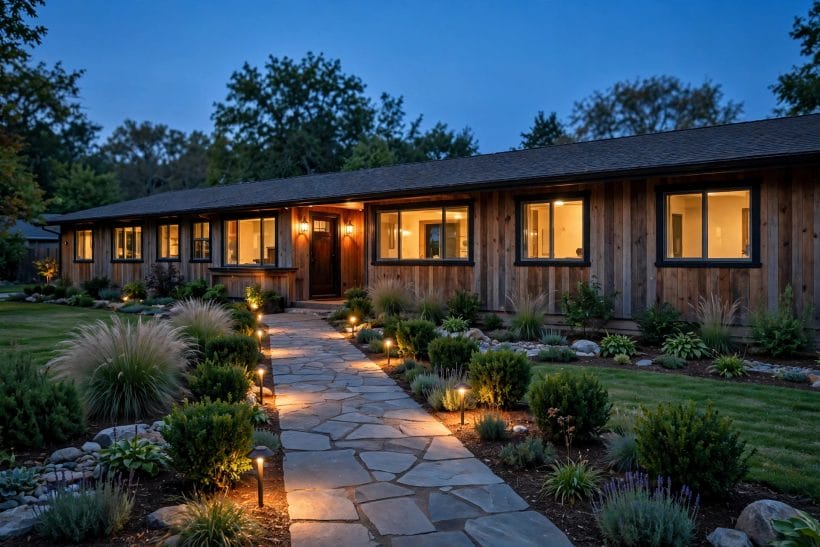
Evening light is the final layer of an exterior redo, and it changes the house completely. A front that is only designed for daylight can look flat or forbidding after dark, while a front with gentle, well-placed lighting feels welcoming and safe. The aim is a soft glow that marks the entrance, lights the path and washes the walls lightly, rather than a blaze that flattens every detail.
Place lights where they do a job: beside the door so visitors can be seen and welcomed, along the path so footing is clear, and near steps or changes of level where a misstep is most likely. Uplighting a tree or washing a stretch of wall can add depth, but it should be used sparingly, so the house keeps some shadow and shape. Warm-toned light tends to suit ranch materials better than harsh white light, which can make timber and brick look cold.
Fixed exterior wiring and any new outdoor circuits are work for a qualified electrician, and fittings should be chosen for outdoor use and for the weather they will face. Solar or battery lights can suit some spots, but they should be judged on how reliably they actually light the path through the darker months, not only on how they look in summer. Lighting that is safe, subtle and reliable will quietly extend the life of the whole redo into every evening of the year.
Final Considerations
A successful ranch exterior redo is rarely about a single dramatic change. It is about a series of quiet decisions that agree with each other: a profile kept low and long, surfaces refreshed together, colours kept to a small palette, a door that is easy to find, a porch that fits, a roofline kept tidy, paths that guide, planting that frames, and light that welcomes after dark. Judged together, those decisions are what turn a tired front into one that feels settled and cared for, and they are the heart of good ranch house exterior remodel ideas.
Work through the front in order, starting with the view from the street and ending with the evening view, and resist the urge to fix one feature in isolation. Keep structural, roofing and electrical work with qualified professionals, choose materials and planting that suit the climate and the upkeep the household can honestly give, and test colours in real daylight before committing. A redo planned this way will not only look better on the day it is finished, it will keep looking better as the garden grows in and the house settles into its refreshed exterior.

0 Comments