

A tiny house is too small for rooms that ignore each other. The homes that feel generous are designed whole — one style, one palette, the same wood and metal echoing from kitchen to loft. This guide shows how that whole-home vision works: the style chosen and committed to, the palette that flows, and the details that tie every small room into one beautiful, livable home.
Interior Design Home Ideas: At a Glance
Interior design home ideas work at the scale of the whole tiny house: one committed style, one flowing palette, the same woods, metals and textiles repeated room to room, furniture scaled to fit, one focal point per room, and light and softness layered the same way throughout. This guide follows the work in its real order — vision, style and palette, room-by-room harmony, repetition, scale and focus, light and textiles, the ten commandments, the build-out from mood board to finished room, the art, and the evolving home.
| Topic | What It Covers | Key Fact or Figure |
|---|---|---|
| 1. The Vision and the Style | One style chosen, committed to, and carried through every room | The whole is designed as one |
| 2. The Flowing Palette | A base that runs throughout; accents that vary room to room | The palette is the most important choice |
| 3. Room-by-Room Harmony | Living, kitchen, bedroom and bath in distinct but harmonizing roles | Harmonize — never simply match |
| 4. The Repeating Elements | The same wood, metal finish and textile pattern echoed | The repetition unifies |
| 5. Scale and Focal Points | Right-sized furniture, varied heights, a resting place for the eye | One focal point per room |
| 6. Light and Textiles | Layered light at one warm temperature; coordinated, varied textiles | The light unifies the home |
| 7. Commandments, Entry and Transitions | The ten rules, the first impression, thresholds and sightlines | 10 commandments |
| 8. The Build-Out | Mood board, shopping list and one room finished at a time | The vision: a weekend; the implementing: months |
| 9. The Art and the Payoff | Curated, cohesive art; beauty that works and is lived daily | The art tells the story |
| 10. The Living Finish | Seasons, evolution, hosting and the welcome home | The done is the felt |
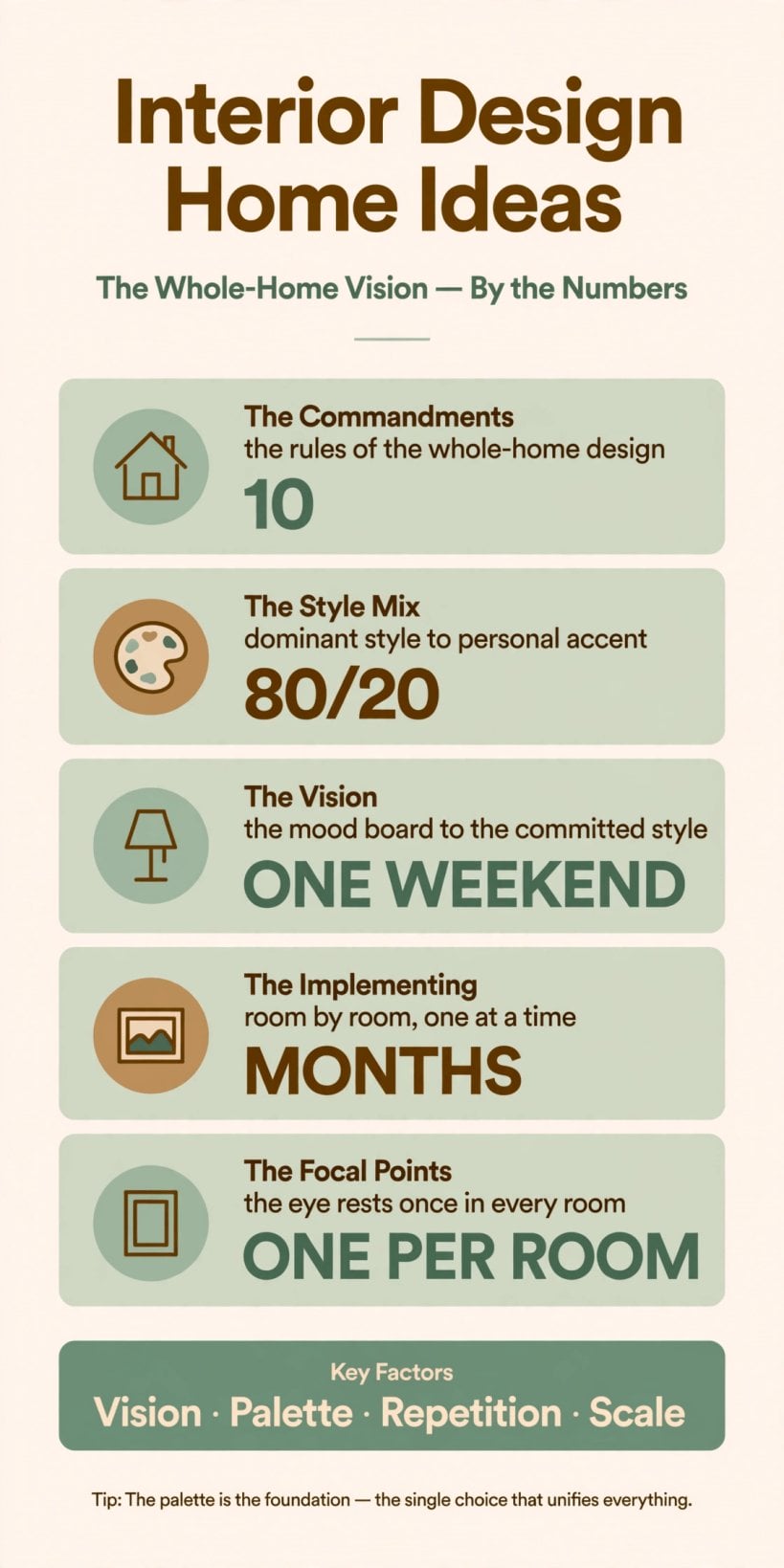
The whole-home vision by the numbers: 10 commandments, an 80/20 style mix, a vision in one weekend — and months of implementing, one focal point and one finished room at a time.
1. The Whole-Home Vision and Choosing Your Style
The whole-home vision is where every designed tiny house begins, and it has four parts. The style is the chosen — the committed, one look picked and held. The flow is the room-to-room — the seamless, so moving through the home feels like one continuous thought. The palette is the unified — the harmonious, a single color story told in every space. And the rule above all three: the whole is the designed — the one. In a tiny house no unrelated choice can hide — the kitchen is visible from the sofa, the loft from the kitchen — so designing whole is not a preference but the only way the home reads as designed at all. The wider framework these choices plug into is set out in our tiny house and small-space interior design hub.
Choosing the style is the vision’s first decision. The modern is the clean — the minimal, all clear surfaces and quiet lines, treated in depth in our guide to modern interior design ideas for tiny houses. The farmhouse is the warm — the rustic, wood-forward and welcoming. The boho is the layered — the free, pattern and texture gathered with a loose hand. The rule either way: the style is the personal — the committed. Held loosely, a style makes a home feel undecided; committed to, inevitable.
So how do you design a whole tiny house interior? In the original’s own order: the style first, the palette second, the room-by-room third — the whole-home design is the planned, and the vision guides every choice that follows. How do you choose the style itself? From the images — the saved, the loved; from the feelings — the wanted; from the lifestyle — the lived. The style chooses you: the collected inspiration reveals the pattern, as section 8’s mood board shows. Which style works best? The committed one — the modern, the farmhouse, the boho, the Scandi. The best style is the loved: the tiny rewards the vision fully embraced. And can styles be mixed? Yes — the 80/20, the shared palette, the intentional: one dominant style carrying the home, a second seasoning it, mixed with care because the tiny shows every choice.
2. The Flowing Palette: The Foundation Choice
The palette is the vision made visible, and it flows in two currents. The base is the throughout — the unifying, the wall color, wood tone and anchor neutrals that run unchanged from entry to loft. The accents are the room — the varied, the smaller notes that shift from space to space so each room keeps a personality inside the harmony. The rule: the palette flows — the tiny. Because the rooms are seen together, a palette that stops at a doorway reads as a mistake; a palette that flows makes the whole home feel larger, calmer and deliberately one place.

That is why, asked for the most important design decision, the answer is the palette — the single choice that unifies everything. The style comes second. The palette is the foundation: every other choice builds on it. Furniture, textiles, art and metal finishes are all chosen against it — get the base right early, and refuse to re-litigate it room by room.
3. Room-by-Room Harmony: Distinct Roles, One Home
Within the flow, each room keeps its own job. The living is the welcoming — the styled, the room that greets and gathers, treated fully in our guide to tiny house lounge design ideas. The kitchen is the functional — the beautiful, work first and lovely while it works. The bedroom is the calm — the restful, designed down to a hush, as in our roundup of small bedroom interior design ideas for tiny houses. The bath is the spa — the small, a compact room given a serene brief, like the ones in our bathroom interior design ideas for tiny houses. The rule: the rooms harmonize — the whole. Different roles, one family.
Should every room match, then? No — harmonize, not match: the shared palette, the repeated elements, the room personalities. The match is the boring; the harmony is the designed. Matched rooms feel like a showroom set; harmonized rooms feel like a home with a point of view, each space recognizably itself and unmistakably part of the same whole. In a tiny house, where one glance takes in three rooms, that balance — sameness in the bones, difference in the dressing — is the whole art.
4. The Repeating Elements: Cohesion by Echo
Harmony is built by repetition, and three elements do the echoing. The wood is the same — the throughout, one species or finish carried from shelf to stair to table, so the eye keeps meeting an old friend. The metal is the finish — the repeated, the same black, brass or chrome on handles, faucets and lights in every room. The textile is the pattern — the echoed, a weave or motif that returns in cushion, curtain and throw. The rule: the repetition unifies — the designed.
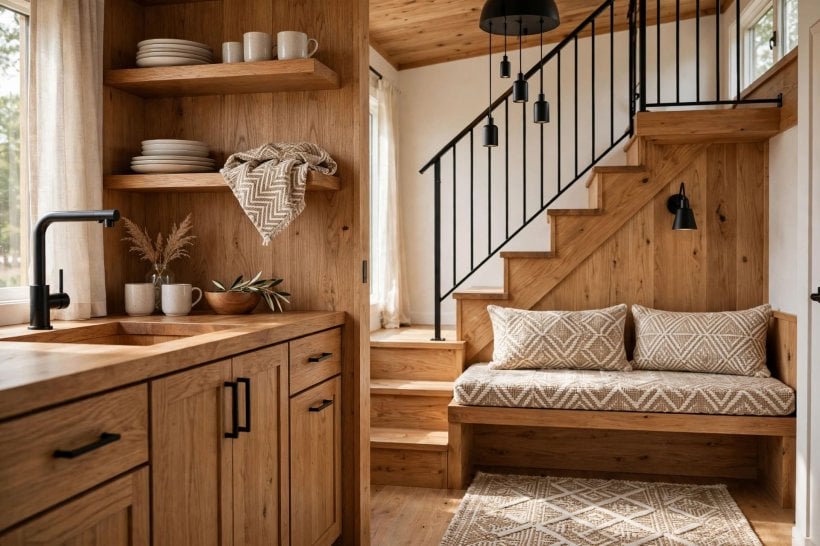
This is the direct answer to the cohesion question: how do you make a tiny house feel cohesive? The repeating — woods, metals, textiles; the flowing palette; the consistent style. The cohesion is the repeated: the eye reads the echoes and concludes, without being told, that the home is one place. Repetition is also cheap design — it asks for consistency, not quantity — and three faithful echoes do the work a large house needs a theme to do.
5. Scale, Proportion and the Focal Points
Cohesion sets the home’s language; scale sets its grammar. The right-sized is the furniture — the fitted, pieces chosen for the room that exists: the apartment-scale sofa, the table that leaves walking room, the storage that uses the wall instead of the floor. The varied is the heights — the interest, tall and low pieces alternating so the eye travels instead of flattening. The rule: the scale fits — the tiny. One oversized piece does not just crowd a small room; it breaks the proportion of every right-sized piece around it.
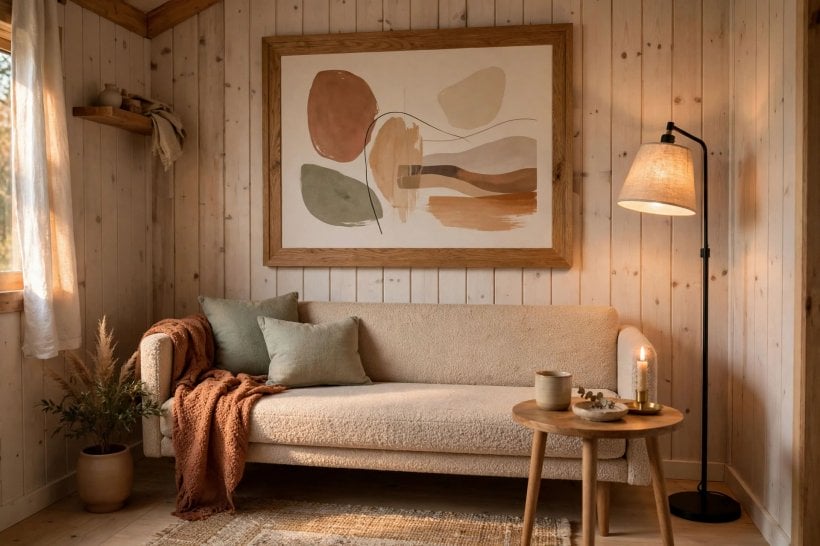
Each room then gets its anchor. The focal point is the one per room — the eye, the rested: a single place in every space where the gaze is invited to land. The art is the large — the statement, the generous piece that gives a small wall a sense of occasion. The rule: the focal guides — the eye. Without an anchor, a small room is a corridor of competing objects; with one, everything else becomes supporting cast and the room feels composed rather than filled.
6. The Whole-Home Lighting Plan and the Textiles Plan
Light is planned for the whole home at once, in two commitments. The layered is the every room — the rule: each space gets more than one kind of light, ambient and task and evening glow, so no room is lit like a hallway. The consistent is the temperature — the warm, the same warmth of bulb from kitchen to loft, because mismatched light temperatures are the fastest way to make one home feel like several. The rule: the light unifies — the home.
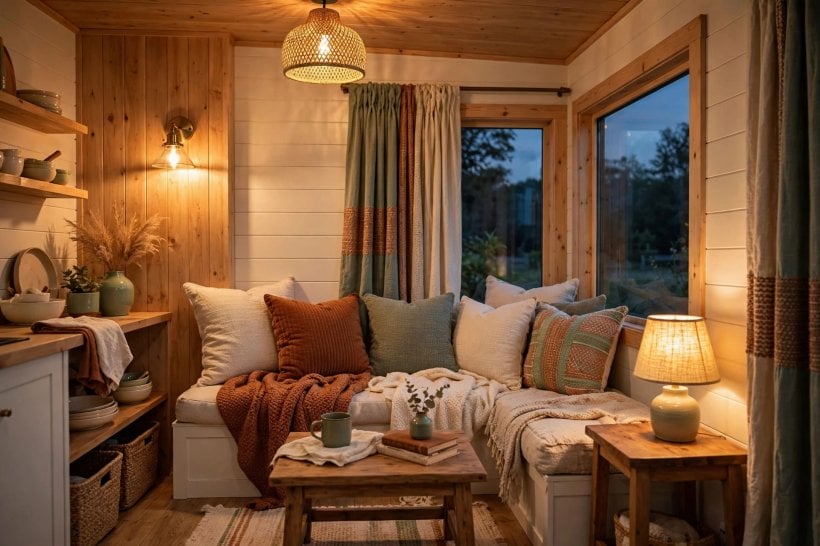
Textiles carry the same plan into softness. The coordinated is the palette — the shared, cushions, throws, rugs and curtains all drawn from the one color story. The varied is the texture — the interest, smooth against woven against nubby, so coordination never flattens into monotony. The rule: the textiles soften — the whole. In a home of hard, space-saving surfaces, textiles are where comfort lives — and, as the easiest layer to change, where the home later evolves (section 10).
7. The 10 Commandments, the Entry Moment and the Transitions
The whole method compresses into the ten commandments of tiny home design: choose the one style; unify the palette; repeat the elements; scale the furniture; layer the light; soften the textiles; focus the each room; edit the ruthless; personalize the deeply; live the beautiful. Kept together, they are less a checklist than a temperament — decisive about bones, generous about personality.
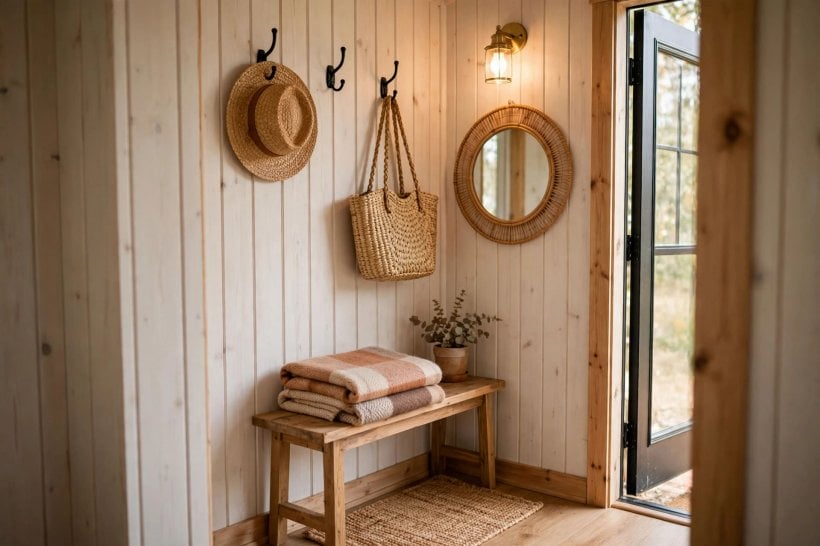
The entry is where the temperament is first tested. The first is the impression — the set, the moment the door opens and the home declares what it is. The welcoming is the styled — the warm, a hook, a bench, a light: small provisions that say the design was expecting you. The rule: the entry introduces — the home. The transitions then carry the introduction through: the thresholds — the considered, the flowing, each doorway treated as a sentence break rather than a full stop; the sightlines — the long, the designed, the view from room to room composed so each room introduces the next. The rule: the transitions connect — the rooms. And the mistakes are the commandments broken: the disjointed — the styles, un-unified; the choppy — the palettes, un-flowed; the oversized — the pieces, un-scaled. The rule beneath them all: the whole is the one — the designed.
8. The Mood Board, Shopping the Vision and Implementing Room by Room
Before anything is bought, the vision is made visible on the mood board. The collected is the images — the pinned, everything saved and loved gathered in one place. The pattern is the emerged — the style, the look that keeps recurring until it cannot be argued with. The truth: the board reveals — the vision. Shopping follows the board, not the shop floor: the list — the needed, the prioritized; the hunt — the thrifted, the found. The rule: the list guides — the wallet. And the budget question answers itself from that discipline: decorate with the paint, the textiles, the thrifted, the DIY. The budget decorates beautifully — the small space needs less to transform. The finishing layer those buys build is gathered in our roundup of tiny house decorating ideas.
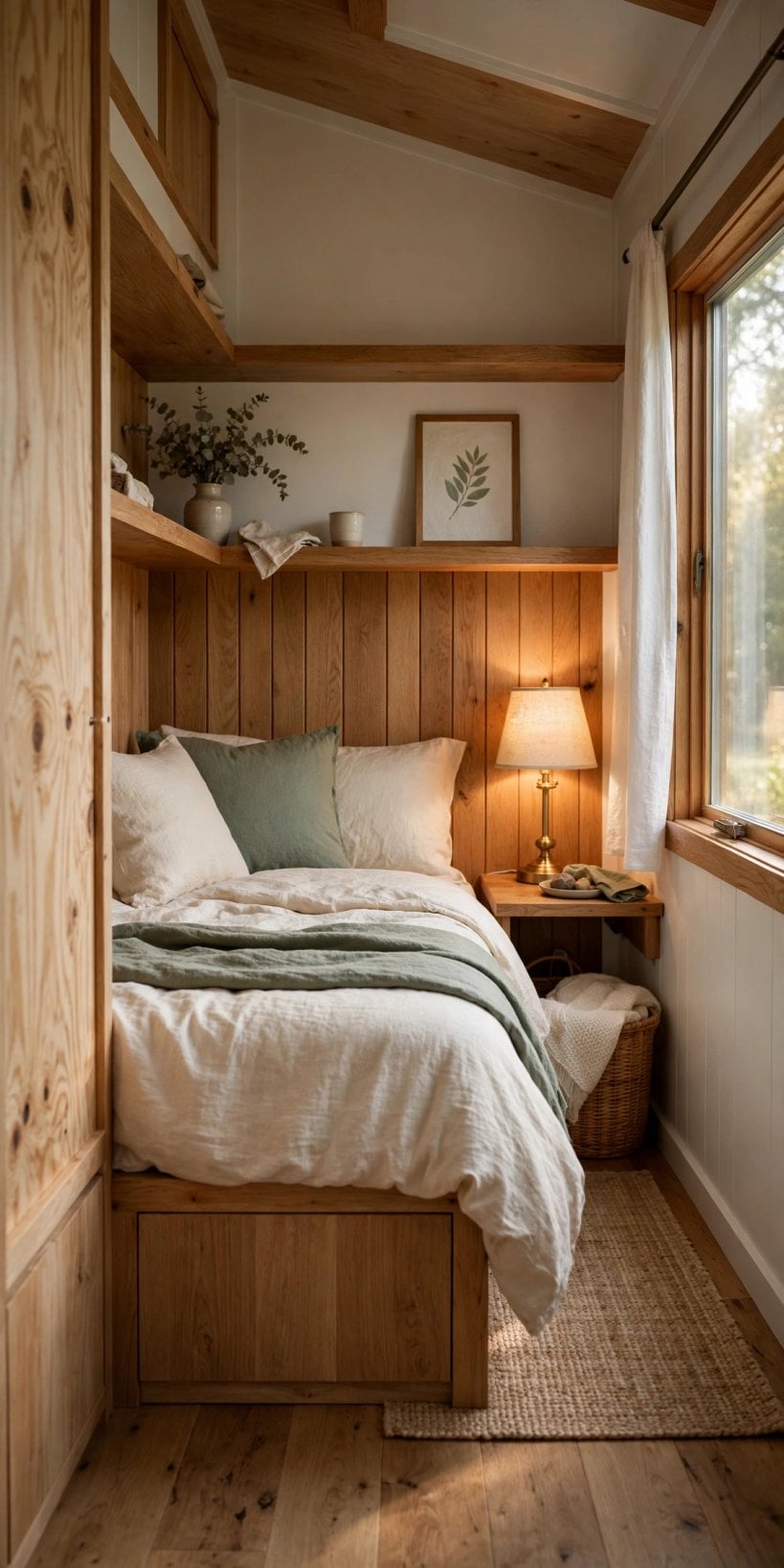
Implementing is deliberately unhurried: the one — the finished, the celebrated; the next — the begun, the momentum. The truth: the one-room-at-a-time works — the always. How long does the whole thing take? The vision: the weekend. The implementing: the months. The living-in: the ongoing. The designed home is the evolved — the best interiors grow. The DIY decor belongs to this phase naturally: the made — the personal, the proud; the customized — the IKEA, the hacked. The truth: the DIY personalizes — the deeply, putting the maker’s hand where a purchase would only put a product.
9. The Whole-Home Art Plan and the Design Payoff
Art is planned for the whole home, not hung room by room on impulse. The curated is the collected — the hung, pieces gathered over time rather than bought in a set. The cohesive is the framed — the unified, matching or kindred frames giving different pieces one accent. The rule: the art tells — the story. The room-by-room treatment that results is designed in full in our tiny house interior design ideas: the complete whole-home design guide.
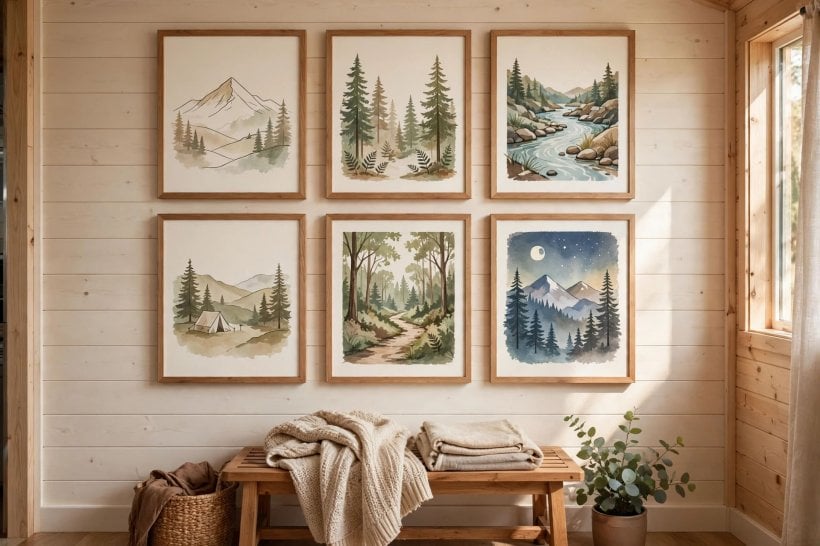
The payoff for all of it is threefold. The beautiful — the daily, the lived. The functional — the effortless, the designed. The proud — the shown, the home. The truth: the payoff is the home — the loved. The invitation stands as the original gives it: vision, plan, live — the beautiful awaits. And do you need a designer to get there? Not necessarily — the vision, the board, the patience. The designer helps the stuck; the self-designed is the personal. The tiny is the DIY-designable.
10. The Living Finish: Seasons, Evolution and the Welcome Home
A designed tiny home is not frozen at the reveal; it keeps moving. The seasonal shifts keep it fresh: the textiles — the swapped, the refreshed; the accents — the rotated, the new. The truth: the seasonal keeps — the fresh. The evolving home continues the motion: the lived-in — the improved, the learned; the adjusted — the tweaked, the perfected. The truth: the home evolves — the lived. Calm, slowly-evolving homes of this kind are explored further in our guide to zen interior design ideas for tiny houses. So how do you know when the design is done? The lived-in comfort, the nothing-itching, the home feeling. The done is the felt: the design finishes when the living begins.
The finished home is then simply lived in, and celebrated in the living. It photographs kindly — the light, the natural, the waited; the styled, the tidied, the shot — because the photographed celebrates the designed. It hosts proudly: the proud — the toured, the shown; the comfortable — the guests, the welcomed; the truth: the designed hosts — the best. Compliments arrive and are handled as the original prescribes: the received — the graciously, the earned; the shared — the tips, the generous. The before and after mark the distance travelled: the documented — the photos, the kept; the marveled — the transformed, the proud; the truth: the before/after inspires — the next.
Underneath sits the signature touch: the unique — the only-yours, the placed; the remembered — the guests, the signature. The truth: the signature is the soul — the home. The design journey that produced it was itself the reward: the begun — the vision, the brave; the continued — the tweaked, the loved; the truth: the journey is the joy — the designed. Its legacy is the kept — the loved, the years; the passed — the stories, the home. And the daily experience resolves into the original’s closing chords: the welcome home — the door, the opened, the designed; the sigh, the happy, the home; the designed welcomes — the biggest. The lived beautiful — the daily, the beautiful, the used; the worn, the loved, the patina — is the goal, the always. The dream realized, the final reveal applauded, the curtain fallen: the living begins, happily ever after, in the sweetest home — the designed.
Final Considerations
Interior design home ideas come down to one discipline: design the whole, not the rooms. Choose the style and commit, let one palette flow, repeat the elements until the eye reads a single home, and implement it patiently, one room at a time. The designed tiny is not finished when the last cushion lands — it is finished when the living begins, and it keeps getting better from there. Design it whole, live it fully.

1 Comment