
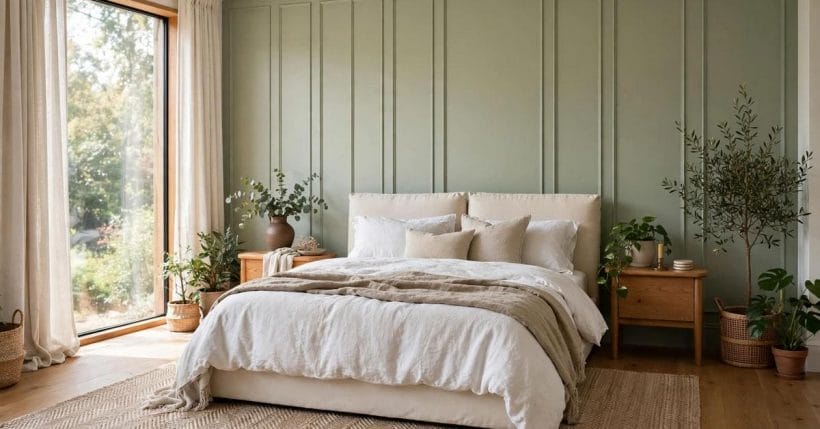
Wall paneling turns a plain bedroom wall into the room’s quiet anchor. It adds rhythm, depth and a sense of finish without demanding a new layout, and it suits rooms of almost every size, from a generous main bedroom to a snug box room with one good wall. These wall paneling ideas work through the choices in the order you will actually make them: the profile, the colour, where the paneling sits, how it handles storage and light, and how it stays restful rather than busy.
Paneling is a form, not a single look. The same bedroom can feel traditional with picture-frame moulding, calm and contemporary with vertical slats, or soft and cottage-like with beadboard, and the difference comes down to profile, spacing and finish rather than expense or drama. Keep the bed wall as the natural focus, let the other walls stay quieter, and judge every sample in your own room’s light before committing. A panel that looks crisp in a showroom can read very differently beside your bedding and curtains.
Nothing here requires structural change, and anything that involves fixed wiring, moving a radiator or altering the structure of the home belongs with a qualified professional. Start with one wall, live with it for a while if you can, and let the rest of the room follow. The ideas below are grouped so you can dip into the section you need, whether you are choosing a profile, solving an awkward wall, or simply making a panelled bedroom feel calm at the end of the day.
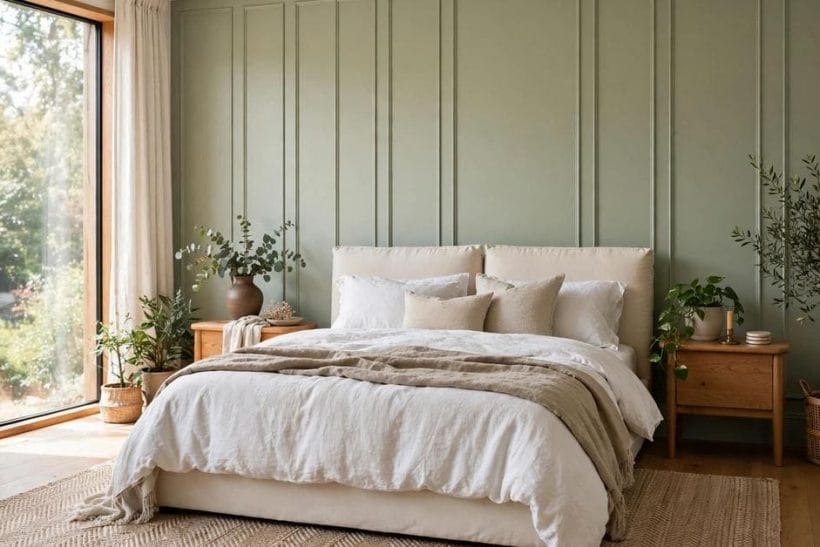
1. Classic Panel Profiles for the Bed Wall
Classic profiles have lasted because they are forgiving. Their lines are simple, their proportions suit most beds, and they sit comfortably with both old furniture and new. If you want paneling that will still look right when the bedding changes, start here.
| Item | What it is |
|---|---|
| Beadboard Behind the Bed | Beadboard's narrow vertical grooves bring a gentle cottage rhythm to the bed wall, and they catch the light in a way that flat paint never does. |
| Board-and-Batten Grid | A board-and-batten grid lays flat boards over the wall in a regular pattern of squares or rectangles, giving the bed wall a tailored, almost upholstered structure. |
| Picture-Frame Moulding Panels | Picture-frame moulding draws slim rectangular frames directly onto the wall, creating paneling without boards at all. |
| Raised-Panel Elegance | Raised panels, where the centre of each panel sits proud of its frame, bring a formal, crafted feel to a main bedroom. |
| Flat Shaker-Style Panels | Flat Shaker-style panels use a simple recessed rectangle with clean edges, a profile that feels both traditional and modern at once. |
| Tongue-and-Groove Planks | Tongue-and-groove planks lock together into a continuous grooved surface that feels warm and handcrafted. |
| Classic Wainscot Height | Wainscot paneling that stops part-way up the wall gives a bedroom a grounded, finished base while leaving the upper wall free for colour or art. |
| Full-Height Traditional Panels | Full-height traditional panels carry the profile from skirting to ceiling and turn the bed wall into a single composed backdrop. |
| Vertical Timber Slats | Vertical timber slats bring warmth and height to the bed wall in one move, their even spacing creating a soft striped texture that changes as the light moves through the day. |
| Wide-Spaced Slats | Wider spacing between slats lets more of the wall show through, which keeps the feature feeling light and airy. |
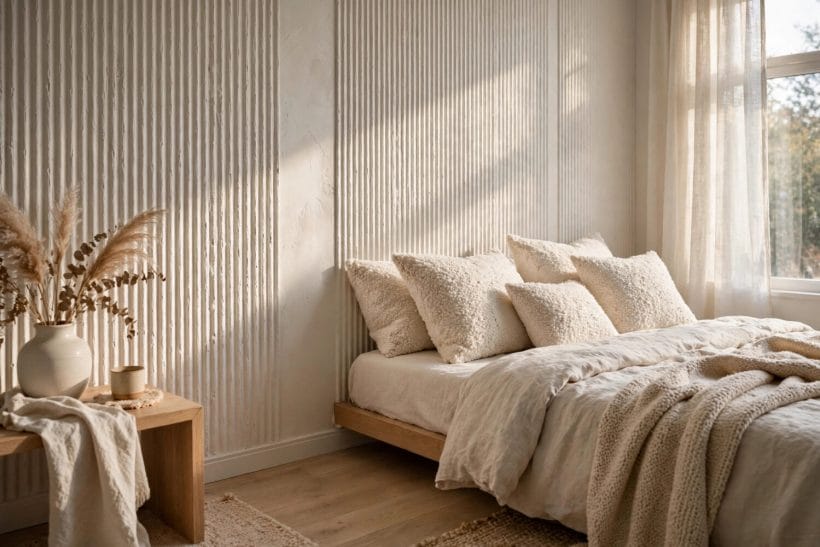
| Fluted Panels | Fluted panels use closely spaced narrow ridges to create a rippled surface that feels soft to the eye and interesting to the touch. |
| Horizontal Slat Bands | A horizontal band of slats running across the bed wall, rather than full height, creates a strong horizon line that makes a wide room feel settled and grounded. |
| Slat Feature Strip | A single vertical strip of slats, perhaps one panel wide, can anchor a reading chair or a dressing corner without paneling the whole room. |
| Mixed-Width Slats | Mixing two slat widths in a repeating pattern adds a subtle, crafted rhythm that feels less uniform than a single width. |
| Slats With a Shadow Gap | A shadow gap, a deliberate dark recess between slat and wall, gives each slat a crisp edge and a sense of depth. |
| Slats on a Curved or Angled Wall | Slats adapt kindly to angled walls and gentle curves, since each slim piece can follow the wall's line where a wide board cannot. |
| Soft White Paneling | Soft white paneling is the safest way to add texture without adding colour, and it suits bedrooms that already have patterned bedding or busy curtains. |
| Warm Off-White Wash | A warm off-white wash over timber paneling lets the grain show faintly through the finish, giving the wall a soft, lived-in character. |
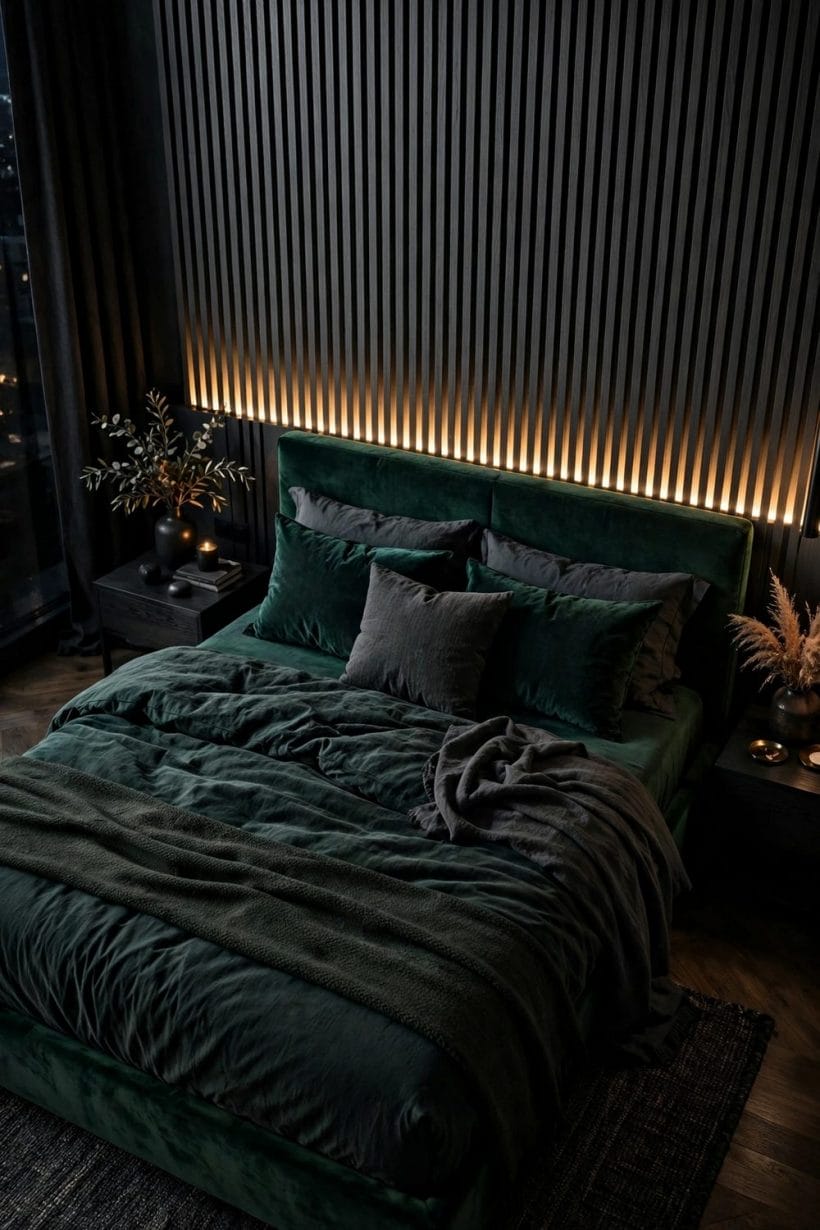
| Deep Green Bed Wall | A deep green panelled wall turns the bed into a sheltered, cocooning focus, especially when the bedding stays pale and simple. |
| Dusty Blue Panels | Dusty blue paneling brings a quiet, restful coolness that suits bedrooms used mainly for sleep and slow mornings. |
| Charcoal Feature Wall | Charcoal paneling makes a bold, grounding backdrop that lets pale bedding and warm wood stand out sharply. |
| Two-Tone Paneling | Two-tone paneling, with the lower panels in one tone and the upper wall in another, gives a bedroom a composed, tailored structure. |
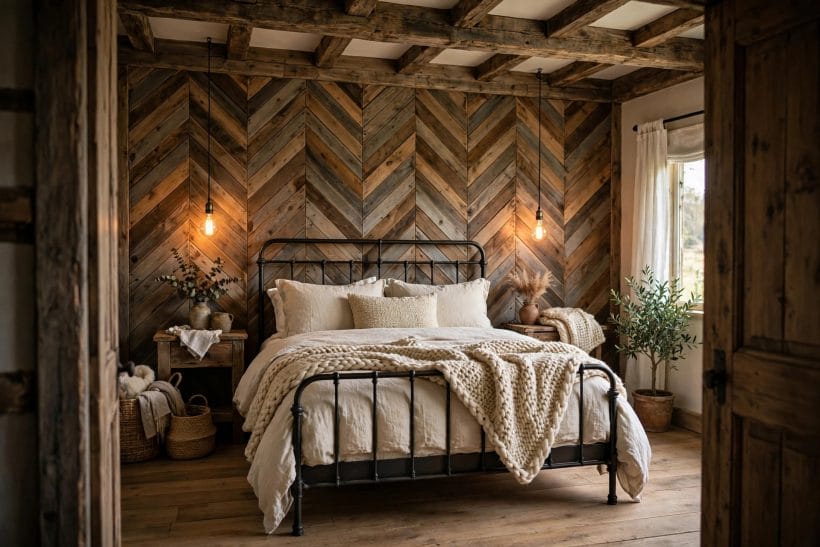
| Natural Timber Finish | Leaving timber paneling in its natural finish brings warmth and a sense of the material itself into the bedroom. |
| Panels With a Limewash Effect | A limewash effect over paneling softens the surface with a cloudy, mineral texture that feels gentle and old-world. |
| Paneling as the Headboard | Let the paneling itself be the headboard by running a panelled section behind the pillows at bed width, with no separate headboard at all. |
| Paneling Framing the Headboard | Frame an existing headboard with paneling that runs wider than the bed on both sides, so the headboard sits inside a larger composed wall. |
| Paneling Extending Past the Bed | Run the paneling well beyond the bed on both sides, so the feature belongs to the wall rather than just the bed. |
| Paneling With Bedside Nooks | Build shallow nooks into the paneling beside the bed, just deep enough for a book, a phone and a small lamp. |
| Paneling Behind Floating Shelves | Mount floating shelves directly onto a panelled wall, letting the panels show between and around the shelves. |
| Paneling Around Wall Lights | Plan wall lights as part of the paneling, with the fittings centred on panels or sitting in the gaps between slats. |
| Paneling With a Reading Nook | Use paneling to define a reading corner at the end of the bed wall, wrapping a chair and a small lamp in the same profile as the bed wall. |
| Paneling That Frames a Window Behind the Bed | Where a window sits behind the bed, run paneling around the window frame so the window becomes part of the wall's composition rather than an interruption. |
| One Full Feature Wall | A single full feature wall is the classic paneling move, and it remains the best choice for most bedrooms. |
| Paneling on Two Walls | Paneling on two adjoining walls wraps the bed into a corner composition that feels sheltered and intentional. |
| Paneling on All Four Walls | Paneling on all four walls creates a fully cocooning room that feels like a panelled retreat, especially in a generous main bedroom. |
| Half-Height Paneling With a Ledge | Half-height paneling topped with a ledge gives a bedroom a practical shelf running around the room at just the right height for small frames and plants. |
| Chair-Rail Height Panels | Chair-rail height paneling, stopping at the height of a chair back, brings a traditional proportion to a bedroom without the weight of full-height boards. |
| Paneling That Runs Onto the Ceiling | Carry the bed wall's paneling a short way onto the ceiling to create a canopy-like frame above the bed. |
| Paneling on a Sloped Ceiling Wall | In a bedroom under the eaves, paneling on the sloped wall turns an awkward angle into a designed feature. |
| Paneling Around a Doorway | Run paneling around a bedroom doorway so the door becomes part of the wall's design rather than a hole in it. |
| Narrow Vertical Panels for Low Ceilings | Narrow vertical panels draw the eye upward and make a low ceiling feel taller, a simple visual lift that costs nothing in floor space. |
| Paneling in a Box Room | A box room needs one strong idea rather than many small ones, and a single panelled wall provides exactly that. |
| Paneling on a Chimney Breast | A chimney breast is a natural paneling opportunity, since its projection already divides the wall into a feature and two alcoves. |
| Paneling Around Built-In Wardrobes | Run paneling around built-in wardrobes so the wardrobe doors sit within a panelled wall rather than interrupting a plain one. |
| Paneling in an Alcove | An alcove panelled in the same profile as the bed wall becomes a purposeful niche for a dressing table, a chair or open shelves. |
| Paneling Beside a Radiator | Paneling beside a radiator needs clearance for heat and access, so stop the panels short of the radiator and leave the wall behind it plain and accessible. |
| Paneling on a Short Return Wall | A short return wall, the stub of wall beside a door or a wardrobe, is easy to overlook and easy to improve with a single panel or a short run of slats. |
| Paneling That Hides an Uneven Wall | Paneling mounted on battens can sit proud of an uneven wall and present a flat, even face to the room, hiding cracks, patches and old repairs behind it. |
| Paneling With Hidden Cupboard Doors | Hide a cupboard door within the paneling by matching its face to the surrounding panels, so storage disappears into the wall. |
| Paneling Framing Open Shelving | Frame open shelving with paneling on both sides, so the shelves sit inside a panelled bay rather than floating on a plain wall. |
| Paneling With a Book Ledge | A slim book ledge built into the paneling beside the bed holds the current read, a notebook and a small clock without needing a table. |
| Paneling Around a Dressing Table | Panel the wall behind a dressing table in the same profile as the bed wall, and the table gains a crafted backdrop that makes the whole corner feel considered. |
| Paneling With Hooks and Pegs | Fix hooks and pegs directly into the paneling's battens for robes, hats and tomorrow's clothes, turning the wall into practical bedroom furniture. |
| Paneling Concealing a Storage Cupboard | A full-height storage cupboard concealed behind panelled doors gives a bedroom generous storage without a visible wardrobe. |
| Paneling With a Fold-Down Desk | A fold-down desk set into a panelled wall gives a bedroom a workspace that vanishes when the working day ends. |
| Paneling Framing Wardrobe Doors | Frame wardrobe doors with paneling so the wardrobe reads as part of the wall's architecture instead of a separate piece of furniture. |
| Paneling Lit by Wall Washers | Wall washers, lights that spread an even glow down the wall, make grooved and slatted paneling come alive after dark. |
| Paneling With Picture Lights | A picture light mounted above a panelled wall throws a pool of warm light onto the panels below, creating a gallery-like focus that suits a main bedroom. |
| Paneling Paired With Linen Bedding | Linen bedding's soft, slightly rumpled texture is the perfect partner for the crisp lines of paneling, and the contrast keeps the bedroom from feeling hard or formal. |
| Paneling With a Woven Headboard | A woven headboard, in rattan, cane or seagrass, sits beautifully against paneling because its open texture contrasts with the panels' solid lines. |
| Paneling With Layered Curtains | Layered curtains, a sheer layer beneath a heavier drape, soften a panelled room and balance the wall's hard lines. |
| Paneling With a Textured Rug | A textured rug under the bed grounds a panelled room and adds softness where the feet land first in the morning. |
| Paneling With Mirrors Between Panels | Hang mirrors between panels, or in place of a central panel, to bounce light around the bedroom and make the wall feel deeper. |
| Paneling With Art Hung on the Panels | Art hung directly on paneling gains a structured backdrop that frames each piece like a gallery wall. |
| A Quiet Palette on Paneling | A quiet palette, one main tone with pale neutrals around it, lets paneling add texture without adding colour arguments. |
| Paneling With Soft Evening Light | Soft evening light, from bedside lamps and dimmed wall lights, turns paneling into a gentle backdrop for winding down. |
| Paneling With Plants at the Base | Plants at the base of a panelled wall soften the join between wall and floor and bring a living note into the room. |
| Paneling With Minimal Bedside Styling | Minimal bedside styling, a lamp, a book and nothing else, lets a panelled wall breathe. |
| Paneling With a Single Bold Cushion Colour | A single bold cushion colour against a panelled wall gives the bed a focal point without disturbing the room's calm. |
| Paneling for a Guest Bedroom Welcome | A panelled guest bedroom feels instantly cared for, as though the room was prepared rather than merely furnished. |
| Paneling for a Children's Bedroom | Paneling in a children's bedroom gives the walls a wipeable, durable surface that stands up to daily life far better than plain paint. |
1. Beadboard Behind the Bed
Beadboard’s narrow vertical grooves bring a gentle cottage rhythm to the bed wall, and they catch the light in a way that flat paint never does. Keep the boards running full height behind the bed for a cosy backdrop, or stop at picture-rail height for a lighter touch that leaves wall space above for art. Painted in a soft pale tone, beadboard makes a small bedroom feel finished rather than decorated, and it pairs naturally with simple cotton bedding and a wooden bed frame.
2. Board-and-Batten Grid
A board-and-batten grid lays flat boards over the wall in a regular pattern of squares or rectangles, giving the bed wall a tailored, almost upholstered structure. The grid reads as calm and orderly, which is exactly what a restful bedroom needs, and it frames the bed without competing with it. Keep the rectangles generous and even, and let the bed sit centred within one full column of the grid for the most settled look.
3. Picture-Frame Moulding Panels
Picture-frame moulding draws slim rectangular frames directly onto the wall, creating paneling without boards at all. It is a light, elegant choice for bedrooms where full boards might feel heavy, and it works beautifully in rented rooms or older homes where you want character without bulk. Space the frames evenly, keep them clear of switches and sockets, and paint wall and moulding the same tone for a subtle effect or in contrast for more definition.
4. Raised-Panel Elegance
Raised panels, where the centre of each panel sits proud of its frame, bring a formal, crafted feel to a main bedroom. They suit larger rooms and taller walls, where their depth has space to show, and they pair well with a solid wooden bed and heavier curtains. Keep the rest of the room quiet so the panels can carry the detail, and choose a calm colour so the formality feels welcoming rather than grand.
5. Flat Shaker-Style Panels
Flat Shaker-style panels use a simple recessed rectangle with clean edges, a profile that feels both traditional and modern at once. They are an easy match for plain bedding, oak furniture and unfussy curtains, and they never fight with pattern elsewhere in the room. Because the lines are so simple, spacing matters more than ever: measure twice, keep the gaps consistent, and let the bed wall’s symmetry do the work.
6. Tongue-and-Groove Planks
Tongue-and-groove planks lock together into a continuous grooved surface that feels warm and handcrafted. Run vertically to lift a low ceiling visually, or horizontally for a relaxed, cabin-like calm, and leave the finish pale so the grooves read as texture rather than stripes. This profile is especially kind to older walls, since the planks bridge small imperfections and give the whole bed wall one even rhythm.
7. Classic Wainscot Height
Wainscot paneling that stops part-way up the wall gives a bedroom a grounded, finished base while leaving the upper wall free for colour or art. The ledge at the top becomes a natural shelf for a small frame or a trailing plant, and the division makes tall walls feel more human in scale. Keep the height consistent around the room, even where furniture interrupts it, so the line reads as intentional rather than accidental.
8. Full-Height Traditional Panels
Full-height traditional panels carry the profile from skirting to ceiling and turn the bed wall into a single composed backdrop. The effect is cocooning, especially in a main bedroom, and it lets the bed sit against a surface with real presence. Balance the height with plain bedding and a simple headboard shape, so the wall provides the pattern and the bed provides the rest.
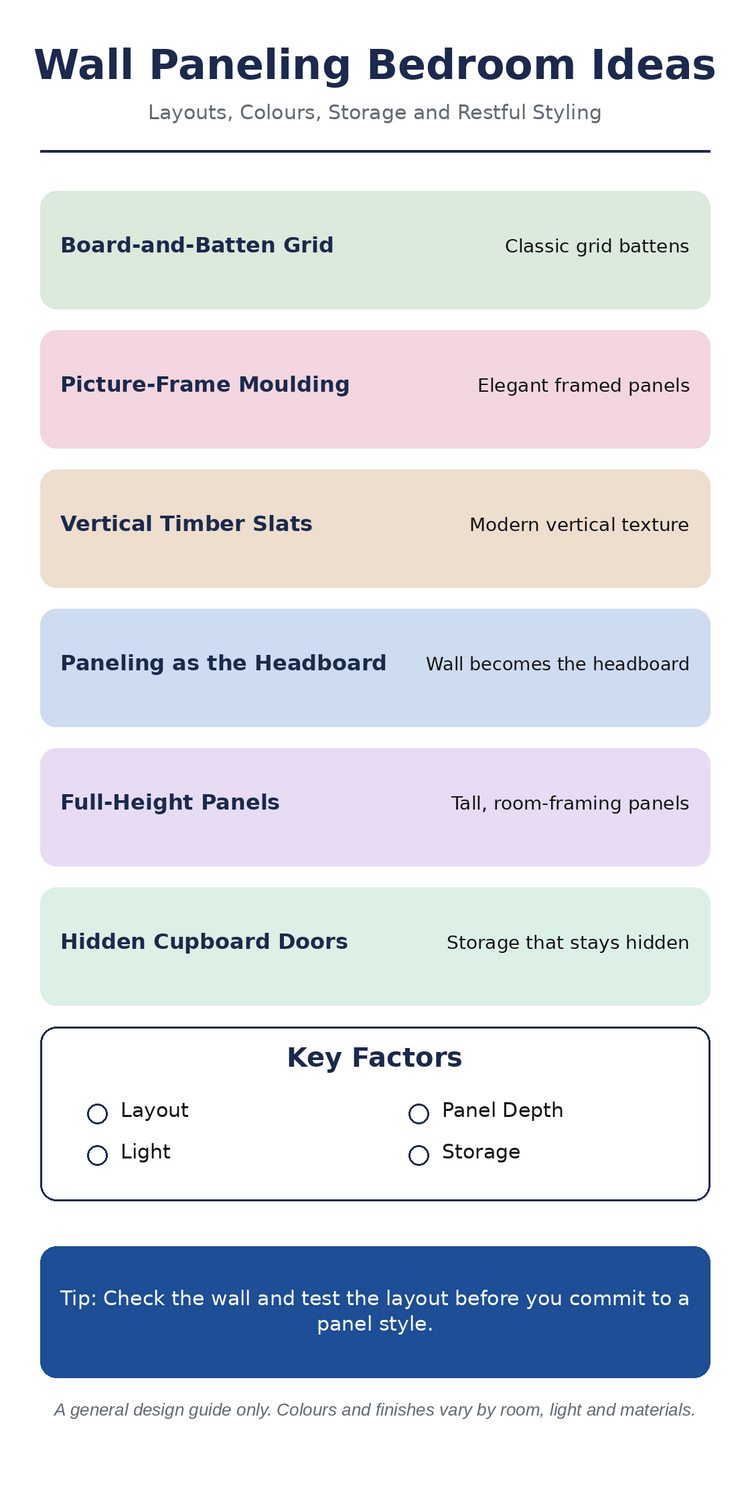
2. Modern Slat and Groove Looks
Slat paneling is the modern answer to the classic profiles above. Its rhythm comes from spacing and shadow rather than moulding, and it suits bedrooms that lean contemporary without wanting a cold, flat wall.
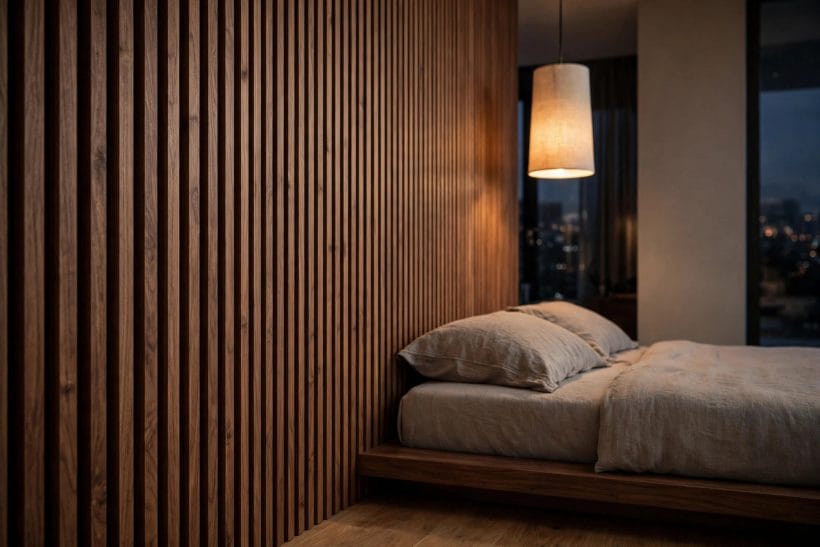
9. Vertical Timber Slats
Vertical timber slats bring warmth and height to the bed wall in one move, their even spacing creating a soft striped texture that changes as the light moves through the day. Keep the slats slim and the gaps narrow for a refined look, and let the timber tone stay natural so the wall feels like a material rather than a colour. Pair with plain bedding and let the slats be the room’s main pattern.
10. Wide-Spaced Slats
Wider spacing between slats lets more of the wall show through, which keeps the feature feeling light and airy. This suits smaller bedrooms or walls that also carry art, since the eye can rest in the gaps. Paint the wall behind in a tone close to the slats for a soft effect, or in contrast if you want each slat to stand out as a deliberate line.
11. Fluted Panels
Fluted panels use closely spaced narrow ridges to create a rippled surface that feels soft to the eye and interesting to the touch. The fine rhythm suits a calm bedroom beautifully, adding texture without visual noise, and it works well in a single tone from wall to panel. Keep bedding plain and let the fluting provide all the pattern the room needs.
12. Horizontal Slat Bands
A horizontal band of slats running across the bed wall, rather than full height, creates a strong horizon line that makes a wide room feel settled and grounded. It works well behind a low bed, where the band can sit at pillow height and act as a visual headboard for the whole wall. Keep the band deep enough to read as a feature and shallow enough to leave breathing room above and below.
13. Slat Feature Strip
A single vertical strip of slats, perhaps one panel wide, can anchor a reading chair or a dressing corner without paneling the whole room. It is a good first step if you are unsure about full paneling, and it gives a small bedroom a focal point that does not overwhelm. Centre the strip on the chair or mirror it serves, and keep the surrounding wall plain so the strip reads as a deliberate accent.
14. Mixed-Width Slats
Mixing two slat widths in a repeating pattern adds a subtle, crafted rhythm that feels less uniform than a single width. The variation rewards a closer look without shouting, and it suits bedrooms with handmade or natural furnishings. Keep the pattern regular and the finish consistent, so the mix reads as design rather than offcuts.
15. Slats With a Shadow Gap
A shadow gap, a deliberate dark recess between slat and wall, gives each slat a crisp edge and a sense of depth. The gaps read as fine dark lines that sharpen the whole wall, especially in daylight from a side window. This detail suits contemporary bedrooms best, where clean edges and quiet surfaces are already the theme.
16. Slats on a Curved or Angled Wall
Slats adapt kindly to angled walls and gentle curves, since each slim piece can follow the wall’s line where a wide board cannot. This makes them a practical choice for bedrooms under eaves or in rooms with an angled corner. Keep the slat width slim, the spacing even, and let the wall’s shape become a feature rather than a problem to hide.
3. Colour and Finish Directions
Colour changes paneling more than profile does. The same boards can feel coastal, cocooning or crisp depending on the tone you choose, so test colour in the room before you commit to it.
17. Soft White Paneling
Soft white paneling is the safest way to add texture without adding colour, and it suits bedrooms that already have patterned bedding or busy curtains. The panels read as shadow and light rather than as a colour statement, which keeps the room calm and flexible. Choose a white with a warm undertone for north-facing rooms and a cooler one for rooms flooded with afternoon sun.
18. Warm Off-White Wash
A warm off-white wash over timber paneling lets the grain show faintly through the finish, giving the wall a soft, lived-in character. It suits cottage and relaxed bedrooms, where a perfect flat finish would feel too formal. Pair with natural linen and wooden furniture, and keep the rest of the palette warm so the wash feels intentional.
19. Deep Green Bed Wall
A deep green panelled wall turns the bed into a sheltered, cocooning focus, especially when the bedding stays pale and simple. Green sits naturally with wood tones and plants, so the room feels calm rather than dark. Keep the other walls pale, use warm lamplight in the evening, and let the green carry the room’s colour almost alone.
20. Dusty Blue Panels
Dusty blue paneling brings a quiet, restful coolness that suits bedrooms used mainly for sleep and slow mornings. The muted tone keeps the room serene without feeling cold, and it pairs well with white bedding, grey throws and pale wood. Use it on the bed wall only, and let the remaining walls stay light so the blue feels like a choice rather than a surround.
21. Charcoal Feature Wall
Charcoal paneling makes a bold, grounding backdrop that lets pale bedding and warm wood stand out sharply. It works best on one wall in a room with good daylight, where the dark tone adds drama without gloom. Keep bedside styling minimal, use warm lighting, and let the charcoal be the room’s single dark note.
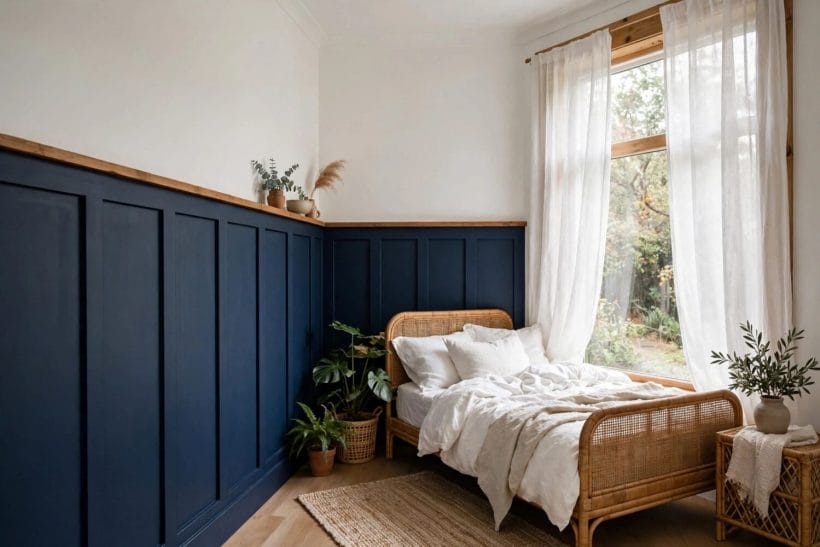
22. Two-Tone Paneling
Two-tone paneling, with the lower panels in one tone and the upper wall in another, gives a bedroom a composed, tailored structure. The division adds height and order, and it lets you use a deeper colour below without darkening the whole room. Keep the join line crisp and level, and repeat one of the tones in the bedding or curtains to tie the scheme together.
23. Natural Timber Finish
Leaving timber paneling in its natural finish brings warmth and a sense of the material itself into the bedroom. The grain becomes the decoration, so keep everything else quiet: plain bedding, simple curtains and minimal art. Natural timber suits rooms with plenty of daylight, where the grain can change gently through the day.
24. Panels With a Limewash Effect
A limewash effect over paneling softens the surface with a cloudy, mineral texture that feels gentle and old-world. It suits restful bedrooms where a flat painted finish would feel too sharp, and it pairs well with linen, wool and pale wood. Keep the palette muted throughout, so the soft texture of the wall stays the room’s main interest.
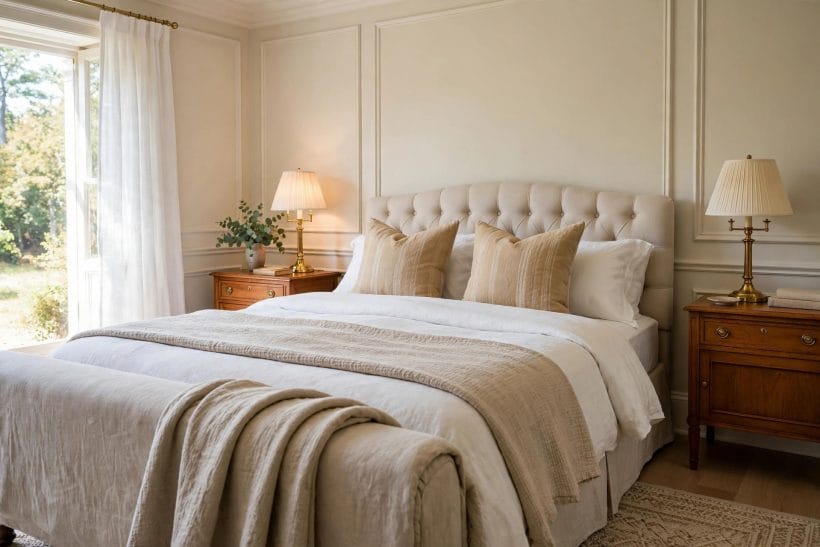
4. Paneling Around the Bed and Headboard Wall
The bed wall is where paneling earns its keep. These ideas treat the paneling and the bed as one composition, so the wall and the furniture support each other instead of competing.
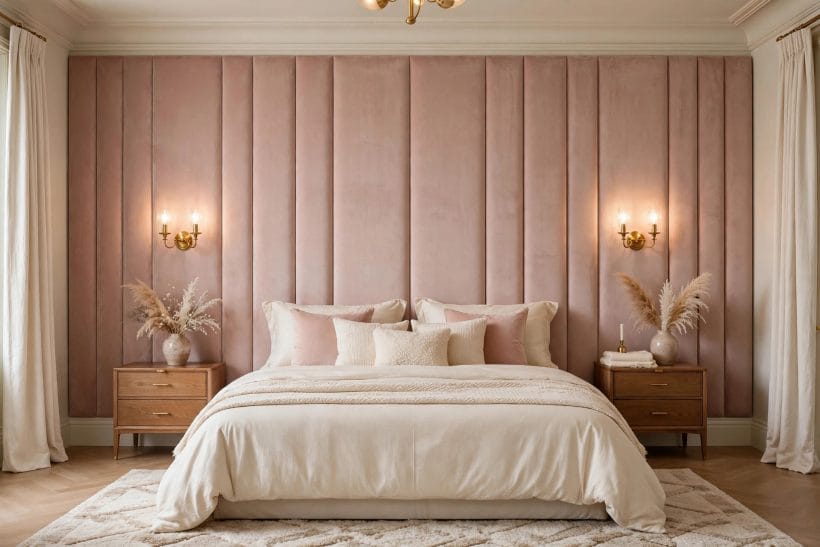
25. Paneling as the Headboard
Let the paneling itself be the headboard by running a panelled section behind the pillows at bed width, with no separate headboard at all. The wall becomes a tall, upholstered-looking backdrop that frames the bed cleanly and saves the cost and bulk of a freestanding piece. Add a slim shelf at pillow height for a book and a glass of water, and keep the bedding simple so the paneling stays the focus.
26. Paneling Framing the Headboard
Frame an existing headboard with paneling that runs wider than the bed on both sides, so the headboard sits inside a larger composed wall. The frame gives a modest headboard real presence and makes the whole bed wall feel designed rather than assembled. Keep the paneling tone close to the headboard’s colour for a seamless look, or contrast it gently for definition.
27. Paneling Extending Past the Bed
Run the paneling well beyond the bed on both sides, so the feature belongs to the wall rather than just the bed. The wider field makes a small bed feel generous and a large wall feel intentional, and it gives bedside tables a backdrop of their own. Stop the paneling at a natural break, such as a corner or a door frame, rather than mid-wall.
28. Paneling With Bedside Nooks
Build shallow nooks into the paneling beside the bed, just deep enough for a book, a phone and a small lamp. The nooks turn the wall into bedside furniture, which is a gift in a small bedroom where a table would crowd the floor. Line the nooks in the same finish as the panels, and keep them uncluttered so they read as calm recesses rather than extra storage.
29. Paneling Behind Floating Shelves
Mount floating shelves directly onto a panelled wall, letting the panels show between and around the shelves. The combination gives display space without breaking the wall’s rhythm, and the shelves gain a crafted backdrop that plain plaster cannot offer. Keep the shelves few and the objects on them calm, so the paneling remains the main pattern.
30. Paneling Around Wall Lights
Plan wall lights as part of the paneling, with the fittings centred on panels or sitting in the gaps between slats. Light washing down a grooved or slatted surface creates gentle shadow that makes the texture come alive in the evening. Choose warm-toned bulbs, keep the fittings simple, and wire everything through a qualified professional.
31. Paneling With a Reading Nook
Use paneling to define a reading corner at the end of the bed wall, wrapping a chair and a small lamp in the same profile as the bed wall. The shared finish ties the corner to the room while giving it its own quiet identity. Add a soft cushion and a throw, and the corner becomes the room’s evening retreat.
32. Paneling That Frames a Window Behind the Bed
Where a window sits behind the bed, run paneling around the window frame so the window becomes part of the wall’s composition rather than an interruption. Keep the panels clear of the opening mechanism and the curtains, and paint the frame in the same tone so the whole arrangement reads as one designed wall. The window then adds daylight to the panelled feature instead of breaking it.
5. Full Walls, Half Walls and Ceilings
How far the paneling runs matters as much as which profile you choose. A single wall, a pair of walls, or a ceiling continuation each change the room’s feeling in a different way.
33. One Full Feature Wall
A single full feature wall is the classic paneling move, and it remains the best choice for most bedrooms. One panelled wall gives the room a clear focus, leaves the other walls free for art and furniture, and keeps the scheme calm. Choose the bed wall, run the paneling corner to corner, and let everything else in the room stay quiet.
34. Paneling on Two Walls
Paneling on two adjoining walls wraps the bed into a corner composition that feels sheltered and intentional. This suits larger bedrooms and corner beds, where the wrap makes the sleeping area feel like a room within the room. Keep the two walls in the same profile and tone, and leave the remaining walls plain so the wrap reads as a deliberate gesture.
35. Paneling on All Four Walls
Paneling on all four walls creates a fully cocooning room that feels like a panelled retreat, especially in a generous main bedroom. The enveloping effect is at its best in a pale or mid tone, where the texture reads as warmth rather than enclosure. Keep furniture simple and bedding plain, since the walls are now providing all the pattern.
36. Half-Height Paneling With a Ledge
Half-height paneling topped with a ledge gives a bedroom a practical shelf running around the room at just the right height for small frames and plants. The ledge also protects the lower wall from scuffs, which makes this a sensible choice for family bedrooms. Paint the ledge in the same tone as the panels for a seamless run, and keep the objects on it few.
37. Chair-Rail Height Panels
Chair-rail height paneling, stopping at the height of a chair back, brings a traditional proportion to a bedroom without the weight of full-height boards. The lower panels ground the furniture, while the upper wall stays free for colour or art. This height suits rooms with lower ceilings, where full-height panels might feel imposing.
38. Paneling That Runs Onto the Ceiling
Carry the bed wall’s paneling a short way onto the ceiling to create a canopy-like frame above the bed. The continuation draws the eye upward and makes the bed feel sheltered, almost like a room within the room. Keep the ceiling section shallow and in the same tone, so the effect reads as a gentle wrap rather than a tunnel.
39. Paneling on a Sloped Ceiling Wall
In a bedroom under the eaves, paneling on the sloped wall turns an awkward angle into a designed feature. Follow the slope with the panels, trimming carefully at the angle, and let the paneling make the slope feel intentional. A pale finish keeps the sloping wall light, while the panel rhythm stops the angle from feeling like leftover space.
40. Paneling Around a Doorway
Run paneling around a bedroom doorway so the door becomes part of the wall’s design rather than a hole in it. Frame the opening with the same profile, keep the architrave in the same tone, and let the door sit within the panelled field. The result is a room that feels composed from every angle, with no unfinished edges.
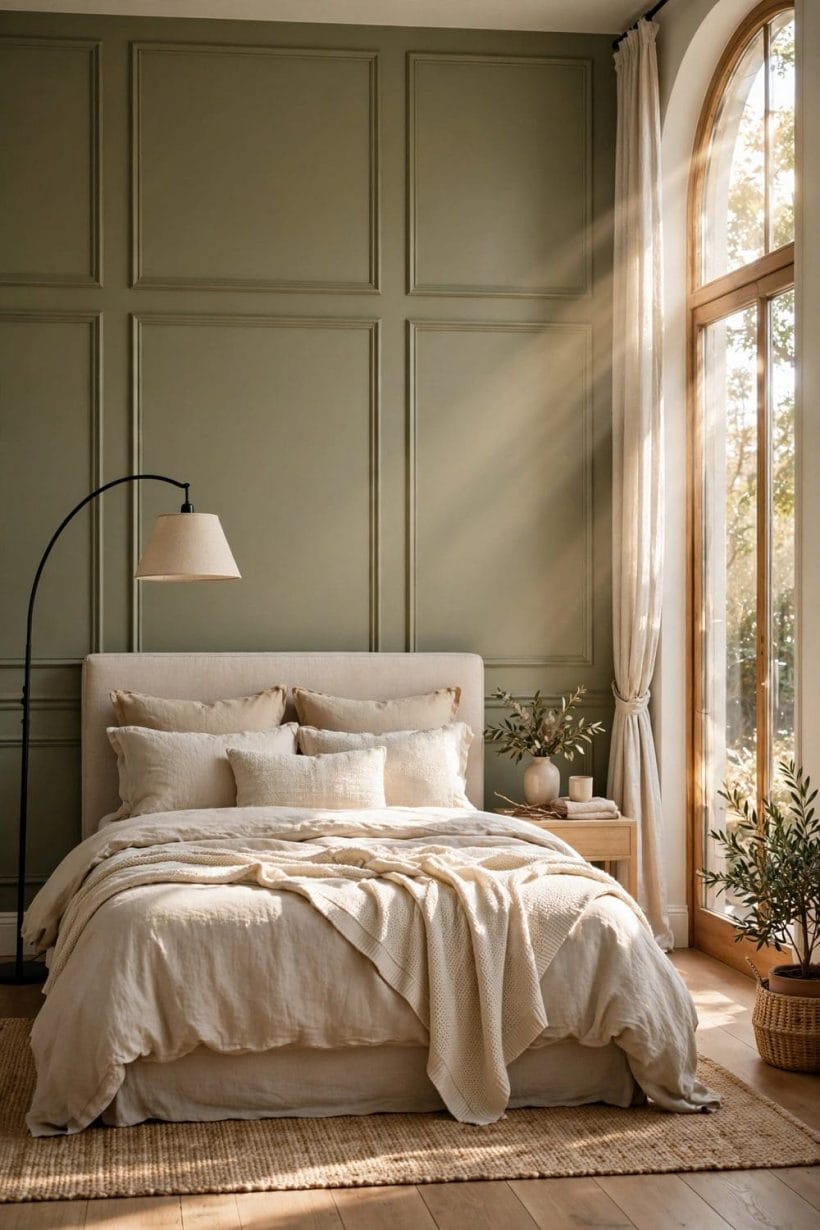
6. Small Bedrooms and Awkward Walls
Small and awkward bedrooms benefit most from paneling, because paneling gives an uneven or cramped room a clear order. These ideas solve the problems small rooms actually present.
41. Narrow Vertical Panels for Low Ceilings
Narrow vertical panels draw the eye upward and make a low ceiling feel taller, a simple visual lift that costs nothing in floor space. Keep the panels slim, the colour pale, and the run continuous from floor to ceiling for the full effect. In a compact room, this single trick can change how the whole bedroom feels, and it pairs well with the layout thinking in these tiny bedroom ideas.
42. Paneling in a Box Room
A box room needs one strong idea rather than many small ones, and a single panelled wall provides exactly that. Choose the wall the bed sits against, keep the profile simple, and let the paneling give the tiny room a finished identity. Resist the urge to panel every wall; in a box room, restraint reads as spaciousness.
43. Paneling on a Chimney Breast
A chimney breast is a natural paneling opportunity, since its projection already divides the wall into a feature and two alcoves. Panel the breast itself and leave the alcoves plain or shelved, and the room gains a composed centre without any building work. Keep the profile in step with the room’s age and character.
44. Paneling Around Built-In Wardrobes
Run paneling around built-in wardrobes so the wardrobe doors sit within a panelled wall rather than interrupting a plain one. Match the door fronts to the panel rhythm, or frame the wardrobe with panels, and the storage disappears into the architecture. The bedroom then reads as a designed room rather than a room with cupboards in it.
45. Paneling in an Alcove
An alcove panelled in the same profile as the bed wall becomes a purposeful niche for a dressing table, a chair or open shelves. The paneling gives the recess a reason to exist and ties it to the rest of the room. Keep the alcove’s finish identical to the main wall, so the niche feels like part of the design rather than an afterthought.
46. Paneling Beside a Radiator
Paneling beside a radiator needs clearance for heat and access, so stop the panels short of the radiator and leave the wall behind it plain and accessible. The paneling can frame the radiator’s wall without touching it, and a shelf above the radiator height can bridge the gap visually. Never box a radiator in without professional advice on airflow and access.
47. Paneling on a Short Return Wall
A short return wall, the stub of wall beside a door or a wardrobe, is easy to overlook and easy to improve with a single panel or a short run of slats. The small gesture finishes the corner and stops it reading as leftover wall. Keep the profile identical to the main wall, even at this small scale, so the room feels consistent.
48. Paneling That Hides an Uneven Wall
Paneling mounted on battens can sit proud of an uneven wall and present a flat, even face to the room, hiding cracks, patches and old repairs behind it. This is one of paneling’s most practical virtues, especially in older homes. Fix the battens level, keep services accessible, and let the new surface give the bedroom a fresh start.
7. Storage Built Into the Paneling
Paneling and storage are natural partners. When the wall already has structure, adding storage to it feels integrated rather than improvised, and the bedroom stays calmer for it.
49. Paneling With Hidden Cupboard Doors
Hide a cupboard door within the paneling by matching its face to the surrounding panels, so storage disappears into the wall. The trick is in the details: aligned grooves, matching paint and discreet hinges. The result is a bedroom wall that looks like pure design while quietly holding bedding, bags or seasonal clothes.
50. Paneling Framing Open Shelving
Frame open shelving with paneling on both sides, so the shelves sit inside a panelled bay rather than floating on a plain wall. The frame gives the shelves presence and stops them looking improvised, and the paneling’s rhythm makes even a small shelf run feel designed. Keep the shelf contents calm and grouped, so the display stays restful.
51. Paneling With a Book Ledge
A slim book ledge built into the paneling beside the bed holds the current read, a notebook and a small clock without needing a table. The ledge is part of the wall, so it takes no floor space, and it keeps bedtime essentials exactly where they are wanted. Keep the ledge shallow and the books few, so it reads as a detail rather than a shelf.
52. Paneling Around a Dressing Table
Panel the wall behind a dressing table in the same profile as the bed wall, and the table gains a crafted backdrop that makes the whole corner feel considered. Add a mirror framed in the same tone, and the dressing area becomes a small suite within the bedroom. Keep the table surface clear, so the paneling behind it can be seen.
53. Paneling With Hooks and Pegs
Fix hooks and pegs directly into the paneling’s battens for robes, hats and tomorrow’s clothes, turning the wall into practical bedroom furniture. The hooks sit naturally on a panelled surface, where they look intentional rather than stuck-on. Choose simple fittings in a tone that matches the panels, and keep the hanging items few so the wall stays calm.
54. Paneling Concealing a Storage Cupboard
A full-height storage cupboard concealed behind panelled doors gives a bedroom generous storage without a visible wardrobe. The doors match the wall’s panels groove for groove, so the room reads as paneling from wall to wall. This is a larger project than a simple panel run, and it is worth planning the door positions before the panels go up.
55. Paneling With a Fold-Down Desk
A fold-down desk set into a panelled wall gives a bedroom a workspace that vanishes when the working day ends. Closed, the desk face matches the panels around it; open, it offers a writing surface with a shelf above. Keep the desk narrow and the mechanism sturdy, and the bedroom keeps its restful character outside working hours.
56. Paneling Framing Wardrobe Doors
Frame wardrobe doors with paneling so the wardrobe reads as part of the wall’s architecture instead of a separate piece of furniture. The frame can be as simple as a border of panels around the doors, but it transforms how the storage sits in the room. Match tones carefully, and the wardrobe becomes a quiet background rather than a visual block.
8. Light, Texture and Soft Furnishing Pairings
Paneling does not live alone. Light, bedding, curtains and rugs all change how it reads, and the best panelled bedrooms are planned as a whole rather than wall by wall.
57. Paneling Lit by Wall Washers
Wall washers, lights that spread an even glow down the wall, make grooved and slatted paneling come alive after dark. The light rakes across the texture and turns the panels into a shifting pattern through the evening. Keep the light warm and dimmable, so the effect stays gentle and the bedroom stays a place for winding down.
58. Paneling With Picture Lights
A picture light mounted above a panelled wall throws a pool of warm light onto the panels below, creating a gallery-like focus that suits a main bedroom. The light picks out the panel texture and gives the bed wall an evening identity quite different from its daytime one. Choose a slim fitting that sits quietly against the panels.
59. Paneling Paired With Linen Bedding
Linen bedding’s soft, slightly rumpled texture is the perfect partner for the crisp lines of paneling, and the contrast keeps the bedroom from feeling hard or formal. Choose bedding in a tone drawn from the paneling, or in plain white against a coloured wall, and let the two textures balance each other. The room then feels both structured and soft.
60. Paneling With a Woven Headboard
A woven headboard, in rattan, cane or seagrass, sits beautifully against paneling because its open texture contrasts with the panels’ solid lines. The combination feels warm and crafted, and it suits bedrooms that lean natural or coastal. Keep the headboard’s tone close to the paneling’s, or let it be the room’s single warm accent.
61. Paneling With Layered Curtains
Layered curtains, a sheer layer beneath a heavier drape, soften a panelled room and balance the wall’s hard lines. The fabric movement contrasts with the panels’ stillness, and the layers let you tune daylight through the day. Choose curtain tones from the paneling’s palette, so the window and the wall feel like one scheme.
62. Paneling With a Textured Rug
A textured rug under the bed grounds a panelled room and adds softness where the feet land first in the morning. Wool, jute or a deep pile all work, and the rug’s texture echoes the wall’s without copying it. Size the rug generously so it extends beyond the bed on both sides, anchoring the panelled wall’s composition.
63. Paneling With Mirrors Between Panels
Hang mirrors between panels, or in place of a central panel, to bounce light around the bedroom and make the wall feel deeper. A mirror set into the panel rhythm looks intentional rather than hung as an afterthought, and it doubles the sense of space in a smaller room. Keep the mirror’s frame in the paneling’s tone for a seamless fit.
64. Paneling With Art Hung on the Panels
Art hung directly on paneling gains a structured backdrop that frames each piece like a gallery wall. Hang from the panel’s battens for a secure fix, keep the frames simple, and let the art be the colour while the panels stay quiet. One large piece often suits a panelled wall better than a cluster of small ones.
9. Calm, Restful Styling With Paneling
Paneling should make a bedroom calmer, not busier. These ideas keep the panelled room restful, so the wall adds character without adding visual noise at the end of the day.
65. A Quiet Palette on Paneling
A quiet palette, one main tone with pale neutrals around it, lets paneling add texture without adding colour arguments. The panels provide the interest, so the bedding, curtains and rug can stay simple. This restraint is what makes a panelled bedroom feel restful rather than decorated, and it also makes the room easy to refresh with a single new throw.
66. Paneling With Soft Evening Light
Soft evening light, from bedside lamps and dimmed wall lights, turns paneling into a gentle backdrop for winding down. The grooves and slats catch warm pools of light and fall into shadow between, giving the room a calm, lantern-like glow. Keep overhead light off in the evening where you can, and let the panelled wall do its quiet work.
67. Paneling With Plants at the Base
Plants at the base of a panelled wall soften the join between wall and floor and bring a living note into the room. A tall plant in one corner and a trailing plant on a ledge are enough; the paneling provides the structure and the plants provide the softness. Choose plants that suit the room’s light, and keep pots simple so the wall stays the focus.
68. Paneling With Minimal Bedside Styling
Minimal bedside styling, a lamp, a book and nothing else, lets a panelled wall breathe. When the wall already carries pattern, the bedside can stay almost empty, and the room feels calmer for it. Resist filling every ledge and nook; the panels have already done the decorating.
69. Paneling With a Single Bold Cushion Colour
A single bold cushion colour against a panelled wall gives the bed a focal point without disturbing the room’s calm. The cushions become the room’s jewellery, easy to change with the seasons, while the paneling stays constant behind them. Choose one colour and repeat it once, perhaps in a throw, so the accent feels deliberate.
70. Paneling for a Guest Bedroom Welcome
A panelled guest bedroom feels instantly cared for, as though the room was prepared rather than merely furnished. The panels signal that the room matters, and a pale, calm finish makes guests feel at ease. Add fresh bedding, a carafe of water and a small stack of books, and the paneling does the rest of the welcoming.
71. Paneling for a Children’s Bedroom
Paneling in a children’s bedroom gives the walls a wipeable, durable surface that stands up to daily life far better than plain paint. Choose a profile with smooth, rounded edges, a finish that cleans easily, and a colour the child will not outgrow in a year. The panels can later be repainted as tastes change, which makes them a practical long-term choice.
10. Care, Upkeep and Choosing Your Paneling
The last decisions are the practical ones: how deep the panels should sit, how to test them, and how to keep them looking good for years. Get these right and the paneling will repay you daily.
72. Choosing Panel Depth for Your Room
Panel depth changes how much shadow the wall carries and how much floor space it takes. Slim panels suit small bedrooms, where every bit of space matters, while deeper profiles suit larger rooms with room to show their shadow. Hold a sample against the wall and step back to the doorway; the depth that reads clearly from there is the right one.
73. Checking Panels Before You Commit
Before committing, borrow or buy a sample panel and live with it on the wall for a few days. Watch it in morning light, evening light and lamplight, and check it against your bedding and curtains. A sample costs little and prevents the most common paneling regret, a profile or colour that looked right in the shop and wrong at home.
74. Cleaning and Touching Up Panels
Paneling is easy to care for: a soft cloth for dust, a damp cloth for marks, and a small pot of matching paint for the inevitable scuff. Grooves collect dust, so a soft brush attachment on a vacuum cleaner keeps them clean without fuss. Touch up chips promptly, and the wall will look freshly finished for years.
75. Living With Paneling Long Term
Paneling is a long-term choice that ages gracefully, since it can be repainted, refreshed or restyled without being removed. A change of wall colour, new bedding or different art can transform a panelled room completely, while the panels themselves stay put. That longevity is part of the appeal: choose a profile you will still like in a decade, and let the room evolve around it.
Final Considerations
Seventy-five ideas is a lot of paneling, but the through-line is simple: choose one profile, one wall and one calm colour, and let the rest of the room stay quiet. Paneling works best when it is the room’s structure rather than its decoration, giving the bed a backdrop, the storage a home and the eye a gentle rhythm to rest on. Whether your bedroom is large or small, traditional or contemporary, there is a panelled wall here that will suit it, and the best one is the one you will still love when the bedding changes and the seasons turn.
If you are planning the room as a whole, these wall paneling ideas sit naturally alongside broader bedroom planning, from compact layouts to storage that keeps the room calm. The tiny house bedroom ideas guide covers small-room layouts, while tiny house storage ideas helps the paneling’s hidden storage work harder. For the room around the bedroom, tiny house interiors and small living room ideas carry the same calm approach into the rest of the home, and tiny house floor plans plus the building a tiny house checklist help when the paneling is part of a larger project. Start with the bed wall, judge your samples in your own light, and let the paneling quietly transform the room.

0 Comments