
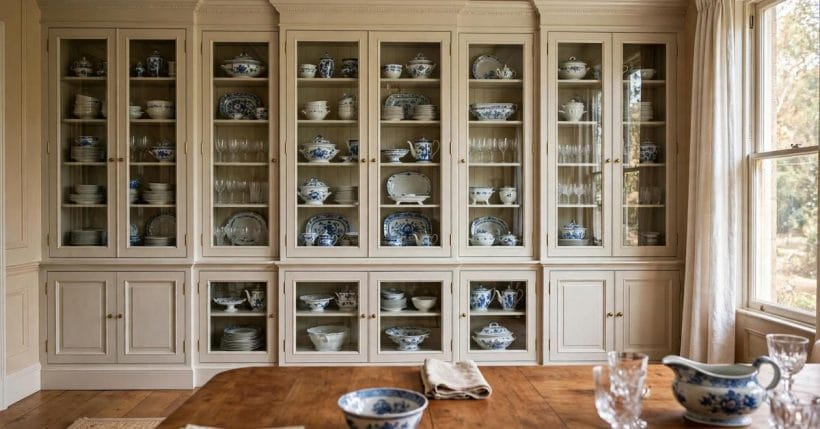
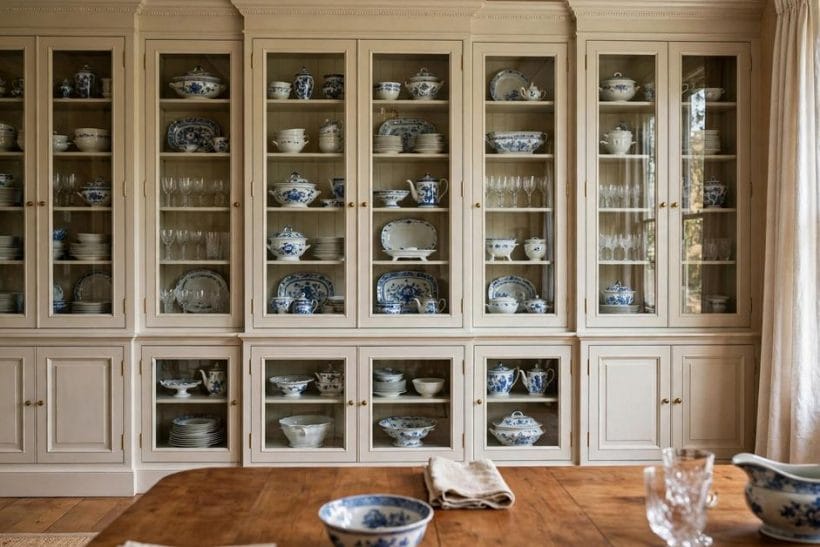
A built in china cabinet is one of the quietest pieces of joinery a dining room or kitchen can have. It does not stand in the room the way a freestanding cabinet does. Instead, it grows out of the wall itself, framed by trim, finished to match the room around it, and planned around the pieces it will hold. Done well, it looks as though it was always part of the house, and it turns a collection of plates, bowls, glasses and serving dishes into something the room can enjoy every day rather than only on special occasions.
This guide looks at the built-in china-cabinet form only: wall-fitted cabinetry made for display and storage in kitchens and dining rooms. It covers layouts, door styles, colours, lighting and practical planning, so you can picture what suits your wall, your collection and the way you actually live. A built-in cabinet is fixed joinery, so the fitting and any work that touches the wall structure, wiring or plumbing belongs with a qualified professional. The planning ideas here are for choosing and briefing a design, not for carrying out the installation yourself.
Start with the collection, not the catalogue. Gather the pieces you reach for most often, the pieces you display, and the pieces that only come out for guests, and notice how they differ. Tall pitchers and serving platters need height. Stacks of everyday plates need easy, low shelves. Delicate glasses need a calm spot away from the daily traffic of the room. A cabinet planned around those three groups will always work harder than one planned around a symmetrical elevation alone. If you are shaping the wider room at the same time, dining room ideas can help you see how the cabinet wall sits beside the table, the light and the route people walk through the room.
| Item | What it is |
|---|---|
| What Makes a Cabinet Truly Built-In | A built-in cabinet earns its name from its relationship with the wall. |
| Choosing the Wall and the Layout | The best wall for a built-in china cabinet is usually the one the room already treats as its backdrop. |
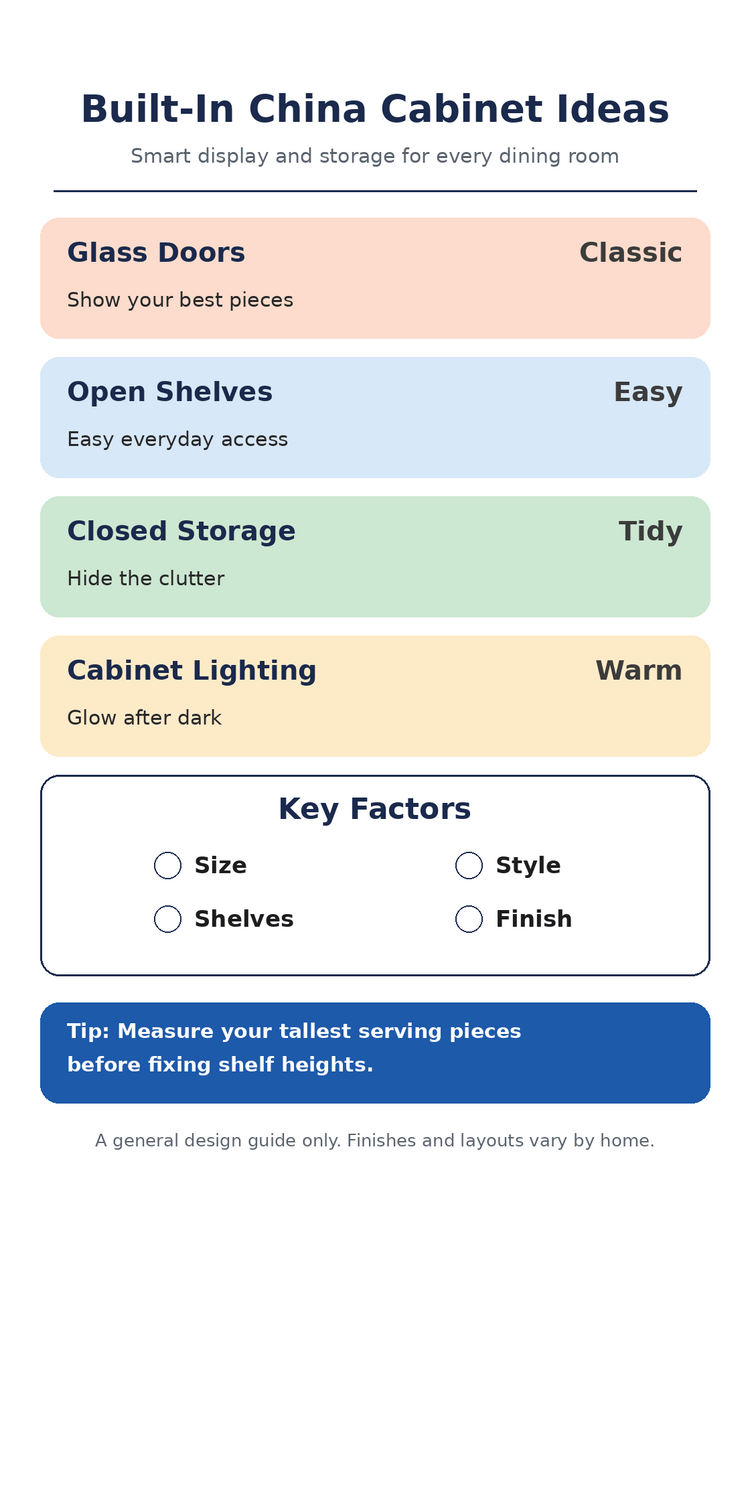
| Glass Doors That Show the Collection | Glass doors are the classic choice for a china cabinet because they protect the collection while keeping it visible. |
| Open Shelves Beside Closed Storage | Not everything in a china collection wants to be behind glass. |
| Colours and Finishes That Sit Quietly in the Room | A built-in cabinet should relate to the room, not compete with it. |
| Lighting That Flatters Glass and China | Lighting transforms a built-in china cabinet more than any other single choice. |
| Shelves Sized Around the Pieces You Own | The most common disappointment in a china cabinet is a shelf that almost fits. |
| Dining-Room Built-Ins That Anchor the Table | In a dining room, a built-in china cabinet does more than store. |
| Kitchen and Pantry Walls That Borrow the Same Idea | The built-in china cabinet is not confined to the dining room. |
| Keeping a Built-In Cabinet Easy to Live With | A built-in china cabinet should become easier to live with over time, not more demanding. |
1. What Makes a Cabinet Truly Built-In
A built-in cabinet earns its name from its relationship with the wall. Its sides meet the wall without gaps, its top runs into the cornice or ceiling trim, and its base sits on the same skirting line as the rest of the room. That continuity is what separates it from a tall freestanding dresser pushed against a wall, even a very handsome one. The eye reads the whole wall as one composition rather than as furniture plus wall.
The practical benefit follows the visual one. Because the cabinet is fitted to its opening, there are no dusty gaps behind it and no wobble when a door closes. Shelves can be set to the collection rather than to a factory pattern, and the joiner can carry the room’s trim profile across the cabinet face so the new work and the old room speak the same language. In older houses this matters twice over: a well-matched cornice and skirting line can make a new cabinet look original, while a mismatched profile can make it look applied.
There are limits worth respecting. A built-in cabinet cannot be moved when the room changes, and it commits that stretch of wall for the life of the room. Before settling on a position, live with the wall for a while. Notice where daylight falls across it, where the table sits, where people pass, and whether the wall carries anything hidden, such as pipes or wiring, that a professional would need to work around. A cabinet that looks inevitable on paper can feel obstructive in a room where the main walking route crosses in front of it.
2. Choosing the Wall and the Layout
The best wall for a built-in china cabinet is usually the one the room already treats as its backdrop. In a dining room that is often the wall the table faces, or the wall behind the host’s chair, where the display can be enjoyed from the table without anyone having to turn around. In a kitchen, it is often the wall that is not already claimed by the cooker, the sink or the main worktop run, so the cabinet adds storage without stealing preparation space.
Layout follows the wall’s shape. A long, uninterrupted wall suits a run of cabinets with a rhythm of glass doors and solid panels, where the eye travels calmly along the display. A shorter wall suits a single tall cabinet flanked by trim, which reads as a piece of architecture rather than a run of storage. An alcove or a recess between two doorways can be a gift: the cabinet fills an awkward space, the walls on either side frame it naturally, and the room gains storage without losing a single usable stretch of wall.
Think about the table before the cabinet. A cabinet that opens onto the serving side of the table makes laying the table a short, pleasant walk rather than a trip across the room. A cabinet that opens onto a corridor or a doorway will be used less, however beautiful it is, because every plate becomes a journey. Similarly, leave the doors room to open fully. A glass door that can only open halfway because a chair or a sideboard crowds it will quietly discourage use, and a cabinet that is hard to open slowly becomes a cabinet that is only looked at.
Symmetry is a tool, not a rule. A centred cabinet with equal bays on either side feels formal and calm, which suits a traditional dining room. An off-centre arrangement, with a tall display bay beside a lower serving counter, can feel more relaxed and can suit a kitchen-diner where the cabinet also works as a serving station. What matters is that the arrangement looks deliberate from the doorway, because that is the view you will live with.
3. Glass Doors That Show the Collection
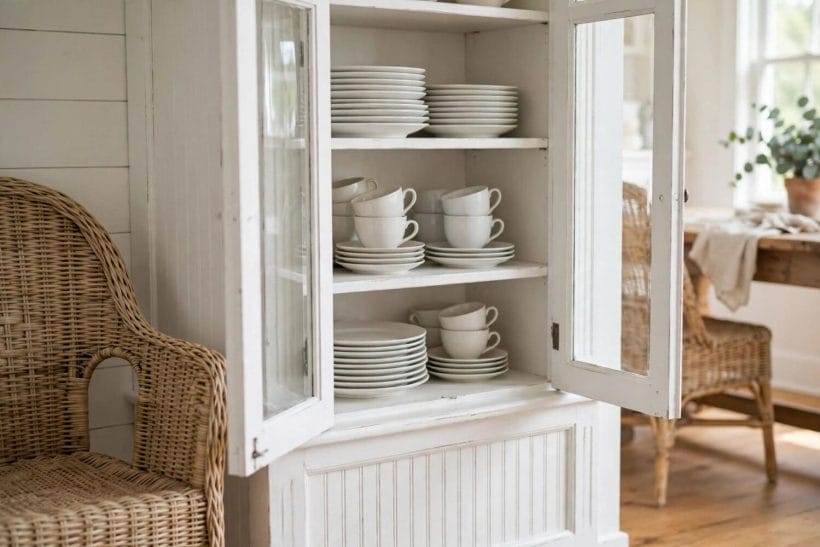
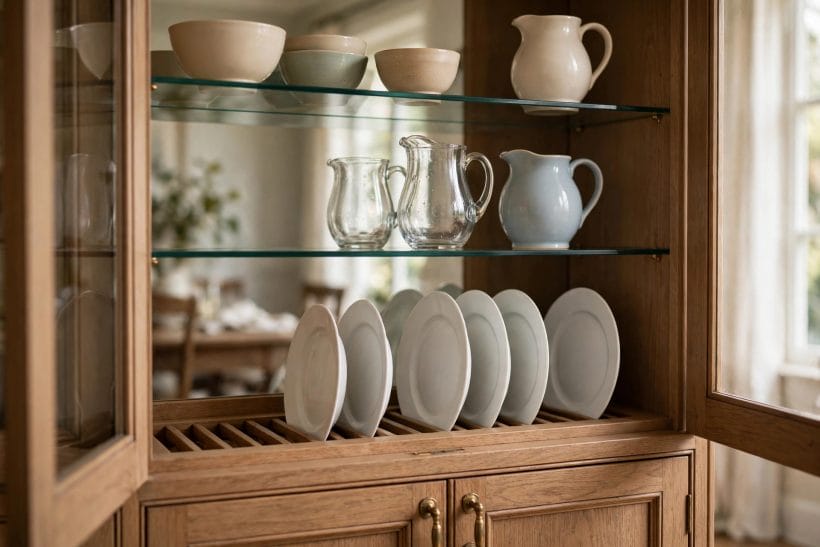
Glass doors are the classic choice for a china cabinet because they protect the collection while keeping it visible. Dust stays out, curious hands stay at a distance, and the display still gives the room its colour and life. Clear glass is the most honest option: it shows the china exactly as it is and suits collections with strong colour or pattern. It also shows everything, including the odd chipped rim or mismatched saucer, so it rewards a collection that is edited rather than merely stored.
Other glazings soften the view. Fluted or reeded glass blurs the contents into shapes and colours, which can be kinder to a mixed collection and can add texture to the cabinet face. Leaded or muntin-divided panes break the glass into a grid, which suits traditional rooms and can make a wide cabinet feel more finely made. Small panes also have a practical virtue: a single cracked pane is a smaller repair than a full sheet, though any glass repair is work for a professional glazier.
The frame around the glass matters as much as the glass itself. Slim frames keep the focus on the china and suit modern rooms. Broader, moulded frames carry more shadow and presence and suit rooms with generous trim. Whatever the frame, the hinges and catches should be quiet and firm. A door that drifts open or clicks loudly every time it closes will undermine the calm the cabinet is meant to create, and good hardware is worth specifying carefully at the design stage.
Consider what the glass will reflect. A cabinet opposite a bright window can catch glare that washes out the display in daylight, while a cabinet on a darker wall may need the lighting discussed later in this guide to come alive in the evening. Stand where you will sit at the table, at different times of day if you can, and look at the wall as it really is before choosing between clear and textured glass.
4. Open Shelves Beside Closed Storage
Not everything in a china collection wants to be behind glass. Everyday plates, bowls and mugs earn their place on open shelves, where they can be reached without opening a door and put back without ceremony. A run of open shelving beside the glazed bays gives the cabinet a working half and a display half, and the contrast between the two keeps the whole wall from feeling like a museum case.
Closed storage has its own quiet job. The pieces you use rarely, the serving dishes with lids that stack awkwardly, the table linens, the candles and the odd vase all need a home that does not demand display. Solid doors below the display, or a full-height closed bay at one end of the run, absorb that clutter and leave the glass bays free for the pieces that deserve the light. This division is one of the most useful planning moves in a built-in cabinet, and it is worth deciding early, because it shapes the whole elevation.
The boundary between open and closed can be a design feature in itself. A change in depth, a slightly different finish, or a solid panel that steps forward from the glass bays can mark the transition and stop the cabinet reading as one flat wall of doors. In a smaller room, keep the closed storage low, under the display, so the upper wall stays light and glazed. In a larger room, a tall closed bay can anchor one end of the run and balance a long stretch of glass.
Think about how the open shelves will actually be used day to day. Shelves that hold only display pieces stay tidy on their own. Shelves that hold everyday ware need to be reachable without a step, easy to wipe, and forgiving of a stack that is put back in a hurry. If the open shelves sit beside the table, they can double as a serving ledge during meals, which is a small luxury that quickly becomes a habit. Storage that works this way earns its place in the room, and storage ideas for small homes show the same principle at work in tighter rooms, where every shelf has to justify itself.
5. Colours and Finishes That Sit Quietly in the Room
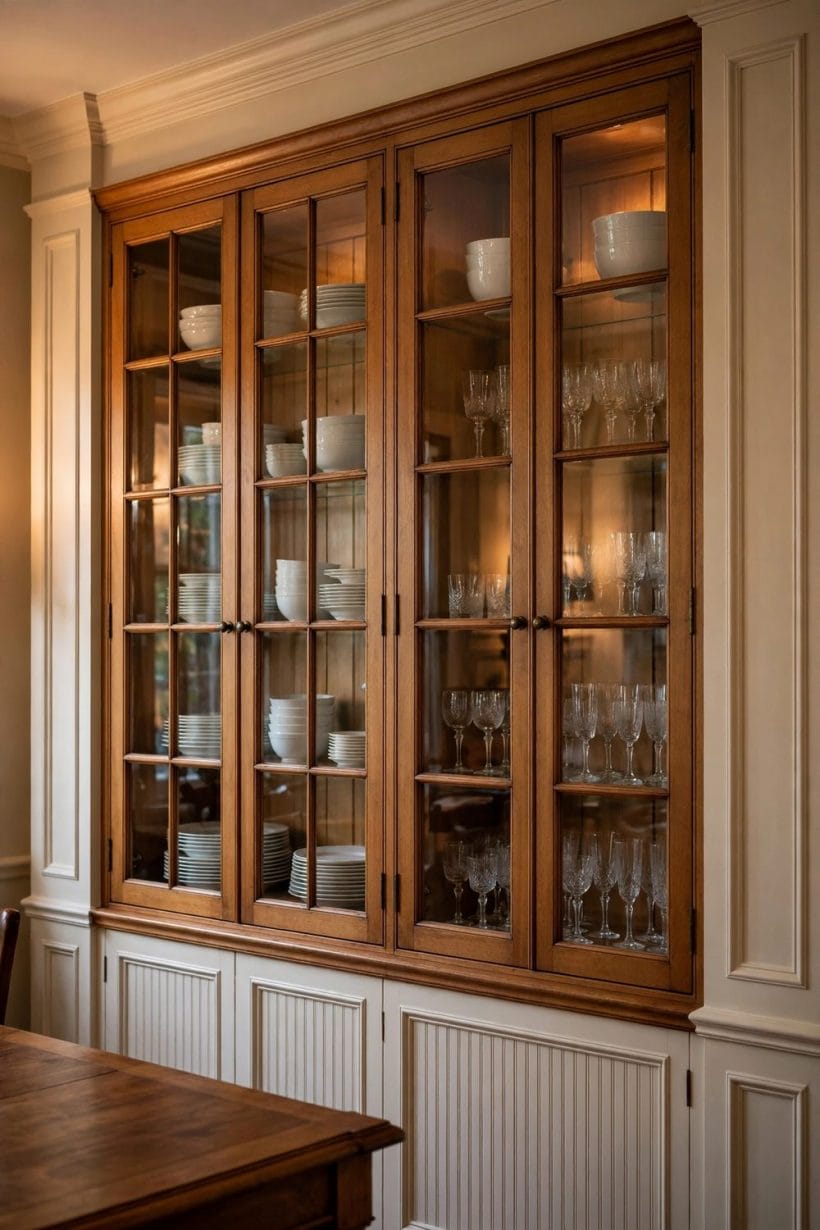
A built-in cabinet should relate to the room, not compete with it. The safest starting point is the room’s own palette: the wall colour, the trim colour, or a wood tone already present in the table or the floor. A cabinet painted the same colour as the trim reads as architecture and lets the china provide the colour. A cabinet in a wood tone that echoes the table reads as furniture and warms the room. Either approach works, and the choice depends on whether you want the cabinet to disappear into the wall or to stand as a crafted object within it.
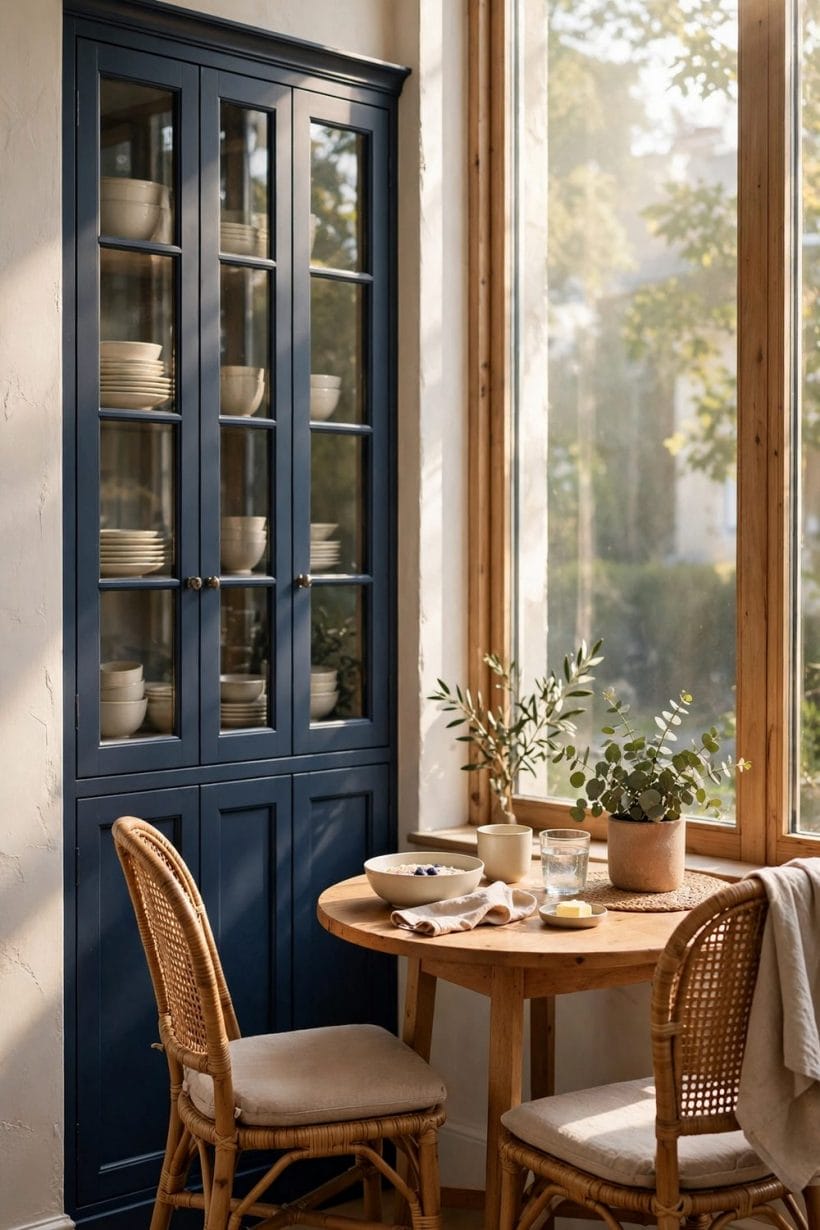
Deeper colours can be beautiful on a built-in cabinet, but they ask more of the room. A dark painted cabinet makes a strong backdrop for pale china and can anchor a large dining room, yet in a small or dim room it can feel heavy and can make the wall advance toward the table. If you love a deep colour, try it first on the interior back panels rather than the whole carcass: the display gains depth, the china stands out, and the room keeps its lightness. A painted interior is also easier to change later than a fully painted exterior.
Finishes deserve the same thought as colours. A matt or eggshell paint finish is forgiving on a large fitted surface and hides the small marks of daily use. A higher sheen shows every brush mark and every fingerprint, though it can be wiped clean more easily. On wood, a clear finish that shows the grain suits rooms where timber is already a feature, while a painted finish suits rooms where the trim and doors are painted. Mixing too many finishes in one room, painted cabinet, stained table, lacquered sideboard, can make the room feel assembled from different houses, so let one finish lead and the others follow.
The interior finish is the part most often forgotten and the part you will see most. A pale interior reflects light and makes the display legible. A warm timber interior adds glow and suits cream and gold-toned china. A dark interior creates drama but needs good lighting to avoid swallowing the display. Whatever you choose, keep it consistent across the bays, because the eye notices a change of interior colour between two glazed doors immediately. For the wider palette of the room around the cabinet, interior ideas can help you test how the cabinet colour sits with the rest of the house.
6. Lighting That Flatters Glass and China
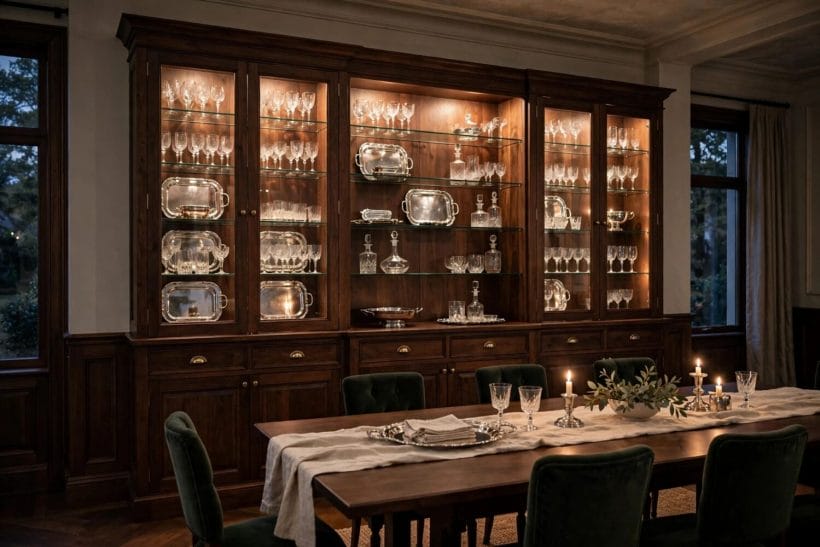
Lighting transforms a built-in china cabinet more than any other single choice. Unlit, a glazed cabinet can look flat by day and dark by night, its contents visible only as shadows. Lit gently from within, the same cabinet becomes a lamp for the room, and the china glows without any effort from the host. The light should be warm, soft and even, so no single shelf burns bright while the next sits in shadow.
The position of the light matters. A strip or small fitting tucked under the top of each bay, hidden behind the frame, washes down over the shelves and avoids glare in the eyes of anyone seated at the table. Light from below, such as a fitting at the base of a bay, can look theatrical but tends to throw unflattering shadows across plates and glasses. Whatever the arrangement, the wiring is electrical work and belongs with a qualified professional, and the fittings should be chosen so their heat does not sit against timber, glass or delicate glazes.
Dimming is worth asking about at the design stage. A cabinet that can glow softly during a quiet supper and brighten when you are searching for a serving dish is more useful than one fixed at a single level. A dimmer also lets the cabinet sit comfortably beside candles or a pendant light without competing with them. If the room already has a strong central light, the cabinet light can stay low and act as a background glow; if the room is lit mainly by the cabinet and a few lamps, it may need to work a little harder.
Daylight deserves equal attention. A cabinet on a wall that receives direct sun will show its contents beautifully for part of the day, but strong sun can also fade painted decoration and heat the glass over time. Sheer curtains, a blind, or simply choosing the shadier wall can protect a collection that matters to you. Visit the wall in the morning and in the evening before fixing the design, because a cabinet planned only for its evening appearance can disappoint at breakfast.
7. Shelves Sized Around the Pieces You Own
The most common disappointment in a china cabinet is a shelf that almost fits. A platter that must lean, a tureen that must lose its lid, or a row of glasses that must be stored behind one another all signal a cabinet planned from a drawing rather than from a collection. The remedy is simple and should happen before any timber is cut: measure the pieces themselves, including lids, handles and the height of the tallest pitcher, and let those measurements set the shelf heights.
Adjustable shelves are a forgiving choice. Collections change, gifts arrive, and a set that grows by a few pieces should not demand a new cabinet. Shelves that can move in small steps let the cabinet adapt over the years, and they let you rebalance the display when a new favourite piece joins the collection. Fixed shelves suit a settled collection and can look more finely made, but they commit you to the arrangement you chose on day one.
Depth is as important as height. Shelves deep enough for a dinner plate with a little air in front of it look calm and make plates easy to lift out. Shelves barely deeper than the plate force a careful two-handed retrieval and invite chips at the rim. At the same time, shelves far deeper than the pieces waste the back half of the cabinet and push the display too far from the glass. A good rule of the eye is that the front row of pieces should sit close enough to the glass to be seen clearly, with nothing important hiding behind another piece.
Weight belongs in the planning too. China is heavy in quantity, and a long shelf loaded with stacked plates carries a real load. The shelf material, its thickness, and the way it is supported are structural questions for the joiner, not details to improvise. Mention the heaviest stacks when you brief the design, so the support is planned rather than discovered. A cabinet that sags or bows after a year of use has failed at the one job a storage piece must do.
8. Dining-Room Built-Ins That Anchor the Table
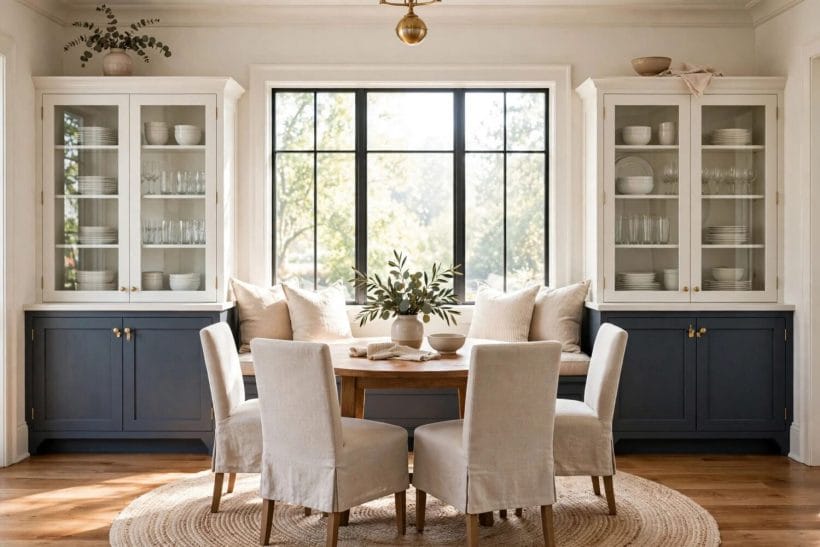
In a dining room, a built-in china cabinet does more than store. It gives the table a backdrop, it sets the formality of the room, and it tells guests, without a word, that meals here are occasions. A full wall of glazed cabinets behind a long table creates a sense of occasion even for an ordinary supper, while a single cabinet in a smaller dining space can give the room a focal point that a bare wall never will.
The relationship with the table is worth planning in detail. The cabinet should be far enough from the table that chairs can be pulled out and someone can pass behind them without squeezing, yet close enough that serving feels natural. A sideboard or serving counter between the cabinet and the table can bridge the two, giving a place to set down dishes on the way from cabinet to table. If the cabinet includes a lower counter of its own, that counter becomes the natural staging area for a meal, and the room gains a serving station without any extra furniture.
Style should follow the room’s existing language. A dining room with panelled walls and a traditional table welcomes a cabinet with moulded frames, divided panes and a cornice that echoes the room’s trim. A plainer, more modern dining room welcomes slim frames, clear glass and a flat, quiet finish. The cabinet does not need to imitate the table exactly, but it should not argue with it. When the two share a tone, a trim profile or a level of ornament, the room reads as one considered space.
Display is the dining room cabinet’s particular pleasure. This is where the wedding china, the inherited set, or the pieces collected over years of travel can live in daily view rather than in boxes. Rotate the display with the seasons if you enjoy it: lighter pieces and glasses in summer, deeper colours and serving pieces when the evenings draw in. A cabinet that changes a little through the year stays alive, and the room feels tended rather than merely decorated. If the dining space flows into a sitting area, small living room ideas can help you keep the two rooms in conversation, so the cabinet wall does not feel cut off from the rest of the house.
9. Kitchen and Pantry Walls That Borrow the Same Idea
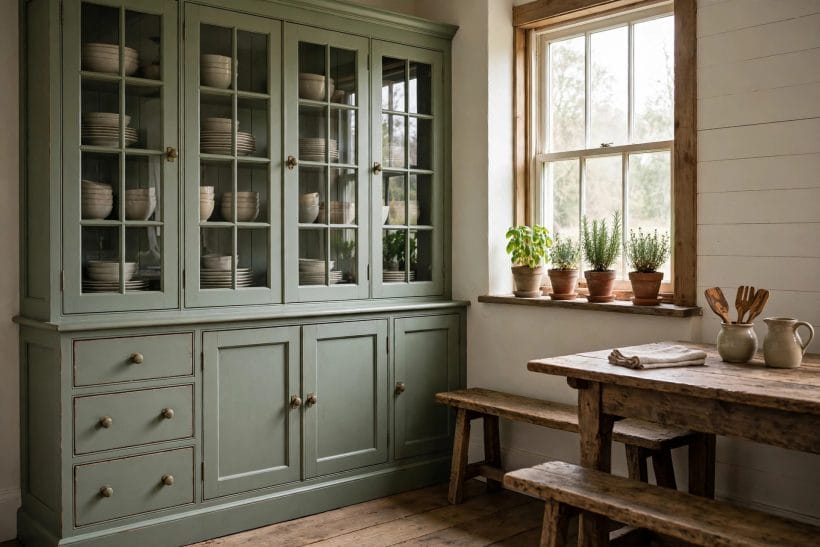
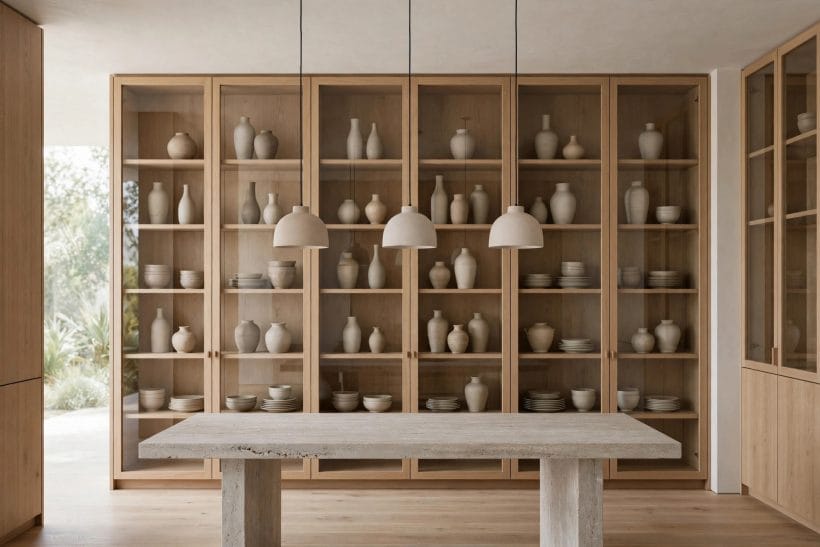
The built-in china cabinet is not confined to the dining room. In a kitchen, a glazed wall cabinet can lift everyday china out of closed cupboards and into view, making the kitchen feel more like a room and less like a workshop. The same principles apply: glass where display delights, solid doors where clutter must hide, and shelves sized around the pieces that live there. The difference is that a kitchen cabinet works harder, opened many times a day, so its doors, hinges and shelf supports should be chosen for frequent use rather than occasional admiration.
A pantry wall is another natural home for the idea. A run of fitted cabinets beside the pantry can hold serving dishes, baking ware and the overspill of a china collection that outgrew the dining room. Because a pantry wall is a working wall, closed storage can take a larger share here, with one or two glazed bays to keep the wall from feeling like a corridor of doors. The result is a kitchen that stores generously without looking like a storeroom.
There are kitchen-specific cautions. A cabinet beside the cooker or the sink will meet steam, heat and splashes that a dining room cabinet never faces, so its finish and its distance from those appliances need thought, and any work near services belongs with a qualified professional. A cabinet that holds glasses above a preparation area should have doors that close firmly, so nothing is knocked by a passing elbow. And a glazed cabinet in a busy kitchen will show fingerprints and smudges sooner than one in a dining room, so choose glass and finishes you are happy to wipe often.
When the kitchen and dining room share one open space, a built-in cabinet can be the hinge between them. A cabinet wall on the boundary, glazed on the dining side and solid on the kitchen side, or a run that turns the corner from one room into the other, can tie the two spaces together without a wall between them. For the kitchen side of that conversation, kitchen ideas and pantry ideas offer starting points for storage that works as hard as the dining display.
10. Keeping a Built-In Cabinet Easy to Live With
A built-in china cabinet should become easier to live with over time, not more demanding. The habits that keep it that way are small. Return pieces to the same shelf, so the display keeps its rhythm and you can find a plate without hunting. Keep the everyday ware at hand height and the display pieces higher, so daily use never disturbs the arrangement you most enjoy looking at. Leave a little air on each shelf, because a shelf packed edge to edge looks anxious and makes every retrieval a negotiation.
Cleaning is part of the design, not an afterthought. Glass doors keep dust out, but the glass itself will need wiping, and the shelves will gather dust whenever the doors stand open during a meal. Choose shelf surfaces that wipe clean, and keep the top of the cabinet, where it meets the cornice, reachable or closed off, so it does not become a forgotten dust shelf. If the cabinet has lighting, ask how its fittings are reached for cleaning and for lamp changes, because a fitting buried behind fixed joinery will be neglected.
Children, pets and lively households are not reasons to avoid a china cabinet, but they are reasons to plan it honestly. Doors that latch firmly, glass that is properly secured, and heavy pieces stored low rather than high all make the cabinet safer and calmer to live with. A cabinet whose doors stay shut on their own, whose shelves cannot be pulled forward by a small hand, and whose contents are not balanced on a high edge will be enjoyed rather than worried over.
Finally, let the cabinet evolve. Collections grow, tastes shift, and a room changes its purpose over the years. Adjustable shelves, a repainted interior, or a rotated display can refresh a built-in cabinet without rebuilding it, and that adaptability is part of what makes fitted joinery a lasting investment in a room. A cabinet planned with a little slack, a spare shelf, an empty bay, room for one more set, will serve longer than one filled to the brim on its first day.
Final Considerations
A built in china cabinet rewards patience at the planning stage. Choose the wall by living with it first. Plan the shelves around the pieces you own, not around a drawing. Balance glass and solid doors so the cabinet both displays and conceals. Let the colour and finish follow the room, light the display gently, and leave the fitting and any structural, electrical or plumbing work to qualified professionals. Do those things, and the cabinet will look as though it belongs to the house, because in every way that matters, it will.
If you are still deciding where the cabinet fits in a larger project, a building checklist can help you place fitted joinery in the right order, so the cabinet wall is planned before the finishes around it are fixed. And if the cabinet is one part of a wider rethink of the rooms around it, interior ideas from across the house will show how one well-planned wall can lift the whole house. The best built-in china cabinet is rarely the grandest one. It is the one whose doors open easily, whose shelves fit the pieces, whose light flatters the collection, and whose wall feels complete because the cabinet is there.


0 Comments