
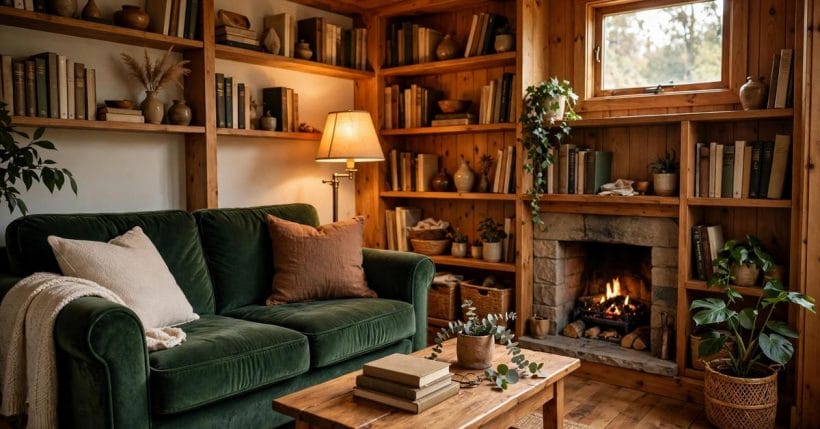
A small den is a room for slowing down. It is where books are read, conversations linger, and quiet evenings find their shape. In a compact home, the den often has to work hard, yet it should never feel crowded or hurried. With a clear layout, comfortable seating, warm colour, and layered light, even a modest room can become the most loved corner of the house.
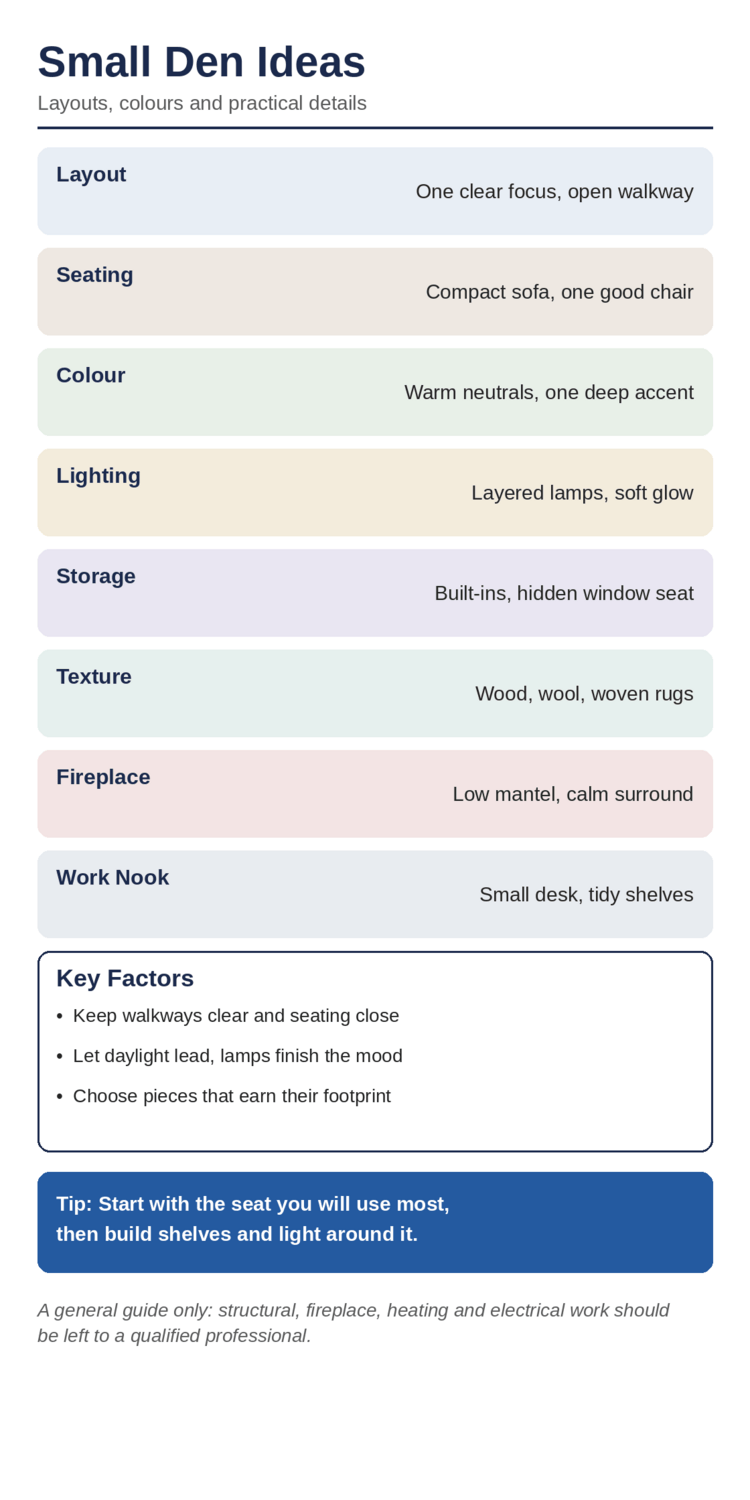
This guide gathers small den ideas for layouts, colours, and practical details, all described in general terms. It looks at how to plan the room, choose seating, layer light and texture, fit storage into the walls, and keep the room easy to live with. Whether the den is a separate room or a quiet corner of a larger space, the same principles apply: keep the room open, keep it comfortable, and let every piece earn its place.
Start with the room as it is, not as it might appear in a picture. Notice where daylight falls, where people naturally sit, and where clutter gathers. Those observations will guide better choices than any single style, and they will keep small den ideas honest and useful. A den shaped around daily life will always feel more welcoming than a room shaped around a trend.
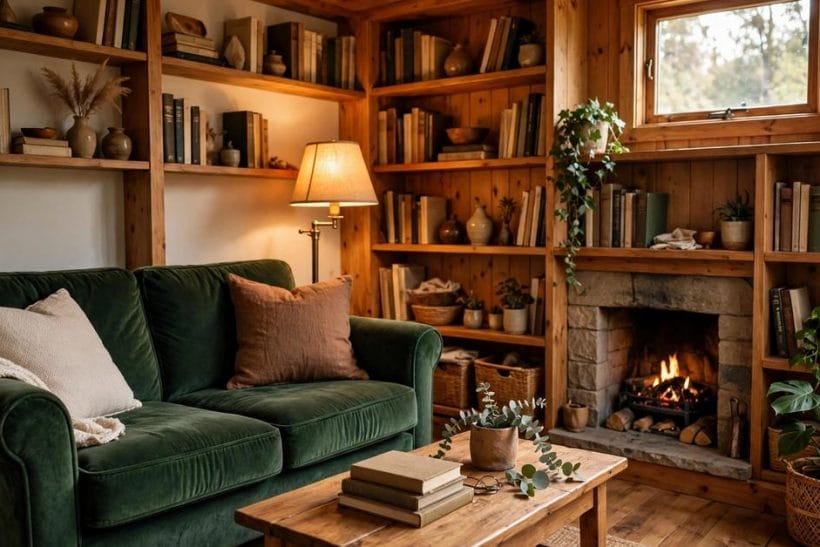
1. Start With How the Den Will Be Used
A small den works best when it has a clear job. Before choosing furniture or colour, it helps to settle what the room is really for. Some dens are quiet reading rooms. Others are places to talk, watch, play, or work. A room that tries to do everything at once can end up doing nothing well, while a room with one main purpose feels calm even when it is compact. Small den ideas begin with that decision, because every later choice follows from it.
Think about the times of day the room will be used most. A morning reading corner needs daylight and a comfortable chair. An evening den needs warm lamps and seating that invites people to stay. A room shared by a household needs space for conversation as well as quiet corners. Naming the main use makes it easier to say no to pieces that look appealing but crowd the room or pull it in another direction.
It also helps to think about who will use the den and how often. A room used daily deserves sturdy seating and easy storage. A room used mainly for guests or quiet evenings can be simpler and softer. Keeping the main use in view stops the room from filling up with extras, and it keeps small den ideas grounded in daily life rather than in a picture of a room nobody actually lives in.
2. Choose a Layout That Keeps the Room Open
Layout matters more than size in a small den. A room feels larger when there is a clear walkway and a clear place to sit, rather than furniture pushed against every wall. Start by finding the natural focus of the room, whether that is a window, a fireplace, or a wall of shelves, and let the seating face it. That single move gives the room order and makes the rest of the layout easier to plan.
Leave breathing room around the main seat. A chair or sofa that is squeezed into a corner can feel awkward, while the same piece with a little space beside it feels inviting. Small tables, lamps, and storage should support the seating, not block the way through the room. When the path through the den is clear, the room feels welcoming even before anyone sits down, and daily movement through the space stays easy.
Try the layout by living with it for a while before fixing anything in place. Move a chair, shift a lamp, and notice where people naturally pause or gather. A layout that looks tidy on paper can still feel cramped in use, while a layout that leaves room to move will usually feel right. For more room planning, see these tiny house interiors for compact rooms arranged around a clear focus.
3. Pick Seating That Fits the Room, Not Just the Plan
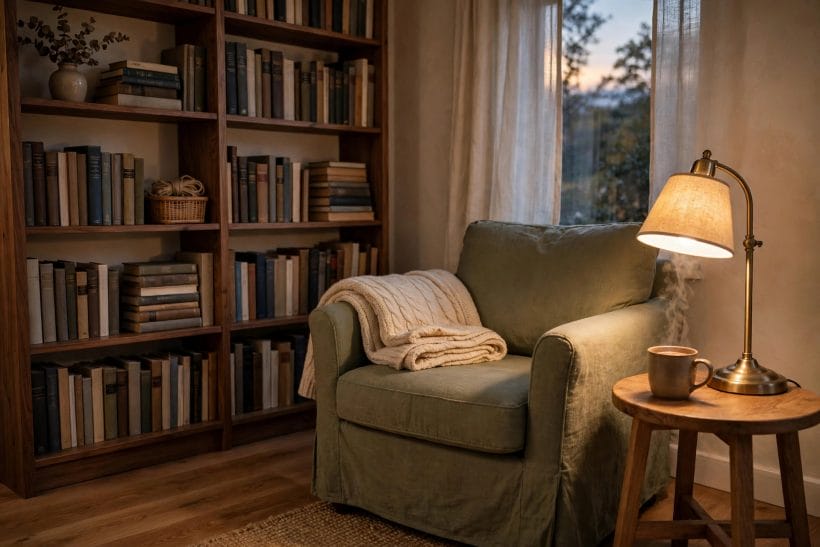
Seating sets the tone of a small den, so it deserves careful thought. A compact sofa often suits a small den better than a large one, because it leaves room for a chair, a lamp, and a table without crowding the floor. A deep, comfortable chair can be the heart of the room, especially in a den used mainly for reading or quiet evenings. The best seat is the one people reach for first, not the one that fills the most space.
Comfort matters as much as size. Sit in a chair before choosing it, notice whether the back supports a relaxed posture, and check whether the seat height suits the people who will use it most. A beautiful chair that nobody enjoys sitting in will soon become a place for folded clothes rather than a place to rest. Small den ideas should always put comfort first, because a den is a room for settling in.
Seating also shapes how people talk in the room. Chairs angled toward each other invite conversation, while a row of seats all facing one wall can feel formal. In a small den, one sofa and one chair are often enough, and a small stool or cushion can add a seat when guests arrive without permanently filling the floor. Keep the arrangement flexible, and the room will adapt to quiet evenings and lively gatherings alike.
4. Layer Colour for Warmth Without Closing the Room In
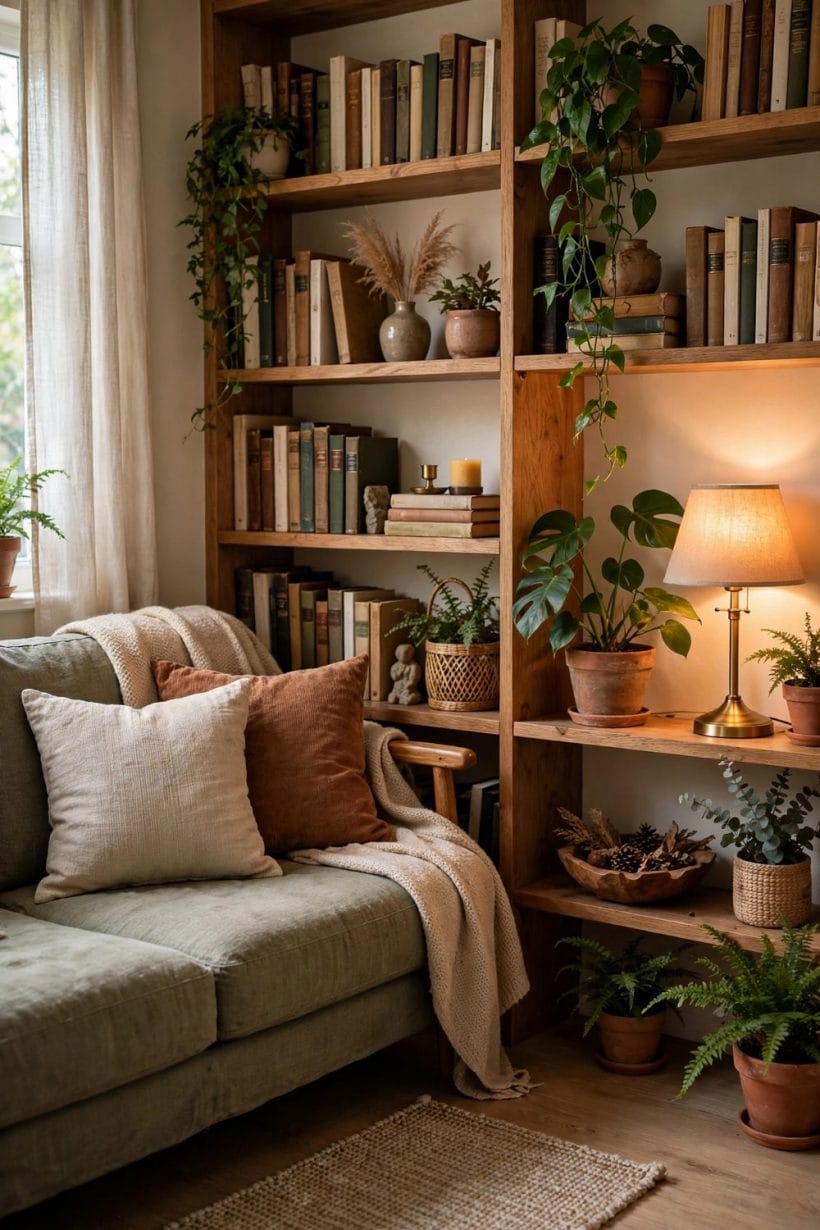
Colour can make a small den feel warm and settled, or it can make it feel heavy and closed in. Warm neutrals on the walls give the room a calm background, while one deeper accent colour adds character without overwhelming the space. Deep green, navy, warm rust, or a soft charcoal can all work as accents, especially when they appear in cushions, throws, or a single piece of furniture rather than on every surface.
It helps to repeat the accent colour in small touches around the room. A cushion that echoes the sofa, a throw that picks up a colour from the artwork, or a rug with a quiet pattern can tie the room together. Repetition makes the room feel considered, while too many unrelated colours can make a small space feel busy. Keep the palette short, and let texture do much of the work.
Light changes how colour reads through the day, so check colours in daylight and in lamplight before committing to them. A shade that looks soft in the morning can look darker in the evening, and a bold accent can feel stronger under warm lamps. For colour inspiration, these tiny house interior paint colours show how warm neutrals and deeper accents sit together in compact rooms. Test a colour on a cushion or a small area first, and let it settle before spreading it further.
5. Build Light in Layers for Day and Evening
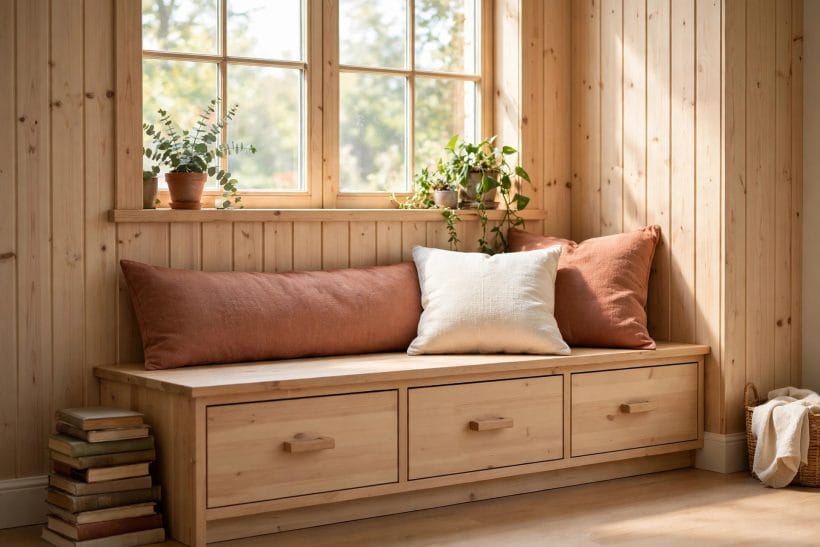
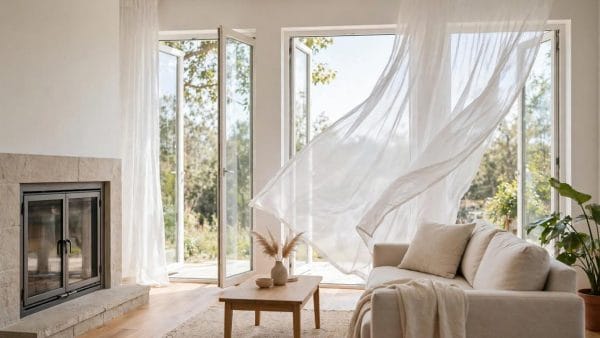
Light is one of the kindest tools in a small den. Daylight should be welcomed, with window treatments that soften glare without shutting the room off from the outdoors. A window seat, a chair near the glass, or a desk that catches morning light can all make daylight part of the room. When daylight is treated as the main light, the den feels open and alive even on a dull day.
Evening light needs more care. A single bright overhead light can flatten a small room and make it feel harsh, while several smaller lamps create pools of warmth. A floor lamp beside a chair, a table lamp on a shelf, and a soft glow near the fireplace each do a different job. Together they let the room shift from bright and practical to calm and restful with a simple change of lamps.
Lamp placement matters as much as lamp style. Light beside a reading chair helps the eyes, light near a conversation area helps faces, and light washing a wall of shelves makes the room feel deeper. Keep cords tidy and switches easy to reach, and remember that any new wiring or lighting work should be left to a qualified professional. Small den ideas for lighting should always put safety and comfort ahead of novelty.
6. Make Storage Part of the Walls
Storage is what keeps a small den calm. Without a place for books, blankets, games, and everyday clutter, even a beautiful room soon feels crowded. Built-in shelves along one wall can hold a great deal while taking up very little floor space, and they give the room a settled, finished look. A window seat with storage beneath it hides blankets and board games while giving the room an extra place to sit.
Open shelves work best for things that are used often and look pleasant on display, such as books and plants. Closed storage suits the rest, keeping the room tidy without hiding everything away. Baskets, boxes, and drawers can hold smaller items and keep shelves from becoming crowded. The aim is not to display everything, but to give everything a home so the room can be tidied in a few minutes.
Storage should follow the layout, not fight it. Shelves that frame a fireplace or a window feel like part of the room, while a tall unit squeezed into a walkway can block light and movement. Think about what needs to be close at hand, what can live higher up, and what can be stored elsewhere in the home. For wall and shelf inspiration, these tiny house wall decor ideas show shelves and displays arranged as part of the wall rather than as an afterthought.
7. Add Texture So a Small Room Feels Finished
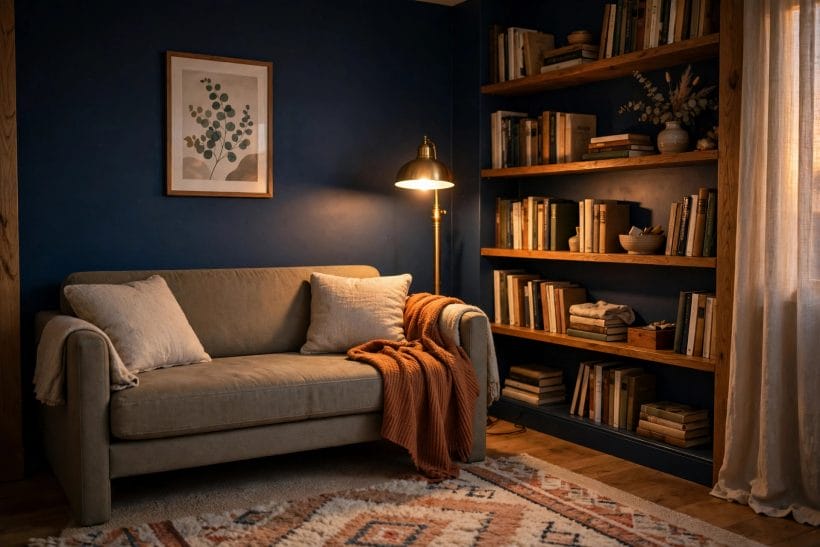
Texture is what stops a small den from feeling flat. Wood, wool, linen, woven rugs, and soft throws each add a different feeling under hand and foot, and together they make the room feel layered and lived in. A smooth wooden table beside a soft woollen throw, or a woven basket beside a linen cushion, gives the eye and the hand something to enjoy without adding colour or clutter.
Rugs deserve special thought in a small den. A rug that anchors the seating area can pull the room together, while a rug that is too small can make the furniture look scattered. Choose a rug that sits comfortably under the main seats, with a texture that suits bare feet and quiet evenings. Natural fibres and simple patterns tend to age well and suit a wide range of colours.
Throws and cushions are the easiest textures to change with the seasons. A heavier throw suits cold evenings, while a lighter one suits warmer months. Keep the number modest, so the sofa stays a place to sit rather than a display. Texture should invite touch and rest, and the best test is simple: if the room feels warmer and softer to be in, the textures are working.
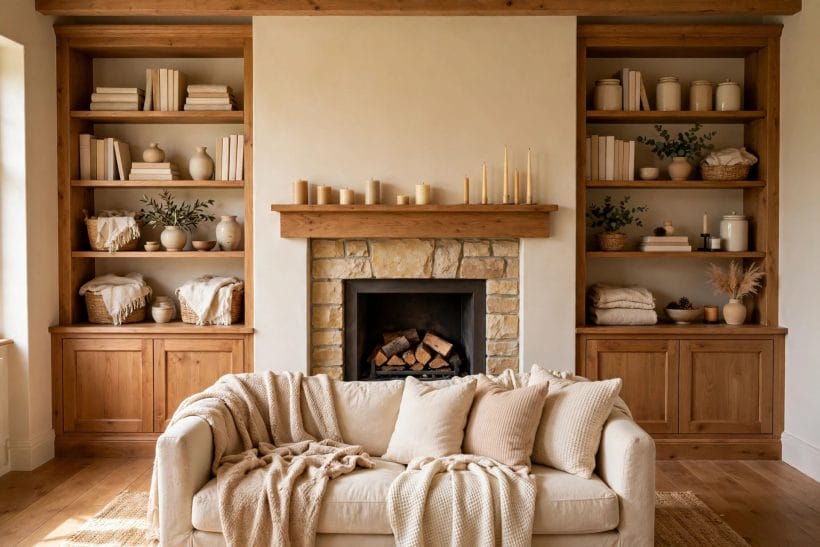
8. Give the Fireplace a Calm, Simple Surround
A fireplace can be the heart of a small den, but it needs a calm surround to suit a compact room. A low mantel, simple materials, and a clear hearth let the fire be the focus without overwhelming the space. Shelves on either side can hold books and quiet objects, and a simple arrangement above the mantel keeps the wall from feeling crowded. The aim is warmth and simplicity, not a grand statement.
Safety comes first with any fireplace. Chimney, flue, hearth, and heating work should always be left to a qualified professional, and no part of a fireplace should be altered without professional advice. Keep the area around the fire clear, choose materials that suit the heat of the fire, and let a professional check anything that looks worn or uncertain. A den that feels safe is a den that can truly be relaxed in.
When the fire is not in use, the surround still shapes the room. A few candles left unlit, a stack of logs neatly stored, or a simple piece of artwork can keep the fireplace looking cared for through warmer months. Keep the mantel uncluttered, and let the fireplace be a quiet anchor for the seating rather than a shelf for everything in the house. For fireplace room planning, see these tiny house living room ideas for rooms arranged around a calm focal point.
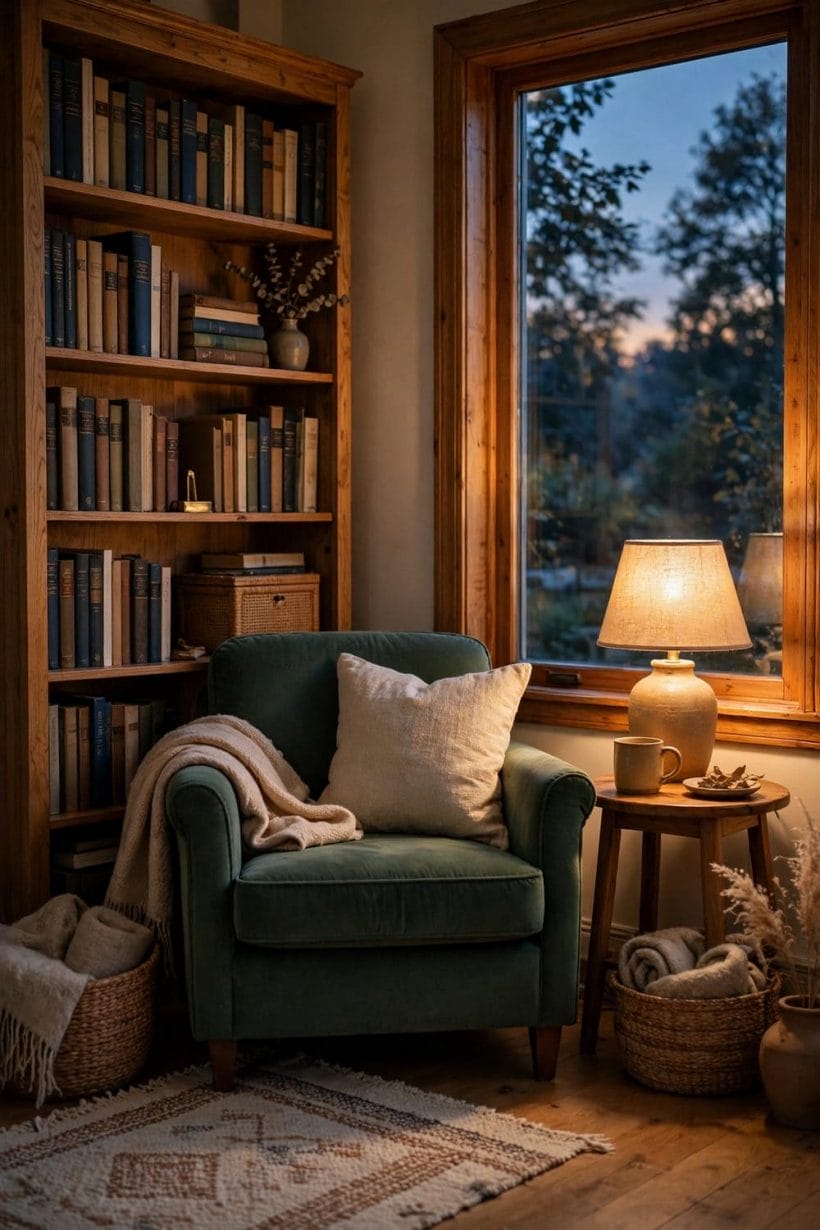
9. Fit a Work Nook Without Losing the Den
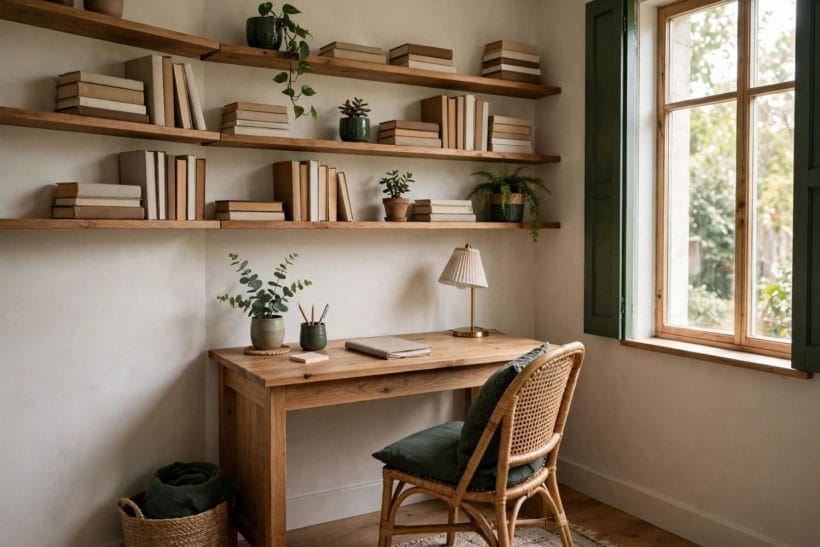
Many small dens now carry a work nook as well as a reading chair, and the two can live together if the nook is kept small and tidy. A compact desk against a wall, a chair that can be tucked away, and shelves for books and papers are often enough. The nook should feel like a quiet corner of the den, not like an office that has taken over the room.
Good light and a comfortable chair matter most in a work nook. Daylight from a nearby window helps focus, while a small lamp extends the working day into the evening. Keep papers and cables contained, with a drawer or a box for anything that would otherwise spread across the desk. When work is finished, the nook should be easy to close up, so the den can return to being a place of rest.
Boundaries help a shared den work well. Agreeing when the nook is in use, and when the room is for quiet or conversation, stops the two purposes from clashing. A screen of shelves, a change of lighting, or simply a tidy desk at the end of the day can signal the shift. Small den ideas that respect both work and rest will serve a household far better than a room that serves only one.
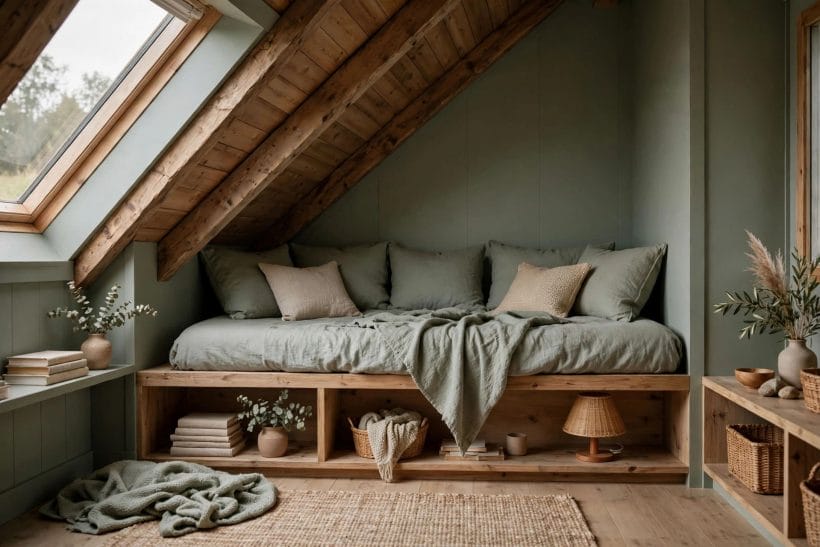
10. Keep the Den Easy to Live With Day to Day
The final test of a small den is not how it photographs, but how it lives. A room that is easy to tidy, easy to sit in, and easy to change will be used far more than a room that looks perfect but feels fragile. Choose fabrics that can be cleaned, surfaces that can be wiped, and arrangements that can be shifted without a major effort. Daily ease is what turns a pretty room into a favourite room.
Plants can soften a small den, but they should suit the light and the care they will actually receive. A few hardy plants on a shelf or a sill add life without demanding constant attention, while a room full of delicate plants can become a chore. Choose plants that thrive in the room as it is, and let them grow slowly into the space rather than filling every surface at once.
Leave a little room for change. Tastes shift, seasons change, and households grow, so a den that can accept a new cushion, a different lamp, or a rearranged chair will stay fresh for years. For broader compact-room planning, these tiny house designs show how small rooms adapt over time. The best small den ideas are not fixed rules, but habits of keeping the room comfortable, tidy, and open to daily life.
Final Considerations
A small den does not need to be large to feel generous. It needs a clear purpose, seating that invites rest, colour that warms without closing in, light that shifts from day to evening, and storage that keeps clutter out of sight. When those pieces work together, the room feels calm, comfortable, and easy to live in.
Take the ideas here one step at a time. Settle the layout first, then seating, then light and storage, and let colour and texture follow. Check any structural, fireplace, heating, or electrical work with a qualified professional before changing it, and keep the room flexible so it can grow with the household. For a companion view of compact living spaces, see these small living room ideas and these tiny house design guides, and let the den become a room that is used, loved, and returned to day after day.

0 Comments