
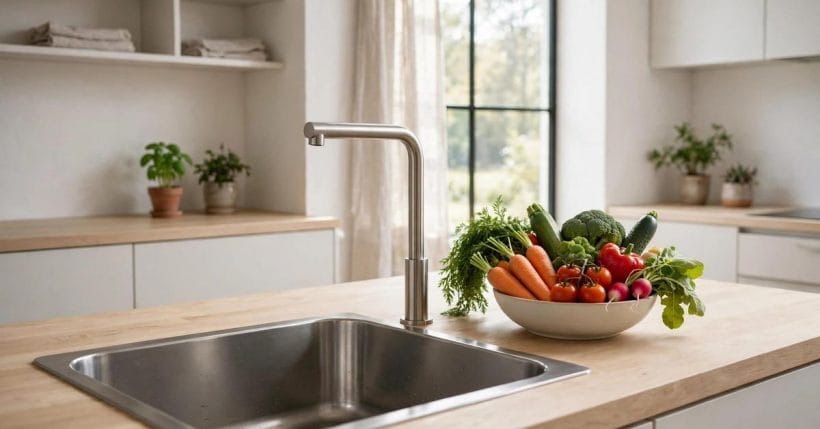
A stainless steel sink is where a kitchen day begins and ends, from rinsing vegetables in the morning to washing the last pan at night.
This guide walks through size, material, fit and everyday care in plain terms, so you can ask clear questions and choose with confidence.
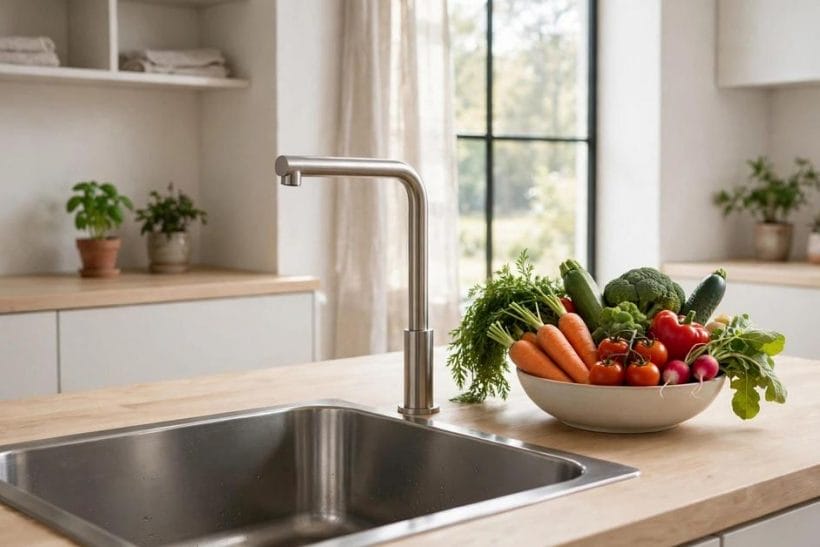
1. Start With How You Use the Sink Every Day
Before looking at shapes and finishes, spend a few days noticing how your kitchen actually works. Think about the meals you cook most often, the pans you reach for again and again, and the moments when the sink feels crowded. A household that cooks from scratch every evening puts different demands on a sink from a household that mostly reheats simple meals and washes a handful of cups. Your routine, not a showroom display, should set the brief for what you choose.
Notice the jobs that happen around washing up, too. Vegetables need rinsing, bottles need filling, hands need washing, and soaking pans need somewhere to sit without blocking everything else. If two people often cook together, the sink may need to serve two sets of hands at once. If the kitchen is also a place where children wash paintbrushes or pets get a quick rinse after a muddy walk, the sink will see harder use than a purely cooking space. Naming these jobs honestly helps you judge every later choice against real life rather than against an imagined ideal kitchen.
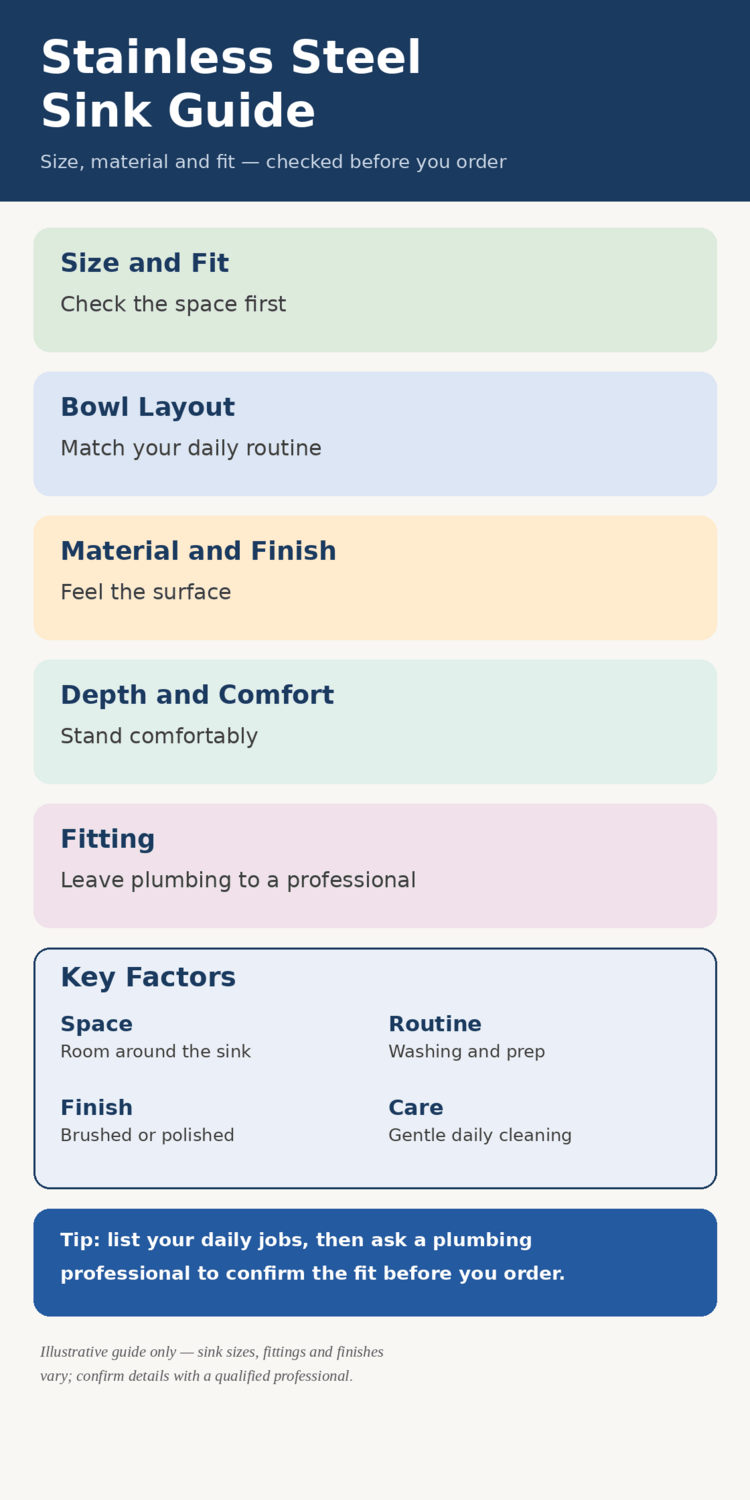
The table below sums up the checks this guide covers, and the rest of the guide takes each one in turn. Keep it beside you while you compare options, and treat any option that fails on your daily routine as a poor fit, however attractive it looks at first glance. A sink that suits your mornings and evenings will feel right for years, while a sink chosen only for its looks can become a daily irritation.
| At a Glance | What to Check |
|---|---|
| Size and Fit | Check the space first |
| Bowl Layout | Match your daily routine |
| Material and Finish | Feel the surface |
| Depth and Comfort | Stand comfortably |
| Fitting | Leave plumbing to a professional |
For wider kitchen planning, see these kitchen ideas for layouts that put the sink, cooker and storage within easy reach of one another.
2. Size and Fit: Measuring the Space You Actually Have
Size is the first practical limit on any sink choice, and it is set by the space you already have rather than by preference alone. Look at the counter where the sink will sit, the cabinet beneath it, and the room around it for standing, reaching and setting things down. A sink that is generous in itself can still be wrong if it leaves too little counter on either side for draining, chopping or stacking. Think in terms of the whole working run, not the sink alone.
Note the space available in general terms and share those notes with your supplier and with the plumbing professional who will fit the sink. Ask them to confirm that the chosen sink suits the cabinet, the counter material and the pipework beneath, because those relationships matter more than any single measurement taken on its own. If the counter is being replaced at the same time, settle the sink choice before the counter is cut, since changing your mind afterwards can mean costly rework or an awkward compromise.
Also consider what sits above and around the sink. A window above the sink changes the light and the view, while wall cabinets above can limit how tall a tap can be and how easily you lift large items in and out. Splashbacks, window sills and nearby appliances all shape the usable space. Walking through these relationships before ordering is far cheaper than discovering them on fitting day.
Compact kitchens need the same care with a smaller canvas, as these tiny kitchen ideas show in their tight but workable layouts.
3. One Bowl, Two Bowls, or Something Between
Bowl layout is really a question about how you like to work. A single generous bowl gives you one large space for soaking a roasting tray, washing a big pan or rinsing a pile of vegetables. It suits cooks who prefer to clear as they go and who like an unobstructed space for larger items. The trade-off is that everything shares the same water and the same space, so washing and rinsing happen in sequence rather than side by side.
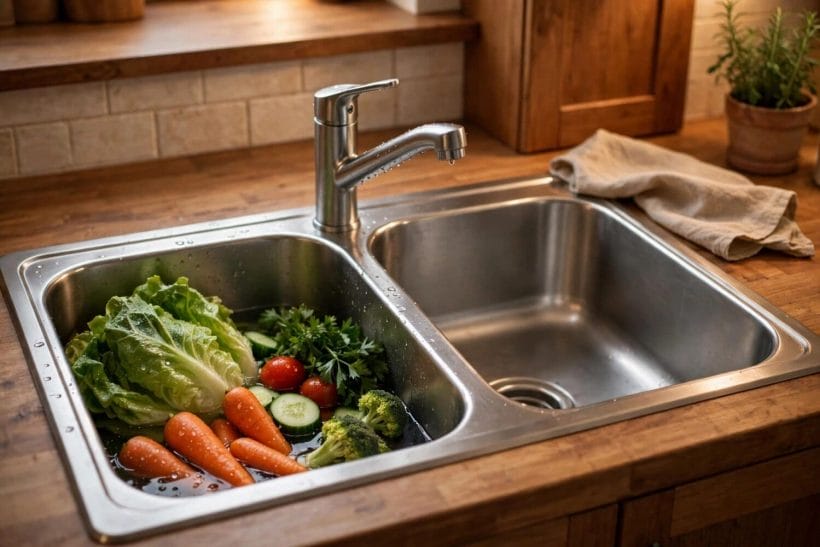
Two bowls let you separate jobs, for example washing in one side while rinsing or stacking in the other, or keeping a soaking pan apart from clean items. That separation can make a busy kitchen feel calmer, especially when more than one person is involved. The trade-off is that each bowl is smaller than a single bowl would be, so very large trays and boards may not fit flat in either side. Think about the largest item you wash regularly and whether it needs to lie flat.
Between those two patterns sit layouts with a main bowl and a smaller second bowl, which suit households that want a little separation without giving up a large main space. Whatever pattern you lean towards, picture a normal evening at the sink and walk through it step by step in your mind. If the layout helps that evening run smoothly, it is a strong candidate. If it forces you to change habits you enjoy, keep looking.
4. Material and Finish: What to Look for in Steel
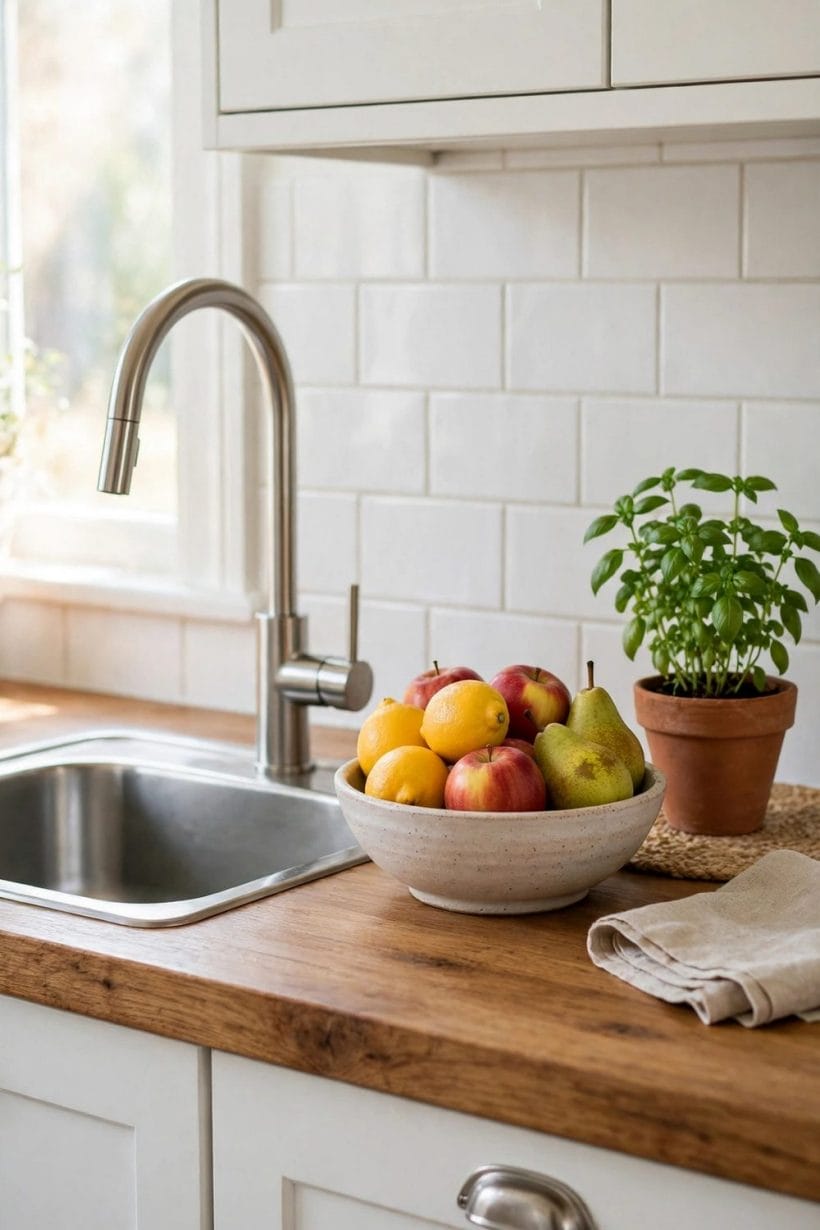
Stainless steel earns its place in kitchens through a combination of toughness, hygiene and a calm, neutral look that sits happily beside timber, stone and painted cabinets alike. It resists staining from everyday kitchen use, wipes clean without fuss, and does not demand special treatments to stay serviceable. That everyday resilience is the reason it remains a common choice even as fashions in kitchen design come and go.
Within steel sinks, feel matters as much as appearance. A heavier, more solid-feeling sink tends to feel quieter and more settled in use, while a very light sink can feel tinny when water runs or items are set down. Run a hand over the surface in a showroom and notice whether it feels smooth and even. Look at the finish, too: a brushed finish softens reflections and hides small marks more readily, while a polished finish looks brighter but shows water marks and light scratches more easily. Neither is right or wrong in itself; the question is which one suits your tolerance for visible marks and your cleaning habits.
Pay attention to the corners and edges as well. Gently rounded corners are easier to wipe clean than sharp internal corners, and a well-formed rim sits neatly against the counter without awkward gaps. Ask the supplier how the finish should be cared for and what cleaning products to avoid, and keep that advice with your kitchen notes. A sink whose care routine matches your household is one you will actually maintain.
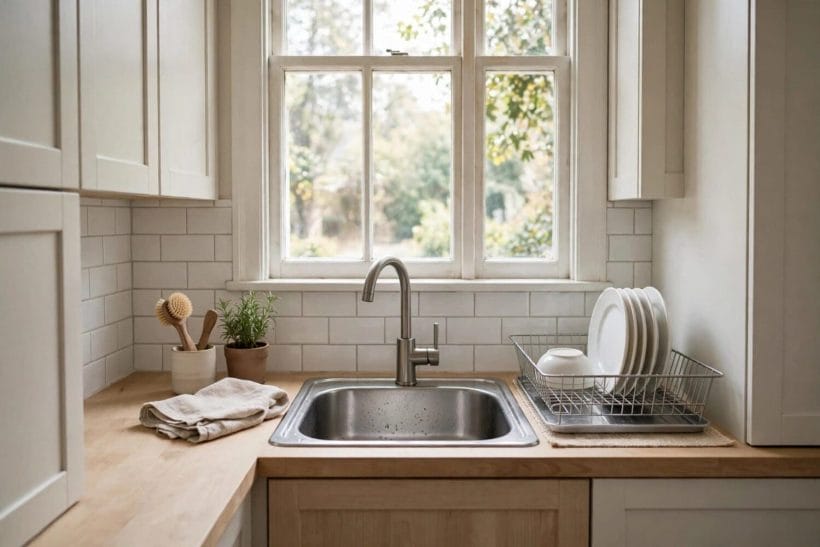
Smaller rooms reward the same unhurried checks, as these small kitchen ideas demonstrate with compact sink runs that still leave room to work.
5. Depth, Drainage and Everyday Comfort
Depth shapes comfort more than many buyers expect. A deeper bowl hides tall items and keeps splashes contained, which suits households that wash large pots or stack a lot at once. A shallower bowl, by contrast, means less reaching down and less bending, which can matter a great deal if the person who washes up most often has a sensitive back or simply prefers a more upright stance. Stand at a sink for a while in a showroom if you can, and notice how your shoulders and back feel rather than judging by appearance alone.
Drainage is the quiet partner of depth. A bowl that drains cleanly leaves less standing water and less wiping afterwards, and the position of the drain affects where items sit and how water flows. Notice whether the base slopes gently towards the drain and whether the drain sits where it will not be blocked by the largest pan you use. A strainer that lifts out easily for cleaning is a small detail that makes daily use pleasanter, and it is worth checking before you buy rather than after.
Comfort also includes the space in front of the sink. You need room to stand squarely, to move your elbows freely and to step back with a heavy pan without bumping into something behind you. If the sink sits in a corner or beside a tall appliance, check the standing room and the reach to the tap. A sink that looks generous on paper can feel cramped if the space around it is tight.
6. Taps, Holes and Accessories to Plan Together
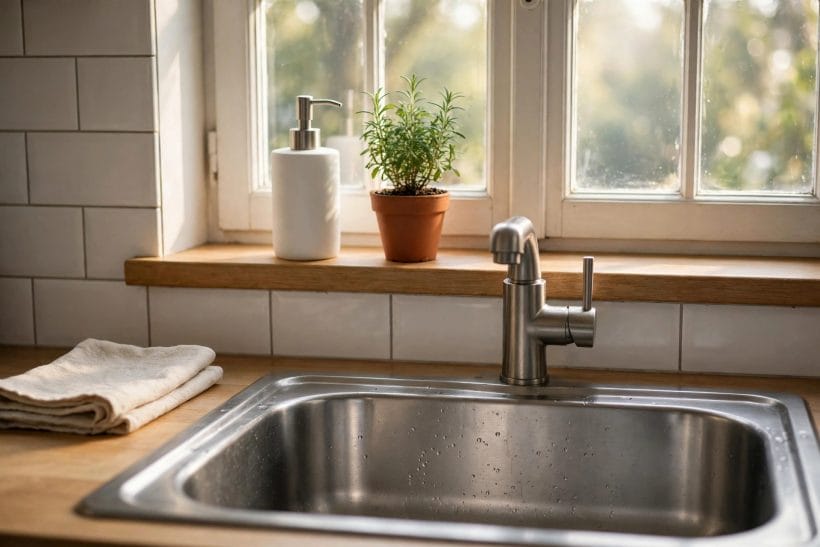
A sink is rarely bought alone, so plan the tap and the accessories at the same time as the sink itself. The number and position of tap holes determine which taps can be fitted, and a tap that is too short for a deep bowl or too tall for a low cabinet can spoil an otherwise sound choice. Think about reach as well: the water should fall comfortably into the bowl without splashing over the sides, and the tap should be easy to operate with wet or soapy hands.
Accessories deserve the same joined-up thinking. A draining rack, a chopping board that sits over the bowl, a colander insert or a simple soap dispenser can each make daily work easier, but only if they fit the sink you actually choose. Check compatibility with the supplier before ordering, and be wary of accessories bought separately that assume a different bowl shape or size. A well-matched set feels like part of the kitchen, while a mismatched set ends up unused in a cupboard.
Also think about cleaning around the tap base and the rim, since those are the places where water and residue gather. A design with fewer awkward crevices is quicker to wipe down, and a tap that can be lifted or moved aside for cleaning saves effort over time. These small practical points matter far more in daily life than a striking silhouette.
When the sink choice forms part of a wider update, these kitchen remodel ideas help you sequence the sink, tap and counter decisions in a sensible order.
7. Sound, Care and Keeping the Surface Looking Good
Sound is easy to overlook until the first pan clatters into an empty bowl. Steel can be lively under running water and dropped cutlery, and some sinks carry sound-dampening material underneath to soften that noise. If your kitchen opens into a living space, or if early-morning washing up needs to stay quiet, ask the supplier about sound behaviour and whether the sink includes any dampening. A quieter sink makes the whole kitchen feel calmer.
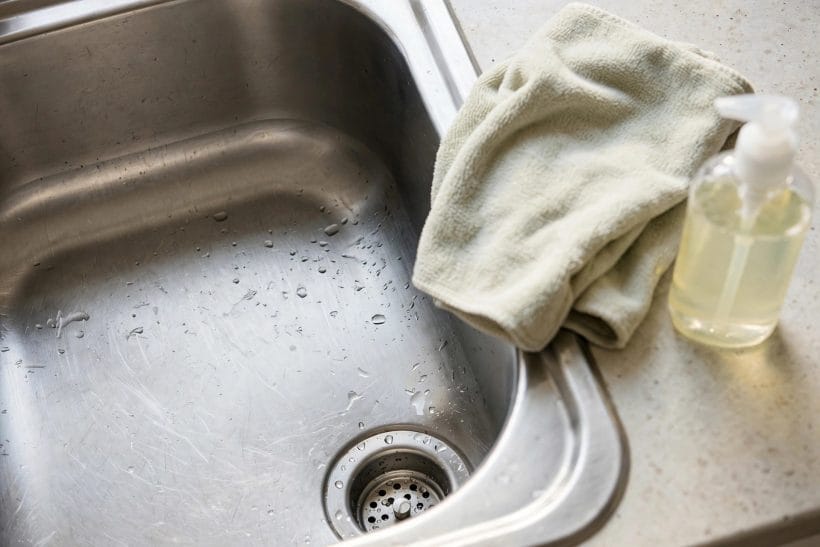
Daily care for steel is refreshingly simple. A soft cloth, warm water and ordinary washing-up liquid handle most everyday cleaning, followed by a rinse and a wipe dry to reduce water marks. Avoid harsh scouring pads that can scratch the surface and dull the finish over time, and wipe up strongly coloured liquids promptly rather than leaving them to sit. These gentle habits keep the surface looking even and pleasant without turning cleaning into a chore.
Over time, steel develops a lived-in character with fine marks from normal use, and that is part of its honest appeal rather than a fault. A brushed finish tends to wear these marks gracefully, while a polished finish may show them sooner. If a perfectly uniform surface matters a great deal to you, say so when choosing, and let that preference guide the finish you pick. Matching expectations to the material is the surest way to stay happy with it.
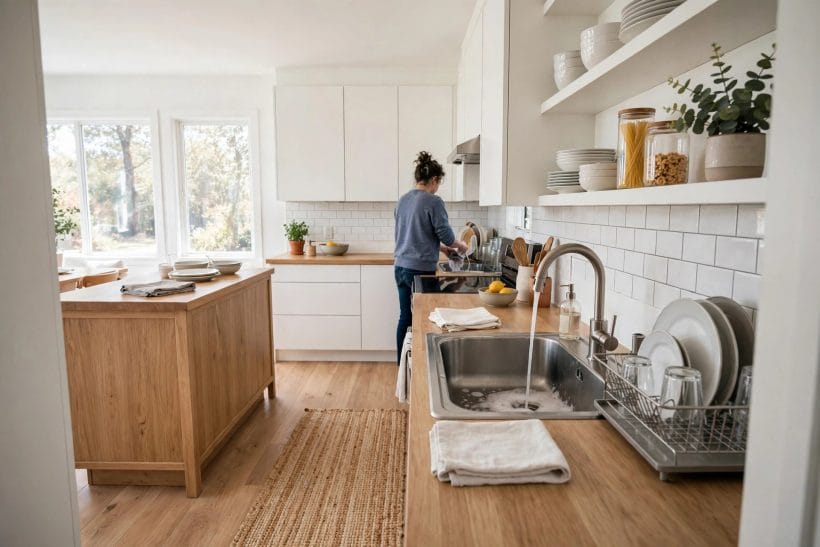
8. Fitting, Sealing and the Professional’s Role
Fitting is where a good sink choice becomes a good kitchen, and it is work for a qualified plumbing professional. Connections, sealing and the relationship between sink, counter and pipework all affect whether the sink stays watertight and trouble-free. A professional will confirm that the sink suits the cabinet and counter, that the waste and overflow arrangements are sound, and that seals are formed properly so water cannot creep into the cabinet below.
Before fitting day, ask the professional what they need from you and what decisions must be settled in advance. That conversation might cover the tap, the waste fittings, the worktop material and access beneath the sink for future maintenance. Settling those points early avoids pauses mid-job and reduces the chance of a compromise made under pressure. Keep the sink instructions and any care notes somewhere safe, so future maintenance can refer to them.
After fitting, the professional should check for leaks, confirm that the tap and waste operate smoothly, and show you how the sink drains and how the strainer lifts for cleaning. If anything feels awkward or looks uneven, raise it while the professional is still on site. A careful handover at this stage protects the investment you have made in the sink, the counter and the kitchen around them.
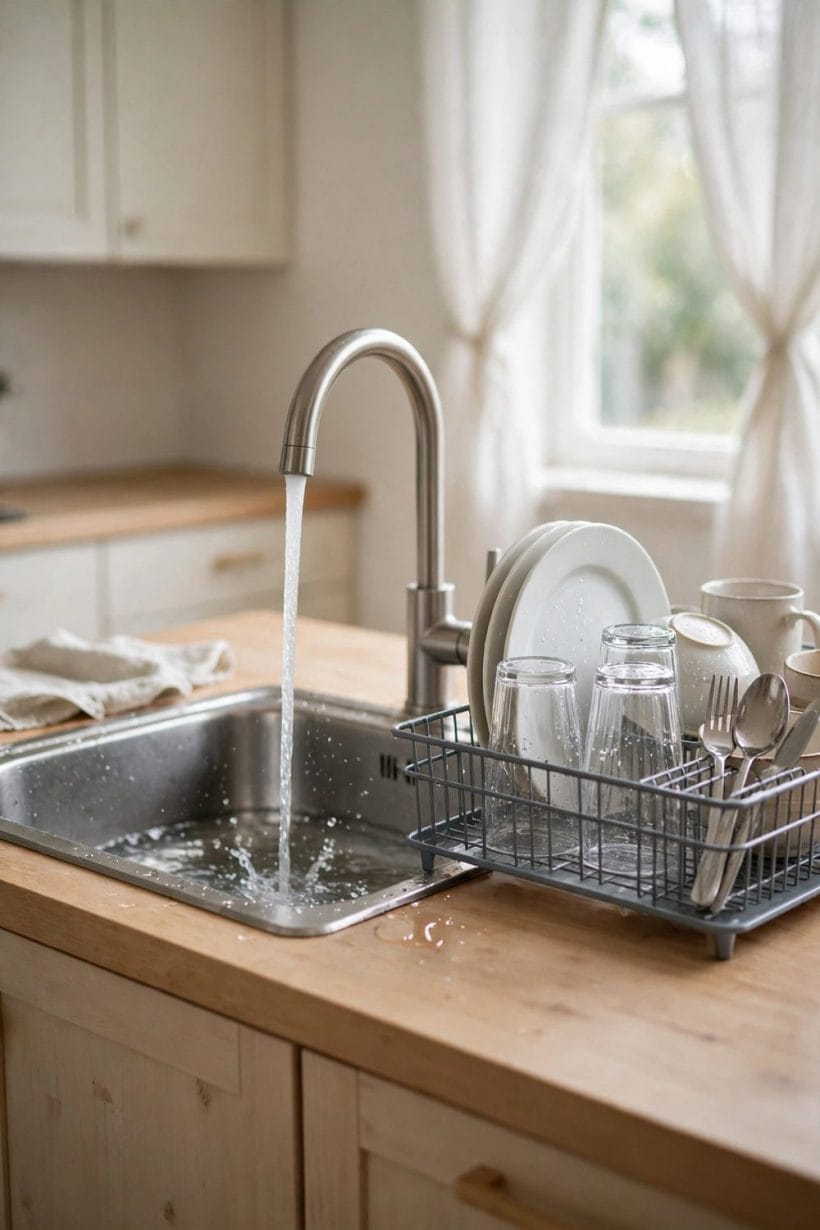
Water fittings in other rooms follow the same professional-only principle, as these tiny bathroom ideas illustrate for compact wet rooms.
9. Small Kitchens and Compact Layouts
Small kitchens ask the most from a sink, because the sink must work hard without stealing counter space the kitchen cannot spare. In a compact layout, a well-chosen single bowl often serves better than a divided layout that leaves both sides too small for everyday pans. Equally, a bowl that sits neatly in the available run, with a little counter left on each side, will serve you better than a larger bowl that swallows the whole work surface.
Think about how the sink relates to the cooker and the fridge, since those three points form the working triangle of most kitchens. A sink placed within easy reach of both, with a clear landing space beside it for hot pans and washed items, keeps cooking flowing even in a tight room. If the kitchen has a single run of units, the order of sink, preparation space and cooking space matters even more, because there is no second run to absorb overflow.
Storage beneath the sink deserves thought, too. Cleaning supplies, a bin and spare cloths often live there, and a sink with awkward pipework can eat into that storage. Ask the plumbing professional how much usable space will remain beneath the chosen sink, and plan the storage around that reality rather than assuming the full cabinet will be available. In a small home, every cupboard counts.
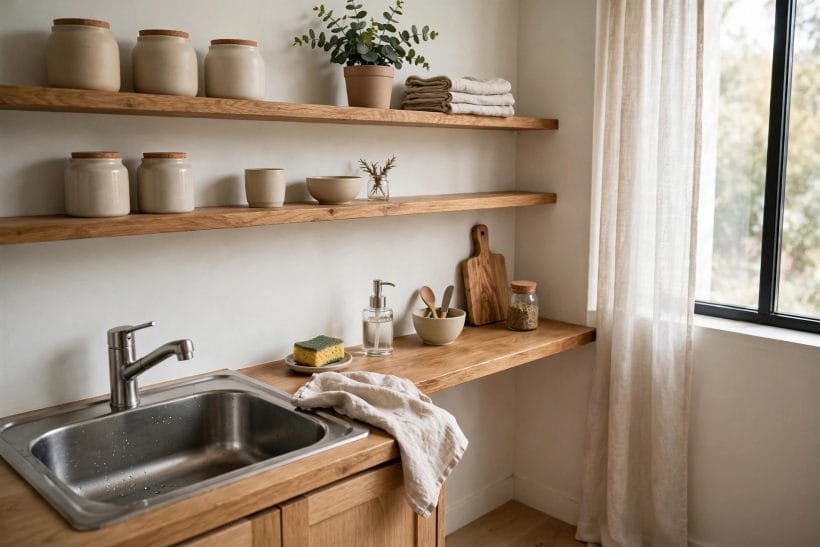
For the home as a whole, these home design ideas show how a compact kitchen can still feel generous when its parts are chosen together.
10. Questions to Ask Before You Order
A short list of questions, asked before ordering, prevents most sink disappointments. Start with fit: does this sink suit my cabinet, my counter material and the space around it, and has a plumbing professional confirmed that fit? Then move to daily use: does the largest pan I wash regularly fit comfortably, and does the bowl layout match how I actually wash, rinse and stack?
Next, ask about the tap and accessories: which taps fit the holes provided, which accessories are made for this sink, and how easy is the whole arrangement to clean around? Ask about care as well: what cleaning routine does the supplier recommend, what should be avoided, and how does the finish age with normal use? Answers to these questions tell you whether the sink will stay pleasant to live with, not merely pleasant to look at.
Finally, ask about the practicalities of ordering and fitting: what is included with the sink, what must be ordered separately, how long fitting is expected to take, and what should be checked at handover? A supplier and a plumbing professional who answer clearly and without pressure are giving you useful information, while vague answers are a signal to slow down and ask again. Ordering with clear answers in hand is the calmest way to buy.
Final Considerations
A stainless steel sink chosen for your routine, your space and your cleaning habits will quietly serve your kitchen for years. It will not demand attention, it will not fight your daily habits, and it will sit comfortably beside whatever style the rest of the kitchen takes. That quiet competence is the real measure of a good choice.
Take your time, compare a few options against the checks in this guide, and lean on a qualified plumbing professional for fit and fitting. When the sink suits the way you cook, wash and live, the decision feels settled rather than forced, and the kitchen gains a hardworking centre that you can rely on every single day.



0 Comments