
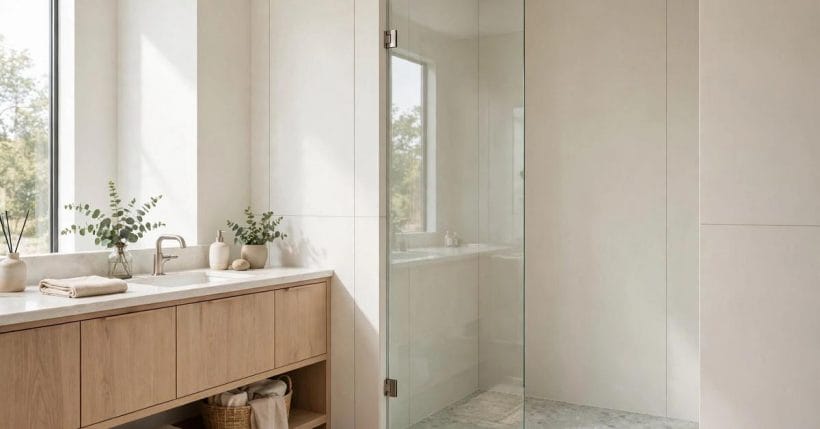
Some bathrooms are remembered for the shower wall. Not the fittings, not the floor — the wall itself: a sweep of deep green tile, a pale seamless panel, a mosaic that catches the morning light. The wall is the largest surface in the shower, so it sets the whole mood. This guide gathers shower wall ideas by material, colour and layout, so you can picture what suits your bathroom before you talk to a professional about the work.
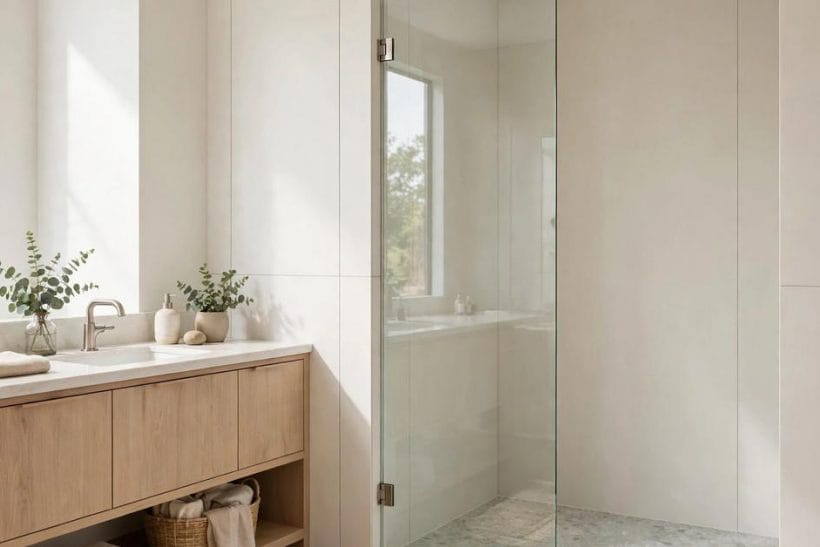
1. A Survey of Shower Wall Materials
The first decision is the material family, because it shapes everything else: how the wall looks, how it feels to the touch, how much pattern it can carry, and how it sits beside the rest of the bathroom. This survey of shower wall ideas starts with the broad families, each with its own character, so you can narrow the field before falling in love with a single finish. Tile is the most flexible family of all, panels and slabs offer calm, seamless surfaces, glass opens a tight room up, and mosaic brings small-scale colour and shimmer. None of these is the right answer for every bathroom. The right one is the one that suits the room you have, the light it gets, and the style of the home around it.
| Material family | The look it gives | Suits best |
|---|---|---|
| Glazed and porcelain tile | Endless colour, pattern and finish choices | Rooms where variety and character matter |
| Stone and stone-look surfaces | Natural veining and quiet luxury | Calm, spa-like bathrooms |
| Wall panels | Smooth, joint-light, contemporary surfaces | Clean modern schemes and quick refreshes |
| Solid slabs | Bold, uninterrupted expanses | Generous walls and statement showers |
| Glass | Light, openness and reflection | Small or dark bathrooms |
| Mosaic | Fine detail, shimmer and colour play | Accent walls, niches and curved surfaces |
| Wood-look surfaces | Warmth and natural texture | Rustic, coastal and cabin styles |
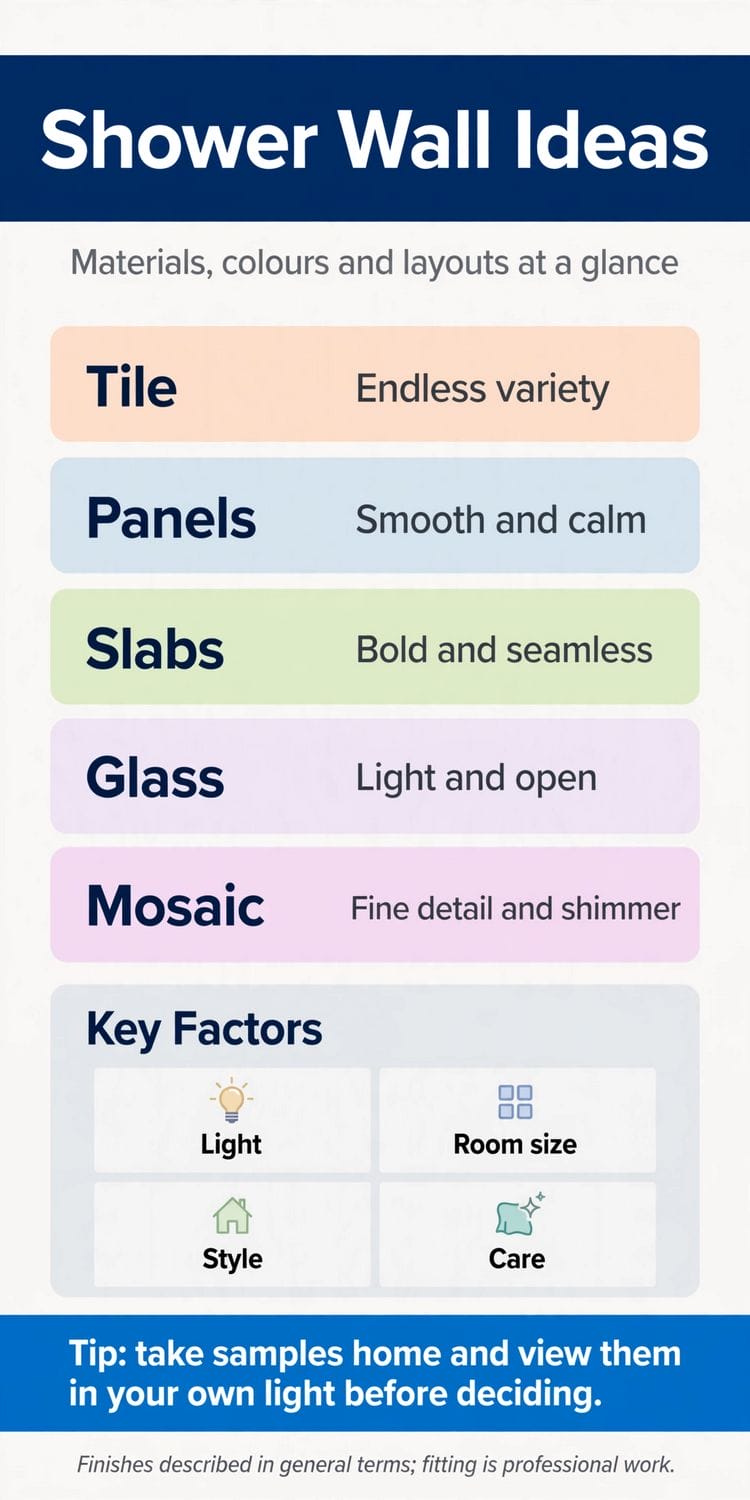
One framing point belongs at the start. This is an ideas guide, not a fitting guide. Anything that touches plumbing, waterproofing or the structure of the wall belongs to qualified professionals, and the ideas below are written to help you brief them well, not to replace them. With that settled, the fun part begins: choosing a wall that makes the whole bathroom feel considered.
2. Tile in All Its Moods
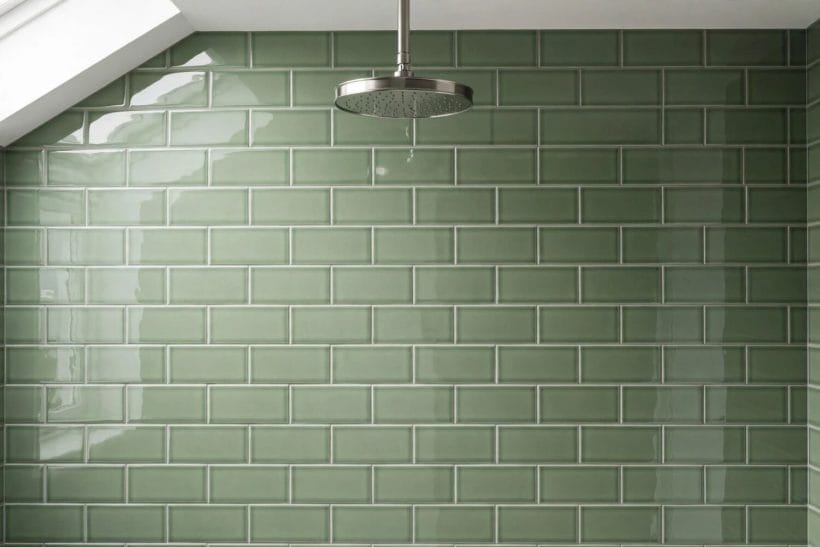
Tile remains the most expressive shower wall material, because it can be almost anything. A wall of glossy white subway tile reads crisp and classic. The same wall in a handmade-look glaze, with soft variation from piece to piece, reads warmer and more relaxed. Large square tiles in a matte finish read calm and contemporary, while a wall of narrow vertical tiles draws the eye upward and makes a low ceiling feel taller. The material stays the same; the mood changes entirely with size, finish, laying pattern and grout colour.
Pattern is where tile earns its keep. A herringbone layout turns a plain colour into a feature. Stacked vertical tiles feel orderly and modern. Brick-bond courses feel familiar and easy on the eye. A diagonal lay adds movement to a plain room. And grout colour is a design decision in its own right: grout that matches the tile disappears and lets the colour lead, while contrasting grout draws out the pattern and makes each tile a small piece of the design. If you love pattern but fear commitment, try it on one wall and keep the rest quiet — the shower wall can carry the pattern for the whole room.
For inspiration across tile-led schemes, see the tiled shower ideas collection, which explores tile, pattern and grout as the heart of the design. Texture matters too. A matt finish softens glare and suits a restful bathroom. A gloss finish bounces light around a small room and makes colours look deeper. A lightly textured tile adds grip for the eye, catching light differently across the day. Run your hand over samples in daylight and in evening light before deciding, because a tile that looks perfect under a showroom lamp can read very differently at home.
3. Panels and Slabs for a Seamless Look
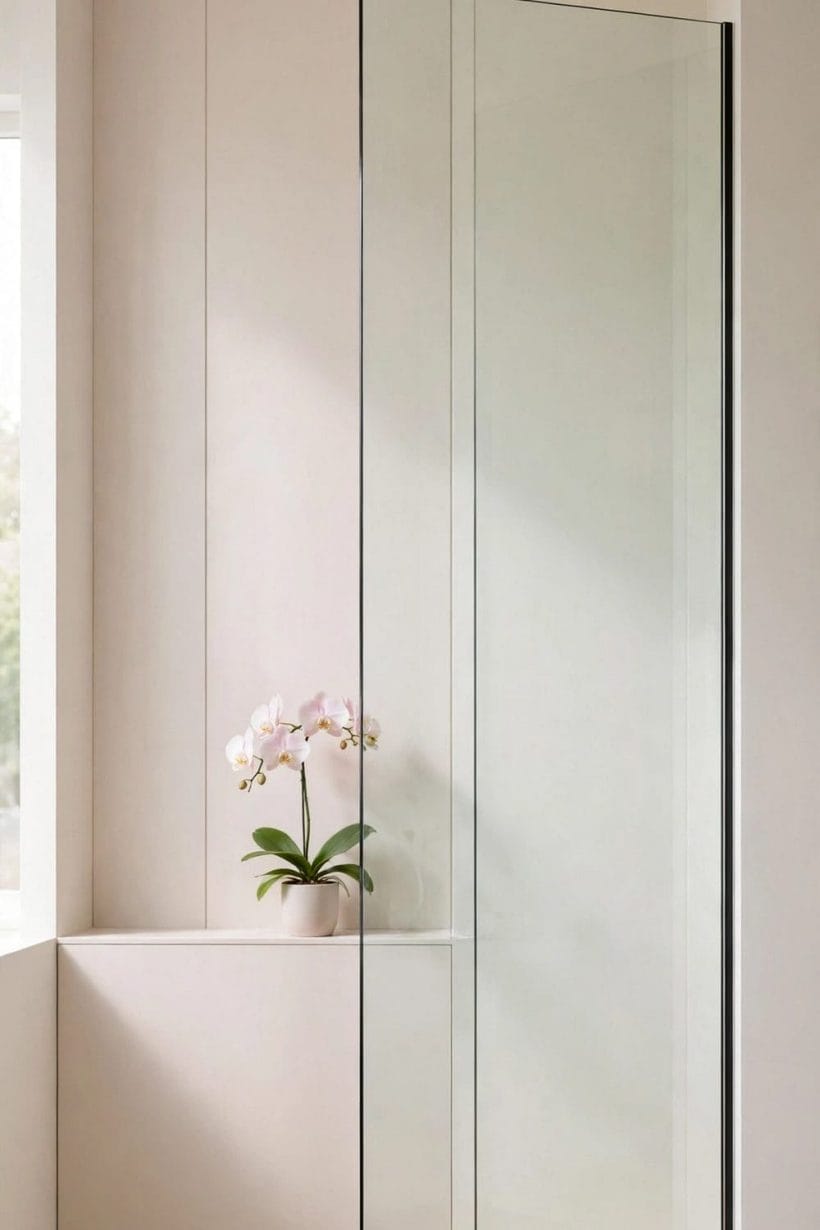
Some bathrooms call for calm, and that is where panels and slabs shine. A panelled wall has few visible joints, so the eye travels across it without interruption. The result feels clean, spacious and uncluttered — a good match for modern bathrooms, small rooms where visual clutter shrinks the space, and anyone who prefers a quiet backdrop to bold fittings. Panels come in a wide range of finishes, from plain pale surfaces to convincing stone and marble looks, so a seamless wall need not be a plain one.
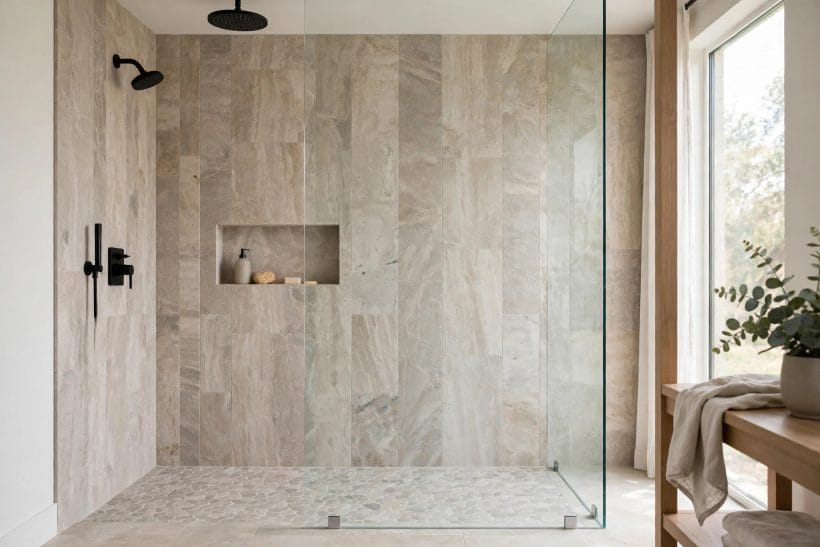
Solid slabs take the same idea further. A single sweeping surface, veined like natural stone or softly mottled like concrete, turns the shower wall into a piece of architecture rather than a decorated surface. Slabs suit generous walls best, where the expanse can be appreciated, and they pair beautifully with minimal fittings: a simple rainfall head, a slim drain line, a frameless screen. The wall becomes the feature, so everything else can stay quiet.
Panels and slabs also suit a phased refresh. If the rest of the bathroom is staying as it is, a new panelled wall can lift the whole room without a full refit. The companion guide to shower wall checks covers the practical side of choosing between panels, slabs and tile, so the ideas here and the checks there sit side by side. One caution in brief: the wall behind the surface, and the waterproofing that protects it, are professional work — the finish you choose should always be discussed with the people who will fit it.
4. Colour: Pale, Dark and Everything Between
Colour is the fastest way to change how a shower feels. Pale walls — white, soft grey, warm cream, pale sage — open a room up, reflect light, and make a small shower feel generous. They also act as a calm background, letting brass fittings, a timber stool or a trailing plant do the talking. If your bathroom is small or short on daylight, pale is the safest and often the most beautiful choice.
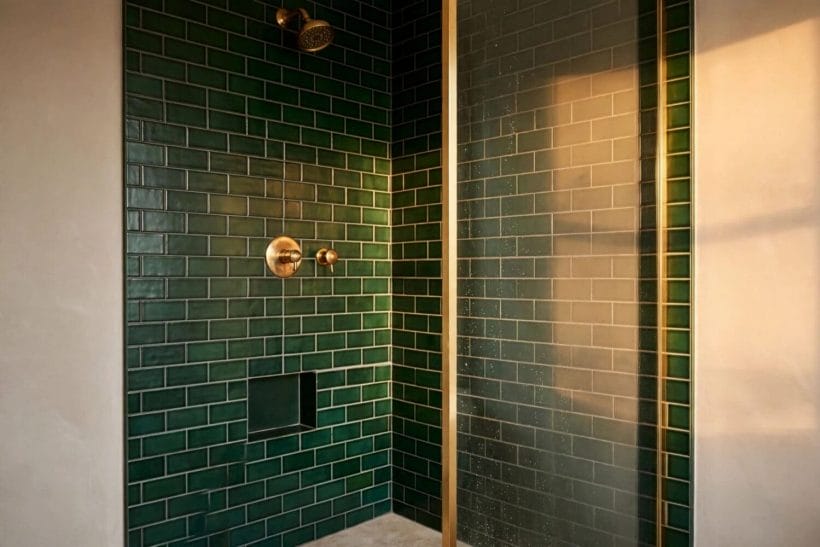
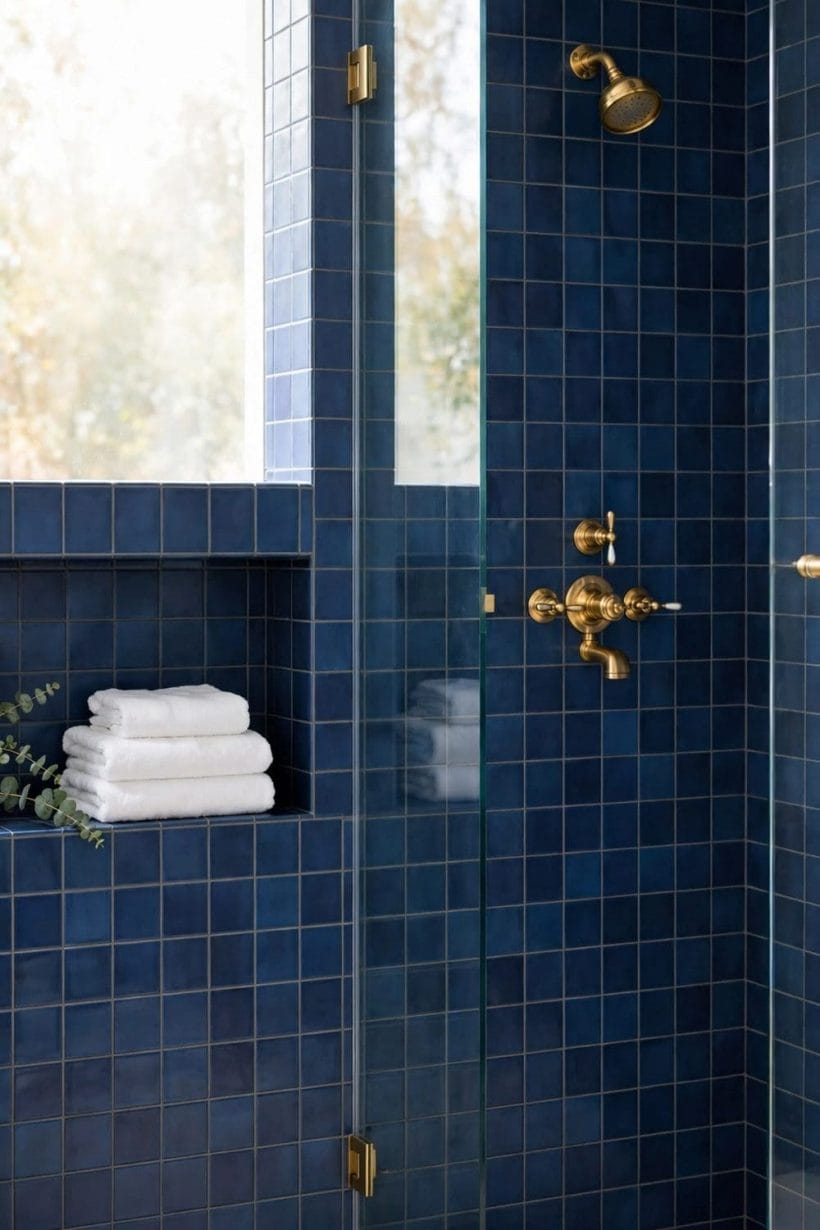
Dark walls do the opposite job, and do it brilliantly. Deep green, navy, charcoal or near-black tile wraps the shower in atmosphere, turning an ordinary corner into a cocoon. Dark walls suit larger showers and rooms with good light, where the drama has room to breathe. They also make pale fittings and white towels stand out, and they hide the everyday marks of use more forgivingly than a pristine white wall. The trick is balance: a dark shower wall with pale floors and good lighting feels luxurious, while a dark wall in a dark room can feel closed in.
Between the two poles sits a world of colour. Soft blues feel fresh and coastal. Warm terracotta and blush tones feel Mediterranean and welcoming. Muted greens connect the bathroom to the garden beyond the window. The best colour choice is rarely the boldest one in isolation; it is the one that talks to the rest of the house. Carry a sample of your wall colour into the hallway, hold it against the bedroom paint, and see whether the bathroom will feel like part of the home or a room apart.
5. Pattern, Texture and the Accent Wall
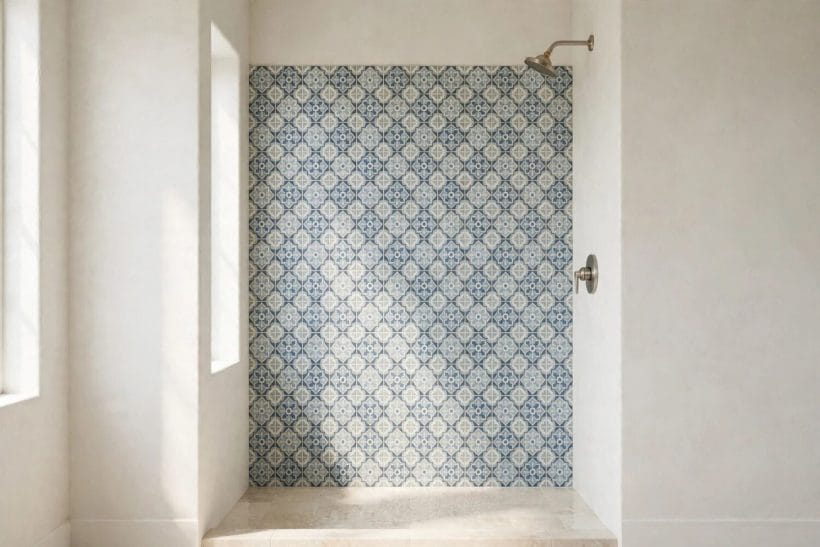
Not every wall in the shower needs to do the same job. The accent wall — usually the wall you face as you step in, or the wall behind the shower head — can carry the pattern, colour or texture while the other walls stay quiet. This is the easiest way to be bold without overwhelming the room. A patterned cement-look wall, a band of encaustic-style tiles, a mosaic panel or a strongly veined stone-look surface all work beautifully as a single statement, framed by plainer walls.
Texture is the quieter cousin of pattern. Fluted tiles catch light in vertical stripes. A split-face stone-look surface adds rugged depth. A softly undulating handmade-look glaze changes across the day as light moves over it. Textured walls reward touch as well as sight, and they make a shower feel crafted rather than assembled. They also pair well with plain floors: when the wall carries the texture, the floor can stay simple and the room still feels layered.
Wall tiles across the whole bathroom, not just the shower, are explored in the bathroom wall tiles design collection, which shows how a shower wall can lead a wider scheme. One practical note on accents: keep the accent to one wall, or one generous panel within a wall. Two competing patterns in a small shower fight each other, while one confident pattern with quiet neighbours reads as intentional. If you fall for two patterns, use the second in a small dose — a niche back, a border strip, a shelf reveal — rather than a second full wall.
6. Small Showers, Big Wall Ideas
Small showers are where wall ideas work hardest. With little floor space to play with, the wall becomes the design. The classic moves all serve the same goal: make the room feel larger than it is. Pale colours and gloss finishes bounce light. Large-format tiles mean fewer visible joints, so the wall reads as one surface rather than a grid. Vertical laying patterns draw the eye up. A wall of glass, or a glass screen over a pale tiled wall, keeps sight lines open so the bathroom beyond stays part of the picture.
Continuity is another small-space trick. Carry the same wall material from the shower across the rest of the bathroom and the room stops feeling divided into a wet corner and a dry corner. A single material wrapping the room reads as one generous space. Equally, a mirror placed to reflect the shower wall doubles its effect, turning a feature wall into the room’s centrepiece from every angle.
For more compact schemes, the small shower ideas collection gathers layouts and details for tight footprints. And do not overlook the ceiling line: running wall tiles up to the ceiling, rather than stopping at a convenient height, makes a small shower feel taller and more finished. A tiled ceiling edge, or a simple painted ceiling in a colour picked up from the wall, completes the envelope so the small room feels deliberate rather than squeezed.
7. Open and Walk-In Shower Walls
Open and walk-in showers change the wall’s role. Without a door or a full enclosure, the shower wall is often visible from across the bathroom, so it needs to look good from outside as well as inside. This is where calm, confident materials earn their place: a full-height tiled wall, a seamless panel, a stone-look slab that reads as part of the architecture. The wall becomes a piece of the room, not a hidden wet zone.
Partial walls are a design opportunity in their own right. A half-height wall in tile or panel, topped with glass, divides the shower from the rest of the room while keeping light and sight lines open. The top edge of that wall is a detail worth lingering over: a neatly finished cap, a timber trim, or a tiled return all signal care. In a walk-in layout, the far wall — the one you see first on entering the bathroom — is the natural feature wall, and it deserves the best material in the scheme.
The walk-in shower ideas collection explores curbless entries, glass and keeping water where it belongs. One caution for open layouts: because the wall is on show, its edges and junctions matter more, not less. A wall that looks flawless from inside the shower but ragged at its outer edge will disappoint every day. Discuss edge finishes and outer faces with your professional before work starts, so the wall looks finished from every angle you will see it from.
8. Niches, Shelves and the Wall as Storage
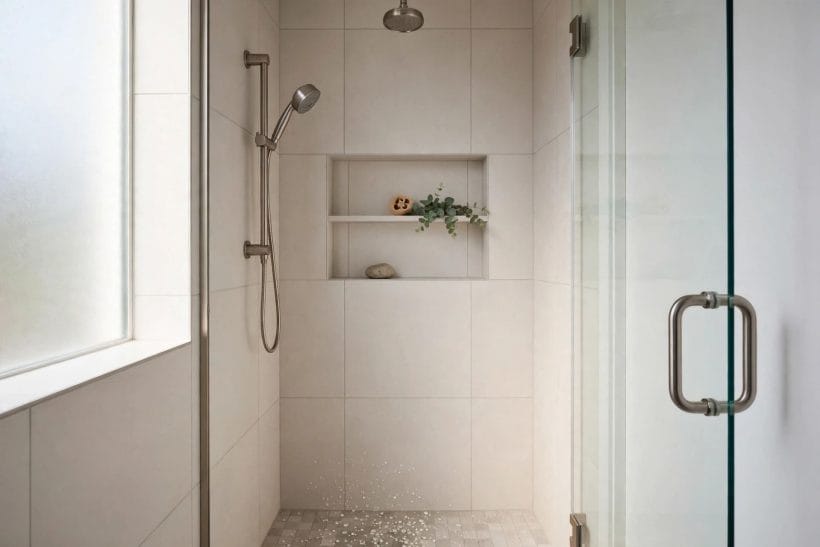
A shower wall can work as well as it looks. Recessed niches — shallow shelves set into the wall itself — hold bottles and bars without cluttering the floor or hanging caddies over fittings. A niche lined in a contrasting tile becomes a design feature in its own right: a small framed panel of mosaic, patterned tile or a bold colour, set into a calm wall. A long horizontal niche reads as a design line across the wall, while a tall vertical niche suits a wall of vertical tiles.
Where a recess is not possible, the wall can still carry storage gracefully. A slim ledge running along the wall at hand height holds everyday bottles and keeps them off the floor. A corner shelf unit in a matching material tucks into dead space. A teak or stone ledge adds warmth against tile. The principle is the same in every case: storage that belongs to the wall looks intentional, while storage hung on afterwards looks temporary.
Niches also solve a colour problem. If you love a bold tile but fear a whole wall of it, put it in the niche. A small dose of pattern, framed by a quiet wall, gives you the colour you love without the commitment of a full feature wall. The same trick works with mosaic: a mosaic niche back against plain walls is one of the most reliable small luxuries in bathroom design, and it adds nothing in visual clutter because it sits within the wall rather than on it.
9. Mixing Materials Without a Mess
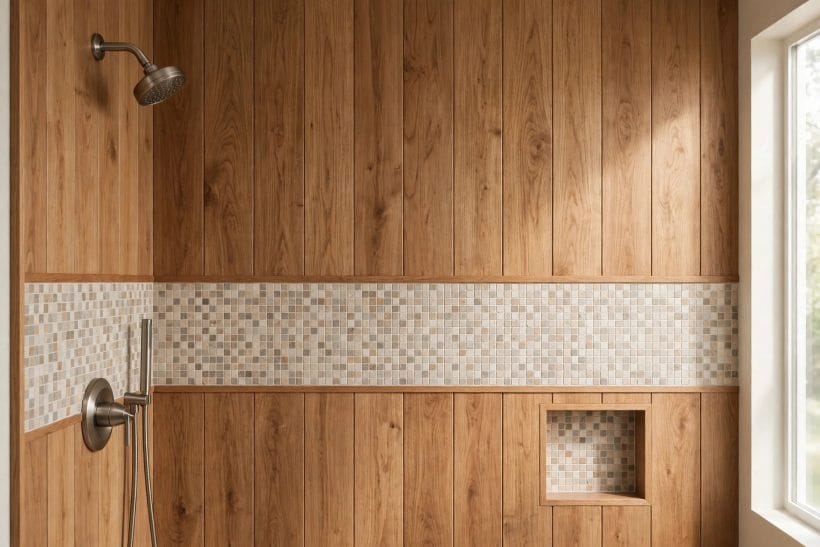
The most interesting shower walls are rarely a single material. Tile meets panel, stone-look meets timber-look, mosaic accents a plain field — but mixed materials only work when one material leads and the others support. Choose a lead material that covers most of the wall, then add one supporting material as an accent. Two leads competing for attention is how a shower ends up looking busy rather than layered.
Colour is what holds a mix together. Materials that share an undertone — warm whites with warm timber, cool greys with cool stone — sit comfortably side by side even when their textures differ. A shared grout colour, a repeated brass or matt black fitting finish, or a single floor material running throughout can also tie the mix together. When in doubt, simplify: remove one material from the scheme and see whether the wall reads more clearly. The best mixes usually have one material fewer than the first draft.
Transitions deserve as much thought as the materials themselves. Where tile meets panel, where a mosaic band ends, where a niche lining meets the field tile — each junction is a line the eye will follow. A slim trim, a carefully aligned grout joint, or a deliberate step between surfaces turns a junction into a detail. Ragged transitions, by contrast, undo good material choices. This is another point to raise with your professional early: ask how each transition will be finished, and look at examples of their finished junctions before work begins.
10. Matching the Wall to the Rest of the Bathroom
A shower wall never stands alone. It sits beside a vanity, a mirror, a floor and a ceiling, and the best schemes are the ones where the wall talks to its neighbours. A wall of warm timber-look panels pairs naturally with a timber vanity and woven baskets. A cool stone-look wall suits a pale vanity, chrome fittings and a frameless mirror. A patterned wall asks for a quiet floor and plain towels, so the pattern has room to breathe. The wall sets the tone; the rest of the room answers it.
Light is the final partner. A wall that looks rich in a sunlit bathroom can look flat under a single harsh ceiling light, while a glossy wall that sparkles in daylight can glare under bright downlights. Layer the light if you can: a soft general light, a warm light over the mirror, and daylight wherever the room allows it. And choose fittings that flatter the wall rather than fight it — slim profiles against a busy pattern, bolder fittings against a calm wall. The wall and the fittings should take turns being the star.
If a wider refresh is on your mind, the shower remodel ideas collection covers layouts, enclosures, tiles and the order the work happens. It is a useful next read once the wall direction is settled, because it puts the wall choice into the sequence of a whole shower project, from first layout sketches to the finishing details that make a remodel feel complete.
Final Considerations
Start with the room you have, not the wall you saw in a photograph. A material that looks magnificent in a large, sunlit bathroom may overwhelm a small, dark one, and a pale seamless wall that calms a busy family bathroom may feel plain in a generous room that wants drama. Light, size, existing fittings and the style of the home are the real brief — the wall material is the answer to it.
Then narrow by feeling. Do you want the shower to energise you in the morning or calm you in the evening? Do you want pattern and colour, or quiet and seamless? Do you want the wall to be the feature, or the backdrop? Answer those questions honestly and the material shortlist almost writes itself. Take samples home, look at them in your own light, and live with them for a few days before deciding.
Finally, bring a professional into the conversation early, before materials are ordered. Plumbing, waterproofing and structural work are theirs, and their advice on what suits your walls, your water and your home can save a beautiful idea from a disappointing finish. For a different kind of shower altogether, the simple outdoor shower ideas collection shows how the same material thinking works outside. Choose a wall you will still love on an ordinary Tuesday morning — that is the real test of a good shower wall.



0 Comments