

Good tiny house airbnb design is not about squeezing a normal home into fewer square feet — it is about deciding, in advance, what a guest’s stay actually feels like hour by hour: the first photograph that earned the booking, the first step through the door, the first night’s sleep, the first coffee, the shower after a long drive, and the ten unglamorous minutes of packing up and leaving. Guests forgive small. They do not forgive dark, damp, cluttered, flimsy or confusing, and in a tiny house every one of those flaws sits within arm’s reach of the bed.
This guide gathers twenty design ideas that consistently earn love in tiny stays, organised the way a stay unfolds: sleep first, then light, kitchen, bathroom, the outdoor room, the styling that photographs well, and the hidden design work — cleaning ease and durability — that decides whether the first twenty ideas survive their fiftieth guest. Each idea is practical rather than decorative: what to choose, why guests notice it, and the honest trade-off it asks of the host. None of it requires a big budget; all of it requires deciding before the first booking rather than apologising after the first review.
At a Glance: The 20 Ideas at a Glance
| Group | Ideas | Guest Notices It When |
|---|---|---|
| Sleep | 1 Real mattress · 2 Hotel-style bedding · 3 True darkness and quiet | They wake up rested |
| Light and air | 4 Layered lighting · 5 Dimmers and warm bulbs · 6 Blackout plus sheer curtains | Evenings feel cosy, mornings feel fresh |
| Kitchen | 7 Real mini-kitchen · 8 Proper coffee setup · 9 A table that seats everyone | They cook instead of ordering in sadly |
| Bathroom | 10 Spa-signal towels and toiletries · 11 A shower that feels generous · 12 Hooks, shelves and a mirror that works | The smallest room feels considered |
| Outdoor room | 13 Deck or patio as a second room · 14 Outdoor light and warmth | Evenings move outside |
| Styling | 15 One clear photo-first focal point · 16 A tight, calm colour palette · 17 Texture over clutter | The listing photos match the arrival |
| Hosting systems | 18 Designed-for-cleaning surfaces · 19 Hidden storage for host supplies · 20 Hard-wearing finishes everywhere | Every stay starts equally fresh |
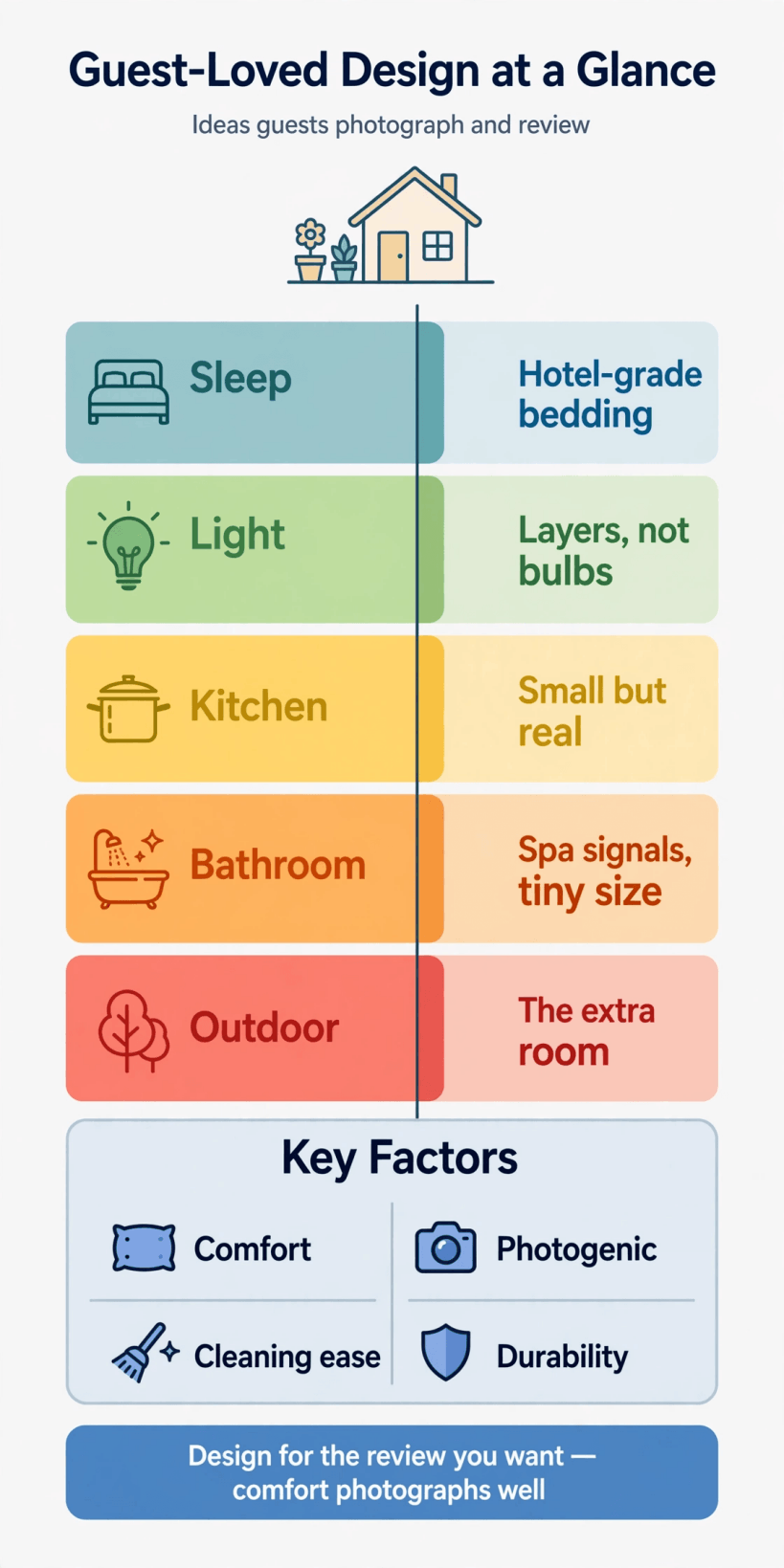
1. Sleep Quality: A Real Bed, Made Like a Hotel (Ideas 1–3)
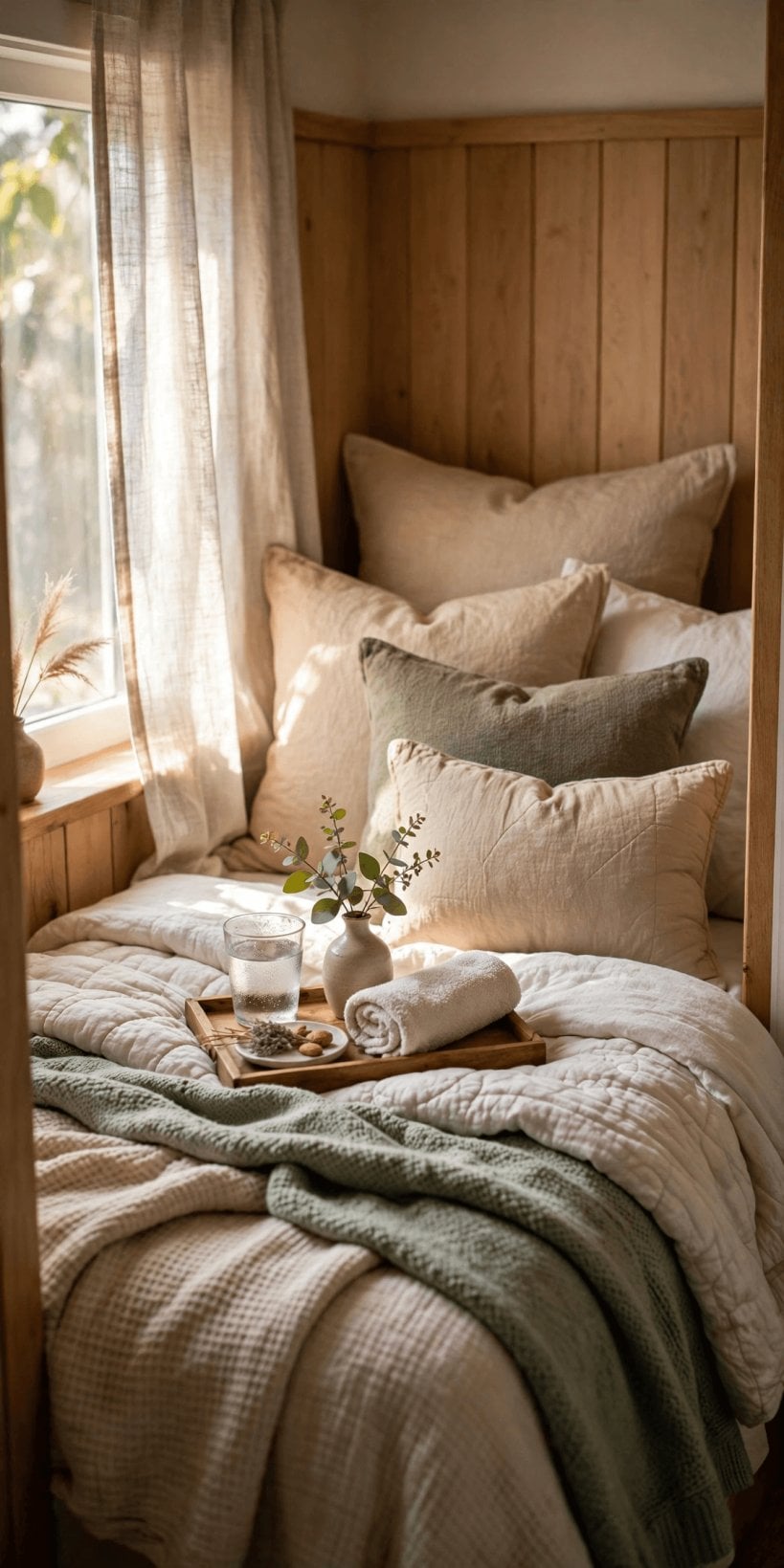
Idea 1 is a real mattress: the best full-size mattress the space can honestly hold, on a stable base that does not creak, shift or sag at the edges. If the bed is a loft, make the access honest — a sturdy stair or a ladder with deep, grippy rungs — and say so plainly in the listing. Idea 2 is hotel-style bedding: crisp white or light bedding that can be washed hot, layered with a duvet guests can add or shed, and two pillows per person of different firmness. Idea 3 is true darkness and quiet: a room-darkening solution at every window near the bed and enough sound softness — rugs, curtains, sealed gaps — that the countryside quiet guests booked for is the quiet they get.
Sleep is the review category a tiny stay cannot charm its way around, and hosts planning the space itself should start from the bed outward, as our guide to how to rent a tiny house on Airbnb explains when it walks through preparing a tiny house for guests. Honest trade-off: a bigger, better bed eats living floor. Take the space from the sofa, never from the sleep — guests sit for an hour and sleep for eight.
2. Layered Light: Three Levels, All Warm (Ideas 4–6)
Idea 4 is layered lighting: one soft overhead source, task light where things happen (kitchen counter, reading corner, mirror), and low accent light for evenings. A single ceiling bulb is the fastest way to make a beautiful tiny house feel like a storage unit. Idea 5 is control: dimmers or multi-level lamps and warm-toned bulbs throughout, matched so the room does not mix orange and blue light like an office corridor. Idea 6 pairs blackout with sheers at the windows — privacy and darkness for sleep, filtered daylight that keeps the small space feeling open in the morning.
Light has to survive real use: switches reachable from the bed and the door, a night-light path to the bathroom that does not blast a sleeping partner, and bulbs a cleaner can replace without a hunt. Good light is also a safety feature in lofts and on steps. Guests rarely praise lighting directly; they praise how the place felt in the evening — which is the same sentence, translated.
3. The Real Mini-Kitchen: Cook One Proper Meal (Ideas 7–9)
Idea 7 is a real mini-kitchen: a two-burner hob, a small oven or capable countertop alternative, a fridge that fits a weekend’s food, one good knife, one solid pan, a pot, a chopping board and the five utensils every meal needs. The test is simple — could a guest cook one proper dinner here without improvising a tool? Idea 8 is a proper coffee setup: a simple, forgiving machine or pour-over kit, fresh supplies, mugs that feel good in the hand, and instructions that take ten seconds to understand. Idea 9 is a table that seats everyone the listing sleeps, with real chairs — eating on the bed is charming in a photograph and miserable by night two.
Choosing compact equipment that still performs is its own skill, and compact kitchen appliances for tiny houses shows what earns its counter space. Keep counters as empty as the photos promise: store the extras, label the quirks (which switch, which tap direction), and leave the basics — oil, salt, foil, washing-up kit — so the first meal starts kindly.
4. The Spa-Signal Bathroom: Small Room, Generous Signals (Ideas 10–12)
Idea 10 is spa signals: thick towels in a calm colour, one per guest plus a spare, toiletries that smell like care rather than a motorway services, and a bath mat that is actually dry and clean at check-in. Idea 11 is a shower that feels generous despite its footprint: a decent shower head with real pressure, a shelf inside for bottles, a curtain or screen that contains the water, and ventilation that clears steam before it finds the walls. Idea 12 is the working detail around the mirror: a hook per guest, a shelf for wash bags so they are not balanced on the sink, lighting that faces the face rather than the ceiling, and a bin with a lid.
Bathrooms are where tiny houses earn their sharpest criticism, usually for damp and mildew rather than size — which is why the moisture thinking in tiny house ventilation: HRV, ERV and mold prevention matters as much to hosts as to builders. Design rule: everything in this room must dry — towels, mat, shower walls — between one guest’s shower and the next guest’s arrival.
5. Water and Waste Behind the Walls: Invisible, Until It Isn’t
Guests never see the plumbing layout, and they experience it completely: water pressure when the shower and the kitchen tap run together, drainage that does not gurgle or smell, hot water that arrives promptly and lasts a whole shower. Design the wet wall early and keep runs short and serviceable, the same logic set out in tiny house plumbing layout and DWV design, because retrofitting drainage fall inside a finished tiny bathroom is the expensive way to learn it.
Host-side, know your own systems well enough to brief a guest in one line and a plumber in one call: where the stopcock is, what must never go down the toilet — critical with composting or septic setups — and what the hot-water system’s honest capacity is. A tiny, laminated note beats a midnight message thread, and a water system that behaves is a five-star feature nobody photographs.
6. Climate Comfort: Warm, Cool and Fresh on Demand
A tiny volume heats and cools fast — an advantage guests feel within minutes of arrival, and a trap when insulation or shading is poor and the space swings like a tent. Design for a stable middle: insulation that keeps the shell honest, curtains or external shade for sun-loaded glass, and heating a guest can operate without instructions, sized with the options compared in how to heat a tiny house: heating options compared. If there is a loft bed, remember hot air rises to it — a small fan to push warmth down in winter and a vent or window strategy in summer keep the sleeping level honest.
Fresh air is part of comfort, not a building-code footnote: an openable window near the bed, a quiet extractor in the bathroom, and no lingering cooking or damp smell at check-in. Temperature and air are the background of every other idea in this guide; when they are right, guests call the house cosy, and when they are wrong, no cushion arrangement survives the review.
7. The Outdoor Room: Your Second Living Space (Ideas 13–14)
Idea 13 is a deck or patio treated as a genuine second room: level, drained, big enough for the morning-coffee chairs and the evening chairs to be the same good chairs, with a small table and a view deliberately framed — even a modest view reads as luxury when the seating faces it. Idea 14 is outdoor light and warmth: a warm light source that makes the space usable after dark, and where climate asks for it, a permitted heat source or simply blankets in a weatherproof box, so the outdoor room works in the shoulder seasons when tiny stays are at their most atmospheric.
The outdoor room also relieves the interior: boots, wet coats and muddy dogs can be staged outside the door under a small cover, keeping the tiny inside calmer. Be honest about exposure in the listing — a deck that is a dawn paradise and a wind tunnel by six should be described that way; guests reward accuracy and punish surprises, however photogenic.
8. Photo-First Styling: The Listing Is the First Stay (Ideas 15–17)
Idea 15 is one clear focal point per view: the bed made beautifully, the reading chair by the window, the table set for two — each photograph should have a subject, not an inventory. Idea 16 is a tight, calm palette: two or three colours repeated in bedding, cushions, towels and the exterior shots, so the whole listing feels like one considered place. Idea 17 is texture over clutter: wood, linen, wool and plants give photographs depth, while shelves of small objects give photographs — and guests, and cleaners — noise.
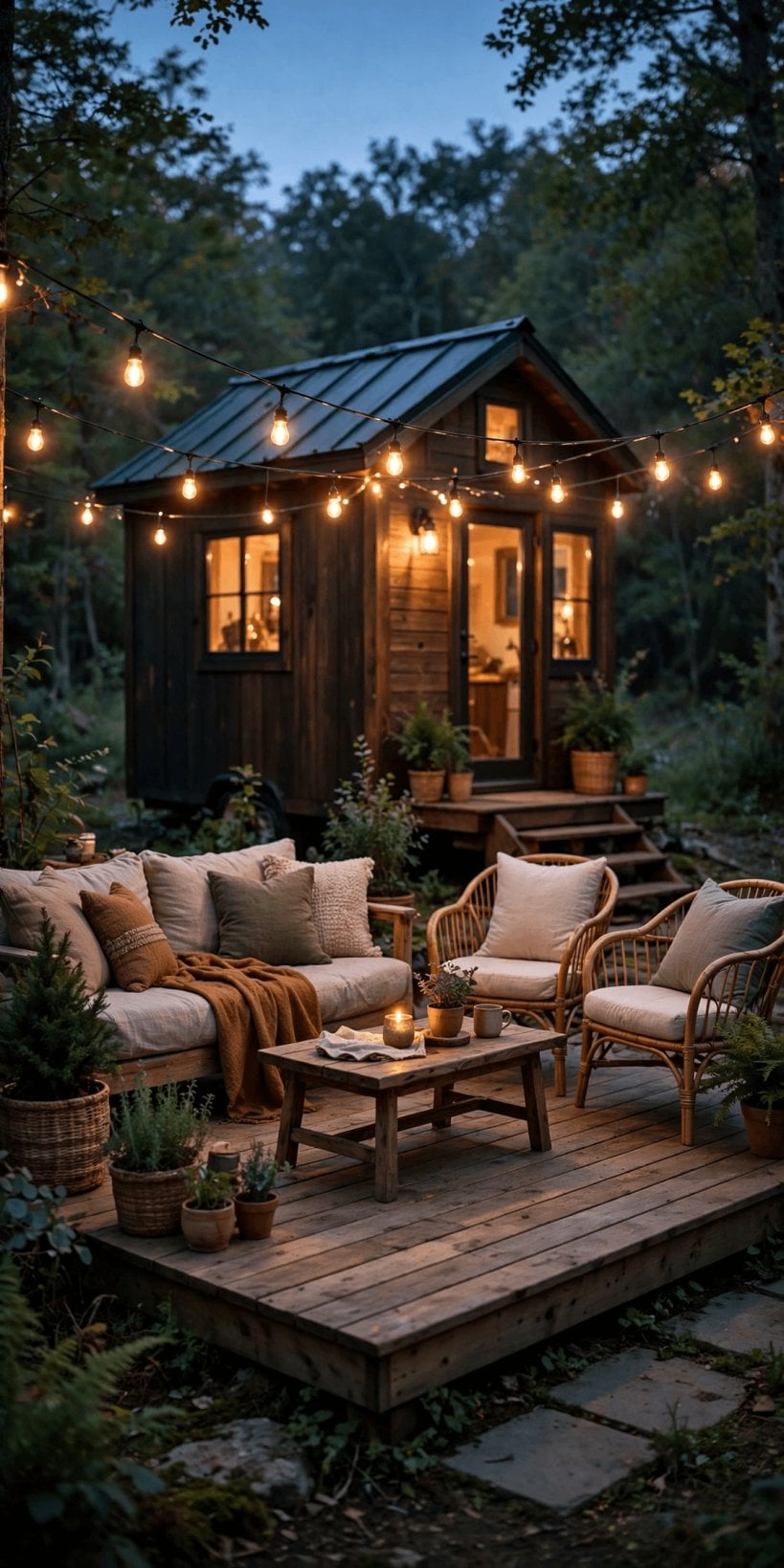
Style the house, then photograph the house you styled, then keep the house looking like the photographs — the styling discipline behind tiny house siding options: cedar, metal and composite applies indoors too: materials should look as good in year three as in the listing shoot. Shoot in daylight, include the honest wide shot that shows the size, and let one evening photograph sell the layered light you built in section 2.
9. Designed to Be Cleaned: The Turnover Test (Idea 18–19)
Idea 18 is designed-for-cleaning surfaces: washable paint in the kitchen and bathroom splash zones, sealed floors with no inaccessible grit traps, bedding and cushion covers that all come off and go through the same hot wash, and as few dust-ledge surfaces as the styling allows. Idea 19 is hidden storage for host supplies: a locked or simply out-of-sight store holding the spare linen sets, cleaning kit, bulbs and batteries, so a turnover never depends on what happened to be left in the car.
Design every idea in this guide through the turnover test: can one person reset this in the changeover window, in winter light, with cold hands? If a feature fails that test — a bed that cannot be made without climbing on it, a decorative arrangement that must be rebuilt each time — it will quietly degrade, and guests meet the degraded version. Cleaning ease is not the enemy of beauty; it is what beauty looks like at the fiftieth stay.
10. Durability: Finishes That Survive Being Loved (Idea 20)
Idea 20 is hard-wearing finishes everywhere guests touch: solid worktops or properly sealed alternatives, flooring that shrugs at grit and wet boots, wall protection where bags and chair backs land, taps, handles and hinges of honest quality, and exterior finishes chosen for the weather the site actually gets. The shell thinking in our look at insulation choices — how to insulate a tiny house: spray foam, rockwool and sheep’s wool — applies to surfaces too: the right material in the right place outlasts three replacements of the fashionable one.
Keep a small spares philosophy: one spare of every consumable fitting, a touch-up kit in the house colours, and a short list of local trades who know the property. Durability is also a kindness to guests — nothing dims a stay like being the person who broke the wobbly thing. Build it sturdy, brief it lightly, and the house can be generous instead of fragile.
Final Considerations
Twenty ideas, one principle: design the stay, not the space. Sleep, light, food, washing, warmth, the outdoors, the photographs, the cleaning and the wear — guests experience a tiny house as a sequence of small moments, and the hosts who earn devoted reviews are the ones who designed each moment on purpose, then built systems that repeat it faithfully for strangers they will never meet.
Start where the reviews start: make the bed excellent, make the light kind, make the kitchen real and the bathroom generous in its signals — then let the outdoor room and the styling do their visible magic on a foundation that already works. A tiny house asks guests to trade space for character; good design makes sure they receive more character than they ever miss in space.


0 Comments