

A tiny house has no room to spare for a cinema — so the cinema moves into the living room, and the living room learns to disappear. One wall becomes a 100-inch screen, the sound wraps close, and the single seat is chosen like it matters. Here is the whole design, in the order the room comes together.
Tiny House Home Theater Design: At a Glance
Tiny house home theater design succeeds by turning the small room from a limitation into the whole trick: the screen goes as big as the wall allows, the sound envelops because there is less air to fill, and the one seat is chosen rather than inherited. This guide follows the build in order — screen and sound, seating and darkness, projector setup and acoustics, the dual-purpose transform, the budget, the commandments and the rituals — with every figure from the working reality of small-room cinemas.
| Topic | What It Covers | Key Fact or Figure |
|---|---|---|
| 1. The Concept and the Screen | The tiny theater idea; projector, TV and pull-down screens | A 100″ projector picture on the wall |
| 2. The Sound | Soundbar, compact 5.1 and late-night headphones | The small room is the acoustic advantage |
| 3. The Seating | The recliner, the loveseat and the floor cushions | Sit at 1.5× the screen width |
| 4. The Room and the Lighting | Dark walls, blackout shades, bias light and scenes | The room is the cinema — designed dark |
| 5. The Projector Setup | Throw, mount, painted screen, ventilation, calibration | Short-throw, 1080p minimum, quiet fan |
| 6. The Acoustics | Rugs, curtains and panels styled as art | Soft surfaces make small rooms sound better |
| 7. The Dual-Purpose Theater | Living room by day, cinema by night; streaming | The screen hides; the transform takes minutes |
| 8. Budget, Commandments and Mistakes | The $700 build, the ten rules, what to avoid | The full range runs $500–$3,000 |
| 9. Movie Night and the Shared Screen | Ritual, gaming, sports, the kids’ theater, outdoors | The tiny hosts best |
| 10. Automation and the Payoff | One-tap scenes, intermission, credits and the encore | The theater never closes |
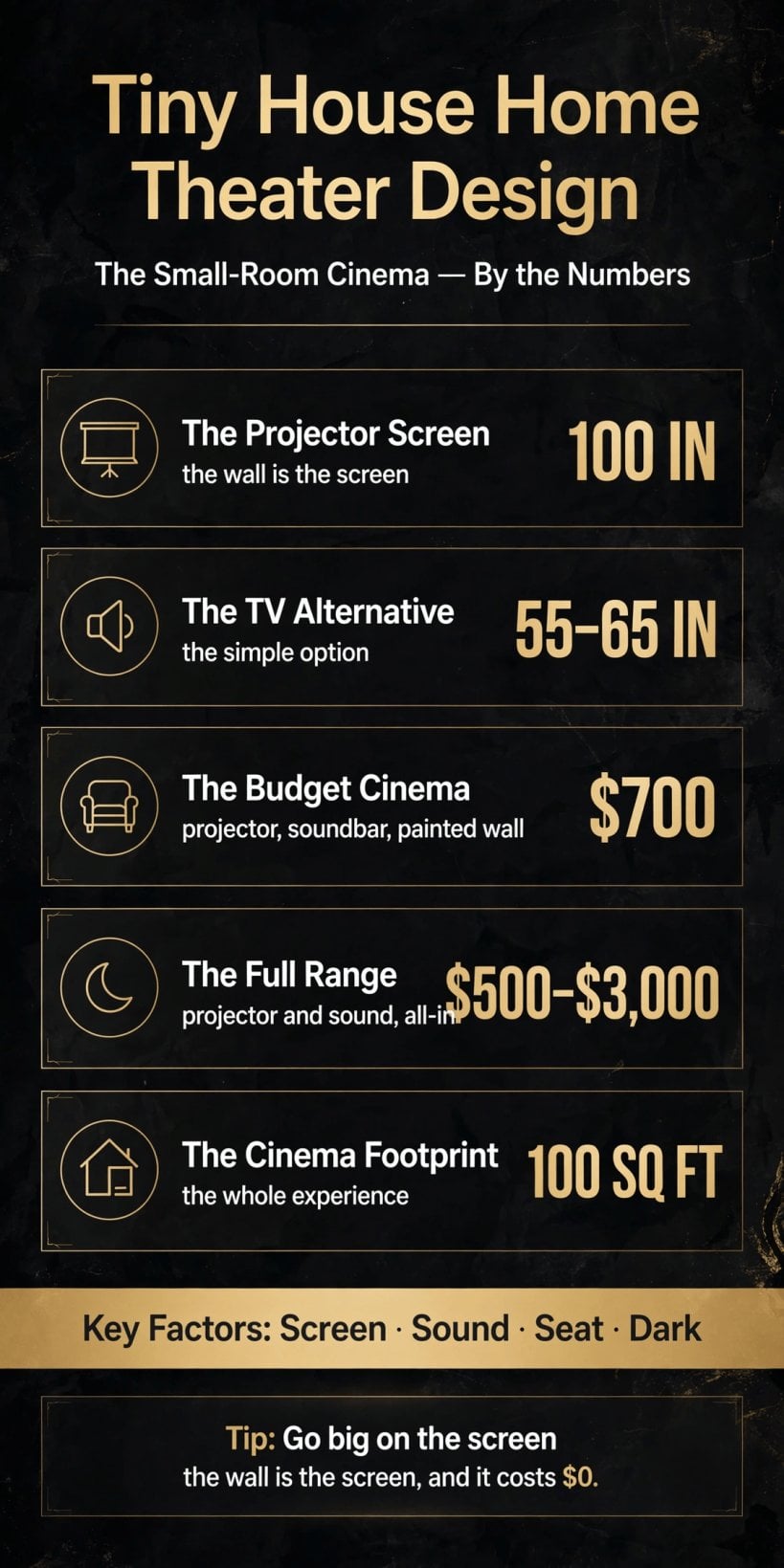
The small-room cinema by the numbers: a 100-inch picture on a painted wall, a 55–65-inch TV alternative, a complete budget cinema for $700 inside a $500–$3,000 range — the whole experience in 100 square feet.
1. The Concept and the Screen: Big Picture, Smallest Room
The tiny theater is built from three parts, each with a job. The screen is the big — the wall itself, filled. The sound is the enveloping — the small room wrapped in it. The seat is the perfect — the one, chosen. The rule underneath all three is that the tiny theaters — the intimate: this is the big screen in the smallest room, and the smallness is not the compromise but the point.
Asked whether you can have a home theater in a tiny house at all: yes — the tiny theater is the best theater. The projector plus the wall, the compact sound, the perfect seat: the cinema experience in 100 square feet. Small rooms sound better, darken faster and sit you closer. The whole-home thinking behind rooms that do two jobs at once is set out in our guide to tiny house interior design ideas.
The screen decision comes first, because everything else is sized from it. The projector throws the 100″ picture — the wall is the screen. The TV offers the 55–65″ picture — the simple option, always ready. The pull-down screen is the hidden one, there for the film and gone for the day. The rule decides without sentiment: the screen is the theater — the big. Asked for the best screen, the answer follows the wall: the projector (100″+) for the cinema, the TV for the simple, the pull-down where the screen must hide — the best screen is the biggest the wall allows. Projector versus TV is the same choice from the other side, and the tiny often chooses the projector: hidden when off, the wall is the screen.
2. The Sound: The Small Room Is the Advantage
Three sound answers cover nearly every tiny theater. The soundbar is the simple — the good: one bar under the picture. The compact 5.1 is the enveloping — surround sound scaled to a small space. And the headphones are the late — the considerate, cinema volume at midnight, nobody woken. The rule is the section in one line: the tiny sounds — the best, because the room does half the work.

Asked how to get good sound in a small room, the full answer is that the small room is the advantage: less volume to fill, so the sound envelops naturally rather than echoing around a cavern. Start with the quality soundbar or the compact 5.1, then let the soft furnishings handle the acoustics — the subject of section 6. What undoes big-room systems — distance and echo — a tiny theater simply does not have.
3. The Seating: The Perfect Seat
If the screen is the theater, the seat is where the theater is felt. The recliner is the one — the perfect, a single chair chosen for one viewer completely. The loveseat is the two — the shared, cinema for a couple at loveseat distance. The floor is the cushions — the casual, a pile that seats whoever the night gathers. The rule is that the seat is the theater — the chosen: nobody drifts into the right tiny seat by accident, because there is only room for the one that earns it. Seating that also works by day is chosen the way our roundup of tiny house living room ideas chooses all of it — scaled to the space.
Distance is the seating’s second decision, with its own rule: sit at 1.5× the screen width. The tiny is the close — the immersive, the picture filling the view as a cinema’s does. The test is the sat — the felt: sit at the measured distance and feel whether the picture wraps or merely shows. The tiny sits — the perfect: the small room puts the one seat exactly where the big picture wants it.
4. The Room and the Lighting: Designed Dark
The room itself is designed like a cinema, in three layers. The dark is the walls — the enveloping, colour that swallows stray light instead of bouncing it. The blackout is the shades — the essential, the layer that makes daytime a matinee. The acoustic is the soft — the treated, furnishings that keep sound in and echo out. The rule: the room is the cinema — the designed, and a tiny room darkens more easily than any other, because there is so little of it.
Asked how to darken a room for movies, the working answer is those layers in order: the blackout shades (the essential), the dark wall colour, and the door gap sealed. The tiny darkens easily — the small windows cover fast. Darkness is the cheapest picture upgrade there is: the same projector looks twice as rich in a properly dark room.
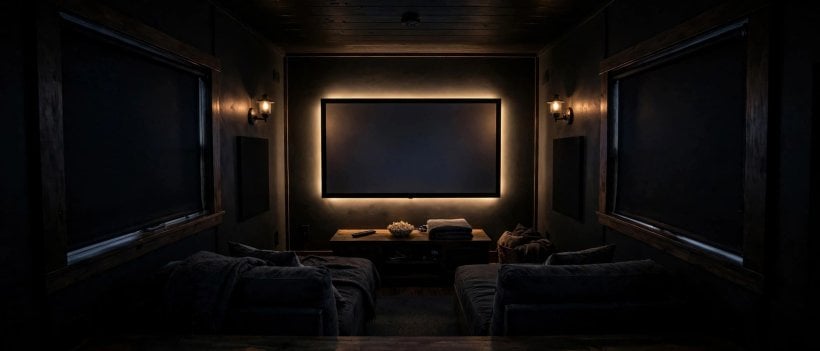
Lighting inside the dark is designed, not banned. The bias light sits behind the screen — the eye-easy glow that keeps contrast kind. The sconces are the dim — the theater, low light at the walls. The smart scenes are the one-tap — the lights, the screen and the sound arriving together. The rule is that the light sets — the cinema: darkness for the picture, a designed glow for everything around it. Layered light of this kind, planned room by room, is the method in our tiny house and small-space interior design hub.
5. The Projector Setup: Measured, Ventilated, Calibrated
The projector setup is planned before it is bought. The throw is the distance — the measured, the gap between lens and wall that decides the picture size. The mount is the ceiling — the shelf, the projector fixed high and out of the way. The screen is the wall — the painted, a smooth surface prepared for the picture. The rule: the setup is the measured — the planned.
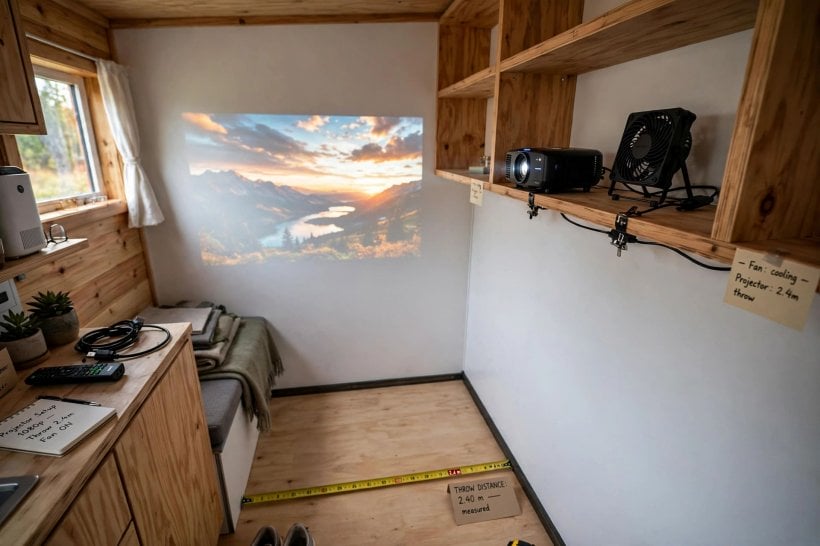
Asked for the best projector for a tiny house, the specification follows from the room: the short-throw (the close placement), the 1080p minimum, the quiet fan. The best projector fits the throw distance — measure the room, then choose. Ventilation is planned with the same care, because a projector is a small heater with a lens: the shelf with airflow, the small fan, the not-enclosed. The projector breathes — the tiny plans the ventilation like the heat it is. Calibration finishes the setup: the cinema mode — the selected; the brightness — the room, matched; the focus — the sharp, checked. The calibrated looks — the twice: the same hardware, twice the picture, once set for its room.
6. The Acoustics: Soft Sounds Better
Acoustics in the tiny theater are furnished, not engineered. The soft is the rugs — the curtains, fabric where the hard surfaces were. The panels are the art — the absorbing, acoustic treatment hung like pictures so the treatment is also the decoration. And the small is the advantage — the natural, the room’s own short distances keeping the sound tight. The rule: the soft sounds — the better, and in a tiny house the softening is mostly a shopping list of things the room wanted anyway.
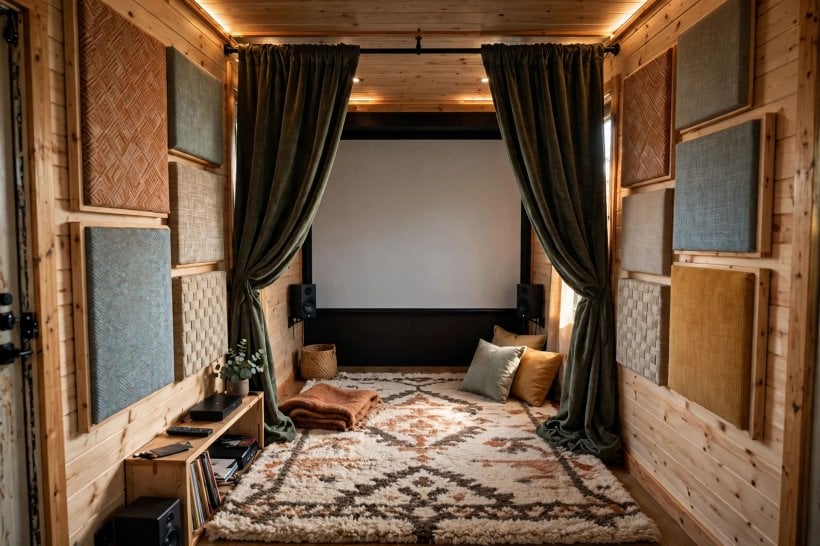
The order matters: furnish first, measure second. A rug under the seat, curtains at the screen wall and panels at the reflection points will carry a small room most of the way; the deeper science of keeping sound in — and the neighbours’ noise out — is modelled in our tiny house soundproofing simulator. What the tiny theater must avoid is the bare box: hard walls, a hard floor and a big picture sound as harsh as they look — the mistakes list in section 8 names the echo among its four.
7. The Dual-Purpose Theater: The Room That Transforms
No tiny house gives a room to one job, and the theater is the proudest example. The living room is the by day — the cinema by night. The hidden is the screen — the revealed, dropping or switching on when the film starts. The transform is the minutes — the ritual, the short sequence from day room to night cinema. The rule: the dual is the tiny — the smart, and it is why the dedicated-room question answers itself.
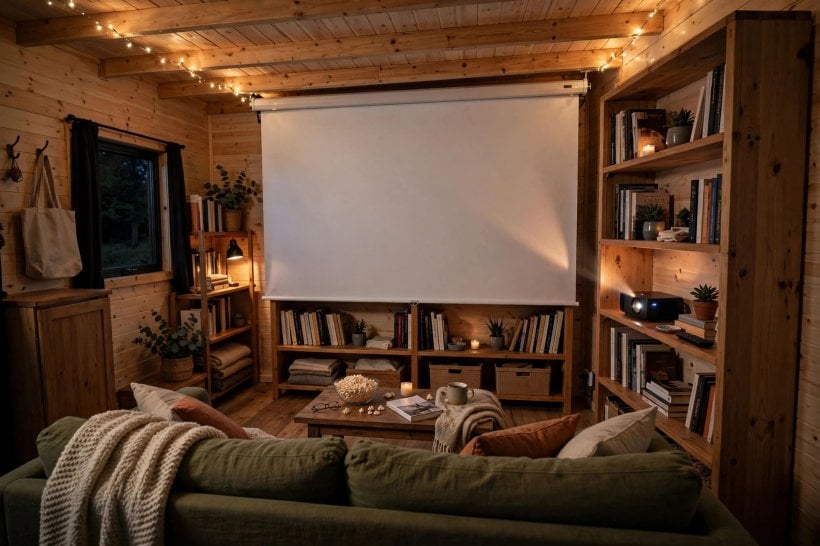
Do you need a dedicated theater room? No — the dual-purpose is the tiny way. The living room by day, the theater by night. The dedicated room is the luxury; the convertible is the smart. Hiding the gear is what makes the convertibility real: the projector on the shelf, the speakers as decor, the screen that retracts, the components in the cabinet — the hidden theater is the living room by day, as our guide to living room interior design ideas for tiny houses treats the room the theater borrows. Streaming completes the setup with almost nothing: the stick — the plugged, the simple; the wifi — the strong, the essential; the apps — the all, the one remote. The rule: the streaming simplifies — the theater, a whole cinema carried on one stick and one remote.
8. The Budget, the 10 Commandments and the Mistakes
The budget theater is priced piece by piece in the original. The projector: the $500 — the 100″. The sound: the $200 — the soundbar. The screen: the wall — the $0. The seat: the owned — the perfect. The total: the $700 — the cinema. The truth: the budget theaters — the best, because the expensive parts of a cinema were never the hardware: the darkness, the closeness and the seat, which the tiny house supplies free.
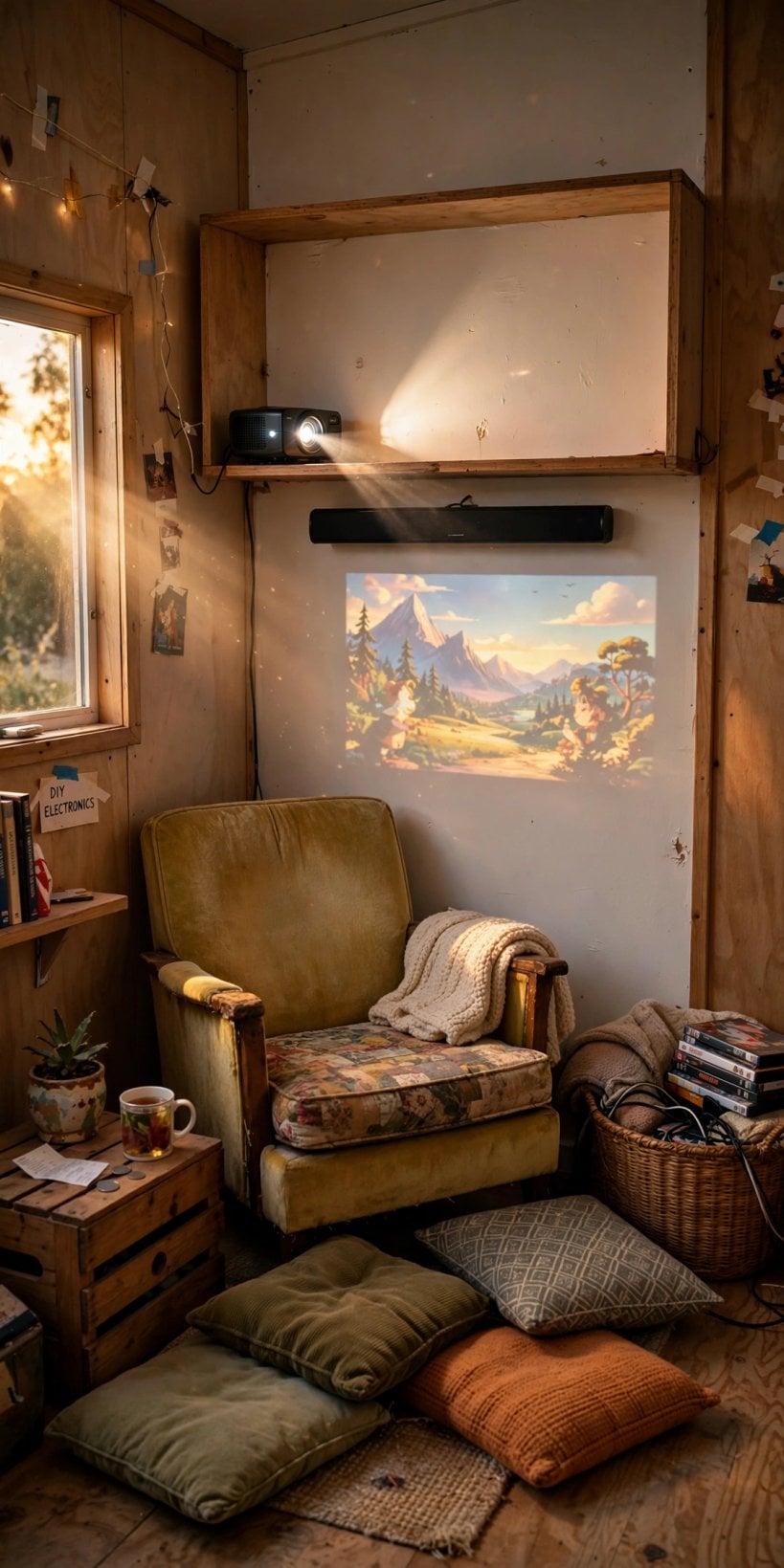
Asked what a tiny home theater costs in full, the answer is $500–$3,000 — the projector ($500–$1,000), the sound ($200–$800), the screen and seating. The tiny theater is the affordable cinema at every point of that range; building small for less is the subject of our guide to how to make a cheap tiny house. The ten commandments hold the design together: go big on the screen; invest in the sound; darken the room; soften the acoustics; choose the perfect seat; hide the gear; light the scenes; ventilate the projector; automate the ritual; press play. And the mistakes are the commandments broken: the glare — the windows, the blacked; the echo — the hard, the softened; the clutter — the gear, the hidden; the bad seat — the uncomfortable, the chosen. The rule under both lists: the theater serves — the movie.
9. Movie Night and the Shared Screen: Ritual, Games, Sports, Kids and the Open Air
The movie night ritual is where the design becomes a habit. The popcorn is the popped — the essential. The dim is the lights — the lowered. The phones are the away — the sacred. The truth: the ritual is the theater — the weekly, the appointment that turns a room with a projector into a cinema. The intermission belongs to the ritual too: the pause — the stretched, the refilled; the lights — the half, the lobby. The intermission is the theater — the classic, and the tiny house does it best.
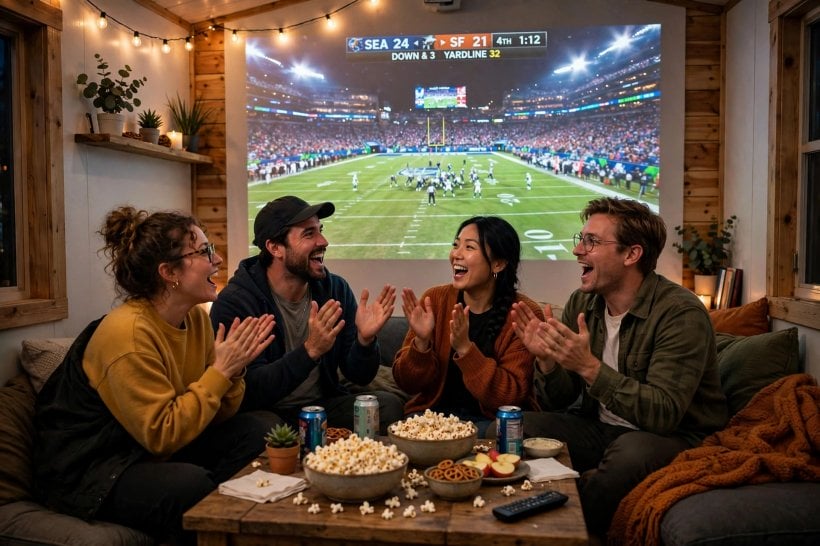
The shared screen hosts more than films. The gaming theater connects the console — the big, plays it on the wall; keeps the lag — the low, the projector-checked; and takes the sound — the immersive, the advantage: the tiny games — the cinematic. The sports theater is the big game — the 100″, the friends; the sound — the crowd, the enveloping; the seats — the all, the filled: the tiny hosts — the best. And the kids’ theater builds the fort — the blankets, the built; runs the matinee — the daytime, the blacked; and finds the magic — the big, the small room: the kids love — the tiny theater.
On the right night the theater leaves the house entirely. The outdoor theater moves the projector — the portable, the moved; hangs the screen — the sheet, the hung; and takes the stars — the ceiling, the free. The truth: the outdoors is the biggest theater — the tiny, the biggest room the tiny house has. Setting that outdoor room up well is the craft in our roundup of tiny house landscaping ideas. The premiere night uses the same machinery: the invites — the sent, the friends; the red carpet — the rug, the fun; the feature — the chosen, the debut. The premiere celebrates — the theater.
10. Automation, the Evening’s Arc and the Payoff
Automation is the sleight of hand. The one tap is the lights — the screen, everything arriving at once. The voice is the “movie time” — the scene, the room obeying a phrase. The truth: the automated feels — the magic, and in a room this size the magic is cheap: one smart scene replaces the walk around the room that a big house needs. The finishing layer that makes the room feel designed rather than merely equipped is worked through in our guide to interior design home decorating ideas for tiny houses.
The evening then runs its classic arc. The credits are the watched — the all, the respected; the lights — the slowly, the raised; the discussed — the film, the savored: the credits complete — the movie. The encore queues the next — the anticipated; the series — the binged, the cozy: the theater never closes — the tiny. A great film earns the standing ovation: the film — the great, the applauded; the room — the small, the loud; the memory — the made, the kept: the tiny theater earns — the ovation. And the final reel closes the night: the lights up — the slowly, the returned; the room — the living, the again; the dream — the kept, the nightly: the theater is the dream — the kept.
The payoff gathers all of it. The cinema is the home — the nightly. The together is the shared — the ritual. The wow is the guests — the impressed. The truth: the theater is the joy — the designed. The invitation stands: dim, press, watch — the theater awaits.
Final Considerations
Tiny house home theater design is the cinema at its most intimate: the big screen on the wall, the enveloping sound, the perfect seat, all inside the smallest room in the house. Build it in order — screen, sound, seat, darkness, softness — hide it by day, ritualise it by night, and the living room becomes the best theater you own. Small rooms make the best theaters. Dim the lights and press play.


0 Comments