


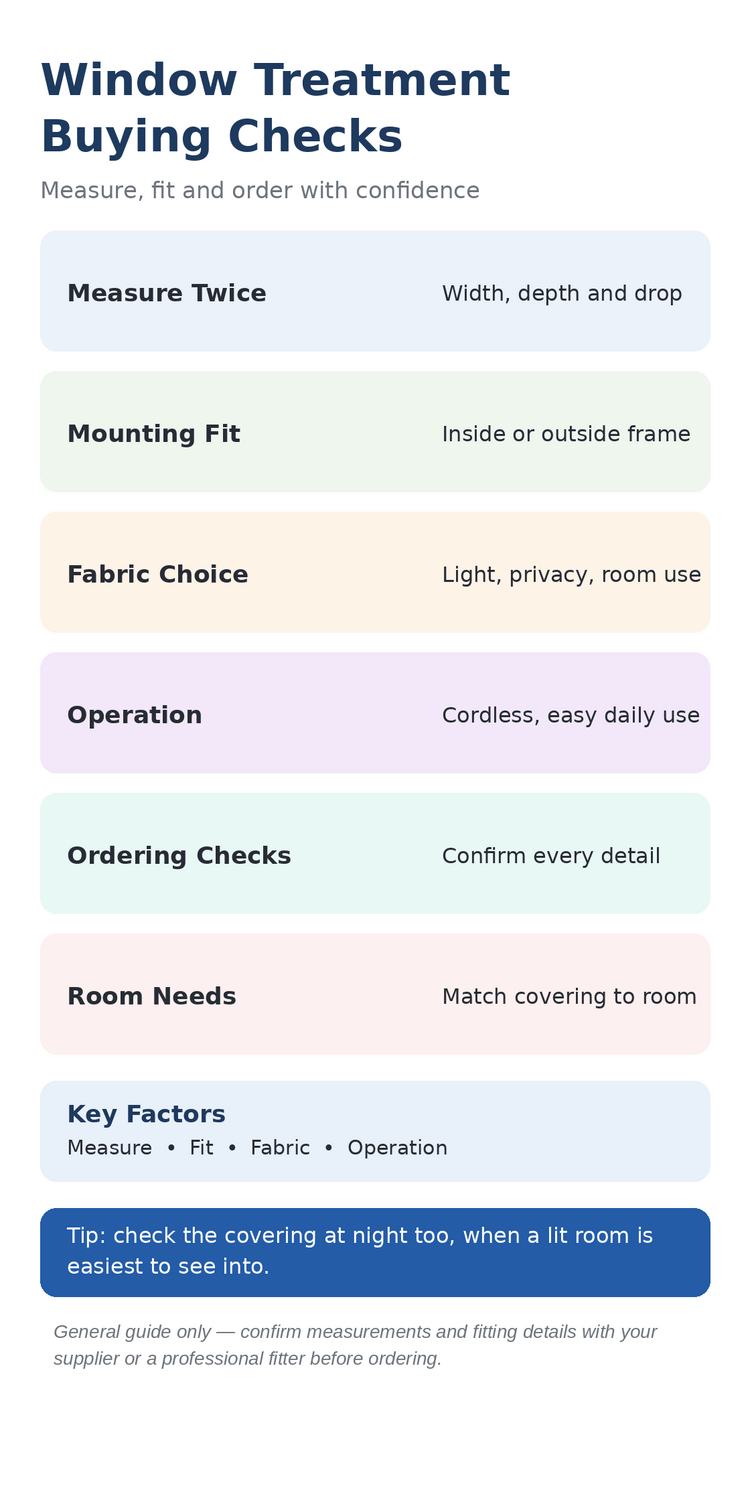
A window covering is one of the few home purchases you judge several times a day, in changing light, from inside and from outside. It has to soften glare in the morning, guard privacy in the evening, and still feel easy to use when you are half awake or carrying something through the room. Most disappointments do not come from choosing the wrong style. They come from skipping a check somewhere between measuring and ordering.
This window treatment buying checks guide follows the order that prevents those mistakes: list the windows, measure them properly, settle the fit, match the fabric to the room, test how the covering works, and only then confirm the order. Work through it in sequence, and each decision will rest on the one before it.
1. List Every Window Before You Measure Anything
Start with a walk through the house, room by room, and write down every window that needs a covering. Include the awkward ones: the small high window over the stairs, the wide window behind the sofa, the kitchen window above the sink, and any window you usually forget because a curtain already hangs there. A list stops you from ordering for the obvious windows and discovering the forgotten one later, when matching fabric may no longer be available.
For each window, note the room it serves and what that room needs most. A living room usually wants soft daylight and a view out, while a bedroom wants darkness for sleep and privacy after dark. A bathroom wants privacy first, and a kitchen wants bright working light without glare. If you are planning a small living space, tiny living room ideas can help you see how window coverings sit within a compact layout before you commit to a style.
Photograph each window as you list it, with the frame and the wall around it in the shot. The photographs become your reference when you compare options later, and they help a supplier or fitter understand shapes that are hard to describe, such as a window that sits close to a corner or beneath a sloping ceiling. Keep the list, the photographs and the measurements together, one page per window, so nothing gets mixed up between rooms.
2. Measure the Width in Three Places
Windows are rarely as square as they look. Walls settle, frames shift slightly, and a width taken at the top can differ from the width taken at the bottom. Measure the width at the top, the middle and the bottom of the opening, and write all three figures down rather than settling on one. If the figures differ, the smallest one is usually the figure that matters for a covering that must fit inside the opening, because a covering cut to the widest point will bind at the narrowest.
Use a metal tape measure, not a fabric one, and hold it level and taut. Ask someone to hold the other end if the window is wide, so the tape does not sag in the middle and add a false reading. Measure from the inside faces of the frame, exactly where the covering will sit, and ignore architraves or trims that sit outside that line unless your chosen mounting style uses them.
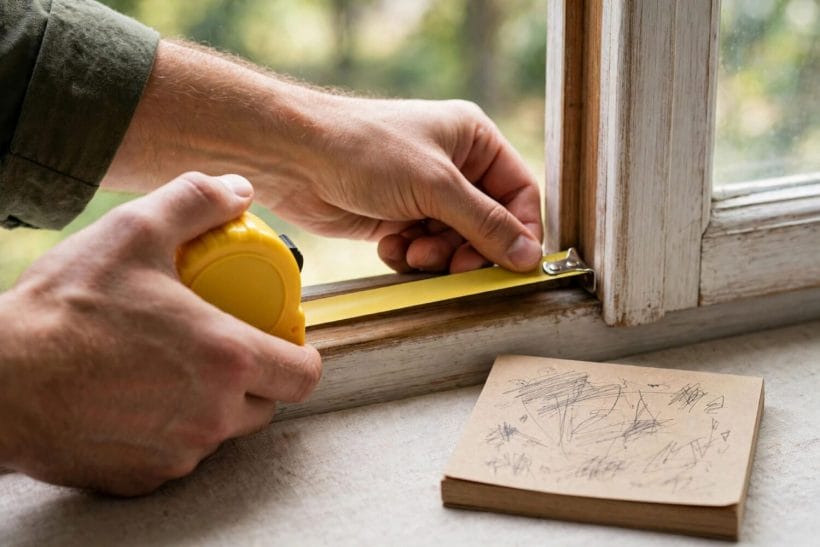
Repeat each measurement once, and if the second reading disagrees with the first, measure a third time before writing anything down. A few extra minutes here saves the most common ordering error of all: a covering that arrives beautifully made and slightly too wide for the window it was bought for. Keep the raw readings on your page, not just a single rounded figure, so you can check them again when the order form asks for them.
3. Measure the Drop, Then Check the Depth
The drop is the vertical measurement, and it needs the same care as the width. Measure from the top of the opening to the point where you want the covering to end, at the left, the centre and the right. Sills are not always level, and a drop taken only on one side can leave a covering that hangs unevenly or pools on one side of the sill. Decide in advance whether the covering should end at the sill, just below it, or at the floor, and measure to that exact point every time.
Then check the depth of the recess, from the glass to the front face of the wall. Depth decides whether a covering can sit inside the recess at all, and whether it will clear handles, locks and any window furniture when it moves. A shallow recess may suit only slim coverings, while a deep recess gives you room for layered coverings that sit one behind the other. Note any handles that stick out into the recess, and check whether they will catch the covering as it opens or closes.
Also note anything that shares the window wall: radiators beneath the sill, furniture that stands close to the glass, and doors that swing near the frame. A covering that drops to the floor looks elegant until it brushes a radiator every time it moves, and a covering beside a door needs clearance to swing freely. These are small observations, but they decide whether the finished window feels considered or constantly in the way.
4. Decide Inside Mount or Outside Mount
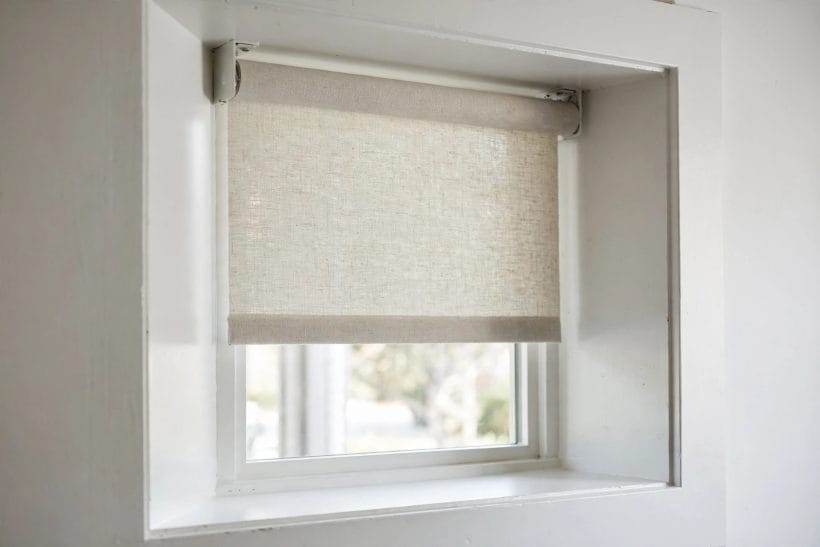
With the measurements in hand, decide whether the covering will mount inside the recess or outside it, on the wall or frame around the window. An inside mount sits neatly within the opening and shows off the frame and the wall around it, which suits tidy rooms and windows with enough depth. An outside mount covers the whole opening and a little beyond, which can hide an uneven frame, darken a room more fully, and make a small window look larger.
The choice changes what you measure. An inside mount depends on the smallest inside width and the recess depth, while an outside mount depends on how far beyond the frame you want the covering to reach and whether the wall around the window is flat enough to fix into. Check what the wall is made of at the fixing points, and whether there are pipes, cables or hollow sections that would make fixing difficult. Fitting is a job for a professional fitter, who can confirm the fixing method for your walls.
Think about the finished look from both sides of the glass. From inside, an outside mount frames the window like a picture; from outside, it reads as a larger, calmer rectangle. From inside, an inside mount feels quiet and architectural. Neither is better in itself. The right choice is the one that suits the window in front of you, the light you want to keep, and the privacy you need after dark. For compact rooms, small living room idea layouts show how an outside mount can make a modest window feel more generous.
5. Match the Fabric to the Room
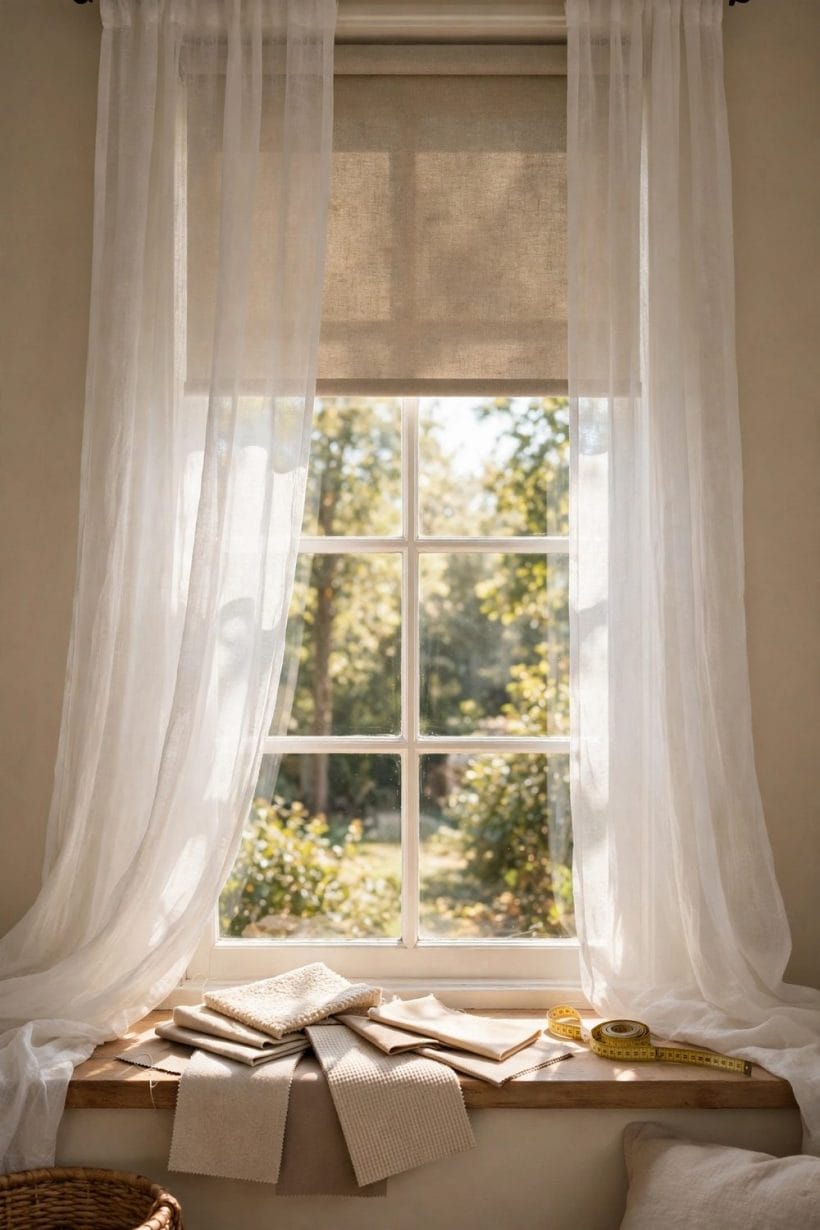
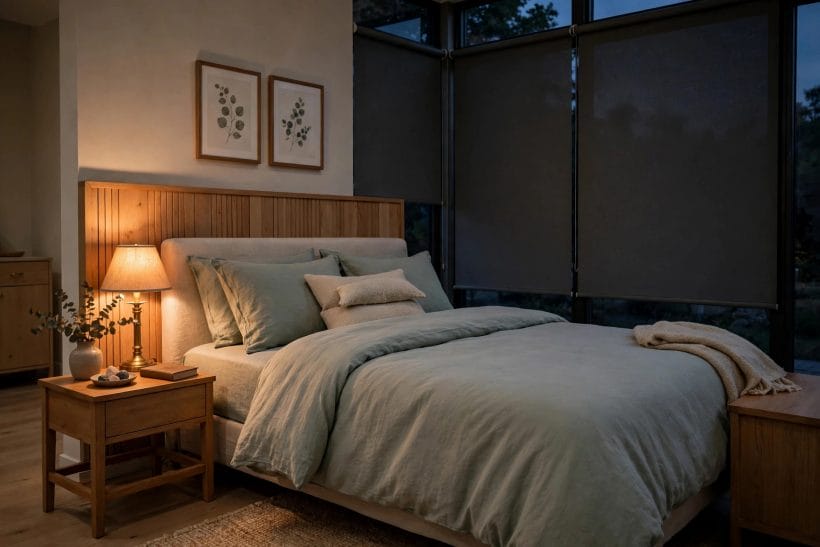
Fabric is where a covering stops being a measurement and starts being part of the room. Light-filtering fabrics soften daylight and keep a view, while denser fabrics darken a room and guard privacy. Sheer fabrics suit living spaces where daylight matters most, and darkening fabrics suit bedrooms where sleep matters most. The mistake is to choose one fabric for the whole house and expect it to serve rooms that want opposite things.
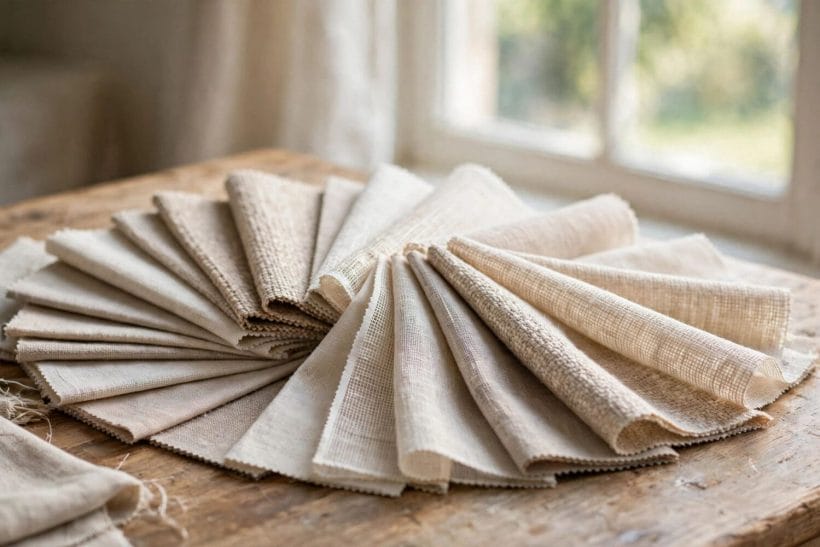
Ask for samples and live with them before ordering. Hold a sample against the window at different times of day, and look at it from outside in the evening with the room lights on, when a fabric that looks private by day can turn surprisingly see-through. Check the colour of the sample in your own light, not only in a showroom, because warm evening light and cool daylight can change a fabric completely. Order samples for every room, even when you expect to use the same fabric throughout, so the decision rests on what you saw rather than what you imagined.
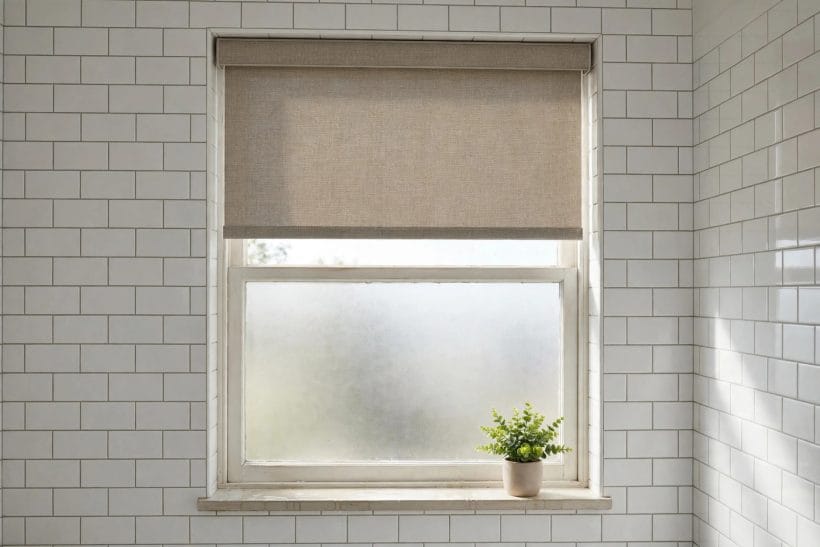
Consider how the fabric will live in the room. A kitchen covering meets steam, cooking smells and splashes, so it needs a fabric that tolerates that life and wipes clean easily. A bathroom covering meets steam daily, so it needs to cope with damp air without holding moisture. A bedroom covering meets little more than dust and daylight, so softness and darkness can lead. If you are refreshing a compact kitchen, tiny kitchen ideas can help you judge how a covering will sit alongside worktops and wall units.
6. Test How It Opens, Closes and Cleans
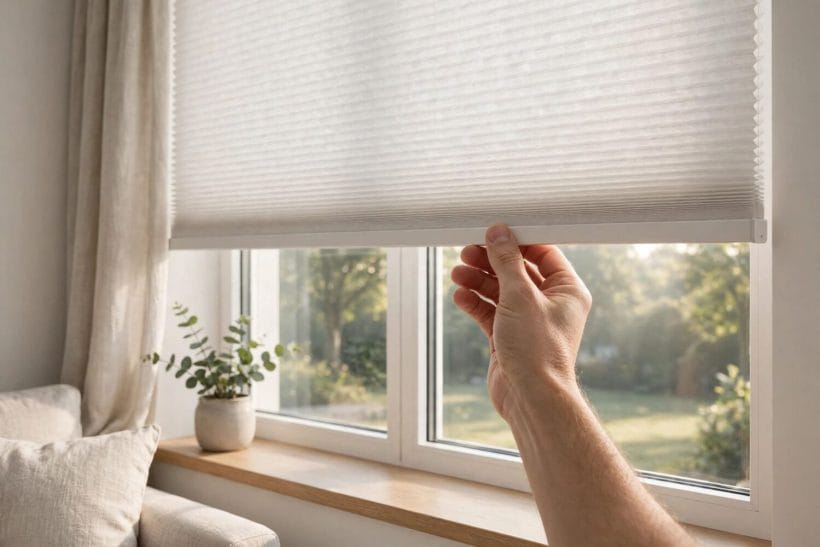
A covering you use every day has to move easily, every time, without a struggle. Before ordering, understand exactly how the covering opens and closes: whether it lifts, lowers, tilts or slides, and whether one hand is enough. Try the movement in a showroom if you can, and imagine doing it with wet hands, with a child in your arms, or from a chair if the window is high. A mechanism that feels fine once can feel tiresome twice a day for years.
Think about cleaning as part of the same test. Every covering gathers dust, and some gather kitchen grease or bathroom steam as well. Ask how the covering is cleaned, whether it can be wiped, vacuumed or removed for washing, and how often that cleaning realistically needs doing. A covering that is beautiful but awkward to clean will either be neglected or become a chore, and neither outcome suits a room you live in daily.
Check the covering at its extremes, not only in its resting position. Raise it fully and look at how it stacks: does it block much of the glass, or fold away neatly? Lower it fully and check the bottom edge: does it sit straight, or does it wander? Tilt it, if it tilts, and see whether the light falls evenly. These small movements reveal more about daily life with a covering than any photograph of it sitting still.
7. Check Safety, Cords and Daily Operation
Safety belongs in the buying checks, not as an afterthought. Loose cords and loops near windows can be a hazard for small children and pets, so ask how the covering is operated and whether cordless or otherwise safer operation is available for the style you want. If cords are part of the design, ask how they are secured and kept out of reach, and check that the finished installation keeps them tidy and clear of cots, beds and climbing furniture.
Daily operation matters just as much. A covering in a hard-to-reach window needs an operating method you can actually use from where you stand, and a covering over a sink or a bath needs to move without you leaning across water or heat. Motorised operation can solve reach problems, but it adds its own checks: how it is powered, how it is charged or wired, and what happens if the power fails. Electrical work should always be handled by a qualified professional.
Walk the route you will take to each window and test it in your mind. Is the operating side the side you can reach without moving furniture? Does the covering clear the tap, the plant or the reading chair? Does it stay where you leave it, or drift slowly back down? A covering that is safe and easy to operate becomes part of the room’s rhythm; one that fights you becomes a window you stop opening.
8. Confirm Colour and Light at Different Times of Day
Colour looks different in every light, and a window covering lives in all of them. A fabric that looks calm in a showroom can look cold in north-facing daylight or warm under evening lamps. Tape your samples to the actual window and look at them in the morning, at midday and in the evening, with the room lights on and off. Pay attention to the colour the fabric throws into the room, because a strongly coloured covering tints the daylight that passes through it.
Light control deserves the same slow look. Open and close the sample, or the showroom equivalent, and watch what happens to the room: where the sun lands, whether glare falls on a screen or a worktop, and whether the room still feels bright when the covering is down. A bedroom wants a different answer from a home office, and a bathroom wants privacy before it wants daylight. If you are planning a restful bedroom, tiny bedroom ideas can help you judge how darkness and softness balance in a small sleeping space.
Do not forget the view from outside. Step outside in the evening, when the house is lit, and look at the windows you are covering. A covering that looks elegant from the sofa can look patchy from the street if neighbouring windows are treated differently, and a street-facing window deserves a covering that reads calmly from both sides. This single evening check prevents one of the most common regrets: a covering chosen entirely from inside the room.
9. Read the Order Details Before You Confirm
Ordering is where careful measuring either pays off or unravels, so read every line of the order before confirming it. Check each window against your list: the room, the width and drop figures, the mounting style, the fabric, the colour and the operating side. Check that the figures on the order match your smallest inside readings for inside mounts, and your intended coverage for outside mounts, rather than a rounded or guessed figure entered in haste.
Confirm the details that are easy to overlook: which side the control sits on, whether the covering is a single piece or split across a wide window, how multiple coverings on one window align, and what fixings are included. If a window needs two coverings side by side, ask how the join will look and whether the fabrics will line up. If a covering is made to measure, confirm how the maker treats your figures, and whether any allowance is added or deducted, so the finished size matches what you measured.

Read the delivery, returns and fitting terms with the same care. Confirm what happens if a covering arrives in the wrong size, who is responsible for measuring errors, and what the fitting visit includes. Fitting should be carried out by a professional fitter, who can confirm the fixings, the clearances and the safe operation of the finished covering before leaving. Keep a copy of the confirmed order with your measurements, so any question later can be answered from the same page. When you are planning the wider layout around new windows, tiny house floor plans can help you see how each window sits within the whole home.
10. Plan Fitting, Delivery and Returns Checks
Before delivery day, prepare each window so fitting can go smoothly. Clear the sill and the area around the window, move furniture that blocks access, and protect floors and soft furnishings near the work area. Tell the fitter about anything unusual you noted during measuring: shallow recesses, sticking handles, uneven sills, or walls you were unsure about. A fitter who knows the awkward details in advance can bring the right fixings and finish the job properly.
When the coverings arrive, check them before fitting begins. Compare each one against your order: the room it belongs to, its size, its fabric and its colour. Look for damage from transit, and raise any problem before the covering is fixed in place, when it is far easier to resolve. Label each covering by room as you check it, so the right covering reaches the right window without confusion during a busy fitting visit.
After fitting, test every covering through its full movement before the fitter leaves: raise it, lower it, tilt it if it tilts, and leave it in each position for a moment. Check that it clears handles and furniture, that it sits straight when lowered, and that cords or controls are tidy and safe. Note any adjustment needed while the fitter is still there. For bathroom windows, tiny bathroom ideas can help you judge privacy and steam tolerance once the covering is in place, and for the home as a whole, Tiny house design shows how finished windows complete a small, well-planned interior.
Final Considerations
The best window covering is rarely the most elaborate one. It is the one that was measured carefully, matched to its room, tested in daily use, and ordered without a single unchecked detail. That discipline matters more than any single style, because a modest covering that fits perfectly will please you every day, while a striking covering that binds, gapes or fights its cords will annoy you just as often.
Work through the checks in order, keep your list and measurements together, and let a professional fitter handle the fixing and any electrical work. If a window still puzzles you after measuring, ask the supplier or fitter before ordering rather than guessing. A short conversation before the order is always cheaper, calmer and quicker than correcting a finished covering afterwards, and it leaves you with windows that feel settled, private and easy to live with for years.



0 Comments