
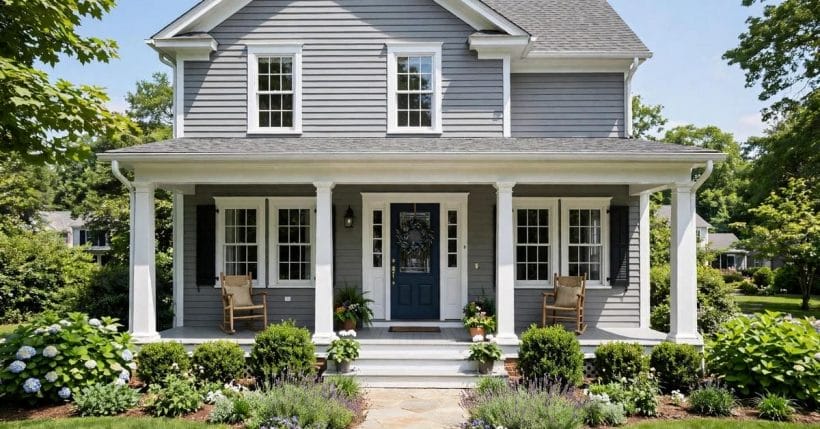
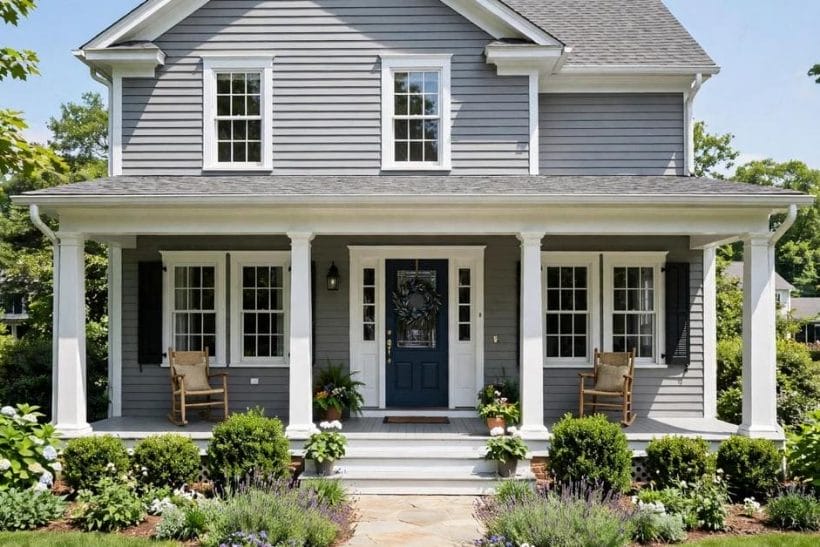
Some house colours shout from the street. This one does not need to. The gray house white trim look wins quietly, with soft siding, bright edges, and a front door that feels easy to find.
What follows is a room-by-room tour of the outside only: siding shades, trim shapes, porches, doors, roofs and planting, and the small upkeep habits that keep white trim looking bright.
1. Reading the Pairing: Why Gray and White Work Outside
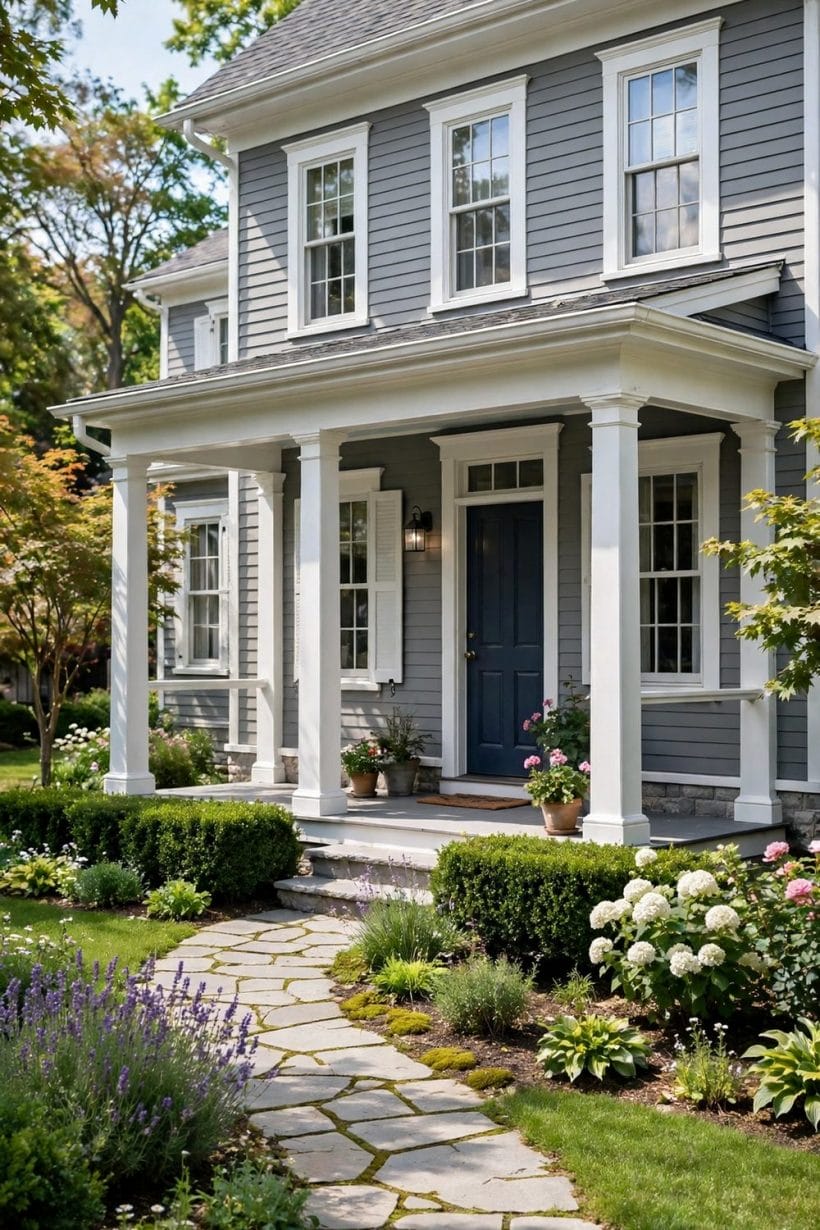
Gray siding gives a house a calm, steady face. It sits easily beside brick paths, timber fences, green planting and stone walls, and it does not fight with the colours around it. White trim then draws the outline: window frames, corner boards, porch posts and the edge of the roof all stand out in a clean line against the gray.
The pairing works because the two tones do different jobs. Gray carries the large surfaces and sets the mood, while white marks the details and guides the eye. From the street, the eye travels from the roofline down the corners, across the windows, and toward the front door, because the white lines lead it there.
It also suits many house shapes. A small cottage, a plain two-storey home, a wide ranch and a narrow townhouse can all wear the same pairing, because the balance of gray field and white line adapts to each shape. The trick is keeping that balance steady, so neither tone crowds the other out.
For a wider survey of outdoor looks to compare against, see these tiny house exterior ideas, which show how siding, trim and porches sit together on smaller homes.
| At a Glance | Notes |
|---|---|
| Siding mood | Soft to deep gray, calm and steady |
| Trim tone | Bright white, crisp against the siding |
| Best partners | Natural wood, stone, dark roofing, green planting |
| Entry focus | Door colour, porch light, clear path |
| Upkeep watch | Trim brightness, siding wash, gutter lines |
2. Choosing a Gray: Light, Mid-Tone and Deep Siding Shades
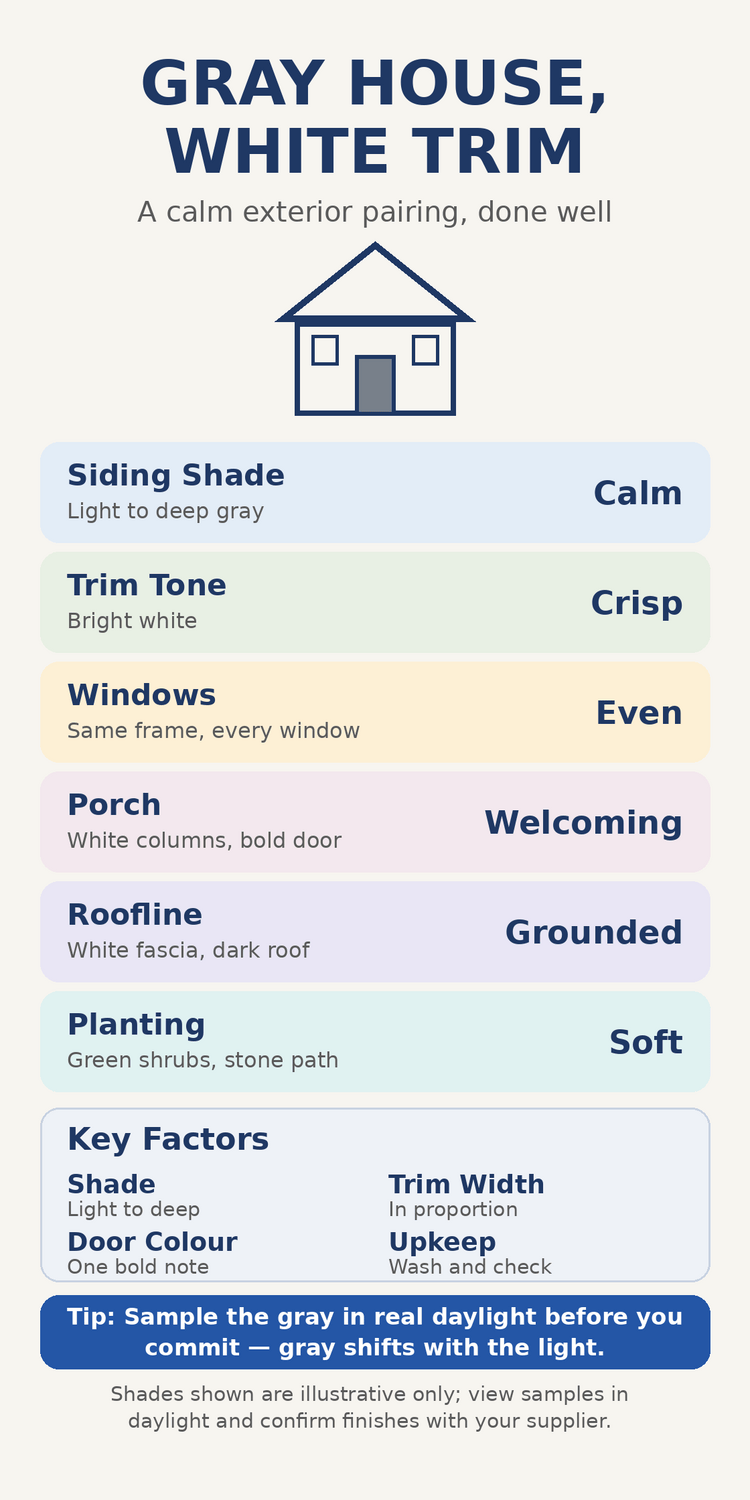
Light gray siding feels open and airy. It suits small houses and shaded plots, because it reflects the daylight and keeps the front of the home feeling bright. White trim on light gray reads soft rather than sharp, so the outline looks gentle and the house feels welcoming from the pavement.
Mid-tone gray is the middle path, and the most forgiving choice. It hides dust and weather marks better than a pale shade, it pairs with both warm and cool whites, and it holds its character in strong sun and in dull winter light. If you are unsure where to start, a mid-tone gray is the shade to study first.
Deep gray, close to charcoal, gives a house drama. It makes white trim pop hard, it suits modern shapes with simple lines, and it looks striking beside pale stone and pale timber. Deep shades do ask more of the rest of the design, though: the roof, the door and the planting all need to hold their own, or the front can feel heavy.
Whichever depth you lean toward, look at it in real light before deciding. Tape a large sample board to the wall and watch it through a full day, in morning sun, midday glare and evening shade, because gray shifts with the light more than most colours do.
3. White Trim That Reads Crisp, Not Harsh
Not every white behaves the same outside. A bright, cool white gives a sharp, modern edge, while a slightly warm white feels softer and sits kindly beside timber and stone. The right choice depends on the gray beside it: cool whites suit blue-leaning grays, and warmer whites suit grays with a hint of brown or green in them.
Width matters as much as tone. Slim trim looks neat and modern, while wider boards give a traditional, generous feel and throw a stronger line around windows and doors. On a small house, very wide trim can overwhelm the wall, so the trim should stay in proportion to the siding area it frames.
Finish matters too. A smooth finish reflects light and reads clean, while a rougher finish catches shadow and adds texture. Either can work, but mixing too many finishes on one front can look restless, so it helps to settle on one trim finish and carry it across the whole front.
For broader colour thinking beyond this one pairing, these interior design ideas show how the same calm, pale-and-dark balance plays out across a whole home.
4. Window Trim and Shutters: Framing the Openings
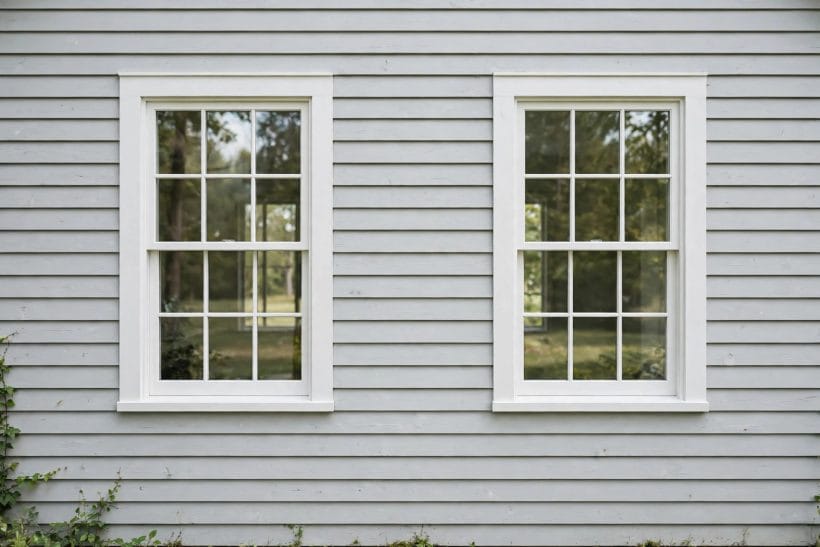
Windows are where white trim earns its keep. A clean frame around each window turns a plain opening into a feature, and a row of framed windows gives the front of the house its rhythm. Keeping every window framed the same way matters more than any single fancy detail, because the eye notices the odd one out at once.
Sills and headers add shape to the frame. A slightly deeper sill gives the window a ledge to stand on, and a simple header across the top finishes the opening without fuss. Shutters, where they fit, should look as though they could cover the window, sitting close to the frame and matching its height, rather than floating as decoration.
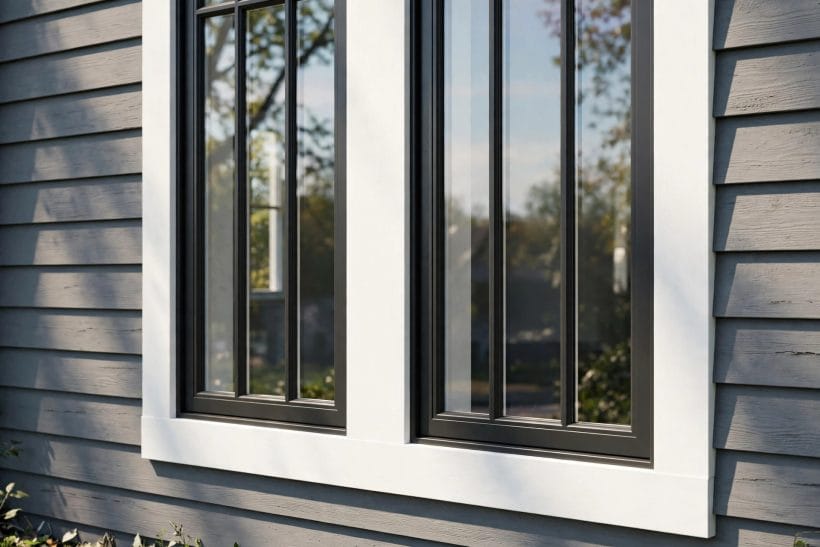
Dark window frames inside white trim are a popular variation. The dark glass line sits inside the bright frame, which makes the window read deeper and sharper, and the effect suits both traditional and modern fronts. The key is consistency: if one window carries the dark-in-white treatment, the rest of the front should follow.
Window work, including any change to frames or glazing, is a job for experienced installers, and it is worth getting the fitting right, since draughts and leaks show up long after the paint has dried.
5. Corner Boards, Fascia and the Roofline Edge
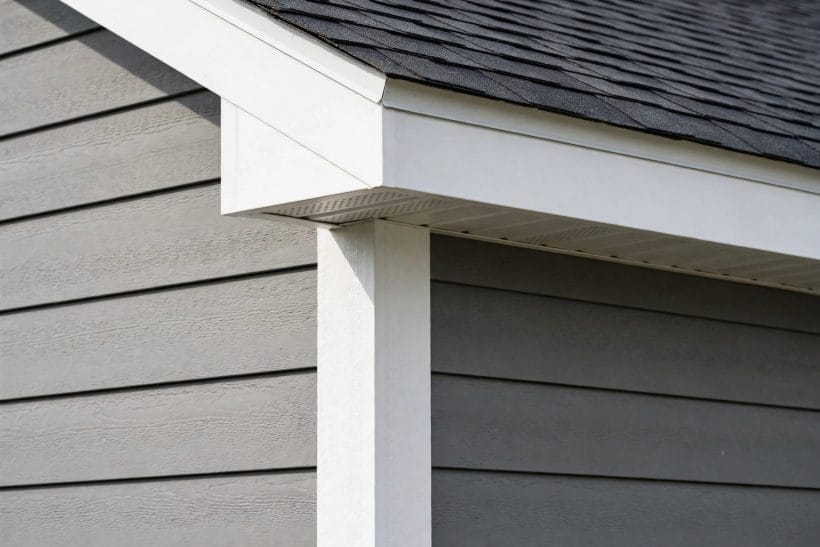
Corner boards are the quiet heroes of this pairing. A white board running up each corner of the house ties the walls together and gives the gray siding a crisp edge to stop against. Without them, the corner can look soft and unfinished, especially on wide, plain walls.
The fascia, the board along the roof edge, does similar work at the top of the wall. Painted white, it draws a clean line under the roof and links the gutters, the eaves and the corner boards into one outline. On gabled fronts, the rake boards running up the slopes carry the same white line to the peak.
These roofline details deserve the same white as the window trim, so the whole outline reads as one system. Mixing whites here, one bright and one creamy, can make the roofline look patchy in strong light, even when each white looks fine on its own.
Roof and gutter work sits high and carries real risk, so it belongs to experienced tradespeople with the right access equipment, not to a ladder-and-weekend plan. The design choices here are about colour and line; the fitting is professional work.
6. Porches, Columns and the Welcoming Entry
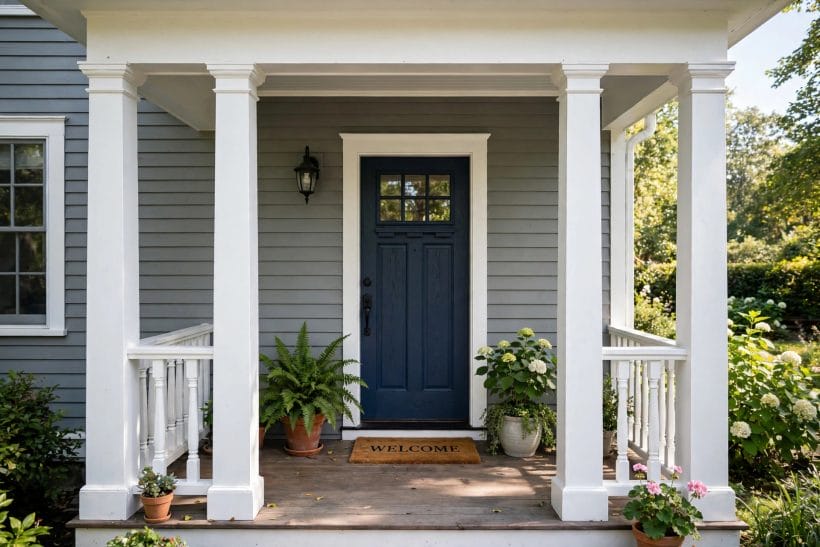
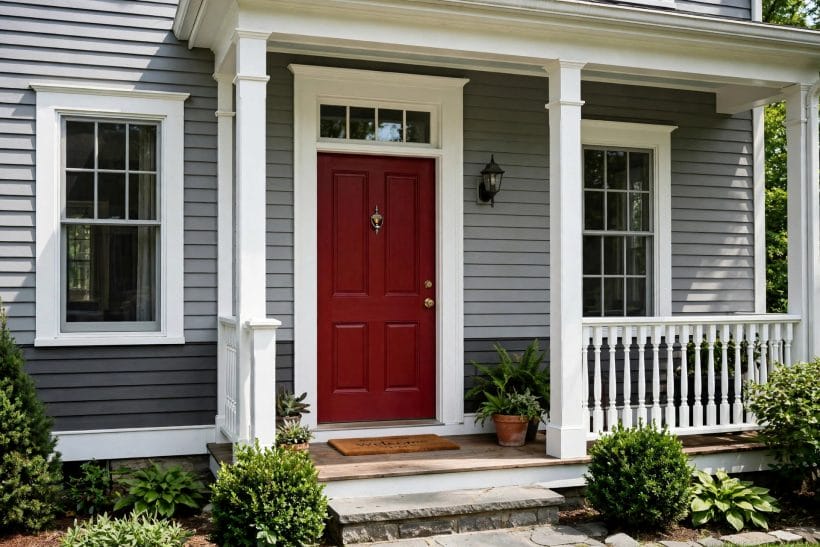
A porch is where gray siding and white trim become an invitation. White columns against a gray wall read instantly as an entry, and a white porch rail or beam gives visitors a clear place to head. Even a small covered stoop gains presence when its posts and beam are picked out in white.
Column style sets the porch mood. Plain square columns suit simple, modern fronts, while turned or tapered columns lean traditional. Either way, the columns should look strong enough to carry the roof above them, with bases and capitals that finish the line cleanly at top and bottom.
Porch floors and ceilings complete the picture. A timber-toned floor warms the gray and white scheme, and a pale porch ceiling keeps the covered space feeling bright rather than gloomy. A ceiling light over the door, and a second light if the porch is wide, makes the entry usable after dark.
Beyond the porch itself, the garden rooms that follow it matter too, and these tiny backyard ideas show how a small outdoor space can carry the same calm palette onward.
7. Doors, Hardware and a Front Door That Pops
The front door is the one place where this pairing invites a bolder colour. A deep red, a navy blue, a forest green or a warm wood tone all stand out against gray siding and white trim, and the door becomes the focal point of the whole front. The white surround frames the colour, so even a strong door shade reads composed rather than loud.
If a bold door feels like too much, a natural timber door is the gentler answer. Wood grain warms the gray, echoes porch floors and fences, and keeps the front feeling organic. A dark-stained timber door can carry almost as much presence as a painted one, with a softer edge.
Hardware finishes the door. Handles, knockers, house numbers and a letterbox in one matching finish, whether dark bronze, black or brushed nickel, keep the entry tidy. Mixed finishes here are one of the easiest details to overlook and one of the first things a visitor notices up close.
For the rooms that lie beyond the door, the companion collection of tiny house interiors shows how a calm exterior palette can sit alongside the inside of a small home.
8. Roofing, Gutters and Ground-Level Finishes
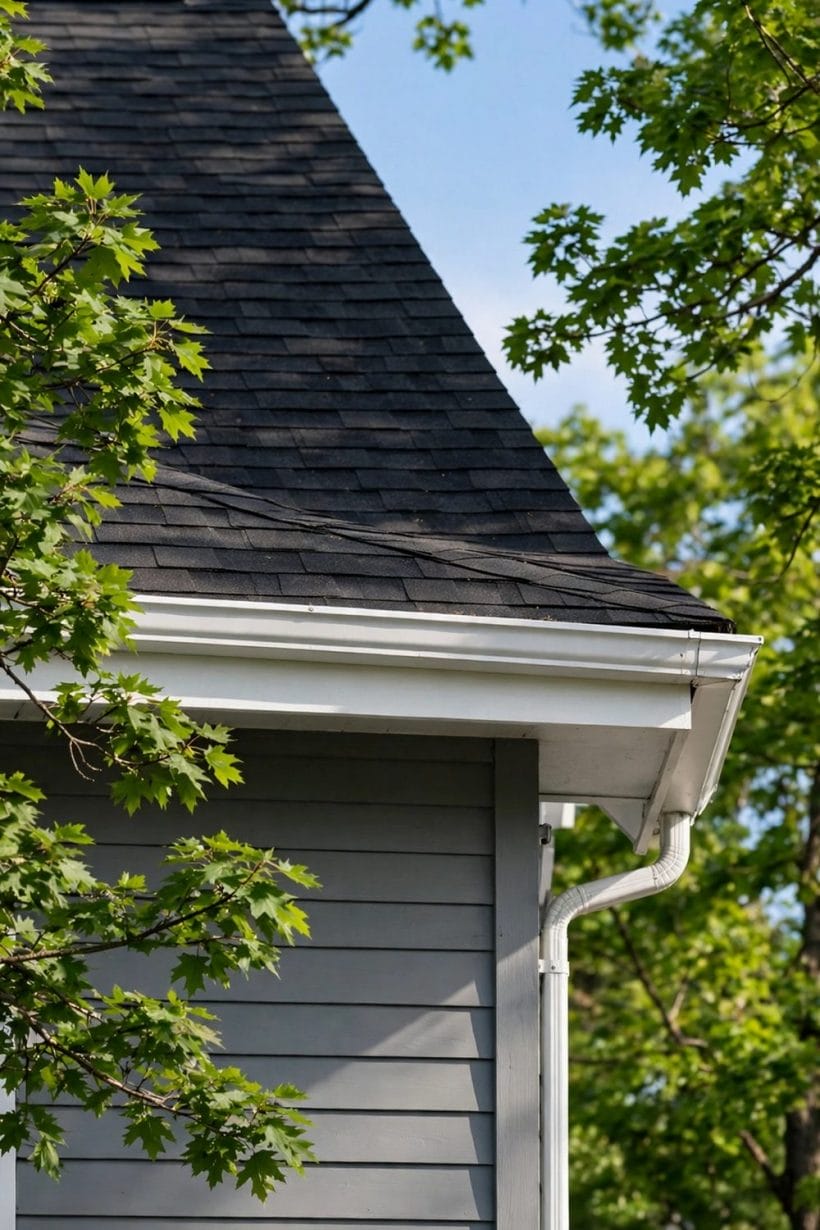
Roof colour anchors the whole pairing from above. Dark roofing, whether charcoal, deep brown or near-black, grounds a gray house and lets the white trim line stand out along the eaves. Pale roofing can work with light gray siding, but it needs the trim and door to carry more of the contrast, or the top of the house can feel washed out.
Gutters and downpipes are part of the colour scheme, not an afterthought. White gutters blend with the trim and keep the roofline line unbroken, while dark gutters match the roof and make the eaves read as a band. Either choice works, but the gutters should match something on purpose, rather than arriving in a default shade nobody chose.
At ground level, the foundation line and any skirting deserve attention. A darker foundation tone grounds the walls, and a neat white or gray water table board where the siding meets the base gives the house a finished footing. Paths, steps and edging in stone or brick then link the house to the garden.
Roof, gutter and drainage work is professional work throughout, and any change to the roofline or water paths should be planned with experienced tradespeople, since mistakes here reach the walls and the foundations.
9. Planting, Paths and Lighting Around a Gray House
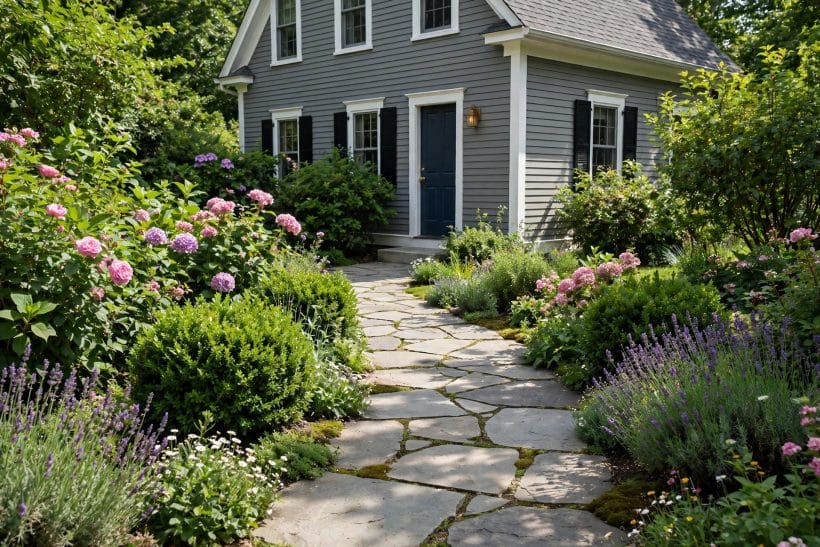
Planting softens the gray and white geometry. Green shrubs against gray siding add life without competing, and flowering plants near the entry give the front a seasonal change that paint cannot. Climbing plants on a trellis can suit a gray wall, provided the trellis keeps growth off the siding itself and the wall can breathe behind it.
Paths guide the eye the way trim does. A straight stone path to the door feels formal, while a gently curving path feels relaxed, and either one should be wide and even enough for comfortable everyday use. Low lights along the path, and a warm light at the door, make the front welcoming after dark and show the white trim to its best advantage.
Seasonal colour is the finishing touch. Spring bulbs, summer pots by the door, autumn foliage and winter evergreens each change the mood of the same gray and white front, so the house never looks frozen in one season. Pots and planters in a single material, such as terracotta or dark stone, keep the display calm.
For more planting and outdoor-room thinking, these tiny house garden ideas carry the same small-space, low-fuss approach into beds, paths and seating corners.
10. Upkeep Through the Seasons: Keeping Trim Bright
White trim shows dirt sooner than gray siding, so a gentle wash now and then keeps the front looking fresh. Soft water, a mild wash and a soft brush are enough for most marks, and the trim should be left to dry fully before anyone judges whether it needs further attention.
Watch the places where water lingers: under sills, behind downpipes, and along the bottom boards. Damp marks and green growth gather there first, and catching them early keeps a small cleaning job from becoming a repair job. Peeling or cracked paint should be dealt with before damp reaches the timber beneath.
Siding needs its own rhythm of care. A wash to clear dust and pollen, a check of joints and seals, and a look at the ground clearance along the base all help the walls age gracefully. Planting should be kept clear of the siding so air can move and damp cannot sit against the wall.
Through the year, the routine stays the same in spirit: wash, look closely, fix small things early, and let professionals handle anything structural, electrical or high up. A gray house with white trim rewards that steady attention, because every clean white line shows the care behind it.
Final Considerations
The gray house white trim pairing succeeds on restraint. One gray, one white, carried steadily across siding, trim, porch and roofline, with the front door as the single bolder note, gives a house a calm and confident face that suits many shapes and many streets.
Before you commit, sample the gray in real daylight, settle the white tone beside it, and walk the front as a visitor would, from the pavement to the door. If the eye travels easily along the white lines and lands on a welcoming entry, the pairing is working.
For the wider project around the outside, a building a tiny house checklist helps keep the whole build in order, and the broader collection of tiny house designs shows how this exterior pairing sits among many other house styles.




0 Comments