
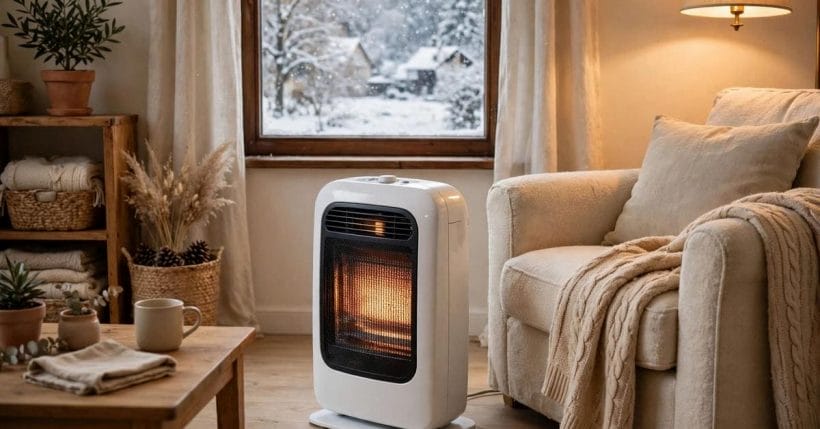
A cold corner in a small home can make the whole room feel unwelcoming, even when the rest of the house is comfortable. A portable heater looks like a simple answer, and in many homes it is, but the choice matters more than the box suggests. The wrong size, the wrong spot, or a heater that is hard to use can leave a room still chilly, noisy, or awkward to live with.
This guide gives you a set of buying checks to work through before you buy. It names no maker, ranks no model, and offers no verdict on any single product. Instead, it helps you judge any heater you are considering against your room, your daily routine, and the safety habits that matter in a small home. Electrical and heating work belongs to a qualified professional throughout, and the maker’s manual is the final word for any heater you own.
1. Start With the Room, Not the Heater
Every good heater decision starts with the room it will warm. A draughty living room with high ceilings behaves very differently from a small, well-sealed bedroom, and a heater that suits one may disappoint in the other. Before you look at any product, spend a little time noticing how the room actually feels: which corner stays cold, where the draughts come from, and whether doors stay open or closed through the evening. That picture matters more than any claim on a box.
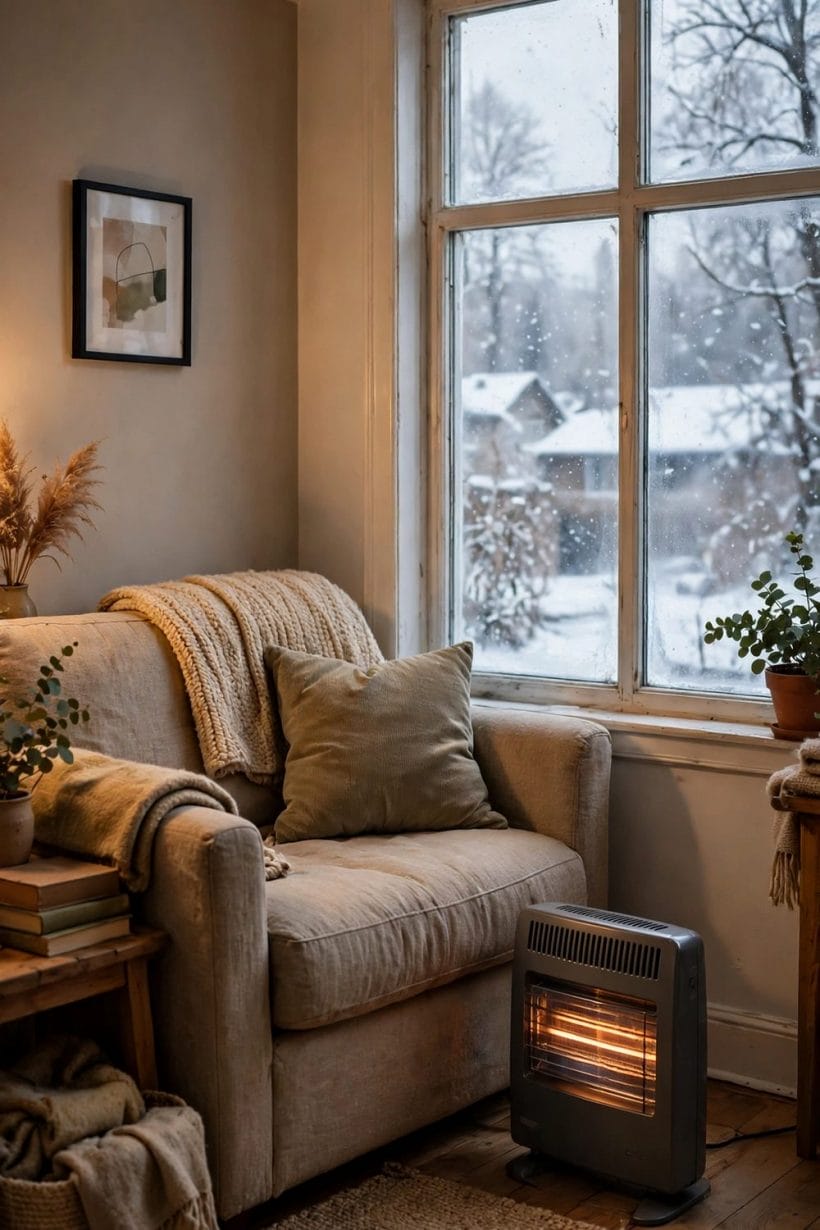
Think about how the room is used, too. A room where people sit still for hours needs steady, even warmth, while a room that is only used briefly may need something that warms up quickly and then switches off. A heater for a reading chair is a different job from a heater for a whole open-plan space, and pretending they are the same job is how people end up with a heater that runs all evening and still leaves them cold.
Room size also shapes what is practical. In a compact home, floor space is precious, and a bulky heater can block a walkway, crowd a doorway, or end up pushed against furniture simply because there is nowhere else for it to go. Measure the space you have in mind, look at the routes people walk through the room, and be honest about whether a heater can sit there with clear space all around it. If it cannot, that spot is not a spot at all.
2. Match the Heater to the Job in Hand
Heaters warm rooms in different ways. Some blow warm air out into the room, some warm the surfaces and people near them, and some hold warmth and release it slowly. None of these approaches is right for every room, and the best choice depends on how you will use the heater day to day. A heater that blows warm air can feel welcoming quickly, but it may also stir dust and feel draughty when it cycles. A heater that warms nearby surfaces can feel gentle and quiet, but it may take longer to change the feel of a whole room.
Ask yourself what the heater is actually for. Is it the main warmth for a room, or a top-up for one chilly corner? Will it run for a short spell in the morning, or through a long winter evening? Will it move between rooms, or stay in one place all season? The answers narrow the field far more usefully than any list of features, because they tell you whether you need quick warmth, steady warmth, portability, or quiet running above all else.
Be wary of any heater described as if it could warm a whole home on its own. A portable heater is, by its nature, a room heater, and a small home still has several rooms, doors, and draughts between them. If a seller suggests otherwise, treat that as a warning sign rather than a promise. A heater that honestly serves one room well is a better buy than one that claims to serve them all.
3. Safety Features Worth Checking First
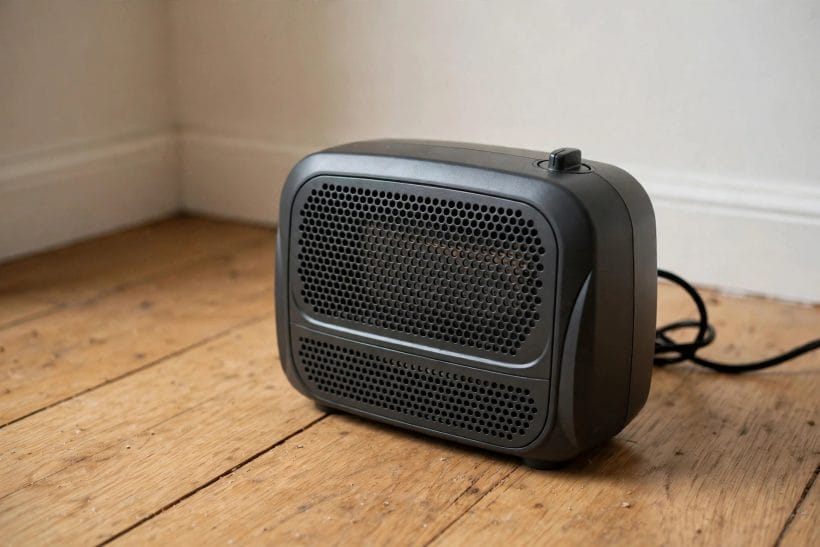
Safety is not a feature to compare last. It is the first thing to check, and it is worth checking in plain language rather than trusting a badge or a label you do not recognise. Look for a heater that switches itself off if it tips over, and one that switches off if it overheats. Both are simple protections, and both matter most in homes with children, pets, or busy walkways where a heater might be knocked.
Check the outside of the heater as well. A guard or grille that keeps curious hands and paws away from hot parts is important, and the casing should feel sturdy rather than flimsy. If the heater will sit in a home with small children, the surface temperature matters a great deal: a heater that stays cooler on the outside is easier to live with safely than one that becomes hot to touch all over. The manual should describe these protections clearly; if it does not, ask the seller to explain them before you buy.
Also consider how the heater behaves when it is left running. A timer or an automatic shut-off can be genuinely useful, not because it replaces attention, but because it gives you a backstop on a busy evening. Look for controls that are easy to understand at a glance, even in a dim room, so that switching the heater off is never a fiddly job. And remember that no safety feature replaces the basic habits: clear space around the heater, nothing draped over it, and a professional for any electrical concern.
4. Placement: Clear Space Is Part of the Purchase
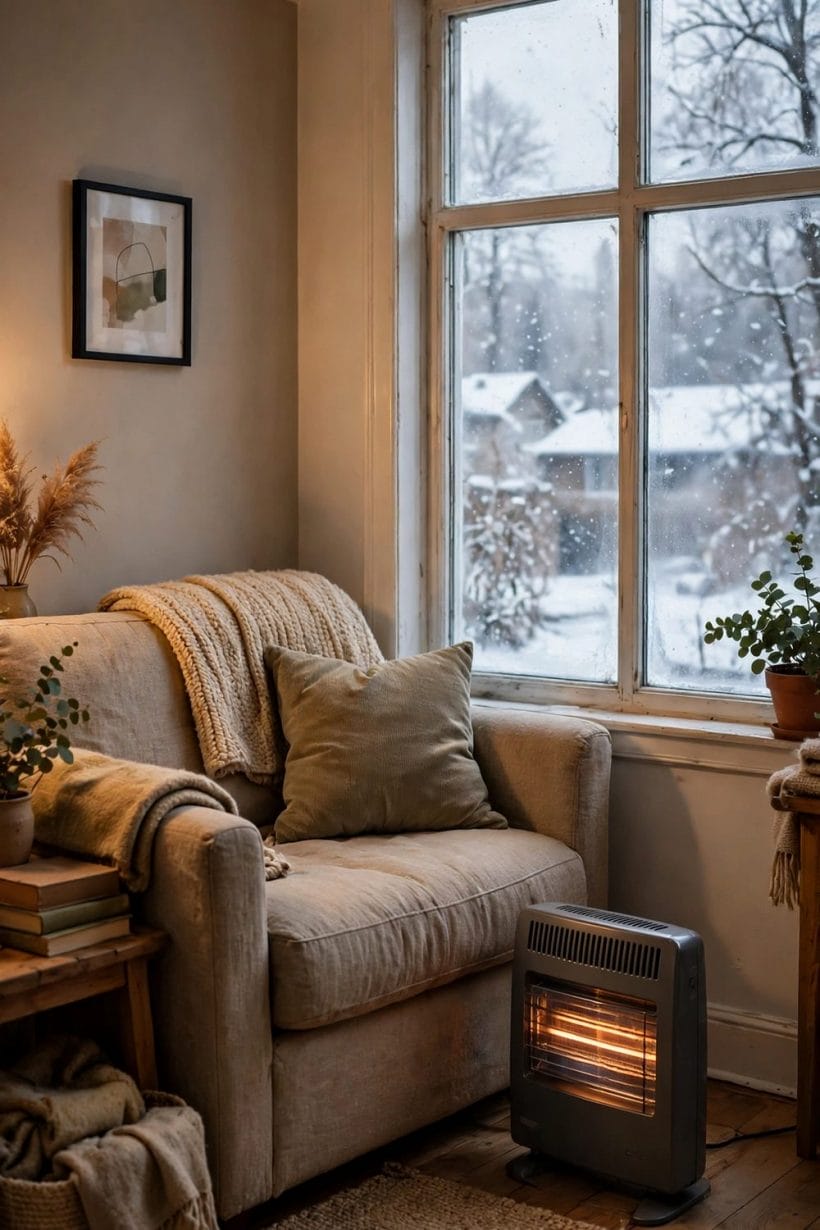
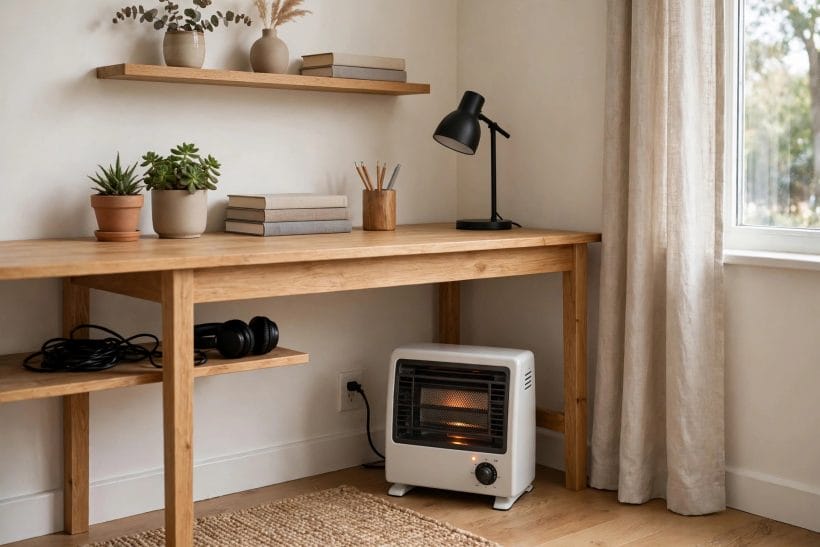
Where a heater sits matters as much as what it is. A heater pushed against curtains, bedding, papers, or furniture is a hazard no matter how good its features are, and a heater tucked behind a door may warm nothing but the door itself. Before you buy, choose the spot with the same care you would give to choosing the heater, and check that the spot can stay clear through a normal day, not just on the tidy morning you measure it.
Think about the path of the warmth, too. A heater facing a wall warms the wall. A heater blocked by a sofa warms the sofa. A heater in a draught may run constantly without ever making the seating area comfortable. The best spot is usually one with a clear view of the part of the room people actually use, with room for air to move around it and with no soft furnishings close by. If your room has no such spot, that tells you something important about whether a portable heater suits the room at all.
Cables deserve a thought as well. A heater cable stretched across a walkway is a trip hazard, and a cable run under a rug can overheat out of sight. Plan for a spot near a suitable outlet where the cable can lie flat and out of the way, without extension leads trailing across the floor. If the only workable spot would need new wiring or a new outlet, that is work for a qualified electrician, not a do-it-yourself job, and it should be priced into your decision before you buy.
5. Controls You Can Actually Use in a Dim Room
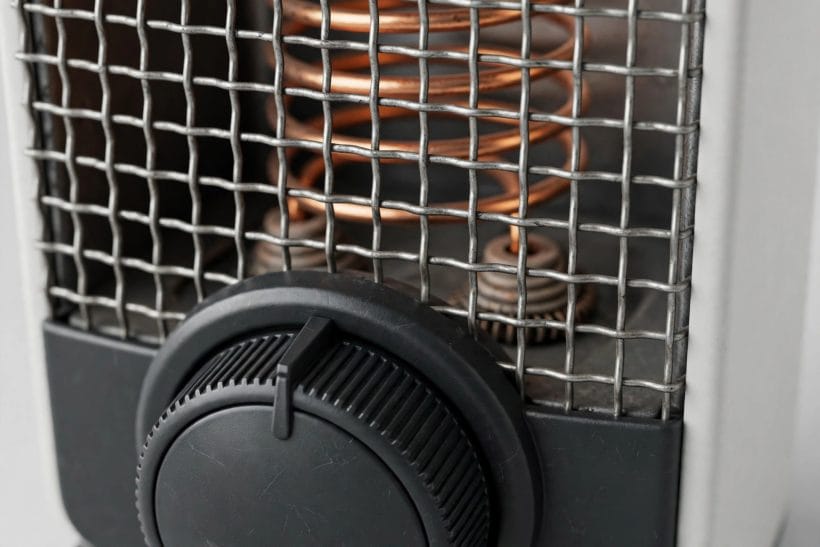
Controls sound trivial until you live with them. A heater with tiny buttons, a confusing display, or settings that reset every time it is switched off can become a daily irritation, especially for older readers or anyone using it in the dark. Look for controls that are large, clearly labelled, and easy to adjust without bending down awkwardly or hunting for glasses. A simple dial you understand beats a clever panel you do not.
Thermostats deserve a careful look. A heater with a thermostat can hold a room at a steady feel rather than blasting hot and then cold, and that steadiness is often what makes a room feel comfortable. But a thermostat only helps if you can set it sensibly and tell what it is doing. If the settings are vague or the display is hard to read, you may find yourself adjusting it constantly, which defeats the purpose. Ask to try the controls in the shop, or read the manual’s description of them before you commit.
Remote controls and timers can be helpful, but they are not essential, and they should never be the reason to choose a heater that is otherwise wrong for your room. A timer that lets you warm a room before you sit down can be a real comfort, and an automatic shut-off can be reassuring. Judge these extras by whether they fit your routine, not by how impressive they sound. The best controls are the ones you will actually use, every day, without thinking about them.
6. Noise, Light and Everyday Comfort
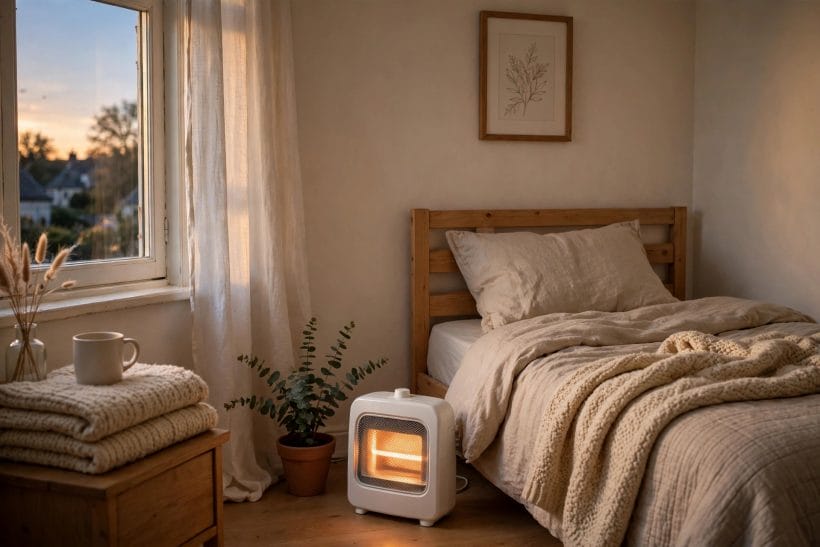
A heater lives in your home, not in a showroom, so its everyday behaviour matters. Some heaters hum, click, or whirr as they run, and a sound that seems faint in a busy shop can feel loud in a quiet bedroom at night. If the heater will run while you sleep, read, or work, ask about its noise in plain terms, and if you can, listen to it running before you buy. A heater that disturbs sleep is a poor bargain however warm it makes the room.
Light matters too. A heater with a bright display or a glowing element can light a dark bedroom more than you expect, and a flickering glow can be distracting in a room where people watch television or read. Check whether displays can be dimmed or switched off, and whether the heater’s glow will fall where you sit or sleep. These are small details, but they are the details that decide whether a heater is welcome in a room night after night.
Smell is another everyday factor that is easy to overlook. A new heater may smell when it first runs, and dust that settles on it over summer can smell when it runs again in autumn. That is normal for many heaters, but a persistent or acrid smell is a sign to switch the heater off and seek professional advice rather than to keep running it and hope it clears. Comfort is not only about warmth; it is about a heater that fits quietly into the life of the room.
7. Running Costs and Energy Habits
Running costs are where many heater purchases quietly go wrong. A heater that seems affordable to buy can still be expensive to run if it runs for long hours in a draughty room, while a heater that costs more at first may be cheaper over a winter if it holds a room steady with less waste. The honest way to judge this is to think in terms of hours and habits, not headlines. How many hours a day will it run, in which rooms, and for how many cold months?
Insulation and draughts shape the answer more than the heater itself. A room that loses warmth through gaps around doors and windows will need any heater to work harder, and no portable heater can fix that on its own. Sealing obvious draughts, closing doors, and using curtains at night can make a bigger difference to comfort than a fancier heater, and they cost far less over a season. Think of the heater as part of a warm room, not as a substitute for one.
When you compare heaters, ask for running-cost information in terms you can understand, and be cautious of any claim that sounds too neat. Energy use depends on your home, your tariff, and your habits, so a single figure from a seller cannot tell you what you will pay. A tiny house interior that is well planned, with seating near the warmest part of the room and draughts dealt with first, will always get more comfort from the same heater than a room where warmth escapes as fast as it arrives.
8. Size, Weight and Moving It Around
Portability is often promised and rarely tested. A heater that is meant to move between rooms should be easy to carry, stable when it is set down, and comfortable to handle without awkward grips or sharp edges. If it is heavy, check whether it has proper handles and whether it sits steadily on your floors. A heater that wobbles on a rug or slides on a smooth floor is not a heater you will enjoy moving, and it may end up staying in one room whether you planned that or not.
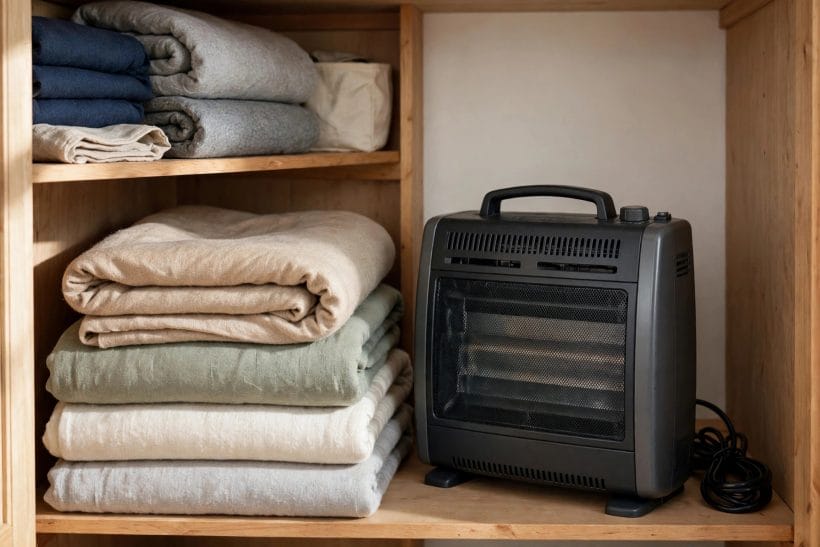
Storage matters as well, especially in a small home. A heater that lives in a room all year takes up floor space even in summer, while a heater that can be stored neatly in a cupboard frees the room for warmer months. Think about where the heater will go when it is not in use, and whether it will fit there without blocking access to other things. A heater that is awkward to store often ends up left out, gathering dust and cluttering a room that does not need it.
Also consider the room’s floor. A heater that works well on a hard floor may behave differently on a thick rug, and a heater with small feet may sink or tilt on soft surfaces. The manual should say which surfaces suit the heater, and that guidance should be followed rather than guessed at. A small living room rewards furniture and heaters that earn their floor space, and a heater that is stable, storable, and easy to move earns it far more readily than a larger one that does not.
9. Small Homes Need a Different Checklist
Small homes compress every heater decision. Distances are shorter, so a heater sits closer to beds, chairs, and curtains than it would in a larger house, and that closeness raises the stakes for clear space and surface temperature. At the same time, a small room warms faster, so a heater that is oversized for the space may cycle on and off in a way that feels uneven rather than comfortable. In a compact home, the right heater is often the smaller, steadier one rather than the most powerful one on display.
Ventilation also needs thought. A small room can feel stuffy quickly, and a heater that dries the air may make that worse. Opening a window for fresh air while a heater runs can feel wasteful, but a stuffy room is not comfortable either, so the balance matters. Think about how the room breathes in winter, whether doors and windows give you control over fresh air, and whether the heater’s warmth will make the room feel close or comfortable over a long evening.
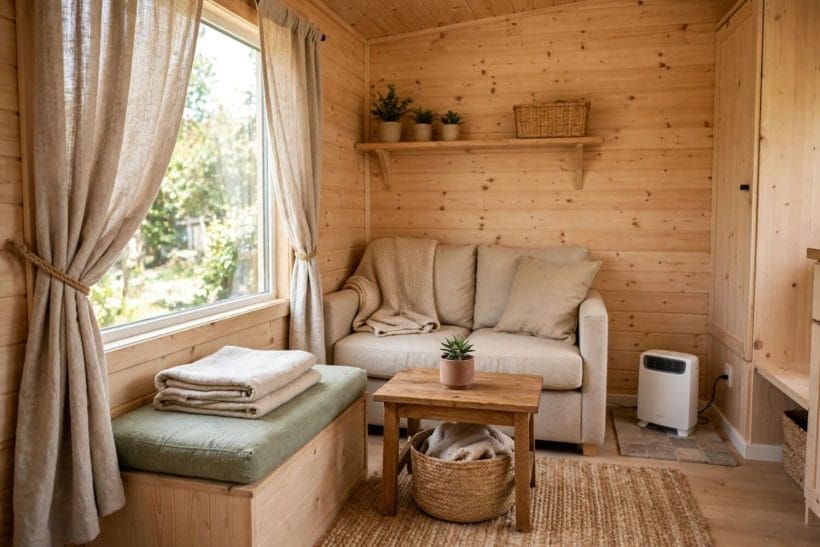
Layout can help or hinder. Seating arranged near the heater’s warmth, with a clear path for air to move, will feel warmer than seating tucked behind furniture, even with the same heater running. A tiny house living room that is arranged with warmth in mind, and a tiny house storage plan that gives the heater a proper home in summer, will both make a modest heater work harder than a grander one in a poorly arranged room. In small homes, arrangement is part of the heating system.
10. Questions to Ask Before You Pay
Before you pay, run through a short set of questions with the seller or in the manual. What safety shut-offs does the heater have, and how do they work? What surfaces is it suited to, and what clear space does it need? How are the controls operated, and can the thermostat hold a steady room feel? What does the maker say about running costs in ordinary use, and what warranty and support come with the heater if something goes wrong?
Also ask about returns and servicing. A heater that cannot be returned if it proves too noisy or too awkward for your room is a riskier purchase than one with a fair returns policy, and a heater whose maker offers clear support is easier to live with than one whose help is hard to find. Keep the manual and the receipt together, note the model details in a safe place, and register any warranty promptly if the maker offers one. These small administrative steps matter when a fault appears months later.
Finally, be honest about whether you need a heater at all, or whether the room needs something else first. A room with a serious draught, a broken window seal, or a heating system fault will not be fixed by a portable heater, and buying one may only delay the real repair. If the room’s coldness seems sudden, severe, or linked to damp or damage, seek professional advice before buying. A building checklist mindset helps here: fix the fabric of the room first, then choose a heater to top up a room that is already sound.
Final Considerations
A good heater purchase is a quiet one. It warms the room you actually use, sits safely with clear space around it, runs without fuss, and fades into the background of daily life. It does not promise to heat a whole home, it does not need constant adjusting, and it does not make you worry when you leave the room. If a heater you are considering fails any of those tests, it is worth pausing, even if it looks appealing in the shop.
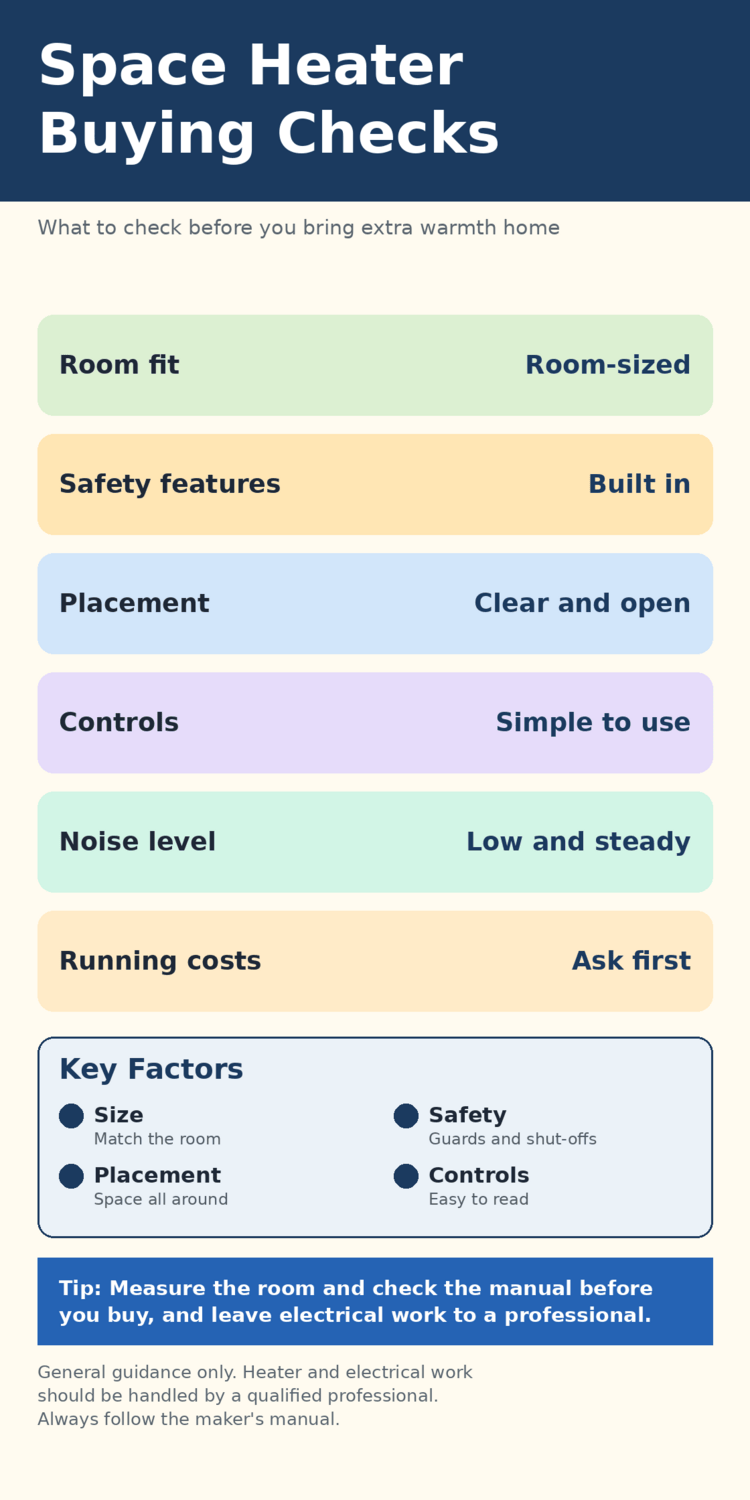
Use the checks in this guide as a single pass before you buy: room first, job second, safety first among features, placement planned, controls tested, noise and light considered, running habits weighed, size and storage checked, small-home realities faced, and questions asked before payment. That pass takes little time, and it protects you from the most common disappointments: a heater that is too big, too noisy, too awkward, or simply in the wrong spot.
Above all, keep safety at the centre of the decision. Follow the maker’s manual, keep the heater clear of soft furnishings, never cover it, and leave any electrical or heating work to a qualified professional. A tiny bathroom or a compact bedroom may seem like a small space to warm, but the same safety habits apply there as in any larger room. Chosen carefully and used with care, a portable heater can make a cold corner genuinely welcoming, and that, rather than any single feature, is what makes it worth buying.


0 Comments