

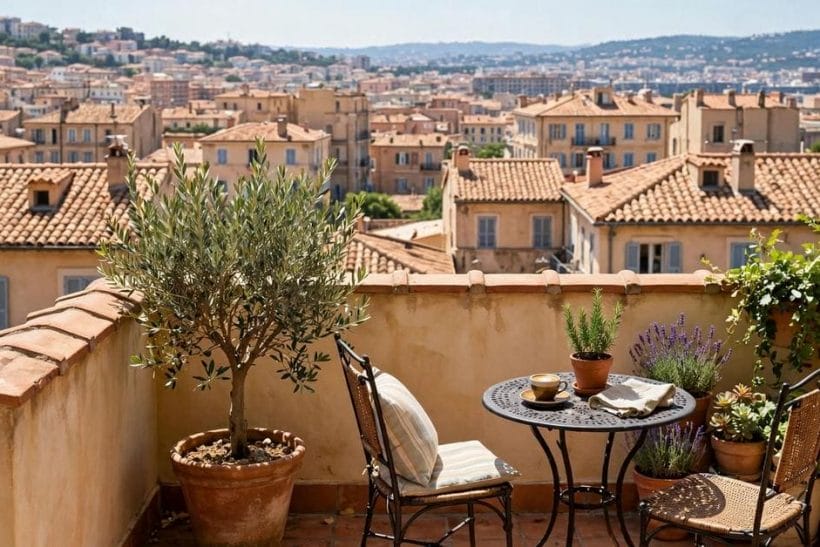
An apartment balcony is rarely generous, and that is exactly why thoughtful balcony design rewards care. A chair that folds flat, a rail planter that leaves the floor clear, a screen that softens the neighbour’s view — small choices, chosen well, turn a ledge of outdoor space into a room you actually use.
These seventy-five ideas stay inside apartment life: rented walls, shared buildings, wind at height, and rules worth checking before anything is fixed in place.
1. At a Glance: Apartment Balconies, Honestly Assessed
Good balcony design for an apartment starts with constraints, not catalogues. The floor is small, the railing belongs to the building in many leases, neighbours sit close on every side, and wind grows stronger with height. Every idea below respects those limits: nothing here asks you to alter the structure, drill into a shared wall without permission, or hang weight the railing was never meant to carry.
This post covers apartment balconies only. For the wider subject, see our general balcony ideas, and for the clean-lined contemporary take, see our modern balcony ideas. What follows is the rented, shared-building, small-footprint version: practical, neighbour-aware, and reversible.
| Question | Short answer |
|---|---|
| Scope | Apartment balconies only, including rented and small shared-building spaces |
| First move | Measure the clear floor by pacing it, then keep a walkway open |
| Seating rule | Foldaway or stackable pieces first, so the floor can clear in minutes |
| Planting rule | Pots and rail planters, with drainage trays and no soil spilling below |
| Privacy rule | Screens and greenery that soften views without blocking light or air |
| Building rules | Check the lease and building rules before fixing anything to rails or walls |
| Safety rule | Structural, balustrade, waterproofing and electrical work stays with professionals |
| Ideas in this post | Seventy-five, grouped by layout, seating, planting, privacy, shade, colour, storage, light and daily life |
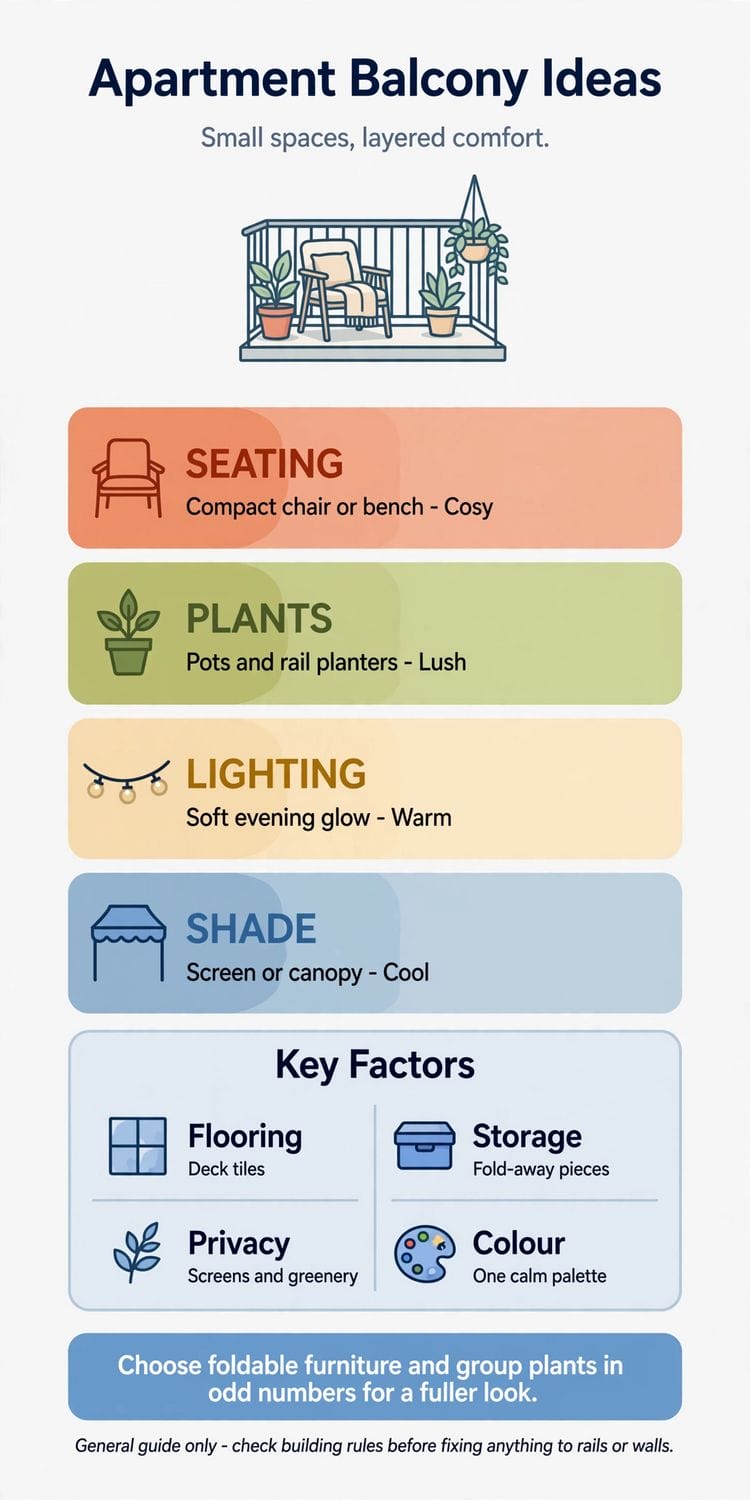
Read the ideas as a menu, not a checklist to complete. Pick the handful that fit your balcony’s light, your building’s rules, and the way you actually spend time outdoors, and leave the rest for another season.
2. Layouts That Fit Narrow Apartment Balconies
Narrow balconies punish big gestures and reward clear zones. Keep one open path from door to rail, let one corner do the sitting, and let the edges carry plants and storage so the middle stays usable.
1. Put the chair where the view opens up
Angle a single chair toward the longest sightline rather than squaring it against the wall. The balcony feels wider when your eyes travel past the railing, and the chair needs no extra floor around it to feel comfortable.
2. Run seating along the longest wall
A bench or a pair of chairs set along the longest wall leaves the rest of the floor free. The arrangement reads as a room rather than a corridor, and the walkway beside it stays open for watering and stepping outside.
3. Claim one corner for sitting, and defend it
Give sitting a single corner and refuse to let pots, boxes and drying racks colonise it. A corner that stays clear becomes the place you head for with a morning cup, while the remaining edges absorb everything else.
4. Use a rail shelf as a slim table
Where floor space is tight, a rail shelf holds a cup, a book and a small plant without claiming a footprint. Check building rules first, choose a shelf that grips rather than hangs loose, and keep loads light so nothing tips in wind.
5. Keep the doorway threshold clear
Leave the step from inside to outside free of pots and shoes. A clear threshold makes the balcony feel like a continuation of the room, and it stops the awkward shuffle that puts small balconies off limits.
6. Zone the balcony in three quiet strips
Think of the space as sitting at one end, planting along the rail, and storage near the door. The strips can overlap, but naming them stops every new purchase from landing wherever there happens to be a gap.
7. Sit diagonally on a square balcony
On a squarish balcony, turning the chair diagonally opens the sightline and frees the corners for pots. The diagonal reads as deliberate rather than cramped, and it suits a small table tucked beside the chair.
8. Leave one stretch of rail completely bare
Resist filling every inch of railing. One bare stretch gives you an unframed view, a place to lean, and breathing room that makes the planted stretches look intentional rather than crowded.
3. Seating That Folds Away
Apartment seating earns its place by disappearing. Foldaway and stackable pieces let a balcony switch from breakfast spot to plant-watering station to empty floor in minutes, which matters when the whole space is smaller than a hallway.
9. Choose a folding bistro set first
A folding table and two folding chairs are the safest first buy for a small balcony. They pack flat against a wall when guests arrive indoors, and they cost nothing in floor space on the days you would rather stand at the rail.
10. Add a single generous chair, not a set
One comfortable chair beats a cramped set that nobody can pull out. Choose the chair you would sit in for an hour, give it a cushion that lives indoors, and let the rest of the balcony breathe around it.
11. Hang a wall-mounted drop-leaf table
Where the building rules allow a small fixing, a drop-leaf table gives you a surface that folds flat when unused. If fixings are not allowed, a narrow leaning shelf or a rail shelf can play the same role without a drill.
12. Keep cushions indoors between uses
Cushions left outside gather damp, dust and fading, and they eat the very storage a small balcony lacks. A basket by the door for cushions and a throw keeps the balcony tidy and the seating inviting when you bring them out.
13. Use a bench that doubles as a plant stand
A low bench with pots at each end works as seating for one and display the rest of the time. The dual role suits balconies where a dedicated seat and a dedicated plant stand would compete for the same corner.
14. Stack stools instead of lining up chairs
Stackable stools give you extra seats for visitors without a permanent row of chairs. Stacked in a corner, they read as a tidy tower; pulled out, they turn a solo balcony into a place for a shared evening.
15. Borrow ideas from patio seating, scaled down
Look at patio seating ideas for arrangements you like, then shrink them: fewer pieces, lighter frames, and nothing that cannot be carried indoors in one trip. The pattern transfers; the scale does not.
16. Sit low to soften the feeling of height
A low chair or floor cushion makes a high balcony feel sheltered rather than exposed. The railing reads taller from a low seat, the view opens above it, and the wind feels less direct at seating level.
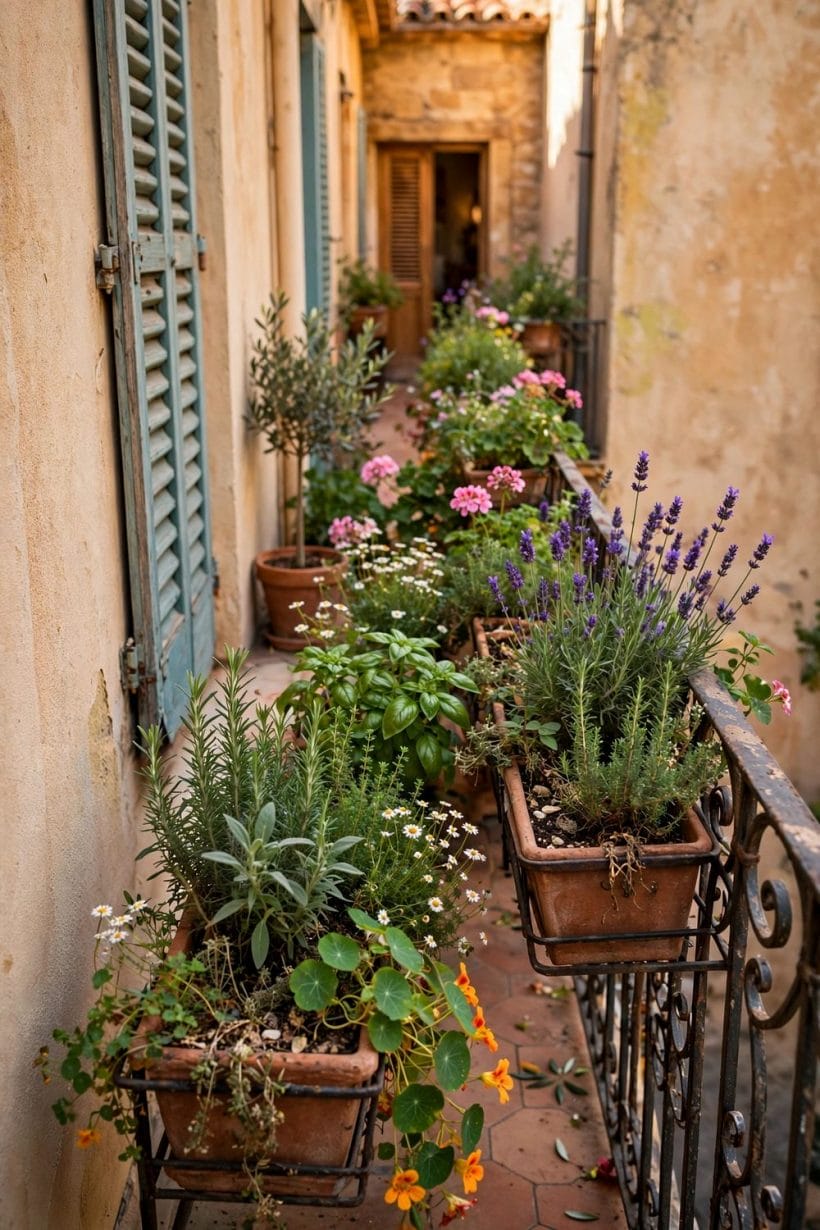
4. Planting in Pots and Rail Planters
Planting is where apartment balconies shine, because pots forgive small spaces and poor soil. The discipline is drainage, weight and wind: trays under every pot, soil kept off the balcony below, and tall plants sheltered from gusts.
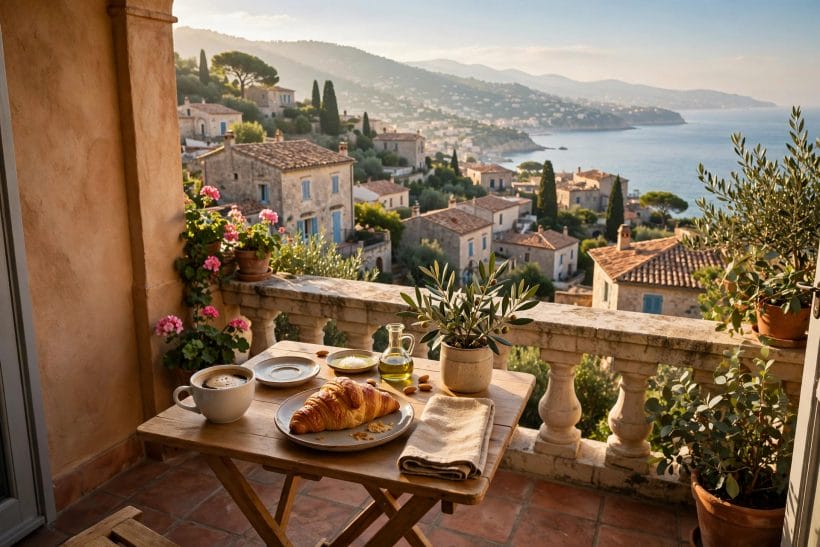
17. Start with three pots, not thirty
Three generous pots teach you your balcony’s light and wind faster than a crowd of small ones. You learn what thrives, what dries out, and what sulks, and you can add plants with confidence instead of replacing casualties.
18. Use rail planters for trailing greenery
Rail planters lift trailing plants to eye level and free the floor entirely. Fix them securely, check building rules, keep them light, and choose trailing varieties that soften the railing without spilling soil over the edge.
19. Group pots in odd clusters
Clusters of three or five pots look fuller and more deliberate than a scattered row. Vary the heights, repeat one pot colour, and leave a gap between clusters so watering and sweeping stay easy.
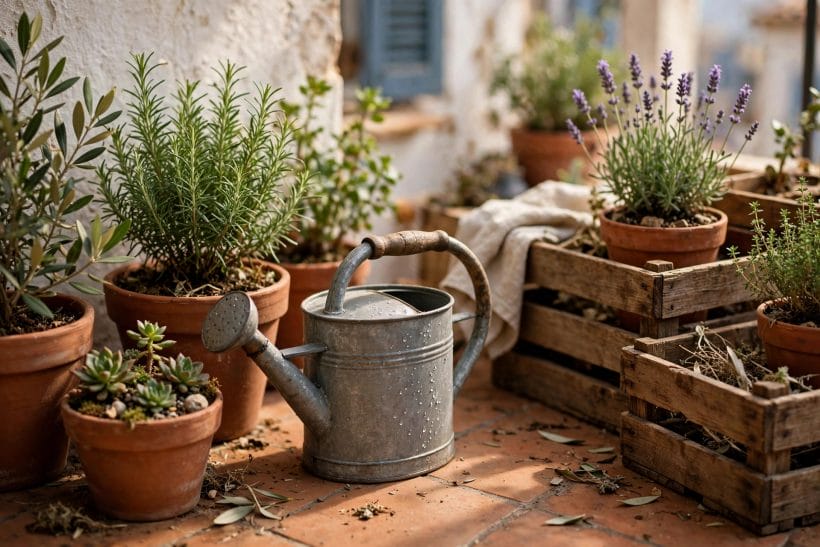
20. Grow herbs where you cook nearby
A small herb cluster by the door earns its place daily, seasoning meals steps from the kitchen. Keep herbs in separate pots so vigorous growers do not crowd quieter ones, and snip little and often to keep them bushy.
21. Let one tall plant anchor the corner
A single tall plant in a heavy pot anchors a corner and gives the balcony vertical shape. Weight the pot well, shelter it from the strongest wind, and prune for balance so a gust never turns it into a hazard.
22. Choose wind-tolerant plants for high floors
Higher balconies dry out faster and catch stronger gusts, so favour sturdy, flexible plants over brittle or top-heavy ones. Watch new plants through a windy week before committing the whole balcony to one variety.
23. Water with a tray under every pot
A tray under each pot protects the balcony below and keeps neighbours dry, which matters more than any planting scheme. Empty trays after watering so roots never sit in standing water, and wipe spills before they stain.
24. Learn container planting before buying more
Read our container garden ideas for pot sizes, drainage and grouping, then apply the same care at balcony scale. Good containers forgive small balconies; careless ones leak, topple and disappoint.
5. Privacy When Neighbours Are Close
Privacy on an apartment balcony is about softening views, not building walls. Screens, greenery and careful seating angles can make a shared-building balcony feel private without blocking light, air or the view you moved there to enjoy.
25. Angle seating away from the nearest window
Turn your chair a little away from the closest neighbouring window and the whole balcony feels more private. The shift costs nothing, blocks nothing, and changes the sightline for both sides at once.
26. Use a freestanding screen for one side only
Screen the side that overlooks you most, and leave the rest open. One screened side reads as a cosy nook; screening every side turns a balcony into a box and cuts the breeze you want on warm evenings.
27. Grow a green screen in tall pots
Tall plants in a row of pots form a living screen that filters views and softens sound. Bamboo-like growers and dense shrubs work well, but keep pots stable, weight them properly, and trim regularly so the screen stays neat.
28. Hang outdoor curtains on a tension rod
Where fixings are not allowed, a tension rod with outdoor curtains gives adjustable privacy that draws back in seconds. Choose a fabric that dries quickly, and bring curtains in during storms so they never sail.
29. Layer sheer fabric over a solid screen
A sheer layer over a screen or railing softens the view without darkening the balcony. The layering looks considered, moves gently in a breeze, and lets you keep light while losing the feeling of being watched.
30. Plant the rail, not just the floor
Greenery at rail height blocks the sightline that matters most: the direct view from a neighbouring balcony. Trailing plants, rail boxes and tall pots together create a green edge that feels natural rather than defensive.
31. Keep conversation voices balcony-low
Privacy runs both ways on a shared building. Soft voices, especially in the evening, keep good relations with neighbours, and good relations are what make a small balcony feel relaxed rather than overlooked.
32. Dress the door, not just the balcony
A sheer curtain at the balcony door lets you enjoy the outdoor room while keeping the interior private. The door dressing completes the privacy layer, and it costs nothing in balcony floor space at all.
6. Shade, Wind and Rain at Height
Height changes the weather on a balcony. Sun strikes harder without neighbouring shade, wind funnels between buildings, and rain arrives sideways. Shade and shelter that can be taken down quickly suit apartment life best.
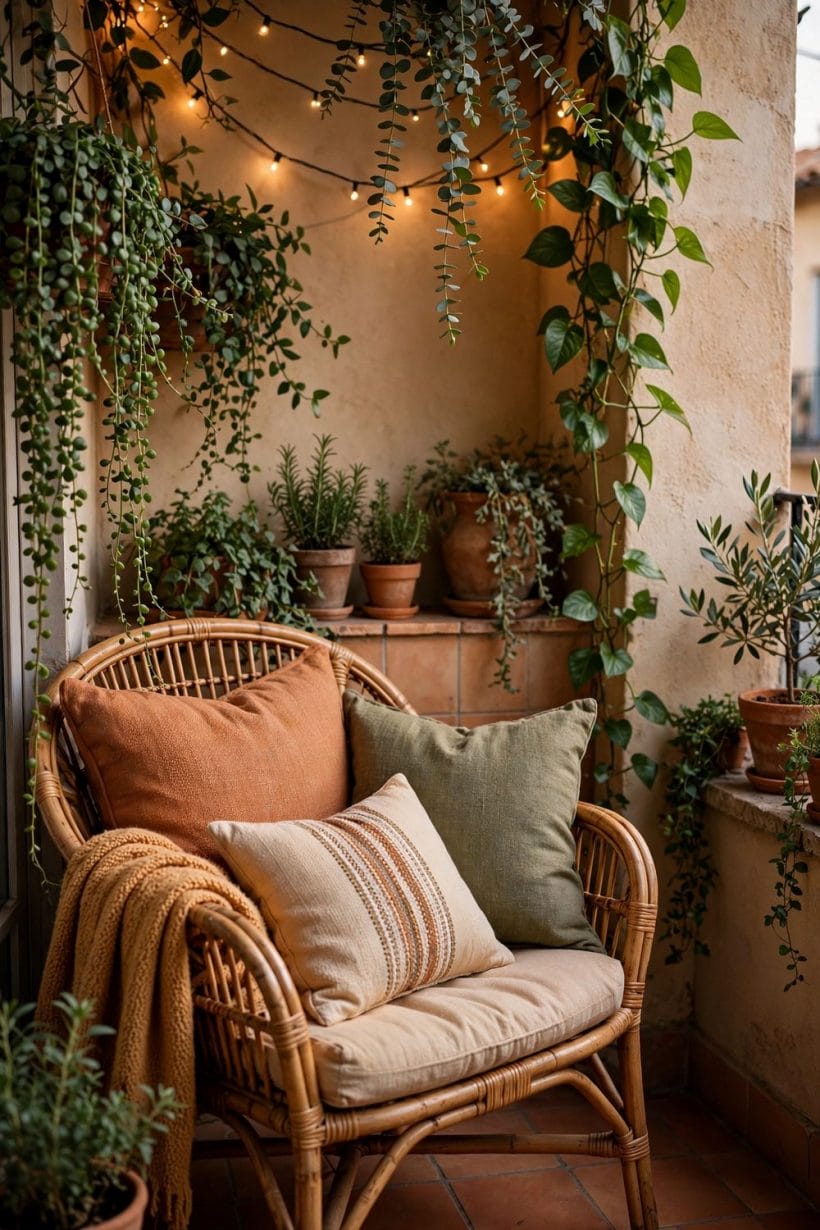
33. Shade the seat, not the whole balcony
A small shade over the chair alone beats a canopy struggling to cover the entire floor. Shading the seat keeps you comfortable, leaves plants in the sun they want, and puts less sail area into the wind.
34. Choose a half umbrella over a full canopy
A half umbrella designed to sit against a wall fits narrow balconies where a full canopy would crowd the rail. Weight its base well, close it in gusts, and store it indoors when storms are forecast.
35. Use a retractable shade you can lower fast
A shade that lowers and raises in seconds suits changeable weather at height. You can chase sun in the morning, shade at midday, and clear the balcony before an evening gust arrives.
36. Break wind with open weave, not solid boards
Open-weave screens slow wind without catching it like a sail. Solid boards can shudder, rattle and strain fixings, while a woven screen or dense planting filters the breeze and keeps the balcony usable.
37. Bring light things in before storms
Cushions, empty pots and light trays become hazards in a storm at height. A quick pre-storm routine — cushions indoors, pots grouped low, shade folded — protects neighbours below as well as your own belongings.
38. Let rain reach the plants, not the seating
Position pots where rain can reach them and seating where an overhang or shade keeps it drier. The split saves watering work and stops a shower from ending an evening outdoors.
39. Borrow porch shade thinking for a balcony
Our porch shade ideas show how overhangs and screens temper sun and rain; adapt the pattern with freestanding, removable pieces rather than anything fixed to the building.
40. Dry the floor after rain before sitting out
A quick sweep and dry after rain keeps cushions clean and the floor safe underfoot. The habit takes minutes, and it stops damp from settling into the corners where pots and furniture meet the floor.
7. Colour and Texture in a Small Outdoor Room
Colour on a small balcony should be calm at the base and lively in the accents. One quiet palette for floor, pots and furniture lets a few bright cushions, flowers and textiles carry the personality without shrinking the space.
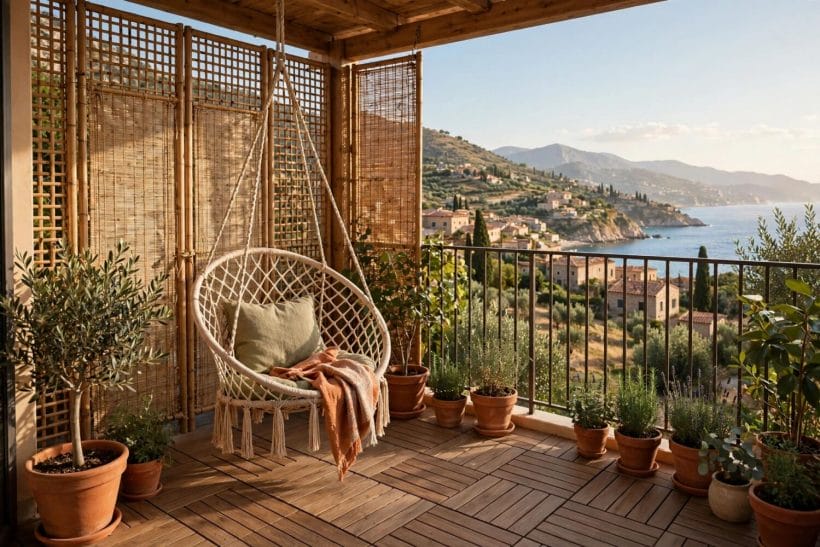
41. Pick one calm palette for the whole balcony
Choose one calm palette — warm neutrals, soft greens, or pale coastal tones — and repeat it across pots, cushions and textiles. The repetition makes a small space feel larger, because the eye travels without stopping at every clash.
42. Let plants supply the brightest colour
Flowers and foliage give you colour that changes with the seasons and costs nothing in storage. Keep furniture and pots quiet, and let blooms be the bright note you can swap simply by changing a pot.
43. Warm the floor with outdoor rugs or tiles
An outdoor rug or a set of deck tiles warms bare concrete and defines the sitting zone. Choose pieces that drain and dry quickly, lift them to clean beneath, and bring rugs indoors in wet spells.
44. Mix two textures, not ten
Pair a smooth texture with a rough one — woven chairs with terracotta pots, or timber with linen — and stop there. Two textures feel rich on a small balcony; more than that reads as clutter from the doorway.
45. Repeat one pot colour along the rail
One pot colour repeated along the rail ties scattered plants into a single composition. Terracotta, cream or deep green all work; the repetition matters more than the shade you choose.
46. Add colour through cushions you can swap
Cushions are the easiest colour to change on a balcony, since they live indoors between uses. A seasonal swap — warm tones for autumn, fresh tones for spring — refreshes the whole space without buying anything bulky.
47. Keep the railing colour quiet
Leave the railing its building colour unless the rules clearly allow a change. A quiet railing recedes, while a repainted rail draws the eye to the boundary and invites questions from the building manager.
48. Echo the interior palette at the threshold
Carry one interior colour onto the balcony through a cushion or a pot, and the two rooms connect visually. The echo makes the balcony feel like part of the home rather than an afterthought tacked onto it. For broader colour thinking, see our exterior colour ideas.
8. Storage That Disappears
Storage is the unglamorous idea that makes every glamorous one possible. On an apartment balcony, storage must be weatherproof, easy to reach, and small enough that it never becomes the thing you look at.
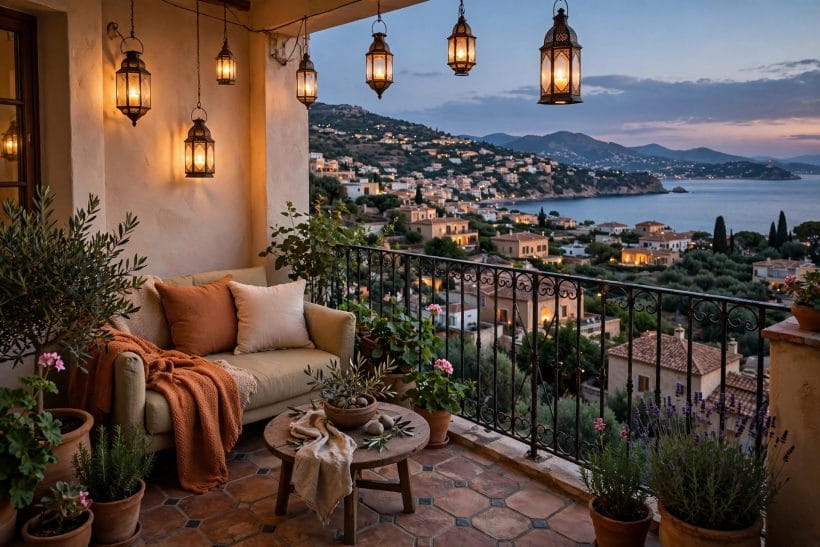
49. Store cushions in a bench box
A bench with storage inside hides cushions, throws and watering tools in the seat you sit on. The double duty is ideal for small balconies, where a separate storage box would claim a corner on its own.
50. Hang tools on the inside of the door
A few hooks on the inside of the balcony door hold a watering can, secateurs and twine within reach. The tools stay out of sight from the balcony itself, and you never hunt for them when a plant needs attention.
51. Keep a slim vertical shelf by the wall
A slim shelf against the wall holds small pots, candles and books without the footprint of a cabinet. Anchor it safely where the rules allow, or choose a freestanding ladder shelf that leans without fixings.
52. Use the space under the bench
The gap under a bench swallows flat trays, folded shades and spare pots. A low basket slid underneath keeps the contents tidy, and the bench above still works as seating or a plant stand.
53. Decant soil and feed into sealed tubs
Sealed tubs for soil and plant feed stop spills, damp and insects, and they stack neatly in a corner. Label each tub plainly, and keep them out of direct sun so contents stay usable through the season.
54. Rotate seasonal pieces indoors
Swap pieces with the seasons: heavy throws and lanterns for winter evenings, light cushions and shade for summer. Rotation keeps the balcony current without accumulation, and indoor storage protects what is out of season.
55. Give every balcony item a home indoors
Every item that lives on the balcony should have an indoor home for storms, holidays and winter. If you cannot name where it goes, the balcony will slowly become a store cupboard with a view.
56. Clear the floor completely once a season
Once a season, move everything off the balcony, sweep and wash the floor, and return only what earns its place. The reset reveals what you stopped using, and the balcony feels new without a single purchase.
9. Evening Light and Atmosphere
Evenings are when apartment balconies earn their keep. Soft, low light flatters plants, hides the building opposite, and turns a small space into a room you linger in rather than pass through.
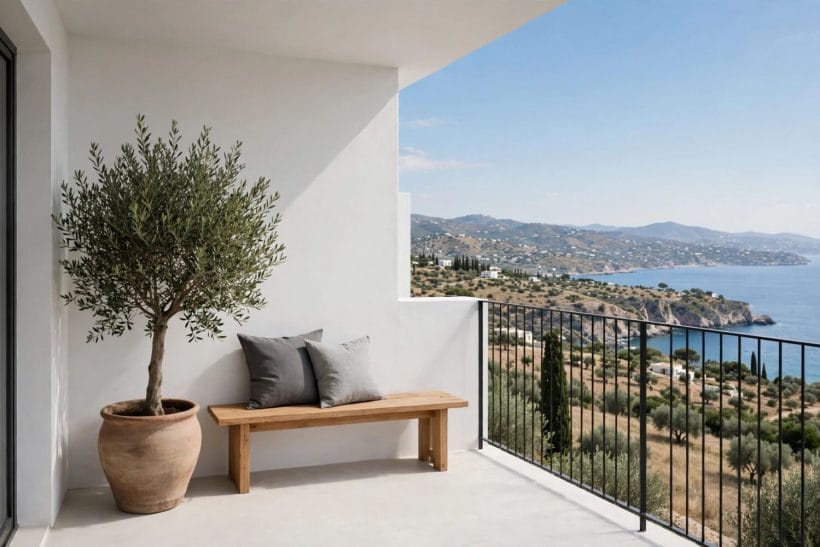
57. String lights along the rail, not overhead
Lights along the rail glow at eye level and flatter the planting, while overhead strings can glare and sag. Keep the run short, choose warm tones, and switch them off when you head indoors.
58. Use lanterns for light you can move
Lanterns give you pools of light exactly where you sit, and they move indoors in seconds. A lantern on the table and one on the floor create depth that a single bright source never achieves.
59. Light the plants, not the neighbours
Aim small lights at plants and walls rather than outward across the building. Downward and inward light keeps the balcony cosy and avoids shining into neighbouring windows after dark.
60. Keep one candle-safe spot clear
If you use candles outdoors, keep one stable, sheltered spot clear of fabric and dry leaves, and never leave a flame unattended. Battery candles give the same flicker on windy nights without the worry.
61. Dim the doorway light for balcony evenings
A bright doorway light flattens a balcony evening, while a dimmer interior glow lets the outdoor lights carry the scene. The contrast makes the balcony feel like a separate room after dark.
62. Choose warm light over bright light
Warm light suits small outdoor rooms: it softens concrete, deepens foliage and flatters skin tones. Bright white light, by contrast, exposes every flaw and makes a balcony feel like a corridor.
63. Add a small light by the door for safety
A gentle light by the balcony door helps you step out safely and find the handle coming back in. Keep it soft and shielded, so it guides without flooding the balcony or the neighbours.
64. Switch lights off when the evening ends
Turning lights off when you head indoors saves energy, respects neighbours, and keeps the balcony’s magic for the next evening. A simple habit, done nightly, beats any timer you forget to set.
10. Daily Life on an Apartment Balcony
The best apartment balconies are used daily, in small ways. These final ideas turn the balcony from a feature you admire into a room that holds your morning, your work breaks, and your quiet evenings.
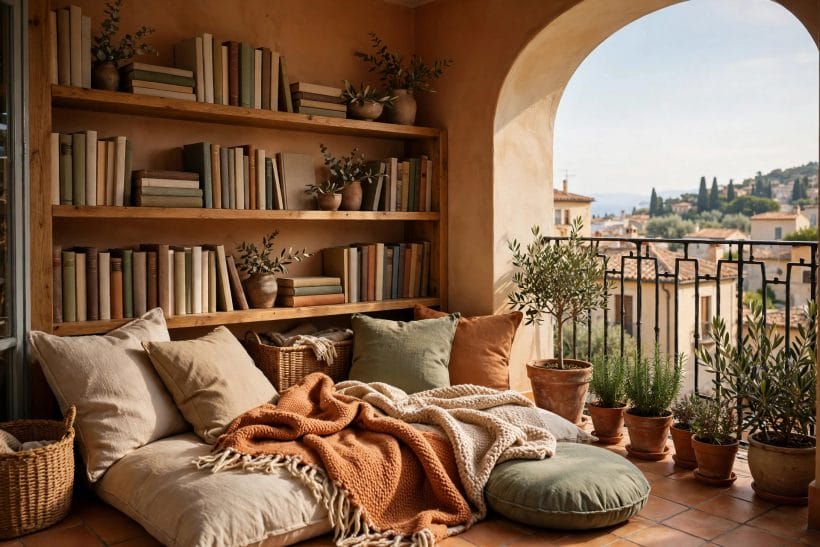
65. Start the day with a balcony minute
Step outside for a single minute each morning before the day gathers speed. Check the plants, feel the weather, and let the balcony set the tone — the habit alone will make you use the space more.
66. Make a breakfast corner, not a dining room
A small table, one chair and a cup are enough for breakfast outdoors. The modest scale suits apartment mornings, and a corner that works daily beats a dining set that only works for guests.
67. Work outside for short focused bursts
Take a notebook or a laptop outside for a short burst of work, then head back in. Brief outdoor work refreshes thinking, while a full day outside brings glare, wind and battery worries with it.
68. Read where the light falls in the afternoon
Follow the afternoon light to the corner it warms, and put your reading chair there. Balcony light changes through the day, and a chair that moves with it always feels like the best seat.
69. Dry herbs and laundry discreetly, where allowed
Where building rules allow, a small discreet rack dries herbs and light laundry in fresh air. Keep racks low, tidy and out of shared sightlines, and bring them in before evening so the balcony returns to a sitting room.
70. Keep a pet corner with shade and water
A shaded mat and a water bowl make a balcony welcoming for a pet, under supervision and within building rules. Keep the corner away from the rail, secure any loose items, and never leave a pet unattended at height.
71. Welcome birds without feeding mess
A small water dish and bird-friendly planting invite birds without the mess of scattered feed. Change the water often, keep the dish stable, and enjoy the visitors from a chair kept at a respectful distance.
72. Refresh one pot each month
Refreshing a single pot each month — a new plant, a trim, a fresh top layer of soil — keeps the balcony evolving without a big project. The monthly rhythm spreads cost and effort across the year.
73. Keep noise neighbour-friendly after dark
Evenings outdoors sound louder across a shared building than they feel from your chair. Soft music, low voices and an early finish to lively gatherings keep the balcony a pleasure for everyone around it.
74. Plan a rain-day balcony ritual
On rainy days, watch the rain from the doorway with a warm drink, or tend plants that shelter under the overhang. A rain-day ritual keeps the balcony in your daily life even when sitting outside is off the table.
75. Treat the balcony as an outdoor room, not a ledge
The final idea is a mindset: furnish it, light it, plant it and use it like a room. For more compact outdoor-room thinking, see our deck ideas for compact outdoor living — then come back and enjoy the small room you already have.
Final Considerations
An apartment balcony rewards restraint. Check the building rules before fixing anything, keep loads light and drainage tidy, leave structural and electrical work to professionals, and choose pieces that fold away when the weather turns. Start with seating, planting and one screen for privacy, then add ideas only as daily use proves you want them.
The best test of any idea here is simple: does it make you step outside more often? If it does, it belongs on your balcony, however small. If it only looks good in a photograph, leave it out, and keep the floor clear for the life you actually live.


0 Comments