

There is a particular pleasure in a path made of separate pieces, each one fitted against the next, leading the eye and the foot from the gate to the door. A paver walkway turns an ordinary route across the garden into something considered, a surface with rhythm, colour and a clear edge.
This survey of paver walkway pictures gathers the layouts, colours and practical details that shape such a path, so you can picture what suits your own front garden before any ground is broken.
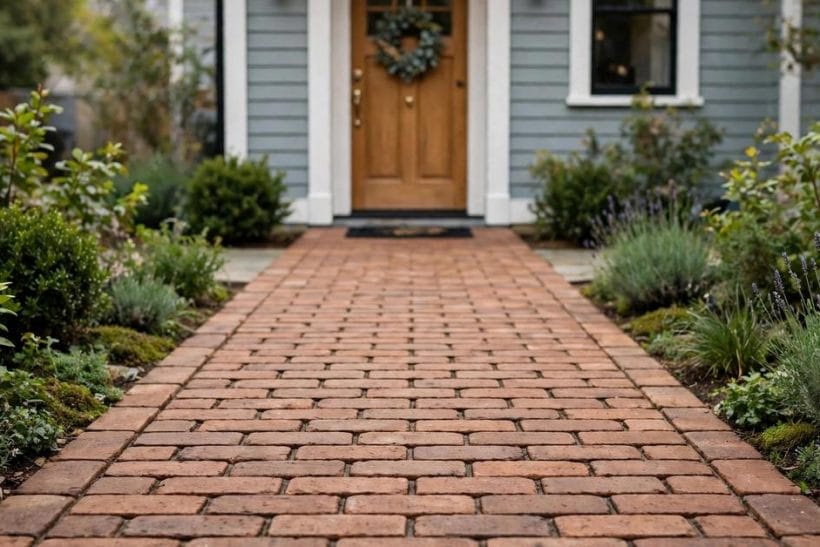
1. Paver Walkways at a Glance
A paver walkway is a path built from individual units laid side by side, rather than poured as a single slab or scattered as loose stone. The units may be brick, concrete or stone, and the character of the finished path comes from their size, their colour and the pattern in which they are arranged. Because the surface is made of pieces, a damaged section can be lifted and replaced without remaking the whole route, and the path can curve, widen or narrow as the garden asks.
| Aspect | What to notice |
|---|---|
| Form | Individual units laid as a continuous path |
| Patterns | Running bond, herringbone, basket weave and stacked rows |
| Colour | A single tone, or a blend of related tones |
| Edge | A firm border that holds the field in place |
| Surface | Firm underfoot, jointed, and repairable in part |
| Setting | Front garden, side passage and garden route alike |
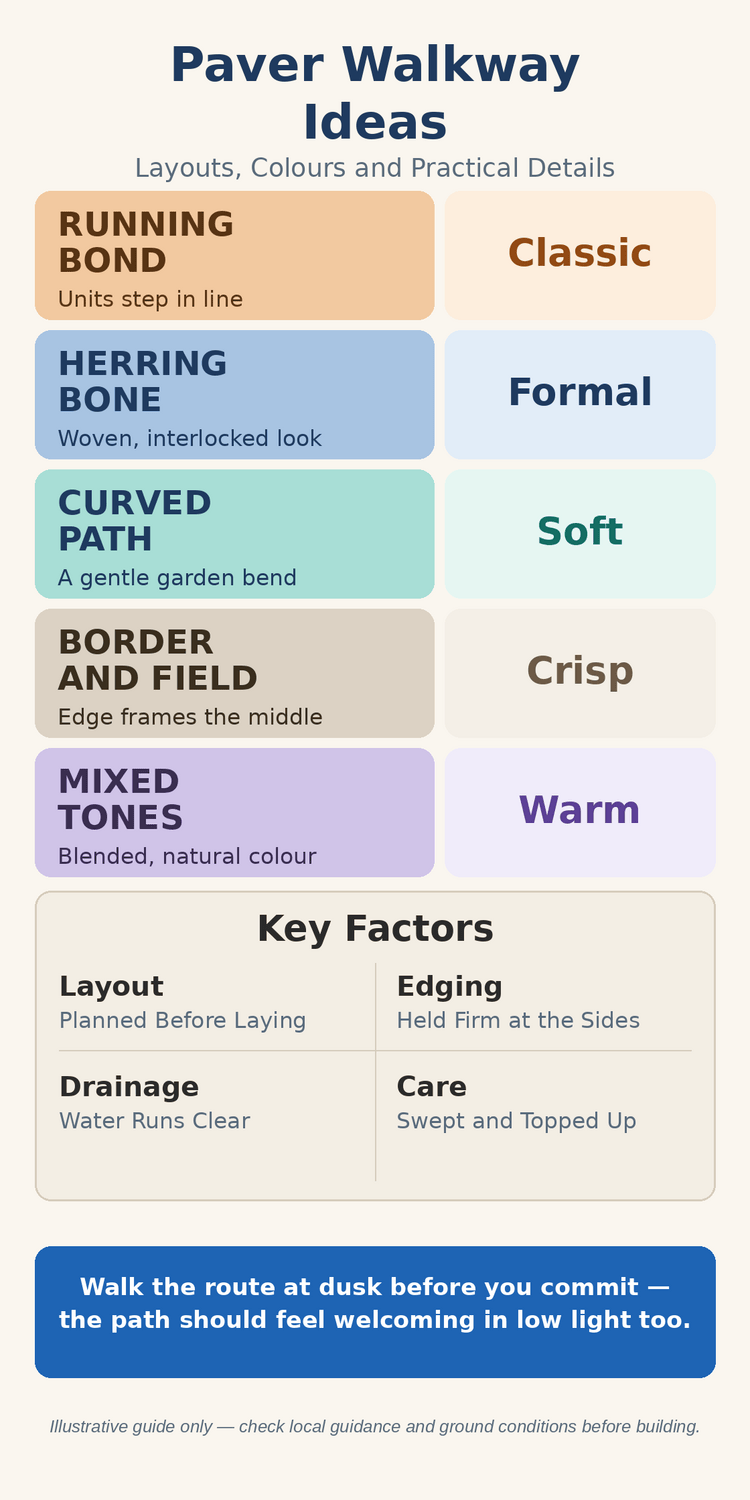
The appeal of this kind of path is partly visual and partly practical. Visually, the joints between units give the surface a texture that a poured slab cannot offer, and the pattern can echo the house, the garden walls or the planting beside it. Practically, the joints let water pass through rather than sheeting across the surface, and the path can be adjusted over time as trees grow, roots shift or the garden is replanted. A walkway that is planned as a set of pieces is a walkway that can evolve with the place it serves.
2. What Makes a Walkway a Paver Walkway
The defining quality is the unit itself. Each paver is a separate piece with its own edges, and the path is the sum of those pieces fitted together. That construction sets it apart from a poured concrete route, where the surface is continuous, and from a gravel path, where the material is loose and shifts underfoot. The paver walkway sits between those two: as firm as a slab, as flexible in layout as a loose surface, and far more expressive than either.
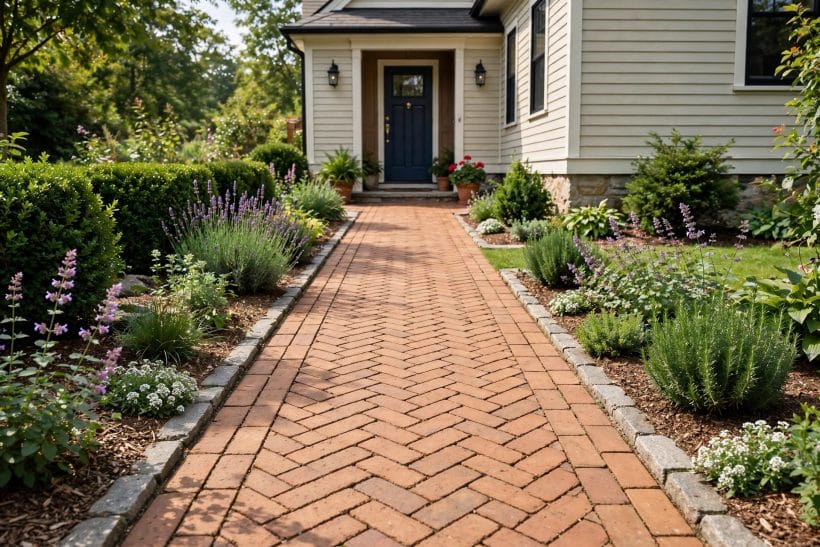
Look closely at any well-made example and you will see that the units are not simply dropped into place. They are laid on a prepared bed, levelled against one another, and held at the sides by an edge that keeps the whole field from spreading. The joints between them are filled, usually with a fine material that locks the units while still allowing the surface to breathe. It is this combination, a firm bed, tight joints and a held edge, that gives the path its longevity and its tidy appearance through the seasons.
The survey keeps its focus narrow on purpose. A paver walkway is not a patio, which is a place to sit and gather, and it is not a driveway, which must carry vehicles. It is a route for feet, and everything about it, its width, its pattern and its colour, should serve the act of walking. When the path is judged by that standard, choices become clearer: a pattern that guides the eye forward, a colour that sits calmly beside planting, and a surface that feels sure underfoot in wet weather as well as dry.
That distinction also helps when comparing neighbouring forms. A flagstone walkway trades the regular unit for irregular slabs, and the result is wilder and more rustic. The paver walkway, by contrast, offers order: repeated shapes, a legible pattern and a rhythm that suits houses with a formal front or a tidy garden. Neither is better in the abstract; the question is which rhythm belongs to your house.
3. Running Bond and Other Laying Patterns
Pattern is where a paver walkway finds its personality. Running bond, in which each row is offset by half a unit from the one before, is the most familiar arrangement, and its staggered joints give the path a steady forward motion. It is easy on the eye, forgiving to lay, and suits long straight routes where the walker should feel drawn toward the door.
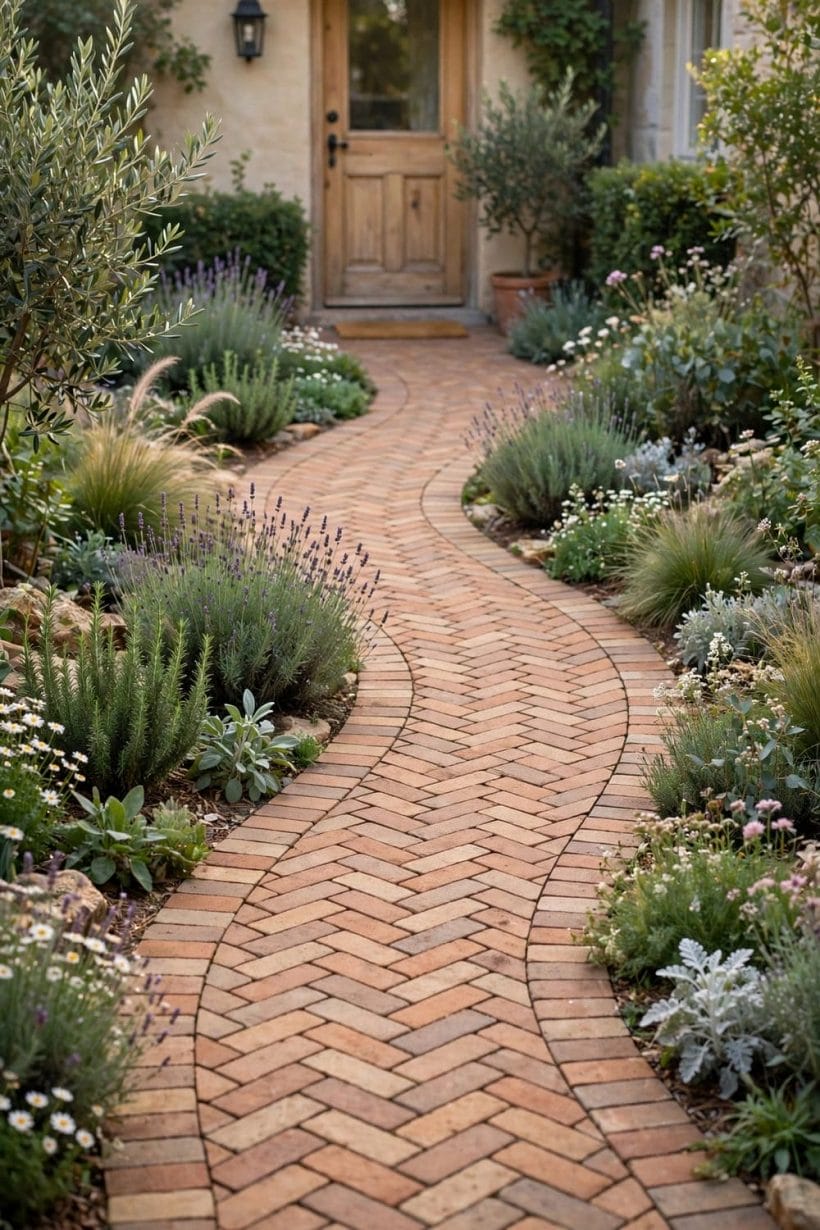
Herringbone turns the units at angles to one another, weaving them into a zigzag that locks together tightly. The effect is busier and more formal, and it suits a short, prominent stretch, such as the final approach to a front door, where the pattern itself becomes a feature. Basket weave groups units into squares that alternate direction, giving a calm, woven texture that reads well in a cottage garden or beside timber planting beds.
Stacked rows, with joints aligned in a grid, look clean and contemporary, though they ask for careful laying, since any drift shows at once. The choice among these patterns is not only aesthetic. A tightly interlocked pattern resists movement at the edges, while a simpler pattern is easier to repair, since a lifted unit can be matched and replaced without disturbing its neighbours. Thinking about repair at the planning stage saves trouble later, when a root lifts a corner or a heavy pot leaves its mark.
Pattern also changes how wide a path feels. A herringbone field can make a narrow route feel richer, while a running bond can stretch a short path by pulling the eye along its length. Trying the pattern on paper, or laying a few units loose on the ground before committing, shows these effects more honestly than any catalogue photograph.
4. Straight Runs: The Direct Route
The straight paver walkway is the most honest kind of path. It runs from gate to door without apology, and it suits houses where the front garden is shallow or the entrance is the clear focal point. A straight run asks for discipline: the edges must be true, the pattern must stay regular, and the colour must be calm enough to carry the eye forward rather than distracting it.
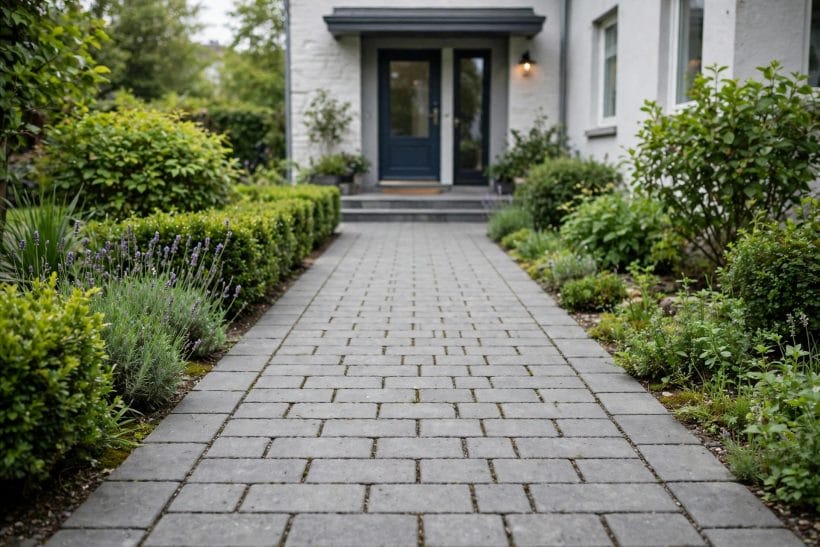
There is a quiet dignity in a straight path done well. Flanking it with low planting softens the geometry without hiding it, and a border in a contrasting tone can frame the route the way a mat frames a picture. The arrival matters here more than anywhere, because the walker sees the door from the first step. The exterior entryway ideas that surround the door, the porch, the lighting and the planting, should feel like a continuation of the path rather than a separate display.
Straight runs also suit side passages, where the route is constrained by walls or fences and there is no room for curves. In such a passage, a simple running bond in a mid-tone keeps the space from feeling cramped, while a pale border can lift a shaded strip. Drainage deserves attention on a straight run, since water follows the line of the path; a gentle fall away from the house and joints that let water through keep the surface safe in rain.
The temptation with a straight path is to dress it up, adding inlays or medallions that break the rhythm. Restraint usually serves better. Let the pattern and the colour do the work, and let the garden provide the ornament at the edges.
5. Curves That Slow the Walk Down
A curved paver walkway changes the pace of arrival. Instead of delivering the walker straight to the door, it invites a slower look at the garden, revealing planting in stages and hiding the destination until the last turn. Curves suit deeper front gardens, where there is room for the path to wander, and they soften houses whose architecture is formal or imposing.
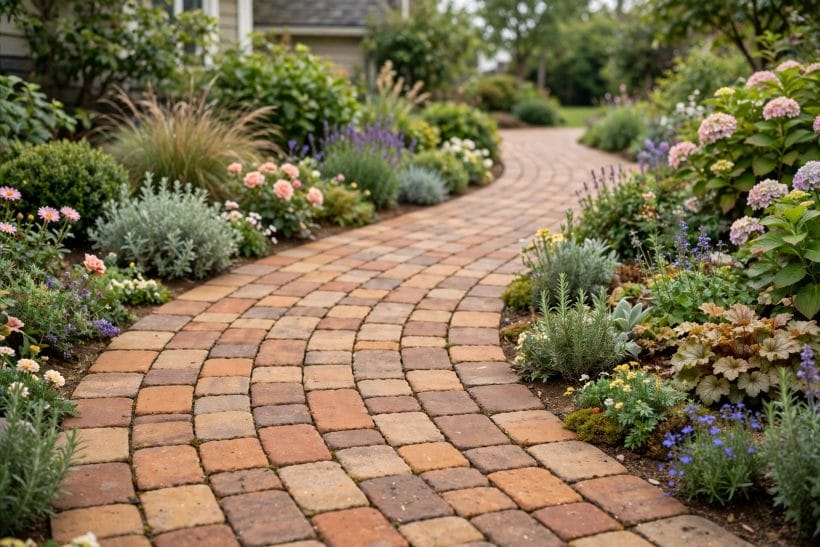
Laying a curve in pavers asks for care at the edges, where units must be cut or fanned to follow the bend without opening wide joints. Smaller units follow a curve more gracefully than large ones, and a border laid on edge can trace the bend smoothly. The result, when done well, looks effortless, as though the path grew where it was wanted rather than where it was drawn.
Curves also answer the shape of the ground. A front garden that rises toward the house, or one shaped by existing trees and beds, may suit a bending route better than a straight one. Front yard berms and raised planting can work with a curving path to shape the approach, lifting the garden into gentle mounds that the path winds between. The path and the planting then read as one composition rather than two separate features.
One caution applies to curves: they should feel intentional. A bend that serves no view, no tree and no change of level can look indecisive. Walk the proposed route, mark it with string or hose, and check that each turn reveals something worth seeing, a specimen plant, a seat, or the door itself appearing at last.
6. Colour: One Tone or a Blend
Colour is the most visible decision in a paver walkway, and the most personal. A single tone, whether warm brick red, cool grey or sandy buff, gives the path a calm, unified surface that lets the house and the planting take the lead. It suits formal fronts and small gardens, where a busy surface would compete with everything around it.
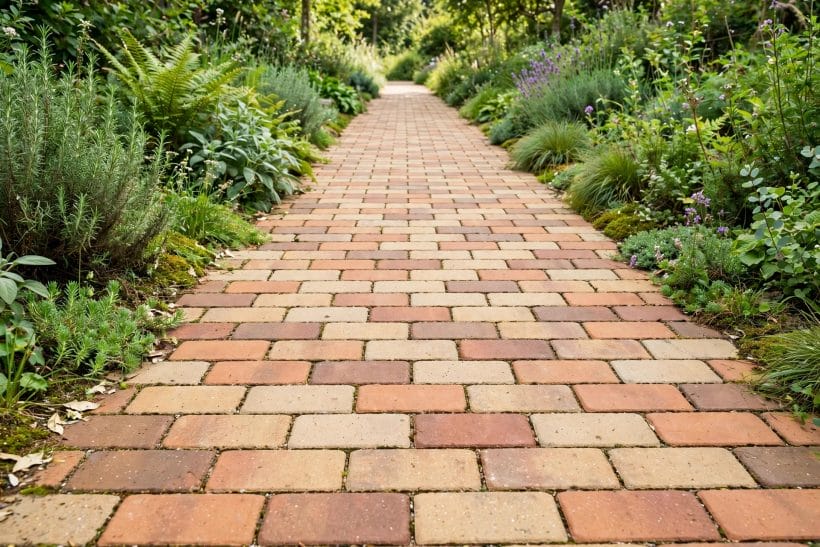
A blend of related tones, by contrast, gives the path a natural, varied surface that hides dirt, fallen leaves and the small marks of daily use. Blends suit larger gardens and rustic houses, where the path should feel like part of the landscape rather than a separate construction. The blend should stay within one family of colour, warm with warm, cool with cool, so the surface reads as varied rather than patchy.
Stone surfaces offer their own colour lessons. A stone patio shows how natural stone carries subtle variation within each piece, and a paver walkway in stone tones can borrow that quality. The key is to view samples outdoors, in the light where the path will lie, and beside the actual house wall and soil. Colours chosen indoors under artificial light often surprise their owners on the first sunny morning.
Weather changes colour too. Wet pavers darken, shaded pavers stay muted, and sun-bleached pavers soften over time. Choosing a tone that looks right both wet and dry, and accepting that the surface will mellow, leads to fewer regrets than chasing a showroom shade. The most successful walkways are those whose colour feels inevitable beside the house, as though the path had always been there.
7. Borders, Edges and the Finished Line
Nothing separates a finished paver walkway from an unfinished one so clearly as its edge. A border, whether a row of units laid on end, a contrasting colour, or a slim stone kerb, holds the field together and draws a crisp line against lawn or beds. Without it, the outer units creep outward over time and the path loses its shape.
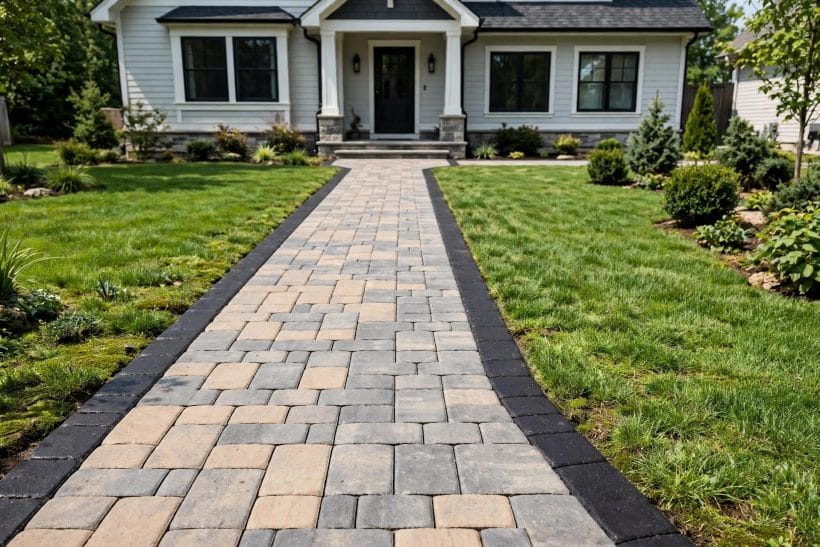
Borders can also carry design. A darker border frames a pale field, a soldier course of upright units adds formality, and a border that matches the house brick ties the path to the building. The border is the place to spend a little extra attention, because it is the line the eye follows and the part of the path most exposed to mowers, edging tools and foot traffic stepping off the route.
Where the walkway meets other surfaces, the edge needs equal care. A bluestone patio meeting a paver path, for instance, asks for a considered joint between two different materials, neither pretending to be the other. A clean threshold, a step, or a short run of a neutral unit can bridge the change gracefully. The same applies where the path meets a driveway or a porch floor: the junction should be deliberate, level and safe, not an afterthought.
Edging also protects the planting. A firm edge keeps soil and mulch from washing onto the path in rain, and keeps the path’s filling from spilling into beds. It is a small detail with an outsized effect on how tidy the garden looks week after week.
8. Meeting the Door, the Gate and the Garden
A walkway is a sequence, and its two ends matter as much as its middle. At the gate, the path should announce itself clearly, wide enough to step onto comfortably, with a surface that reads as an invitation rather than an obstacle. At the door, it should arrive with a small landing, a place to pause, shake off rain and find the key, rather than stopping abruptly at the threshold.
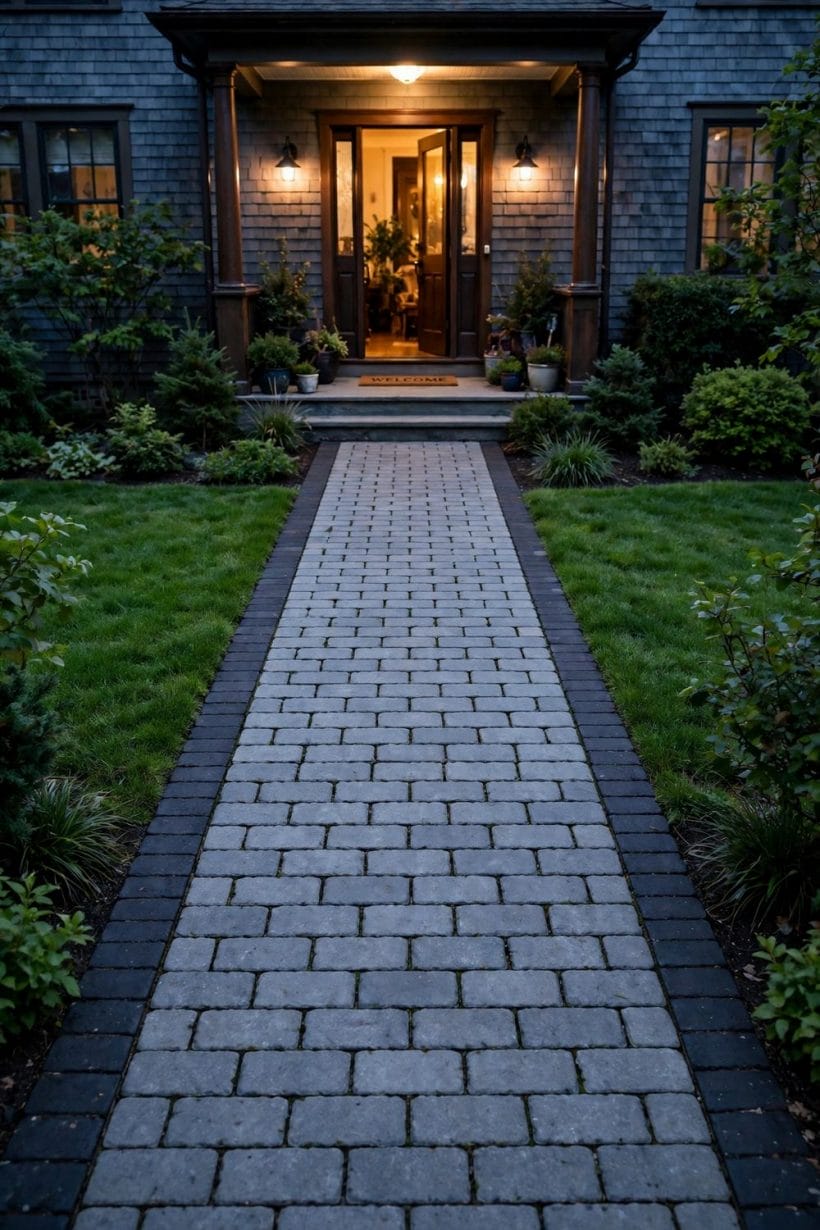
Shelter at the door changes how the path is used. A front porch roof above the landing keeps the arrival dry and gives the walkway a natural destination, a roofed pause at the end of the route. Where there is no porch, a wider landing and a well-lit doorway can serve the same purpose, giving the walker somewhere to stand that feels like part of the house rather than part of the weather.
Between gate and door, the path meets the garden at every step. Planting that overhangs the route should be kept clear of head height and clear of the surface itself, since wet foliage dripping onto pavers makes them slippery and fallen petals stain pale units. Fragrant planting near the path, lavender, rosemary or jasmine where the climate suits, rewards the walker without obstructing the way. The best garden paths engage more than the eye.
Lighting completes the sequence. Low lights along the edge, or a lit doorway at the end, turn the walkway into a safe route after dark and show off the pattern and colour that daylight revealed. Lights should wash the surface gently rather than glaring into the walker’s eyes, and they should be placed where they cannot be kicked or tripped over.
9. Joints, Filling and the Surface Underfoot
What lies between the pavers matters as much as the pavers themselves. Joints filled with fine sand or a similar material lock the units together, let water drain through, and give the surface its characteristic texture. Joints that are too wide collect weeds and feel uneven; joints that are too tight leave no room for the small movements that soil and temperature bring.
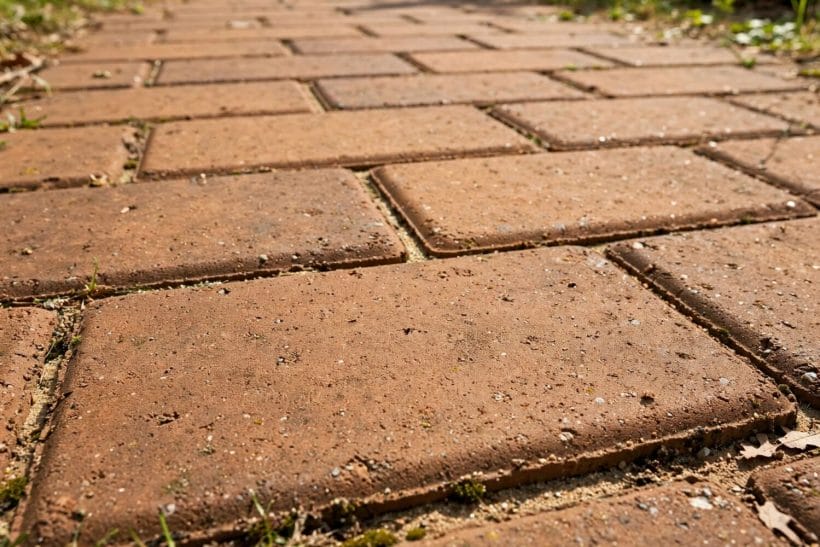
The surface underfoot should feel firm and even. A walker should not catch a toe on a lifted corner or wobble on a rocking unit. That evenness comes from the bed beneath, prepared level and compacted before a single paver is laid, and from the habit of checking the path after heavy rain or frost, when movement is most likely. Small corrections made early keep a path true for far longer than a major repair made late.
Weeds in joints are the most common complaint, and they are best handled by keeping joints full and by sweeping the path regularly, which disturbs seedlings before they root. Moss in shaded stretches can be brushed away, and the choice of a slightly rougher unit texture helps grip in damp shade. No surface stays perfect without attention, and the paver walkway’s advantage is that attention can be local: one joint, one unit, one corner at a time.
Accessibility deserves a word here. A walkway that serves the main entrance should be as even and as free of tripping edges as careful laying can make it, with joints kept narrow and flush. A path that welcomes everyone, including visitors with wheels or unsteady feet, is a path that has done its job properly.
10. Care Through the Seasons
A paver walkway asks for modest, regular care rather than grand intervention. Sweeping keeps joints full and the surface clear, and it takes only a few minutes when done often. Leaves left to rot on the surface stain pale pavers and feed weeds in the joints, so autumn sweeping matters most of all, especially under trees that drop heavily.
Winter brings its own cautions. Frost can lift units where water has pooled beneath them, and de-icing products should be chosen with the paver material in mind, since harsh treatments can mark or damage some surfaces. Gentle clearing, and a path that drains rather than puddles, do more for winter safety than any aggressive treatment. Spring is the season to walk the whole route slowly, noting lifted corners, empty joints and edges that have shifted, and to top up filling where it has washed away.
Summer care is mostly about the garden around the path: trimming overhang, keeping irrigation from constantly wetting one stretch, and enjoying the surface at its best. A walkway that is cared for in small, regular ways ages gracefully, its colour mellowing and its pattern settling into the garden, rather than looking worn. The goal is not a showroom surface but a lived-in one, tidy, safe and clearly loved.
When a unit does crack or stain beyond what sweeping can fix, the paver walkway shows its greatest strength. The single piece can be lifted, the bed beneath corrected, and a matching unit set in its place, leaving the rest of the path untouched. That repairability is the quiet argument for choosing pavers over a poured surface, and it is worth remembering when the first mark appears.
Final Considerations
Choosing a paver walkway is choosing a path with a visible craft: units, pattern, colour and edge, all working together to carry the walker from gate to door. The best examples share a few qualities: a pattern that suits the length and bend of the route, a colour that sits calmly beside the house, a firm edge that holds the field, and joints that drain and stay full. Get those right, and the details take care of themselves.
Before committing, walk the route in all lights, lay loose units on the ground to test pattern and colour, and picture the path wet, leaf-strewn and lamplit as well as clean and sunny. A walkway is used in every season and every weather, and the one that pleases in all of them is the one worth building. This survey of paver walkway pictures is meant as a starting point for that decision, a gallery of forms to compare against your own garden, your own house and your own way of arriving home.

0 Comments