

A floor in the air, a railing, a door: the balcony is the smallest complete room a house can offer, and the one whose every centimetre argues for its existence each morning it is used.
These balcony ideas furnish that narrow room properly — floor and railing, seating at breakfast scale, planting in pots, shade and screening, and the small calendar of care that keeps a room in the air safe, green and loved all year.
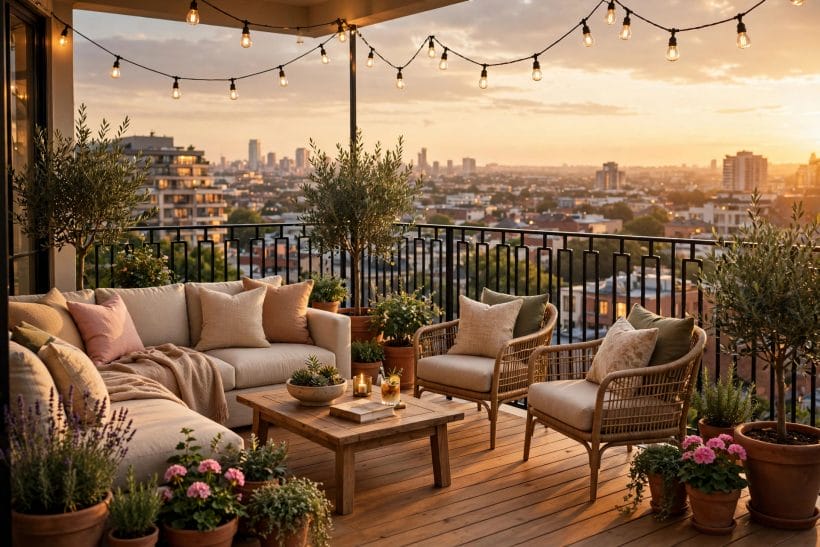
1. Balcony Ideas at a Glance
The balcony is a small platform room projecting from or recessed into the house’s face, floored, railed and reached by a door, furnished for sitting, breakfast, planting or all three. Its attributes are the floor (its build, finish and honest load), the railing (the safety structure that is also its portrait), the aspect (which hours of sun it owns), the planting (a container garden in the air) and its stores (the dry place for cushions and kit). It is the aerial member of the house-wide family the home design ideas pillar surveys — the room where the house meets the street, the garden and the sky at first-floor height and above.
| Question | Short answer |
|---|---|
| What is a balcony for? | Sitting in the air: coffee, reading, an evening drink and a garden in pots — a room whose main furniture is its view. |
| How much can it hold? | What its structure was designed for: keep wet soil and crowds as the budget items they are, and take local professional guidance as final. |
| What furnishes it best? | Folding, stacking, dual-purpose pieces at honest scale — two chairs, a small table, one bench-box and a tray. |
| How is it kept private? | By geometry: a screen placed exactly on the overlooking sightline, and the rest left open to sky and view. |
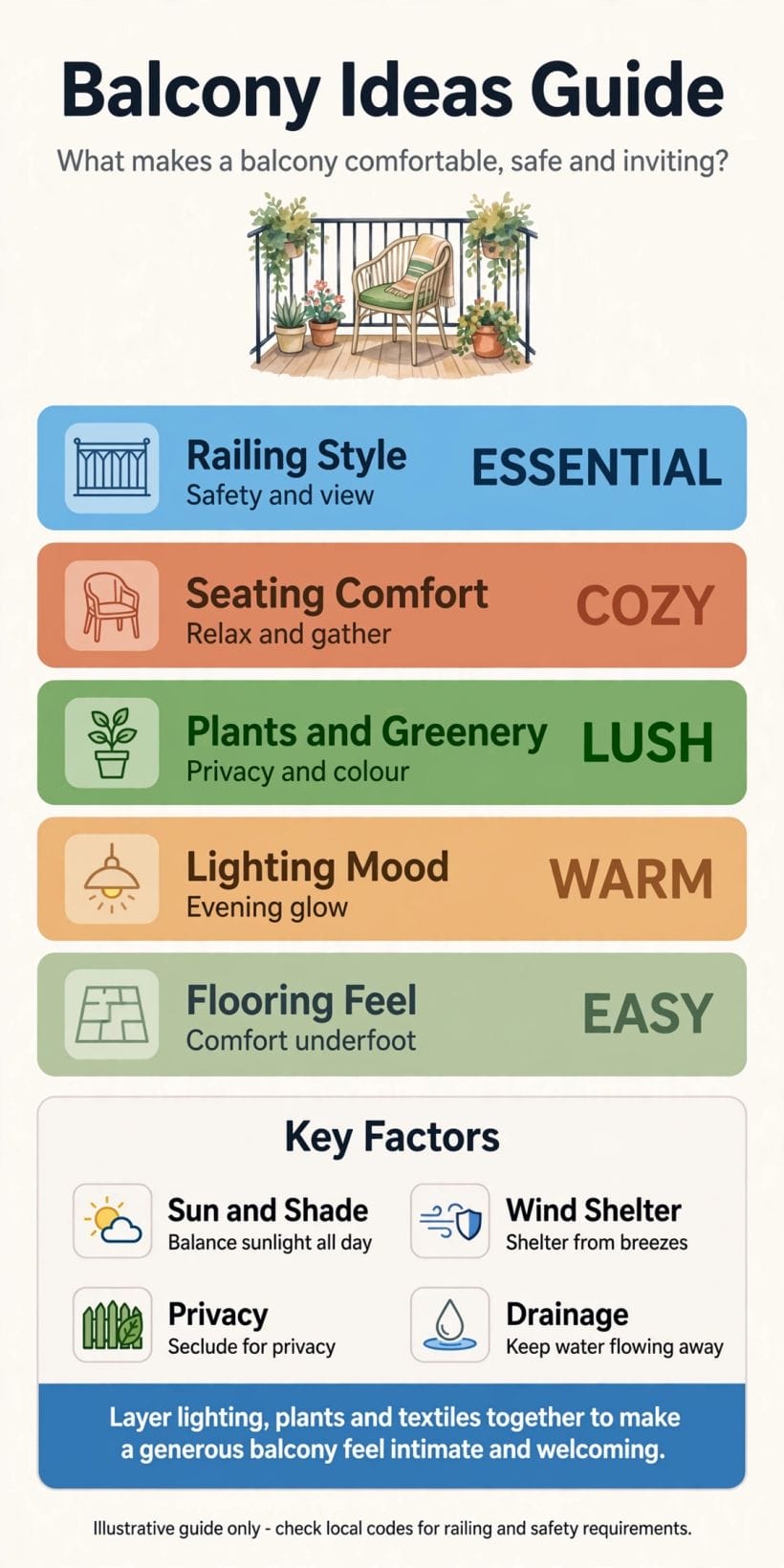
2. The Balcony Itself: The Narrowest Room in the House
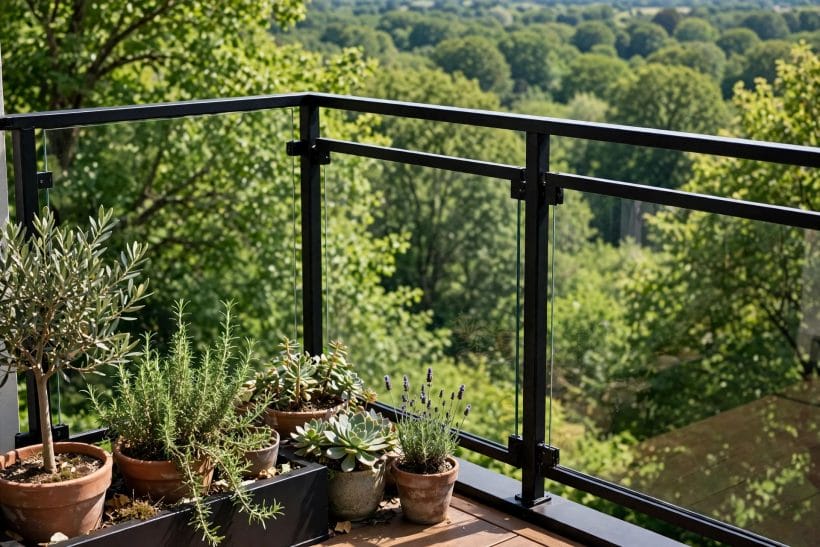
A balcony is a room reduced to its essentials: a floor in the air, a railing, a door — and a view doing the work of the missing walls. It belongs to the house’s face, which is why the exterior home ideas survey claims it as a citizen; this post treats it from inside the railing, as the room its household actually lives in.
1. It is a room, not a ledge
The balcony that is furnished, planted and lit like a room gets used like one — coffee, work, evenings, the garden in miniature. The balcony treated as a ledge gets the bicycle and the mop.
2. The view is its fourth wall and its furniture
What the balcony overlooks — street, garden, water, rooftops — is its largest possession, and its plan serves that possession: seats angled to it, planting kept below its sightline, nothing stored against the rail that the eye came for.
3. Width is measured in chairs
A balcony’s real size is how it sits: room for a chair and a stretched pair of legs is a reading room; room for a table and two chairs is a dining room.
4. The door swing and the step rule the plan
As on the patio, the door’s swing and the threshold’s step are the balcony’s first law: no chair, pot or box may argue with them.
5. It is the flat-dweller’s garden and the house’s box at the theatre
For the apartment household, the balcony is the whole outdoors — garden, terrace and fresh air in one narrow strip. For the house, it is the upstairs garden room and the private box above the street’s performance.
6. Morning or evening: read its sun
A balcony’s character is set by its aspect: the east balcony is a breakfast room, the west an evening one, the south a sun-trap needing shade, the north a cool green gallery. Furnish the hours it actually offers.
7. Privacy is borrowed in both directions
The balcony overlooks and is overlooked; its screening must be negotiated with tact in both directions — enough for the household’s mornings, never so much that the neighbours lose their light or the balcony its view.
8. One purpose, generously kept
Like every small room, the balcony serves one purpose best: the reading seat, the breakfast table, the herb garden, the evening’s two chairs. Choose it, furnish it properly, and let the other purposes visit by arrangement.
9. It extends the room behind it
Colours, materials and light that continue the interior’s story make the balcony that room’s summer half. The door open, the same palette flows out, and the flat gains a room without gaining a metre of floor.
10. The Juliet balcony: the honest minimum
A Juliet — a railing at a full-height door, with no floor to speak of — is not a failed balcony but a different instrument: it gives the room air, garden and a leaning rail.
11. Judge it from the street and from the chair
The balcony has two portraits: the house’s face from below, and the sitter’s view from within.
3. Floor and Structure: Boards, Tiles and Honest Weight
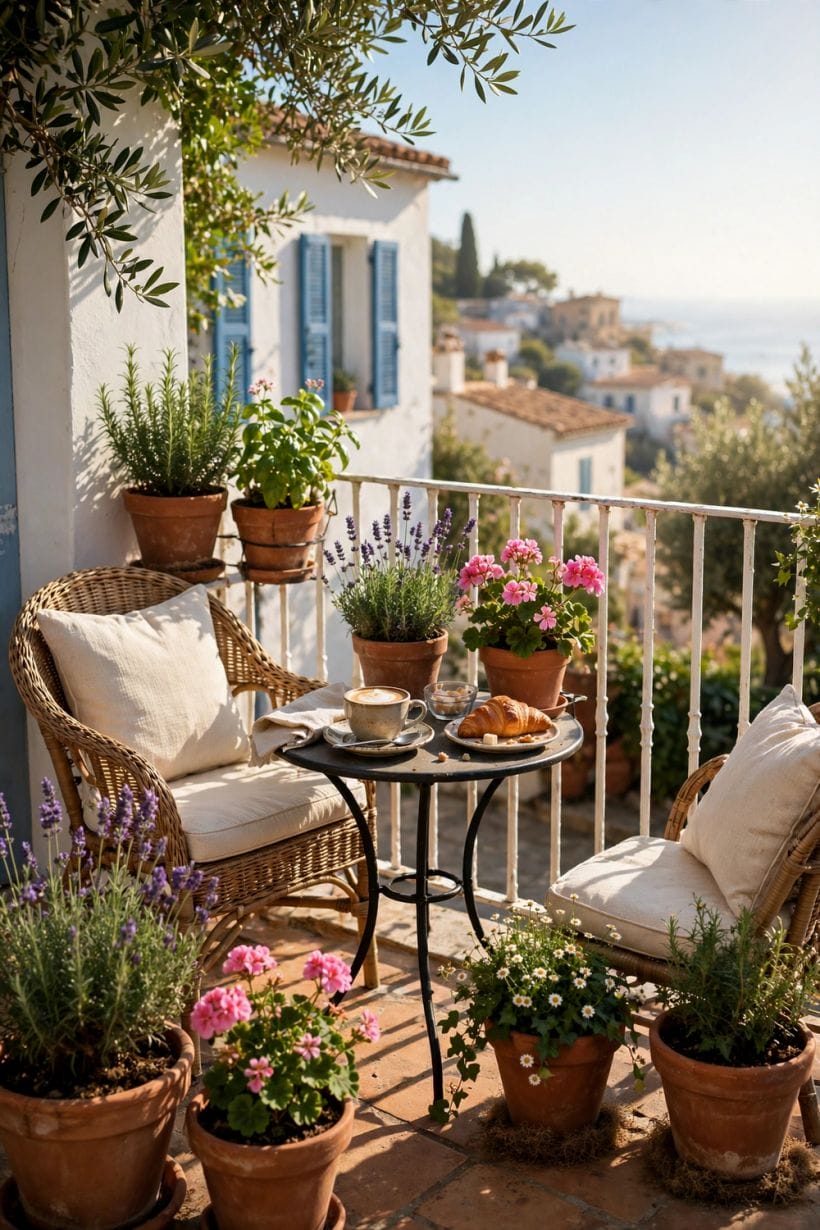
The balcony’s floor is also its ceiling — the soffit over the room or the street below — and it carries people, pots and furniture in the air. Structure, loads and waterproofing are professional matters under local rules, stated generally here and assumed throughout; this section covers the finishes the household chooses, and the weight discipline it keeps.
12. Know what the floor is before dressing it
Timber joists, a concrete slab, a steel frame: the balcony’s build decides what finishes it can take and what loads it was designed for.
13. Loads gather at the rail and the pots
Water-filled planters, saturated soil and a crowd at the railing are the balcony’s heaviest citizens, and soil is far heavier wet than dry.
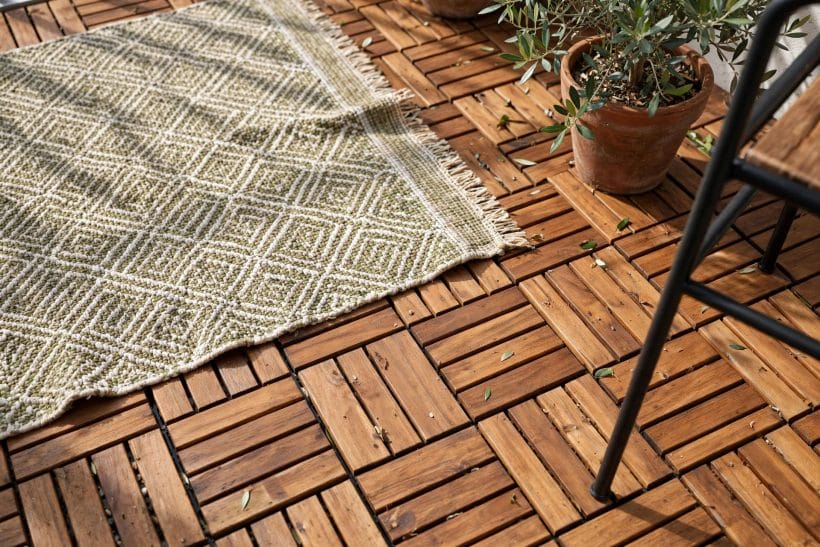
14. Decking tiles: the renter’s floor
Interlocking timber or composite tiles laid loose over the existing surface transform a balcony in an afternoon, lift out for cleaning, and leave no trace at tenancy’s end. They are the small balcony’s classic first improvement.
15. Boards want their gaps and their air
A timber balcony floor must breathe beneath and drain across: boards laid with their gaps, the cavity ventilated, the falls running away from the door.
16. Outdoor rugs draw the room
A weatherproof rug over boards or slabs performs the patio’s trick in the air: it declares the sitting ground, warms the feet and softens the step.
17. The threshold is the wet frontier
Where balcony meets room, water must be argued away from the door: the floor’s falls, the door’s own weather detailing and a clear drainage path are the frontier’s defences.
18. Drainage: find the outlet, keep it clear
Most balconies drain through a spout or a channel; leaves and pot soil besiege it seasonally. Knowing where the balcony’s water goes, and keeping that route swept, is the floor’s whole maintenance in one habit.
19. Pots stand on feet, always
Planters raised on feet spare the floor their damp footprint, let air and the broom pass beneath, and keep the waterproofing unbruised. The ring-mark of a pot left standing in its own wet is the balcony floor’s commonest scar.
20. Colour underfoot: pale widens, dark grounds
As indoors, pale floors widen the little room and dark ones steady it. In the air the sun argues too: dark boards bake in a south-facing summer, pale ones glare at breakfast. The aspect chooses, the household ratifies.
21. Fix nothing through the waterproofing
Screws and fixings through a slab’s waterproof layer are leaks with a date on them.
22. The annual look underneath
Once a year, look at the balcony from below: stains, cracks and rust marks are its diary, written early.
4. The Railing: Safety Wearing Its Best Clothes
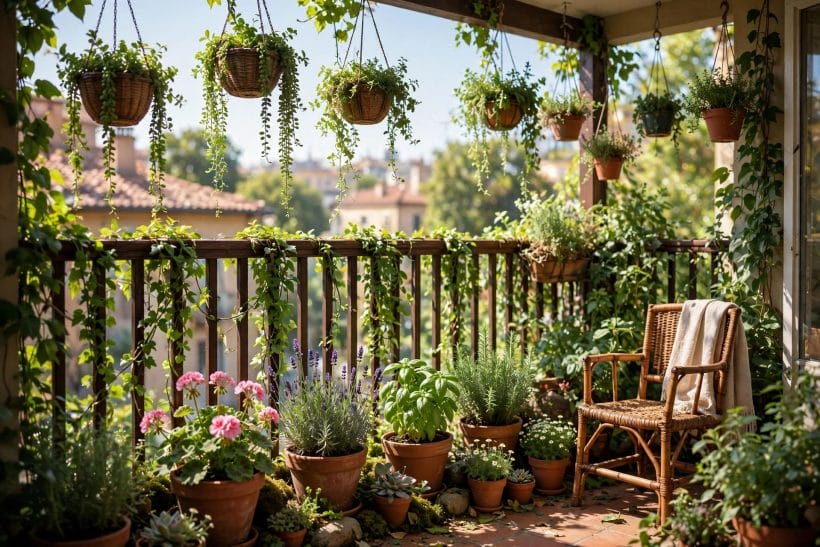
The railing is the balcony’s defining element and its one non-negotiable: it is a safety structure, governed by local rules on height, gaps and strength, and everything in this section is general design talk around that professional fact — the railing’s looks, within the rules, are very much the household’s business.
23. The railing is furniture for the eye
You look through, over and along the railing for every hour spent on the balcony, and the street looks at it all year.
24. Slim verticals disappear into the view
Thin dark uprights are the classic disappearing act: the eye reads past them to the view, the street reads a fine dark line. Where the outlook is the balcony’s treasure, the railing should dress in near-invisibility.
25. Glass panels for the unbroken prospect
Frameless or finely framed glass keeps the wind off and the view entire, at the price of cleaning and of birds’ confusion.
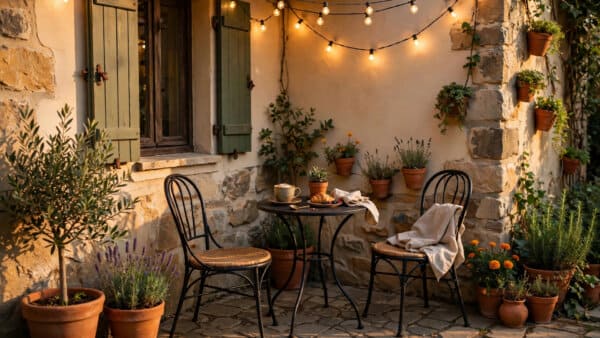
26. A solid parapet for privacy and shelter
A masonry or panelled parapet gives the sitting balcony its privacy, its wind shelter and its shelf-like top — at the cost of the seated view.
27. Timber rails warm the hand and the portrait
A timber handrail is kind to lean on in every season — never scalding, never freezing — and it carries the garden’s language into the air. It wants its oil or its silvering chosen deliberately, like every exterior timber.
28. The top rail is a shelf, a lean and a garden
The railing’s crown is where elbows, drinks, binoculars and flower boxes live. A top rail wide enough to lean on and hold a glass — within the railing’s designed purpose — is the balcony’s hardest-working hand’s breadth.
29. Flower boxes on the rail: the classic garland
Boxes along the top rail, securely fixed as designed, garland the building and scent the sitting. Their fixing is part of the railing’s engineering, not a hook’s improvisation — what hangs over a street must hang by design.
30. Children and climbers edit the design
Where small children use the balcony, the railing’s gaps, climbability and the furniture’s placement near it are read with a safety eye beyond the general rule — horizontal footholds and movable climbing aids near rails are the classic cautions, and local guidance governs.
31. Colour: the railing joins the house’s palette
Painted to the window frames, blackened to disappear, or left as galvanised silver: the railing’s colour ties the balcony to the building or sets it gently apart.
32. Light the rail line at night
A lantern on the rail post, the room’s glow through the door, a candle on the table: the balcony’s evening portrait is drawn in a few warm points.
33. Never lean the structure’s job on furniture
Planters, screens and storage must never substitute for the railing or load it beyond its design.
5. Seating and the Small Table: Breakfast at Altitude

Balcony furniture is patio furniture on a diet: the same comfort, edited for a floor that may be only a stride wide. Its close cousin, the small paved room below, is worked in the patio ideas pillar; here the pieces must fold, stack or hang, and every one must pass the door-swing law before it is bought.
34. Two chairs and a table: the founding set
A pair of folding chairs and a small round or half-round table is the balcony’s classic establishment — breakfast for two, work for one, drinks at dusk.
35. The folding habit
Folding chairs and a tilt-top table let the narrow balcony change its mind: set for breakfast, cleared for the plants, folded for the storm. On a floor this small, furniture that cannot fold must justify itself daily.
36. A bench along the wall seats the morning
A slim bench or a storage seat against the house wall seats two in the depth of one chair and swallows the cushions inside itself.
37. The hanging table on the rail
A table that hooks securely over the railing — designed for the purpose, fixed as it should be — gives the narrowest balcony a desk and a dining surface with no legs on the floor at all.
38. Chairs that stack keep the floor honest
Stacking chairs let the balcony hold a small party and then return to its daily two. Store the stack under a cover in the corner and the floor’s clear heart survives the hospitality.
39. Cushions thin, dry and within reach
Balcony cushions should be slim, quick-drying and stored in the bench or a dry box by the door. Fat indoor cushions on a narrow balcony are a damp argument waiting for its first rain.
40. A rocker or a lounger, if the depth allows
Where the floor takes it, one genuinely comfortable chair — a rocker, a low lounger — makes the balcony the household’s retreat rather than its perch. Depth spent on one loved chair beats depth spread across four tolerated ones.
41. The tray is the balcony’s sideboard
Drinks and books travel from the kitchen on a tray and rest on it between chair and rail.
42. Footstool, box, second seat
The small stool that serves feet, stores the blanket and seats the extra guest is the balcony’s hardest-working minor piece. Every narrow room needs one thing that does three jobs; this is the balcony’s.
43. Keep the middle walkable
A body should pass from door to rail between the furniture without turning sideways. The walkable middle is the balcony’s circulation and its dignity — furniture that blocks it makes the room a cupboard with a view.
44. Dress it like the room it extends
Cushions and throws in the interior’s palette, a lantern that matches the room’s lamps: the balcony dressed as the sitting room’s summer half will be used as one, daily, instead of visited as an outpost.
6. Planting in the Air: The Balcony Garden
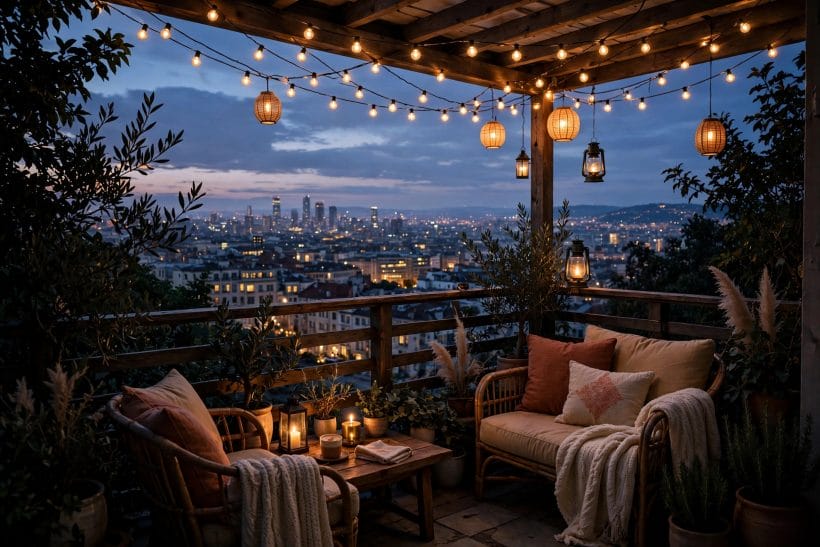
The balcony garden is container gardening at its purest: no soil, no beds, everything in pots — and the whole system is worked in the container garden ideas survey. Here the planting is fitted to altitude: wind, weight, watering and the garland the street sees from below.
45. Weight first: soil is heavy, water is heavier
Every planter’s true weight is its wet weight, after rain or the can.
46. Wind is the balcony’s climate
Altitude brings wind that ground gardens never meet: it batters foliage, drinks pots dry and tests every fixing. Choose plants that flex and hug — grasses, lavenders, small pines — and let the delicate divas live indoors.
47. Rail boxes: the garland the street reads
Geraniums, trailing ivy, herbs and seasonal colour in the rail boxes are the balcony’s public face — the garland in every passer-by’s portrait of the house.
48. Climbers soften the railing’s geometry
A jasmine or clematis in a great pot, trained along the rail and the wall, turns the balcony’s cage into its bower.
49. Herbs at the kitchen’s altitude
The balcony off the kitchen is the herb garden’s natural home: pots within the cook’s reach, clipped daily, fragrant at the door. A balcony that grows the household’s herbs is a working room, and working rooms get kept.
50. One small tree in a great pot
A bay, an olive or a small maple in the balcony’s best pot gives the narrow room its architecture and its shadow-play.
51. Watering in the air is a system
Pots at altitude dry fast and drain onto the floor; self-watering planters, a grouped watering route and saucers where the floor needs them turn the chore into a two-minute round.
52. Evergreen structure for the winter portrait
Boxes and pots of evergreen — small conifers, ivy, winter herbs — hold the balcony’s shape through the dark months when it is seen from indoors daily. The summer colour is the garnish; the winter bones are the garden.
53. Scent rises to the seat
Plant the fragrant at sitting height and at the door: jasmine by the chair, lavender at the step, a lemon-scented geranium where hands brush past. In a space this small, scent is half the planting’s pleasure.
54. Succession in miniature
Bulbs under the spring pots, summer colour in the boxes, autumn grasses standing into winter: the balcony’s year is a rotation of small casts on one narrow stage. Plan the changeovers with the seasons’ shopping, not against them.
55. Secure everything that can fly
Pots, boxes and ornaments at altitude must be fixed or weighted against the gust that arrives unannounced. What the wind takes from a balcony lands in the street’s story, not the garden’s — the aerial gardener’s first commandment.
7. Shade, Shelter and the Green Screen
The balcony’s comfort is negotiated with sun and wind at close quarters, and its privacy with neighbours at closer ones. Its kinship with the house’s other threshold room — the porch ideas survey’s covered seat — is one of degree: the balcony must make its own shade and shelter, from cloth, slats and leaves.
56. A parasol that clamps, not stands
On a narrow floor the parasol’s base is a thief; the clamped or rail-fixed parasol shades without stealing the floor.
57. A sail or awning for the south face
The south balcony’s sun is a furnace by noon: a small sail, a retractable awning or an external blind converts it to a room. Fixings at altitude are professional territory; the shade itself is the household’s daily comfort.
58. Slatted screens: privacy with air
A slatted timber or metal screen at the balcony’s end — fixed to its own supports, never hung on the railing’s safety role — breaks the neighbours’ sightline while letting air and stripes of light through.
59. The green screen: climbers on a trellis
A trellis panel clothed in evergreen climbers is privacy that breathes, scents and seasons. It takes its year to grow and its minutes to keep, and it softens the screen’s job into the garden’s language.
60. Bamboo and reed rolls: the season’s veil
Rolled reed or bamboo screening is the renter’s privacy — light, cheap, lashed to its own frame for the summer and stored for the winter. It filters more than it blocks, which on a friendly boundary is exactly enough.
61. Screen the sightline, keep the view
Privacy on a balcony is a geometry problem with a kind answer: place the screen only where the actual overlooking line runs, and keep the rest open to sky, street and view.
62. Wind shelter makes the seat usable
A screen at the windward end turns a balcony that gusts into one that hosts. The seated body reads the difference instantly; the plants read it within a week. Shelter is the balcony’s most under-bought comfort.
63. Curtains of outdoor cloth
A curtain of weatherproof fabric across the balcony’s open side — drawn for shade, privacy or a storm’s edge — is the Mediterranean balcony’s ancient device.
64. The neighbourly negotiation
Screens change the light and view of the balconies beside and below; a word with the neighbours before the fixing is the cheapest planning permission in the world.
65. Shade the glass behind you
The balcony’s shade also serves the room inside: an awning or a green screen that shadows the door glass cools the interior and spares its curtains. The balcony is the room’s parasol as well as its own.
8. The Balcony All Year: Light, Evenings and Keeping
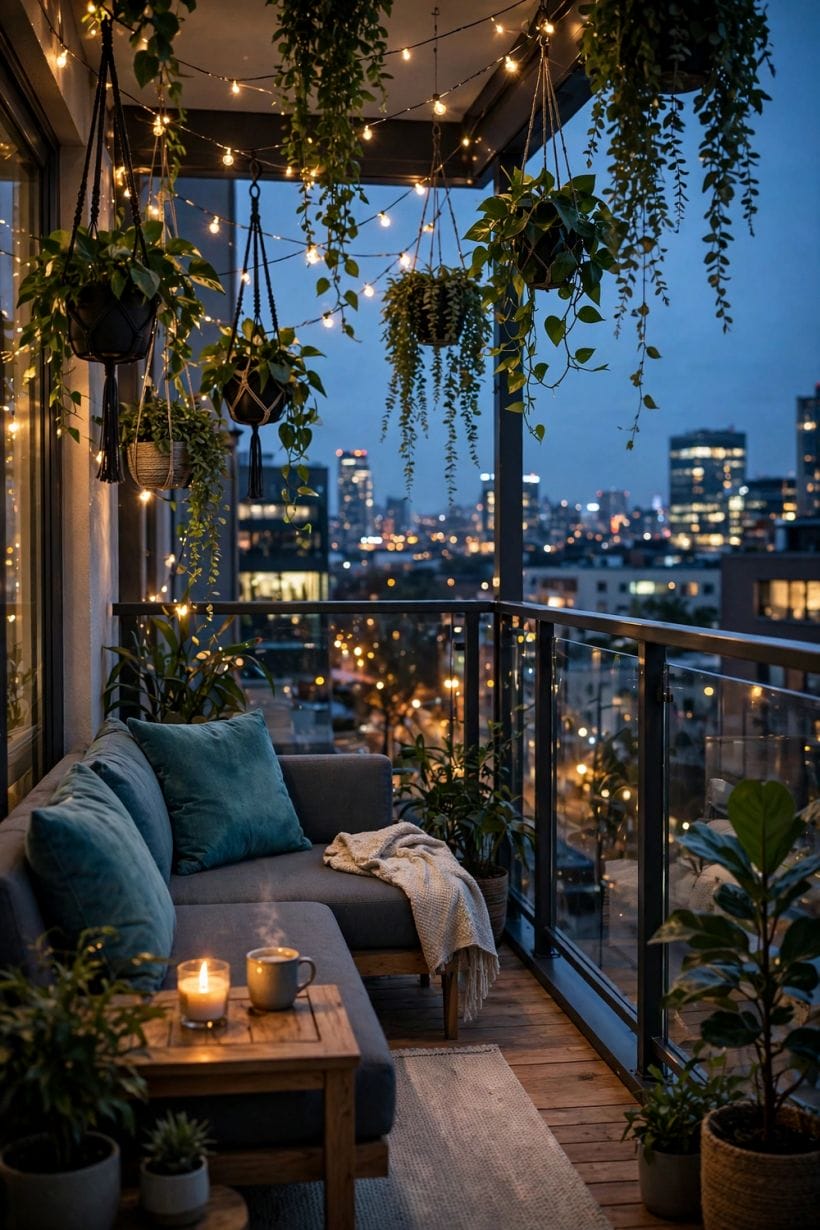
The balcony is seen from indoors every day of the year, which makes its winter portrait a household matter and its evenings a season-stretcher. This closing section covers its light, its care and its small calendar — with its ground-floor cousins, the deck ideas survey and the front porch ideas post, keeping the same threshold arts at their own levels.
66. String lights along the rail
A festoon along the railing or the wall draws the balcony’s evening ceiling and garlands the house’s face at once. At altitude the little lights are visible across the street — the household’s warm advertisement.
67. A lantern on the table, a candle in a jar
Balcony evenings are lit low or not at all: a lantern, a jar candle, the room’s glow through the open door.
68. A throw makes the season
The blanket over the chair’s back extends the balcony’s evenings by weeks at both ends of the summer.
69. Spring: wash, check, replant
The spring hour in the air: floor swept and washed, the drain cleared, fixings and rails given their annual look, boxes replanted. Everything at altitude is checked at leisure in spring, or met again at speed in a storm.
70. Summer: water, deadhead, dine
The balcony’s high season asks its two-minute rounds: the watering, the deadheading, the cushion’s journey out and in. Its pleasures are daily because its keeping is — small rooms reward small rituals most visibly of all.
71. Autumn: secure and simplify
Before the equinox winds, fixings are checked, light pots weighted or stored, and the planting cut to its winter cast. The autumn balcony is simplified like a boat before weather — nothing loose, nothing sorry.
72. Winter: the composed picture
Furniture stacked or covered honestly, evergreen pots arranged, a lantern at the door on dark afternoons: the winter balcony is the house’s portrait and the sitter’s promise of spring. Compose it as deliberately as the summer version.
73. Birds: the balcony’s tenants
A feeder or a water dish — placed with a thought for the floor below and the neighbours’ washing — makes the balcony a theatre box over the garden’s birdlife.
74. The two-minute party
Guests arriving, the balcony transforms: cushions out, lanterns lit, the hanging table dressed, a throw over the spare chair. Like the patio’s, the balcony’s party trick is speed — the room is small, so its magic is quick.
75. End with the chair test, in the air
Each spring, sit in the balcony’s chair with the morning drink and read the narrow room as its guest: view framed, seat kind, green at the edges, nothing rattling, nothing stored against the rail.
9. Checks and Mistakes: Before the First Purchase or the First Stone

The checks begin with the structure’s honesty: know the balcony’s build and its designed load, read it from below once a year, keep its drainage route clear, and let every question of rails, fixings and strength go to the professionals and the local rules that govern them. Then the domestic checks: walk the door swing, sit in the chair, find the cushion’s dry home, pour the water and watch it leave. A balcony that passes both readings — the engineer’s and the sitter’s — is a room for decades.
The mistakes are the two excesses: the balcony loaded like a garden and furnished like a store-room, straining its structure and its welcome at once; and the balcony abandoned to the bicycle and the mop, its view unwatched, its chair uncarried. Load it lightly, furnish it kindly, and it repays the house out of all proportion to its size.
10. Costs and Pulling It Together
Balconies divide by dress rather than by fortune. The modest register lays the decking tiles, buys the folding pair and hangs the rail boxes — an afternoon’s money for a season of mornings. The middle register adds the bench-box, the screen and the lighting. The generous register is architectural: new flooring, a glass or finely made railing, water and power at the wall — work for professionals, within the building’s rules. In every register the order holds: structure and drainage first, floor second, railing’s dress third, and furniture and green with what remains.
Pull it together as the room it extends: the interior’s palette carried through the door, one purpose generously kept, the planting knitted into a garland. The balcony that knows its hour — the breakfast sun, the evening’s last light — will be used out of all proportion to its size, which is the whole history of balconies in one sentence.
Final Considerations
The balcony is architecture’s smallest act of generosity: a few boards or a slab, a rail, and suddenly a household owns a piece of the sky. Its seventy-five ideas make one argument — that the narrow room in the air deserves the same design respect as any room behind a door, and repays it more visibly.
Keep it light, keep it safe, plant it kindly and sit in it daily. The balcony that passes its chair test every spring becomes the address the household gives its best hours: the coffee above the waking street, the book above the garden, the last drink above the lights coming on.


0 Comments