
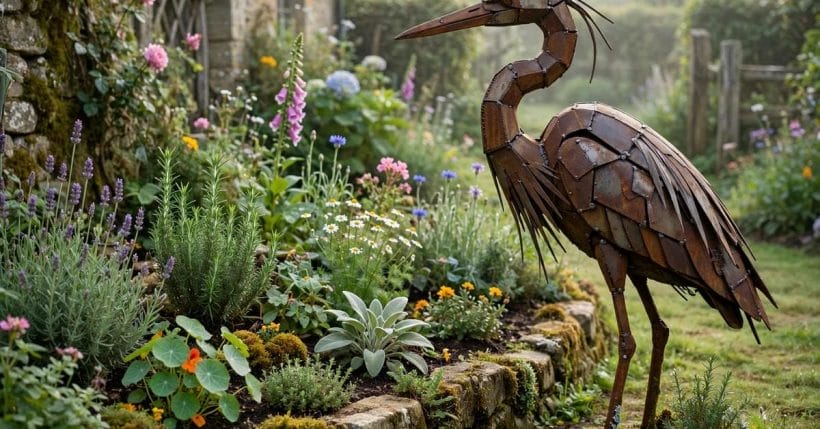
A metal sculpture can give a garden a point of focus that planting alone does not always provide. Where beds change with the seasons and paths lead the eye onward, a well placed piece of metal art can hold a view together, mark a turn in a path, or give a quiet corner a reason to pause. The appeal lies in contrast: hard metal against soft leaves, a still form against moving grasses, and a weathered surface against fresh growth. When that contrast is gentle rather than jarring, the sculpture feels as though it belongs in the garden rather than having been placed there as an afterthought.
This guide looks at metal garden art in garden terms only: how to choose a piece that suits the space, how to plant around it, how to place it along paths and in beds, and how to care for it through the seasons. Gardening advice here is general and hedged, because gardens differ in soil, shade, wind and rainfall, and what thrives in one garden may struggle in another. Nothing here promises a particular result, and heavy pieces, ground fixings and any work near walls, drains or buried services should be handled with care and, where needed, professional help.
1. What Metal Garden Art Brings to a Garden
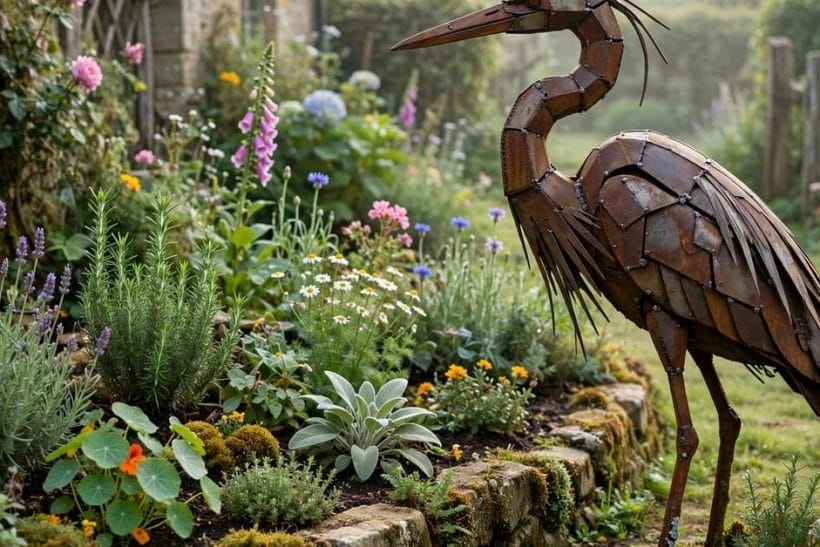
Metal brings a sense of permanence to a garden that is otherwise always changing. Plants grow, flower and fade, hedges thicken and thin, and even a familiar path can look different from one season to the next. A sculpture stays put through those changes, giving the eye a familiar anchor in every season. That steadiness can be reassuring in a large garden, where views need something to settle on, and it can be equally welcome in a small garden, where a single strong form can stop the space feeling like a collection of pots and patches.
The material also plays well with light. Polished metal can catch sun and throw bright reflections across nearby leaves, while weathered steel and painted iron tend to absorb light and sit more quietly in the scene. Both effects can work, but they suit different moods: a bright, reflective piece suits an open, sunny spot where sparkle is welcome, while a muted, rust-toned piece suits a sheltered bed where the aim is warmth and calm. Watching how light moves across a chosen spot through the day, in general terms, helps a gardener judge which kind of finish will sit comfortably there.
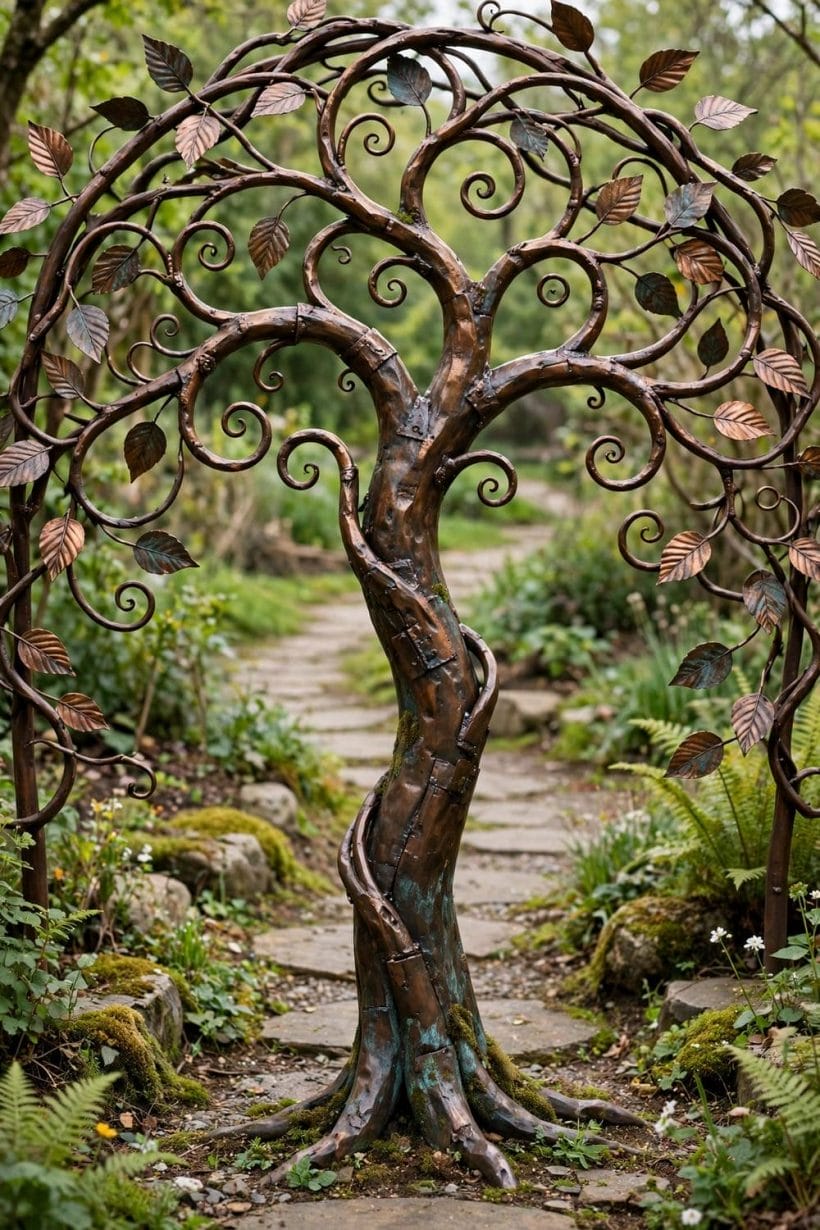
Metal art can also give a garden a sense of character and story. A bird form suggests a pond or a wild corner, a flower form echoes the planting around it, and an abstract arch suggests a threshold or a gateway. These associations are gentle rather than literal, and they work best when the piece is allowed to suggest rather than shout. A garden that leans too heavily on novelty can feel like a display, while a garden that uses a few chosen pieces with restraint tends to feel like a place where art and planting have grown up together.
2. Choosing a Sculpture That Fits the Garden
Choosing well starts with the garden itself rather than with the piece. A tall, slender sculpture can suit a narrow bed or a path corner, while a broad, low piece may suit an open lawn or a wide border. Standing in the space and imagining the piece at its real height, rather than judging it in a shop or a photograph, gives a fairer sense of its presence. If the piece would block a view, crowd a path or overshadow nearby planting, it may belong in a different spot, or a smaller piece may suit the space better.
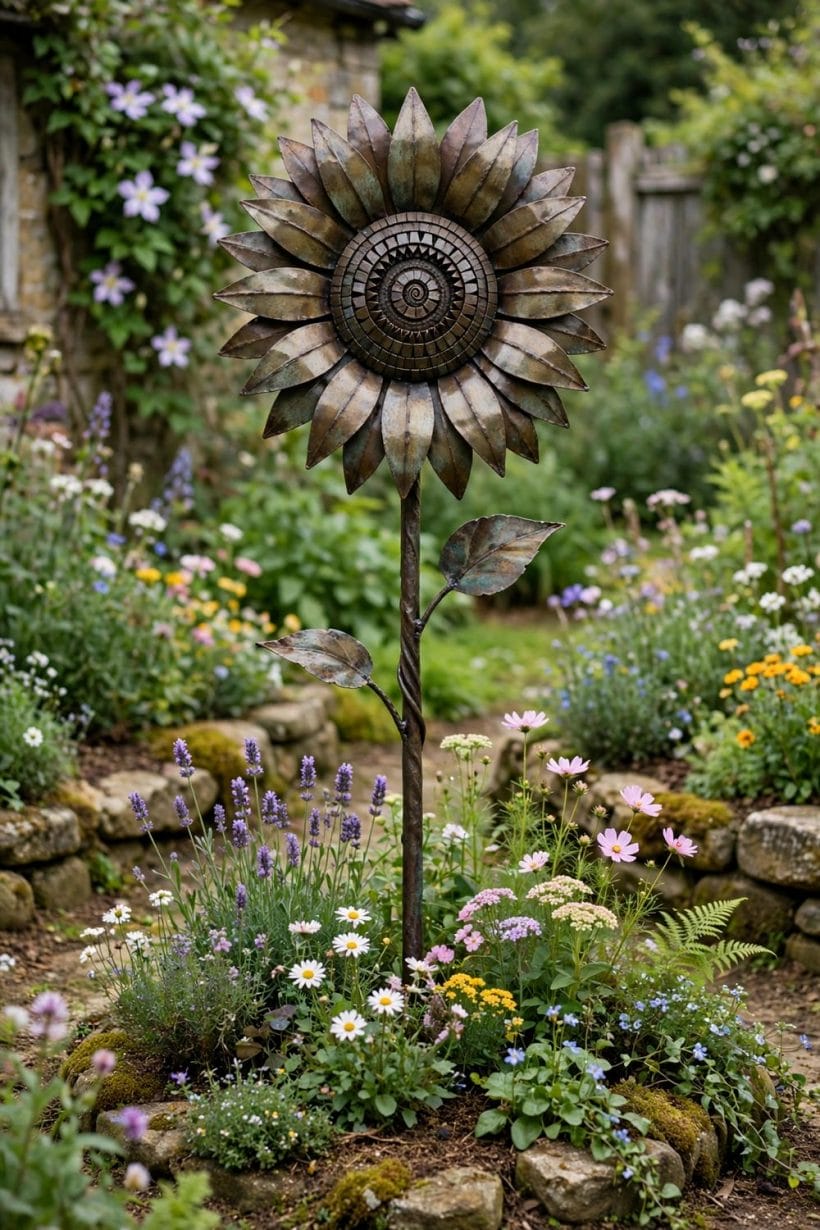
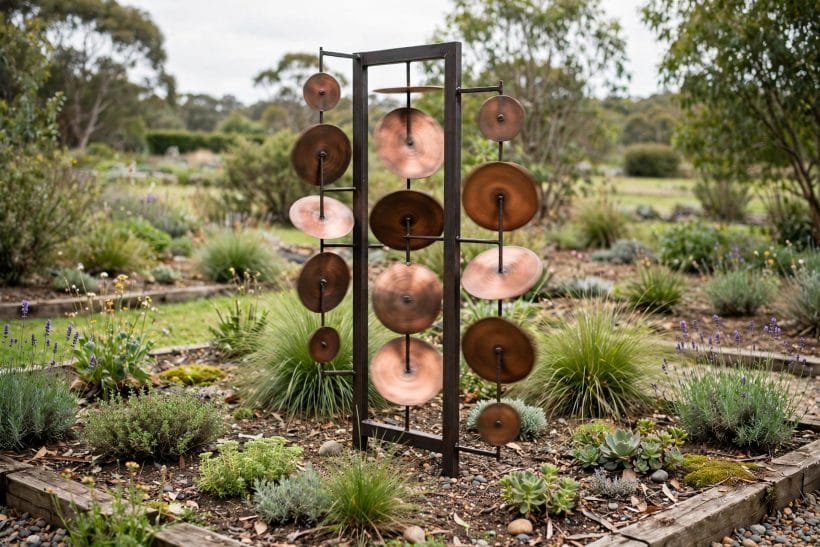
Subject matters as much as size. Animal and bird forms tend to sit naturally among planting, because they echo the life a garden already holds, while flower and leaf forms blend with beds and borders. Abstract forms, such as arches, discs and spirals, suit gardens where the planting is already bold and the sculpture is meant to act as a counterpoint rather than an imitation of nature. There is no single right answer, and the test is simply whether the piece feels at home among the plants, paths and structures that already shape the garden.
Finish is the third choice, and it deserves as much thought as form. A weathered, rust-toned finish can blend with soil, bark and stone, and it often looks more settled with each passing season. A painted finish can add a note of colour in a shady corner or against evergreen planting, though painted surfaces may need more regular attention to stay tidy. A bright, polished finish can be striking in sun, but it may also draw the eye away from planting, so it suits a spot where a focal point is genuinely wanted. For broader ideas on shaping the ground around a small home, these backyard landscaping ideas show how art, planting and layout can work as one design.
3. Planting Around Metal Sculpture
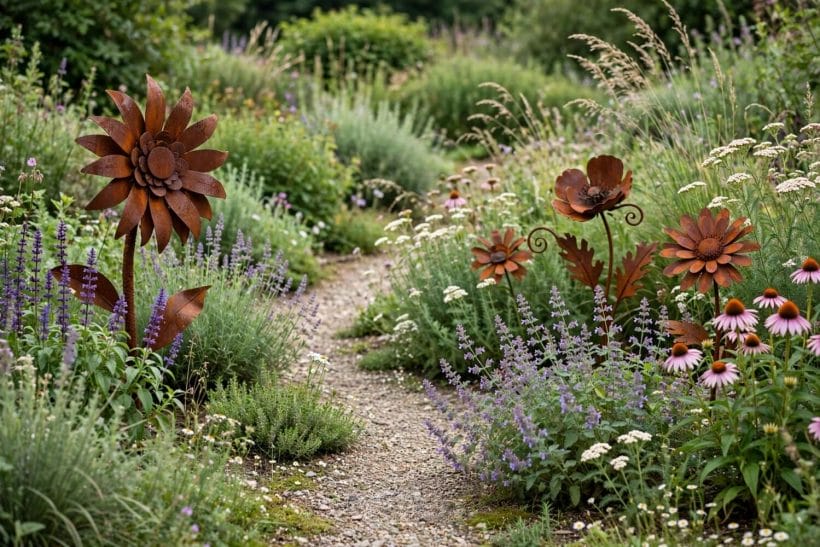
Planting around a sculpture should soften it without hiding it. Low, spreading plants at the base can blur the line where metal meets soil, making the piece look as though it has grown out of the bed rather than been set down on it. Taller plants behind a piece can give it a backdrop and help it read clearly against the sky or a fence, while plants in front should stay low enough that the form remains visible. The aim is a frame, not a curtain: planting that supports the sculpture while letting it be seen.
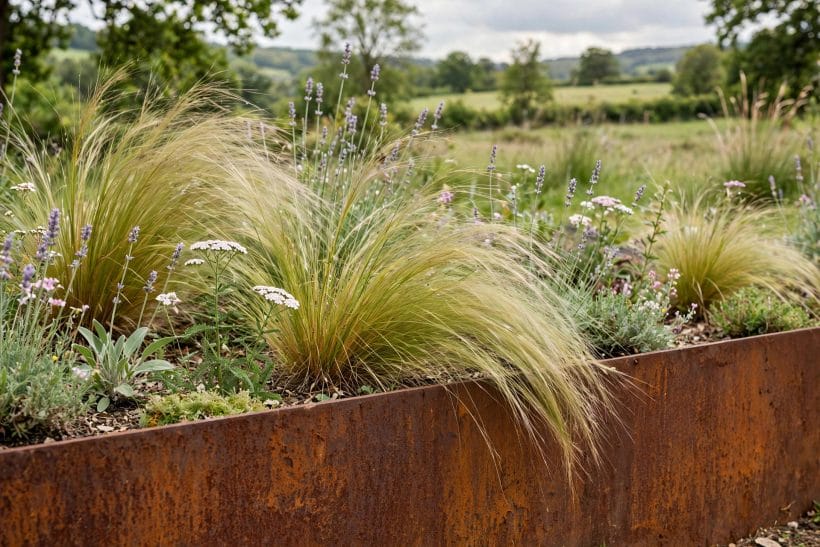
Grasses are often a happy partner for metal, because their movement contrasts with the stillness of the sculpture and their fine texture softens hard edges. Perennials with soft, mounded habits can play a similar role, filling the ground around a base without competing for attention. Evergreen planting can give a sculpture a year-round setting, which matters in gardens where winter leaves beds bare. In each case, the planting should be chosen for the spot in general terms, with light, shade and moisture in mind, and with the understanding that growth varies and no planting outcome can be promised.
Colour in the surrounding planting deserves a light touch. A bed that is already full of strong colour may suit a muted metal finish, while a quiet, green bed may welcome a painted or rust-toned accent. Keeping the palette calm around the sculpture lets the form itself carry the interest, and a few well chosen companions will usually do more than a crowded mix. Where planting is kept in containers, these container garden ideas show how pots can frame a piece without the commitment of a full bed.
4. Sculpture Along Paths and Entrances
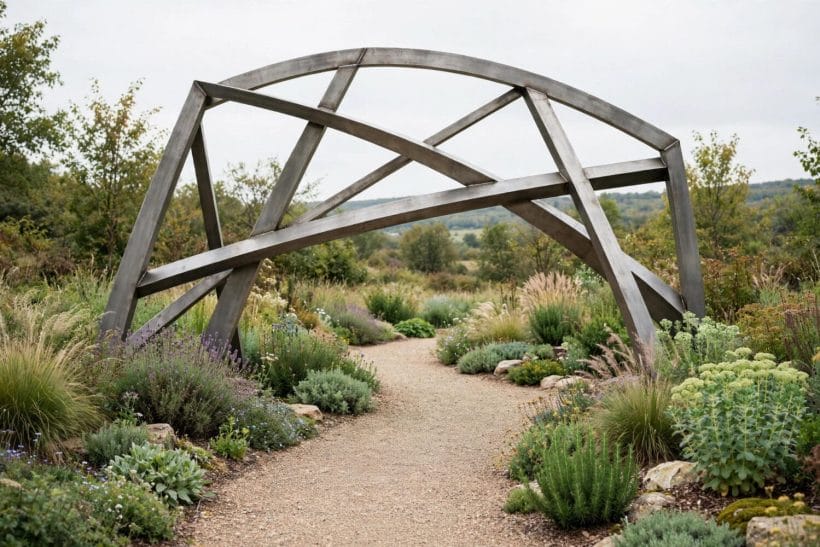
Paths are natural places for metal art, because they already guide movement and attention through a garden. A piece at a bend can reward a walker with a small discovery, a pair of pieces can mark an entrance, and a single arch can turn a plain walk into a threshold. The key is to keep the path itself clear and comfortable: sculpture should sit beside the walk, not in it, so that people can pass without brushing against metal edges or stepping off the path to get around a base.
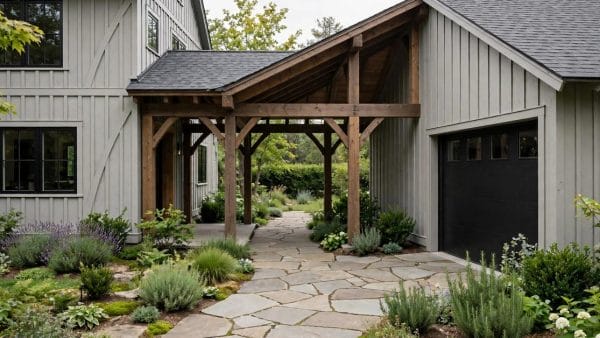
Entrances benefit from a similar restraint. A sculpture beside a gate or a porch step can welcome visitors and signal the character of the garden beyond, but an entrance that is crowded with pieces can feel busy before anyone has even entered. A single, well chosen piece, set back far enough that it does not block the gate or the step, usually says more than a group. The surrounding ground should stay firm and even, and any base or fixing should sit flush enough that it does not become a trip hazard.
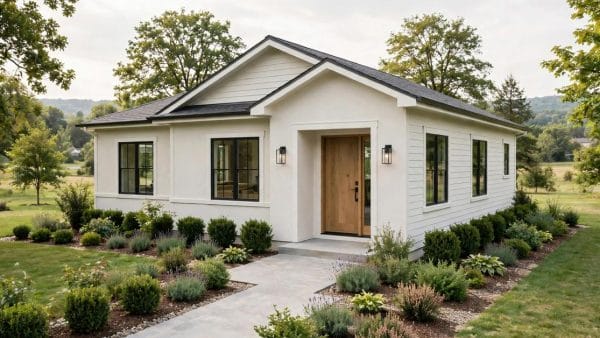
Sightlines along a path also matter. A sculpture placed where a path ends, or where a long view closes, can give a walk a satisfying destination, while a piece tucked where it cannot be seen until the last moment can feel like a surprise. Both approaches can work, and the choice depends on the mood of the garden: a formal walk may suit a clear focal point at its end, while a winding, informal path may suit smaller discoveries along the way. For the wider setting of a compact home and its approach, these tiny house exterior ideas show how paths, planting and a single feature can frame an entrance.
5. Beds, Borders and Open Lawns
In beds and borders, a sculpture works best when it rises clearly above the planting around it without towering over everything else. A piece that is lost among tall perennials may as well not be there, while a piece that dwarfs its neighbours can make the bed feel like a pedestal rather than a garden. Judging the mature height of the surrounding plants, in general terms, helps a gardener place a piece where it will still read clearly when the bed is at its fullest.
Open lawns call for a different approach. Without planting to frame it, a sculpture on a lawn stands alone, and its silhouette becomes the whole story. A strong, simple form tends to suit an open lawn better than a fussy one, because there is nothing to soften complicated detail. A lawn piece also needs a firm, level setting, so that it does not lean or sink over time, and it should sit where mowing and everyday use of the lawn can continue comfortably around it.
Borders that mix shrubs, perennials and grasses can offer the best of both worlds: enough structure to frame a sculpture, and enough softness to keep it from feeling exposed. In such a border, a metal piece can act as a punctuation mark among the planting, a pause in a long stretch of green. Placing it where the border changes direction, or where one planting group gives way to another, can make the change feel intentional rather than accidental. Stone and gravel settings can add a further layer of texture, and these rock landscaping ideas show how hard materials can sit comfortably beside metal and planting.
6. Finishes, Weathering and Patina
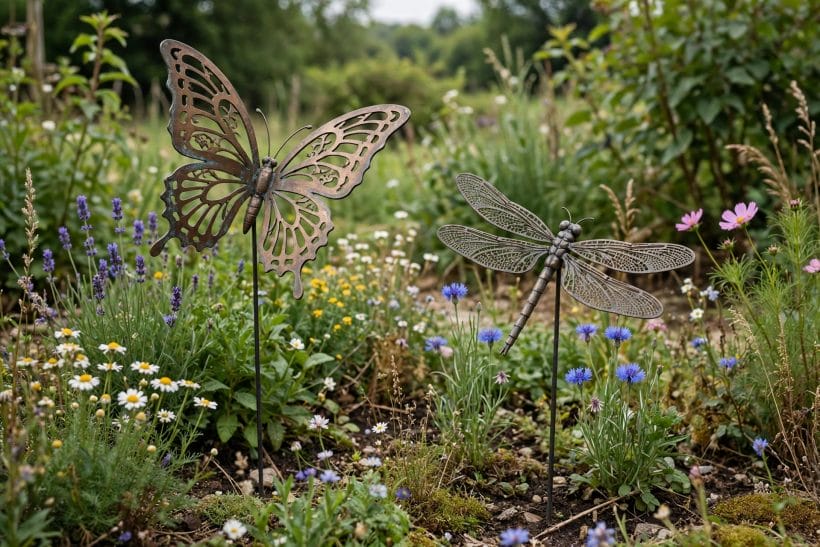
Metal finishes change with weather, and that change is part of their charm for many gardeners. Weathered steel tends to deepen in tone as it is exposed to rain and air, developing a warm, rust-like patina that many people find attractive against green planting. Painted metal may fade or chip gradually, especially in strong sun or wet winters, and that gradual change can be accepted as part of the piece’s life or addressed with periodic attention. Polished metal may dull over time unless it is cleaned, and it may show water marks and fingerprints more readily than a muted finish.
Understanding this weathering in advance helps a gardener choose with open eyes. A piece chosen for its weathered look will generally become more weathered, which suits a naturalistic garden, while a piece chosen for a crisp painted colour may need more care to keep that colour fresh. Neither outcome is a fault in the material; it is simply how metal behaves outdoors. Placing a piece where it is sheltered from the worst of the wind and rain may slow change, though no outdoor finish can be expected to stay exactly as it was on the day it arrived.
Where a sculpture sits also affects how it weathers. A piece in a damp, shaded corner may stay wet longer after rain, while a piece in full sun may dry quickly but face stronger fading. A piece near the coast, or near a road, may face harsher conditions than one in a sheltered inland garden. These are general tendencies rather than certainties, and they are worth weighing when choosing both a finish and a spot. A gardener who enjoys watching a finish evolve will often be happiest with a weathered piece, while a gardener who prefers a tidy, unchanging look may prefer a painted piece that can be refreshed when needed.
7. Scale, Sightlines and Focal Points
Scale is the quiet skill behind good garden art. A sculpture that is too large for its spot can dominate a garden and make planting feel like decoration, while a sculpture that is too small can disappear entirely. The right scale usually feels obvious once it is in place: the piece holds the eye without shouting, and the garden around it still feels like a garden. Testing scale with a simple stand-in, such as a tall stake or a cardboard outline at the intended height, can help a gardener judge a spot before committing to a heavy piece.
Sightlines from the house matter as much as scale in the garden itself. A sculpture that is visible from a kitchen window, a porch seat or a favourite chair gains a second life, because it can be enjoyed even when no one is walking the garden. Placing a piece where it can be seen from indoors, without blocking a view of the wider garden, gives it daily value. Equally, a piece that is only visible from one narrow angle may feel less rewarding than one that can be appreciated from several approaches.
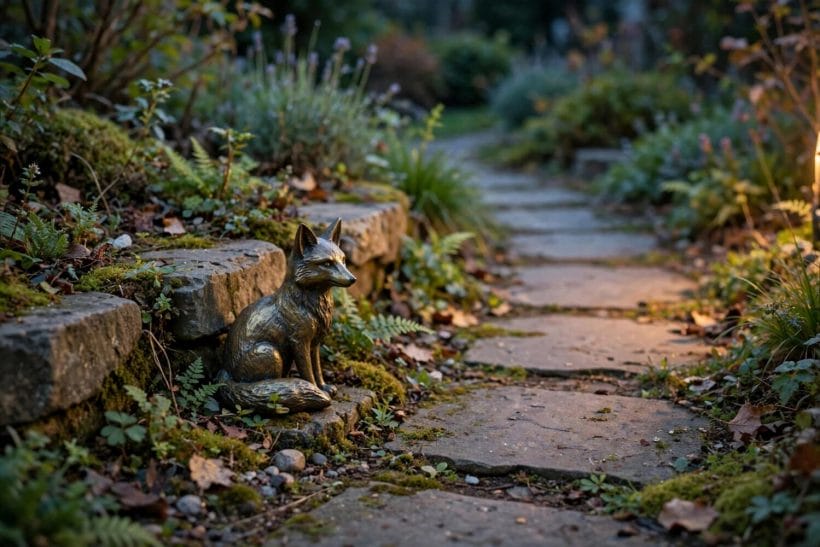
A garden can hold more than a single focal point, but focal points should be spaced so that each has room to breathe. Two strong pieces placed close together may compete, while the same two pieces placed at opposite ends of a garden can give a walk a pleasing rhythm. Smaller pieces, such as stake sculptures among flowers, act as accents rather than focal points, and they can be used more freely because they do not demand the same attention. For ideas on extending that sense of place from the garden to the porch, these tiny house porch ideas show how a small outdoor space can carry a feature without feeling crowded.
8. Seasonal Care Through the Year
Seasonal care for metal garden art is generally gentle and regular rather than intensive. In spring, a look over each piece after winter can reveal loose fixings, leaning bases or planting that has grown over a form. Clearing fallen leaves and debris from around a base helps air move and keeps the setting tidy, and a soft brush can remove surface dirt without harming a finish. This spring check is a good moment to see whether planting around a piece needs thinning, so that the sculpture remains visible as growth resumes.
Summer care is mostly about watching the relationship between sculpture and planting. Vigorous growth can quickly hide a small piece, and a light trim of overhanging stems, where appropriate, can restore the balance. In hot, dry spells, planting around a sculpture may need the same general attention as the rest of the garden, though no particular watering outcome can be promised and local conditions should guide any care. A kinetic piece that moves in the wind should be checked for free movement, so that it turns gently rather than catching or rattling.
Autumn and winter bring their own considerations. Falling leaves can pile against a base and hold moisture, so clearing them from time to time helps the setting stay clean. In cold weather, a piece that is securely fixed is less likely to shift, and a base that drains freely is less likely to sit in standing water. Gardeners in areas with hard frosts may wish to consider whether a particular piece or finish suits exposed winter conditions, in general terms, and to seek local advice where unsure. Throughout the year, the guiding principle is modest: regular attention, gentle cleaning, and no harsh treatment that might damage a finish.
9. Safety, Fixings and Lasting Placement
Safety starts with placement. A sculpture should stand on firm, level ground, with its base secure enough that it cannot easily tip if brushed against or caught by wind. Tall or top-heavy pieces need particular care, because a fall could damage the piece, nearby planting, or a person. Where a piece is designed to be fixed to the ground, its fixings should be fitted as intended and checked from time to time, and any work that involves digging, concrete or heavy lifting should be handled with care and, where needed, professional help.
Edges and surfaces deserve attention too. Metal sculpture can have sharp points, thin fins or rough welded joins, and a piece placed beside a narrow path or a children’s play area should be chosen and sited with that in mind. Setting a piece back from a path, or surrounding its base with planting that discourages close contact, can reduce the chance of accidental bumps. These are matters of common sense rather than rules, but they are worth weighing before a piece is fixed in place, because moving a heavy sculpture later is rarely easy.
Lasting placement also means thinking about the ground beneath a piece. A base that sits directly on soil may sink or tilt over time, especially in wet ground, while a base on a firm pad or on stone may stay level longer. Drainage around the base matters, because standing water can stain a finish and soften the ground. For the wider design of a small home and its garden, these tiny house designs show how house, garden and outdoor features can be planned together, and these tiny house garden ideas offer a closer look at planting and features in a compact plot.
10. Small Gardens, Courtyards and Porch Edges
Small gardens often suit metal art best of all, because a single piece can give a compact space a clear identity. A courtyard with a sculpture at its centre, or a small bed with a stake sculpture among flowers, can feel intentional rather than cramped, provided the piece is sized for the space. In a small garden, restraint matters even more than in a large one: a single strong piece will usually do more than several competing accents, and leaving empty space around the piece lets both the sculpture and the planting breathe.
Courtyards and porch edges offer sheltered spots where a sculpture can be enjoyed at close quarters. A piece beside a porch step, a wall-mounted form, or a small sculpture on a plinth can bring art into daily coming and going, and a sheltered spot may also slow weathering. In such close settings, detail matters: a piece that will be seen from a short distance should reward a closer look, with a finish and form that stay interesting when examined up close. The surrounding planting can stay simple, because the sculpture itself carries much of the interest.
Even a garden that is mostly paving can welcome metal art, provided there is a bed, a border or a generous container to set it in. A sculpture rising from a planted container can soften a paved area and give it a vertical accent, while a piece set against a wall can break up a flat surface. In every case, the same principles apply: choose a scale that suits the space, plant around the piece to soften it, fix it securely, and care for it gently through the seasons. A small garden with a well placed piece of metal art can feel complete, not because it is full, but because every element has a reason to be there.
Final Considerations
Metal garden sculpture succeeds when it feels like part of the garden rather than an addition to it. Start with the space itself, choose a form and finish that suit the light and planting, place the piece where it can be seen without blocking a path or a view, and let planting soften its base. Keep the number of pieces restrained, fix each piece securely, and care for it gently through the seasons. With that approach, a heron beside a bed, an arch over a path, or a flower form among perennials can become a lasting part of the garden’s character.
Before fixing a heavy piece, digging for a base, or working near walls, drains or buried services, take care and seek professional help where needed. Gardens vary, seasons vary, and no planting or weathering outcome can be promised in advance, but a sculpture chosen thoughtfully and placed with restraint will generally reward the garden around it for many seasons to come.

0 Comments