
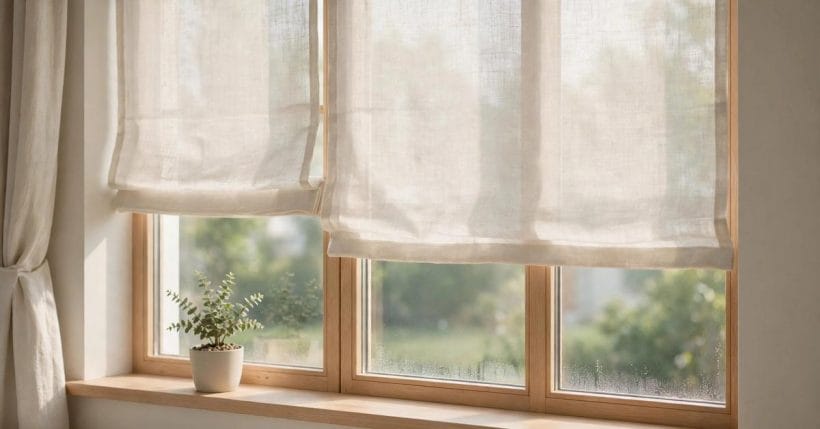
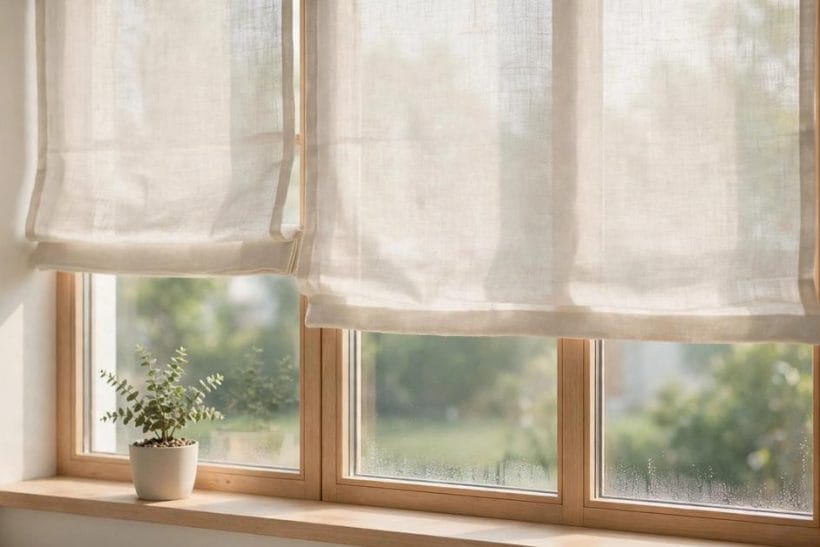
A window covering is with you from the first light of the morning to the last lamp lit at night. It softens harsh sun, guards privacy after dark, and quietly shapes how calm, bright, and comfortable a room feels. Because it is used every day, it deserves a slower, more practical kind of choosing than a quick glance at a display.
This guide takes that slower route. It works through what each window must do, how light and privacy change through the day, which materials suit which rooms, and how to check operation, safety, and upkeep before anything is ordered. Use it as a checklist to carry from room to room, and let each window earn its own answer.
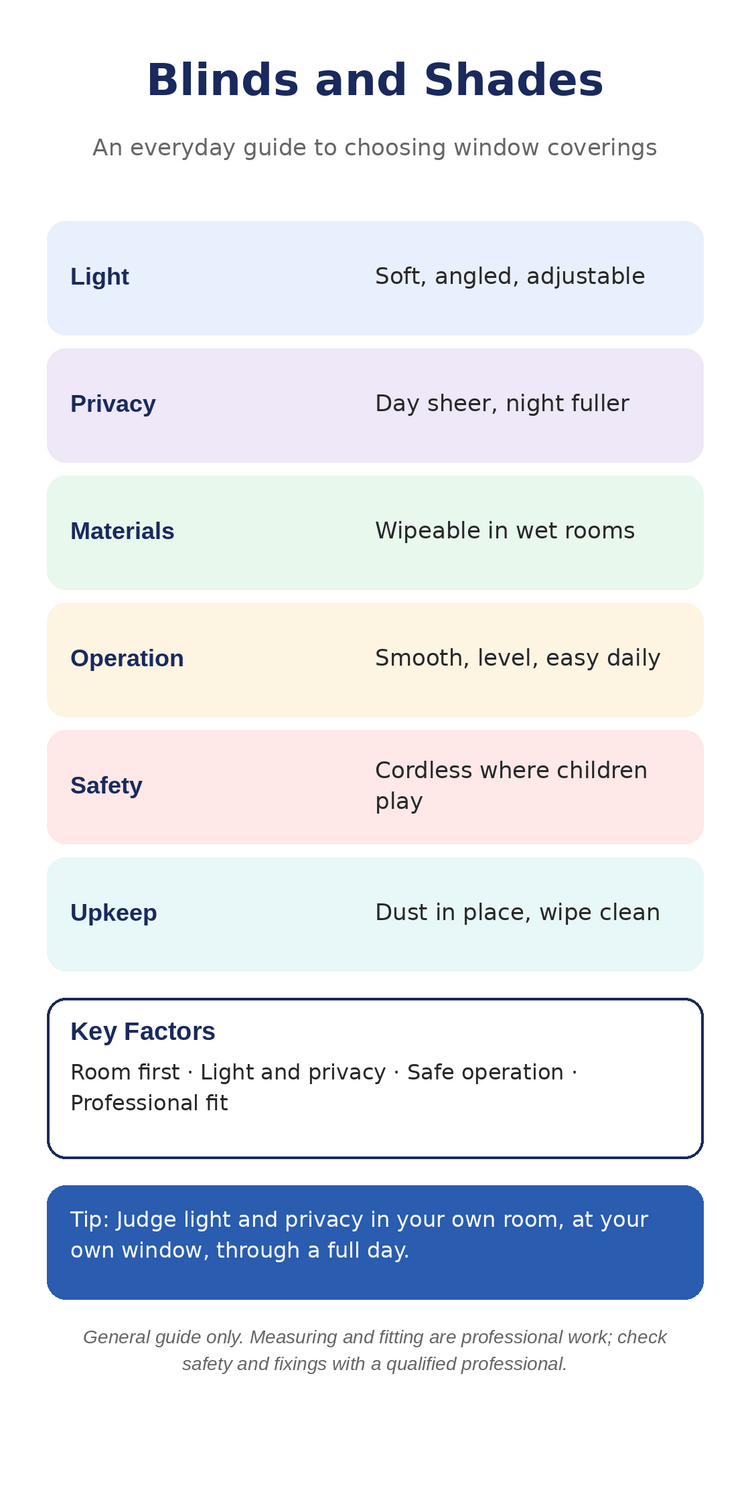
1. Begin With the Job Each Window Has to Do
Every window has a job, and no two windows in a home share exactly the same one. A kitchen window needs bright, workable light and a surface that can be wiped clean. A bedroom window needs darkness for sleep and privacy that holds after dark. A living room window needs softness for sitting, reading, and gathering, without turning the room dull. Naming the job first keeps the choice honest, because a covering that looks beautiful but fails its main job will disappoint daily.
Start by walking the home at different times of day and noting what each window already does well and where it struggles. Notice which rooms feel exposed in the evening, which windows blaze at sunset, which panes are hard to reach, and which rooms gather steam, dust, or cooking smells. Those notes become the brief for the covering, and they matter more than any display, because they describe your home rather than a showroom.
| Room | First check | Second check |
|---|---|---|
| Living room | Soft daylight | Evening privacy |
| Bedroom | Sleep darkness | Night privacy |
| Bathroom | Full privacy | Steam tolerance |
| Kitchen | Bright work light | Easy wiping |
| Home office | Glare-free light | Daytime privacy |
Keep that room-first order through the rest of this guide. A covering chosen for its window and its room will always outlast one chosen for a display alone, and the same room-first habit shapes good planning in tiny living room ideas, where every window must earn its place in a small, hard-working space.
2. Weigh Light, Glare and View Together
Light, glare, and view are one decision, not three separate ones. A covering that blocks glare but kills the view will make a room feel closed in, while a covering that keeps the view but lets harsh sun through will make the same room hard to sit in. The useful question is how the three can be balanced at each hour, so the room stays bright, comfortable, and connected to the outdoors without a blinding beam.
Think in terms of range rather than a single setting. The most liveable coverings offer more than fully open or fully shut, letting you soften strong sun, angle light away from seating, or close fully for sleep. A room used for morning coffee, afternoon reading, and evening television needs a wider range than a hallway window that simply needs softening, and the covering should follow that daily rhythm without constant adjustment.
Glare deserves its own thought, especially where screens, glossy worktops, or pale floors bounce light around. A covering that angles light rather than blocking it keeps the room bright without the harsh beam, and layering a sheer layer with a fuller layer gives both softness and control. If a room already struggles with glare, a small living room idea that pairs soft coverings with calm, matte surfaces will do more than a darker fabric alone. Judge light by how the room feels to sit in, not by how the covering looks on its own.
3. Plan Privacy That Holds After Dark
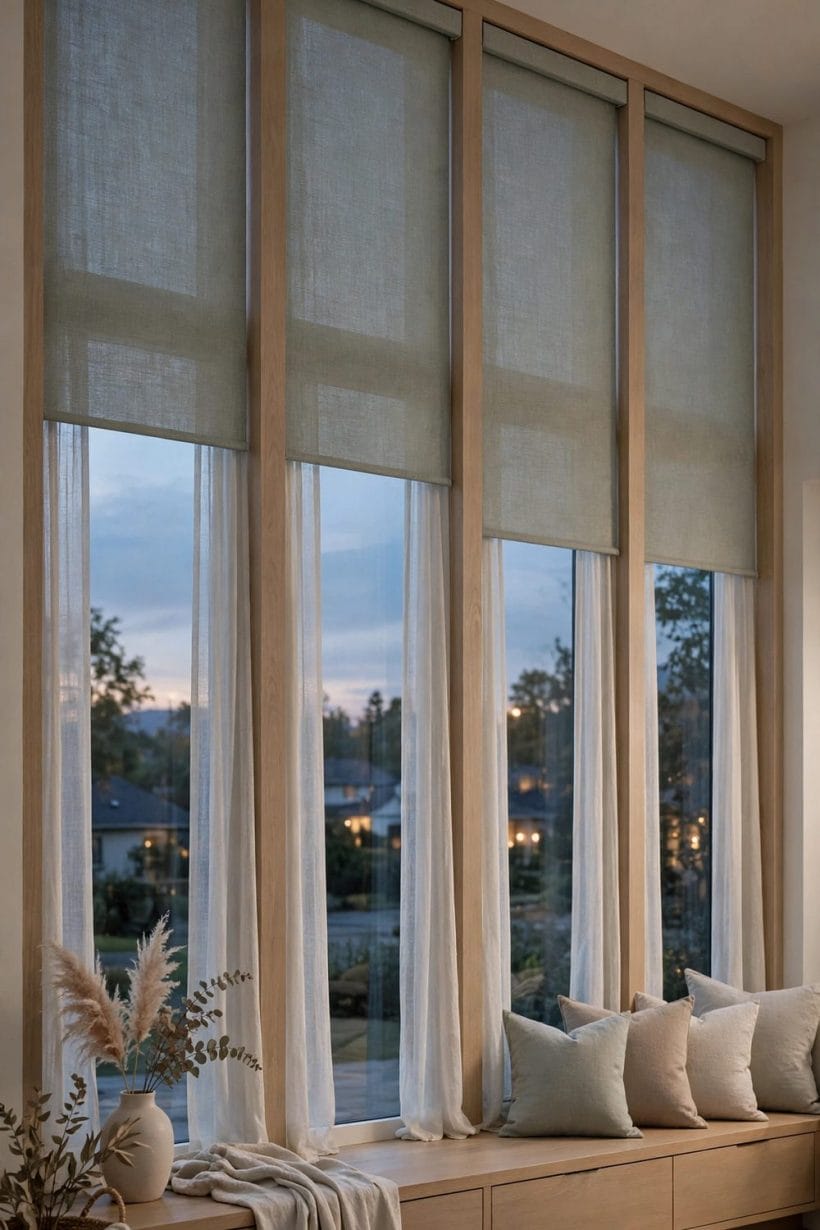
Privacy changes with the light, and many buyers discover this too late. By day, a sheer covering can shield you while keeping the view, because bright outdoor light stops eyes from reading the dimmer interior. After dark the balance flips: interior lights turn the window into a display, and that same sheer layer shows shapes clearly. Test any covering both ways before committing, with the room lit exactly as you actually live in it.
Consider who can see in, and from where. A ground-floor window facing a pavement needs more than an upper-floor window facing trees, and a bathroom or bedroom needs more than a hallway. Layering solves most of these cases gracefully: a sheer layer for daytime softness plus a fuller layer for night gives both moods without swapping coverings. Where only one layer is practical, choose for the stricter case, which is almost always night.
Privacy also matters within the home and toward shared outdoor spaces. A bedroom window facing a shared garden, a bathroom window beside a neighbouring terrace, or a street-facing study all deserve a deliberate choice rather than a matching set carried through the house. The guides for tiny bedroom ideas treat sleep and privacy as one problem, which is exactly how a covering should be judged: if it fails at night, it fails.
4. Compare Slats, Fabrics and Layered Styles
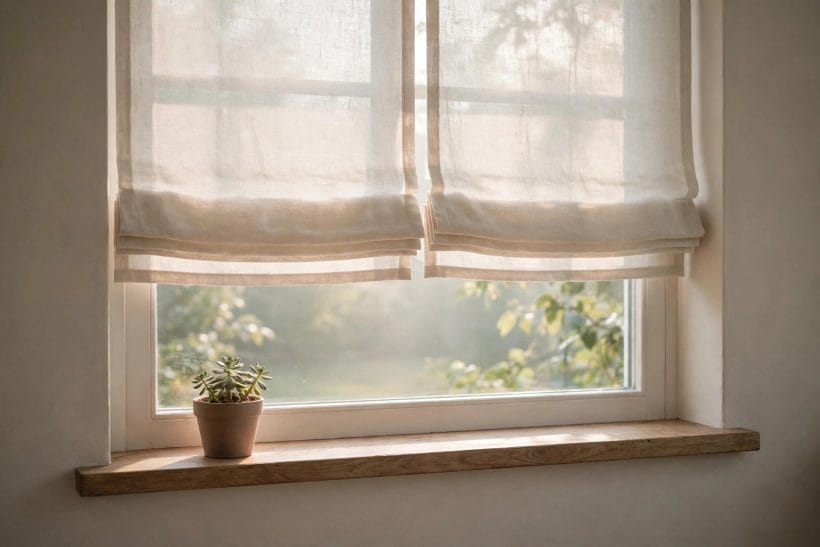
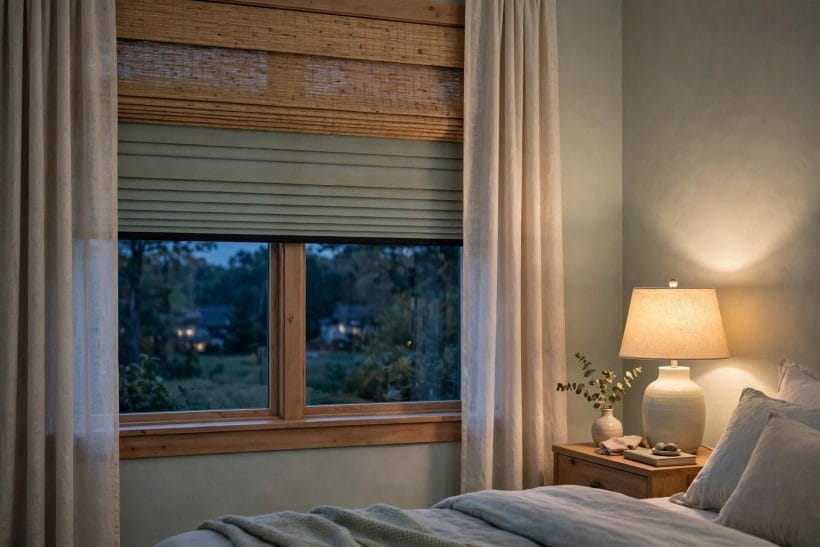
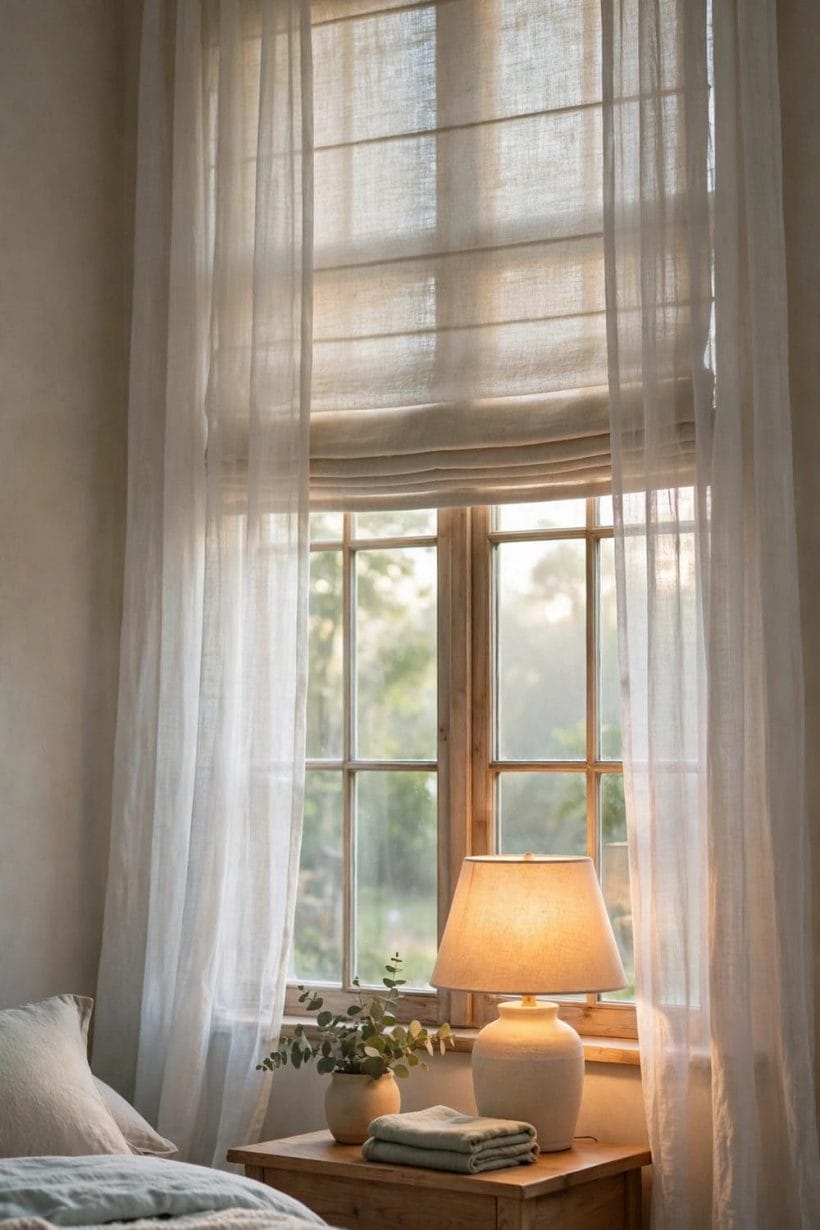
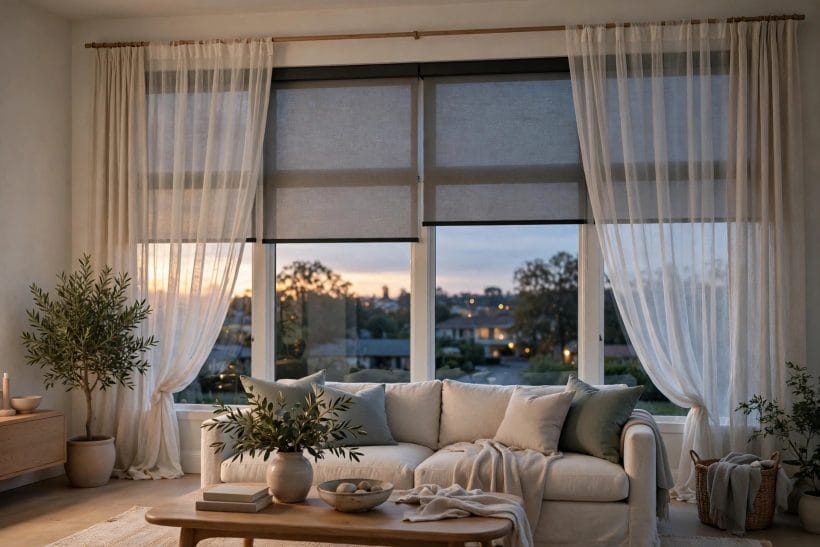
Slats, fabrics, and layered styles each change a room in a different way, and the difference is best felt rather than only read about. Slats can be tilted to angle light, which suits rooms where sun moves across the window through the day. Fabrics soften a room, glow gently in daylight, and drape with a warmth that hard surfaces cannot offer. Layered styles combine a sheer layer with a fuller layer, giving daytime softness and night privacy from the same window.
Look at how each style sits when it is partway open, not only when it is fully raised or fully lowered. A covering spends most of its life partway, so its partway behaviour is its real behaviour. Does it hang evenly, or does one side creep? Does it rattle in a draught or swing when a door closes? Does it still let a soft view through, or does it turn the window into a blank wall? These small behaviours reveal more than any description, and they predict whether the covering will still please you after months of daily use.
Also consider how each style suits the room around it. A crisp slatted covering suits a tidy, modern interior, while a soft fabric suits a room that needs warmth and quiet. A layered covering suits a room that needs both moods in one window, such as a living room that hosts bright days and private evenings. There is no single style that wins for every window, and that is the point: the right style is the one that fits its window, serves its room, and stays easy to live with.
5. Match Materials to Moisture, Sun and Wear
Material decides how a covering looks, hangs, and ages. Heavier weaves drape smoothly and block more light, while lighter weaves glow and keep a room airy. Texture matters as much as colour: a softly textured weave warms a stark room, a smooth plain weave suits a tidy interior, and a patterned weave can carry a plain room on its own. Handle samples in your own light, against your own walls, before deciding, because shop lighting flatters almost everything.
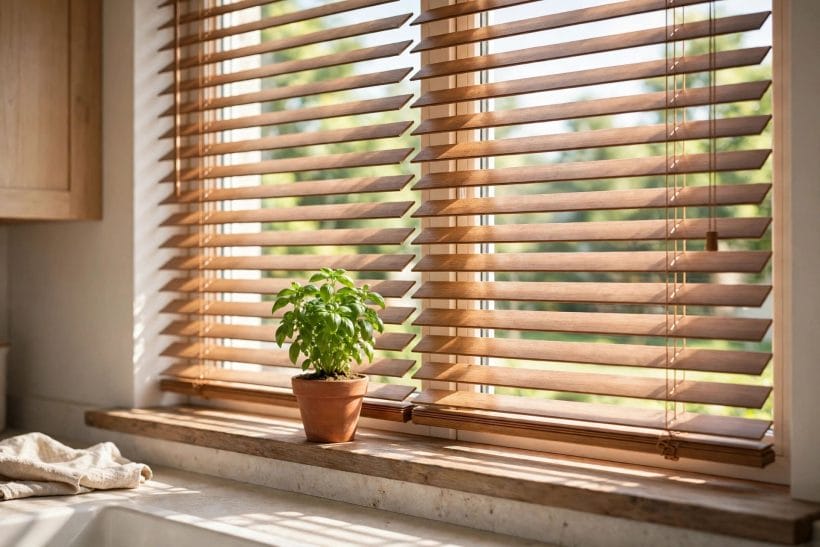
Wet rooms punish the wrong material quickly. Steam, splashes, and cooking grease settle into fabric, and a covering that cannot be wiped or aired will stain, stiffen, or lose its freshness within a season. Bathrooms and kitchens therefore need coverings chosen for wipeable surfaces and easy cleaning, with privacy that does not depend on a delicate fabric. The room guides help here: tiny bathroom ideas show how privacy, moisture, and small windows interact, and tiny kitchen ideas show how a window covering must share space with cooking, steam, and daily splashes.
Strong sun is the other great test of material. Sun can fade colour and weaken fibres over time, so a sun-facing window deserves a material chosen for that exposure rather than one chosen for shade. Pale materials keep rooms bright and make small windows feel larger, while deeper tones ground a room and hide marks better. If your walls and floors already carry strong colour, a quiet covering lets the room breathe; if the room is plain, the covering can supply warmth and pattern. Either way, judge the sample in the room, at the window, in daylight and lamplight alike.

6. Test How the Covering Moves Day to Day
Operation sounds dull until you live with it. A covering that is awkward to raise, slow to lower, or hard to reach will end up stuck in one position, and a stuck covering is a wasted one. Try the mechanism before you buy: does it move smoothly, stop where you leave it, and sit level? Can everyone in the household use it comfortably, including anyone shorter, older, or less strong? Daily ease matters more than any single feature.
Consider how often each window will move. A bedroom covering that opens every morning and closes every night earns a smooth, reliable mechanism, while a high hallway window that rarely moves can accept something simpler. Cordless options suit hard-to-reach windows and homes where dangling cords are unwelcome, while a simple wand suits a window you adjust once a day. Match the mechanism to the habit, not to novelty.
Also check what happens at the edges and the bottom of the covering. Does it close without side gaps that leak light at night? Does it stay level when lowered halfway? Does it lift without catching on handles, vents, or trim? These details decide whether the covering feels finished or disappointing, and they are best checked in person, with the covering moving through its full range, before any order is placed.
7. Make Safety the First Check in Family Rooms
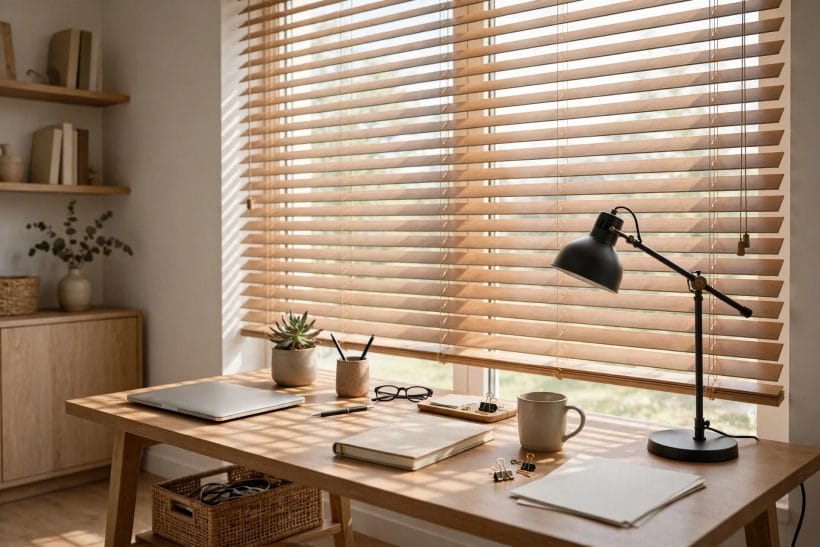
Safety belongs at the top of the list wherever children or pets share the home. Loose cords and loops can catch curious hands and paws, so cordless designs, short pulls kept out of reach, or cleats that hold cords flat against the wall are best chosen deliberately. Check the finished installation from a child’s height, not an adult’s, and look for anything dangling near a bed, a cot, or climbing furniture. A covering is only safe when it is safe in the room as actually used.
Furniture placement matters as much as the mechanism. A bed, chair, or toy box pushed against a window turns a safe cord into a reachable one, so plan the room layout alongside the covering. Heavy coverings also deserve secure fixings into solid material, not just plaster, because a falling covering is a hazard in itself. These are fitting questions, and they are exactly why installation belongs with a qualified professional wherever fixings, height, or safety are involved.
Older coverings deserve the same scrutiny. If an existing covering has long loose cords, frayed pulls, or a mechanism that no longer holds, treat it as a safety job before a decorating job. Replacing or securing it promptly protects everyone in the room, and it lets the new covering start from a clean, safe baseline rather than inheriting an old risk.
8. Solve Tricky Shapes, Doors and Wide Openings
Unusual shapes need extra thought. Tall narrow windows, wide sliding panes, bay angles, and windows with deep reveals each suit different solutions, and a covering designed for a standard window can struggle on any of them. Sliding panes need a covering that clears the moving panel, bay windows need joints that follow the angle without bunching, and deep reveals may suit a covering set inside the opening rather than across the wall. Name the quirk early, and let it narrow the choice.
Doors with glass panels raise a similar question. A covering on a door must clear the handle, survive daily opening and closing, and stay out of the way of anyone passing through. A covering that swings, catches, or blocks the handle will be pushed aside and then ignored, so test the door’s full swing with the covering in place, in your mind at least, before ordering. The same logic applies to windows that open inward: the covering must leave room for the pane to move.
How the covering sits also changes the room. A covering mounted inside the reveal looks tailored and saves wall space, which suits compact rooms and clean interiors, while one mounted outside the reveal can make a small window look larger and block more side light. Neither is universally better; the right choice depends on the window, the wall around it, and how much light you can accept at the edges. Planning a room around its windows, as in tiny house floor plans, makes these decisions easier, because window size and position are settled before coverings are chosen.
9. Keep Cleaning and Upkeep Realistic
A covering you cannot clean will not stay beautiful. Dust settles on every horizontal surface, kitchen grease travels further than expected, and sun bakes both into fabric over time. Before choosing, ask how the covering is cleaned: can it be dusted in place, wiped with a damp cloth, or does it need removal and specialist care? The honest answer determines whether it will look good in a year or only on installation day.
Match cleaning effort to the room and your routine. A low, reachable living-room window can carry a fabric that needs occasional attention, while a high stairwell window or a busy kitchen window deserves something you can wipe in minutes. Pale fabrics show dust sooner but also show when they need care, while darker fabrics hide dust longer and then surprise you. Neither is wrong; the question is which rhythm fits your household.
Small habits extend any covering’s life. Regular light dusting prevents build-up, gentle handling of mechanisms prevents fraying and misalignment, and prompt attention to marks stops them setting. If a covering needs more care than you will realistically give it, choose a simpler one: the covering that still looks cared for, with the routine you actually keep, is the right covering for your home.
10. Confirm the Order and the Professional Fit
The final check is a conversation, not a catalogue page. Before ordering, confirm the finished size, the mounting position, the light and privacy behaviour at night, the cleaning routine, and the safety arrangement for cords and fixings. Ask what happens if the fit is imperfect, who adjusts it, and whether the mechanism is guaranteed to hold its position. Clear answers here prevent most disputes later, because they turn vague expectations into agreed details.
Also confirm the practicalities of fitting day. Who moves furniture, who protects floors and sills, and how long the room will be out of use? A good fitter will welcome questions about fixings and finish, and will explain what the household needs to do before arrival. If answers feel evasive, treat that as information and seek a second opinion before committing. A careful order, checked twice, costs far less trouble than a rushed one corrected afterwards.
Measuring and fitting are professional work in this guide, not do-it-yourself tasks. A professional brings the measuring method, the fixing knowledge, and the eye for quirks that a first-time measurer cannot be expected to have. That matters most where fixings carry weight, windows are high, walls are uneven, or safety depends on the result. After fitting, keep the care notes and any adjustment guidance the professional leaves with you. Tiny house design rewards exactly this habit: small spaces forgive nothing, so every choice is tested in place before it is final. Window coverings deserve the same discipline at any scale.
Final Considerations
Choosing blinds and shades well comes down to a short discipline: begin with the job each window must do, judge light and privacy through a full day, match material to moisture and sun, choose a mechanism the household can use with ease, and put safety first where children and pets are concerned. No single style wins for every window, and that is the point. The right covering is the one that fits its window, serves its room, and stays easy to live with.
Work through this guide window by window, and let each room speak for itself. The result will not be a matching set imposed on the whole house, but a house where every window does its own job quietly, and where light, privacy, and comfort fall into place without daily struggle.




0 Comments