
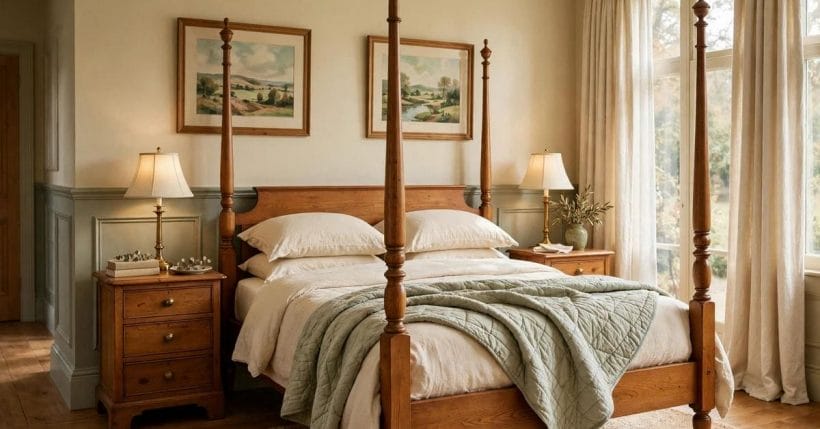
A traditional bedroom is easy to recognise the moment you step into it. The bed sits against a calm wall, the lamps match, the curtains fall to the floor, and the room feels settled rather than staged. Nothing in it shouts for attention, and that quiet is the whole point: a bedroom built for rest should look restful even in the middle of the day.
This gallery guide walks through that look part by part, from the layout first, then colour, storage, bedding and light, finishing with the small habits that keep a classic room feeling lived in rather than formal. Read it in order for a full room plan, or dip into the section that matches the corner you are working on.
1. Start With the Bed Wall
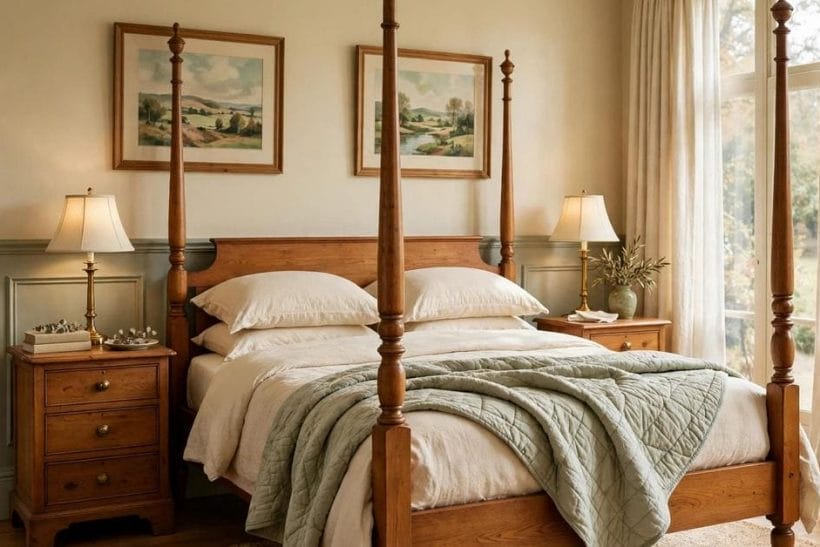
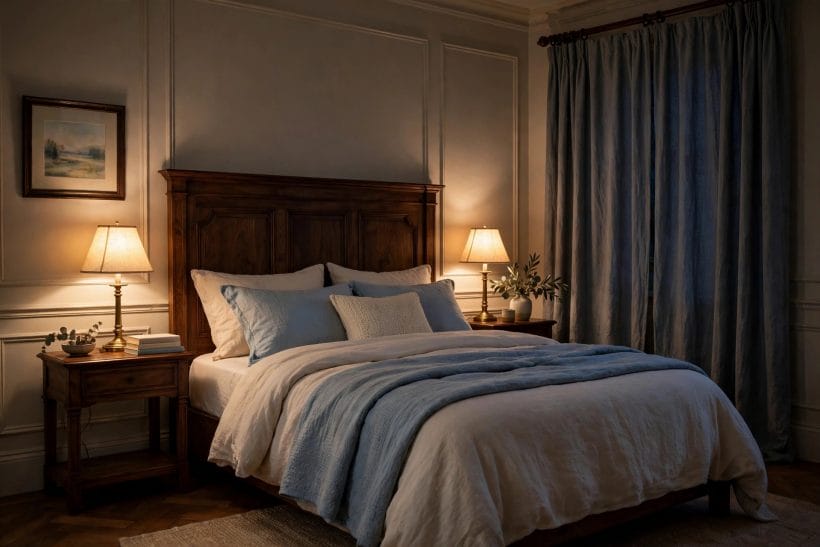
Every traditional bedroom has one wall that does the organising, and in most rooms it is the wall the bed stands against. Give that wall a clear centre, whether it is a panelled section, a pair of framed pictures, or simply the headboard itself, and let everything else in the room answer to it. The choice matters less than the commitment: once the bed wall is settled, the rest of the room can arrange itself around it without argument.
Keep the wall around the bed calm. A headboard with a picture or a mirror above it reads more traditionally than a crowded shelf of small objects, and it leaves the bed itself as the hero of the wall. If the wall has a window on one side, the same rule holds: let the curtains carry that part of the wall, and keep the furniture near it low enough that the daylight still reaches into the room.
When new pieces are on the way, it pays to think about the arrival as well as the look. Our guide to ordering home furnishings online covers the delivery, condition and returns checks that sit behind any furniture order, so the piece that arrives matches the room you planned for it. A bed wall planned around a piece that never fits is a plan that has to be remade, and a few checks at the ordering stage spare that trouble.
2. Build a Balanced, Symmetrical Layout
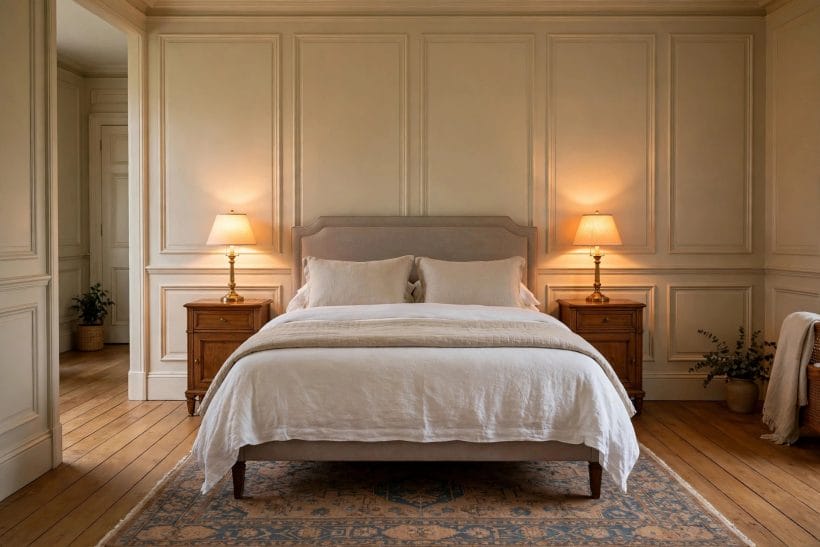
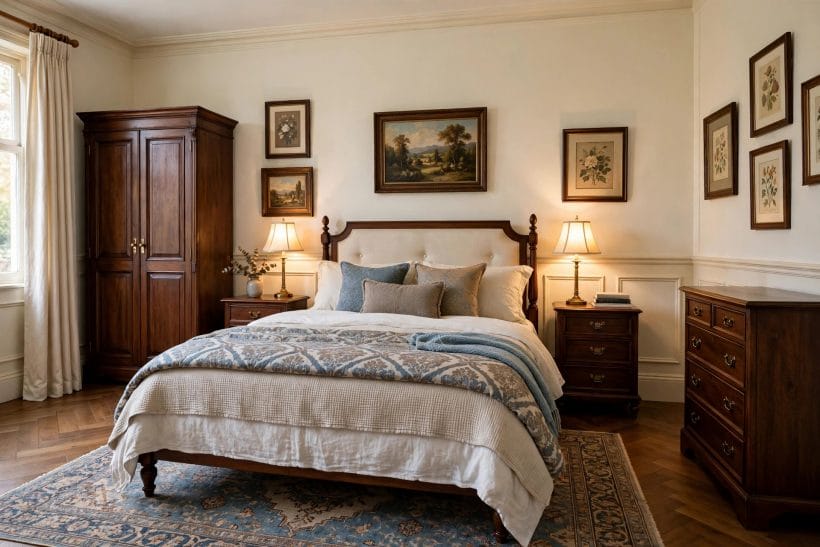
With the bed wall settled, the layout can take its shape. A nightstand on each side of the bed, a lamp on each nightstand, and a rug that sits under the lower part of the bed give the room its classic symmetry, and the eye reads that balance as calm before it notices any single piece. Symmetry helps here, and it does not need to be rigid: the two lamps need not be twins, and the two nightstands need not match exactly, as long as their size and presence feel balanced across the centre line.
Leave clear paths through the room. A walkway from the door to the window, and from the bed to the wardrobe, keeps the room comfortable to move through even in the dark, when you are half awake and feeling your way by memory. Furniture pushed tight against every wall can make a room feel larger on paper and emptier in practice, so pull the bed a little way out from the corners where the room allows, and let the space breathe around it.
The rug matters more than its size suggests. It should sit far enough under the bed that your feet land on softness when you get up, and wide enough that it reads as part of the bed group rather than a small mat floating beside it. A rug that is too small for the bed makes the whole arrangement look unsettled, while one that grounds the bed group pulls the nightstands, the lamps and the bedding into a single composition.
3. Choose Warm, Muted Colours
Traditional bedrooms lean on warm, muted colour rather than bright statements. Cream walls, soft sage, dusty blue, warm grey and gentle gold all sit comfortably together, and they let the wood tones of the furniture do the talking. The palette should feel like it has been in the room for a while, even when the paint is fresh, because restfulness comes from familiarity rather than novelty.
Start with the walls and work inward. A pale wall colour gives you room to add depth through the bedding, the curtains and the cushions, while a deeper wall colour asks for lighter bedding to keep the room from feeling heavy. Either direction works, as long as the contrast between wall and bedding stays gentle: a bedroom that shouts in colour is a bedroom that keeps you awake, and the traditional palette is deliberately quiet.
Colour deserves a daylight check before it is committed to. Paint and fabric can look very different under shop lights, morning sun and evening lamplight, and a shade that charms in one light can turn cold or muddy in another. Our guide to tiny house interior paint colors walks through that sampling habit in detail, and the same habit serves a full-size bedroom just as well: live with a swatch on the wall for a few days, in every light the room gets, before the whole wall follows it.
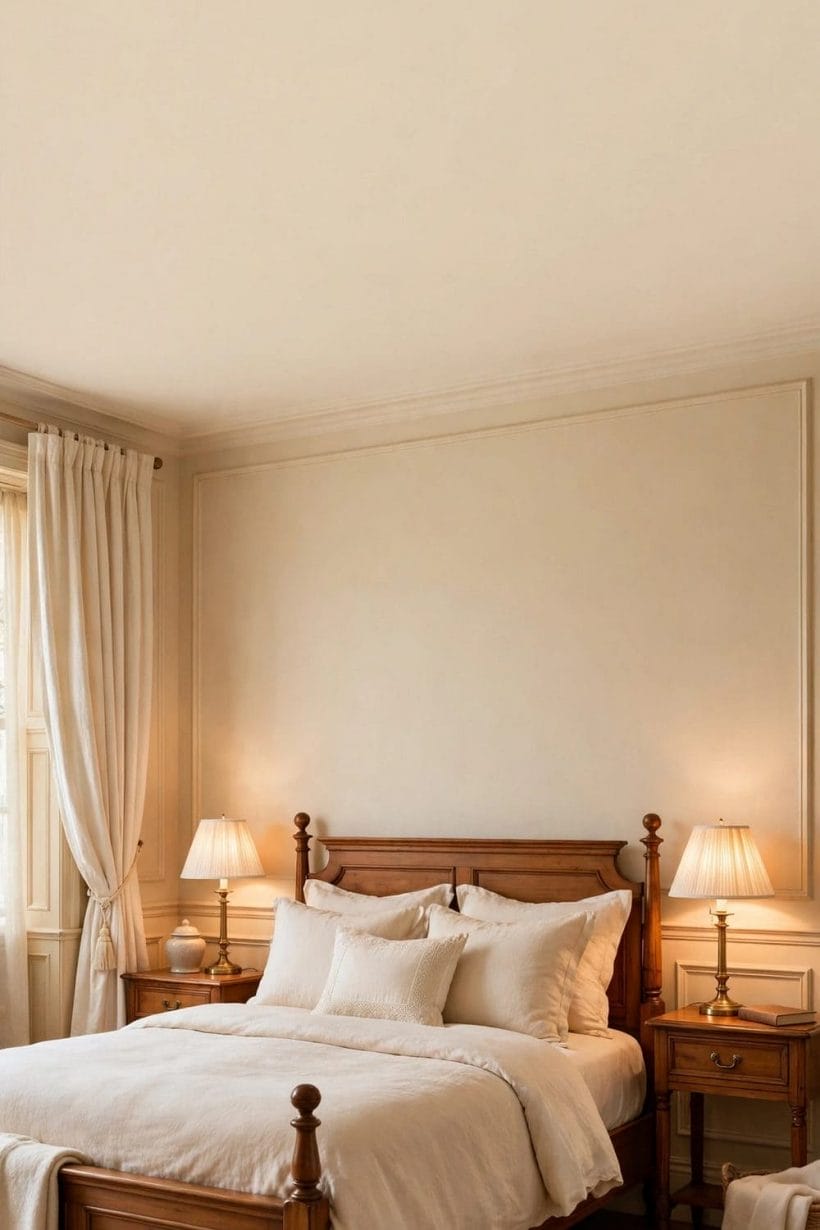
4. Pick Classic Furniture Shapes
The furniture shapes of a traditional bedroom are familiar for a reason. Turned wooden legs, panelled doors, rolled arms on a reading chair, and a headboard with some shaping to it all carry a sense of craft that plain slabs do not, and they age gracefully because they were never chasing a fashion. A room full of classic shapes can absorb a new cushion or a different throw without losing its character, which is exactly what a bedroom should do over the years.
Wood tone is the thread that ties the pieces together. The bed, the nightstands, the wardrobe and the chest of drawers need not be one matching set, and a room of mixed pieces often looks more collected and more personal than a showroom set. What matters is that the tones sit in the same family: warm woods together, dark woods together, or pale woods together, so that no single piece jars against the rest.
Scale is the quiet discipline of the traditional room. A tall wardrobe suits a room with height to spare, while a low chest suits a room where the ceiling sits closer, and a headboard should suit the wall it stands against rather than overwhelming it. When a piece looks wrong in a traditional bedroom, the cause is usually scale rather than style: the shape is right, but the size is arguing with the room.
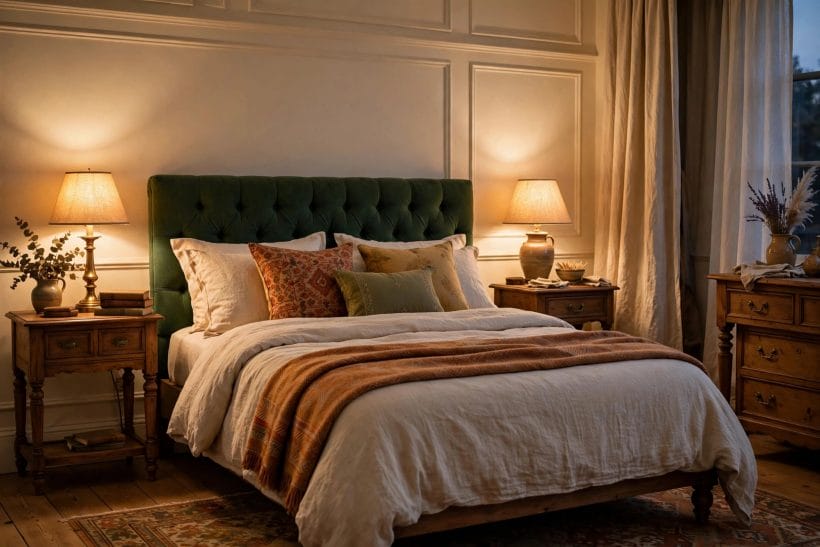
5. Plan Storage That Closes Away
Storage is where a traditional bedroom either stays restful or slowly unravels, and the rule is simple: closed storage first, open display second. A wardrobe with panelled doors, a chest of drawers, and a nightstand with a drawer each hide the everyday clutter that makes a room feel busy, and the room stays calm because the eye has little to count. Open shelves have their place, but they should hold the few things worth looking at, not the whole contents of the room.
Plan storage around the morning routine rather than around the furniture catalogue. The clothes you reach for daily belong nearest the bed and the mirror, the bedding and blankets belong near the bed itself, and the things you use rarely belong higher up or further away. A room organised by habit stays tidy with little effort, while a room organised by appearance alone needs constant tidying to keep up the look.
Baskets and boxes earn their keep inside closed storage and on high shelves, where they turn loose piles into single units that are easy to lift down and put back. Folded blankets in a basket on a shelf, spare bedding in a box at the top of the wardrobe, and small items corralled in a drawer organiser all keep the traditional look intact without demanding a daily battle. Our guide to tiny house storage ideas is written for smaller rooms, but its habit of giving every group of things one home transfers directly to a classic bedroom of any size.
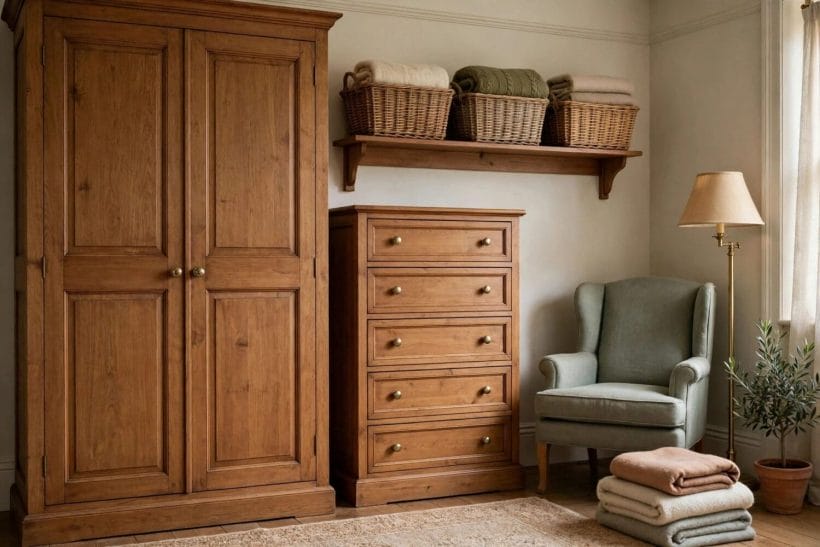
6. Dress the Windows in Full Curtains
Long curtains are one of the clearest markers of a traditional bedroom. They should fall to the floor, hang from a rod set above the window frame, and be full enough to gather in soft folds when they are drawn. Short, skimpy curtains make a window look unfinished, while full curtains frame it the way a picture frame frames a painting, and they soften the whole wall in the process.
Curtain fabric sets the mood of the room at every hour. Heavier fabrics give privacy and a sense of enclosure in the evening, while a lighter layer behind them lets daylight through during the day without leaving the window bare. The combination matters more than either layer alone: a bedroom that can shift from bright morning to closed evening with a single pull of fabric is a bedroom that serves rest at both ends of the day.
Colour and pattern in curtains should echo something already in the room, whether it is the bedding, the rug, or a cushion, rather than introducing a brand new colour that has to be explained elsewhere. A curtain that repeats a tone from the bedding ties the window wall to the bed wall, and the room reads as one composition instead of two separate corners. Plain fabrics are the safest choice, and a quiet pattern earns its place only when it sits comfortably beside the bedding it will live next to.
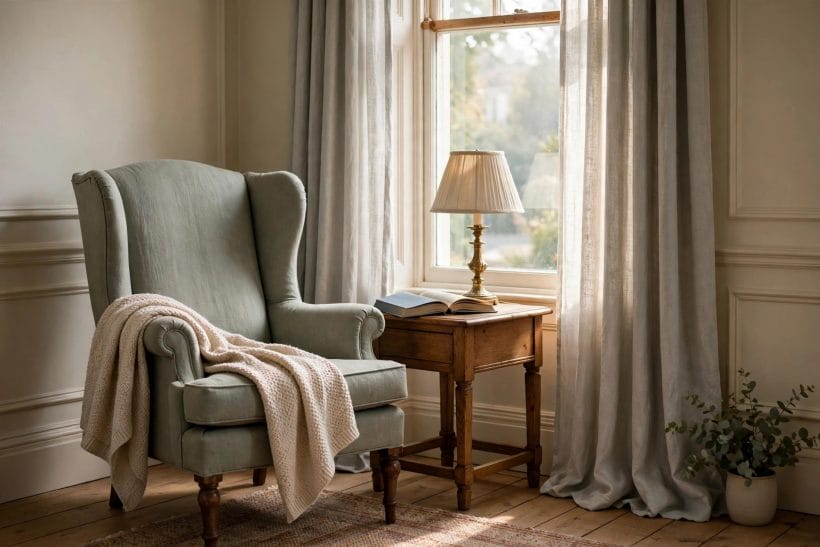
7. Layer the Bedding for Comfort
Bedding is where a traditional bedroom shows its welcome, and layering is the method. A fitted sheet, a flat sheet, a blanket or quilt, and a throw folded across the foot of the bed give you something to adjust through the night without remaking the bed, and the layered look reads as generous even before anyone lies down. The layers should share the room palette rather than compete with it, with the throw or the cushions carrying the accent colour if one is wanted.
Pillows deserve the same thinking as the rest of the bedding. Sleeping pillows come first and should be chosen for comfort rather than appearance, while a pair of cushions in front of them adds the finished look during the day. The trick is keeping the daytime arrangement quick to undo: if making the bed at night means clearing a small mountain of cushions, the arrangement is working against rest rather than for it, and fewer cushions will serve the room better.
Texture does as much work as colour in a traditional bedroom. A quilted throw, a woven blanket, a linen pillowcase and a soft rug underfoot each give the hand something different to meet, and that variety is what makes the room feel rich without needing bold colour or pattern. Natural fibres suit the traditional palette well, and they tend to age with the same grace as the wooden furniture around them, softening rather than wearing out.
8. Make a Quiet Corner for Reading
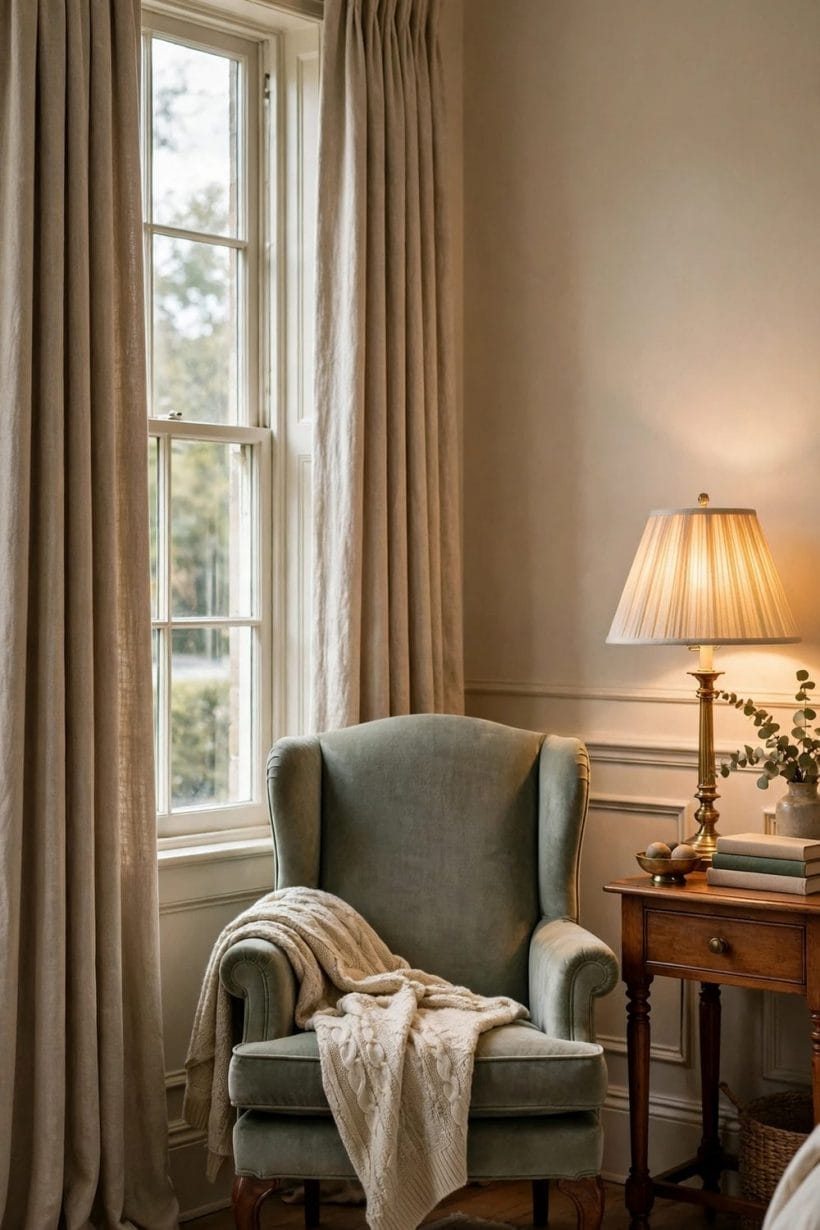
A traditional bedroom earns its restfulness partly from having somewhere to sit that is not the bed. A wing chair or a comfortable armchair beside the window, with a small side table and a lamp close at hand, gives the room a second centre, and it turns the bedroom from a place you only sleep in into a place you can unwind in. The corner need not be large: a chair, a light and a surface for a book are enough.
Light decides whether the corner gets used. A lamp that throws warm light over the chair and the book, without glaring into the eyes, makes the corner inviting in the evening, while daylight from the window makes it inviting in the morning. The lamp should sit at a height that lights the reading material rather than the whole room, so the corner feels like its own small place within the bedroom.
Keep the corner honest about its purpose. A chair buried under folded laundry is not a reading corner, and a side table covered in chargers and clutter is not a resting place. A book, a throw over the chair arm, and a clear table surface are all the dressing the corner needs, and the discipline of keeping it clear is what keeps it welcoming rather than letting it become another storage surface in disguise.
9. Let the Traditional Look Flow Through the Home
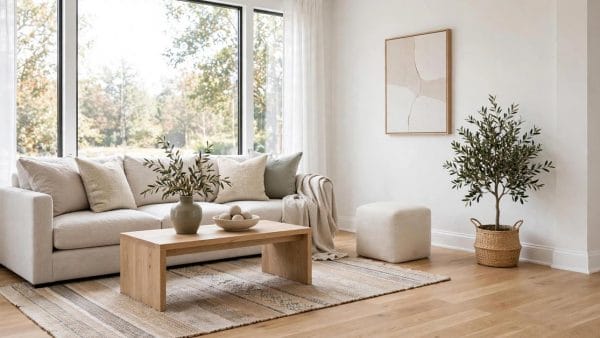
A bedroom does not live in isolation, and the traditional look feels most settled when it echoes through the rooms around it. The same warm palette, the same wood tones and the same habit of full curtains and layered light can carry from the bedroom into the living spaces, so that moving from one room to another feels like moving within one home rather than between different ideas. The echo need not be exact: a shared palette and a shared attitude to furniture are enough.
The living room is the natural partner for the bedroom’s traditional character, and it rewards the same disciplines of balance and symmetry. Our gallery of farmhouse living room ideas shows how classic shapes and warm materials carry a gathering room, while our tiny house living room ideas show the same principles working in a tighter footprint. Borrow the pieces that suit your own rooms, and leave the rest: a traditional home is a collection built over time, not a set bought in one visit.
Hallways and landings do quiet work in carrying the look between rooms. A framed picture, a runner that repeats a tone from the bedroom rug, or a small table with a lamp can make the passage between bedroom and living room feel intentional rather than leftover. These are small decisions, but they are the ones that make a home feel considered, because they show the same care in the spaces between rooms as in the rooms themselves.
10. Use Lamplight to Set the Evening Mood
Evening light is the final layer of a traditional bedroom, and it should come from lamps rather than a single ceiling light. A lamp on each nightstand, and one more in the reading corner if the room allows, lets the room glow in pools of warm light while the corners fall gently dark, and that pattern is what tells the body the day is winding down. The ceiling light has its place for cleaning and dressing, but it is not the light for winding down.
Shade choice shapes the lamplight more than bulb choice does. A fabric shade in a warm neutral softens the light and spreads it gently, while a bare or harsh shade throws glare that fights rest. Shades on a pair of nightstand lamps should be similar in size and tone even when the lamp bases differ, so the two pools of light match and the symmetry of the bed wall holds after dark as well as in daylight.
Dimming, whether by a dimmer switch or simply by choosing which lamps are lit, is the easiest evening habit a bedroom can have. Start the evening with the room fully lit, then narrow it down to the bedside lamps as bedtime approaches, and let the room itself mark the passage of the evening. A bedroom that changes its light through the evening feels like it is keeping time with you, and that gentle rhythm is a large part of what makes a traditional room restful.
Final Considerations
A traditional bedroom is not finished in a single weekend, and it should not be. The best versions of this room grow piece by piece: the bed first, then the storage, then the curtains and the bedding, with the smaller pieces finding their places as the room is lived in. Rushing to fill every corner at once is how a room ends up looking assembled rather than collected, and the traditional look depends on that collected feeling.
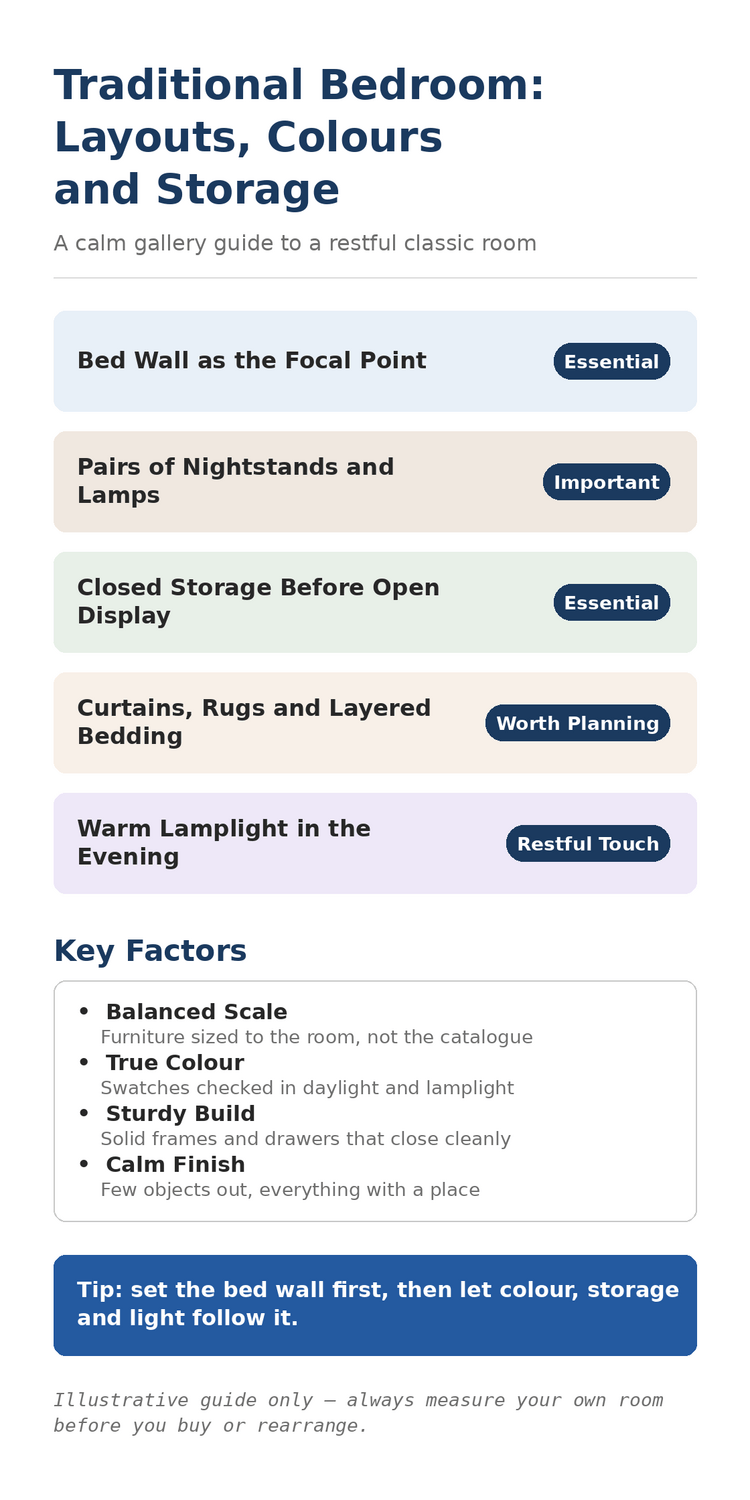
Keep the disciplines in mind as the room grows: one calm bed wall, balanced pairs, closed storage before open display, warm muted colour checked in daylight and lamplight, and lamplight rather than ceiling light in the evening. Each discipline is simple on its own, and together they are what make the room feel restful rather than merely decorated. When a new piece arrives, test it against those disciplines before it earns its place, and let the room stay quiet rather than crowded.
The same patience serves the rooms beyond the bedroom, and the living spaces reward the same unhurried approach. Our guide on how to decorate a tiny living room and our collection of tiny living room ideas both show traditional principles working at a smaller scale, and they are worth reading before the bedroom’s palette and furniture habits are carried into the rest of the home. A restful bedroom beside a restful living room is a home that rests as a whole, and that is the real goal of the traditional look: not a perfect room, but a calm house.

0 Comments