

A backyard fence is the garden’s longest piece of furniture and its hardest-working wall: it holds privacy, quiets wind, frames every planting bed and is looked at more than any view beyond it.
This survey walks the fence line whole — timber, panels, metal and masonry, privacy and planting, colour and small plots — with the modern style lane and the gate lane linked as their own, never absorbed.
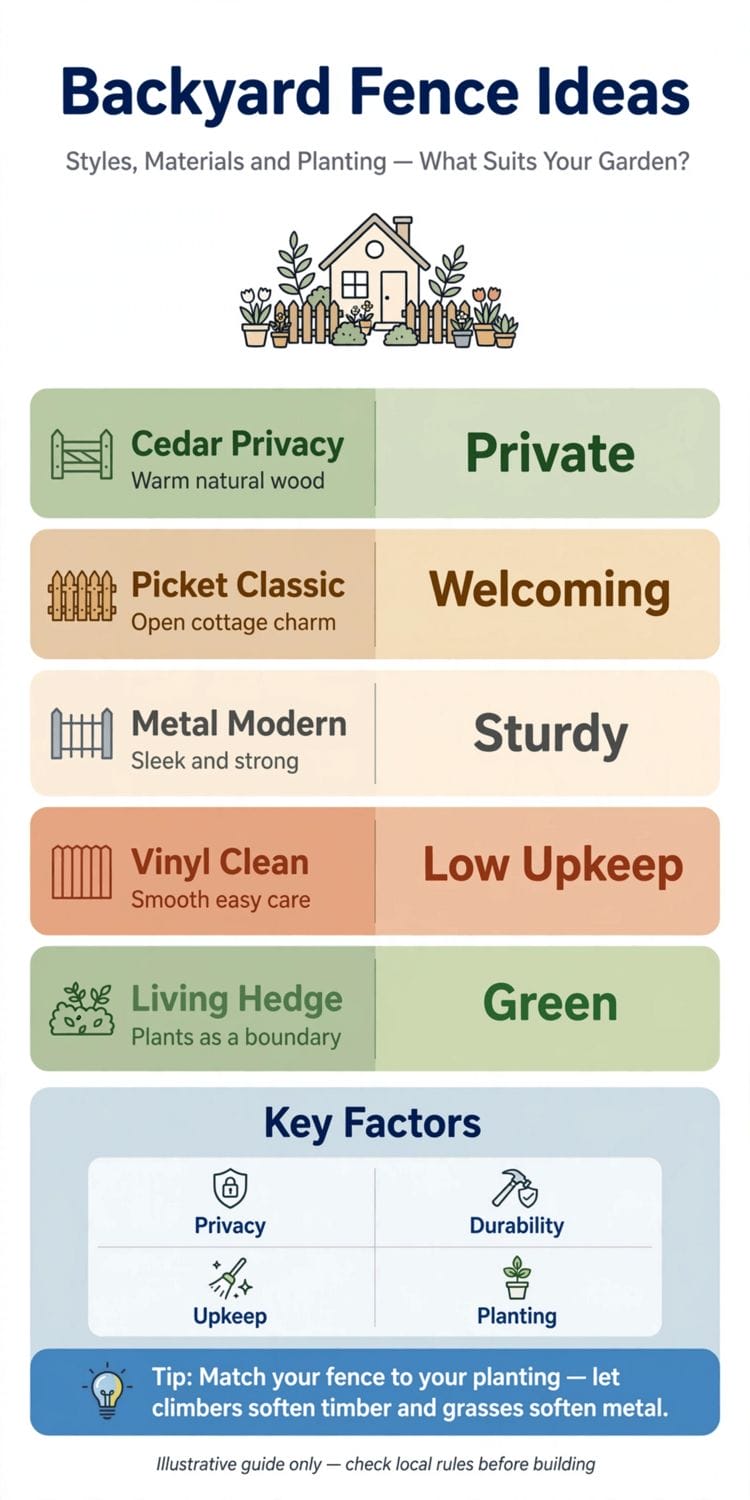
1. Backyard Fence Ideas at a Glance
A backyard fence is a boundary structure of posts, supports and infill — boards, panels, slats, wire, metal or masonry — whose attributes are its material, its height and solidity, its footing and fixings, its finish, and its relationship to the boundary it stands on. Read as design, it is the garden’s background architecture: the surface every plant is seen against and every seating area sheltered by. Boundary, height, permission and neighbour questions are stated generally throughout this survey and governed by local rules, title documents and honest conversation — never by a webpage’s assumption. Two neighbouring lanes are linked, not repeated: the styled slat-and-finish survey in modern fence ideas, and the entrances in gate ideas.
| Question | Short answer |
|---|---|
| What makes a fence feel designed rather than erected? | Rhythm and intention: posts at honest intervals, a top line that runs level or steps gracefully with the slope, one material language held along the run, and a finish chosen for the garden it backgrounds — not merely the cheapest panel on the lorry. |
| Timber, metal, composite or masonry? | Timber is warm, repairable and mortal; metal is slim, strong and long-lived; composite promises low upkeep at a premium; masonry is near-permanent and priced like building work. The materials sections below take each in turn, honestly. |
| How tall should a backyard fence be? | As tall as privacy genuinely needs and local rules allow — and no taller. Heights, boundaries and permissions are local matters, checked before posts are ordered; this survey designs within whatever the household’s own rules confirm. |
| Where does the fence end and the gate begin? | At the opening. Gates are their own craft — swing, weight, hardware and welcome — and they live in the linked gate lane. This survey designs the runs between openings, and marks where a gate will interrupt them. |
2. Timber Fences: Boards, Battens and the Honest Classic
Timber remains the backyard’s first language: warm against planting, repairable board by board, and honest about its upkeep. The wider garden survey in the home design ideas collection shows timber working everywhere; this section keeps it vertical, along the boundary.
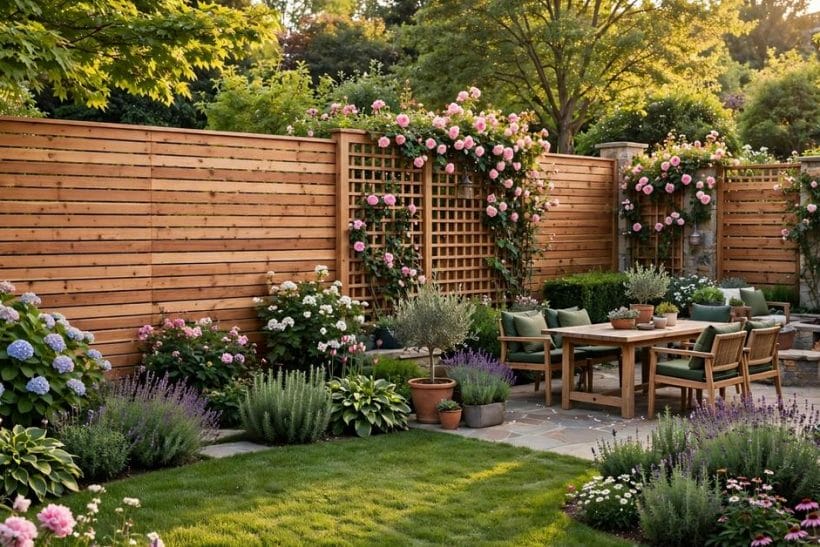
1. Close-board fencing
Vertical boards overlapped on horizontal rails are the backyard’s workhorse: private, sturdy in feel, and endlessly repairable one board at a time.
2. Board-on-board privacy
Boards fitted on both sides of the rails close every gap as the timber seasons, giving true privacy and a finished face to both gardens.
3. Horizontal board runs
Boards run horizontally lengthen a plot visually and give planting a calm, lined background.
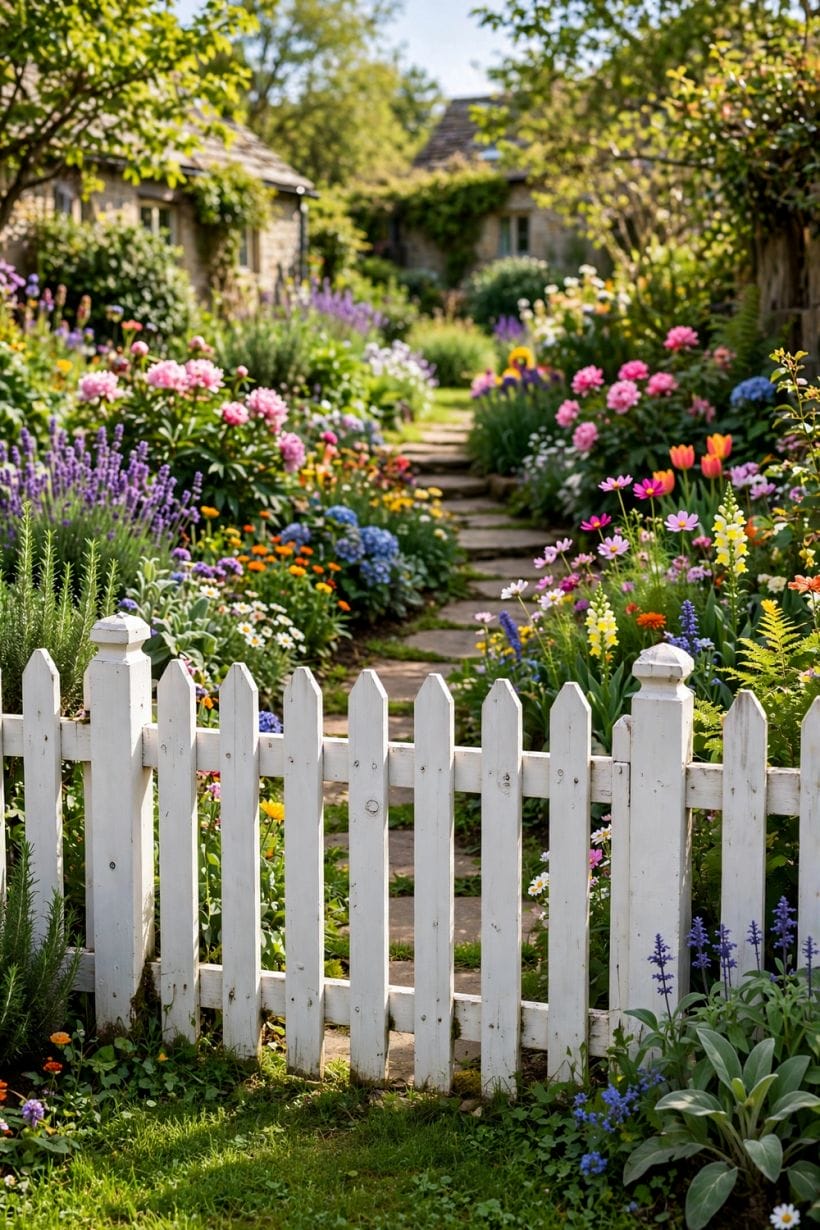
4. Picket fences in the backyard
The picket’s charm works behind the house too: a low run dividing the kitchen garden, edging a lawn or guarding a pond-side path.
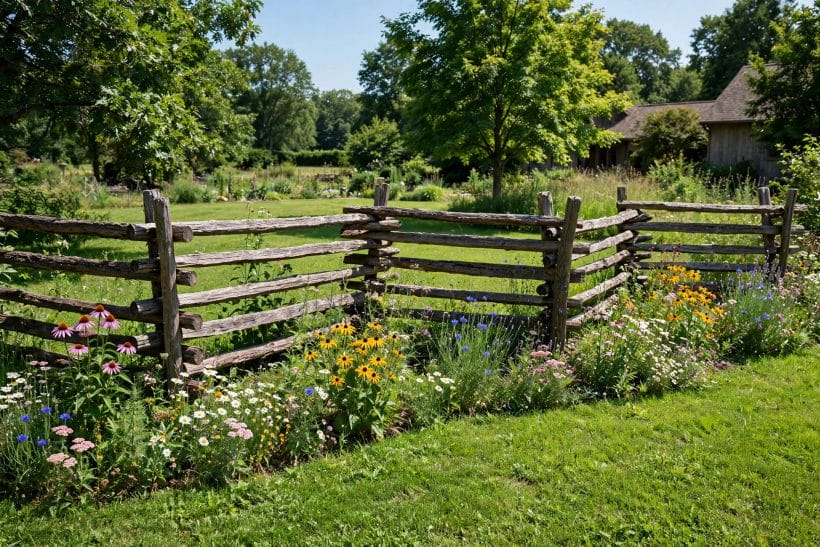
5. Split-rail and ranch fences
Where the backyard meets field, meadow or a big rural plot, split rails draw the boundary without walling the view. They mark territory for people more than pets, and their honesty suits gardens that borrow a landscape rather than hide from it.
6. Batten screens as fencing
Narrow battens with shadow gaps fence with light and air still moving through — a screen that happens to stand on a boundary.
7. Trellis-topped runs
A panel of trellis above a solid fence buys height for climbers without a taller wall of boards, keeping the boundary sociable while roses do the screening.
8. Reclaimed timber fences
Old scaffold boards, floorboards and yard timber fence with a biography: varied, warm and thrifty with the planet’s resources. Sort ruthlessly for soundness, treat fixings as new work, and the patchwork becomes the garden’s most talked-about surface.
9. The shadow-gap board fence
Boards held a finger’s width apart throw striped shadows and let the boundary breathe, at privacy’s partial expense. It is the fence for gardeners who want enclosure without a wall’s finality — and for windy sites that punish solid runs.
10. Post-and-rail with wire
Timber posts and rails carrying a discreet wire mesh fence a rural backyard honestly: stock, dogs and views all accommodated. The wire disappears against planting within a season, leaving the timber rhythm as the garden’s visible frame.
11. Featherboard on a slope
Stepped or raked, close featherboard follows sloping ground in honest increments. Stepped runs keep each bay level and formal; raked runs hug the ground’s own line.
3. Panels, Slats and Screens: The Manufactured Run
Panel fencing is the backyard’s fast lane: bays made whole, fitted between posts in a day. Quality divides brutally here — the sections below separate the panels that age into the garden from those that merely occupy it.
12. Lap panels done properly
The humble overlap panel earns respect when its frame is stout, its timber treated, and its posts true. It is the budget’s honest answer for long runs, and its reputation suffers only from the flimsy versions sold beside the good ones.
13. Woven and hit-and-miss panels
Woven panels thread boards through uprights for texture on both faces; hit-and-miss alternates boards front and back, letting wind slip through while sight cannot. Both suit exposed gardens that break solid panels’ hearts — and their owners’ patience.
14. Slatted contemporary panels
Ready-made slatted panels deliver the modern lane’s lines off the shelf: even gaps, crisp timber, instant rhythm. This survey installs them gratefully and sends their styling — stains, angles, mixed widths — to the linked modern fence lane where it belongs.
15. Lattice and diamond trellis panels
Openwork panels fence a seating corner or divide a plot where a full boundary would be gloom. They are the gardener’s panels: a structure for clematis and climbing roses that happens also to say, kindly, this side is ours.
16. Acoustic-minded fences
Mass and sealed gaps are what a fence can honestly offer against sound: dense boards, no gaps at ground or joints, and planting to scatter what gets through.
17. Metal-framed panel systems
Steel or aluminium frames carrying timber or composite boards marry the panel’s speed to a frame that will not warp. They suit long, straight, formal runs and owners who prefer their maintenance in decades rather than seasons.
18. Double-sided courtesy
Where both gardens see the fence, choose or build a run finished on both faces — board-on-board, woven or framed panels.
19. Concrete posts and gravel boards
Concrete posts and gravel boards are timber fencing’s immortal skeleton: the boards may be renewed across decades while the posts stand. Their look is municipal to some eyes; painted or planted against, they disappear — and their owners stop re-posting fences forever.
20. Panelled divisions inside the garden
Not every fence stands on a boundary: panel runs divide the backyard into rooms — vegetables from lawn, work from rest, dogs from delphiniums. Internal fencing is this survey’s recurring trick, giving one plot several gardens at a fence’s modest price.
21. The green panel alternative
Living panels — willow hurdles, pleached screens and hedge-on-frame systems — fence with the garden itself.
22. Mixing panel languages
A long boundary may change its dialect honestly: solid panels by the house for privacy, open trellis where the view is borrowed, a hedge where the plot widens.
4. Metal, Composite and Masonry: The Long-Life Materials
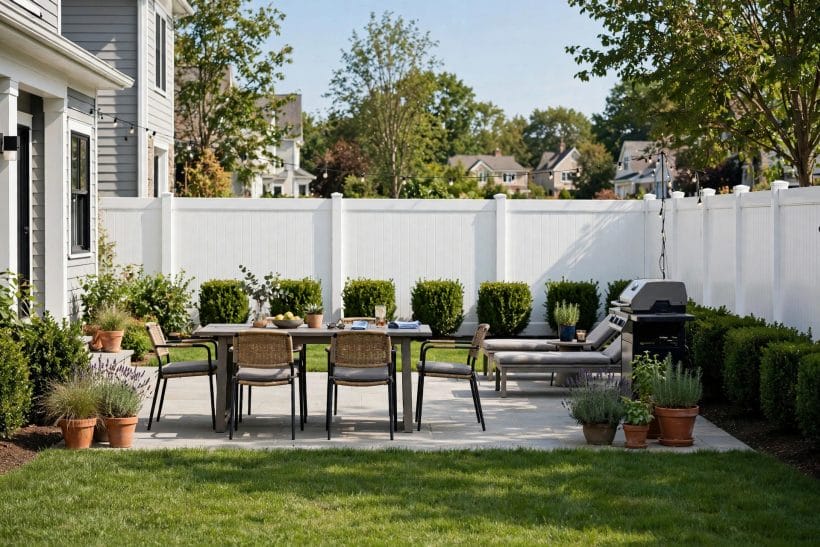
Beyond timber the materials harden and the horizons lengthen. These fences cost more at the gate and less across the decades — the arithmetic this section states generally, with every structure’s footings and fixings left to qualified installers and suppliers.
23. Steel slat and rod fences
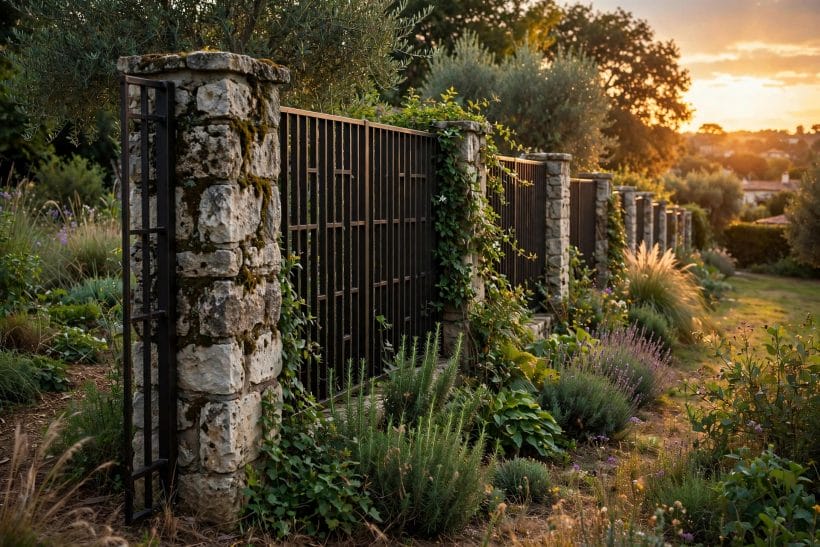
Slim steel rods or slats fence with a draftsman’s line: strong, see-through where wanted, and near-maintenance-free in the right finish. They suit modern gardens and borrowed views, and their gates and corners are a fabricator’s craft, ordered early and fitted precisely.
24. Aluminium privacy fences
Aluminium boards and slats give full privacy without timber’s appetite for care, in colours that hold for years. They read crisp and contemporary; beside soft planting their coolness warms, and on coastal plots their indifference to salt air is a genuine virtue.
25. Chain-link, civilised
Chain-link is the honest utility fence, and planting civilises it completely: a hedge grown through it, climbers over it, a timber top rail along it.
26. Wrought-iron character
Iron railings at the backyard’s garden end — around a terrace, a pool lawn or a rose garden — bring the front garden’s formality visiting.
27. Composite board fences
Composite boards promise timber’s warmth without its thirst for preservative, at a premium the estimate must justify across years of saved upkeep.
28. Rendered block and brick
A masonry backyard wall is the fence become architecture: utterly private, windproof, thermally massive for tender plants, and priced like the building work it is.
29. Gabion boundaries
Stone-filled gabion baskets fence with geology: superb mass for sound and wind, a habitat for insects and lichen, and a look that divides taste cleanly. They suit big, modern, dry gardens and ask engineering honesty about their footing and fill.
30. Bamboo and reed rolls
Rolled bamboo or reed over an existing sound fence renews a tired boundary in an afternoon and a holiday mood. It is a finish, not a structure — a few seasons’ beauty honestly bought — and behind planting its impermanence is easily forgiven.
31. Glass at the view’s edge
Where a backyard ends in a view worth keeping — water, valley, borrowed parkland — frameless glass panels guard the drop without stealing the prospect.
32. Corrugated and industrial chic
Corrugated metal panels fence a backyard with a workshop’s honesty: fast, tough and surprisingly elegant behind grasses and bold planting.
33. The mixed-material run
Stone piers with timber bays, metal frames with composite boards, brick at the house softening to hedge at the field: mixed runs let a long boundary spend permanence where it matters and thrift where it does not.
5. Privacy, Boundaries and Neighbours: The Fence as Diplomacy
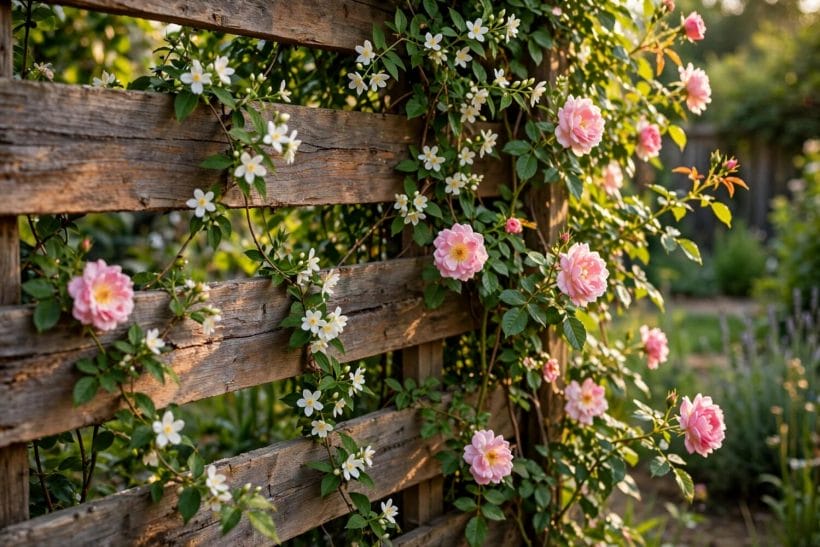
A fence is a legal object wearing a garden’s clothes. This section states the human side generally — ownership, heights and permissions are matters for title documents, local rules and conversation, and this survey’s only firm instruction is to settle them before the first post hole.
34. Knowing whose fence it is
Boundaries and their fences have owners, histories and documents; the deeds and the neighbours between them know more than any assumption.
35. Height with manners
Build as tall as real privacy needs — the overlooked seating corner, the pool’s changing side — and step down where the need relaxes.
36. Fences between friends, kept friendly
Where neighbours garden happily side by side, a lower fence with a shared trellis top can hold the friendship as well as the boundary: chats over it, climbers through it, privacy screened locally at each seating area.
37. The good-neighbour face
Whoever pays, both gardens look at a fence for decades. A finished face outward, posts hidden where the design allows, and the run kept in repair are diplomacy in timber — and they return, with interest, at every shared boundary question after.
38. Screening the overlooked corner
Most backyards are overlooked at one corner only: a tall screen, a pleached tree or a pergola’s edge there solves what a fortress everywhere over-solves.
39. Wind through, not against
Solid fences in windy plots take the weather’s whole argument and sometimes lose it; gaps, hit-and-miss boards and planted filters let the gale file through in threads. Choose the run’s solidity by the site’s exposure, not only by privacy’s appetite.
40. Children, pets and the secure run
Where the fence guards children or contains dogs, its virtues are gapless boards, self-closing gates from the linked lane, and nothing climbable innocently near it.
41. Pool-side boundaries
A backyard with a pool carries its own boundary duties, which local rules govern in detail and this survey states only in principle: the fence around water is a safety structure first and a design object second. The pool cluster — the pool ideas pillar among it — takes that subject in its own keeping.
42. Party walls of green
Where neighbours agree, a shared hedge or a double-planted border can replace a hard fence with a greener treaty: more wildlife, softer light, and a boundary both gardens water willingly. Agreement in writing, however friendly, is the gardener’s wisdom here as in law.
43. The rental and reversible fence
On rented ground, fence with panels in surface-fixed posts or freestanding screens that leave with the household. Internal divisions, movable screens and container planting give privacy without a single argument with a landlord — or a boundary document at all.
44. Trees on the line
A tree near a boundary is a fence’s friend and complication: shade and screening above, roots and movement below.
6. The Planted Fence: Climbers, Beds and the Green Boundary
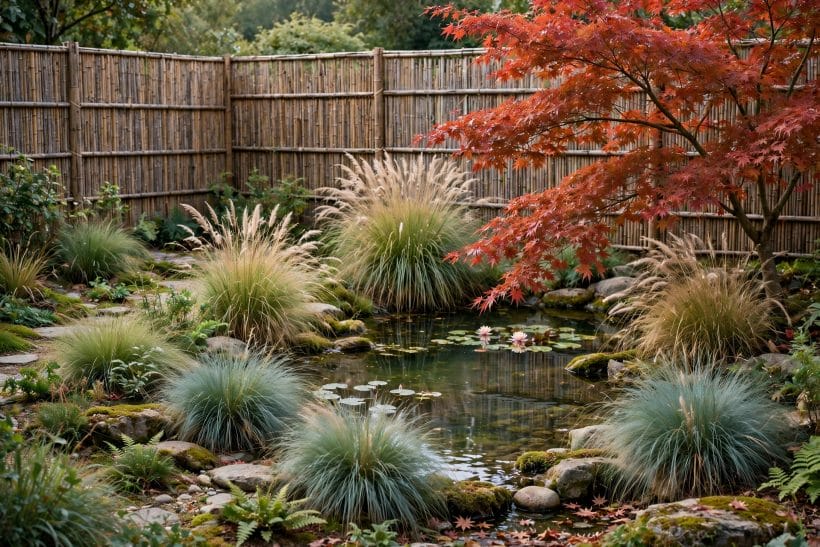
A fence unplanted is a wall waiting for its garden. This section dresses the line — climbers, beds and espalier — borrowing the planting sense of the modern landscaping survey and standing it upright.
45. Climbers on wires
Stainless wires on vine eyes give climbers their ladder without eating the fence’s face: roses, jasmine and clematis held a hand’s breadth off the boards, where air keeps both plant and timber healthy.
46. The rose fence
A fence disappeared under climbing roses is the cottage backyard’s glory and its thorniest neighbour. Give the roses their wires, their pruning access and their side of the argument — and stand the seating where the scent, not the thorns, arrives.
47. Espalier against the boards
Fruit trees trained flat against a warm fence give the boundary a job in the kitchen garden: blossom, then fruit, on a frame the fence itself provides.
48. Evergreen clothing
Ivy’s cultivated cousins, evergreen clematis and clipped wall shrubs dress a fence for winter, when the garden needs its boundaries most.
49. Training soft fruit along the run
Raspberries, tayberries and thornless blackberries train along a fence’s wires as happily as any ornamental climber, giving the boundary blossom, fruit and a reason to walk its length with a bowl.
50. The bed at the fence’s foot
A planted border along the fence turns the boundary into the garden’s backdrop and its longest bed.
51. Shade gardening at the north fence
The fence’s own shadow is a planting place, not a problem: ferns, hostas and woodlanders thrive in the cool strip other plants refuse. Design the shade bed deliberately and the boundary’s least sunny metre becomes its lushest.
52. Herbs by the sunny run
A sun-baked fence is a Mediterranean border waiting: lavender, rosemary and thyme at its foot perfume the path and feed the kitchen. The fence’s reflected warmth ripens what the open bed cannot — a microclimate the gardener gets free with the boundary.
53. Wildlife corridors
A fence that meets the ground in a solid line stops the garden’s small traffic; a small gap at a quiet corner — the hedgehog highway of modern gardening — reconnects the plot to its neighbourhood.
54. Seasonal screens of annual climbers
Sweet peas, runner beans and morning glory give a new fence instant summer clothing while its permanent climbers grow up. Annuals are the fence’s scaffolding of flowers — cheap, quick and honestly temporary, replanted with the spring’s optimism each year.
55. Containers against the fence
Where digging is impossible — patios, courtyards, rented plots — big containers along the fence carry the green upward: small trees, grasses and climbers on obelisks. The fence stays the backdrop; the planting becomes furniture, movable with the household’s life.
7. Colour, Finish and Light: The Fence After Dark
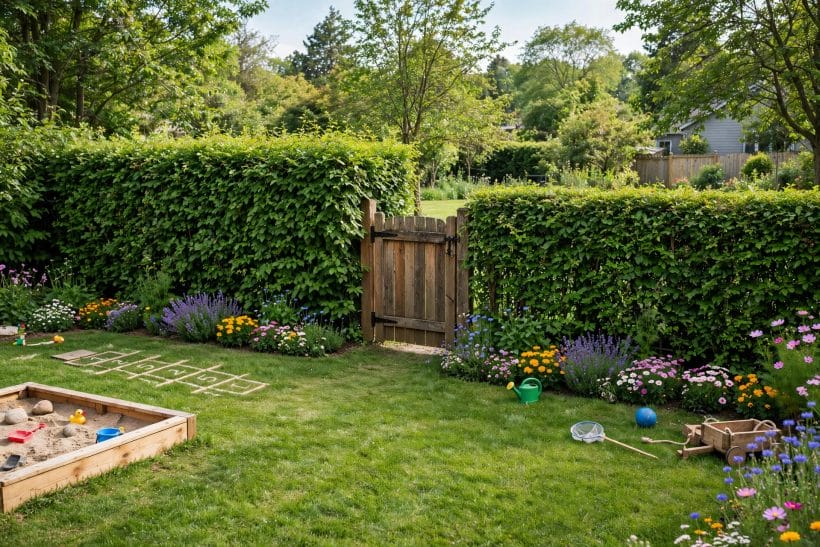
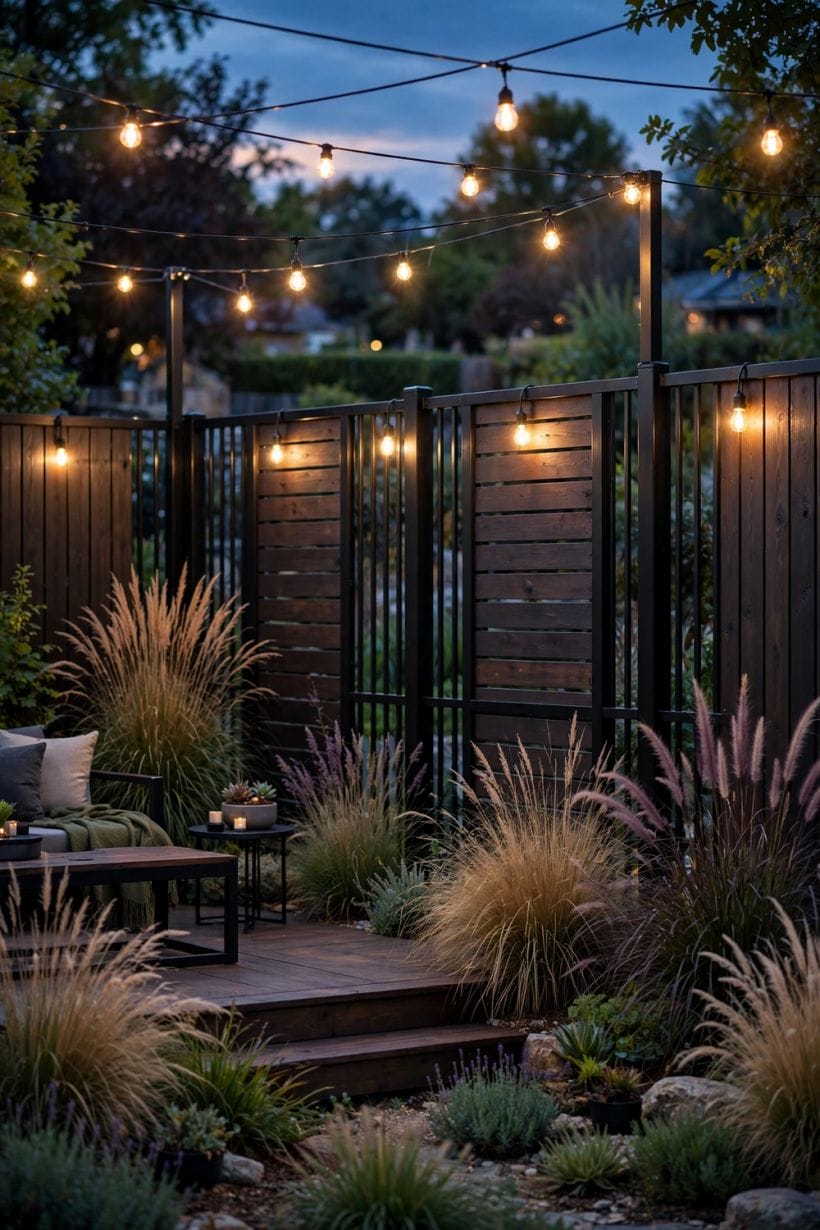
A fence is seen in more lights than any planting bed. Finish decides its daytime character; lighting decides whether the garden’s longest wall glows or glowers after sunset — with all electrical work, as everywhere here, for qualified electricians under local rules.
56. Stained natural
A clear or honey stain keeps timber the garden’s warm neutral, silvering slowly where the sun argues. It is the finish that never fights the planting, and its upkeep — a recoat on the seasons’ rhythm — is the classic fence’s accepted tax.
57. Painted black and ink
A near-black fence makes planting luminous: greens double, flowers flare, and the boundary recedes into theatre darkness. It is the modern garden’s boldest cheap trick, and the linked modern lane explores its styling at the length it deserves.
58. Soft whites and garden greys
Pale-painted fences brighten small, shaded backyards and borrow the cottage garden’s manners. They show weather honestly and ask washing and recoating for their brightness — a fair contract in a plot that needs light more than it fears chores.
59. Colour as zoning
Paint the vegetable garden’s fence sage, the seating enclosure ink, the work corner plain stain: colour turns one boundary into several rooms’ walls. Held within one palette family, the variety reads as design; outside it, as indecision with a brush.
60. The silvered-weathering choice
Leave sound timber untreated and the sun will paint it silver-grey for free, evenly and with great dignity. The contract is patience and good detailing — no finish to fail, nothing to recoat — and it suits rural and coastal gardens supremely.
61. Preservative honesty
Whatever the show finish, the timber’s treatment against rot and insects is its real clothing, chosen by species, supplier’s specification and the fence’s exposure. This survey states the principle generally: finishes decorate, treatments preserve, and confusing the two shortens fences.
62. Uplighting the run
Low fittings washing up the fence’s face turn the boundary into the evening garden’s backdrop of light and leaf-shadow. Positions are the designer’s drawing; the wiring and fittings are a qualified electrician’s work — the division of labour this survey never blurs.
63. Finishes that meet in the middle
Where two fence languages meet along one boundary — painted by the house, silvered at the field — let a pier, a post pair or a planted shrub mark the change as a designed joint.
64. Gate posts as punctuation
Even within this survey’s runs, the places gates will stand deserve posts with presence — the sentence’s punctuation planned before the gate lane writes the words.
65. The view from the house
Judge every finish from the kitchen window in winter rain, not from the garden in June: the fence is the house’s daily picture for more hours than any other.
8. Small Backyards, Slopes and Living With the Fence
The survey closes small and practical: fences for tight plots and tiny gardens, and the keeping that lets any fence be forgotten for years at a time — the true luxury a boundary can offer.
66. The courtyard enclosure
In a small paved courtyard the fence is all four walls of the room: panel it warmly, plant it vertically, light it low.
67. Tiny-house plots
A tiny house’s small plot asks its fence to work as privacy, windbreak, wood store wall and garden in one run — the plots in the tiny house landscaping ideas survey show the scale. Keep the run light in structure, green in dress and honest in height.
68. Stepped fences on slopes
Step the bays down a slope in level increments, like a staircase lying politely, and the boundary keeps its composure. Each step’s height change is a drawing decision; the alternative rake suits informal runs, and mixing the two on one line suits nothing.
69. The borrowed-view balance
Where beyond the fence lies a view worth borrowing — a church spire, a neighbour’s great tree, open fields — fence lower and let the plot feel twice its size.
70. Sound-softening planting
Against a noisy boundary, plant the fence’s foot deep and evergreen: layered shrubs scatter and absorb what the boards reflect. It softens rather than silences, as the acoustic section promised — and a garden that promises honestly can be believed everywhere else.
71. Repair as design
Choose constructions the household can repair: replaceable boards, accessible fixings, a spare length of stain in the shed with its name on the tin. A fence designed for its own maintenance is the one still handsome in its second decade.
72. Borrowed fences and shared repairs
Where a boundary fence is shared or a neighbour’s, its keeping is a shared pleasure: an offer to treat both faces, a word before work begins, costs conversation held early and kindly.
73. Insurance against the storm season
Before the windy season, the fence walk matters most: a post firmed, a loose board screwed, a climber tied back from its sail of leaves.
74. The seasonal round
Walk the fence twice a year with eyes and a screwdriver: posts firm, boards sound, climbers tied, the foot clear of soil’s slow climb.
75. Keeping the lanes apart
End with the map: this survey owns the backyard run whole — materials, privacy, planting and keeping. The styled modern lines live in their linked lane, the gates in theirs, and poolside safety in the pool cluster’s.
9. Checks and Mistakes: Before the First Purchase or the First Stone
Check the boundary before the boards: whose line it is, where exactly it runs, and what local rules say about height and placement are documents-and-conversation work, done before money moves. This survey states those matters generally because they are specifically local — and a fence built one conversation too late is the most expensive fence in any street.
Check the ground with the same honesty: posts carry the fence through every storm, and their footings, the soil’s nature and the slope’s demands are an installer’s or experienced builder’s assessment. A beautiful run on shallow posts is a kite waiting for weather.
Mistakes repeat in their familiar order: the flimsy panel bought by price alone; the fortress built where a screen would do; the neighbour consulted after the posts; preservative confused with paint; and the modern and gate lanes’ subjects copied into a general run until none of them is done properly. The sections above exist to retire each mistake in advance.
Safety runs through the fence like a rail: secure runs for children and pets, honest structure on slopes and in wind, pool boundaries governed by their local rules, and every electrical fitting for the fence’s lighting placed by qualified hands. Design freely inside those lines, as this survey has — they are what let the freedom last.
10. Costs and Pulling It Together
Costs stay qualitative in this survey by policy: a fence’s price is its length and height, its material and construction, its posts and footings, its finish, and the labour of a true line on real ground — all varying by plot and region faster than any page can honestly chase. What a household can compare is shape: run by run, material by material, like for like, with the upkeep across the years counted beside the price on the day.
Pull the boundary together as one drawing: the classic timber where warmth matters, panels where speed serves, the long-life materials where the decades justify them, privacy spent exactly where sightlines demand, and planting over all of it until the fence disappears into the garden it frames. That disappearance — a boundary become a background — is the backyard fence’s final idea, and its best one.
Final Considerations
A good backyard fence is noticed twice: once when it is built, with admiration, and then never again, because the garden in front of it has taken over the view. Everything in this survey — materials, diplomacy, planting, light — is in service of that second, silent compliment.
Walk your own boundary with this survey in mind, choose the run each stretch honestly needs, and build it once and well. The garden will do the rest, season by season, against the best background you could give it — and the wider home design ideas collection holds the rooms, inside and out, that such gardens serve.


0 Comments