

Every interior paint quote looks simple — one room, one colour, one total — until a second quote arrives at a different total for what sounds like the same job, and the household has no way of knowing which one is honest.
This guide is the way of knowing: the interior paint estimate as a worked method — every line named, every driver explained, no figure invented — joining the cost cluster under the flooring installation cost overview’s like-for-like discipline.
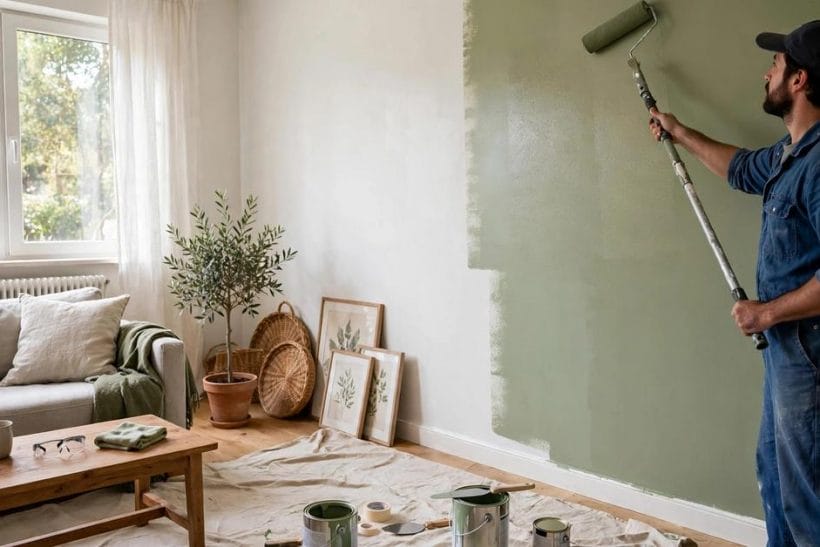
1. Interior Paint Cost at a Glance
An interior paint estimate is not a price for painting; it is a small stack of separate lines that a quote assembles — the paint itself, bought by the tin against measured wall and ceiling areas and a chosen number of coats; the preparation, from washing and filling to sanding, priming and masking; the labour, by application method and by the room’s difficulty; and the finishing — woodwork, doors, radiators and the clearing and protection around everything. A calculator, in the honest sense used here, is the method of measuring your own rooms and pricing each line separately so that any decorator’s total can be checked line by line. This guide owns that method for interior paint only: its cluster siblings price other trades’ stacks — floors in two surveys, bathrooms and basements in theirs — and cross-link below without repeating one another.
| Question | Short answer |
|---|---|
| Why is there no calculator with numbers on this page? | Because an honest figure belongs to your measured rooms, your chosen paint and a named decorator’s written quote — not to a generic page. What this guide gives is the estimate as a method: the lines, the measuring and the questions, so the numbers you are quoted can be tested instead of merely accepted. |
| What is usually the biggest line in a paint bill? | Labour, in most professionally painted rooms — which is why preparation and method move the total more than the paint’s shelf position does. The paint itself is the visible line; the days are the heavy one, and this guide prices the stack in that honest order. |
| Does dearer paint actually save money? | Often, through coverage: a paint that covers soundly in fewer coats buys back its premium in labour and time, while a cheap paint that needs another coat charges for it twice. The comparison belongs tin against tin on your own walls, tested in the paint section below. |
| Can I paint it myself and save the labour line? | Many households can, room by room, and this guide’s method serves them exactly as it serves a quote-checker — the preparation and measuring disciplines are identical. The DIY line is drawn honestly in the labour section: high stairwells, failing surfaces and time-poor households belong to professionals. |
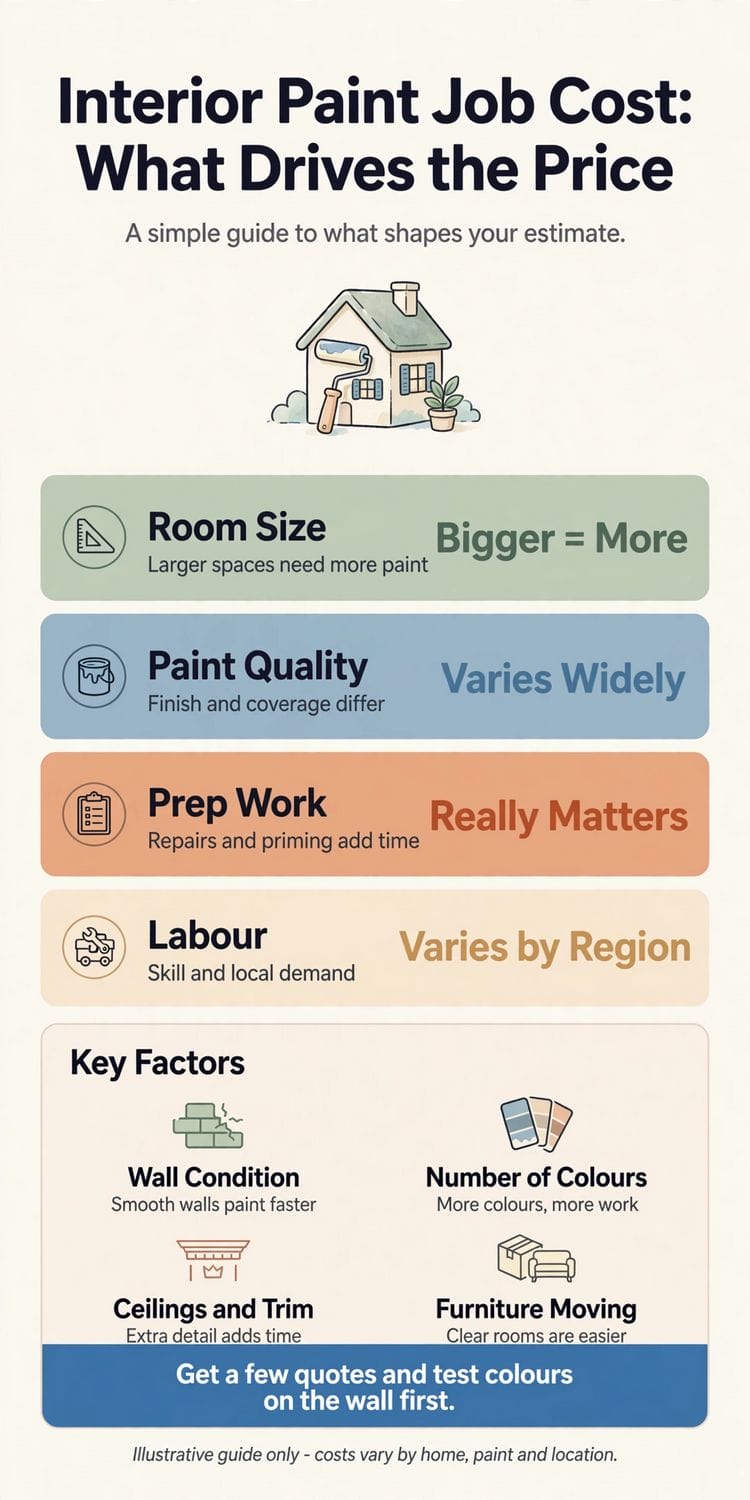
2. The Lines of Every Interior Paint Bill
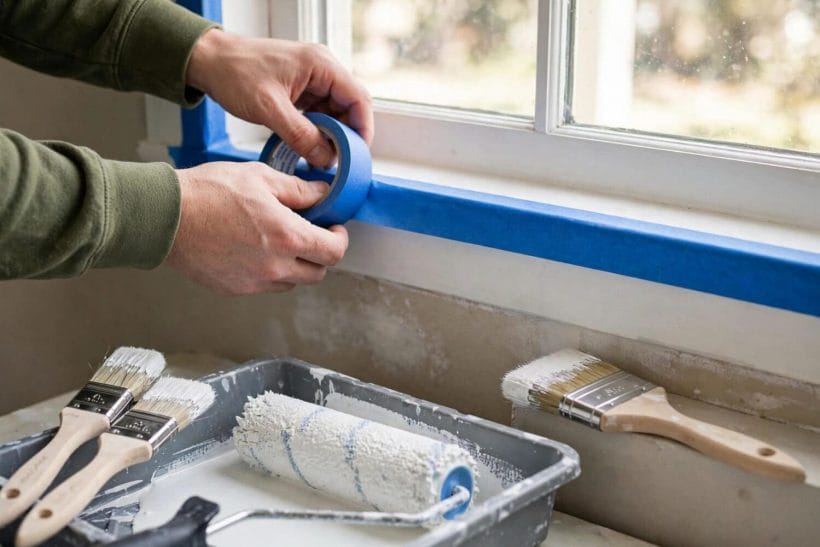
Read any paint quote as a stack of lines and it stops being weather and becomes arithmetic. The paint line buys emulsion, primers, undercoats and woodwork finishes by the tin against your measured areas. The preparation line buys the washing, filling, sanding and making-good that decide whether the colour looks painted or poured. The labour line buys the decorator’s days, method and care. The finishing line buys doors, skirting, radiators and the hundred small edges where painting becomes decorating.
A quote that arrives as one round total hides which line is fat and which is thin, and hides it from comparison with the next quote. The discipline of this whole guide — shared with its cost cluster, from the bathroom remodel cost survey’s scope lines to the flooring guides’ stacks — is to price each line separately, in writing, before comparing any two totals. Decorators who work this way welcome it; it is how they quote each other.
The line nobody quotes until it shows
Preparation is the bill’s quiet truth: a wall’s sins — cracks, stains, flaking old paint, glossy surfaces that refuse new coats — are all paid for before colour opens, or paid for afterwards in a finish that fails early. A contingency held for preparation is not pessimism; it is the estimate’s most grown-up feature.
3. The Paint Itself: Finishes, Grades and Coverage
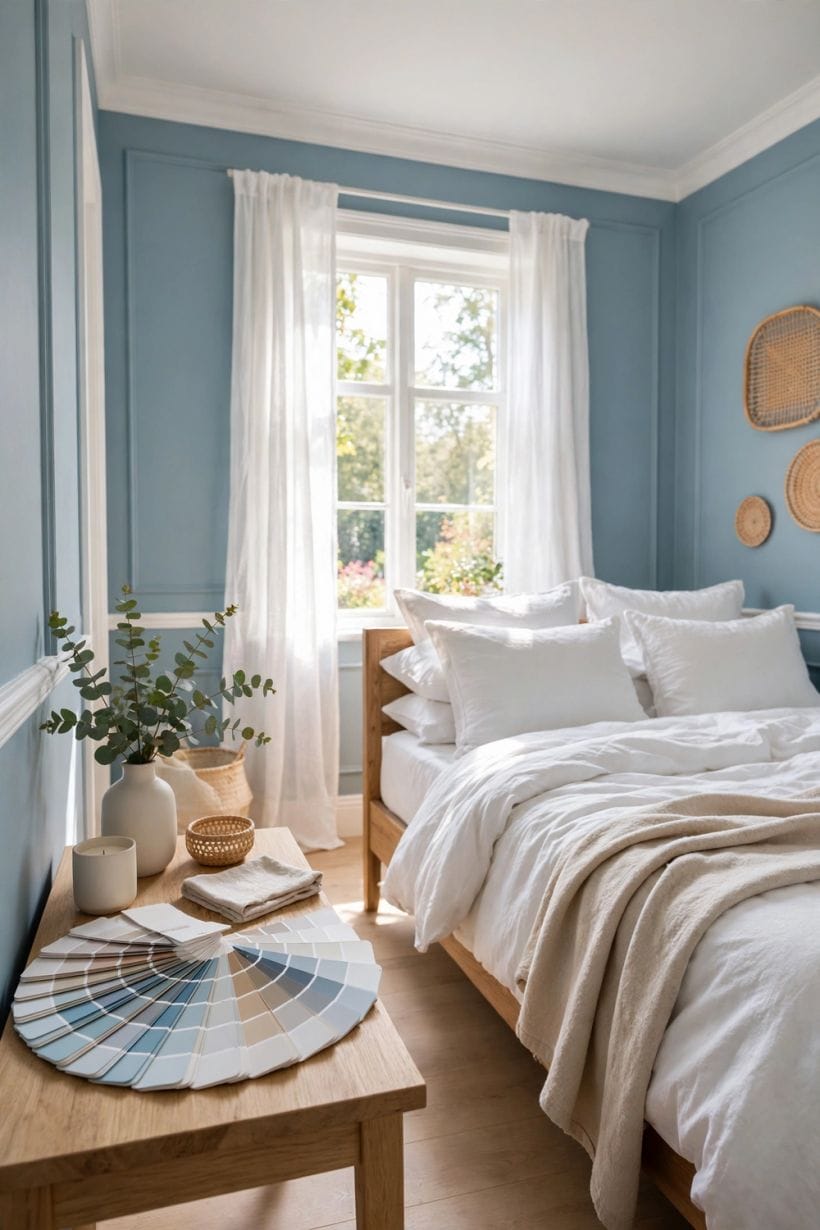
Paint prices itself by chemistry as much as by colour. Matt emulsions forgive walls and drink light; soft-sheen and satin finishes shrug off wiping and show every lump beneath them; eggshell and satinwoods dress the woodwork; specialist paints serve kitchens, bathrooms and problem surfaces at their own premiums. Each finish is a line with a behaviour, and the estimate that names finishes room by room is already more honest than the one that says merely paint.
Within a finish, grades divide by coverage and constitution: paints rich in pigment and binder cover in fewer coats and keep their colour, while thin paints ask another coat — and another coat is labour, time and a second tin, which is why the cheapest tin so often writes the dearest bill. Makers state coverage on the tin as guidance for sound surfaces; your own walls, primed or thirsty, will argue their own figure, and a test area settles the argument before the order is placed.
Colour’s own arithmetic
Deep and vivid colours cost the estimate in coats: a strong red or a dark ink over pale walls may need an extra pass and a tinted primer beneath it, while a gentle neutral settles quickly. Colour changes the bill legitimately, and a quote that asks which colours, room by room, is a quote that has painted before — the question itself is a quality mark.
Ceilings, walls and woodwork are three paints, not one: ceiling paint wants flat forgiveness overhead, wall emulsion wants washable calm at eye level, and trim paint wants a harder skin for knocks. An estimate that splits them — as the room surveys in the living room ideas pillar imply with their layered finishes — can be tested tin by tin; one that lumps them cannot be tested at all.
4. Preparation: The Work the Finish Stands On
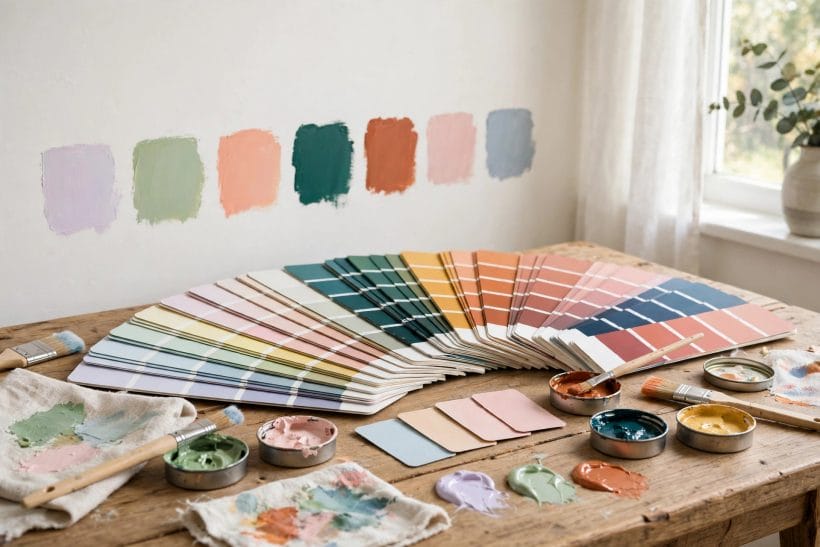
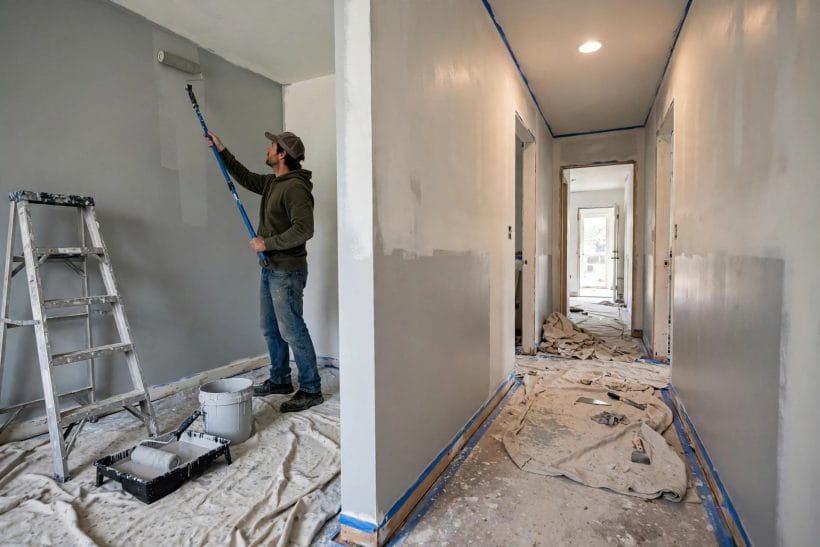
Preparation begins with emptying and protecting: furniture moved or sheeted, floors covered, sockets and fittings masked, and the room made safe to work in. Then the surfaces confess — washing lifts grease and smoke’s memory, scraping removes what has already failed, filling and sanding level the wall’s biography, and priming seals stains, equalises thirst and gives the colour an honest ground. Each act is time, and time is the labour line, which is why preparation and price rise together in every truthful quote.
When the wall needs more than a decorator
Cracks that move, damp that returns, and paint failing from a cause beneath the surface are not preparation — they are repairs, belonging to the trades that own their causes. A decorator who names them, rather than painting over them and invoicing the optimism, is protecting the household’s money twice: once now, and once when the finish would have failed.
Old paint deserves a respectful question: sound, well-kept coats are a foundation; flaking, chalking or endlessly layered coats are a removal job, priced as its own line with its own mess and disposal. Lead-era paint in older houses is a specialist subject governed by local rules and professional guidance — this guide states the caution generally, as it states every safety matter, and sends the household to qualified advice before any sanding begins.
5. Labour and Method: Brushes, Rollers, Sprayers and Days
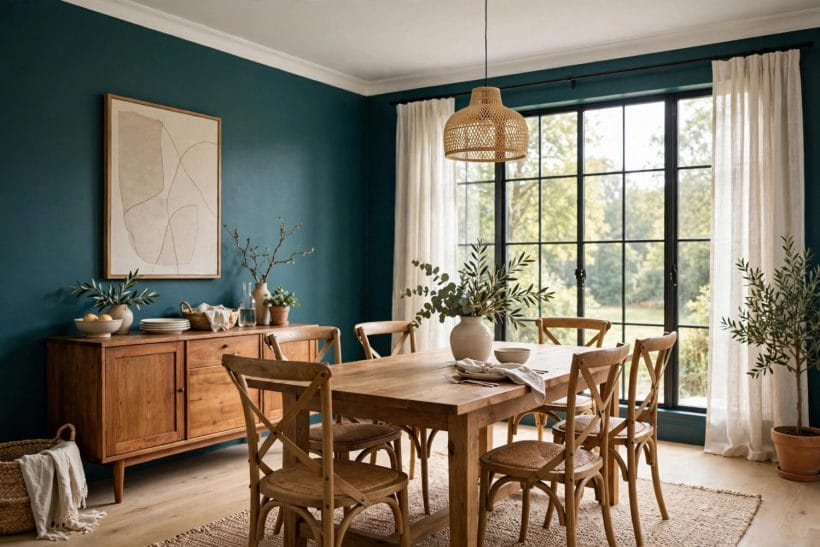
The labour line is priced by method and difficulty together. Rollers carry walls at a craftsman’s pace with cutting-in by brush at every edge; brushes alone serve woodwork and small rooms; sprayers fly through empty new rooms and demand masking discipline worthy of a wrapped gift. High ceilings, stairwells, intricate cornicing and rooms that cannot be emptied all multiply care, and care is days, and days are the bill.
Coats are the labour line’s multiplier: the standard rhythm of primer where needed, then finish coats to an even, obliterating film, with drying time scheduled honestly between them. A quote that promises the room in suspiciously few days has usually spent the saving in coats it does not intend to apply — the estimate method in the next section exists to catch exactly that arithmetic.
Where the DIY line honestly falls
A careful owner with time, decent tools and forgiving rooms can paint very well, and this guide serves them tin for tin. Stairwells at height, ceilings that defeat the neck, woodwork that must look sprayed, and any surface whose failure has a cause beneath it belong to professionals — not by snobbery but by consequence, because a bad paint job’s rescue begins with removing the bad paint job. The honest DIY saving is in the straightforward rooms painted patiently, never in skipped preparation.
Day rates and room rates both circulate in the trade, and neither is honest or dishonest by itself: what matters is that the estimate translates them into the stack — these rooms, these coats, these finishes, this preparation — so the household compares scopes, not slogans. The flooring cluster’s rule travels unchanged: the hardwood flooring cost guide says it of fitters, and it is equally true of decorators.
6. The Estimate Method: Measuring and Counting Your Own Rooms
Here is the estimate, and it fits on an envelope. For each room, measure the walls as rectangles: length times height for each wall, added together, with wide openings — windows, doors, fitted wardrobes — honestly deducted where no paint will go. Measure the ceiling as its own rectangle. Count the woodwork as pieces and runs: doors by the door, skirting by the wall’s length, windows and radiators by the item. The envelope now holds the room’s paintable truth in three columns: walls, ceiling, trim.
Price the stack against those measures. Paint: the areas divided by the coverage your chosen tin declares on a sound surface, rounded up to whole tins, with a further coat counted wherever colour change or surface thirst demands it — and the test area’s verdict respected over the tin’s optimism. Preparation: listed act by act, room by room. Labour: the days those acts and coats honestly require, by the method chosen. Finishing: counted, not measured — doors, frames and radiators by the piece. A contingency rides on preparation, where walls keep their surprises.
Worked in words: one imaginary room
Picture a plain rectangular sitting room with two windows and one door. Its walls are their lengths times the ceiling height, less the window and door openings; its ceiling is its length times its width; its trim is the door, its frame, the window frames and the skirting’s run. Its paint is those areas at the tin’s coverage for the chosen coats; its preparation is a wash, a filled crack and a sanded rail mark; its labour is the days that work honestly takes. No figure in that paragraph is a price — it is a shape, and any real quote for a real room should have exactly that shape, line for line, before its numbers are even read.
The method travels across the cluster: it tests a second decorator against the first without re-measuring, exposes the quote whose paint line is honest but whose preparation has vanished, and prices the hall from the sitting room’s envelope. The same discipline prices other rooms’ whole renovations — the basement remodel cost guide is this guide’s own method wearing a bigger project’s clothes.
7. What Pushes the Total Up — and What Brings It Down
Up, reliably: preparation on tired walls; extra coats for deep colours and thirsty surfaces; high and vaulted ceilings; stairwells and their staging; intricate woodwork and many doors; rooms that stay furnished and occupied; premium finishes in hard-working rooms; and haste, which pays for itself in every trade’s diary. None of these is foolish — several are the finish itself — but each should arrive in the bill as a named line the household chose, not a surprise it funded.
Down, honestly: sound walls that need washing rather than rebuilding; pale-over-pale colour changes; rooms emptied by the household in advance, where the decorator agrees it helps; fewer, larger areas painted in one visit rather than dribs across a season; and mid-grade paints whose coverage, tested on your own wall, genuinely matches the premium tin’s. Down never comes from skipping primer, preparation or a needed coat — those savings are loans the wall collects, with interest, in flakes.
The false economies, named
The thin tin that needed a third coat; the unprimed stain that bloomed through the finish; the woodwork glossed without sanding, shining for a month and shelling for a year; the decorator chosen as the only quote never itemised. Each reads as thrift in the planning week and as the bill’s largest line in the year after. The estimate exists to catch them while they are still sentences.
8. Quotes Like for Like: Comparing Decorators and Choosing Well
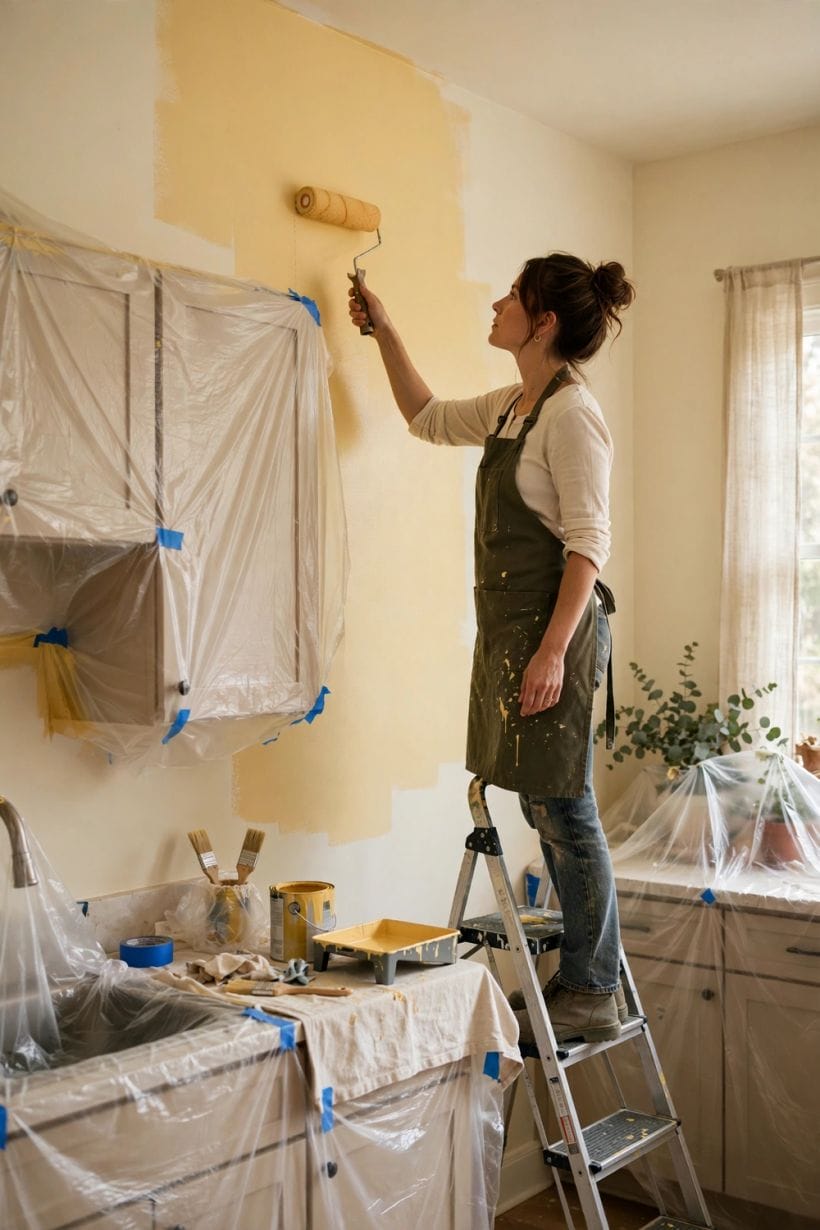
Send every decorator the same envelope: the measured areas, the chosen finishes and colours or their specifications, the coats expected, the preparation list, the trim count. Quotes then return as stacks of the same lines, and comparison becomes reading rather than divination. Where a line is missing, ask for it; where a line is swollen, ask what it carries. The decorator who answers plainly, in writing, with drying times and preparation named, is telling you how the work will be run.
Beyond the lines, judge the evidence a household can check: references from rooms painted seasons ago, not days; a willingness to test a colour area before committing the room; and paperwork that states what happens when the wall confesses something worse mid-job. The cheapest total is occasionally the right choice; the unexplained total never is.
The questions that finish the estimate
What does the paint line assume about my measured areas? How many coats, over what primer, in which finish? What preparation is included, and what will you do if the wall is worse than it looks? Which rooms stay usable during the work, and what is not in this quote that another trade will bill me for? A household that can ask those five, envelope in hand, no longer needs a website’s calculator — which is, quietly, the point of this one.
9. Rooms and Surfaces: Where Estimates Change Their Character
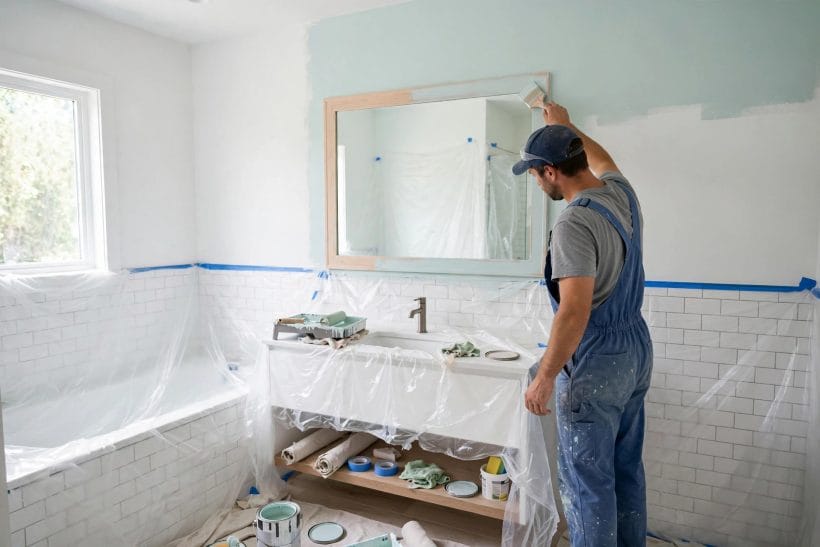
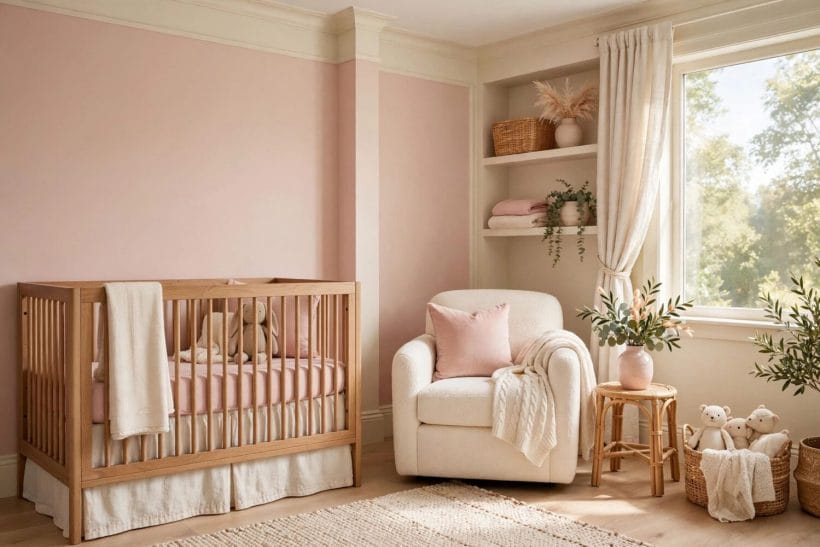
Kitchens and bathrooms buy specialist behaviour: grease-resistant preparation, moisture-tolerant finishes and ventilation respected between coats, all priced as their own care. Halls and stairs buy access — height, staging and the protection of everything the work passes. Bedrooms buy gentleness: low-odour paints and a schedule that returns the room to sleep quickly. Each room’s character belongs in the estimate as a named allowance, not discovered as an apology.
Woodwork is the estimate’s detail line and its most underestimated: doors carry faces, edges, frames and furniture; radiators ask their own preparation and heat-tolerant finishes; fitted joinery multiplies edges beyond any wall’s simplicity. Count them piece by piece, as the method section directs, and the trim line stops ambushing totals.
One room or the whole house?
Painting room by room across a year spreads cost and disruption, and pays for it in repeated setting-up, minimum visits and colours bought in small tins. Painting the house in one commission reverses the bargain. Neither is wrong; the estimate should show both shapes honestly, and the household chooses with the stack in view — the cluster’s whole philosophy, from this guide to the flooring installation cost overview above it.
10. Costs and Pulling It Together
Pull the total together the way the estimate built it: paint in whole tins against measured areas, at the coats the colour and surface honestly need; preparation itemised act by act with its contingency intact; labour by method and difficulty, with drying time scheduled rather than wished; finishing counted door by door and frame by frame. A paint total assembled that way can be defended to a partner, a bank manager or a sceptical decorator, line by line — and it can be compared, which is where its real power lives.
Costs stay qualitative throughout this guide by deliberate policy: paint and labour prices move with brands, regions and seasons faster than any page can honestly chase, and a figure printed here would be a rumour by the time it was read. What does not move is the shape of the bill and the method of testing it. Take the envelope to the decorators, fill its lines with their real numbers, and the estimate has done its work.
Final Considerations
Interior paint is bought twice: as tins, and as the days of preparation and care those tins stand on. The estimate’s job is only to make both purchases honest, so the finished rooms can be enjoyed without an asterisk — colour on the wall, arithmetic in the drawer, no surprises in either.
Measure carefully, price the lines separately, test the colour on the wall itself, and choose the decorator whose quote reads like this guide — itemised, preparation-first and calm. Then put the envelope away and enjoy the rooms, which was the point of counting them. More home projects are planned from the same first principles across the home design ideas collection.



0 Comments