

Black furniture does not darken a bedroom. Badly placed black furniture does — the colour itself, given light and contrast, is the calmest decision in the room.
Seventy-five black bedrooms follow: the furniture first, then its walls, layouts, textiles, storage and light — the black furniture lane only, with the white and grey lanes linked as contrasts, not absorbed.

1. Bedrooms with Black Furniture at a Glance
The central entity is the bedroom furnished in black: a sleeping room whose bed, wardrobes and dressing pieces are finished black — matte, stained, gloss, metal or upholstered — while walls, textiles and light are arranged to give those pieces contrast and air. Its attributes are the anchor bed, the tall storage wall, the wall colour it stands against, the soft textiles that mediate its contrast, and the layered light and honest upkeep the finish demands. This post owns the black-furniture lane of the bedroom field: the general survey is the bedroom ideas pillar’s, and the white and grey colour lanes are linked as their own posts where they belong. All fitting, fixing and electrical points are stated generally, as professional work under local rules.
| Question | Short answer |
|---|---|
| What carries the black in these rooms? | The furniture — bed, wardrobes, dressing pieces — while walls and textiles stay lighter to give it contrast. |
| Do the walls have to be dark too? | Rarely. Pale walls or a single dark accent wall behind the bed serve black furniture better than an all-dark room. |
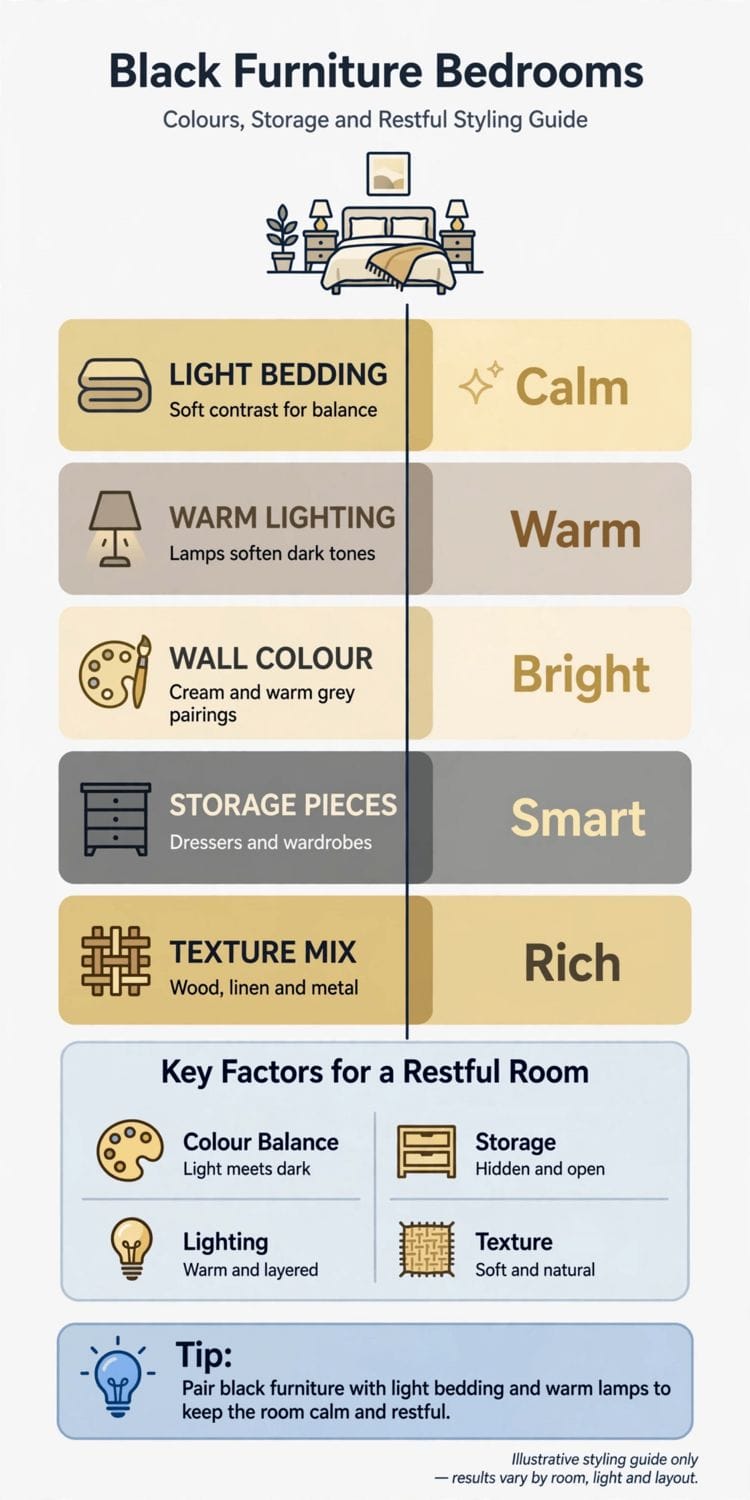
| What softens the scheme? | Textiles: white or natural-linen bedding, a pale rug, sheers at the window and one warm accent colour, calmly repeated. |
| What is black furniture’s honest cost? | Upkeep: it shows dust sooner than pale finishes, and repays a weekly soft-cloth pass and layered warm lamplight. |
2. The Furniture Itself: Beds, Wardrobes and Dressing Pieces

Everything in this survey hangs on the furniture: black is carried by the bed, the wardrobe and the dressing pieces, not by painting a room dark and hoping. The wider bedroom field belongs to the bedroom ideas pillar; this section stays on the pieces themselves — their frames, finishes and proportions.
1. The black bed frame as the room’s anchor
A black bed frame — timber, metal or upholstered — is the natural anchor: the largest piece, seen first, and the one every other choice answers to.
2. Matte black timber for a soft, modern weight
Matte-painted timber absorbs light instead of reflecting it, so a big black bed or wardrobe reads as a calm mass rather than a shine.
3. Stained black wood that keeps its grain
A black stain, rather than an opaque paint, lets the grain show through the darkness — the piece reads as wood first and black second.
4. Black metal frames with a light, drawn line
A black metal bed draws its shape in lines rather than mass, so it brings the colour without the bulk.
5. The upholstered black headboard
A black upholstered headboard brings the colour in a soft form: fabric drinks light, cushions the reading hour, and gives pale bedding a deep backdrop to sit against.
6. Wardrobes in black: the tall dark wall
A run of black wardrobes is a wall of furniture, and it should be composed like one: handles in a contrasting metal, a break of mirror or open shelving in the run, and the cornice line kept clean so the mass reads as architecture, not storage.
7. The black dressing table and stool
A black dressing table makes a small ceremony of its corner: a dark surface that shows every bottle and brush clearly, a stool in a paler fabric, and a mirror to throw light back.
8. Bedside tables that match the bed’s decision
Bedside tables in the same black as the bed frame tie the sleeping zone together; in a contrasting pale timber, they soften it.
9. The black chest of drawers as a working wall
A wide black chest gives the room its working wall: folded clothes inside, a composed surface above — lamp, plant, a stack of books.
10. Black four-posters and canopy frames
A canopy or four-poster in black turns structure into theatre: posts and rails framing the bed like a room within the room. Keep bedding pale and drapes sheer or absent, so the frame’s drawing stays visible and the drama stays airy.
11. Mixing black pieces with one warm timber
An all-black furniture set can feel showroom-cold; one warm timber piece — an oak bench, a walnut stool — breaks the set and makes the black read chosen rather than bought.
3. Black Against the Walls: Paint, Accent Walls and Contrast
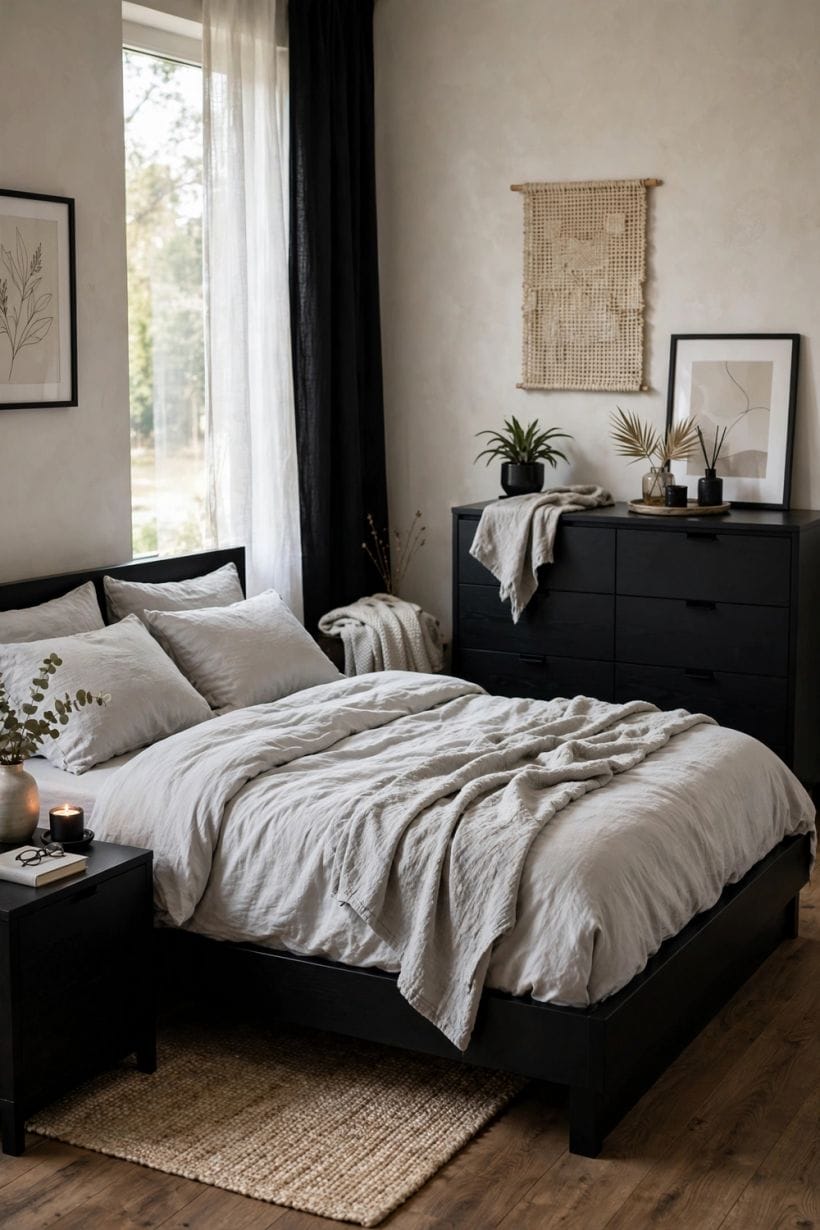
Black furniture rarely wants black walls on every side; it wants contrast it can stand against. The all-white lane of the colour field is the white bedroom ideas survey’s own; here the question is narrower — which wall colours let black pieces look deliberate, deep and restful rather than heavy.
12. Pale walls behind black furniture: the classic contract
White, warm off-white and palest grey walls behind black furniture give the strongest, calmest contrast in the survey. The pieces read as silhouettes, the room stays light, and bedding becomes the place where pattern and softness live.
13. The single black accent wall behind the bed
One black wall — the wall the bed stands against — doubles the furniture’s depth without darkening the whole room.
14. Charcoal walls with black furniture, tone on tone
Charcoal walls sit one step lighter than the furniture, so black pieces emerge from the wall rather than sitting on it.
15. Deep green walls as black’s botanical partner
A deep green wall gives black furniture a natural partner: the pairing reads woodland and library at once. Brass or warm timber details complete it, and the scheme suits rooms with a garden view that echoes the colour back.
16. Navy walls for a cooler depth
Navy behind black furniture is the cool register of the dark bedroom: formal, quiet and excellent under warm lamplight. Keep textiles lighter — white, cream, pale blue-grey — so the room’s centre stays soft even while its edges go deep.
17. Warm plaster and clay tones against black
Clay, plaster pink and warm putty walls take black furniture somewhere unexpected: earthy rather than dramatic. The warmth in the wall answers the coolness in the pieces, and natural linen bedding completes one of the survey’s most liveable schemes.
18. Black furniture in an all-white room
In a fully white room, black furniture does all the talking: every piece becomes a drawn shape, and the styling must be edited, because clutter shows at this contrast.
19. Half-height black: wainscot walls and dado lines
Painting the wall’s lower half black and keeping the upper half pale puts darkness where the furniture stands and lightness where the eye rests.
20. Ceilings kept light above dark furniture
Whatever the walls do, a light ceiling is the black bedroom’s safety valve: it returns lamplight, keeps the room’s height, and stops heavy furniture from feeling like weather.
21. Black doors and trim as the furniture’s echo
A black door, black skirting or black window frames echo the furniture at the room’s edges, tying the scheme into the architecture. Small in area, large in effect: the echoes make scattered black pieces read as one decision.
22. Testing the contrast before committing
Dark schemes punish guessing. Live with the largest black piece against the intended wall colour for some days — in daylight and lamplight — before painting or buying the rest.
4. Layouts: Placing Heavy-Looking Furniture in Real Rooms
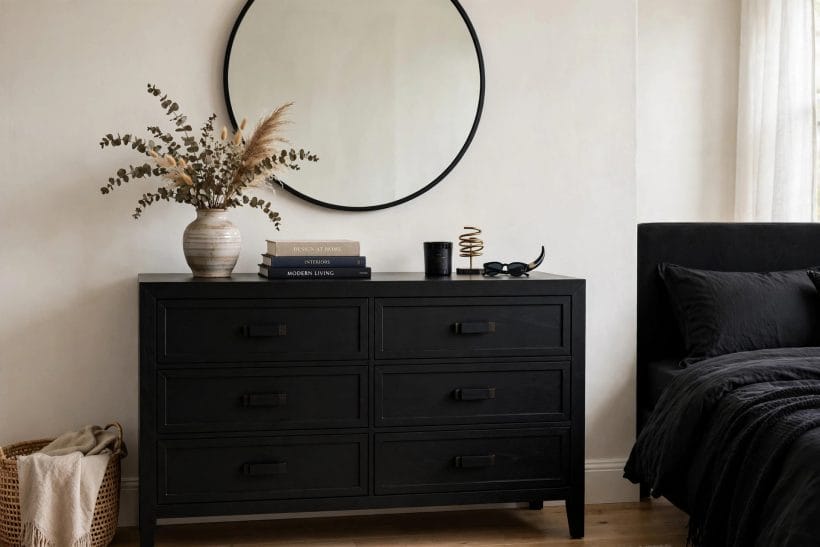
Black furniture looks heavier than it is, so layout is where the scheme succeeds or fails: pieces need breathing room, light paths and clear circulation. The wider arrangement questions belong to the bedroom pillar; this section stays on placing dark pieces so the room feels composed rather than crowded.
23. The bed centred on its wall, symmetry doing the calming
A black bed centred on its wall, flanked by matched bedside tables and lamps, is the layout that most reliably calms a dark scheme: symmetry reads as order, and order is what lets strong colour rest.
24. The bed against the long wall in a narrow room
In a narrow room, the bed against the long wall keeps a clear lane along its foot and stops the dark frame from becoming a barrier across the room’s width.
25. Wardrobes on the wall the door opens against
Black wardrobes are best placed where they are not the first thing the opening door reveals: on the entry wall itself, or around a corner of it.
26. Keeping the window wall light
Whatever stands at the window wall stands against the light and silhouettes all day.
27. The foot-of-bed bench in a contrasting weave
A bench at the bed’s foot, in pale bouclé, natural linen or warm timber, mediates between the black frame and the room beyond.
28. A reading corner that balances the bed’s mass
A black bed at one end of the room asks for a composed corner at the other: a reading chair — pale or warm, not black — a small table and a lamp.
29. Twin black beds in a shared room
Two black-framed single beds give a shared or children’s room a satisfying order: matched frames, matched bedding, and personality expressed in the small things between — cushions, art, the things on the shelf.
30. The black daybed along a wall
A black daybed serves a spare room, a study-bedroom or a teenager’s den: sofa by day, bed by night, its dark frame giving the daytime arrangement a drawn, deliberate line. Dress it with pale bolsters so it reads as seating first.
31. Floating the bedside: wall lamps instead of tables
Where floor space is tight, wall lamps and a slim shelf replace bedside tables, and the black bed’s mass stands without competition. The floor stays visible around the bed, which is the layout trick that most enlarges a dark-furnished room.
32. Rugs placed to lighten the floor plane
A pale rug under and around the bed lightens the floor plane that black furniture darkens, defines the sleeping zone, and gives bare feet a soft landing.
33. The mirror placed to return the light
A mirror opposite or beside the window returns daylight into a room whose furniture drinks it, and doubles a lamp’s glow at night.
5. Bedding, Textiles and the Soft Contrast
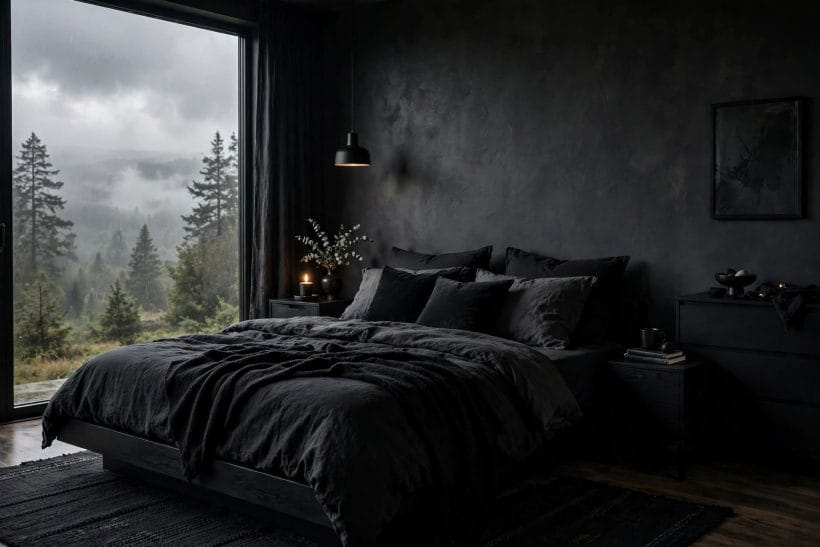
If the furniture is the scheme’s structure, the textiles are its weather: bedding, throws and curtains decide whether black feels crisp, cosy or cold. The grey lane of the colour field — softer, midway — is the gray bedroom ideas survey’s; this section stays on the soft layers a black-furnished room specifically needs.
34. White bedding against a black frame
White bedding on a black bed is the scheme’s signature contrast: crisp, hotel-calm, and the easiest bedding decision in the survey.
35. Natural linen in flax and stone tones
Undyed linen in flax, stone and oatmeal softens black furniture into something organic and restful.
36. Charcoal-on-black: the tonal bed
Bedding in charcoal, slate and ink layers darkness in tones, so the bed reads as a deep pool rather than a black slab.
37. A single warm accent colour
One warm accent — rust, ochre, camel or blush — carried in a throw and two cushions warms the whole black scheme out of proportion to its area.
38. Black-and-white pattern at the bed
A striped, checked or geometric black-and-white textile at the bed — a throw, a quilt, a cushion pair — bridges the furniture and the bedding, so the contrast reads designed rather than stark.
39. Sheer curtains to keep the daylight soft
Black furniture and heavy curtains together can swallow a room’s day. Sheers or pale linens at the window keep privacy while letting light arrive diffused, and the dark pieces silhouette softly against them instead of standing in a dim box.
40. A black throw on a pale bed: the reversed accent
Where the bed itself is pale — a light frame, white bedding — a black throw folded at its foot introduces the colour in its smallest dose.
41. Velvet cushions for the evening register
Velvet in black or deep jewel tones gives cushions an evening richness that cotton cannot; a pair on the bed lifts the scheme after dark.
42. Layered quilts and coverlets for texture depth
A quilt or coverlet layered over the duvet adds the stitched, woven texture that flat dark schemes lack, and gives the bed a made, deliberate finish.
43. Rugs in pale wool underfoot
A pale wool rug is the textile that most changes a black bedroom’s mornings: warm, quiet underfoot and light-returning. Wool’s natural resilience suits the bedside landing zone; keep the pile low enough for doors and drawers to pass without argument.
44. Seasonal swaps on a black base
The black furniture stays; the textiles rotate — white and linen for summer, charcoal, velvet and a warm throw for winter.
6. Storage and Dressing: The Working Black Pieces

A black bedroom must still work: clothes stored, dressing done, the morning routine housed. The crisp, product-led end of the bedroom field is the modern bedroom ideas survey’s territory; this section stays on the storage and dressing pieces as black furniture — how they are chosen, fitted and kept.
45. Wardrobe interiors planned before the doors are admired
Black wardrobe doors impress from outside; the interior decides the mornings.
46. Open black shelving for the edited wardrobe
Open black shelves and rails suit households whose wardrobes are small and edited: everything visible, everything answered for. The black frame makes even plain clothes look composed; the discipline it demands is real, and households that dislike folding should choose doors.
47. The black armoire in rooms without fitted storage
A freestanding black armoire brings tall storage to rented rooms, old houses and anywhere fitted joinery is not an option.
48. Under-bed drawers in the frame’s own black
Drawers built into a black bed frame hide the room’s least lovely storage — spare linen, out-of-season clothes — in the furniture’s own mass.
49. The dressing zone by the best light
Place the dressing table where the daylight is, even if that means the black table stands against a pale wall away from the other black pieces.
50. Jewellery, watches and the black tray
A black tray or lined drawer insert on the dressing table gives the small precious things a ground they show against — metals and stones read clearly on black.
51. Laundry and the hidden hamper
A lidded hamper in black wicker, metal or upholstered form keeps laundry invisible — essential in a scheme where a plastic basket would shout.
52. Hooks and a valet stand for tomorrow’s clothes
A black valet stand or a short run of wall hooks houses tomorrow’s outfit and today’s jacket, stopping the chair-drobe that ruins dark schemes fastest. The pieces are small, the habit they support is the difference between styled and merely furnished.
53. Books, chargers and the bedside drawer
The bedside drawer’s honest contents — book, charger, hand cream, the small clutter of night — are why bedside tables in this scheme have drawers rather than open shelves.
54. Tallboys and lingerie chests in black
A tall, narrow black chest uses vertical space in small rooms and gives folded things a dedicated home separate from the wardrobe run.
55. Storage at the foot: the black blanket box
A black blanket box at the bed’s foot stores the spare throws its own scheme rotates, catches the removed coverlet at night, and seats the person putting on shoes.
7. Small and Shared Black Bedrooms

Black in a small room is not forbidden; it is conditional — on light, on proportion and on editing. The size lane of the bedroom field in full is the small bedroom ideas survey’s; this section stays on what small and shared rooms must do differently with dark furniture.
56. One black piece only: the small-room dose
In a genuinely small room, one black piece — the bed, or a chest — gives the colour’s depth without its weight, and the rest of the furniture stays pale.
57. Black furniture kept low in a low room
Height is the small room’s currency: a low black bed, low chests and no tall black wardrobe keep the ceiling feeling its full height.
58. Gloss and glass where matte would swallow light
A small dark-furnished room benefits from the finishes that return light: a satin rather than matte black, a glass-fronted cabinet, a mirrored drawer front. Each reflective surface is a small window the room adds for itself.
59. The black bunk or loft bed for siblings
Black-framed bunks and loft beds give shared children’s rooms a graphic order that survives childhood’s chaos visually — bedding and belongings provide the colour, the frame provides the calm. Choose frames whose finish tolerates knocks, and keep the palette discipline gentle.
60. Dividing a shared room with a black bookcase
A low black bookcase between two beds or zones divides a shared room without a wall, stores for both sides, and gives each occupant a territory edge. Its darkness makes the division read clearly, which in shared rooms is a kindness.
61. Guest rooms in black: the dramatic welcome
A guest room can carry more black drama than a main bedroom, because nobody wakes in it daily: a black bed, dark accents, hotel-crisp white bedding. Guests experience the theatre; the household keeps the upkeep light between visits.
62. The teenager’s black bedroom, negotiated
Teenagers ask for black because it feels like theirs. The negotiated version — black furniture, light walls, their choice of accent — gives them the mood with an exit route: when tastes change, textiles and paint move, the furniture stays respectable.
63. Black in the box room: office by day, bed by night
A black desk and a black daybed or sofa bed furnish the box room that works twice: the dark pieces give the office hours a serious register and the guest nights a composed one.
64. Keeping small dark rooms edited
Small rooms with black furniture show clutter at double contrast, so the editing habit is structural, not cosmetic: surfaces mostly clear, belongings housed, one beautiful thing out at a time.
65. Light first, furniture second, in rentals
Where walls cannot be painted, black furniture over pale rented walls is the whole scheme — which is the classic contract of this survey’s wall section, achieved without touching the landlord’s paint.
8. Light, Finish and the Keeping of Black Furniture
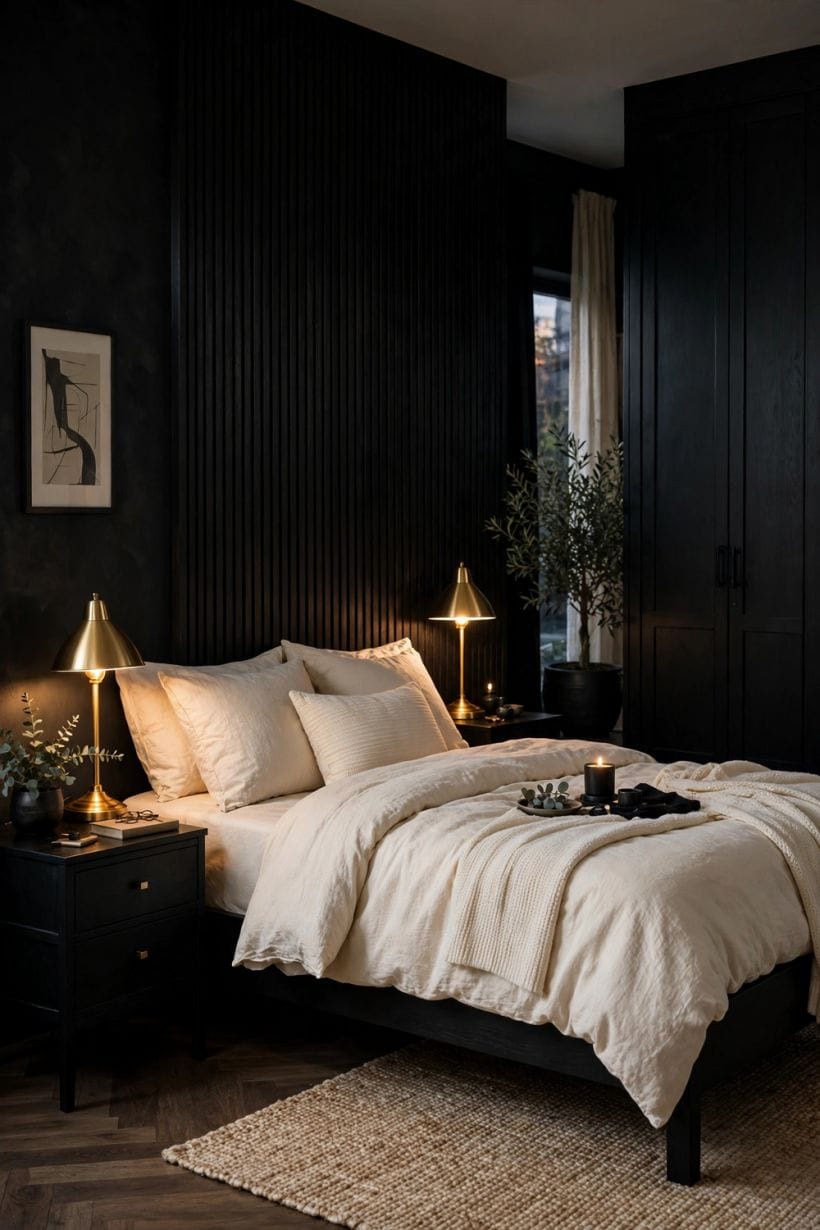
Black furniture is kept, not just bought: it shows dust sooner, glows under the right light, and rewards the household that understands its finishes. This closing survey section stays on light and care — the two attributes that decide whether a black bedroom looks rich or merely dim.
66. Layered lamplight as the scheme’s daylight substitute
Dark furniture drinks light, so the black bedroom’s lighting is layered: bedside lamps for reading, a soft overhead or wall light for dressing, and nothing left to a single bare bulb.
67. Bedside lamps tall enough to read by
Against a black headboard, a lamp’s light pool is the visible thing — choose lamps tall enough to throw light onto the page and onto the wall above the bed, so the sleeping zone reads as a lit alcove rather than a dark corner.
68. Dust on black: the honest upkeep
Black shows dust sooner than any finish — this is the scheme’s known tax.
69. Fingerprints on gloss, and where gloss belongs
Gloss black shows every fingerprint and suits pieces hands rarely touch — a headboard panel, a wardrobe’s upper doors. Working surfaces — dressing tables, drawer fronts — are kinder in satin or matte, where the day’s contact disappears.
70. Touching up scuffs on painted black
Painted black furniture scuffs to a lighter line, and a matching touch-up kept in the house — the maker’s pen or a small pot of the finish — makes each mark a minute’s repair.
71. Black metal and the rust question
Black metal frames and hardware near windows or in humid rooms should be checked for the finish’s integrity, because rust begins at chips.
72. Sunlight and the fading of black fabrics
Strong sun fades black upholstery and bedding unevenly, panel by panel.
73. Scent, air and the closed dark room
Dark rooms are often kept shuttered and can stale; the black bedroom rewards a daily airing habit disproportionately, because its mood depends on feeling restful rather than merely looking it. Fresh air is the cheapest finish in the whole survey.
74. Plants against black: the green dividend
A green plant against black furniture or a black wall is the scheme’s most reliable beauty: foliage reads almost lit from within.
75. Art above the black bed
Art hung above a black bed completes the composition the furniture starts: pale-mounted prints, photography in black frames, or one warm-toned canvas.
9. Checks and Mistakes: Before the First Purchase or the First Fitting
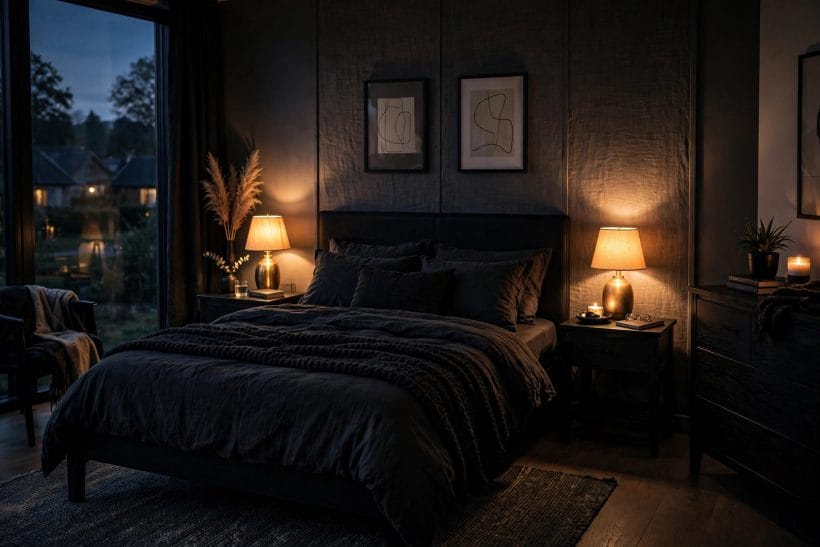
Before the first purchase, check the light honestly: spend time in the room at the hours it is used, note where daylight lands and where it never reaches, and let that map — not a photograph — decide how much black the room can carry. Rooms that face the day generously forgive dark furniture; rooms that never see sun want it in smaller doses.
Check the proportions next. Black reads heavier than the same piece in oak or white, so measure the room for the furniture’s visual weight, not only its footprint: the bed’s height, the wardrobe’s run, the chest’s depth. Leave visible floor and visible wall around the dark pieces — the breathing room is what makes them read as composition rather than crowd.
Check finishes against the household’s real habits: gloss where hands rarely go, satin or matte where they do; upholstery that sheds the household’s actual dust and hair gracefully; bedding the household will genuinely wash as often as white requires. And keep every structural, electrical and fitting decision — wardrobes fixed to walls, lamps wired, anything load-bearing — with qualified professionals under local rules, stated generally here as all such work should be.
The mistakes repeat across dark bedrooms: buying the whole black set at once before testing one piece against the room’s light; matching blacks that are not the same black, so pieces argue in undertones; painting every wall dark to ‘match’ furniture that wanted contrast; and skipping the pale rug, the sheers and the lamps that return the light the furniture drinks. Each is avoidable, and each avoided mistake is visible in the finished room.
10. Costs and Pulling It Together
Costs in a black bedroom, stated generally and without invented figures, concentrate where they do in any bedroom: the bed, the wardrobe run and the storage pieces carry the furniture budget; paint for an accent wall is among the cheapest drama in the home; textiles — bedding, rug, curtains — are the middle spend that decides the scheme’s comfort; and lighting added properly, with electrical work done by a qualified electrician under local rules, is the spend that makes all the others visible. The saving order is equally general: one excellent dark piece outlasts a room of cheap ones, because black shows quality — and its absence — at a glance.
Pull the scheme together as a single composition: black furniture as the structure, a wall colour chosen as its partner, textiles as the soft contrast, light layered to return what the pieces drink, and the editing habit that keeps high contrast calm. The rest of the bedroom field — its other colours, sizes and styles, each in its own survey — is gathered in this site’s home design ideas collection; this post’s room is the dark one, and it is complete.
Final Considerations
A bedroom with black furniture is not a gloomy room; it is a composed one — darkness placed where it gives depth, lightness kept where life happens, and every piece earning its contrast. Choose the anchor piece well, give it pale walls or one dark wall to stand against, soften it with linen and lamplight, and the room becomes what the colour promises at its best: quiet, deliberate and deeply restful.



0 Comments