

A modern bedroom is not a bedroom with modern furniture dropped into it. It is a room where everything unnecessary has been edited out — calm lines, quiet colour, honest materials — until what remains is exactly what rest requires.
These 75 modern bedroom ideas build that edit in order: the plan first, the bed as architecture, then palette, materials and light, storage that disappears, and the discipline for small rooms last. Style depth belongs here; the broader survey lives in the bedroom ideas pillar, to which this post stays a loyal specialist.
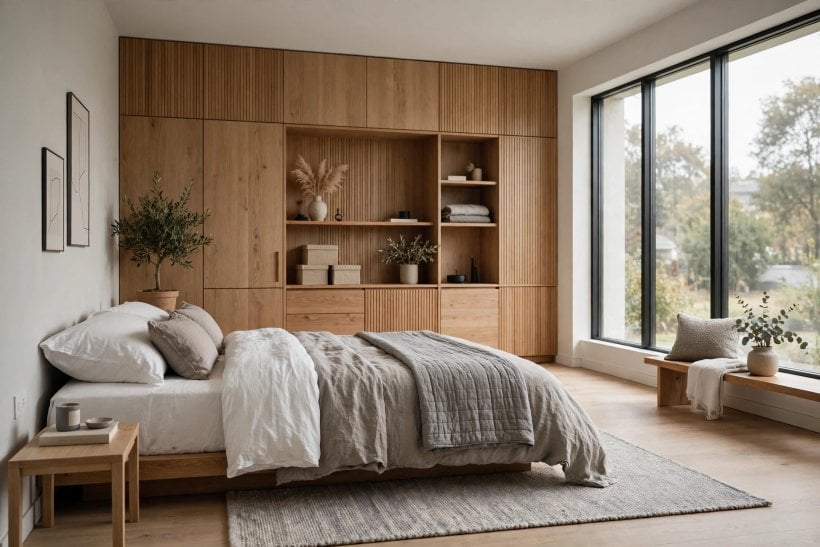
1. Modern Bedroom Ideas at a Glance
The central entity is the modern bedroom: a rest room composed on modern principles — clarity of plan, restraint of palette, honesty of material — and defined by its attributes: the layout, the bed, the colour, the surfaces, the lighting, the storage, and the textiles that soften the geometry. The first attribute governs the rest: modern design succeeds or fails as editing, and every object in the room is there because it survived being questioned.
| What makes a bedroom modern rather than merely new? | Editing. Clean lines, a limited palette, concealed storage and nothing in the room that cannot justify itself. New furniture in an unedited room is just shopping. |
| How many colours does a modern bedroom want? | Two or three, held in a narrow tonal range, with texture doing the work variety usually does. Interest comes from materials, not from more hues. |
| What is the modern bed? | Low, wide and plain: a platform or a simple framed base with an upholstered or timber headboard, dressed in plain linen. It is architecture first and furniture second. |
| Can a small bedroom be modern? | Small rooms are modernism’s home ground. Built-in storage, a restrained palette and one strong line — a window wall, a headboard plane — make smallness feel deliberate. |
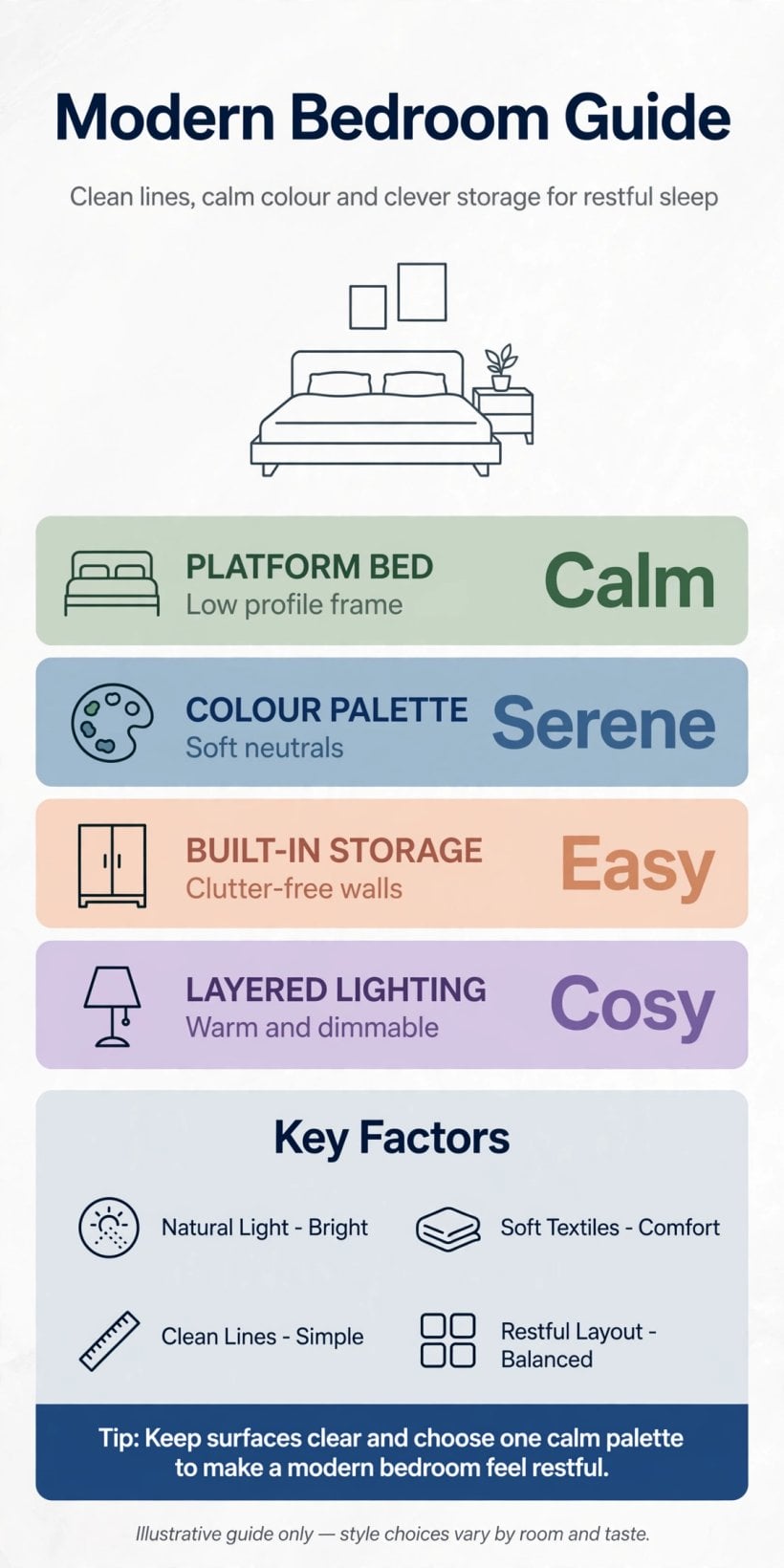
2. Layout: The Modern Plan Starts With Air
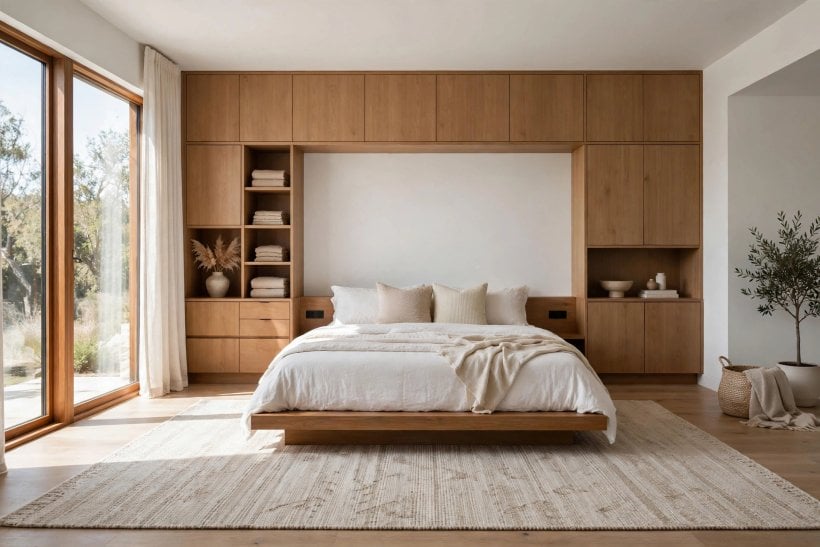
Modern layout is subtraction with a tape measure: clear routes, breathing room around the bed, and nothing stored in the open that can be stored behind a door. The plan below serves the style at every size, including the suites surveyed in master bedroom ideas.
1. Give the Bed a Field of Floor
Modern rooms let the bed stand in visible space, with floor showing on three sides. The emptiness around it is not wasted area; it is the luxury the style is actually selling.
2. Align the Room on One Axis
Set the bed on the room’s natural axis — centred on a window, a wall or the door’s sightline — and let everything else take its cue. One strong axis organises a room without a single extra object.
3. Keep Routes Straight and Unguarded
The path from door to bed to window should be walkable in the dark without negotiation. Modern plans treat circulation as a design material: straight, wide enough, and never used as storage.
4. Float Nothing Without a Reason
Floating the bed off the wall suits only very large rooms with a plan behind it — a dressing zone, a bath beyond. In ordinary rooms the wall is the modern bed’s honest anchor.
5. Zone by Rug and Light, Not Furniture
A reading corner or dressing area in a modern bedroom is marked by a rug edge and a pool of light, not by screens and dividers. Zones you can see through keep the room one calm volume.
6. Put the Dressing Where the Clothes Are
A modern plan keeps dressing adjacent to storage — wardrobe wall, then mirror, then door — so the morning route is a line, not a tour. Scattered dressing furniture breaks the line and the calm.
7. Let the Window Wall Stay a Window Wall
Resist parking furniture against the glass. A modern room treats its window as a full-height picture of weather and light; the bed or a low bench may face it, nothing should block it.
8. Hide the Door’s Swing in the Plan
Doors that open against wardrobes or across the bed’s view undo the calm daily. Where a swing fights the layout, a sliding or pocket door is the modern answer — mechanism in service of stillness.
9. Keep Bedside Tables as One Gesture
Matching or deliberately mirrored bedside pieces keep the bed wall symmetrical and serene. The modern room tolerates asymmetry in art, rarely in the furniture that frames sleep.
10. Leave One Wall Entirely Plain
A single empty wall is the style’s rest note. It gives the eye somewhere to stop, makes the dressed walls look chosen, and costs nothing — the cheapest modern idea in this collection.
11. Plan the Morning View From the Pillow
The modern bedroom is experienced lying down: the ceiling line, the window, the first light. Compose what the sleeper wakes to before composing what a visitor photographs.
3. The Bed as Architecture
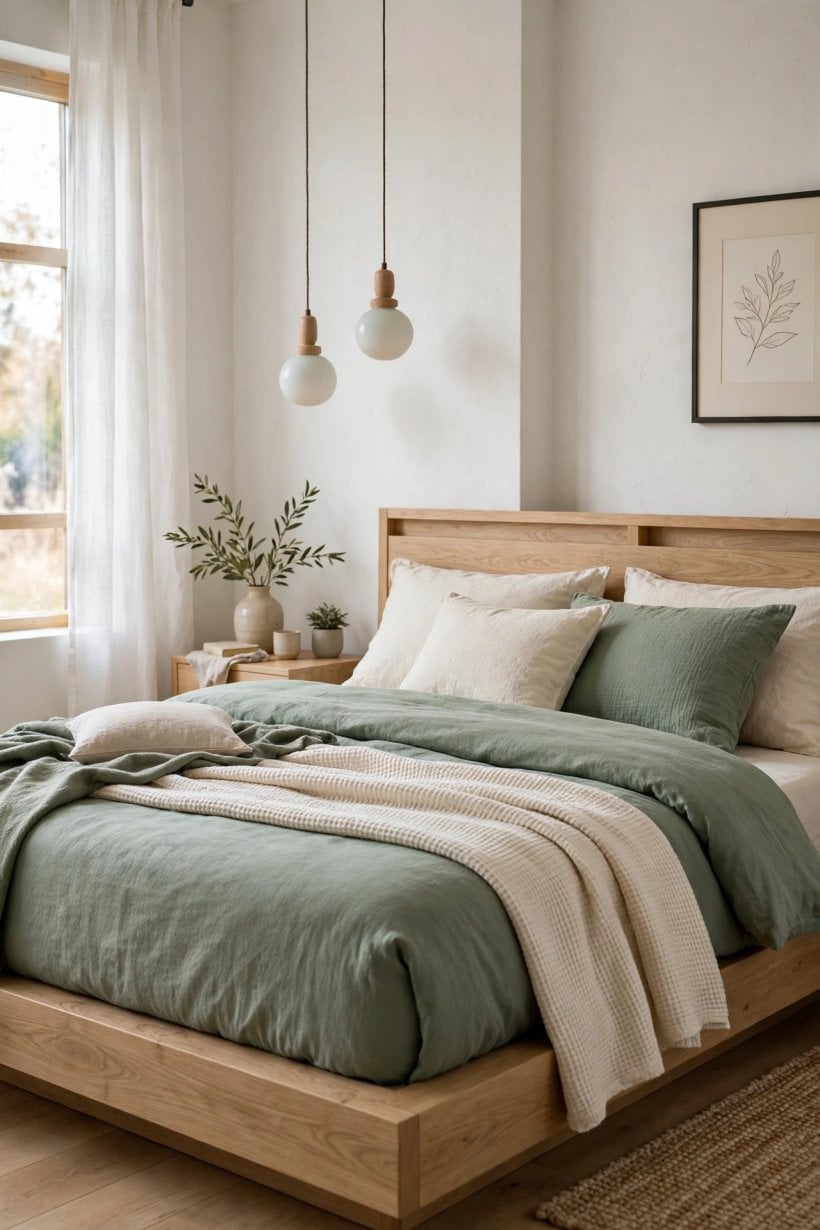
In the modern lane the bed is built, not bought: a low horizontal plane, a headboard with presence, bedding in plain layers. Everything in this section serves that one piece of architecture.
12. Choose a Low Platform Profile
The platform bed’s low, wide line is modernism’s signature in the bedroom. It makes ceilings feel taller, rooms feel calmer, and the bed feel like a landscape rather than a vehicle.
13. Make the Headboard a Wall Plane
An upholstered panel, a run of timber slats or a full-width padded plane turns the headboard into architecture. It should be wider than the mattress and quieter than everything hung near it.
14. Keep Bedding Plain and Layered
Modern beds are dressed in solid colours and natural textures: linen or cotton in two tones, one folded throw, no patterned pile-up. The layers give the softness; the plainness gives the calm.
15. Limit Pillows to the Honest Count
Two sleeping pillows per person and at most one accent pair. A modern bed is made in a minute and slept in without an excavation — pillow choreography belongs to other styles.
16. Let the Bed Frame Show Its Material
Oak, walnut, blackened steel or honest lacquer: the frame’s material is the bed’s decoration. Concealed, skirted or upholstered-everything bases waste the one piece of joinery the room displays nightly.
17. Float the Bedside Light, Not the Table
Wall-mounted or pendant bedside lights free the table surface and draw a clean vertical line each side of the bed. The modern room loves a fitting that earns its place twice.
18. Centre the Bed on Its Own Rug
A large, plain rug extending beyond the bed on three sides grounds the architecture and softens the morning’s first step. Small rugs adrift beside the bed read as accidents, not layers.
19. Keep the Foot of the Bed Empty
No bench, no chest, no clothes valet parked at the foot in the modern plan — unless the room is large enough that the piece reads as a deliberate island. Air at the foot keeps the elevation clean.
20. Match Bedside Heights to the Mattress
Modern beds sit low, so standard tables tower over them. Choose or build bedside pieces that land level with the mattress top; the horizontal calm depends on that one alignment.
21. Upholster for Silence
A padded headboard absorbs sound and softens the room’s acoustics — a modern luxury measured in quiet. In hard-surfaced rooms it is the single piece that makes the space feel rested.
22. Let One Textile Carry the Colour
If the palette needs a voice, give it to the throw or the cushion pair and nothing else. A single coloured textile on a calm bed reads as a decision; five read as indecision.
4. Colour: The Restrained Modern Palette

Modern colour is a narrow band played with confidence: warm whites, greys, stone, ink and timber tones. The wider colour conversation — how hues behave in compact rooms — is worked through in the tiny house paint colours guide; this section keeps to the modern lane’s discipline.
23. Start From Warm White, Not Brilliant White
A white with a whisper of warmth keeps modern rooms serene instead of clinical, especially in northern light. Brilliant blue-whites belong to galleries and bathrooms, not to the room of rest.
24. Build Greys in Layers, Not Battles
Grey works when its temperatures agree: wall, bedding, rug and curtain in one warm or cool family, stepped in tone. Mixed-temperature greys fight quietly and tire the eye without saying why.
25. Use Ink and Charcoal as the Frame
A near-black used on the bed frame, a door or one piece of furniture gives the pale palette its spine. Modern rooms need that single dark note the way a drawing needs its darkest line.
26. Let Timber Be the Colour
In the strictest modern rooms, wood is the only hue: pale oak floors, a walnut headboard, white walls. The grain supplies the pattern, so nothing else in the room has to.
27. Take One Muted Colour, Room-Wide
Sage, clay, dusty blue or stone taken across walls and textiles in low saturation is the modern way to do colour: everywhere, quietly, rather than loudly in one corner.
28. Keep the Ceiling a Tone Above the Walls
A ceiling one step lighter than the walls lifts the modern box without a colour event. Matching wall and ceiling exactly works only in deliberately cocooned, darker schemes.
29. Paint Doors and Trim Into the Wall
Modern rooms often erase the trim contrast: doors and skirting in the wall colour, so the planes read uninterrupted. The effect is calm money can’t buy with objects — only with editing.
30. Test the Palette at Night
Bedrooms are evening rooms. Swatches judged at noon in a showroom lie about lamplight; test the shortlist under the room’s own bulbs, at the hour the room is actually used.
31. Let Art Carry the Only Loud Note
One artwork can hold the palette’s single saturated colour, because art is expected to speak. When textiles, walls and objects all speak at once, the room has no listener left.
32. Repeat the Accent in Threes, Quietly
If a colour appears, let it appear three times at low volume — a cushion, a book spine, a vase — so it reads as a thread. Once is an accident; twice is a coincidence; three times is a scheme.
33. Prefer Matte Everywhere
Matte paint, matte lacquer, honed stone: the modern palette deepens as gloss leaves. Shine is saved for one deliberate surface — a lamp, a handle — where it can be noticed on purpose.
5. Materials and Honest Surfaces
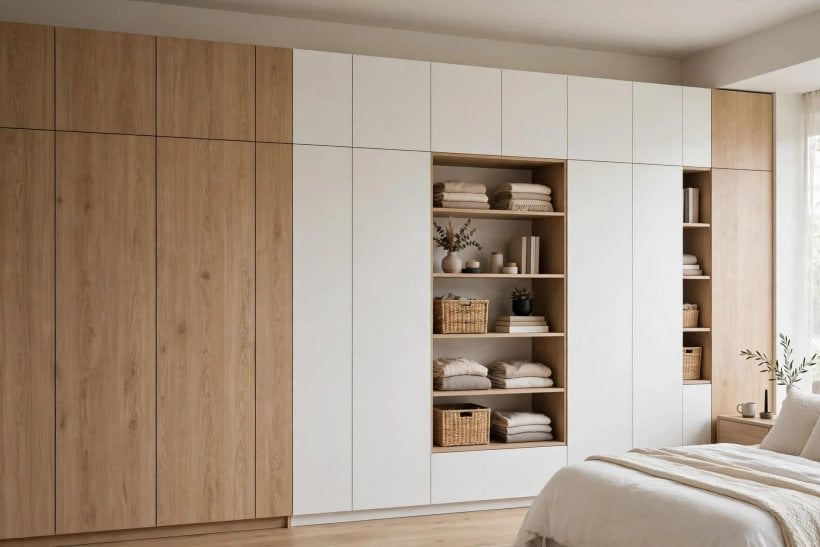
Modern materials are few, natural and undisguised. The test for every surface in this section is whether it looks like what it is — the style’s oldest rule and still its strictest.
34. Let Timber Slats Build One Wall
A slatted timber headboard wall adds rhythm, warmth and acoustic softness in a single gesture, and it replaces art, paper and paint arguments at once. Keep the slats’ spacing disciplined; rhythm is the decoration.
35. Use Limewash or Clay Paint for Breath
Mineral paints give modern walls a soft, cloudy depth that flat emulsion cannot, and they suit the palette’s quiet tones. The surface moves gently as light changes — pattern without pattern.
36. Choose Linen and Wool Over Synthetics
Natural textiles wrinkle, slub and fade honestly, which is precisely the modern point. A room of linen, wool and cotton feels calm in the hand before it looks calm in a photograph.
37. Keep Metals to One Finish
Black, brushed nickel or aged brass — one metal, repeated on lights, handles and frames. Mixed metals are a traditional room’s game; the modern room wins by refusing to play.
38. Let Concrete or Microcement Earn Its Place
A polished plaster or microcement wall behind the bed is modernism’s bold surface: seamless, matte and cool. It earns its cost only in rooms calm enough to let it be the event.
39. Prefer Large, Plain Floor Surfaces
Wide boards, large tiles or a plain fitted carpet in one tone keep the floor a quiet field. Busy flooring is the fastest way to make a modern bedroom stop being modern.
40. Hide the Radiator or Make It Architecture
A slim panel radiator in the wall colour disappears; a sculptural one becomes a line in the composition. The unforgivable middle is the standard white panel pretending not to exist.
41. Use Glass and Mirror as Light Tools
A mirrored wardrobe front or a glass panel earns its place by moving daylight, not by decoration. In the modern room every reflective surface should be able to say what it is for.
42. Keep Stone to One Cool Moment
A stone-topped bedside pair or a single marble ledge gives the room its cool note against the warm textiles. Stone everywhere turns the bedroom into a hotel bathroom’s neighbour.
43. Let Curtains Be Wall-Colour Cloth
Full-height curtains in the wall’s own tone extend the plane and soften its edge; contrast curtains cut the wall into stripes. Modern windows are dressed as architecture, not as outfits.
44. Banish Visible Plastic and Chrome Shine
The modern surface palette breaks on shiny plastic and bright chrome. Cables, chargers and bins — the room’s small machinery — should be matte, hidden or banished to a drawer.
6. Lighting in Layers, Lines and Shadow Gaps
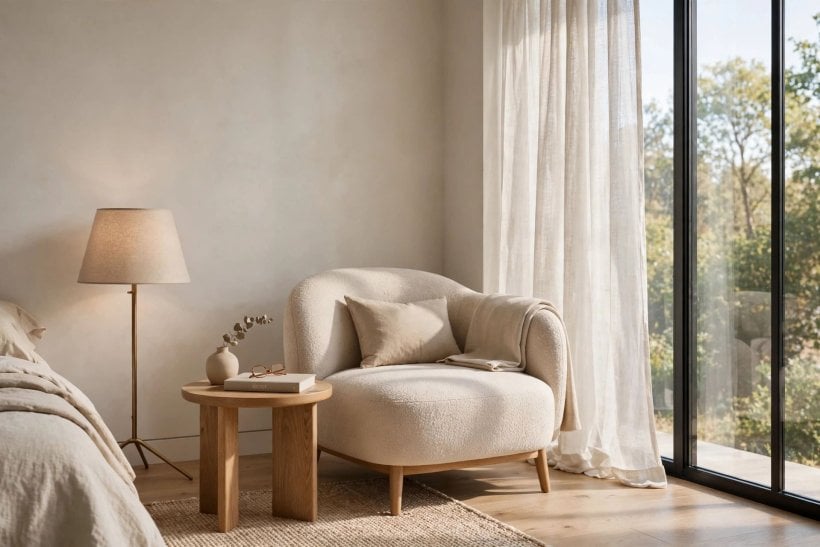
Modern lighting is planned like the palette: a dim ambient layer, precise task light at the bed, and one sculptural note. Brightness is the enemy; control is the luxury.
45. Light the Room in Three Dimmable Layers
Ambient, bedside task and one accent layer, each dimmable from the bed. A modern bedroom should be able to fall to a glow without a single harsh point of light left standing.
46. Run a Cove or Shadow Gap, Once
A single concealed cove at the ceiling or behind the headboard washes one plane with light and gives the room its evening softness. More than one cove turns serenity into a showroom.
47. Hang Pendants Low Beside the Bed
Pendants dropped to just above bedside height draw two clean verticals and pool light exactly where books live. Keep the pair identical and the drops equal; asymmetry here reads as error.
48. Choose Warm Light and Keep It Warm
Modern rooms specify warm lamps and never mix colour temperatures in one space. A single cool bulb among warm ones is the lighting equivalent of a wrong note held too long.
49. Put Reading Light on Arms, Not Bulbs
Articulated or directional reading lights aim the beam at the page and off the partner. The modern bedroom respects two readers with different bedtimes as a design requirement, not a favour.
50. Let Blackout Be Total and Silent
Modern sleep design treats darkness as a material: blackout lining, tracks or side channels, no glowing standby lights. The room should be able to achieve night at noon.
51. Light the Wardrobe Interior, Not the Room
Small lights inside storage serve the early riser without waking the room. It is the lighting detail that most improves shared mornings and least appears in photographs.
52. Give the Room One Sculptural Fitting
A single considered pendant or floor lamp carries the room’s design flourish. Everything else stays quiet — one voice orating, the rest of the lighting in the choir.
53. Keep Switches Where Hands Fall
Master-off at the door and at each bedside, dimmers where the hand lands without looking. Modern convenience is invisible when it works and infuriating when it is hunted for in the dark.
54. Wash One Wall for the Evening
A gentle wall-wash on the plainest wall turns it into the room’s evening picture: texture, shadow and calm. It replaces television as the thing the bed faces, for households so inclined.
55. Banish the Bare Centre Bulb
A single central pendant doing all the work flattens every modern scheme. If the budget allows only one change, split the centre light’s job between dimmers, bedside lights and a wash.
7. Storage That Disappears
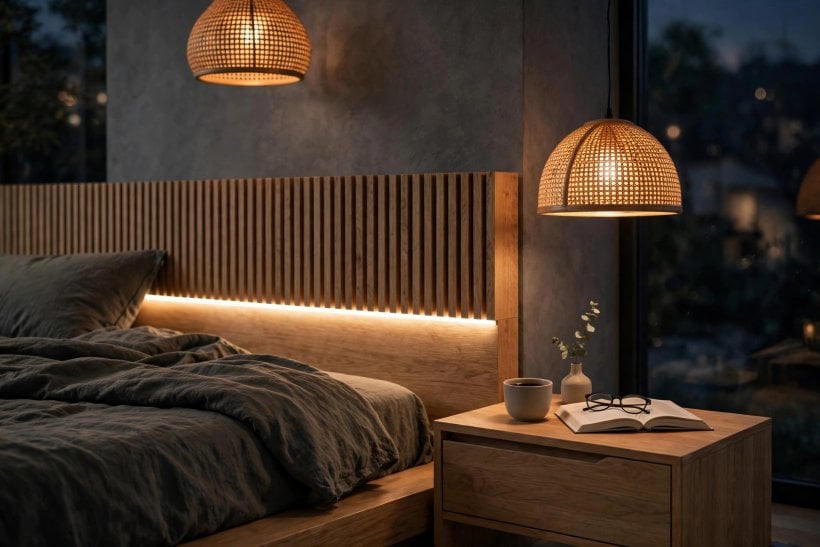
Modern storage succeeds by vanishing: flush fronts, no handles, walls of doors that read as walls. The compact end of this discipline is proven nightly in the small bedroom design survey; here it is applied at full size.
56. Build a Wardrobe Wall, Floor to Ceiling
A full-height run of flush doors turns storage into architecture and swallows the room’s whole wardrobe behind one calm plane. Stop the run short of the ceiling and it becomes furniture again — with dust on top.
57. Go Handleless, or Nearly
Push-latches, shadow-gap pulls or one slim repeated handle keep the wardrobe plane unbroken. Handles are the storage wall’s noise; the modern wall declines to make it.
58. Paint Storage Into the Wall Colour
Wardrobe fronts in the exact wall colour make metres of storage read as a wall with secrets. It is the modern room’s best trick for small floor plans and large wardrobes alike.
59. Plan Interiors From the Wardrobe Out
Rails, drawers and shelves follow the actual clothes: long hang measured, shoes counted, knitwear folded to size. A modern interior fitted to a fantasy wardrobe fails at the first laundry load.
60. Keep One Drawer for the Day’s Clothes
The chair-drobe is where modern rooms go to die. A single open drawer or a lidded bench-box for clothes in transit gives the habit a legitimate address inside the system.
61. Close Every Storage Front
Open shelving of clothes is a boutique fantasy that dust and visual noise defeat by February. The modern bedroom displays nothing it wears; doors are what make the calm affordable.
62. Use the Bed’s Base Honestly
Divan drawers or a lift-up platform base store the bulky, seldom-used layer — spare bedding, out-of-season clothes — without touching the room’s visible calm. Guard it against becoming the junk stratum.
63. Give the Room a Landing Strip, Closed
Keys, watch, phone and glasses land somewhere nightly. A shallow lidded tray or a single drawer at the door formalises the landing strip so the bedside tables stay serene.
64. Mirror Inside the Wardrobe Door
The full-length mirror lives inside a wardrobe door in the modern plan: available at dressing time, invisible at rest time. A leaning mirror in the room is a traditional gesture, and it shows.
65. Leave One Shelf Empty on Purpose
Inside even the storage, one unfilled shelf keeps the system feeling unforced — and gives the next purchase somewhere honest to go. Full-to-the-brim storage is stress with doors.
8. Modern Bedrooms in Small Rooms and Tiny Houses
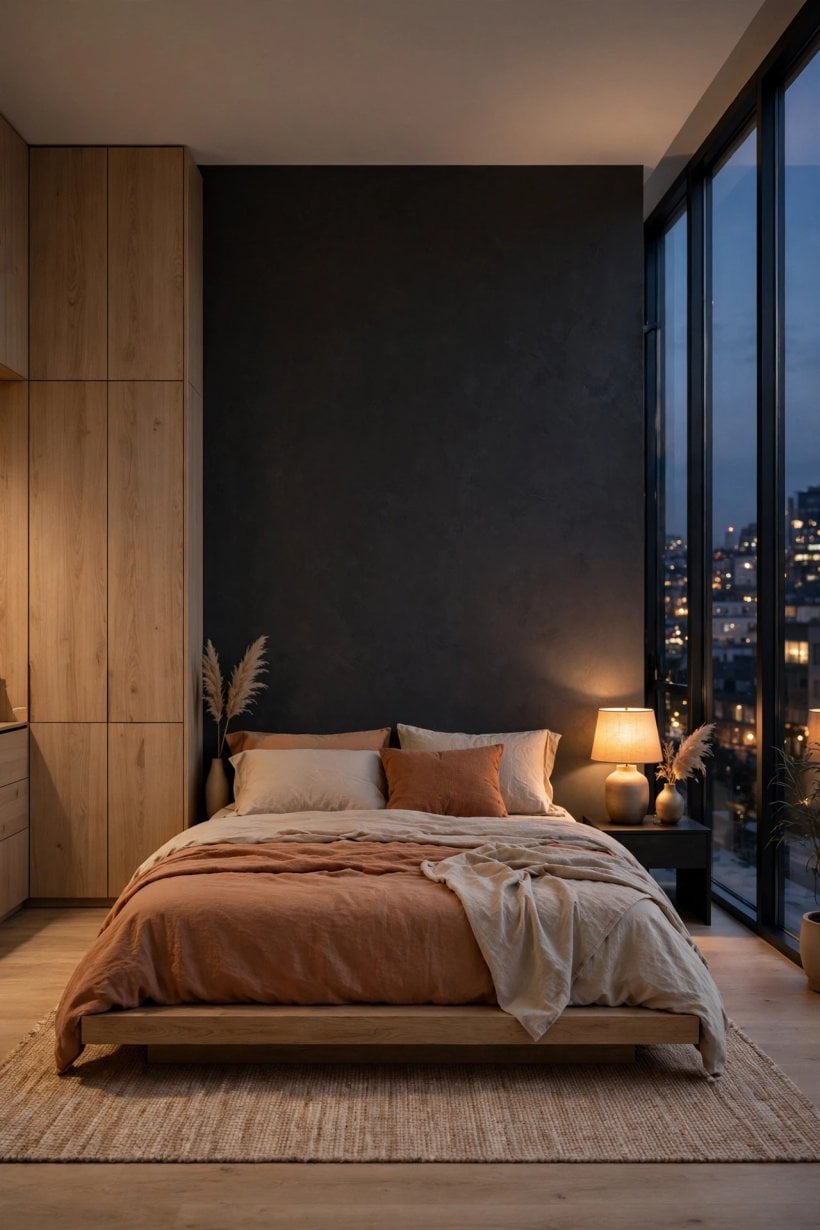
Modernism began in small rooms, and the tiny house is its current frontier — the loft-versus-downstairs question alone, weighed in loft vs downstairs bedroom, is a modern-plan decision. This section concentrates the lane’s ideas where space argues back, alongside the compact layouts in tiny house bedroom ideas.
66. Let Built-Ins Replace Furniture Entirely
In a small modern bedroom, one built-in wall — bed platform, storage, shelf, light — outperforms four freestanding pieces. Every freestanding object pays rent in floor; built-ins own the building.
67. Raise the Platform, Store Beneath
A platform bed at drawer height buys a wardrobe’s worth of storage for zero floor. The modern line stays unbroken because the storage hides inside the architecture itself.
68. Use One Colour From Floor to Ceiling
Small rooms enlarge when the palette stops subdividing them. Walls, ceiling, curtains and storage in one tonal family make the box feel carved rather than cramped.
69. Choose a Sliding Door or None
A hinged door’s swing can eat a tenth of a tiny bedroom. Sliding, pocket or curtain closures return that floor to the room — modern hardware in service of modern space.
70. Keep the Window Treatment Architectural
A recessed blind or a track curtain that parks fully clear of the glass keeps small windows at maximum light. Fussy dressings shrink the one asset a small room cannot spare.
71. Scale the Bed to the Room’s Truth
In the smallest rooms a slightly narrower bed with space to walk beats a king that touches three walls. Modern comfort is measured in the whole room, not in mattress marketing sizes.
72. Put Light in the Joinery
LED strips inside the headboard shelf and under the platform edge replace lamps where no surface exists for them. In tiny rooms the lighting plan and the furniture plan are the same drawing.
73. Fold the Desk Away or Skip It
A fold-down desk inside the wardrobe wall serves the laptop hour without colonising the rest room. If work must live in the bedroom, it should at least be able to disappear nightly.
74. Use the Door Back and the Wall Above It
Hooks, a shallow shelf, the household’s least-used storage: the wall over the door is the small room’s free attic. Modern tidiness includes exploiting the planes nobody photographs.
75. Edit Monthly, Not Yearly
The small modern bedroom stays modern by rhythm: one small edit a month, an object out for every object in. The style is not a purchase; it is a practice the room’s size makes compulsory.
9. Checks and Mistakes: Before the Style Sets
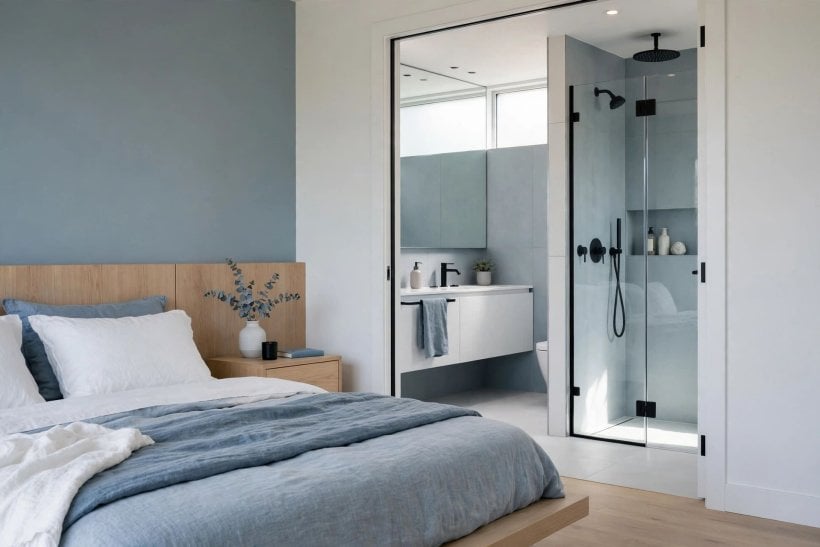
The common modern failures are additions, not omissions: the accent wall that fights the palette, the statement lamp competing with the pendant, the open rail of clothes installed in a boutique photograph’s honour. The style forgives plainness and punishes clutter, so most mistakes are made by shopping after the room was finished.
Work three checks. First, the palette check: photograph the room in evening light and count the colours and metals — more than three of either means something leaves. Second, the surface check: every horizontal surface should be empty or holding one chosen object; surfaces are where modern rooms confess. Third, the sleep check, which outranks the others: blackout total, light warm and dimmable, air moving. A modern bedroom that photographs beautifully and sleeps badly has failed at its only job.
10. Costs and Pulling It Together
Modern bedrooms invert the usual budget. The expensive layer is the built work — the wardrobe wall, the headboard plane, the lighting circuit — because the style’s calm is constructed, not decorated. The cheap layer is everything visible: plain bedding, few objects, matte paint. Households are often surprised that the editing costs nothing and the hiding costs the money, but that is the style’s honest arithmetic, and it should be planned in that order: joinery first, lighting second, surfaces third, objects last and fewest.
Sequencing matters more than totals. Build storage before buying furniture, because half the furniture list usually exists to compensate for missing storage. Wire the lighting before painting, because coves and pendants are plaster-stage decisions. And hold a small reserve for the unglamorous items the style depends on — blackout tracks, dimmers, lidded boxes — which no showroom will ever upsell and no calm room can do without.
Final Considerations
A modern bedroom is a promise that rest was designed, not left over. Its rules — edit first, few colours, honest materials, storage that disappears — sound like restrictions and behave like relief: the room asks nothing of the sleeper, which is the whole point of the style. The lane’s purest proofs are its smallest rooms, as the modern tiny house bedroom shows — proof that the edit scales down to a few square metres without losing its nerve.
Build the calm in the order the sleeper meets it: dark when it should be, quiet to the hand, empty where the eye lands. The modern lane rewards every removal. Start with the object the room least needs, and stop when removing anything else would remove the rest as well.

0 Comments