
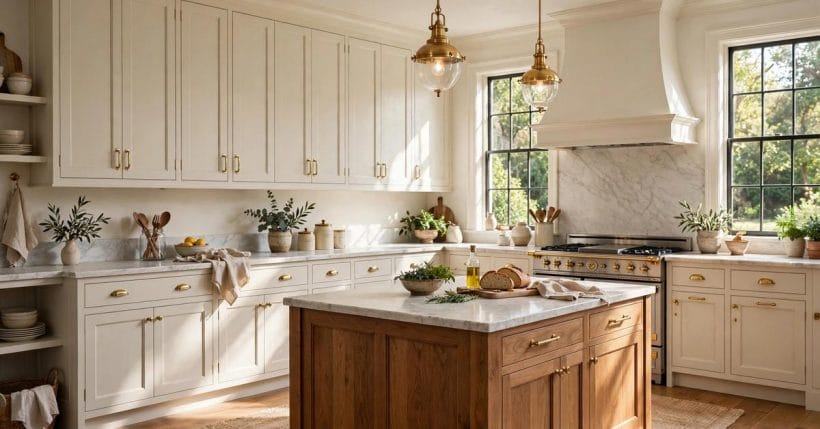
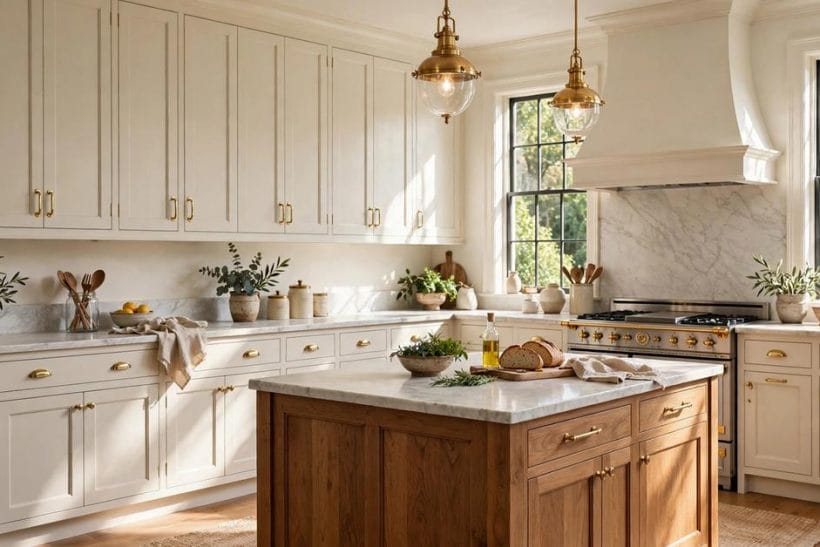
Walk into any kitchen and your eyes land on the cabinet doors before anything else. They cover more wall than the worktops, they frame the cooker and the sink, and they set the mood of the whole room in a single glance. That is why choosing a door style matters more than choosing a single colour or handle. The door is the face of the kitchen, and every other decision sits behind it.
This guide is a survey of the most popular kitchen cabinet door fronts, written for kitchens of all kinds, from compact galley layouts to generous family rooms. It stays with what each style looks like, how it feels to live with, and where it tends to suit best. It does not rank one style above the rest, because the right door depends on your room, your light, and how you actually use the space. Fitting and any structural changes are work for a professional; this guide covers choosing and comparing, not installing.
Before the details, one habit will save you time. Look at a door the way a joiner does: first the outer frame, then the centre panel, then the edge where the two meet. A flat centre with a simple frame reads calm and modern. A stepped or raised centre catches light and shadow and reads traditional. A glass centre opens the cabinet up entirely. Once you can see those three parts, every style below becomes easy to tell apart.
1. How to Read a Cabinet Door at a Glance
Every cabinet door is a small composition. The frame gives it structure, the panel gives it character, and the finish decides whether it feels warm, cool, bright, or muted. Change one of those three and the same kitchen can look entirely different, which is why showrooms often display the same door in several finishes side by side. Ask to see samples in your own light before deciding, because kitchen lighting at home is rarely the same as lighting in a shop.
The table below mirrors the infographic that follows it. It sums up the four most-seen styles in one line each, so you can hold the whole survey in mind before reading the detail.
| Door style | Look | Character |
|---|---|---|
| Shaker style | Framed panel, clean lines | Classic |
| Flat panel | Sleek flat front | Modern |
| Raised panel | Detailed centre | Traditional |
| Glass front | Open display feel | Airy |
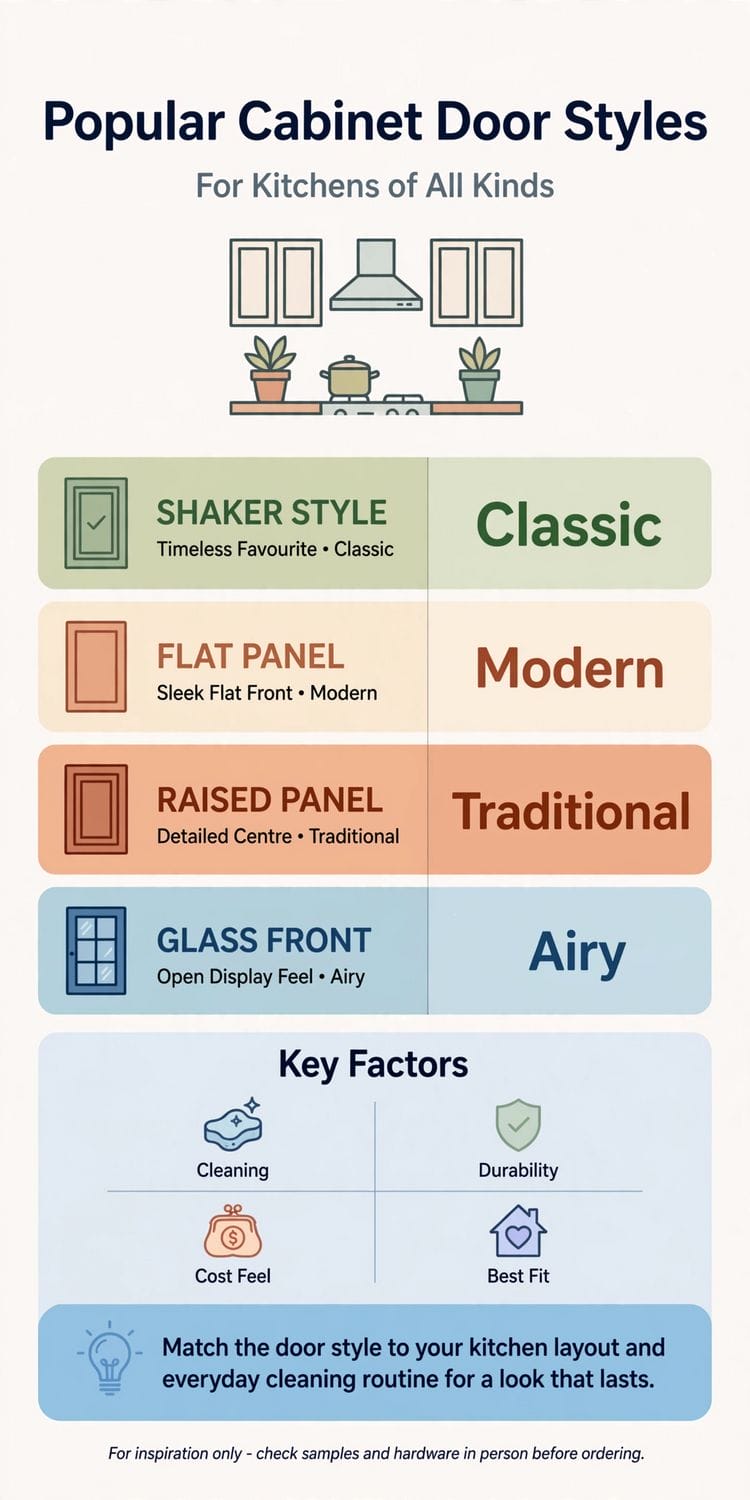
Keep that table beside you as you read on. The remaining sections add the styles that sit around those four, then turn to finishes, hardware, and the practical questions that narrow a long list down to one confident choice. A related starting point is our broader look at kitchen ideas, which shows how doors sit within whole-room layouts rather than on their own.
2. Shaker Doors: The Framed Classic
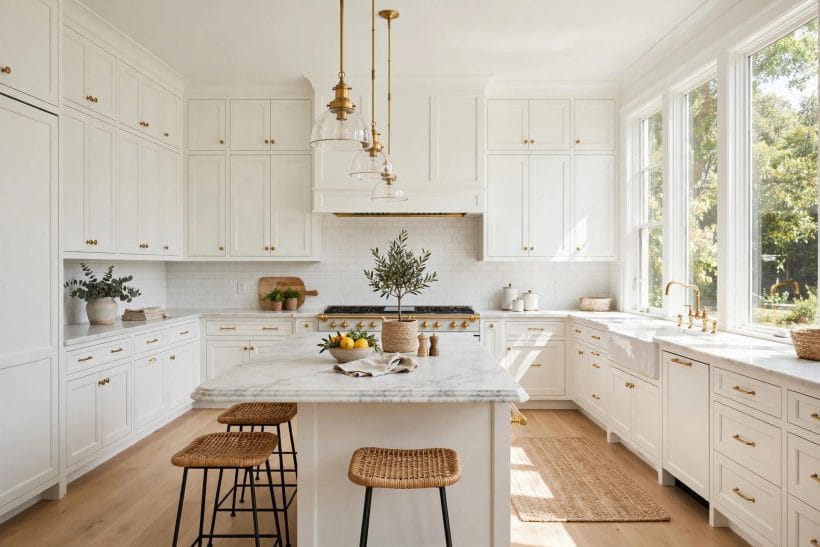
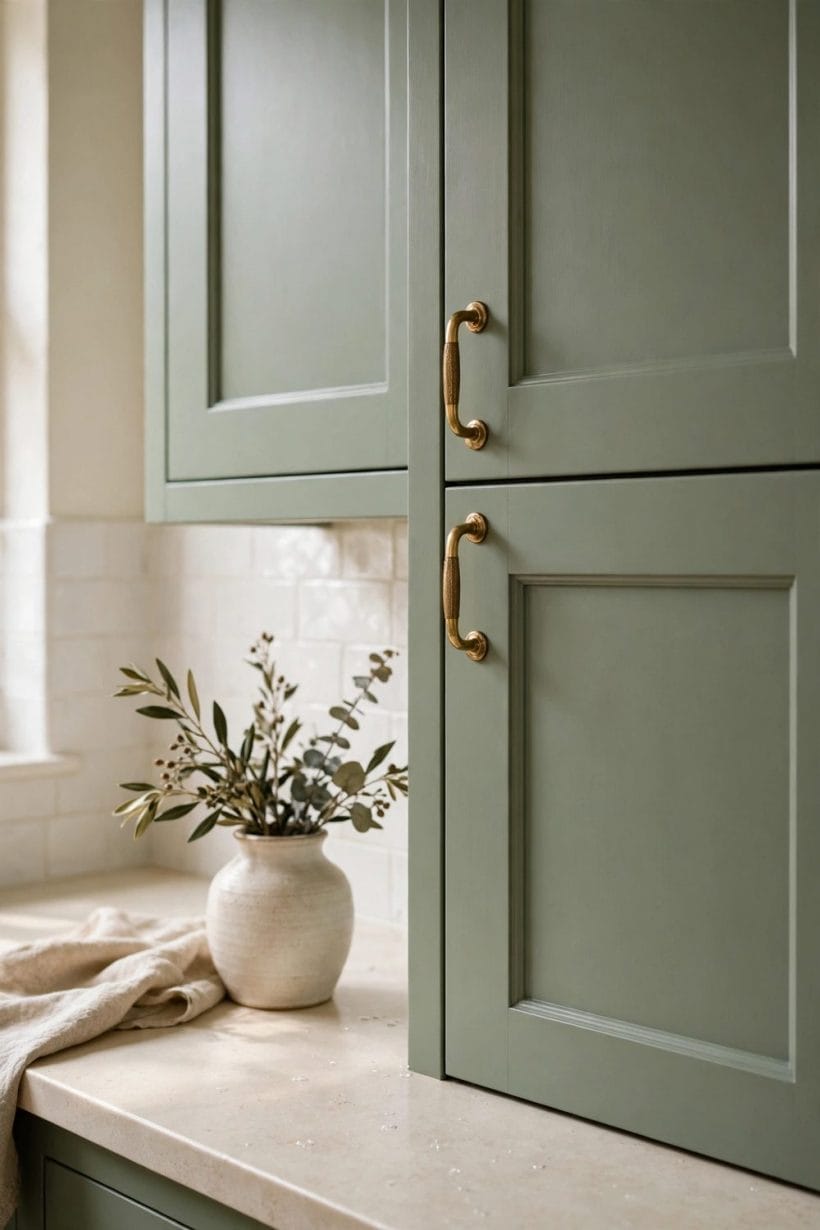
Shaker doors are the most widely recognised cabinet door style, and the easiest to describe. A flat centre panel sits inside a simple frame, with no carving and no extra ornament. The result is a door that looks tidy without looking plain, and that suits both painted kitchens and natural wood kitchens. It is the style most people picture when they think of a well-kept, unfussy kitchen.
Part of the appeal is balance. The frame gives the door enough detail to avoid looking flat, while the plain centre keeps the wall calm when dozens of doors stand together. That balance is why Shaker doors appear in cottages, townhouses, farmhouses, and contemporary homes alike. They do not demand a particular worktop or floor to make sense; they sit comfortably beside stone, timber, and simple tile.
Living with Shaker doors is straightforward. The recessed centre can gather dust along its inner edge, so a quick wipe along the frame is part of the routine, but there are no deep carvings to trap grime. Handles suit the style in almost any form, from small knobs to longer pulls, and changing handles later is a simple way to refresh the look without replacing a single door. If you want one safe, long-lived choice, this is usually where the shortlist starts.
3. Flat-Panel Doors: The Modern Minimal
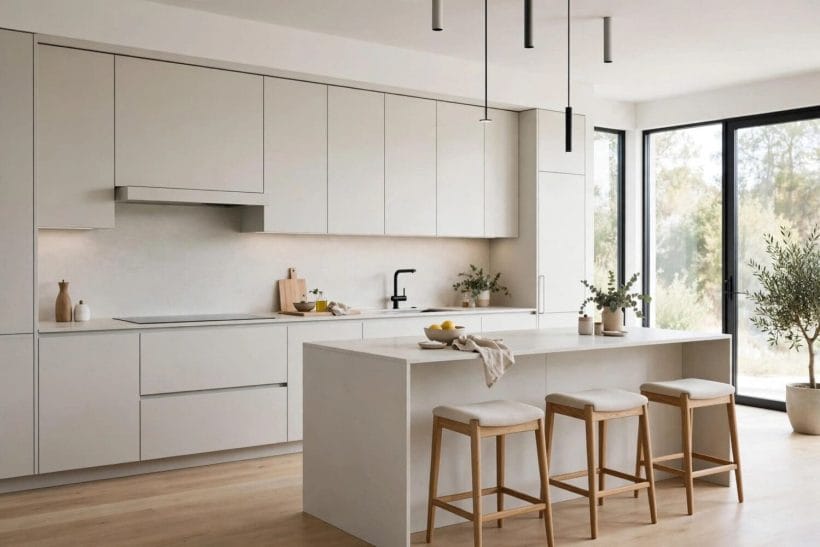
Flat-panel doors, sometimes called slab doors, have no frame and no raised centre at all. The whole front is one smooth surface, which gives a kitchen its cleanest, quietest appearance. In a small kitchen this matters: with no frames breaking the wall into boxes, the room can feel calmer and a little larger, especially in a pale finish.
The simplicity of a flat door puts the finish under the spotlight. A wood grain shows fully, with nothing interrupting it, and a painted finish reads as one continuous colour. That is a strength when the material is beautiful, and it is also why samples matter so much here. Look at a full door, not a small chip, and check it in daylight and in evening light before committing.
Handles on flat-panel doors deserve a thought of their own. Many modern kitchens use slim edge pulls or push-to-open fittings so nothing breaks the flat plane, while others add long bar pulls for contrast and grip. Either approach works; the point is to decide handle and door together, since the handle is the only detail on an otherwise blank front. For a compact cooking space, our tiny kitchen ideas show how flat fronts keep tight layouts feeling open.
4. Raised-Panel Doors: Depth for Traditional Kitchens
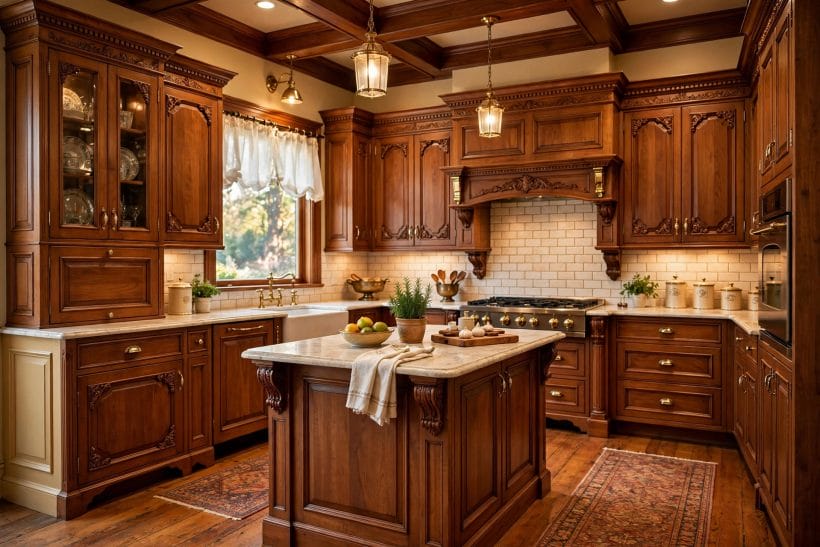
Raised-panel doors are the traditional counterpart to Shaker doors. Where Shaker centres sit flat, raised centres step forward, catching light along their bevelled edges and giving the door a sense of depth. Seen across a whole wall, that depth creates a rhythmic, furniture-like effect that suits rooms with cornices, panelled walls, and classic detailing.
This is the style to consider when the rest of the house leans traditional. Raised panels pair naturally with detailed architraves, patterned tile, and warmer wood tones, and they give a large kitchen a sense of occasion that a flat door cannot. In a very small or very plain room, though, the same depth can feel busy, so weigh the room you have rather than the room in the photograph.
Upkeep is the honest trade-off. The stepped edges and corners need a little more attention during cleaning than a flat front, and the detail shows wear sooner if it is scrubbed harshly. A soft cloth and a gentle routine keep them looking their best. If you love the look but want less upkeep, consider raised panels on wall cabinets and a simpler door below, a mix many kitchens carry gracefully.
5. Glass-Front Doors: Display and Light
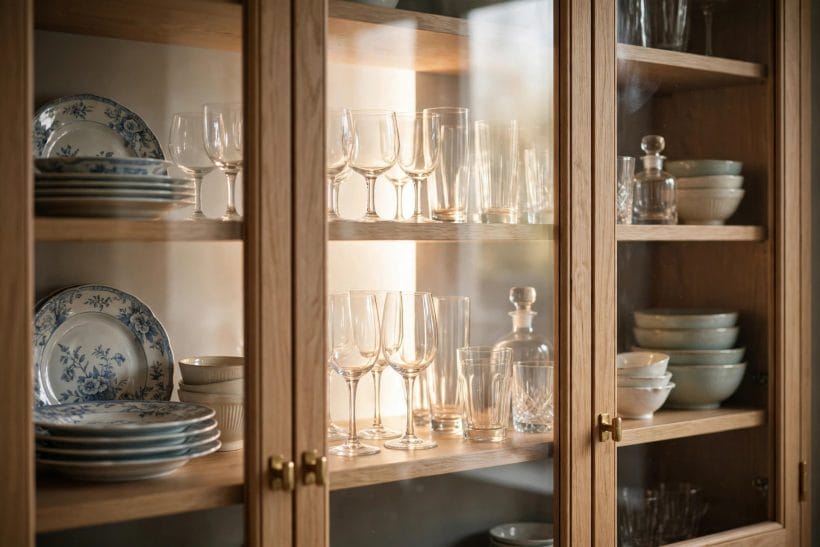
Glass-front doors replace part or all of the centre panel with glass, turning a closed cabinet into a display case. They suit kitchens where the contents are worth showing: plain crockery, glassware, cookbooks, or a collected set of bowls. Used across a whole wall they can make a kitchen feel lighter, because the eye travels through the glass instead of stopping at a solid front.
The choice is rarely all-or-nothing. Many kitchens use glass on a few wall cabinets only, often flanking a cooker hood or above a dresser-style run, while the rest stay solid. That mix gives the airy feeling without the pressure of keeping every shelf tidy. Clear glass shows everything, while frosted or reeded glass softens the view and forgives a less-than-perfect shelf, so think about what will actually sit behind the door.
Light is the other reward. Glass fronts bounce daylight around a kitchen and let interior light spill out in the evening, which helps darker corners feel less enclosed. The glass itself needs wiping to stay clear, and fingerprints show more readily than on a painted door, so households with small children often reserve glass for higher cabinets. Chosen thoughtfully, though, a few glass doors can lift a whole room.
6. Beadboard Doors: The Cottage Texture
Beadboard doors carry narrow vertical grooves across the centre panel, giving a texture that reads instantly as cottage or country. The grooves catch light in thin lines, so the door has movement even in a single colour, and the effect suits kitchens with open shelving, butler sinks, and painted woodwork. It is a style with a clear personality, which is exactly its charm.
Because the texture is the decoration, beadboard doors rarely need ornate handles. Simple knobs or small cup pulls let the grooved panel do the talking, and a soft painted finish keeps the look gentle rather than busy. They pair well with plain worktops and simple floors, where the door texture can stand out without competing patterns.
The practical note is cleaning. Grooves collect dust more readily than a flat front, so a soft brush or a cloth worked along the lines is part of the routine. In a kitchen that sees heavy daily cooking, some households choose beadboard on wall cabinets and a smoother door at floor level, keeping the cottage character where it is seen most and easing the cleaning where splashes land. A look at tiny house designs shows how textured doors can warm a small, simple interior without overwhelming it.
7. Louvred Doors: Slats, Air and Texture
Louvred doors are built from angled slats rather than a solid panel, and they bring a very different quality to a kitchen: air. The slats let air move through the cabinet, which suits ventilated storage, and they cast a striped pattern of light and shade that changes through the day. The look leans coastal, tropical, or rustic, depending on the finish around it.
In practice, louvred doors are a specialist choice rather than a whole-kitchen default. They work well for a pantry cupboard, a utility corner, or a single run of cabinets where ventilation or texture is the point. Across an entire kitchen they can feel visually loud, so most rooms use them as an accent beside plainer doors. That restraint is what keeps them feeling intentional rather than themed.
Cleaning slats takes patience, since each one has two faces and a narrow gap, so weigh that honestly against the look. A soft duster worked across the slats keeps them presentable, and a painted finish hides dust better than a dark stain. If the slatted look appeals but the upkeep does not, a single louvred pantry door gives you the character with a fraction of the cleaning.
8. Finishes: Paint, Stain and Natural Wood
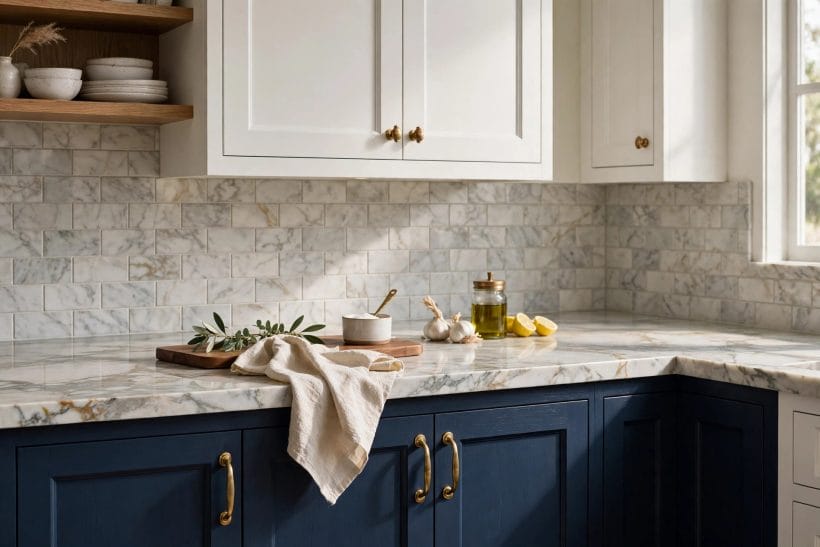
The same door style can look like three different kitchens once the finish changes, so treat finish as a decision in its own right. Paint gives the most even colour and the widest choice of mood, from soft whites that brighten a dark room to deep greens and blues that anchor a large one. A painted finish also forgives a mix of door styles, since colour ties them together across the wall.
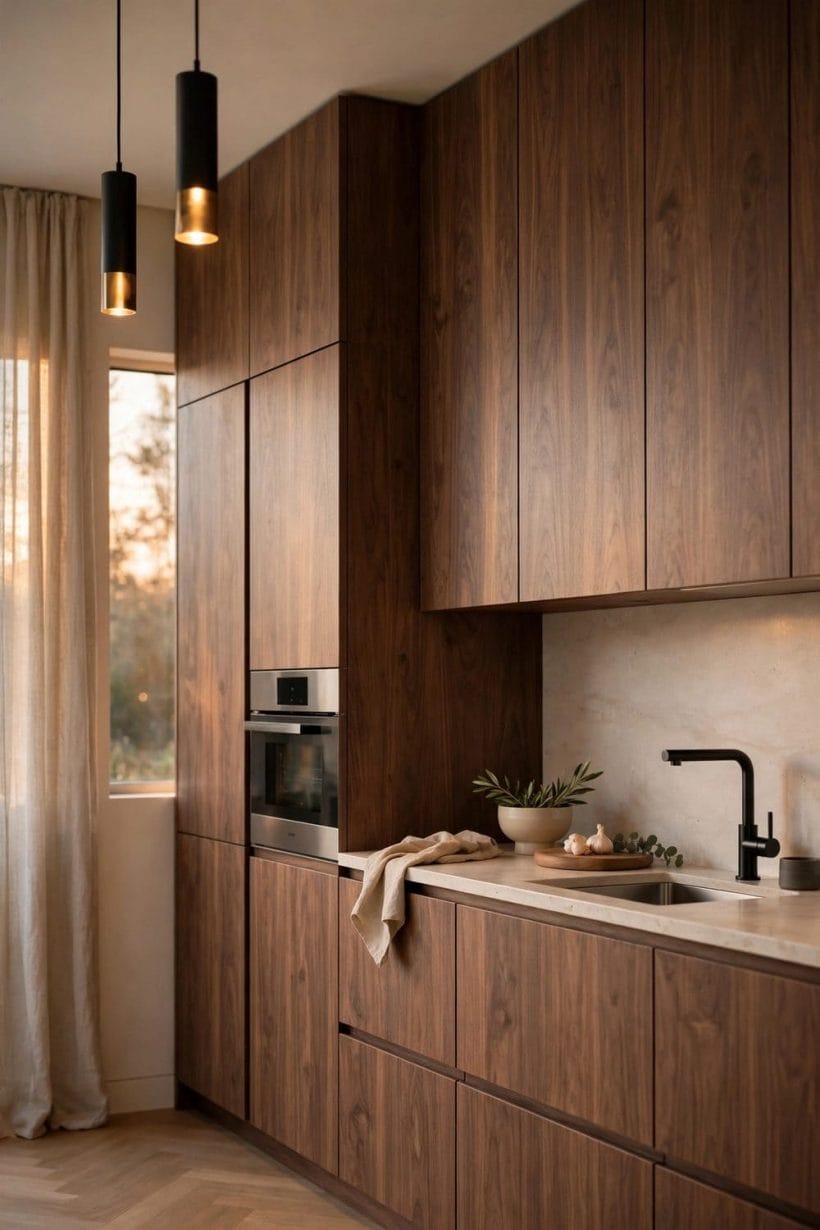
Stain keeps the wood visible and works with the grain rather than over it. It suits kitchens where timber is part of the character: oak, walnut, and other warm woods bring a natural variation that paint cannot copy, and each door shows a slightly different grain pattern. That variation is a feature, not a flaw, but it does mean you should judge a stained door from a full sample, not a photograph, so the tone in your light is no surprise.
Natural or clear-finished wood sits between the two. It protects the timber while letting its colour and grain show, and it ages gracefully as light gently deepens the tone over time. Whatever finish you lean toward, check it beside your worktop and floor samples together, not one at a time, since finishes argue with each other only when seen side by side. And avoid choosing a finish from a name alone: colour names vary between makers, so trust the sample in your hand, not the label. For whole-room context, tiny house interior design ideas show how a single finish choice carries across a compact home.
9. Hardware: Handles, Knobs and Hinges
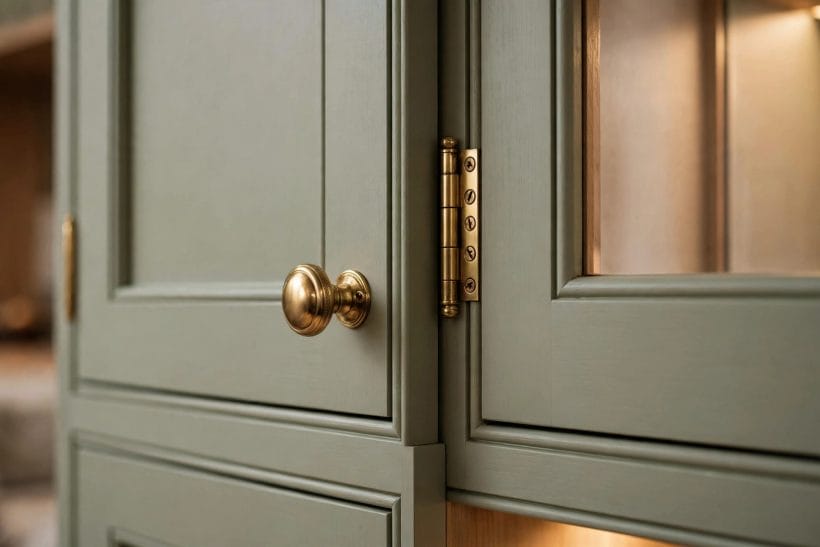
Hardware is the jewellery of the cabinet door, and it punches above its size. Knobs suit smaller doors and traditional styles, where a single point of detail feels right. Longer pulls suit wide drawers and modern fronts, where the hand needs a comfortable grip across a broad span. Cup pulls, the half-moon shape seen on farmhouse kitchens, suit drawers below the worktop and add a vintage note without shouting.
Finish matters as much as form. Warm brass tones soften pale painted doors, dark bronze or black hardware sharpens white and wood alike, and brushed nickel sits quietly beside almost anything. Mixing two hardware finishes in one kitchen is possible, but it works best with a clear rule, such as one finish for doors and another for drawers, rather than a random mix that looks accidental.
Hinges deserve a mention because they decide how a door behaves, not just how it looks. Concealed hinges hide inside the cabinet and keep the front clean, while exposed hinges become part of the traditional look on some styles. Doors that close gently on their own are a comfort worth testing in person, especially on heavy solid doors. A close look at the hinge and handle together, in a showroom, tells you more than any catalogue photograph. When a door style is chosen, hardware is also the easiest thing to change later, so a door you love with handles you only like is still a good buy. The dining room next door often shares the same hardware language, as seen in tiny dining room ideas.
10. Choosing the Right Door Style for Your Kitchen
With the survey behind you, the choice narrows to a few honest questions. First, what does the rest of your home look like? A door that echoes the house, traditional in a period home, clean in a contemporary one, will feel settled in a way a fashionable door chosen alone may not. Second, how much light does the kitchen get? Pale flat or glass fronts lift a dark room, while deeper panelled doors come alive in a bright room where shadows can play across them.
Third, how do you cook and clean? A household that cooks daily and wipes down often will value a smooth, forgiving front, while a household that cooks lightly can carry more detail without noticing the upkeep. Fourth, how long do you want the look to last? Classic framed doors and simple flat fronts have stayed popular across decades of fashion cycles, while strongly themed styles date faster. There is no wrong answer here, only a trade between character now and longevity later.
Finally, test before you commit. Borrow full-size samples, prop them against your wall, live with them for a few days, and open and close them as you would in daily use. Notice how they look in morning light, in evening light, and with the room lights on. A door that still pleases you on the third day is the one to order. Professional fitters can advise on how a chosen style suits your existing cabinet frames, and on whether new doors alone will give the change you want. A floor plan helps this conversation enormously, which is why tiny house floor plans are worth a look even for larger kitchens: they show how door style and layout decisions belong together.
Final Considerations
Cabinet door styles are not a test with one right answer. They are a set of looks, each with its own strengths, and the best choice is the one that fits your room, your routine, and your eye. Shaker doors offer a safe classic, flat panels offer calm modernity, raised panels offer traditional depth, and glass fronts offer light and display. Around them, beadboard and louvred doors offer character in smaller doses, while finishes and hardware let you tune any style toward your own taste.
Start with the three-part reading habit from the opening section, shortlist two or three styles, and compare full samples in your own kitchen light. Ask a professional about fitting and about how new doors will sit on your existing frames, and take your time over the finish, since that is what you will see every day. A kitchen chosen this way does not chase a trend; it simply looks right, and keeps looking right, for years. For the room beyond the kitchen, tiny living room ideas show how the same calm, considered approach carries through a whole home.

0 Comments