
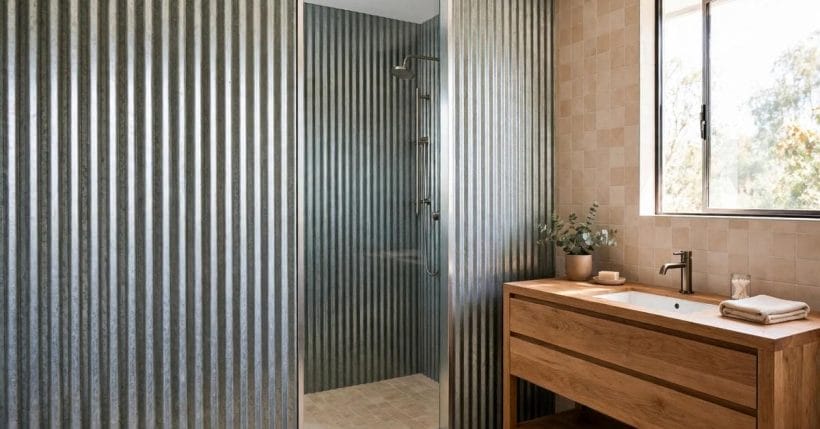
A shower wall made of corrugated metal stops you in your tracks. It looks rugged and honest, like something borrowed from a barn and given a second life indoors, yet it sits calmly beside wood, tile and glass.
This guide looks at one material only, the galvanized steel shower surround: what it looks like, how it behaves with water, how it fits a small bathroom, and what to ask a professional before it goes anywhere near your shower.
1. What a Steel Surround Is
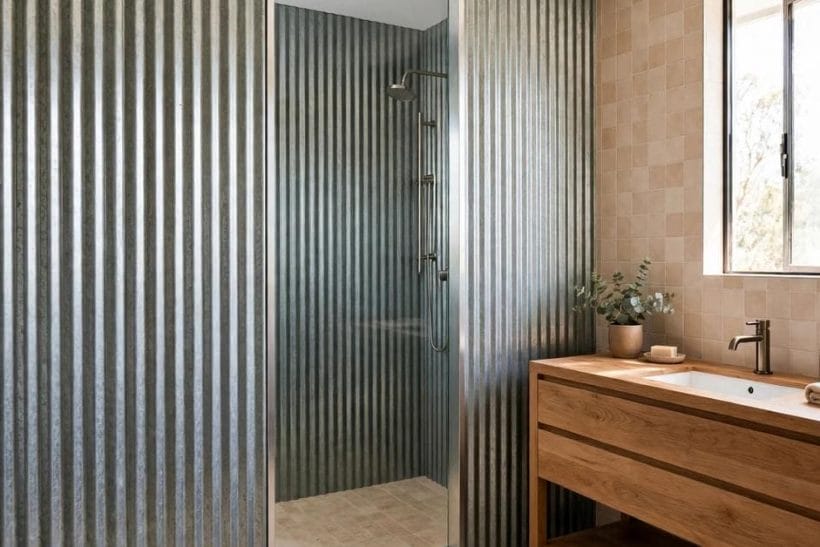
A steel surround is the wall lining inside a shower, made from corrugated panels of galvanized steel. Corrugation means the sheet is pressed into repeating ridges and valleys, so the wall has a rippled surface rather than a flat one. Galvanizing means the steel carries a protective zinc coating, which is what gives it that soft, mottled grey finish and helps it stand up to damp air. Together, those two qualities give the shower a look that is industrial without feeling cold, and practical without feeling plain.
It helps to be clear about what this guide covers and what it does not. The surround is the visible wall surface only. Behind it sits a whole system of waterproofing, drainage and plumbing that decides whether a shower stays dry, sound and safe over time. That hidden work belongs to qualified professionals, and nothing in this guide teaches you to build it yourself. Think of the steel as the face of the shower, and the waterproofing behind it as the part that must never be improvised.
| Aspect | At a glance |
|---|---|
| Appearance | Bold, ribbed texture |
| Water handling | Sheds water well |
| Upkeep | Wipe-clean surface |
| Warmth | Cool to the touch |
| Panel fit | Cut to the shower |
| Longevity | Hard-wearing finish |
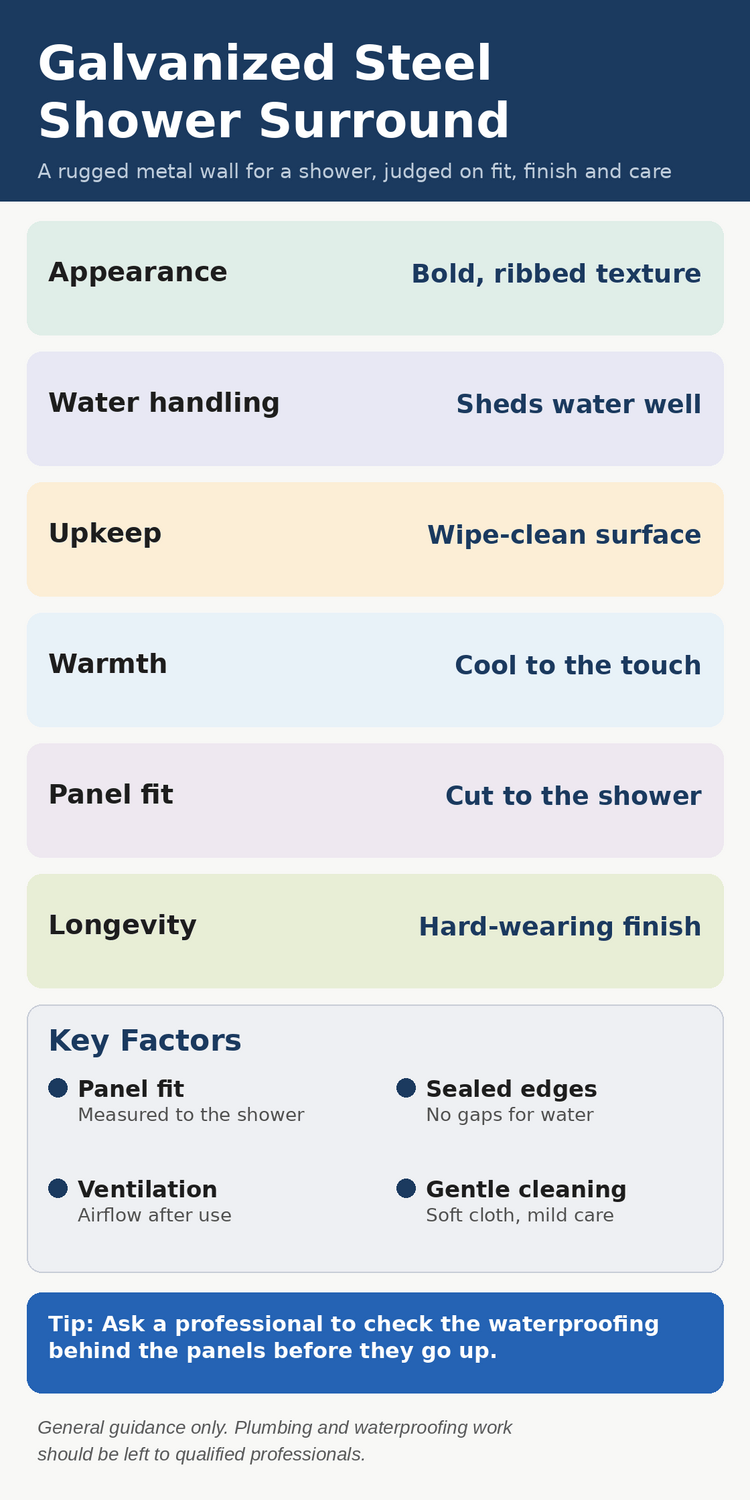
The table above mirrors the infographic, and it is a useful way to hold the whole idea in your head before you look at the details. A steel surround is chosen for its texture first and its toughness second, and it suits homes that like materials to look like themselves rather than pretending to be something else. If your bathroom already leans toward wood, stone or plain tile, steel can sit alongside those materials without shouting for attention, because its grey tone is quiet even when its ridges are bold.
For the wider picture of planning a compact washroom, tiny bathroom ideas show how a shower wall, a vanity and storage can share a small room without crowding each other. A steel surround is only one element in that room, and it works best when the rest of the bathroom gives it room to breathe, with plain surfaces nearby to balance its strong pattern.
2. The Look: Ribs, Light and Texture
The first thing anyone notices about a corrugated wall is the rhythm of its ridges. Light runs along each ridge and falls into each valley, so the wall changes through the day as daylight moves across it. In the morning it can look soft and silver, and by evening, under warm artificial light, it can look deeper and more dramatic. That play of light is the main reason people choose corrugated metal over a flat panel: a flat wall shows one tone, while a ribbed wall shows many.
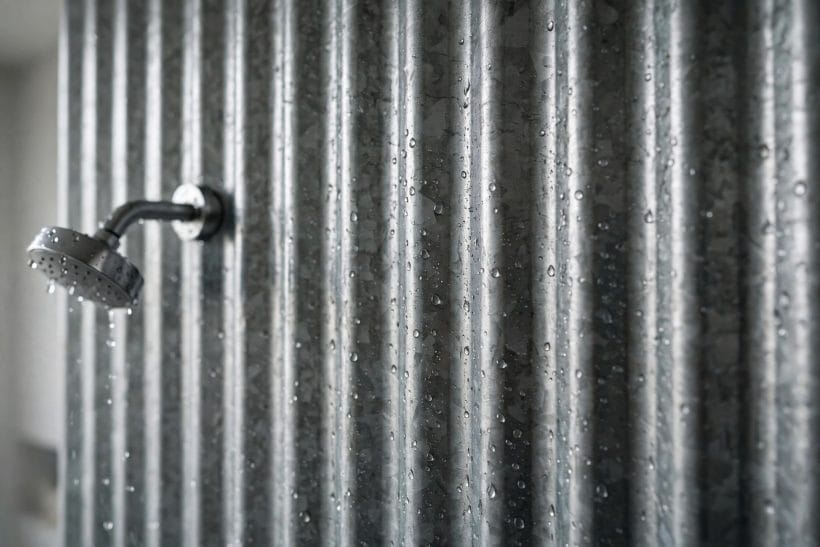
The ridges also give the shower a sense of direction. Panels are usually run vertically, so the eye travels upward, which can make a low ceiling feel a little taller and a narrow shower feel a little less boxed in. Run the panels horizontally and the effect reverses, stretching the wall sideways and making a short shower feel longer. Neither direction is right or wrong on its own; the choice depends on the shape of your shower and on which direction you want the eye to travel. A professional installer can show you how each direction reads in your own room before anything is fixed in place.
Colour is quieter than you might expect. Galvanized steel is not a bright silver, and it is not a painted grey either. It is a muted, slightly varied tone, with soft patches and a faint spangle where the coating has settled. That variation is part of the material’s character, not a flaw, and it means no two panels look exactly alike. If you love perfectly even surfaces, that variation may bother you. If you love materials with a visible history, it is exactly the point.
The finish also changes how the rest of the bathroom reads. Wood looks warmer beside grey steel, white tile looks crisper, and plants look greener, because the metal itself adds almost no colour. That neutrality is why steel works in so many bathroom styles, from farmhouse to industrial to a plain modern room that needs one strong texture to stop it feeling flat.
3. How Water Behaves on Metal
A shower wall lives in water, so the honest question is not whether it looks good dry, but how it behaves wet. Corrugated steel sheds water well, because droplets run down the valleys of the ridges and off the wall rather than pooling on a flat surface. After a shower, the wall dries in streaks along the ribs, which is a normal part of the material’s behaviour and not a sign that something has gone wrong.
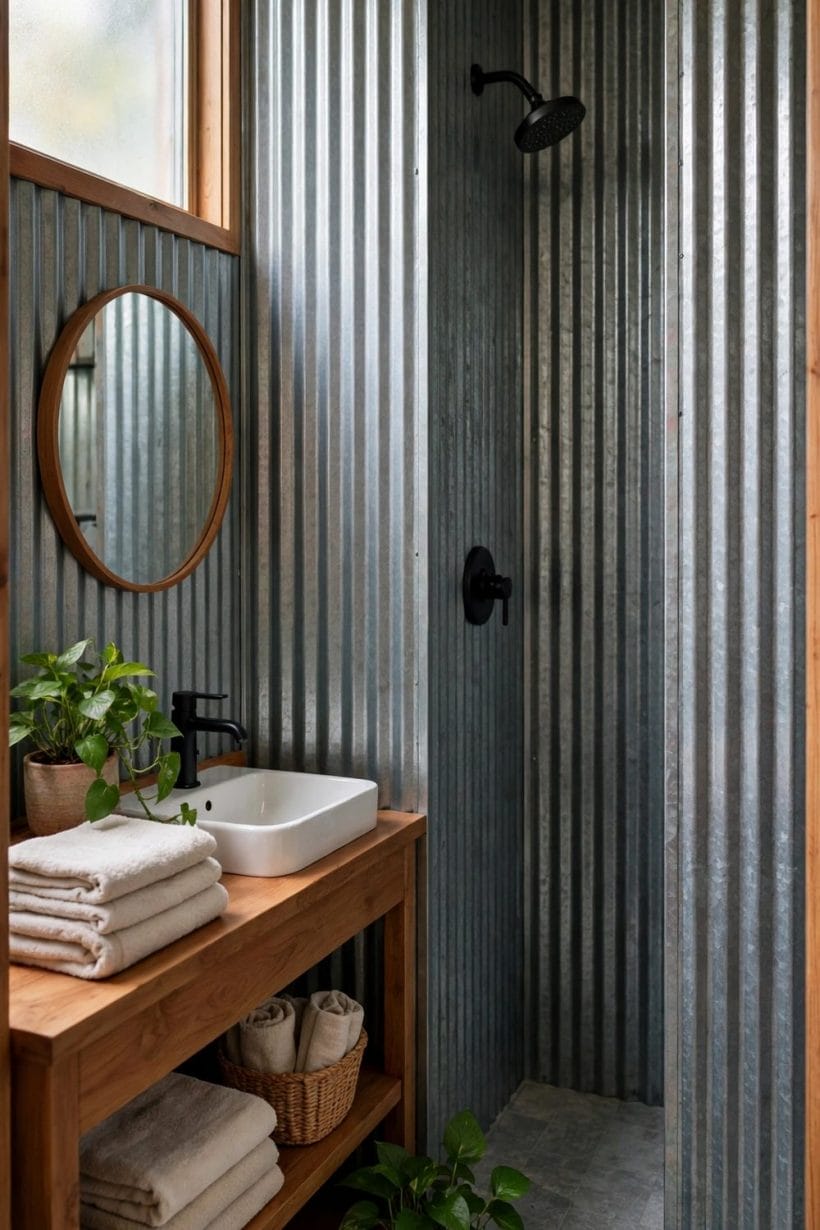
That said, water behaviour on the surface is only half the story, and it is the less important half. What matters far more is what happens at the edges: where panels meet each other, where they meet the tray or floor, where they meet a glass panel, and where pipes pass through. Those junctions are where water can find its way behind a wall if they are not sealed and detailed properly. Sealing and detailing are professional work, and they should be planned before the panels are ordered, not discovered after they are up.
Ventilation matters just as much. A bathroom that stays damp after every shower will test any wall material, steel included. Good airflow, whether from a window, a fan, or both, helps the room dry between uses and keeps the whole space feeling fresh. If your bathroom has no reliable way to move damp air out, that is a problem to solve with a professional before you fall in love with any particular wall finish.
It is also worth thinking about splashing beyond the shower itself. A steel surround usually covers the walls inside the shower, but water does not always respect that boundary. A well-planned shower keeps the wet zone contained, with a tray, a screen or a curtain arrangement that suits the room, so the floor outside stays dry and the walls beyond the shower are not asked to do a job they were not chosen for.
4. Fitting Into a Small Bathroom
Small bathrooms are where a steel surround can shine, because the material does a lot of visual work without taking up any floor space. The panels sit on the wall, so they do not steal room from the shower itself, and their vertical ridges can make a compact shower feel taller and more deliberate rather than cramped. In a tiny home bathroom, where every surface is close at hand, that sense of intention matters: a wall that looks chosen, rather than left over, lifts the whole room.
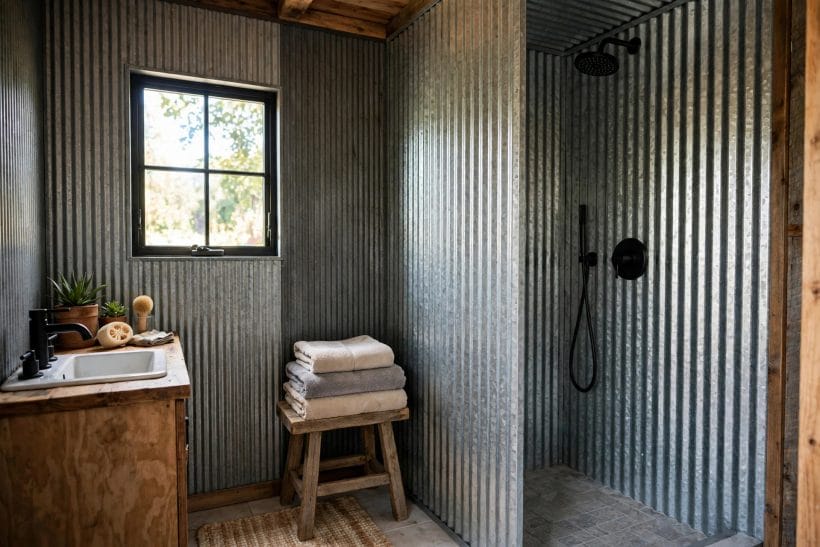
Planning a small bathroom starts with the layout, not the material. Where does the door swing, where does the vanity sit, and how much clear space is left to step in and out of the shower comfortably? A steel surround should be fitted around those answers, not the other way round. Panels are cut to the shower, which means the shape of the shower comes first and the metal follows it. If the shower is an awkward shape, a professional can advise whether the panels can follow it cleanly or whether a simpler shower shape would serve the room better.
Light deserves a thought in a small room too. A corrugated wall catches light and throws it back in stripes, which can brighten a shower that might otherwise feel like a dark corner. A small window, a well-placed light, or a glass panel that lets light in from the rest of the bathroom will all help the steel read as bright rather than heavy. In a windowless bathroom, the lighting plan becomes even more important, because the wall will only look as good as the light that falls on it.
For ideas on how small rooms are laid out as a whole, tiny house floor plans show how bathrooms sit alongside kitchens, sleeping areas and storage in compact homes. A shower surround is a small part of that plan, and it works best when it is chosen after the layout is settled, not before.
5. Where Metal Meets Tile and Trim
Very few showers are steel from floor to ceiling on every wall. Most combine the metal with other materials, and those junctions are where the design either comes together or falls apart. Steel beside tile is the most common pairing: the tile might run above the metal, beside it, or on the wall opposite, and each arrangement gives a different balance between industrial texture and clean, plain surface.
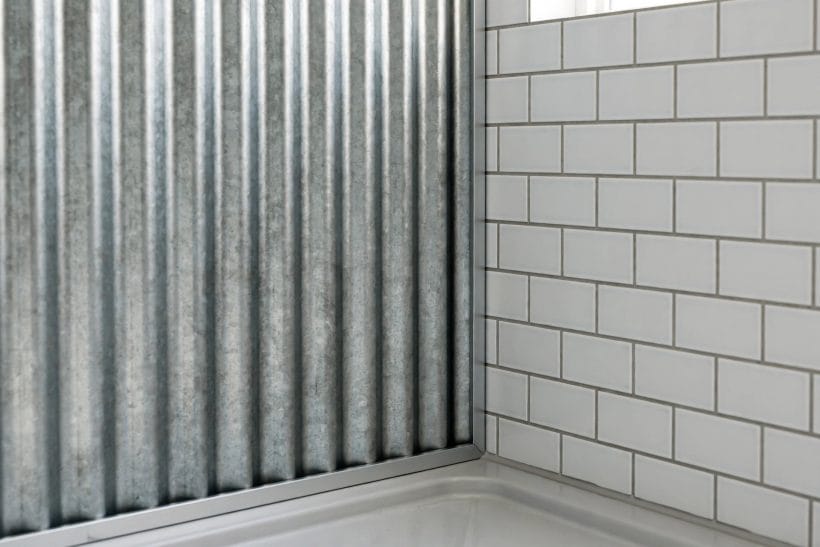
Trim is the quiet hero of these junctions. A neat edge strip where metal meets tile, a clean line where panels meet the tray, and a tidy finish around a shower valve all make the difference between a shower that looks crafted and one that looks improvised. Trim also has a practical job, covering the cut edge of a panel and keeping the junction looking tidy as the room is used day after day. Ask a professional what trim options suit your panels, and look at finished examples before you commit, because trim is much harder to change once the shower is in use.
Glass is another frequent neighbour. A glass panel beside a steel wall lets light through while keeping water in, and the contrast between clear glass and ribbed metal is one of the most pleasing combinations in a modern bathroom. The glass needs its own proper fixing and sealing, which again is professional work, but visually the pairing is simple: the metal gives texture, the glass gives openness, and neither competes with the other.
Think about the junctions in your own shower before you choose anything. List every place where one material will meet another, and ask how each junction will be finished. A shower with well-thought-out junctions will look good for years, while a shower where junctions were an afterthought will show it every time you step inside.
6. Warmth, Sound and Everyday Feel
Metal feels different from tile or stone, and it is worth knowing how before you commit to it. Steel is cool to the touch, which can feel refreshing on a warm day and brisk on a cold morning. It warms up under a hot shower, but it will never feel as warm as wood, and it will never hold warmth the way a thick stone wall does. If you dislike cool surfaces, a steel surround may not be the right choice for a bathroom you use first thing on winter mornings.
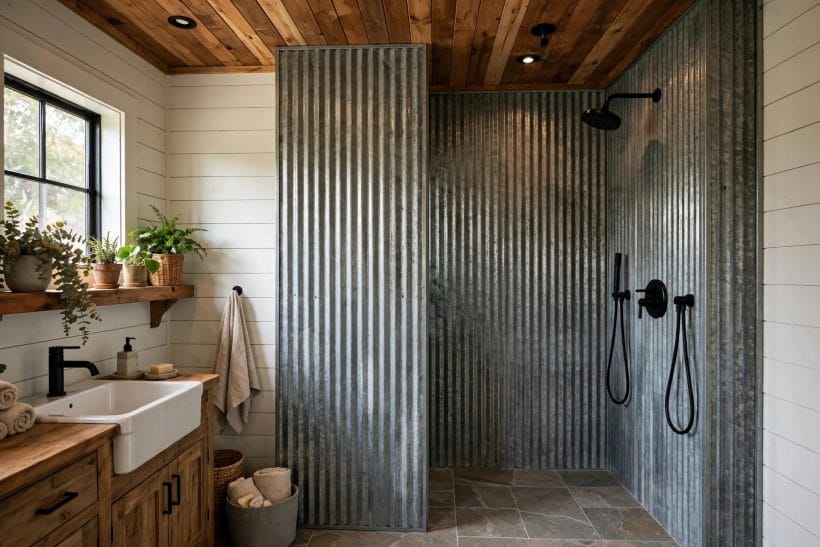
Sound is the other everyday quality people notice. Water on metal sounds different from water on tile: a little brighter, a little more present. Some people enjoy that lively sound, finding it part of the shower’s character, while others prefer the softer sound of tile. There is no right answer, only a personal one, and the only way to know your own preference is to stand in a shower with a metal wall, if you can find one to visit, or to listen carefully to how you feel about the sound of rain on a metal roof, which is a rough cousin of the same effect.
The ridges also change how the shower feels to clean and to touch. Running a hand along the wall, you feel the rhythm of the ribs rather than a smooth plane. Towels, sponges and cleaning cloths catch slightly on the ridges, which is not a problem, only a difference. Over time, most people stop noticing the texture at all, and it simply becomes the feel of their shower, in the same way that a tiled wall becomes familiar after a few weeks.
For the broader question of how a home’s materials work together, tiny house designs show how one strong texture can anchor a room while quieter materials do the supporting work. Steel is an anchor material: it should be the boldest texture in the bathroom, with everything else a little calmer, so the room feels balanced rather than busy.
7. Pairing Metal With Wood and Tile
Steel rarely stands alone, and its best partnerships are with materials that soften it. Wood is the classic partner: a wooden vanity, a wooden stool, a wooden bath mat or a timber ceiling all warm up a steel shower and stop the room feeling like a workshop. The contrast works because the two materials are honest opposites, one grown and warm, the other made and cool, and together they feel more like a home than either would on its own.
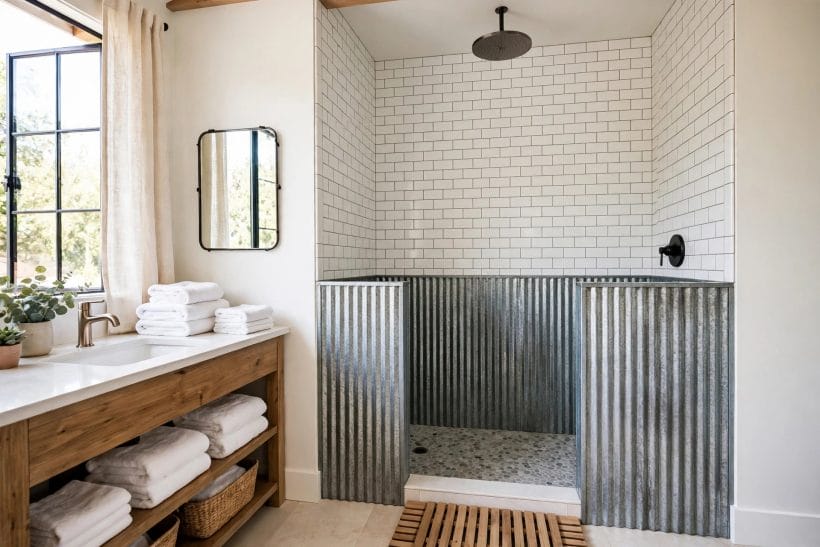
Tile is the second great partner, and it offers a different kind of balance. Where wood warms the room, tile cleans it up, giving the eye a smooth, plain surface to rest on between the ribs of the metal. White tile is the safest choice, because it brightens the room and lets the steel be the star, but soft neutral tiles work just as well. The key is to keep the tile plain: a busy patterned tile beside a ribbed metal wall gives the eye too much to do, and the room can start to feel restless.
Plants, towels and simple accessories do the rest of the softening. A trailing plant on a shelf, a stack of folded towels, a wooden ladder rail for drying towels, all of these add warmth without competing with the wall. Keep accessories simple and let the steel carry the visual weight. A bathroom with a strong wall does not need strong accessories as well, and the calmest rooms are often the ones where only one thing is bold.
Colour in the rest of the room should follow the same rule. Soft whites, warm neutrals and natural wood tones all sit happily beside galvanized steel, while very bright colours can fight with it. If you love colour, bring it in through towels and plants, which are easy to change, rather than through fixed surfaces, which are not.
The kitchen offers a useful parallel for pairing strong and quiet materials, and tiny kitchen ideas show the same principle at work, with one bold surface balanced by plain ones. A bathroom follows the same logic: bold wall, calm neighbours, and the room feels considered rather than crowded.
8. Cleaning and Living With the Finish
Day to day, a steel surround is a forgiving wall to live with. Its surface wipes clean with a soft cloth, and because it is not porous in the way some natural materials are, everyday soap and water marks can be wiped away without a long routine. The ridges need a little more attention than a flat wall, because water and soap can sit in the valleys, but a cloth run along the ribs, following their direction, deals with that easily enough.
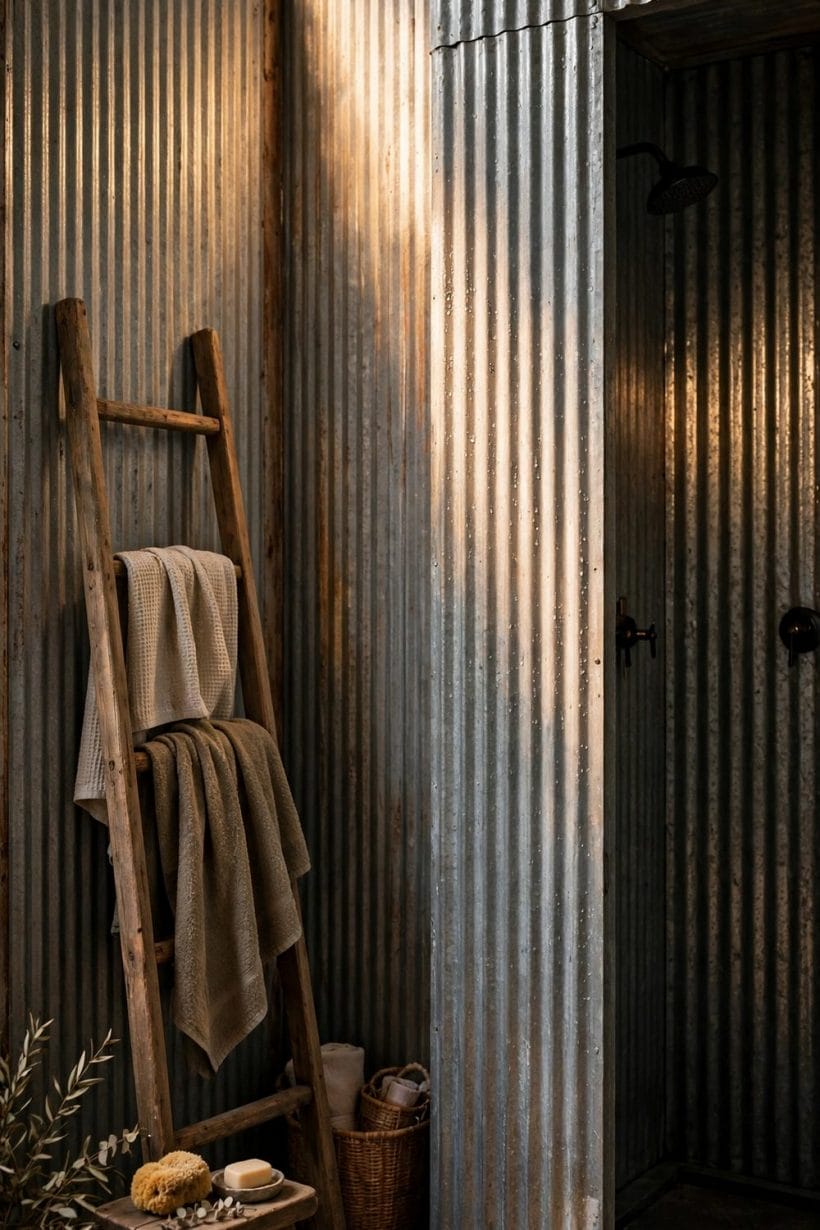
Gentle cleaning is the rule. Harsh scouring pads and aggressive cleaners can mark the zinc coating and dull the finish, so soft cloths and mild care are the safer habit. If you are unsure whether a cleaner suits the coating, test it in a hidden corner first, or ask the panel supplier or installer what they recommend for their own product. A finish that is treated gently will keep its soft, varied tone for a long time, while a finish that is scrubbed hard will show it.
Water marks are part of life with any shower wall, and steel is no exception. In areas where the water leaves mineral traces, droplets can dry into faint marks along the ribs. Regular wiping after use, or simply wiping the wall down as part of your normal bathroom routine, keeps those marks from building up. It is a small habit, and it is the main ongoing care a steel surround asks of you.
Over time, the coating will age, as all real materials do. That ageing is gradual and usually even, and many owners find they like the softer, more settled look that develops. If a panel is damaged, talk to a professional about repair or replacement rather than attempting a fix that could disturb the waterproofing behind it. The wall you see is only the outer layer, and anything that disturbs what lies behind it should be left to qualified hands.
Bedrooms and living spaces follow the same low-maintenance logic, and tiny bedroom ideas show how simple, honest materials keep small rooms feeling calm. A bathroom benefits from the same approach: fewer fussy finishes, more materials that can simply be wiped and left alone.
9. What to Ask a Professional Before You Commit
The most important section of this guide is also the shortest in spirit, because it is a list of questions, not a set of instructions. Before any steel panel goes up, a qualified professional should confirm that the waterproofing behind it is complete and suitable, that drainage is planned properly, and that every junction, from tray to glass to pipe, is detailed to keep water where it belongs. Those are not jobs to learn from an article, and this guide deliberately does not teach them.
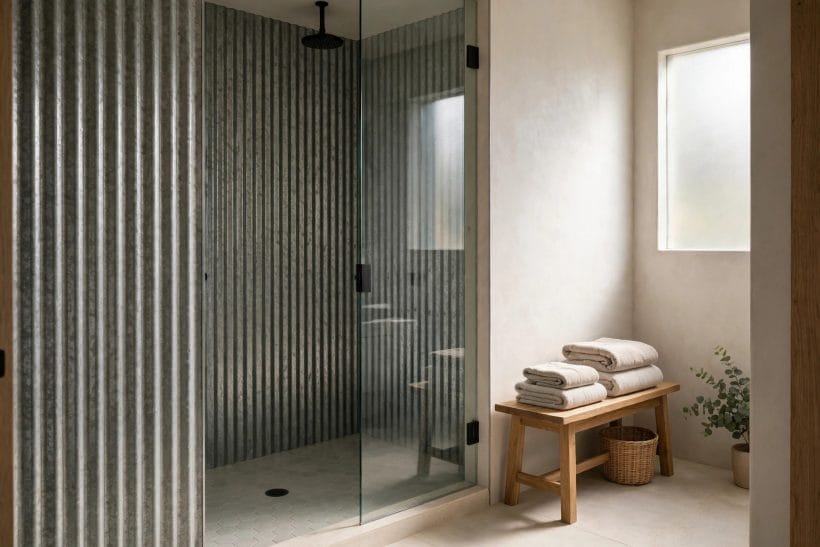
Ask how the panels will be fixed, and what happens if a panel ever needs to come down again. Ask how the edges will be sealed and trimmed, and how the seal will be maintained over time. Ask what the wall behind the panels needs to be, and whether your existing shower structure suits this material or needs work first. Ask about ventilation, and whether your bathroom dries well enough between showers. Each of these questions is a normal part of a professional conversation, and a good installer will welcome them.
Also ask to see finished work. Photographs of completed steel showers, or a visit to a finished bathroom if one can be arranged, will tell you more about the material than any description. Look at the junctions, not just the broad wall, because junctions are where the quality of the work shows. Look at how the trim sits, how the glass meets the metal, and how the tray edge is finished. Those details are the difference between a shower that looks good on the day it is finished and one that still looks good years later.
Finally, ask about the long term. How should the finish be cleaned, what should be avoided, and who should you call if a panel or a seal needs attention? A shower is used every day, so the answers to those questions matter as much as the look of the wall on day one. A professional who can answer them plainly is a good sign, and a shower planned with those answers in mind is far more likely to stay dry, sound and pleasant to use.
Interior planning as a whole benefits from the same habit of asking before committing, and tiny house interior design ideas show how small homes are planned around honest answers to practical questions. A steel shower surround deserves that same careful planning, because it is a long-term part of the room, not a decoration that can be swapped in an afternoon.
10. When Metal Is the Wrong Choice
Steel is not right for every bathroom, and knowing when to walk away is as useful as knowing when to choose it. If you love perfectly smooth, even surfaces, the variation and ridges of corrugated metal may irritate you rather than delight you. If you dislike cool surfaces underfoot and to hand on cold mornings, steel will remind you of that preference every day. If your bathroom struggles with damp and poor airflow, no wall finish will fix that underlying problem, and it should be solved first, with professional help, before any new surround is considered.
Style matters too. A bathroom that is already full of strong patterns, busy tiles and bold colours may not need another bold texture, and adding steel to a room that is already visually loud can tip it into restlessness. Steel works best as the single bold texture in a calm room. If your bathroom already has a hero, whether that is a patterned floor, a dramatic vanity or a striking tile, let that hero keep the stage, and choose a quieter wall for the shower.
There is also the question of resale and taste, which is personal but worth a moment’s thought. A steel shower is a distinctive choice, and distinctive choices suit homes where the owner plans to stay and enjoy them. If you are renovating mainly for a quick sale, a plainer, more conventional shower wall may be the safer choice, simply because it asks less of the next person’s taste. That is not a criticism of steel, only a recognition that strong character suits long-term homes best.
Living rooms face the same choice between a bold feature and a quiet background, and tiny living room ideas show how one strong element, balanced by calm neighbours, makes a small room feel intentional. A bathroom with a steel surround follows the same rule, and when the balance is right, the result is a room that feels both rugged and calm, industrial and homely, all at once.
Final Considerations
A galvanized steel shower surround is a wall with character: ribbed, grey, hard-wearing and honest about what it is. It sheds water well, wipes clean with gentle care, pairs beautifully with wood and plain tile, and gives a small bathroom a strong, deliberate texture without taking up any floor space. Its cool touch, its lively sound under water, and its varied finish are part of its charm, but they are also reasons to be sure it suits you before you commit.
The one rule that runs through this whole guide is also the simplest: the steel is the visible surface, and the waterproofing, drainage and plumbing behind it belong to qualified professionals. Choose the material for its look and feel, ask the right questions before it goes up, and let professionals handle everything that keeps the shower dry and safe. Done that way, a steel surround can be a lasting, characterful part of a bathroom you enjoy using every day.

0 Comments