
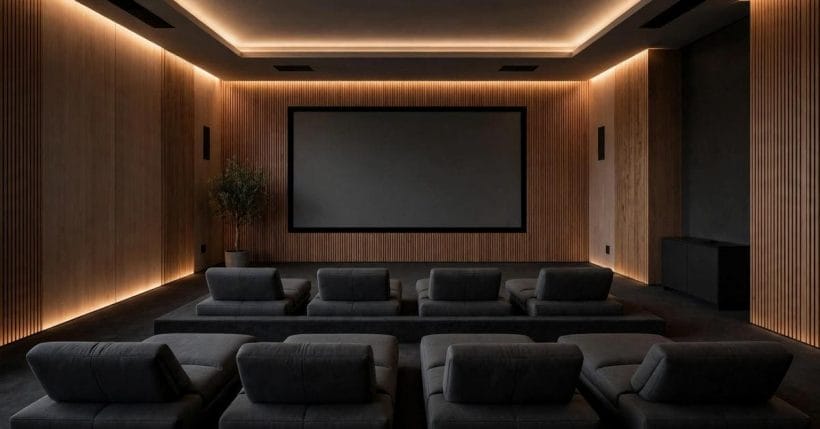
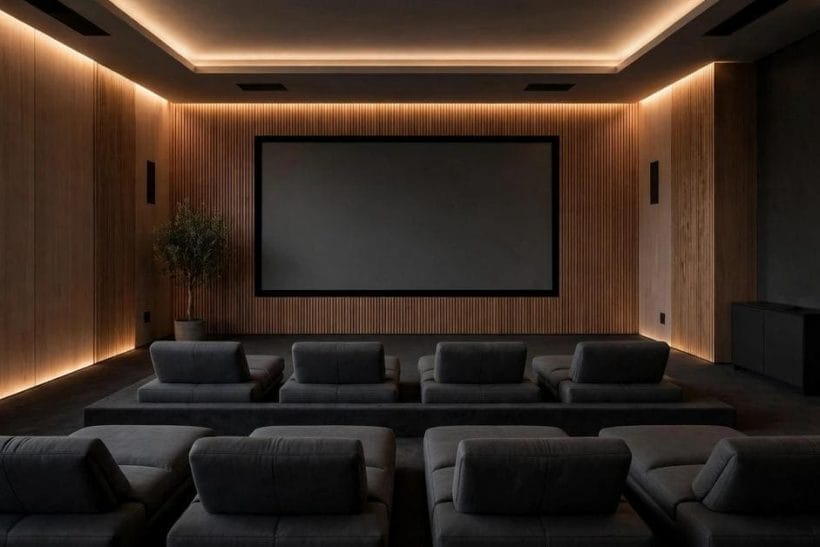
The lights go down, the room goes quiet, and the film takes over. A modern home theater is built for that moment: clean lines, calm colours, nothing in the way of the story.
Related Guide: Eames-Style Lounge Chairs: What to Check Before You Buy a Replica
This guide gathers seventy-five modern ideas, including how custom modern home theater seating can shape a room around comfort rather than clutter. Every idea stays modern: simple shapes, honest materials, a room that feels calm even when the screen is off.
1. What Makes a Theater Modern
A modern theater is not defined by gadgets or by a particular style of screen. It is defined by restraint. The room holds only what serves the film: comfortable seating, a clear view, soft sound and light that can be lowered in an instant. Everything else is kept quiet, hidden or left out entirely.
That restraint is what separates this guide from a general theater guide. The broader world of home theater rooms covers the whole subject, from classic dens to dedicated cinema builds. Here the focus is narrower: the modern expression only, where pale timber, dark calm walls, low seating and uncluttered surfaces do the work.
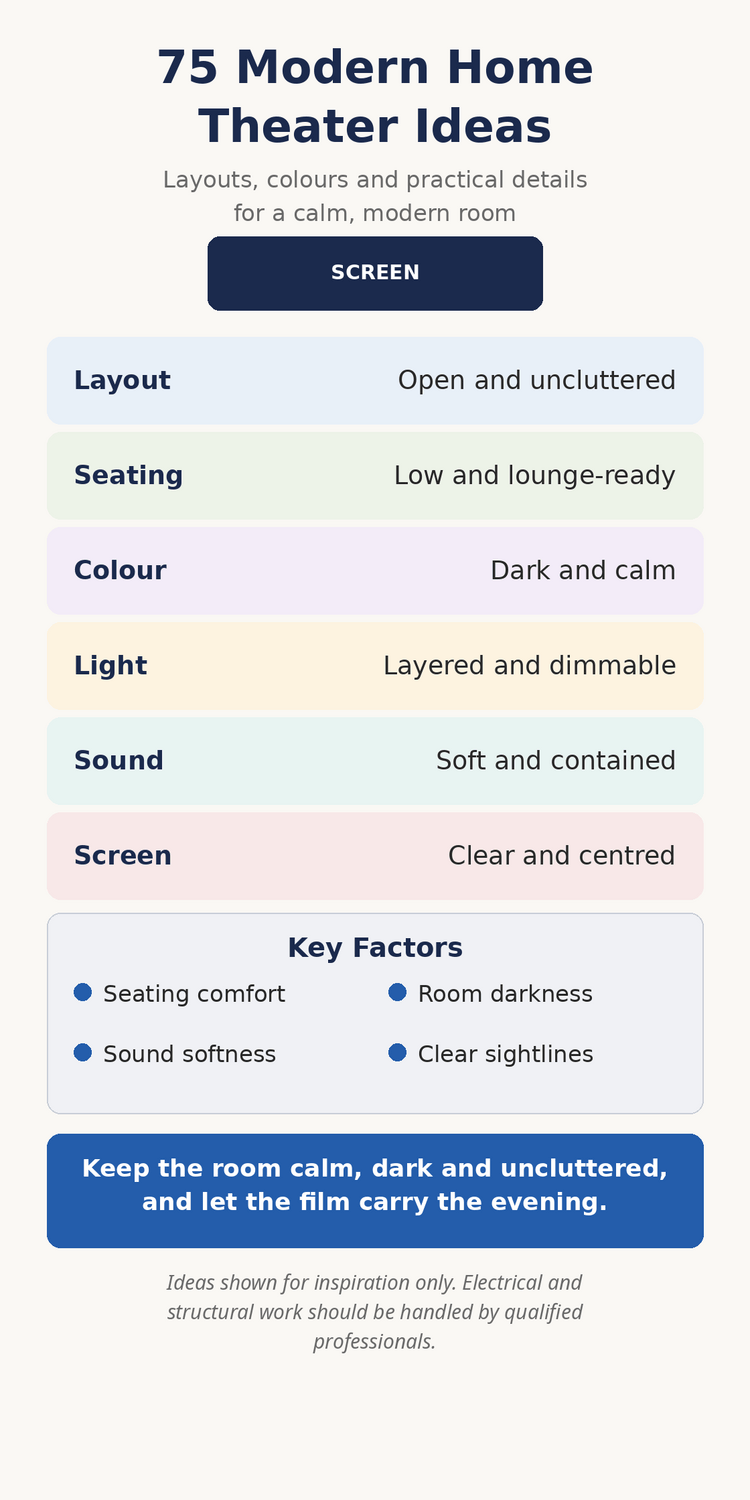
| Question | At a glance |
|---|---|
| Modern look | Clean lines, low seating, plain surfaces, one calm colour story |
| Layout first | Screen wall, clear sightlines, walkways kept open |
| Seating | Low, lounge-ready, soft fabrics, room to stretch out |
| Colour | Dark and calm, or pale and quiet, with a single accent repeated sparingly |
| Light | Layered and dimmable, never aimed at the screen |
| Sound | Soft surfaces, rugs, curtains and fabric panels to calm the room |
| Work to leave to professionals | Electrical changes, new wiring and any structural work |
Read the ideas below as a menu rather than a checklist. A small room may need only a handful, while a dedicated room can carry many. The through-line is always the same: keep it modern, keep it calm, and let the film lead.
Modern design also respects the room when it is not showing a film. A theater that looks calm in daylight, welcomes guests without fuss and tidies in minutes will be used far more than a room that only works in darkness. The ideas that follow keep that everyday life in mind alongside the film nights.
2. Modern Layouts That Put the Film First
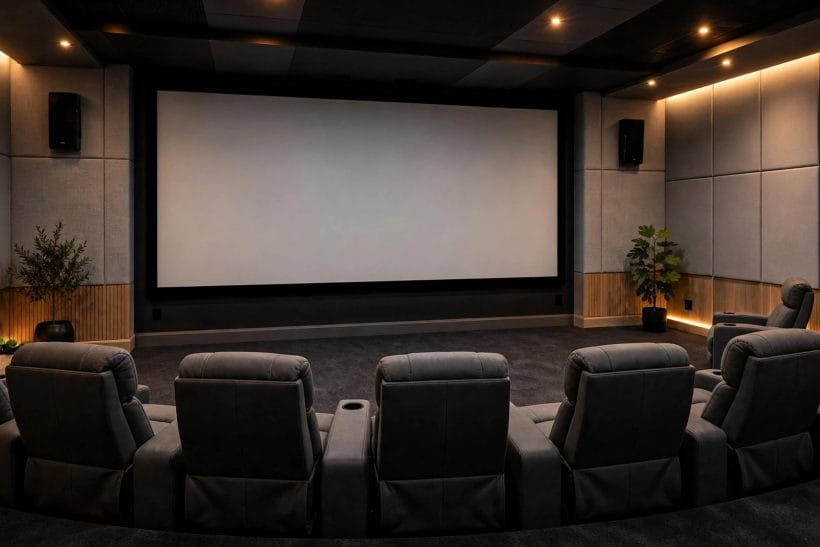
Layout is the quiet decision behind every good theater. Get the shape of the room right and the rest becomes easier, because seats, screen and light all fall into place around it.
Walk the room before committing to anything, and sit in the places where seats will go. A layout that feels generous on paper can feel cramped in practice, while a simple arrangement that respects walkways and sightlines rarely disappoints.
1. Start with the screen wall
Choose the screen wall before anything else, and let every other decision answer to it. A plain, unbroken wall gives the picture a calm frame and keeps the eye where it belongs.
2. Let seating face the screen squarely
Seats that face the screen directly are kinder on necks and attention than seats turned at an angle. Arrange the main row so every seat looks straight ahead.
3. Keep walkways clear on both sides
A modern room feels open because people can move without squeezing past furniture. Leave a comfortable path on each side of the seating, even in a modest room.
4. Raise the back row on a low platform
Where two rows are planned, a gentle platform lets the back row see over the front without turning the room into a staircase. Keep the step low and the edge clearly visible in low light.
5. Float seating away from the walls
Pulling seats slightly away from the walls makes a room feel designed rather than filled. The gap also gives sound room to breathe and makes cleaning simpler.
6. Shape the room around a single focal wall
One focal wall is enough. When the screen wall carries the drama, the other walls can stay plain, and the room avoids the busy feeling of competing features.
7. Leave breathing room around every seat
Seats need elbow room and leg room to feel like lounge seats rather than cinema stalls. A little extra space between seats reads as luxury in any size of room.
8. Plan the door so it never breaks the view
A door that opens into the sightline spoils the picture for everyone. Place entries to the side or behind seating so late arrivals slip in unnoticed.
9. Zone a small room with a rug, not walls
In a shared room, a large rug can mark the theater zone without building anything. The rug also softens sound, which suits a film room perfectly.
10. Keep the layout open enough to rearrange
Modern living changes, and a theater that can shift with it lasts longer. Choose pieces that move easily so the room can host films, guests and quiet evenings alike.
3. Modern Seating for Long Films
Seating is where a modern theater is won or lost. The best seat in the house should feel like an invitation to stay for the whole film, not a perch to endure it.
Comfort here means more than soft cushions. It means support that lasts through a long film, fabrics that breathe, and a position that lets viewers relax without fidgeting. Test seats properly, sitting as you would for a whole evening, before choosing.
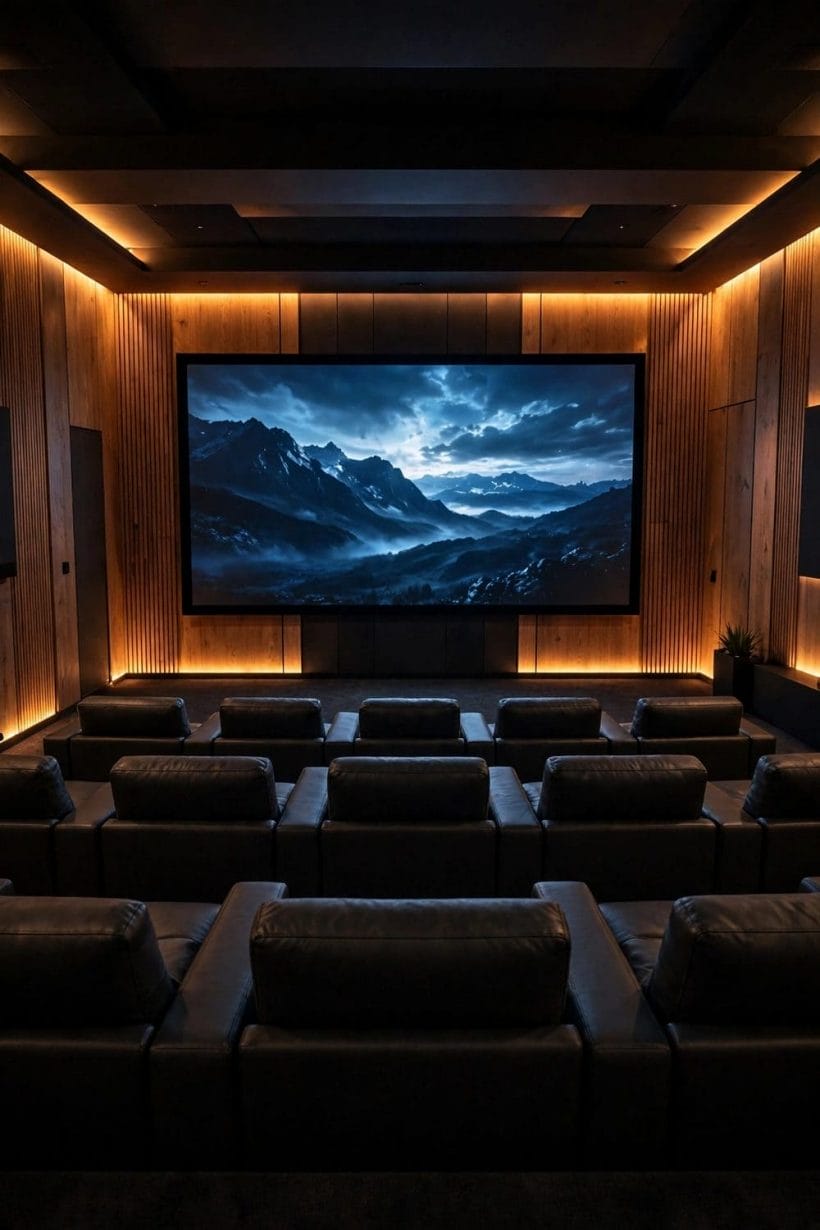
11. Choose low, lounge-ready seats
Low seats with deep cushions set the modern tone at once. They make the room feel relaxed and keep the screen wall as the tallest, most important element.
12. Pick a single row for a small room
One generous row beats two cramped rows in a small space. A single row gives every viewer the best view and leaves the room feeling open.
13. Curve the row gently around the screen
A soft curve brings the outer seats slightly toward the picture, so nobody watches from a sharp angle. Keep the curve gentle and the row will still read as modern and calm.
14. Mix a sofa with matching lounge chairs
A sofa for couples and chairs for solo viewers covers every kind of film night. Matching fabrics tie the mix together so it looks planned rather than assembled.
15. Give every seat a clear sightline
Check the view from each seat before settling the layout, not after. A seat with a blocked corner is a seat nobody will choose twice.
16. Add a chaise for long-film comfort
A chaise invites viewers to stretch out fully, which matters most during long films. Place it where it does not block the row behind it.
17. Keep seat fabrics soft and matte
Matte fabrics absorb light instead of bouncing it around the room. They also feel quieter to the eye, which suits the calm mood of a modern theater.
18. Choose seats that sit low to the floor
Low-slung seating keeps the room’s proportions modern and relaxed. It also leaves wall space above the seats for art, panels or simple shelving.
19. Leave a side table within reach
A small table for a drink or a pair of glasses is a small kindness that viewers notice. Keep tables low and simple so they never compete with the screen.
20. Let seating set the room’s colour story
When seats carry the room’s main colour, walls and floors can stay neutral. This is the simplest route to a modern palette that never feels busy.
4. Screens and Viewing Walls
The screen wall is the heart of the room, and modern design treats it with respect: plain, calm and free of clutter, so the picture can do the talking.
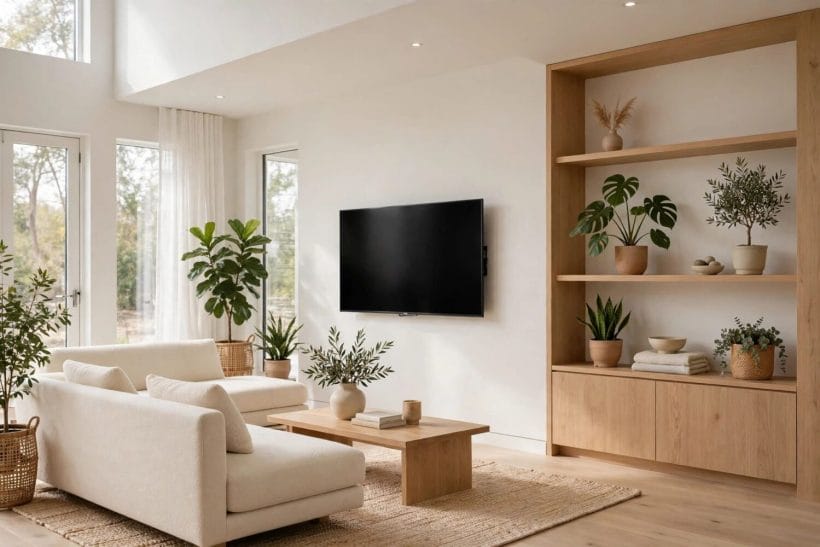
21. Centre the screen on the main wall
A centred screen looks intentional and gives every seat a fair view. Resist the urge to push it to one side to fit other furniture around it.
22. Frame the screen with a plain dark border
A simple dark frame helps the picture stand out against the wall. Keep the border plain and even, with no pattern to distract the eye.
23. Hide the screen behind a sliding panel
A sliding panel lets the room return to being a living space when the film ends. Timber or fabric panels both work, as long as they glide quietly.
24. Pair a screen with a low media console
A low console grounds the screen wall and hides the boxes that films need. Choose a console wider than the screen for a balanced, modern look.
25. Keep the wall behind the screen calm
Busy wallpaper or crowded shelves behind a screen fight the picture. A plain wall in a deep or pale tone lets the film hold attention.
26. Let the screen disappear when not in use
Modern rooms earn their keep by looking good with the screen off. A screen that retracts, slides away or blends with the wall keeps the room calm all day.
27. Balance screen height with seated eye level
The picture should sit comfortably in view from a relaxed seated position, without forcing viewers to look sharply up or down. Test from the actual seats before fixing anything.
28. Use a matte wall finish behind the screen
Matte finishes scatter light softly instead of throwing glare back at viewers. They also make dark colours look richer and more even.
29. Keep cables and boxes out of sight
Visible cables break the modern spell faster than almost anything else. Route them inside consoles, trunking or walls, and leave electrical changes to a qualified professional.
30. Let the screen wall stay the quietest wall
When the screen wall carries no shelves, no art and no clutter, the whole room feels calmer. Save display for the side walls, where it never competes with a film.
5. Colour and Walls for a Modern Mood
Colour sets the mood before a single frame plays. Modern theaters tend toward calm: deep tones for dedicated rooms, pale tones for shared spaces, and always a restrained hand.
Before painting, look at the room in both daylight and lamplight, since colours shift with the light. A tone that feels rich in the evening can feel heavy by day, so a shared room deserves a shade that works in both.
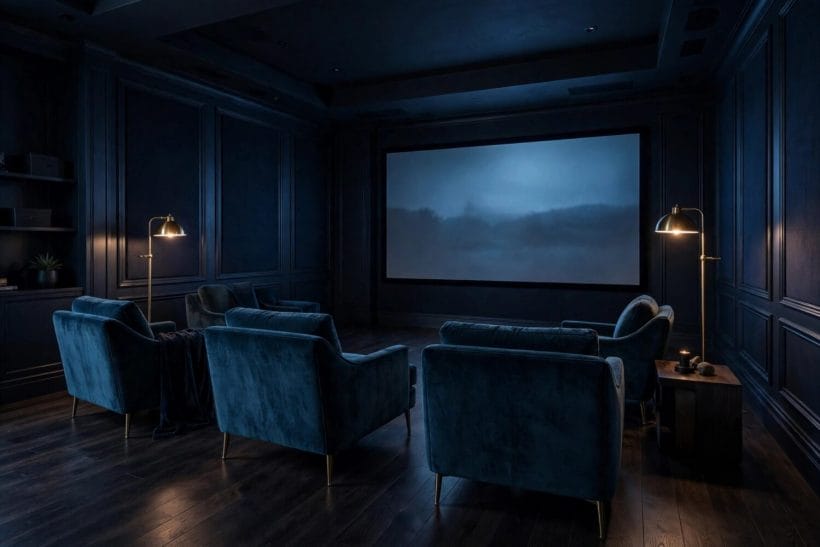
31. Paint the room in a deep, calm tone
Deep, muted colours help a room darken naturally and make the screen glow. Choose tones that feel restful rather than dramatic, so the room stays welcoming.
32. Keep one accent colour and repeat it sparingly
One accent, used in cushions, throws and a single piece of art, ties a room together. Two or three competing accents quickly turn a calm room into a busy one.
33. Use warm wood to soften dark walls
Timber slats, a wooden console or pale oak shelving stops a dark room feeling cold. Wood brings warmth that paint alone cannot, and it suits modern lines perfectly.
34. Try charcoal walls with pale seating
Charcoal walls with cream or pale grey seats create a striking modern contrast. The pale seats also make the room easier to navigate in low light.
35. Keep ceilings dark for evening films
A dark ceiling fades away once the lights drop, so the screen feels larger. In a shared room, a dark ceiling still works if the walls stay lighter.
36. Use soft grey for a lighter modern room
Soft grey suits rooms that must serve daytime life as well as film nights. It reads as modern without demanding darkness, and it pairs with almost any accent.
37. Let one timber tone run through the room
Repeating a single timber tone across console, shelving and trim gives the room a designed feel. Mixed timbers can work, but one tone is the calmer modern choice.
38. Keep wall decor minimal and large-scale
A single large piece of art suits a modern theater better than a crowd of small frames. Large-scale decor holds its own against a screen without cluttering the walls.
39. Use fabric panels for colour and softness
Fabric wall panels add colour while also calming sound, which makes them ideal for a film room. Choose plain fabrics in the room’s palette for a seamless look.
40. Repeat the darkest tone in small details
Echo the darkest wall tone in cushions, throws or the rug border, and the room will feel deliberately composed. Small repeats are more effective than large blocks of the same colour.
6. Light That Serves the Film
Light in a modern theater is a tool, not a decoration. It should guide people to their seats, set the mood, and then step aside the moment the film begins.
Think of lighting in layers that can be adjusted independently. When each layer has its own control, the room can move from bright and welcoming to dark and focused without any single light doing all the work.
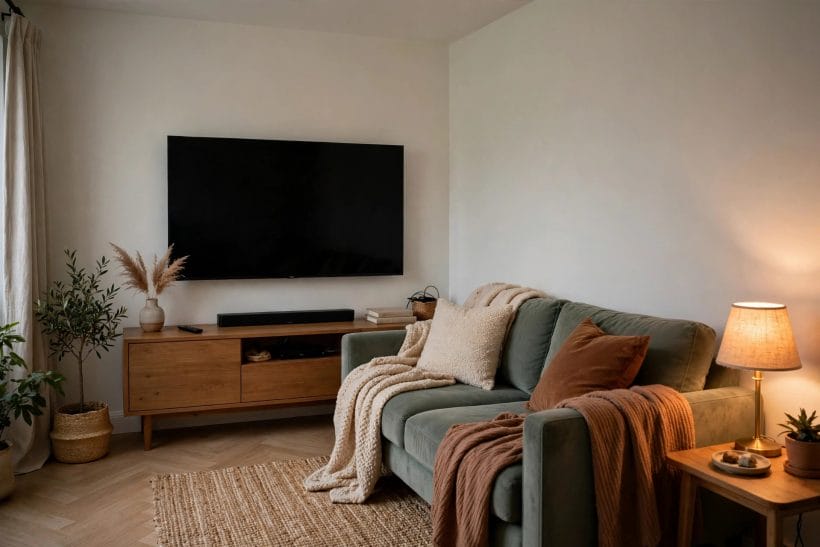
41. Layer light instead of relying on one source
A mix of ceiling, wall and lamp light gives the room flexibility for films, guests and cleaning. One harsh overhead source flattens a room and tires the eyes.
42. Dim the room for films and lift it for guests
Dimmable light lets one room serve two moods: bright and social before the film, dark and focused during it. Any dimmer or wiring change belongs with a qualified professional.
43. Hide strip lighting behind shelves and panels
Hidden strips wash walls with a soft glow and make the room feel considered. The light source itself stays out of sight, which is exactly the modern effect.
44. Use warm lamps beside seating
Warm-toned lamps beside seats give viewers a gentle pool of light for settling in. Keep lamp shapes simple so they blend with the room’s clean lines.
45. Keep daylight soft with layered window coverings
Layered coverings let a shared room enjoy daylight by day and darkness for films. A sheer layer for daytime and a heavier layer for film time covers both needs.
46. Light the walkway, not the screen
Low lights along the path to the seats keep everyone safe without washing out the picture. Aim every light away from the screen wall.
47. Add a soft glow behind the screen wall
A gentle glow behind the screen reduces the contrast between the bright picture and a dark room, which feels easier on the eyes during long films.
48. Choose lamps with clean, simple shapes
Modern lamps are quiet objects: plain shades, slim stems, honest materials. Fussy lamp designs draw attention that belongs on the screen.
49. Let the ceiling carry a quiet star-like glow
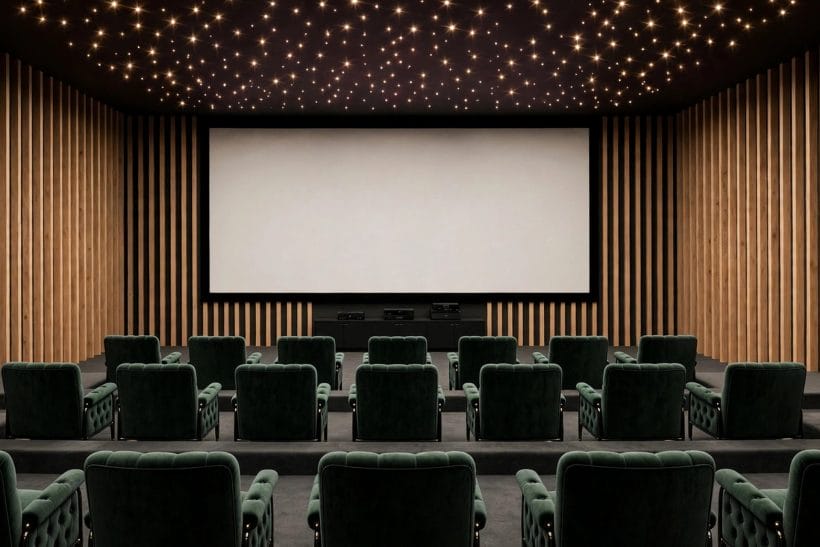
Tiny ceiling lights scattered like stars give a dedicated theater a touch of cinema magic. Keep them dim and sparse so they never compete with the film.
50. Keep switches near the door and the seats
Controls placed where people naturally reach them mean nobody fumbles in the dark. A switch by the door and another near the seats covers every arrival.
7. Sound and Softness in a Modern Room
Modern theaters sound good because they feel soft. Fabric, rugs and curtains calm a room’s echo, and a calm room lets quiet scenes stay quiet.
Sound softness also makes a room more forgiving for everyday use. A room that absorbs echo feels calmer for conversation and music too, not only for films, which is why soft surfaces are worth prioritising early.
51. Soften the room with fabric and rugs
Every soft surface in a theater earns its place by calming sound. Curtains, cushions, throws and rugs together make dialogue clearer and the room more comfortable.
52. Cover hard floors with a deep rug
A deep rug under the seating anchors the theater zone and softens footsteps and echo. Choose a rug large enough to sit fully under the front seats.
53. Use curtains to calm echo
Full-length curtains on side walls or windows absorb sound beautifully while adding warmth. Plain, heavy fabrics work best and suit modern lines.
54. Choose soft furnishings over hard surfaces
Upholstered seats, padded panels and fabric shades all beat bare wood and glass for sound. The softer the room, the more intimate the film feels.
55. Keep the room quiet from the rest of the house
A well-fitted door and soft furnishings help a theater hold its own atmosphere. Where noise still travels, a professional can advise on soundproofing options.
56. Place speakers where they blend with the walls
Speakers that sit flush with panels or hide behind fabric keep the modern look intact. Sound should fill the room without the equipment filling the view.
57. Let soft seating absorb everyday noise
Deep, upholstered seating does quiet work beyond comfort, soaking up the small sounds of a lived-in house. It is one more reason to choose lounge-ready seats.
58. Keep doors solid and well-fitted
A solid, well-fitted door closes a theater off from household noise far better than a hollow one. Check the fit around the frame, where sound most often slips through.
59. Enjoy quiet scenes without room hum
When the room itself is quiet, whispered dialogue and subtle music come through clearly. Soft surfaces, a closed door and switched-off distractions protect those moments.
8. Storage and Details That Stay Hidden
Modern design hides the machinery of everyday life. Storage in a theater should be generous, closed and quiet, so the room always looks ready for a film.
Good storage also protects the room’s calm between films. When remotes, discs, cables and blankets each have a closed home, the theater never drifts into clutter, and guests walking in for the first time see a lounge rather than a collection of equipment. Choose storage that matches the room’s timber and colour palette, and the practical side of the theater will blend in as quietly as the seating does.
60. Hide media boxes inside closed storage
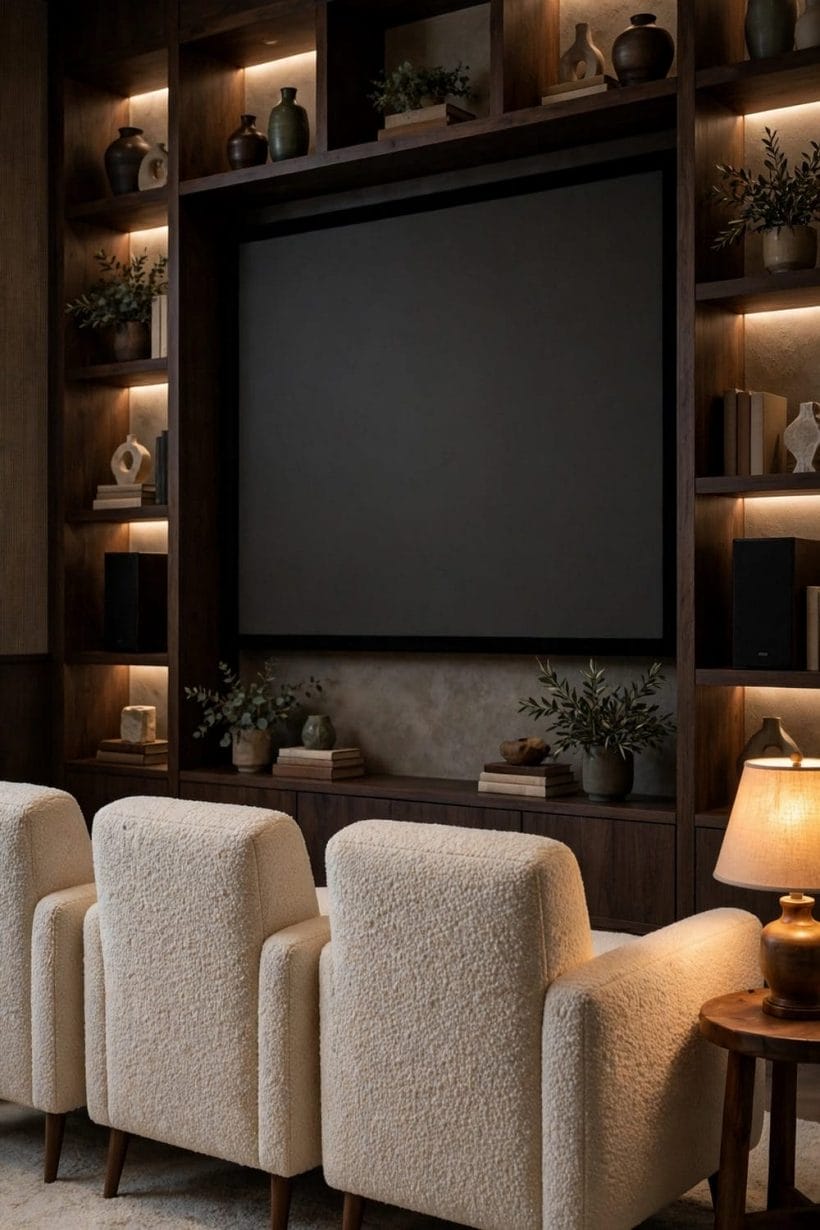
Closed doors on a console keep boxes, discs and remotes out of sight. The room then reads as a lounge, not a control room, which suits modern living.
61. Use a low console that spans the screen wall
A long, low console gives the screen wall balance and provides generous hidden storage. Keep its top clear except for one or two quiet objects.
62. Store discs and remotes in one drawer
One dedicated drawer ends the hunt for remotes before every film. Label nothing and keep the drawer near the seats for easy reach.
63. Keep blankets in a woven basket
A basket of soft blankets invites viewers to settle in and doubles as decor. Choose natural woven textures that warm a modern room.
64. Choose closed shelving for a calm look
Closed shelving hides the clutter that open shelves collect. Where open shelving is used, keep it to a few well-chosen objects.
65. Display a few objects, not a crowd
A small number of beautiful objects says more than a crowded shelf. Let each piece have space around it, and the room will feel curated rather than filled.
66. Keep snacks and drinks in a side station
A small station to one side of the seating keeps refreshments handy without bringing them into the sightline. A tray and a few glasses are all it needs.
67. Let the room tidy itself with a place for everything
When every object has a home, tidying takes moments rather than an afternoon. That habit keeps a modern theater looking modern between films.
9. Small Modern Rooms and Shared Spaces
Not every modern theater gets a dedicated room, and it does not need one. A corner, a living room or a shared space can all host films beautifully with modern restraint.
Shared spaces reward flexibility above all. Pieces that move, screens that disappear and coverings that open and close let one room serve film nights and everyday life without either feeling like an afterthought.
68. Build a theater corner in a living room
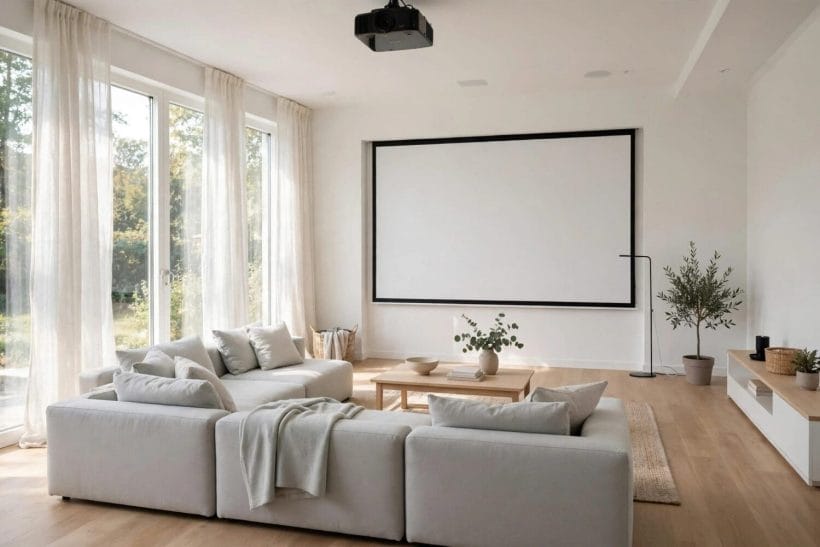
A corner with a screen, a sofa and a rug becomes a theater without changing the room’s purpose. The tiny house home theater shows how small spaces achieve the same effect with even less room.
69. Use a single sofa as the whole theater
One deep, comfortable sofa can be the entire theater in a small home. Add a screen, dim the lamps and the evening is complete.
70. Keep a small room pale and uncluttered
Pale walls and minimal furniture make a small theater feel larger than it is. Dark colours suit dedicated rooms, while shared rooms benefit from lightness.
71. Fold the screen away in a shared room
A screen that folds, slides or retracts lets a shared room return to everyday life after the film. The room then serves two purposes without compromise.
72. Choose furniture that does double duty
Ottomans with storage, consoles that hold media and side tables that serve guests all earn their place twice over. Double-duty furniture is the modern small-room answer.
73. Keep a small theater dark only at film time
Heavy coverings that close for films and open for daytime keep a shared room pleasant around the clock. Darkness becomes a choice, not a permanent state.
74. Let one modern chair anchor a tiny corner
Even a single lounge chair, well placed before a screen, can be a personal theater. One good chair and a quiet corner are enough to begin.
75. End with a room that feels modern even with the screen off
The final test of a modern theater is how it looks between films. If the room still feels calm, clean and inviting with the screen dark, the design has succeeded.
10. Practical Details and Upkeep
A theater that is easy to live with gets used more often. Keep upkeep simple: soft furnishings that clean easily, surfaces that wipe down, and storage that makes tidying quick.
Plan the room’s everyday life alongside its film nights. The tiny living room ideas and small living room ideas collections show how compact living spaces stay calm and functional, and the same habits serve a theater corner well. Seating fabrics, rug placement and lamp positions all deserve the same care as the screen itself.
Think about the wider home too. A theater that borrows its palette from the tiny bedroom ideas nearby, or its lighting approach from tiny house interior lighting ideas, will feel like part of the house rather than a room apart. The home design ideas collection gathers these threads for readers planning a whole home, not just one room.
Electrical work, new wiring, dimmer fitting and any structural change should always be handled by a qualified professional. Modern design values clean finishes, and professional work is what keeps those finishes safe and tidy behind the walls.
Set a simple upkeep rhythm and the room will stay modern with little effort. Shake out throws, vacuum the rug, wipe the console and return remotes to their drawer after each film, and the next film night will begin in a room that already feels ready.
Final Considerations
Seventy-five ideas is a generous menu, and no room needs all of them. Pick the ideas that fit your room, your household and the way you actually watch films, and leave the rest for another home or another day. A handful of well-chosen ideas will always serve a room better than a long list applied without thought.
Start with layout, then seating, then light, and let colour and sound follow. That order keeps the big decisions first and the details where they belong. For readers weighing bespoke seating, custom modern home theater seating rewards careful thought about comfort, sightlines and the room’s overall calm.
Above all, keep the room modern in spirit: simple shapes, honest materials, soft light and space to breathe. A theater built on those principles will feel right for years, through changing screens, changing tastes and many quiet evenings in the dark.
When the next film begins and the room settles into darkness, the design should disappear entirely. That quiet disappearance is the real achievement of a modern home theater: a room so calm and comfortable that nothing stands between the viewer and the story.

0 Comments