

Open a cedar-lined closet and the smell explains the whole idea before any argument does. Aromatic cedar has lined storage for generations, because its natural oils give off that sharp, clean scent — and because clothes come out of it smelling of a forest instead of a cupboard.
This guide answers the real question — is a cedar closet worth it for you — then covers lining types, DIY versus kit, the installation checks that matter, and the simple care that keeps the aroma working.
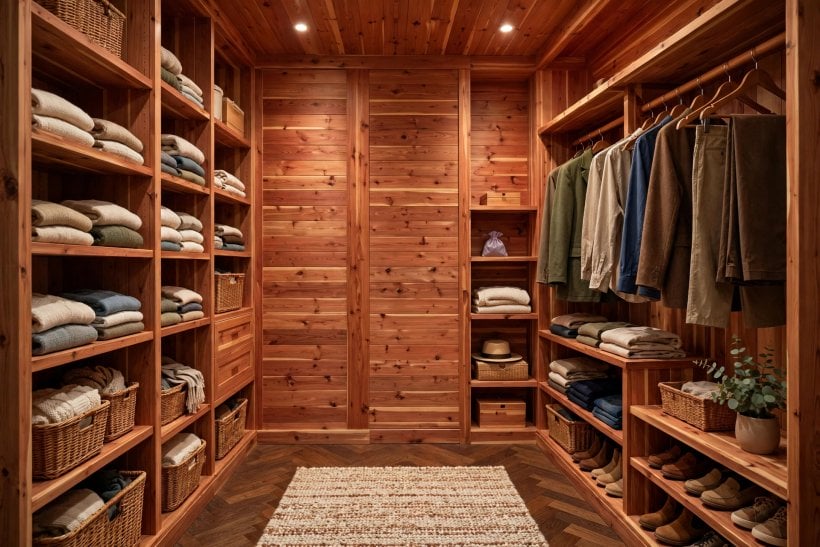
1. Cedar Closets at a Glance
The entity is a storage space lined with aromatic cedar: the walls — sometimes also the ceiling, shelves or drawers — are covered in thin cedar boards, planks or panels so that the stored clothes, bedding and woollens live inside the wood’s scent. The cedar in question is eastern red cedar, a juniper whose heartwood carries the aromatic oils the whole idea depends on. Its attributes are the aroma itself, the wood’s modest moisture buffering, its traditional role against clothes moths, and the upkeep that keeps all three alive — each covered honestly below, including what cedar cannot do.
| What is a cedar closet? | A closet or storage room lined with aromatic eastern red cedar boards or panels, usually left unfinished so the wood’s natural oils can scent the enclosed air and everything stored in it. |
| Does cedar stop clothes moths? | It discourages them — the aroma is traditionally used to make storage less hospitable to moths — but it is a deterrent, not a pesticide and not a guarantee. Clean clothes, sealed storage for precious woollens and dealing with any existing infestation still matter more. |
| Which cedar is the aromatic one? | Eastern red cedar (actually a juniper). Western red cedar is a different timber — excellent outdoors, but not the closet cedar and without the same scent. Check which species a product contains before buying. |
| What does it cost to run? | Almost nothing in materials — no power, no refills — but the aroma fades over years and is refreshed by lightly sanding the surface, which is a job, not a purchase. |
| What is the most common mistake? | Finishing it. Paint, varnish or sealer over the cedar seals in the oils and quietly deletes the entire point of the lining. Aromatic cedar is left bare. |
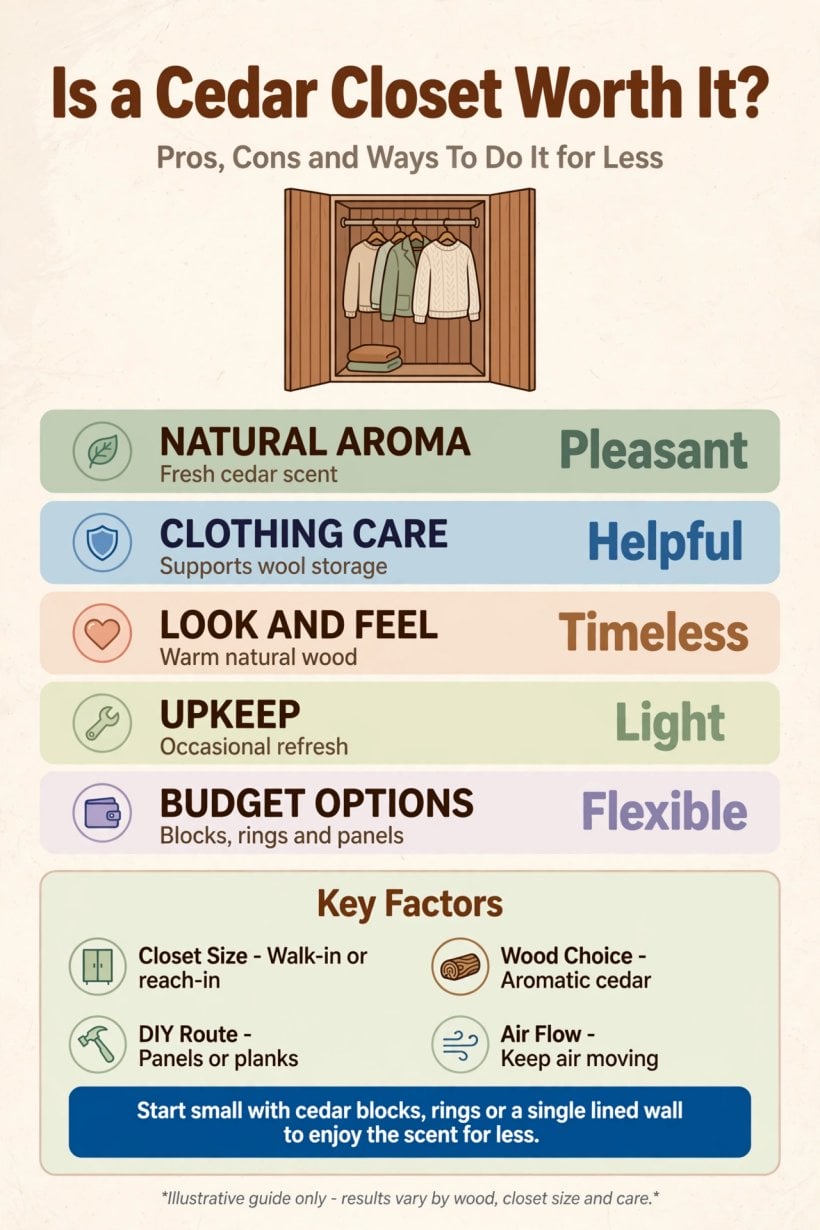
At a glance: line the closet in bare aromatic cedar, store clean natural fibres in it, sand lightly when the scent fades — that is the whole system.
2. What Cedar Does — and What It Doesn’t Do

Start with honesty, because cedar attracts folklore. The aroma is real and it is the main event: the heartwood’s oils evaporate slowly into a small enclosed space, scenting stored textiles so they come out smelling fresh rather than cupboard-stale. That alone justifies the lining for most owners — the closet smells like a place clothes want to be.
The Moth Question, Answered Straight
Cedar’s reputation against clothes moths is old and partly earned: a strong cedar environment is one adult moths avoid for laying eggs, and the oils at high concentration in a tight, freshly lined space are inhospitable to young larvae. But a lived-in closet is not a sealed laboratory. The aroma weakens with age and ventilation, it does nothing for clothes put away dirty — the true moth invitation — and it will not clear an existing infestation. Treat cedar as one layer of protection alongside clean storage, not as a force field, and it will never disappoint you.
Moisture and Feel
Like all wood, cedar absorbs and releases small amounts of moisture, gently buffering the humidity swings of a closed closet — a modest benefit, not dehumidification. A genuinely damp closet needs its damp fixed at the source; lining over it with cedar, or anything else, is decoration on a problem. In a sound, dry closet, though, the wood’s feel matters too: smooth-planed cedar is kind to stored textiles, and the warm red-brown colour makes a small storage space feel crafted rather than merely used.
3. Types of Cedar Lining
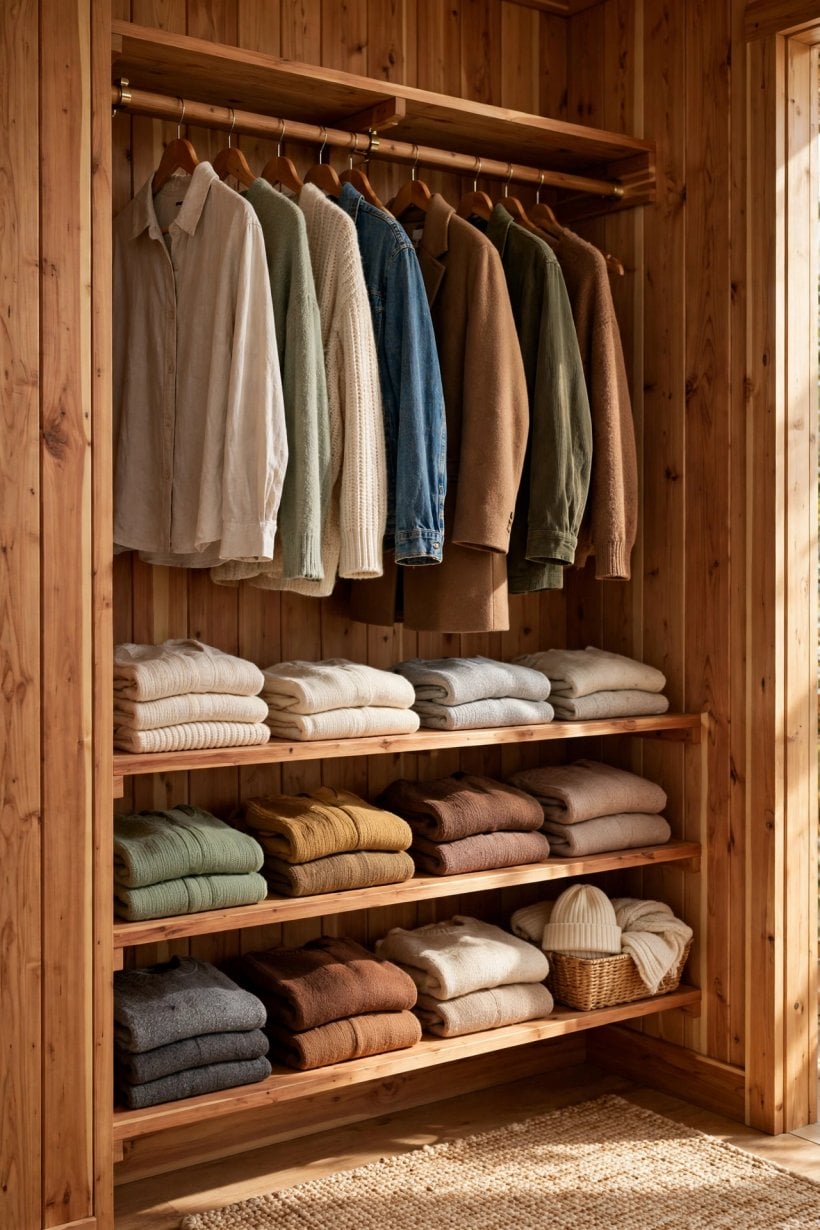
The lining comes in four broad forms, and the choice between them is a balance of aroma strength, appearance, skill and budget. Solid wood in any form outperforms thin veneers on scent, because aroma lives in the wood’s substance — the more heartwood in the room, the more scent it can give.
Solid Tongue-and-Groove Planks
The traditional and best-performing option: thin solid boards, usually with tongue-and-groove or shiplap edges, fixed directly to the walls. They give the strongest aroma, a genuine planked-room appearance, and a surface that can be sanded and refreshed for decades. They also take the most time and care to fit well, especially around corners, rails and existing shelving.
Cedar Panels and Sheet Lining
Panel products — cedar-faced boards or thinner cedar sheets — cover walls faster and suit large, plain closets where speed matters more than craft. Aroma depends on how much real cedar is in the panel, so read the construction honestly: a whisper of veneer over a manufactured board will smell like one. Panels are the pragmatic choice for a quick refresh of a big storage room.
Closet Kits
Pre-cut or modular kits package planks or panels with fixings for a standard closet, trading some fit and finish for simplicity. A kit is often the sensible middle path for a first project: the measuring is reduced, the parts are consistent, and the result is genuinely cedar rather than a simulation. Measure your closet against the kit’s coverage before ordering — corners, returns and the wall behind the rail are where coverage quietly runs out.
Partial Lining: One Wall, Drawers and Chests
Cedar does not demand the whole room. Lining the back wall, building cedar drawers, or keeping a cedar chest inside an ordinary closet concentrates the aroma where the precious woollens actually live, at a fraction of the cost and work. For many households this is the rational version of the idea — and it is upgradeable later if the scent wins you over.
4. Choosing the Wood: Species, Grade and Colour
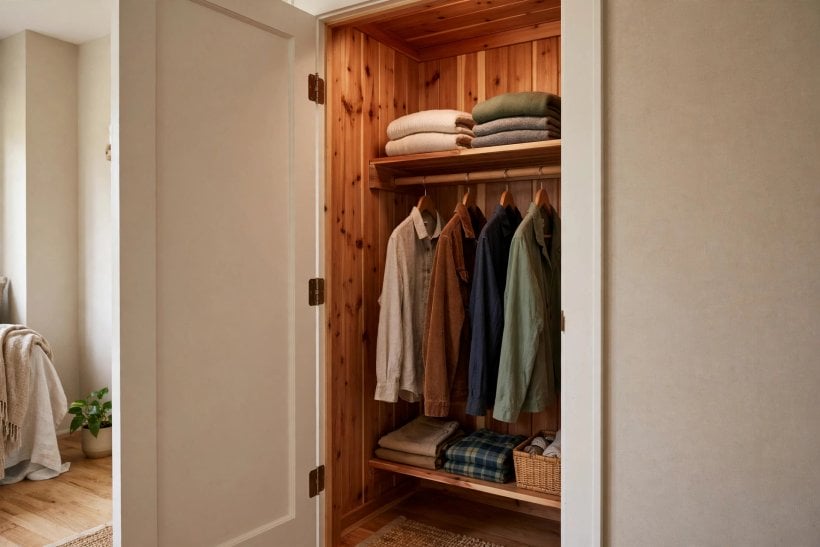
Buy the species first and the boards second. Aromatic cedar for closets is eastern red cedar heartwood — the deep red-brown timber — because the paler sapwood carries far less oil and scent. A board set with generous heartwood content will out-smell a prettier, paler set every time, so ask what you are actually getting and look at the wood, not the photograph on the box.
Colour Variation Is Normal
Eastern red cedar is famously variegated: streaks of cream sapwood through red and purple-brown heartwood, knots and lively grain. In a closet that character is the charm — but if you want a calm, uniform wall, sort the boards before fixing and group similar tones together, keeping the wildest boards for the least-seen wall. The same species appears outdoors in the siding world — the cedar options compared in these tiny house siding options in cedar, metal and composite are its weatherproof cousins — but closet lining asks for the aromatic heartwood specifically, not just any board with cedar in its name.
What to Check on Delivery
Boards should be dry, straight and pleasantly strong-smelling straight out of the pack — a faint scent at purchase promises a fainter one in five years. Reject warped or musty stock. If you are buying panels or a kit, confirm the cedar is solid or a substantial facing, and confirm the species in writing; “cedar-lined” on a label has been stretched over some very thin veneers.
5. DIY Versus Kit Versus Professional

Lining a closet is one of the most forgiving woodworking projects in a house: the cuts are short, the tolerances are hidden, and the room is small enough to finish in a weekend. A confident beginner with a saw, a level, a nailer or hammer, and patience for corners can plank a standard closet well. Kits lower the skill bar further by pre-sizing the material.
When to Call a Professional
Bring in a carpenter when the closet is large or awkward — sloping ceilings, built-in cabinetry to line around, or a dressing room where the lining is also the visible furniture finish. Professional work also earns its fee when the walls beneath need repair first. What you are buying is not the nailing, which is simple, but the setting-out: level first courses, tight corners and clean terminations at doors and rails are what separate a crafted room from a rustic one.
The Honest Time and Mess Budget
Emptying, preparing and lining a small closet is a weekend; a walk-in with shelving is two. The mess is modest — offcuts and sawdust that smell wonderful — but the closet is out of service throughout, so plan where the clothes live meanwhile. Order a little extra material for mistakes and colour sorting; running short mid-job and mixing batches is how patchwork happens.
6. Where Cedar Works Best — and Where It Doesn’t
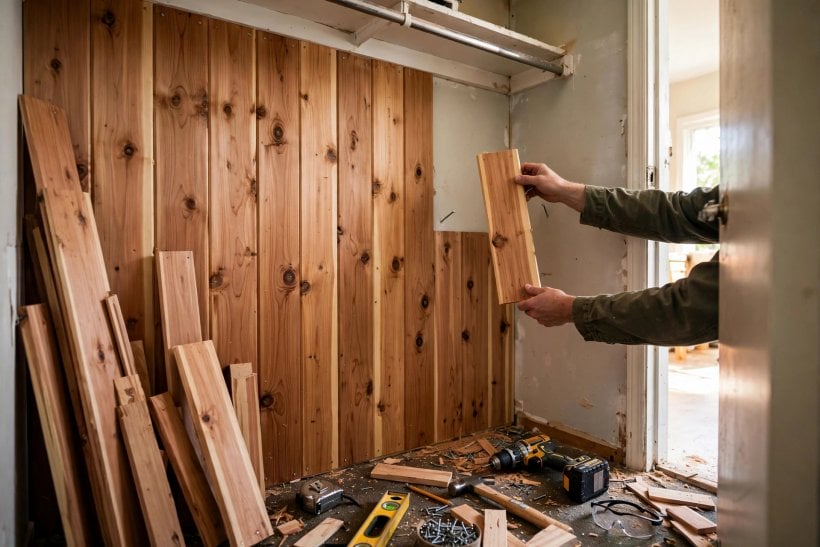
Cedar earns most where natural fibres are stored long and undisturbed: the winter woollens closet, the linen and blanket store, the guest-room wardrobe, the chest of out-of-season clothes. Small enclosed volumes scent most strongly, which is why a modest closet outperforms a vast dressing room on aroma per board. In a tiny home, one well-chosen cedar space can serve the whole household’s precious storage, in line with the compact planning in these tiny house closet design ideas.
Where to Spend Elsewhere
Skip cedar where clothes turn over weekly and doors stand open — a busy everyday wardrobe gains little, because scent needs enclosure and time. Skip it, too, where anyone in the household dislikes the smell or finds it irritates; an aroma you live inside is a strong preference, not a universal good. And never line a closet to hide damp, mustiness or an active moth problem in stored clothes — fix those first, in the open, or the lining becomes an expensive blindfold. Bedroom storage generally benefits from the same honesty about what each space is for, as these tiny house bedroom ideas show in their closet and wardrobe planning.
7. Installation Checks That Protect the Result

Prepare the room before the wood arrives: empty it fully, clean the walls, fix any damp or damage, and let new boards rest in the house for a few days so the wood settles to indoor conditions before it is fixed. Boards fixed too eagerly can shrink, gap or — in a humid week — swell against each other. Work from the least-seen corner, keep the first course dead level, and stagger joints on long walls for a planked rhythm rather than a grid of seams.
The Unfinished Rule
It bears repeating because it is the mistake that undoes everything: do not paint, varnish, wax or seal the closet face of aromatic cedar. The scent must be able to leave the wood. If the walls around the closet are being painted — the general guidance in this overview of tiny house interior paint colours covers choosing and testing — finish all painting before the cedar goes in, and mask the lining during any later decorating. Glue, where used, belongs on the back of boards, sparingly, for the same reason: keep the room-side surface open-pored and breathing.
Fixings and Details
Use fixings that will not stain the wood, keep them discreet, and leave the lining removable in principle — screwed battens or cleats beat permanent adhesive everywhere, because a lining you can take down is a lining you can repair. Around rails and shelves, scribe boards to fit rather than filling gaps with visible filler. Ventilation is a balance: a closet door that seals reasonably keeps scent in, while the room beyond should stay normally ventilated so stored textiles never sit in stale damp air.
8. Care: Keeping the Aroma Working
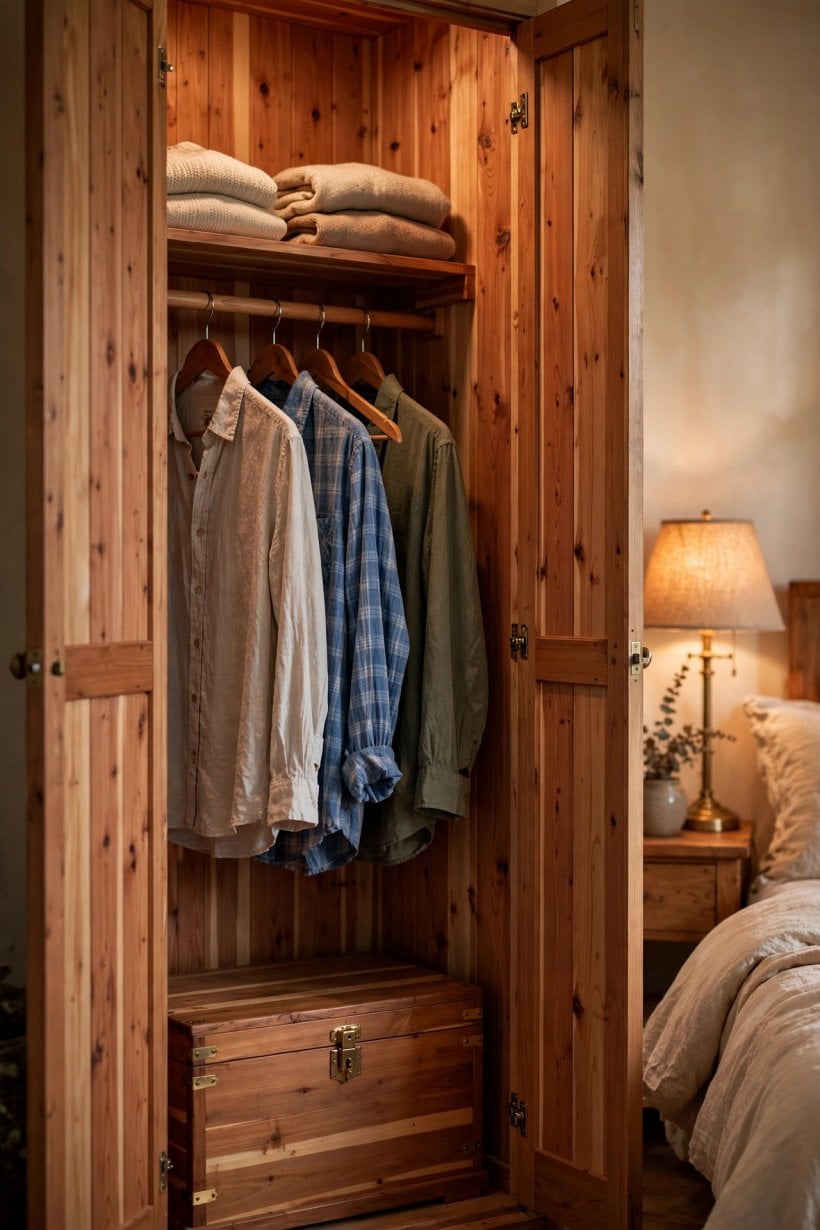
Cedar’s scent fades for a simple reason: the surface oils that carry it slowly oxidise and the surface pores close down. The refresh is equally simple and has been the same for a century — lightly sand the lining with a fine abrasive, just enough to open a fresh surface, vacuum the dust away, and the aroma returns, sometimes startlingly. A closet lined in solid planks can be refreshed this way many times over its life, which is the long-term argument for solid wood over thin veneer.
Rhythm and Supporting Habits
Expect years, not months, between refreshes in a sound closet. Cedar-oil refresher products exist for a lighter touch between sandings — use them sparingly and only on the wood. Store clothes clean, keep the door closed as the default, and air the closet on dry days. The hidden-storage discipline in these tiny house plans with hidden storage pairs naturally with cedar care: what is stored deliberately, in a place designed for it, stays in better condition — scent is a bonus on top of order, not a substitute for it.
9. Cost Drivers and Alternatives
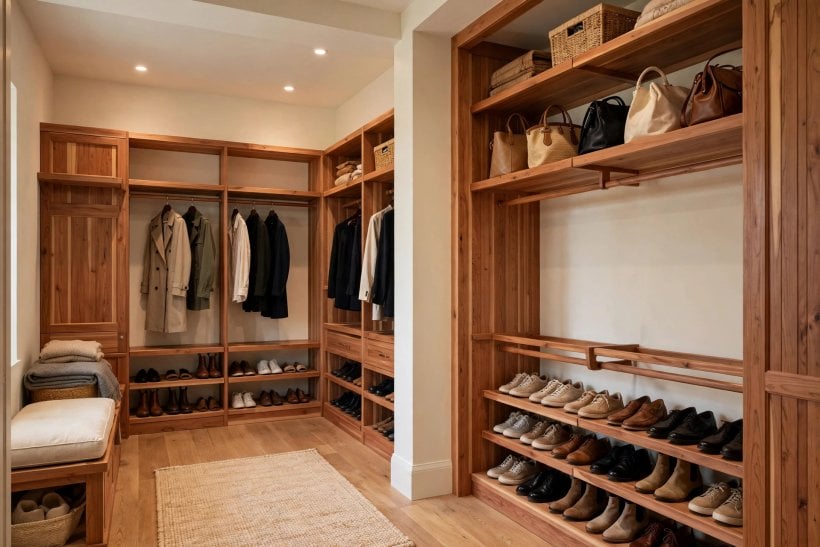
The cost of a cedar closet is mostly the wood itself and the area it covers — which is why the honest way to control the budget is area, not quality: line the walls that hold the precious storage, choose partial lining or a chest for the rest, and buy solid heartwood where you do line. Labour, if you hire it, scales with corners and cabinetry, not with the room’s glamour. Kits sit between: material plus convenience, priced by coverage, with waste minimised if your closet matches their assumptions.
Alternatives That Borrow the Idea
Cedar blocks, rings, balls and hangers put the same wood into an ordinary wardrobe for very little money. They scent a small zone rather than a room, fade faster because they are small, and refresh with the same light sanding — as a trial of whether you even like living with the aroma, they are the correct first purchase. Drawer liners and cedar chests concentrate the effect where heirlooms live. In compact homes the whole question is one of allocating precious storage deliberately, the same trade-off explored in these apartment interior design ideas for tiny houses: spend the storage you have on the things that genuinely benefit.
10. Verdict: Who Should Pick a Cedar Closet
Pick a cedar closet if you store natural fibres — wool, linen, cotton — for long stretches, if you love the scent and will keep the door closed and the clothes clean, and if you want a one-time project with no running costs beyond an occasional light sanding. It is especially right for a household with one defined storage closet for precious things, in a small home as much as a large one: the smaller the volume, the better it works.
Look elsewhere if you want a guaranteed moth solution — none exists in a wood, and anyone who sells you one is selling folklore. Look elsewhere if the closet is damp, if the household dislikes strong natural scents, or if the storage is high-turnover everyday clothing that never sits long enough to benefit. And if budget is tight, start with blocks and a chest: the idea proves itself at small scale before it asks for a room.
Final Considerations
A cedar closet is a modest, honest technology: bare aromatic heartwood, an enclosed space, clean clothes and a light sanding every few years. It will not perform miracles, and it does not claim to once you read past the folklore — what it does is make storage smell wonderful, nudge moths towards someone else’s house, and turn a cupboard into a small room you are oddly fond of. For the right household, that is entirely worth it.
Decide with the checks in order — species, heartwood content, dry and enclosed space, unfinished surface — and the size of the project will choose itself, from a drawer of blocks to a full planked room.




0 Comments