
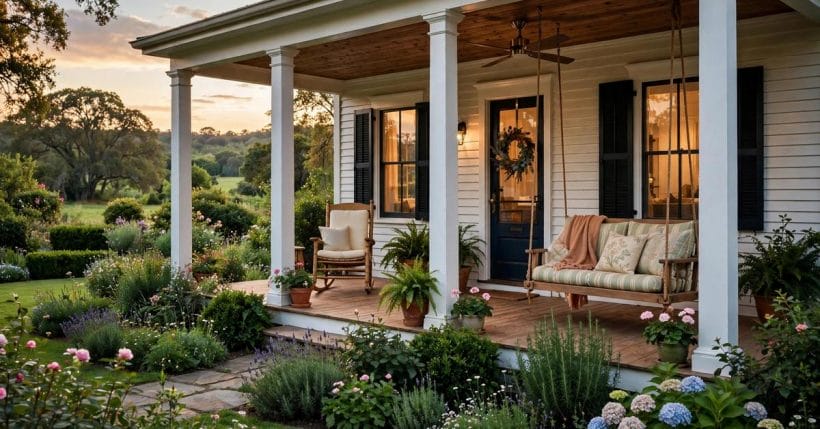
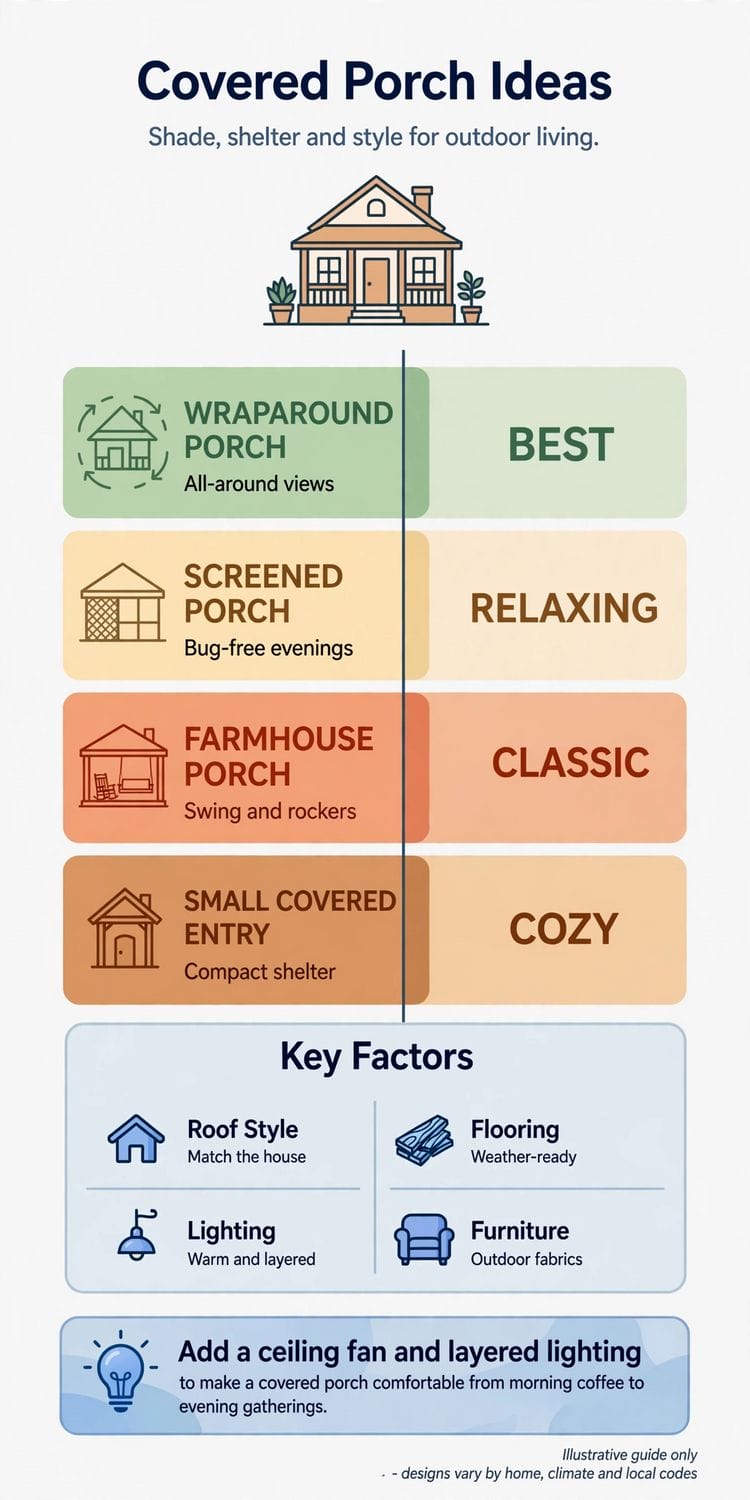
A covered porch turns the edge of a house into a room that can be used in sun, in rain and in the soft light of evening. The roof overhead is what makes the difference: it holds back the midday glare, keeps chairs and cushions dry through a shower, and gives the entrance a sense of shelter before the front door is even reached. This guide stays with that single idea, the roofed outdoor room itself, looking at shade, seating, light, ceilings, planting and upkeep through the seasons, and leaving the wider story of porches in general to the porch family it belongs to.
What follows is arranged around how a roofed porch is actually lived in. A good cover changes the hours a porch is comfortable, the furniture it can hold and the way it connects house and garden. The strongest examples share a calm balance: a roof deep enough to shelter the seating, columns that look settled rather than spindly, a ceiling that finishes the view overhead, and planting that softens the edges without crowding the steps. Structural work, roofing, drainage and wiring all belong with qualified professionals, and this guide describes looks and uses only, giving no building instructions.
1. The Roof as the Porch’s Main Feature
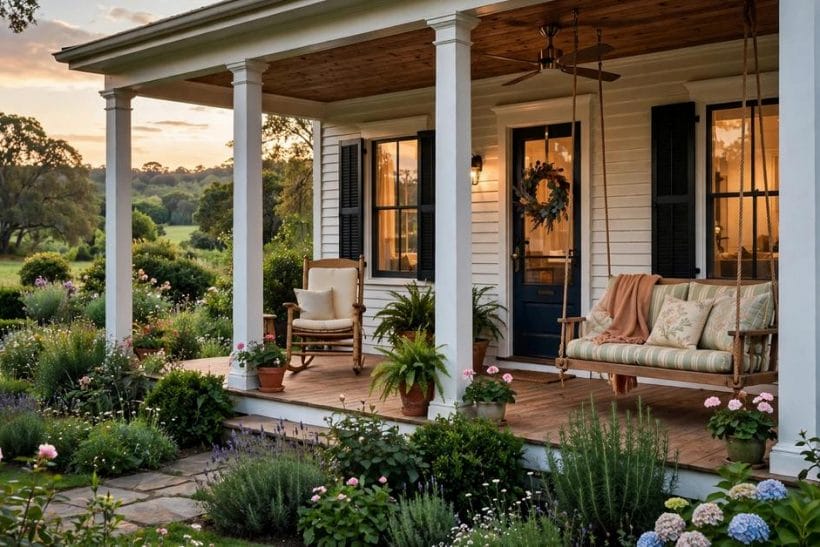
The roof is the first thing to settle when thinking about a roofed porch, because its depth and line decide how much of the porch stays usable when the weather turns. A shallow cover shelters the doorway and little more, while a deeper cover brings the seating fully under shelter and lets the porch hold a table, a swing or a pair of chairs through a rainy afternoon. Depth also shapes the view from inside: a deep cover darkens the rooms behind it a little, so the balance between shelter and daylight is worth weighing room by room rather than settling it with a single rule.
The line of the roof should sit comfortably with the house it belongs to. A low, level line suits a long, calm facade, while a pitched line can echo the main roof and give the porch a more formal welcome. Either way, the junction where the porch roof meets the house wall is the detail that decides whether the whole arrangement looks intended or added on. Flashings, gutters and the edge of the roof are weatherproofing work, and they belong with a qualified roofing professional, since a small gap at that junction can send water exactly where it is least wanted.
Underneath, the roof gives the porch its ceiling and its sense of enclosure. Even an open-sided porch feels like a room once a roof is overhead, because the ceiling draws the eye inward and softens sound. That sense of enclosure is the reason a roofed porch can hold reading chairs, a morning coffee table or an evening lamp in a way an open terrace cannot. The roof does not need to be grand to do this work; it needs to be deep enough, level enough and well kept enough that sitting beneath it feels settled rather than provisional.
2. Shade and Light Beneath a Solid Cover
Shade is the quiet gift of a solid cover. On a bright day, the roof cuts the glare that makes an open terrace hard to sit on at midday, and the temperature beneath it drops enough that a chair in the shade becomes the natural place to rest. The quality of that shade matters: a cover that blocks the high summer sun while still letting low morning and evening light slip beneath its edge gives the porch a long, pleasant day, whereas a cover that is too deep or too low can leave the porch dim even when the garden is bright.
Light beneath a cover is best thought of as borrowed light. It arrives reflected from the garden, from pale flooring and from light-coloured walls, rather than falling directly from above. Pale stone or timber underfoot, a light ceiling overhead and planting kept clear of the porch edge all help that borrowed light travel further into the sheltered space. A mirror is rarely needed, and a glossy surface can glare; matte, pale finishes usually do the quiet work better, keeping the porch bright without harsh reflections.
Seasonal change alters the bargain. In winter, when the sun rides low, a roofed porch may receive more direct light than in summer, since the low sun can reach beneath the edge of the cover. That winter light is one of the pleasures of a roofed porch, warming a chair on a cold but bright morning. In summer, the same porch gives deep shade at exactly the hour the garden is hardest to sit in. Noticing how light moves across the porch through the year is the simplest way to place seating well, and it costs nothing but a few visits at different hours.
3. Seating Arranged for a Sheltered Room
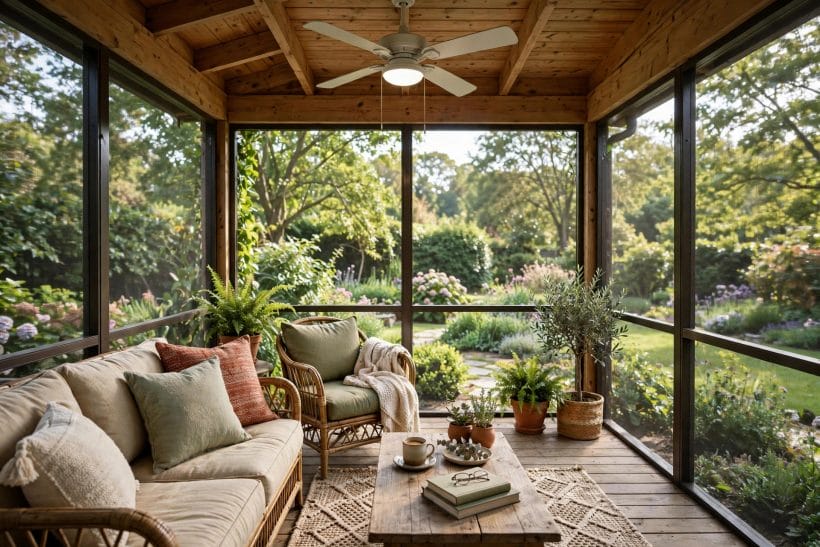
Seating under a cover can be arranged like seating in a room, because the roof gives it a ceiling and a sense of boundary. A pair of chairs angled toward each other invites conversation, a bench along the wall leaves the centre clear for coming and going, and a swing hung from sound structure gives the porch its most loved seat of all. Whatever the arrangement, the first test is practical: chairs should be easy to get in and out of, with room to stand without brushing the wall or the steps, and the route to the front door should stay clear.
The shelter of the roof widens the choice of seating. Upholstery that would fade and soak on an open terrace can last far longer beneath a cover, though it still faces damp air and dust, so covers that can be removed and washed are a sensible choice. Timber, wicker and metal each suit a roofed porch well, and mixing two materials, such as a timber bench with metal side chairs, can keep the arrangement from feeling like a matched set bought in one trip. Cushions in colours drawn from the house and garden tie the seating to its setting without needing a bold statement.
Small tables matter as much as chairs. A low table between two chairs holds drinks and books, a narrow console against the wall holds a lamp and a plant, and a slightly larger table near the steps can serve as the place where parcels, keys and garden tools are set down on arrival. Because the roof keeps rain off, these tables can hold items that would otherwise need bringing indoors at the first cloud. For wider ideas on how outdoor seating sits with the house itself, see these tiny house porch ideas alongside this guide.
4. Columns and Beams That Carry the Cover
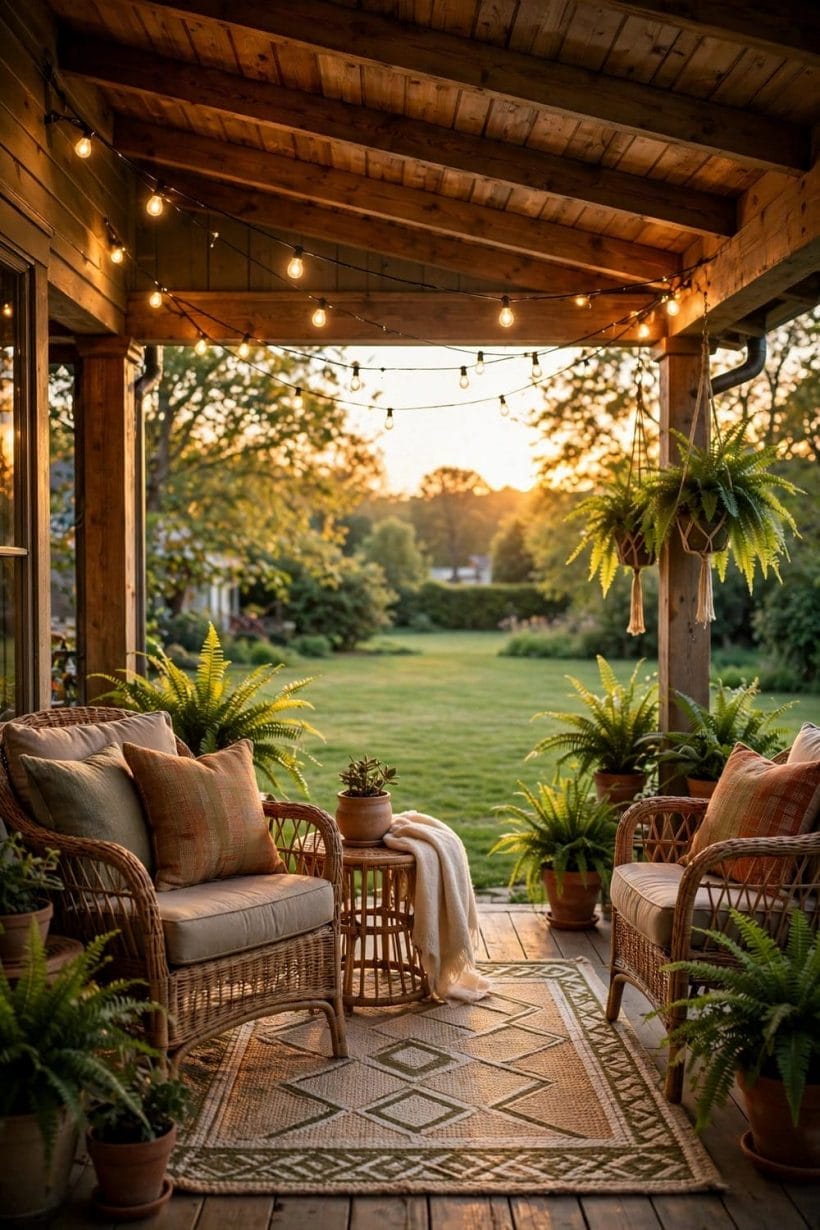
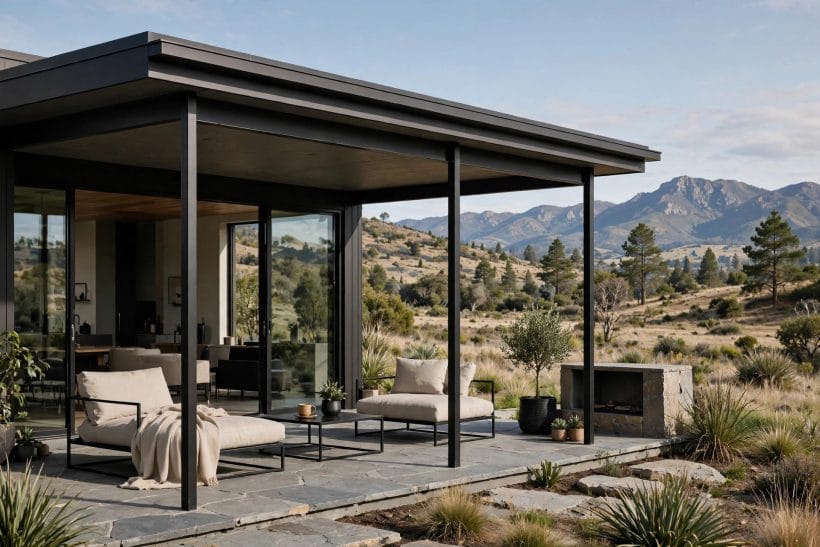
Columns give a roofed porch its rhythm. Set at even intervals, they frame the view from the street, divide a long porch into comfortable bays, and carry the eye along the facade. Their material sets the tone: timber posts feel warm and informal, masonry piers feel grounded and solid, and slim metal posts suit a crisper, more contemporary house. The base of each column deserves attention too, since it is where rain, splashing and damp gather, and a well detailed base keeps the post dry and sound for years.
Beams tie the columns together and carry the roof above them. From below, the beam is one of the most visible parts of the porch, so its depth and finish shape the whole ceiling view. A chunky timber beam reads as rustic and generous, while a painted beam that matches the trim reads as neat and composed. Whatever the material, the beam, the columns and their footings form the load path of the roof, and that structure is professional work from design to fixing. This guide describes the look of columns and beams only, and gives no guidance on sizing, spans or fixings.
Spacing is where columns succeed or fail visually. Columns set too far apart can make a roof look as though it floats, while columns set too close together can make a porch feel like a cage. The spacing that looks right usually follows the windows and bays of the house behind it, so the porch reads as part of the facade rather than an addition laid over it. Planters, lanterns and hanging baskets can then dress the columns without hiding them, letting the structure itself remain the main event.
5. Ceilings That Finish the View Overhead
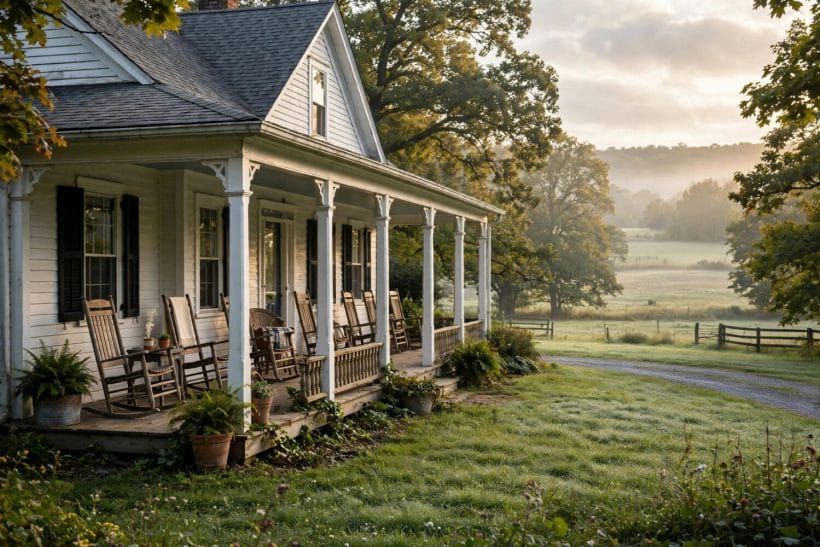
The ceiling is the surface most often forgotten in a roofed porch, yet it is the surface seen every time someone sits down and looks up. A plain painted ceiling keeps the porch bright and calm, timber boards laid in one direction add warmth and rhythm, and a beadboard ceiling gives a traditional porch its finished, crafted feel. Colour matters here: a pale ceiling reflects borrowed light and keeps the sheltered space feeling airy, while a dark ceiling can make a low porch feel lower still.
Ceiling details can quietly carry the style of the whole porch. Exposed joists suit a rustic house, a smooth ceiling suits a contemporary one, and a ceiling with a single beam or two suits almost anything in between. Recessed lights, if the porch has them, should be planned with the ceiling, not added as an afterthought, so the fittings sit neatly and the light falls evenly. Any electrical work overhead belongs with a qualified electrician, with fittings chosen for sheltered outdoor use, and this guide offers no wiring guidance.
Upkeep of a ceiling is mostly a matter of looking up now and then. Damp marks, peeling paint or cobwebs gathering in a corner can be early signs that water is finding a way in at the roof junction or that ventilation is poor. Catching such marks early, and asking a qualified professional to trace their cause, protects both the ceiling and the roof above it. A ceiling that is clean, pale and dry does more for a roofed porch than any single piece of furniture placed beneath it.
6. Rain, Runoff and Dry Floors
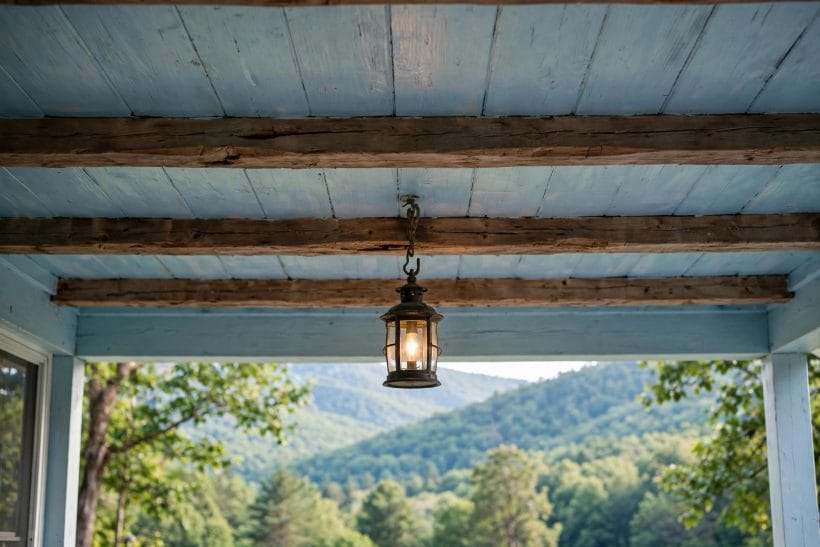
A roofed porch earns its keep in rain. The cover keeps the doorway dry, gives visitors a place to shake off an umbrella before stepping inside, and protects the threshold from the slow wear of weather. The edge of the roof is where this work is decided: gutters and downpipes carry water away from the porch and the house wall, and the ground at the porch edge should fall gently away so water does not pool where people step. Where the porch floor meets the garden, a small step or a change of surface helps mark the line between dry and wet ground.
Floors beneath a cover stay drier than open terraces, but they are not immune to damp. Wind can drive rain sideways beneath even a deep cover, and splash from the ground can wet the lowest boards or tiles. Materials that tolerate occasional wetting, such as stone, tile or well finished timber, suit a roofed porch floor best, and rugs used outdoors should be the kind that can dry fully between showers. A floor that drains and dries quickly is worth more than a floor that merely looks handsome on a dry day.
Drainage around a roofed porch is professional work, and this guide gives no drainage instructions. A qualified landscape or roofing professional should assess how water leaves the roof, where downpipes discharge and whether the ground falls safely away from the house, especially where the plot slopes toward the building or existing drains are involved. Getting that assessment early avoids the common disappointment of a handsome porch that holds water after every shower. For related thinking on outdoor surfaces and water, see these backyard landscaping ideas.

7. Lighting for Evenings Under Cover
Evening light transforms a roofed porch. With a ceiling overhead, lights can be hung, mounted or set on tables in ways an open terrace does not allow, and the roof itself reflects a little of that light back down, warming the seating area. Wall lanterns beside the door give a welcoming glow for arrivals, a pendant over a table gives a focus for evening meals, and small lights set low along the steps make the way in safe without glare. The aim is a layered glow, not a single bright source.
Warm light suits a roofed porch better than cool light, since it echoes lamplight indoors and flatters timber, stone and planting alike. Lights on a dimmer, where the fitting allows, let the porch shift from a bright welcome at arrival to a soft glow for a late conversation. Festoon lights strung beneath the ceiling can add a festive note, though they should be hung so they do not tangle with plants or swing into the path of the door. Any outdoor electrical installation, including low voltage systems, belongs with a qualified electrician, using fittings rated for outdoor use.
Light also serves the house beyond the porch. A lit porch makes the entrance easy to find after dark, lets the house number be read from the path, and gives the facade a lived-in warmth that an unlit entrance lacks. Keeping one light on a timer or a dusk sensor means the porch is welcoming even when no one is home to switch it on. For the wider setting of entrance lighting, see these tiny house exterior ideas alongside this guide.
8. Furniture and Fabrics That Suit a Covered Space
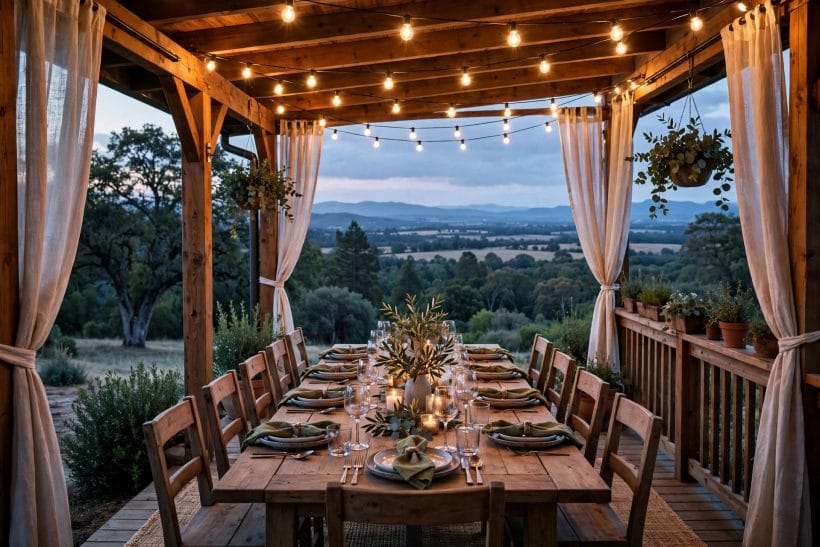
The roof widens what a porch can hold, and furniture chosen for a covered space can be a little softer than furniture chosen for open ground. Cushions can be thicker, throws can be left on a chair through the day, and a rug can define the seating area without being dragged indoors at every cloud. Even so, a covered space is still outdoors: damp air, dust and pollen reach it, so fabrics that can be washed and furniture that can be wiped down will age far better than pieces that demand indoor care.
Scale is the main discipline. A roofed porch is usually shallower than a full room, so deep lounge chairs can crowd the walkway and make the porch feel cramped. Chairs with a modest depth, a table that can be moved aside when the porch needs to serve as a passage, and storage that tucks beneath a bench or against the wall keep the space flexible. A porch that can shift between a quiet seat for one and a gathering place for several will be used far more than a porch fixed in a single arrangement.
Storage near the porch saves the furniture itself. A bench with a lidded seat, a small chest beside the door or a basket for throws and cushions keeps soft furnishings dry through damp spells and tidy between uses. Keeping the seating area itself uncluttered matters too: a porch crowded with pots, boots and parcels stops feeling like a room and starts feeling like a corridor. A few well chosen pieces, each earning its place, will always serve a roofed porch better than a large collection. Related storage thinking appears among these tiny house storage ideas.
9. Planting at the Edges of the Cover
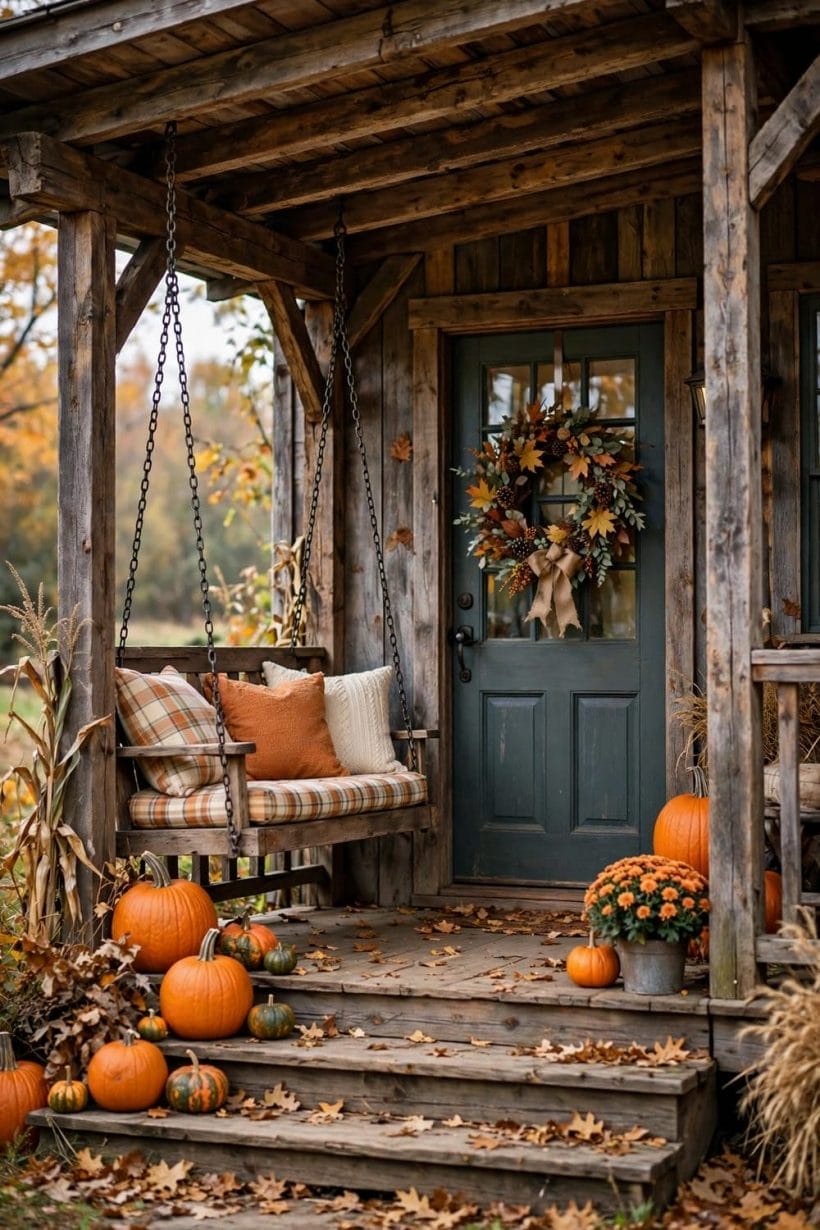
Planting is what joins a roofed porch to its garden. Climbers on the columns, pots flanking the steps and beds running along the porch edge all soften the line where the built structure meets the ground, and they give the porch scent, colour and movement through the year. Pots are the most flexible choice, since they can be moved to frame the door, to mark the steps or to fill a bare corner, and they let planting change with the seasons without disturbing the structure.
Climbers deserve a little restraint. A vine that covers the columns and the beam can turn a porch into a green room, but growth that reaches the roof, the gutters or the house wall can trap damp and block light. Keeping climbers trimmed clear of gutters and roof junctions, and choosing plants whose mature size suits the porch rather than overwhelming it, keeps the green dressing an asset rather than a burden. A qualified gardener can advise where planting meets structure, especially on a small plot where every root run counts.
Planting also shapes how the porch is approached. A pair of pots at the foot of the steps acts as a gentle gate, a low hedge along the porch edge gives privacy without a wall, and scented plants near the seating reward anyone who lingers. The planting should never block the path, hide the house number or crowd the doorway; a porch that is easy to arrive at will be used more, and enjoyed more, than a porch that must be negotiated. For planting that frames outdoor rooms, see these tiny house garden ideas.
10. Living With a Roofed Porch Through the Seasons
Through the seasons, a roofed porch changes its character without changing its form. In spring, it is the first outdoor seat warm enough for morning coffee, sheltered from showers that still pass through. In summer, it is the shaded retreat at midday, when the open garden is too bright to sit in. In autumn, it holds the last outdoor evenings, with throws and lamplight stretching the day a little longer. In winter, it is the dry threshold where coats and boots are managed before the warmth indoors.
Seasonal upkeep follows that same gentle rhythm. In spring, a wash of the floor and a check of the ceiling and gutters sets the porch up for the year. In summer, cushions and plants need regular attention, and climbers may need trimming clear of the roof edge. In autumn, leaves should be cleared from gutters and from the porch floor before they trap damp. In winter, a mat at the threshold and a light on a timer keep the porch welcoming through the darkest weeks. None of this work is heavy, and all of it repays itself in a porch that looks cared for.
The through-line is simple: a roofed porch is used most when it is kept ready for use. A chair left in place, a light that comes on at dusk, a pot that is watered and a floor that is swept all signal that the porch is a room, not a passage. Houses with such a porch tend to live a little more outdoors, even in uncertain weather, because the step outside never quite means stepping into the rain. For how such sheltered spaces sit with the house as a whole, see these tiny house deck ideas.
Final Considerations
Choosing how to shape a covered porch comes down to how it will actually be lived in. A household that eats outdoors most evenings will value a deep cover and a table that seats everyone. A household that loves a quiet morning seat will value light, a single comfortable chair and a view of the garden. A household that welcomes many visitors will value a clear path, a dry threshold and lighting that guides the way after dark. There is no single right combination, only the combination that fits the house, the garden and the people who use them.
Start with the largest decisions and work inward. Settle the depth and line of the cover first, then place the columns, the ceiling and the seating beneath it. Let planting follow the structure, softening edges and framing the approach as the arrangement settles. Bring in qualified professionals for roofing, structure, drainage and electrical work, and check local rules before building anything near a boundary or a building. A roofed porch shaped this way, kept clean and used daily, becomes a place that is lived in through every season rather than admired from indoors.




0 Comments