
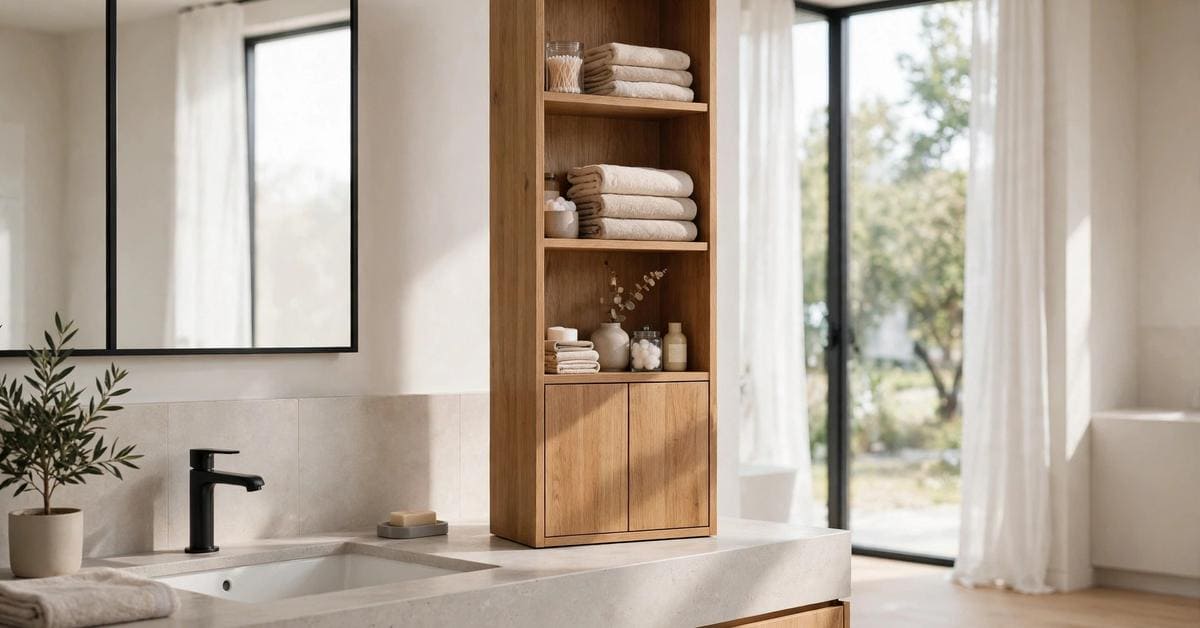
A bathroom rarely fails for want of floor space alone. More often it fails because everything the room needs has nowhere sensible to live, so bottles gather around the basin, towels migrate to hooks and rails, and the countertop slowly disappears under daily life. A tall, narrow tower changes that pattern without demanding a bigger room. It takes the one direction most bathrooms leave unused, the wall above and beside the basin, and turns it into calm, reachable storage.
A countertop vanity tower is a tall cabinet that rises from the vanity surface or stands close beside it, giving a small bathroom a vertical home for the things that used to crowd the counter. The idea is simple rather than clever: lift storage upward, keep the everyday items within easy reach, and let the countertop go back to being a place for washing rather than a shelf. Done well, the tower reads as part of the vanity rather than an afterthought, and the whole room feels taller, tidier and easier to use.
1. What a Vanity Tower Actually Is
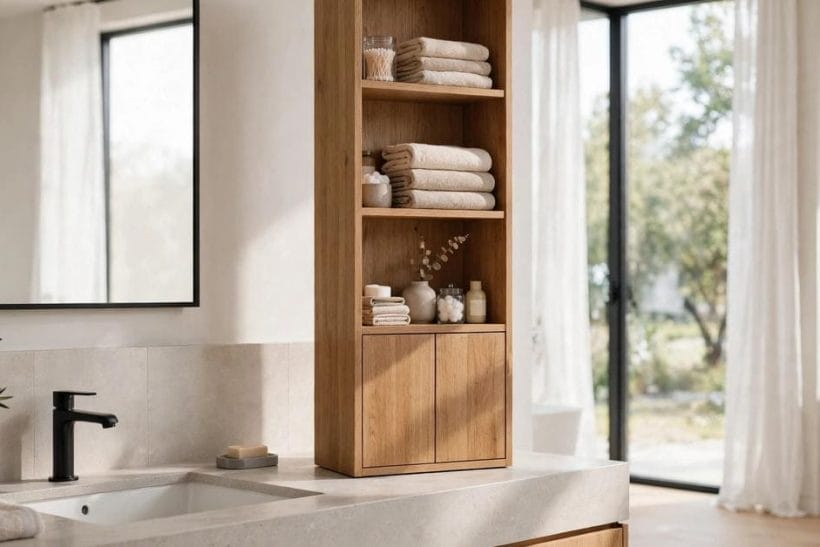
A vanity tower is a tall, narrow cabinet designed to sit with a bathroom vanity. Some versions stand on the countertop itself, rising from the surface beside the basin. Others run from floor to a comfortable height beside the vanity, or bridge the space between two basins. What unites them is proportion: narrow enough to fit a bathroom, tall enough to hold a useful amount, and divided into shelves, cupboards or drawers so that small things do not simply pile up behind a single door.
The tower is not a general bathroom cabinet and it is not a linen cupboard moved into the bathroom. Its job is narrower and more useful. It serves the vanity zone, holding the towels, toiletries and grooming items that belong within arm’s reach of the basin, while keeping them off the countertop. When the tower works, the morning routine gets shorter, because everything has a visible, repeatable home, and the counter stays clear for the one job it must do.
2. Why Height Changes a Small Bathroom
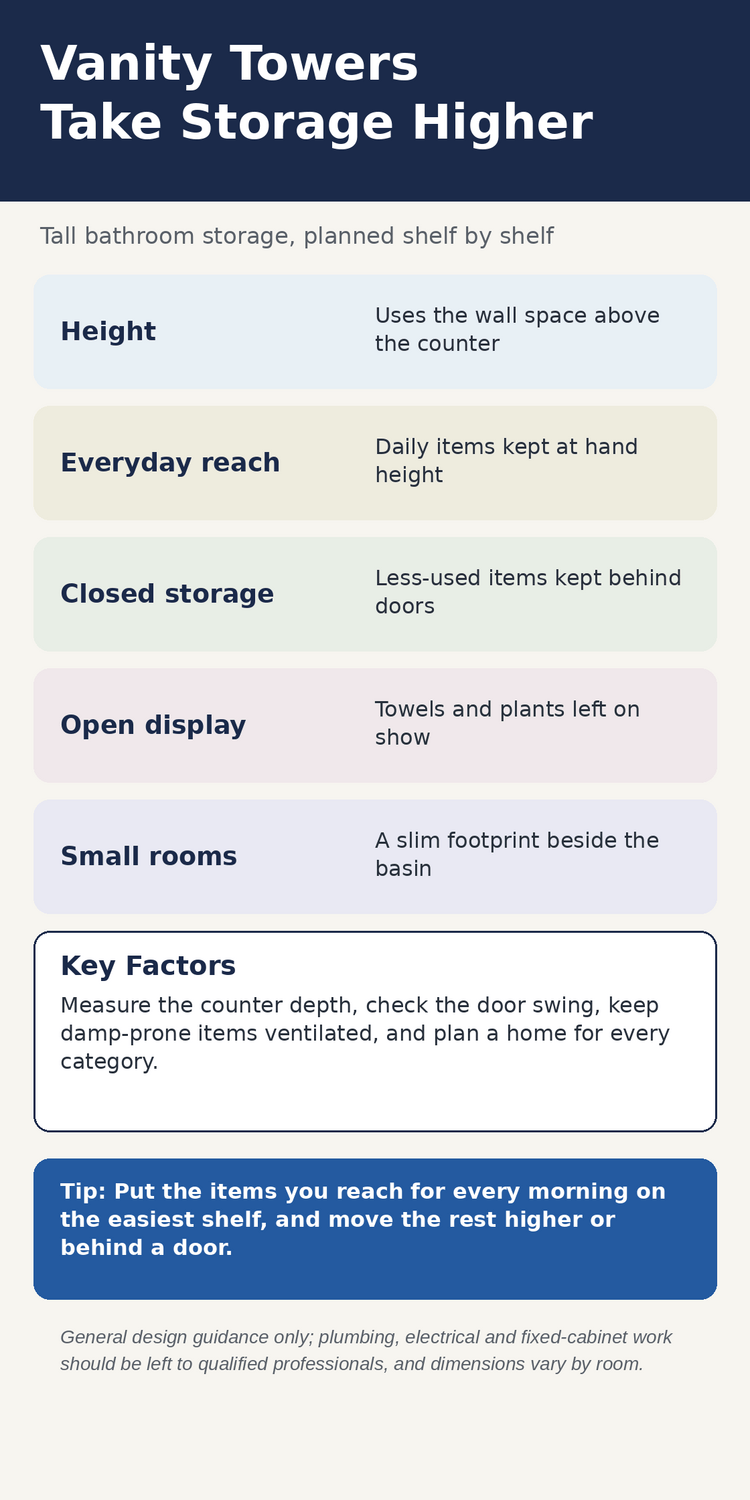
Small bathrooms punish wide storage. A broad cabinet eats wall that a door, a mirror or a towel rail may need, and a deep cabinet can make the room feel pinched as soon as someone stands at the basin. Height asks for none of that. A slim tower uses a strip of wall that is often empty, and it draws the eye upward, which makes a low or narrow room feel less boxed in. The storage gain comes from stacking, not from spreading.
There is a practical gain as well as a visual one. Tall storage lets a household sort by frequency of use rather than by whatever fits nearest the tap. Everyday items can live at hand height, weekly items a shelf higher, and rarely used items at the top or behind a closed door. That sorting is the real benefit of a tower. It is not that the room holds more, although it often does, but that what it holds is easier to find, easier to put back, and easier to keep tidy.
3. Countertop, Freestanding and Fitted Forms
Countertop towers sit on the vanity surface and rise above it, which suits a bathroom where the vanity already has a generous top and the tower can share its footprint. The countertop version keeps everything in one visual block with the basin, so the vanity reads as a single piece of furniture rather than a collection of parts. It works best where the basin does not crowd the tower and where the top shelf remains reachable without stretching.
Freestanding towers stand on the floor beside the vanity, which suits rooms where countertop space is precious or where the tower needs to be taller than a countertop version can sensibly be. Fitted towers are built into an alcove or run between two basins, and they suit a planned remodel where the joinery can be sized to the room. The right form depends less on fashion than on the room itself: how much countertop can be spared, how tall the household can comfortably reach, and whether the tower must share a wall with a mirror, a light or a door swing.
4. Open Shelves, Closed Doors, or a Mix
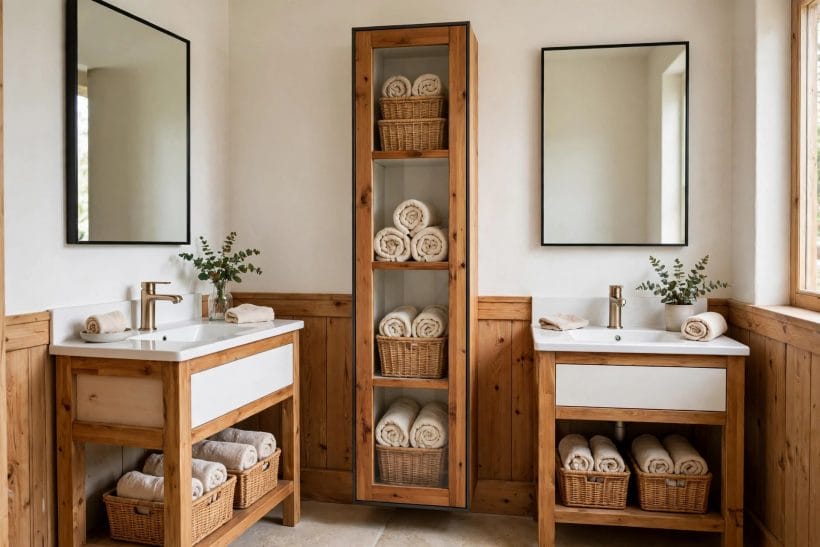
Open shelves suit the things that look good and get used often. Folded towels, a plant, a neat row of jars and a spare roll or two all read as intentional on an open shelf, and they can be grabbed without opening anything with wet hands. Open storage also keeps a tower feeling light, because the eye can travel through it rather than stopping at a solid front. The trade-off is honesty: open shelves show dust, clutter and half-empty bottles, so they reward a household that tidies as it goes.
Closed doors suit everything else. Medicines, cleaning supplies, spare toiletries and the less photogenic necessities of a bathroom all sit more comfortably behind a door, and a closed front makes a busy tower look calm from across the room. Most successful towers mix the two, with open shelves where display helps and closed cupboards where concealment helps. A useful rule is to let the open shelves hold only what is genuinely attractive and frequently used, and to give everything else a door.
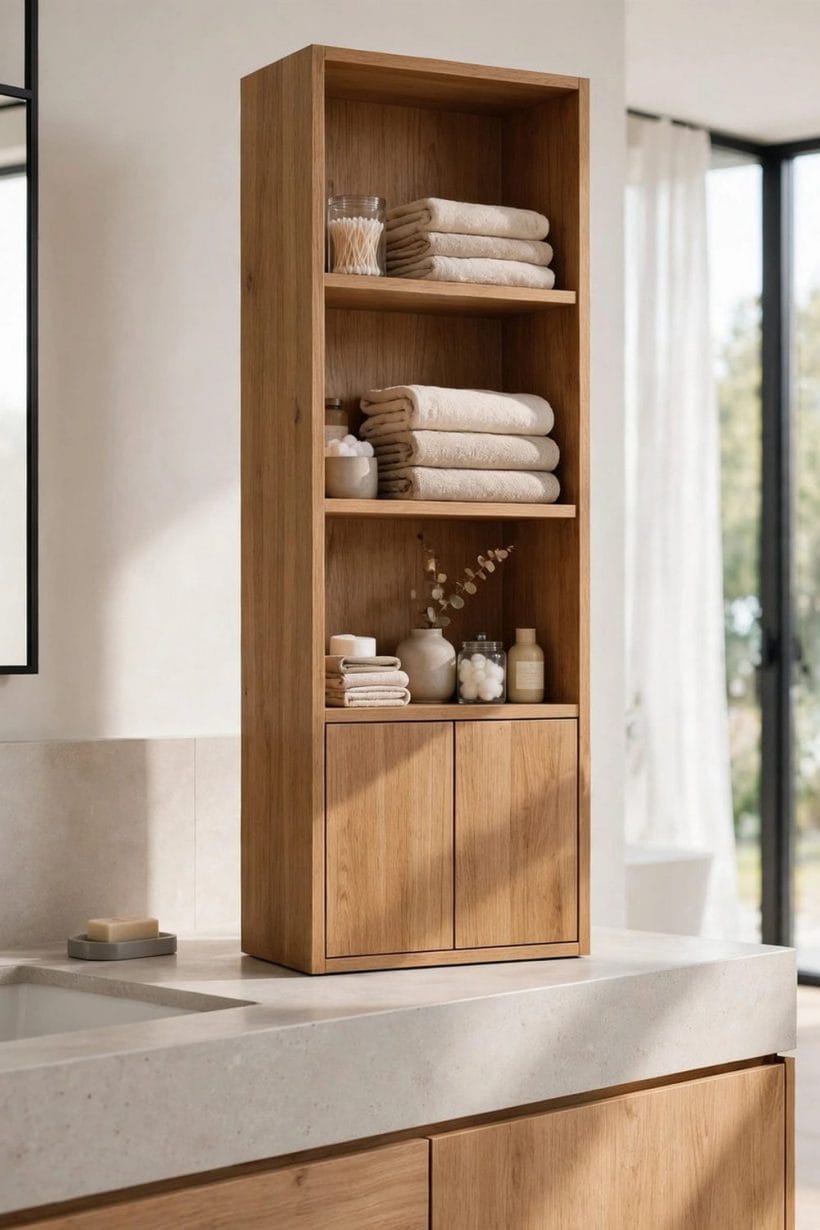
5. Planning What Lives on Each Shelf
A tower without a plan fills up in the order things arrive, which is how the top shelf ends up holding daily items and the easy shelf ends up holding things nobody uses. A better approach is to sort before buying or building anything. Gather everything the vanity zone must hold, group it by how often it is used, and then assign each group a shelf. Daily items belong where hands naturally fall. Weekly items belong a little higher or lower. Rare items belong at the very top or behind the least convenient door. Planning by person and by routine helps too: in a shared bathroom, giving each person a shelf or a basket prevents the slow drift by which one person’s items colonise the whole tower.
Towels are the natural residents of a tower. They are soft, forgiving of shelf height, and easy to fold into a tidy stack that looks good on an open shelf. Rolled towels suit narrow shelves and deep baskets, while folded towels suit wider shelves where a stack can be read at a glance. Keeping a small number of towels in the tower and the rest elsewhere prevents the tower from becoming a linen cupboard, which is a different job and deserves its own home. Toiletries need a different logic: small bottles tip, leak and disappear behind taller ones, so shallow trays, small baskets and upright dividers earn their place. Grouping by routine, morning items together and evening items together, beats grouping by size, because the hand reaches for a routine rather than a bottle. Anything that must stay dry, stay upright or stay out of reach of small children belongs behind a closed door, and anything that needs plumbing, wiring or fixing into the wall belongs in the hands of a qualified professional rather than a weekend project.
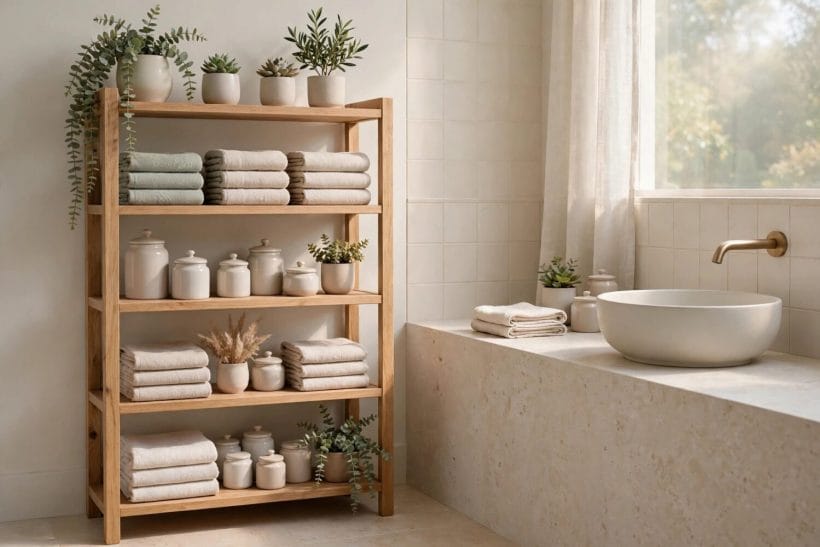
6. Materials That Cope With Steam
Bathrooms are damp rooms, and a tower lives in the dampest part of the room, beside running water and rising steam. Timber brings warmth and suits many bathrooms, but it needs a finish that tolerates humidity and a position that keeps it clear of direct splashes. Painted finishes can look crisp and calm, and they suit a bathroom where the colour scheme is already settled, while lacquered or sealed surfaces wipe clean more easily than raw or open-grained ones.
Glass fronts lighten a tall cabinet and let the household see what is inside without opening a door, which suits towels and display items. Solid fronts hide more and suit a tower that must absorb visual clutter. Whatever the material, ventilation matters: a tower packed tight against a damp wall, or stuffed so full that air cannot move, will show the effects of steam sooner than one with a little breathing room. Leaving a small gap behind the tower, wiping splashes promptly, and keeping the room itself ventilated all help the tower last.
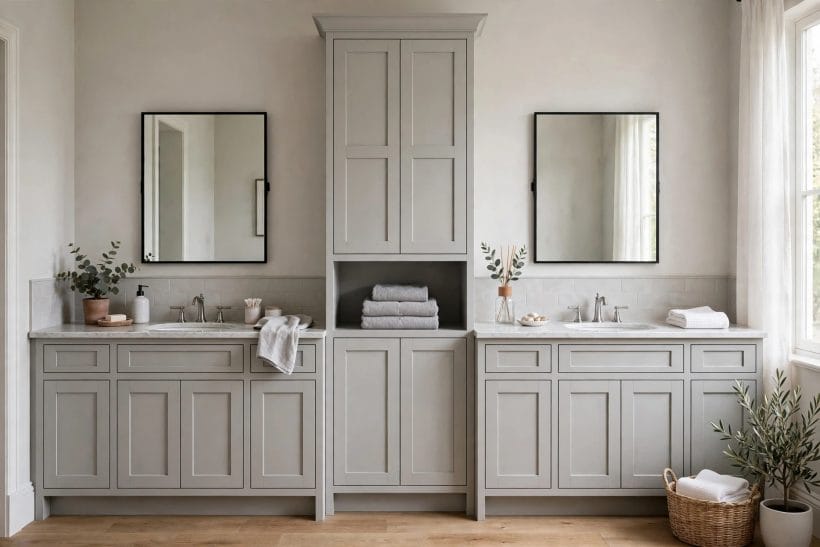
7. Light, Mirrors, Alcoves and Shared Bathrooms
A tall cabinet changes how light moves in a bathroom, so its position deserves as much thought as its shelves. Placed beside a mirror, a tower can frame the reflection and make the vanity zone feel composed. Placed in front of a window, it can block daylight and cast the basin into shadow. Placed opposite a mirror, it can double its own presence in reflection, which suits a calm, closed tower and overwhelms a busy, open one. A tower that stops well below the ceiling leaves a gap that gathers dust and draws the eye to an unfinished line, while a tower that runs close to the ceiling reads as built in, even when it is freestanding.
Alcoves are a natural home for a tower, because the recess gives the cabinet a frame and hides its sides. Measuring the alcove at several heights matters, since walls are rarely perfectly straight, and a tower that fits at the top may bind halfway down. Corners suit a tower that turns the room’s least useful angle into storage, but a corner tower must still open without hitting a door, a towel rail or the person using the basin. A tower between two basins can serve both users without either having to cross the room, and it gives a shared vanity a centre that stops the two sides drifting into each other’s space. For households planning a tiny bathroom layout, the tower is best treated as part of the vanity plan from the start, not as storage added after the basin, mirror and lights have already claimed every wall.
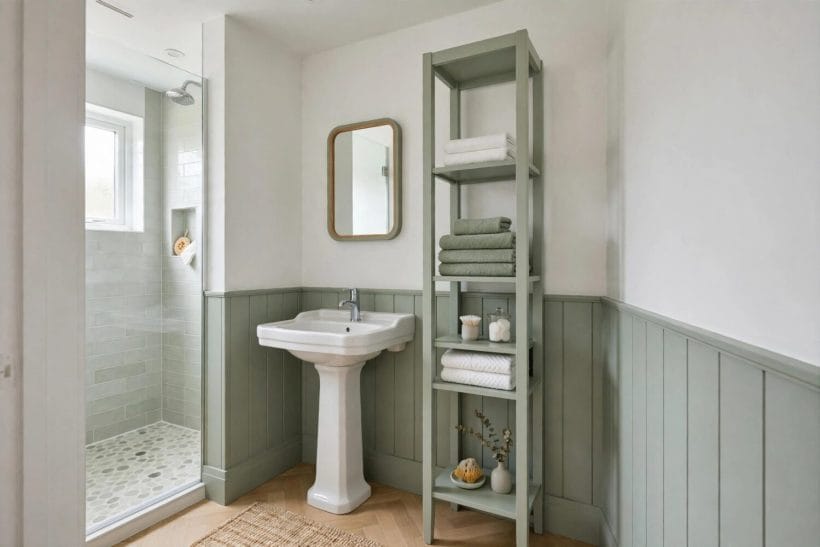
8. Keeping a Tower Tidy in a Small Home
The first month of a new tower is usually its tidiest, because everything has just been placed with care. The test comes later, when new bottles arrive, old ones linger, and the easy shelf slowly fills with things that belong elsewhere. A short, regular reset prevents that drift. Returning each item to its assigned shelf, removing empties, and moving anything unused for a long stretch to a less convenient home keeps the tower working without a major overhaul. Baskets and trays make that reset easier, because a whole category can be lifted out, wiped and replaced in one movement, and a basket that no longer fits its category is a visible sign that the category has grown.
Small homes reward furniture that does more than one job, and a vanity tower earns its footprint by serving the whole bathroom rather than a single routine. It can hold the towels for the morning, the supplies for cleaning, and the spares that would otherwise live in a hallway cupboard, all within a strip of wall beside the basin. Guests can be directed to one obvious place, children can be given one reachable shelf, and the rest of the home’s storage ideas can stay focused on rooms where storage is harder to fit. In a bedroom suite, where the bathroom opens directly off the sleeping space, a closed tower keeps bathroom clutter out of sight from the bed, while an open tower suits a guest bathroom where visitors need to see what is available without opening every door.
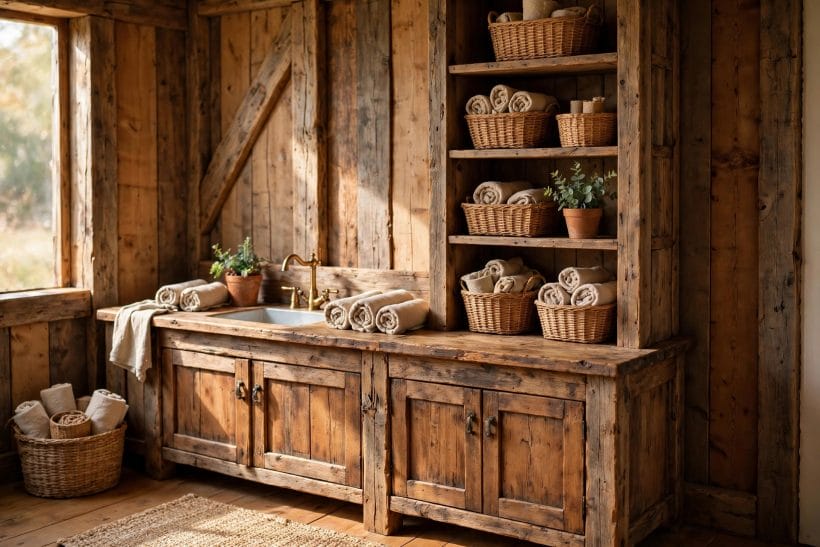
9. Styling a Tower, and When It Is the Wrong Answer
Styling a tower is a matter of restraint. A plant, a folded stack of towels in a single colour family, and a small tray for everyday items give an open tower a finished look without filling it. Repeating one material, timber baskets with timber shelves, or ceramic jars with a ceramic tray, calms a tower faster than any arrangement of unrelated objects. Colour works the same way: towels in one or two tones read as intentional, while every colour at once reads as whatever happened to be clean. The countertop beside the tower deserves the same restraint, because a tower that frees the counter, only for the counter to fill again with a new collection, has solved nothing. Rooms that open onto living space benefit most from this discipline, since a bathroom that stays visible from elsewhere in the home is judged by its calmest surface, which is usually the countertop the tower has just cleared.
A tower is not always the right storage for a bathroom. A very narrow room may need wall-hung storage that leaves the floor clear, and a bathroom used by someone with limited reach may need low, wide storage rather than tall shelves. A room with a sloping ceiling may not have the height a tower needs, and a vanity already crowded by a large mirror, a window and a light may have no strip of wall left to give. Fixed cabinetry, plumbing moves and electrical work all sit on the professional side of the line, and a tower that requires any of them should be planned with a qualified tradesperson rather than improvised. A freestanding or countertop tower, by contrast, can often be placed without any of that work, which is part of its appeal. Knowing which side of that line a particular tower falls on is the difference between a simple improvement and a project that grows.
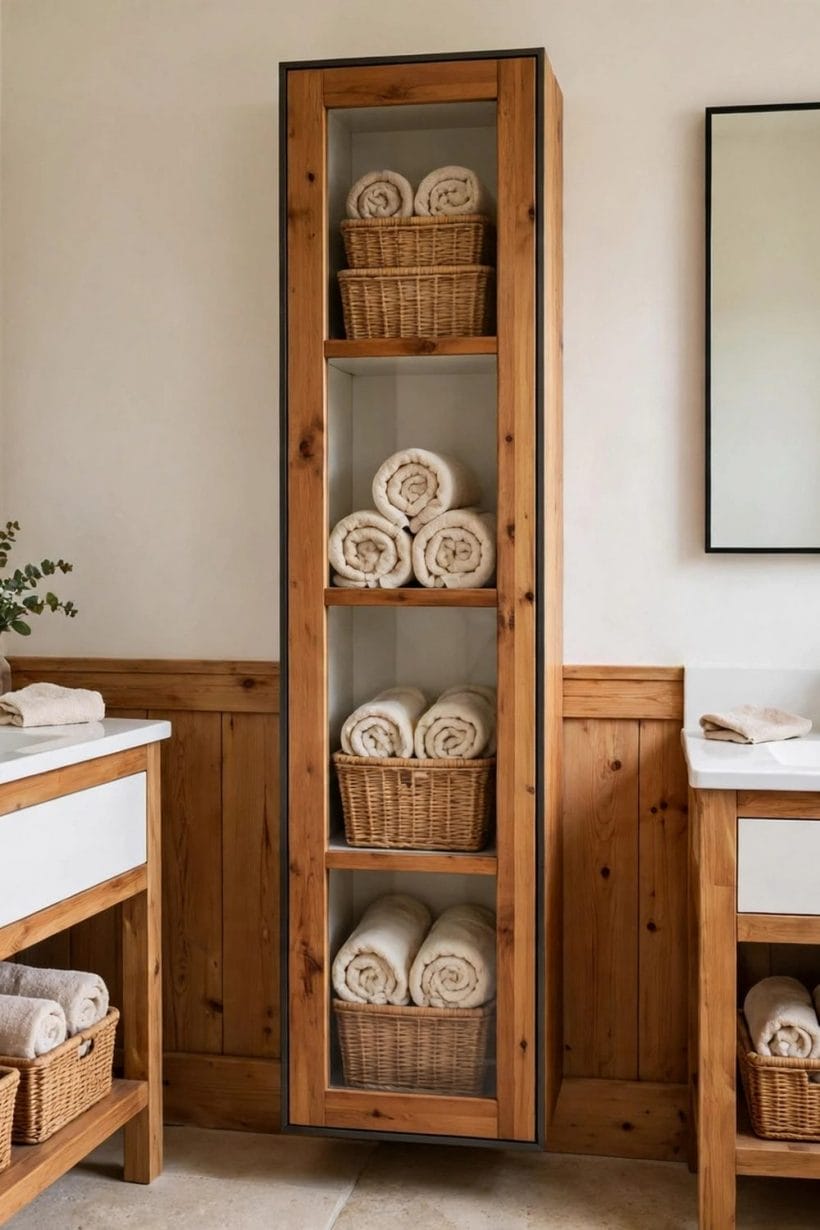
10. Choosing Well and Living With It
Choosing a tower comes down to a handful of honest questions. How much countertop can be spared, and how much must stay clear. Who uses the bathroom, and how high can each person comfortably reach. What must be hidden, what can be shown, and what must stay dry or out of reach. How the tower meets the vanity, the mirror and the light, and whether its finish belongs with the rest of the room. Answering those questions before shopping narrows the field quickly, and it prevents the common mistake of buying the tallest or the prettiest tower rather than the one the room can actually use. The same questions help when the home extends beyond the bathroom: a tower that suits a compact exterior footprint and a garden room that stays calm depends on storage that does not spill out of the rooms it serves.
Living with a tower is quieter than choosing one. The shelves settle into routines, the baskets find their categories, and the countertop stays clear more often than it did before. When the tower stops working, the cause is usually not the tower but the plan: a category has grown, a person has joined the household, or a routine has changed. Revisiting the shelf plan, rather than replacing the cabinet, usually restores the order. A tower that adapts to those changes, by moving a basket or swapping a door for a shelf, will outlast a tower that was only ever arranged once.
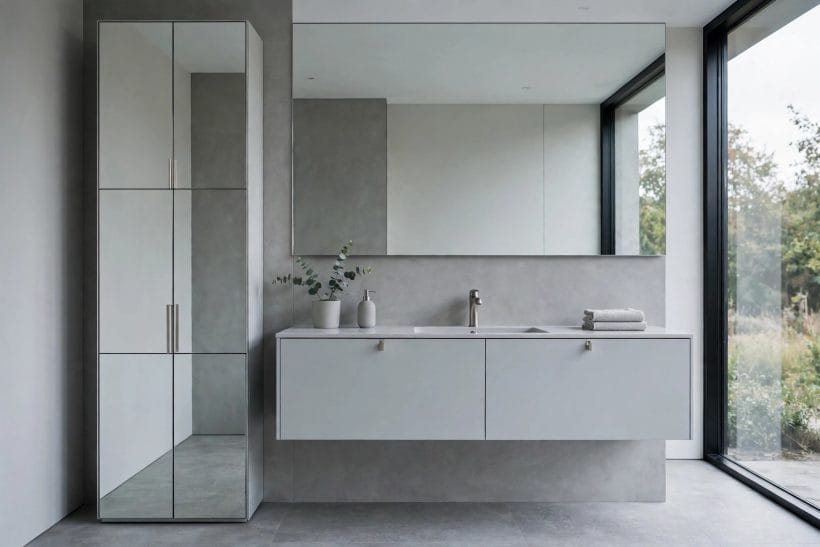
Final Considerations
A countertop vanity tower earns its place by doing one thing well: lifting bathroom storage off the countertop and into a tall, narrow, reachable home. It suits small bathrooms, shared bathrooms and small homes alike, because it uses height rather than floor space, and because it sorts by routine rather than by pile. Open shelves for display, closed doors for concealment, and a shelf plan built around real routines are the three decisions that matter most, and they matter more than the tower’s style or finish.
For a home already thinking about its wider design ideas, the tower is a good place to start, because it is small enough to change without a remodel and visible enough to change how the room feels every day. Keep plumbing, electrical and fixed-cabinet work with qualified professionals, keep the countertop clear once the tower has freed it, and let the tallest piece of furniture in the bathroom do the quiet work of keeping everything else in its place. A bathroom that stores well is a bathroom that is easier to clean, easier to share, and easier to enjoy, and a tower, chosen for the room it serves, is one of the simplest ways to get there.




0 Comments