

Few roses carry their review in their nickname. Fair Bianca — a creamy white English rose from David Austin’s breeding programme — has been called ‘the much maligned’ so often that the phrase follows it into catalogues and forum threads alike. Maligned by some, defended fiercely by others, and still planted decades after its introduction: that combination usually means a rose with strong opinions growing on both sides of the fence.
This profile hears the case fairly: what the cultivar is, what the charges against it actually are, what its flowers and its famous fragrance do in a real garden, and how to give it the conditions in which its defenders insist it shines. It belongs to the garden cluster beside the black roses inquiry — another rose the internet argues about — and it makes no promises about who sells what: this is a growing guide, not a shop window.
1. Fair Bianca Rose at a Glance
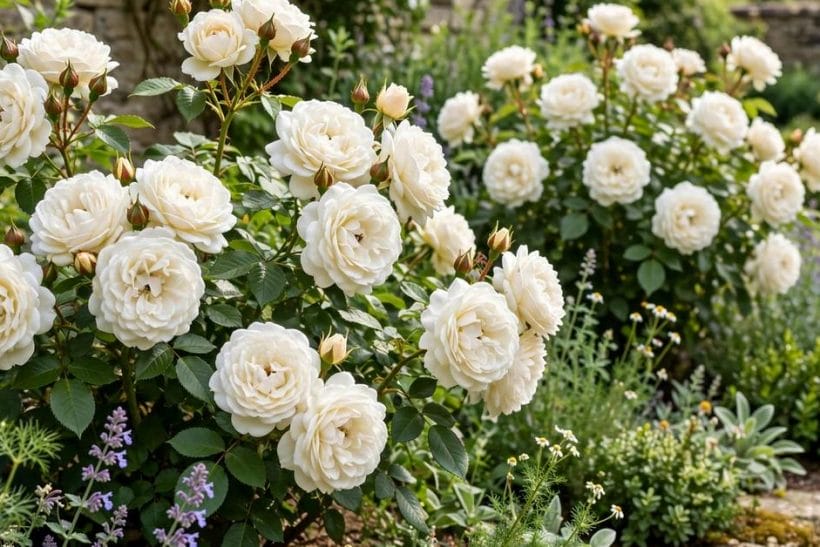
Fair Bianca is an English shrub rose bred by David Austin, grown for its fully double, creamy white blooms — often warmed by a soft blush at the centre when the flowers first open — and for a strong fragrance of the myrrh character for which many Austin roses are known. It flowers in flushes through the season rather than all at once, grows as a bushy shrub suited to borders and mixed beds, and asks for the standard rose contract: sun, air, rich soil, water at the roots and an annual prune. Its reputation is divided in a way this guide examines honestly — the divided reviews concern chiefly its scent, which growers experience very differently, and its behaviour in wet, still weather.
| Question | Short answer |
|---|---|
| What is Fair Bianca? | An English rose bred by David Austin: a repeat-flowering shrub with densely petalled, creamy white blooms and a powerful fragrance of the myrrh type. It was bred in the English Roses programme that crossed old garden roses’ flower form and scent with modern repeat flowering — and it shows both inheritances plainly. |
| Why is it called ‘much maligned’? | Because its reviews divide. The charges, heard fairly in this guide, are that its myrrh scent reads as medicinal to some noses, that its many-petalled blooms can sulk or ball in prolonged wet weather, and that like many Austin roses it asks for decent feeding and air to give its best. Its defenders answer that in sun and open air, fed and pruned, it is generous, fragrant and romantic — the disagreement is mostly about conditions. |
| Is Fair Bianca hard to grow? | No harder than other repeat-flowering shrub roses, and not the easiest either. It wants the full rose contract — sun for most of the day, moving air, enriched soil, deep watering in dry spells, a mulch, and black-spot hygiene in humid summers. Gardens that give roses that contract generally find it cooperative; gardens that plant and abandon should choose a tougher customer. |
| Does Fair Bianca make a good cut flower? | Yes, with the usual caveats for garden roses: cut in bud or just opening, condition the stems in water promptly, and expect vase life measured in days of glory rather than the florist’s fortnight. Its scent indoors is the point — which, given the divided verdict on that scent, is either the strongest reason to grow it or a reason to sample the fragrance before planting three. |
2. What Fair Bianca Is: An English Rose in the Austin Family
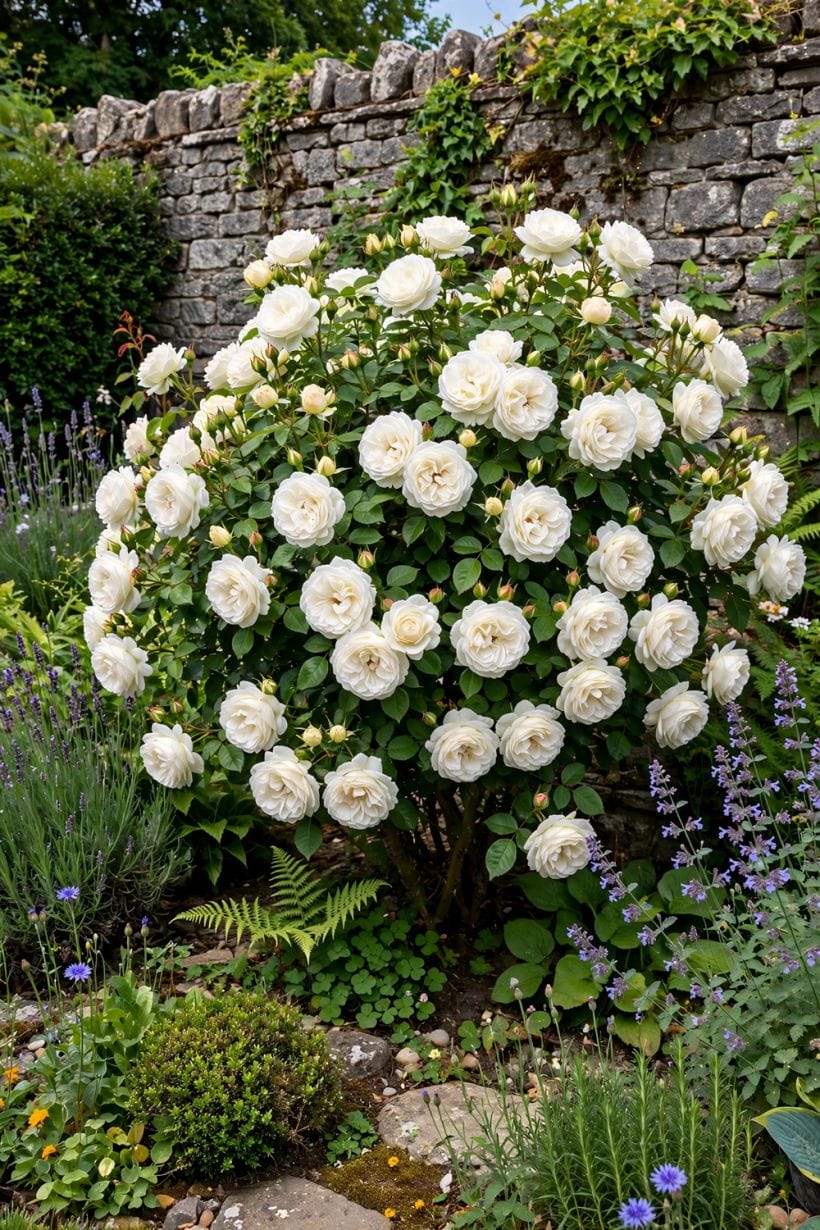
David Austin’s English Roses were bred to reconcile two worlds: the cupped, many-petalled flowers and deep fragrance of the old garden roses, and the repeat flowering and bushy habit of the modern hybrid tea and floribunda. Fair Bianca is squarely of that programme — a shrub rose whose blooms open as rosettes of cream and ivory, densely packed with petals, on a plant built for the border rather than the show bench.
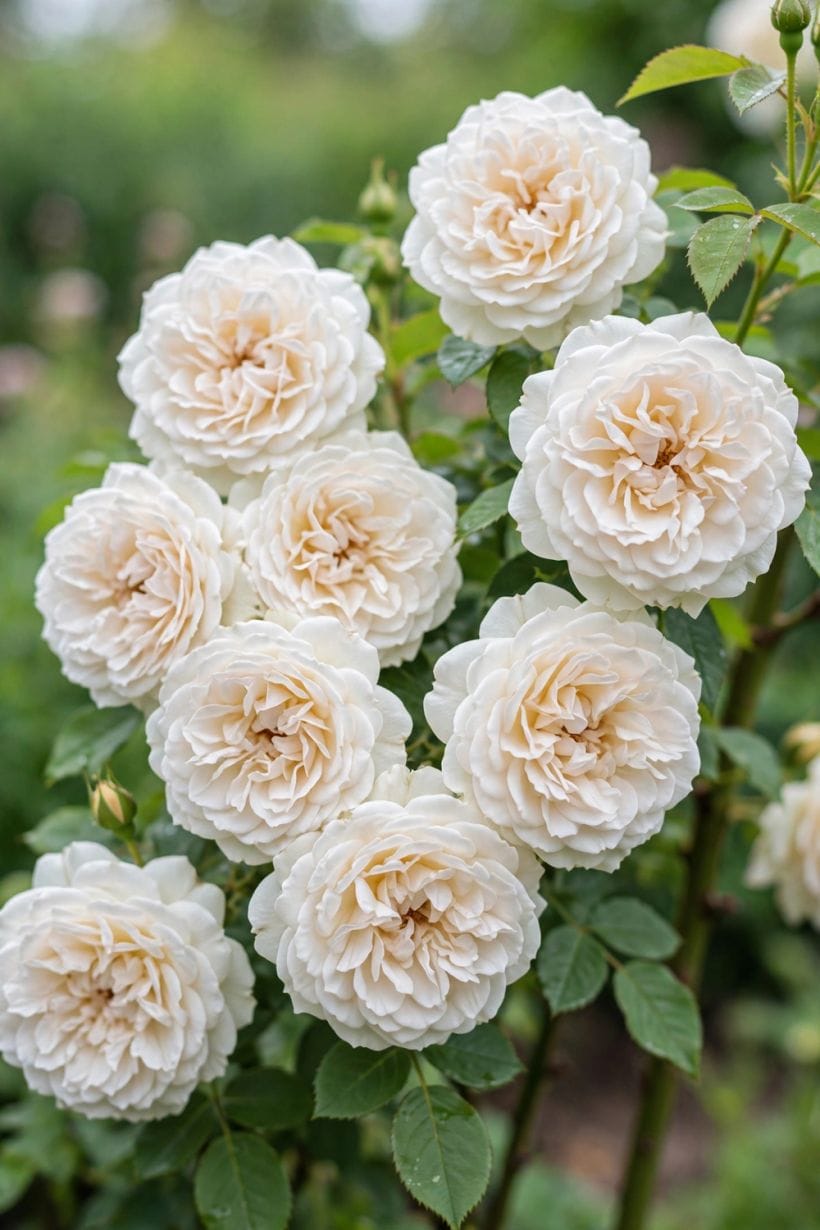
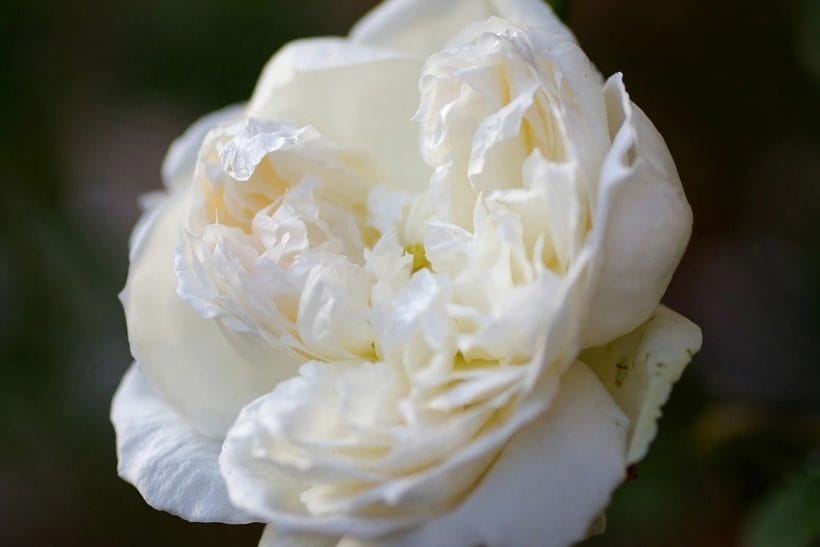
The colour deserves a precise word, because ‘white rose’ undersells it. The buds often carry a blush, and the freshly opened flower warms toward a soft buff-cream at its heart before settling to ivory white as it opens fully. In a border it reads as the gentlest of whites — the kind that cools a hot planting scheme without the glare a pure brilliant white can throw.
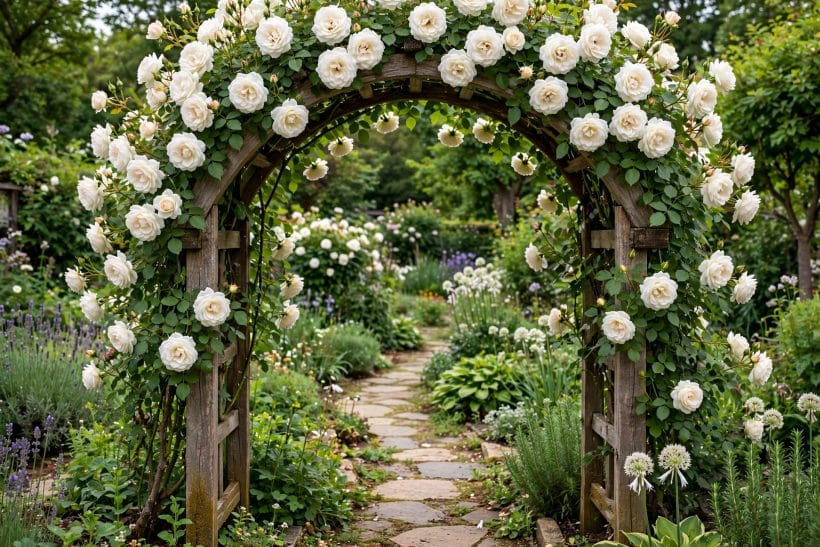
Its growth is the English shrub pattern: a rounded, bushy plant that can be kept as a large shrub, tied in lightly as a short pillar where space is tight, or given a wall’s shelter in cold districts. It repeats in flushes — a main flowering, a pause while the plant gathers itself, then further rounds — which is the rhythm its care calendar in this guide is built around.
Understanding the family explains the rose. English roses were not bred as no-maintenance plants; they were bred as garden plants for gardeners — fed, pruned, deadheaded and admired. Fair Bianca judged by that standard is a thoroughbred of its line. Judged as a plant-it-and-forget-it shrub, it will disappoint, and a good share of its maligned reputation is precisely that mismatch of expectation.
3. Why ‘Much Maligned’: The Charges, Fairly Heard
The first charge is the fragrance, and it is serious enough to deserve its own section below. In brief: the myrrh scent that defines many Austin roses is inherited from a particular ancestry, and human noses split on it. To its lovers it is perfume — spicy, medicinal in the apothecary sense, unmistakable. To its detractors the same chemistry reads as antiseptic. Both reports are honest; they are reports of different noses meeting the same molecule.
The second charge is weather. A flower carrying that many petals holds rain like a cup, and in a long wet spell blooms can brown at the edges or fail to open cleanly — the fault growers call balling. It is a real tendency of densely double roses generally, not a unique vice of this cultivar, but gardeners remember the June it rained for a fortnight, and the rose carries the blame for the climate it was planted in.
The third charge is appetite. Repeat-flowering shrub roses are hungry plants, and a starved Fair Bianca — thin growth, small blooms, mildew or black spot finding the weakened foliage in a humid summer — looks like a bad rose when it is mostly an underfed one. The disease reports attached to its name follow the usual rose law: stressed plants in still, damp air suffer first, and the cultivar’s name gets attached to the gardener’s omissions.
Heard fairly, then, the maligned reputation resolves into a conditional: this is a rose that repays its contract generously and resents its breach visibly. Whether that makes it a good rose depends on the garden it is planted in — which is why the rest of this guide is about conditions, and why the fairest verdict on Fair Bianca is written in soil and sunlight rather than in stars.
4. The Bloom Itself: Form, Colour and the Repeat
The flower is a rosette: outer petals opening flat and pale, inner petals folded and quartered in the old-rose manner, the whole bloom deep enough to hold shadow at its centre. It is not the largest rose in the border, and size is not its claim — its claim is form. A half-open Fair Bianca beside a modern hybrid tea is a small lesson in what the Austin programme was for.
The flushes come in the English rose rhythm: a generous first flowering as the season opens, then scattered blooms and a second organised flush if the plant is deadheaded, fed and watered through the pause. Gardeners who cut the first flush hard for the house sometimes thin the second; gardeners who deadhead faithfully and feed after the first show generally report the repeat at its best.
In the border the bloom’s pale register does quiet, valuable work: it lights shade at the border’s back, cools scarlet and magenta neighbours, and carries the eye between stronger colours without demanding the eye stop. White and cream roses are the diplomat class of the border, and this one’s cream warmth makes it an unusually friendly diplomat — it sits as happily with apricot and soft yellow as with the pinks.
Age improves the performance, as with most shrub roses. A first-year plant is settling roots and should not be judged; by its third season, established, pruned into a framework and fed on schedule, the cultivar shows the floriferousness its defenders describe. Many a maligned rose is simply a young rose reviewed early by an impatient gardener — the profile of this one included.
5. The Fragrance Question: Myrrh, Medicine or Perfume
Myrrh fragrance in roses descends chiefly through one famous ancestor in the Austin breeding lines, and it produces a scent quite unlike the sweet tea-rose perfume most people expect from a flower. It is warm, spicy and resinous, with a medicinal edge — the smell of an old apothecary’s drawer, of balm and church resin. Growers reach for the same words on both sides of the argument; they simply disagree about whether the words are praise.
The honest advice is empirical: smell it before you plant it. Fragrance cannot be reviewed by proxy, and this cultivar is the standing proof. A rose bought for scent that the household experiences as antiseptic is a disappointment planted for a decade; the same rose in a garden that loves myrrh becomes the plant visitors are led to by the nose. Nurseries in bloom season, rose gardens and shows are the laboratories.
Scent also varies with the day. Warm, still mornings carry it furthest; cool and windy afternoons mute it; a bloom cut and brought indoors concentrates it in a room, for better or worse. Judging Fair Bianca’s fragrance from one sniff at a windy show is like judging a wine from a photograph — the cultivar asks to be met at its best hour before the verdict is written.
For those who love it, the scent is the rose. It perfumes a path’s edge, a bench’s back, the air of a room from a single vase — the full old-rose promise that the Austin programme set out to keep. If your household is in that camp, the maligned reputation works in your favour: you will be growing a rose whose flowers and fragrance its defenders rank with the best of the family, while the doubters plant something else and leave you to it.
6. Planting: Site, Soil and the Company It Keeps
Site first: sun for the greater part of the day, and air that moves. The sun drives the flowering and ripens the growth; the moving air dries the foliage after rain and dew, which is the single kindest condition a rose with any disease reputation can be given. A still, damp corner against a wall is where the charges against this cultivar are manufactured — plant it in the open border instead.
Soil second: roses are feeders with deep ambitions, happiest in a rich, moisture-holding but drained loam. The soil lesson of the loam explainer applies verbatim: dig deeply, work in generous well-rotted organic matter, and give the roots a prepared volume rather than a tight hole in unimproved ground. On thin or sandy soil the preparation matters more, not less, because the feeding calendar depends on the soil holding what it is given.
Planting itself follows the standard rose rite: the graft union at the depth the grower’s guidance and local practice set for your climate, the roots spread, the soil firmed and watered in to settle it against them, and a mulch laid once the ground is warm. Bare-root plants go in during the dormant season; potted plants almost any time the ground can be worked, with watering to match.
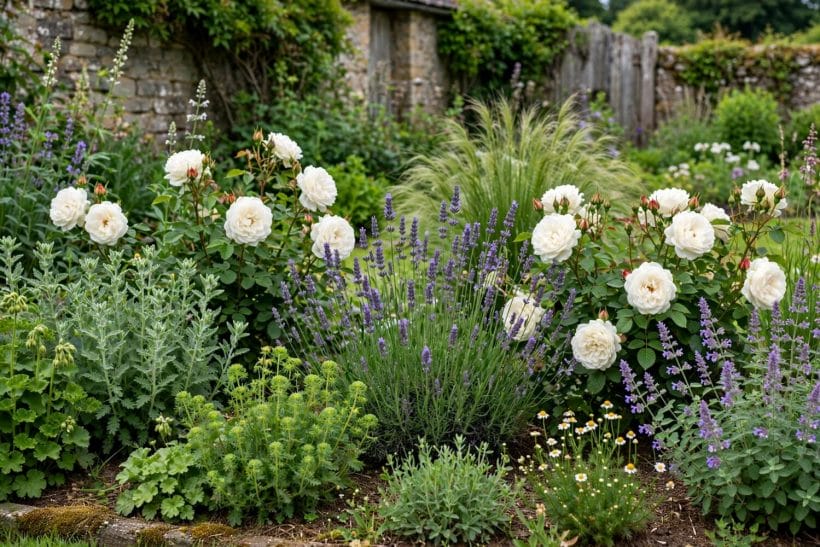
Company last: Fair Bianca sits well among the border’s middle register — hardy geraniums, salvias, catmint and lavender at its feet to hide the rose’s legginess and give the bed interest between flushes, taller shrubs or a climbing plant structure behind. Underplanting also shades the soil, keeps the mulch’s moisture where the roots want it, and turns a single shrub into a composition.
7. Feeding, Watering and the Honest Maintenance Contract
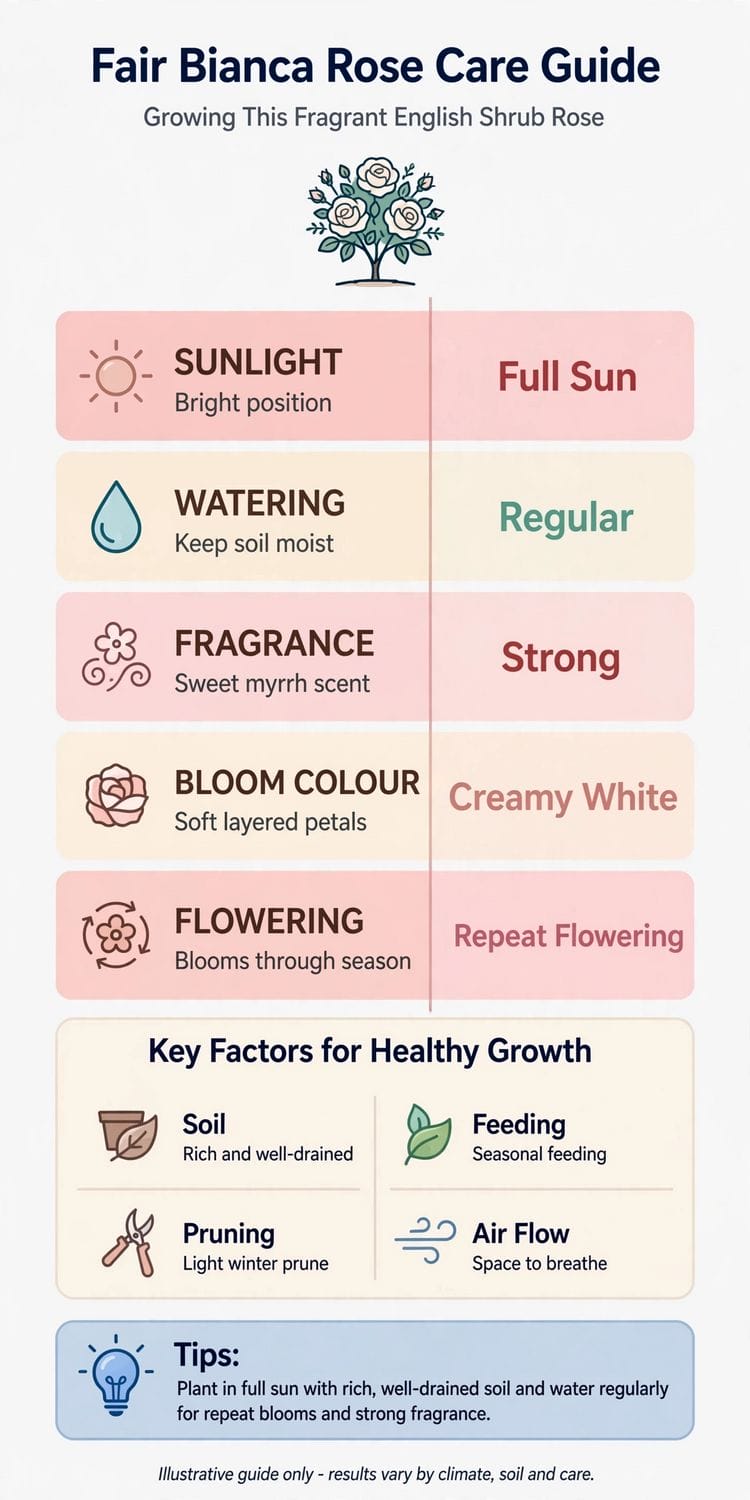
The contract, plainly: feed as growth starts in spring and again after the first flush, with a rose feed or the balanced equivalent; mulch deeply with organic matter to feed the soil’s own workforce; water deeply and infrequently in dry spells, at the roots, in the morning. None of this is specialist knowledge — the maligned reputation is largely the record of gardens where none of it happened.
The compost and soil side of the contract matters as much as the feed bag: roses in annually mulched, organically fed soil hold their moisture, feed steadily and resist stress — and stress, far more than any single pathogen, is what writes a cultivar’s disease record. The gardener who improves the soil is practising disease control by other means.
Hygiene is the third clause. Fallen leaves cleared from beneath the bush, spent blooms deadheaded to a strong bud, any spotted foliage picked off and binned rather than composted, the centre of the bush kept open to air by the pruning below. In humid summers this routine is the difference between a plant that carries a few spots and one that defoliates — and it asks minutes, not hours.
Watering discipline deserves its sentence: wet foliage overnight is disease’s invitation, so water the soil, not the plant, and water in the morning so the day dries what splashed. A soaker or a can at the base, a mulch to slow evaporation, and the patience to water deeply twice rather than sprinkle daily — the rose’s roots will go down after the moisture and the plant will stand droughts that wilt its shallowly watered neighbours.
8. Pruning, Winter Care and the Second Flush
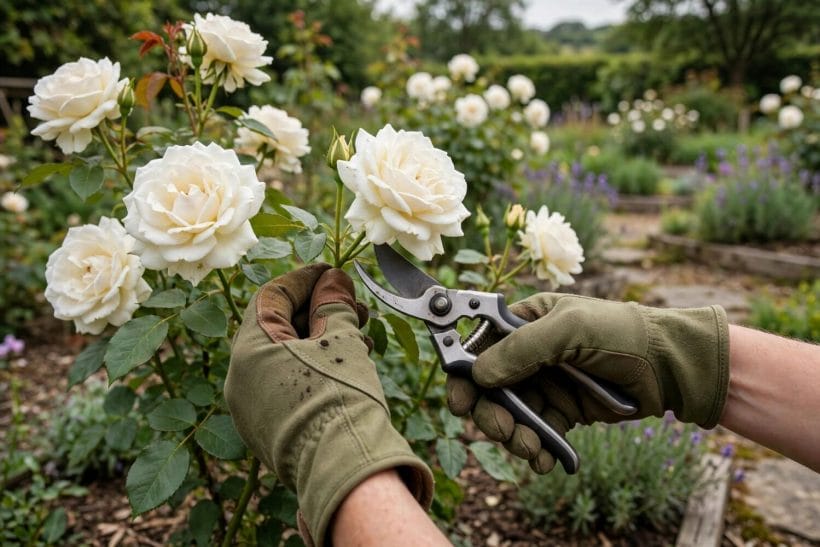
Pruning an English shrub rose is editing, not surgery: in late winter or early spring, remove the dead, the damaged and the crossing wood, open the centre to light and air, and shorten the framework’s strong stems by roughly a third to a half, cutting to outward-facing buds. The aim is the goblet the textbooks draw — a plant whose middle the sun can enter, which is the disease section’s advice expressed with secateurs.
Through the season the work is deadheading: spent blooms cut back to a strong leaf and bud, which directs the plant’s energy into the next flush rather than into hips. Gardeners who want the autumn hips — and some do, for the birds and the season’s look — simply stop deadheading late and accept the trade, knowing the plant will flower the better for it next year either way.
Winter care is climate’s question. In mild districts the shrub asks for little beyond its mulch renewed and its longest stems shortened against wind-rock. In cold districts the crown’s protection — soil or mulch mounded over the base once the ground cools — is the standard insurance, removed as growth starts. The cultivar is a garden rose, not a tender one, but the base’s protection is cheap against a hard winter’s bill.
Rejuvenation is the old plant’s clause: a shrub grown woody and bare at the base can be renewed over two or three springs by removing its oldest stems at ground level, feeding generously and letting the new basal growth rebuild the framework. Many a Fair Bianca written off at ten years old was one honest renovation away from its best decade.
9. Where It Earns Its Place: Beds, Borders and the Vase

In the mixed border it is the pale anchor: planted in a small group or as a single specimen against darker foliage, its ivory blooms light the whole composition between flushes of stronger colour. Group planting — three of a kind — is the professional’s trick for shrubs of individual character: the group reads as a planting decision, the single can read as an accident.
In a container garden it performs in a large pot given the full contract — rich compost, faithful watering, feeding on schedule — where its scent can be stationed beside a door or a bench. Container roses are the most demanding version of rose growing, because the pot forgives nothing, but they put the fragrance exactly where the household lives.
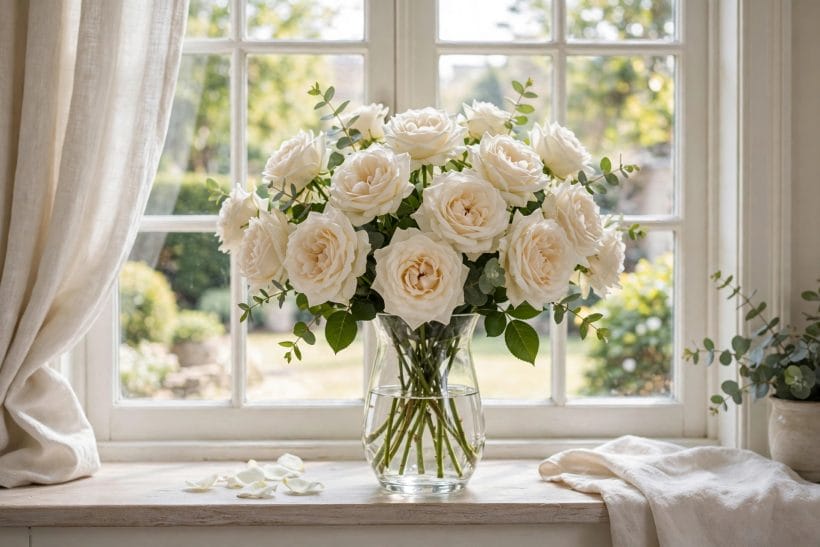
For the vase it is cut in the cool of the morning, stems in water at once, the blooms opening indoors over the following days. A pale, quartered, myrrh-scented rose is a florist’s arrangement from a single garden shrub — and the household that loves the scent will plan its summers around the cutting, which is the final answer to the maligned reputation: the rose’s jury is whoever lives with it.
And in the wider garden it earns a pollinator’s mention: the open-centred stages of its blooms are visited as the double form allows, and a border that carries roses among the wildlife friendly garden planting gives the shrub its ecological sentence too. Fair Bianca’s place, in the end, is the border of a gardener who keeps the rose contract — in that garden, by every account its defenders give, it is not maligned at all.
10. Costs and Pulling It Together
Costs for a rose of this class are the costs of rose keeping generally: the plant itself from a reputable nursery, priced by its size and whether it arrives bare-root in the dormant season or potted in growth; the soil preparation and mulch; the annual feed. There are no specialist premiums attached to this cultivar’s name, and this guide deliberately carries no seller’s claims — availability and prices belong to nurseries’ own pages, checked at planting time, while the growing truth of the plant belongs here.
Pulling it together: give Fair Bianca sun, air, rich soil and the feeding contract; prune it open; deadhead for the repeat; and judge its fragrance with your own nose before the planting, not after. The much-maligned rose then takes its place in the garden’s order as what it has always been in the right conditions — a fragrant, romantic, ivory-flowered English rose whose worst reviews were written by its planting positions.
Final Considerations
Every maligned cultivar is a question about fit: the plant’s character against the garden’s conditions and the gardener’s habits. Fair Bianca’s character is strong scent, dense ivory blooms and an appetite for care. In the garden that matches it, the nickname reads as irony; in the garden that does not, it reads as a warning — and knowing which garden yours is, is the whole of rose growing.
Begin by smelling it in bloom somewhere. If the myrrh takes you, plant it in the sunniest, airiest place you have, feed it like you mean it, and let the doubters keep their opinion — your border will be making the opposite argument, in flowers, for years.




0 Comments