

Ask for a black rose and you start one of gardening’s oldest arguments. Florists sell them, poets swear by them, and botanists calmly point out that no such flower exists — because a rose cannot make black pigment. Both sides are holding part of the truth, and the whole of it is more interesting than either.
This guide gives the honest account: what ‘black’ roses really are, the darkest cultivars worth growing, how the florist’s treated blooms are made, and how to grow the garden versions so dark they earn the name. No legends sold as facts, and no seller’s promises repeated — just the flower, explained.
1. Black Roses at a Glance
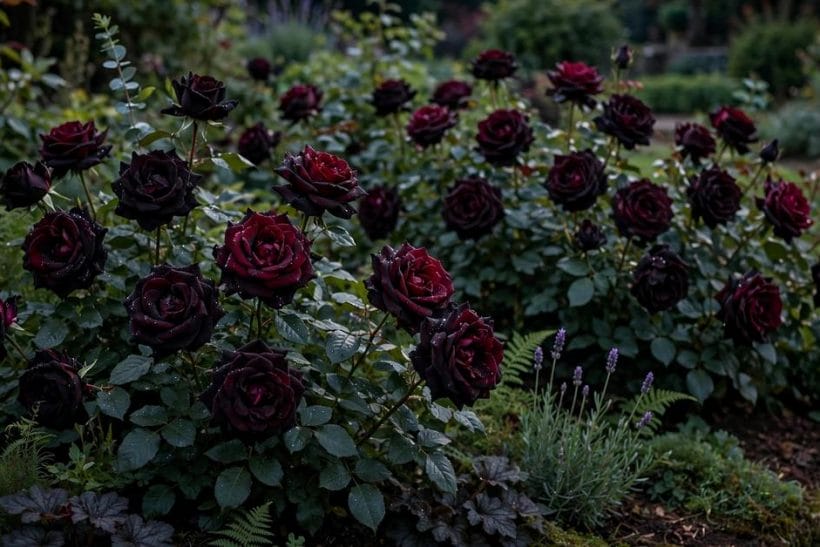
The black rose is a horticultural idea rather than a botanical fact: a group of rose cultivars bred for exceptionally deep red, maroon and purple pigmentation whose velvet petals absorb so much light that they read as black in bud, in shade and in soft light. Alongside them stand treated blooms — dyed, sprayed or velveted by florists. The topic belongs with the garden and plant cluster gathered under the home design ideas hub, beside the wildlife friendly garden and the climbing plants that share its beds.
| Question | Short answer |
|---|---|
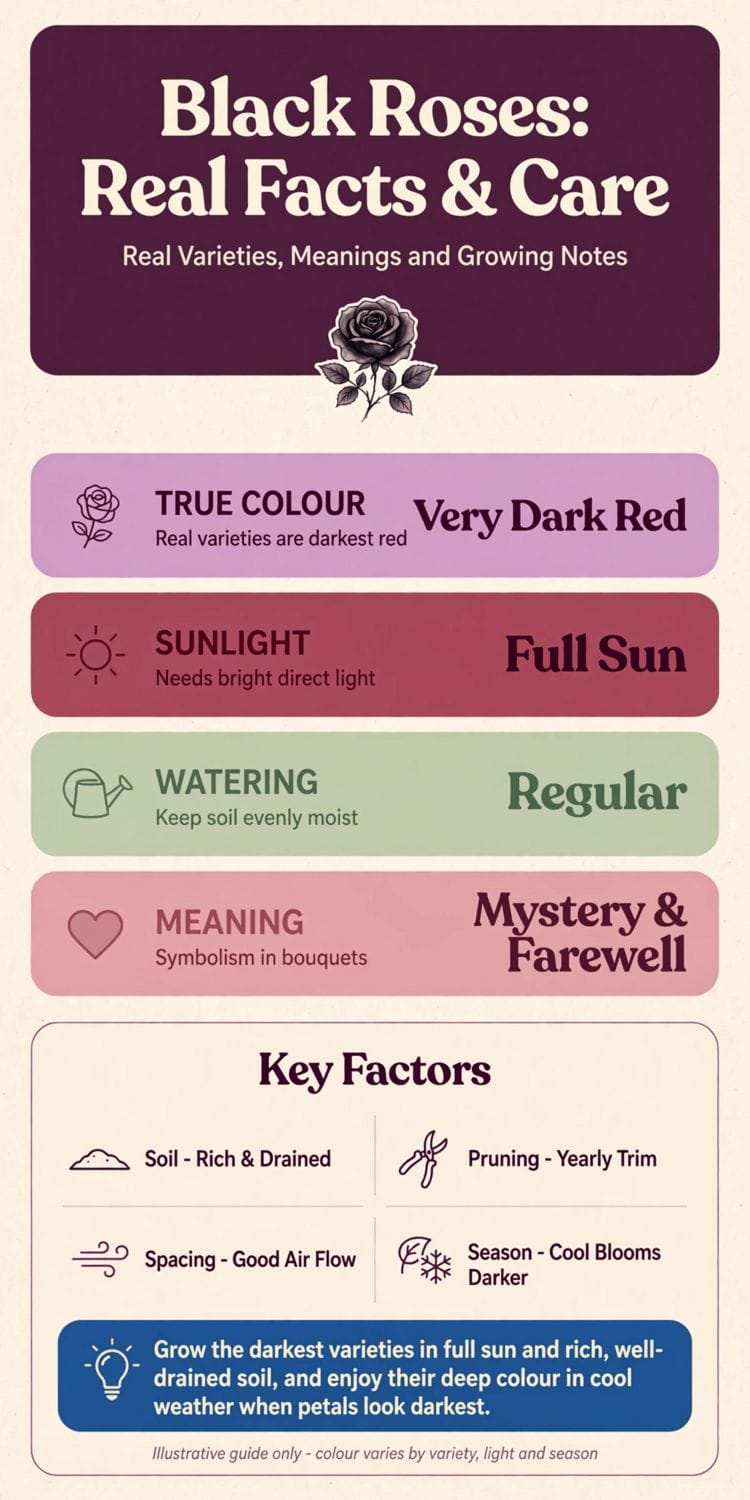
| Does a truly black rose exist? | No. Roses cannot produce black pigment; every black rose is a very dark red or purple cultivar, or a treated bloom. |
| Which is the blackest rose to grow? | ‘Black Baccara’ is the florist’s standard for near-black buds; ‘Black Jade’ does it in miniature. Both are honestly deep red. |
| Are florists’ black roses dyed? | Many are — dyed through the stem, sprayed, or velvet-finished. A reputable florist will tell you which you are buying. |
| Why do my dark roses bloom red in summer? | Heat lightens the pigment. The darkest flowers come in cool weather — the autumn flush is the blackest of the year. |
2. The Honest Answer: No Rose Is Truly Black
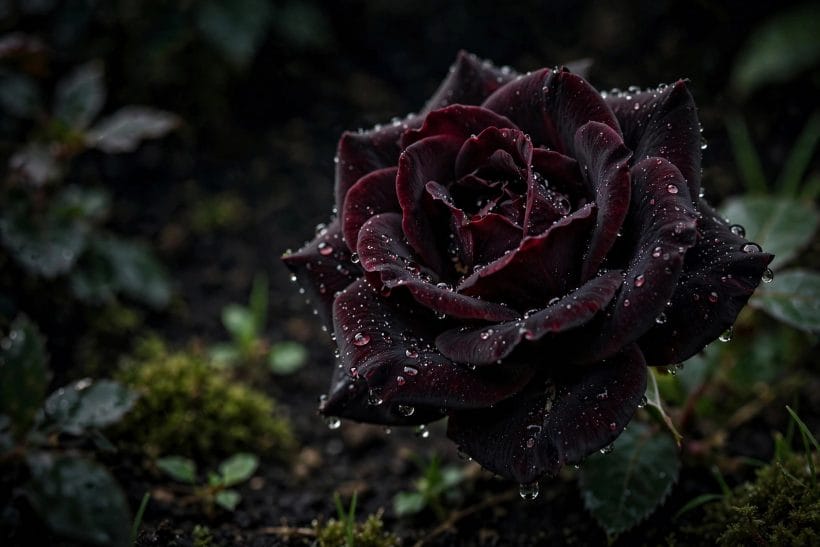
Begin with the truth the flower trade sometimes whispers around: there is no truly black rose. No breeder has produced one, and the rose family’s pigments cannot make one — roses lack the chemistry for genuine black or blue. Every ‘black’ rose ever sold, photographed or written into a love letter is something else wearing darkness extremely well.
What exists, and what this guide is about, is a family of very dark red, maroon and purple roses whose petals drink so much light that the eye reads them as black, especially in bud, in shade and in photographs. That is not a disappointment. A bloom that hovers between wine-dark red and apparent black, changing with the hour, is more interesting than a flat black flower could ever be.
The forum question that started this post — “black” roses, with the quotation marks doing honest work — deserves its quotation marks. Keep them in mind through everything that follows: the word is a nickname, not a description, and the gardeners who get the most from these roses are the ones who plant them knowing exactly what they are.
3. Why Dark Roses Look Black: Pigment, Petals and Light
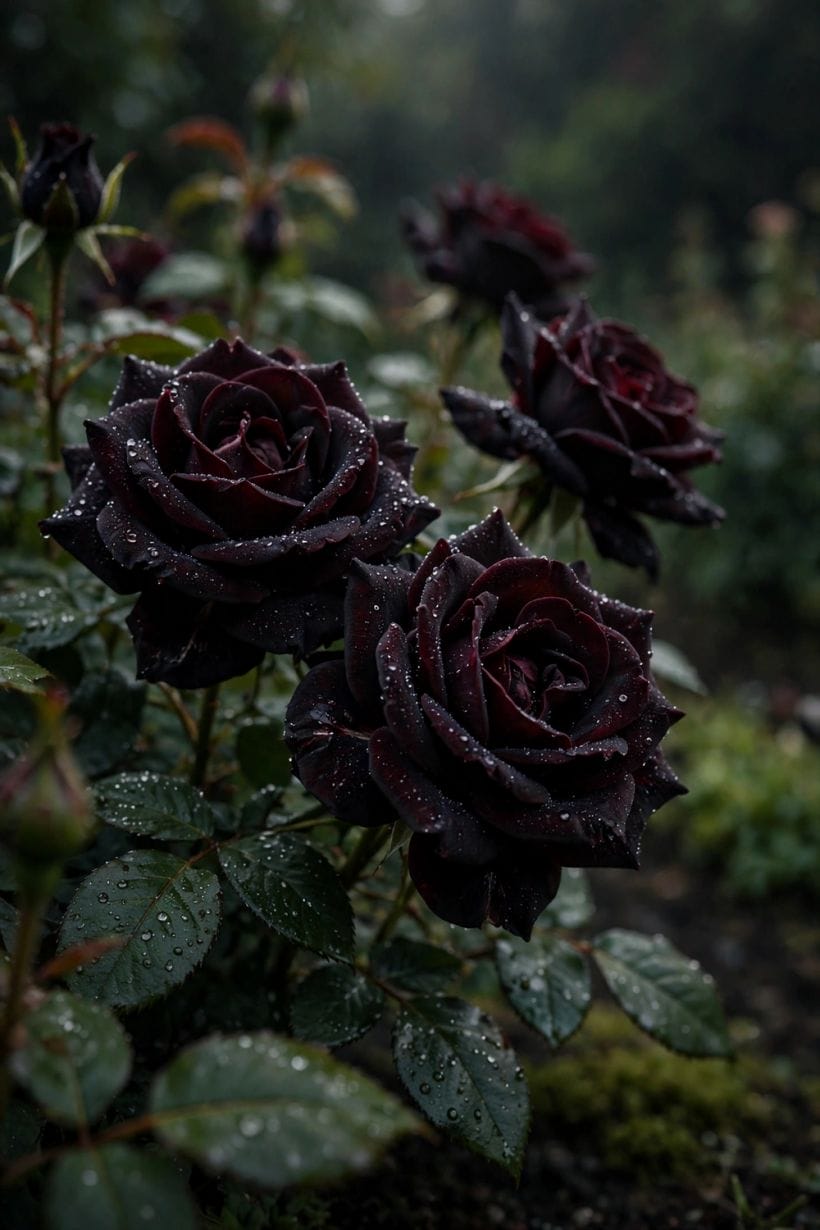
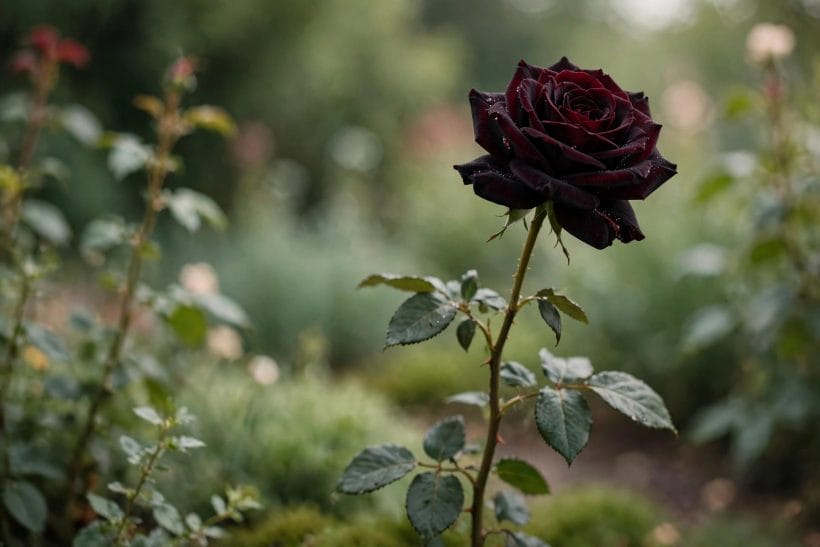
Rose colour comes chiefly from anthocyanin pigments in the petals, and the darkest cultivars simply carry them in unusual density, layered over deep red bases. The velvet texture of the petals does the rest: a matte, light-absorbing surface reflects so little back to the eye that the brain files the colour as black.
This is why the illusion is strongest in the bud and the half-open bloom, where petal layers overlap into shadow, and weakest in full sun at noon, when the same flower declares itself a very dark red. Growers and florists have always known it: the black rose is a creature of soft light, evening and closeness — which is, of course, exactly when roses are usually looked at.
Gardeners have chased the illusion for centuries, and older garden books are full of roses described as black that were simply the darkest reds of their day. Each generation’s breeding pushes the pigment a little deeper, which is why today’s darkest cultivars out-darken anything the Victorians grew — and why the chase, though unwinnable, keeps producing better and better dark roses.
The most famous testimony comes from Halfeti in Türkiye, where local roses are reported to bloom so dark in their native soil, beside the Euphrates, that they pass for black — and to flower a more ordinary dark red when grown elsewhere. The story is often embellished, but its core is sound and instructive: pigment answers to place, soil and season, not just to the name on the label. A cultivar is a promise; conditions decide how much of it is kept.
4. The Darkest Cultivars Worth Knowing
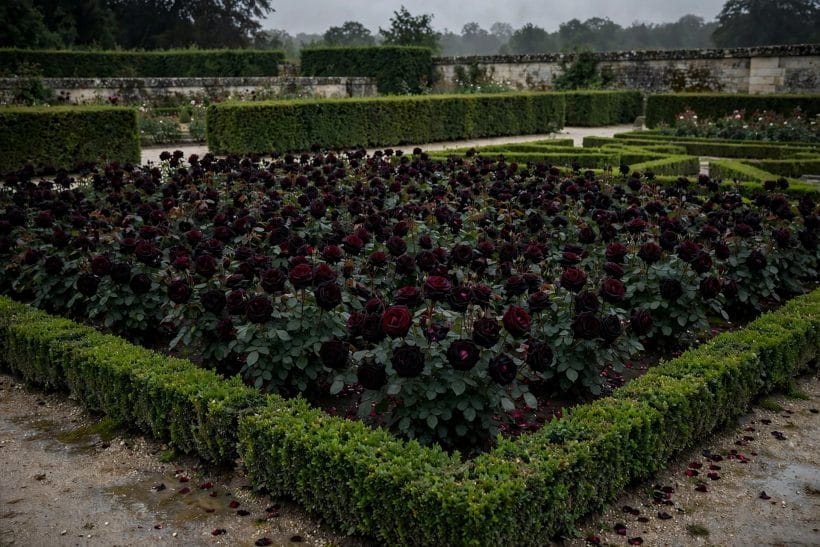
A handful of named cultivars carry the black-rose reputation, and all of them are honest dark reds. ‘Black Baccara’, a hybrid tea, is the florist’s standard: near-black buds opening to deep burgundy-red blooms with a velvet sheen. ‘Black Jade’ does the same trick in miniature, darkening almost to soot in cool weather. ‘Black Pearl’ and ‘Black Beauty’ are dark red hybrid teas long sold on their midnight looks, and ‘Black Cherry’, a floribunda, carries clusters of deep cherry-dark flowers through the season.
Two lessons hide in the list. First, the darkest colour usually appears in cool conditions — many of these roses bloom visibly redder in high summer heat and darken again toward autumn. Second, health matters: a well-fed, unstressed plant pigments its flowers far more deeply than a hungry one, so the blackest version of any of these cultivars is grown, not just bought. The rose care in the greenhouse ideas collection — light, air and steady feeding — is the same discipline that deepens colour outdoors.
Choose by the job, too. For cutting and the vase, the hybrid teas give long stems and single dramatic blooms; for a border that must perform all season, the floribunda habit of ‘Black Cherry’ covers more ground with more flowers. For a pot on a terrace or a small garden, the miniature ‘Black Jade’ delivers the full effect at knee height — proof that the black-rose idea scales from a border to a balcony.
5. Dyed, Painted and Velveted: The Florist’s Shortcut
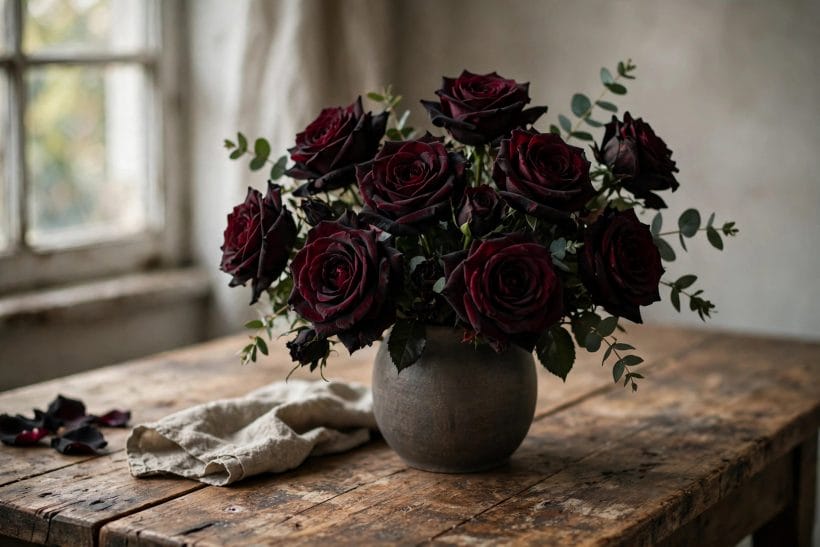
Most black roses in florists’ buckets did not grow that way. The trade produces them three ways: white or red roses stood in water carrying dark dye, which the stems draw up into the petals; blooms sprayed with floral paint; and dark red roses given a velvet-finish treatment that deepens them toward true black. Each method is a legitimate craft, and each should be sold honestly as treated, not grown.
Treated blooms have their place — a dramatic arrangement, a themed event, a single unforgettable stem — but know their manners: dyed petals can tint vase water and hands, spray finishes dislike handling and rain, and none of them will behave like a fresh natural bloom for as long. For a garden or a gift that must last, the dark cultivars above are the real article; for one evening of pure theatre, the florist’s black is honestly black enough.
If you treat blooms yourself, work gently and expect experiment: pale roses take stem dye most evenly, floral sprays are made for the purpose and should be used outdoors with the petals dry, and finished blooms should be handled by their stems only. Home treating is a craft project with charming results — and a useful education in why the professionals charge what they charge.
One more distinction protects buyers: a treated rose sold for an arrangement is a finished product, but treated flowers should never be sold as plants or as a cultivar. If a listing offers ‘black rose seeds’ promising naturally black blooms, close the page — roses do not come true from seed that way, and no seed can promise a colour the species cannot make. That single piece of scepticism will save more money than everything else in this guide.
6. Growing Dark Roses Well: Site, Soil and Sun
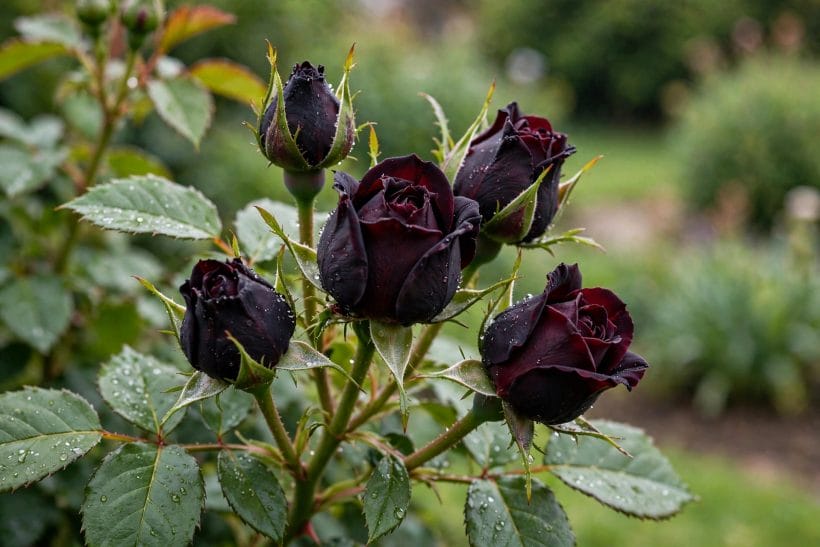
Dark cultivars are grown exactly like other garden roses, with two emphases. Give them sun — at least the sunnier half of the day — because light builds the sugars that become pigment, but where summers are fierce, a little afternoon shade actually protects the colour: strong heat and scorching sun can bleach dark petals toward ordinary red and crisp their edges.
The ground should be the good garden loam every rose wants: deep, drained and rich. If your soil is thin or heavy, the soil-building method in the loam guide is the preparation these roses deserve, and the mulching and feeding habits in the composting guide keep it that way. Plant with the graft union at the depth your climate’s rose advice prescribes, water the roots in deeply, and keep the air moving around the plant — dark petals and still, damp air are an invitation to mildew.
Spacing is the dark rose’s quiet protector. Plant with room for air to pass between bushes, water the soil rather than the foliage, and clear fallen petals and leaves from beneath the plant, where fungal spores overwinter. None of this is special to dark roses — but dark blooms show disease damage cruelly, so the ordinary hygiene matters more, not less.
7. Feeding, Watering and Keeping the Colour Deep
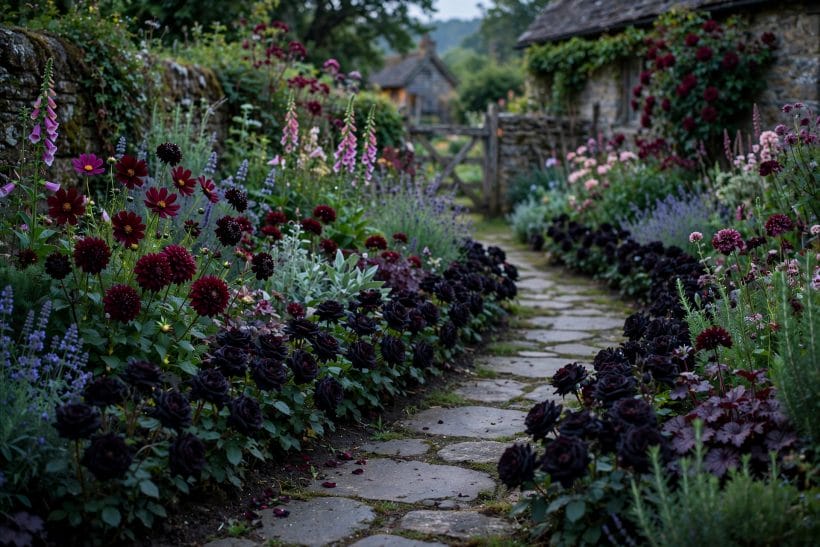
Colour depth is a report card on the plant’s season. Steady feeding with a balanced rose feed through the growing season, a spring mulch of compost, and watering at the roots in dry spells — deeply and less often, rather than a daily sprinkle — produce the strong, well-pigmented growth that carries the darkest flowers.
Prune in the dormant season to an open, airy framework, deadhead spent blooms to keep the plant flowering, and remove any weak, twiggy growth that shades the centre. Then watch the calendar work for you: the blooms of early summer are rich, high-summer blooms run redder in the heat, and the autumn flush — cool nights, soft light — is when a ‘black’ rose most nearly earns its name. Gardeners who know this plan their cutting and their photographs for autumn, the way the growers of container garden ideas plan for the season’s best light.
In pots, the same rules tighten: a large container, free-draining compost enriched before planting, and feeding little and often through the season, since every watering washes a little goodness away. A potted dark rose by a door, caught by the evening light as you come home, is one of the highest returns on care in the whole garden.
Companions deepen the effect for free. Silver-leaved plants, pale grasses and white or cream flowers beside a dark rose all push the eye toward reading it as blacker than it is — the contrast does half the pigment’s work. Keep the companions simple and let the rose be the corner’s drama; a dark rose competing with bright bedding is a soloist drowned by the choir.
8. Black Roses in the House: Bouquets, Meanings and Occasions
A black rose carries meanings its red cousins cannot: mystery, farewell, devotion past the ordinary, and — in modern giving — individuality and strength. Victorian flower language treated it solemnly, and it still suits solemn and dramatic occasions better than cheerful ones. Given thoughtfully, one stem says more than a dozen; given carelessly, it can say the wrong thing entirely, so know your recipient.
In arrangements, near-black blooms are the deepest note in the palette: they make pale roses look paler, white flowers luminous, and greenery richer. A few stems among cream and blush roses give a bouquet its shadow and structure. Keep the water clean, recut stems under water, and display them out of harsh sun — the same soft light that flatters them in the garden keeps their mystery indoors.
Growers who love the effect plan whole corners around it: near-black roses against pale stone or a white-painted fence, with silver foliage and white flowers for company, become a moonlight corner that glows at dusk. It is the most atmospheric planting a small garden can hold — and it begins, like everything in this guide, with one honestly dark rose.
Cut dark roses as you would any rose, but time it for the colour: gather them in the cool of the morning, when the buds are just loosening and the pigment is at its deepest, rather than at noon when the same blooms read redder. Stand them in deep, clean water at once. Buds cut at that stage open slowly indoors, holding their near-black mystery longer in the vase than they would have kept it on the bush in a hot week.
9. Buying Black Roses: What to Ask, What to Expect
Buying well starts with one question: is this grown dark, or treated black? A good florist will answer plainly — treated blooms for immediate drama, named dark cultivars for anything that must last or be planted. For plants, buy by cultivar name from a rose specialist, and expect the first season’s flowers to be a rehearsal: the depth everyone photographs comes from an established, well-fed plant in cool weather.
Expect, in other words, a very dark red rose of unusual beauty — not a botanical impossibility. Sellers who promise a truly black, naturally grown rose are selling the legend, and the legend is the one thing in this trade that never blooms. Buy the reality: it is darker, moodier and more interesting than the myth, and it improves with every autumn you grow it.
A last practical note: order plants in the dormant season where you can, when nurseries lift and send bare-root roses that establish superbly, and order cut stems as close to the occasion as the florist allows. Darkness, in roses as in most things, is freshest when it has not had to wait.
And manage the first-year expectation honestly, because it decides whether new growers persist. A young plant spends its first season on roots, not flowers: expect a few blooms, lighter than the photographs, and do not judge the cultivar by them. By the second and third autumns, fed and settled, the same plant will show you what the name means. Nearly every disappointing ‘black’ rose is simply a young, hungry one photographed too early.
10. Costs and Pulling It Together
Costs divide cleanly by route. A named dark cultivar from a rose nursery costs what any good garden rose costs, and then repays for years. Cut ‘black’ roses from a florist cost more per stem than ordinary roses — the treating is handwork — and last days, not seasons. Dyed and sprayed blooms are priced as the occasion flowers they are.
Pulling it together: for the garden, buy the cultivar and grow it well; for the vase, buy the drama knowingly; and in both cases, let the flower be what it is. The near-black rose needs no exaggeration — in the soft light of an autumn evening, it is quite dark enough, alongside the other honest pleasures of the garden it grows in.
Final Considerations
The black rose survives every debunking because the truth is better than the myth: a flower so deeply red it borrows black’s mystery, changing with light and season, darkest in the cool of autumn. Grow one well, and you will stop wishing it were truly black within a single season — the real flower out-charms the imaginary one.
For the beds it will grow in, the container garden ideas cover pot-growing where ground is short, and the home design ideas hub gathers the rest of the garden and house around it.



0 Comments