

Ask a room of gardeners what loam is and most will point vaguely at a good flowerbed. The word is used constantly and defined rarely, usually as a synonym for ‘nice soil’ — but loam is something more precise and more useful than that: a particular balance of ingredients that you can test for in your own garden with a handful of earth and a jam jar.
This guide answers the question exactly, and in plain terms: what loam is made of, why plants love it, how to test your own soil by hand and by jar, what you probably have instead, and the honest method — patience and organic matter — by which any soil is improved toward it.
1. Loam at a Glance
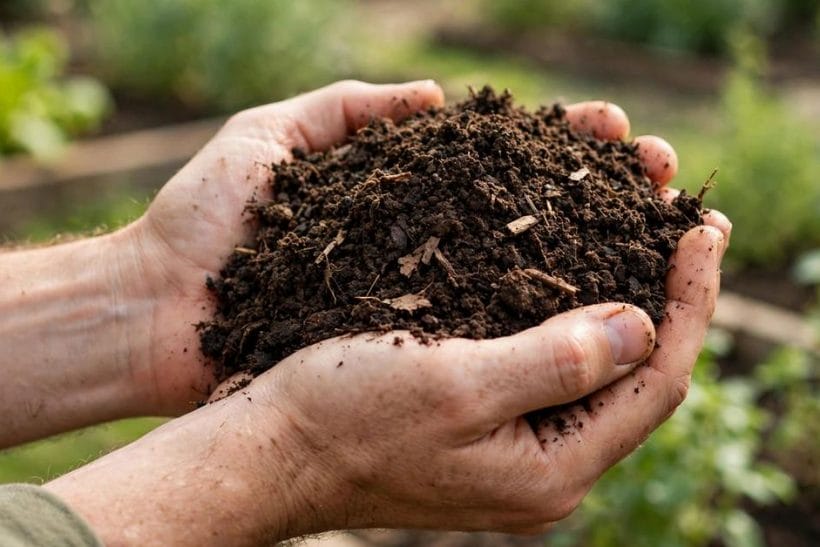
Loam is a soil texture: a balanced mixture of the three mineral particle sizes — sand, silt and clay, conventionally pictured as roughly forty per cent sand, forty per cent silt and twenty per cent clay — together with organic matter. Its defining behaviour is that it drains freely yet holds moisture and nutrients, admits air and roots, and works into a crumbly tilth. It is the reference soil of the garden cluster under the home design ideas hub, the ground the greenhouse ideas and the rose beds of the black roses guide both presuppose.
| Question | Short answer |
|---|---|
| What exactly is loam? | A soil with a balanced mix of sand, silt and a smaller share of clay, plus organic matter — crumbly, drained and moisture-holding at once. |
| Is loam the same as topsoil or compost? | No. Topsoil is a layer, compost is rotted organic matter; loam is a texture. Good topsoil is often loamy, and compost is how you improve soil toward loam. |
| How can I tell if I have loam? | Squeeze a moist handful: loam moulds, holds its shape, then crumbles cleanly. A jar of soil and water, left to settle, shows the proportions. |
| Can I turn clay soil into loam? | You change its behaviour, not its mineral recipe: repeated organic matter, mulched yearly and never worked wet, brings clay soil to loam-like performance within a few seasons. |
2. The Three Ingredients: Sand, Silt and Clay
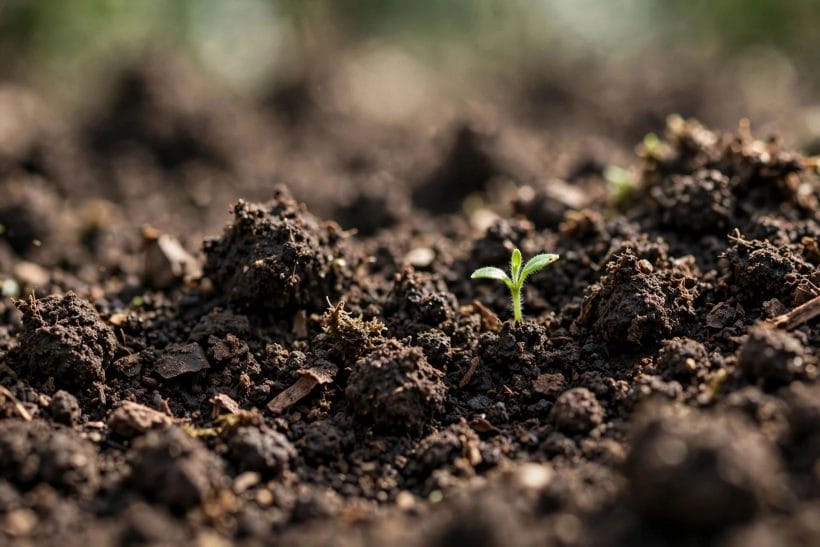
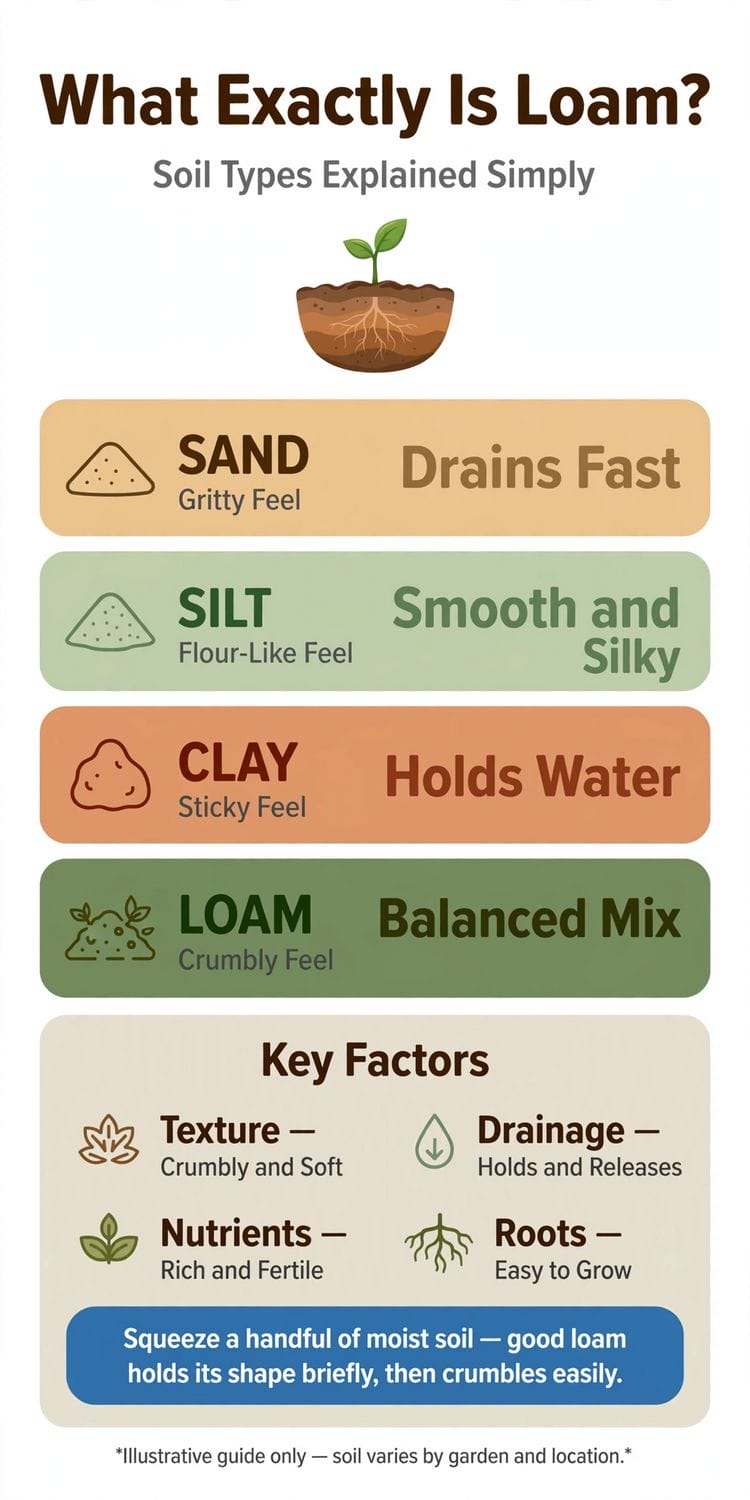
All mineral soil is a mixture of three particle sizes. Sand is the coarsest — gritty between the fingers, visible grain by grain. Silt is the middle fraction, smooth and floury when dry, slippery when wet. Clay is the finest, so fine its particles are microscopic, sticky when wet and rock-hard when dry. The proportions of the three decide almost everything about how a soil behaves.
Loam is what gardeners call the happy proportion: often described as roughly equal parts sand and silt with a smaller share of clay — textbooks commonly picture about forty per cent sand, forty per cent silt and twenty per cent clay — mixed with the organic matter that living soil accumulates. It is a balance point, not a single recipe, and soils a little either side of it earn the name too: sandy loam leans toward sand, clay loam toward clay, silty loam toward silt.
Notice what the definition leaves out: loam is not a kind of earth you dig somewhere special, nor the dark bagged product sold as ‘topsoil’, nor compost, though compost is its best friend. It is a texture — a proportion of particle sizes — wearing a healthy coat of humus. Any garden soil, from any region, can be described honestly against it.
Soil scientists plot these proportions on a texture triangle, and the names around loam’s central patch — sandy loam, silt loam, clay loam, silty clay loam — are simply its neighbours, each a step toward one ingredient. Gardeners do not need the triangle’s mathematics, but the map carries a comfort: loam is a district, not a pinpoint, and most decent garden soils live somewhere in or near it already.
3. Why Loam Works: Drainage, Hold and Air at Once
Each ingredient brings one gift and one fault. Sand drains freely and lets air and roots through, but holds neither water nor food. Clay holds water and nutrients superbly, but drains slowly, swamps roots and sets like brick in a drought. Silt sits between, holding moisture kindly but compacting when worked wet.
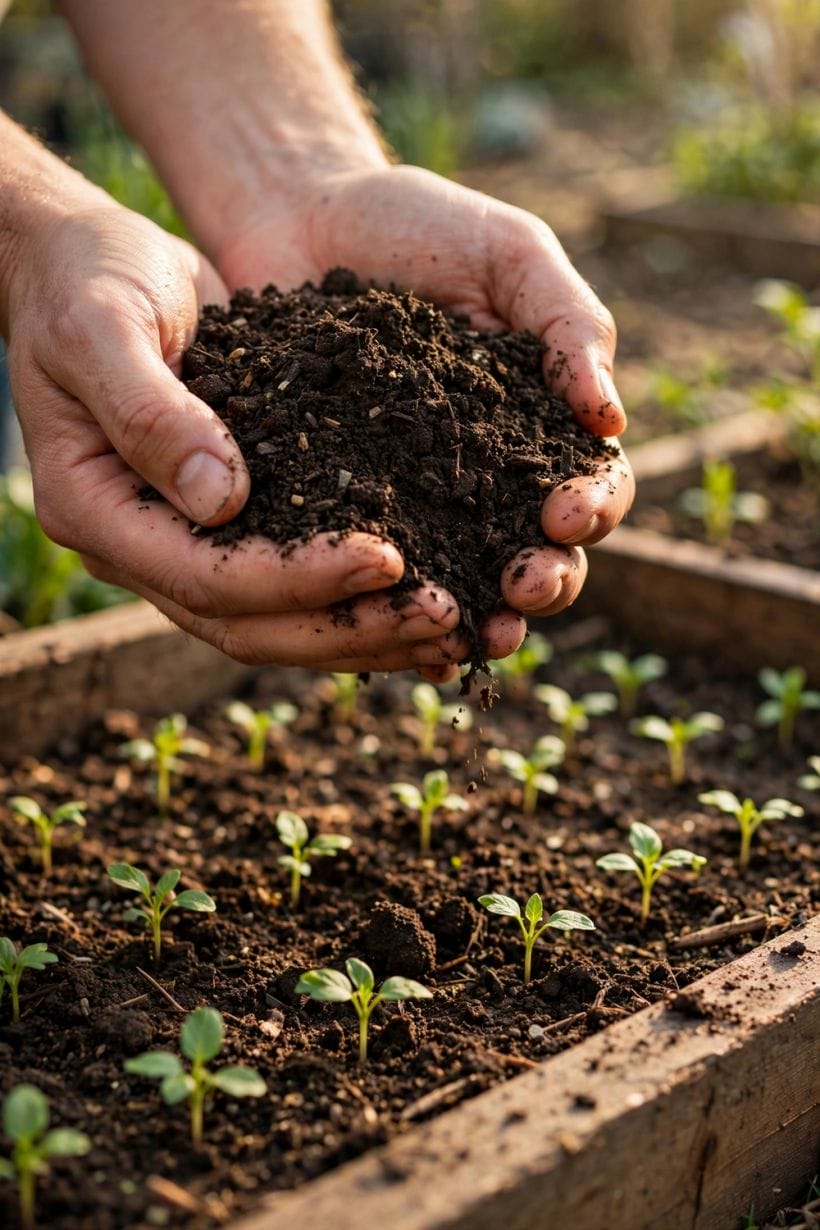
Loam works because the faults cancel. The sand fraction keeps the whole open and drained; the clay fraction holds the reservoir of water and food; the silt smooths the middle. Roots in loam can breathe after rain, drink between rains, and push through the crumb without meeting either a swamp or a wall — which is why nearly everything in the garden, from lawns to roses, grows best in it.
The organic matter is the loam’s referee. Humus glues particles into crumbs with air spaces between them, feeds the worms and microbes that keep the structure open, and darkens the soil so it warms kindly in spring. Texture gives loam its proportions; organic matter gives it its life, and it is the part a gardener can actually improve.
You can see the result in the spade’s verdict: true loam digs with a crumbly resistance, neither slicing like butter nor ringing like a bell, and it smells faintly sweet and earthy — the famous smell being the signature of the microbes the structure shelters. Earthworms vote for it too, and a soil that holds its worms through summer is telling you its texture and its table are both in order.
4. The Squeeze Test: Reading Your Soil by Hand
You need no laboratory to know roughly what you have — your hands are the instrument gardeners have used for centuries. Take a small handful of soil from a spade’s depth, pick out stones and roots, and moisten it gradually until it holds together like pastry dough: damp through, not dripping.
Now squeeze and roll. A sandy soil feels gritty, falls apart as you open your hand and will not roll at all. A clay soil feels sticky and plastic, rolling into a worm you can bend into a ring without cracking. A silt soil feels silky and holds briefly but crumbles at a touch. Loam is the handshake in the middle: it moulds, holds its shape when you open your hand, then breaks cleanly apart under a poke — gritty, smooth and slightly sticky all at once.
Work through a few spots, because gardens are mosaics: the bed by the wall, the patch under the tree and the former path will often give three different answers. Test where you actually mean to plant, and test moist soil in spring or autumn rather than dust in August or mud in January — both extremes lie.
If the squeeze test leaves you between two answers, trust it anyway: most real soils are between two names, and the between is often close to loam itself. The test’s purpose is not a certificate but a starting point — a name for what you have, so the improving that follows can be deliberate rather than hopeful.
5. The Jar Test: Watching the Layers Settle
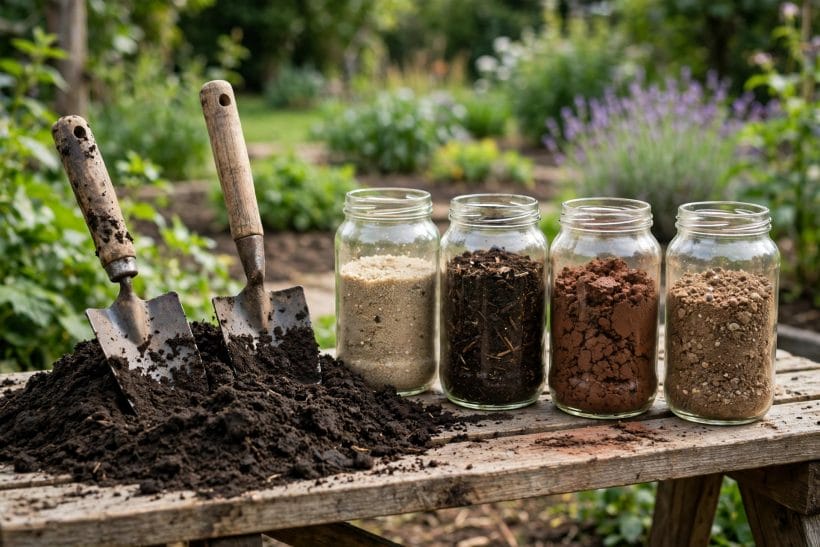
For a clearer picture, let water do the sorting. Fill a straight-sided jar about a third full of sieved garden soil, top it up with water and a drop of washing-up liquid to help the particles separate, shake it thoroughly, and leave it standing undisturbed on a sill.
The fractions settle in order of size. Sand sinks within minutes and forms the bottom layer; silt settles over hours into the middle; clay stays clouding the water longest and lands last, a fine skin on top. After a day or two, measure the layers’ depths against the whole: their proportions are your soil’s recipe, near enough for every gardening decision. Floating on top, you will usually see a little organic matter — the part that refuses to be a mineral at all.
Read the result against the loam balance. A jar showing a modest clay layer over generous sand and silt says you are close; a jar that is mostly one layer names your problem precisely. The test takes five minutes of work and a day of patience, and unlike the squeeze test it gives you proportions you can write down and compare after a season of improving.
6. What You Probably Have Instead: Clay, Sand and Silt Soils
Most gardens are not loam yet, and knowing your starting point matters more than envying the ideal. Clay-heavy soils are the commonest inheritance: fertile, moisture-holding, and honest workers once improved — their crimes are slow drainage, late warming in spring, cracking in drought and a short temper when dug at the wrong wetness.
Sandy soils are clay’s opposite: warm, early, easy to dig in any month, and hungry — water and feed wash through them like a sieve, so plants feast and famine. Silty soils, often found near rivers, are smooth and fertile but compact into a hard, airless pan when trodden or worked wet, shedding water off the top instead of drinking it.
Each is a workable starting point, and none is a verdict. Clay needs opening, sand needs holding, silt needs protecting — and the medicine, remarkably, is the same for all three, as the next section shows. Gardeners a century apart have written the same sentence about it, because the soil keeps proving it true.
One fairness remains: soil is also inheritance. It arrives with the house, made by the local rock over ages, and a gardener on thin chalk or heavy London clay is playing a different hand from one on river loam. The tests in this guide exist so you play your own hand knowingly — the improvements that follow are deliberately the ones that work on every hand dealt.
7. Building Toward Loam: Organic Matter Does the Work
Here is the plain secret of soil improvement: you cannot practically change your mineral proportions — no one carts away clay or imports silt by the tonne — but you can change everything else. Generous, repeated additions of organic matter move any soil toward loam’s behaviour, whatever its texture on the jar test says.
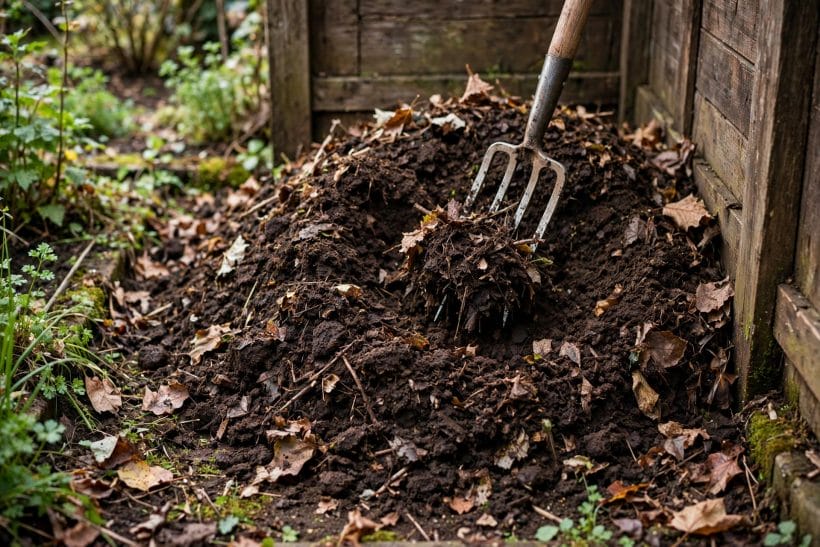
Compost is the chief instrument, and the composting guide in this collection explains how to make it from what the house and garden throw away. Spread it as a mulch on beds — a hand’s depth, renewed yearly — and let worms and weather draw it down; on clay it opens the structure, on sand it gives the sponge the soil lacks, on silt it builds the crumbs that resist compaction.
Well-rotted manure, leaf mould and green manures grown and dug in all serve the same end, and the off-grid gardens collection shows whole gardens run on exactly this economy. What matters is the rhythm: something organic, every year, without fail. Soil improves at the speed of seasons, and gardeners who start this autumn will be reading a different jar test within a few years.
8. Compost, Mulch and Patience: Keeping Loam Alive
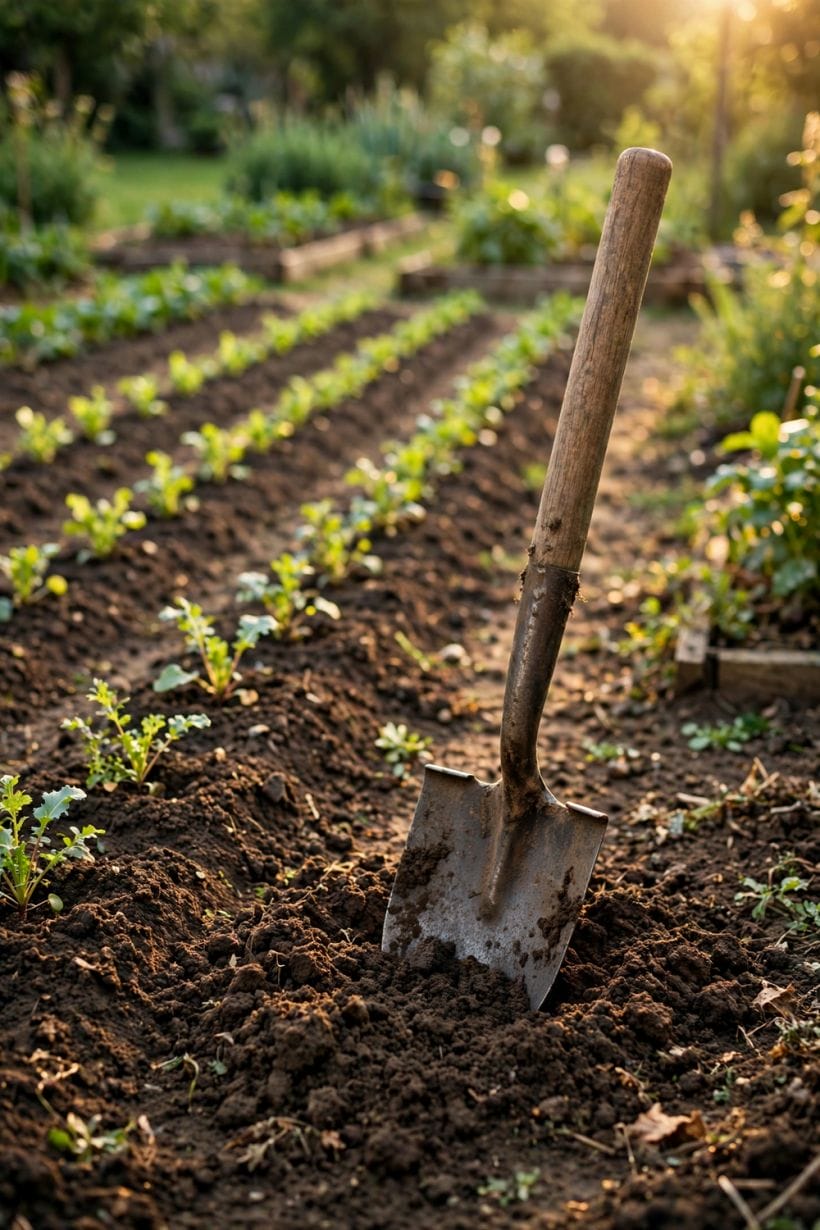
Soil is not made once; it is maintained, like fitness. The structure organic matter builds is constantly being spent — microbes eat it, worms process it, weather settles it — so the loam you have built asks for its annual renewal as a standing arrangement, not a completed project.
Mulch is the maintenance made visible: beds kept covered with compost, bark, straw or leaf mould lose less moisture, grow fewer weeds, feed their own soil life and never present a bare, baking surface to the summer. The planting guides in the container garden ideas apply the same rule in miniature, where a pot’s thin soil shows the difference within a single season.
Protect the structure you have built while you keep building it. Keep feet and barrows off wet beds — boards spread the load where you must walk — and dig as little as the planting allows, since every unnecessary turning breaks the crumbs the worms assembled. The gardener’s patience is not passive; it is the discipline of feeding the soil and then not undoing the feeding.
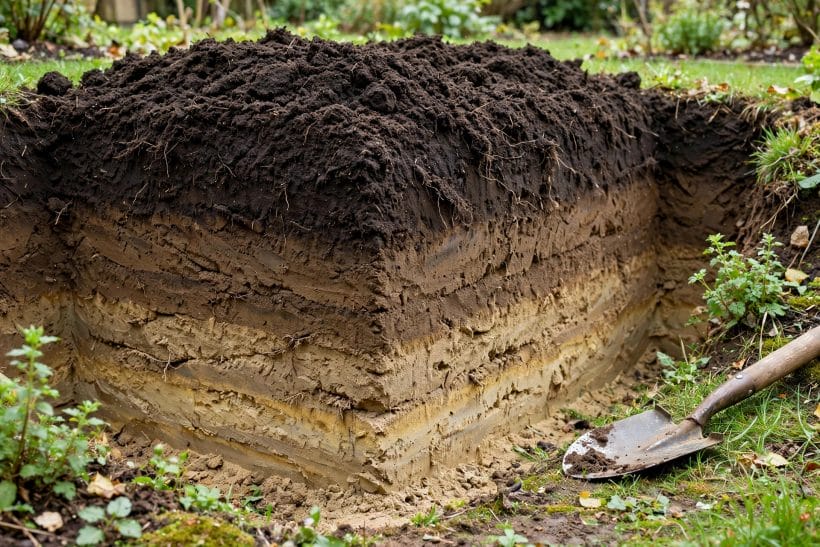
Keep the evidence, too. Repeat the jar test on the same beds every year or two and note the layers and — just as telling — the depth of dark, crumbly topsoil over the paler layer beneath. Improvement announces itself quietly: the squeeze test holds a moment longer, the spade meets less argument, the worms are there in August. Written down, those small changes are the proof that keeps a gardener mulching.
9. The Mistakes: Sand in Clay and Other Detours
The classic error deserves its own warning, because it is logical, common and wrong: adding sand to clay soil to ‘open it up’. In garden quantities, sand mixed into clay does not make loam — it makes something nearer to concrete, with the clay binding the grains. The sand that would change the texture must arrive in proportions no garden budget survives; the organic matter route reaches the same behaviour honestly and cheaply.
Two quieter mistakes follow. Working any soil while it is wet — digging, treading, rotavating — destroys in an hour the crumb structure that took seasons to build; if it sticks to your boots, it is too wet to touch. And trusting the bag: bought ‘topsoil’ varies from excellent loam to subsoil with ambitions, so squeeze-test what arrives before paying to spread it across your beds.
Finally, beware the instant fix sold in a bottle or a bag of white granules promising to transform clay by chemistry. A few products have narrow, honest uses, but none repeals the arithmetic of texture — and the claims made for them are precisely the kind this guide exists to test with a jar, a handful and a season of patience.
The same scepticism applies to digging dogmas. Burying your clay under imported sand, gravel layers at the bottom of planting holes, or heroic double-digging of whole beds all promise transformation and mostly deliver exhaustion and a perched, soggy layer where textures meet. Soil improves from the top down, by feeding and covering — the way the woodland floor, the original loam factory, has always done it.
10. Costs and Pulling It Together
Costs in soil are unusual: the main ingredient is time and the main material is what your household already throws away. Compost made at home costs effort rather than money; bought compost, manure and mulch for a garden’s beds are modest, recurring expenses rather than a single great outlay — and unlike paving or planting, every year’s spending stays in the ground, compounding — the one garden investment that pays its interest in worms, tilth and water held exactly where the roots can find it.
Pulling it together: test what you have honestly, feed it organically every year, mulch it, keep off it when wet, and let the seasons do the heavy work. That is the whole method by which ordinary gardens acquire the soil that visitors, bending to a border, call loam — and it serves everything planted in it, from the wildlife friendly garden to the last rose.
Final Considerations
Loam is less a thing you buy than a direction you travel: a balance of grit, silk and stickiness, kept alive with organic matter and patience. The gardener who understands it stops fighting their soil and starts feeding it — and the garden, in its roots and worms and quiet darkening earth, notices within a season or two.
For what to grow in it, the black roses guide and the greenhouse ideas collection are the natural next reads, and the home design ideas hub gathers the rest of the house and garden around them.




0 Comments