

Growing a muscadine from a seed saved from ripe fruit is a slow, hopeful kind of gardening. Nothing about it is hurried, and nothing about it is certain, which is exactly why many growers find it so satisfying to try.
This guide explains how to plant muscadine seeds in honest, general terms: saving and cleaning seed, giving it a cold rest, sowing it shallowly, and raising the young vine patiently towards its first support.
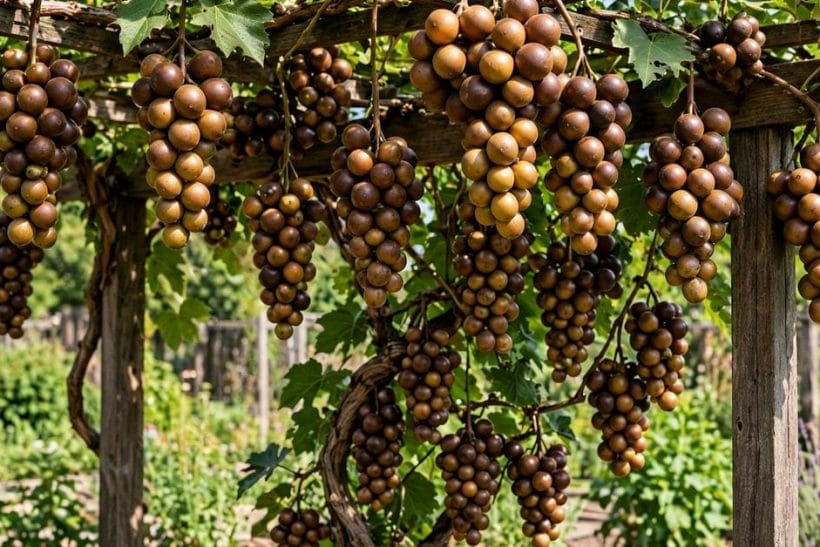
1. Muscadines from Seed at a Glance
Begin with patience, not with a calendar. The planting projects in the tiny house garden ideas collection suit this vine well, because a muscadine repays a small, sunny corner and steady care far more than it repays haste or fuss.
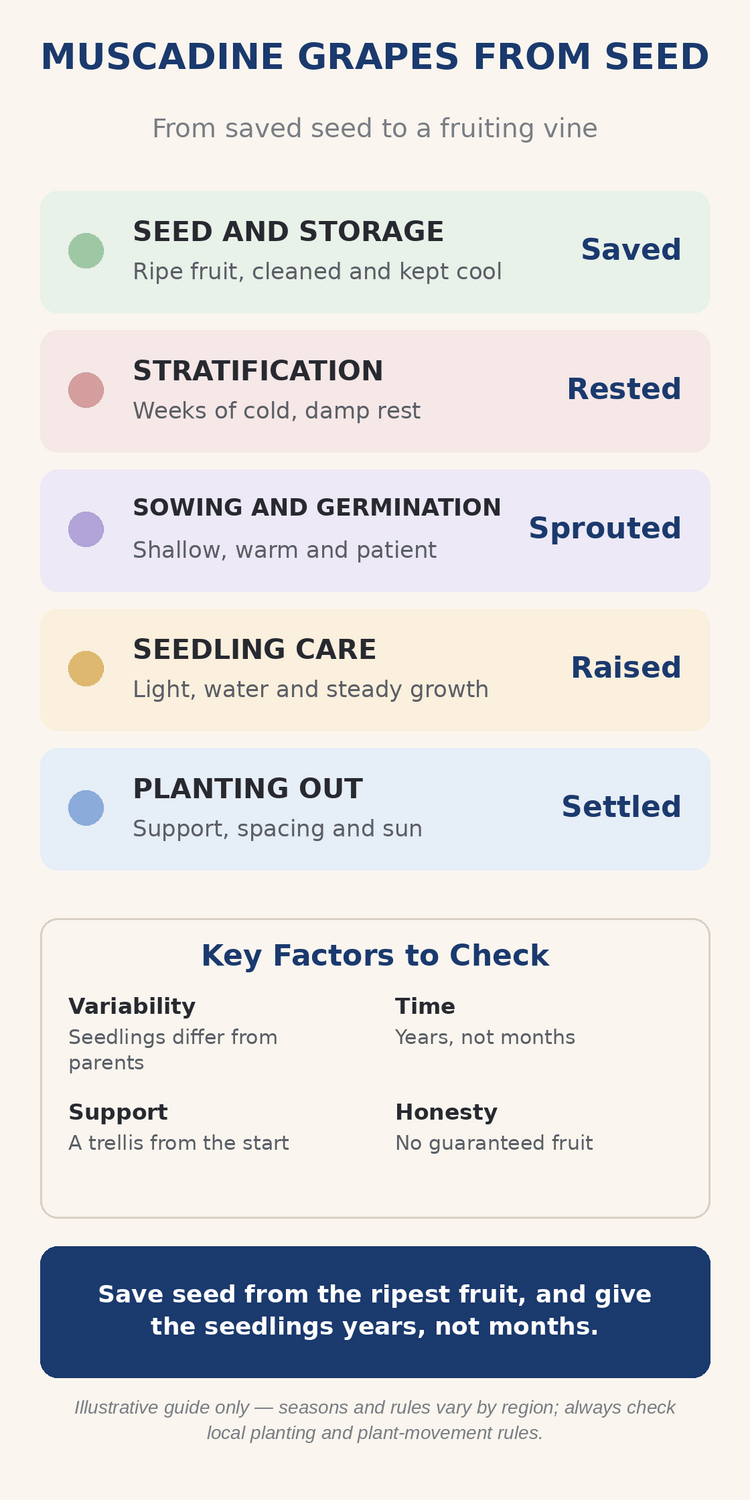
| Family | Character | What it means |
|---|---|---|
| Seed and Storage | Ripe fruit, cleaned and kept cool | Saved |
| Stratification | Weeks of cold, damp rest | Rested |
| Sowing and Germination | Shallow, warm and patient | Sprouted |
| Seedling Care | Light, water and steady growth | Raised |
| Planting Out | Support, spacing and sun | Settled |
One honest note before the detail: a seedling is a new plant, not a copy of its parent. It may differ in fruit, in vigour and even in sex, and it asks for years rather than months. The sections below keep that truth in view throughout.
2. The Vine You Are Growing
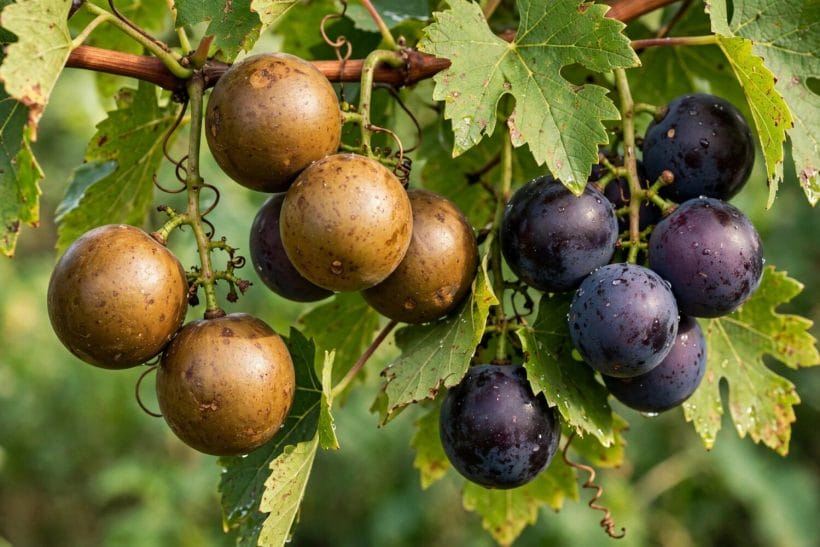
A muscadine is a vigorous native grape of warm country, grown for its thick-skinned fruit, its handsome foliage and its long life once settled. Understanding its character first explains every later step, from the cold rest its seed expects to the strong support its growth will eventually need.
A Vigorous Vine With Thick-Skinned Fruit
The fruit is round, often bronze or deep purple-black, with a thick skin, juicy flesh and a few hard seeds inside. The vine itself is no delicate climber: given sun, room and something sturdy to climb, it makes long, strong growth each season and settles into a permanent place in the garden. Its leaves are broad and handsome, its roots run deep once settled, and a well-placed plant becomes part of the garden’s structure rather than a passing crop.
Wild Vines and Named Kinds
Wild muscadines grow along edges and fences, fruiting as they please. Named kinds, by contrast, were chosen over many seasons because a particular vine fruited well, tasted fine or carried flowers of a useful kind. That choosing is the important point: a named kind is kept by cuttings or grafts, not by seed.
Why the Parent Vine Still Matters
Saving seed from a good vine is still worthwhile. A healthy, well-grown parent, ripening its fruit fully in a sunny place, gives plump, mature seed with the best start you can offer it. The seedlings will vary, as the next section explains, but sound seed from sound fruit is never wasted effort.
3. Why Seed Is the Slow Road
Every other way of raising a muscadine is quicker and surer than seed. This section is deliberately plain about the drawbacks, because a grower who understands them at the start is the grower most likely to enjoy the process rather than feel misled by it.
Seedlings Do Not Come True
Each seed carries a mixture from its parent vine and the pollen that reached its flowers. The seedling that grows from it is therefore its own plant, with its own fruit size, flavour and habit. Some seedlings please their growers greatly; others are ordinary. None should be expected to repeat the parent exactly. That uncertainty is not a failure of the method; it is the method, and seed-raising has always been how new kinds are found.
A Seedling May Be Male or Female
Muscadine flowers are not all alike. Some vines bear female flowers and need pollen from another vine nearby; some bear male flowers and give pollen but no fruit; some named kinds carry both kinds together. A seedling’s flowers are unknown until it matures, so a fruitless vine may simply be a male plant.
Fruiting Takes Years, Not Months
A seedling spends its early seasons building roots, stem and leaf before flowers and fruit become a reasonable hope. That wait is measured in seasons and years, not in weeks. Growers who want a known kind, known flowers and an earlier crop usually start with a named plant instead, as the final section discusses.
4. Collecting and Cleaning Seed
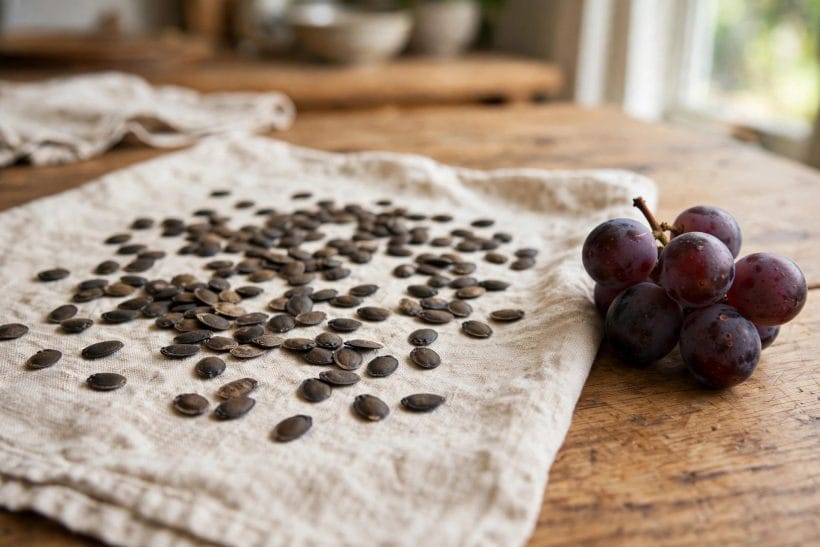
Good seed work is quiet kitchen work: ripe fruit, a bowl, water, a cloth and unhurried hands. The aim is simple — firm, mature seeds, cleaned of the sweet flesh that would feed mould during their cold rest and storage.
Choose the Ripest Fruit
Save seed from fruit that ripened fully on the vine, softening and colouring completely and coming away easily in the hand. Fruit picked under-ripe carries seed that was still maturing inside it. Let the harvest bowl hold only the soundest fruit, and leave bruised or split grapes for the kitchen instead.
Free the Seeds From the Flesh
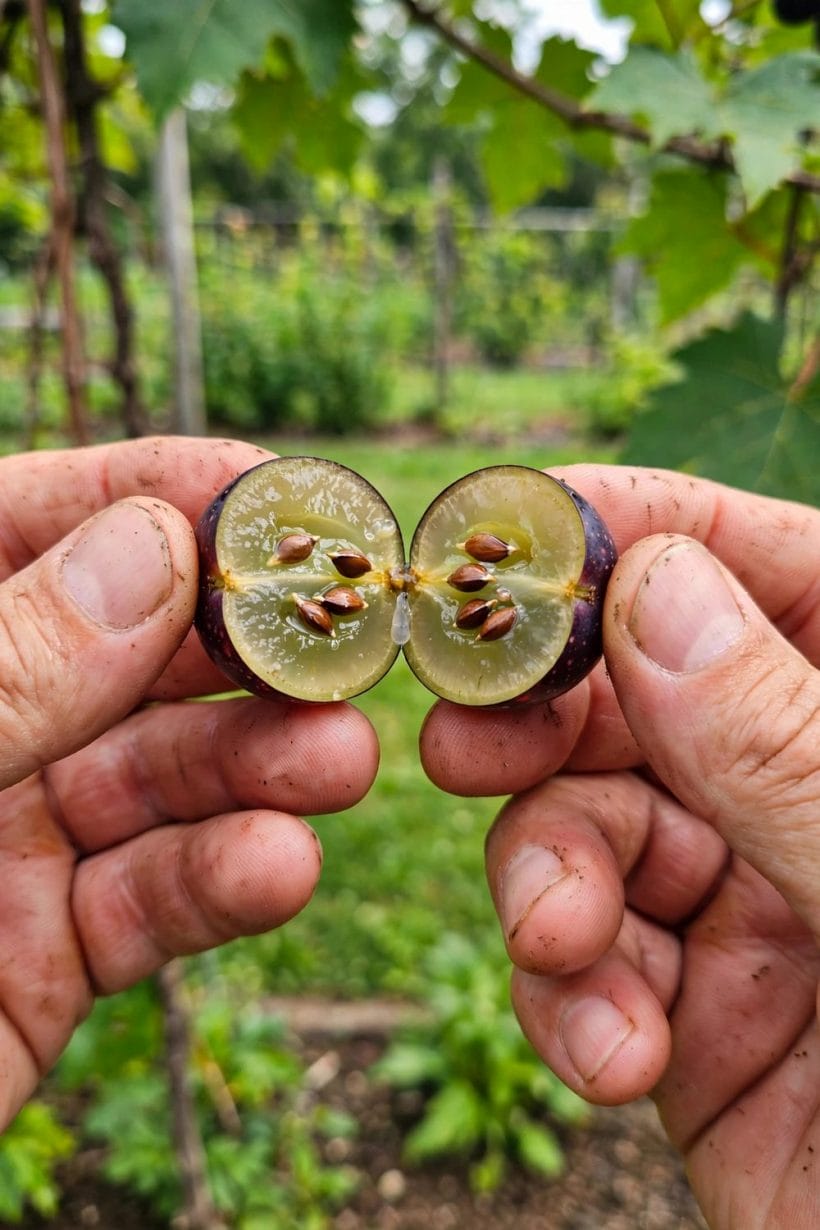
Open each grape and ease the seeds out with fingers or a small spoon. Drop them into water and rub them gently between your fingers or against a cloth until the slippery flesh comes away. Sound seeds feel hard and firm; soft, hollow-feeling seeds can be discarded with the skins.
Dry, Then Keep Them Cool
Spread the cleaned seeds on a cloth or plain paper until their surfaces are dry to the touch, away from strong heat and direct sun. Then keep them cool and dry in a clean, labelled container while you prepare for the cold rest, writing the parent vine and the season on the label in pencil.
5. Cold Stratification, in General Terms
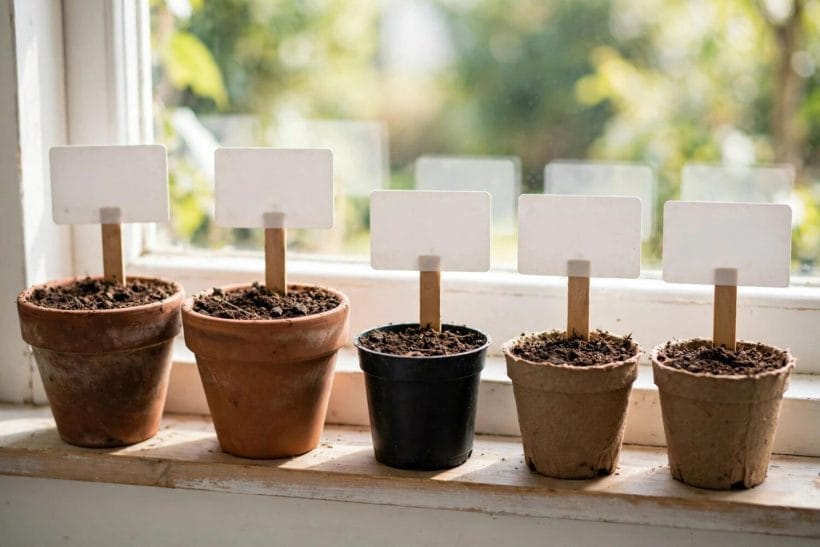
In the wild, muscadine seeds fall in autumn and lie in cool, damp ground through winter before spring warmth stirs them. Stratification is simply the gardener’s version of that winter: a period of cold, moist rest that prepares the seed to wake when it is sown.
A Damp Medium, Not a Wet One
Rest the seeds in a slightly damp medium — clean seed compost, sand or a similar material named in general gardening guidance — sealed in a bag or lidded container so it stays moist without dripping. The seeds should feel winter around them, cold and damp, never swimming in water or dried out.
Weeks of Cold Rest
Keep the container somewhere steadily cold for several weeks, in the spirit of a winter spent outdoors in the ground. A domestic fridge, kept at its ordinary food setting, is the usual household stand-in for that cold ground. Mark the starting date on the container so the rest is timed by record, not memory.
Check for Mould and Drying
Look in now and then during the rest. If the medium is drying, moisten it lightly; if mould appears on a seed or the medium, remove the affected material, let in a little fresh air and reseal it cleanly. Gentle checking, rather than frequent opening and handling, keeps the rest undisturbed. A short note kept with the container, recording when the rest began and what you found at each check, makes the next season’s seed work easier to judge.
6. Sowing
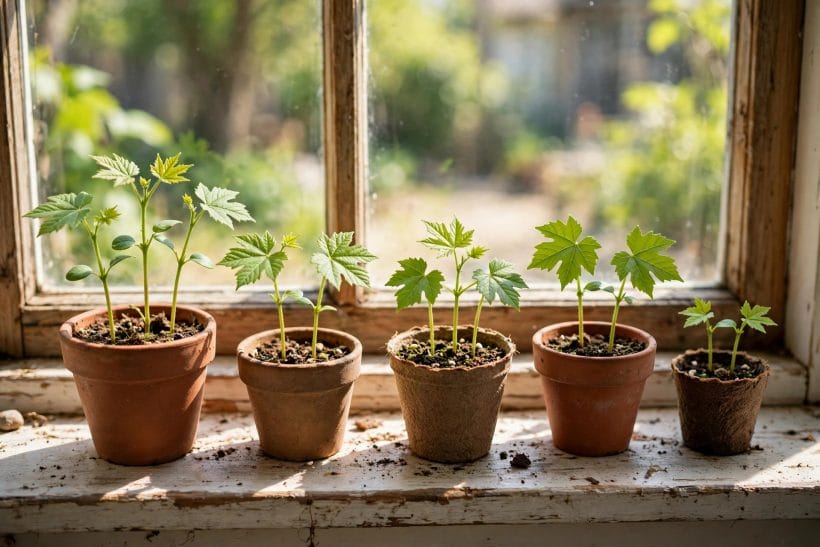
Sowing is the hopeful moment the whole winter has pointed towards. This is the heart of how to plant muscadine seeds well: shallow covering, gentle warmth, steady moisture and then the patience to leave the pots alone while the seeds wake at their own pace.
Shallow in a Small Pot
Fill small pots with a fine, free-draining seed compost and firm it lightly. Set each seed shallowly, just below the surface under a thin covering of compost, and water gently so the covering settles around it without washing it bare. A few seeds to a pot, or one seed to a small pot, both serve.
Warmth, Light and Steady Moisture
Stand the pots somewhere warm and bright, out of harsh midday sun, and keep the compost evenly moist but never sodden. A clear cover can hold moisture between waterings, lifted as soon as green appears. Cold, wet compost is the commonest disappointment at this stage; warmth and restraint serve the seeds better.
Expect an Uneven Showing
Seeds from the same grape may wake weeks apart, and some may not wake at all. Do not tip out a quiet pot in the first hopeful days. Leave it in its warm place, keep it just moist, and judge it only after a generous wait; muscadine seed has never respected a grower’s timetable.
7. Germination and First Weeks
When a green shoot finally lifts the compost, the work changes from waiting to tending. The first weeks ask for light above all, a careful hand with water, and protection from the small accidents that end more seedlings than any disease.
The First Leaves
The shoot opens with simple seed leaves, followed by the first true leaves shaped like the vine to come. From this point the seedling is making its own food from light, and its whole character changes: it is no longer living on the seed, but on the brightness you give it each day.
Light Without Scorching
Give seedlings the brightest place you have, turning pots regularly so stems grow straight rather than leaning. Seedlings raised in dim light grow pale, thin and weak-stemmed, and they struggle to recover their strength later. Bright shade outdoors, once the weather is mild, often grows a sturdier plant than a windowsill. Watch the stems as much as the leaves: a short, sturdy, well-coloured stem is the surest sign that the light is right.
Water Little and Often
Keep the compost just moist, watering gently at the base rather than over the leaves. Seedlings dislike both extremes: dried-out compost wilts them quickly, while standing water rots young roots quietly. A pot that feels light when lifted usually wants water; a heavy pot can safely be left another day.
8. Growing On
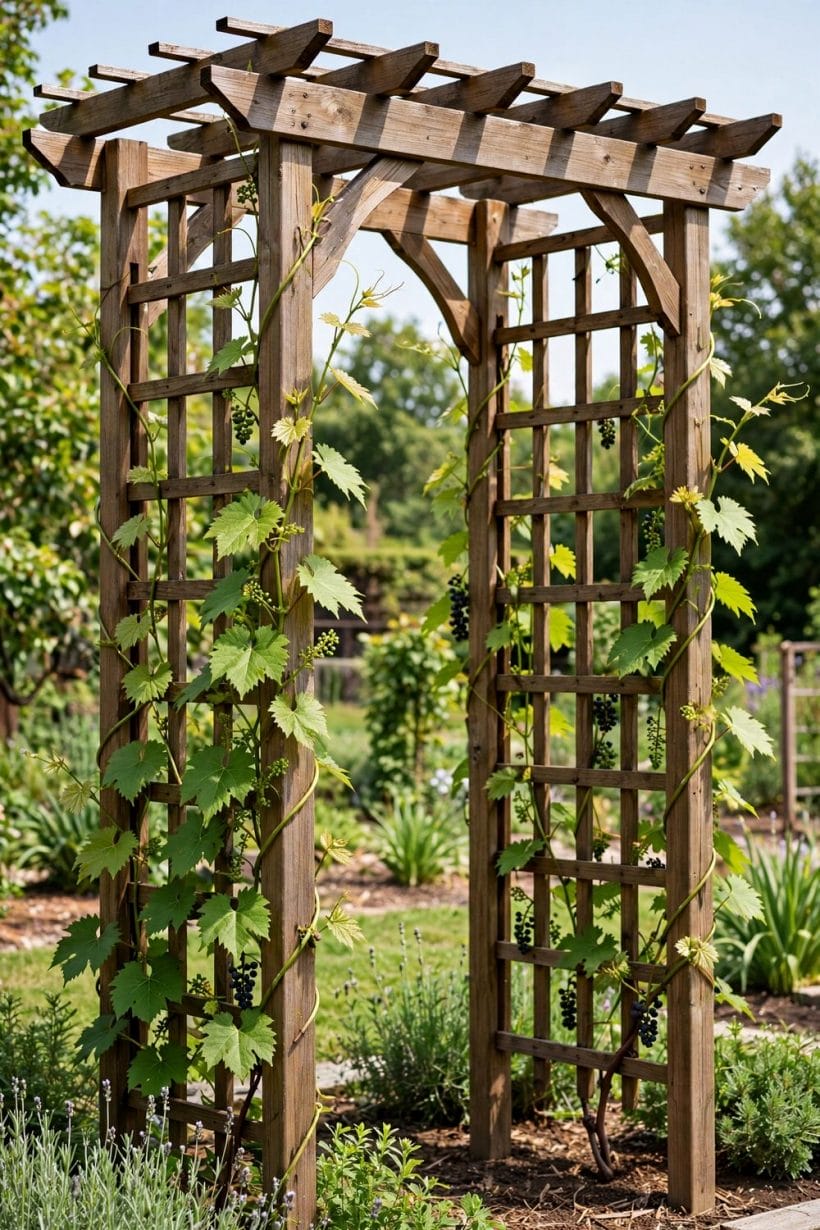
A sturdy seedling in a small pot is a promise, not a finished vine. Growing on means giving roots more room at the right moments, feeding growth with light and air, and preparing a plant raised under cover for life in the open garden.
Potting On as Roots Fill the Pot
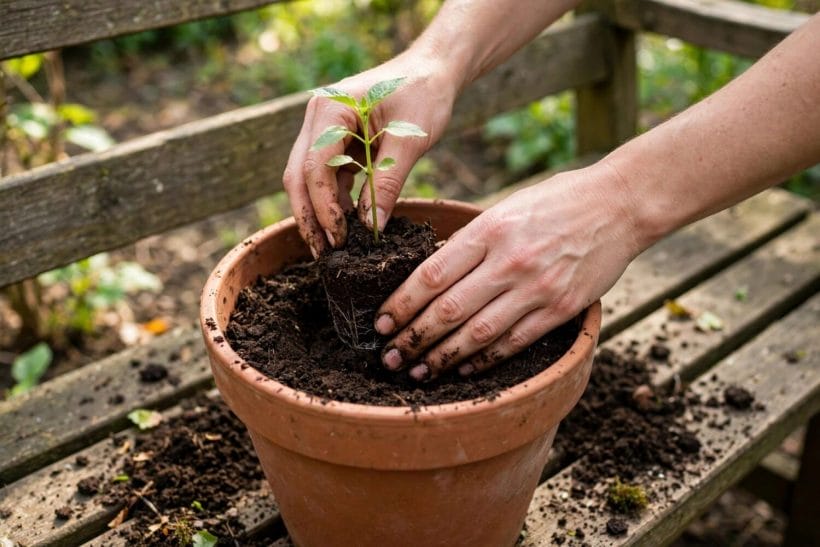
When roots show at the drainage holes and growth is steady, move the seedling into a slightly larger pot of ordinary compost, handling it by its leaves or rootball rather than its stem. Water it in, keep it shaded for a short while, and repeat the move only when the roots have filled their new room.
A Small Support From Early On
Muscadines want to climb from youth. Give each pot a slender cane or small stick and tie the leading shoot loosely as it lengthens. A supported seedling grows upright, catches more light and is far easier to move, water and harden off than a plant left to trail and tangle across its neighbours.
Hardening Off Before Life Outdoors
Plants raised indoors must be introduced to outdoor life gradually: short periods outside in sheltered shade at first, lengthening over days, with nights indoors while cold threatens. Rushed plants scorch and check in their growth; hardened plants, with thickened leaves and steady stems, settle into the garden with barely a pause.
9. Planting Out and Support
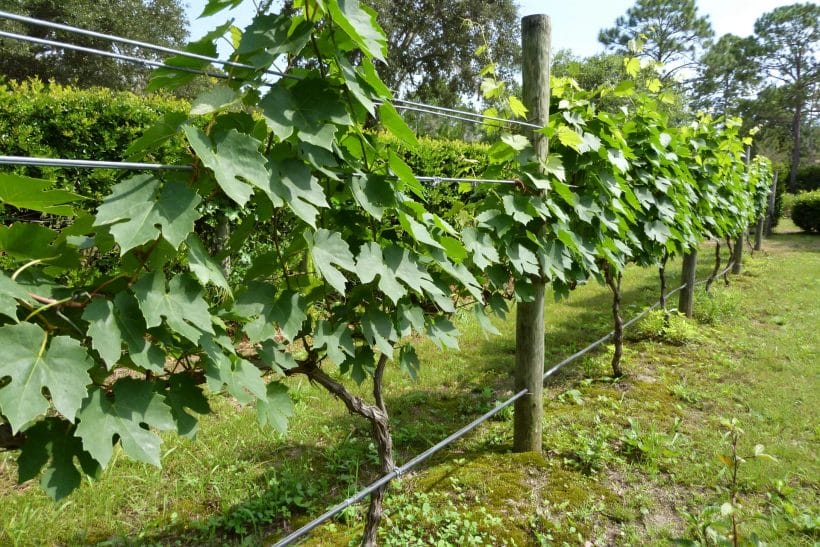
Planting out is the moment the seedling stops being a pot plant and becomes a garden vine with a permanent address. Choose the place as if the vine will live there for many years, because a settled muscadine dislikes being moved and rewards a well-chosen home.
A Sunny, Open Site
Choose full sun, open air and ground that drains freely after rain. The structures in the rustic log arbor and trellis ideas for climbing plants show how naturally a strong vine and a sturdy frame belong together, and a muscadine should be planted with its frame already in mind.
Spacing in General Terms
Give each vine generous room from its neighbours, its support and nearby trees or buildings, remembering the long growth a mature plant makes in a single season. Crowded vines shade their own fruit, tangle beyond easy pruning and compete for water. When in doubt, leave more space than the young plant appears to need.
Plant, Water In and Tie Loosely
Set the plant at the same depth it grew in its pot, firm the soil gently around the rootball and water it in well. Tie the leading shoot loosely to the support so wind cannot tear it, mulch the ground around it while keeping the mulch clear of the stem, and water through dry spells while it settles. Check the ties as growth lengthens, loosening or moving them before they can bite into a thickening stem.
10. Care, Patience and Honest Outcomes
The years after planting out are not idle years. They are when roots go deep, the framework of the vine is chosen, and the grower learns the plant’s character — including, in time, what kind of flowers it carries and whether fruit follows.
Watering While the Vine Establishes
Water young vines deeply in dry weather during their first seasons, then let established plants manage more for themselves. Deep, occasional watering that reaches the roots serves a young vine better than a daily sprinkle that wets only the surface and encourages roots to stay shallow. A spare seedling kept back in a pot is a sensible insurance, and the projects in the container garden ideas collection show how much honest growing a well-tended pot can do while a garden plant finds its feet.
Pruning in General Terms Only
Muscadines are pruned in their dormant season, in general terms: removing dead, weak or tangled growth and keeping a clear framework of main arms along the support. Fruit and foliage both benefit when air moves through the vine, much as the plantings in the wildlife friendly garden guide balance shelter with openness for the creatures sharing the space.
When a Named Plant Is the Better Choice
Honesty cuts both ways. If you want a known flavour, known flowers and fruit within a reasonable wait, buy a named plant from a reputable grower and keep seed-raising as the pleasure it is. Growers drawn to self-reliant planting, like those reading the off-grid gardens collection, often value the seedling’s independence most — a vine raised entirely at home, from a grape they ate.
Final Considerations
Seed-raising suits the grower who enjoys the whole journey: the saved grape, the cold rest, the first green shoot and the long, leafy apprenticeship that follows. Keep tools, saved seed and young plants in good order — the storage in the garden shed ideas collection is the unglamorous half of patient gardening, and it protects every other half.
Before planting or moving any plant material, check the local rules that apply where you live, in general terms, and follow them. Then give your seedlings sun, support and time among the other resilient plantings in your garden, such as those gathered in the best native plants for rock gardens and drought-tolerant planting, and let the vine make its own unhurried case, season by season.




0 Comments