

An older house often announces its age in the small things: a deep skirting board, a heavy door that closes with a soft thud, glass that throws coloured light across a floor. None of these details shouts, yet together they give rooms a settled, made-to-last feeling that newer fittings rarely copy well.
This guide walks through the old house interior room by room, naming the old-fashioned house details most worth keeping, and the gentle care that keeps them working rather than merely surviving.
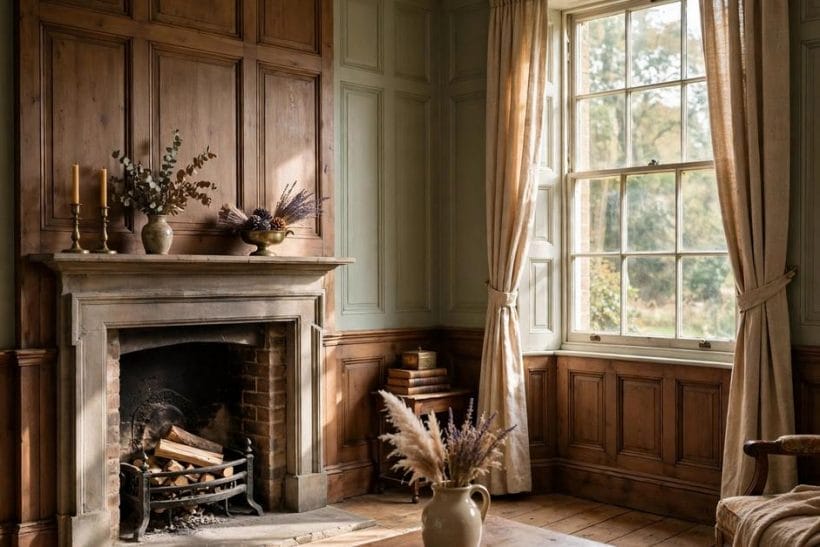
1. Old-Fashioned House Details at a Glance
Start with families, not single features. Woodwork, doors, windows, floors and fittings each carry part of the character, and a room feels coherent when those families survive together rather than as one lonely survivor among replacements. Judge each piece on whether it is sound, original and still doing its job.
| Family | Character | What it means |
|---|---|---|
| Woodwork and Trim | Original boards, rails and panelling | Kept |
| Doors and Hardware | Panelled doors and ironmongery | Working |
| Windows and Glass | Sashes, bays and coloured glass | Glowing |
| Floors and Ceilings | Boards, balusters, roses and cornices | Sound |
| Fixtures & Fittings | Fireplaces, radiators and ranges | Character |
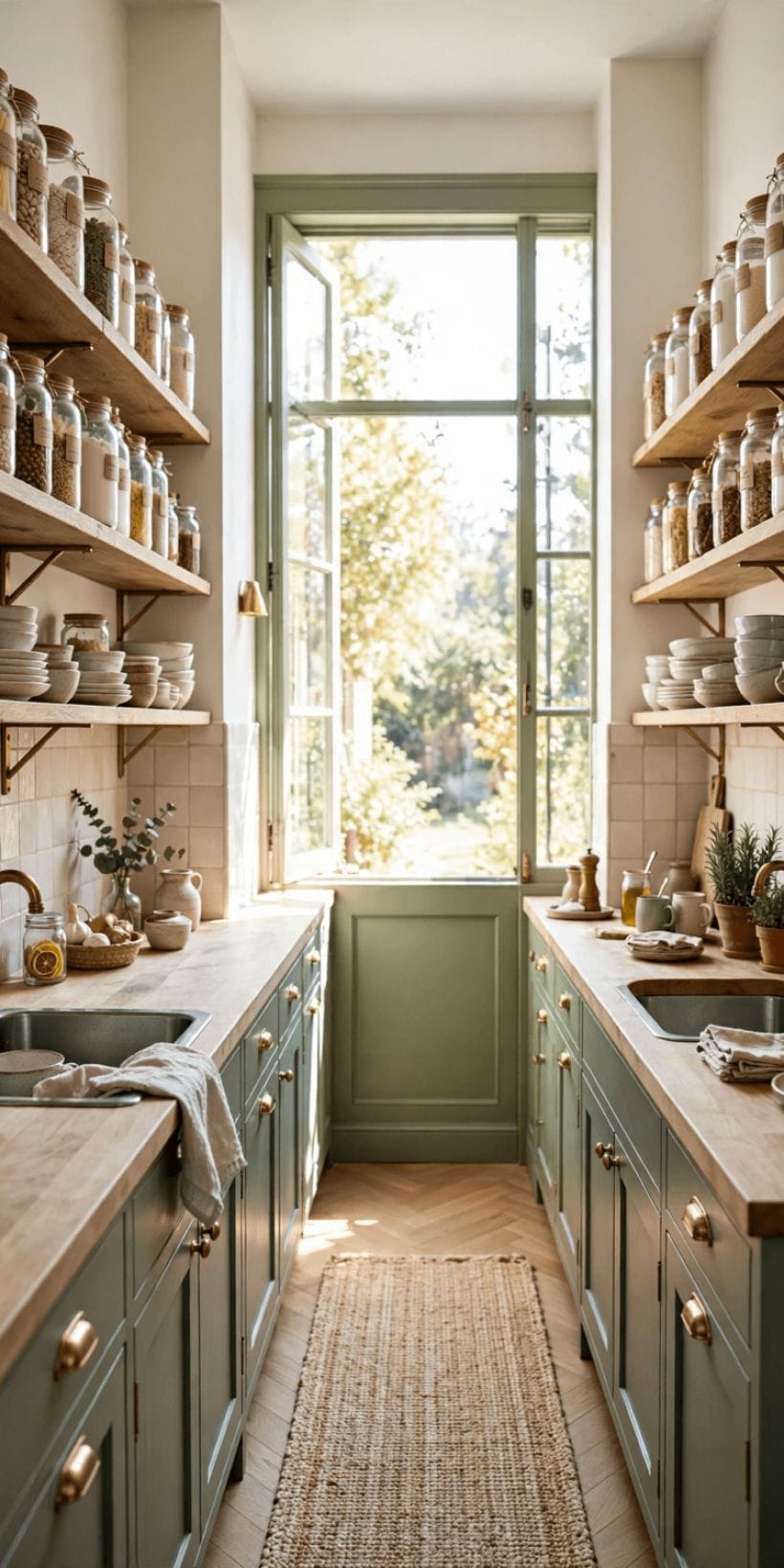
A freestanding piece such as a hoosier cabinet was once ordinary working furniture, yet kept and used it now reads as pure character. The same test applies everywhere: keep what is sound, use what still works, and let worn fabric be repaired in kind before it is replaced.
2. Woodwork and Trim
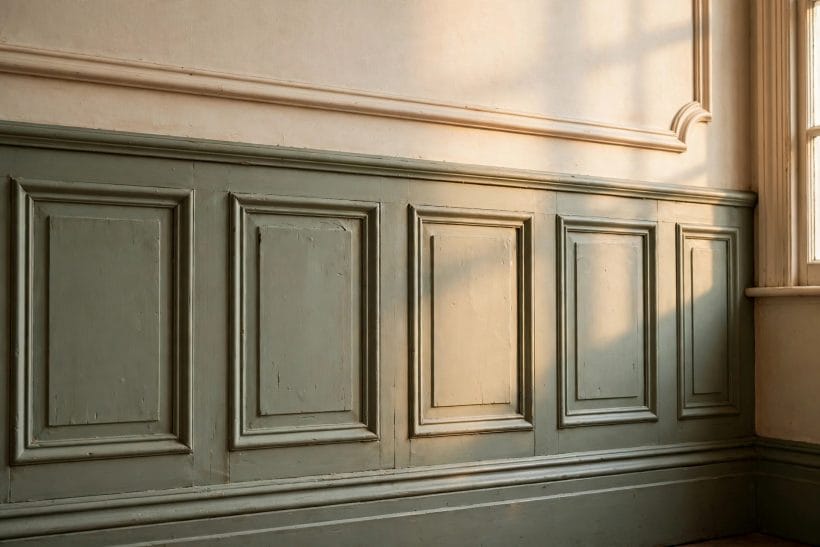
Trim is the quiet joinery that frames every room: boards at the floor, rails on the wall and mouldings around openings. It is easily stripped in a hurried renovation and hard to reinstate with the same weight, so original trim deserves protection before other work begins.
1. Deep Skirting Boards
Tall skirting boards protect the foot of a wall and give a room its grounded proportion. Their depth is the point: they read as architecture rather than as an afterthought. Keep them where they survive, patch damage in matching timber, and resist planing them down to a thinner profile.
2. Picture Rails
A picture rail runs high on the wall, carrying hooks from which pictures hang on cords or wires. It spares plaster from repeated fixings and lets artwork move without fresh holes. Kept and painted in with the wall, it is both practical and quietly decorative.
3. Plate Rails
A plate rail is a ledged shelf running round a dining room or kitchen, made for plates, jugs and serving pieces. Surviving rails are worth keeping even if the display changes: the line they draw round a room is a period gesture plain walls cannot imitate.
4. Wainscot Panelling
Panelling to chair height protects walls where chairs and passing traffic would scuff them, and adds shadow and weight to halls and dining rooms. Keep original wainscot whole and repaired in kind, because piecemeal loss breaks the run that makes it read as one piece of joinery.
5. Chunky Architraves
The moulded surround to a door or window opening is its architrave, generously sized in older houses. Chunky architraves frame movement from room to room. Keep matched sets together, and where one side is damaged, copy its profile faithfully rather than fitting a slimmer substitute.
3. Doors and Hardware
Doors are handled every day, so their weight, sound and hardware shape how a house feels. Before work starts, the home renovation planning guide helps to sequence protection and repair so original doors are stored safely, labelled by room, and never treated as rubble.
6. Four-Panel Doors
A four-panel door has a balanced face: longer panels above, shorter below, with mouldings that catch the light. Hung on its original frame, it closes with a solidity thin modern doors rarely match. Keep the set together, repair splits in kind, and paint rather than replace a sound door.
7. Original Ironmongery
Knobs, hinges and latches in iron or brass carry the touch of the house. Original ironmongery often needs only cleaning, gentle lubrication and refitting. Keep sets matched by room, and let honest wear show: a softly worn knob records generations of hands more truthfully than a bright replacement.
8. Fanlights and Transoms
The glazed panel above a door — a fanlight or transom — borrows light from a hall and carries it into a room that would otherwise be dim. Keep the glazing, repair its slender bars with care, and never board one over. A lit fanlight at dusk is among the most recognisable pleasures of an older hallway.
9. Strap Hinges and Thumb Latches
On ledged doors, long strap hinges and thumb latches are the working decoration: black iron spread across the boards, moving with direct mechanical honesty. Keep them working and their fixings sound, and let a joiner ease a binding latch rather than stripping the hardware that explains how the door was always used.
10. Boot Scrapers and Letter Plates
At the threshold, small ironwork tells the story of arrival: a boot scraper by the door, and a letter plate with its sprung flap in the door itself. Each is a single modest detail, best kept together as the pair they often form. Clean, protect and leave them in place; removed, the doorway loses its manners.
4. Windows and Glass
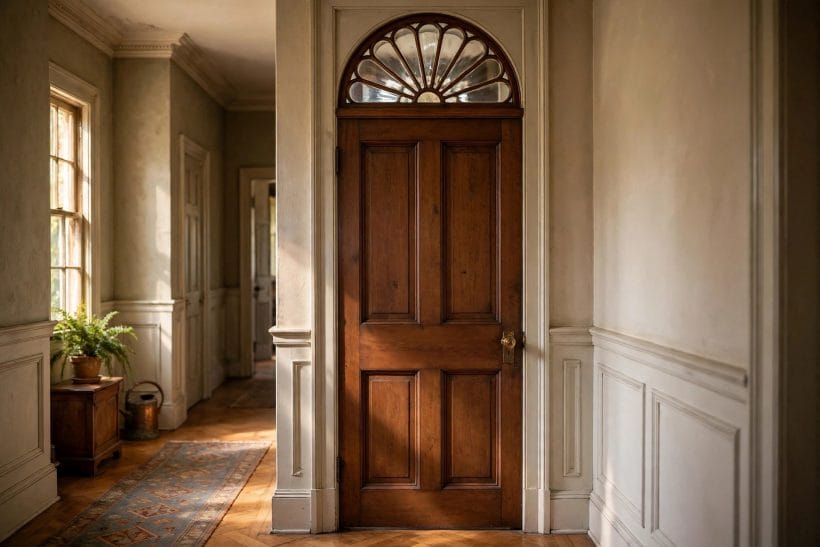
Windows shape light more than any other feature, with slender frames, small panes and generous depth. Collections of remodeled ranch homes show the same lesson in a different house form: character survives where original openings, proportions and glazing patterns are respected rather than enlarged away.
11. Sash Windows
A sash window slides vertically in its box frame, held by cords and weights hidden in the frame. It gives controlled ventilation and tall proportions. Keep the boxes, repair cords and putty in kind, and treat draught-proofing as care for a working window, never as a reason to discard it.
12. Stained and Leaded Glass
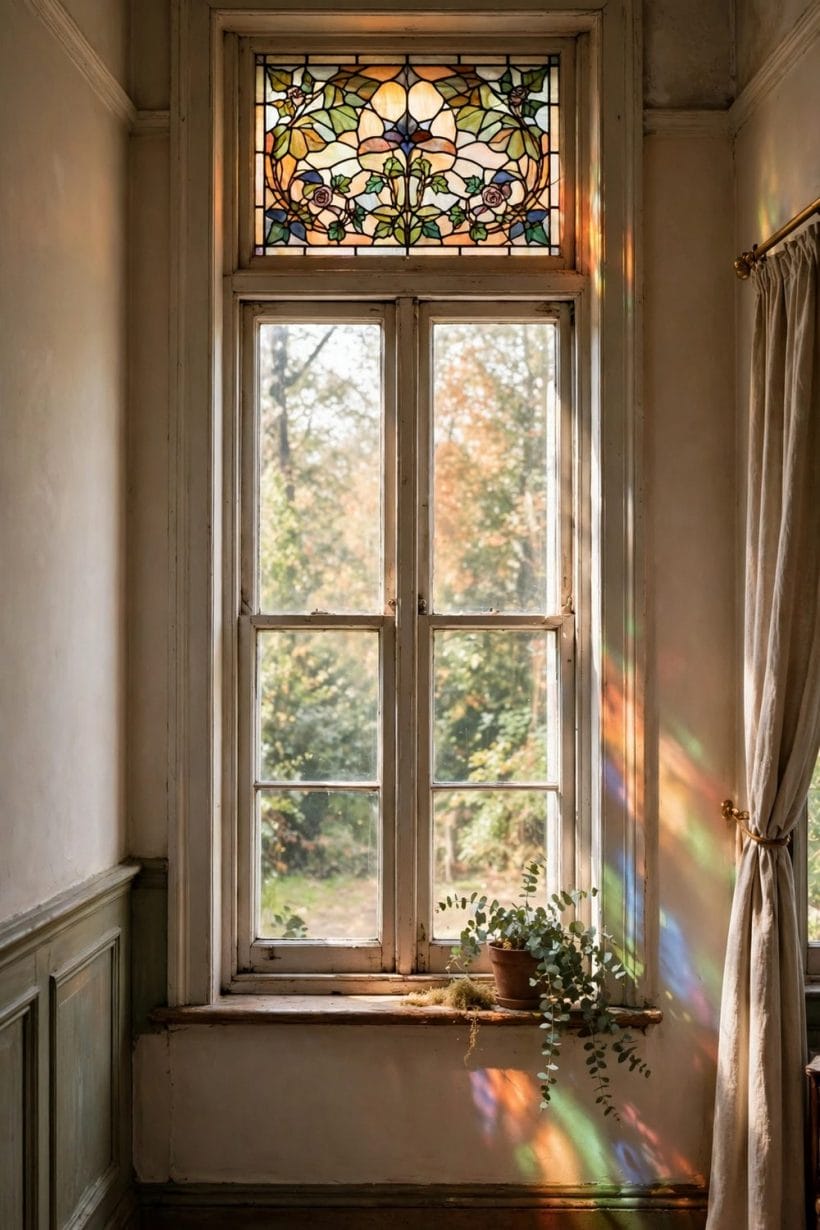
Coloured glass set in lead cames turns daylight into pattern: a hall window or stair light glowing amber and green as the sun moves. Keep panels intact, have loose sections releaded by a specialist, and protect vulnerable panes during other work. No printed film reproduces the depth of real coloured glass.
13. Bay Windows
A bay pushes a window beyond the wall line, gathering light from three sides and making a natural alcove. Its seats, panelling and plasterwork belong together. Keep the bay whole, maintain its roof and junctions against weather, and furnish the alcove lightly so the architecture stays the event.
14. Window Seats
A seat built into a bay turns a draughty spot into the best place in the house: somewhere to read or sit with morning light. Original seats often hide storage in their base. Keep the joinery, repair its lid and hinges, and re-cover a cushion rather than rebuilding a seat that already fits its window.
15. Interior Shutters and Deep Reveals
Folding shutters tucked into a deep window reveal give privacy, shade and warmth at night, then disappear by day. The deep reveal itself is part of the pleasure, showing the thickness of the wall. Keep shutters folding freely, ease stiff hinges gently, and never fix them shut behind curtains.
5. Floors, Stairs and Ceilings
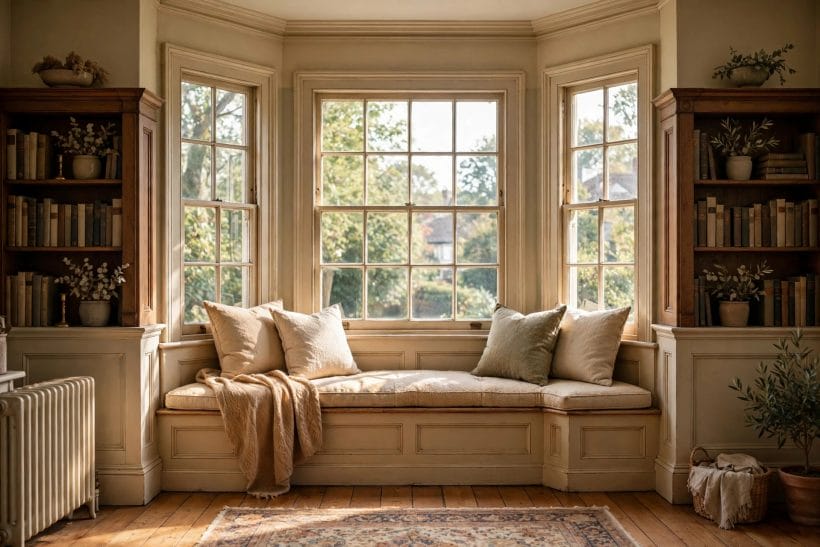
The surfaces underfoot and overhead carry the structure of the old house interior most literally: boards that were always the floor, stairs built as joinery, and plasterwork modelled by hand. These are the heaviest elements to lose and the most rewarding to keep.
16. Original Floorboards
Wide boards, worn softly along the routes people walk, are a floor and a record at once. Original floorboards can be cleaned, gently sanded where truly needed and finished with wax or oil. Lift boards only with care, number them as they come up, and relay them in their own order.
17. Turned Balusters and Newel Posts
A staircase reads like furniture: slender balusters, a handrail with a comfortable profile, and newel posts capped with a ball or a flat top. Keep every sound spindle, have loose ones refixed properly, and copy any missing turning faithfully. A complete flight has a rhythm a part-renewed stair loses.
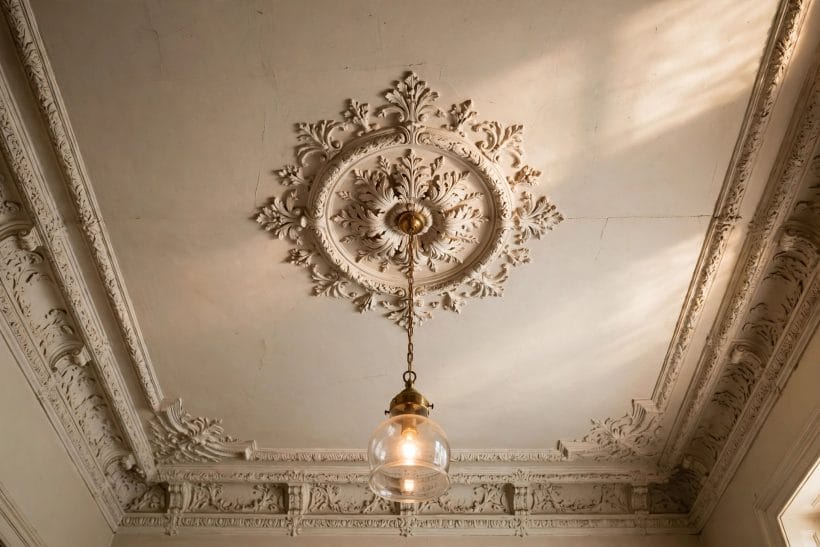
18. Ceiling Roses and Cornices
Plaster cornices carry the wall into the ceiling with shadow and curve, while a ceiling rose centres a pendant light. Keep both free of heavy paint build-up, repair cracks in kind, and let a plasterer who knows period work judge any hollow section. Their crispness is the detail; softness is loss.
19. Parquet and Herringbone
Blocks of timber laid in pattern — herringbone in halls, parquet in reception rooms — give a floor richness plain boards lack. Keep sound blocks, rebed loose ones, and fill gaps in matching timber. A patterned floor survived whole is a considerable piece of craftsmanship, worth patient gentle repair.
20. Hearth Tiles
Around a fireplace, glazed tiles in deep greens, blues or earthy browns protect the floor and frame the fire with colour. Hearth tiles chip across a long life, yet a mostly sound set is far better kept than replaced. Rebed a loose tile and let small chips stand as honest wear.
6. Fixtures and Fittings
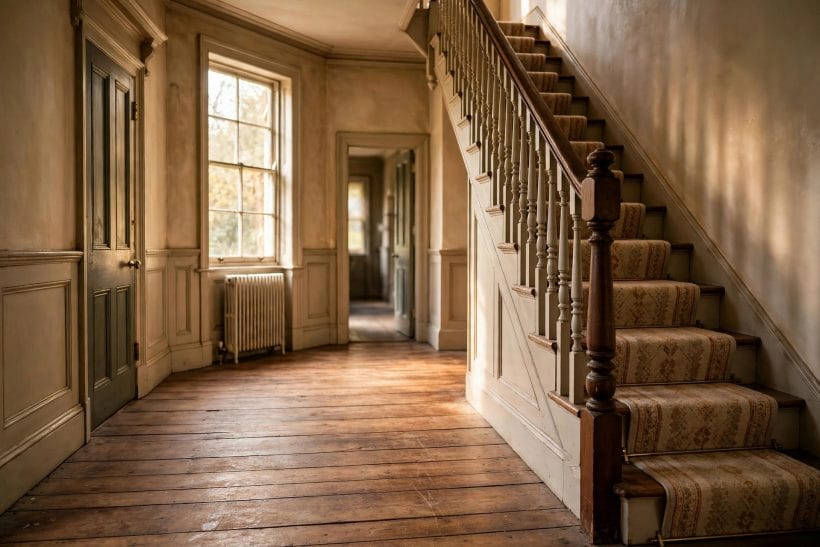
Fittings are the working furniture of the house: fireplaces, radiators and ranges around which rooms were arranged. They connect a modern family to older patterns of living simply by still doing the jobs they were made for.
21. Fireplaces and Surrounds
A fireplace gives a room its focus and its traditional place to gather, whether the surround is marble, timber or cast iron. Keep surround, grate and hearth together, have the chimney and flue checked by qualified professionals before any fire is lit, and treat a boarded fireplace as a feature in waiting.
22. Cast-Iron Radiators
Heavy, columned and slow to heat and cool, cast-iron radiators suit older houses. Keep originals where they are sound; any work on a heating system or its pipework belongs to qualified professionals. Painted in a calm colour, a sound radiator reads as sculpture that happens to warm the room.
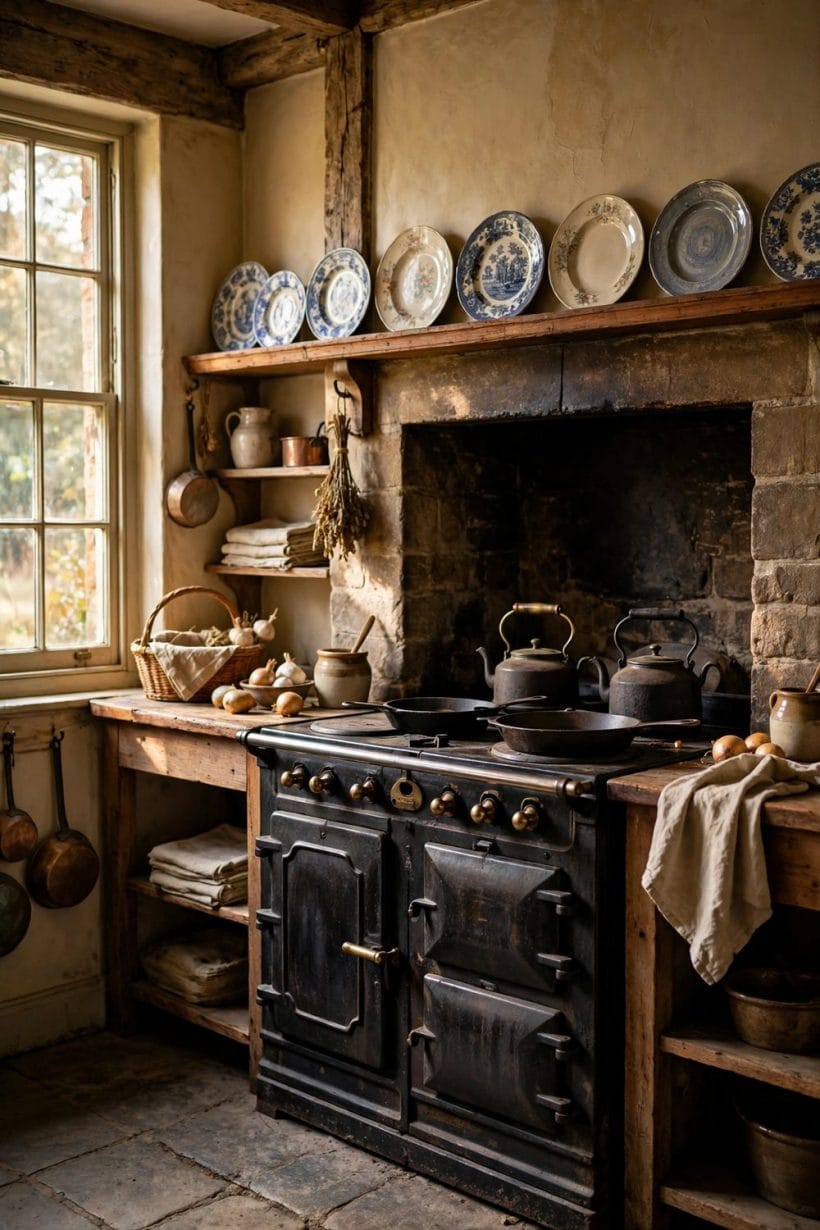
23. The Kitchen Range and Hearth
In a traditional kitchen the range stood in a wide hearth, cooking and warming the room from one place. Even where cooking has moved on, the hearth recess and its surround are worth keeping whole. Wider kitchen ideas show how a kept hearth can anchor a modern kitchen, giving the room a centre fitted units alone rarely supply.
24. Bell Pushes and Servant Bells
Small brass bell pushes by a fireplace or door, and the bells they once rang, survive as delicate evidence of how the household ran. Keep pushes, labels and surviving bells in place, cleaned gently. Any question touching electrical work belongs to a qualified professional, never to experiment.
25. Clawfoot and Panelled Bathroom Fittings
In general terms, older bathroom fittings earn their keep by weight and shape: a deep clawfoot bath on its own feet, a high-level cistern, timber panelling that warms a cold room. Keep sound fittings in use, and leave all plumbing work to qualified professionals. A kept fitting, honestly plumbed, outclasses a lightweight copy.
7. Reading What Is Original
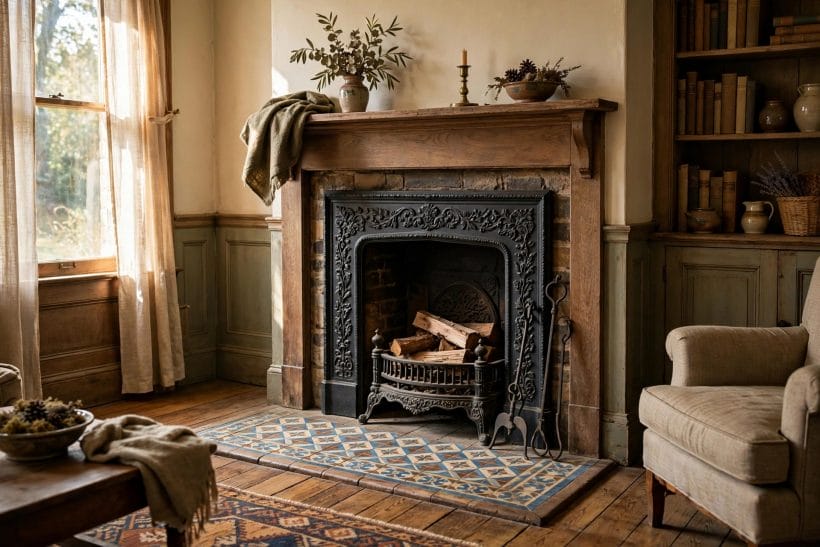
Before anything is kept, repaired or let go, it has to be read. An old house is its own archive, and the clues are in materials, junctions and wear rather than in guesswork or in stories attached to the house.
Profiles, Materials and Honest Wear
Original joinery tends to match from room to room: skirting profiles repeat and door mouldings agree. Wear helps too — a hollow on a threshold or a handrail polished by hands is difficult to fake. Where one piece differs sharply in profile or fixing, read it as a later arrival until the fabric suggests otherwise.
Paint Layers, Fixings and Ghosts
Old paint builds up in soft ridges along mouldings, and earlier colour often survives behind fittings. Fixings tell a similar story: old screws, nails and filled hinge housings mark stages in a fitting’s life. Ghosts — the paler outlines where a rail or shelf once sat — show what a room has lost.
Doors, Floors and Paper Records
Look for repairs that agree across a house: boards patched in matching timber, a stair repaired with a copied turning. Photographs and old paperwork can support what the fabric says, but the fabric comes first. Split-door forms such as dutch doors for tiny houses remind us that a door’s shape itself is evidence — read its construction before deciding what it needs.
8. Care and Gentle Repair
Most period fabric needs steady, gentle care and repair in kind when wear becomes damage, not restoration theatre. Clean softly, mend with matching materials, and stop at the point where a job stops being maintenance.
Cleaning Without Harm
Dust, soft cloths and mild cleaning suit most old surfaces better than aggressive scrubbing. A finish softened by age can be removed in a single enthusiastic afternoon. Work in a small area first, keep moisture away from joints, and let things dry fully between stages.
Wax, Oil and Paint, in Kind
Traditional finishes are renewable: wax feeds dry timber, oil revives a floor, and paint can be renewed once loose flakes are gently removed. Repair in kind means matching the material and method the piece already carries, in small areas that blend in, rather than coating sound fabric in a hard modern skin.
Small Repairs Before Big Ones
A loose baluster refixed, a sash cord renewed, a tile rebedded: small repairs done promptly keep a detail off the replacement list. Keep a simple record of what was done, and keep any fragment that comes away, because a saved piece is the perfect pattern for a faithful repair later.
9. When Replacement Is the Honest Answer
Keeping is the instinct of this guide, not a rule without exception. Fabric that is rotten or beyond gentle repair does a house no favours by being clung to, and an honest, faithful replacement serves the room better than a collapsing original.
Rotten, Lost and Beyond Repair
Timber soft through its section, plaster detached across a whole run, ironwork rusted to lace: some losses are real. Judge them piece by piece, save every sound fragment for pattern, and record the original with photographs before it goes. What is truly lost should be named as lost, not disguised.
Like-for-Like, Faithfully Copied
A replacement earns its place by copying what was there: the same profile in skirting, the same pattern in glass, the same turning on a stair. The guide to exterior trim materials, PVC versus wood makes the material question plain for outdoor trim; indoors, matching timber, plaster and iron in kind keeps a renewed section reading as part of the house.
New Work That Sits Quietly
Where a room needs something new, let it be well made, plainly detailed and reversible where possible, sitting quietly beside the old work rather than imitating it badly. Honest new work ages gracefully; fake age never does. Keep the distinction clear in records for the next keeper of the house.
10. Work for Specialists
Some work in an older house is never a matter for enthusiasm alone. The older the fabric, the more likely it is to meet systems and materials that carry real risk, and the kindest care is knowing where your own work stops.
Structure, Roofs and Damp
Anything touching structure — walls, beams, roofs, chimneys and the causes of persistent damp — belongs to qualified professionals with experience of older buildings. Movement, sagging and cracked masonry are to be assessed, not experimented on. A specialist who understands how an old house moves will protect fabric a purely modern approach could harm.
Wiring, Plumbing and Gas
Electrical work, plumbing and anything touching gas belong to qualified professionals throughout, without exception. Old wiring behind bell pushes and ageing pipework behind panelling are professional territory from first inspection to final testing. An owner’s part is access and records — never the work itself.
Lead Paint and Asbestos Caution
Older houses can contain materials hazardous when disturbed, including lead in old paint and asbestos in some older products. In general terms: do not sand, strip, drill or remove suspect material. Have it assessed by qualified professionals, follow their guidance exactly, and keep everyone else away until they say otherwise.
Final Considerations
Old-fashioned house details survive because generations found them useful, beautiful or both, and kept them through every fashion that told them otherwise. Keeping them now asks for attention, gentle repair, faithful copying where loss is real, and the humility to call in specialists where the work demands it.
Walk your rooms once more with this guide in mind — skirting to cornice, threshold to fanlight — and make a simple list of what is sound, what is worn and what is truly lost. Keep the sound, tend the worn, and replace only the lost. A house kept that way keeps its character, and its character is the reason it was worth keeping at all.


0 Comments