
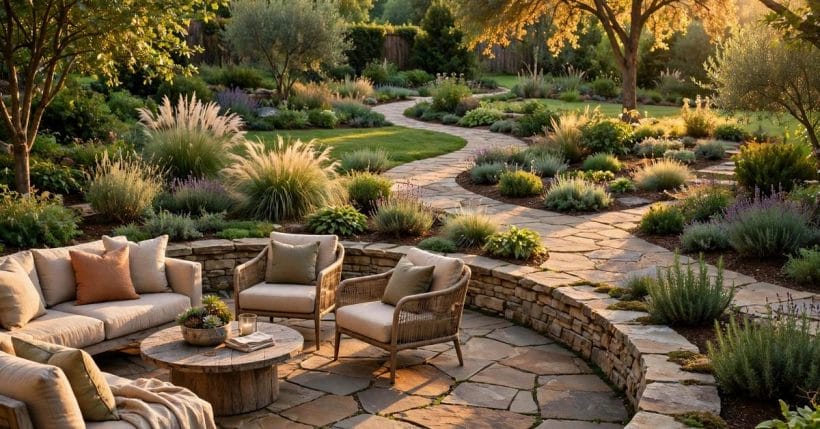
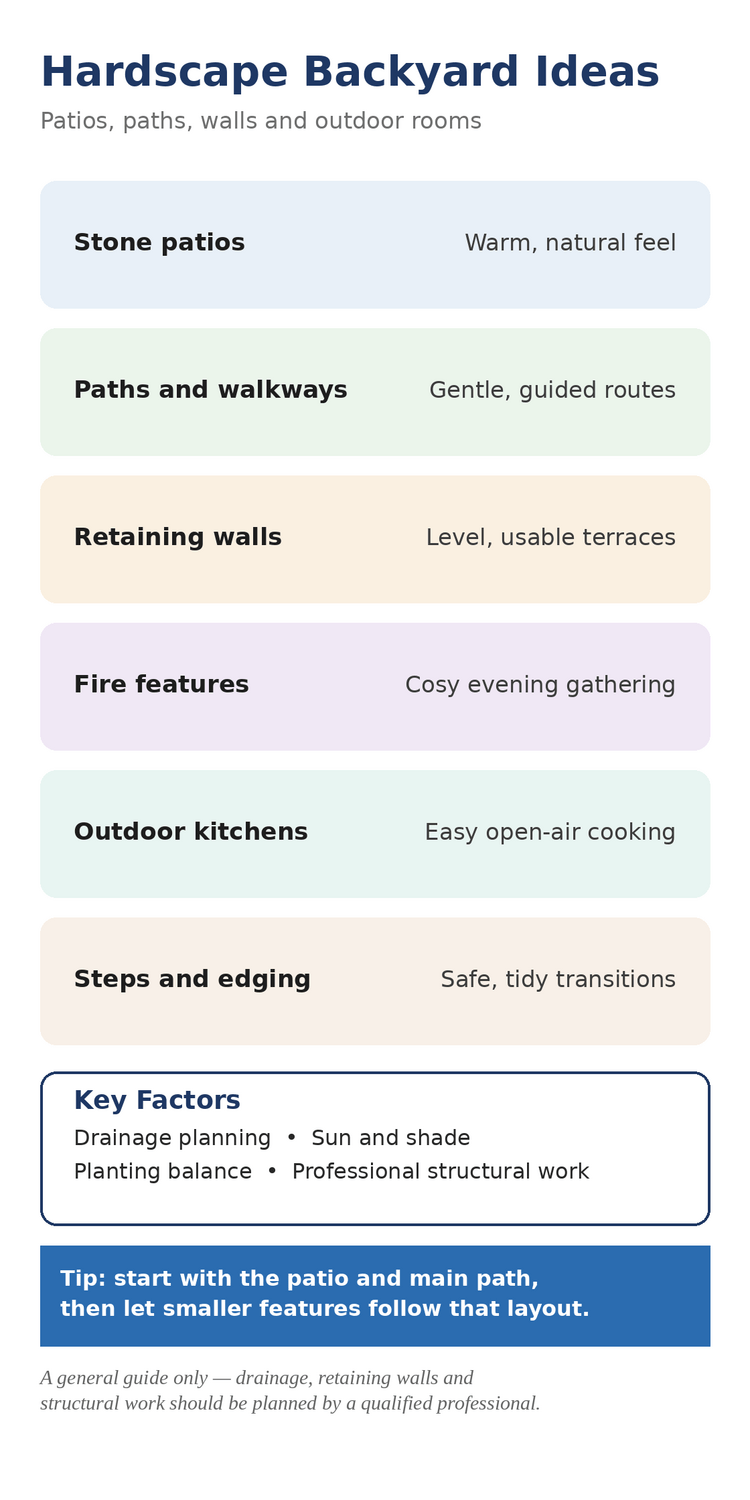
A backyard built around stone, brick and timber surfaces feels settled from the first step outside. Hard surfaces give a garden its rooms: a place to sit, a route to follow, a level patch for a table and a quiet corner for an evening fire. Planting softens every edge, and the balance between the two is what keeps a backyard feeling like a garden rather than a paved yard. This guide gathers hardscape ideas for a backyard in one place, from patios and paths to walls, steps, fire features and outdoor kitchens, with practical notes on drainage, shade and upkeep along the way.
The strongest backyards start with a simple layout. One main sitting area, one clear route through the garden and one or two smaller features are usually enough. Each new surface should earn its place by making the garden easier to use, whether that means a dry seat after rain, a firm path to the far gate or a level spot for morning coffee. Surfaces that do nothing but fill space tend to look bare, while a small number of well placed surfaces can make even a modest backyard feel generous.
1. Stone Patios as the Main Outdoor Room
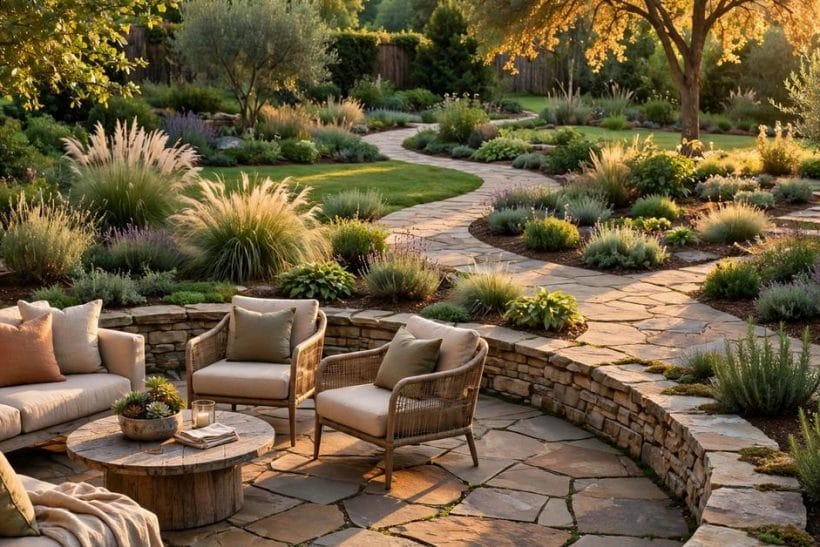
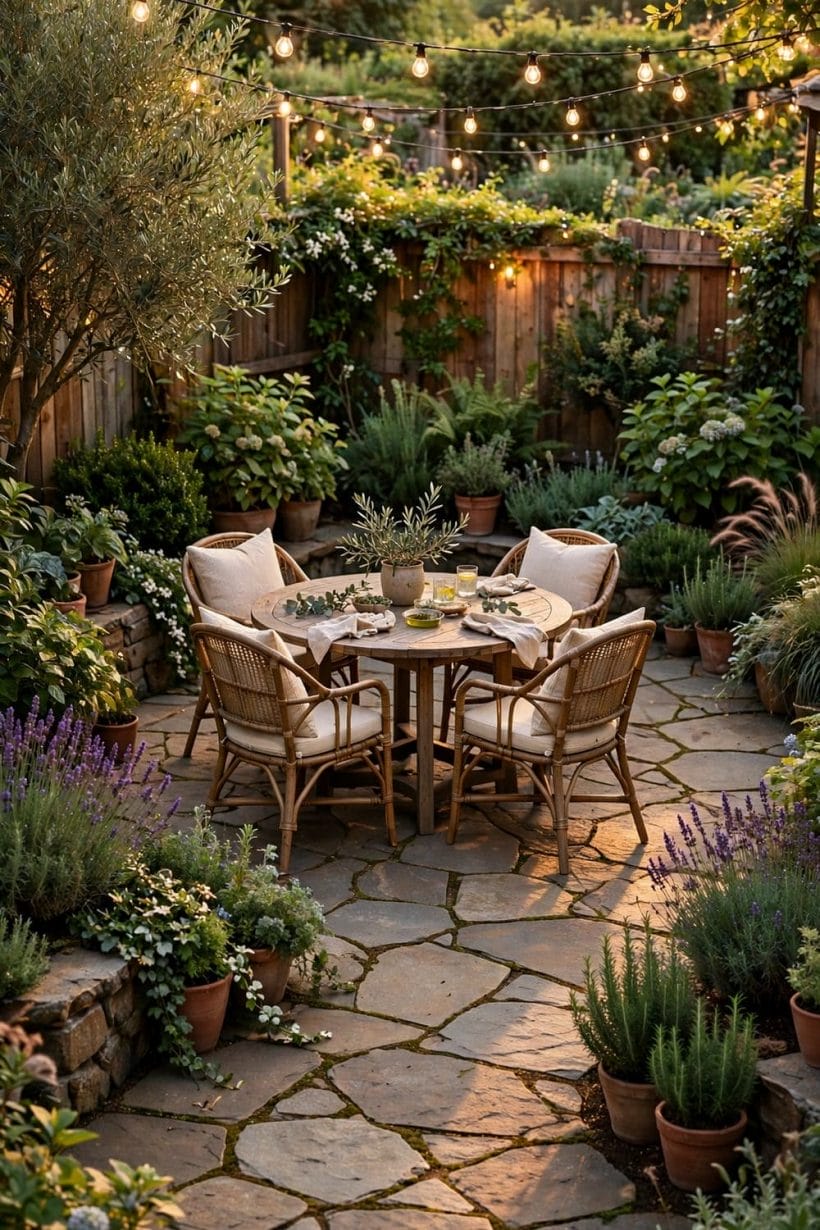
A stone patio is the natural centre of a hardscape backyard. It holds the table, the chairs and the everyday life of the garden, and its size sets the scale for everything around it. A patio that fits the furniture with room to pull out a chair and walk around the table will feel comfortable, while a patio squeezed around oversized furniture will feel awkward however handsome the stone. Leave breathing room at the edges for planters and a step down to the lawn, so the patio reads as a room rather than a slab.
Stone choice shapes the mood of the whole garden. Rough, irregular flagstones suit a relaxed, cottage style garden and sit well beside loose planting. Neat, rectangular pavers suit a more ordered garden and pair well with clipped hedging and straight beds. Warm toned stone glows in evening light, while cooler grey stone stays calm beside green foliage. Mixed tones can work, but a single dominant tone with one quiet accent usually holds together better across a whole backyard.
Joints between stones matter as much as the stones themselves. Narrow joints give a clean, formal finish and are easy to sweep, while wider joints can be filled with low ground cover plants that soften the surface and blur the line between patio and garden. Either way, the finished surface should feel firm underfoot and free of rocking stones. A patio is a long term part of the garden, so it is worth taking time over its layout before any stone is laid, and asking a professional to advise on levels and drainage where the ground is uneven or close to the house.
For broader planting and layout context around a new patio, see these backyard landscaping ideas alongside this guide.
2. Paths and Walkways That Guide the Garden
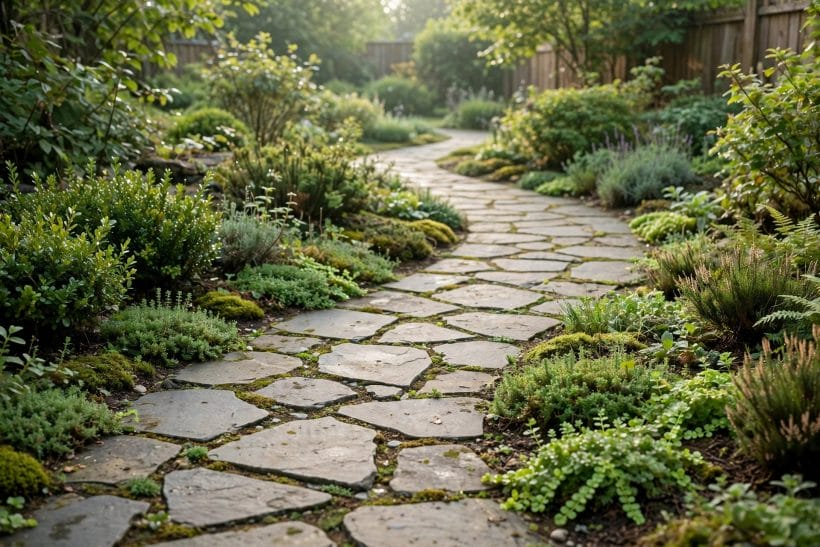
A path does more than connect two points. It tells visitors where to go, slows the walk through the garden and frames the planting on either side. The main path deserves the most generous width and the firmest surface, since it carries daily traffic to the gate, the shed or the far end of the garden. Secondary paths can be narrower and more informal, inviting a slower wander rather than a direct stride.
Curves suit a garden path well, provided they feel natural. A gentle bend around a shrub or a tree gives a reason to turn, while a path that zigzags for no reason feels fussy. Straight paths suit formal gardens and small plots, where a direct line keeps the layout calm and easy to read. Whichever line a path takes, it should arrive somewhere worth arriving at: a seat, a gate, a view or a second garden room.
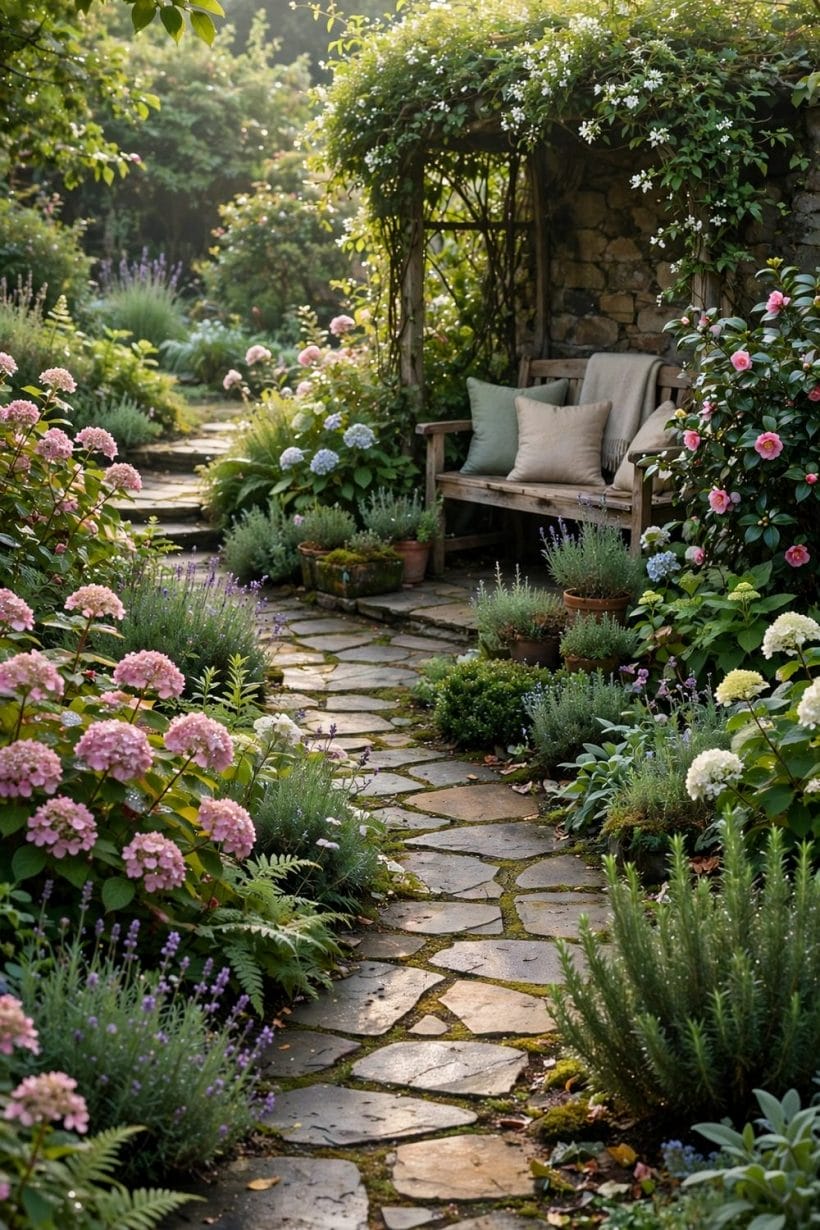
Stepping stones offer a lighter touch than a fully paved walkway. Set with planting between them, they let the garden breathe and keep the hardscape feeling like part of the planting rather than imposed on it. Loose gravel paths are another soft option, giving a gentle crunch underfoot and a relaxed country feel. Both need regular attention to stay level and weed free, and both benefit from a firm edge that keeps the surface in place. Rock landscaping ideas show how stone and planting can share a garden without either one dominating.
3. Retaining Walls That Shape Level Ground
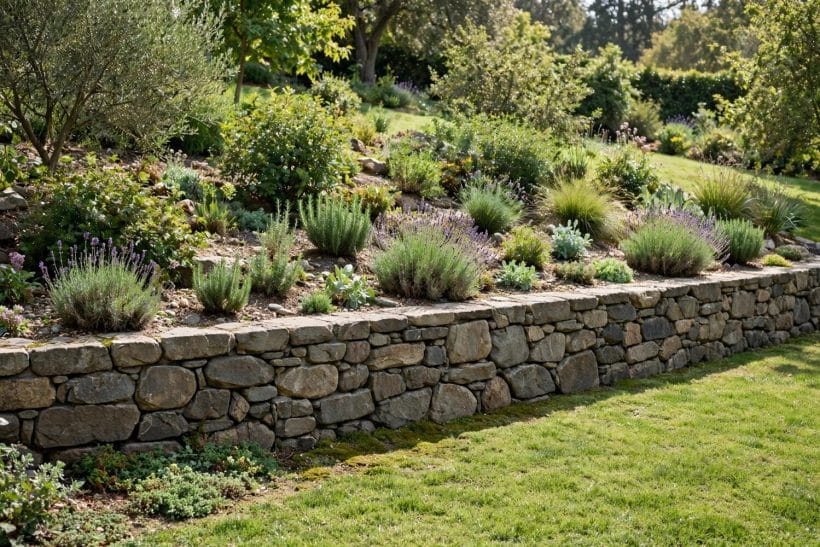
On a sloping plot, a retaining wall turns an awkward bank into usable ground. A low wall can create a level terrace for seating or planting, while a series of low terraces can break a steep slope into a set of garden rooms, each with its own character. Low walls also make fine informal seats, doubling as a place to perch with a drink while the garden is enjoyed from a new angle.
The look of a wall should sit comfortably with the house and the rest of the garden. Natural stone walls feel at home beside older houses and loose planting, while rendered or block walls suit a more contemporary garden and can be softened with trailing plants. Capping stones finish a wall neatly and give a comfortable edge for sitting. Planting pockets built into or beside a wall let creepers and trailing plants spill over the edge, which takes the hardness out of the stonework within a season or two.
Retaining walls hold back soil and water, so their design and construction belong with a qualified professional. Anything beyond a low garden wall, and any wall near a boundary, a building or a slope that carries weight, should be planned and built by someone qualified, with drainage behind the wall considered from the start. This guide describes the look and the uses of retaining walls only; it gives no construction guidance, and no wall should be treated as a weekend project without professional advice.
4. Steps and Edging for Tidy Transitions
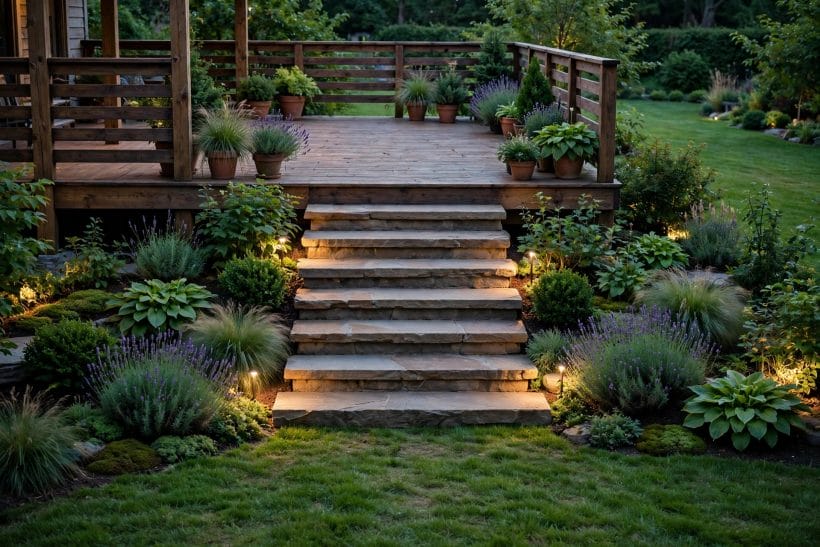
Steps are where a garden changes level, and they deserve as much care as any other surface. A comfortable step has a generous tread and a gentle rise, so the foot lands flat and the walk feels unhurried. Wide steps feel welcoming and can double as informal seating, while narrow, steep steps feel like an obstacle even in a small garden. Where a slope is gentle, a series of broad, shallow steps reads as part of the landscape rather than a staircase.
Edging holds the whole hardscape together. A neat stone, brick or timber edge keeps gravel in place, stops lawn from creeping onto a path and gives beds a clean line. Edging also protects the edges of patios and paths, which take the most wear. Low edging that sits almost flush with the surface is easy to mow over and keeps the garden looking calm, while a slightly raised edge gives a stronger line and a clearer division between surfaces.
Lighting at steps is worth planning early, since it makes the garden safer and more inviting after dark. Small lights set low beside steps wash the treads gently without glare, and they let the garden be used long after sunset. Any electrical work outdoors should be handled by a qualified electrician, with fittings chosen for outdoor use. For the wider setting of a stone and planting scheme, tiny house exterior ideas offer a useful sense of how outdoor surfaces sit with the house itself.
5. Fire Features for Evening Gatherings
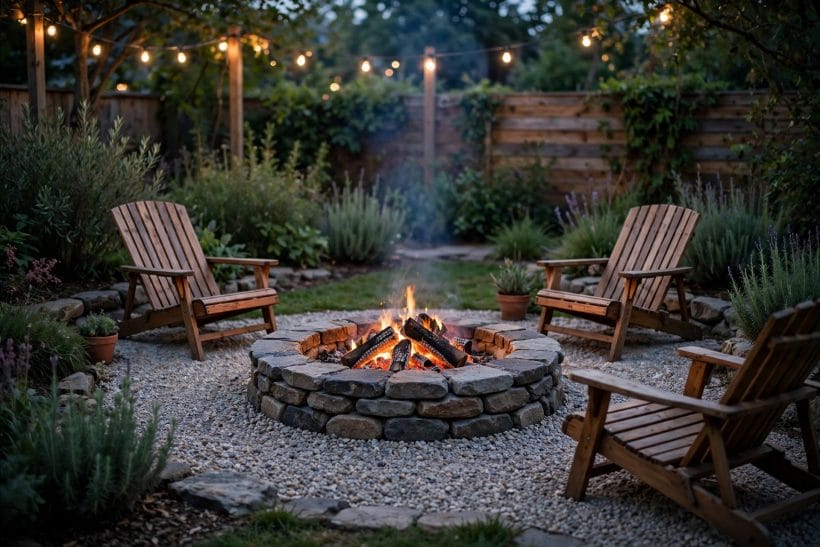
A fire feature gives a backyard a reason to be used after dark. A circular fire pit with a ring of chairs turns an ordinary corner into a gathering place, while a built fire bowl on a patio wall adds warmth without taking up the centre of the garden. Seating arranged in a loose circle suits conversation, and a low surrounding wall can hold drinks and keep the arrangement feeling settled.
Placement matters more than size. A fire feature should sit clear of overhanging branches, fences and anything that could catch, with a firm, non flammable surface beneath and around it. Wind direction is worth noting too, since smoke drifting toward seating or toward a neighbour will spoil the evening. A spot sheltered by a wall or hedging, but still open to the sky, usually feels cosy without feeling enclosed.
Safety framing belongs at the centre of any fire feature plan. Open flames and gas or wood burning features should be installed and checked by a qualified professional, and local rules on open fires should be checked before anything is built. Keep a clear zone around the feature, never leave a fire unattended, and store fuel away from the seating area. With those basics in place, a fire feature can quietly become the most loved corner of the garden.
6. Outdoor Kitchens and Dining Corners
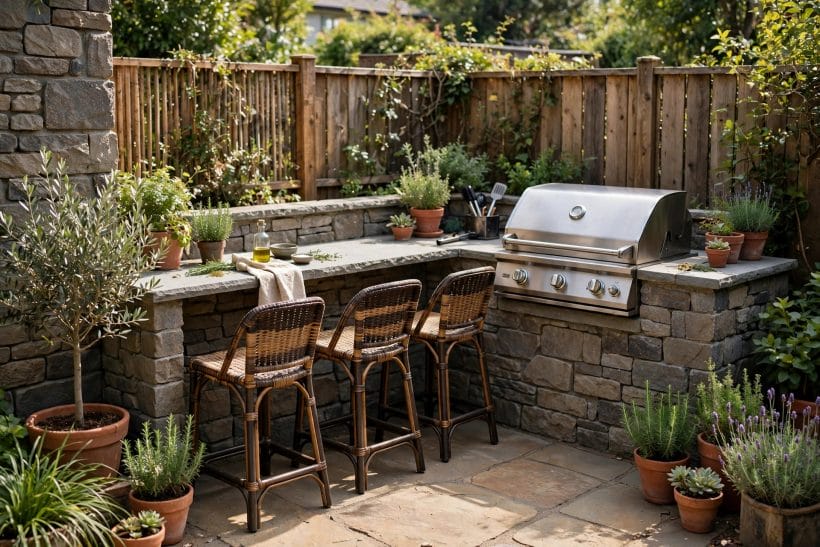
An outdoor kitchen brings cooking into the garden, and even a modest version changes how a backyard is used. A counter with a grill, a little preparation space and storage for tools and crockery can be enough, especially when it sits close to the main patio and the indoor kitchen. A dining corner beside it, sheltered from wind and close to planting, turns everyday meals into garden occasions.
Layout should follow the way meals actually happen. Keep the cooking area, the serving space and the table within easy reach of each other, with room to move between them without crossing the seating. Shade over the dining area matters on warm days, whether from a pergola, a tree or a canopy, and a nearby water point saves endless trips indoors. Surfaces should be easy to wipe down and hard wearing, since outdoor kitchens face weather, spills and heat.
Gas, water and electrical connections for an outdoor kitchen are professional work, full stop. Pipes, drains and wiring outdoors need qualified installers and the right materials for the setting, and this guide offers no installation guidance. Once the services are properly in place, the design itself can stay simple: a sturdy counter, comfortable seating, soft planting nearby and a surface underfoot that stays firm in all weather. Garden structures that pair well with a dining corner are covered among these tiny house garden ideas.
7. Pergolas and Shade Structures Over Stone
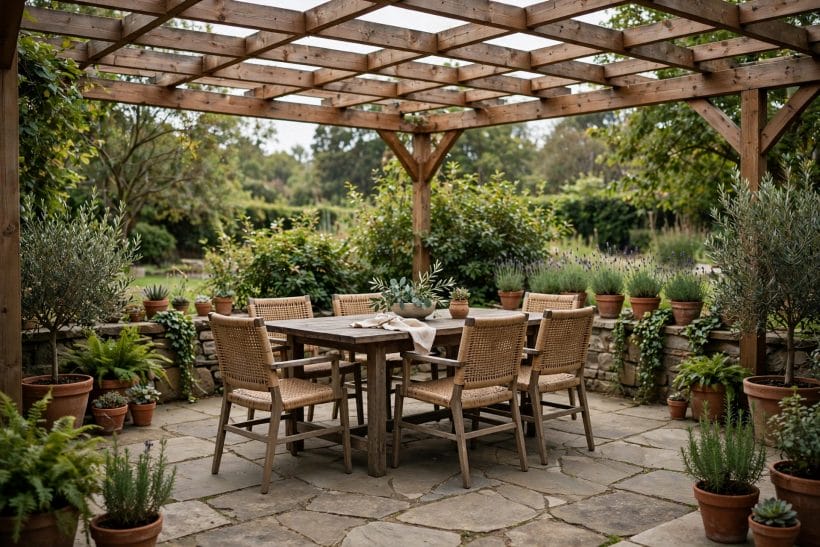
A pergola over a patio changes the feel of the whole backyard. It gives shade in summer, a frame for climbing plants and a sense of enclosure that makes a patio feel like an outdoor room. Open slatted roofs let dappled light through, while a solid roof section over part of the seating gives shelter from a shower. Climbing roses, jasmine or grapevines can turn the structure into a green ceiling within a few seasons.
Scale is the key decision. A pergola should match the patio it covers, neither dwarfing a small seating area nor looking lost over a large one. Posts set at the corners of the patio, with beams that echo the lines of the house, usually look most settled. Timber brings warmth and suits most gardens, while metal frames suit a crisper, contemporary look. Either way, the structure should feel like it belongs to the garden rather than imposed on it.
Any overhead structure that carries weight, spans a wide area or fixes to the house is structural work and belongs with a qualified professional. Footings, fixings and wind loading all need proper design, and a pergola that looks light can still carry real loads once plants and weather are added. For the deck and patio surfaces that often sit beneath such structures, see these tiny house deck ideas for related outdoor surface thinking.
8. Planting Pockets That Soften Hard Surfaces
Hard surfaces need planting, or they feel stark. Planting pockets cut into a patio, gaps left between stepping stones and beds that run right up to a wall all let green growth break up the stone. Herbs beside a path release scent underfoot, grasses soften a patio edge and a small tree in a generous bed gives shade and height without overwhelming the space.
The most successful pockets are planned, not left over. A bed that is wide enough for roots and easy to reach for watering will thrive, while a narrow slot of soil between paving will dry out and struggle. Group plants by their needs: sun lovers together in open spots, shade lovers where a wall or pergola casts shadow, and tougher plants where foot traffic is heaviest. A mix of evergreen structure and seasonal colour keeps the garden looking alive through the year.
Planting also helps a hardscape garden age gracefully. Roots should be kept clear of drains and wall footings, and trees should be chosen with their mature size in mind so they do not lift paving later. A qualified gardener or landscape professional can advise where planting and hard surfaces meet, especially on small plots where every root run counts. With planting woven through the stonework, a backyard keeps its garden character even where most of the ground is hard surfaced.
9. Lighting That Shows Stone After Dark
Good lighting lets a hardscape backyard be enjoyed long after sunset. Low lights along a path show the way without glare, uplights on a wall or a tree give depth, and soft light over a seating area makes evening gatherings feel warm. Stone looks particularly good in warm light, with textures and shadows that disappear in flat daylight.
Restraint keeps lighting elegant. A few well placed lights usually beat a garden full of them, and lights aimed downward or shielded tend to feel calmer than bare bulbs. Focus on the places people actually use: the main path, the steps, the seating area and one or two features worth showing off. Dark corners can stay dark, giving the garden a sense of depth and mystery after dark.
All outdoor electrical work, including low voltage systems, should be installed by a qualified electrician with fittings rated for outdoor use. Cables buried beneath paths or patios need proper protection, and any work near water features or outdoor kitchens needs particular care. A small outbuilding or store for cushions and garden tools can also help keep the lit patio tidy after dark; related storage thinking appears among these garden shed ideas.
10. Drainage and Surfaces That Age Well
How water leaves a backyard decides how well its hard surfaces age. Rain should move away from the house and off seating areas without pooling, and surfaces should stay firm and safe underfoot in wet weather. Permeable surfaces, gentle falls and well placed channels all play a part, and the right combination depends on the soil, the slope and the layout of the plot.
Drainage planning is professional work, and this guide gives no drainage instructions. A qualified landscape professional or drainage specialist should assess the site, especially where the ground is heavy, the plot slopes toward the house or existing drains are involved. Getting this assessment early avoids the common disappointment of a handsome patio that holds water after every shower. Waterproofing near buildings, retaining structures and sunken areas likewise belongs with qualified professionals, not with general garden advice.
Upkeep keeps hard surfaces looking their best. Sweeping, occasional washing with plain water and prompt attention to rocking stones or shifting joints will keep a patio and its paths in good order for years. Weeds in joints are best dealt with by hand or with methods suited to the planting nearby, and no harsh treatment should be used where it could harm plants, pets or watercourses. For keeping outdoor cushions, tools and seasonal items close at hand without cluttering the patio, see these tiny house storage ideas. A hardscape backyard that is planned with care, built by qualified people where it counts and looked after simply will stay welcoming season after season.
Final Considerations
Choosing among these hardscape ideas for a backyard comes down to how the garden will actually be lived in. A household that eats outdoors most evenings will value a generous patio and a dining corner above all else. A household that loves to wander will value paths and planting pockets more. A household with a sloping plot will value terraces and steps that make the whole garden reachable. There is no single right combination, only the combination that fits the plot, the house and the people who use them.
Start with the largest decisions and work inward. Settle the main patio and the main path first, then place the wall, the steps and the fire feature around them. Let planting follow the stonework, softening edges and filling pockets as the layout settles. Bring in qualified professionals for drainage, structural work, retaining walls, gas, water and electrical elements, and check local rules before building anything near a boundary or a building. A backyard shaped this way, stone by stone and season by season, becomes a place that is used every day rather than admired from indoors.

0 Comments