

A ladder that changes shape can serve a home in many ways, from reaching a high wall to bridging a stairwell, and this guide to multi-position ladder checks walks through what to look at before choosing one and before every climb. The value of such a ladder lies in its flexibility, yet flexibility alone never makes a climb safe, and a careful look at height, duty, stability, locks and storage matters far more than any single feature on a box or a label. This guide stays general on purpose, because the right choice depends on the home, the job and the person using the ladder, and no single shape suits every task. Read it as a way to slow down, ask better questions and notice details that are easy to miss when a ladder is folded flat in a shop or leaning in a garage. A thoughtful buyer treats the ladder as working equipment, not as furniture, and gives the same attention to feet, joints and ground that a careful worker gives to any tool used at height. The sections that follow move from shapes and height to duty, stability, locks, stairs, platforms, carrying, care and storage, and each one ends with a practical habit worth keeping long after the ladder comes home.
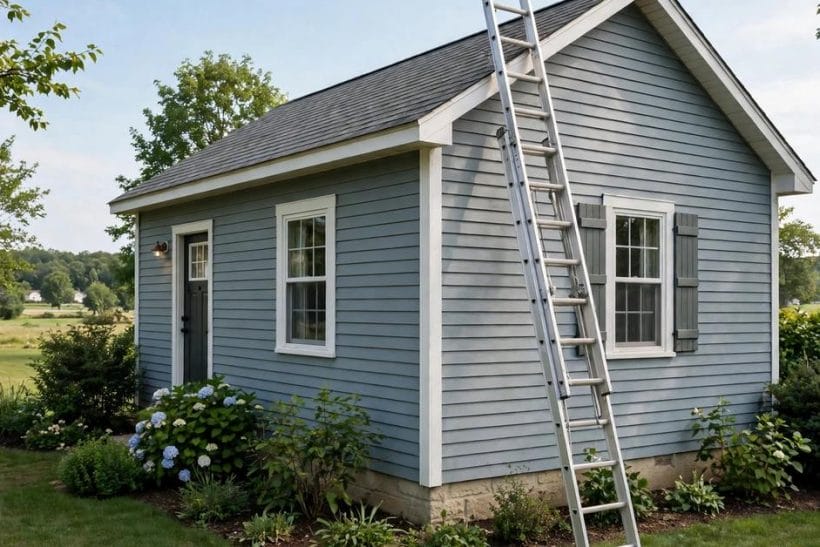
1. What a Multi-Position Ladder Can Do
A multi-position ladder is built from sections joined by hinges, so the same ladder can stand as a tall extension ladder, fold into a freestanding step shape, bridge a stairwell, or form a low platform shape, and that range explains why so many households consider one before buying several separate ladders. Each shape suits a different kind of job, and the honest starting point is to list the jobs around the home that genuinely need height, from changing a ceiling light to clearing gutters, painting a stairwell wall, or reaching storage above a garage. A ladder that offers many shapes but feels awkward in the one shape used most often is a poor match, so it helps to picture the most common job first and treat the remaining shapes as useful extras rather than the reason to buy. At home, the step shape often sees the most use for indoor work, while the extension shape matters for outdoor walls and roofs, and the stairway shape solves the awkward problem of a sloping floor that defeats an ordinary step ladder. The platform shape can help with long, low work along a wall, though it needs a level base and a calm approach, and any work that feels high, exposed or uncertain belongs with a qualified professional rather than a brave experiment. Thinking in shapes also helps with storage, because a ladder that folds flat can live against a wall, while a ladder that stays bulky may end up blocking a walkway or leaning where it can fall.
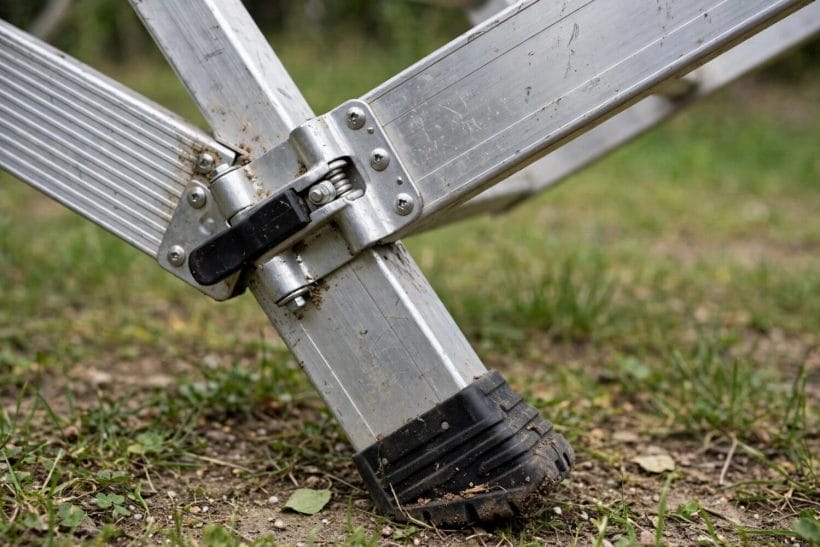
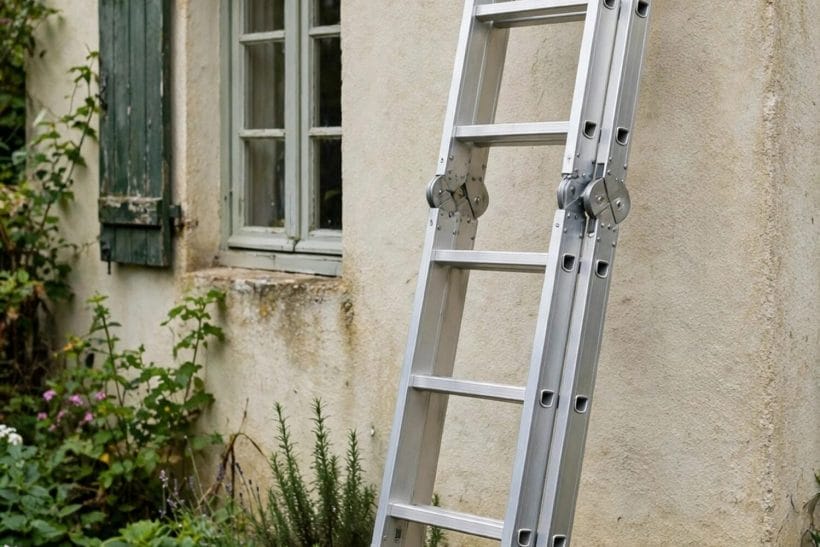
The hinges are the heart of the design, and they deserve attention equal to the rungs, because every change of shape passes through them, and a hinge that moves smoothly and locks firmly gives confidence that the shape will hold while work goes on. Look for hinges that move without forcing, that settle into place with a clear and definite action, and that show no wobble once locked, and treat any hinge that sticks, grinds or feels loose as a reason to pause and seek advice rather than to force the issue. Rungs should feel even and secure underfoot, with a surface that grips without being harsh on bare feet or soft shoes, and the side rails should run straight without bends, dents or twists that could weaken the structure. The feet matter just as much, because they are the only contact with the ground, and feet that grip, swivel to meet uneven surfaces, and show no cracks or worn tread give the ladder its footing. A ladder used around a home will meet dust, damp, paint and garden soil, so materials and finishes that wipe clean and resist weather will last longer and stay pleasant to handle, and a quick wipe after outdoor work keeps grit out of the hinges where it can cause wear over time.
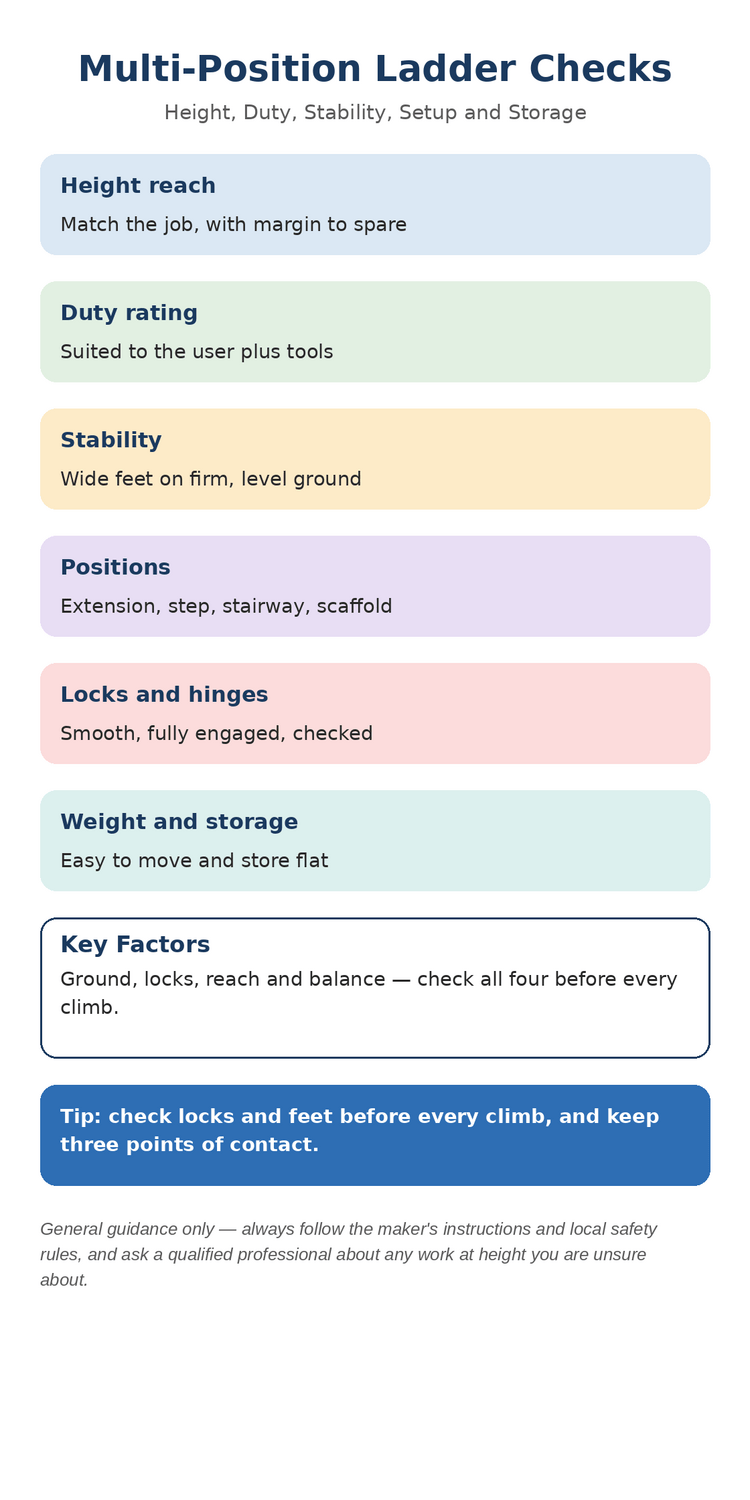
2. Start With the Height You Actually Need
Height is the first measurement worth getting right, because a ladder that falls short invites dangerous reaching, while a ladder far taller than needed becomes heavy, awkward and hard to store, and the right height is the one that lets work happen with the body balanced and the hands free. Begin by standing at the base of the job and noting where the hands need to reach, then allow a generous margin so the work happens from a comfortable rung rather than from the very top, since standing on the highest rungs leaves no room for balance and no hand free for steadying. For indoor work, ceiling height and stairwell depth set the limit, while outdoors the eaves, gutters and upper walls set the reach, and a ladder that serves both settings needs to cover the taller of the two without becoming unmanageable indoors. It also helps to think about where the ladder will stand, because soft garden soil, a sloping drive or a narrow hallway can change the usable height, and a ladder that works on a flat floor may feel very different on uneven ground. Measuring the tallest regular job, rather than guessing or remembering a rough figure, takes only a few minutes and prevents the most common disappointment, which is a ladder that almost reaches and tempts its user to stretch.
When the ladder stands as an extension, the angle matters as much as the length, because a ladder set too steeply can tip backwards, while a ladder set too flat can slide out at the base, and a steady, moderate lean with the feet planted and the top resting firmly gives the most secure climb. A useful habit is to step back after setting up and look at the whole ladder before climbing, checking that the top rests against a solid surface, that the feet sit fully on the ground, and that nothing leans, rocks or twists under a gentle push. Overhead lines, tree branches, loose gutters and wet surfaces all change the safety of a setup, and work near any of them deserves a pause and, where doubt remains, a qualified professional. Indoors, the same habit applies on a smaller scale, with attention to doorways, polished floors and furniture that could shift underfoot, and a ladder that feels steady on a rug may feel very different on a bare floor. Height, in short, is not only about how far the ladder extends, but about how calmly and steadily it lets a person stand and work at that height, and any setup that feels rushed or uncertain should be reset before a single rung is climbed.
3. Read the Duty Rating in Plain Terms
Every ladder carries a duty rating, which describes the total load it is built to carry, including the person, clothing, tools and materials, and reading that rating in plain terms is one of the simplest ways to match a ladder to real use. A rating is not a challenge or a target, but a limit, and a comfortable margin between the expected load and the rating leaves room for a tool belt, a paint can or a box carried up, without pushing the ladder toward its edge. Households vary widely, and a ladder shared by several people should suit the heaviest regular user plus their usual tools, rather than the lightest person in the home, because a ladder chosen for one user may be overloaded by another without anyone noticing. The rating label also carries guidance about use, and reading the whole label, rather than only the headline figure, gives a fuller picture of how the maker expects the ladder to be used, stored and inspected. Labels that are missing, faded or unreadable are a warning in themselves, because a ladder whose limits cannot be read cannot be used with confidence, and a seller or maker should be able to explain any label that is unclear.
Duty also connects to how often and how hard the ladder will work, since a ladder used every weekend for decorating and garden work faces more wear than one used twice a year for a ceiling light, and heavier, more frequent use rewards sturdier construction and a more generous rating. Materials play a part here, with metal ladders offering strength and lightness in different measures, and the right material depends on the setting, including damp sheds, salty coastal air, and indoor storage, each of which treats a ladder differently over time. Weight limits also apply to the platform shape and to any accessories, so a ladder that feels strong as a step shape should not be assumed equally strong in every other shape without checking the guidance for that shape. If any doubt remains about whether a load, a job or a shape sits within the rating, the safe move is to ask a qualified professional or the maker, and to choose a different approach for that job rather than to test the limit. A ladder used well within its rating will feel steady, last longer, and give its user one less thing to worry about at height.
4. Stability Begins on the Ground
Stability starts before the first rung, on the ground beneath the feet, because even a well-made ladder cannot stand safely on soft, sloping or slippery ground, and the most careful climb cannot rescue a poor base. Firm, level ground is the ideal, and a quick look at the spot, followed by a firm press on each foot, reveals rocking, sinking or sliding that the eye alone might miss. Outdoors, lawns, gravel, wet soil and decking each behave differently, and a ladder that grips well on a path may slide on wet boards or sink into soft earth, so moving the ladder a short distance to firmer ground is often the simplest fix. Indoors, polished floors, loose rugs and tiled halls can be just as tricky, and a rug that bunches under a foot or a floor that shines with polish deserves the same caution as a muddy garden. The feet themselves should be checked as part of the ground check, with attention to tread, swivel and any damage, since worn feet lose grip quietly over time and may look fine until they are tested under load. A ladder that rocks when pushed gently at the base will rock far more with a person on it, so that gentle push is a habit worth keeping.
Surroundings matter too, because a ladder needs clear space around its base and along its length, free of doors that could swing open, paths where someone might walk into it, and objects that could be knocked or tripped over. In a busy household, warning others that a ladder is in use, closing nearby doors, and keeping children and pets away from the base are simple steps that prevent many accidents, and a ladder left standing unattended should be taken down rather than left as a temptation or an obstacle. Wind is another factor outdoors, since a gust can move a tall ladder or swing a loose object, and work on a windy day deserves postponement where the ladder feels exposed or the load catches the air. The same calm approach applies to the top of the ladder, which should rest against a solid, stable surface rather than a gutter, a loose board or a window frame that could give way. Stability, in the end, is a habit of looking down, looking around and looking up before climbing, and that short pause is the cheapest safety measure any ladder user owns.
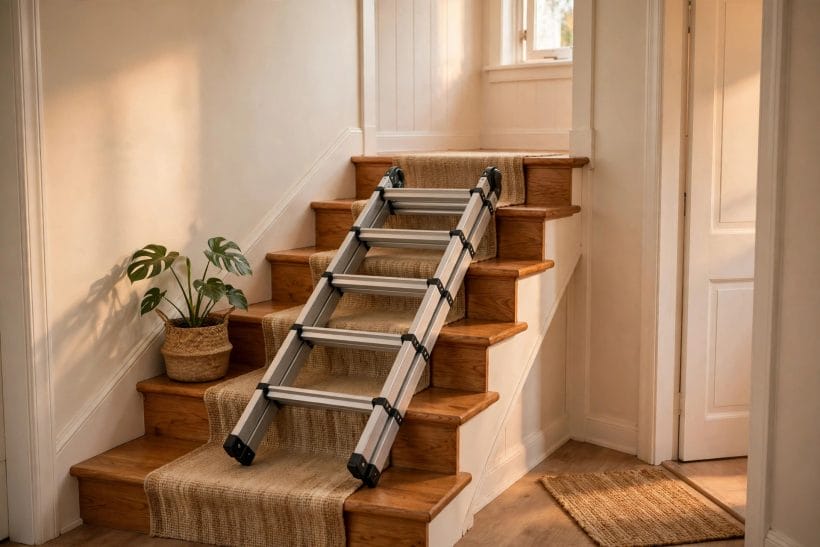
5. Locks, Hinges and Joints Deserve a Slow Look
Locks, hinges and joints are the parts that make a multi-position ladder possible, and they deserve a slow, unhurried look before every use, because a shape is only as safe as the lock that holds it. Before climbing, each lock should be checked by eye and by hand, confirming that it has fully engaged, that nothing sits half-caught or half-open, and that the ladder holds its shape firmly when pushed gently from the side. A lock that needs force, that clicks only faintly, or that leaves a joint with visible play is a reason to stop, refold the ladder, and try again with care, and if the doubt remains, the ladder should stay folded and a qualified professional should be asked to look at it. Hinges collect dust, grit and paint over time, so a regular wipe and a look for cracks, bent pins or loose fixings keeps them moving smoothly, and any part that looks damaged should never be ignored in the hope that it will hold one more time. The habit of checking locks takes less than a minute, yet it catches the very failures that cause the most serious falls, and it is worth teaching to everyone in the household who might use the ladder.
Changing shape also deserves care, because the moment of transition, when a lock is released and sections swing, is when fingers, clothing and balance are most at risk, and a calm, deliberate movement on clear ground prevents pinched fingers and toppled ladders. It helps to practise each new shape at ground level first, learning how the hinges move and where the hands should sit, before attempting the shape for a real job, and to keep the work area clear of bystanders while the ladder is being reconfigured. Rungs and rails should be checked in the same slow look, with attention to dents, bends, loose rungs and cracked fixings, since damage to a rail can weaken the whole ladder even when the hinges feel fine. A ladder that has been dropped, struck by a vehicle, or left out in harsh weather deserves a closer inspection before its next use, and any damage that cannot be understood at a glance belongs with a qualified professional. Keeping a simple routine of checking before use, after a knock, and after a long period in storage turns safety into a habit rather than a chore, and a ladder treated this way will repay the attention with years of steady service.
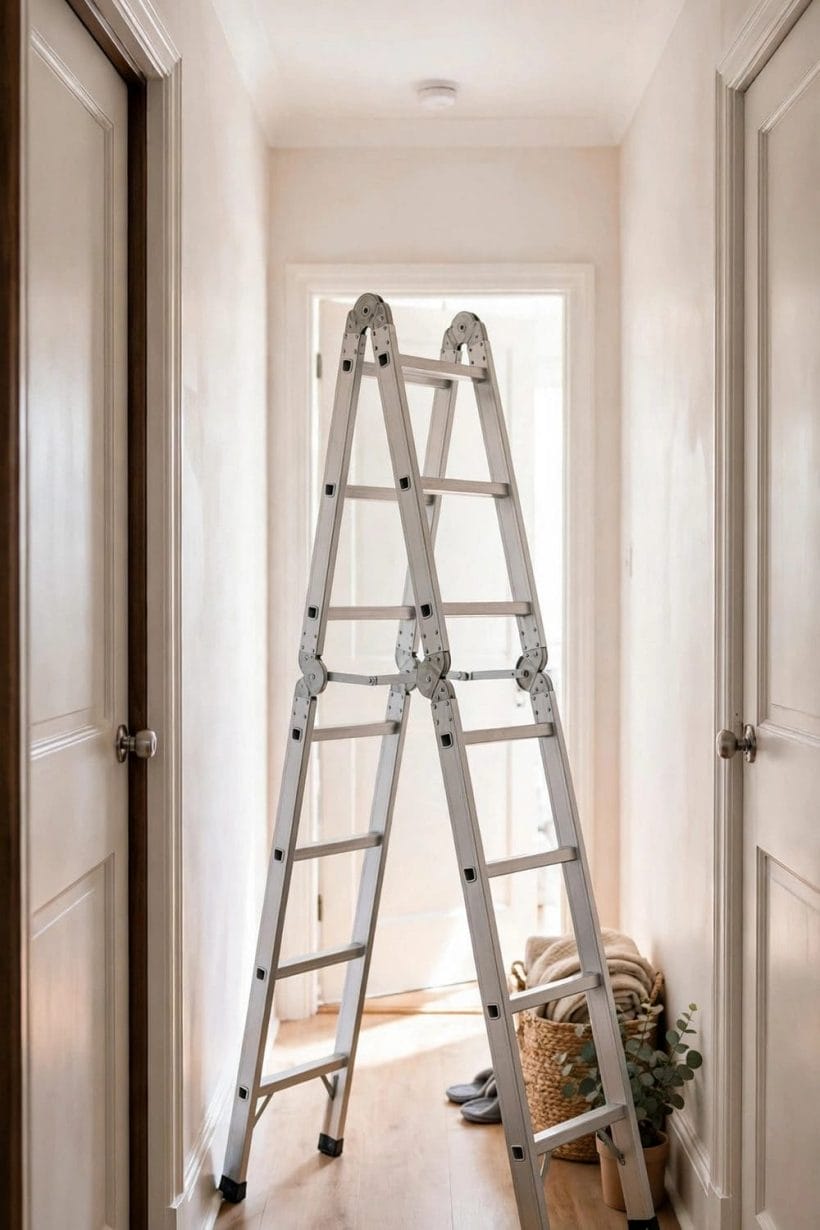
6. Setting Up on Stairs and Using the Platform Shape With Care
Stairs are one of the strongest reasons to consider a multi-position ladder, because an ordinary step ladder cannot stand level on a slope, while an adjustable ladder can set one side longer than the other and meet each step firmly, yet the stairway shape also demands the most careful setup of any shape. The starting point is a clear stairwell, with loose rugs, shoes and clutter moved away, doors closed, and a clear path for carrying the ladder into place without twisting on the steps. Each foot should sit fully on its own step, with no foot hanging over an edge or resting on a loose mat, and the ladder should be tested with a gentle push before climbing, since a foot that rocks on a stair edge will only feel worse under load. The shape should leave the user facing the work with a comfortable stance, rather than twisted sideways or leaning across a banister, and any setup that forces an awkward reach should be rethought, even if it means moving furniture or choosing a different day for the job. Banisters and handrails are not ladder supports, and leaning a ladder against a rail that was never built to carry such a load risks damage to the rail and a fall for the user.
Working on stairs also means thinking about what happens below, because tools, paint and materials dropped from height fall onto steps and bounce, and a tidy approach with a tool pouch or a helper passing items up keeps the steps clear and the hands free. A helper at the base adds real safety on stairs, steadying the ladder, passing tools, and watching for anyone approaching the stairwell, and for longer jobs a helper turns a tiring solo effort into a calmer shared task. Lighting matters on stairs more than in any other room, since a shadow across a step can hide a foot that sits half on and half off, and a portable light aimed at the work area is a small addition with a large benefit. If the stairwell feels cramped, the ceiling feels low, or the ladder feels crowded against walls and rails, those are signs to pause and reconsider, and a qualified professional can often complete stairwell work more safely than a determined householder. The stairway shape is a clever solution, but it rewards patience and punishes haste, and the calmest stairwell jobs are the ones where the setup took longer than the first climb.
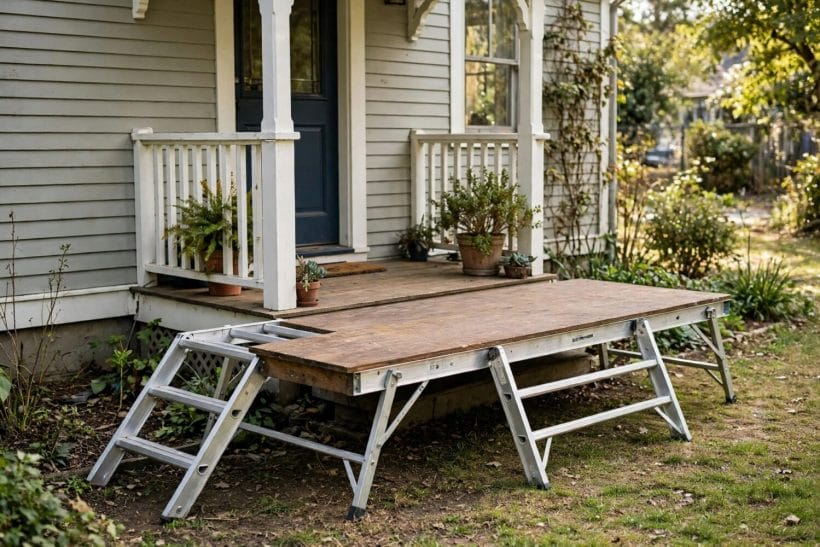
The platform shape turns a ladder into a low, level working surface along a wall, which suits long, low jobs such as painting a hallway or reaching a run of shelving, and it deserves the same careful setup as any other shape, with attention to level, support and balance. The base should sit on firm, level ground, the platform should feel solid underfoot before any load is placed on it, and the working surface should be checked for wobble, gaps and loose boards before standing on it. Weight on a platform should stay centred and modest, with tools kept close and heavy items passed up rather than carried in a rush, since a platform invites a false sense of security that a ladder shape does not, and a person who relaxes on a platform may lean further than they would on rungs. The edges of the platform deserve respect, because stepping near an edge or leaning beyond it shifts the load quickly, and keeping the body within the platform, with feet planted and movements slow, prevents most platform mishaps. Any platform that feels springy, uneven or uncertain should be taken down and rechecked, and work that needs a larger or higher platform belongs with proper access equipment and a qualified professional.
A platform also changes how a room is used while work goes on, since it blocks a walkway, narrows a hall, or stands across a doorway, and warning others, keeping the area clear, and planning the job so the platform moves as rarely as possible all help. Outdoors, a platform beside a porch or along a garden wall faces the same ground and wind questions as any ladder, with the added question of whether the surface beneath stays firm under a wider footprint, and a platform on soft ground should be moved to firmer footing rather than propped up with loose material. The platform shape is at its most useful for short, calm jobs where the user can keep both feet planted and both hands near the work, and it is at its worst when it tempts someone to reach sideways, climb onto a rail, or stack items to gain extra height. Those temptations are worth naming plainly, because they are the moments when a useful tool becomes a risk, and stepping down to reposition the platform takes only a minute. Used with restraint, the platform shape saves time and strain, and it earns its place among the shapes that make a multi-position ladder worth owning.
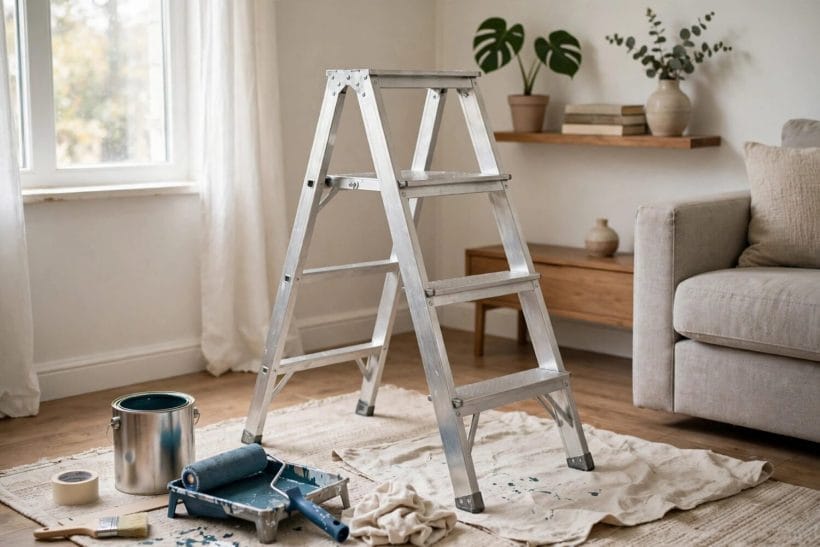
7. Weight, Carrying, Care and Routine Checks
Weight matters twice over, first in the duty rating and again in the simple act of carrying the ladder from storage to the job, because a ladder that is hard to lift will be dragged, bumped and dropped, and each knock shortens its life. Before buying, it helps to lift the folded ladder, walk a short distance with it, and pass through a doorway, since a ladder that feels fine in a shop aisle may feel very different on a narrow hall with a turn at the top of the stairs. Carrying technique matters as much as strength, with the ladder balanced near its centre, the path clear, and doors held open rather than nudged with the ladder itself, and a second person for longer or heavier ladders turns a risky carry into an easy one. Around the home, the ladder will meet door frames, light fittings, wall corners and banisters, and a slow carry with a pause at each doorway prevents the chips and dents that later become weak points. For households where several people share the ladder, the lightest regular carrier sets the practical limit, and a ladder that one person cannot move safely will simply stay in storage while jobs wait, which defeats the purpose of owning it.
Moving the ladder between shapes and positions also deserves a plan, because a ladder unfolded in the wrong room must be refolded to pass through a door, and repeated unfolding in tight spaces invites pinched fingers and scuffed walls. It helps to fold the ladder for every move, even a short one, and to unfold it only where it will be used, with the work area clear and the ground checked before the first lock engages. A tiny house storage ideas collection can spark ideas for keeping a folded ladder accessible without blocking a hallway, since small homes reward storage that is both tidy and easy to reach. In a tiny bedroom or a narrow hall, a ladder stored flat against a wall stays out of the way yet remains ready, while a ladder left leaning in a corner becomes an obstacle and a falling hazard. The habit of carrying with care, folding for every move, and returning the ladder to its place after each job keeps the ladder, the home and the user in better shape, and it makes the next job start faster because the ladder is where it should be.
Routine care keeps a ladder safe and pleasant to use, and it need not take long, since a quick inspection before use, a wipe after outdoor work, and a closer look after any knock will catch most problems while they are still small. Dust, soil and paint belong outside the hinges, so a soft brush and a damp cloth after garden or decorating work prevents grit from grinding joints and stiffening locks, and a dry cloth afterwards keeps damp from lingering in crevices. Metal surfaces can be wiped clean and checked for dents, bends and corrosion in the same pass, with attention to the feet, where tread wears first, and to the rungs, where a loose fixing may show as a slight movement under hand pressure. Any part that looks cracked, bent or worn should be treated as a reason to pause, and the maker or a qualified professional should be asked before the ladder is used again, because a small crack in a rail or hinge can grow under load. Keeping the ladder dry, clean and inspected turns maintenance into a short routine rather than a repair, and a ladder that receives this attention will feel as steady in its later years as it did when new.
Storage conditions shape how much care a ladder needs, since damp sheds, salty air and long periods in direct sun all age materials differently, and a ladder stored under cover, away from chemicals and heavy objects stacked on top, will last longer than one left leaning against a damp wall. A garden shed that stays dry and organised gives a ladder a fair chance, while a shed where tools pile against it invites dents and bent rails. It also helps to keep the maker’s guidance with the ladder, or at least to note where it can be found, so that questions about cleaning, lubrication or inspection can be answered from the source rather than guessed. Lubrication, where the guidance allows it, should use only what the maker recommends, and any product that leaves a slippery residue on rungs or rails should be avoided, since grip underfoot matters more than a hinge that moves a fraction more freely. The routine is simple: inspect before use, clean after work, store under cover, and ask for help when anything looks wrong, and that routine protects both the ladder and the person who climbs it.
8. Choosing the Right Shape and Storing It Well
Choosing the right shape for each job is a skill that grows with use, and it starts with asking what the job actually needs: height, reach, a level stance, or a long working surface, rather than defaulting to the shape used last time. The extension shape suits tall, straight work against a wall, the step shape suits freestanding indoor work where no wall is near, the stairway shape suits sloping floors, and the platform shape suits long, low work along a wall, and matching the shape to the job prevents the awkward reaches that cause most falls. A backyard landscaping project, for example, may call for the extension shape against a wall, while painting a hallway ceiling may call for the step shape, and recognising the difference before unfolding saves time and strain. It also helps to consider the ground and the surroundings for each shape, since a shape that works on a flat floor may fail on a slope, and a shape that fits a wide garden may crowd a narrow hall. When two shapes could both work, the simpler and steadier one is usually the wiser choice, and a shape that needs propping, leaning on a rail, or stacking items to gain height is not a choice at all, but a warning to rethink the job.
Experience also teaches when not to use a ladder at all, and that judgement is as valuable as any skill with shapes, since some jobs belong with scaffolding, a raised platform, or a qualified professional, and recognising those jobs early prevents a risky improvisation. High roofs, unstable walls, work near overhead lines, and jobs that need both hands free at height for a long period all sit beyond sensible ladder work, and a tiny house building design project with work at height is a good moment to plan proper access from the start rather than to improvise later. A ladder should never be used as a bridge, a support for a plank beyond its intended platform shape, or a prop for anything other than its designed purpose, and any use that the guidance does not describe should be treated as out of bounds. The most careful ladder users are not the boldest, but the most deliberate, choosing the shape that fits, setting it up slowly, and stepping down the moment something feels wrong. That deliberation is the real skill behind every shape, and it is what turns a flexible tool into a safe one.
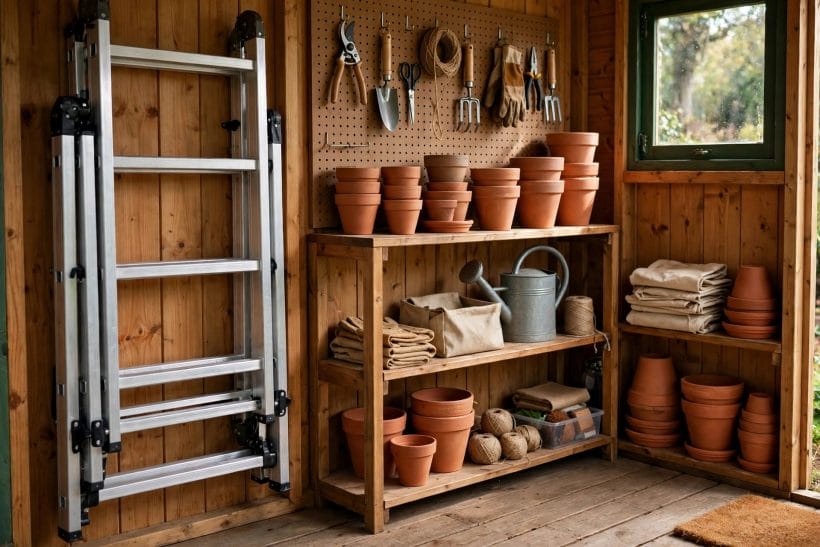
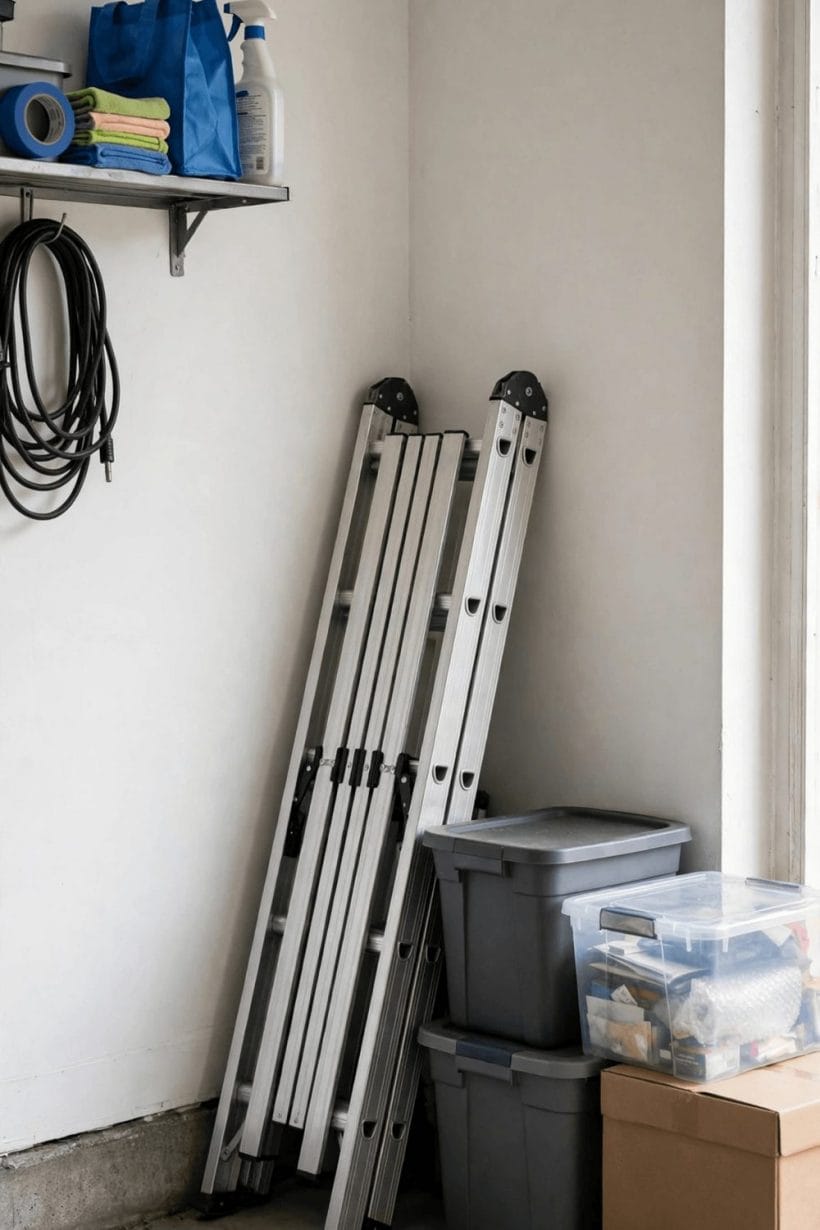
Good storage keeps a ladder ready, protected and out of the way, and the folded flat shape of a multi-position ladder makes storage easier than its many shapes might suggest, provided a suitable spot exists. A wall-mounted hook or bracket in a garage, shed or utility room holds the ladder flat, visible and easy to lift, while keeping it off damp floors and away from passing feet, and a spot near the door used for garden work means the ladder is reached without a trek through the house. A tiny laundry room or utility corner can work for a folded ladder if the wall is strong and the ladder does not block access, though damp and heat near appliances deserve a thought before choosing such a spot. Heavy items should never be stacked on a stored ladder, since weight can bend rails and press on hinges, and a ladder stored under a pile of boxes will emerge with problems that a wall hook would have prevented. Children should not be able to pull a stored ladder down, so a high hook or a locked shed, where available, adds a layer of safety that costs nothing once fitted.
Storage also affects how long a ladder lasts, because a ladder left outdoors faces rain, sun and frost, while a ladder under cover stays dry and its feet, hinges and labels survive far longer, and the difference shows within a couple of seasons. A small living room rarely offers a storage spot, yet a hallway cupboard, a garage wall or a dry shed corner usually does, and choosing the driest available spot, even if it means a slightly longer carry, pays for itself in longevity. Before storing, a quick wipe removes soil and paint, a check confirms the locks sit closed and the feet are clean, and the ladder goes away in its folded shape, ready for the next job without a hunt for parts or a clean-up first. Labelling the storage spot, where a household shares tools, prevents the ladder from migrating to a damp corner or a leaning place behind a door, and a household that knows where the ladder lives will use it more readily and return it more reliably. Storage, in short, is the final check of every job, and a ladder put away well is a ladder ready for safe work next time.
9. Working With a Helper and Knowing When to Call a Professional
A helper transforms ladder work, steadying the base, passing tools, watching the surroundings, and calling out if anything shifts, and for outdoor work, stairwells and longer jobs, a helper is one of the simplest safety measures available. The helper should stand clear of falling objects yet close enough to steady the ladder, should know not to lean on the ladder or pull it sideways, and should agree beforehand on simple signals for passing tools or pausing work, since shouting over a wall or through a window invites misunderstanding. A helper also provides a second pair of eyes for the setup, spotting a foot that sits half off a step, a top that rests against a loose board, or a lock that has not fully engaged, and that second look catches errors that familiarity hides. For households where a ladder is shared, agreeing that taller or outdoor jobs always involve a helper turns a good intention into a household rule, and a rule kept consistently is worth more than any single piece of equipment. Even a short job benefits, because the moments of climbing, reaching and stepping down are the moments when a steady hand at the base matters most.
Knowing when to call a qualified professional is the other half of safe ladder use, and it applies to work at height that feels exposed, to roofs and structures whose condition is unknown, to electrical work, and to any job where the ladder, the ground or the surroundings raise a doubt that cannot be resolved by repositioning. A professional brings proper access equipment, training and insurance, and for work that involves roofs, gutters at height, or structural repairs, that expertise is not a luxury but the appropriate response. The same applies to a ladder that shows damage, a lock that will not engage, or a hinge that moves with play, since repair of load-bearing parts belongs with the maker or a qualified professional, never with a home improvisation. Asking for help is not a failure of independence, but a mark of judgement, and the cost of a professional visit is small beside the cost of a fall. A household that pairs a well-chosen ladder with a helper for taller jobs and a professional for uncertain ones will get years of useful service from the ladder, and will keep every climb within the bounds of calm, deliberate work.
10. A Last Look Before Every Climb
A last look before every climb ties all of these habits together, and it takes only a moment: feet planted and gripping, locks fully engaged, ground firm and level, surroundings clear, and the body facing the work with a comfortable stance. This pause catches the setup errors that haste hides, from a foot half off a step to a lock left half-caught after a shape change, and it gives the user a chance to reset calmly rather than to discover a problem halfway up. A helper can share this last look, checking from a different angle while the climber checks from the base, and two pairs of eyes will notice more than one, especially on stairs or outdoors where light and ground vary. If anything in that last look raises a doubt, the answer is always the same: step down, reset, and ask for help where needed, because no job is urgent enough to justify climbing a ladder that does not feel steady. Kept as a habit, this final pause becomes second nature, and it is the simplest reason that careful ladder users keep climbing safely year after year.
The same pause helps after the job as well, when the ladder comes down, folds flat, and returns to its storage spot clean and checked, ready for the next use without a hunt or a repair. A ladder put away well stays dry, keeps its feet and hinges in good order, and waits where its owner expects to find it, which means the next job starts with confidence rather than with a search through a cluttered shed. Over time, these small routines add up to a ladder that lasts, a home that stays in good repair, and a user who trusts both the equipment and their own judgement. That trust is earned slowly, through steady habits rather than bold climbs, and it is the real reward for choosing carefully and climbing deliberately.
Final Considerations
These multi-position ladder checks come down to a short set of habits: match the height with margin to spare, respect the duty rating, set the feet on firm level ground, check every lock before climbing, choose the shape that fits the job, carry with care, keep the ladder clean, store it flat under cover, work with a helper for taller jobs, and call a qualified professional whenever doubt remains. No ladder, however flexible, removes the need for those habits, and the most useful ladder in a home is the one whose owner practises them without thinking. Before buying, lift the folded ladder, picture the tallest regular job, and check that the shapes on offer match the rooms, stairs and garden where the ladder will actually work, rather than an imagined list of jobs that may never happen. After buying, keep the guidance close, teach the lock check to everyone who might climb, and give the ladder a proper storage spot from the first day, so that good habits form while the ladder is still new. Used this way, a multi-position ladder becomes a quiet, reliable part of home care, ready for decorating, garden work and everyday repairs, and always used within the calm limits that keep work at height safe.




0 Comments