
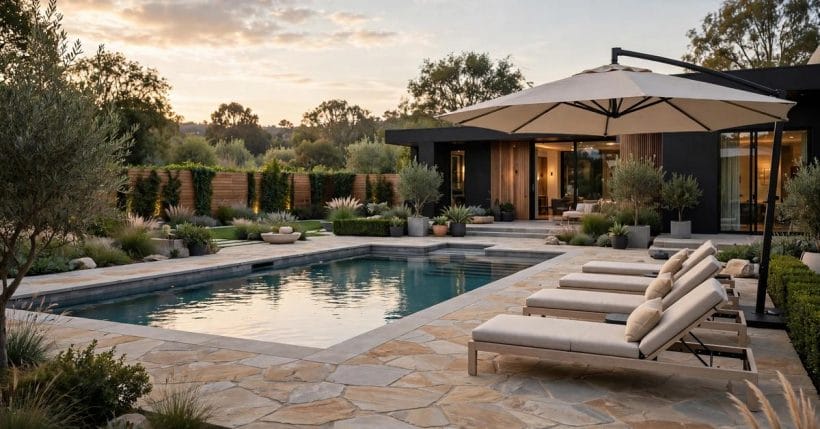
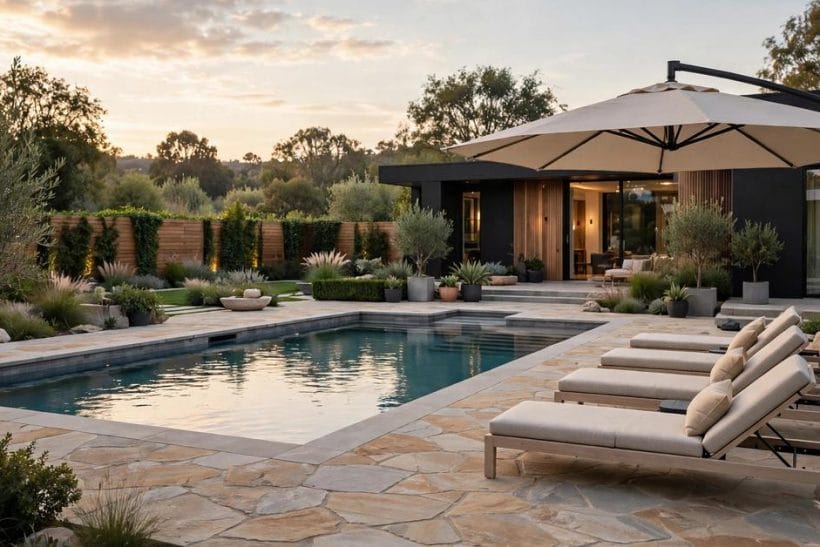
An inground pool is only half the story. The deck around it decides how the pool is actually used: where people sit, where they dry off, where lunch happens, and how the whole garden feels on a hot afternoon.
This guide gathers pool deck ideas for inground pools, from surfaces and layouts to shade, seating, lighting and care, so the space around the water works as hard as the water itself.
1. What Makes a Good Inground Pool Deck
A good pool deck starts with the way people move. Swimmers step out of the water barefoot, so the surface underfoot matters more than almost anything else. It should feel comfortable on bare feet, offer grip when wet, and stay pleasant through the heat of the day. A surface that looks beautiful in a photograph but scorches feet or turns slippery when splashed will quietly push everyone back indoors.
Room to move matters just as much. A deck needs clear walking paths all the way around the water, space to pass a lounger without stepping onto the grass, and a dry place to set down a towel, a book, or a glass. When the layout is generous, the pool area feels calm even when several people are using it at once. When it is pinched, every corner becomes a bottleneck, and the prettiest pool in the garden starts to feel awkward.
Think of the deck as a set of zones rather than one flat surface. There is usually a wet zone right at the waterline, where grip and drainage matter most; a lounging zone for chairs and shade; and a gathering zone for dining or conversation. The zones can overlap, and in a compact garden they often must, but naming them before any work begins helps every later choice. Readers shaping ideas for small backyards will recognise the same habit: when space is limited, giving every corner a clear job keeps the whole garden working.
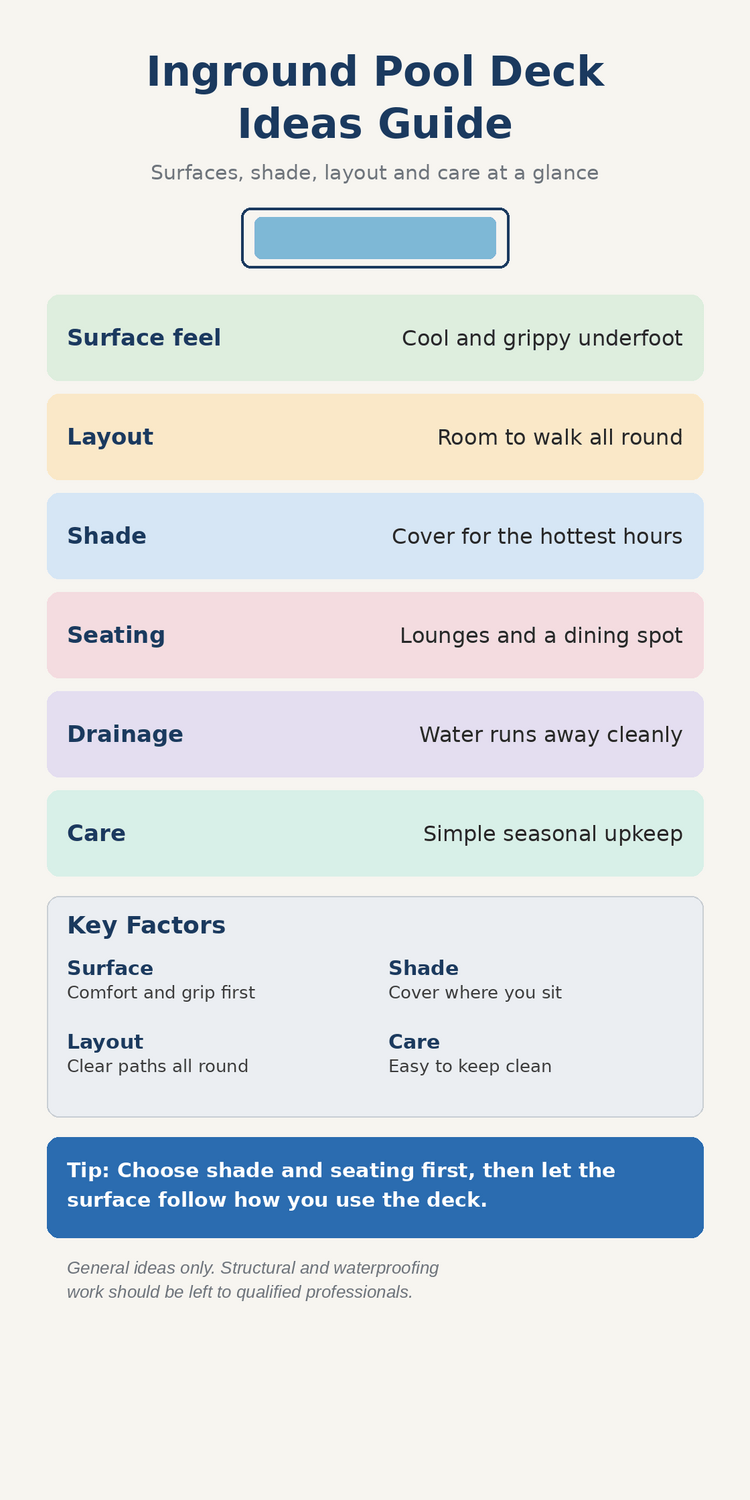
| Part of the deck | What to aim for |
|---|---|
| Surface | Comfortable, grippy and kind to bare feet |
| Layout | Clear paths all the way around the water |
| Shade | Cover where people actually sit |
| Seating | Room to lounge and room to gather |
| Drainage | Water runs away from the house and paths |
| Care | Simple routines that keep it looking good |
2. Timber-Look Decking Beside the Water
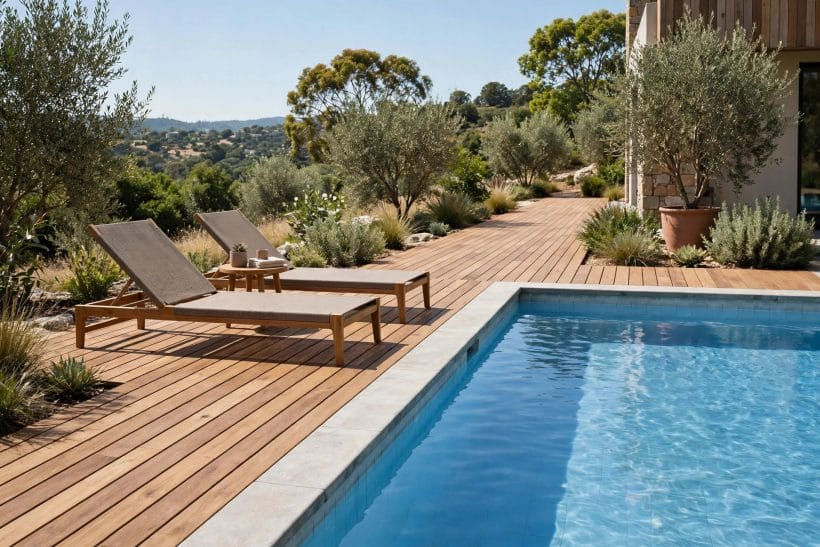
Timber-look decking brings warmth to a pool area that could otherwise feel hard and pale. Long boards running parallel to the water draw the eye along the pool, and the natural tones sit happily beside planting, stone, and painted garden furniture. In a garden where the house already has timber details, a timber-look deck can tie the pool to the home so the two feel like one designed space rather than two separate projects.
Boards need a little thought where they meet the water. Wet feet, splashing, and constant sun are a hard life for any surface, so the boards should be chosen for poolside use and fixed with a system that lets water drain through rather than pool on top. Gaps between boards, a slight fall away from the water, and a structure that stays dry underneath all help the deck age gracefully. Structural and drainage work around an inground pool should be left to qualified professionals, since mistakes below the surface are far harder to fix than mistakes above it.
Styling a timber deck is mostly about restraint. A few well-chosen loungers, one side table, and a plant or two at the corners will do more than a crowd of accessories. Timber also pairs beautifully with soft furnishings in pale, washable fabrics, which can be brought in for the day and stored away when the weather turns. Keep the palette calm, let the grain of the boards carry the detail, and the deck will look inviting in every season.
3. Lounging, Umbrellas and Shade That Follows the Sun
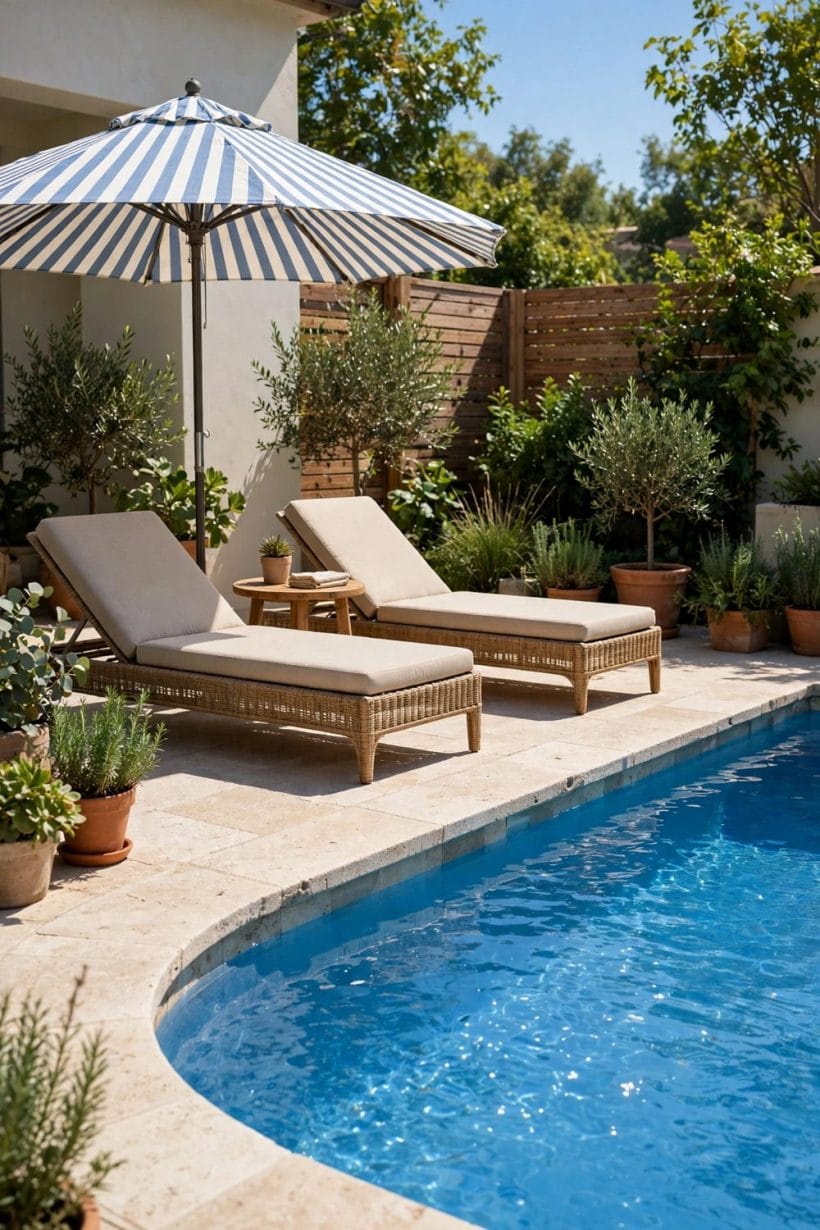
Most hours at a pool are spent beside it, not in it. Lounging is therefore the deck’s main job, and it deserves the best spot: a flat, dry stretch with a view of the water and room for chairs to recline fully. Loungers should be easy to move, so the arrangement can follow the sun through the day, and there should be a small table within reach for drinks, sunscreen, and a book.
Shade is what makes lounging possible through the middle of the day. A large umbrella is the simplest answer, and it has the advantage of moving with the chairs, but it needs a base heavy enough to stay put in a breeze and a canopy generous enough to cover two loungers at once. Where the deck is wide enough, a pair of umbrellas can shade the whole lounging zone while leaving a sunny strip for those who want it. The aim is choice: sun and shade side by side, so everyone finds their spot.
Comfort details make the difference between a deck that is used and a deck that is admired from the window. Outdoor cushions in washable covers, a towel rail or hook near the chairs, and a small basket for toys and goggles all keep the lounging zone tidy. Container garden ideas can help here too: a few large pots near the loungers soften the hard edges of the deck and bring scent and colour to nose height, where they are enjoyed most.
4. Stone Pavers and Steps Into the Water
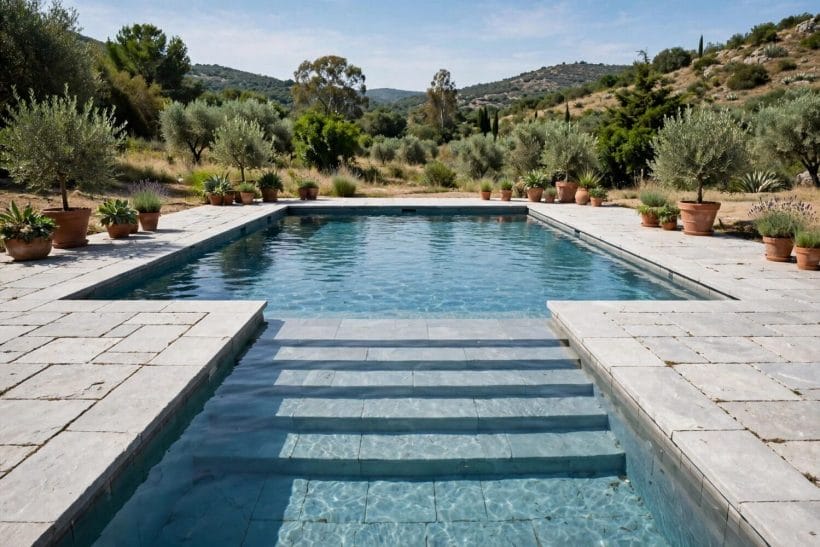
Stone pavers are a classic pool deck surface for good reason. They feel solid underfoot, they come in a wide range of colours and textures, and individual pavers can be lifted and re-laid if the ground beneath ever shifts. Large-format pavers with narrow joints give a calm, contemporary look, while smaller units in a running pattern feel more traditional and cottage-like. Either way, the colour of the stone will shape the whole pool area, so it is worth viewing samples beside the water in daylight before deciding.
Steps deserve the same attention as the deck itself. Wide, shallow steps into the water invite swimmers of all ages and make the entry feel generous rather than cramped. The same stone carried from the deck down through the steps ties the two together visually, and a contrasting edge on the top step helps everyone see where the water begins. Handrails, where they are wanted, should be planned with the steps rather than added as an afterthought, and any structural work at the pool shell belongs to qualified professionals.
Stone also handles the practical side of pool life well. It drains cleanly when laid with a gentle fall, it rinses down easily after a busy day, and it stays cool enough underfoot when chosen in a pale tone. Fallen leaves and pool toys are easy to sweep from a flat paver surface, and the odd stained paver can be swapped without disturbing its neighbours. For a deck that will see years of bare feet, splashing, and summer parties, that kind of forgiving practicality is worth a great deal.
5. Pergolas and Covered Corners for All-Day Use
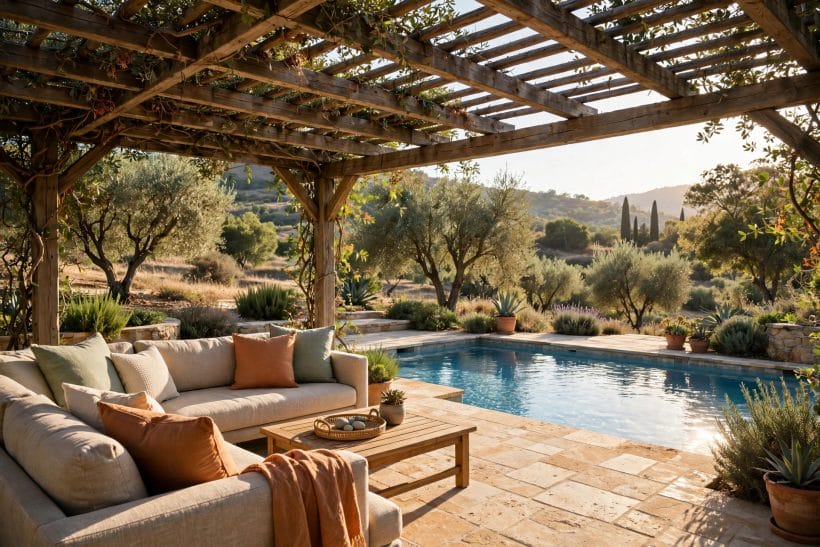
A pergola turns part of the pool deck into an outdoor room. Beneath its beams there is shade, a sense of enclosure, and a natural place for a sofa, a daybed, or a dining set. The covered corner becomes the deck’s living room: the place where people gather when they want conversation rather than sun, where lunch stretches into the afternoon, and where the pool can be watched in comfort.
Planting over a pergola softens it beautifully. Climbing plants grown over the beams filter the light, cool the air beneath, and bring the garden right into the seating area. The choice of climber matters, since anything that drops heavy flowers or sticky sap over furniture will become a chore; a tidy evergreen or a light, fragrant climber usually suits a poolside pergola best. Whatever grows overhead, the structure itself must be sound, and building or fixing a pergola beside a pool is work for qualified professionals, especially where footings sit near the pool shell.
Furnishing under a pergola should favour comfort and durability in equal measure. Deep cushions, a low table, and a lantern or two for the evening make the corner inviting after dark as well as by day. Storage nearby helps enormously: cushions last longer when they can be tucked away during storms, and the same care given to garden shed ideas for the wider garden pays off at the poolside, where a small, dry store keeps the whole deck looking ready for guests.
6. Dining by the Water
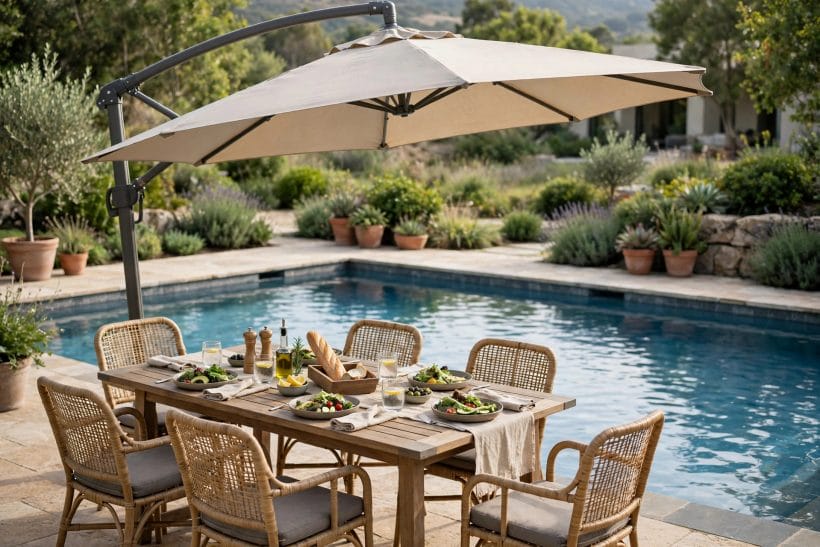
A dining spot beside the pool changes how the garden is used. Lunch stops being an indoor event with a view and becomes part of the pool day itself: swimmers dry off, sit down, and stay outside. The table should sit on a flat, dry part of the deck, far enough from the waterline that splashing is not a constant companion, but close enough that the water is still part of the meal.
A cantilever umbrella is a natural partner for a poolside table, since its offset base leaves the dining area clear and its canopy can be angled as the sun moves. Chairs should be comfortable enough for a long lunch and easy enough to move that the table can be cleared for games or extra guests. A table with a wipe-clean top will forgive wet hands and dropped food far more graciously than a delicate finish, and it will still look good at the end of the season.
Small practical touches complete the dining zone. A serving trolley or a side table for plates and drinks keeps the main table uncluttered. A bin tucked discreetly nearby saves endless trips indoors. And a little thought for the evening pays off: the same table that hosts lunch can host supper by lantern light, when the water is dark and the deck feels like a different place entirely.
7. Lighting for Evenings at the Pool
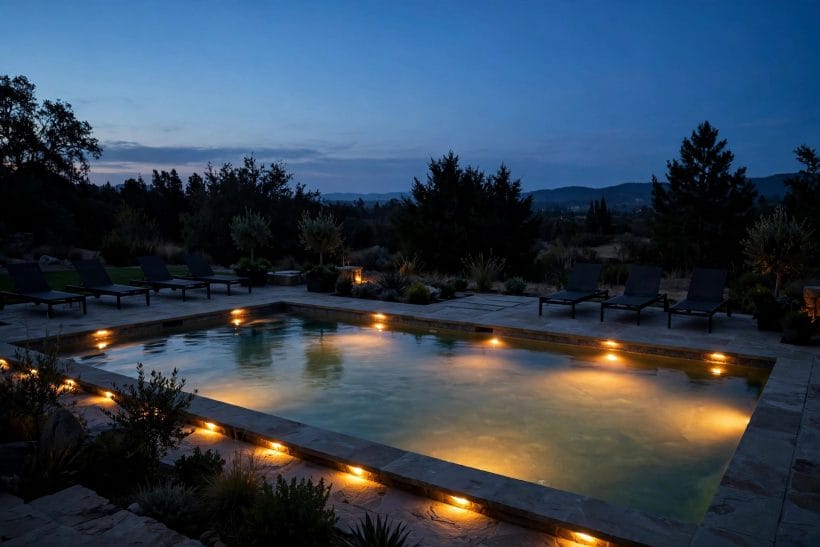
Evening is when a pool deck earns its keep a second time. With the right lighting, the deck becomes a place for supper, conversation, and quiet swims after the heat of the day has gone. Low lights along the deck edge mark the boundary between deck and water, which matters most exactly when it is hardest to see, and soft light on the seating areas lets people relax without glare.
Layering works better than a single bright source. A few low, warm lights at the edges, a lantern or two on the tables, and gentle light in the planting behind the seating will give depth and atmosphere, while the water itself reflects whatever light it is given. Lights should be chosen for outdoor and poolside use and installed by qualified electricians, since water and electricity demand proper care and no shortcuts. Once installed, a simple routine of checking fittings and keeping lenses clean will keep the whole scheme looking its best.
Lighting also extends the garden beyond the deck. A lit tree, a glowing planter, or a softly lit path back to the house makes the pool area feel connected to the rest of the garden rather than isolated in the dark. Readers planning tiny house garden ideas often find the same principle at a smaller scale: a little light in the right places makes a compact outdoor space feel generous long after sunset.
8. Shade Sails and Sheltered Seating Corners
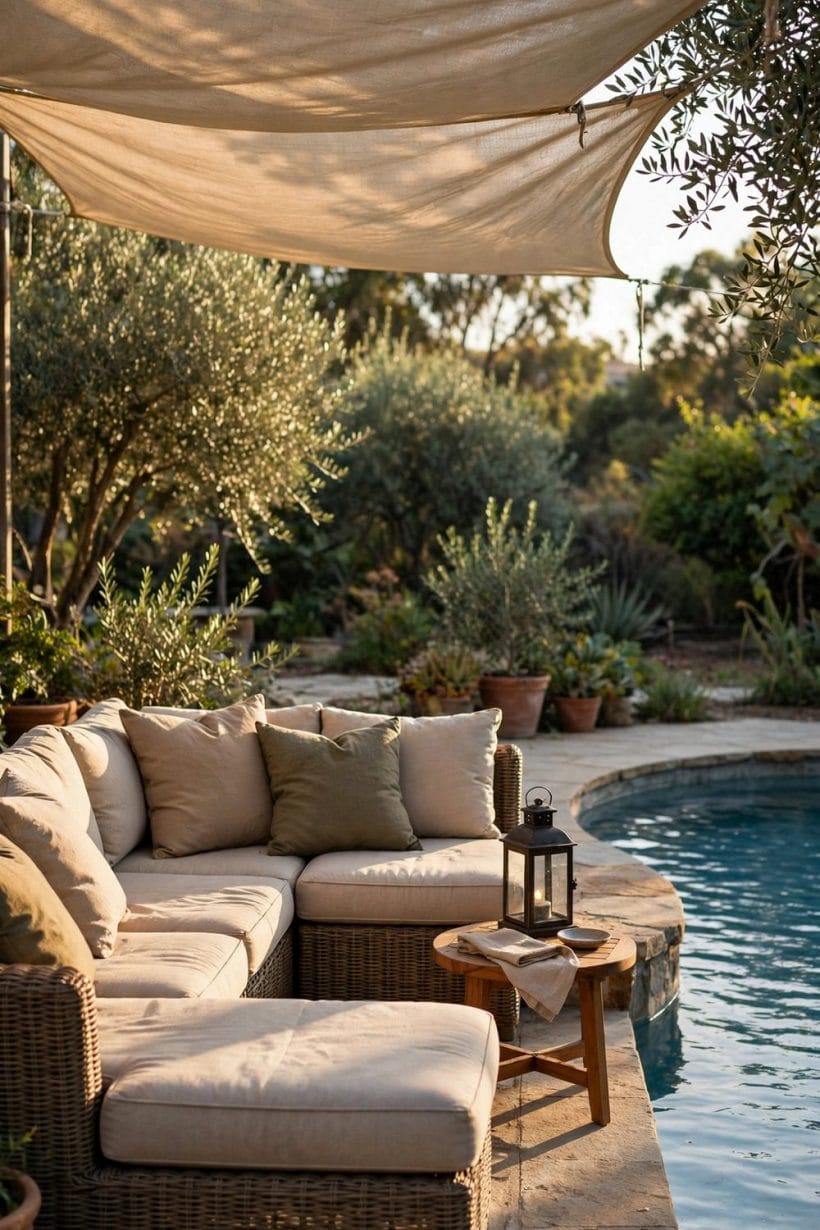
Shade sails offer a lighter, more flexible kind of cover than a fixed roof. A sail stretched over a seating corner gives generous shade, moves with the breeze, and can be taken down when the season ends. Their sweeping shapes suit a pool area well, echoing the curves of the water and softening the straight lines of decking and paving. A sail over a sofa corner creates an instant outdoor room with very little structure to show for it.
Fixing points need proper thought, since a sail in a breeze pulls hard on whatever holds it. Posts and wall brackets must be sound and well founded, and the sail itself should be tensioned so it sheds rain rather than sagging into a pocket. Where a sail is large or its fixings are anywhere near the pool structure, qualified professionals should be involved. A well-fitted sail will last for seasons; a poorly fitted one will announce itself at the first strong wind.
Inside the shaded corner, comfort is king. A deep outdoor sofa, cushions that can be stored when storms threaten, a lantern for the evening, and a small table for drinks will make the corner the most fought-over seat in the garden. Planting around the corner helps too: pots and climbers soften the posts and give the seating a sense of being tucked into the garden rather than parked beside the pool. The same gentle approach suits herb garden layouts nearby, where scented planting close to a seating corner rewards everyone who sits down.
9. Planting and Soft Edges Around the Deck
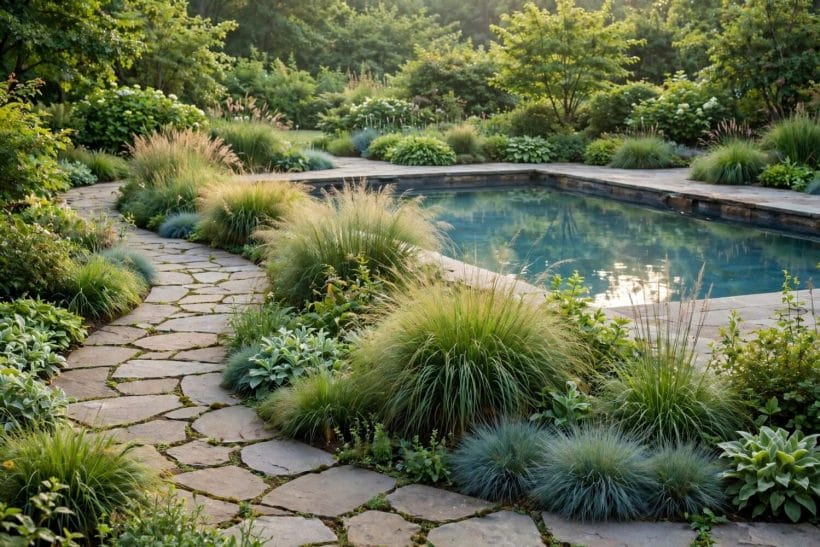
Planting is what stops a pool deck from feeling like a car park with water in the middle. Grasses, shrubs, and small trees around the edges soften the hard surfaces, give privacy from neighbours, and bring birds and scent into the pool area. The best poolside planting is chosen for the job: plants that do not drop heavy litter into the water, that tolerate splashing and reflected heat, and that stay tidy with a simple seasonal trim.
Ornamental grasses are a natural poolside choice. They move in the breeze, they rarely make a mess, and their soft forms contrast beautifully with flat paving and still water. Behind them, a layer of shrubs can screen the boundary and shelter the deck from wind, while a stone path curving through the planting gives the garden a walk as well as a destination. Pots near the waterline let tender plants join the scheme in summer and retreat under cover when the weather turns.
Edges deserve care where planting meets paving. A clean edge between bed and deck keeps soil off the walking surface and makes sweeping simple. Mulch or gravel in the beds suppresses weeds and holds moisture, and a low stone border can stop both mulch and soil from migrating onto the deck. Rock landscaping ideas can help here as well: a few well-placed stones among the planting echo the deck’s own materials and give the whole pool garden a finished, considered feel.
10. Safety, Drainage and Everyday Care
A pool deck should be as safe as it is beautiful, and safety mostly comes down to surfaces, edges, and habits. A grippy surface underfoot, a clear edge between deck and water, and a tidy deck free of toys and hoses left where people walk will prevent most everyday slips and trips. Children and guests who are new to the pool should always be shown where the steps are and where the deep water begins, and the deck should never be treated as a running track.
Drainage is the quiet partner of safety. Water that runs away cleanly leaves the deck dry and grippy; water that ponds leaves algae, stains, and slippery patches. The falls in the deck surface, the channels or drains at its edges, and the ground beneath it all need to be right, and any change to drainage around an inground pool should be planned with qualified professionals, since water that goes to the wrong place can cause damage far beyond the deck itself. A quick sweep after storms and a regular check of drains will keep the system working as intended.
Everyday care is mostly small and regular. Sweeping leaves before they stain, rinsing the surface after busy days, and wiping down furniture and cushions will keep the deck inviting with little effort. Water care for the pool itself should always follow the product labels and the guidance of the pool’s supplier, with no home-mixed treatments and no guesswork. Backyard landscaping ideas for the wider garden share the same lesson: steady, simple routines beat occasional rescue efforts, and a deck that is cared for a little and often will look good for years.
Final Considerations
The best inground pool deck is the one that matches how its owners actually live. A family that swims daily needs generous steps, shade, and a forgiving surface; a household that entertains needs dining space, lighting, and a covered corner for long evenings. There is no single right answer, only the answer that fits the garden, the household, and the way the pool is used.
Start with use, not with materials. Decide where people will sit, where they will eat, and where shade must fall, and let those decisions guide the surface, the layout, and the planting. Keep structural, waterproofing, drainage, and electrical work in professional hands, and keep the rest simple, comfortable, and easy to care for. These pool deck ideas for inground pools are a starting point, not a prescription, and the finest decks are the ones that grow a little each season as their owners learn what they love about them.



0 Comments