
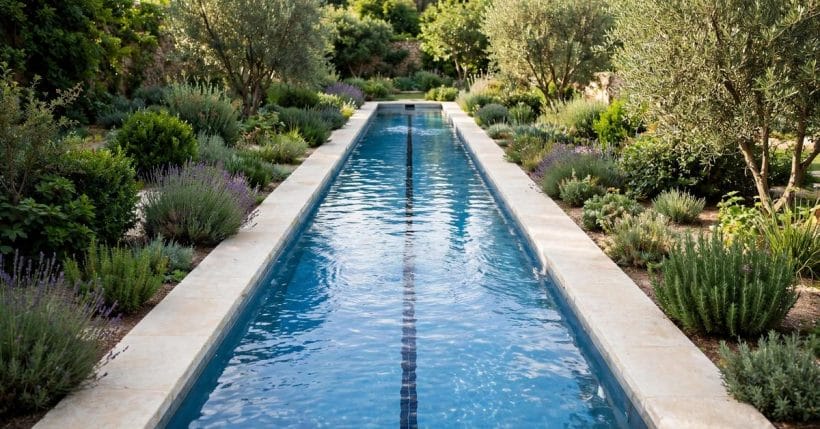
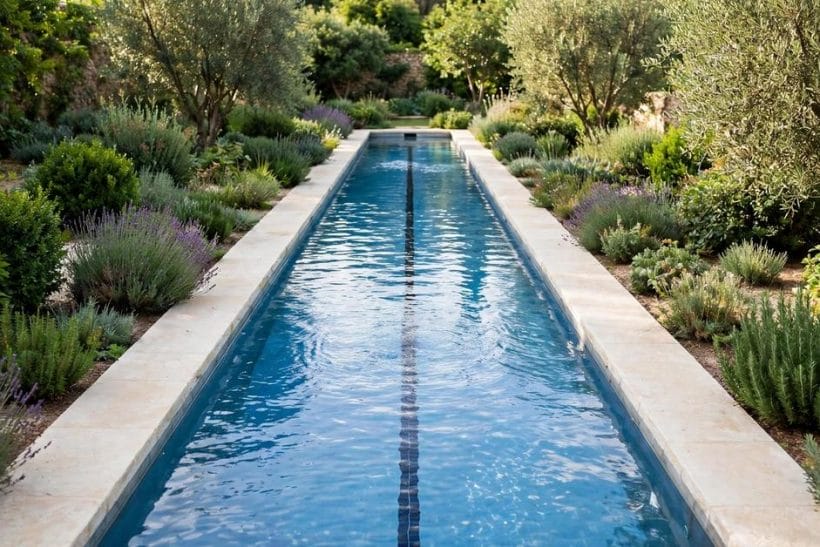
A lap pool is a pool built around a single idea: a long, straight swim, repeated at a calm rhythm, in a garden that stays beautiful between swims. This gallery gathers seventy-five lap pool designs in the broad sense of that phrase, from the line of the pool itself to its colour, its edge, its garden and its care, so you can find the form that fits your plot and your way of swimming. It is a lap-pool gallery only, so it does not re-teach general pool ideas or patio ideas: the surrounding patio belongs to its own patio guide, and the general pool gallery stands on its own, while this post stays with the long, narrow form and everything that makes it swim well.
Structural work, waterproofing, plumbing and electrical work appear throughout this gallery only in general terms, and they should always be left to qualified professionals, with local rules checked before any building begins. No part of this gallery is a set of building instructions, and nothing here should be read as a specification for depth, structure or safety systems. Read the ideas as a way to picture your pool, discuss it clearly with professionals, and choose the details that will make your daily swim a pleasure.
1. Laying Out the Swim Line
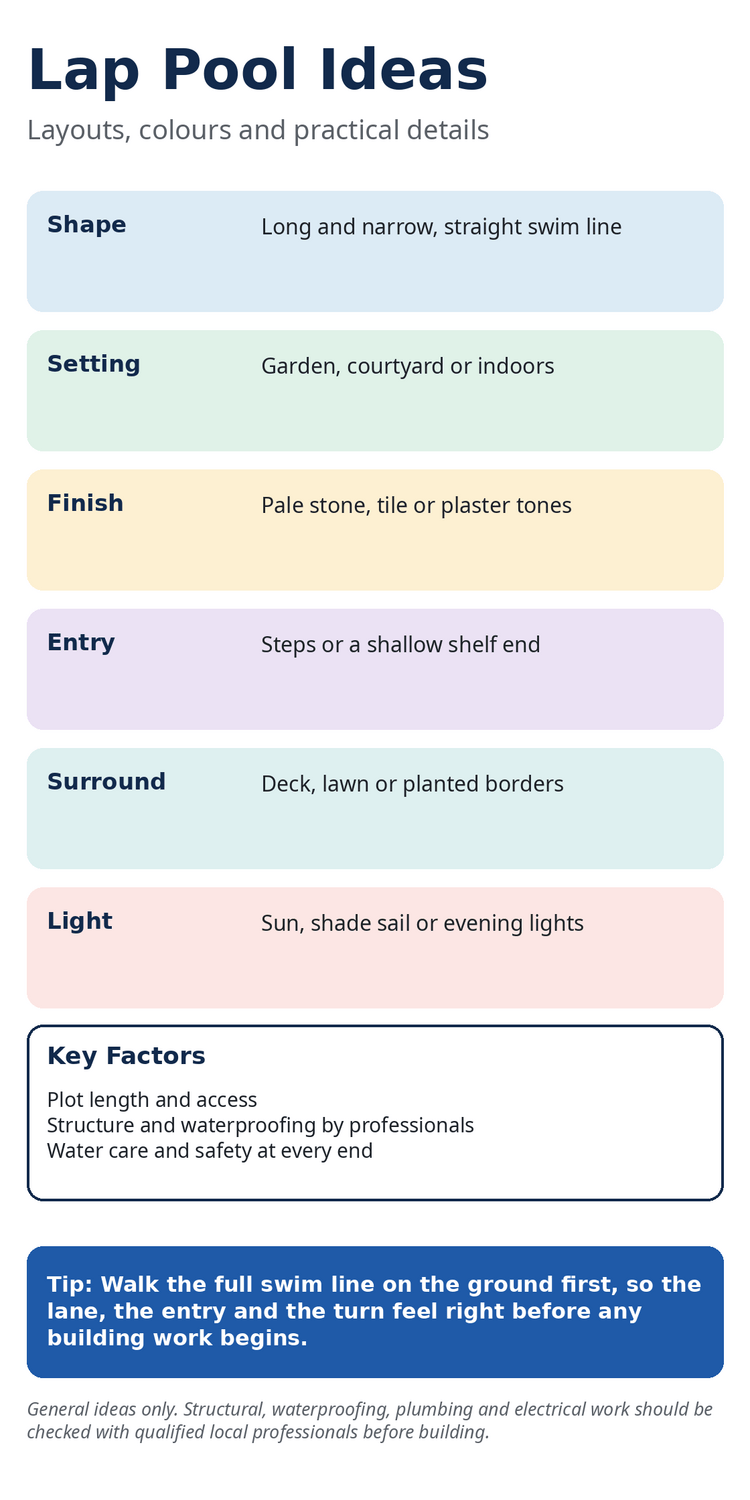
A lap pool earns its place by the line a swimmer follows, end to end, without a turn forced by clutter or a corner that cuts the stroke short. Walk the line on the ground before anything is built, and let the house, the boundary and the sun decide where that line can run in a straight, calm course. The ideas in this section are all about finding that line and keeping it clear.
| Item | What it is |
|---|---|
| A Straight Line Along the Boundary | Running the pool beside a boundary keeps the swim line simple and leaves the rest of the garden free for lawn, planting and sitting. |
| A Line That Follows the House | Setting the pool parallel to the house wall gives the swimmer a sheltered line and gives the house a long water view through its glass. |
| A Line Across the Garden | A pool laid across the garden, rather than along it, can turn a wide plot into a place with a clear near side and a far side. |
| A Line With a View at the Far End | Ending the swim line on a view, whether a tree, a distant hill or a simple sculpture, gives every length a destination worth looking toward. |
| A Line Sheltered From the Wind | Wind across open water chills a swimmer and ruffles the surface, so a sheltered line is a kinder line to swim. |
| A Line That Stays Clear of Trees | Trees bring shade and beauty, but falling leaves and roots belong away from a swim line. |
| A Line With Room to Turn | Every length ends in a turn, and the turn needs a plain wall, a clear edge and a firm place to push from. |
| A Line for Morning Swims | A pool that catches the morning sun warms the swimmer and lights the water for the earliest lengths of the day. |
| The Classic Straight Rectangle | A straight rectangle is the clearest lap pool form, with parallel sides and a swim line that never surprises the swimmer. |
| A Rectangle With Softened Corners | Softening the corners of a rectangle takes the hard edge off the form without shortening the swim line. |
| A Raised End Wall | Raising one end wall above the surrounding ground gives the pool a focal point and a place for a small water feature. |
| A Step Down Into the Garden | Setting the pool a step below the surrounding garden makes the water feel like a discovered room rather than an exposed strip. |
| A Pool That Widens at the Entry | Widening the pool slightly at the entry end creates a natural gathering place for swimmers who are not yet swimming, without disturbing the narrow lane beyond. |
| A Courtyard Lap Pool | A courtyard lap pool turns a walled outdoor room into a place for swimming, with walls that shelter the water and hold the heat of the day. |
| A Pool Beside a Long Lawn | A lap pool beside a long lawn gives the garden a pair of parallel pleasures, one for swimming and one for walking, playing and sitting. |
| A Pool With a Shallow Shelf | A shallow shelf at one end of a lap pool gives children, beginners and resting swimmers a place to stand and pause. |
| Pale Blue for a Bright Pool | A pale blue finish makes a lap pool look bright, clean and inviting, even on a cloudy day. |
| Deep Blue for a Still Pool | A deep blue finish gives a lap pool a quiet, reflective character that suits a wooded or shaded garden. |
| Turquoise for a Resort Feeling | A turquoise finish, pale and warm, gives a lap pool the feeling of a holiday pool without leaving home. |
| Green Tones for a Natural Pool | A green-toned finish lets a lap pool sit quietly among lawns, hedges and trees, as if it belonged to the garden all along. |
| Grey Tones for a Modern Pool | A grey finish gives a lap pool a modern, understated look that pairs well with concrete, pale timber and simple architecture. |
| A Finish That Changes With the Light | Some finishes seem to change colour as the light moves, pale in the morning, deep at midday and dark at dusk. |
| Matching the Coping to the Water | Coping colour changes how water colour is perceived, since the eye reads the two together. |
| A Dark Lane Line for Guidance | A dark lane line down the centre of a lap pool gives the swimmer a quiet guide that keeps each length straight. |
| Wide Steps at the Shallow End | Wide steps at the shallow end give every swimmer a confident way into the water, from a first-time swimmer to a swimmer with stiff joints. |
| A Ladder Tucked at the Side | A ladder at the side of the pool, near the deep end, gives strong swimmers a quick way in and out without blocking the lane. |
| A Shelf for Sitting and Pausing | A shelf inside the pool, shallow enough to sit on, gives swimmers a place to pause, chat and cool off without leaving the water. |
| A Turn Wall That Feels Firm | A turn wall should feel firm, plain and predictable, with no protruding fittings where a swimmer pushes off. |
| A Rail for Confident Entry | A well-placed rail turns a hesitant entry into a confident one, especially for swimmers who are older, younger or less steady on their feet. |
| An Entry From the Deck | An entry that opens directly from the deck lets a swimmer step from a dry, clean surface into the water without crossing lawn or gravel. |
| A Beach-Style Sloped Entry | A gently sloped entry, where the floor rises to meet the deck, gives a lap pool a soft, natural way into the water. |
| Pale Stone Coping | Pale stone coping gives a lap pool a bright, clean frame that suits almost any garden style. |
| Timber Decking at the Edge | Timber decking at the pool edge brings warmth to a lap pool and softens the hard line of stone or concrete. |
| A Flush Edge for a Seamless Look | A flush edge, where the deck meets the water at almost the same level, gives a lap pool a seamless, modern appearance. |
| A Raised Lip for Safety | A slightly raised lip around a lap pool gives swimmers a clear edge to see and grip, and it helps keep garden debris out of the water. |
| Mosaic Tile at the Waterline | A band of mosaic tile at the waterline adds colour and craft to a lap pool without disturbing the swim line. |
| A Grass Edge for a Soft Garden | Letting grass run to the edge of a lap pool softens the pool's form and makes it feel like part of the lawn rather than a structure imposed on it. |
| Dark Coping for Contrast | Dark coping gives a lap pool a crisp outline that makes the water stand out, especially against a pale deck or lawn. |
| A Wide Coping for Sitting | A wide coping gives swimmers and watchers a place to sit at the pool's edge, with feet in the water or towels close at hand. |
| Planted Borders Along the Lane | Planted borders along a lap pool soften its long, straight form and give the swimmer something green to glance at between strokes. |
| A Path That Runs the Length | A path running the full length of a lap pool gives swimmers, watchers and gardeners a clear route beside the water. |
| A Lawn That Meets the Water | A lawn meeting the pool's edge gives a garden a simple, generous feeling, with green on one side and blue on the other. |
| A Courtyard Wall for Shelter | A courtyard wall around a lap pool creates a private, sheltered room for swimming, away from neighbouring views and wind. |
| A Pergola Over the Entry | A pergola over the entry end of a lap pool shades the place where swimmers gather, sit and dry off, without shading the lane itself. |
| Trees Framing the Far End | Trees framing the far end of a lap pool give the swimmer a living destination and the garden a sense of depth. |
| A Pool House Within Reach | A small pool house near a lap pool gives swimmers a place to change, store towels and shelter from a sudden shower, without leaving the poolside. |
| A Shade Sail Over the Entry | A shade sail over the entry end of a lap pool gives swimmers a cool place to gather while leaving the lane in open sun. |
| Umbrellas Beside the Lane | Umbrellas beside a lap pool give flexible shade that can move with the sun and be folded away when the pool is in full use. |
| Evening Lights Along the Edge | Lights along the edge of a lap pool turn an evening swim into a calm, glowing experience and make the pool visible and safer after dark. |
| Underwater Lights for Night Swims | Underwater lights give a lap pool a luminous depth at night and help a swimmer see the lane and the turn wall clearly. |
| String Lights Over the Poolside | String lights over the poolside, hung from a pergola or poles beside the pool, give evening gatherings a warm, festive feeling without lighting the water itself. |
| A Lit Path to the Pool | A lit path to a lap pool makes evening swims safe and inviting, guiding swimmers from the house to the water without a dark, uncertain walk. |
| Morning Sun, Evening Shade | Planning a lap pool for morning sun and evening shade gives the swimmer the best of both, bright light for early lengths and cool comfort for late swims. |
| A Dark Sky Corner for Stargazing | Leaving one corner of the poolside dark, away from bright lights, gives evening swimmers a place to float and look at the stars. |
| A Simple Daily Skim | A daily skim of the surface keeps a lap pool looking clear and stops leaves and insects from sinking and staining the finish. |
| A Cover for Still Nights | A cover over a lap pool on still nights keeps leaves, dust and insects out of the water and helps the water hold its warmth. |
| Clear Rules for Young Swimmers | Clear, simple rules help young swimmers enjoy a lap pool safely, such as walking rather than running at the edge and never swimming alone. |
| A Fence That Protects the Pool | A fence around a lap pool protects children, pets and visitors by keeping the water out of reach when no swimmer is present. |
| A Safe Place for Chemicals | Pool care products should be stored in a locked, dry place away from children, pets and the poolside, exactly as their labels direct. |
| A Regular Professional Check | A regular check by a qualified pool professional keeps filtration, heating and safety systems working as they should, long after installation. |
| Warm Water for Longer Swims | Warm water invites longer, more relaxed swims, while cold water shortens them and stiffens muscles. |
| A Bench at the Turn End | A bench at the turn end of a lap pool gives swimmers a place to rest, watch and wait their turn without blocking the lane. |
| Loungers Set Back From the Edge | Loungers set back from the pool's edge give sunbathers comfort without crowding the coping or the walk beside the water. |
| A Towel Rail Near the Entry | A towel rail near the entry keeps towels dry, visible and within reach the moment a swimmer leaves the water. |
| A Small Table for Drinks | A small table beside a lap pool gives swimmers a place for drinks, books and sunglasses without bringing clutter to the water's edge. |
| Storage That Hides the Clutter | A low storage bench or a small poolside cupboard hides nets, covers, toys and cleaning tools that would otherwise gather beside the water. |
| A Shower for Before and After | An outdoor shower near a lap pool lets swimmers rinse before entering and wash off after swimming, which keeps the water cleaner and the house drier. |
| A Seat for Watching Swimmers | A comfortable seat for watching swimmers turns a lap pool into a social place, where family and friends can enjoy the garden while lengths are swum. |
| A Pool Along the Side Passage | A side passage, often wasted as a narrow walkway, can become the home of a lap pool that uses space the garden cannot use for anything else. |
| A Pool That Doubles as a Garden Feature | A lap pool that doubles as a garden feature earns its place twice, as a place to swim and as a still water mirror when not in use. |
| A Compact Pool for Short Lengths | A compact lap pool, shorter than a full-length pool, still gives a satisfying swim for fitness, cooling off and gentle exercise. |
| Pale Finishes to Widen a Small Pool | Pale finishes and pale coping make a small lap pool feel wider and brighter, since light colours reflect rather than absorb the garden's light. |
| Vertical Planting Beside a Small Pool | Vertical planting, such as climbers on a wall or tall grasses in narrow beds, gives a small poolside greenery without taking ground space from the lane or the walk. |
| A Small Pool With a Big View | A small lap pool with a big view, whether over a valley, a garden or a distant tree line, feels far larger than its size suggests. |
| Furniture That Folds Away | Furniture that folds away lets a small poolside change from a swimming place to a sitting place and back again without crowding either use. |
1. A Straight Line Along the Boundary
Running the pool beside a boundary keeps the swim line simple and leaves the rest of the garden free for lawn, planting and sitting. A low hedge or a plain fence can screen the line without crowding it, and the swimmer gains an uninterrupted view from one end to the other. Keep the walk beside the water generous, so entering, leaving and passing feel easy at every point.
2. A Line That Follows the House
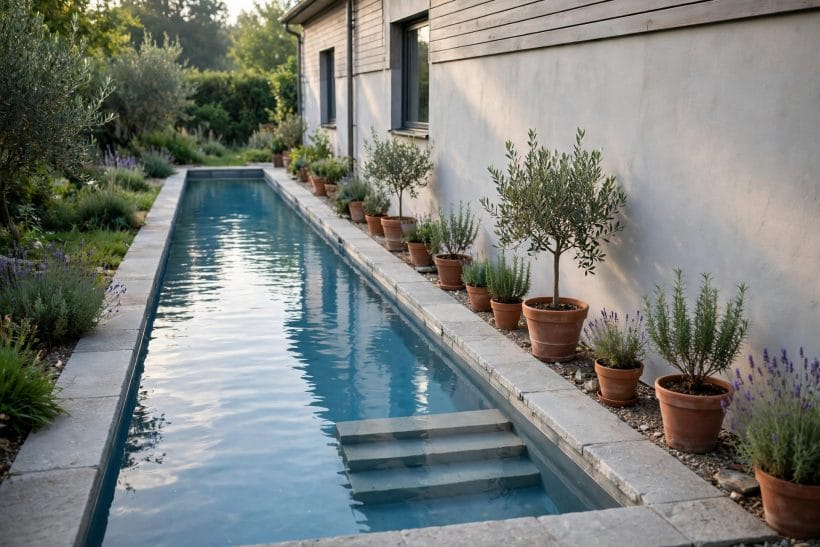
Setting the pool parallel to the house wall gives the swimmer a sheltered line and gives the house a long water view through its glass. Potted plants can soften the wall without narrowing the walk, and a bench at the far end gives the line a clear destination. This arrangement suits a narrow plot, where the house itself becomes the calm backdrop to the water.
3. A Line Across the Garden
A pool laid across the garden, rather than along it, can turn a wide plot into a place with a clear near side and a far side. The swim line becomes the garden’s horizon, and a path or a lawn can cross it at a chosen point without breaking the stroke. Planting at both ends frames the water, so the line reads as a designed feature rather than a leftover strip.
4. A Line With a View at the Far End
Ending the swim line on a view, whether a tree, a distant hill or a simple sculpture, gives every length a destination worth looking toward. The far end should stay uncluttered, with steps or a plain wall rather than stored furniture or equipment. A swimmer who can see the end clearly will swim more calmly and turn more confidently.
5. A Line Sheltered From the Wind
Wind across open water chills a swimmer and ruffles the surface, so a sheltered line is a kinder line to swim. A hedge, a wall or a planted bank on the windward side can calm the water while keeping the sky open above it. Choose shelter that does not shed heavily into the water, and leave room to clean the edge without a struggle.
6. A Line That Stays Clear of Trees
Trees bring shade and beauty, but falling leaves and roots belong away from a swim line. Place the pool where the canopy does not hang directly over the water, and let the trees stand at a distance that frames the view instead. The water will stay clearer, the surface will stay calmer, and the swimmer will not be brushing leaves aside mid-length.
7. A Line With Room to Turn
Every length ends in a turn, and the turn needs a plain wall, a clear edge and a firm place to push from. Keep the turn end free of steps, rails and planters, so the swimmer can arrive, turn and leave in one smooth movement. A small marker on the coping, such as a change of tone, can help a swimmer judge the wall without breaking rhythm.
8. A Line for Morning Swims
A pool that catches the morning sun warms the swimmer and lights the water for the earliest lengths of the day. Face the swim line toward the sunrise where the plot allows, and keep the eastern end open rather than shaded by a tall structure. Morning light also shows the water at its clearest, which makes the first swim of the day feel fresh and inviting.
2. Shaping the Long Form
The lap pool is defined by its long, narrow form, and small changes to that form change how it swims and how it sits in the garden. A straight rectangle is the classic choice, but a softened corner, a raised end or a gentle step in the edge can give the same form a quieter character. This section, alongside the backyard landscaping guide, explores the shapes that keep the swim line honest while letting the pool suit its plot.
9. The Classic Straight Rectangle
A straight rectangle is the clearest lap pool form, with parallel sides and a swim line that never surprises the swimmer. Its simplicity suits almost any garden style, from a formal lawn to a modern courtyard, and it is easy to cover, clean and furnish around. Let the coping and the planting carry the character, and keep the rectangle itself plain and true.
10. A Rectangle With Softened Corners
Softening the corners of a rectangle takes the hard edge off the form without shortening the swim line. Rounded corners are kinder to swimmers who brush the edge, and they make the pool feel less severe in a planted garden. Keep the long sides straight, so the softening reads as a detail rather than a change of shape.
11. A Raised End Wall
Raising one end wall above the surrounding ground gives the pool a focal point and a place for a small water feature. The raised wall can carry a spill of water into the pool, and it gives the far end a sense of arrival that a flat edge cannot. Build the raised work with professionals, since it carries both water and structure, and keep the swim line itself level and clear.
12. A Step Down Into the Garden
Setting the pool a step below the surrounding garden makes the water feel like a discovered room rather than an exposed strip. The lower level shelters the swimmer from wind and gives the garden a natural edge to sit on. Plan the surrounding drainage and access with professionals, and keep a clear, safe route down to the water at all times.
13. A Pool That Widens at the Entry
Widening the pool slightly at the entry end creates a natural gathering place for swimmers who are not yet swimming, without disturbing the narrow lane beyond. The wider end can hold steps, a shelf and a place to sit with feet in the water, while the long body stays a true lap form. Mark the change of width clearly, so swimmers know where the lane begins.
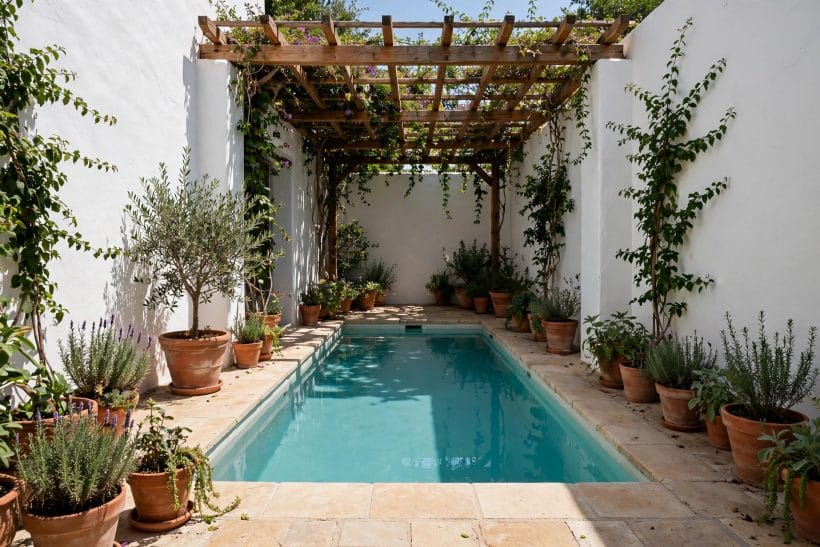
14. A Courtyard Lap Pool
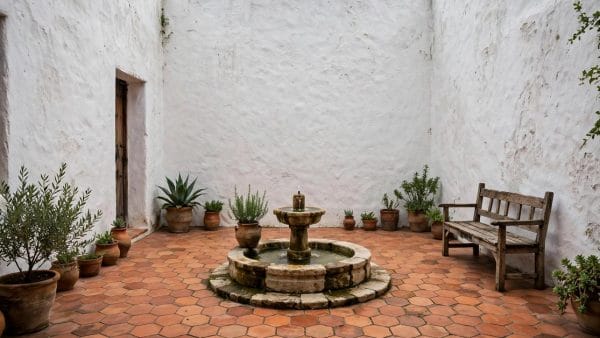
A courtyard lap pool turns a walled outdoor room into a place for swimming, with walls that shelter the water and hold the heat of the day. The narrow form fits a courtyard well, and a pergola at one end can shade the entry without shading the whole lane. Keep the walls pale and the planting restrained, so the small space feels bright rather than enclosed.
15. A Pool Beside a Long Lawn
A lap pool beside a long lawn gives the garden a pair of parallel pleasures, one for swimming and one for walking, playing and sitting. The lawn can run the full length of the pool, so the two spaces read as a single generous garden rather than competing features. A low hedge between them keeps balls and toys out of the water while keeping the view open.
16. A Pool With a Shallow Shelf
A shallow shelf at one end of a lap pool gives children, beginners and resting swimmers a place to stand and pause. The shelf should sit clear of the swim line, so lengths can pass without interruption, and its edge should be easy to see against the deeper water. A shelf also gives the pool a social corner, where swimmers can gather without blocking the lane.
3. Choosing the Water Colour
Water colour is set by the finish beneath it, the sky above it and the light that falls on it through the day. A pale finish makes the water glow turquoise in sunlight, while a darker finish gives a deep, still blue that suits a shaded or evening garden. The ideas here help you choose a colour that stays beautiful from the first morning light to the last evening swim.
17. Pale Blue for a Bright Pool
A pale blue finish makes a lap pool look bright, clean and inviting, even on a cloudy day. The light colour shows the water’s movement and makes the swim line easy to follow from either end. Pair a pale pool with pale coping and simple planting, so the brightness feels calm rather than glaring.
18. Deep Blue for a Still Pool
A deep blue finish gives a lap pool a quiet, reflective character that suits a wooded or shaded garden. The darker water hides small marks and reads as a still mirror between swims, which can make a small garden feel deeper. Keep the surrounding materials pale, so the dark water stands out as the garden’s centrepiece.
19. Turquoise for a Resort Feeling
A turquoise finish, pale and warm, gives a lap pool the feeling of a holiday pool without leaving home. It suits sunny gardens and light stone surrounds, and it makes the water look warm and welcoming at first glance. Balance the resort feeling with plain furniture and restrained planting, so the pool stays elegant rather than theatrical.
20. Green Tones for a Natural Pool
A green-toned finish lets a lap pool sit quietly among lawns, hedges and trees, as if it belonged to the garden all along. The colour softens the hard line of the pool and suits a natural, planted setting far better than a stark blue. Choose surrounding stone in warm, natural tones, and let the planting spill gently toward the edge without overhanging the water.
21. Grey Tones for a Modern Pool
A grey finish gives a lap pool a modern, understated look that pairs well with concrete, pale timber and simple architecture. The water reads as a calm, neutral plane rather than a bright feature, which lets the garden’s structure take the lead. Grey suits a minimalist garden, where every material is chosen for texture rather than colour.
22. A Finish That Changes With the Light
Some finishes seem to change colour as the light moves, pale in the morning, deep at midday and dark at dusk. This shifting character keeps a lap pool interesting through the day and rewards a swimmer who uses it at different hours. Test a finish in daylight and in evening light before choosing, since the colour you love at noon may not be the colour you love at dusk.
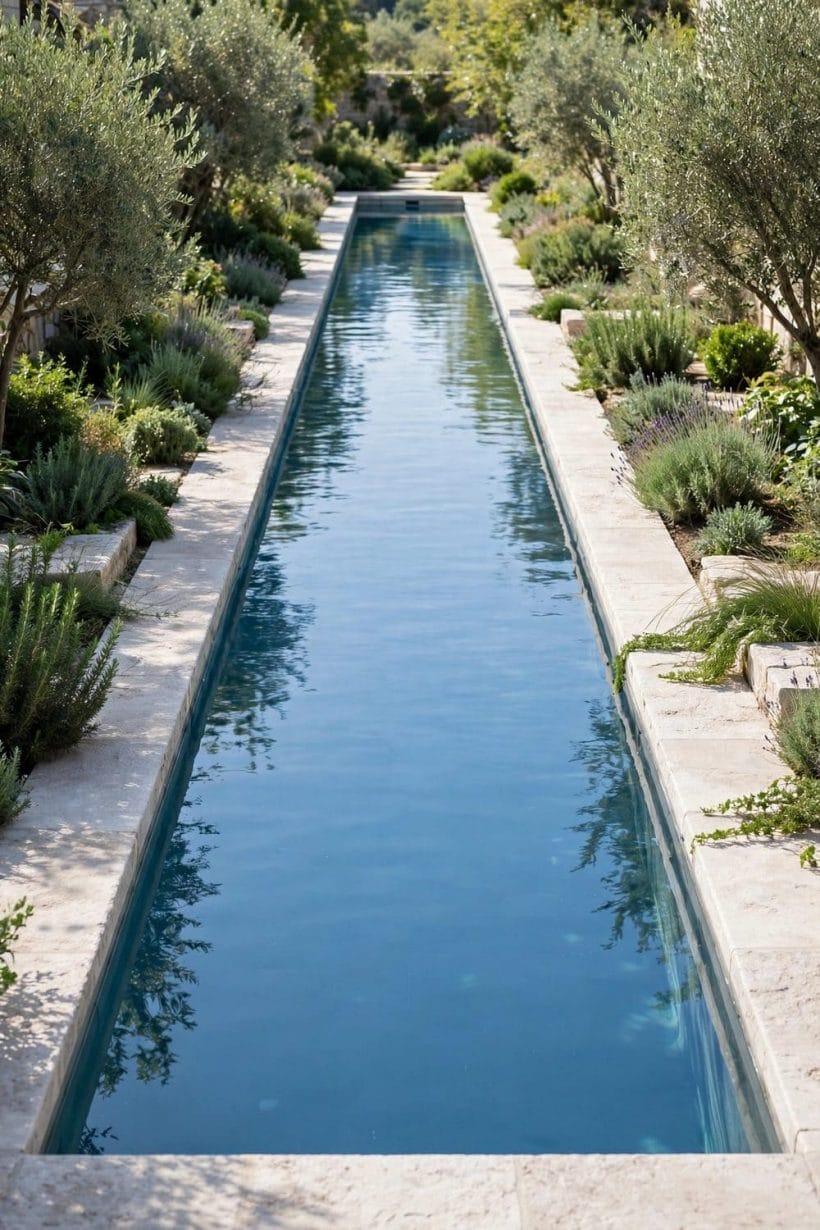
23. Matching the Coping to the Water
Coping colour changes how water colour is perceived, since the eye reads the two together. Pale coping brightens the water and widens the pool visually, while dark coping deepens the water and sharpens its outline. Choose coping and finish as a pair, and view them together in sunlight before committing to either.
24. A Dark Lane Line for Guidance
A dark lane line down the centre of a lap pool gives the swimmer a quiet guide that keeps each length straight. The line should be subtle, a tone darker than the finish, rather than a bold stripe that dominates the water. It also helps a swimmer judge distance to the turn, which makes every length smoother and safer.
4. Planning Entries and Turns
Getting into a lap pool and turning at the end should feel as smooth as the swim itself. Steps, shelves, rails and turn walls all shape that feeling, and each one deserves a place that never interrupts the lane. This section gathers entry and turn ideas that keep the swim line flowing from the first step to the last turn.
25. Wide Steps at the Shallow End
Wide steps at the shallow end give every swimmer a confident way into the water, from a first-time swimmer to a swimmer with stiff joints. The steps should be generous and easy to see, with a rail nearby for balance, and they should sit clear of the lane. A wide entry also gives the pool a welcoming face, rather than a ladder tucked in a corner.
26. A Ladder Tucked at the Side
A ladder at the side of the pool, near the deep end, gives strong swimmers a quick way in and out without blocking the lane. Keep the ladder close to the edge and clear of the turn wall, so a swimmer turning does not meet a swimmer climbing out. Choose a ladder that is easy to grip when wet, and keep its fixings checked as part of regular care.
27. A Shelf for Sitting and Pausing
A shelf inside the pool, shallow enough to sit on, gives swimmers a place to pause, chat and cool off without leaving the water. Place the shelf at the entry end, away from the lane, so resting swimmers never block a length. A shelf also suits families, since it gives younger swimmers a safe place to stand within reach of an adult.
28. A Turn Wall That Feels Firm
A turn wall should feel firm, plain and predictable, with no protruding fittings where a swimmer pushes off. Keep the wall free of steps, lights and skimmers at turn height, and let the swimmer arrive at a clean surface every time. A firm turn wall builds confidence, and confident swimmers swim longer and more relaxed lengths.
29. A Rail for Confident Entry
A well-placed rail turns a hesitant entry into a confident one, especially for swimmers who are older, younger or less steady on their feet. The rail should stand where the steps meet the water, at a height that is easy to reach without stretching. Check the rail regularly, since a loose rail is worse than no rail at all, and keep it clear of the swim line.
30. An Entry From the Deck
An entry that opens directly from the deck lets a swimmer step from a dry, clean surface into the water without crossing lawn or gravel. The deck beside the entry should be wide enough for towels, shoes and a chair, so the entry never feels cramped. A deck entry also keeps the pool cleaner, since swimmers arrive without carrying soil onto the coping.
31. A Beach-Style Sloped Entry
A gently sloped entry, where the floor rises to meet the deck, gives a lap pool a soft, natural way into the water. The slope suits swimmers who prefer to walk in gradually, and it gives children a place to play at the edge. Keep the slope clear of the lane, and mark its edge so swimmers can see where the floor begins to fall away.
5. Finishing the Edge and Coping
The edge of a lap pool is where water meets garden, and its finish decides whether that meeting feels sharp, soft, formal or natural. Coping protects the pool structure, gives swimmers a place to grip, and frames the water for everyone watching from the garden. The ideas here, alongside the deck guide, treat the edge as a design feature in its own right, not an afterthought.
32. Pale Stone Coping
Pale stone coping gives a lap pool a bright, clean frame that suits almost any garden style. The light stone stays cooler underfoot than dark materials, and it makes the water look brighter by contrast. Choose stone with a slightly textured surface, so wet feet grip safely, and let the joints stay neat and even along the full length.
33. Timber Decking at the Edge
Timber decking at the pool edge brings warmth to a lap pool and softens the hard line of stone or concrete. The boards should run parallel to the water, with narrow gaps for drainage, and the deck should sit level with the coping for a smooth transition. Timber needs regular care near water, so choose boards suited to a wet setting and keep them clean and sealed.
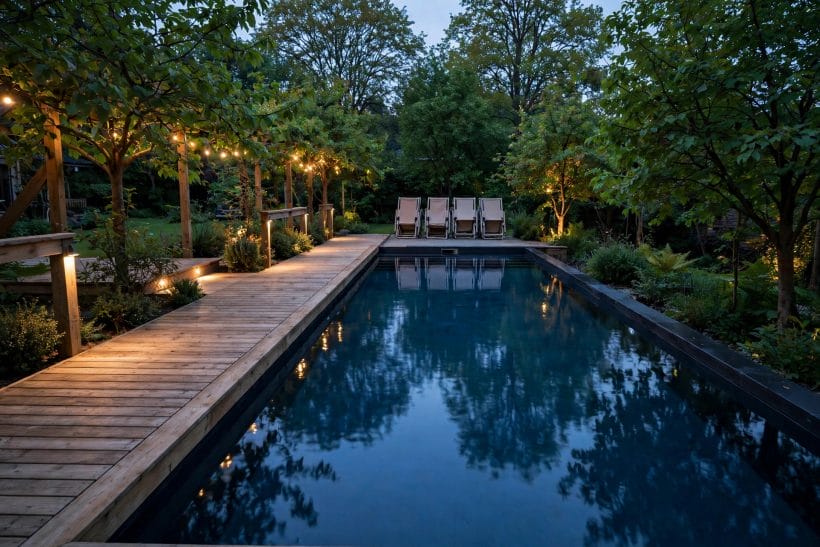
34. A Flush Edge for a Seamless Look
A flush edge, where the deck meets the water at almost the same level, gives a lap pool a seamless, modern appearance. The water seems to continue into the garden, and the pool reads as a still plane rather than a basin. This detail needs careful professional construction and waterproofing, since the edge must hold water precisely without spilling or staining.
35. A Raised Lip for Safety
A slightly raised lip around a lap pool gives swimmers a clear edge to see and grip, and it helps keep garden debris out of the water. The lip also gives children and pets a visible boundary, which supports safer use of the garden. Keep the lip low and smooth, so it guides rather than trips, and let it run evenly around the whole pool.
36. Mosaic Tile at the Waterline
A band of mosaic tile at the waterline adds colour and craft to a lap pool without disturbing the swim line. The tile can echo the garden’s palette, from deep blue to soft green, and it gives the pool a finished look at the exact place where water meets wall. Keep the pattern simple along a long pool, so the eye follows the length rather than stopping at a busy detail.
37. A Grass Edge for a Soft Garden
Letting grass run to the edge of a lap pool softens the pool’s form and makes it feel like part of the lawn rather than a structure imposed on it. A narrow stone strip beneath the grass edge protects the pool structure while keeping the soft look. Keep the grass trimmed and clear of the water, and accept that a grass edge needs more frequent tidying than stone or decking.
38. Dark Coping for Contrast
Dark coping gives a lap pool a crisp outline that makes the water stand out, especially against a pale deck or lawn. The contrast sharpens the pool’s long form and helps swimmers see the edge clearly in bright light. Balance dark coping with pale surroundings, and remember that dark stone warms in strong sun, so shade the entry where swimmers step in barefoot.
39. A Wide Coping for Sitting
A wide coping gives swimmers and watchers a place to sit at the pool’s edge, with feet in the water or towels close at hand. The extra width turns the edge into a social seat, where swimmers can rest between lengths without leaving the water’s side. Keep the sitting edge clear of the turn wall, so resting swimmers never block a swimmer arriving to turn.
6. Setting the Pool in the Garden
A lap pool never stands alone; it sits within a garden, and the garden decides whether the pool feels exposed or sheltered, formal or wild. Planting, paths, lawns and neighbouring structures all shape the swimmer’s experience. This section looks at the garden around the pool, and how to make that garden serve the swim line. For the paved area beside the water, the patio size guide keeps the surrounding patio in general terms, so this section stays with the garden around the pool.
40. Planted Borders Along the Lane
Planted borders along a lap pool soften its long, straight form and give the swimmer something green to glance at between strokes. Choose plants that do not shed heavily into the water and that tolerate splashes without complaint. Keep the planting low near the entry and taller at the far end, so the border frames the pool without closing it in.
41. A Path That Runs the Length
A path running the full length of a lap pool gives swimmers, watchers and gardeners a clear route beside the water. The path can be stone, gravel or timber, and it should stay wide enough for two people to pass without stepping onto the coping. A lengthwise path also makes cleaning and care far easier, since every part of the edge can be reached on foot.
42. A Lawn That Meets the Water
A lawn meeting the pool’s edge gives a garden a simple, generous feeling, with green on one side and blue on the other. The contrast is calming, and the lawn gives families a place to play within sight of the water. Keep a narrow hard strip between lawn and pool, so mowing and splashing do not damage each other’s edges.
43. A Courtyard Wall for Shelter
A courtyard wall around a lap pool creates a private, sheltered room for swimming, away from neighbouring views and wind. The wall can be plain render, stone or timber, and climbing plants can soften it without overhanging the water. A walled pool feels intimate even in a small garden, and it holds the warmth of the day into the evening.
44. A Pergola Over the Entry
A pergola over the entry end of a lap pool shades the place where swimmers gather, sit and dry off, without shading the lane itself. Climbing plants on the pergola can add scent and dappled light, while the open structure keeps the sky visible. Keep the pergola clear of the swim line, so falling leaves and petals do not land in the lane.
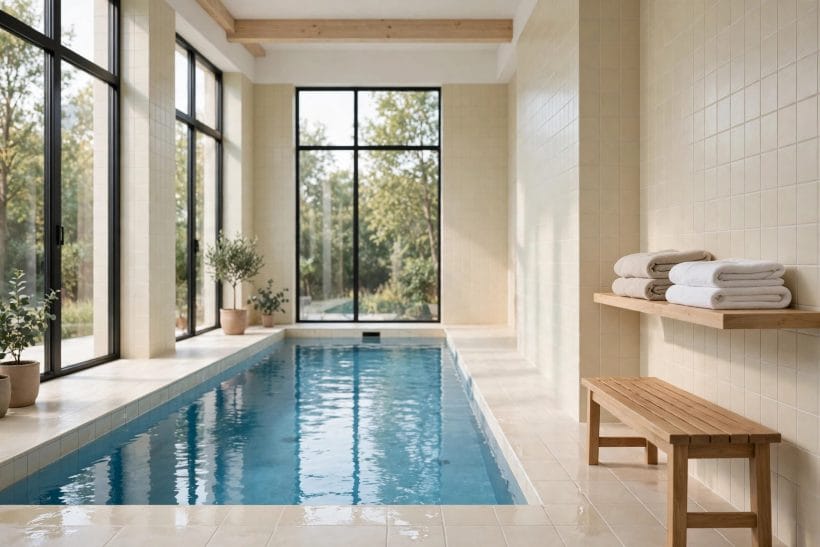
45. Trees Framing the Far End
Trees framing the far end of a lap pool give the swimmer a living destination and the garden a sense of depth. Choose trees with a high canopy and light leaf fall, planted far enough from the pool that roots and shade do not trouble the water. The framed view makes every length feel like a swim toward something beautiful, rather than toward a blank wall.
46. A Pool House Within Reach
A small pool house near a lap pool gives swimmers a place to change, store towels and shelter from a sudden shower, without leaving the poolside. The building should sit to one side of the lane, never blocking the swim line or the view down it, and its style should echo the house rather than compete with it. A pool house also keeps poolside clutter out of sight, so the garden stays calm.
7. Adding Shade and Evening Light
A lap pool used only at midday is a pool used for half its life. Shade makes summer swimming comfortable, and evening light makes dusk swimming possible and beautiful. The ideas here, with a shaded seat drawn from the porch guide, add comfort and light without cluttering the lane or casting confusing shadows across the water.
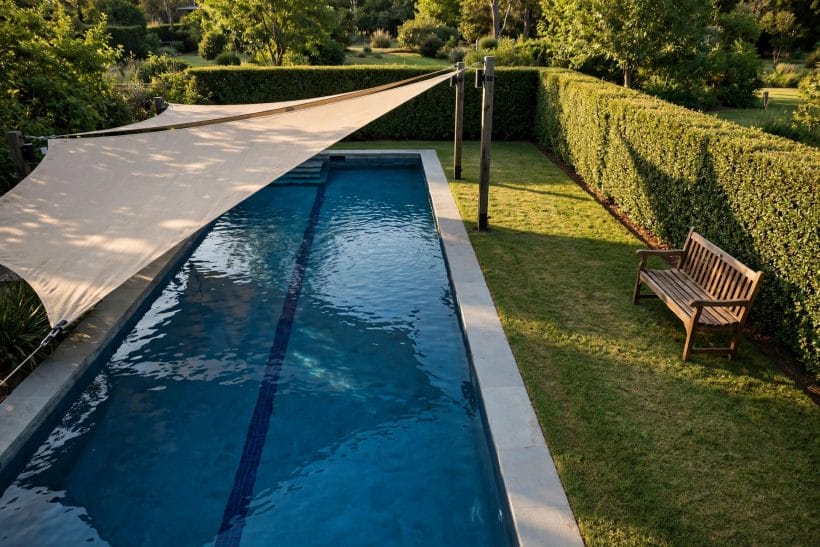
47. A Shade Sail Over the Entry
A shade sail over the entry end of a lap pool gives swimmers a cool place to gather while leaving the lane in open sun. The sail’s fabric moves gently in the breeze and casts a soft, shifting shade that suits a relaxed poolside. Fix the sail to firm, professionally installed supports, and keep it clear of the water so it never sags into the lane.
48. Umbrellas Beside the Lane
Umbrellas beside a lap pool give flexible shade that can move with the sun and be folded away when the pool is in full use. Place umbrellas on the side of the pool away from the swim line’s view, so they shade sitters without shading the water. Choose heavy bases that cannot topple into the pool, and store the umbrellas when wind rises.
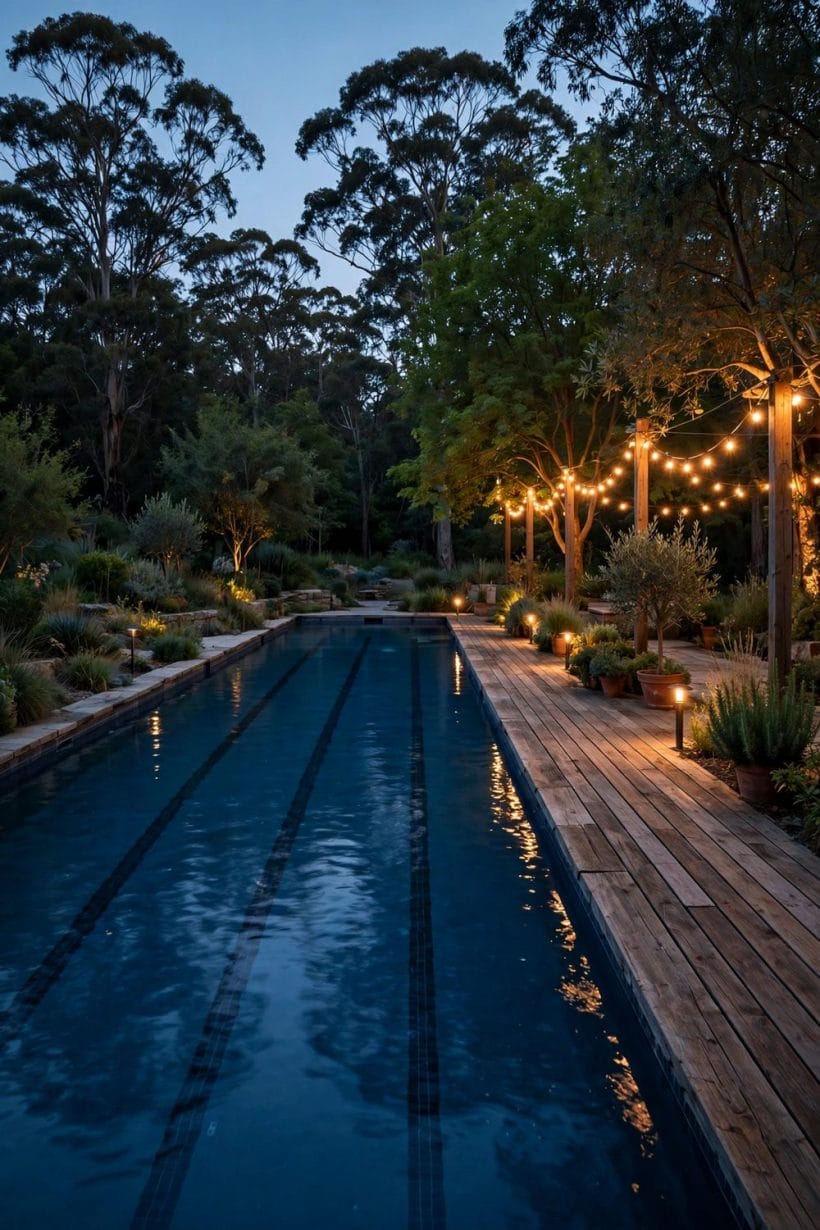
49. Evening Lights Along the Edge
Lights along the edge of a lap pool turn an evening swim into a calm, glowing experience and make the pool visible and safer after dark. Keep the lights low and warm, so they guide rather than glare, and let the water carry their reflection along the lane. All pool lighting and wiring should be installed and checked by qualified professionals, never as a home electrical project.
50. Underwater Lights for Night Swims
Underwater lights give a lap pool a luminous depth at night and help a swimmer see the lane and the turn wall clearly. The lights should be even along the length, without a bright spot that dazzles the swimmer mid-length. Professional installation and regular checks are essential, since underwater fittings combine water and electricity in one place.
51. String Lights Over the Poolside
String lights over the poolside, hung from a pergola or poles beside the pool, give evening gatherings a warm, festive feeling without lighting the water itself. The lights should hang over the sitting area, never over the lane, so swimmers are not dazzled as they look ahead. Keep the strings high enough to walk beneath and far enough from the water to stay dry.
52. A Lit Path to the Pool
A lit path to a lap pool makes evening swims safe and inviting, guiding swimmers from the house to the water without a dark, uncertain walk. Low path lights, set into the edge rather than the centre, give enough light to see without glaring. The lit path also makes the pool feel like part of the house at night, rather than a distant feature.
53. Morning Sun, Evening Shade
Planning a lap pool for morning sun and evening shade gives the swimmer the best of both, bright light for early lengths and cool comfort for late swims. Study how sun moves across the plot through the day before choosing the pool’s direction, and let trees or a sail provide the evening shade. A pool planned around the sun is used more often and enjoyed more deeply.
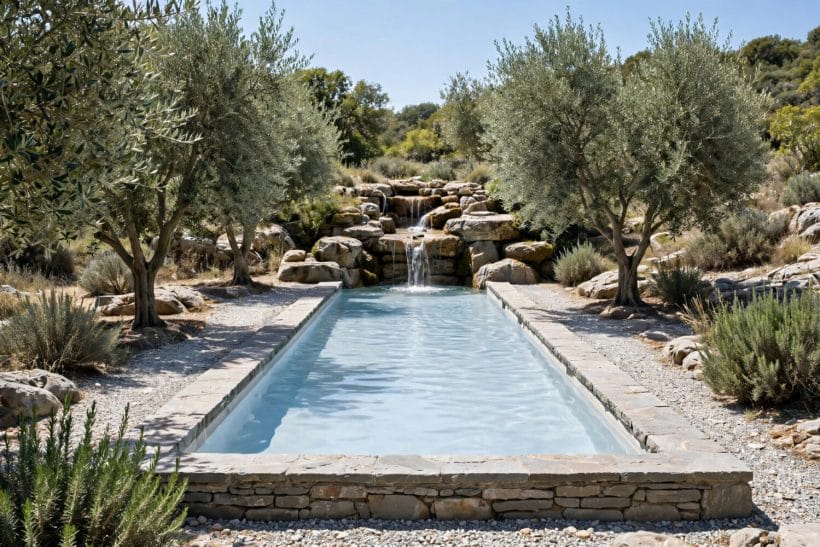
54. A Dark Sky Corner for Stargazing
Leaving one corner of the poolside dark, away from bright lights, gives evening swimmers a place to float and look at the stars. The dark corner should sit at the end of the pool away from the house lights, with a bench or a lounger for resting. A pool that offers both light and darkness feels richer at night, and invites swimmers to linger after their lengths.
8. Keeping the Water Clear and Safe
Clear water and safe surroundings are what make a lap pool a pleasure rather than a chore. Regular care, sensible equipment and clear rules keep the water inviting and the poolside calm. The ideas here, alongside the garden guide for planting near water, stay in general terms, since filtration, heating and safety systems should always be specified and fitted by qualified professionals.
55. A Simple Daily Skim
A daily skim of the surface keeps a lap pool looking clear and stops leaves and insects from sinking and staining the finish. A long-handled net makes the job quick, and a few minutes each day saves a longer clean later. Skim before swimming rather than after, so the water is at its clearest when the swimmer enters.
56. A Cover for Still Nights
A cover over a lap pool on still nights keeps leaves, dust and insects out of the water and helps the water hold its warmth. The cover should be easy for one person to handle, so it is used often rather than left folded in a corner. Store the cover neatly beside the pool, and never swim while a cover is partly over the water.
57. Clear Rules for Young Swimmers
Clear, simple rules help young swimmers enjoy a lap pool safely, such as walking rather than running at the edge and never swimming alone. The rules should be agreed with the whole household and posted where swimmers can see them before entering. A lap pool with clear rules is a calmer place for everyone, and children learn to respect the water early.
58. A Fence That Protects the Pool
A fence around a lap pool protects children, pets and visitors by keeping the water out of reach when no swimmer is present. The fence should be climb-resistant and self-closing, with a latch that young children cannot easily open. Check local rules before building, since fencing requirements vary by place, and keep the fence in good repair.
59. A Safe Place for Chemicals
Pool care products should be stored in a locked, dry place away from children, pets and the poolside, exactly as their labels direct. Never mix products, never guess at quantities, and keep the storage area ventilated and clearly marked. If water care ever feels uncertain, ask a qualified pool professional rather than improvising a treatment.
60. A Regular Professional Check
A regular check by a qualified pool professional keeps filtration, heating and safety systems working as they should, long after installation. The professional can spot wear, leaks and faults that a casual glance would miss, and can advise on care without guesswork. Treat the check as part of owning a pool, not as an optional extra, and keep a simple record of each visit.
61. Warm Water for Longer Swims
Warm water invites longer, more relaxed swims, while cold water shortens them and stiffens muscles. Heating a lap pool is a professional job, involving equipment and controls that should be specified for the pool’s size and setting. Choose heating that can be adjusted easily, so the water suits both vigorous lengths and gentle, unhurried swims.
9. Furnishing the Poolside Simply
Poolside furniture should serve swimmers without crowding the lane or cluttering the garden. A chair, a bench, a towel rail and a place for shoes are often all a lap pool needs. The ideas here, with larger poolside buildings covered by the pool house guide, keep the poolside simple, comfortable and easy to tidy, so the water stays the focus.
62. A Bench at the Turn End
A bench at the turn end of a lap pool gives swimmers a place to rest, watch and wait their turn without blocking the lane. The bench should face the water, so resting swimmers can enjoy the view and keep an eye on younger swimmers. Choose a bench in a material that dries quickly and stays cool in the sun.
63. Loungers Set Back From the Edge
Loungers set back from the pool’s edge give sunbathers comfort without crowding the coping or the walk beside the water. The setback keeps the lane clear and gives swimmers room to pass, while still keeping loungers close enough to feel part of the poolside. Choose loungers that can be moved easily, so the poolside can be rearranged for shade or gatherings.
64. A Towel Rail Near the Entry
A towel rail near the entry keeps towels dry, visible and within reach the moment a swimmer leaves the water. The rail should stand on the dry side of the deck, away from splashes, and hold enough towels for the household without becoming a bulky structure. A simple rail beats a large cabinet beside a narrow pool, where space is precious.
65. A Small Table for Drinks
A small table beside a lap pool gives swimmers a place for drinks, books and sunglasses without bringing clutter to the water’s edge. The table should be stable, easy to clean and small enough to move when the poolside is tidied. Keep glass away from the pool itself, and choose unbreakable drinkware for poolside use.
66. Storage That Hides the Clutter
A low storage bench or a small poolside cupboard hides nets, covers, toys and cleaning tools that would otherwise gather beside the water. The storage should sit away from the lane and the turn wall, and it should close fully so its contents stay dry. A tidy poolside makes the pool look longer and the garden calmer.
67. A Shower for Before and After
An outdoor shower near a lap pool lets swimmers rinse before entering and wash off after swimming, which keeps the water cleaner and the house drier. The shower should drain away from the pool and stand on a firm, non-slip surface with a rail for balance. Plumbing and drainage for a poolside shower are professional work, and the shower should be positioned so it never splashes into the lane.
68. A Seat for Watching Swimmers
A comfortable seat for watching swimmers turns a lap pool into a social place, where family and friends can enjoy the garden while lengths are swum. The seat should face the lane from a little distance, so the watcher sees the whole length without being splashed. A shaded watching seat, with a small table beside it, is often the most-used seat in the whole garden.
10. Making a Small Plot Work
A lap pool is naturally narrow, which makes it one of the few pools that can suit a small plot without overwhelming it. Careful placement, pale finishes and restrained furnishing let a small garden gain a pool and keep its lawn, planting and sitting places too. This section gathers ideas for plots where every step of space must earn its place.
69. A Pool Along the Side Passage
A side passage, often wasted as a narrow walkway, can become the home of a lap pool that uses space the garden cannot use for anything else. The passage pool gains shelter from the house on one side and the boundary on the other, and it leaves the main garden free. Check access, drainage and structure with professionals, since a passage pool sits close to buildings on both sides.
70. A Pool That Doubles as a Garden Feature
A lap pool that doubles as a garden feature earns its place twice, as a place to swim and as a still water mirror when not in use. A plain, dark finish and a simple edge make the pool beautiful even when no one is swimming, so it never feels like wasted space. Treat the pool as a designed feature from the start, not as a functional addition to be hidden.
71. A Compact Pool for Short Lengths
A compact lap pool, shorter than a full-length pool, still gives a satisfying swim for fitness, cooling off and gentle exercise. The shorter length suits a small plot and a smaller household, and it can be paired with a current or resistance feature specified by professionals. A compact pool used daily beats a long pool that never fits the plot.
72. Pale Finishes to Widen a Small Pool
Pale finishes and pale coping make a small lap pool feel wider and brighter, since light colours reflect rather than absorb the garden’s light. The effect is strongest in a walled or shaded plot, where a dark pool might feel enclosed. Pair pale finishes with simple planting, so the small space feels calm rather than busy.
73. Vertical Planting Beside a Small Pool
Vertical planting, such as climbers on a wall or tall grasses in narrow beds, gives a small poolside greenery without taking ground space from the lane or the walk. The planting softens walls and screens views while leaving the floor clear for swimmers and furniture. Choose climbers that do not shed heavily into the water, and keep them trimmed clear of the coping.
74. A Small Pool With a Big View
A small lap pool with a big view, whether over a valley, a garden or a distant tree line, feels far larger than its size suggests. Place the pool so the swimmer looks toward the view, and keep the far end low and open rather than walled or planted high. The view becomes the pool’s greatest luxury, and it needs no extra space at all.
75. Furniture That Folds Away
Furniture that folds away lets a small poolside change from a swimming place to a sitting place and back again without crowding either use. Folding chairs, a folding table and a towel rail that folds flat against a wall all help a small plot serve more than one purpose. Store folded furniture neatly when not in use, so the poolside stays clear for the next swim.
Final Considerations
Before choosing a lap pool, walk your plot at different times of day, note where the sun falls, where the wind comes from and where the quietest corner lies, then match the swim line to those findings rather than forcing a shape onto the ground. Discuss structure, waterproofing, plumbing, electrical work and local rules with qualified professionals from the start, and let their advice shape the details that this gallery can only picture in general terms. A lap pool chosen this way becomes a daily pleasure rather than a project, a long, calm line of water that fits its garden and rewards every length swum in it.
Use this gallery as a shortlist, not a final plan: mark the ideas that fit your plot, your household and your way of swimming, and set the rest aside without regret. The best lap pool designs are the ones that are swum in often, kept clear with simple regular care, and enjoyed from the poolside as much as from the water, so choose the form that you will love on an ordinary morning, not only on a perfect summer day.

0 Comments