
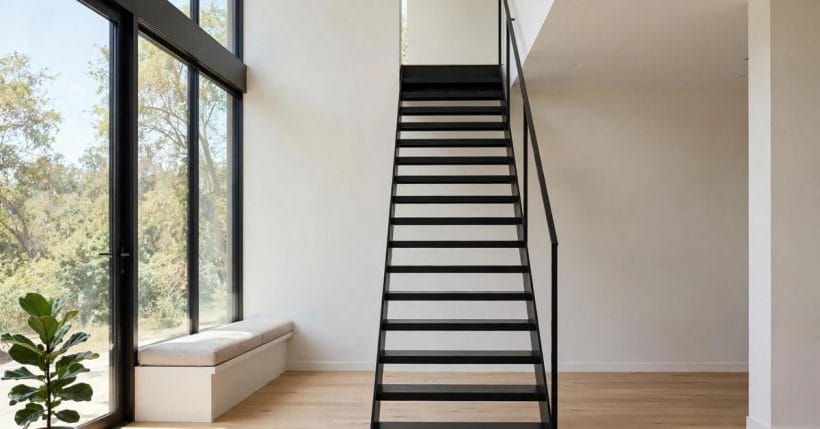
Metal staircases suit homes that want a staircase to feel light, strong and honest about its material. A slim steel flight can cross a room without filling it, while a painted metal spiral can turn a tight corner into a feature. This collection gathers seventy-five metal staircase ideas by layout, finish and setting, so you can compare forms side by side before you talk to a designer or a structural professional about what your home can carry.
The ideas below stay with metal as the material throughout. Timber treads, glass panels and stone walls appear only as partners that soften or frame the metal, never as a second staircase material taking over the design. Where a staircase needs fixing to a wall, a floor or a structure, that work belongs to a qualified professional, and any lighting or electrical detail should be left to one too. Use the collection as a way to shape your brief, not as a guide to building a staircase yourself.
If you are planning a staircase in a tiny house design, the compact and open-riser ideas later in this collection matter most, because a metal flight can keep light moving through a small plan. In a larger home, the straight, spiral and industrial flights offer the clearest starting points. Read the whole list once, note the finishes and handrail styles that keep catching your eye, and then narrow your shortlist by room, setting and light.
1. Straight and Simple Metal Staircases
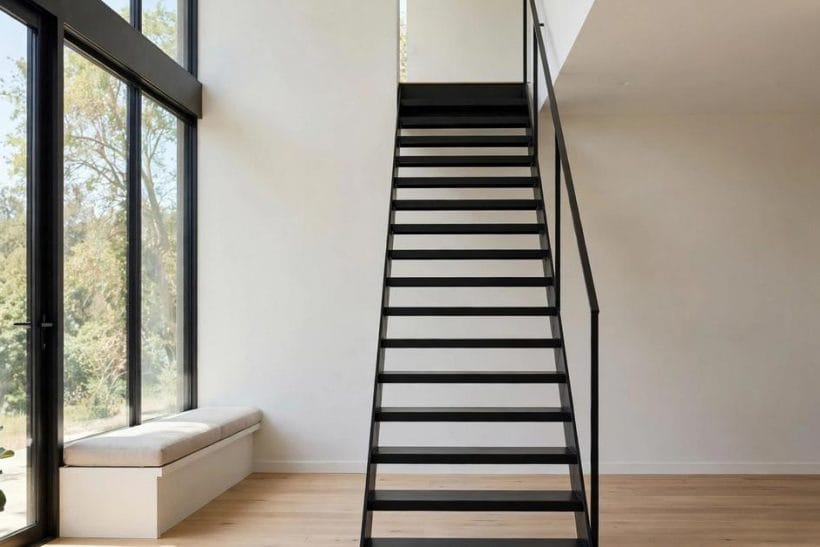
A straight flight is the clearest metal staircase of all, and often the calmest. It reads as a single clean line through a room, it suits both plain and characterful interiors, and it gives a designer a simple shape to dress with colour, tread material and handrail style.
| Item | What it is |
|---|---|
| Classic Straight Black Steel Flight | A straight flight in matte black steel is the simplest statement a metal staircase can make. |
| Straight Flight with Timber Treads | Timber treads on a metal frame warm a staircase without hiding its metal character. |
| Straight Flight with Open Risers | Open risers leave a gap between each tread, so light passes through the staircase and the room beyond stays visible. |
| Straight Flight Beside a Window Wall | Placing a straight metal flight beside a tall window wall turns daylight into part of the design. |
| Straight Flight with a Slim Stringer | A slim central or side stringer makes a metal flight look lighter than a staircase carried on deep beams. |
| Straight Flight with Perforated Treads | Perforated metal treads give a staircase an industrial texture and let light and air pass through each step. |
| Straight Flight in a Narrow Hall | A narrow hall suits a straight metal flight because the staircase can follow the hall line without turning or widening. |
| Straight Flight with a Landing Pause | A landing partway up a straight flight gives a staircase a natural pause and a place to change direction in a larger plan. |
| Compact Spiral in a Corner | A compact spiral tucks into a corner that a straight flight could never use, turning awkward floor space into a route between levels. |
| Spiral with a Central Metal Column | A central metal column gives a spiral staircase its spine, with each tread radiating from the column like steps around a post. |
| Spiral with Open Treads | Open treads on a spiral let light fall through the centre of the staircase and keep the rooms on both levels feeling connected. |
| Spiral with Timber Treads | Timber treads warm a metal spiral and give each step a natural, comfortable surface. |
| Spiral with Glass Balustrade Panels | Glass panels around a spiral staircase keep the curve visible from every angle while still giving a clear guard. |
| Spiral Painted a Soft Colour | Painting a spiral staircase in a soft colour, such as pale grey or sage, changes its character completely. |
| Spiral as a Room Centrepiece | Placing a spiral staircase in the middle of a room makes it the natural centrepiece, visible from seating, dining and entrance alike. |
| Spiral Leading to a Mezzanine | A spiral staircase suits a mezzanine because it rises compactly to a raised level without claiming a whole wall. |
| Raw Steel Loft Flight | A raw steel flight keeps its workshop character, with visible welds, a natural steel tone and simple detailing. |
| Industrial Flight with Mesh Treads | Mesh treads are a practical industrial choice, letting dust and light pass through while giving a firm, textured step. |
| Industrial Flight with Pipe Handrails | Pipe handrails suit an industrial staircase because they echo the plumbing and structure already visible in a loft. |
| Industrial Flight Beside Brick | Metal and brick are natural partners, with dark steel setting off the warm, uneven surface of brickwork. |
| Industrial Flight with Dark Finishes | Dark finishes, from charcoal paint to blackened steel, give an industrial staircase a grounded, serious feel. |
| Industrial Flight with Vertical Bar Balustrade | Vertical bars make a simple, strong balustrade for an industrial flight, repeating the upright rhythm of the staircase itself. |
| Industrial Flight in a Workshop Conversion | A workshop conversion suits an industrial metal staircase because the staircase can match the building it serves. |
| Galvanised Garden Flight | A galvanised metal staircase suits a garden because its protective finish is made for outdoor exposure. |
| Outdoor Flight to a Raised Deck | A metal flight to a raised deck connects garden and house without the bulk of a masonry stair. |
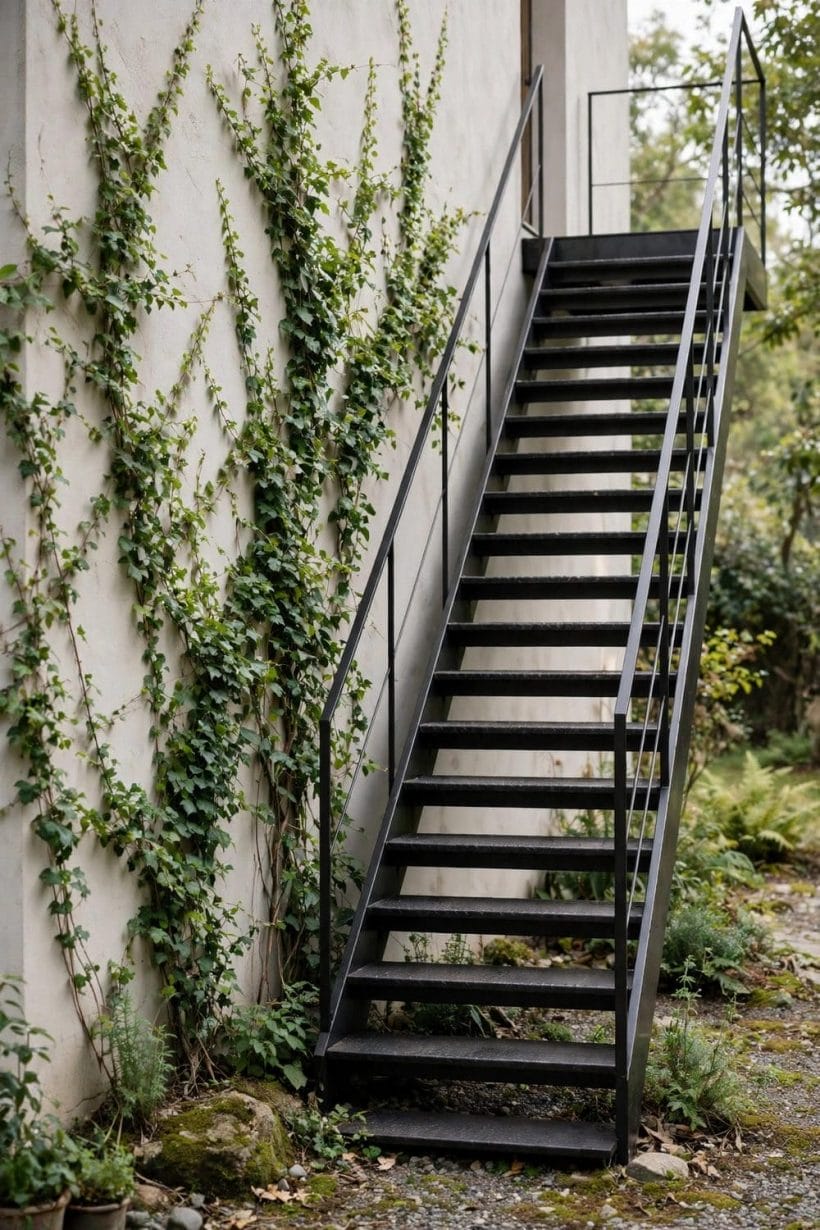
| Outdoor Flight Beside a House Wall | Running an outdoor metal flight beside a house wall keeps the garden itself free and gives the staircase a sheltered line. |
| Outdoor Flight with Mesh Treads for Drainage | Mesh treads outdoors let rain pass through instead of pooling on each step, which keeps the staircase more comfortable in wet weather. |
| Outdoor Flight with a Weatherproof Finish | A weatherproof finish protects an outdoor metal staircase from rain, sun and damp, and it decides how the staircase ages. |
| Outdoor Flight to a Roof Terrace | A metal staircase to a roof terrace rises lightly against the building, keeping the terrace itself as the destination rather than the stair. |
| Outdoor Flight Framed by Planting | Planting at the base and beside an outdoor metal flight softens its hard lines and ties the staircase into the garden. |
| Outdoor Flight with Lighting Along the Rail | Lighting along an outdoor handrail makes a garden staircase welcoming after dark and easier to use on winter evenings. |
| Floating Metal Treads on a Plain Wall | Floating treads fixed to a plain wall create the lightest possible staircase, with each step appearing to hover. |
| Floating Treads with a Glass Balustrade | Glass beside floating metal treads keeps the whole staircase feeling open, with light passing through both treads and guard. |
| Floating Treads with Timber Treads | Timber treads on a floating metal structure give a hovering staircase warmth, with each wooden step contrasting against the pale wall. |
| Floating Treads with Hidden Fixings | Hidden fixings are what make a floating staircase float, with brackets and supports concealed inside the wall or the tread. |
| Floating Treads in a Pale Minimal Room | A pale, minimal room is the natural home for floating metal treads, since plain walls and simple furniture let the staircase itself carry the interest. |
| Floating Treads with a Slim Metal Stringer | A slim metal stringer beneath floating treads gives the staircase a quiet backbone without spoiling the floating look. |
| Floating Treads Beside a Stone Wall | Floating treads beside a stone wall pair the lightest staircase form with the heaviest wall material, and the contrast works. |
| Floating Treads with Warm Under-Tread Light | Warm light beneath floating treads makes each step glow softly after dark and turns the staircase into a gentle feature at night. |
| Compact Metal Flight for a Tiny Home | A tiny home suits a compact metal flight because slim steel takes up less visual room than a bulky timber stair. |
| Compact Flight Tucked Beside a Kitchen | Tucking a compact metal flight beside a kitchen uses a wall that might otherwise hold only cupboards, and it keeps the living area free. |
| Compact Flight with Storage Beneath | Storage beneath a compact flight turns dead space into cupboards, drawers or a small desk nook. |
| Compact Flight with a Narrow Footprint | A narrow-footprint metal flight suits a home where floor space is precious, rising in a tight line that leaves the room below usable. |
| Compact Flight in a Studio Flat | A studio flat suits a compact metal staircase because one open room must hold sleeping, living and working alike. |
| Compact Flight Painted to Match the Walls | Painting a compact metal flight the same colour as its walls makes the staircase recede, which helps a small room feel larger. |
| Compact Flight with Open Risers for Light | Open risers on a compact flight let daylight from a window or a glazed door pass through the staircase into the room beyond. |
| Matte Black Metal | Matte black is the most versatile metal finish, suiting modern, industrial and traditional rooms alike. |
| Soft White Painted Metal | Soft white painted metal makes a staircase feel fresh and light, especially in a small or north-facing room. |
| Sage Green Painted Metal | Sage green painted metal gives a staircase a quiet, garden-like character that suits homes with plants, timber and natural light. |
| Warm Brass-Toned Metal Accents | Brass-toned metal accents, such as balusters, handrail details or tread nosings, warm a staircase without turning the whole flight golden. |
| Brushed Steel with a Natural Sheen | Brushed steel keeps its natural metal sheen, with fine lines in the surface that catch light softly. |
| Dark Bronze-Toned Metal | Dark bronze-toned metal sits between black and brass, giving a staircase warmth without brightness. |
| Two-Tone Metal and Timber | A two-tone staircase pairs a dark metal frame with warm timber treads, or a pale metal frame with dark timber, to create contrast on every step. |
| Slim Round Metal Handrails | A slim round handrail is comfortable to grip and visually quiet, suiting almost any metal staircase. |
| Flat Bar Metal Handrails | A flat bar handrail gives a staircase a crisp, architectural edge, with a slim rectangular profile that suits minimal and industrial rooms. |
| Handrails that Continue Around a Landing | A handrail that continues around a landing, without a break or a change of style, makes a staircase feel like one continuous route. |
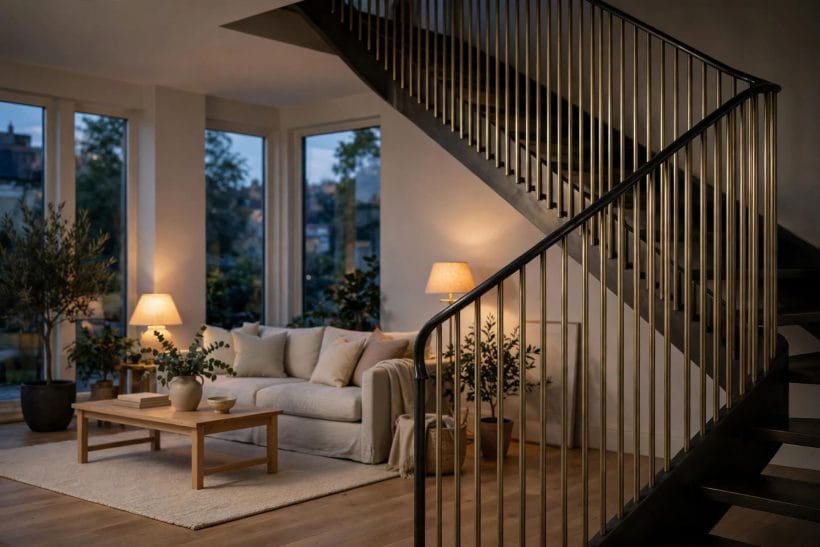
| Vertical Bar Balusters | Vertical bar balusters repeat the upright rhythm of a staircase, giving a guard that feels orderly and open. |
| Horizontal Bar Balusters | Horizontal bars give a balustrade a modern, linear feel, with lines running alongside the flight rather than across it. |
| Glass Panels Between Metal Posts | Glass panels between slim metal posts give a staircase an open guard that barely interrupts a view. |
| Handrails that Contrast with the Treads | A handrail in a contrasting finish, such as a warm brass tone against dark treads or a pale rail against a dark frame, draws the eye along the staircase line. |
| Metal with Warm Timber Treads | Warm timber treads are the classic partner for a metal staircase, softening steel with a natural surface underfoot. |
| Metal with Pale Stone Walls | Pale stone walls give a metal staircase a calm, solid backdrop, with the dark metal line standing out against natural stone texture. |
| Metal with Glass Balustrades | Glass balustrades let a metal staircase stay visible from every side, which suits open-plan rooms and tall, open spaces. |
| Metal with Brick Walls | Brick walls warm a metal staircase with colour and texture, and dark steel sits beautifully against brick. |
| Metal with Plaster Walls in Soft Tones | Soft-toned plaster walls give a metal staircase a quiet backdrop, letting the staircase line and finish carry the design. |
| Metal with Leather and Wool Furnishings | Leather and wool furnishings soften a metal staircase by bringing warmth to the rooms it connects. |
| Metal with Indoor Plants | Indoor plants beside a metal staircase soften its hard lines with leaves and height, and a tall plant at the foot of the stairs can balance a tall flight. |
| Metal with Artwork on the Stair Wall | Artwork on a stair wall turns the climb into a small gallery, with pictures following the rise of the staircase. |
| Choosing Metal for a Busy Household | A busy household suits metal because the material stands up to daily use, pets, bags and boots without the wear a softer staircase might show. |
| Checking a Staircase Before You Commit | Before committing to a metal staircase, check the design against the room it will serve, with a professional confirming structure, fixing and layout. |
| Keeping Metal Clean and Dry | Metal staircases stay at their best with simple, regular care: a soft cloth, gentle cleaning and attention to damp spots, especially near entrances and outdoors. |
| Caring for Painted Metal Finishes | Painted metal finishes need gentle care and occasional attention to chips or wear, especially on handrails and tread edges where hands and feet meet the staircase daily. |
| Caring for Outdoor Metal Through the Seasons | Outdoor metal faces rain, sun, frost and fallen leaves, so seasonal care matters: clear leaves from treads, check finishes after winter, and keep drainage paths open around the foot of the staircase. |
| Living with the Sound of Metal Stairs | Metal staircases can sound livelier underfoot than timber or carpeted flights, with a light ring or tap on open treads. |
| When to Call a Professional for Repairs | Call a professional for any metal staircase repair that touches structure, fixing, welding or handrail security, and for any change in how the staircase feels underfoot. |
1. Classic Straight Black Steel Flight
A straight flight in matte black steel is the simplest statement a metal staircase can make. It suits pale walls and timber floors, it reads clearly from across a room, and it pairs with almost any handrail style. Keep the surrounding walls plain so the line of the flight stays the focus, and let daylight fall across the treads rather than competing with patterned decoration.
2. Straight Flight with Timber Treads
Timber treads on a metal frame warm a staircase without hiding its metal character. The timber softens each step underfoot and under the eye, while the steel stringers and handrail keep the flight feeling slim. Choose a timber tone that already appears elsewhere in the room, such as a floor or a table, so the staircase feels connected to its setting.
3. Straight Flight with Open Risers
Open risers leave a gap between each tread, so light passes through the staircase and the room beyond stays visible. The effect suits homes where a solid flight would block light or close off a space. A professional should confirm the design, since open risers change how a staircase is fixed and how it feels to use.
4. Straight Flight Beside a Window Wall
Placing a straight metal flight beside a tall window wall turns daylight into part of the design. Shadows from the treads and handrail move across the wall through the day, and the staircase never feels like a dark corridor. Keep glazing and handrail lines simple so the window, rather than busy detailing, carries the view.
5. Straight Flight with a Slim Stringer
A slim central or side stringer makes a metal flight look lighter than a staircase carried on deep beams. The treads appear to float in a line, and the wall behind stays visible. This is a design where professional assessment matters, because a slim support must still carry the staircase safely and firmly.
6. Straight Flight with Perforated Treads
Perforated metal treads give a staircase an industrial texture and let light and air pass through each step. They suit lofts and utility spaces, and they pair well with simple bar handrails and plain walls. Check the tread surface with your designer for grip and comfort, since texture changes how a step feels underfoot.
7. Straight Flight in a Narrow Hall
A narrow hall suits a straight metal flight because the staircase can follow the hall line without turning or widening. Slim handrails, open risers and a pale wall colour keep the passage feeling open rather than cramped. Leave handrail and fixing decisions to a professional, since a tight hall leaves little room for error.
8. Straight Flight with a Landing Pause
A landing partway up a straight flight gives a staircase a natural pause and a place to change direction in a larger plan. The landing can hold a window, a piece of artwork or a simple seat, and it breaks a long climb into two calmer sections. Treat the landing as part of the same metal design, with matching stringers and handrails throughout.
2. Spiral and Curved Metal Staircases
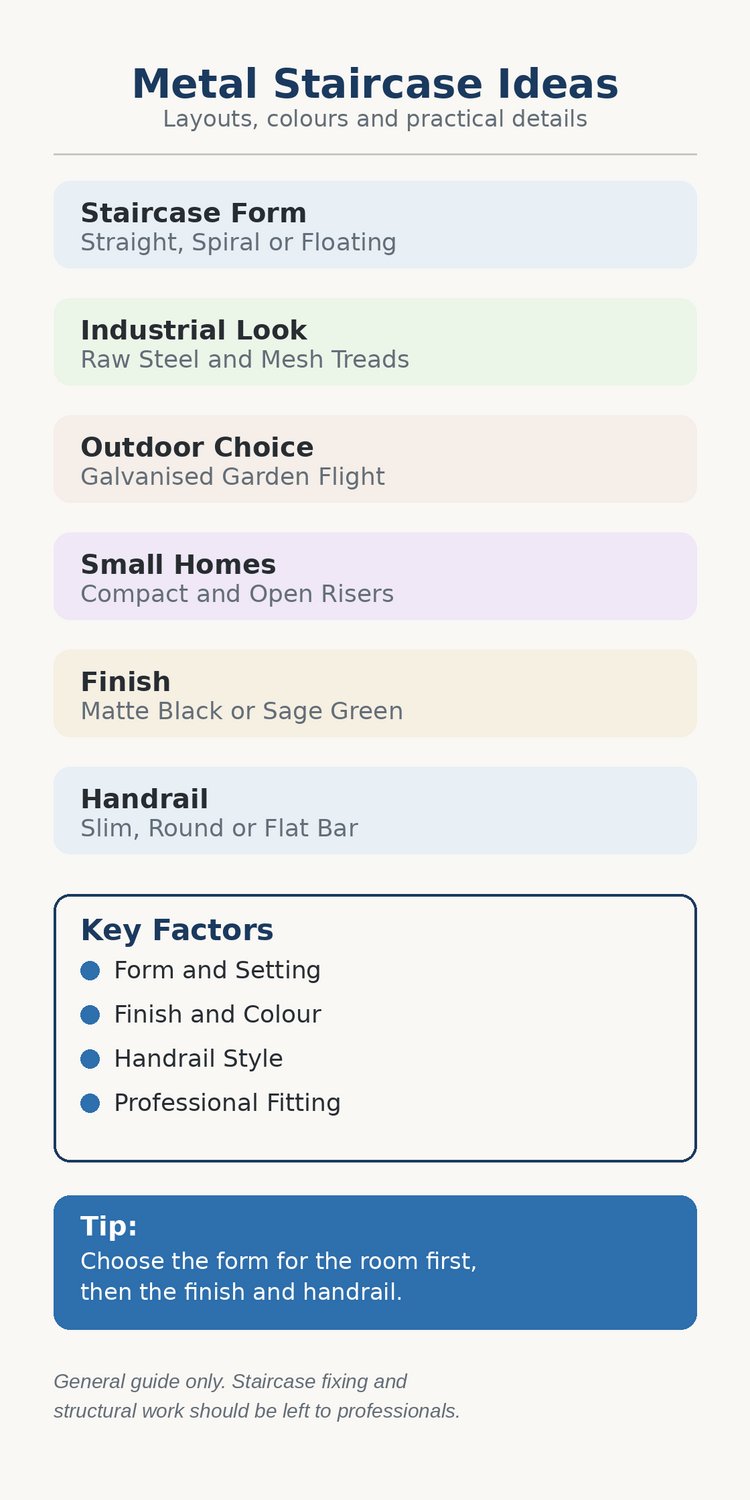
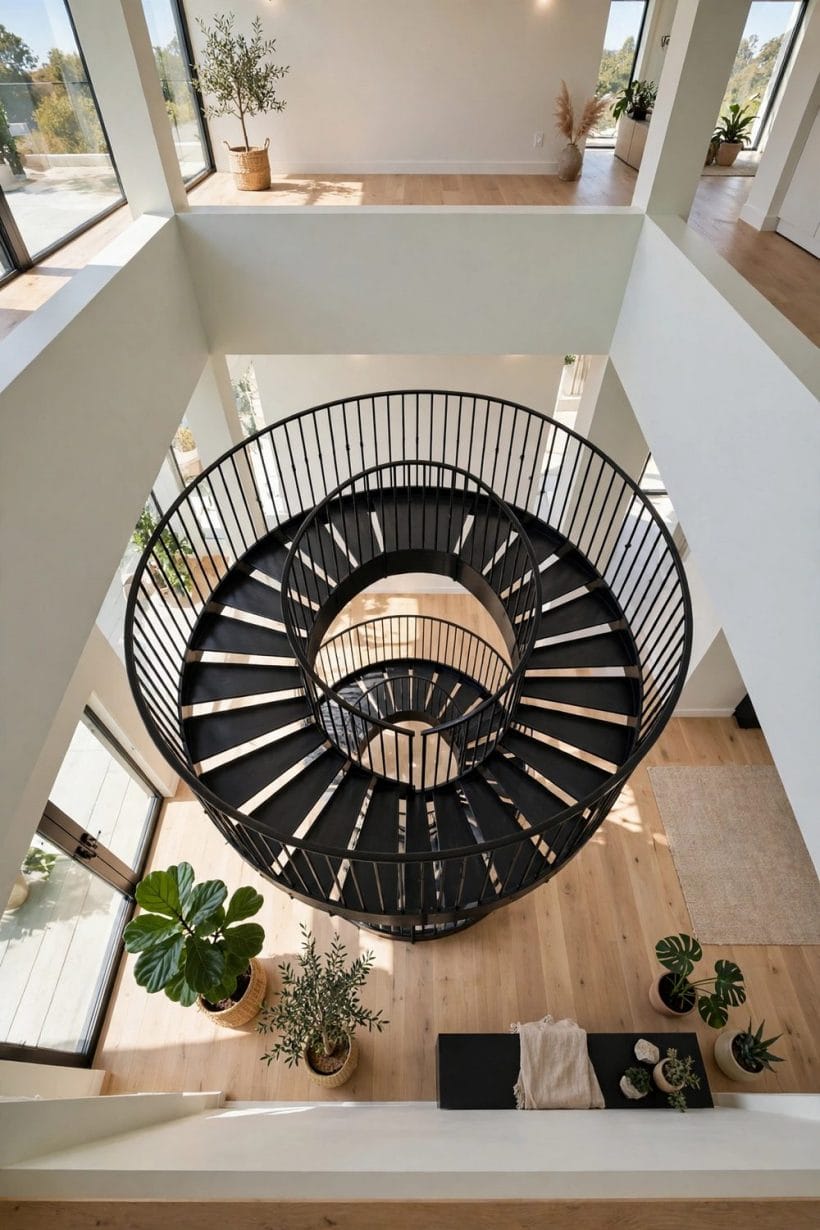
A spiral staircase is the metal staircase that most readily becomes a sculpture in a room. Its curved line draws the eye upward, its central column can be slender or substantial, and its compact footprint suits corners and tight plans where a straight flight would crowd the room.
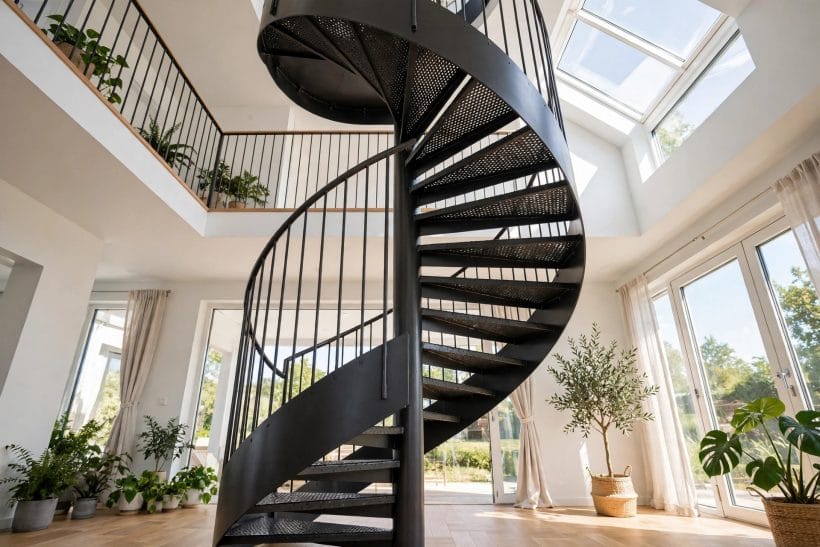
9. Compact Spiral in a Corner
A compact spiral tucks into a corner that a straight flight could never use, turning awkward floor space into a route between levels. Its curved line softens a square room, and its small footprint leaves the rest of the floor free. A professional should plan the spiral, since its geometry and fixings are far less forgiving than a straight flight.
10. Spiral with a Central Metal Column
A central metal column gives a spiral staircase its spine, with each tread radiating from the column like steps around a post. The column can be slender for a light look or broader for a more substantial feel. Keep the handrail continuous around the curve so the climb feels steady and guided from bottom to top.
11. Spiral with Open Treads
Open treads on a spiral let light fall through the centre of the staircase and keep the rooms on both levels feeling connected. The spiral reads as a light, airy object rather than a solid tower. Professional design matters here, because open spiral treads rely on precise fixing to the column and the surrounding structure.
12. Spiral with Timber Treads
Timber treads warm a metal spiral and give each step a natural, comfortable surface. The contrast between warm timber and dark metal suits both traditional and modern rooms. Match the timber to other wood in the home so the spiral feels like part of the interior rather than an isolated feature.
13. Spiral with Glass Balustrade Panels
Glass panels around a spiral staircase keep the curve visible from every angle while still giving a clear guard. The glass lightens the spiral and lets the metalwork show through. A professional should specify and fit the panels, since glass on a curved staircase needs careful measurement and secure fixing.
14. Spiral Painted a Soft Colour
Painting a spiral staircase in a soft colour, such as pale grey or sage, changes its character completely. The spiral stops reading as industrial and starts feeling like a piece of furniture in the room. Soft colours work best against plain walls, where the curve itself, rather than a bold finish, holds attention.
15. Spiral as a Room Centrepiece
Placing a spiral staircase in the middle of a room makes it the natural centrepiece, visible from seating, dining and entrance alike. The curve gives the room a focal point that a straight flight against a wall cannot offer. Keep surrounding furniture low and simple so the spiral keeps its space and its silhouette.
16. Spiral Leading to a Mezzanine
A spiral staircase suits a mezzanine because it rises compactly to a raised level without claiming a whole wall. The mezzanine edge, the spiral handrail and the floor below can share one metal language. A professional should plan the junction where the spiral meets the mezzanine, since that connection carries both the staircase and its users.
3. Industrial and Loft Metal Staircases
Industrial metal staircases keep their working character on show. Raw steel, mesh treads, dark finishes and simple bar handrails suit lofts, converted workshops and homes that pair metal with brick, concrete and honest timber rather than hiding the structure away.
17. Raw Steel Loft Flight
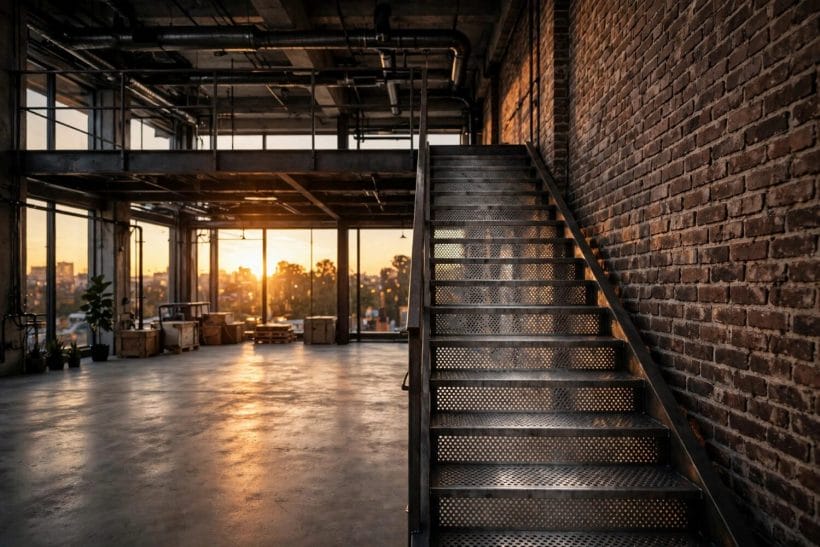
A raw steel flight keeps its workshop character, with visible welds, a natural steel tone and simple detailing. It suits lofts with brick, concrete and high ceilings, where polished finishes would feel out of place. Let the steel age and darken naturally, and pair it with plain walls so the material itself stays the decoration.
18. Industrial Flight with Mesh Treads
Mesh treads are a practical industrial choice, letting dust and light pass through while giving a firm, textured step. They suit utility lofts, studios and garden rooms where a refined tread would feel wrong. Discuss grip and cleaning with your designer, since mesh behaves differently from a solid tread underfoot.
19. Industrial Flight with Pipe Handrails
Pipe handrails suit an industrial staircase because they echo the plumbing and structure already visible in a loft. A simple round pipe rail, fixed to plain metal posts, keeps the design honest and unadorned. Keep the rail continuous and comfortable to grip, since a handrail must serve the hand before it serves the look.
20. Industrial Flight Beside Brick
Metal and brick are natural partners, with dark steel setting off the warm, uneven surface of brickwork. A simple industrial flight against an exposed brick wall needs little else, since the two materials carry the room between them. Keep lighting soft and warm so the brick glows and the steel reads as a dark, calm line.
21. Industrial Flight with Dark Finishes
Dark finishes, from charcoal paint to blackened steel, give an industrial staircase a grounded, serious feel. Dark metal recedes against a busy room, letting furniture and artwork take the foreground. Pair dark finishes with warm timber or warm lighting so the staircase feels inviting rather than severe.
22. Industrial Flight with Vertical Bar Balustrade
Vertical bars make a simple, strong balustrade for an industrial flight, repeating the upright rhythm of the staircase itself. The bars keep the staircase feeling open while still guarding its edge. A professional should confirm spacing and fixing, since a balustrade must be secure as well as good looking.
23. Industrial Flight in a Workshop Conversion
A workshop conversion suits an industrial metal staircase because the staircase can match the building it serves. Steel, mesh and simple rails feel at home beside old machinery marks, high windows and concrete floors. Keep the staircase design plain and let the character of the converted building do the talking around it.
4. Outdoor and Garden Metal Staircases
Metal works well outdoors because a slim flight can sit lightly against a house wall or rise through planting without the bulk of a masonry stair. Outdoor ideas below need weatherproof finishes and sound fixing, so a professional should assess the setting, the structure and the drainage before anything is fitted.
24. Galvanised Garden Flight
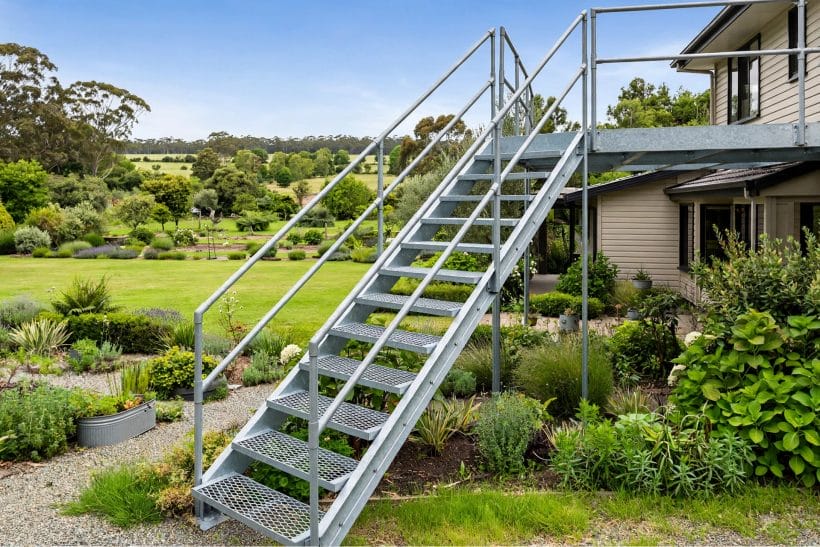
A galvanised metal staircase suits a garden because its protective finish is made for outdoor exposure. Its pale, slightly mottled surface sits calmly against planting and pale house walls. A professional should assess the ground and the fixing points, since an outdoor staircase must stand firm through wet and dry seasons alike.
25. Outdoor Flight to a Raised Deck
A metal flight to a raised deck connects garden and house without the bulk of a masonry stair. Slim stringers and open treads keep the deck edge feeling light, and the staircase can follow the deck line closely. Check the junction where staircase meets deck with a professional, since that meeting point carries every step.
26. Outdoor Flight Beside a House Wall
Running an outdoor metal flight beside a house wall keeps the garden itself free and gives the staircase a sheltered line. The wall can carry a simple handrail, and planting at the base softens the metal. Keep the wall finish and the metal finish in conversation, so the staircase reads as part of the house rather than an addition.
27. Outdoor Flight with Mesh Treads for Drainage
Mesh treads outdoors let rain pass through instead of pooling on each step, which keeps the staircase more comfortable in wet weather. The open texture also lets light reach planting below. A professional should confirm the tread choice and fixing, since outdoor treads face weather that indoor treads never meet.
28. Outdoor Flight with a Weatherproof Finish
A weatherproof finish protects an outdoor metal staircase from rain, sun and damp, and it decides how the staircase ages. Painted, galvanised and naturally weathering finishes each age differently, so choose with the look you want in later years in mind, not only the look on the day it is fitted.
29. Outdoor Flight to a Roof Terrace
A metal staircase to a roof terrace rises lightly against the building, keeping the terrace itself as the destination rather than the stair. Slim rails and open treads suit a terrace view, since they block little of the outlook. Professional assessment is essential here, since a roof terrace staircase meets structure, weather and safety all at once.
30. Outdoor Flight Framed by Planting
Planting at the base and beside an outdoor metal flight softens its hard lines and ties the staircase into the garden. Climbing plants on a nearby wall, pots at the foot and low shrubs along the side all help. Keep planting clear of treads and handrails so the staircase stays easy and safe to use.
31. Outdoor Flight with Lighting Along the Rail
Lighting along an outdoor handrail makes a garden staircase welcoming after dark and easier to use on winter evenings. Small, warm lights tucked beside the rail suit a garden better than harsh overhead glare. Leave all outdoor electrical work to a qualified professional, and choose fittings made for outdoor use.
5. Floating and Open-Riser Metal Staircases
Floating metal treads look as though they hover beside a wall, and open risers let light pass between each step. Both effects depend on fixings that are hidden or minimal, which is exactly why a structural professional must design and fit them rather than treating them as a simple wall-mounted shelf.
32. Floating Metal Treads on a Plain Wall
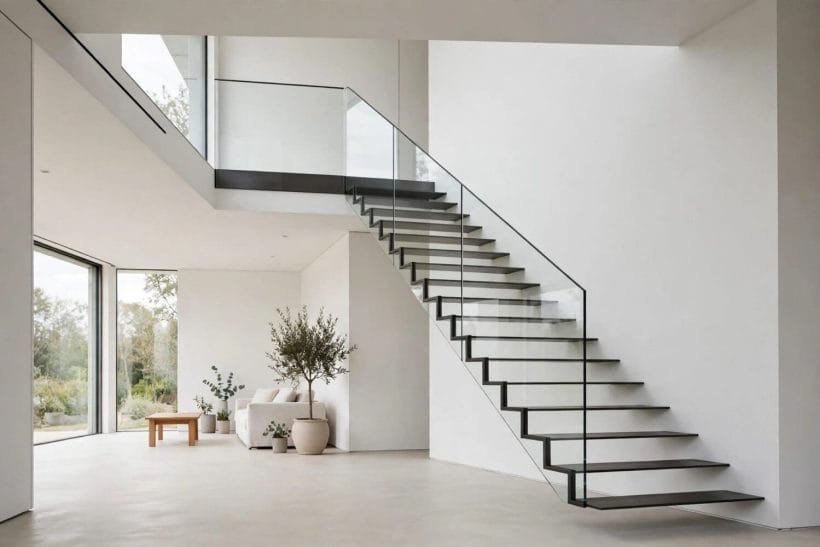
Floating treads fixed to a plain wall create the lightest possible staircase, with each step appearing to hover. A plain wall is the right partner, since anything busy behind the treads would fight the floating effect. A structural professional must design the fixings, because floating treads rely entirely on their wall connection.
33. Floating Treads with a Glass Balustrade
Glass beside floating metal treads keeps the whole staircase feeling open, with light passing through both treads and guard. The combination suits minimal rooms where a solid balustrade would feel heavy. Glass and fixings on a floating design need professional specification, since both must be secure without visible bulk.
34. Floating Treads with Timber Treads
Timber treads on a floating metal structure give a hovering staircase warmth, with each wooden step contrasting against the pale wall. The timber softens the look while the hidden metalwork keeps the floating effect. Match the timber to the floor so the staircase reads as a continuation of the room.
35. Floating Treads with Hidden Fixings
Hidden fixings are what make a floating staircase float, with brackets and supports concealed inside the wall or the tread. The result looks effortless, but the engineering behind it is anything but simple. Only a structural professional should design and fit hidden fixings, since there is no visible structure to forgive a mistake.
36. Floating Treads in a Pale Minimal Room
A pale, minimal room is the natural home for floating metal treads, since plain walls and simple furniture let the staircase itself carry the interest. Keep colours soft, keep surfaces plain, and let the line of treads draw the eye upward without competition from pattern or clutter.
37. Floating Treads with a Slim Metal Stringer
A slim metal stringer beneath floating treads gives the staircase a quiet backbone without spoiling the floating look. The stringer can run along the wall or beneath the treads, adding a fine dark line that ties the steps together. A professional should size and fix the stringer, since slim does not mean lightly loaded.
38. Floating Treads Beside a Stone Wall
Floating treads beside a stone wall pair the lightest staircase form with the heaviest wall material, and the contrast works. Rough stone gives the floating steps something solid to play against, while the steps keep the room feeling open. Fixing into stone needs professional assessment, since stone varies far more than a plain plaster wall.
39. Floating Treads with Warm Under-Tread Light
Warm light beneath floating treads makes each step glow softly after dark and turns the staircase into a gentle feature at night. The light should be warm and low, so it guides rather than dazzles. All stair lighting is electrical work, so a qualified professional should plan and fit it.
6. Metal Staircases for Small and Narrow Homes
Small homes ask a staircase to do more with less room, and metal is well suited to that brief. Slim stringers, open risers and compact flights keep sightlines open, while storage beneath a flight and a finish matched to the walls can stop the staircase dominating a small plan.
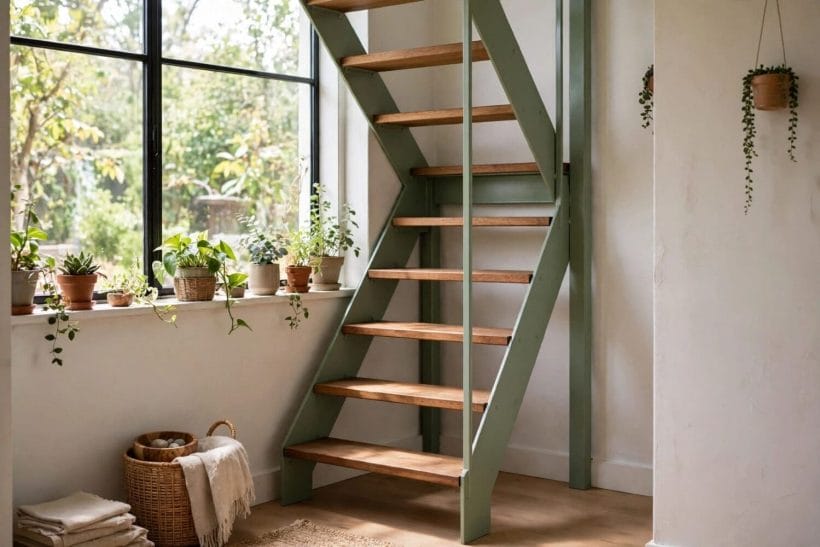
40. Compact Metal Flight for a Tiny Home
A tiny home suits a compact metal flight because slim steel takes up less visual room than a bulky timber stair. Open risers and a slim handrail keep the small plan feeling connected, and the staircase can sit against one wall without closing off the living space. For a tiny house interior, that lightness matters as much as the footprint itself.
41. Compact Flight Tucked Beside a Kitchen
Tucking a compact metal flight beside a kitchen uses a wall that might otherwise hold only cupboards, and it keeps the living area free. The staircase should stay simple here, with easy-to-clean finishes and a handrail that does not snag on passing traffic. A professional should check the layout, since kitchens and staircases both need clear, safe movement.
42. Compact Flight with Storage Beneath
Storage beneath a compact flight turns dead space into cupboards, drawers or a small desk nook. The metal frame can shape the storage around it, with doors and panels fitted between stringers. Keep stored items away from the walking line and the handrail, so storage never narrows the staircase itself.
43. Compact Flight with a Narrow Footprint
A narrow-footprint metal flight suits a home where floor space is precious, rising in a tight line that leaves the room below usable. Slim stringers and open risers help, but comfort still matters, so a designer should balance compactness against a climb that feels natural rather than cramped.
44. Compact Flight in a Studio Flat
A studio flat suits a compact metal staircase because one open room must hold sleeping, living and working alike. A light metal flight can rise to a sleeping platform without building a wall through the studio. Keep the staircase finish calm and consistent with the room, so it reads as furniture rather than a barrier.
45. Compact Flight Painted to Match the Walls
Painting a compact metal flight the same colour as its walls makes the staircase recede, which helps a small room feel larger. The staircase is still there when you need it, but it stops demanding attention. This is a useful trick in a narrow hall or a studio, where every visual break makes a room feel smaller.
46. Compact Flight with Open Risers for Light
Open risers on a compact flight let daylight from a window or a glazed door pass through the staircase into the room beyond. In a small home, that borrowed light can change how the whole plan feels. A professional should confirm the open-riser design, since a compact staircase must still feel safe and steady to use.
7. Metal Finishes and Colours
Finish changes a metal staircase more than almost any other choice. The same flight reads as industrial in matte black, calm in soft white, or warm in a brass tone, so treat finish as a design decision in its own right rather than an afterthought once the shape is fixed.
47. Matte Black Metal
Matte black is the most versatile metal finish, suiting modern, industrial and traditional rooms alike. It gives a staircase a calm, dark line without shine or reflection, and it pairs with timber, glass, stone and brick. Keep walls and floors lighter than the staircase so the black reads as a deliberate line rather than a shadow.
48. Soft White Painted Metal
Soft white painted metal makes a staircase feel fresh and light, especially in a small or north-facing room. White metal suits coastal, minimal and cottage interiors, and it lets a staircase blend with pale walls. White shows marks more readily than dark finishes, so plan for gentle, regular cleaning as part of living with it.
49. Sage Green Painted Metal
Sage green painted metal gives a staircase a quiet, garden-like character that suits homes with plants, timber and natural light. The colour is calm enough to live with daily, yet distinctive enough to make the staircase a feature. Pair sage with warm timber treads and plain walls so the colour stays soft rather than busy.
50. Warm Brass-Toned Metal Accents
Brass-toned metal accents, such as balusters, handrail details or tread nosings, warm a staircase without turning the whole flight golden. A little brass goes a long way, so use it as an accent against dark steel or pale walls. Keep the rest of the staircase plain, so the warm metal reads as jewellery rather than decoration.
51. Brushed Steel with a Natural Sheen
Brushed steel keeps its natural metal sheen, with fine lines in the surface that catch light softly. It suits contemporary kitchens, minimal rooms and homes with other steel details, such as door handles and light fittings. Brushed steel needs little dressing, since its surface texture already gives the staircase interest.
52. Dark Bronze-Toned Metal
Dark bronze-toned metal sits between black and brass, giving a staircase warmth without brightness. It suits rooms with leather, dark timber and warm lighting, where a cooler steel would feel stark. Pair bronze tones with soft wall colours so the staircase feels rich rather than heavy.
53. Two-Tone Metal and Timber
A two-tone staircase pairs a dark metal frame with warm timber treads, or a pale metal frame with dark timber, to create contrast on every step. The pairing works because each material makes the other clearer. Keep the two tones consistent along the whole flight, so the contrast feels designed rather than accidental.
8. Handrails, Balusters and Safety Details
A handrail is the part of a staircase you touch every day, so it deserves as much thought as the treads. Slim, flat, round or contrasting rails each change the feel of a flight, and baluster styles decide how open or enclosed the staircase feels from the rooms beside it.
54. Slim Round Metal Handrails
A slim round handrail is comfortable to grip and visually quiet, suiting almost any metal staircase. Its simple profile lets the treads and balusters carry the design, while the rail itself does its job unobtrusively. A round rail suits both straight and spiral flights, since it follows a curve as easily as a straight line.
55. Flat Bar Metal Handrails
A flat bar handrail gives a staircase a crisp, architectural edge, with a slim rectangular profile that suits minimal and industrial rooms. The flat top feels steady under the hand, and the bar can match the stringers for a unified metal language. Keep the bar slim, so it reads as a line rather than a beam.
56. Handrails that Continue Around a Landing
A handrail that continues around a landing, without a break or a change of style, makes a staircase feel like one continuous route. The eye follows the rail, and the hand never needs to search for the next grip. Ask a professional to plan the junction, since a landing turn is where handrail geometry becomes fiddly.
57. Vertical Bar Balusters
Vertical bar balusters repeat the upright rhythm of a staircase, giving a guard that feels orderly and open. They suit straight, spiral and industrial flights alike, and they pair with round or flat handrails. Spacing and fixing should be confirmed by a professional, since a balustrade must guard the edge securely.
58. Horizontal Bar Balusters
Horizontal bars give a balustrade a modern, linear feel, with lines running alongside the flight rather than across it. They suit contemporary rooms and lofts, where horizontal lines already shape the interior. A professional should confirm the design, since horizontal bars change how a balustrade behaves and how it should be fixed.
59. Glass Panels Between Metal Posts
Glass panels between slim metal posts give a staircase an open guard that barely interrupts a view. The metal posts keep the design grounded, while the glass lets light and sightlines pass. Professional specification and fitting matter here, since glass panels need precise measurement and secure, well-finished fixings.
60. Handrails that Contrast with the Treads
A handrail in a contrasting finish, such as a warm brass tone against dark treads or a pale rail against a dark frame, draws the eye along the staircase line. Contrast helps the hand find the rail quickly, which is useful in a busy household. Keep the contrast to the rail alone, so the staircase does not become a collection of competing finishes.
9. Pairing Metal Stairs with Wood, Glass and Stone
Metal rarely stands alone in a finished room. Timber warms it, glass lightens it, stone grounds it, and soft furnishings and planting take its hard edge away. The pairings below show how to let metal lead the design while its partners do the softening.
61. Metal with Warm Timber Treads
Warm timber treads are the classic partner for a metal staircase, softening steel with a natural surface underfoot. The timber can match a floor, a table or a door, tying the staircase into the room. Keep the metal frame slim and dark, so the timber glows against it rather than competing with a busy frame.
62. Metal with Pale Stone Walls
Pale stone walls give a metal staircase a calm, solid backdrop, with the dark metal line standing out against natural stone texture. The pairing suits hallways and entrance spaces, where stone already sets a grounded tone. Keep the staircase simple against stone, since the wall itself carries plenty of character.
63. Metal with Glass Balustrades
Glass balustrades let a metal staircase stay visible from every side, which suits open-plan rooms and tall, open spaces. The metal frame provides the structure and the line, while the glass removes visual bulk. A professional should specify the glass, since panels on a staircase need secure fixing and a finish that stays clear.
64. Metal with Brick Walls
Brick walls warm a metal staircase with colour and texture, and dark steel sits beautifully against brick. The pairing suits conversions, cottages with exposed brick and contemporary rooms that borrow an industrial edge. Keep lighting warm so the brick glows, and let the metal stay simple against it.
65. Metal with Plaster Walls in Soft Tones
Soft-toned plaster walls give a metal staircase a quiet backdrop, letting the staircase line and finish carry the design. Pale plaster suits painted metal in white, sage or soft grey, and it keeps a small hall feeling calm. The pairing works best when wall colour and staircase finish are chosen together, not separately.
66. Metal with Leather and Wool Furnishings
Leather and wool furnishings soften a metal staircase by bringing warmth to the rooms it connects. A leather chair, a wool rug or a woven throw near the foot of the stairs stops the metal feeling cold. Keep furnishings away from the walking line and the handrail, so softness never becomes an obstacle.
67. Metal with Indoor Plants
Indoor plants beside a metal staircase soften its hard lines with leaves and height, and a tall plant at the foot of the stairs can balance a tall flight. Plants suit metal well, since their organic shapes contrast with straight steel lines. Keep pots clear of treads and handrails, and choose plants that suit the light beside the staircase.
68. Metal with Artwork on the Stair Wall
Artwork on a stair wall turns the climb into a small gallery, with pictures following the rise of the staircase. A metal flight suits this well, since its slim line leaves wall space free. Hang pictures clear of the handrail and the walking line, and keep frames simple so the artwork, rather than busy framing, holds attention.
10. Choosing, Caring for and Living with Metal Stairs
Choosing a metal staircase is only the first part of living with one. Cleaning, finish care, seasonal checks outdoors and knowing when to call a professional for a repair all shape how the staircase looks and feels over time, so this closing section gathers the practical habits worth building in.
69. Choosing Metal for a Busy Household
A busy household suits metal because the material stands up to daily use, pets, bags and boots without the wear a softer staircase might show. Choose finishes that are easy to clean and handrails that are comfortable for every age in the home. Talk through household routines with your designer, so the staircase is chosen for real life rather than for a photograph.
70. Checking a Staircase Before You Commit
Before committing to a metal staircase, check the design against the room it will serve, with a professional confirming structure, fixing and layout. Look at the finish in your own light, walk a similar staircase if you can, and confirm how handrails, balusters and treads will meet at landings. A careful check now prevents disappointment once the staircase is fitted.
71. Keeping Metal Clean and Dry
Metal staircases stay at their best with simple, regular care: a soft cloth, gentle cleaning and attention to damp spots, especially near entrances and outdoors. Dry treads after wet weather, and keep cleaning products gentle, since harsh products can dull a finish. Small, regular habits keep a staircase looking cared for without special effort.
72. Caring for Painted Metal Finishes
Painted metal finishes need gentle care and occasional attention to chips or wear, especially on handrails and tread edges where hands and feet meet the staircase daily. Touch-ups should match the original finish, and a professional can advise when a repaint is worth doing rather than patching. Keep a note of the finish used, so later care stays consistent.
73. Caring for Outdoor Metal Through the Seasons
Outdoor metal faces rain, sun, frost and fallen leaves, so seasonal care matters: clear leaves from treads, check finishes after winter, and keep drainage paths open around the foot of the staircase. A professional should look at any sign of movement, rust or loose fixing, since outdoor staircases work harder than indoor ones.
74. Living with the Sound of Metal Stairs
Metal staircases can sound livelier underfoot than timber or carpeted flights, with a light ring or tap on open treads. Timber treads, rugs at the foot of the stairs and soft furnishings nearby all calm the sound, and a well-fitted staircase sounds steadier than a loose one. If a staircase develops a new rattle or movement, ask a professional to look at it rather than living with the change.
75. When to Call a Professional for Repairs
Call a professional for any metal staircase repair that touches structure, fixing, welding or handrail security, and for any change in how the staircase feels underfoot. Cosmetic cleaning is household care, but movement, loose rails, damaged treads and outdoor weathering are professional matters. A prompt call keeps a small repair small, and keeps the staircase safe to use.
Final Considerations
A metal staircase earns its place in a home by being both structure and design at once. Whether you lean toward a straight black flight, a spiral centrepiece, an industrial loft stair or a quiet painted flight in a small home, the strongest choice is the one that fits your rooms, your light and your daily routines. Shortlist by form first, then by finish, then by handrail, and the right staircase usually reveals itself before the details are settled.
For the rooms around the staircase, the same calm approach helps. A contemporary home design suits a minimal metal flight, a tiny house exterior suits a slim outdoor flight, and a backyard landscaping plan can frame an outdoor flight with planting. A tiny house porch is another natural partner, since a porch flight and a garden flight often share one metal language. Keep the staircase, its setting and its handrail in one conversation, and the result will feel designed rather than assembled.
Finally, remember the split that shapes this collection: it is about metal as a material, not about staircase forms in general. If a grand symmetrical form catches your eye, the companion post on the double staircase form covers that angle separately. Here, metal leads, and every idea above shows one more way that single material can rise through a home, inside or out, quietly or boldly, for years of daily use.

0 Comments